

The body is not an obstacle to the soul, but its instrument and means of expression.
— Pope Saint John Paul II
When I tell someone I have chronic fatigue, they often laugh softly, like I’ve made a dramatic overstatement.
Don’t we all have chronic fatigue these days? I imagine them thinking.
And I get it. Life is exhausting. The world is loud. Everyone is stretched thin.
But when you add the ME part. That’s the myalgic encephalomyelitis. Suddenly the picture changes. Here is a quick breakdown of ME and some of its symptoms.
ME–CFS isn’t about being worn out from a long day of being human. It didn’t start from lack of conditioning. I did not cause this.
It’s about being tired all the time.
Pushing through all the time.
And paying dearly for it afterward.
I like to share this graphic 👇🏼 that shows a breakdown of the name of the condition. More than a bad night’s sleep or a long, hard day. This isn’t a mindset problem. It’s not laziness. It’s not weakness. It’s a body that can no longer produce or distribute energy the way it once did.
And that comes with grief.
Grief for the skills and abilities I no longer have.
Grief for the version of me that could say yes without calculating the cost.
Grief for the way I worry I’ll be perceived (unreliable, flaky, distant) when really I’m just surviving in a body that demands a different rhythm.
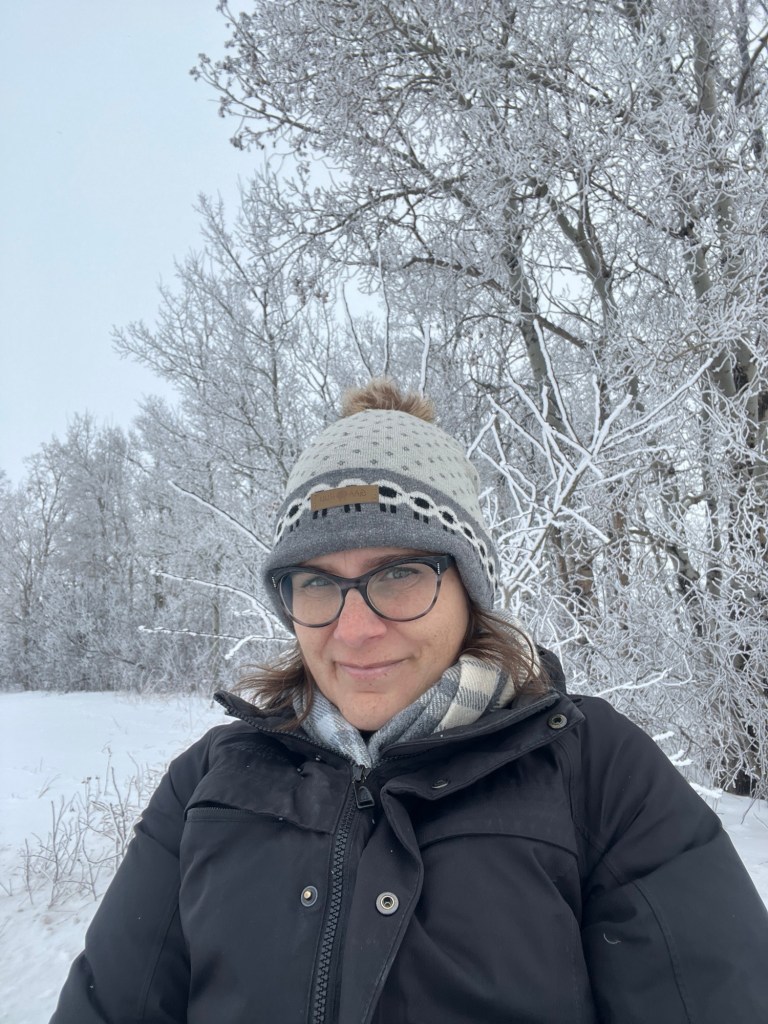
Unmasking the True Price of “Energy Takes Everything”
I’ve had to pattern my life after my condition instead of pushing through like the rest of the world celebrates doing.
And some days, that still feels like failure. Even though I know it isn’t.
I’ve found a rhythm that works for me.
And I want to be confident in it.
It does not matter how slowly you go as long as you do not stop.
— Confucius
But here’s the part people don’t see:
Everything takes energy.
Take the feelings you have at the very end of a long day:
Hard to find something to eat because every step feels heavy. Hard to have patience for the people in your space. Hard to think creatively or problem-solve.
Normally, you’d say: I just need a good night’s sleep. Then I will be myself again.
But when that good night’s sleep never comes. Neither does the motivation, the emotional regulation, or the clarity to solve even the smallest dilemmas.
And those complications build… and build… and build.
Then there’s the big life stuff I feel like I will never be able to address when I am always dealing with constant minor emergencies. A migraine. A vertebrae stuck out. Spasms.
What’s my purpose? How do I set priorities? How do I live well in this body? How do I figure it all out when my brain just wants to sleep?
Sometimes I end up spinning in a washing machine of choices that made sense in the moment:
Made sense in the moment: “I have to eat well.” I go get groceries. Get home. Collapse. Can’t get back up. Order pizza (the dirty laundry I get stuck in a spin cycle with).
Made sense in the moment: “I have to practice self-care.” I gather everything. Run the bath. Lay down… and don’t have the energy to actually do the care. Back to bed (the dirty sheets I get tangled up in).
Made sense in the moment: “I have to take care of myself.” Someone needs help. I don’t respond. Then guilt rushes in and it steals what little peace I had left. (those laundry items that always pass on a grease stain, no matter how many times its been washed)
So I’ve learned to live differently.
My rhythm now is:
- rest
- spiritual study
- learning
- creating
- easy self-care
- easy and somewhat healthy meals
- visiting like-minded souls
- serving where I can
- protecting my peace
Nothing is set in stone.
Nothing is required.
It’s simply what works for me
My story of ME
It seems easy. I’m tired. I should sleep. But sleep doesn’t help. I just go between varying types of tired.
Nerves are easily triggered with this condition. So bringing the vibrating down and the peace level up is critical.
I enjoy baths. They initiate a truce with my body. Where the pain subsides. I can lay suspended and liberated.
When I am in need of one of these sessions I lay in bed and think about how wonderful it would feel.
Often I don’t have the strength to begin. To gather myself and my stuff. To stand while the tub starts to fill. To change temperatures by changing rooms. To rise and remember all the places in my body that are not aligned.
It all becomes too much. And the fabulous results are lost in the desire to conserve what little energy I have.
Your pace is not a moral issue.
— Devon Price
What the Science Says and Why the Forest Helps
As a forest therapy guide, I’ve seen again and again how nature meets people where their bodies are not where culture thinks they should be.
ME–CFS involves:
- dysregulation of the nervous system
- chronic inflammation
- impaired cellular energy production (mitochondrial dysfunction)
- heightened sensitivity to sensory input
- post-exertional malaise, where even small effort leads to disproportionate crashes
This means the body is stuck in a protective mode, constantly conserving resources.
And here’s where the forest becomes more than beautiful scenery. It becomes medicine.
Nature’s Recharge: Forest Therapy’s Cure for ME–CFS and Exhaustion
1. Calms the nervous system
Time in natural environments lowers cortisol and shifts the body from “fight-or-flight” into “rest-and-digest.” For someone whose system is always on high alert, this is profound relief.
2. Reduces inflammation
Phytoncides, which are natural compounds released by trees, have been shown to support immune balance and reduce markers of inflammation. The body doesn’t have to work as hard to regulate itself.
3. Restores attention without effort
Nature offers soft fascination. A gentle sensory input that allows the brain to rest while still being engaged. This is vital when cognitive fatigue makes any thinking feel heavy.
4. Reframes worth and productivity
In the forest, you don’t have to prove anything. Trees don’t rush. Streams don’t apologize for slowing down. The environment itself models a different definition of enough.
For those of us living with ME–CFS, the forest reminds us:
We are not broken machines. We are living beings adapting to different conditions.
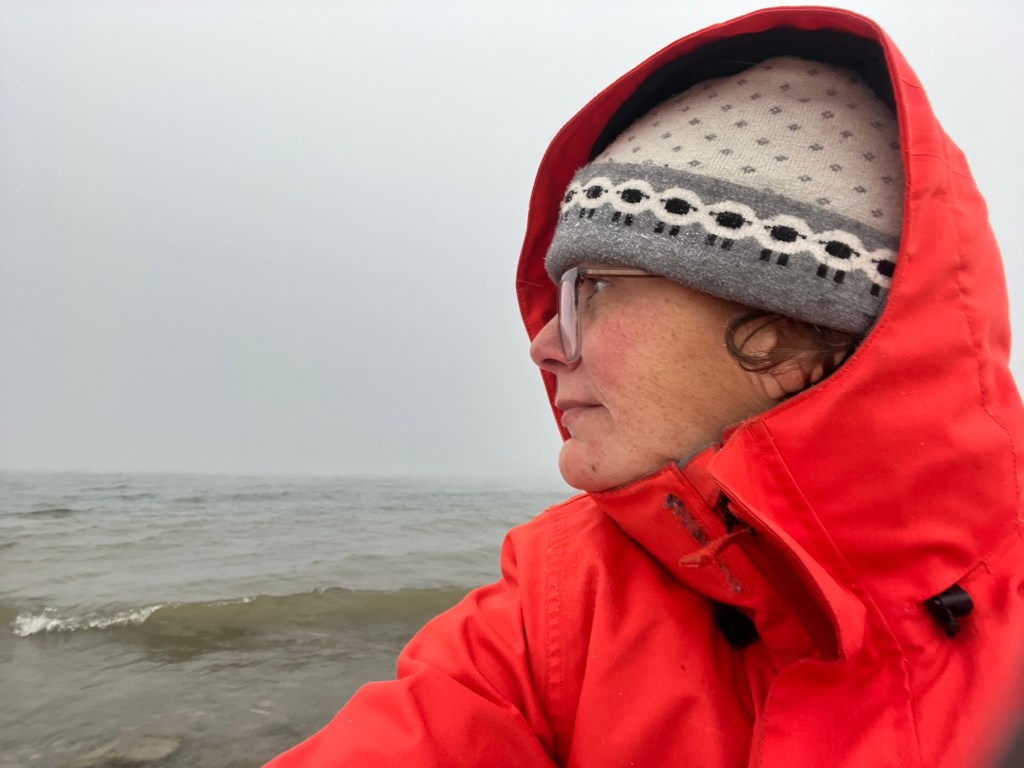
Embracing Serenity: Forest Therapy for ME–CFS & Deep Fatigue
This practice is designed for very low energy days. No hiking. No goals. No fixing.
The “Enough as I Am” Practice
Time: 10–20 minutes (or less)
Place: A bench, porch, backyard, park, or even near an open window
- Arrive without performing
- Sit or lie in a comfortable position
- Let your body choose
- Let one sense lead. Instead of scanning everything, pick just one: listening to birds or wind feeling air on your skin noticing light through leaves
- Breathe like the trees. Inhale slowly. Exhale even slower.
- Imagine your breath moving at the pace of a growing branch (not a ticking clock)
- Offer yourself one true sentence. Silently say: “In this moment, I am doing enough.”
- Leave before you’re tired. Ending early is not failure. It is wisdom.
There is a difference between resting and quitting. One restores you. The other abandons you.
— Bansky
Strength in Unexpected Places
Living with ME–CFS has taught me that strength doesn’t always look like endurance.

Sometimes strength looks like:
- stopping early
- saying no gently
- choosing peace over productivity
- letting the forest hold what I can’t
I am not lazy.
I am not weak.
I am not failing.
I am adapting.
Your best is what you can do without harming your physical or mental health. Not what you can accomplish when you disregard it.
-Unknown
And in the quiet wisdom of trees, I’ve learned something the world forgot to teach.
A life lived slowly is not a life lived small. Sometimes, it is the bravest life of all.
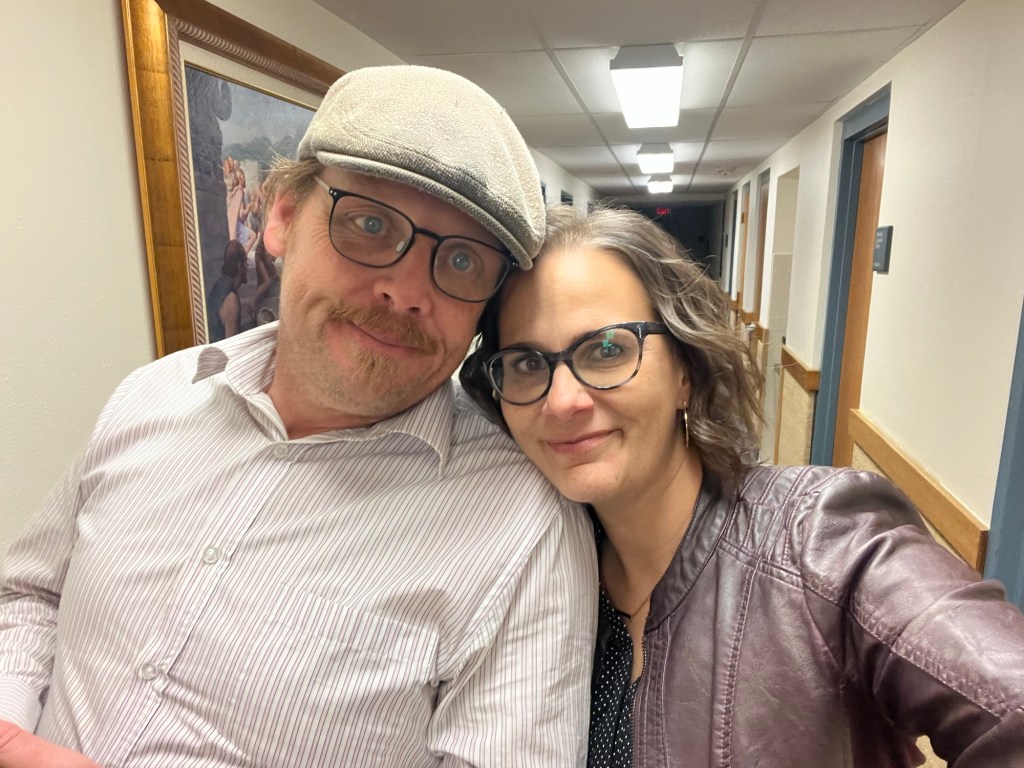
Us on New Year’s Eve before getting too tired and heading home around 10:00. Usually we are the people that when asked if we want to get together at 8:00 we wonder am?!? or pm?!? Actually never mind, both are a hard pass.
Happy New Year! To all those suffering, you are not alone, your worth is not diminished by your ability, you are seen and welcomed here.

 SUNBEAM ACRES