🤍The Hidden Struggles of Connective Tissue Disorders🤍

Back in my day, some kids brought hockey cards and sticker collections to school. I brought an alarming range of ligament-based entertainment.

Sometimes hypermobility first appears as a child who seems unusually bendy or clumsy, often both at once. 🙋‍♀️

The child who sits in a W position on the floor because it feels natural.
The one who, without pausing to question it, contorts themselves into strange positions during movie night.

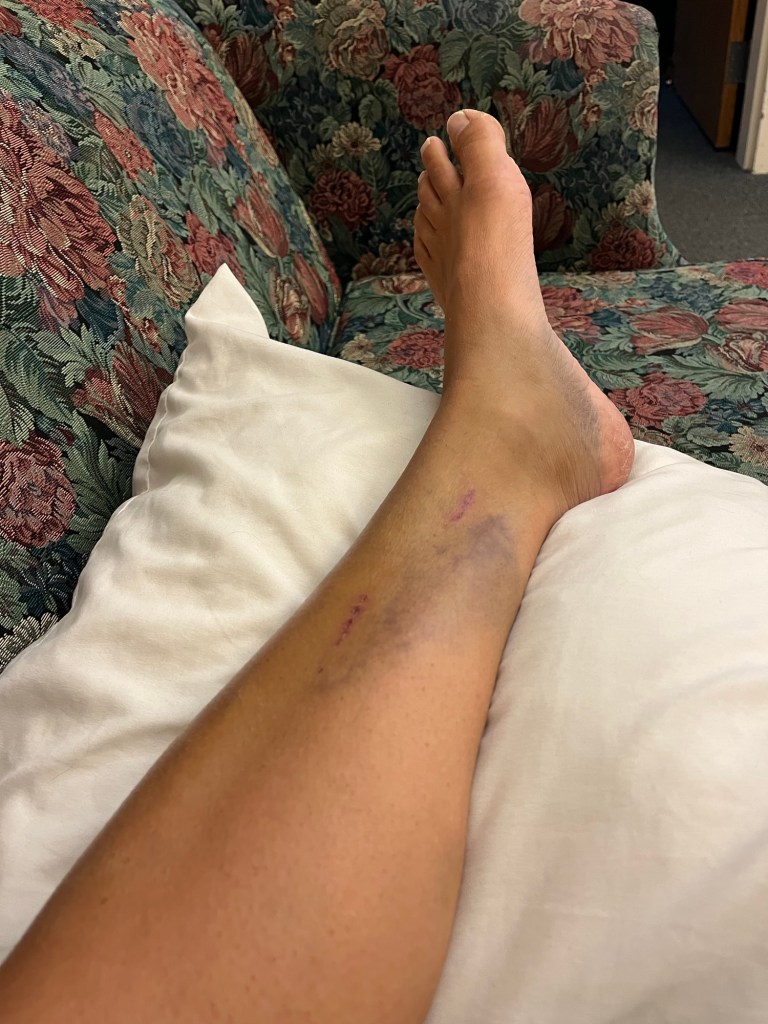
What they may not see is the child constantly running into walls because their body struggles to map itself properly in space. Bruises appearing mysteriously across shins. Ankles rolling on flat ground. Sleeves chewed because pain and overstimulation are difficult to explain at seven years old.

And then there are the “growing pains.”

Except many children with connective tissue disorders experience pain far beyond the occasional ache adults remember from childhood.

Deep bone pain at night.
Legs throbbing so intensely sleep becomes impossible.
Crying after gym class.
Exhaustion after seemingly normal activities.

Many hypermobile children become experts at masking early. They laugh while joints slip. They keep playing while hurting because they assume everyone else feels this too.

Some become the “dramatic” child.
Others become the “tough” one.

Honestly, I was the child trying to survive in a body I did not yet have language for.
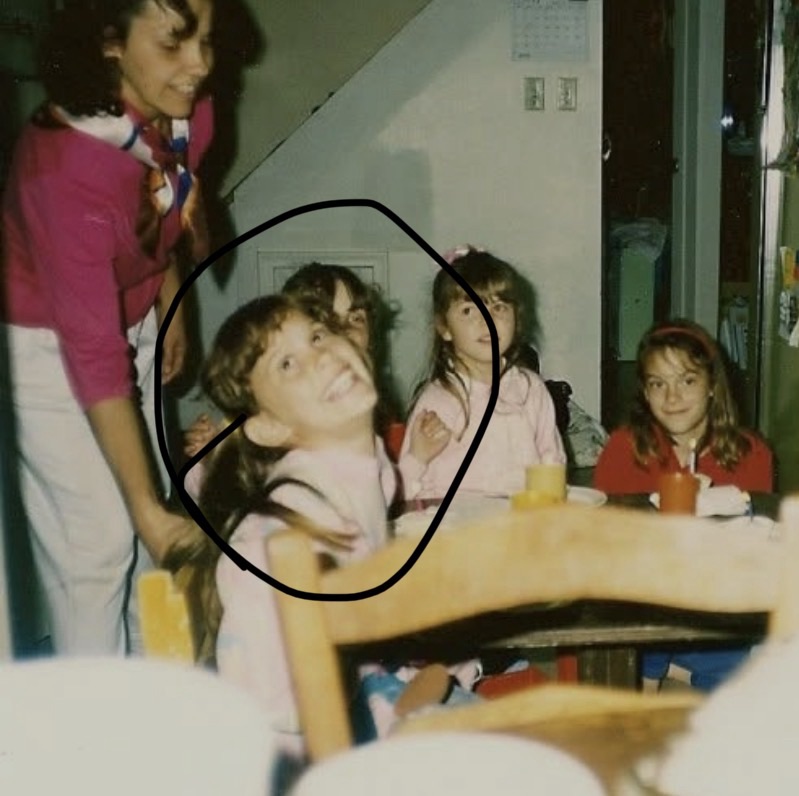
What am I even doing bending my neck like that?

The thumb that bends too far backward.
The knees that point in unusual directions.
The shoulder that clicks when slipping in and out.
Being crazy talented in a yoga class my first day.

What people don’t see is that connective tissue is not merely a few loose ligaments behaving badly.

Connective tissue is infrastructure.

It is the architecture holding the body together. The webbing woven through blood vessels, skin, organs, fascia, tendons, heart valves, lungs, digestive systems, pelvic floor, eyes, nerves, and joints. It is scaffolding. Suspension bridge. Packaging tape. Elastic waistband. Shock absorber.

And when connective tissue is faulty, life can begin to feel like living in a house where every screw has loosened itself by half a turn.

Not enough to collapse all at once.
Enough that everything creaks. And left unchecked, more and more areas become unstable, then require constant repairs. Eventually some rooms just become unusable.

A Sad Commentary: AKA My Brush with Organized Sports

My joints approached organized sports with more enthusiasm than stability. More optimism than skill.

In a small town, everybody played volleyball or there simply wasn’t a volleyball team.

So I played volleyball.

I hated it.

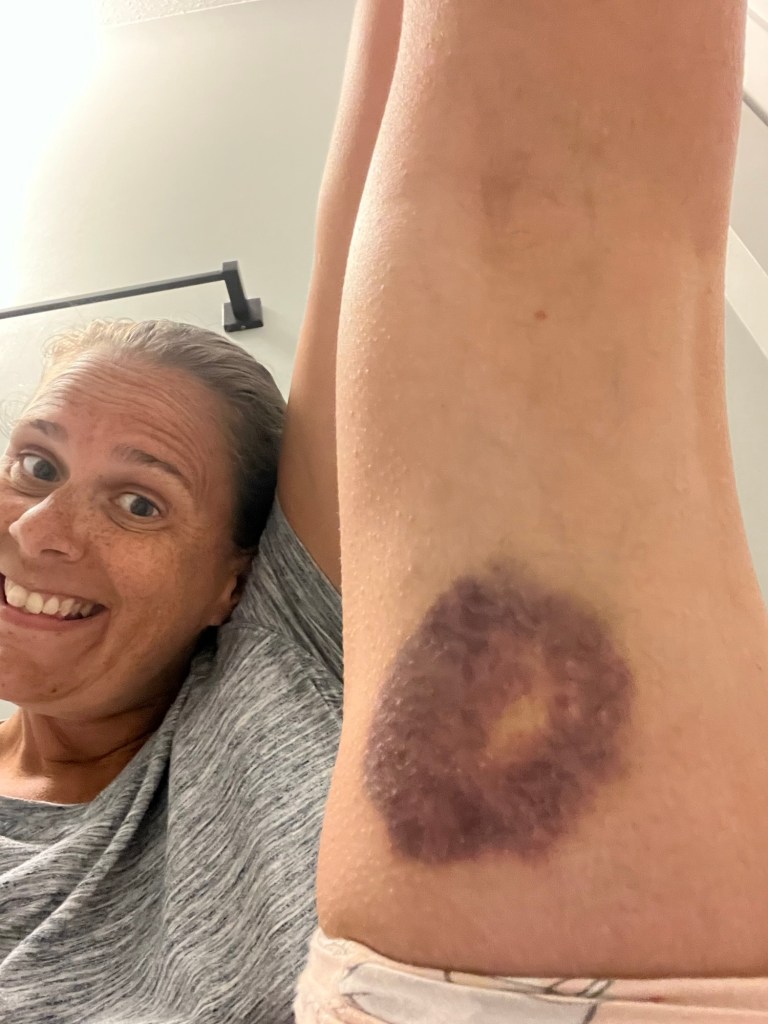
Looking back now, I wonder why I stayed in as long as I did. Every practice left my forearms covered in bruises. Big ones, tiny ones, overlapping ones. I looked part Dalmatian. Nobody else seemed to bruise like that, so naturally the conclusion was that I was doing it wrong.

Turns out my connective tissue was doing it wrong. Not me.

I was terrible at volleyball. Not for lack of trying, either. I could picture exactly what my body was supposed to do, but the execution never matched the image in my head. It always felt like there was a lag between my brain and my limbs, like someone had replaced my coordination with an unreliable Wi-Fi signal.

The only part of volleyball practice I excelled at was stretching.

That should maybe have been a clue.

I could also run forever, but the muscle fatigue before, during, and after was brutal. My legs and ribs constantly felt tight and overworked, like my muscles were trying to compensate for a body that refused to stabilize itself properly.

The solution offered to me was always the same:
“Practice more.”
“You just need to focus, Pam.”
“Try harder.”
“Don’t give up so easily all the time.”

My P.E. teacher, who was also my coach, and I were not exactly compatible personalities. I suspect I ranked fairly high on his “lazy kid” list. My feelings toward him and his teaching style don’t need to be discussed for the purpose of this post. Perhaps he was doing the best he knew how 🤷‍♀️.

What hurt most was that I wasn’t used to being bad at things.

I excelled in music. Dance. Academics. If I tried something, I usually became good at it eventually. But anything involving proprioception. Balance, coordination, spatial awareness, reaction time, exposed a kind of weakness I couldn’t outwork.

No matter how hard I tried, my body never responded the way everyone else’s seemed to. I felt like I was being asked to build a stable life with elastic bands where other people were given rope.

After enough years of that experience, something in me quietly stopped trying.

Not everywhere. Just there.

I realized I could put in enormous effort and still end up with roughly the same P.E. grade as the kid half-heartedly wandering laps around the gym. So eventually, I became that kid instead. The one at the back of the class who didn’t seem invested. The one teachers assumed didn’t care whether they passed.

Stemming from humiliation in trying my hardest while looking like a fool and as though I wasn’t trying at all.

It’s an incredibly discouraging place for a young person to live.

Some kids are exhausted.
Discouraged.
In pain.
Disconnected from bodies that refuse to cooperate. In retrospect, my body had all the stability of a shopping cart with one bad wheel.

The whole point of physical education is supposedly to encourage lifelong movement and confidence in your body.

Ironically, I now walk everywhere, go to the gym regularly, and deeply value movement. I suspect that may not be the case for those classmates that achieved gold stars for gym class back in the day.

Children are often graded on visible performance without anyone asking what invisible barriers may exist underneath it. 🍌 🍌 🍌

And maybe that experience is part of why I later felt drawn toward educational support work. Because I remember exactly what it feels like to be misunderstood in a classroom. To be trying harder than anyone realizes while appearing like you are trying the least.

Some kids are not lazy.

Sometimes what looks like apathy is actually years of silent defeat.

So Much More Than Loose Joints

My body has taught me that fragility and resilience are not opposites. Sometimes they exist in the very same tissue.

People often imagine connective tissue disorders as orthopedic inconveniences.

A sore knee.
An ankle sprain.
Being exceptionally bendy.
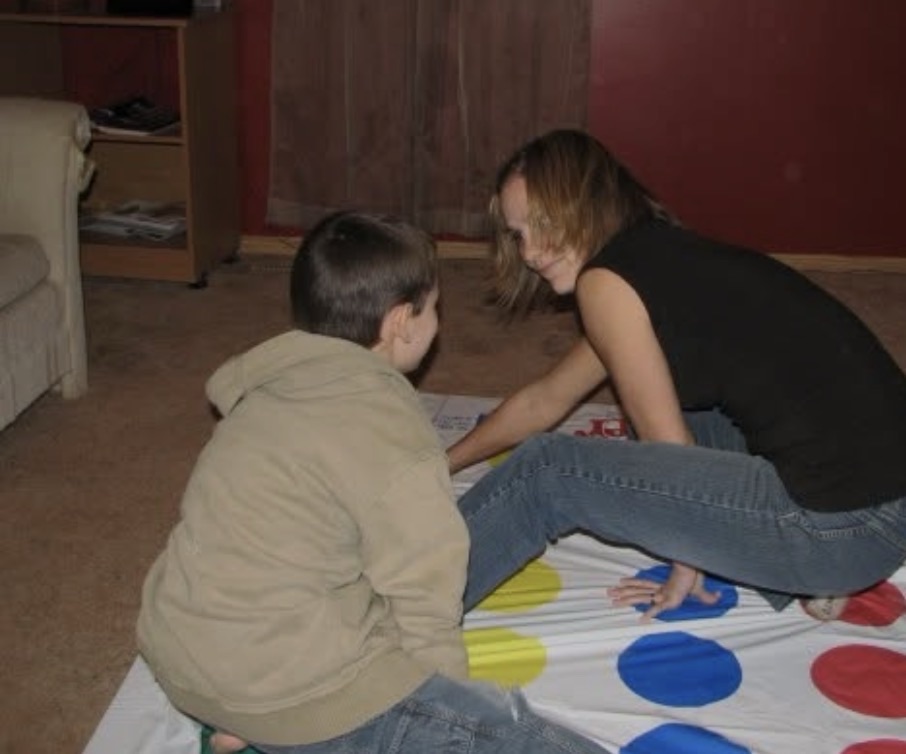
Playing twister with my now-26-year-old. Not to brag, but I was very good.

But connective tissue does not politely stay in one department.

It influences how blood vessels constrict and relax. Why standing up can feel like gravity suddenly doubled. Why heart rates race while brushing teeth. Why exhaustion arrives not after effort, but before and during it.

It influences the skin. Fragile, stretchy, slow to heal, easily bruised.

It influences digestion. Because the digestive tract also depends on connective tissue and smooth coordination. Meals become negotiations instead of nourishment.

It influences breathing. Because the rib cage, diaphragm, and tiny structures supporting the lungs are all part of the same interconnected story.

It influences pain. Not only through injuries, but through a nervous system constantly adapting to instability. Muscles tighten to compensate. Fascia braces. The body learns vigilance.

Even sleep can become difficult when the body spends the entire night trying to hold itself together. Some people wake up refreshed. My body wakes up looking like I’ve been assembled with spare parts in low lighting. Like sleep happened near me but not directly to me.

There is loneliness in illness that hides in plain sight.

You may look healthy while internally calculating:

Can my hips handle this chair?
Will my spine tolerate the drive?
How long before the fatigue crashes in?
Is today the day I sustain an injury that sets me back a year?
People see the smile at the gatherings.
They do not see the cost afterward.

The Forest Never Demands Symmetry

One of the reasons forest therapy can feel so healing for those with any type of disorders is because the forest does not care about perfection.
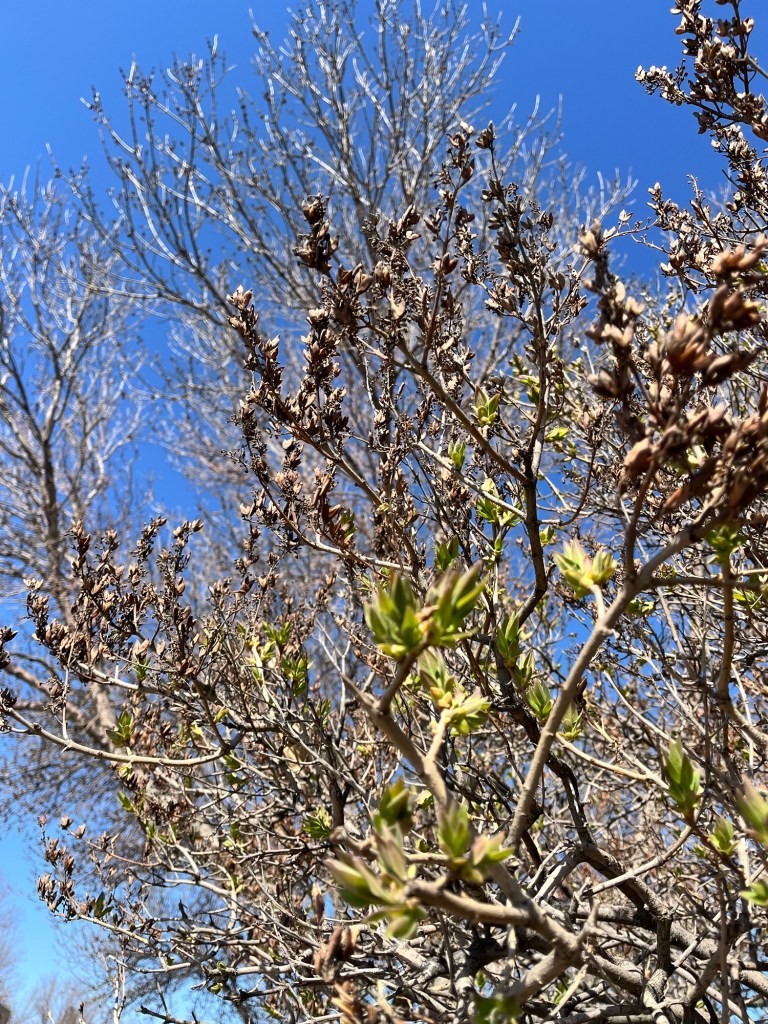
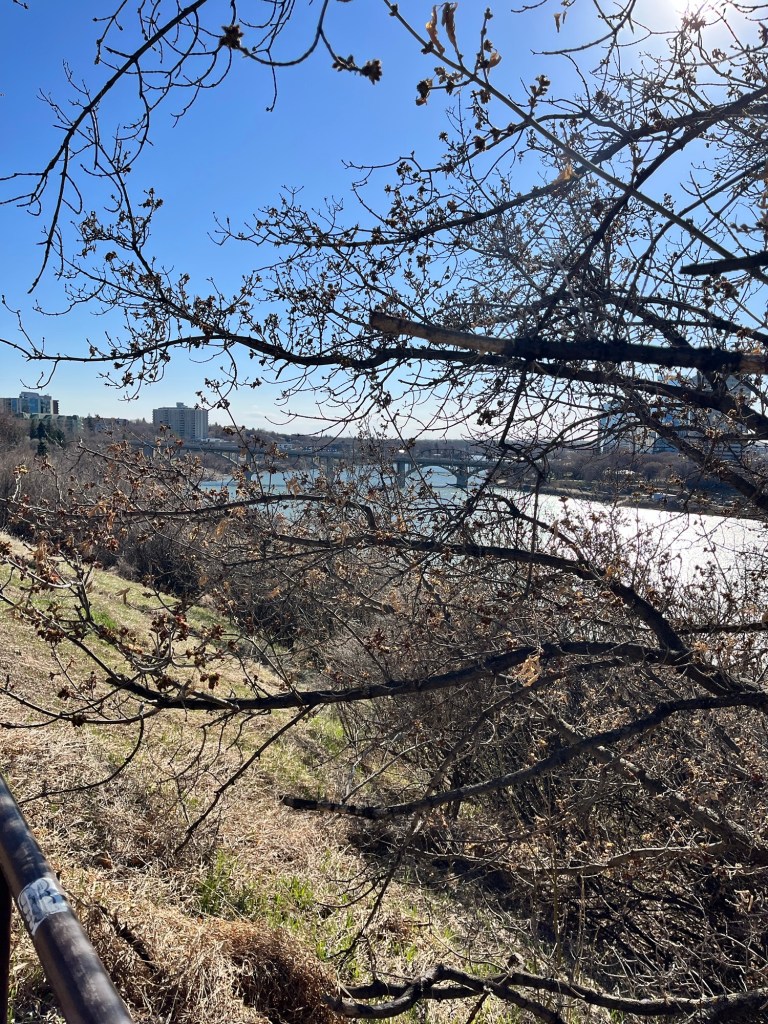
Trees twist toward light.
Branches split and regrow.
Moss softens fallen things instead of condemning them.

In the forest, support is collaborative.

Roots intertwine underground. Fungi trade nutrients between struggling trees. Fallen logs become nourishment for future life. Nothing survives entirely alone.

For people living in bodies that require adaptation, slowness, pacing, and care, the forest offers a radically compassionate model of existence.
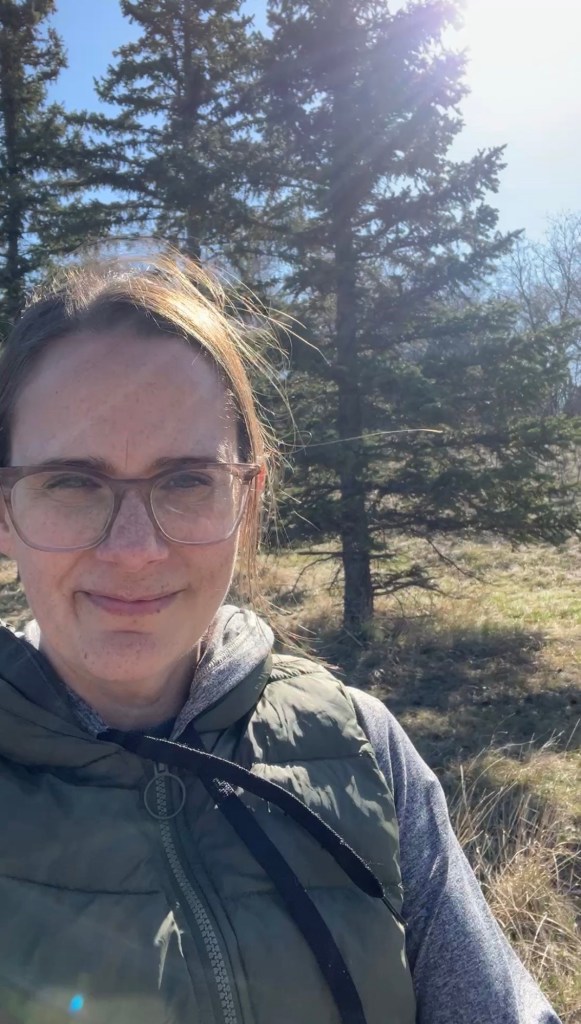
Nature does not measure worth.

Walking Practice: “Borrowing Stability”

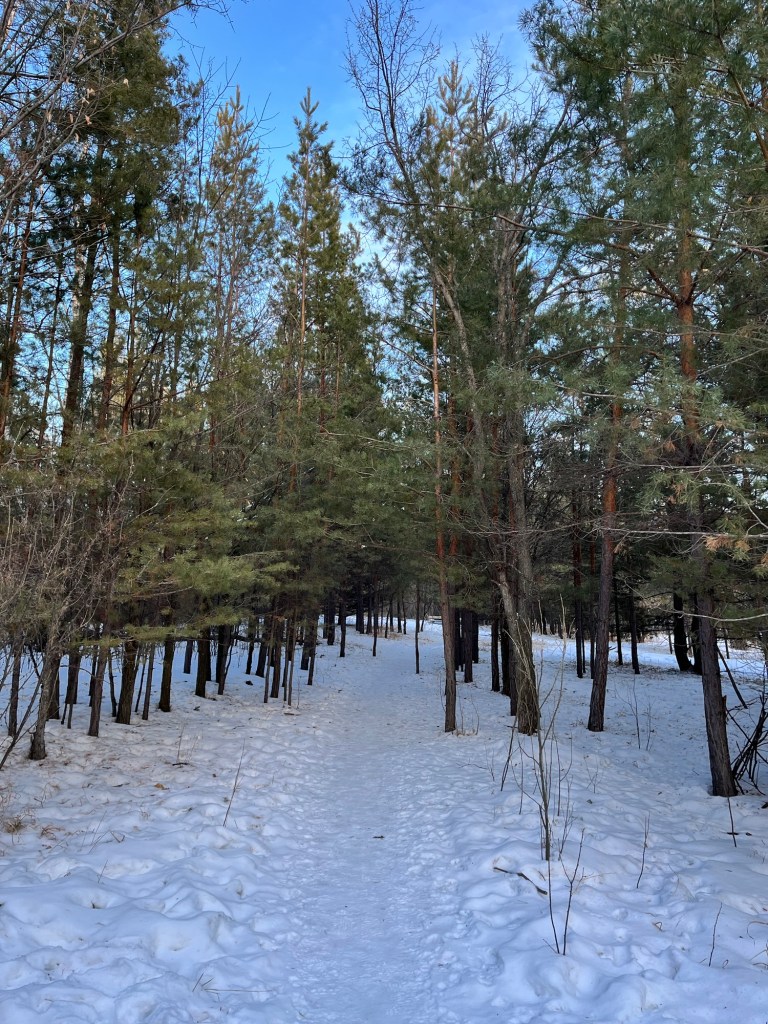
This forest therapy practice can be done slowly while walking a trail, sidewalk, park path, or even your backyard.

As you walk, notice what in the landscape appears stable.

Perhaps it is:

  • the rootedness of a tree
  • the reliability of stone
  • the rhythm of wind
  • the resolution of moss growing over rough surfaces

Without forcing positivity, simply observe.

Now begin walking more slowly.

As each foot touches the ground, imagine you are borrowing steadiness from the earth beneath you.

Not fixing yourself.
Not overcoming your body.
Borrowing support.

You may silently repeat:

Supported.
Held.
Connected.

If your body hurts while walking, let the practice include that truth instead of resisting it.

Forest therapy is not about pretending discomfort away. It is about allowing yourself to belong exactly as you are.

Pause occasionally and place a hand on a tree trunk, railing, stone wall, or your own chest.

Notice:

  • What supports you physically?
  • What supports you emotionally?
  • What support have you been refusing because you are used to surviving alone?

Continue walking without rushing toward insight.

Sometimes healing begins the moment we stop arguing with our pace.

The Grief No One Talks About

There is grief in becoming intimate with limitation.

Grief when your mind has cheques your connective tissue cannot cash.

Grief when symptoms multiply like unwanted groupies:
fatigue, dysautonomia, chronic pain, migraines, digestive problems, instability, inflammation, sensory overwhelm.

Many connective tissue disorders do not travel alone. They tend to arrive in flocks.

Even a wounded world is feeding us.

Robin Wall Kimmerer

Hold fast. There is still beauty here.

Not the polished beauty of wellness culture that insists healing should look photogenic and triumphant. Complete. Universal.

But a quieter beauty.

The beauty of learning to listen deeply to others.
The beauty of noticing small joys because large ones became inaccessible.
The beauty of becoming tender toward bodies. Your own and others’.
The beauty of discovering that a meaningful life was never dependent on being free from pain.

The forest teaches this continually.

Decay feeds growth.
Broken branches house birds.
Burned landscapes bloom again.
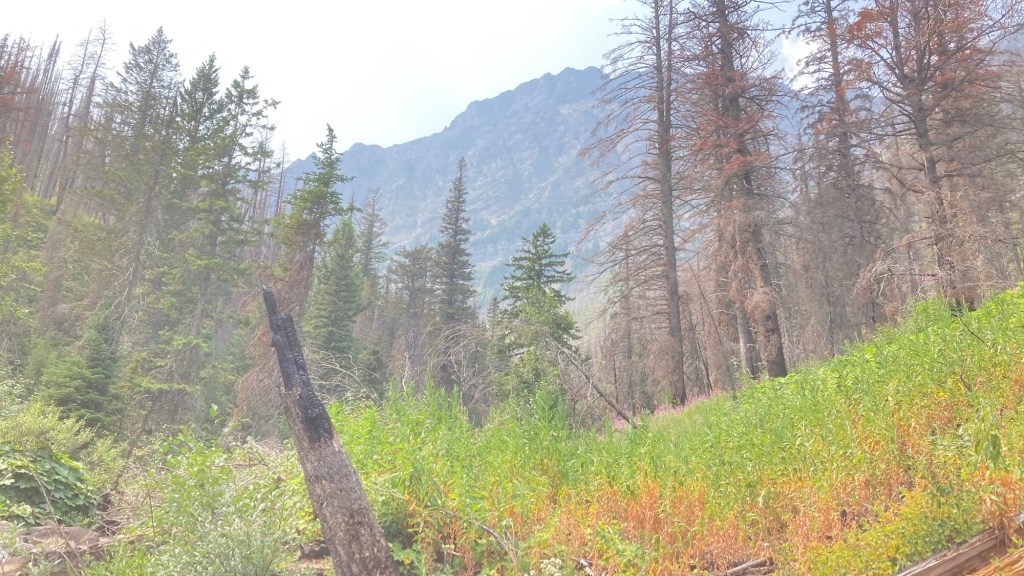
I spent years believing my body’s limitations were character flaws. Turns out that limiting belief was false. Those limitations have helped me become the person I am.

To be rooted is perhaps the most important and least recognized need of the human soul.

Simone Weil

Why Forest Therapy Helps

Forest therapy is not merely getting outside.

Research continues to show time in forests can help regulate the nervous system, reduce stress hormones, lower heart rate, and support emotional well-being. But for those living with connective tissue disorders, the benefits often go deeper than measurable metrics.

Forest therapy gives permission to:

  • move slowly
  • rest without guilt
  • reconnect with sensory pleasure
  • soften hypervigilance
  • leave productivity behind temporarily
  • remember you are more than symptoms

When the nervous system lives in a constant state of adaptation, gentle sensory experiences matter.

The sound of leaves moving overhead.
The coolness of shade on inflamed skin.
Birdsong interrupting anxious thoughts.
The visual softness of green.

None of these cure a connective tissue disorder.

But they can create moments where the body feels less at war with itself.

And moments matter.

Especially when stitched together over time.

A Beautiful Life Can Still Grow Here

Instructions for living a life: Pay attention. Be astonished. Tell about it.
Mary Oliver

Living with a connective tissue disorder may mean your life unfolds differently than expected.

More pauses.
More recalculating.
More adaptation.

But different is not lesser.

Some of the most compassionate people are those whose bodies taught them interdependence.

Some of the most observant souls are those forced to slow down enough to notice life carefully.

The forest reminds us that resilience is not hardness.
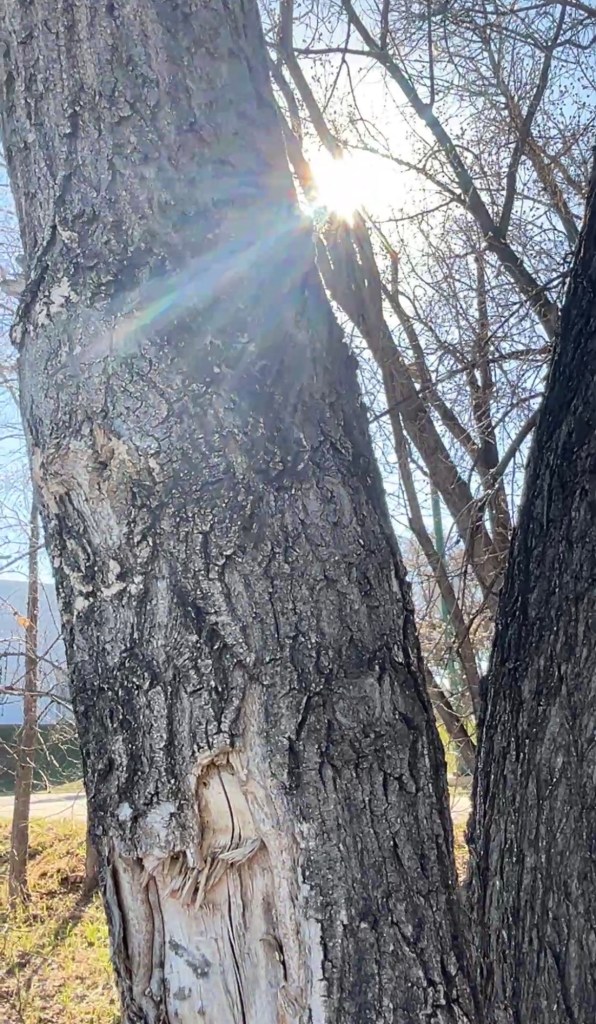
Resilience is flexibility.
Relationship.
Return.

And perhaps that is fitting for people made of connective tissue. Those who understand, more than most, that life is ultimately about connection.

Not perfect strength.
Not endless endurance.

Connection.

To the earth.
To one another.
To moments of beauty that still arrive, even here.

What is to give light must endure burning.

-Viktor Frankl

The Art of Finding Calm: Anchors for Inner Peace

By the time you reach the last spring, your hands are shaking. You’re sweating. Frustrated. Everything keeps getting more crooked.

You realize too late. You started wrong. 😑

Anyone who has assembled a trampoline knows the rule. You don’t hook the springs in a circle, one after another. If you do, the tension pulls unevenly. By the end, you don’t have the strength to stretch it into place.

You begin with four. Evenly spaced. Then every ten. Then every five. Then every two.

You build balance first. Then you stretch.

Cruising the Chaos of Life’s Pulls

We are pulled by responsibilities👈, expectations👉, needs👆, roles👇, diagnoses🫵, deadlines🫡.

Work. Family. Health. Friendships. Faith. Community. The list goes on.

Each one a spring tugging at the mat of our life.

When we hook ourselves fully to one area without anchoring wisely, the whole thing warps. We overextend in one direction and find ourselves weak in another.

Sometimes that is the season we are meant to live.

After giving birth, your whole being stretches toward that tiny life. Other areas thin out. That is not failure. That is devotion. In time, the tension redistributes.

But chronic pain does not redistribute so gently.

Chronic Pain: The Illusion of Perfect Harmony

When you live with chronic pain, you are constantly pulled toward managing symptoms, setting and going to appointments, pacing yourself, rest, prevention. Your energy budget is small. Other areas stretch thin.

Then something hopeful happens. 😮

You focus on your health. 😧

You improve. 🫢

You feel almost normal. 🥹

Everyone else sees it too. 🙌

Schedules begin to fill 🗓️ Invitations multiply 🥳 Expectations quietly rise 🫴 . The springs of “normal life” begin snapping back into place 🫰.

You let yourself believe it. 😄

Maybe I’m better. 😂

Then exhaustion crashes in 🫩 You stare at your calendar at night and wonder what you’ve done to yourself 😳 A small slip becomes months of recovery 😵 One flare unravels carefully rebuilt stability 😞.

And then come the looks 😒🙂‍↔️

The subtle confusion 🤨

The well-meaning advice 🤓

The unspoken question: Why can’t she just get it together?

Living with chronic illness often means managing other people’s perception of your crooked mat.

There is grief in that.

Grief in not being believed. In being misunderstood. In having to explain your limits and have them questioned again and again.

Eventually, you begin to let springs go.

  • Work (sounds great, it’s decidedly not great)
  • Hobbies
  • Certain relationships
  • Many dreams have to shift

Not because you lack discipline. Because you are learning discernment.

Tregi:

“A tender form of sorrow- one that doesn’t overwhelm but lingers softly in the soul, and it’s the ache of remembering something beautiful that’s gone, the silence after a goodbye, the bitter sweet pull of nostalgia. “

The Spring I Learned to Release

Within you there is a stillness and a sanctuary to which you can retreat at any time.

Hermann Hesse

One sunny day I carried my journal and scriptures out to our trampoline. It was warm, the sun pooling across the mat. A strange place to do cold, hard work.

I read.

I prayed.

I journaled.

I napped.

I prayed again.

And then I cried.

And cried some more.

To say I wanted one more baby doesn’t begin to explain the years of ache. The doctors knew what my body could not sustain. I knew it too.

But my heart wasn’t ready. I wanted to leave the doors open for God to do His work.

That day on the trampoline, I realized I was hanging on to a spring that was pulling my whole life crooked. The decision to have a hysterectomy felt like unhooking something sacred. I needed my Saviour in it with me.

It was one of the hardest decisions I have ever made. Letting that spring go felt like loss. But when I finally released it. After some time. I stopped trying to force tension where my body could not hold it. And space opened for healing. Opportunities I never could have seen coming appeared. Energy shifted. My frame steadied.

The mat did not look like I once imagined. But it began to hold me differently.

Calm comes when I choose my springs intentionally.

Cultivating Serenity Amidst the Clutter

Inner calm is not equal distribution. It is intentional tension.

It is knowing which four anchors belong in this season and which ones do not.

There is a calmness to a life lived in gratitude, a quiet joy.

Ralph H Blum

But we cannot hear that wisdom in noise.

We cannot recalibrate while drowning in comparison, expectation, and urgency. The nervous system cannot settle when constantly pulled outward.

This is why I return to nature.

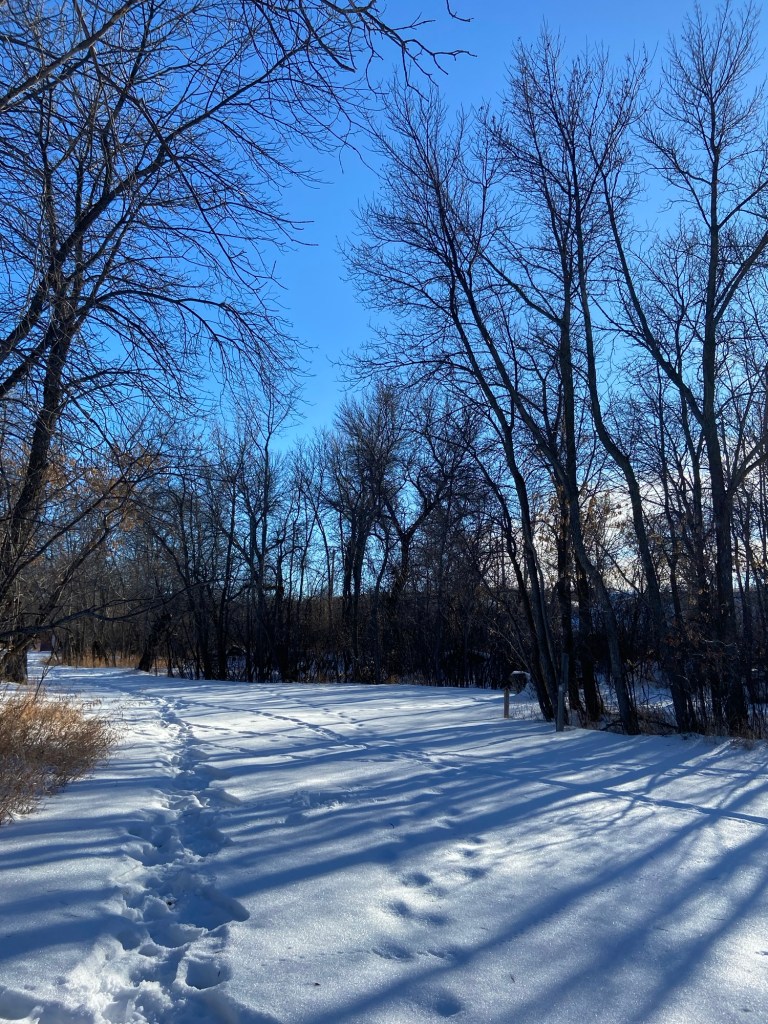
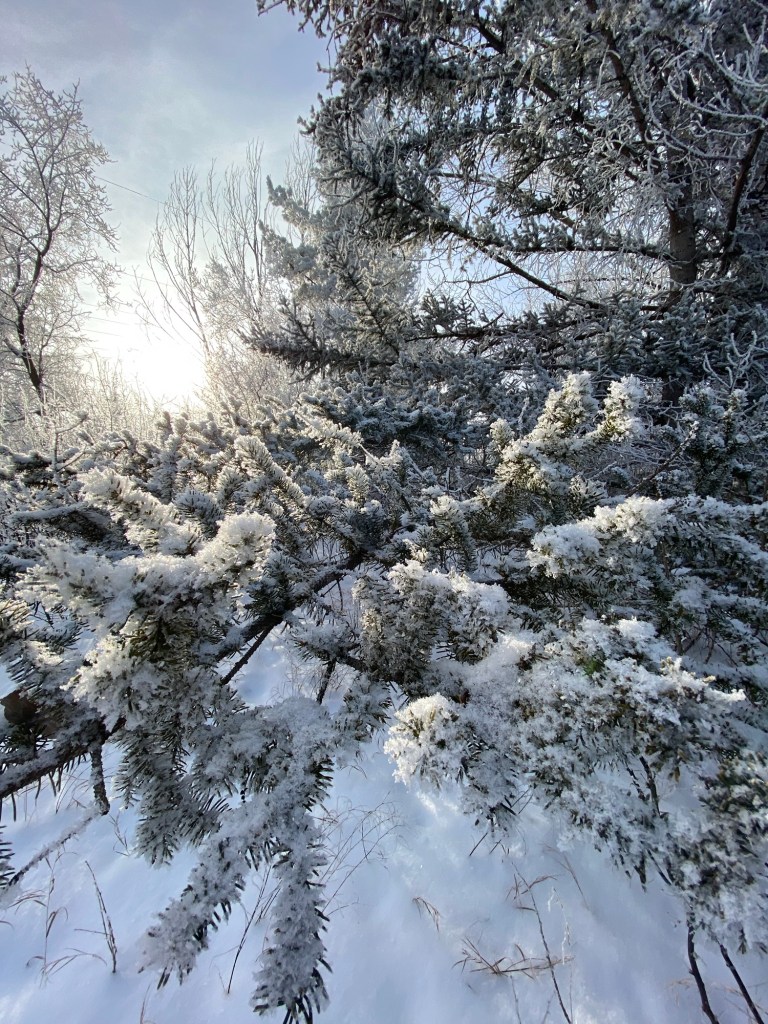
In the forest, no one critiques the tension of a tree branch as it cradles more and more snow and ice.

The bitter prairie wind does not apologize for taking our breath away.

The river does not hurry spring.

Outer stillness teaches inner calm.

When I step into the trees, the sensory world steadies me:

  • The sharp edges of wind swept snow
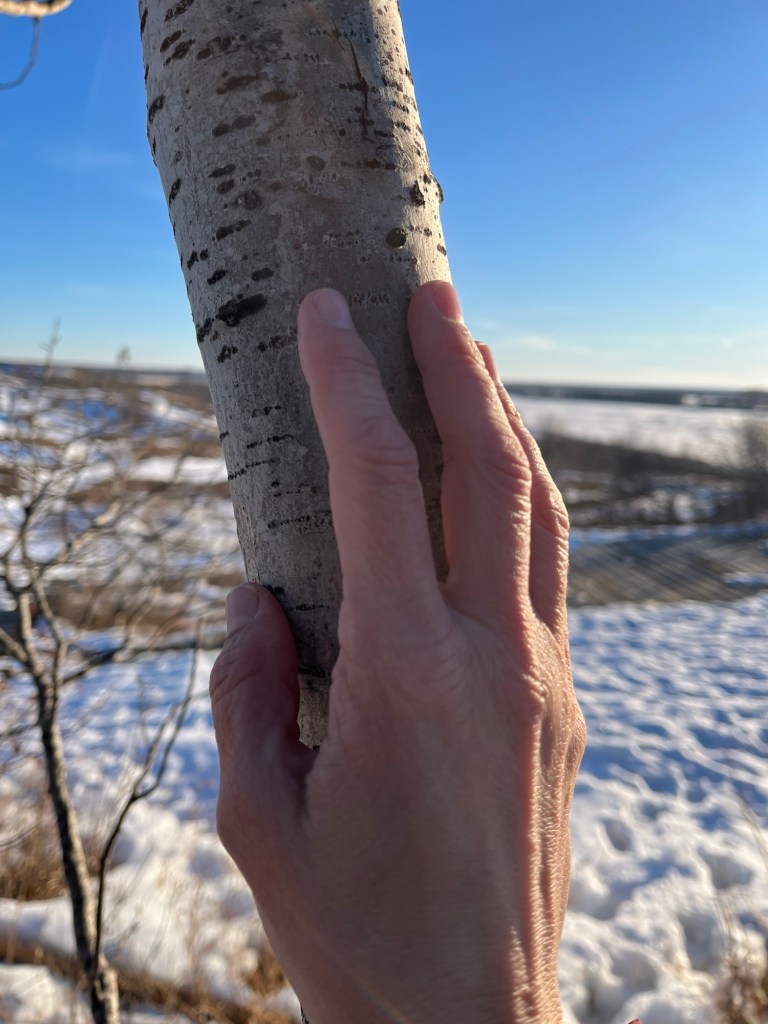
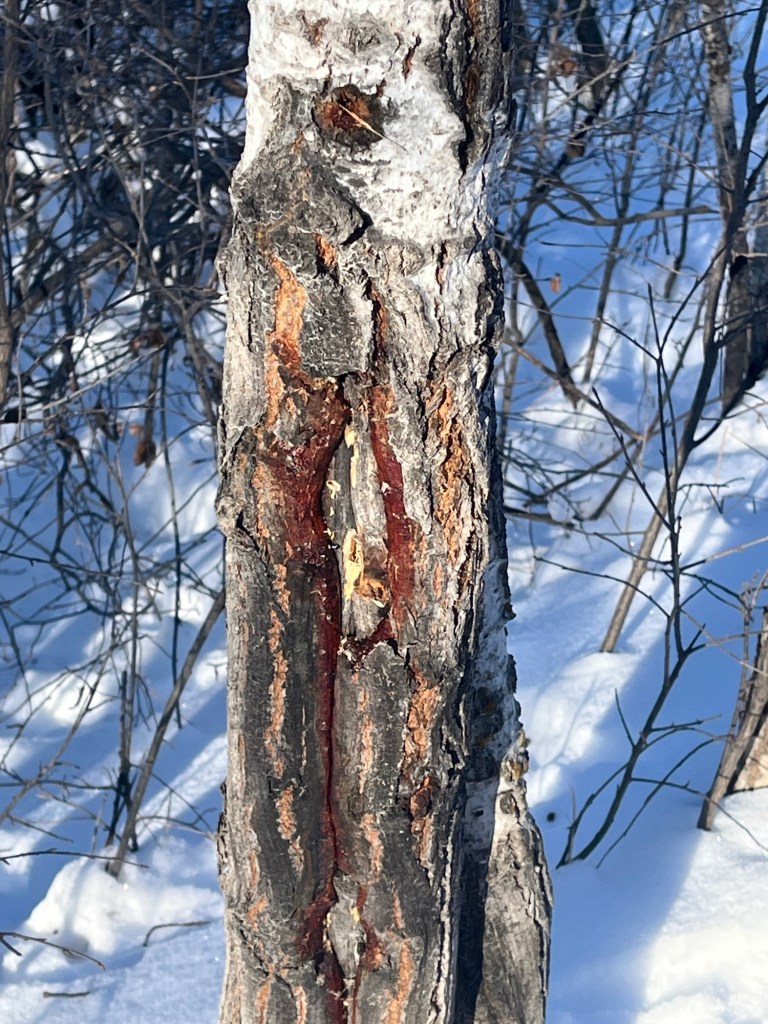
  • The cool texture of bark beneath my palm.
  • The sound of wind moving through leaves like breath.
  • Light filtering through branches in patient patterns.
  • Look closely
  • Breathe deeply

The forest is not rushed. It is not impressed or judgemental of us. It simply grows toward light.

And in that space, I can finally ask:

Which springs belong today?

And the incredibly hard question. Where do I need to let go?

The mind, like water, when it is turbulent, becomes difficult to see. When it is calm, everything becomes clear.

Prasad Mahes

🌲 Forest Therapy Practice: Four Anchors for Inner Calm

This practice is especially for seasons when your life feels uneven.

You are not rebuilding your entire life today. Only choosing your four.

Time: 30–45 minutes

Location: A quiet trail, grove, or open field

1. Arrive in Outer Stillness

Stand still. Feel your feet on the earth. Take three slow breaths, extending the exhale. Let your nervous system soften.

Notice where your body feels tight. Jaw. Shoulders. Back. Belly.

2. Choose Your Four Anchors

Whisper four priorities that truly belong in this season. No more.

  1. Health.
  2. Immediate family.
  3. Faith.
  4. One small joy.

Imagine each anchor as a tree spaced evenly around you.

Notice the balance.

3. Walk the Circle

Slowly walk in a gentle circle, pausing at each imagined anchor. Ask:

Is this spring too tight? Is this one neglected? Does this truly belong in this season?

Let answers arise without judgment.

4. Release One Spring

Name one responsibility, expectation, or internal pressure that does not belong right now.

Imagine physically unhooking it.

Notice the shift in your breathing.

5. Sit and Receive

Lean against a tree or sit on the ground. Feel the support beneath you. Let outer stillness hold what you cannot.

Stay in silence.

6. Gentle Reflection

When you are ready, journal:

  • What would happen if I allowed this season to be enough?
  • What does my body need more of?
  • What am I brave enough to release?

True intelligence operates silently. Stillness is where creativity and solutions to problems are found.

Eckhart Tolle

You are not weak for having fewer springs. You are wise for choosing them. Balance may not look symmetrical. Your mat may not look like someone else’s.

But even a crooked mat can hold us.

And in the quiet of the forest, we learn to stretch for only what we are meant to hold.

What a blessing it is to look around and see pieces of my old prayers scattered everywhere.

Sarah Trent

“Just Tired” Isn’t Even Close: Living with ME–CFS and Finding Healing

The body is not an obstacle to the soul, but its instrument and means of expression.

— Pope Saint John Paul II

When I tell someone I have chronic fatigue, they often laugh softly, like I’ve made a dramatic overstatement.

Don’t we all have chronic fatigue these days? I imagine them thinking.

And I get it. Life is exhausting. The world is loud. Everyone is stretched thin.

But when you add the ME part. That’s the myalgic encephalomyelitis. Suddenly the picture changes. Here is a quick breakdown of ME and some of its symptoms.

ME–CFS isn’t about being worn out from a long day of being human. It didn’t start from lack of conditioning. I did not cause this.

It’s about being tired all the time.

Pushing through all the time.

And paying dearly for it afterward.

I like to share this graphic 👇🏼 that shows a breakdown of the name of the condition. More than a bad night’s sleep or a long, hard day. This isn’t a mindset problem. It’s not laziness. It’s not weakness. It’s a body that can no longer produce or distribute energy the way it once did.

And that comes with grief.

Grief for the skills and abilities I no longer have.

Grief for the version of me that could say yes without calculating the cost.

Grief for the way I worry I’ll be perceived (unreliable, flaky, distant) when really I’m just surviving in a body that demands a different rhythm.

Unmasking the True Price of “Energy Takes Everything”

I’ve had to pattern my life after my condition instead of pushing through like the rest of the world celebrates doing.

And some days, that still feels like failure. Even though I know it isn’t.

I’ve found a rhythm that works for me.

And I want to be confident in it.

It does not matter how slowly you go as long as you do not stop.

— Confucius

But here’s the part people don’t see:

Everything takes energy.

Take the feelings you have at the very end of a long day:

Hard to find something to eat because every step feels heavy. Hard to have patience for the people in your space. Hard to think creatively or problem-solve.

Normally, you’d say: I just need a good night’s sleep. Then I will be myself again.

But when that good night’s sleep never comes. Neither does the motivation, the emotional regulation, or the clarity to solve even the smallest dilemmas.

And those complications build… and build… and build.

Then there’s the big life stuff I feel like I will never be able to address when I am always dealing with constant minor emergencies. A migraine. A vertebrae stuck out. Spasms.

What’s my purpose? How do I set priorities? How do I live well in this body? How do I figure it all out when my brain just wants to sleep?

Sometimes I end up spinning in a washing machine of choices that made sense in the moment:

Made sense in the moment: “I have to eat well.” I go get groceries. Get home. Collapse. Can’t get back up. Order pizza (the dirty laundry I get stuck in a spin cycle with).

Made sense in the moment: “I have to practice self-care.” I gather everything. Run the bath. Lay down… and don’t have the energy to actually do the care. Back to bed (the dirty sheets I get tangled up in).

Made sense in the moment: “I have to take care of myself.” Someone needs help. I don’t respond. Then guilt rushes in and it steals what little peace I had left. (those laundry items that always pass on a grease stain, no matter how many times its been washed)

So I’ve learned to live differently.

My rhythm now is:

  • rest
  • spiritual study
  • learning
  • creating
  • easy self-care
  • easy and somewhat healthy meals
  • visiting like-minded souls
  • serving where I can
  • protecting my peace

Nothing is set in stone.

Nothing is required.

It’s simply what works for me

My story of ME

It seems easy. I’m tired. I should sleep. But sleep doesn’t help. I just go between varying types of tired.

Nerves are easily triggered with this condition. So bringing the vibrating down and the peace level up is critical.

I enjoy baths. They initiate a truce with my body. Where the pain subsides. I can lay suspended and liberated.

When I am in need of one of these sessions I lay in bed and think about how wonderful it would feel.

Often I don’t have the strength to begin. To gather myself and my stuff. To stand while the tub starts to fill. To change temperatures by changing rooms. To rise and remember all the places in my body that are not aligned.

It all becomes too much. And the fabulous results are lost in the desire to conserve what little energy I have.

Your pace is not a moral issue.

— Devon Price

What the Science Says and Why the Forest Helps

As a forest therapy guide, I’ve seen again and again how nature meets people where their bodies are not where culture thinks they should be.

ME–CFS involves:

  • dysregulation of the nervous system
  • chronic inflammation
  • impaired cellular energy production (mitochondrial dysfunction)
  • heightened sensitivity to sensory input
  • post-exertional malaise, where even small effort leads to disproportionate crashes

This means the body is stuck in a protective mode, constantly conserving resources.

And here’s where the forest becomes more than beautiful scenery. It becomes medicine.

Nature’s Recharge: Forest Therapy’s Cure for ME–CFS and Exhaustion

1. Calms the nervous system

Time in natural environments lowers cortisol and shifts the body from “fight-or-flight” into “rest-and-digest.” For someone whose system is always on high alert, this is profound relief.

2. Reduces inflammation

Phytoncides, which are natural compounds released by trees, have been shown to support immune balance and reduce markers of inflammation. The body doesn’t have to work as hard to regulate itself.

3. Restores attention without effort

Nature offers soft fascination. A gentle sensory input that allows the brain to rest while still being engaged. This is vital when cognitive fatigue makes any thinking feel heavy.

4. Reframes worth and productivity

In the forest, you don’t have to prove anything. Trees don’t rush. Streams don’t apologize for slowing down. The environment itself models a different definition of enough.

For those of us living with ME–CFS, the forest reminds us:

We are not broken machines. We are living beings adapting to different conditions.

Embracing Serenity: Forest Therapy for ME–CFS & Deep Fatigue

This practice is designed for very low energy days. No hiking. No goals. No fixing.

The “Enough as I Am” Practice

Time: 10–20 minutes (or less)

Place: A bench, porch, backyard, park, or even near an open window

  • Arrive without performing
  • Sit or lie in a comfortable position
  • Let your body choose
  • Let one sense lead. Instead of scanning everything, pick just one: listening to birds or wind feeling air on your skin noticing light through leaves
  • Breathe like the trees. Inhale slowly. Exhale even slower.
  • Imagine your breath moving at the pace of a growing branch (not a ticking clock)
  • Offer yourself one true sentence. Silently say: “In this moment, I am doing enough.”
  • Leave before you’re tired. Ending early is not failure. It is wisdom.

There is a difference between resting and quitting. One restores you. The other abandons you.

Bansky

Strength in Unexpected Places

Living with ME–CFS has taught me that strength doesn’t always look like endurance.

Sometimes strength looks like:

  • stopping early
  • saying no gently
  • choosing peace over productivity
  • letting the forest hold what I can’t

I am not lazy.

I am not weak.

I am not failing.

I am adapting.

Your best is what you can do without harming your physical or mental health. Not what you can accomplish when you disregard it.

-Unknown

And in the quiet wisdom of trees, I’ve learned something the world forgot to teach.

A life lived slowly is not a life lived small. Sometimes, it is the bravest life of all.

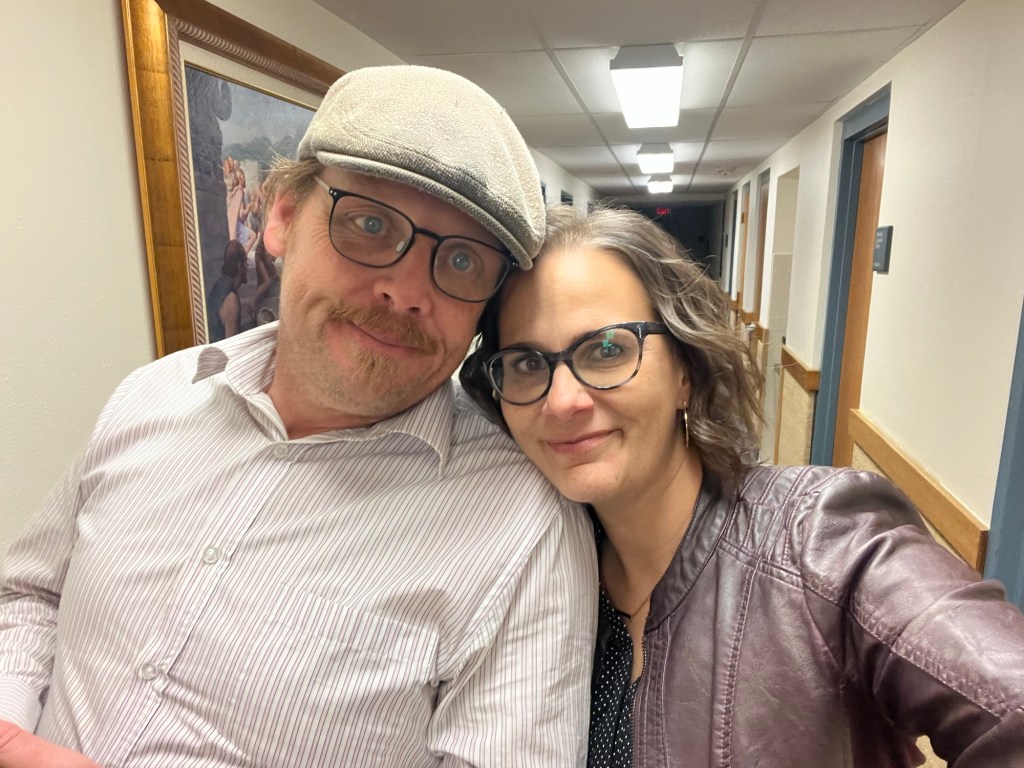
Us on New Year’s Eve before getting too tired and heading home around 10:00. Usually we are the people that when asked if we want to get together at 8:00 we wonder am?!? or pm?!? Actually never mind, both are a hard pass.

Happy New Year! To all those suffering, you are not alone, your worth is not diminished by your ability, you are seen and welcomed here.