Minor Injury and Connective Tissue Disorder: Cue My Prison Sentence

To tell me I cannot run is to hold my body in contempt.

-Friedrich Nietzsche

This past weekend I was out boating with friends. The sun was shining, laughter was everywhere, and the water was perfect. My absolute favorite kind of day. Until it wasn’t.

The beach is so amazing. We all lay around in our undies with complete strangers eating sandy sandwiches and chips. What a world!

But this trip was too eventful for me. I slipped off the back of the boat. A simple misstep—my foot chose the slippy part before the ladder instead of the grippy part. My skin slid down the metal and scraped in a couple of places. For most people, it would be a painful annoyance. Maybe a couple of Band-Aids and an “ouch” when the rubbing alcohol stings.

But for me, with a connective tissue disorder, a “minor” injury isn’t minor. It’s my own prison sentence.
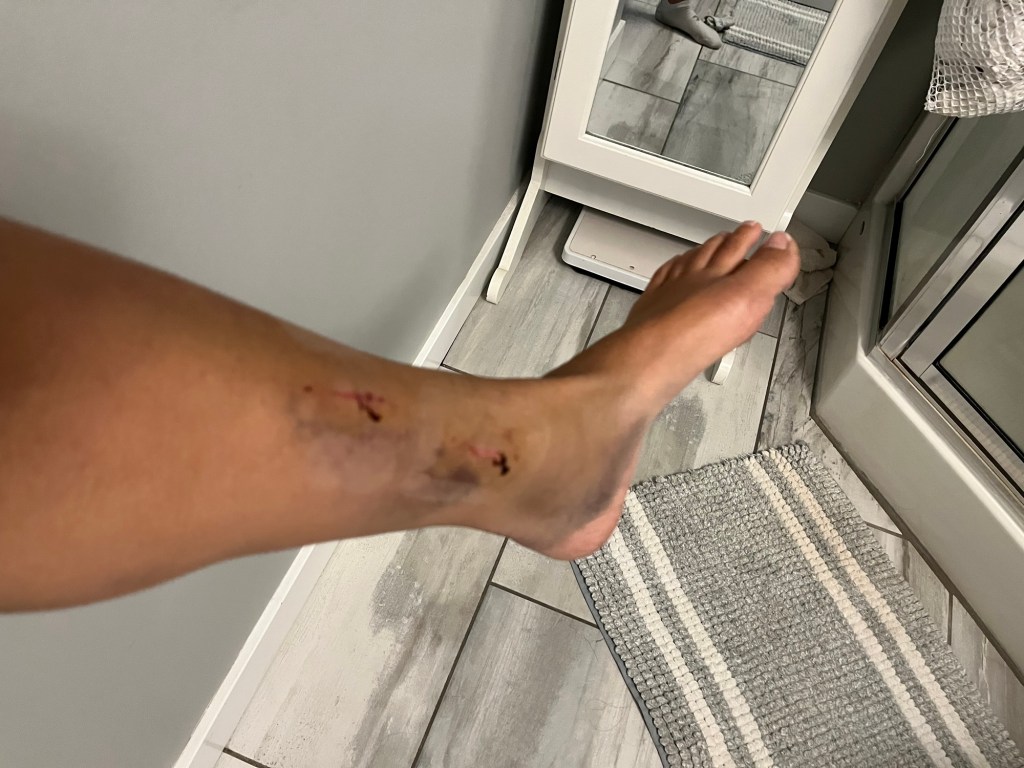
Day 3 post slip

The moment my leg hit and the skin tore, my body responded like a toddler throwing a tantrum. Two points, swelling to the size of small eggs appeared instantly. My vision swam, nausea hit, and I nearly fainted. I had to be rushed off the beach. Reluctantly, I might add. I just wanted to stay and play. 🤷‍♀️

And yet, as I moved it around, the swelling went down. After a few ginger steps, walking proved feasible. So, I stayed on the beach. Carefully. Pretending things were fine. Until the next day, when I accidentally touched one of the angry spots and nearly fainted again from the pain. Cue swelling, round two.
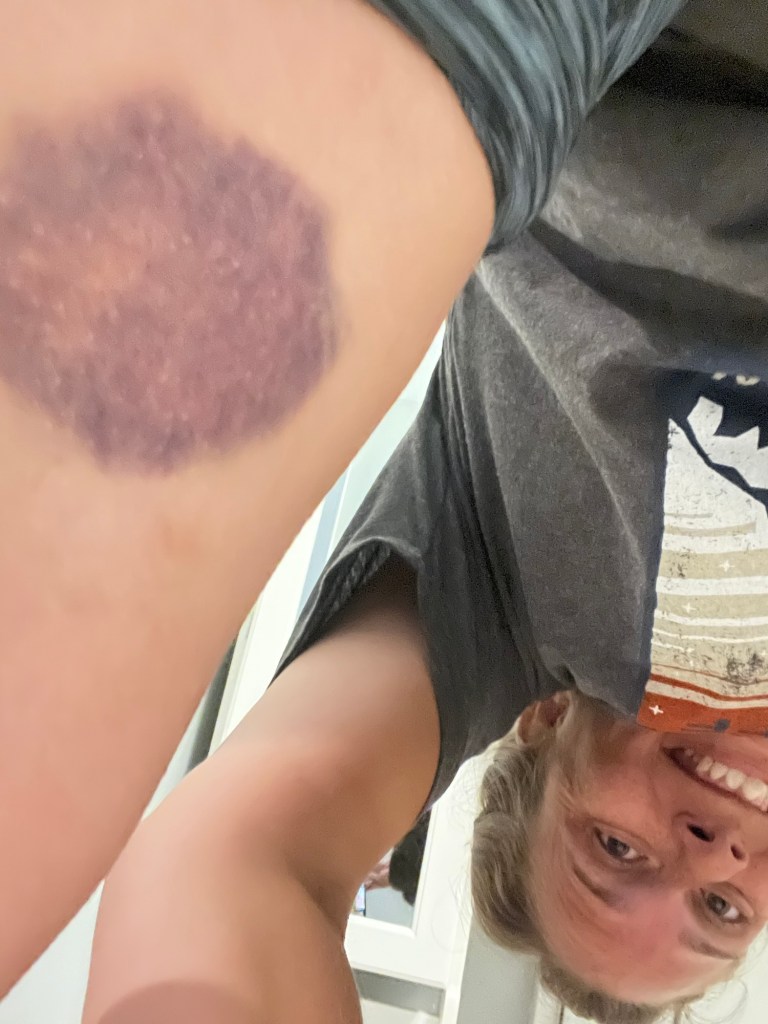
This bruise on the back of my leg also happened in the fall.

Nothing feels broken. This isn’t a cast-and-crutches type of injury. This is a – my tissue is angry and having a meltdown kind of injury. The kind that will ripple through every layer of healing, slowly, stubbornly, piece by piece.

The Cascading Consequence

Here’s what happens with mobile joints and connective tissue disorders:

  • Immediate tantrum. Tissue swells, pain spikes, body goes into shock.
  • Muscle aftermath. Even if the muscle wasn’t directly injured, it’s recruited in the act of catching yourself, and now it’s tight, inflamed, and waiting its turn to protest.
  • The balancing act. I need to keep running to maintain the strength that keeps my joints in place, but I also can’t overwork what’s injured.
  • Scar tissue sneak attack. When scar tissue forms, it doesn’t just “heal.” It tugs on joints already prone to slipping, pulling them out of place.

This 👆is why what looks minor to you becomes a long-term balancing act ⚖️ for me.

There is no test, no monitor, no scan that can tell us exactly what’s happening.

It’s me, listening to my body.

And my physiotherapist J, patiently piecing me back together one session at a time.
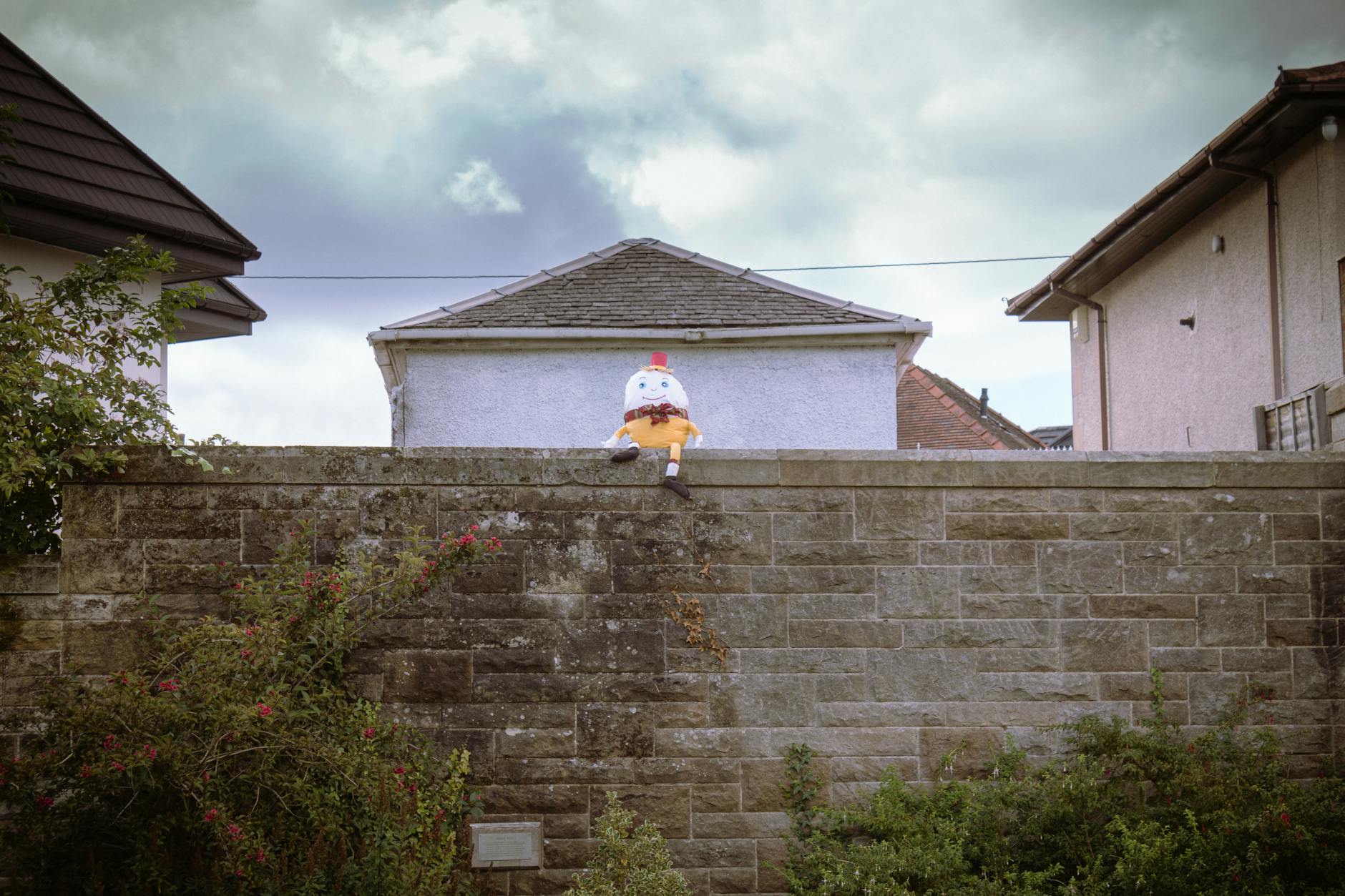
Photo by Mohamad Salam on Pexels.com

👆🏼 Me as Humpty Dumpty right before needing to be put back together again. 👆🏼

What most people heal from in days, I will heal from in months. 🗓

K️oekentroost

Dutch. “the emotional support cookie you eat after a mildly inconvenient day. (in my case it will be pretzels dipped in nutella)

The Weight of Waiting

The hardest part isn’t the pain. It’s the waiting.

Waiting to run.

Waiting to trust my joints again.

Waiting to see what the scar tissue will do this time to wreak havoc.

It feels like all the work I’ve put in at the gym—months of biking, running, strengthening—could slip away in the span of a single misstep.

That’s the prison. The confinement. The pause button ⏸️ on a life I’ve fought so hard to keep moving ▶️ .
Forest as Healer

But here’s where I return to what always saves me: the forest.

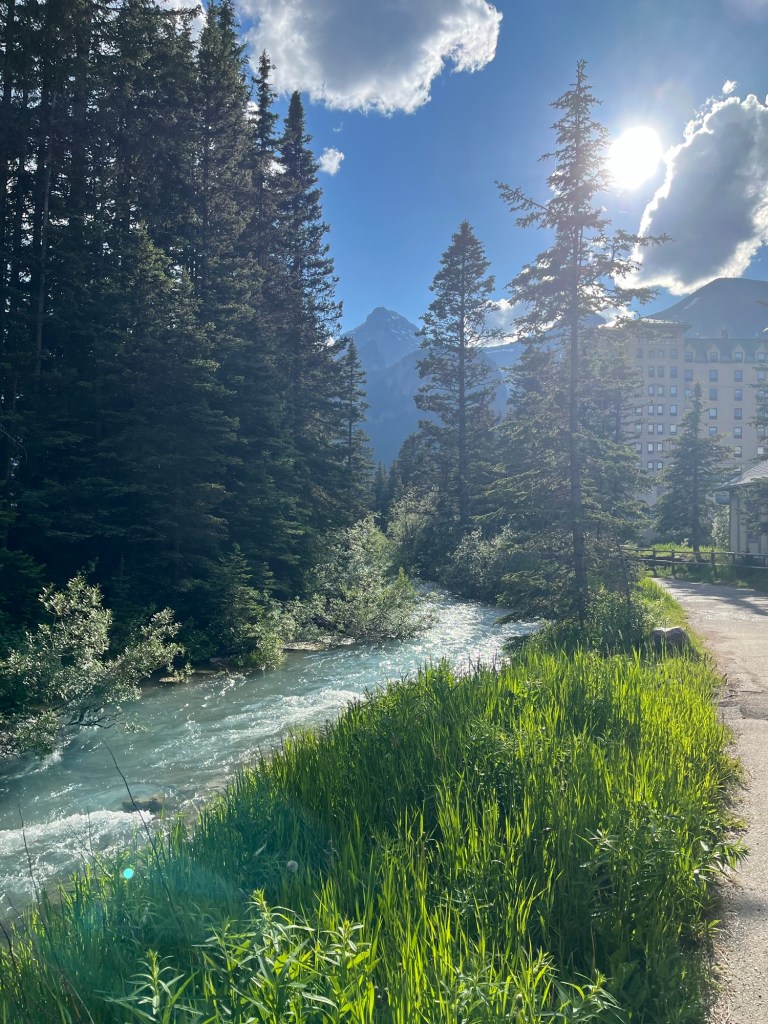
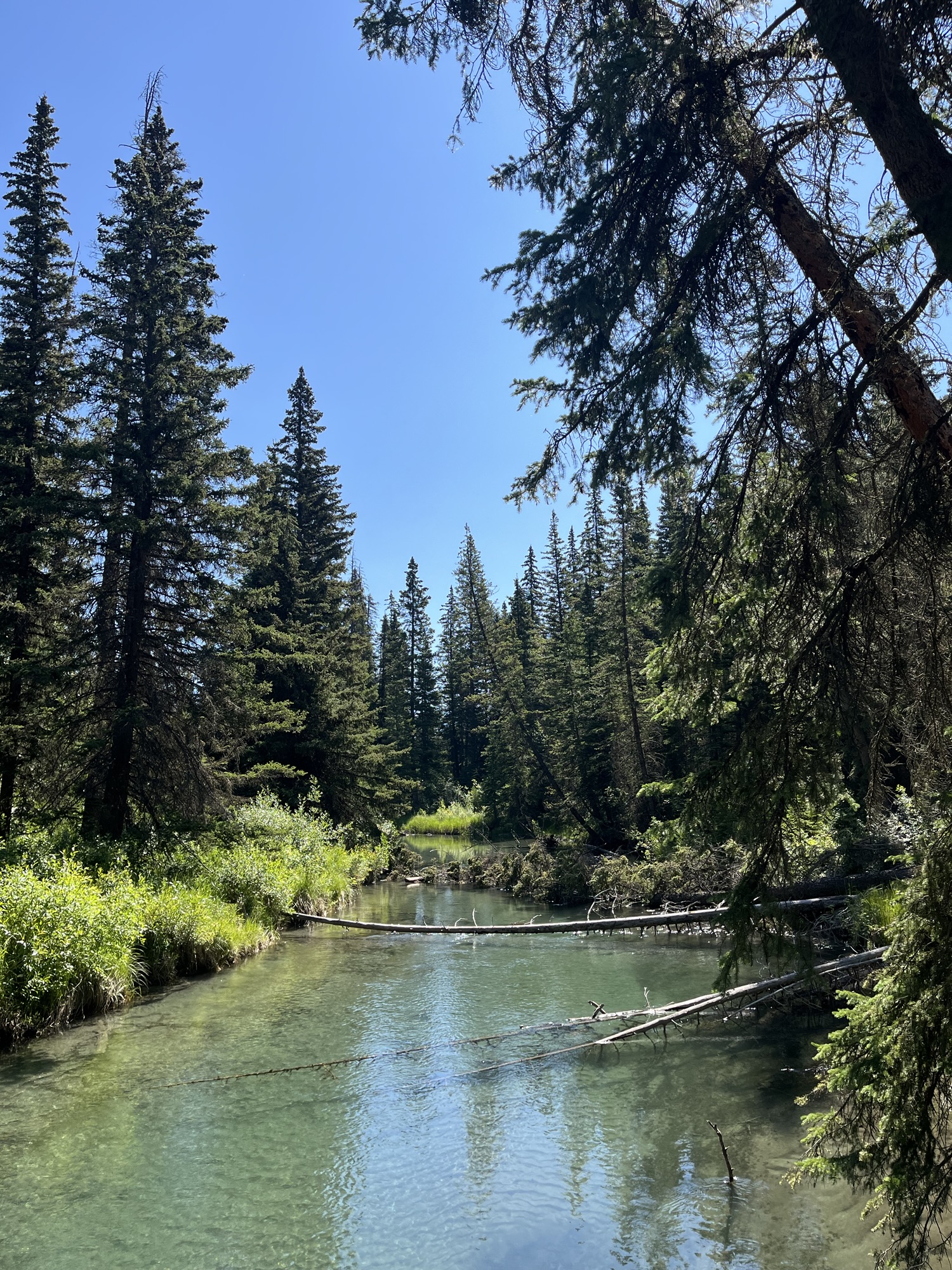
When I step (or hobble) into the trees, I remember that healing doesn’t always look like forward motion. Sometimes it looks like stillness. A dense canopy could be covering spectacular growth. The river’s gentle flow might be a glimpse of the heavy current below. The trees stand, patient and unwavering, reminding me that growth and repair take the time they take.

Forest therapy gives me what no physiotherapy session can: the intuition to hear what my body is really saying.
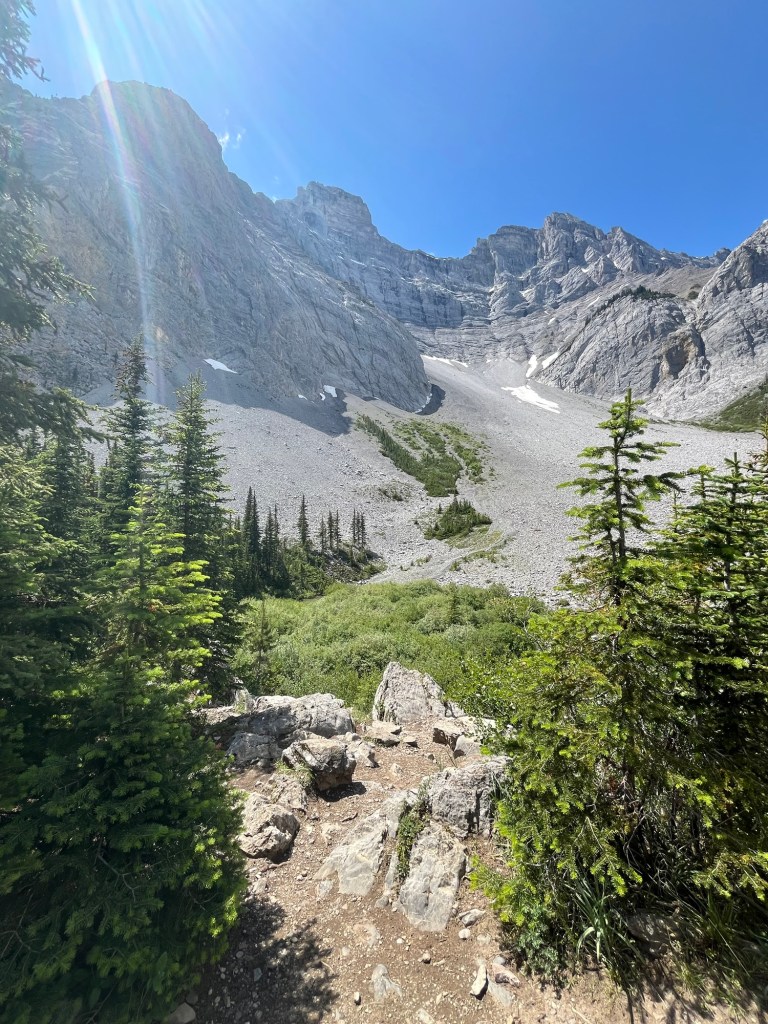
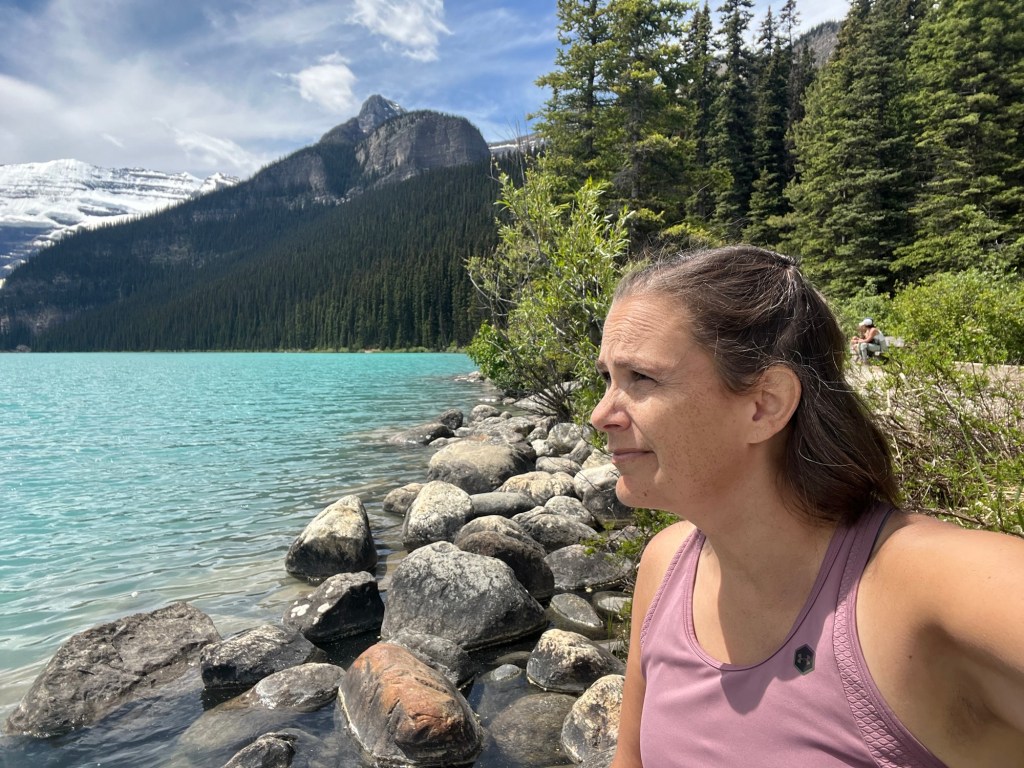
My blessing in life is to have a physiotherapist that encourages me to spend time there. And to follow my body’s intuitive pace and direction. J pursues us and provides support along the way.

It’s in the quiet green spaces 🌲 where I learn when to push 😖 and when to rest 💤 . Where I can breathe out the frustration 😮‍💨 and breathe in the steadiness of the earth 🌍 beneath me.

It is in the forest where I believe that healing isn’t just possible—it’s already happening.

When you read the list of benefits, do you see the connection? Grounding will be one of my greatest therapies in each phase of mending.

Words to Carry Me
“Adopt the pace of nature: her secret is patience.” — Ralph Waldo Emerson

“And let us not be weary in well doing; for in due season we shall reap, if we faint not.” – Galatians 6:9 
“The trees that are slow to grow bear the best fruit.” – Moliere

“Even the strongest storms don’t last forever. The sun always returns to the forest.” – Unknown

And she will keep coming back to life, over and over again, because beneath the skin of this gentle human lives a warrior unstoppable.

-Annabelle M Ramos

Healing with mobile joints is a marathon made of tiny sprints and long pauses. It’s the art of balancing strength with surrender. And when the world feels like it’s closing in—when a scraped leg feels like a prison sentence—the forest opens its arms and says, you are safe here. Take your time. Heal.
My veins are filled with stories of survival.

– Mitali P.

The Inconvenient Truth About My Connectivity Disorder: and what forest therapy has done to help

And sometimes I have kept my feelings to myself because I could find no language to describe them in. – Jane Austen

I had a cousin at a family reunion ask me what it is like to have a connective tissue disorder. For anyone that is familiar, I have something close to Ehler’s Danlos Syndrome. Essentially what that means is that I have extremely mobile joints.

My cousin inquired how such a thing affects my day to day life. The question was so kind and thoughtful but I was thrown off guard.

Trying to sum up my medical history and symptoms and how it has affected me in the past and how it affects me now is like trying to perform open heart surgery with a Degree in Finance and the tweezers from the game of Operation.

My mind was starting to poke at a few entry points but it’s so all encompassing. I couldn’t find a place to start.

I was saved by the commencement of a presentation that we both wanted to watch. I didn’t end up answering her question.

But it is a query to which I’d like to be able to respond. I am going to attempt to do so here.

MY main issue with hypermobile joints is that, as the song goes, Every Now and Then I Fall Apart. Except every now and then should actually be all the time. I am lucky enough to have some ligament strength. There are those who suffer much worse than I do.

Collagen is the glue that holds our bodies together and gives our tissues their strength. It affects our skin, bone, muscles, cartilage and organs. So when we are asked what part hurts… it’s just easier to ask what doesn’t hurt.

My connective tissue disorder is nothing compared to what others go through. As with so many disorders there is a spectrum to illustrate the severity. While there are others who suffer more than I do there are also those who suffer less. To clarify, I am not talking here about occasional aches and pains. That pain is also valid. But we can all agree it does not grant understanding of chronic pain/ illness.

Mercifully, I don’t suffer from dislocations. Only from tiny subluxations all over my body. They are sometimes referred to as tiny traumas. That makes them sound so cute.

Your joints are supposed to slide around in their sockets. But with a connective tissue disorder, your ligaments and tendons don’t have the strength they need to hold you from sliding out too far. Once it goes past a certain point, the bone will get stuck. This is called a subluxation and will need manipulation or massage to get it back in place.

I’m not sure how this manifests in the lives of other sufferers. But for myself, due to the length of time this has been happening and the traumas that have weakened joints, there has not been a time in over a decade that all my joints were in at the same time for more than a day.

This means my body is always “upset”. There is no rest. It is always working to stay on top of the pain. My muscles have to take over for the injured or weak joints which is also tiring.

I’ve read that people with EDS have high adrenaline, making it hard to fall asleep. I can relate. Adrenaline is great! Until it’s not. It has helped me get through more than one function or event despite my limitations. Keeping me going until the work is done or the party is over.

The danger in using up those adrenaline reserves is that I do not recognize when I’m in that mode. I still think I am awake and in tolerable pain. When with no warning I am suddenly exhausted and past the point of pain relief. I know others with chronic pain who do more than their fair share of this a well.

If you suffer from chronic pain, be aware of your adrenaline reserves and don’t run them empty.

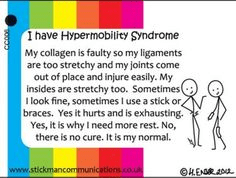
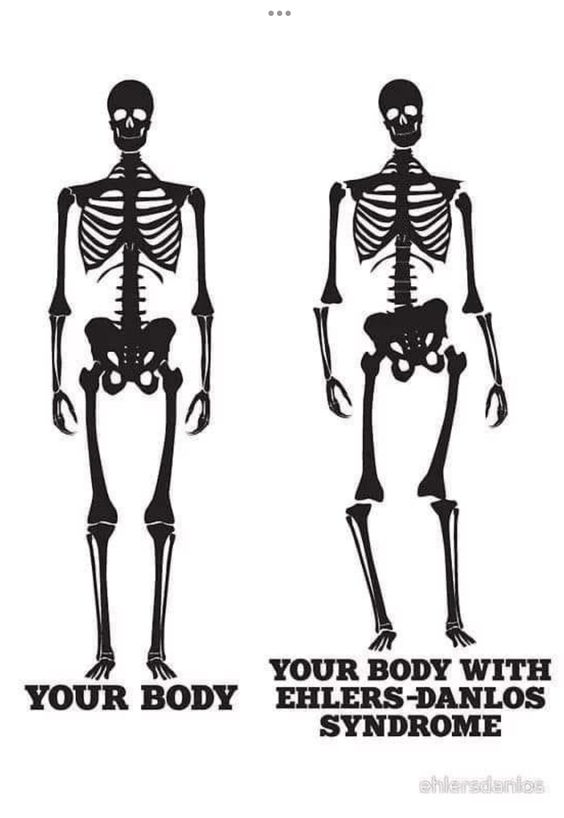
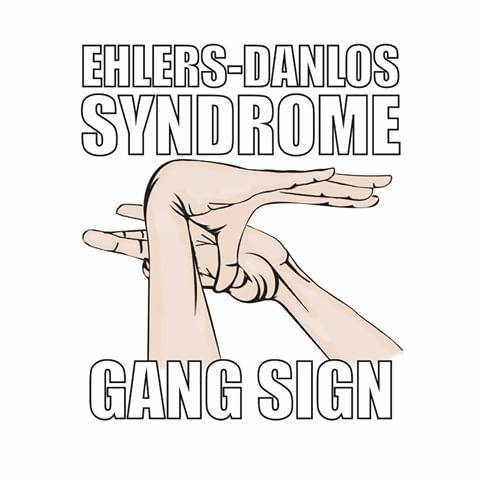
I mentioned I don’t have Ehler’s Danlos Syndrome (EDS) but something similar. I use their images because they apply to me.

I heard a fellow sufferer say once that their joints go out more than they do! I concur. My body does not like the evening, or the cold, or anything too loud or stimulating. It is a picky body. Staying in is the best plans for this lady!

But I can sing along with the song, I’m Flexy and I Know It. That’s the words, right?

Sometimes a picture can say it all.

If you can do this you may have a connective tissue disorder. Who knew? I thought it was just a fun party trick to be able to contort my body for the amusement of friends.

The reason I do some explaining about my disorder is to hopefully connect with those who are suffering from some of the same issues. It can be difficult for generally healthy people to understand. With the best of intentions they will give you all the medical advice you never wanted. In most cases it won’t apply. General health advice will often not help those with chronic illness.

I am still healing. I have a ways to go. But to use the idea of Stephanie Spark, I want to walk through the flames of this hell with buckets of water ready to turn around and pour it on those still consumed by the fire.

To my fellow sufferers, do not doubt yourself. You are a warrior.

Our bodies are not made to deal with the level of toxins in our world. Add to that high levels of stress, lack of sleep, medications, surgeries, etc. So what can we do?

I have an answer for the healthiest to the most toxic ridden among us.

Forest therapy.

Going into any natural space is so beneficial. Ground. Meditate. Pay attention to your surroundings. Wrap up warm and breathe in the fresh, crisp air of fall.

When you are ready to practice forest therapy with a guide to get the greatest benefits, reach out and contact me. I can help you maximize the benefits you experience in the forest.

Live in each season as it passes; breathe the air, drink the drink, taste the fruit and resign yourself to the influence of the earth. – Henry David Thoreau