Mind-Body Connection: Nature’s Soothing Benefits

Your body is not a machine, it’s a conversation.

-Jennifer Perrine

I remember a morning in spring. There was still a noticeable chill in the air. I slipped outside, to the sights and sounds of my summer second home.

My muscles were tight, my mind crowded with worry and pain—nothing dramatic, just persistent soreness that has become my constant companion.

I wandered toward the trees, the sound of the wind through the leaves soft but insistently present. I closed my eyes. I felt my breath slow. My shoulders dropped. And, almost imperceptibly at first, the ache that had built over a winter, within me softened.

That moment wasn’t some mystical escape. It was evidence of something real: the mind-body connection responding to something ancient: nature.

This post is a little more technical than some of my others. In this post, I want to walk you through the science behind how nature calms the nervous system, lowers pain perception, and gives the body a chance to remember how to rest.

This is not just a nice idea or a self-help quip. I see it working in my life, and the research backs it. I share some of that research in the links provided. Feel free to check it out or to give those links a hard pass.

Mind Meets Body: A Dialogue of Perspectives

Healing is not forcing the body into a state of ‘perfection.’ It’s listening to what it has been trying to say.

-Dr Joe Dispenza

First: we are not two separate things. The nervous system is constantly sensing, interpreting, and “talking” to our organs, muscles, immune system, and even to our thoughts and memories. That internal sensing is called interoception — our body’s ability to monitor its own internal state (heart rate, gut sensation, breathing, tension) and for the brain to make meaning of it. 

When we live under chronic stress or chronic pain, that conversation becomes distorted. The sympathetic branch of our autonomic nervous system (fight-or-flight) is persistently overactivated. Our brain becomes hypervigilant to threats, amplifying pain signals, even in places that may no longer need it. 

But there is a counterbalance: the parasympathetic state (rest-and-digest) — a state where the body repairs, digests, heals, breathes deeply.

Engaging that side is essential for true resilience. And nature offers a powerful entry point into that parasympathetic realm.
Querencia

{Spanish concept}(n) a place where one feels emotionally safe, a place from which one’s strength of character is drawn.

Nature’s Remedy: Calming the Nervous System

The forest is not merely an escape, it’s a return — a remembering of who we are.

-Unknown

Here is where the “nice idea” begins to feel like a compelling method.

1. Visual contact with nature calms brain & autonomic activity

This overview demonstrates that simply viewing natural elements—flowers, green plants, wood—induces shifts in the brain and the autonomic nervous system, compared with urban or non-natural environments. Link

More recently, neuroscientists have shown through brain imaging that exposure to nature lowers pain perception by reducing neural signals associated with pain processing. Link

In one study, subjects viewed virtual nature scenes while receiving mild pain stimuli, and the brain’s “pain network” lit up less strongly than when viewing urban scenes. Link

2. Nature reduces physiological stress markers

Time outdoors helps shift us from sympathetic arousal toward parasympathetic. Essentially, nature helps us “come out of our heads and into our bodies.” Link

Forest bathing (shinrin-yoku), for example, has been associated with lowered cortisol, reduced blood pressure, decreased heart rate, and improved immune function. Link

3. Attention restoration & easing mental fatigue

One pillar in environmental psychology is the Attention Restoration Theory (ART), which states that when we gaze at nature’s “soft fascinations”—rustling leaves, flowing water, birdsong—we can rest our directed attention (the kind used to suppress distractions) and recover cognitive capacity. Link

When our cognitive resources are less taxed, the brain has more “bandwidth” to regulate our threat systems and lower baseline arousal.

4. Pain modulation is emotional & contextual

Pain is never just a signal from tissues; it is affected by context, anticipation, emotion, and attention. One fMRI study found that anticipation of pain modulates how strongly sympathetic nervous responses occur, and that the brain’s anticipatory circuitry has a top-down influence on peripheral responses. Link

In simple terms, if your brain predicts threat, your body braces for it — heart rate rises, muscles tense, and pain signals grow louder. But when your mind learns to recognize what’s happening without adding fear, it begins to change that loop.

This is exactly what happened to me.

After my hysterectomy, I wasn’t able to take any hormone replacement treatments — they aggravated my other conditions. My body still struggles today to regulate temperature. I hot flash every thirty minutes. Down to a minute. I’ve timed it.

After about a year of this, my body simply couldn’t keep up. The constant swing from sweltering heat to shivering cold became unbearable. There was no rest. No pause between storms.

Then I started to notice the toll — not just physically, but mentally. My nervous system was on edge all the time, anticipating the next wave. I realized that the dread itself — the bracing — was its own kind of suffering.

So I tried an experiment. When I felt that familiar rush rising, I paused. I prepared but didn’t brace. I reached for my water, turned on the fan, maybe sat down if possible. I still remind myself in those moments: this will pass. The less weight I give it — but the more gentle attention I offer — the easier it is to ride out.

These days, my hot flashes still come every thirty minutes. But they are not as draining. They are little blips on the screen — reminders that my body is doing its best to find balance. And in meeting that discomfort with compassion rather than panic, I’ve discovered something powerful: the way we feel our pain changes the way we experience it.

A Walk on the Healing Side

The wound is the place where the Light enters you.

-Rumi

Not long ago, back pain had eaten away my joy. I was down to minimal movement, scared of flare-ups, medicated, trying every therapy that sounded promising. Yet my life was shrinking.

I decided on a small experiment: every morning for two weeks, I would walk down the lane of our farm (or sit quietly under a tree if I couldn’t walk). I would try to notice one thing—perhaps a bird’s call, the play of light on water, a soft breeze. No goal, no agenda.

Day 1: I came back discouraged — I didn’t feel anything.

Day 4: My back still hurt, but I felt… calmer. My breathing was softer.

Day 8: The pain seemed less urgent. The thoughts around it quieter.

By day 14, I don’t know if the pain was less in absolute measure, but I am less ‘in it.’ I have more distance. More space.

Over months, I was able to move farther, sit longer. The pain never vanished, but its domination receded.

My story is not unique. What I was discovering is that the mind-body conversation can shift — the “volume” of pain need not always be maxed out.

The Secret Sauce: How This Works for Me and You

If you have felt that creeping tightness, that locked jaw, that ache that feels like both body and memory. When I walk through forested trails, when I sit by a lakeshore, when I simply stare at mossy bark and inhale the green air, I feel a shift. The chatter quiets. My breath lengthens. My internal tension softens. The pain, though still there, becomes less commanding.

The science shows these are not placebo effects. They are biological responses rooted in ancient neural circuits. We evolved in natural worlds. Our nervous systems know these landscapes. They remember how to open.

If you struggle with chronic pain, anxiety, overthinking, or tension, nature may be a tool you undervalue — not a luxury, but a medicine written into our being.

How to Make the Mind-Body & Nature Practice Relatable, Real, and Sustainable
Here are some practical suggestions (adapt to your pace):

  • Start small. Even 5 minutes of forest view, or stepping outside to touch grass, can activate calming circuits.
  • Engage the senses. Smell, listen, feel textures, watch movement. Let nature draw you back from rumination.
  • Use “indirect nature.” If you’re indoors, look out a window, use nature audio, or view images/videos of nature — these have shown measurable benefit. 
  • Pair movement & stillness. Walking in nature is stronger than walking elsewhere. 
  • Be consistent. The cumulative effect matters. Some studies suggest 120 minutes per week in nature correlates with better well-being.  Link
  • Watch your attitude. Let go of “must heal fast” thinking. Allow nature to be patient, gentle.
  • Journal your experience. Track tension, mood, pain before and after nature time. Over weeks, patterns can emerge.

Epiphanies and Reflections: To Our Journey’s End

Nature does not hurry, yet everything is accomplished.

-Lao Tzu

We live in an era of constant stimuli, complications, and demands. Our nervous systems were not built for perpetual alarms. The ancient pulse of wind through leaves, water over stones, soil underfoot — these are languages the body still knows. Nature asks us lowly: come back. Listen. Breathe.

So next time the ache presses, try this: walk quietly through green, or sit beneath trees, allow your senses to soften, invite rest. You may find that pain loosens its grip, that your nervous system sighs, that mind and body remember their trust.

Peace is this moment without judgment. That is all.

-Dorothy Hunt

Perhaps part of the answer is: to slow down. To open to nature. To let the body learn again.
Understanding Cortisol: Significance and Solutions

There is something infinitely
healing in the repeated refrains
of nature- the assurance
that dawn comes after night
and spring after winter
-Rachel Carson

Cortisol: Your Body’s Cheeky Stress Hormone Revealed!

Cortisol is a hormone produced by the adrenal glands in response to stress. When the body perceives a threat, the hypothalamus signals the adrenal glands to release cortisol into the bloodstream.

Today on the blog, I share how I recognize high cortisol levels in myself. I also explain what actions I take to manage life and health when it spikes. If this sounds helpful to you. Stay tuned.

Are you subscribed? I have many plans in the works. To make sure you don’t miss out on anything forest therapy and sunbeam acres, subscribe to the blog. And make sure to follow me on Facebook, Instagram and X! I am watching the trails closely. You will be the first to know when and where to book your forest therapy walk.

Disclaimer: I am not a medical professional. The information I share here is meant to be helpful advice from a friend. If you have a physical ailment, see your doctor. If you have mental health concerns, talk to a mental health practitioner. This is my story. Maybe it will be helpful for you.

Cortisol is important. Levels typically rise in acute stressful situations. This helps the body in a number of ways to cope with the situation. Including increasing energy, enhancing alertness and suppressing non-essential functions.

However chronic stress can lead to prolonged elevated cortisol levels, which has a number of negative effects on the body.

There is a Native American teaching. Often attributed to Chief Tecumseh, philosopher and leader. “To survive the seasons, you must change with them.”

I am feeling the truth of these words.

When Life Decides to Take a Tailspin

My life is in constant motion. We are in another season of transition in our family. Between a husband, three kids and two grandkids, there is always something to adjust to.

Saw this somewhere. On a scale of 1 to Nature Valley granola bar, how much is your life falling apart right now?

I don’t mean to brag, but I’m at Nature Valley level. so. yeah.

Inure- to accustom to hardships, difficulty, pain, etc; toughen or harden; habituate

She can fall apart at night & still rise up in the morning. Strong women feel pain, they just don’t let it break them.

High Cortisol and Chronic Inflammation: Stressing Out Like It’s a Hobby!

Transition and change are some of my triggers. So I notice my stress level is high. Here are some of the signs I noticed in myself. Are you in the midst of this battle too?

  1. extra puffiness in my face
  2. my thin hair is thinning more quickly
  3. crazy sugar cravings
  4. supreme exhaustion
  5. irritated with everything
  6. waking up between 2-3am
  7. tense shoulder and neck muscles
Accurate depiction of me at 3 am nightly lately

When excess cortisol is present, it can affect the immune system. The lymphatic system helps manage the immune response by distributing immune cells. Which can counteract some of the immune suppressing effects of the cortisol. Chronic stress (cortisol being chronically released) weakens this system. This results in a build up of fluid and waste which should have been eliminated through the bloodstream. This can contribute to chronic inflammation and the worsening of stress related issues.

At least that’s what ChatGPT told me. I know how it affects me. I don’t understand all the science. Here are some of the ways that chronic inflammation shows up for me. It’s not just in the joints now that chronic inflammation is in play.

  1. Brain fog
  2. Cravings
  3. Food sensitivities
  4. Swollen lymph nodes
  5. Balance problems
  6. Always tired
  7. Rashes and skin issues
  8. Muscle weakness
  9. Dry eyes
  10. Body pain

Filipendulous- hanging on by a thread.

Unexpected Adventures in Anxiety: A Panic Attack Saga

Living with excess cortisol is not pretty. There was a time when I had stress overflowing out my ears and nose. I did not have a clue what to do about it. So it just kept getting worse. I lived every day on the edge of a panic attack. The smallest thing would send me over the edge.

We were living on a farm and my son was taking driver’s ed. It was during covid so time and schedules had no meaning. But the driver instructor was trying to finish up the drives where and how he could. Twice I scheduled with him and totally forgot. I had one last chance and then the boy would have to take his driver training all over again. Later that week I was on the rototiller in the garden. My son brought me my cell phone. He said it was the driver instructor. I had done it again! I had forgotten. Panic is not a strong enough word for what ensued.

We were a 15 minute drive away from where the boy needed to be. They would wait but not a minute longer. I got off the tractor and started screaming for my son to get out the door. For my husband to get in the car and take him. The seconds were excruciating. Nobody else seemed to realize the gravity of the situation and everything was moving in slow motion. As they left in the car I fell to the kitchen floor in a sweaty, dizzy, panting, messy puddle. That. Is. Not. Me.

How do I train my body to use its fight or flight response for its intended purpose? In an emergency. Not when missing an appointment, or calling to make a medical appointment, for that matter?

Boost Your Lymphatic System

Supporting the lymphatic system is always a good idea. Especially in times of stress and unease. So you don’t end up in the same messy puddle I did. Here are some of the things I do to get my lymphatic fluid moving again.

  1. dry brushing- really easy to incorporate into your pre-shower routine, with a bath brush or washcloth that is a little rough (if it gets wet and hangs to dry, that is the texture you want) brush towards the heart where it can be cleared (refer to pin following this list)
  2. small bounces and digging your heels into a rebounder
  3. hot/cold showers switching can trigger a “pins and needles sensation”, hot when you get in, cold for a while then back to hot
  4. lay on the floor and put your legs up straight against a wall
  5. deep breathing- guided meditation can help to focus
  6. exercise- about 20 min into my workout I start to cough phlegm, this is disgusting but a release of lymphatic fluid nonetheless
  7. infrared sauna- sweating and the healing warmth of the red light
  8. hydration! hydration! hydration!
  9. eliminating toxins from my home and diet where I am able
  10. castor packs, especially liver and lung

Forest Therapy: Nature’s Energy Source!

I kid you not, one of the best ways to clear those toxic feelings is to get some FOREST THERAPY! It is an energy giver. Here are some other energy givers:

  1. music (especially songs that makes you want to get up and dance)
  2. quality sleep (when you can)
  3. meditation
  4. proper nutrition
  5. doing something you love
  6. positive social interactions
  7. time in nature!
  8. sunshine!
  9. fresh air!
  10. movement!!!

Use any of these energy givers in a way that works best for you. Meditation and forest therapy are becoming more mainstream. Although they can sometimes still be classified as nonsense or new age. Meditation can be as simple as a prayer. Or a quiet space to picture something soothing. Try this one:

Breathe in deeply. Picture the oxygen giving life and energy to all the main organs. It enters all your cells. traveling through all your limbs, hands and feet. Like a river from its source travels to all the tributaries. Breathe out and picture the landscape of your inner body. Being nourished by the ebb and flow of your breath

Finding Your Spark: A Hopeful Message for Life’s Struggles

I have friends going through different but equally stressful life events. To them and all those suffering, I hope you’re okay. I know you’re not truly okay. But I hope that the sadness and stress don’t overwhelm you. That you can see cracks of light in the dark. That the shadows will allow you to break and heal and grow. But not swallow you. And that you know you’re not alone. Especially in the moments when you feel like you are. When I get through my darkness and find the light, I’ll leave it on for you.

There’s a new endorsement for emotions. Even the ones typically known to be “bad” are being ratified. Here’s how I am learning this concept.

Photo by Pixabay on Pexels.com

Sadness can be deep and feels like it can swallow you. Can you find joy in your sadness? Is there any portion that can be joyful in the grief? I am still sad about having to close my piano teaching business. Time has passed. I can start to find the joy. I loved my students. I experience joy in seeing them grow and accomplish things on their social media. The sadness mixed with the joy can now be bittersweet.

Uncertainty is a difficult place to survive. It comes part and parcel with chronic pain. What will tomorrow bring? Will I have the strength? How long? Can you find a place of peace to put that uncertainty? My peace comes in the practice of my religion. There is still uncertainty. But mixed with my stretching and reaching for peace, I find myself in a place of resilience.

I experience periods of mild anxiety now that I medicate. Previously my anxiety was off the charts. When I would play piano in a local festival it was not fun. The anxiety made even winning and accepting awards intimidating. Now that it is under control I can assess the situation more clearly. I try to find an element of excitement. If something is scary, where is the excitement? Writing a blog is pretty scary. Sharing it with people is even scarier. But it is exciting to see who reads and enjoys it. When I consider the excitement with the anxiety, I find anticipation.

Between anger and compassion is assertiveness. Between confusion and clarity is realization. Between love and loss is grief.

Negative emotions are warnings to pay attention to how we are feeling. When we join a negative emotion with a positive one, the gripping pressure of stress can be loosened. The negative emotion may be caused by life and its circumstances. The positive emotion is consciously chosen to accommodate the negative emotion in your body. To curb the negative effects of the first. It’s not an exact science. Let me know if this is something that resonates with you by adding an emoji in the comments.

You don’t always have to try so hard to live each day to the fullest. Each day is full on its own. All you have to do is notice.

-Emma Rose Tait

The Self-Care Revolution: An Answer for Everyone!

Do you ever find yourself feeling bad and you aren’t quite sure why? Here is a list of questions to help clear it away and not have it build up. Like brushing away the lymphatic fluid.

  • how is my sleep?
  • am I getting proper nutrition?
  • have I indulged too much in social media?
  • are the people around me affecting me?
  • where is my energy going?
  • what is my mind craving?
  • what is my heart wishing for?
  • is something weighing on my mind?
  • how is my self talk?

If all of these strategies and ideas are not your cup of tea. Do not fret. There is a solution for you too.

High cortisol levels triggered by stress and life events can undoubtedly take a toll on our bodies. And yet, it’s essential to remember that we have the power to heal and nurture ourselves. My experience with a panic attack served as a wake-up call. Over time I learned of the importance of self-care and how the lymphatic system, when supported, can aid in recovery. Nature, through forest therapy, has been my source of energy and renewal. It reminds me that healing often starts by reconnecting with the world around us. As we navigate life’s challenges, asking ourselves the right questions can be a powerful tool in self-soothing and finding peace. So, the next time you feel overwhelmed. Pause. Take a breath. And ask yourself: “How can I support my body, mind, and spirit today?”

March has the quiet strength to wake up Nature without rushing it. And you too can grow without pushing it.

-OurMindfulLife.com

Ways to Calm Your Overactive Nervous System: including but not limited to Forest Therapy!

Here I sit beneath a tree,

Heartbeat calm

Soul hums free.

-Angie Weiland- Crosby

The conversation I am hearing around any table, in any social situation, is a desperate pleading for less stress, calmer nerves, more down time. Any way you put it, people are worn out. The phrase I choose to use in this space, is that we each have a deep need to regulate our nervous system. Which requires less stress and finding a way to calm our nerves.

So how do we go about doing this?

If only it were this easy!

Do A, B and C and your nervous system will be regulated. If only there were a list of instructions. But any of us who suffer from an easily activated system know from experience that once you allow that “jack-in-the-box” out, it is really difficult to squish him back in. Once you have had a breakdown of nerves aka a nervous breakdown it is really difficult to bring them back to normal function.

But! The good news is that it can be done.

There are many good ways to calm a dysregulated immune system. My number one favourite way is forest therapy. In the forest we find peace. We find rest and rejuvenation. It’s not just from the nice scenery.

There are many principles to forest therapy that I can teach to help you find the benefit of the forest when we go on a walk together.

As a forest therapy guide I am trained to lead you to the most valuable use of your precious time by sharing invitations to bring the benefits into your being and to take aspects of the forest home with you to keep that regulated feeling flowing.

I have to admit there are many other ways to regulate an overactive nervous system but I hold to the opinion that forest therapy is best!

Think of anything that brings you calm. We are not talking about ignoring your emotions while binge watching Disney movies and eating copious amounts of junk food. What we seek is the calm that feeds you. When you finish this type of activity, you feel better than when you started.

Some of my other ways to support my nervous system are: fun with family and friends, going to church, helping others, being creative or expressing gratitude.

Then there are the therapies that are also supportive. Red light therapy. Detoxing.

When our nervous system is overactive there is an over abundance of cortisol present. Cortisol is a good hormone in appropriate amounts. But like anything, too much of a good thing is not a good thing.

Cortisol’s acidic nature can cause a breakdown in lymphatic tissue and can lead to the flow of fluid being reduced. Grounding (connecting bare skin to the earth or a grounding mat) can support the breakdown of cortisol and improving lymphatic fluid flow.

Many of us who suffer from chronic conditions have a buildup of lymphatic fluid. A quick tip for this week is to either hum, bounce on a rebounder (you don’t even have to leave the mat, just a small bounce) OR tap your chest with your first three fingertips to clear some of this fluid daily. If there has been buildup you may notice a lot of phlegm in your throat. Nasty, but success!

For everyone, there is a chronic health epidemic regarding our nervous systems and we are all vulnerable, I believe this epidemic is due in part to the attitude we have developed around work, money and our own self worth.

If you look at the terms we use for money you will notice how they can also be used when talking about an individual and how they see themselves. The value of a dollar is nothing compared to the value of each human being. Our net worth can be high and our self worth low.

If we’ve spent years finding our worth in our productivity our nervous systems perceive play and rest as unsafe.

But maybe rest is exactly what we need!

Instead of asking, ‘Have I worked hard enough to deserve rest?’, I’ve started asking, ‘Have I rested enough to do my most loving, meaningful work?’ – Jane Hobbs

Whatever work that may be. Employment. Raising children. Caring for aging parents. Putting our creative work out into the world. A combination of these. Or none of these. For some of us, taking care of our bodies is a full time job because that is the only way out of this powerful cycle of dysregulation.

Brene Brown said, It takes courage to say yes to rest and play in a culture where exhaustion is seen as a status symbol.

Relatable?

May I offer a suggestion to choose your rest spot well?

Certain members of my family who shall remain nameless are so good at falling asleep they could make it an Olympic event. It’s a form of art, the noises they can make and how wide the mouth can hang open as they drift further and further into dreamland; it’s quite impressive. Ok I admit I am one of them, but these stories are not about me!

One day after hours of errands, one family member got in the car, leaned the seat back and closed their eyes. Upon waking, through blinking, fuzzy eyesight they saw a man wandering unnervingly close to their car and looking directly at them with eyebrows furrowed.

He was not the only one on the scene as there was a bus stop directly across from Sleeping Beauty and we have surmised our family member must have looked dead. That man waiting for the bus must have gotten quite a shock when the concern that brought him to peer into the windshield, turned to surprise that the dead had awoken.

Another time. Anther family member. This time a truck and a moment to nap on the side of the road that turned to dread upon waking hours, that’s right, plural, hours later to wonder how many friends had witnessed the scene. They’d had plenty of opportunity to drive by over all those hours. Possibly more than once since it was a popular intersection for all that know this nameless family member.

Here’s an approach to shifting that perspective. From exhaustion as a status symbol to doing what is best for us. I hope this sticks more than a mere invitation to get your rest, I offer to you two words of the week. Hurkle Durkle and Ramfeezled.

Ramfeezled: An 18th Century term for wrung out, tired and exhausted. Let’s stand up to the world’s judgment and have a nap before we become ramfeezled. And we will NOT allow exhaustion to be our status symbol. We choose life.

Hurkle- Durkle: A 200- year- old Scottish term meaning to lounge in bed long after it is time to get up. Happiness is Hurkle-Durkling. When your body needs rest, find time and a way to rest. When your energy is depleted find a time to Hurkle- Durkle. It is refreshing to get the amount of sleep one’s body needs.

You know how when you plug your phone in to the cord and leave it all night only to find the other end wasn’t plugged into the wall? It got no charge from being only plugged in on one end.

That is what it can feel like to someone with chronic fatigue/ pain/ illness. The stress on our body to exist can become too much some days. And exhaustion is the reality.

Have you experienced this type of fatigue? Being tired and being fatigued are quite different.

Please be aware of the beings in your world that require extra rest. It can be quite devastating to wake up after hours of sleeping and still be exhausted. Or to have a small window of the day to get things done before the body is showing signs of stress and fatigue.

We all experience moments of fatigue. However, if you are one of those that wakes up fatigued everyday and then goes about their endeavors as best they can like a boss, I see you, I recognize what it costs you, you are not alone.

Never. And I mean Never feel bad about taking a nap or getting a rest when your body needs it.

I invite you to allow the effects of the forest to heal your dysregulated nervous system. It can help bring your cortisol levels under control in a shorter period of time than other ways I’ve tried. Arrange your life to allow time to rest when your body needs to rest. Have you rested enough to do your most loving and meaningful work? Say yes to rest but choose your rest spot wisely! Find time to hurkle- durkle and don’t become ramfeezled. I can show you how.

Join me in the forest. Head to my contacts page to book or to make inquiries. Take care of yourselves.

Nature’s Role in Reducing Inflammation and Stress

“Our bodies are remarkable self healing organisms when in a balanced state. It’s worth wondering if the forest should be our primary physician with our doctors in support roles to be called upon in the rare instances they are needed,” Amos Clifford says in his book, Your Guide to Forest Bathing: Experience the Healing Power of Nature.

This does not mean I think everyone should stop seeing their doctors and practitioners. There is a place for medicine. Especially if that is what your body requires for balance at this time. If you can get to a state of balance, maybe then your primary physician can be the forest. I love the idea.

Would you say your body is in a balanced state and able to perform its remarkable work of self healing? If so, count yourself blessed. Many people are not able to achieve this level of balance due to trauma, stress or illness.

I count myself among those who are struggling to achieve a balanced state despite great efforts. For years instead of looking for optimal health I was metaphorically rearranging the deck chairs on the titanic as it was sinking. Navigating medical systems and the incredible stress that can cause in and of itself can keep a chronic pain sufferer stuck in a never ending cycle of unsolved problems.

In modern life we have been bombarded with constant stimuli and stressors. This causes our prefrontal cortexes to get stuck in fight or flight. This is the center that controls the release of adrenaline. When in this mode we cannot enter rest and digest. Causing many of us to suffer from chronically high levels of cortisol in our bloodstream. INFLAMMATION.

Based on ideas presented in the book Earthing, written by Clint Ober, living disconnected from the earth can cause us to be vulnerable and more prone to physical dysfunction. We seem plagued by inflammation related disease and accelerated aging in this day of modern science and technology. Ober suggests our disconnection to the earth and the effects this is clearly having on our health can be compared to a lightbulb with a loose connection. It flickers. It shines weakly. Or it may not light up at all. Would you count yourself among those with flickering, weak, or absent health?

Amos Clifford also states, “When the forest has allowed its place within you it supports your body’s natural capacity for wellness and healing.”

So while our bodies have the ability to self heal, they can only do so when in a balanced state. Inflammation resists this balance. Inflammation must do its job and then subside. When chronic inflammation is present, cortisol enters the bloodstream on a regular basis exacerbating the inflammation.

My own experience with the health care industry has not been a pleasant one. Each frustrating appointment and physical setback had me arranging and rearranging those useless deck chairs as the overall health of my body was sinking.

While inflammation is the fire. There may also be present, smoke from the flames on your sinking vessel in the form of anxiety and depression. Is this another present form of inflammation for you? An emotional and mental one. More deck chairs to rearrange!

When you are overly stressed your body is making more of that beautiful hormone, cortisol. But when you are in the forest, your body releases less of this inflammation inducing hormone. This can start to help with health problems related to inflammation including rheumatoid arthritis, psoriasis, heart disease and high blood pressure, as well as memory and concentration problems.

Not all stress is bad. And cortisol has it’s place and functions. Having the right level of cortisol can help to regulate your body’s stress response. ‘Stress’ is in the work and in the recovery process.

Did you ever stop to think how our bodies probably can’t differentiate between different stressors. It can’t see that’s relationship stress. That’s job stress. That’s gym stress. Our body just sees stress on the body. And each body has an ability to be able to function within a certain threshold. But when we cross that threshold, our body’s ability to recover is limited.

Our body needs time to recover. In every way. For each type of stress. If we are going back to the gym before we are recovered we’re actually getting weaker every time. Your body will reach its limit. If you go from stress to more stress you will become weaker with every step.

Researchers found cortisol decreased by 16% in those who went for a forest walk as compared to those who walked in a lab for the same amount of time. Do you need ways to decrease your cortisol? Join me on a forest walk. Head over to my contact page and send me a message to start the process.

The Association of Nature & Forest Therapy Guides & Programs has on its website this promise: Spending time in the forest can help with stress, which can cause all sorts of health problems.

Another book I have on the go right now is The Nature Fix by Florence Williams. She states that the recommended dose of nature we need as humans is at least 5 hours a month. These hours must be spent IN nature and not just passing through. Do need help getting your recommended dose?

While it is not on the DSM-5 (The Diagnostic and Statistical Manual of Mental Disorders) those who have heard of nature- deficit disorder agree there is a rising issue in our society and it maybe should be added. More on this in future posts.

The answer seems small and simple. Almost too easy to be true. Inflammation is hard on our bodies. Time spent in nature reduces inflammation. Spend more time in nature. There I’ve said it.

Lord Byron said, “There is pleasure in the pathless woods. There is rapture in the lonely shore. There is society where none intrudes. By the deep sea and music in its roar. I love not man the less, but nature more.”

Enjoy the small and simple things of life and find pleasure in nature that is hard to find anywhere in our modern lives. Step out into the world where ease and pleasure abound.

Take care my sweet friends.

Revive Your Senses with Forest Therapy: The Science of Coming Alive

Don’t ask yourself what the world needs. Ask yourself what makes you come alive and go do that. Because what the worlds needs is people who have come alive, -Howard Thurman

What makes you come alive? I’d love to see in the comments.

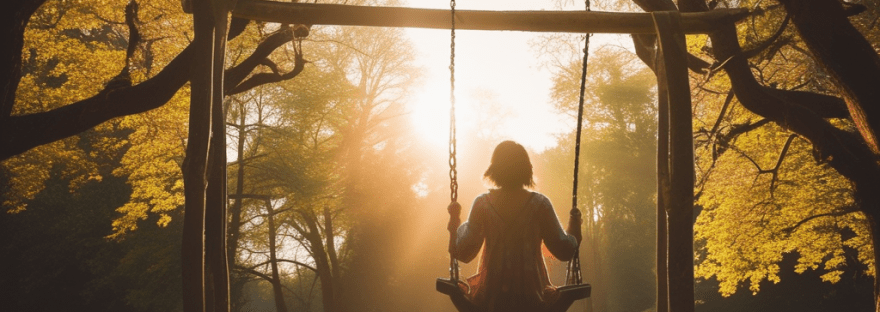
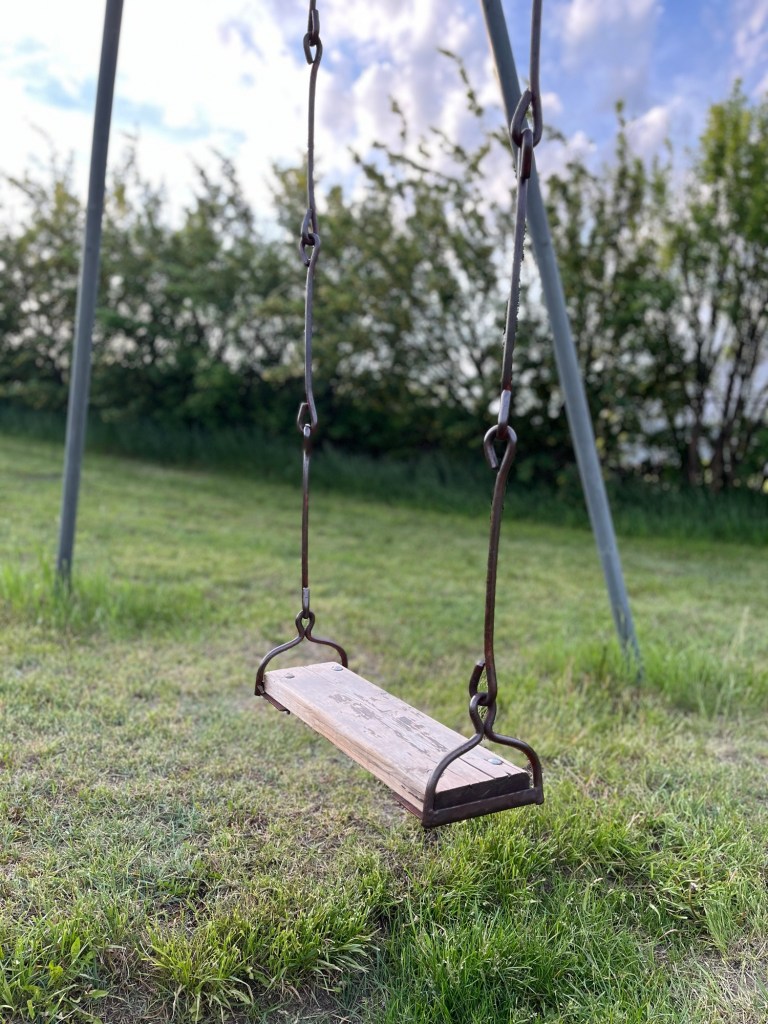
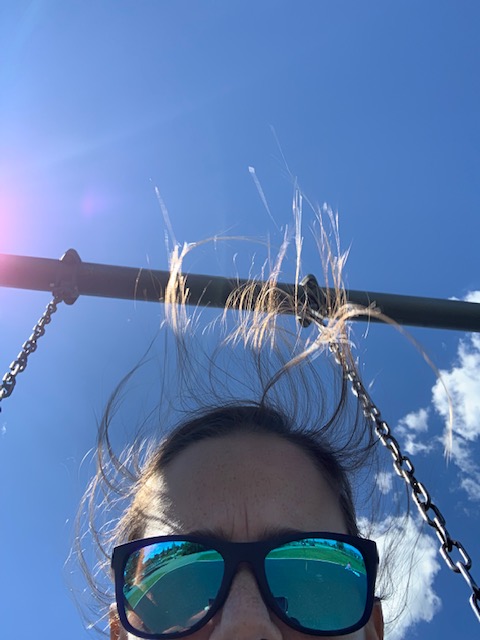
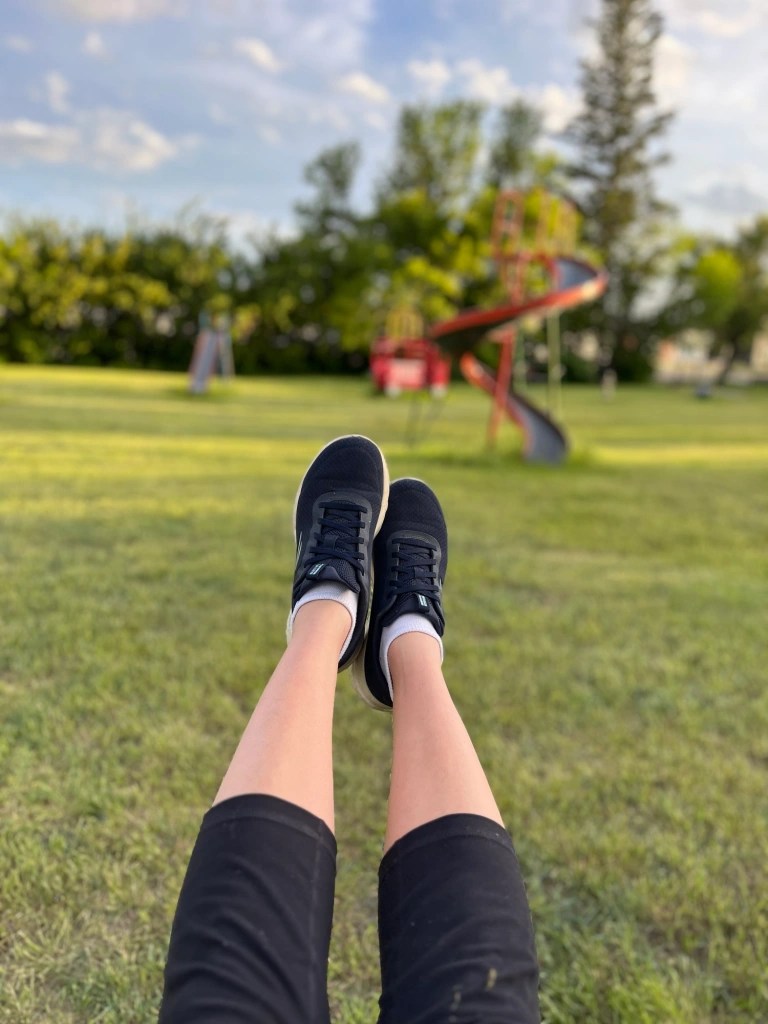
I had to think for a while when I was asked this question. I was guided back to my school days and to remember what I loved to do for fun. Somewhere around grade 5 or 6. Those recesses for me were spent on the swings. My best friend and I joined forces on the swings. From grade 4 on she was my partner- in- shenanigans. I still keep in contact with her. The darndest things can happen on the swings.

I love even now to find a park with few enough kids that I can snag one of the swings and try going higher and higher. I always wanted to go all the way up and around. I swear I almost had it one day.

I didn’t know I needed to come back to life when I was in the midst of the suffering. In the worst of my pain, I didn’t see a way out. I felt stuck and thought I’d just have to live out my days in that state. It is hard to be there and hear people say, ‘come alive!’

There are ‘down’ days and ‘did too much yesterday’ days and ‘I just wanted to get it done and now I am paying for it’ or ‘I just wanted to pretend I was normal’ days. But when there is a day you feel up to it. Find something that makes you come alive and do it! Often.

What I am learning as a forest therapy guide has helped me come alive. The feelings of darkness and despair have been replaced with hope and healing. Today I want to share some of the science of going into the forest. How it creates those feelings of coming back to life.

Most of us notice that we feel better when we spend time in nature. But we don’t often stop to think about why. Stress seems to slip away in the forest. When we can strip that away and focus on the moment, all sorts of the health problems related to stress slacken. Headaches diminish, blood pressure eases, skin problems recede.

Cortisol is the stress hormone that can cause all sorts of problems. A study was done where the participants were split into two groups. One half went for a walk in nature, The other group went for a walk of the same duration in the lab. All participants who walked in the forest had a marked decrease in their cortisol levels. Those who walked in the lab did not experience any marked results.

You may have heard that merely looking at forest scenery for at least 20 minutes will lower your cortisol levels. Heart rate decreases. The body’s fight or flight response goes into remission.

When stress is present in our lives our immune system is affected. Stress can make it harder for the body to fight off sickness. Some say that when you feel happy your immune system is being strengthened.

Phytoncides are another one of those healing products of nature. Found most abundantly in evergreen forests phytoncides are given off by such trees as spruce and pine. But even oak trees can give off this extremely beneficial compound. The word phytoncide means, “exterminated by the plant”.

img_2468-1
Photo by Brent Munkholm

When this substance is given off by plants, it kills or slows the growth of bacteria and fungi. They have a very important role to play in the forest itself. When people breathe in these phytoncides our bodies have been shown to increase the activity of natural killer cells. These cells are important in killing tumor and virus infected cells that can cause all kinds of problems.

Another win for spending time in nature is that it can boost your creativity. A study was conducted in which participants went on a backpacking trip and then given creative problem solving tasks afterwards. They performed 50% better after time spent in the forest. Take from that whatever you want but no matter how you look at it, time in the forest is overall beneficial.

I have read that going into the forest for 3 days and 2 nights will reset you. Particularly your hormones. I would be a willing participant in that study. Where do I sign up? Put me in a forest where I can allow my body to go into a state of rest and I suspect I would become a very different creature.

Your rituals create your life. Get some good ones. -Dr Libby Weaver

Join me in creating a ritual of going down into the woods. What ritual could be better than spending time in a place that makes you feel better? Plus it produces an array of physical, mental, emotional and spiritual health benefits.

I love playing on the swings because of the feeling of freedom it gives me. I can still get enough umph to spend that moment in freefall looking straight at the clouds. Find something that gives you that sense of fun and awe. If you want help with this or any other forest therapy related questions, contact me. While you’re there sign up for a forest therapy walk to find out how beneficial it really can be.

Take care out there my friends. Find a way to come alive (when you are ready.)