
Understanding ‘Felt Safety’: Memories and Healing

There are memories you remember with your mind.

And then there are memories your body remembers.

This is one of those.

Weemoed

“DUTCH. (n) A bittersweet, nostalgic sadness that lingers like a thin mist. It is the ache of remembering something beautiful that time cannot return, equal parts comfort and sorrow.” (everglow words)
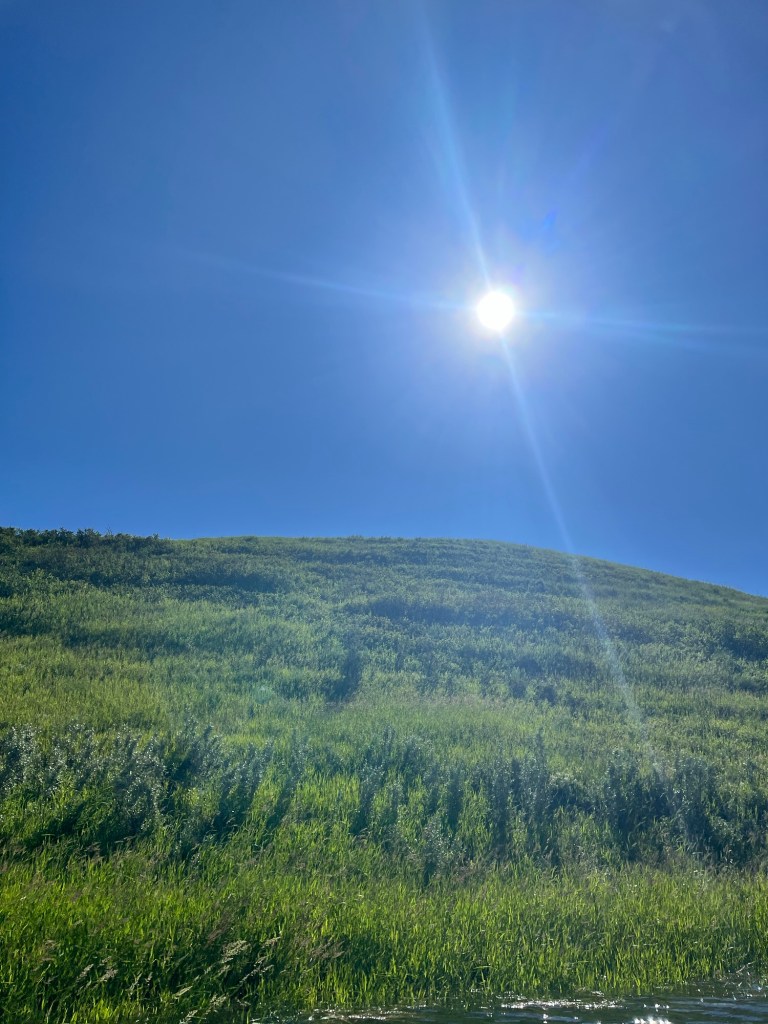
One summer, long before life scattered us in different directions to raise families of our own (and before two more joined our family), we made one of many summer trips to the cabin.

It was late by the time we arrived.

My sister and I had curled up inside our sleeping bags in the back of the car and fallen asleep somewhere along the drive.

When we stopped, I remember sliding onto the floor of the car, trying to wake my little legs enough to walk inside.

Then my dad came back.

I assumed he was coming for another load of luggage.

Instead, with those strong farm arms, he gathered the tops of our sleeping bags in his hands. Me in one, my sister in the other, and lifted us.

I could hear my sister giggling.

I could hear my mom quietly โ€˜tsk, tskโ€™ him for being silly.

The screen door creaked open.

Then came that familiar smell that only our cabin had.

Warm hardwood and the hint of lake air. The familiar mustiness of a place that had been closed up, waiting for more visitors to make more memories.

I didnโ€™t have to carry myself. Or wonder where we were going. I didnโ€™t have to wake up. I knew exactly where I was. I knew exactly who was carrying me. I trusted him completely.

Even now, all these years later, my muscles soften when I remember that moment.

Because your nervous system isnโ€™t asking whether youโ€™re capable. Itโ€™s asking whether youโ€™ll survive.

For years, I thought it was simply one of my favourite childhood memories. I didnโ€™t realize I was remembering what my nervous system feels like when it knows, without question, that I am safe.

Thereโ€™s actually a name for that feeling.

Felt safety.

You carry the calm inside you. You only have to remember.


The term felt safety has become increasingly recognized through trauma-informed care and nervous system research, particularly the work of neuroscientist Dr. Stephen Porges and Polyvagal Theory.

Itโ€™s different from actual safety.

Actual safety is about your circumstances.

Felt safety is about your nervous systemโ€™s assessment of whether you have enough resources and capacity to handle whatโ€™s in front of you.

You can be perfectly safe and still feel anxious.

You can also be facing something genuinely difficult and feel surprisingly calm because your nervous system believes youโ€™ll be okay.

That distinction changed the way I think about chronic pain.

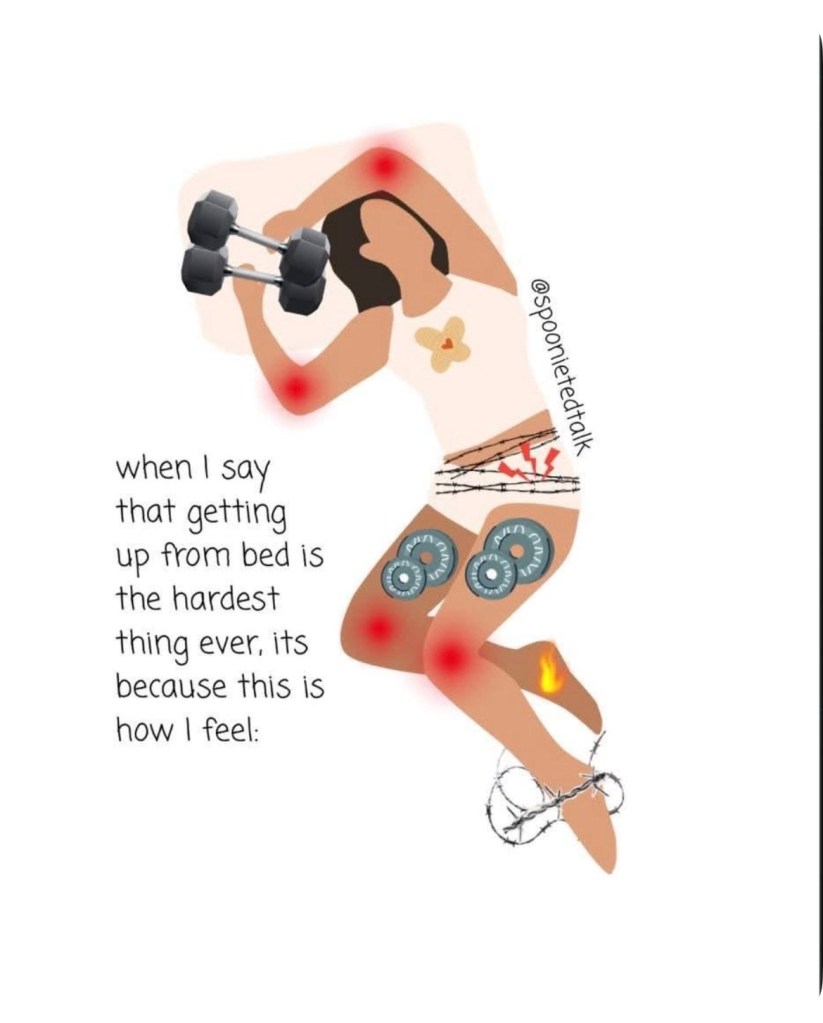
Living with chronic illness teaches your nervous system lessons you never volunteered to learn.

Pain arrives unexpectedly. Fatigue hits like a brick wall. One movement can become months of physiotherapy.

Your body begins collecting evidence that ordinary life isnโ€™t always predictable. Eventually, your nervous system starts asking a different question.

Not,

โ€œCan I do this?โ€

Butโ€ฆ

โ€œIs this going to cost me?โ€

To be fair, my nervous system has earned the right to be unconvinced. Weโ€™ve been through some stuff.

Looking back, I think my body longs for the feeling I had that night at the cabin.

The feeling of not having to brace for impact. Or calculate every movement.

Not having to carry everything myself. But literally being carried.

When you live with chronic pain, your nervous system often becomes exceptionally good at detecting danger. Itโ€™s trying to protect you. As nervous systems do.

The problem is that eventually it begins seeing danger where there may only be uncertainty.

Thatโ€™s why making a phone call can feel exhausting. Trying something new feels overwhelming. Cleaning the kitchen feels impossible. Committing to lunch with a friend somehow feels bigger than climbing a mountain.

Not because youโ€™re lazy or undisciplined.

Healing begins when the body no longer has to choose survival over connection.


Recently I listened to Neill Williams on the Success Genius podcast, and this idea clicked for me.

She explained that felt safety isnโ€™t about waiting until life becomes easier. Itโ€™s something we can build. Incrementally over time.

When our nervous system feels safe, serotonin and oxytocin help create feelings of connection, contentment, and purpose. We can think clearly because the thinking part of our brain is fully online.

When we donโ€™t feel safe, survival takes over. We shut down. Or we push ourselves until we crash.

Not because weโ€™ve failed. But because our nervous system is trying to keep us alive.

Williams suggests asking one simple question:

โ€œWhatโ€™s the smallest version of this that my nervous system can honestly say yes to?โ€

One tiny success becomes one piece of evidence.

I can look back and see I survived.

Your nervous system is always collecting evidence.

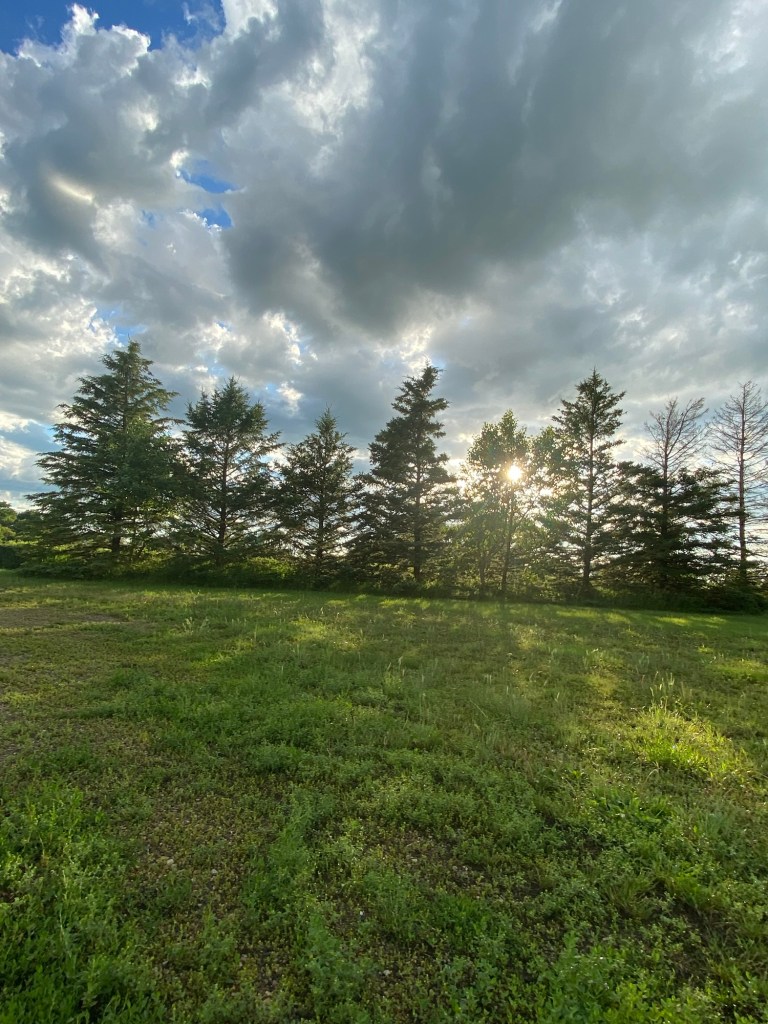
Every gentle walk. Every boundary you honour. Every nourishing meal. Every person who keeps their word. Every deep breath. Every quiet moment beneath a canopy of trees. Each one whispers the same message.

โ€œYou are safe enough for this.โ€

Healing isnโ€™t teaching your nervous system that danger doesnโ€™t exist.

Itโ€™s teaching it that safety does.


Maybe thatโ€™s why nature has always felt like home to me.

Not because itโ€™s perfect.

But because it reminds my nervous system of something my body has known since childhood.

What it feels like to be held.

Nature is stillness.

It doesnโ€™t measure your ability to accomplish everything on your to-do list.

It doesnโ€™t ask how many steps you walked today.

Or compare your healing to someone elseโ€™s.

It doesnโ€™t care whether youโ€™ve answered your emails, folded the laundry and mowed the lawn.

It simply keeps showing up. Morning after morning. Season after season.

Offering the same quiet invitation.

You can soften now.

The scent of pine. ๐ŸŒฒ

The rhythm of birdsong. ๐Ÿฆ

Leaves dancing in the breeze. ๐Ÿƒ

The solid earth beneath your feet. ๐Ÿ‘ฃ

These arenโ€™t just beautiful experiences. ๐Ÿ˜

Theyโ€™re cues of safety. โค๏ธ

Tiny reminders that tell your nervous system it can loosen its grip, even if only for a moment.

Over time, those moments become evidence. That not everything requires bracing. Evidence that your body doesnโ€™t always have to stay on high alert. That peace is still available to you.


A Forest Therapy Invitation

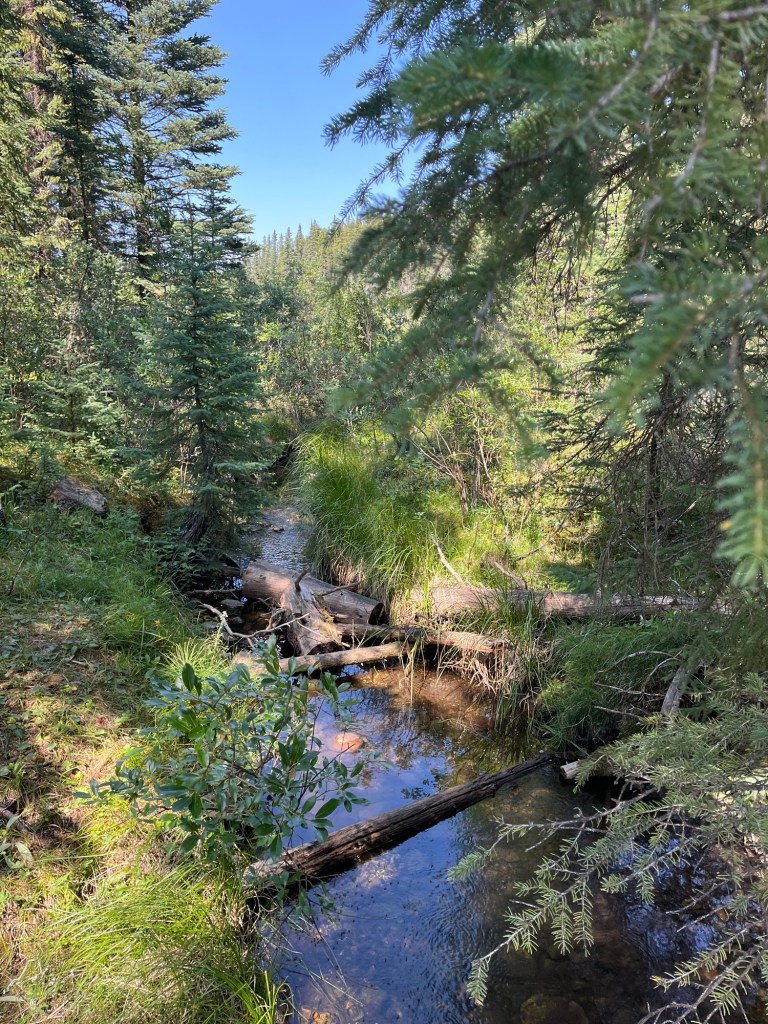
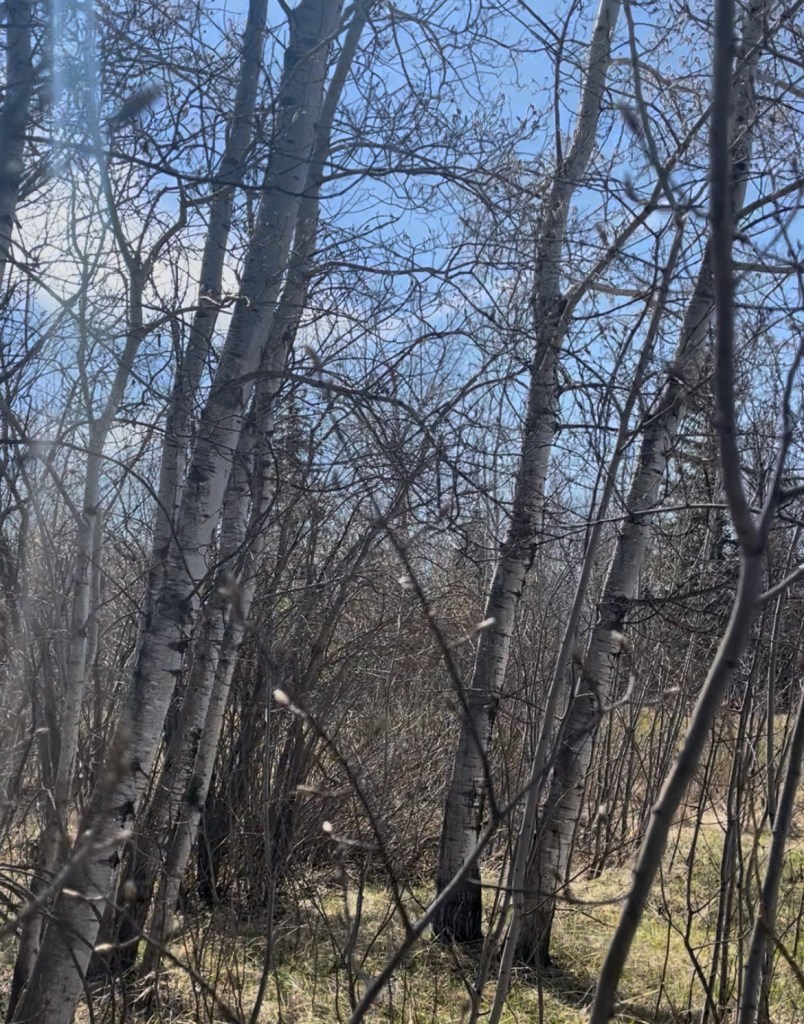
The next time you find yourself in a forest, donโ€™t worry about how far you walk.

Instead, find one place that quietly invites your attention.

Sit with it.

Notice your breathing.

Notice your shoulders.

Notice your jaw.

Ask yourself gently,

โ€œWhat evidence of safety can I notice right now?โ€

Maybe itโ€™s the breeze.

Maybe itโ€™s birdsong.

Maybe itโ€™s the warmth of the sun.

Maybe itโ€™s simply realizing that, for this one moment, nothing is asking anything from you.

Stay there a little longer than feels necessary.

Let your nervous system collect another piece of evidence.


Every time I walk with someone through a forest, I hope they experience a piece of what I felt all those years ago.

Not because someone is carrying them across a cabin yard in a sleeping bag.

But because, for just a little while, they remember what their nervous system has perhaps forgotten.

That they donโ€™t have to hold themselves so tightly. Or carry everything alone. That they are safe enough to rest.

If youโ€™ve never tried forest therapy, Iโ€™d love to invite you to come walk with me.

Or find your own favourite stand of trees and let the forest do what it has always done so well.

Quietly remind us of something we knew before life became complicated.

Sometimes healing doesnโ€™t begin with trying harder.

It begins with remembering what it feels like to be carried.

Navigating Emotional Struggles Gracefully: Staying Grounded in the Woods

This line ๐Ÿ‘‡๐Ÿผ from a song deserves to stand alone.

The world is hard on beautiful things.

-โ€œBeautiful Thingsโ€ by Megan Moroney

When I hear this line, I think about the people I know who have been hurt by the world. It takes not only our emotions for a nosedive.

But also our peace.

Our patience.

Our nervous systems.

Our hope.

Our ability to assume the best instead of the worst.

You canโ€™t stop the waves, but you can learn to surf.

Jon Kabat-Zinn

It feels like weโ€™re all moving through life with our shoulders somewhere around our ears. Chronic illness, fear of aging, financial stress, uncertainty, bad news on an endless loop. Some people are simply trying to get through Tuesday with enough energy to make supper ๐Ÿ™‹โ€โ™€๏ธ .

It doesnโ€™t take much to tip us over.๐Ÿ„

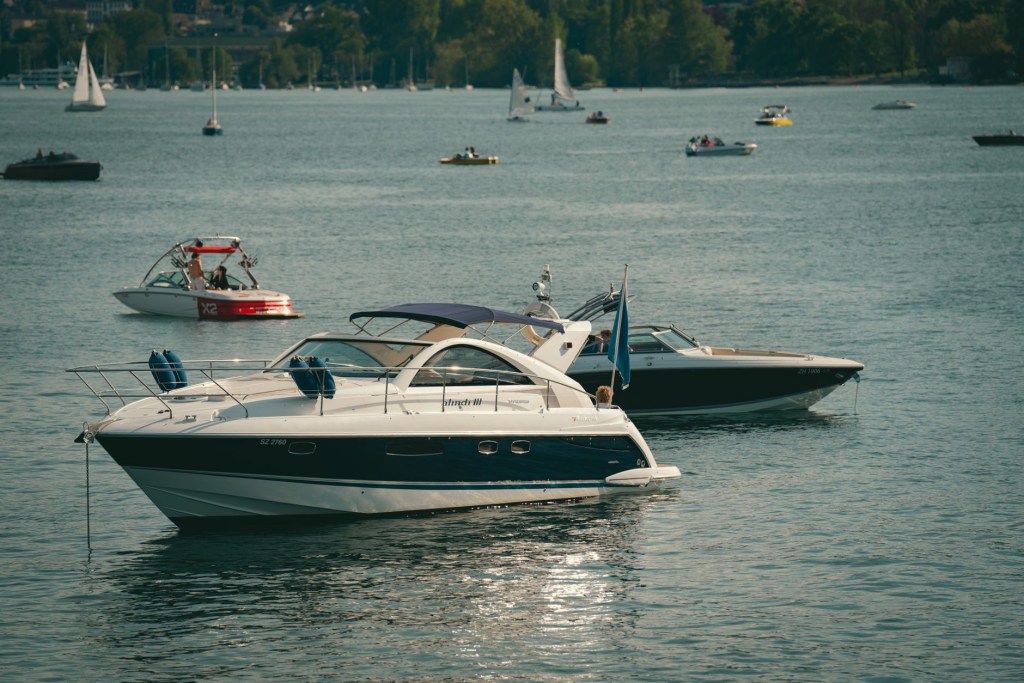
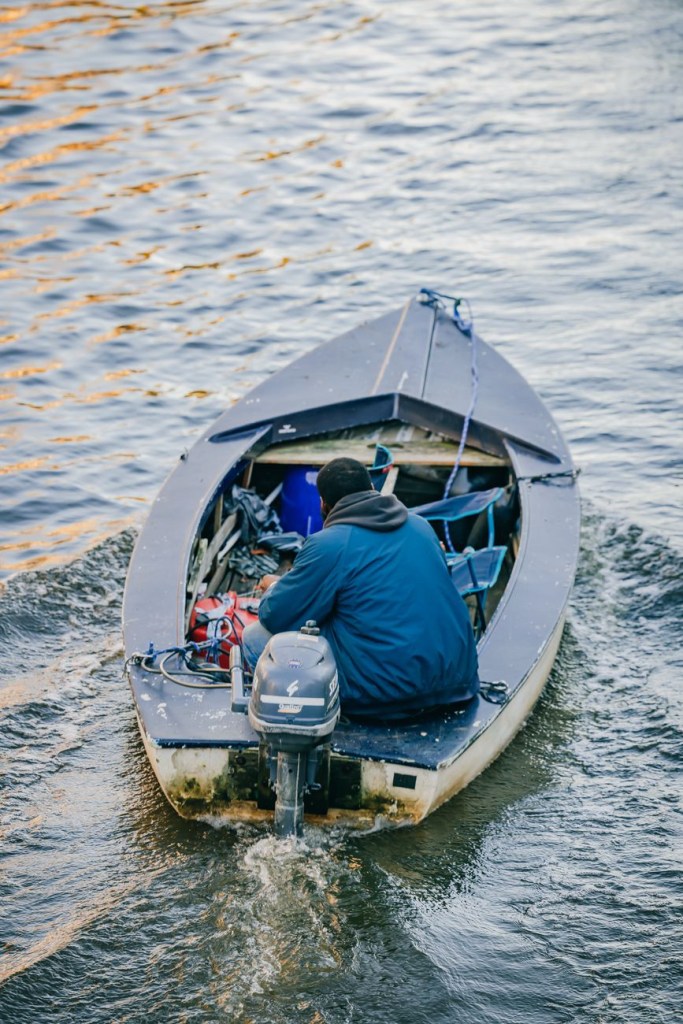
A few days ago, mine came in the form of a boat launch.

Anyone whoโ€™s spent time around a busy boat launch knows itโ€™s a fascinating social experiment.

An overabundance of strong opinions and egos exists.

There are no rules. Written or unwritten.

Just enough ambiguity transpires, that everyone believes theyโ€™re right.

Iโ€™ve been launching boats for about fifteen years. I know the rhythm. I stay out of peopleโ€™s way, wait until my truck is actually in the water before moving, and do my best to keep things safe and efficient.

Apparently one gentleman decided Iโ€™d โ€œcut the line.โ€

Boat launches really do produce fascinating specimens of humanity.

Iโ€™ve learned that confidence can be surprisingly unsettling to some people. Especially when it arrives in the form of a woman who knows how to load the boat on the trailer without making a production of it.

Itโ€™s funny how a little perceived competition can bring out our inner third-grader.

The equipment may have six-figure price tags, but occasionally the conflict resolution skills still come from recess days gone by.

When I calmly explained why I was waiting where I was. And how the process normally works. He didnโ€™t want an explanation.

He began clapping sarcastically.

The world doesnโ€™t just wear us down through tragedy. Sometimes it does it one sarcastic clap at a time.

Claire played by Molly Gordon in “The Bear

As he mocked me it became clear he just wanted an audience.

He got one when a couple of other boaters joined in the jeering.

I wish I could tell you I laughed it off.

Instead, my nervous system hit the panic button.

My cortisol rose faster than I can launch my boat. (Iโ€™m a pro at both.)

My heart raced. My hands shook.

My cortisol packed a lunch and settled in for two to three business days.

Several days later, I could still feel my body replaying the scene.

I think what bothers me most, at this point, is somewhere out there is a misguided soul telling the story of the woman who โ€œcut the lineโ€ at the dock.

How people treat you is their karma, how you react is yours.

Wayne Dyer

Maybe youโ€™ve had moments like that.

Perhaps someone says something. Misunderstands you. Treats you unfairly.

And your body reacts long after the event is over.

For those of us living with chronic illness or chronic stress, these moments donโ€™t simply sting.

They cost us.

Thatโ€™s why a line from a recent episode of the Untangle podcast kept coming back to me.

In โ€œQuiet Strength and Equanimity: Finding Calm in a Chaotic World,โ€ Margaret Cullen explores how we stay peaceful in a world that often seems determined to take our peace away.

One story she shares has stayed with me.

A man is rowing through thick fog when he notices another boat heading directly toward him.

The other boat is bigger. He should have the right of way.

He shouts. No response.

He waves. Nothing.

The other boat keeps coming.

His frustration turns to anger.

โ€œMove!โ€

Just before the collision, he swerves.

As the fog clears, he realizesโ€ฆ

The boat is empty. No one was steering.

Instantly, his anger disappears.

Who was he angry with?

No one.

Since first hearing that story, Iโ€™ve asked myself this question.

Is the boat empty?

Not literally.

But is this personal?

Or am I assigning intention where there may be none?

Maybe theyโ€™re exhausted. Grieving. Terrified.

Maybe they simply donโ€™t know any better.

Or maybe theyโ€™re carrying hurts I canโ€™t see.

None of those possibilities excuse poor behaviour.

But they completely change where I direct my emotional energy.

Sometimes, seeing clearly dissolves the anger.

Pronoia

The opposite of paranoia. it is the belief that people or the world are secretly working in your favour. That events, people and circumstaces are somehow conspiring to help you.

Thatโ€™s different from stuffing feelings down or pretending they donโ€™t exist.

You canโ€™t bypass emotions.

You canโ€™t slap a positive quote over a nervous system thatโ€™s sounding the alarm.

But sometimes the alarm quiets on its own because you suddenly realizeโ€ฆ

There isnโ€™t actually an enemy here.

Just another imperfect human.

When the boat is empty, compassion often becomes easier than combat.

Margaret Cullen also offers another perspective I love.

Ask yourself:

How will this feel next week? Next month? Next year?

Itโ€™s amazing how many mountains quietly shrink into molehills when viewed from a little distance.

Then she takes it even further.

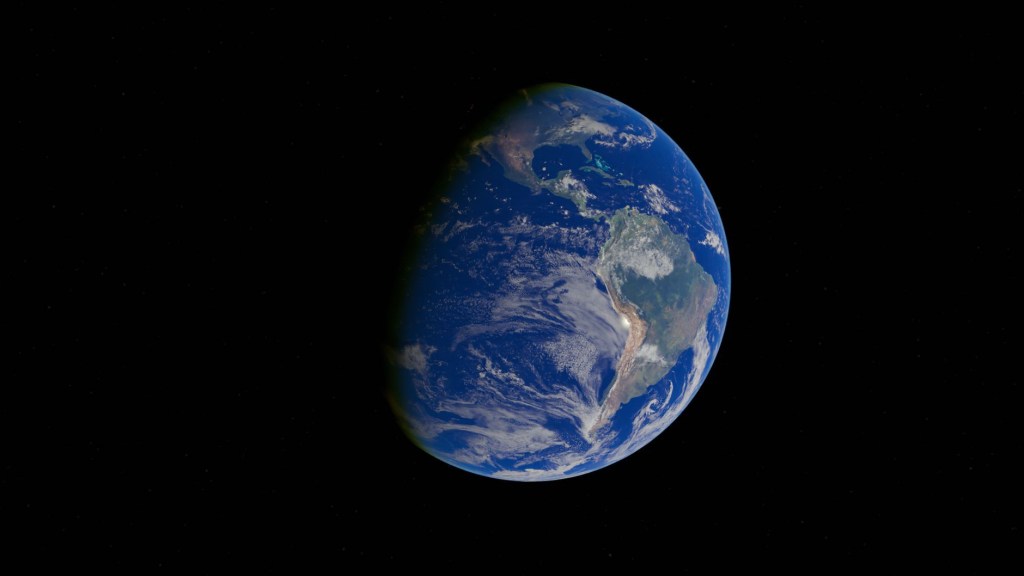
She talks about astronauts experiencing the Overview Effect. Seeing Earth from space and returning with an entirely different understanding of what matters.

Imagine grandmotherโ€™s wisdom. Now multiply it by the view from orbit.

Our arguments. Our bruised egos. Our need to be right.

They suddenly become very small compared with this astonishing little blue planet weโ€™re all sharing.

That doesnโ€™t make our feelings unimportant.

It simply gives them context.

Another surprisingly effective tool?

Humour. Humour interrupts the story weโ€™re telling ourselves.

Weโ€™ve all done it.

We become convinced weโ€™ve been wronged in the most spectacular fashion imaginable.

Our spouse is over there admiring a duck while we have mentally drafted the closing argument for a trial that nobody else even knows is happening.

Sometimes all it takes is one ridiculous observation from them to break the spell.

I wish I could say I found โ€œthe funnyโ€ at the boat launch.

I wasnโ€™t there yet.

Maybe next time.

One tool that has helped me far more consistently is asking:

Am I living this moment according to my values?

Not theirs. Mine.

I canโ€™t control sarcasm.

I canโ€™t control mockery.

I canโ€™t control who decides to clap sarcastically at a stranger.

But I can decide whether I respond with kindness.

Integrity. Respect. Compassion.

Those are mine to keep.

The more our daily lives align with our values, the steadier we become.

Peace stops being something we chase and starts becoming somewhere we live.

The idea of felt safety is something weโ€™ll explore more in the next post.

Felt safety isnโ€™t the absence of fear.

It isnโ€™t the absence of challenge.

Itโ€™s your nervous system recognizing that you have enough capacity to face whatโ€™s in front of you.

That you are enough.

That you can survive this moment.

Forest therapy has become one of the places where I practice exactly that.

The forest rarely requires me to react in the moment.

It stretches time. It expands perspective.

It reminds me that not everything deserves my nervous systemโ€™s full emergency response.

When someone steals my peaceโ€ฆ

I take it to the woods.

There, I remember that Iโ€™m part of something much older than a rude exchange at a boat launch.

Much bigger than todayโ€™s frustration.

And much more beautiful than the story my anxious brain was writing five minutes earlier.

Eventually I remember that peace is a terrible thing to hand over to someone youโ€™ve never met.

A Forest Therapy Invitation

If youโ€™re new here and want to learn more about forest therapy and how it works, check out this page. The Gist

The next time something rattles you, resist the urge to replay it over and over.

Instead, head outside.

Find one tree that catches your attention.

Stand with it for five slow breaths.

Now ask yourself:

  • Is the boat empty?
  • Will this matter next year?
  • What would this look like from space?
  • What response best reflects my values?
  • How can I become the tenderness this moment needs?

Donโ€™t force an answer.

Just notice what changes.

Sometimes the forest doesnโ€™t solve the problem.

It simply reminds us that we are far bigger than it.

Forest therapy doesnโ€™t help me escape the world. It helps me return to it without becoming like it.

Margaret Cullen ends her book Quiet Strength with words I borrow:

May each of us find a way to bring balance and tenderness to this floating world, moment by moment, drop by drop.

I canโ€™t think of a better response to a world that is hard on beautiful things.

Letโ€™s become one of the beautiful things that refuses to grow hard.

The world may be hard on beautiful things. That doesnโ€™t mean beautiful things have to become hard.

Insteadโ€ฆ

Letโ€™s become the tenderness.

In a gentle way you can shake the world.

Mahatma Gandhi

Diefenbaker Lake: A Childhood Sanctuary

Let the waters settle and you will see the moon and stars mirrored in your own being.

-Rumi

There are places that shape us before weโ€™re even old enough to understand whatโ€™s happening. Places that imprint themselves on the soles of our feet, in the rhythm of our breath, in the part of our memory that feels more like home than any house ever could.

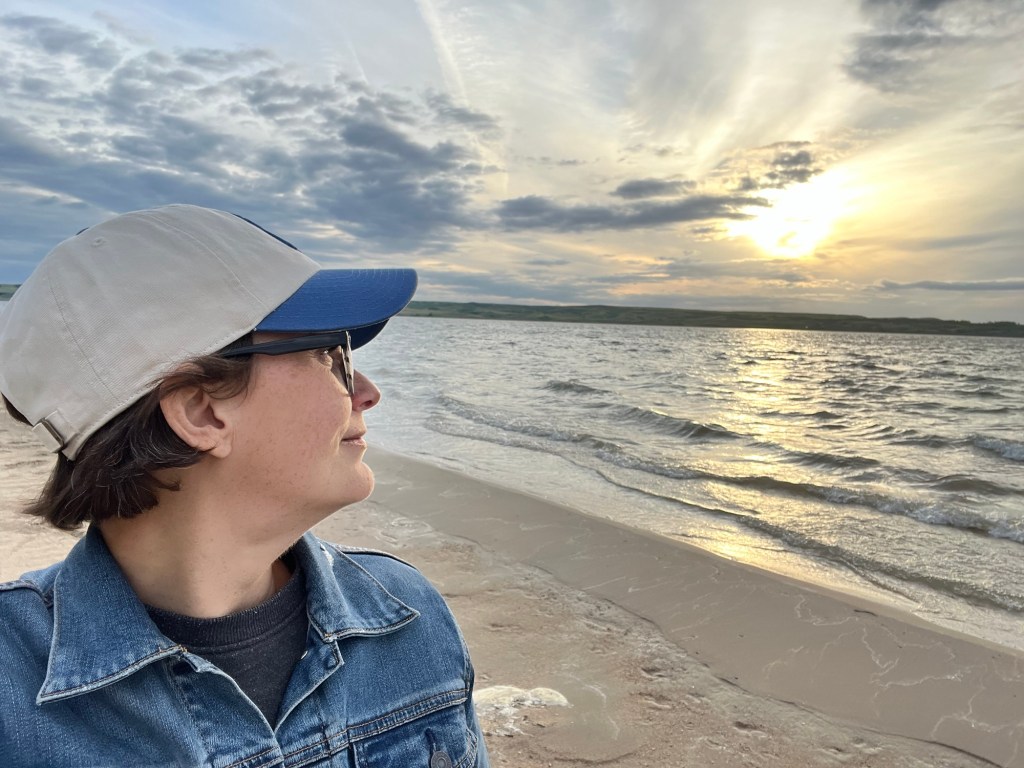
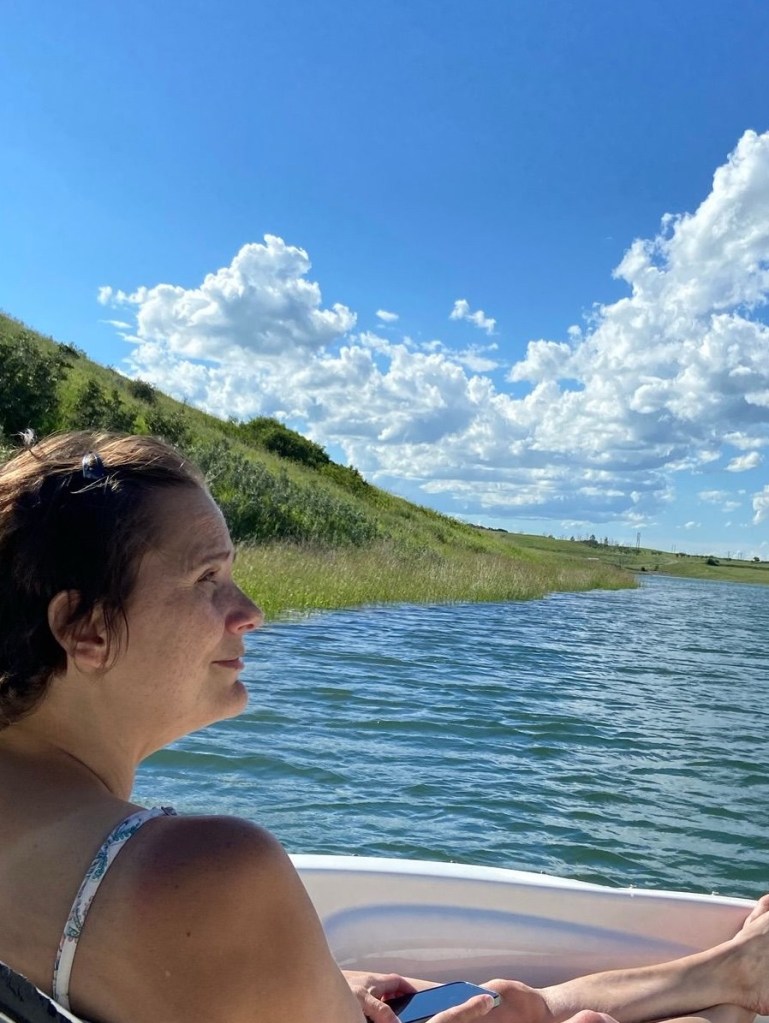
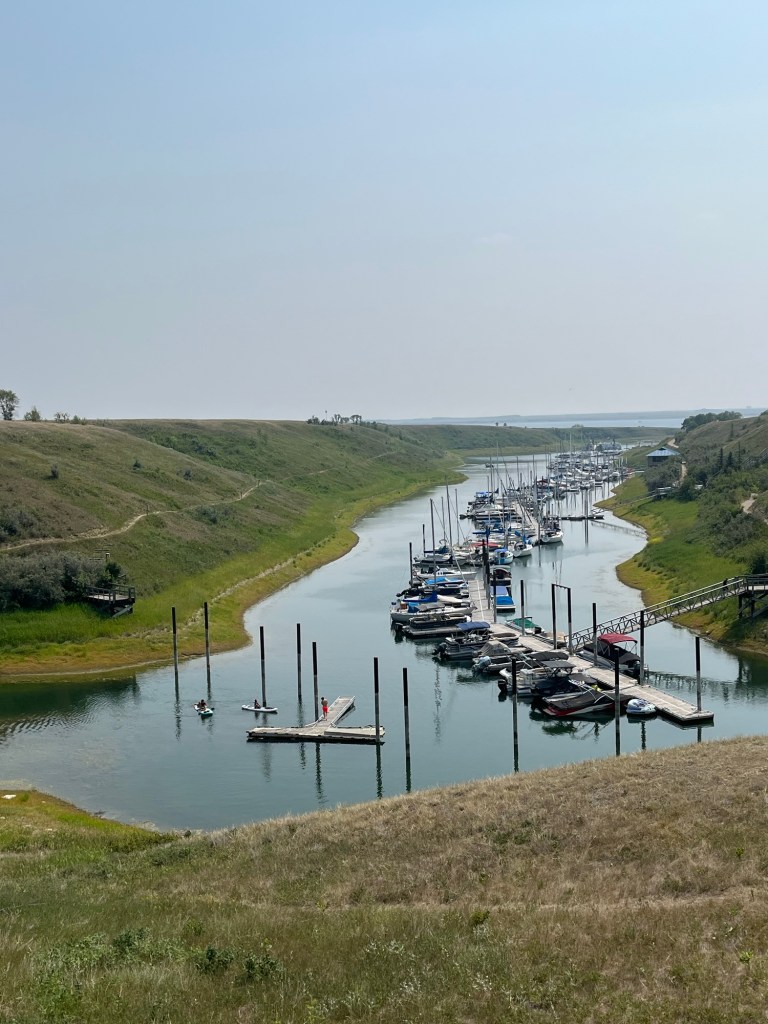
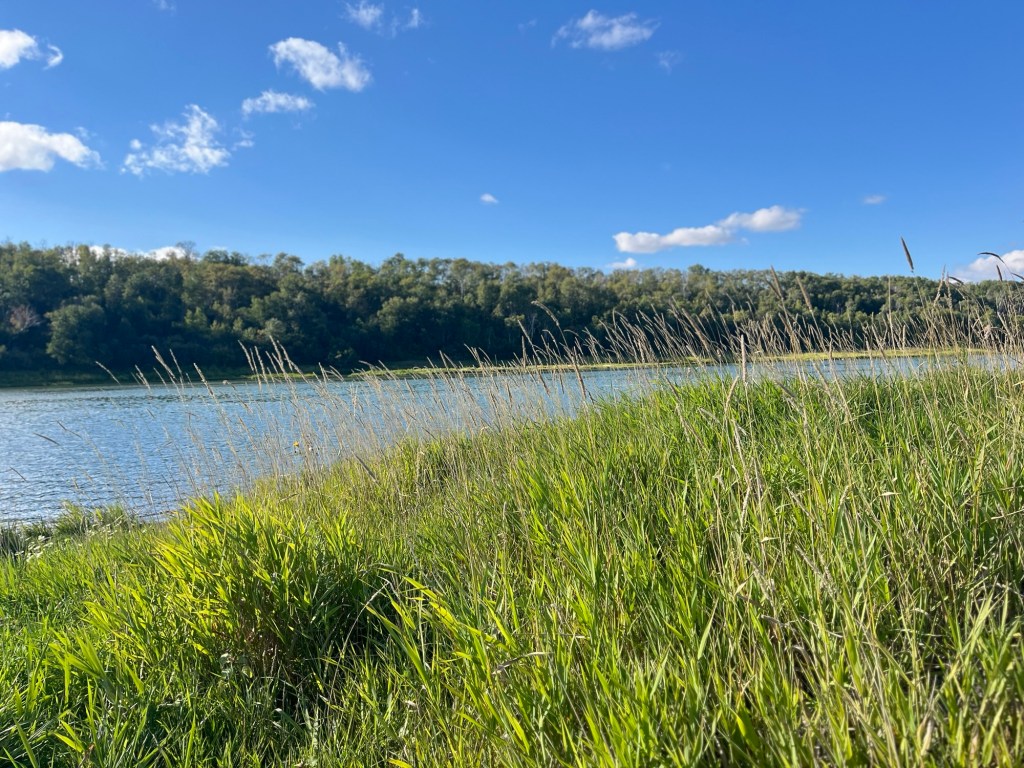
For me, that place has always been Diefenbaker Lake.

Some places are so deep inside us that we carry their shoreline in our bones.

-John O’Donohue

Iโ€™ve been coming here since I was tiny. Even before I had words for belonging, but somehow already knew I belonged here. Grandpa always made sure of that.

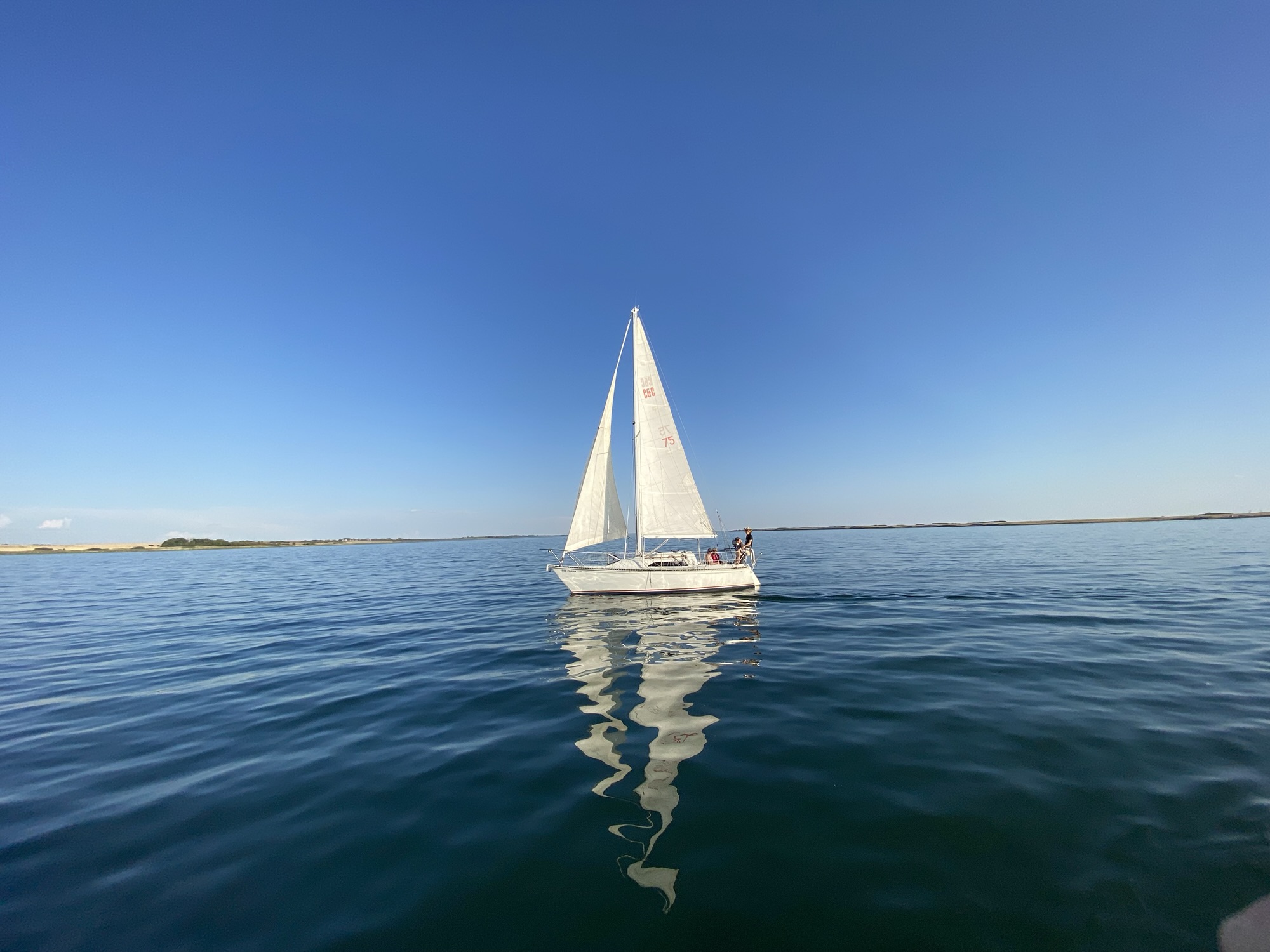
My grandparents had a cabin and a sailboat tucked along these windswept shores. Some of my earliest memories are stitched together with the smell of woodsmoke from backyard fires, the sweetness of my grandpaโ€™s violin, and the rowdy chorus of siblings and cousins running wild between the cabin and the water. With the constant reminder to โ€œwash the sand off your feet before you come in!โ€

And then there were the cozy, indoor moments that stitched themselves into my heart just as tightly as the beach days. Evenings around the table playing Phase 10, some of us a little too competitive for their own good. And we watched Bedknobs and Broomsticks over and over and over again. Never questioning why, just letting the magic and music wash over us like it was brand new every time.

Mornings were their own kind of ritual. Waking up to Grandma making bacon and something (it didnโ€™t matter what, itโ€™s the bacon that mattered) and the smell of fresh coffee drifting through the cabin. To this day, I associate the scent of coffee with pure happiness, because it always meant family, warmth, and the safe little world we built at the lake.

Teenage awkwardness made an appearance here too, because of course it did. Blushing, fumbling romances that felt monumental at the time. Even with his hair plastered to his face. Perhaps this was done by those winds that could have knocked over a small cow ๐Ÿค”.

Speaking of cows. They are a regular feature of this lake that is surrounded by pasture land. Two rules. Donโ€™t use a cow as a landmark when giving directions. They tend to move eventually. And don’t pick a beach with a cow path into the water. You can guarantee there’s a few cow pies in there.

Swimming lessons were basically an extreme sport back in my day. With waves bigger than me, wind that felt like knives, and instructors yelling cheerful encouragement while I questioned all of my momโ€™s life decisions that brought me to this point.

Still, I kept going back.

I lived for the days Uncle David would haul out the power boat. Kneeboarding, tubing, laughing so hard my face hurt. Those were the moments that made childhood feel endless. Weโ€™d tear down the path to the beach, towels flying behind us, younger siblings and cousins trailing like joyful chaos. We swam, we snacked, we visited, we repeated. Every day was an epic saga of sunshine and soggy towels.

Sailing days were their own kind of magic. My mom loves to retell the story of my sister and me being so little our feet didnโ€™t touch the floor as we sat at the table down below. Meanwhile grandpa and dad were tacking hard and smiling harder. Every time the sailboat leaned, weโ€™d justโ€ฆ slide helplessly under the table like tiny bewildered penguins. Apparently we were adorable. At the time, I remember thinking, Is this normal? Are we sinking? Should I be able to see the lake out that window?

Dad and grandpa were always smiling so I took that to mean we were safe.

As I grew older I loved sitting at the very front of the sailboat, facing forward, wind whipping around me, I felt like I was flying. When the water was calm, the spinnaker would make an appearance billowing out like a living thing. My grandpa worked the ropes and held the tiller with the easy smile that only comes from loving a place so much. Those are memories I hold like treasures.

And now seems like the appropriate moment to confess something to my parentsโ€ฆ

I did, in fact, steal the keys and โ€œborrowโ€ the cabin for one weekend as a teenager ๐Ÿ˜ฌ. I had โ€œa few friendsโ€ over. I threw exactly one party in my entire life. And I was so sick with worry the entire time that I basically grounded myself for the rest of my adolescent years. Lesson learned. Sorry. Mostly. It’s been a good story over the years.

I spent my honeymoon at the lake- 26 ยฝ years ago. We fished, built sandcastles, and solved the great riddle of rural Saskatchewan: there are no gas stations open on Sundays. (At least, not back then.)

About five years ago, my parents bought their own place by my lake It took a some time but something inside me reconnected. Something long since silent woke back up.

I listen excitedly to hear about the ice breaking in the spring. The booming, cracking, shifting sound like the earth stretching after a long sleep. Then, in an instant it seems, the ice is gone. Summer brings shimmering waves, familiar laughter, and barefoot days that always feel too short. Fall arrives in gold and red and farewell winds. Winterโ€ฆ winter brings a darker, quieter beauty. A solemn stillness that somehow feels honest. Vulnerable.

The older I get, the more I find that the quiet places are the ones that speak the loudest.

-Unknown

Weโ€™ve camped along these beaches. Weโ€™ve laid in the sun. And now, when I head out on my power boat with our next generation, I think of Uncle David. I feel him in the hum of the engine, in the ripple of the wake, in the bright splash of joy that comes with speed and water and family.

The pinnacle of our lake experiences has to be when we helped save our friend’s boat from sinking. When the bladder around the leg came off and they started taking on water, they quickly headed to the boat launch. Seeing they wouldn’t make it, they beached the boat. Then with two other power boats and a cacophony of helpers, they managed to get two boat tubes under the leg and the front of the boat. One of the support boats towed. Two people bailed. People sat on the tubes to balance. And in this ridiculous state we slowly made our way through the marina and up the launch. To the laughter and cheers of watchers nearby.

I have found beauty in the whimsically ordinary.

-Elissa Gregoire

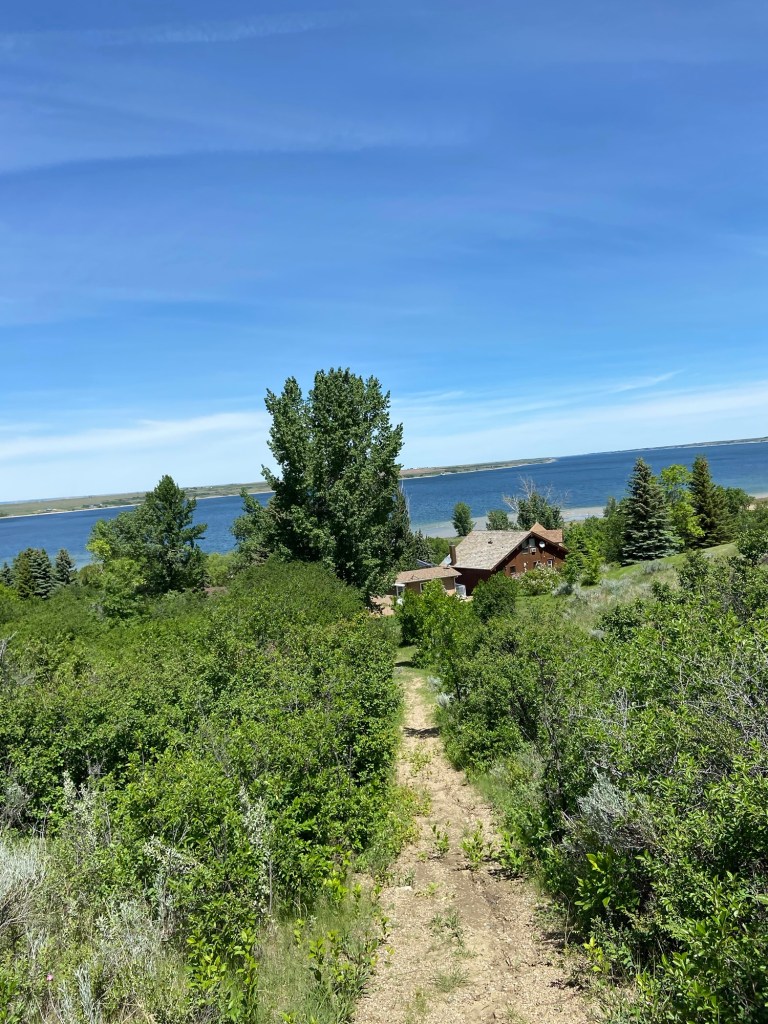
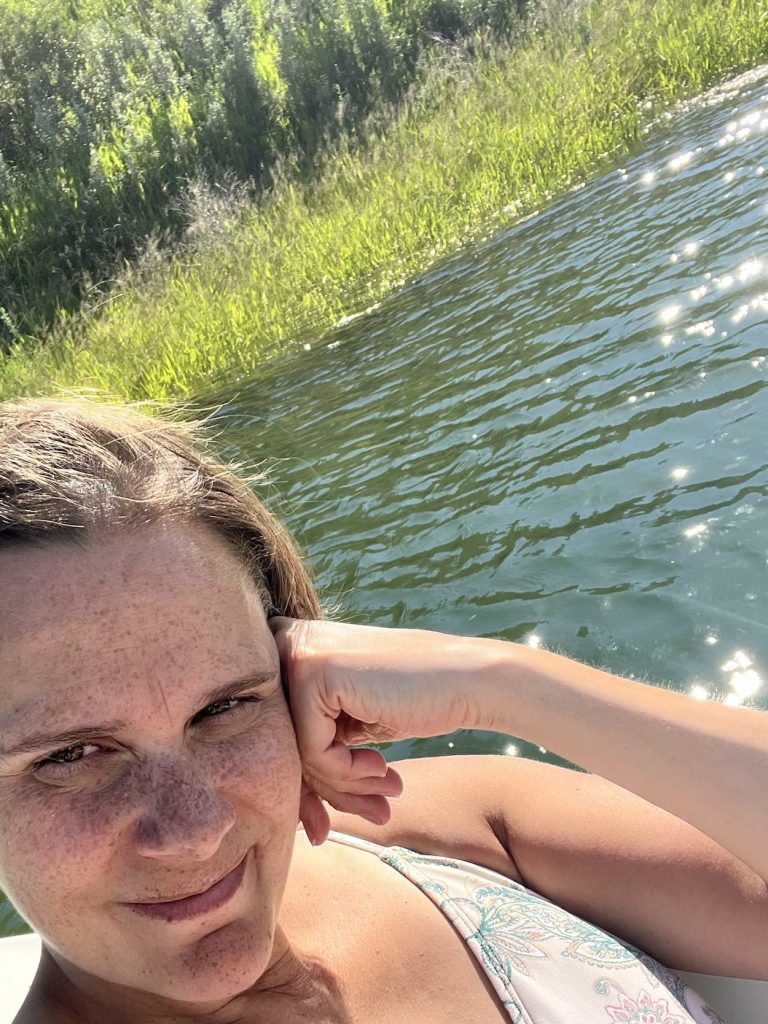
These days I walk the trail by my lake often. I slow down. I breathe.

And somewhere along the way, I realized,

This place has become part of my healing.

Chronic pain forces you to live differently. More slowly, more intentionally, more gently. Forest therapy taught me to seek connection with the natural world, to let my nervous system rest in the presence of trees, water, sky. And here, wrapped in the sounds and rhythms of my lake, something in me softens. Pain quiets. My body remembers safety.

When the heart is overwhelmed, the earth invites us to rest.

-Unknown

My parents host endlessly now, filling their summers with family, friends, neighbours. Anyone who needs a taste of peace.

They are the sailboat owners. And they love it just as much as my grandpa did.

The legacy continues, like wind passing from one generation to the next.

My lake is healing. This home of my parents is healing.

And after all these years, I am still finding new ways to belong here.

There are days the lake knows my story better than I do.

-Unknown

Fluctuat nec mergitur (latin phrase):

She is tossed by the waves but does not sink.

An Ode to My Lake

O Lake of my childhood, keeper of my summers,

You who taught me courage in cold waves

and laughter in the spray of speeding boats

I return to you again with a heart that remembers.

You cradle my earliest joys.

Grandpaโ€™s violin threading through evening air,

firelight warming our faces,

cousins tumbling down the path like wild things set free.

You were witness to awkward teenage hopes,

to frozen swimming lessons and winds that stole my breath,

to stolen keys and the single party I regretted

before it even began.

You held my honeymoon,

my young love learning its way,

and you held me still years later

as chronic pain reshaped my life.

Now I walk your trails slowly,

letting forest therapy guide my weary body

back into rhythm with the world.

Your waves teach me presence.

Your ice teaches me patience.

Your seasons teach me trust.

Grandparents gone on, Uncle David gone on,

Memories gone on,

yet their echoes remain in your wind.

In every sail that fills,

in every motor that roars to life,

I hear them.

My lake,

always changing, always faithful,

you have become a sanctuary,

a place where the ache eases

and beauty remains.

Thank you for holding my childhood.

Thank you for holding my healing.

Thank you for holding me still.

My lake.

Some memories are not moments at all, but places.

Victoria Erickson

๐ŸŒฒWhen Comparison Becomes a Thorn in Your Forest ๐ŸŒณ

Sometimes my life feels like a forestโ€”dense, shadowed, and uneven.

Everyone else seems to walk a wide, sunlit path: their maps are clear, their steps steady, their packs light.

Meanwhile, I carry heavy bundles of pain and medicine, stumbling often, wondering if Iโ€™ll ever catch up.

~Cue the tiny violins ๐ŸŽป ๐Ÿคญ~

Beyond the Familiar: Embracing a Different Forest

My therapist keeps telling me to stop comparing myself to other people โ€“ that lifeโ€™s not a competition. Which, to be fair, is exactly what Iโ€™d say to someone I was trying to beat, too.

-from 22 Quotes About Chronic Pain

Comparison is never useful. Itโ€™s like measuring trees by how tall they look in someone elseโ€™s forest, forgetting that soil, roots, storms, and sunlight differ wildly. 

Or like judging an oak tree by how quickly the wildflowers around it bloom. Different roots, different seasons, different reasons for being.

And yet I fall into itโ€”measuring my path against someone elseโ€™s trail, forgetting we are not even walking in the same terrain.

Comparing โ€ฆ is a waste of time and effort; we are all different people, experiencing and feeling things differently.

San Diego Prepare Yourself: Sisterhood Adventures Await

Next month, my sisters will gather in San Diego. I am so excited for them. And to hear about their adventures. Sunshine, laughter, time to connect. It’ll be fabulous.

I would love to be there. But the cost of my monthly medicine is about the same as what that trip would take.

I live in a different economyโ€”the economy of pain management. So instead of boarding a plane, I stay home.

~Poor lilโ€™ me ๐Ÿฅฒ๐Ÿ‘‰๐Ÿ‘ˆ ๐Ÿคฃ ~

Itโ€™s hard not to compare. Their togetherness, my absence. Their momentum, my stillness. I remind myself that longing is not failureโ€”but it still stings.

Screenshots of a Life I Donโ€™t Live: Family Call, Personal Spiral

On a recent morning: my sister called from her vacation in London. On a family video call. At 9 a.m., I was still coaxing my muscles awake.

I listened to the bagpipes she was sharing and checked out the sights in the background. I marvelled at what she has been able to accomplish and see in her life. I joy in her success.

Inevitably another emotion starts to rise. As on the screen, this is what I see:

  • One sister in her home office, thriving in a job that suits her perfectly.
  • Another in her kitchen, caring for her family and home.
  • A sister-in-law outdoors, likely at the park or on a walk with her two littles.
  • My parents smiling in their living room, enjoying retirement and seeing their family.
  • And then there was meโ€”tired, clearly still in bed, clearly accomplishing nothing.

Thatโ€™s how I saw it. In truth, no one said that. But comparison painted me useless in bold letters across the screen.

~Woe is meee ๐ŸŒ๐Ÿ’ค ๐Ÿ˜œ ~

A Sermon I Couldnโ€™t Speak

At church, I tried to answer a question on a bad pain day after a sleepless night. My words came tangled, incomplete.

I saw my husbandโ€™s face and thought, Iโ€™m taking too long. I gave up. Without tying my random thoughts together. And I gave him the microphone. He expertly gave a clear, concise answer that was perfectly on point. My effort looked weak next to his polish.

Comparison whispered: why even try?

Fredrik Backman once wrote:

โ€œMy brain and I, we are not friends. My brain and I, we are classmates doing a group assignment called Life. And itโ€™s not going great.โ€

But hereโ€™s the truth: trying counts. Even stumbling words are a kind of courage.

The Math of Measuring Up Never Works: The Broken Ruler I Keep Using

Comparison is a thief. It always leaves you with less than you started.

Itโ€™s like weighing a feather against a stone and expecting the scale to balance it out. It demands a sameness life never promised. It blinds us to the worth in our own story.

As a people, we tend to magnify the strengths and blessings another person receives. But minimize our own gifts, talents and opportunities. Social media is as helpful as a screen on a submarine when it comes to perpetuating this problem.

Thereโ€™s no hierarchy of pain. Suffering shouldnโ€™t be ranked, because pain is not a contest.

No one truly wins the โ€œPain Olympicsโ€.

Lori Gottlieb

Living with chronic pain means my days will never look like someone elseโ€™s. But that doesnโ€™t mean theyโ€™re lesserโ€”it just means theyโ€™re different.

Brene Brown says:

Fear and scarcity trigger comparison and we start to rank our own suffering.

Brown calls this comparative suffering. She goes on to say,

The opposite of scarcity is not abundance; the opposite of scarcity is simply enough.

Empathy is not finite, and compassion is not a pizza with eight slices. When you practice empathy and compassion with someone, there is not less of these qualities to go around. Thereโ€™s more. Love is the last thing we need to ration in this world

This toxic pattern of comparison blocks emotional processing and prevents genuine empathy, creating isolation rather than connection. 

My worth is not judged by what I do in comparison to others, but by what I do with what I haveโ€”what love, what compassion, what presence I can offer. Even just in showing up.

Measuring By Love, Not Ladders

Iโ€™ve decided to measure my life by something else: in every conversation, I want the other person to leave feeling better about themselves than when we started.

If they do, then Iโ€™ve accomplished something real. It may not be a promotion, a trip abroad, or a picture-perfect moment. But itโ€™s love, and itโ€™s within my reach.

In such a headspace there should be no time for shame and comparing. Only felicitations and adulation.

Broken But Still Moving

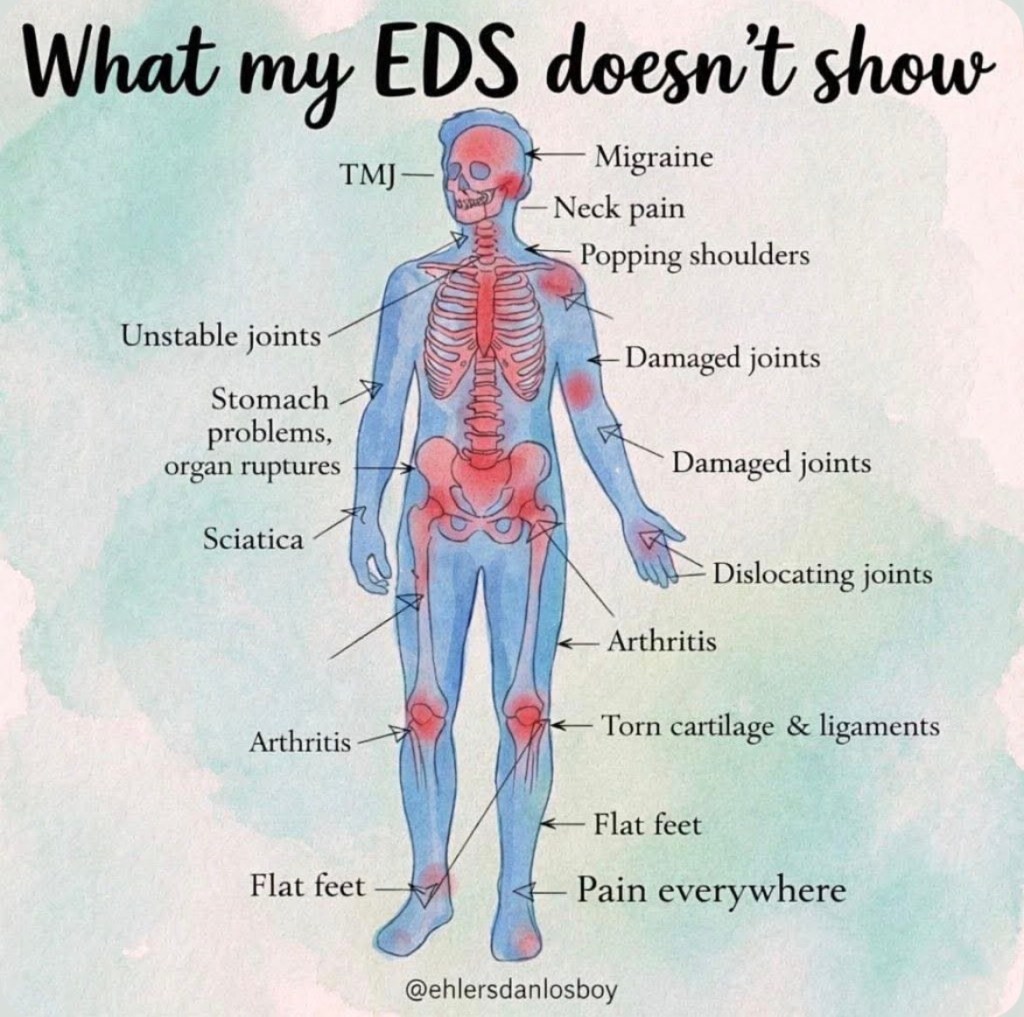
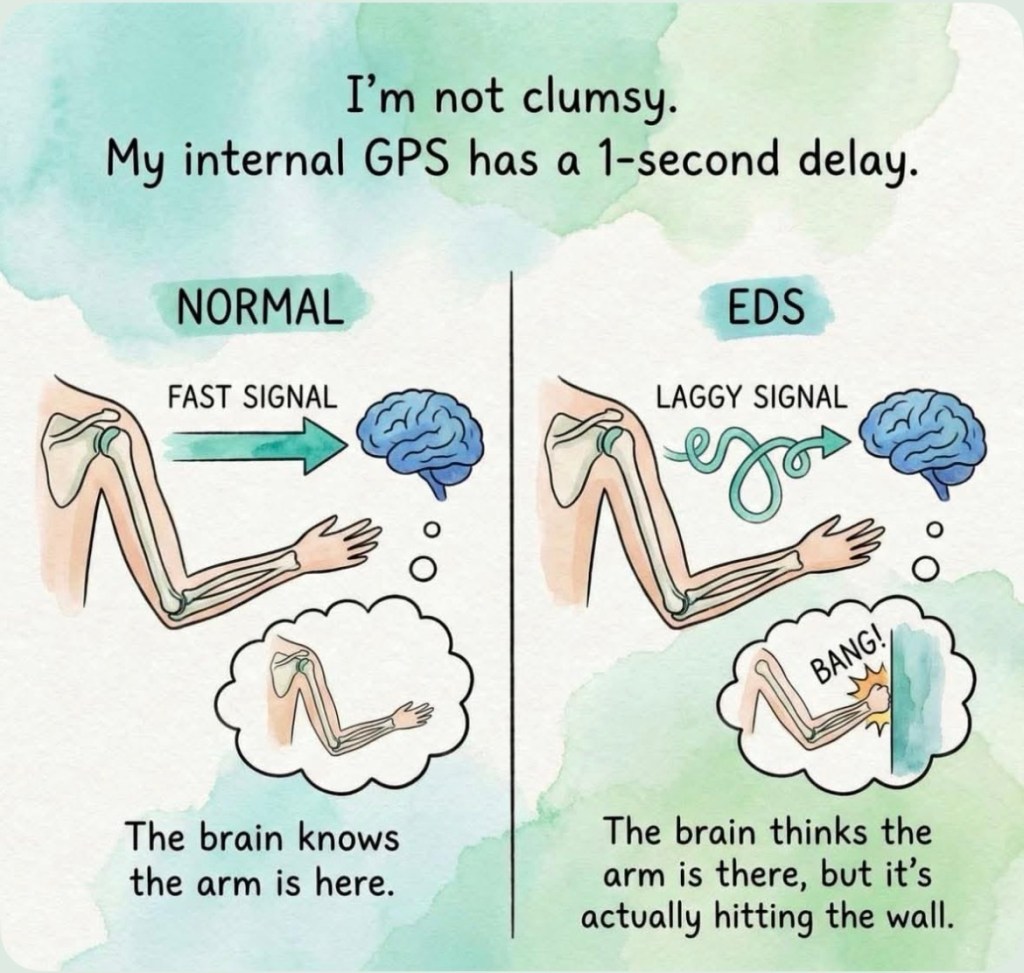
Mandy Harvey is a singer/ songwriter. I saw her on an Americaโ€™s Got Talent clip. Mandy lost her hearing when she was 18. Interestingly enough she has EDS which is similar to my connective tissue disorder.

On the show, she spoke about initially going to dark places. And when she decided she wanted more for her life, she wrote this song. And performed it in front of a live audience and judges and cameras.

She beautifully sings,

โ€œI donโ€™t feel the way I used to / The sky is grey much more than it is blue / But I know one day Iโ€™ll get through/ And Iโ€™ll take my place againโ€ฆ So I will tryโ€ฆ

There is no one for me to blame/ Cause I know the only thing in my way/ Is meโ€ฆ

I donโ€™t live the way I want to/ That whole picture never came into view/ But Iโ€™m tired of getting used to/ The day

So I will try..

Those words hold me when comparison tries to unravel me.

Forest Therapy: A Way Forward

If comparison is a thorn, forest therapy can be a balm.

The forest floor is messy. Layers of leaf litter, moss, dead wood. It doesnโ€™t pretend to be clean and perfect. It is rich because of its imperfections.

Your struggles, limitations, pain give richness and texture to your life storyโ€”not flaws to hide.

Walking a path in woods, you may have to step over roots, navigate mud and stray branches. But each step gives you awareness, grounding, breathing space.

Comparison often makes us spin like leaves in the wind; forest therapy anchors us.

When comparison grabs tight, I go to the woods.

The forest does not compare:

  • Trees donโ€™t measure their height against one another.
  • Moss doesnโ€™t resent the ferns.
  • Streams donโ€™t ask why the river runs faster.

Each element grows where it is, as it is. That is enough.

Roots, Rituals and Small Resets

Here are ways the forest has supported me:

Leaning against a tree and letting its rootedness remind me that I, too, belong.

Listening to the birds until my thoughts soften.

Sitting by water and imagining my comparisons floating downstream.

From Forest Floor to Open Sky

Yes, I still compare. Yes, it still hurts. But when I remember that comparison steals joy, I find space to choose something else.

I may not be in San Diego, or London, or even fully awake at 9 a.m. (to those who are, Have as good a time as possible, given that Iโ€™m not there. Heehee ๐Ÿ˜Š)

~Life said nope ๐Ÿ™ƒ๐Ÿ‹~

I can still offer kindness, presence, and love.

And maybe that is enough.

I want to feel good about my life. Not in the sense of โ€œas good as anyone else,โ€ but as my life, full of the shape I have.

Chronic pain is part of the soil I grow in. Itโ€™s changed what I can do, yesโ€”but also deepened what I can feel, what I can appreciate.

If everyone else seems to be walking on sunlit paths, I may be walking in dappled shade, or in a different time of day. But my path is still mine, and still worthy. Because even in the shaded parts of the forest, light still filters through.

Ways to Calm Your Overactive Nervous System: including but not limited to Forest Therapy!

Here I sit beneath a tree,

Heartbeat calm

Soul hums free.

-Angie Weiland- Crosby

The conversation I am hearing around any table, in any social situation, is a desperate pleading for less stress, calmer nerves, more down time. Any way you put it, people are worn out. The phrase I choose to use in this space, is that we each have a deep need to regulate our nervous system. Which requires less stress and finding a way to calm our nerves.

So how do we go about doing this?

If only it were this easy!

Do A, B and C and your nervous system will be regulated. If only there were a list of instructions. But any of us who suffer from an easily activated system know from experience that once you allow that “jack-in-the-box” out, it is really difficult to squish him back in. Once you have had a breakdown of nerves aka a nervous breakdown it is really difficult to bring them back to normal function.

But! The good news is that it can be done.

There are many good ways to calm a dysregulated immune system. My number one favourite way is forest therapy. In the forest we find peace. We find rest and rejuvenation. It’s not just from the nice scenery.

There are many principles to forest therapy that I can teach to help you find the benefit of the forest when we go on a walk together.

As a forest therapy guide I am trained to lead you to the most valuable use of your precious time by sharing invitations to bring the benefits into your being and to take aspects of the forest home with you to keep that regulated feeling flowing.

I have to admit there are many other ways to regulate an overactive nervous system but I hold to the opinion that forest therapy is best!

Think of anything that brings you calm. We are not talking about ignoring your emotions while binge watching Disney movies and eating copious amounts of junk food. What we seek is the calm that feeds you. When you finish this type of activity, you feel better than when you started.

Some of my other ways to support my nervous system are: fun with family and friends, going to church, helping others, being creative or expressing gratitude.

Then there are the therapies that are also supportive. Red light therapy. Detoxing.

When our nervous system is overactive there is an over abundance of cortisol present. Cortisol is a good hormone in appropriate amounts. But like anything, too much of a good thing is not a good thing.

Cortisol’s acidic nature can cause a breakdown in lymphatic tissue and can lead to the flow of fluid being reduced. Grounding (connecting bare skin to the earth or a grounding mat) can support the breakdown of cortisol and improving lymphatic fluid flow.

Many of us who suffer from chronic conditions have a buildup of lymphatic fluid. A quick tip for this week is to either hum, bounce on a rebounder (you don’t even have to leave the mat, just a small bounce) OR tap your chest with your first three fingertips to clear some of this fluid daily. If there has been buildup you may notice a lot of phlegm in your throat. Nasty, but success!

For everyone, there is a chronic health epidemic regarding our nervous systems and we are all vulnerable, I believe this epidemic is due in part to the attitude we have developed around work, money and our own self worth.

If you look at the terms we use for money you will notice how they can also be used when talking about an individual and how they see themselves. The value of a dollar is nothing compared to the value of each human being. Our net worth can be high and our self worth low.

If we’ve spent years finding our worth in our productivity our nervous systems perceive play and rest as unsafe.

But maybe rest is exactly what we need!

Instead of asking, ‘Have I worked hard enough to deserve rest?’, I’ve started asking, ‘Have I rested enough to do my most loving, meaningful work?’ – Jane Hobbs

Whatever work that may be. Employment. Raising children. Caring for aging parents. Putting our creative work out into the world. A combination of these. Or none of these. For some of us, taking care of our bodies is a full time job because that is the only way out of this powerful cycle of dysregulation.

Brene Brown said, It takes courage to say yes to rest and play in a culture where exhaustion is seen as a status symbol.

Relatable?

May I offer a suggestion to choose your rest spot well?

Certain members of my family who shall remain nameless are so good at falling asleep they could make it an Olympic event. It’s a form of art, the noises they can make and how wide the mouth can hang open as they drift further and further into dreamland; it’s quite impressive. Ok I admit I am one of them, but these stories are not about me!

One day after hours of errands, one family member got in the car, leaned the seat back and closed their eyes. Upon waking, through blinking, fuzzy eyesight they saw a man wandering unnervingly close to their car and looking directly at them with eyebrows furrowed.

He was not the only one on the scene as there was a bus stop directly across from Sleeping Beauty and we have surmised our family member must have looked dead. That man waiting for the bus must have gotten quite a shock when the concern that brought him to peer into the windshield, turned to surprise that the dead had awoken.

Another time. Anther family member. This time a truck and a moment to nap on the side of the road that turned to dread upon waking hours, that’s right, plural, hours later to wonder how many friends had witnessed the scene. They’d had plenty of opportunity to drive by over all those hours. Possibly more than once since it was a popular intersection for all that know this nameless family member.

Here’s an approach to shifting that perspective. From exhaustion as a status symbol to doing what is best for us. I hope this sticks more than a mere invitation to get your rest, I offer to you two words of the week. Hurkle Durkle and Ramfeezled.

Ramfeezled: An 18th Century term for wrung out, tired and exhausted. Let’s stand up to the world’s judgment and have a nap before we become ramfeezled. And we will NOT allow exhaustion to be our status symbol. We choose life.

Hurkle- Durkle: A 200- year- old Scottish term meaning to lounge in bed long after it is time to get up. Happiness is Hurkle-Durkling. When your body needs rest, find time and a way to rest. When your energy is depleted find a time to Hurkle- Durkle. It is refreshing to get the amount of sleep one’s body needs.

You know how when you plug your phone in to the cord and leave it all night only to find the other end wasn’t plugged into the wall? It got no charge from being only plugged in on one end.

That is what it can feel like to someone with chronic fatigue/ pain/ illness. The stress on our body to exist can become too much some days. And exhaustion is the reality.

Have you experienced this type of fatigue? Being tired and being fatigued are quite different.

Please be aware of the beings in your world that require extra rest. It can be quite devastating to wake up after hours of sleeping and still be exhausted. Or to have a small window of the day to get things done before the body is showing signs of stress and fatigue.

We all experience moments of fatigue. However, if you are one of those that wakes up fatigued everyday and then goes about their endeavors as best they can like a boss, I see you, I recognize what it costs you, you are not alone.

Never. And I mean Never feel bad about taking a nap or getting a rest when your body needs it.

I invite you to allow the effects of the forest to heal your dysregulated nervous system. It can help bring your cortisol levels under control in a shorter period of time than other ways I’ve tried. Arrange your life to allow time to rest when your body needs to rest. Have you rested enough to do your most loving and meaningful work? Say yes to rest but choose your rest spot wisely! Find time to hurkle- durkle and don’t become ramfeezled. I can show you how.

Join me in the forest. Head to my contacts page to book or to make inquiries. Take care of yourselves.