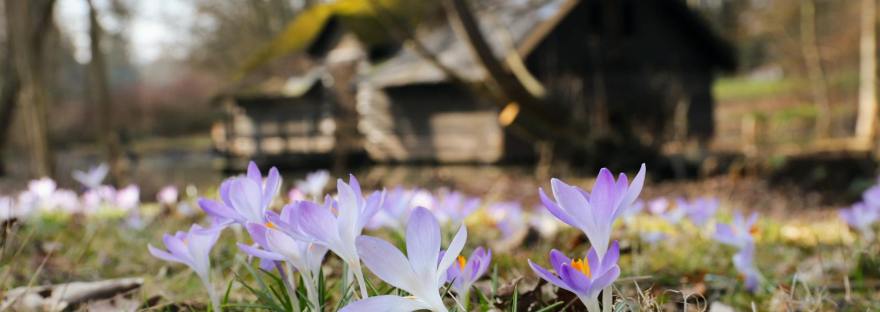

Female Hormones: Our Fickle Fairweather Friend

My hormones and I are in a “situationship.”

Years ago, I became convinced I was getting less intelligent.

I would walk into a room and forget why. Lose all my trains of thought mid-sentence. Derailed. No coming back.

I’d constantly search for words that had wandered off unsupervised. They would come back hours later, long after it was needed and with no apology whatsoever.

I blamed stress.

I blamed being busy.

I blamed getting older.

In reality, it was probably all of those things, mixed with hormonal changes I didn’t fully understand yet.

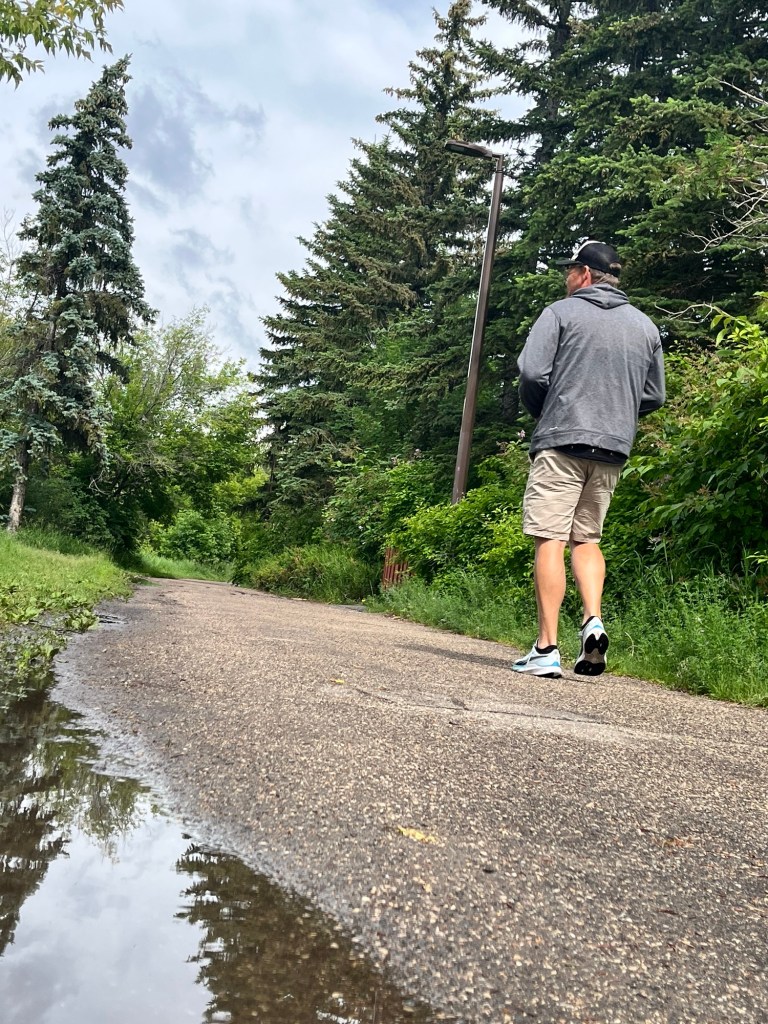
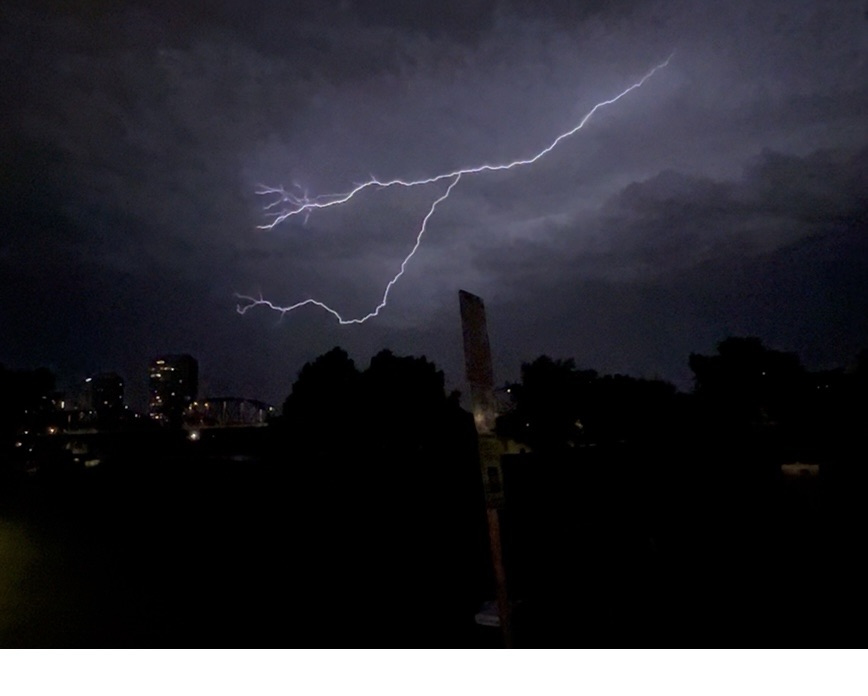
Female hormones are funny. They’re a bit like a Saskatchewan summer storm. One minute the sky is clear, the sun is shining, and life feels manageable. The next, the wind picks up, the clouds roll in, and you’re wondering if you should have brought a jacket, umbrella and storm cellar.

The weather didn’t become bad.

It changed.

Our hormones do too.

Female hormones are a bit like Saskatchewan weather. If you don’t like what’s happening right now, wait ten minutes.

Most of us think of hormones as reproductive messengers, but they influence far more than our cycles. They affect sleep, memory, focus, mood, energy, and even how connected we feel to the people around us.

One of the most interesting ideas I encountered from a recent podcast interview with Dr. Anna Cabeca. While estrogen, progesterone, and testosterone get most of the attention, hormones like cortisol and oxytocin may have an even bigger impact on how we experience daily life.

Oxytocin is often called the love hormone. It’s associated with connection, belonging, trust, laughter, affection, friendship, pets, nature, and community.

Likewise, oxytocin and cortisol tend to pull in opposite directions.

But the story doesn’t end there. The plot thickens.

As any prairie girl knows, sunshine and thunderstorms often share the same forecast.

When stress becomes chronic, such as in a body dealing with chronic pain, connection often suffers.

Many of us don’t just feel tired. We feel disconnected.

From ourselves.

From others.

From the things that once brought us joy.

Progesterone plays a role too. It supports sleep, cognition, brain health, and nervous system regulation.

Testosterone contributes to motivation, confidence, energy, and focus. Both naturally decline as we age, and both can be influenced by chronic stress.

Side note: I would like to point out that aging naturally isn’t nearly as freaky as whatever is happening with the people trying desperately to avoid it. Also, at what age do we start meeting for Bingo? Because I’m ready.

Progesterone naturally declines in women, typically beginning in the mid-thirties as ovarian function gradually changes.

My body got the memo that the warranty has expired. All systems started responding the way you’d expect at the end of a warranty. (despite the fact that I was built in the 70s and should have been made to last)

Looking back at my own health journey, I spent years trying to solve individual symptoms.

If I could just stop the migraines.

If I could just overcome the fatigue.

If I could just break the insomnia.

What I eventually learned is that the body doesn’t divide itself into neat little boxes the way we often do.

Sleep affects stress.

Stress affects hormones.

Hormones affect mood.

Mood affects relationships.

Relationships affect wellbeing.

Pull one thread and the whole thing unravels.

That’s why healing often requires support from multiple directions.

👏 Good food.

👏 Movement.

👏 Sleep.

👏 Stress management.

👏 Connection.

👏 Time outdoors.

The podcast also reinforced something I’ve known for years: nature has a remarkable way of helping us regulate.

Not because it magically solves our problems, but because it reminds our nervous systems what calm feels like.

Like sitting quietly in warm sunshine after a long winter.

Like hearing nothing but leaves rustle in the breeze.

The Practice

One simple forest therapy practice is this:

  • Stop
  • Notice 5 things moving around you (leaves, clouds, grass, insects, birds)
  • Listen for 3 sounds
  • Notice 2 scents
  • Take one slow breath

It’s amazing how quickly the nervous system responds when we give it the chance.

The body benefits from movement, and the mind benefits from stillness.

Sakyong Mipham

Ways To Support Oxytocin Naturally

The good news is that many of the things that support oxytocin are surprisingly simple.

  • Hug someone you love.
  • Spend time with a pet.
  • Get outside.
  • Sit around a table with friends.
  • Laugh.
  • Touch grass. Literally.
  • Watch a sunrise.
  • Watch a sunset.
  • Practice gratitude.
  • Connect with people who make you feel safe and seen.

None of these things are revolutionary.

But maybe that’s the point.

Sometimes healing isn’t found in adding another supplement.

Sometimes it’s found in adding another conversation.

Almost everything will work again if you unplug it for a few minutes, including you.

Anne Lamont

Your Most Important Appointment

One idea I loved from another podcast was the concept of holding regular wellness meetings with yourself.

Not a performance review. Not a guilt session.

A wellness meeting.

Three times a week, ask yourself this:

What do I need today?

Maybe it’s a walk.

Maybe it’s strength training.

Maybe it’s sitting outside with your morning tea and watching the sunrise.

The goal isn’t perfection.

The goal is paying attention before your body starts communicating through burnout, brain fog, anxiety, or exhaustion.

My ultimate goal isn’t to control every hormone. It’s to stop being blindsided by them.

Because hormones may be fickle.

But they’re also messengers.

And sometimes they’re simply asking us to listen.

The greatest wealth is health.

Virgil

This is the first post in a hormone series. Next week we’ll look at hormone disruptors: where the biggest offenders are hiding, and what to use instead.

Feeling It All: Big Emotions, Chronic Pain, and Finding Your Ground in the Forest

There’s a moment. It’s often quiet, sometimes overwhelming. When emotion first arrives in the body.

It might feel like a tightening in the chest. A wave of heat. A heaviness behind the eyes. A sudden drop in the stomach.

Something I’m learning? When this happens, nothing has gone wrong. My body is simply giving me information.

Experiencing big emotions is not a failure of regulation, character, or strength. It is part of being human.

Especially for those living with chronic pain, where the body is already speaking loudly, emotions often arrive amplified and harder to ignore, harder to name, harder to hold.

But after that first signal comes something powerful.

Choice.

Not whether you feel the emotion. But how you respond to it.

As Daniel Chidiac teaches, Not every emotion needs a reaction—but every emotion deserves acknowledgment.

The Story We Tell After the Feeling

On the Better Than Happy podcast, Jody Moore offers a perspective that can feel both freeing and confronting.

Anger is optional. 

Disappointment is optional.

Embarrassment is optional.

Humiliation is optional.

Not because we can simply turn emotions off. But because these emotions are often shaped by the meaning we assign to our experiences. Have you experienced any of the following?

  • You have been dismissed by a medical professional, again. 
  • You didn’t reach the goal.
  • Someone saw you struggle.
  • Something didn’t go as planned.

Those are just events. Although they feel huge in the moment. 

Disappointment enters when the mind adds the story.

This means something is wrong with me.”

Embarrassment grows when the thoughts spiral into shame.

They must be judging me.”

“I look foolish.”

“I am foolish.”

And here’s the important nuance.

These emotions are optional. But not wrong.

You’re allowed to feel them. You’re also allowed to question them.

The feeling is real. The story is optional

John Delony

A Simple Task: A Heavy Story

Here’s how that looks in my life. 

I set out to do a little spring cleaning.

Nothing ambitious. Just a smidgen at a time. Slow and steady. The way I’ve learned my body needs things to be. Experience has taught me that enthusiasm and capacity are not the same thing.

But then life showed up.

The everyday mess. The dishes. The door in my room that was in desperate need of a good wipe down. The quiet realization that I couldn’t do both.

I had to choose. My body, which had just clocked in was now requesting a lunch break.

And then the grandkids came to “help.” Which, as you can imagine, added more chaos than progress. At this point the mess was winning. And multiplying.

The vacuum stopped working. My arms started to burn.

And just like that, the thoughts came rushing in.

I’ll never catch up.

My house will always feel like this.

Why can’t I just keep up like everyone else?

Because, obviously, one unfinished chore means a lifetime of failure. 😣

I could see it happening, the spiral. I wasn’t unaware.

But stopping it? That took effort. A surprising amount of effort.

Excuse me while I parent my dramatic inner narrator.

Because even as part of me recognized what was happening, another part was pushing me harder.

Just keep going.

Finish what you started.

If you don’t do it now, it will never get done.

False. What was actually true was much simpler and much harder to accept in the moment.

I was tired. I was in pain. I needed to stop. 

My body wasn’t failing me. It was asking me to listen.

And the real choice in that moment wasn’t about dishes or doors.

But this.

Do I keep pushing to meet an expectation I set for myself… or do I take care of myself?

Eventually, I chose to stop.

Not because everything was done. But because I was.

And that shift didn’t magically clean my house. But it did something more important. It brought me back to myself and my priorities.

—— 

Chronic Pain and Emotional Amplification

Pain is loud. But it is not the only voice.

Liz Newman 

If you live with chronic pain, this truth lands differently. (You might also find this helpful -> How Forest Therapy Can Transform Your Pain Experience)

Because your nervous system is already working overtime. Because your body has taught you that signals matter and often signal threat. ( If you want to learn how forest therapy supports the nervous system, check this out -> Mending Your Nervous System With Forest Therapy)

Pain doesn’t just exist in isolation. It interacts with emotion, memory, and meaning.

A flare-up can quickly become:

I’ll never get better.”

My body is failing me.”

I can’t live the life I want.”

This is where emotional dysregulation can take hold, much like how Brené Brown describes it:

Being overwhelmed by feelings that are hard to name and contain, driving behaviors and thinking that don’t align with who we want to be.

And suddenly, we’re not just in pain.

We’re in a story about what that pain means.

Your body speaks in sensation. Your mind speaks in meaning. Learn to tell the difference.

Deb Shapiro 

Disconnection: When the Body Becomes Unfamiliar

Brené Brown shares a powerful story about recovering from injury and trying to engage muscles that simply wouldn’t respond. Her therapist kept reminding her to “find your ground.”

But she couldn’t feel it. She couldn’t even find her lats. 

She was using her body while being disconnected from it.

That disembodiment, that moving without understanding, existing without connection, is deeply familiar for those with chronic pain.

You expect your body to respond one way. It betrays your expectations. Every time.

And over time, many people stop listening to their bodies with curiosity and start bracing against them with resistance.

Until one simple but profound instruction emerges.

Find your ground.

Not just physically. Energetically. Emotionally. Spiritually.

If you’re trying to find your way back to yourself, back into your body, the answer isn’t usually one big solution.

It’s small, grounding practices.

Journalling. Meditation. Art. Spiritual connection. Time in nature.

Each one opens a door.

Forest therapy is where those doors meet, creating a space that supports not just awareness, but true reconnection. 

The Tree as Teacher

In The Secret Therapy of Trees, Marco Mencagli and Marco Nieri describe the trunk of a tree as something remarkably similar to the human core.

It is a channel of connection. A stabilizing structure. A vital center.

If damaged, the whole system struggles.

Like the human torso, home to breath, circulation, and strength, the tree’s trunk is both anchor and conduit.

And yet, trees do something we often forget to do. They remain rooted while experiencing everything.

Wind. Storm. Drought. Seasonal loss.

They do not avoid conditions. They adapt within them.

What Actually Matters (Hint: It’s Not the Dishes)

Another truth worth holding onto.

You cannot overestimate the unimportance of practically everything.

John C Maxwell 

So much of what consumes our emotional energy, what people think, whether we looked polished, whether everything went perfectly, is, in the grand arc of a life, remarkably small.

Jody Moore offers a striking reflection.

Imagine your tombstone reads:

At least the dishes and laundry were always done.”

She really stayed on top of the laundry.”

“At least no one had a reason to judge her.”

That’s not the legacy most of us want.

What we want is something closer to this.

She lived fully. She went all in. She gave her whole heart.

Not perfection. Participation.

Because the real tragedy isn’t failure. It’s not trying at all.

Vulnerability, Courage, and the Nervous System

Brené Brown reminds us:

There is no courage without vulnerability.

And vulnerability means feeling.

It means stepping into uncertainty.

Risk.

Emotional exposure.

For those with chronic pain, vulnerability can feel even riskier. The body already feels unpredictable. Why add emotional exposure on top of that?

But avoiding emotion doesn’t create safety.

It creates disconnection.

And disconnection pulls us further from our “ground.”

EMBERLIN: (n) the small unbreakable flame inside you that refuses to go out, even on your darkest days.

A Forest Therapy Practice: Finding Your Trunk

Here’s a simple forest therapy invitation you can try.

The Trunk and the Story

1. Arrive

Find a tree that draws your attention. Stand or sit near it.

2. Observe

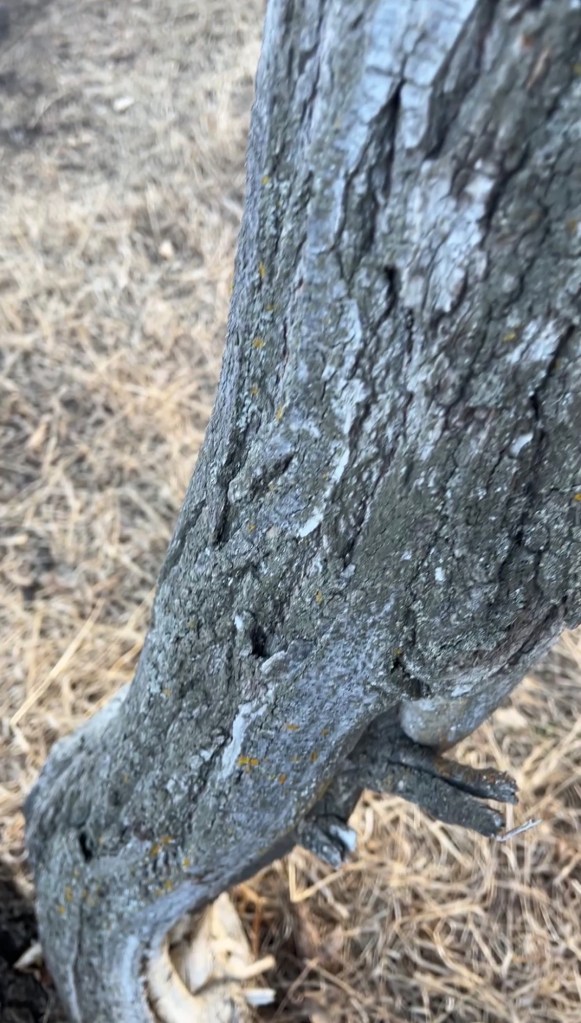
Notice the trunk. Its thickness. Its texture. Its steadiness.

3. Connect

Place a hand gently on the tree (or simply sit close if touch isn’t accessible).

Bring awareness to your own torso.

  • Your breath
  • Your chest
  • Your core

4. Journal

Bring a journal or write in the dirt with your finger or a stick. Answer these questions, 

What emotion is present in you right now?

Not the story, just the sensation.

Where is it in your body?

5. Separate Sensation from Story

Gently answer this,

  • What am I feeling?
  • What am I making this mean?

Draw a line between the two answers. Let those be two different things.

6. Root

Imagine your body like the tree. 

  • Grounded below
  • Supported in the center
  • Responsive, but not uprooted

7. Choose

Without forcing anything, ask this,

How do I want to respond to this feeling in this moment?

Write your answer. 

Final Thought: Feel First, Then Choose

You are not meant to bypass emotion.

You are meant to experience it, fully, honestly, humanly.

And then, from a grounded place, choose your next step.

Not from fear. Not from the story that says you are failing.

But from the deeper truth that you are still here, still rooted, still capable of living a meaningful life.

Even with pain.

Even with uncertainty.

Even with a door that still needs cleaning. 🧼 🚪

Understanding Cortisol: Significance and Solutions

There is something infinitely
healing in the repeated refrains
of nature- the assurance
that dawn comes after night
and spring after winter
-Rachel Carson

Cortisol: Your Body’s Cheeky Stress Hormone Revealed!

Cortisol is a hormone produced by the adrenal glands in response to stress. When the body perceives a threat, the hypothalamus signals the adrenal glands to release cortisol into the bloodstream.

Today on the blog, I share how I recognize high cortisol levels in myself. I also explain what actions I take to manage life and health when it spikes. If this sounds helpful to you. Stay tuned.

Are you subscribed? I have many plans in the works. To make sure you don’t miss out on anything forest therapy and sunbeam acres, subscribe to the blog. And make sure to follow me on Facebook, Instagram and X! I am watching the trails closely. You will be the first to know when and where to book your forest therapy walk.

Disclaimer: I am not a medical professional. The information I share here is meant to be helpful advice from a friend. If you have a physical ailment, see your doctor. If you have mental health concerns, talk to a mental health practitioner. This is my story. Maybe it will be helpful for you.

Cortisol is important. Levels typically rise in acute stressful situations. This helps the body in a number of ways to cope with the situation. Including increasing energy, enhancing alertness and suppressing non-essential functions.

However chronic stress can lead to prolonged elevated cortisol levels, which has a number of negative effects on the body.

There is a Native American teaching. Often attributed to Chief Tecumseh, philosopher and leader. “To survive the seasons, you must change with them.”

I am feeling the truth of these words.

When Life Decides to Take a Tailspin

My life is in constant motion. We are in another season of transition in our family. Between a husband, three kids and two grandkids, there is always something to adjust to.

Saw this somewhere. On a scale of 1 to Nature Valley granola bar, how much is your life falling apart right now?

I don’t mean to brag, but I’m at Nature Valley level. so. yeah.

Inure- to accustom to hardships, difficulty, pain, etc; toughen or harden; habituate

She can fall apart at night & still rise up in the morning. Strong women feel pain, they just don’t let it break them.

High Cortisol and Chronic Inflammation: Stressing Out Like It’s a Hobby!

Transition and change are some of my triggers. So I notice my stress level is high. Here are some of the signs I noticed in myself. Are you in the midst of this battle too?

  1. extra puffiness in my face
  2. my thin hair is thinning more quickly
  3. crazy sugar cravings
  4. supreme exhaustion
  5. irritated with everything
  6. waking up between 2-3am
  7. tense shoulder and neck muscles
Accurate depiction of me at 3 am nightly lately

When excess cortisol is present, it can affect the immune system. The lymphatic system helps manage the immune response by distributing immune cells. Which can counteract some of the immune suppressing effects of the cortisol. Chronic stress (cortisol being chronically released) weakens this system. This results in a build up of fluid and waste which should have been eliminated through the bloodstream. This can contribute to chronic inflammation and the worsening of stress related issues.

At least that’s what ChatGPT told me. I know how it affects me. I don’t understand all the science. Here are some of the ways that chronic inflammation shows up for me. It’s not just in the joints now that chronic inflammation is in play.

  1. Brain fog
  2. Cravings
  3. Food sensitivities
  4. Swollen lymph nodes
  5. Balance problems
  6. Always tired
  7. Rashes and skin issues
  8. Muscle weakness
  9. Dry eyes
  10. Body pain

Filipendulous- hanging on by a thread.

Unexpected Adventures in Anxiety: A Panic Attack Saga

Living with excess cortisol is not pretty. There was a time when I had stress overflowing out my ears and nose. I did not have a clue what to do about it. So it just kept getting worse. I lived every day on the edge of a panic attack. The smallest thing would send me over the edge.

We were living on a farm and my son was taking driver’s ed. It was during covid so time and schedules had no meaning. But the driver instructor was trying to finish up the drives where and how he could. Twice I scheduled with him and totally forgot. I had one last chance and then the boy would have to take his driver training all over again. Later that week I was on the rototiller in the garden. My son brought me my cell phone. He said it was the driver instructor. I had done it again! I had forgotten. Panic is not a strong enough word for what ensued.

We were a 15 minute drive away from where the boy needed to be. They would wait but not a minute longer. I got off the tractor and started screaming for my son to get out the door. For my husband to get in the car and take him. The seconds were excruciating. Nobody else seemed to realize the gravity of the situation and everything was moving in slow motion. As they left in the car I fell to the kitchen floor in a sweaty, dizzy, panting, messy puddle. That. Is. Not. Me.

How do I train my body to use its fight or flight response for its intended purpose? In an emergency. Not when missing an appointment, or calling to make a medical appointment, for that matter?

Boost Your Lymphatic System

Supporting the lymphatic system is always a good idea. Especially in times of stress and unease. So you don’t end up in the same messy puddle I did. Here are some of the things I do to get my lymphatic fluid moving again.

  1. dry brushing- really easy to incorporate into your pre-shower routine, with a bath brush or washcloth that is a little rough (if it gets wet and hangs to dry, that is the texture you want) brush towards the heart where it can be cleared (refer to pin following this list)
  2. small bounces and digging your heels into a rebounder
  3. hot/cold showers switching can trigger a “pins and needles sensation”, hot when you get in, cold for a while then back to hot
  4. lay on the floor and put your legs up straight against a wall
  5. deep breathing- guided meditation can help to focus
  6. exercise- about 20 min into my workout I start to cough phlegm, this is disgusting but a release of lymphatic fluid nonetheless
  7. infrared sauna- sweating and the healing warmth of the red light
  8. hydration! hydration! hydration!
  9. eliminating toxins from my home and diet where I am able
  10. castor packs, especially liver and lung

Forest Therapy: Nature’s Energy Source!

I kid you not, one of the best ways to clear those toxic feelings is to get some FOREST THERAPY! It is an energy giver. Here are some other energy givers:

  1. music (especially songs that makes you want to get up and dance)
  2. quality sleep (when you can)
  3. meditation
  4. proper nutrition
  5. doing something you love
  6. positive social interactions
  7. time in nature!
  8. sunshine!
  9. fresh air!
  10. movement!!!

Use any of these energy givers in a way that works best for you. Meditation and forest therapy are becoming more mainstream. Although they can sometimes still be classified as nonsense or new age. Meditation can be as simple as a prayer. Or a quiet space to picture something soothing. Try this one:

Breathe in deeply. Picture the oxygen giving life and energy to all the main organs. It enters all your cells. traveling through all your limbs, hands and feet. Like a river from its source travels to all the tributaries. Breathe out and picture the landscape of your inner body. Being nourished by the ebb and flow of your breath

Finding Your Spark: A Hopeful Message for Life’s Struggles

I have friends going through different but equally stressful life events. To them and all those suffering, I hope you’re okay. I know you’re not truly okay. But I hope that the sadness and stress don’t overwhelm you. That you can see cracks of light in the dark. That the shadows will allow you to break and heal and grow. But not swallow you. And that you know you’re not alone. Especially in the moments when you feel like you are. When I get through my darkness and find the light, I’ll leave it on for you.

There’s a new endorsement for emotions. Even the ones typically known to be “bad” are being ratified. Here’s how I am learning this concept.

Photo by Pixabay on Pexels.com

Sadness can be deep and feels like it can swallow you. Can you find joy in your sadness? Is there any portion that can be joyful in the grief? I am still sad about having to close my piano teaching business. Time has passed. I can start to find the joy. I loved my students. I experience joy in seeing them grow and accomplish things on their social media. The sadness mixed with the joy can now be bittersweet.

Uncertainty is a difficult place to survive. It comes part and parcel with chronic pain. What will tomorrow bring? Will I have the strength? How long? Can you find a place of peace to put that uncertainty? My peace comes in the practice of my religion. There is still uncertainty. But mixed with my stretching and reaching for peace, I find myself in a place of resilience.

I experience periods of mild anxiety now that I medicate. Previously my anxiety was off the charts. When I would play piano in a local festival it was not fun. The anxiety made even winning and accepting awards intimidating. Now that it is under control I can assess the situation more clearly. I try to find an element of excitement. If something is scary, where is the excitement? Writing a blog is pretty scary. Sharing it with people is even scarier. But it is exciting to see who reads and enjoys it. When I consider the excitement with the anxiety, I find anticipation.

Between anger and compassion is assertiveness. Between confusion and clarity is realization. Between love and loss is grief.

Negative emotions are warnings to pay attention to how we are feeling. When we join a negative emotion with a positive one, the gripping pressure of stress can be loosened. The negative emotion may be caused by life and its circumstances. The positive emotion is consciously chosen to accommodate the negative emotion in your body. To curb the negative effects of the first. It’s not an exact science. Let me know if this is something that resonates with you by adding an emoji in the comments.

You don’t always have to try so hard to live each day to the fullest. Each day is full on its own. All you have to do is notice.

-Emma Rose Tait

The Self-Care Revolution: An Answer for Everyone!

Do you ever find yourself feeling bad and you aren’t quite sure why? Here is a list of questions to help clear it away and not have it build up. Like brushing away the lymphatic fluid.

  • how is my sleep?
  • am I getting proper nutrition?
  • have I indulged too much in social media?
  • are the people around me affecting me?
  • where is my energy going?
  • what is my mind craving?
  • what is my heart wishing for?
  • is something weighing on my mind?
  • how is my self talk?

If all of these strategies and ideas are not your cup of tea. Do not fret. There is a solution for you too.

High cortisol levels triggered by stress and life events can undoubtedly take a toll on our bodies. And yet, it’s essential to remember that we have the power to heal and nurture ourselves. My experience with a panic attack served as a wake-up call. Over time I learned of the importance of self-care and how the lymphatic system, when supported, can aid in recovery. Nature, through forest therapy, has been my source of energy and renewal. It reminds me that healing often starts by reconnecting with the world around us. As we navigate life’s challenges, asking ourselves the right questions can be a powerful tool in self-soothing and finding peace. So, the next time you feel overwhelmed. Pause. Take a breath. And ask yourself: “How can I support my body, mind, and spirit today?”

March has the quiet strength to wake up Nature without rushing it. And you too can grow without pushing it.

-OurMindfulLife.com