Let the waters settle and you will see the moon and stars mirrored in your own being.
-Rumi
There are places that shape us before we’re even old enough to understand what’s happening. Places that imprint themselves on the soles of our feet, in the rhythm of our breath, in the part of our memory that feels more like home than any house ever could.
For me, that place has always been Diefenbaker Lake.
Some places are so deep inside us that we carry their shoreline in our bones.
-John O’Donohue
I’ve been coming here since I was tiny. Even before I had words for belonging, but somehow already knew I belonged here. Grandpa always made sure of that.
My grandparents had a cabin and a sailboat tucked along these windswept shores. Some of my earliest memories are stitched together with the smell of woodsmoke from backyard fires, the sweetness of my grandpa’s violin, and the rowdy chorus of siblings and cousins running wild between the cabin and the water. With the constant reminder to “wash the sand off your feet before you come in!”
And then there were the cozy, indoor moments that stitched themselves into my heart just as tightly as the beach days. Evenings around the table playing Phase 10, some of us a little too competitive for their own good. And we watched Bedknobs and Broomsticks over and over and over again. Never questioning why, just letting the magic and music wash over us like it was brand new every time.
Mornings were their own kind of ritual. Waking up to Grandma making bacon and something (it didn’t matter what, it’s the bacon that mattered) and the smell of fresh coffee drifting through the cabin. To this day, I associate the scent of coffee with pure happiness, because it always meant family, warmth, and the safe little world we built at the lake.
Teenage awkwardness made an appearance here too, because of course it did. Blushing, fumbling romances that felt monumental at the time. Even with his hair plastered to his face. Perhaps this was done by those winds that could have knocked over a small cow 🤔.
Speaking of cows. They are a regular feature of this lake that is surrounded by pasture land. Two rules. Don’t use a cow as a landmark when giving directions. They tend to move eventually. And don’t pick a beach with a cow path into the water. You can guarantee there’s a few cow pies in there.
Swimming lessons were basically an extreme sport back in my day. With waves bigger than me, wind that felt like knives, and instructors yelling cheerful encouragement while I questioned all of my mom’s life decisions that brought me to this point.
Still, I kept going back.
I lived for the days Uncle David would haul out the power boat. Kneeboarding, tubing, laughing so hard my face hurt. Those were the moments that made childhood feel endless. We’d tear down the path to the beach, towels flying behind us, younger siblings and cousins trailing like joyful chaos. We swam, we snacked, we visited, we repeated. Every day was an epic saga of sunshine and soggy towels.
Sailing days were their own kind of magic. My mom loves to retell the story of my sister and me being so little our feet didn’t touch the floor as we sat at the table down below. Meanwhile grandpa and dad were tacking hard and smiling harder. Every time the sailboat leaned, we’d just… slide helplessly under the table like tiny bewildered penguins. Apparently we were adorable. At the time, I remember thinking, Is this normal? Are we sinking? Should I be able to see the lake out that window?
Dad and grandpa were always smiling so I took that to mean we were safe.
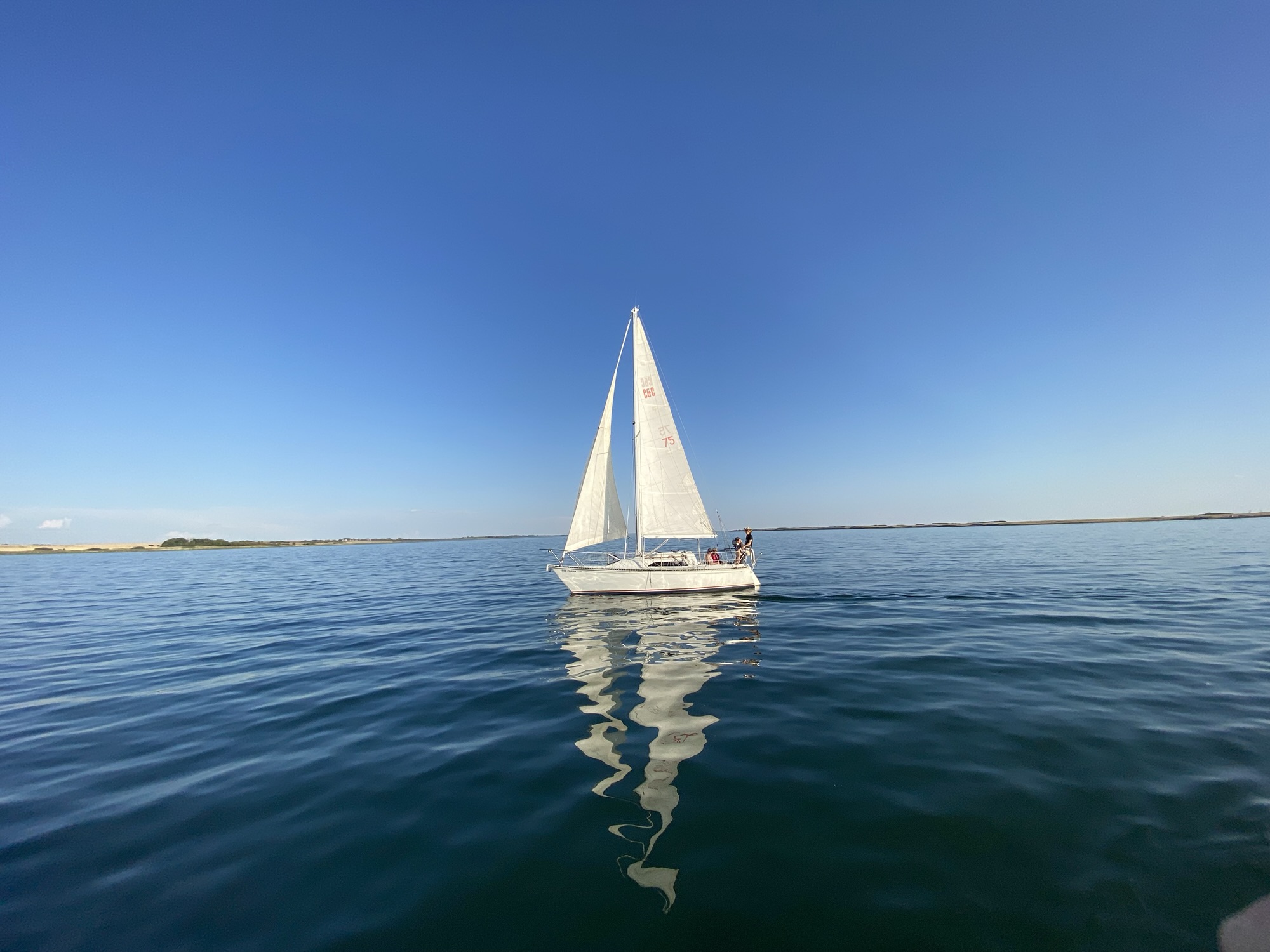
As I grew older I loved sitting at the very front of the sailboat, facing forward, wind whipping around me, I felt like I was flying. When the water was calm, the spinnaker would make an appearance billowing out like a living thing. My grandpa worked the ropes and held the tiller with the easy smile that only comes from loving a place so much. Those are memories I hold like treasures.
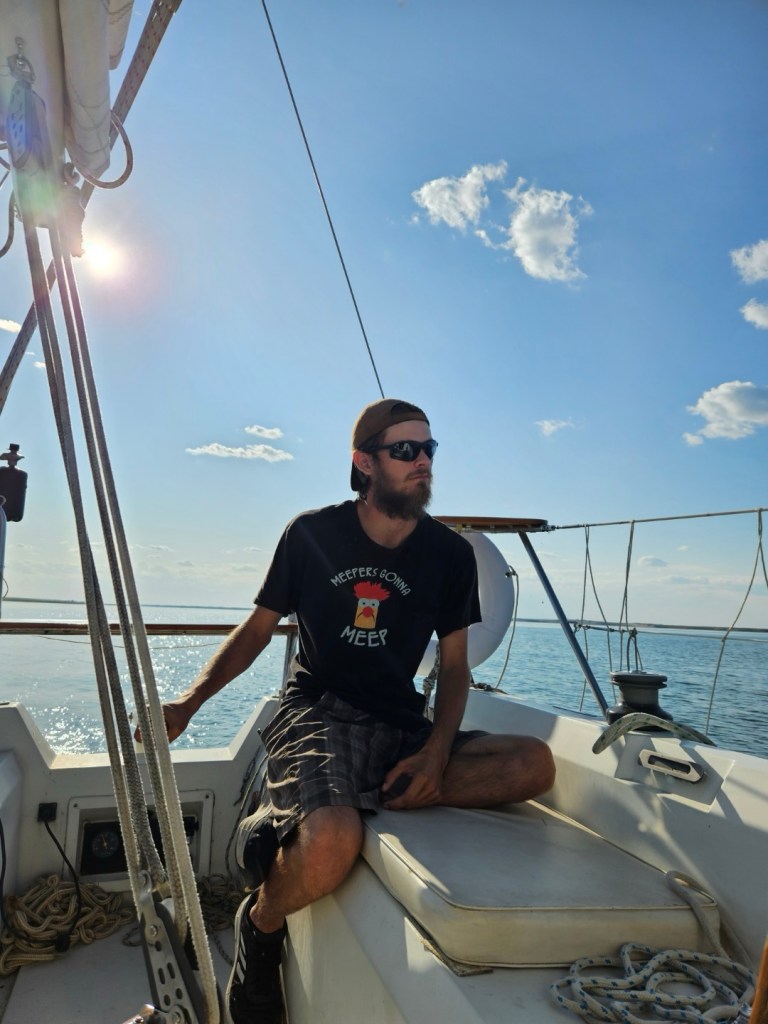
My youngest son a few years back in his favorite spot on the sailboat, that front seat.
And now seems like the appropriate moment to confess something to my parents…
I did, in fact, steal the keys and “borrow” the cabin for one weekend as a teenager 😬. I had “a few friends” over. I threw exactly one party in my entire life. And I was so sick with worry the entire time that I basically grounded myself for the rest of my adolescent years. Lesson learned. Sorry. Mostly. It’s been a good story over the years.
I spent my honeymoon at the lake- 26 ½ years ago. We fished, built sandcastles, and solved the great riddle of rural Saskatchewan: there are no gas stations open on Sundays. (At least, not back then.)
About five years ago, my parents bought their own place by my lake It took a some time but something inside me reconnected. Something long since silent woke back up.
I listen excitedly to hear about the ice breaking in the spring. The booming, cracking, shifting sound like the earth stretching after a long sleep. Then, in an instant it seems, the ice is gone. Summer brings shimmering waves, familiar laughter, and barefoot days that always feel too short. Fall arrives in gold and red and farewell winds. Winter… winter brings a darker, quieter beauty. A solemn stillness that somehow feels honest. Vulnerable.
The older I get, the more I find that the quiet places are the ones that speak the loudest.
-Unknown
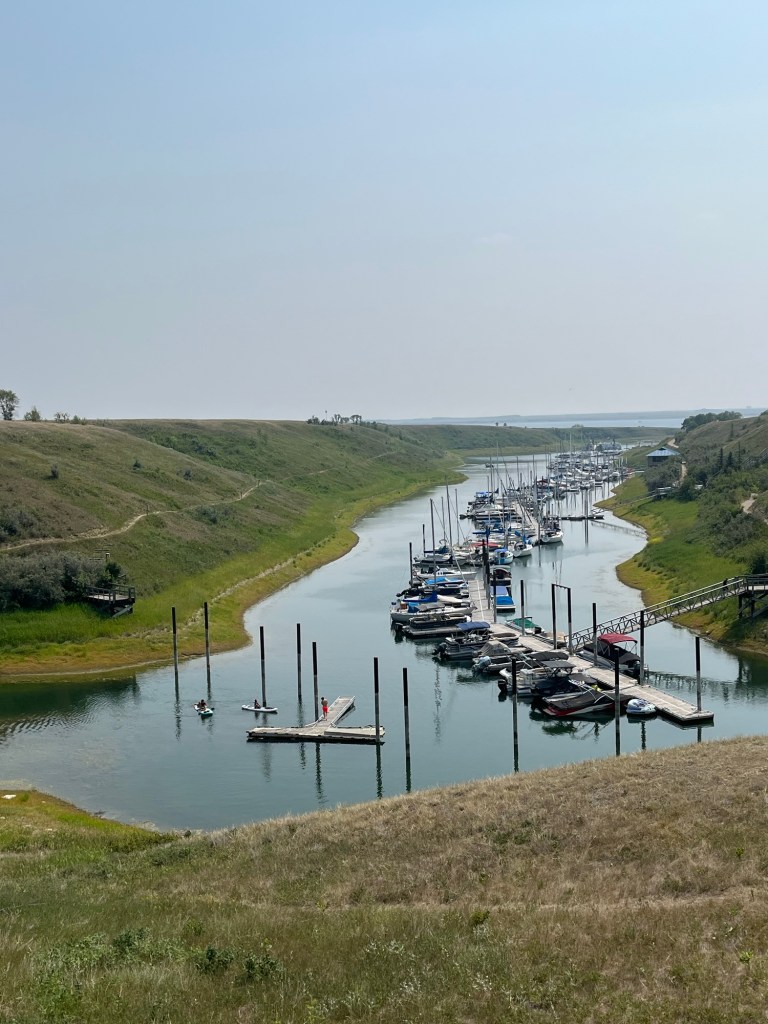
We’ve camped along these beaches. We’ve laid in the sun. And now, when I head out on my power boat with our next generation, I think of Uncle David. I feel him in the hum of the engine, in the ripple of the wake, in the bright splash of joy that comes with speed and water and family.
The pinnacle of our lake experiences has to be when we helped save our friend’s boat from sinking. When the bladder around the leg came off and they started taking on water, they quickly headed to the boat launch. Seeing they wouldn’t make it, they beached the boat. Then with two other power boats and a cacophony of helpers, they managed to get two boat tubes under the leg and the front of the boat. One of the support boats towed. Two people bailed. People sat on the tubes to balance. And in this ridiculous state we slowly made our way through the marina and up the launch. To the laughter and cheers of watchers nearby.
I have found beauty in the whimsically ordinary.
-Elissa Gregoire
These days I walk the trail by my lake often. I slow down. I breathe.
And somewhere along the way, I realized,
This place has become part of my healing.
Chronic pain forces you to live differently. More slowly, more intentionally, more gently. Forest therapy taught me to seek connection with the natural world, to let my nervous system rest in the presence of trees, water, sky. And here, wrapped in the sounds and rhythms of my lake, something in me softens. Pain quiets. My body remembers safety.
When the heart is overwhelmed, the earth invites us to rest.
-Unknown
My parents host endlessly now, filling their summers with family, friends, neighbours. Anyone who needs a taste of peace.
They are the sailboat owners. And they love it just as much as my grandpa did.
The legacy continues, like wind passing from one generation to the next.
My lake is healing. This home of my parents is healing.
And after all these years, I am still finding new ways to belong here.
There are days the lake knows my story better than I do.
-Unknown
Fluctuat nec mergitur (latin phrase):
She is tossed by the waves but does not sink.
An Ode to My Lake
O Lake of my childhood, keeper of my summers,
You who taught me courage in cold waves
and laughter in the spray of speeding boats
I return to you again with a heart that remembers.
You cradle my earliest joys.
Grandpa’s violin threading through evening air,
firelight warming our faces,
cousins tumbling down the path like wild things set free.
You were witness to awkward teenage hopes,
to frozen swimming lessons and winds that stole my breath,
I remember a morning in spring. There was still a noticeable chill in the air. I slipped outside, to the sights and sounds of my summer second home.
My muscles were tight, my mind crowded with worry and pain—nothing dramatic, just persistent soreness that has become my constant companion.
I wandered toward the trees, the sound of the wind through the leaves soft but insistently present. I closed my eyes. I felt my breath slow. My shoulders dropped. And, almost imperceptibly at first, the ache that had built over a winter, within me softened.
That moment wasn’t some mystical escape. It was evidence of something real: the mind-body connection responding to something ancient: nature.
This post is a little more technical than some of my others. In this post, I want to walk you through the science behind how nature calms the nervous system, lowers pain perception, and gives the body a chance to remember how to rest.
This is not just a nice idea or a self-help quip. I see it working in my life, and the research backs it. I share some of that research in the links provided. Feel free to check it out or to give those links a hard pass.
Mind Meets Body: A Dialogue of Perspectives
Healing is not forcing the body into a state of ‘perfection.’ It’s listening to what it has been trying to say.
-Dr Joe Dispenza
First: we are not two separate things. The nervous system is constantly sensing, interpreting, and “talking” to our organs, muscles, immune system, and even to our thoughts and memories. That internal sensing is called interoception — our body’s ability to monitor its own internal state (heart rate, gut sensation, breathing, tension) and for the brain to make meaning of it.
When we live under chronic stress or chronic pain, that conversation becomes distorted. The sympathetic branch of our autonomic nervous system (fight-or-flight) is persistently overactivated. Our brain becomes hypervigilant to threats, amplifying pain signals, even in places that may no longer need it.
But there is a counterbalance: the parasympathetic state (rest-and-digest) — a state where the body repairs, digests, heals, breathes deeply.
Engaging that side is essential for true resilience. And nature offers a powerful entry point into that parasympathetic realm.
Querencia
{Spanish concept}(n) a place where one feels emotionally safe, a place from which one’s strength of character is drawn.
Nature’s Remedy: Calming the Nervous System
The forest is not merely an escape, it’s a return — a remembering of who we are.
-Unknown
Here is where the “nice idea” begins to feel like a compelling method.
1. Visual contact with nature calms brain & autonomic activity
This overview demonstrates that simply viewing natural elements—flowers, green plants, wood—induces shifts in the brain and the autonomic nervous system, compared with urban or non-natural environments. Link
More recently, neuroscientists have shown through brain imaging that exposure to nature lowers pain perception by reducing neural signals associated with pain processing. Link
In one study, subjects viewed virtual nature scenes while receiving mild pain stimuli, and the brain’s “pain network” lit up less strongly than when viewing urban scenes. Link
2. Nature reduces physiological stress markers
Time outdoors helps shift us from sympathetic arousal toward parasympathetic. Essentially, nature helps us “come out of our heads and into our bodies.” Link
Forest bathing (shinrin-yoku), for example, has been associated with lowered cortisol, reduced blood pressure, decreased heart rate, and improved immune function. Link
3. Attention restoration & easing mental fatigue
One pillar in environmental psychology is the Attention Restoration Theory (ART), which states that when we gaze at nature’s “soft fascinations”—rustling leaves, flowing water, birdsong—we can rest our directed attention (the kind used to suppress distractions) and recover cognitive capacity. Link
When our cognitive resources are less taxed, the brain has more “bandwidth” to regulate our threat systems and lower baseline arousal.
4. Pain modulation is emotional & contextual
Pain is never just a signal from tissues; it is affected by context, anticipation, emotion, and attention. One fMRI study found that anticipation of pain modulates how strongly sympathetic nervous responses occur, and that the brain’s anticipatory circuitry has a top-down influence on peripheral responses. Link
In simple terms, if your brain predicts threat, your body braces for it — heart rate rises, muscles tense, and pain signals grow louder. But when your mind learns to recognize what’s happening without adding fear, it begins to change that loop.
This is exactly what happened to me.
After my hysterectomy, I wasn’t able to take any hormone replacement treatments — they aggravated my other conditions. My body still struggles today to regulate temperature. I hot flash every thirty minutes. Down to a minute. I’ve timed it.
After about a year of this, my body simply couldn’t keep up. The constant swing from sweltering heat to shivering cold became unbearable. There was no rest. No pause between storms.
Then I started to notice the toll — not just physically, but mentally. My nervous system was on edge all the time, anticipating the next wave. I realized that the dread itself — the bracing — was its own kind of suffering.
So I tried an experiment. When I felt that familiar rush rising, I paused. I prepared but didn’t brace. I reached for my water, turned on the fan, maybe sat down if possible. I still remind myself in those moments: this will pass. The less weight I give it — but the more gentle attention I offer — the easier it is to ride out.
These days, my hot flashes still come every thirty minutes. But they are not as draining. They are little blips on the screen — reminders that my body is doing its best to find balance. And in meeting that discomfort with compassion rather than panic, I’ve discovered something powerful: the way we feel our pain changes the way we experience it.
A Walk on the Healing Side
The wound is the place where the Light enters you.
-Rumi
Not long ago, back pain had eaten away my joy. I was down to minimal movement, scared of flare-ups, medicated, trying every therapy that sounded promising. Yet my life was shrinking.
I decided on a small experiment: every morning for two weeks, I would walk down the lane of our farm (or sit quietly under a tree if I couldn’t walk). I would try to notice one thing—perhaps a bird’s call, the play of light on water, a soft breeze. No goal, no agenda.
Day 1: I came back discouraged — I didn’t feel anything.
Day 4: My back still hurt, but I felt… calmer. My breathing was softer.
Day 8: The pain seemed less urgent. The thoughts around it quieter.
By day 14, I don’t know if the pain was less in absolute measure, but I am less ‘in it.’ I have more distance. More space.
Over months, I was able to move farther, sit longer. The pain never vanished, but its domination receded.
My story is not unique. What I was discovering is that the mind-body conversation can shift — the “volume” of pain need not always be maxed out.
The Secret Sauce: How This Works for Me and You
If you have felt that creeping tightness, that locked jaw, that ache that feels like both body and memory. When I walk through forested trails, when I sit by a lakeshore, when I simply stare at mossy bark and inhale the green air, I feel a shift. The chatter quiets. My breath lengthens. My internal tension softens. The pain, though still there, becomes less commanding.
The science shows these are not placebo effects. They are biological responses rooted in ancient neural circuits. We evolved in natural worlds. Our nervous systems know these landscapes. They remember how to open.
If you struggle with chronic pain, anxiety, overthinking, or tension, nature may be a tool you undervalue — not a luxury, but a medicine written into our being.
How to Make the Mind-Body & Nature Practice Relatable, Real, and Sustainable
Here are some practical suggestions (adapt to your pace):
Start small. Even 5 minutes of forest view, or stepping outside to touch grass, can activate calming circuits.
Engage the senses. Smell, listen, feel textures, watch movement. Let nature draw you back from rumination.
Use “indirect nature.” If you’re indoors, look out a window, use nature audio, or view images/videos of nature — these have shown measurable benefit.
Pair movement & stillness. Walking in nature is stronger than walking elsewhere.
Be consistent. The cumulative effect matters. Some studies suggest 120 minutes per week in nature correlates with better well-being. Link
Watch your attitude. Let go of “must heal fast” thinking. Allow nature to be patient, gentle.
Journal your experience. Track tension, mood, pain before and after nature time. Over weeks, patterns can emerge.
Epiphanies and Reflections: To Our Journey’s End
Nature does not hurry, yet everything is accomplished.
-Lao Tzu
We live in an era of constant stimuli, complications, and demands. Our nervous systems were not built for perpetual alarms. The ancient pulse of wind through leaves, water over stones, soil underfoot — these are languages the body still knows. Nature asks us lowly: come back. Listen. Breathe.
So next time the ache presses, try this: walk quietly through green, or sit beneath trees, allow your senses to soften, invite rest. You may find that pain loosens its grip, that your nervous system sighs, that mind and body remember their trust.
Peace is this moment without judgment. That is all.
-Dorothy Hunt
Perhaps part of the answer is: to slow down. To open to nature. To let the body learn again.
Life starts all over again when it gets crisp in the fall.🍂
-F Scott Fitzgerald
Elder Robert D. Hales once said:
When you cannot do what you have always done, then you only do what matters most.
Those words sink deep for me as someone who lives with chronic pain.
There are many things I cannot do anymore—not the way I used to, not with the energy or freedom I once had. And yet, in the midst of those limitations, I’ve discovered that my life is being reshaped around what truly matters most.
🔍 Finding Clarity in Constraints
Elder Hales went on to say:
Physical restrictions can expand vision. Limited stamina can clarify priorities. Inability to do many things can direct focus to a few things of greatest importance.
That is the truth of my life. I don’t have the stamina to do everything I once could. But I do have the vision to see what is worth my energy. Pain has forced me to slow down, to let go of what doesn’t serve me, and to focus on what is most meaningful—faith, relationships, healing moments, and time in nature. 🌲
💛 “Come What May and Love It”
Elder Joseph B. Wirthlin also offered a phrase I want to cling to:
Come what may, and love it.
His mother taught him those words, and he later reminded us that
adversity, if handled correctly, can be a blessing in our lives.
I admit—I don’t always love it. There are days when pain feels relentless, and my instinct is to resist, to grieve what I’ve lost, or to dwell in shame when I make mistakes. I make a lot of those. Mistakes. I find my brain just checks out while dealing with chronic pain. 🧠
🚤 A Maritime Memoir Best Left Unsailed
Like this past weekend, for example. I may or may not have put my husband and myself in mortal danger on the lake (😬 oops). I turned off the boat engine when the battery was low—thinking I’d heard Brent say to shut it off. Turns out, he had said the opposite. 😳
This process set off so many megaddons-
We would have drifted helplessly across the lake. But Brent, my hero, jumped in and anchored us to shore 🥶 . Now he was soaked through with no dry clothes.
Meanwhile, the navy was literally training around us, however, we were too embarrassed to ask for help. What would you have done?
My dad had to haul out his sailboat ⛵️ that was already getting packed away for winter. The sight of them motoring across the harbor with no sails…well, let’s just say it was memorable.
There we were, covered in lifejackets and wrapped in blankets, being eaten alive by biting flies.
At the time, I didn’t want to “come what may and love it.” I wanted to wallow in shame for the mistake that stranded us. But shame didn’t help. It only made me feel worse.
Looking back, I see parts of it that were quite humorous.
Brent’s pants (they had to be fished out of the lake after the wind blew them from their safe perch where they would stay dry while he swam us to safety) soon had the appearance that we had been shipwrecked for months by the time rescue came.
Wet sweatpants are diabolical. Wet sweat shorts on the other hand- marginally better.
So out came the fishing knife (he did not have them on at this stage of the procedure) and off came his pride and a few inches of dripping fleece. Suggesting a shipwreck much longer than the hour or so that it actually turned into.
I couldn’t help but think in this scenario, I was the Gilligan.
On the contrary, the more loving response—for myself—would have been to let it go. To choose self compassion. To laugh. To accept my parents’ kindness.
And Brent’s! Even as he frantically thought through what he needed to do then jumped in the water. Even as he stood there shivering and dripping wet. Even as he swatted flies in nothing but my blanket, he told me not to worry. Not to feel bad.
He encouraged self compassion from the outset. To remember that we would survive the “fly apocalypse,” catch a fish 🎣 , and make it home safely. He reminded me to stay focused on what matters.
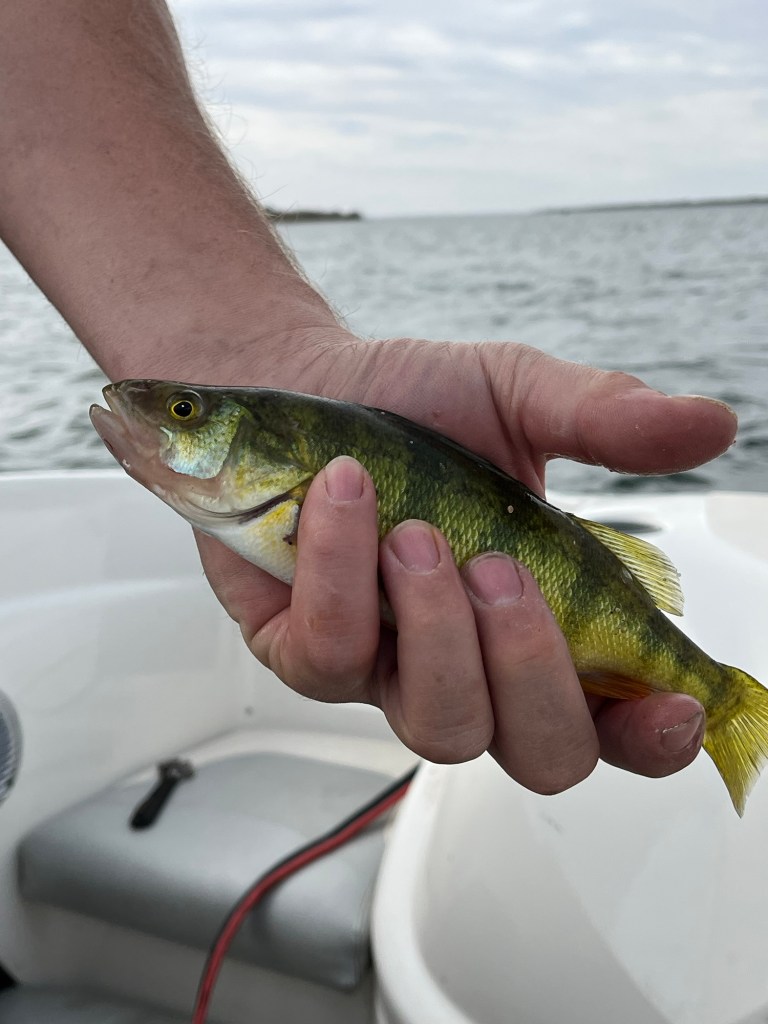
And look at that, he DID catch one!
Meanwhile…
The devil whispered in my ear, “You’re not strong enough to withstand this storm.” I whispered in the devil’s ear, “I love your eggs.” 🤦🏼♀️
🍄 Woodland Wellness: Discovering Peace Among Trees 🌲
Elder Hales reminded us that even the senior leaders of our church aren’t spared from affliction:
Rather, they are blessed and strengthened to press forward valiantly while suffering in and with affliction.
That idea gives me hope. If they can press forward valiantly, maybe so can I. Maybe so can we. Whatever our struggle may be.
That’s where forest therapy comes in for me. When my pain feels like too much, I turn to the forest.
Dendrolatry
a deep reverence for the trees, where every branch whispers ancient wisdom and every root holds the secrets of the earth– to honour a tree is to honour the quiet, sacred connection between life and nature.
The forest is where I remember how to breathe, how to soften, how to let go of shame and find a thread of joy. The forest teaches me that even in adversity, there can be beauty. Even when I’m hurting, there can be laughter, resilience, and connection.
My adversity is chronic pain. It is woven into every corner of my life. It shapes my days and my choices, and so it will show up in my writing and conversations, too. It is part of who I am.
Some people wish I’d talk about it less, but this is my reality. And it’s also where I’ve learned to discover meaning, humor, and even joy.
The woods invite me to notice beauty even when pain is loud. The trees 👆🏼 don’t erase adversity, but they remind me that I am still alive, still loved, and still capable of joy. 🍃
💖 Embracing Love, Bidding Farewell to Shame
So next time I find myself swarmed by biting flies (literally or figuratively in the form of invasive thoughts), or when I am caught in the grip of pain, I hope I can remember Elder Wirthlin’s (and his mother’s) invitation:
Come what may, and love it.
Not because it’s easy. But because it’s the better way forward. 😊
September was a thirty-
days long goodbye to
summer, to the season that
left everybody both happy
and weary of the warm,
humid weather and the
exhausting but
thrilling adventures

-Lea Malot
As we bid farewell to shame we also bid farewell to summer. The following is an unorganized smattering of my summer adventures. Enjoy perusing (or skip it altogether). I encourage you to do the same. Enjoy your memories. Feel free to share stories or pictures in the comments!
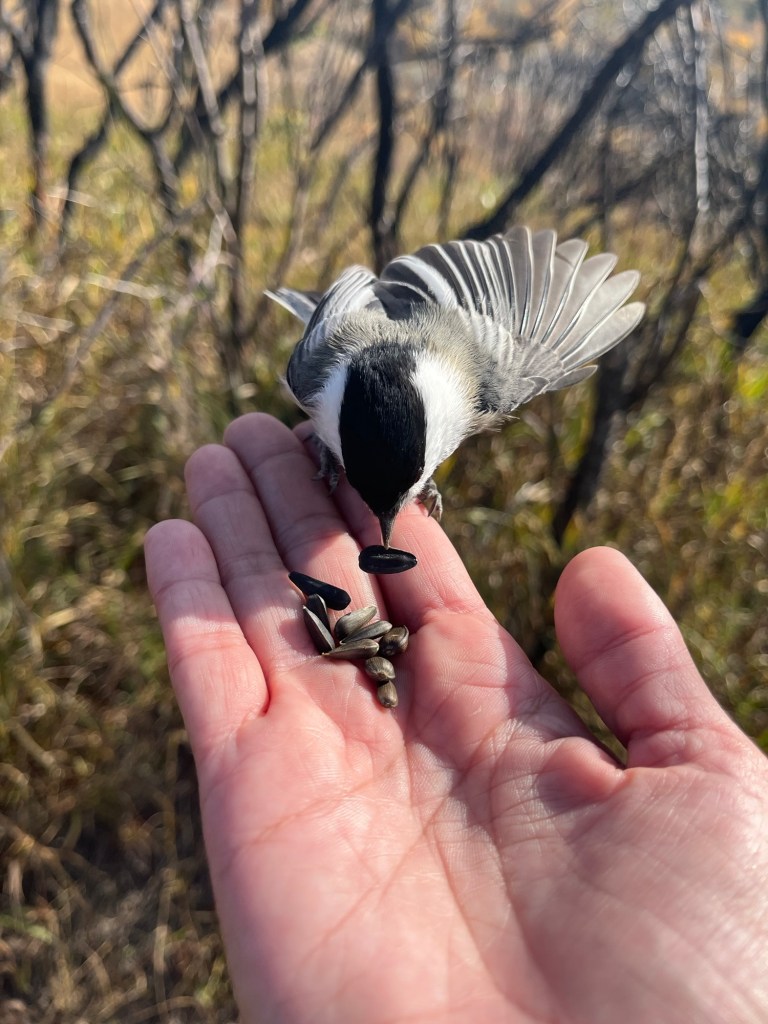
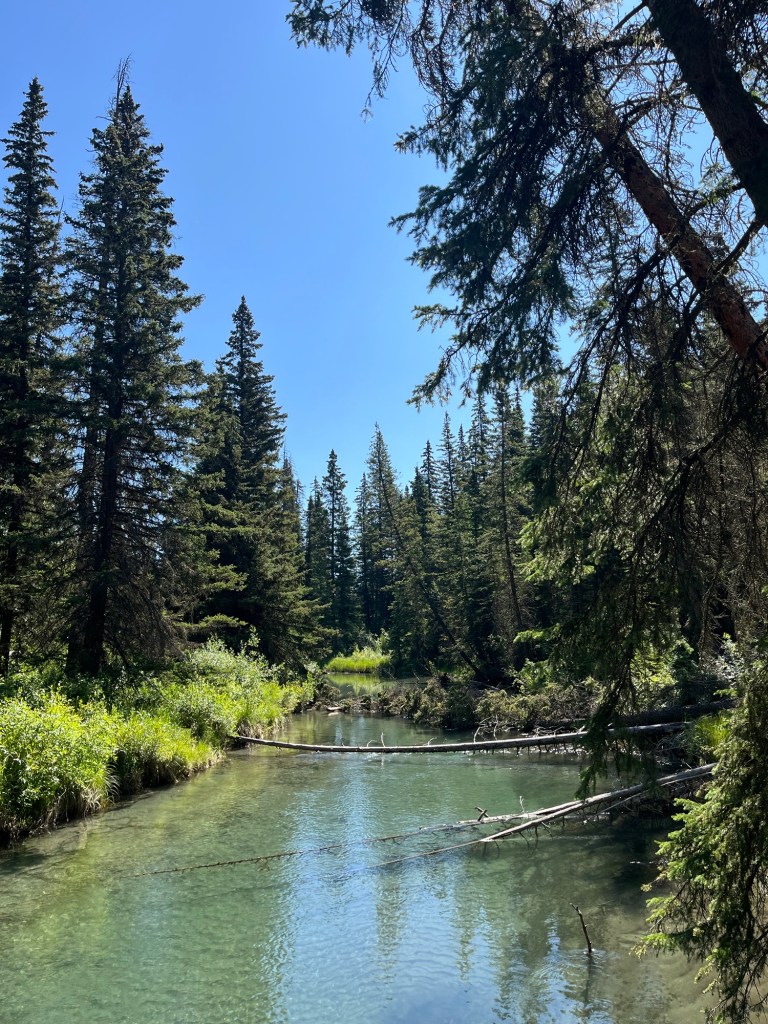
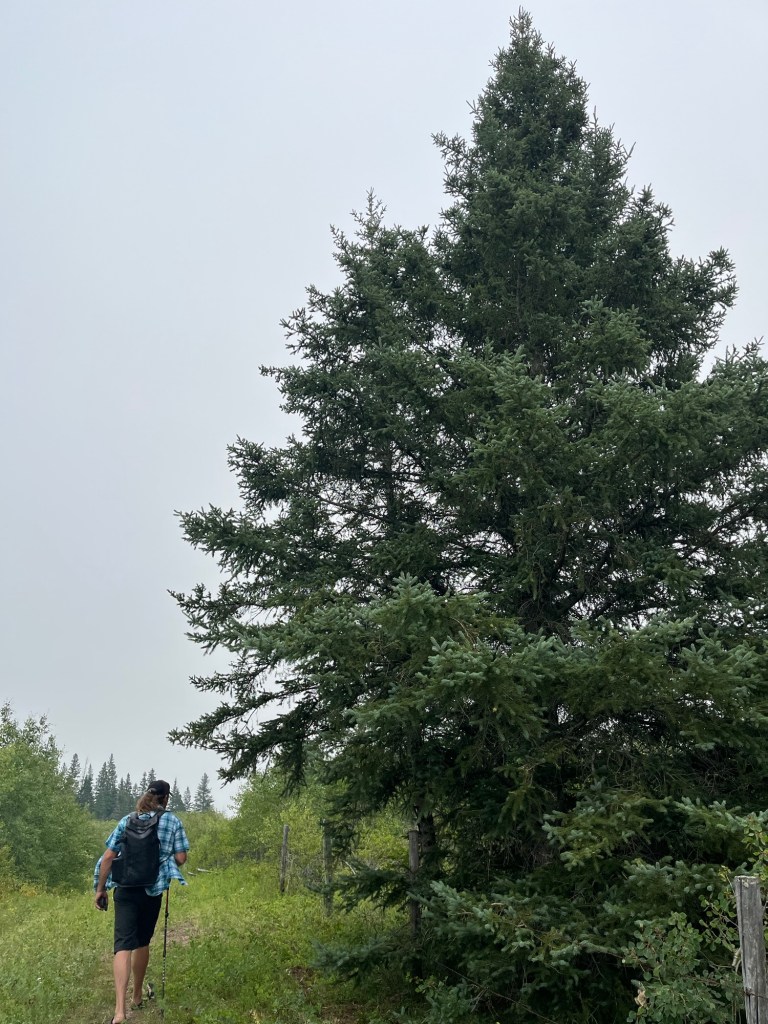
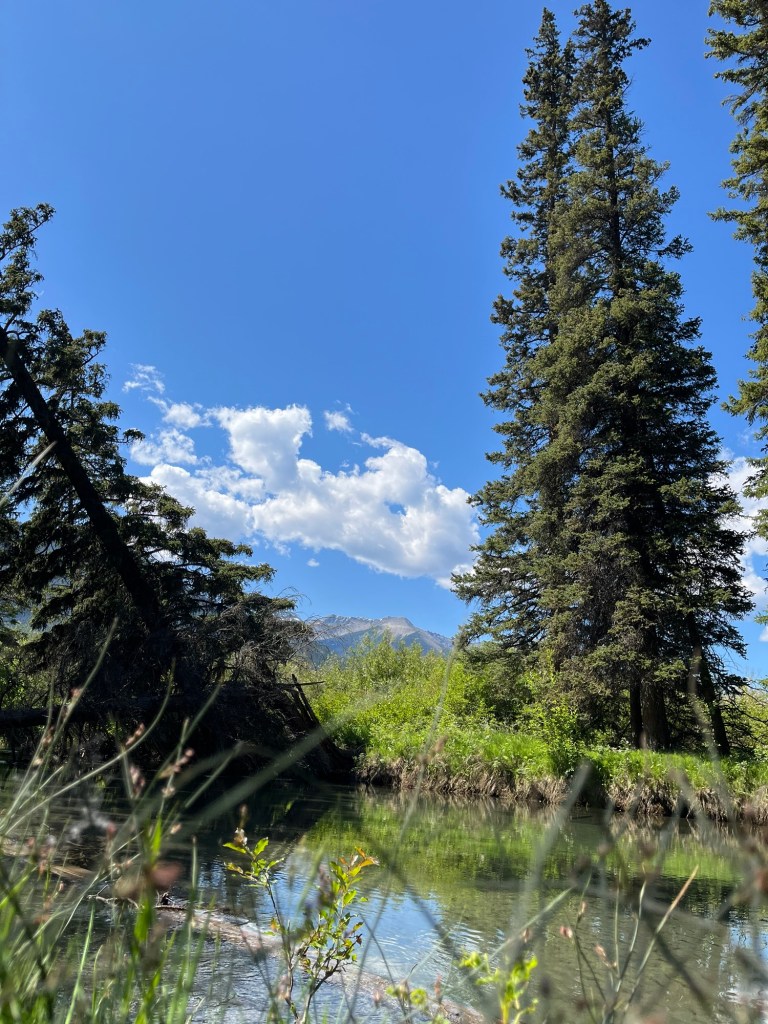
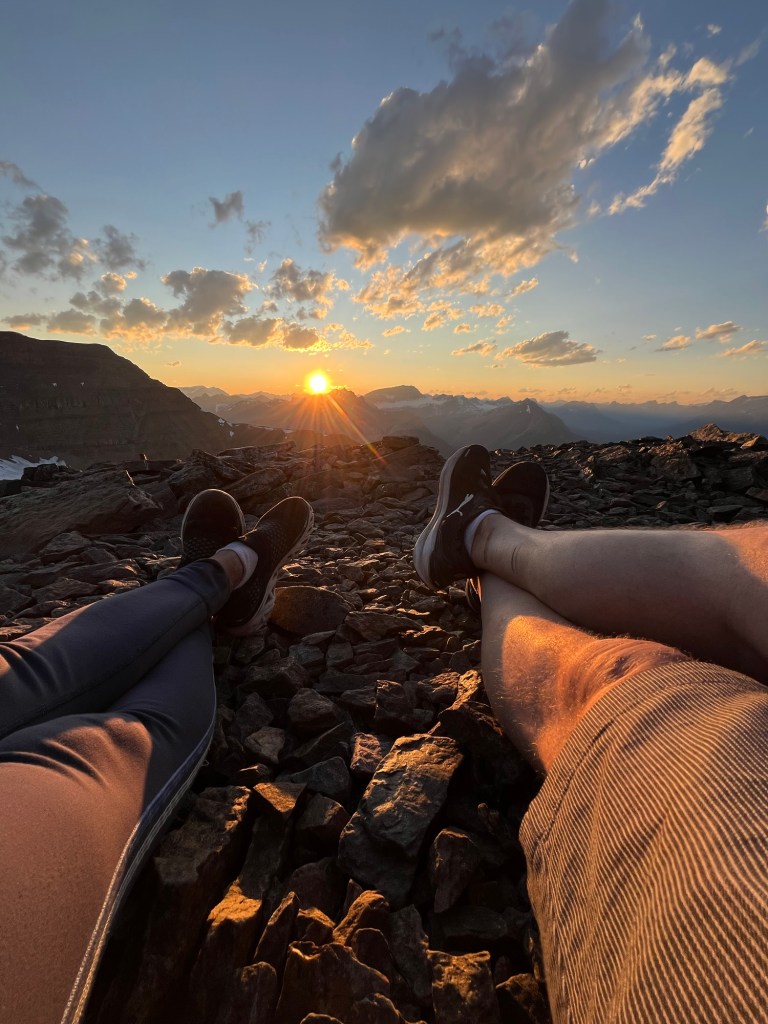
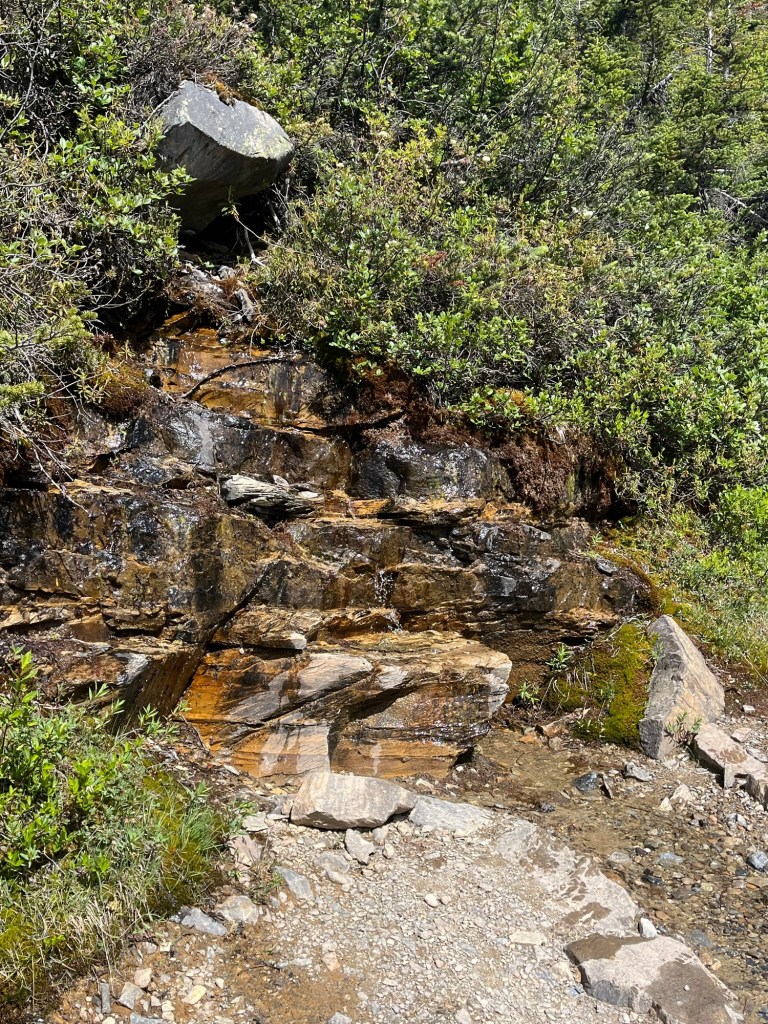
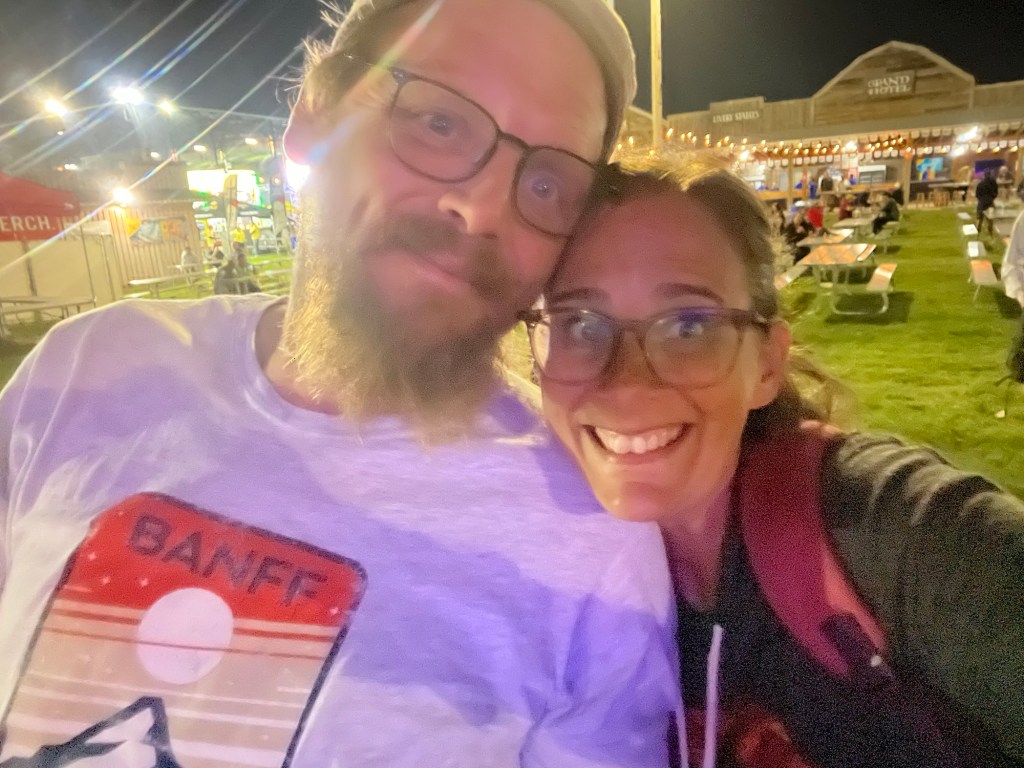
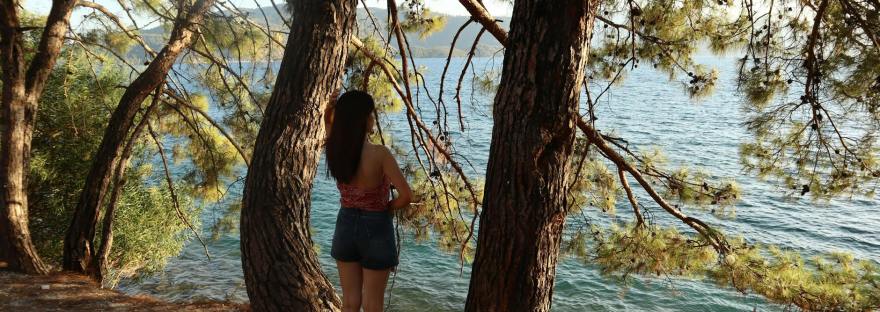
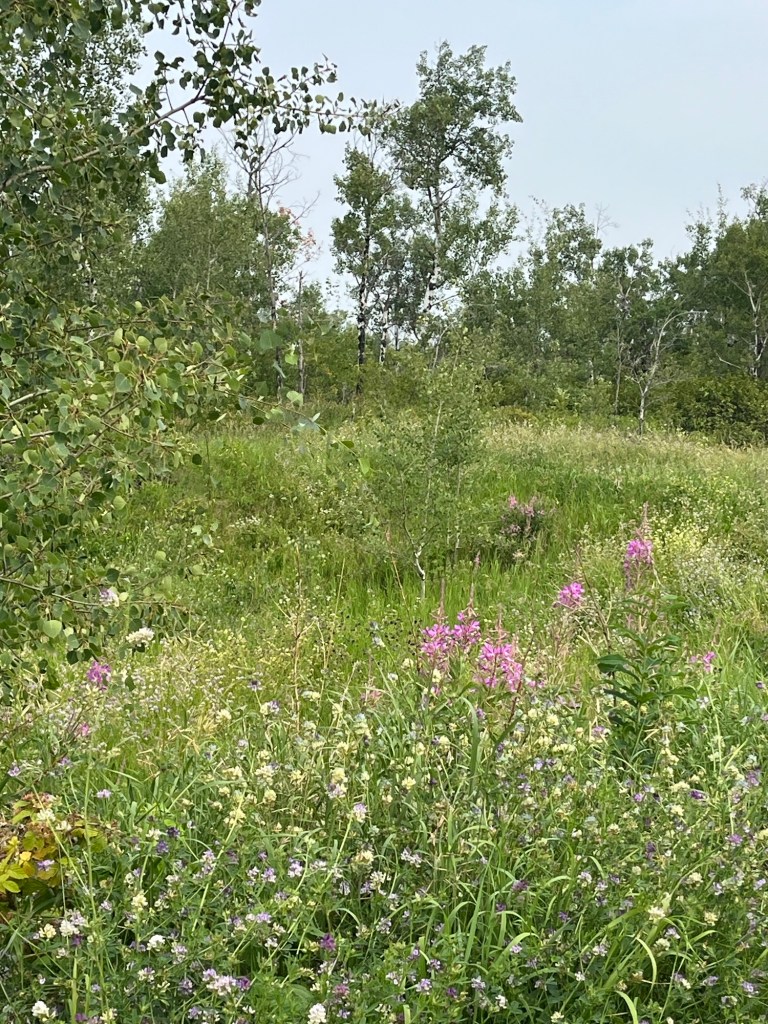
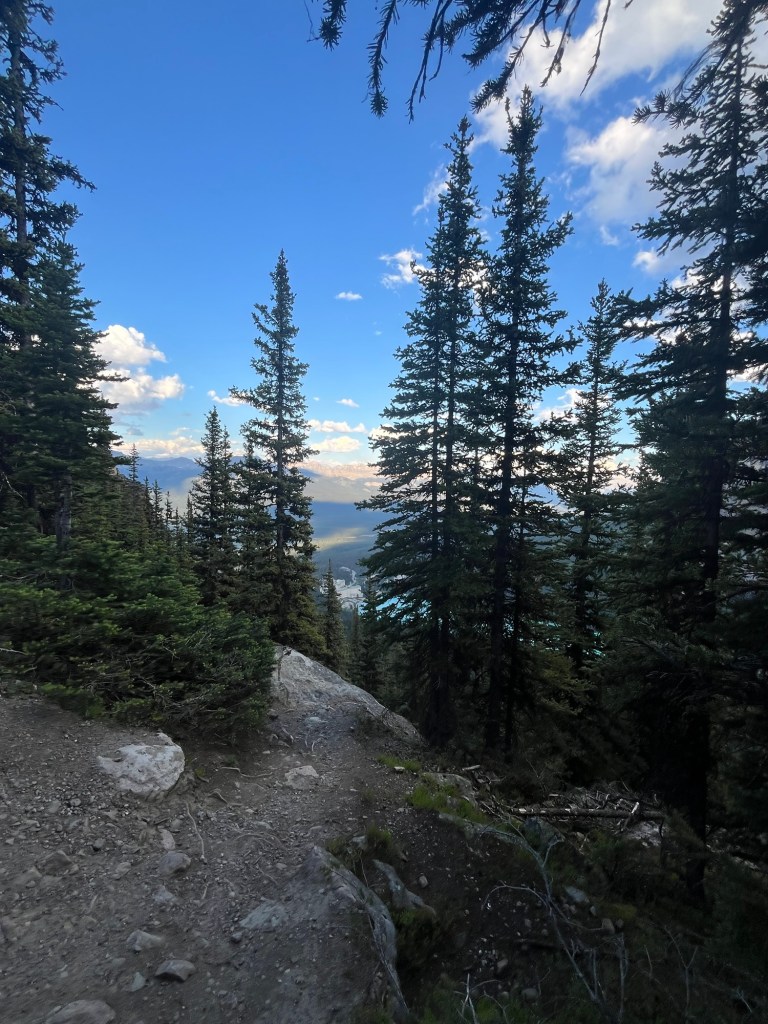
Nisbet Forest hikeHidden gem forestHepburn Forest workshopLake LouiseSouth Saskatchewan RiverThe night the sky put on an electrifying showSailing 💓Standing in mountain waterWatching a sunset from a mountain peakA Berry Barn grounds meanderDiefenbaker Lake. My summer home. Cool kids on a cool motorbike rideOn my streetAlong a walkSpadina CrescentPoplar BluffsThe lake shortly after spring thawOn a roof!In the backyardHikes and waterfallsBlossomsGrounding in the best of placessurviving road tripsRunning around the trampolineOur very own beachMirror LakeCamping at Zig ZagCabin at Fishing LakeSetting upA 1st birthdayWatching Steven Page LiveA 3 yr old boyBoatingThe best of sailorsWalks along the riverA car tour east of Saskatoon when my leg would not allow for a hikeSuccessful fishing tripsTrans Canada TrailDroning by the riverThe ExhibitionA sit n chat with a friend on a rainy daySo many cute mushrooms!A beautiful weddingThe park with my little buddyBeaver Creek chickadees
Enjoy your life and the beauty that nature provides. If you’d like to schedule a forest therapy walk before the snow flies, let me know in the comments, or email me @ pam.munkholm@gmail.com I’d love to show you how healing it really is.
A dear friend once said something to me that I can’t get out of my head: chronic pain has its own economy. She suggested I write a post on it. So here we are. (@soulfullifebyamanda)
For anyone under the impression that disability payments and medications cover everything in chronic pain, this quote is for you.
Illusion is the dust the devil throws in the eyes of the foolish.
-Mina Antrim
For anyone suffering financially and energetically, let this post be your validation. And don’t worry. “Whatever doesn’t kill us only makes us weirder and harder to relate to.”
Does anyone else feel like their body’s ‘check engine’ light has been on for months and you’re still driving like, “it’ll be fiiiiine,” because you can’t afford to do anything about it anyway?
When I think of the economy of chronic pain. I picture myself stepping into the forest with only a small shopping basket. Every choice I make—financial or physical—has to fit inside that basket. There’s no room for waste, no luxury of tossing in extra. Just like in the forest, every twig, every step, every breath matters.
For those of us living with chronic pain, our baskets are small. They hold both our financial and our energy reserves—and both run out faster than a knife fight in a phone booth.
In Canada, disability payments exist, but they are like shafts of sunlight that barely break through a dense canopy. They aren’t enough to warm the forest floor.
And so, we ration. We stretch. We weigh every step carefully. And in the process provoke our fussy nerves into an outraged uproar over and over again.
Surviving the Price Tag
Here’s one example from my own life: every month, I spend about $600 on medication for pain relief. There’s no coverage for it. It’s outrageously expensive, but it’s what allows me to keep moving through the forest at all.
Others I know make different choices. Some decide not to medicate, and instead spend their limited resources on healthier food, therapy sessions, or simply keeping a roof overhead.
There is no right way. Each of us is navigating our own overgrown path, deciding what can fit in the basket we carry.
Even those of us diagnosed with chronic pain conditions may not see the myriad of options. Of what could go in the basket. Given the resources. More frustrating is the knowledge that some therapies, while proven extremely effective, will not be financially viable. In some cases, not even offered in my area.
counseling sessions; the cost coming out of pocket (no job=no benefits) is high, yet the benefits of CBT and ACT psychotherapy for pain have been shown to be impressive, marriage support is also much needed in the case of ongoing pain and illness
therapies; acupuncture, Reiki and other energy healing work, physiotherapy, massage, chiropractor, aqua therapy, hypnotherapy, the list can seem limited for your specific needs, but there are always new options coming available
medications; these are also ever evolving, I believe in a combination of medicine and natural therapies, this is a personal decision
lifestyle changes; Saskatchewan winters call for a gym pass to stay active, these are not free
dieticians; can support with ongoing needs
stress reduction therapies; FOREST THERAPY!!, meditation courses and classes, yoga, tai chi, music, art or pet therapy,
Spinkie- Den: Scottish; a woodland clearing filled with flowers.
The Grove of Dilemmas
When you live in this economy, everything has a cost. The pressure keeps me marvelously productive. I entered the kitchen to do the dishes, but saw the pile of laundry on the floor, so I watered a plant, while looking for my phone to make the doctor’s appointment. To sum up, I couldn’t find it in time and now my leg is swelling and I have to put it up again. I accomplished nothing. 😤
Given the choice, where are you willing to “pay” extra?
Do you get help with your home to attend to the piling dishes, laundry and dog hair, or put on blinders to the mess because there are no funds for such frivolity as clean dishes, clothes and floors?
“Any dog can be a guide dog if you don’t care where you’re going.”
Do you take the shorter trail to an appointment (closer parking) or save money by forcing your body down the longer route?
Do you use precious energy to cook a nourishing meal, or save your strength and spend more money on convenience?
Do you go out to meet a friend, knowing it will mean a day of recovery afterward, or do you stay home and bear the weight of loneliness?
The forest is full of paths, and each one demands a toll.
Costs That Lurk Beneath the Canopy
The cost of connection. Friendship and belonging are like wildflowers in the undergrowth. But they don’t bloom without effort. They often require money for transportation, or the strength to leave the house, or both. Yet the cost of isolation can feel heavier than any of it.
The cost of time. Chronic pain asks us to wait. Waiting for appointments. Waiting for medications to maybe work. Waiting for healing that never seems to come. Time here drips slowly, like water from moss after rain, and once it’s gone, it cannot be gathered again.
“The hardest thing about illness is that it teaches patience by stealing time.
-Unknown
Both remind me that even in this strange economy, even in this forest of loss and trade-offs, there is still gentleness. There is still strength in being here, still roots growing quietly beneath the soil.
Forest Therapy: A Rich Investment in Well-Being
And this is where forest therapy becomes not just a metaphor, but a lifeline.
When my basket is empty, when my reserves are gone, the forest offers a kind of wealth that doesn’t demand dollars or energy I don’t have. Sitting under the trees, breathing in the scent of pine, listening to the rustle of leaves—these are exchanges that give more than they take.
Forest therapy reminds me that not everything of value is bought or measured. The forest doesn’t charge for its healing. It simply offers. It allows us to rest, to breathe, to remember that even when our budgets—financial and energetic—are painfully small, there is still abundance to be found.
The economy of chronic pain is harsh and unrelenting. But the forest’s economy is different. It trades in stillness, in breath, in presence. It offers shade when the sun is too much, and quiet when the noise of survival is too loud.
This is why I keep returning to the trees. Because while the world asks me to spend what I don’t have, the forest reminds me: here, you are enough, just as you are.
The forest hides more than it reveals, yet what it reveals, sustains us.
-Unknown
The True Currency: Compassion
To those supporting people with chronic pain, we love you and we thank you. Please remember to lead with compassion. Your person is not lazy or careless, but living within an economy most cannot imagine. Lead with compassion and the way forward can be made clear.
We do not see nature with our eyes, but with our understandings and our hearts.
-William Hazlitt
To recap, I caution against developing chronic pain and illness. It is terribly expensive and inconvenient for others. 😏
September you are promising. The beginning of a gorgeous and necessary decay. The edge of triumph before the deep rest.

























 SUNBEAM ACRES