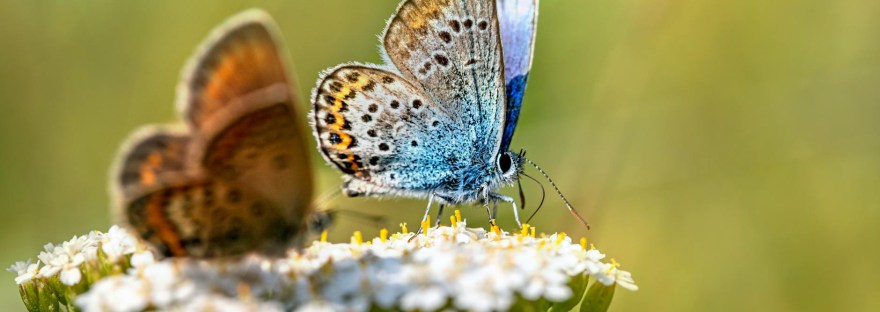
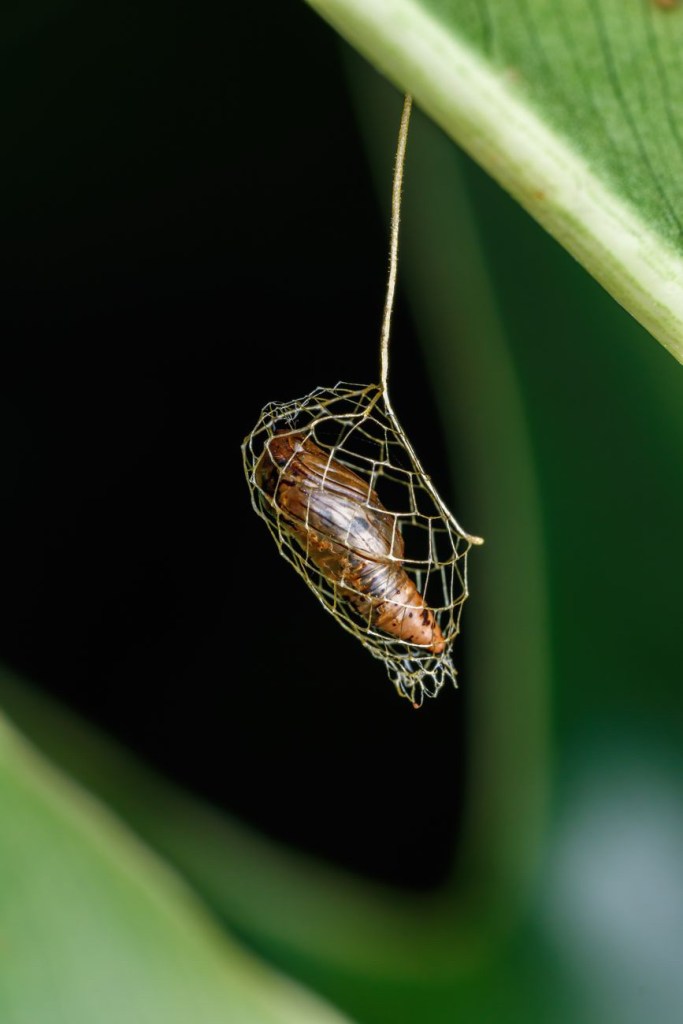
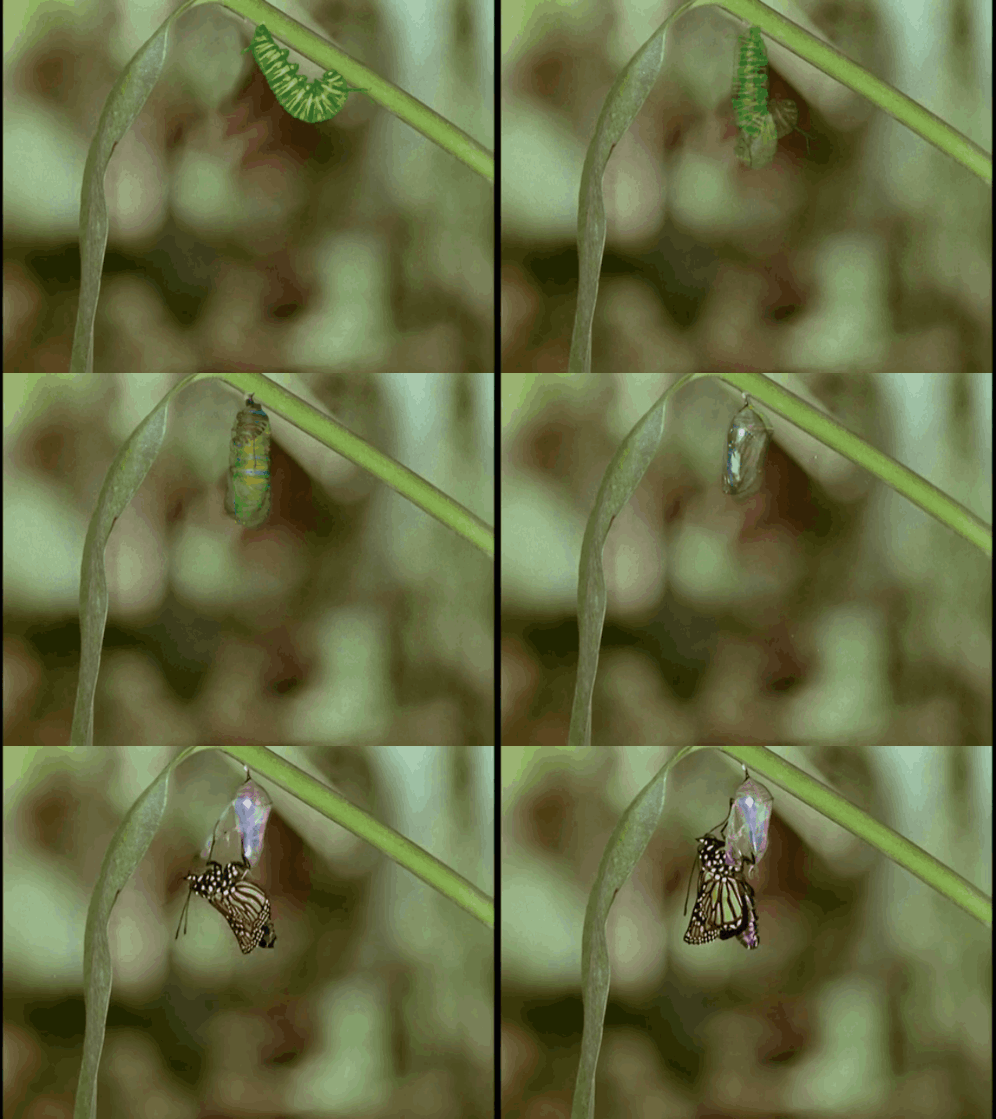
That, perhaps, is the difference between a crisis and a chrysalis. One keeps us frozen in fear. The other slowly reshapes us.
Technically, I’m not even fully in my midlife years yet.
And yet my body arrived early to the party.
A complete hysterectomy fast-tracked me into conversations I thought I still had years to prepare for.
Ironically, some circles don’t allow me in to the conversation because I’m “far too young” to know what menopause is.
It seems my reproductive system retired before society was emotionally prepared to handle it. Medically, I pass the test but I always get ID’d at the door.
I was medically launched into menopause with all the glamorous perks.
Hot flashes. Joint pain. An increasingly fragile relationship with sleep. And the deeply humbling realization that apparently your underarms and mid range can become flabby despite hours of working out at the gym.
(Nothing prepares you for sneezing incorrectly in your 40s.)
My body has adopted the classic expired warranty strategy, catastrophic synchronized failure. I’ve entered the ‘everything squeaks, leaks, or spasms unexpectedly’ chapter of ownership. My body has moved beyond ‘minor repairs’ and into ‘have you considered replacing the whole unit?’ territory.
Which is why a phrase I recently heard on the podcast Hello Menopause! grabbed my attention.
“Midlife chrysalis.”
Not midlife crisis. Midlife chrysalis.
The episode featured Chip Conley talking about reinvention, and I chose to listen to this episode because crisis sounds like collapse. Losing control. Becoming less.
Like panic bangs and plans to live “off-grid” and taking up emotional support hobbies. Sourdough starter anyone?
But chrysalis?
That sounds like transformation.
Messy. Strange. Hidden. Uncomfortable. Necessary.
A chrysalis says. You are not falling apart. You are simply changing form.
I think many of us who have experienced chronic illness, disability, grief, loss, burnout, etc. arrive at this transformation long before the culture expects us to.
Some of us are forced into reinvention before we even finish becoming who we thought we would be.
The Crisis
Be patient toward all that is unsolved in your heart.
Sometimes crayon. When I need a little more whimsy in my days.
There were years where survival became the main objective. Years where my nervous system felt like a shaken vending machine full of stress hormones. Years where I thought resilience meant pushing harder instead of listening deeper.
And then came the hysterectomy.
One of those dividing-line experiences where life becomes Before and After.
Before, I still secretly believed if I tried hard enough I might someday return to the old version of myself.
After, I slowly began realizing there may not be a way back. Emotional landslides and experiential cave-ins had blocked that passage way.
Forward and through became my only options. Through self-realizations. Humbling concessions. Constant negotiations between mind and body.
And maybe that is where the chrysalis begins.
The Chrysalis
And the day came when the risk to remain tight in a bud was more painful than the risk it took to blossom.
A chrysalis does not look impressive from the outside.
It looks still. Inactive. Even broken down.
But inside? An extraordinary reorganization is happening.
And I think that’s what midlife (or medically-induced midlife-adjacent existentialism) can become.
Not a crisis to survive. But a transformation to participate in. Whole-heartedly.
Chip Conley talked about how the first half of life is often about accumulation.
We gather. Relationships. Responsibilities. Possessions. Roles. Expectations. Obligations. Dreams that once fit.
And eventually we become emotionally overstuffed.
He described midlife as “a great midlife edit.”
As I listened I considered the fact that chronic illness forces the edit whether you volunteer readily or not.
You simply cannot carry everything forever when your body already feels like it’s carrying a weighted backpack full of loose cutlery.
At some point you must ask important questions.
What still fits?
What actually matters?
What has become lukewarm in my life?
Do you know what a lukewarm life looks like? One of the lines from the podcast,
Pouring out part of your tea allows you to pour some hot new tea into the cup.
Because some things are not meant to last forever. Not every friendship. Not every role. Not every expectation you once had for yourself.
And maybe releasing those things is not failure. Maybe it’s pruning.
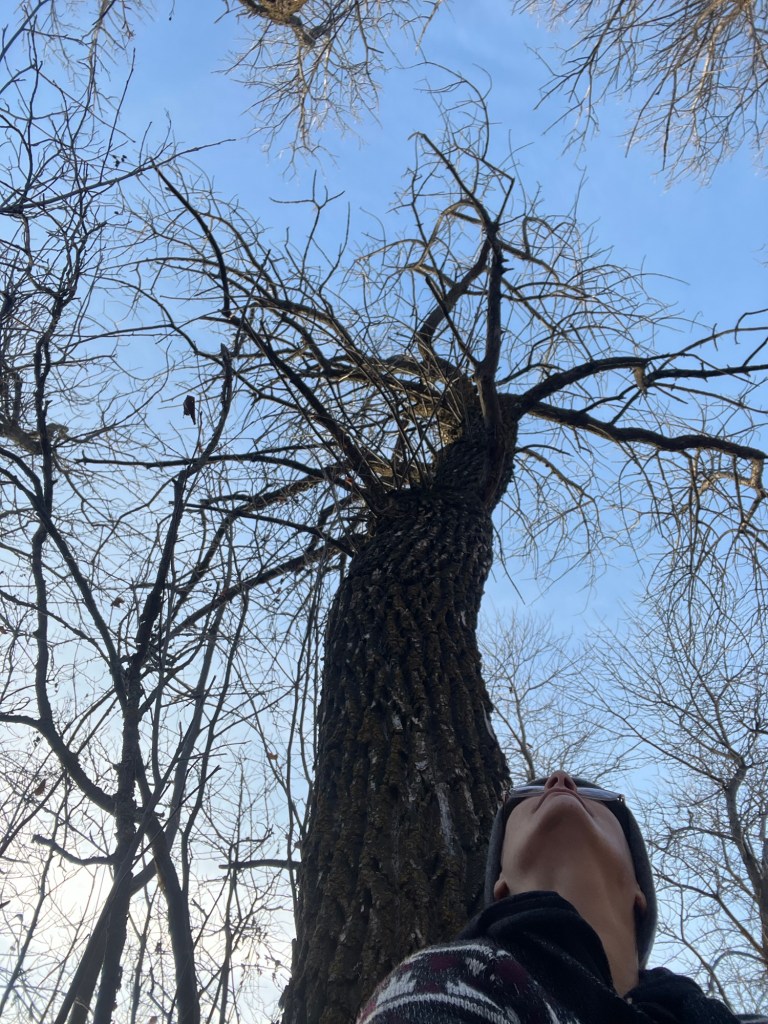
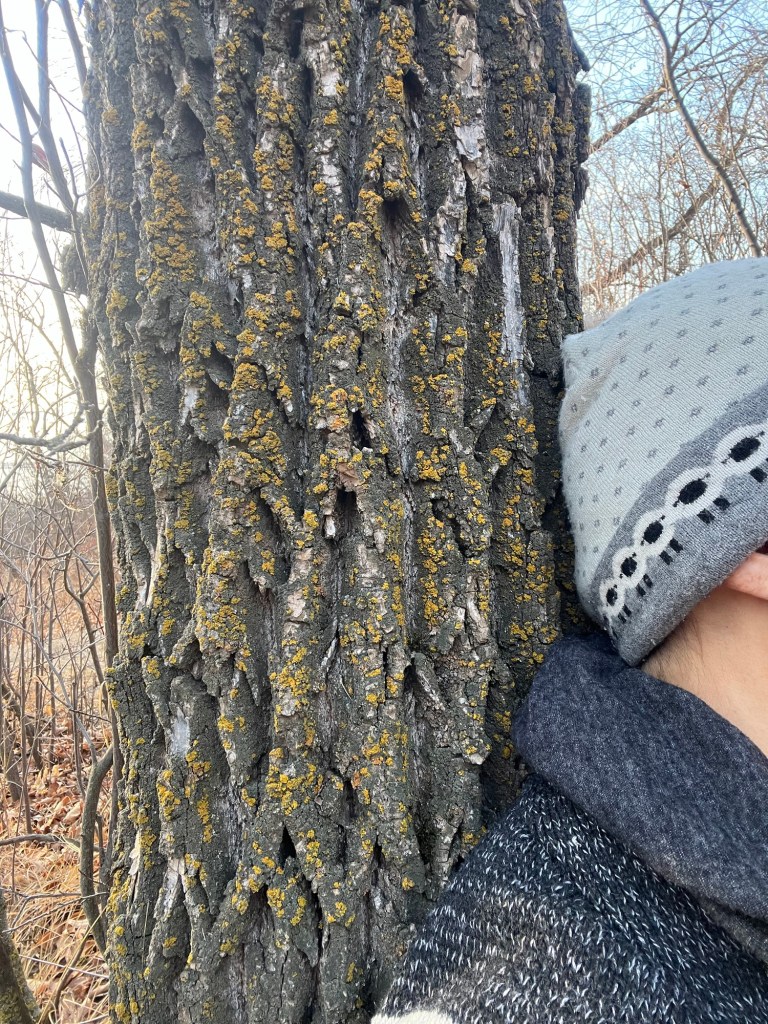
The forest understands this better than we do.
The Forest
One of the reasons forest therapy has become so meaningful to me is because the forest never panics about transformation.
Forest therapy has taught me that stillness is not the same thing as stagnation. Sometimes what appears dormant is actually becoming. I wrote more about that in this post, Nourish Your Nervous System: Forest Therapy Insights
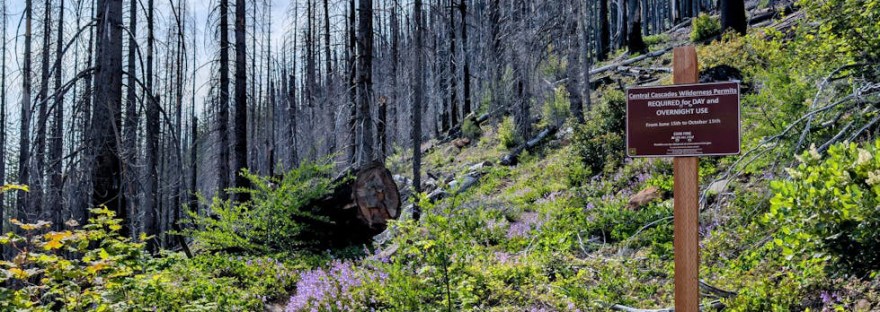
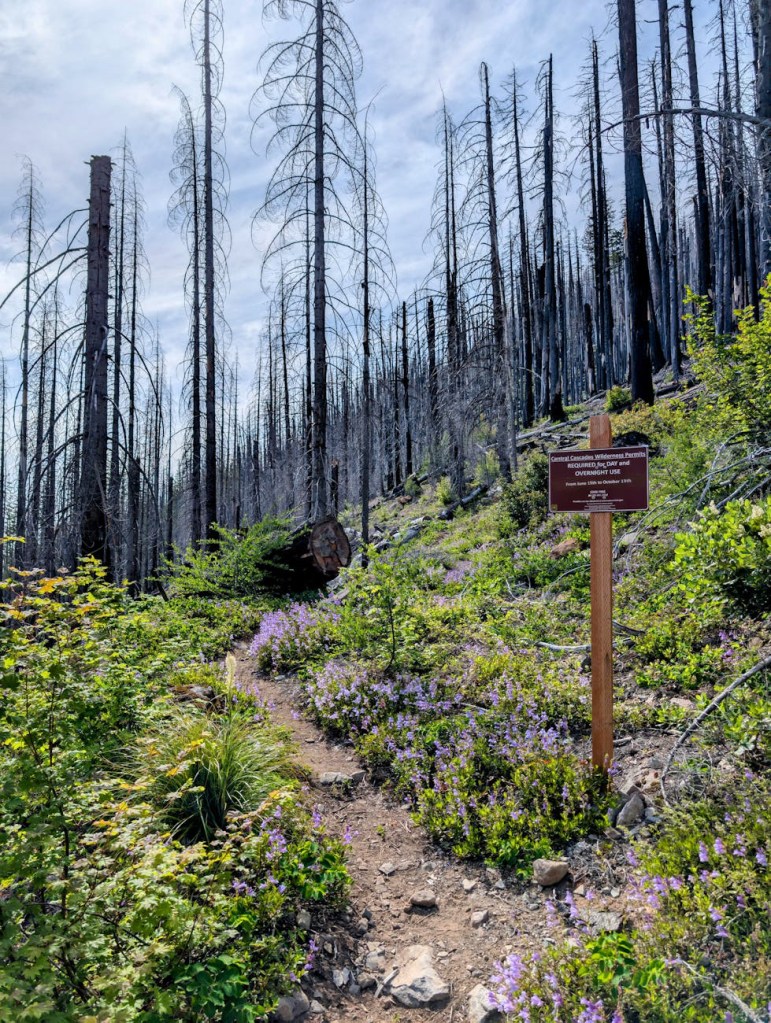
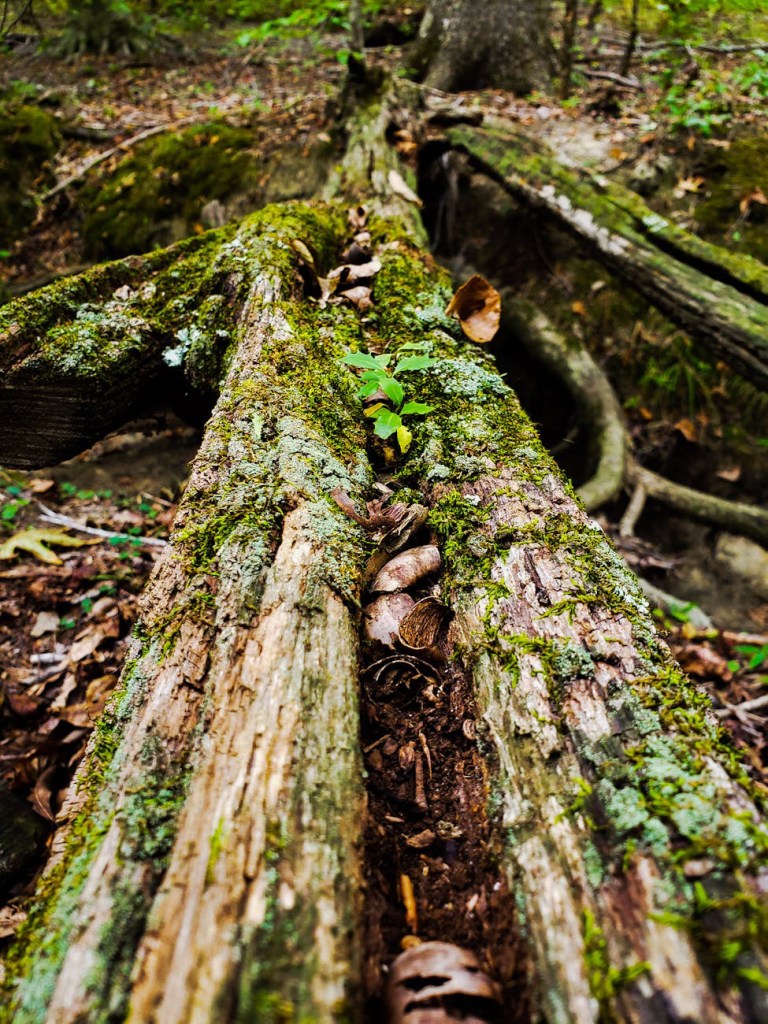
Deadfall becomes nourishment. Burned places grow new life. Trees release entire branches to survive harsh seasons. These changes that seem negative are essential to a healthy forest.
Humans also require those experiences that appear negative and are actually essential for a healthy life.
In the forest, decay and renewal, soft and hard, smooth and sharp are all happening simultaneously.
And honestly, that feels like midlife too.
Especially for those of us living in bodies that have known pain.
We have experienced days where tears of pain rolled down the left cheek while tears of joy rolled down the right.
We know how to hold grief and gratitude at the same time.
That depth changes a person.
We know what it is to laugh in waiting rooms. To find beauty in tiny victories. To feel gratitude and grief sharing the same chair.
I have learned that emotional pain cannot simply be numbed away the same way physical pain can. There is no ibuprofen for identity loss. No heating pad for disappointment. No prescription for becoming someone new.
And while suffering itself is not noble, I do think deep experiences deepen people.
My chronic comrades know this.
Pain can also make people bitter, stuck, isolated, hardened.
That, perhaps, is the difference between a crisis and a chrysalis. One keeps us frozen in fear. The other slowly reshapes us.
If we allow ourselves to learn from it. We can become more compassionate. Tender. Wise. Present. Better able to sit beside someone else’s suffering without looking away.
As they said in the podcast,
Our painful life lessons are the raw material for our future wisdom.
I believe that in my soul.
The Offering
Sometimes our culture subtly teaches that the people worth listening to are the successful ones. The polished ones. The credentialed ones. The endlessly productive ones
What can we do about this imbalance? If you ever deem somebody less than you… ask yourself what they can teach you.
Because some of the wisest people I know have had their lives interrupted.
Some had to abandon dreams they loved. Some never got the education they were capable of and deserved. Some are rebuilding lives with parts and pieces they never would have chosen.
And still. They carry wisdom.
Do not think less of yourself because your life required adaptation. You are not behind because your path bent unexpectedly.
Some of us have earned emotional depth the hard way.
And if you cannot live the exact life you once pictured?
Find something to run toward anyway.
Even if your pace looks different now. Even if you have to limp toward it some days. Even if your dream has changed shape entirely.
A chrysalis does not become what it originally was.
That is the whole point!
A Forest Therapy Invitation: Chrysalis Walk
The next time you’re in a forest, park, or tree-lined path, try this:
Walk slowly and notice signs of transition.
What is decomposing?
What is emerging?
What is shedding?
What is adapting?
What still carries beauty despite visible damage?
Then ask yourself:
What version of myself am I grieving?
What no longer fits?
What wants to emerge now?
What if this season is transformation instead of failure?
You do not need immediate answers.
The forest is always becoming new. Slowly. Over time.
The Question
One question from the podcast we can all ask ourselves,
Ten years from now, what will I regret if I don’t learn or do now?
Conley called anticipated regret a form of wisdom. Chronic illness teaches you that later is not guaranteed. Perfect timing is imaginary. And someday can become never surprisingly fast.
So maybe this chapter is not about trying to reclaim who we once were.
Maybe it is about becoming more fully ourselves.
Hot flashes. Heating pads. Existential growth. And all.
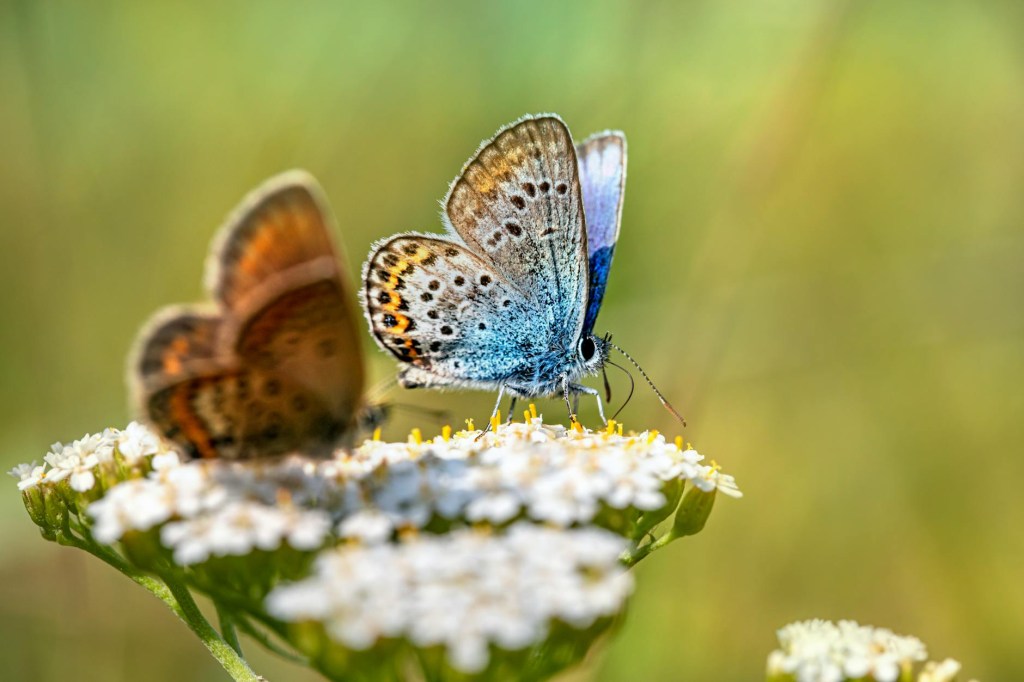
What the caterpillar calls the end of the world, the master calls a butterfly.
A forest therapy reflection on burnout, surrender, and learning to live gently inside your own life.
There was a period of time where my nervous system was running entirely on stress and outrage. I was carrying so much tension I could feel it humming beneath my skin. I wore it like an armour.
I was teaching piano almost full time. Helping my children survive school systems that did not know how to support kids with ADHD. Trying to advocate for a child who had endured years of bullying only to be treated like he was the problem once he finally reacted.
There were meetings. Emails. Phone calls. Policies. Assessments. Endless explanations.
And somewhere in there, I was also managing a farm, a household, meal planning, grocery shopping, appointments, chronic pain, surgeries, inflammation, and a body that kept submitting maintenance requests I could no longer ignore. Sound familiar?
Outer chaos eventually becomes inner weather.
Then there was the car.
Oh, the car.
Marketed as “off-road capable,” apparently as long as your idea of off-roading was driving over a decorative gravel patch at a golf resort once annually.
When our Saskatchewan roads started dismantling it piece by piece, we were informed it wasn’t actually built for daily gravel roads. Then every winter the same part broke because it apparently also wasn’t designed for… winter?
I remember thinking, Well neither am I, but you don’t see me breaking down.
(foreshadowing 😳)
This felt a little too intentional of a design flaw for something sold in Saskatchewan.
At the time, I was angry at everything.
The educational system. The medical system. The government. Corporations. World events. Every injustice. Every failure. Every person who made life harder than it needed to be.
And underneath all of it was one desperate belief:
If I fight hard enough, maybe I can force the world to become safe.
So I fought.
And every phone call tightened my muscles more. Every conflict wound my nervous system tighter. Every injustice became another brick in the emotional dam I was trying to hold together.
Even now, writing about it, I can feel traces of that tension in my body.
My nerves were tight. My jaw was tight. My shoulders were tight. My thoughts were tight.
My energy felt dark and electric and sharp. Warnings were everywhere:
Do Not Touch: Load Bearing Delusions Ahead.
Eventually, the dam broke.
Not in some poetic, graceful collapse. More like a nervous system mutiny. Everything in my body was operating like an emergency broadcast system.
Everything I had stuffed down flooded upward at once: bad information, bad coping, bad core beliefs, fear, grief, anger, exhaustion.
It was physically excruciating. I’d been on my last straw for like 300 straws, and finally I ran out of straws.
After the initial effects subsided, I remember lying in bed unable to function. A puddle of a human being. All the fight inside me still existed but now it lived in a body that couldn’t move and a brain that couldn’t think.
I didn’t know it at the time but this would become my new beginning.
You can’t go back and change the beginning, but you can start where you are and change the ending.
One of the greatest gifts forest therapy gave me was this:
Nature does not spend its energy resisting its own seasons.
The forest does not panic because decay exists beside growth.
Yet so many women live as though rest is failure.
We push through pain. Push through exhaustion. Push through grief. Push through our intuition. Push through limits our bodies are desperately trying to communicate.
We fight every battle. Carry every burden. Solve every crisis.
And then we wonder why we are chronically exhausted, inflamed, anxious, disconnected, and burned out.
I see it everywhere.
Women who are always tired. Always hurting. Always “fine.” Always one more obligation away from collapse.
Forest therapy taught me something radical.
Stillness is not laziness. Stillness is regulation.
Outer stillness creates the conditions for inner calm.
Not because the world becomes peaceful. But because you stop feeding every storm.
A Forest Therapy Practice: The Sit Spot
One of the simplest and most powerful forest therapy practices is called a sit spot.
You choose one place outdoors and return to it regularly.
That’s it.
No performance. No hiking goals. No fitness tracker congratulating you for elevated heart rates. No optimizing your experience into a competitive sport.
Your only job is to sit and notice.
(The chickadees remain unimpressed by productivity culture)
How To Practice
Find a place outdoors where you feel safe and comfortable.
A forest trail. A park bench. A tree in your yard.
Then:
Sit quietly for 10–20 minutes.
Notice what moves and what remains still.
Listen farther away than you normally do.
Feel where your body touches the earth or chair.
Allow your nervous system to settle before asking anything of yourself.
You do not need to “achieve” calm.
The forest does not demand that from you.
It simply offers regulation through rhythm, repetition, sensory softness, and presence.
Over time, your body begins remembering something it forgot. It does not have to remain in survival mode forever.
From Fighting Everything To Tending Something
It has taken me years to pare down my list of fights to zero.
Not because I stopped caring.
But because I realized anger was consuming the very life I was trying to protect.
Now, instead of fighting constantly, I create spaces of calm.
I meditate. I practice energy work. I use affirmations. I spend time in the forest like it is medicine because for me, it is.
Despite the chaos that can still exist around me, I guard my energy carefully.
From this space, I choose where I can genuinely be of service.
I try to listen when my body whispers instead of waiting until it screams through symptoms. I create rituals that bring me back to myself when I wander too far into fear or overwhelm. I practice gratitude daily because gratitude softens the nervous system’s constant scanning for danger.
And when concerns arise, I do my best to voice them clearly and compassionately.
Then I let them go.
Not because they do not matter. But because I matter too.
Become a possibilitarian. No matter how dark things seem to be or actually are, raise your sights and see possibilities. Always see them, for they’re always there.
Forest therapy helped me understand this deeply.
Possibility exists everywhere in nature.
A burned forest regenerates. A fallen tree becomes nourishment. A cracked open pinecone releases seeds. Life keeps finding ways forward.
And humans can too.
Not always by forcing harder. Sometimes by softening enough to notice another path entirely.
What Makes A Good Life
There’s a quote from Donald Miller that has stayed with me for years. In it, he imagines sitting with God under a tree outside heaven, remembering the story of his life together.
And what moves me most is this idea:
That God would have favourite parts of our story.
Not just the successful moments. But the moments we grew. The moments we softened. The moments we overcame. The moments we kept loving despite pain.
The moments we learned how to become fully human.
To me, this is what a good life looks like.
Not a perfectly optimized one. Not one where we won every fight. Not one where we proved ourselves endlessly useful.
But one we could sit down and talk about with tenderness.
A life where our soul is no longer thirsty.
A meaningful life is not built through perfection but presence.
People tell me it’s wonderful that I’ve turned my pain into something useful or helpful. And I appreciate the kindness in that.
But honestly, sometimes purpose looks less glamorous than people imagine.
Sometimes it’s simply this:
If you do it wrong, you know how to tell somebody else what to avoid. If I walk into an invisible wall, I’m going to let others know about it. This wall is invisible and solid!
If I can help someone avoid walking into walls or burning themselves to the ground trying to hold up the entire world, then my pain served a purpose.
If I can help another woman understand that rest is not weakness… that stillness is healing… that her nervous system deserves gentleness… that she is allowed to stop fighting every battle…
Then maybe this story matters.
An Invitation To The Forest
So if you are exhausted…
If your body hurts all the time… If your mind never stops spinning… If your nervous system is tight as a fence wire in January…
Come to the forest.
Not to fix yourself. Not to become more productive.
There’s a quiet crossroads that people with chronic pain arrive at again and again.
In the small, ordinary moments of a day.
When your body says no again. When plans have to be cancelled. When energy runs out before the day even begins.
And at that crossroads, there’s a choice. Not one I have always recognized. It begins with this question.
What will I do with this pain?
Not why do I have it? Not how do I fix it?
But… what can I make out of it? Today.
In the middle of difficulty lies opportunity.
— Albert Einstein
Pain, especially chronic pain, has a way of shrinking life if we let it.
It narrows what feels possible. It redraws the edges of our days.
And to be clear. This is not about pretending pain is a gift. It isn’t.
If it were, most of us would politely decline and slide it right back across the table. Thanks but no thanks.
It’s hard. It’s exhausting. It’s unfair.
You are not here to be the perfect, inspiring example of someone who is chronically ill and somehow always positive.
But there is a difference between:
pain that isolates and
pain that becomes a bridge
Out of suffering have emerged the strongest souls.
— Kahlil Gibran
Anyone that knows me knows how much I adore my grandkids.
We live in the same house, which means I get to be part of their everyday world. If it were up to my heart, I’d spend all my time with them.
But my energy doesn’t always agree with my heart.
Today, my grandson wants to go “hwimming.”
And I want to go with him.
But I already have one “big thing” on my list today. And my body has made it abundantly clear, there’s room for one big thing… or a few small ones.
Not both. Never both! My body is many things, but it is not a reasonable negotiator.
The frustrating part? This is actually an improvement from recent years.
And still… it stings.
ELPIS– Greek (n) A quiet, persistent hope, even in dark times. It is the last light that refuses to go out, the promise that tomorrow still holds room for healing.
This is the crossroads.
I can let that moment turn into frustration, guilt, or the quiet grief of what I wish I could do.
Or…
I can choose something else.
Maybe I sit with him while he plays. Maybe I listen to him sing from downstairs 🫠 ❤️ . Maybe I ask him to snuggle.
Maybe I let myself feel both things at once:
I wish I could go. And I’m still here.
Still loving him. Still part of his world. Still showing up. Just in a different way than I would choose, but a real one.
This probably seems trivial. It is. But a lifetime of lost trivial things somehow adds up over time. A succession of lost opportunities. Striking the same chord vibrating that heart string that is still inflamed from the previous strike.
Your pain is the breaking of the shell that encloses your understanding.
— Kahlil Gibran
Pain doesn’t just take.
Sometimes, quietly, over time, it teaches.
It teaches you how to notice what others miss. How to sit with someone without trying to fix them. How to love in ways that aren’t loud or impressive but steady and real.
How to recognize pain in others.
And some days, it teaches you how to lower your expectations to what is possible instead of what is perfect. The real over the ideal.
A forest therapy practice: “Follow What Still Moves”
On days when your body feels limited, this is an invitation to gently reconnect with possibility.
Step outside. Your yard, a park, or even just one tree.
Begin a slow, wandering walk. No destination.
Let your attention be drawn to movement:
leaves shifting
branches swaying
light flickering
birds moving through space
When something catches your eye, pause and gently mirror it:
shift your weight like the tree in the wind
slowly move your hand like a branch
turn your head to follow light or shadow
Rest whenever your body asks.
This isn’t about pushing through pain.
It’s about remembering,
Even when parts of you feel stuck… life is still moving.
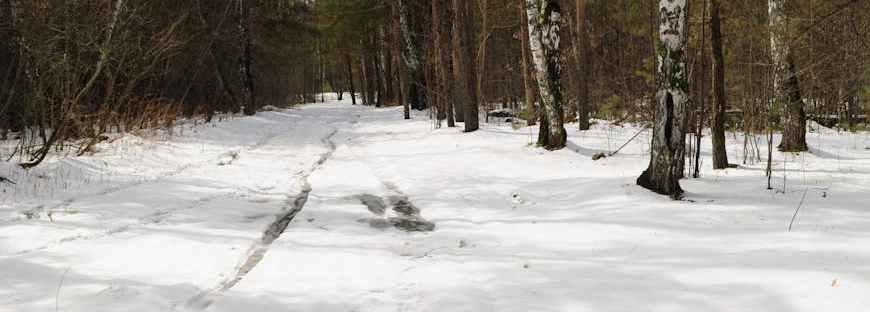
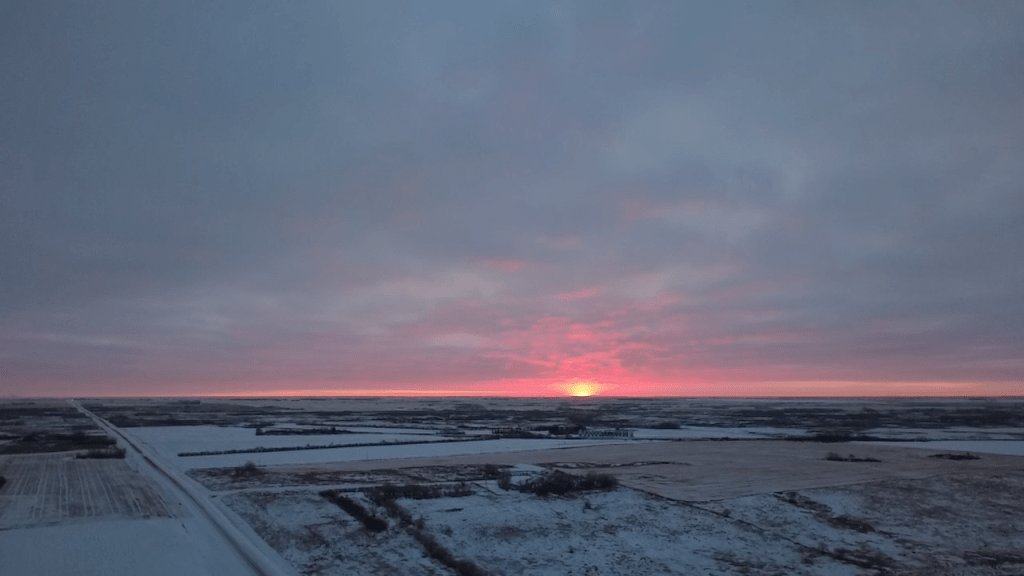
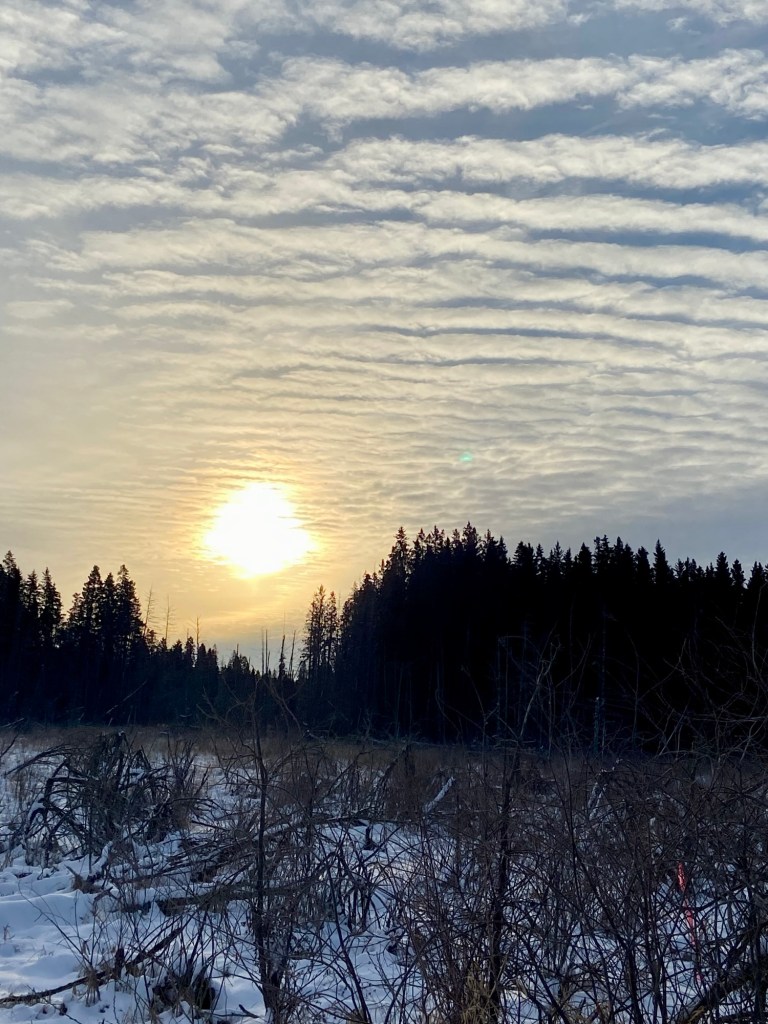
The snow came back. Not a dramatic blizzard, just a quiet dusting, enough to blanket the tender shoots that had just begun to think about stirring. Only days ago, the air was warm, the earth was waking up, and I felt that familiar pull to move, grow, begin again.
Then Saskatchewan’s subtle, “Psyche!” Mother Nature really needs to work on her comedic timing. It’s not funny anymore.
Mother Nature 👆
Us 👆
There’s a particular kind of discouragement that settles in with such a turn. It’s not sharp or overwhelming, but a slow, heavy ache. Like walking through the late-winter woods, where everything appears still, heavy, yet you sense the hidden bubbling beneath the surface.
Nothing is ‘out of order.’
It’s more akin to the forest floor right now. Frozen on top, but teeming with life underneath, roots holding fast, life paused mid-sentence. Waiting. And that kind of waiting, when your body carries its own complex story, can truly wear a person down.
When movement is a necessity, not merely an item on the ‘someday I should’ checklist, and suddenly it’s interrupted, just as you were finding your rhythm again. That’s its own unique setback.
And if you live here, you know winter isn’t a one act play. It lingers. It’s heavy. It tests you in ways that often go unseen. The cold that steals your breath before you’ve even taken a full one. The way your muscles brace with cold before you reach the car. The ice that transforms every step from less of a stroll and more of a high-stakes game of Twister that I never asked to play. And sometimes, despite my best efforts, I end up in disarray on the ground.
All it takes is one tiny tweak and suddenly your entire body is engaged in combat against itself. Again.
The scraping of windshields. Running out of gas on the coldest days every time. The endless layering. The constant bracing. The mantra of “just get through this.”
And then, quieter but just as profound, the world shrinks. Fewer visits. Less spontaneity. More effort required for connection. A different kind of painful twinge takes root.
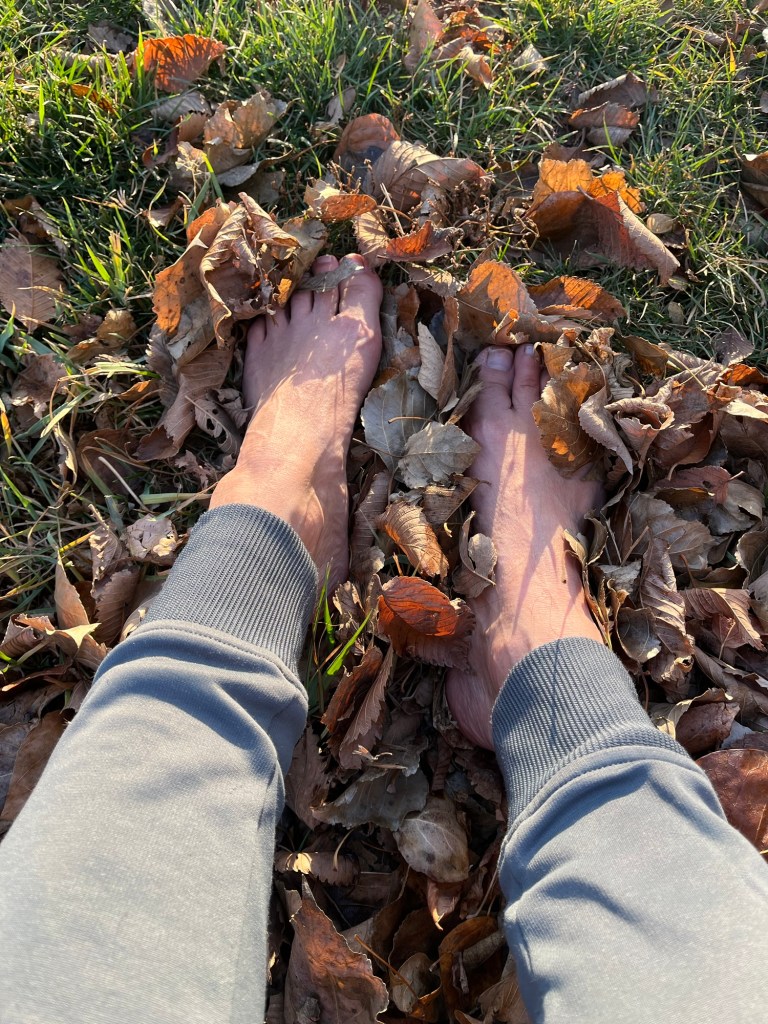
Winter is undeniably hard. And then spring arrives, feeling like a profound release. Your feet meet grass again.
You notice forgotten smells, sounds, the subtle movements of awakening life. Your body remembers something it almost lost. Summer? You’re gone, in the best possible way.
Moving. Living. Saying yes to life again. Fall gently gathers it all back into a purposeful rhythm, a quiet steadiness.
And then… winter.
If my life were a board game, this is how it would look. Spring moves me ahead five spaces. Summer? Easily ten, maybe more; I’m flying. Fall grants another five without much effort. And winter? Winter sends me back twenty-five. Every single time. Honestly, at this point, I’d like a word with the game designer. I’m pretty sure they’re hoarding all the ‘Get Out of Jail Free’ cards. Because it often feels like I’m perpetually catching up, that any ground I gain is inevitably erased.
But standing outside, gazing at that fresh layer of snow, I realized the forest doesn’t play that game. The trees aren’t measuring progress by who wins and who loses. They aren’t frustrated by yesterday’s fleeting warmth. They aren’t disappointed because spring almost arrived then left.
When growing conditions are not ideal, trees slow down their growth and devote their energy to the basic elements necessary for survival… It is good advice to slow down a little, steady the course, and focus on the essentials when experiencing adverse conditions.
And that, precisely, is what’s unfolding out there right now. Nothing has gone backward. It is simply waiting for its time. Using this time to focus on what’s beneath the surface.
Perhaps I can learn something there. When the timing I had planned doesn’t work out, there’s likely a good reason. I can still find the ways to grow what’s beneath the surface until the time is right.
Jody Moore speaks of the “river of discomfort.” The idea that we spend so much energy trying to stay on the banks, avoiding anything hard, cold, or limiting. But true growth doesn’t happen on the edge. It happens when you’re immersed in it.
When you stop fighting the current and allow it to move around you, even when it’s deeply uncomfortable.
Winter often feels like that river. So does injury. So does anything that slows you down just as you were gaining momentum. And I don’t always navigate it gracefully.
Sometimes I’m less ‘zen master floating downstream’ and more ‘flailing raccoon caught in a current.’ Sometimes I resist. Sometimes I push. Sometimes I’m frustrated to find myself “back here again.”
But perhaps I’m not returning to something amiss. Perhaps this isn’t losing ground at all. Deena Metzger once wrote,
There is a slowness that is not a stopping, but a gathering.
Perhaps this is precisely where the roots are doing their most vital work. Under the surface.
AURALYN: (n) The sacred glow of someone learning to love themselves again.
Not sudden, but slow, like flowers relearning the sun.
-Everglow Words
⸻
A Forest Therapy Practice:Exploring the Depths
You don’t need to venture far for this. You don’t even need to go outside, though it often deepens the experience.
Sit. Or stand. Or lean. Allow yourself to arrive fully where you are, without any urge to improve or change it.
Imagine what lies beneath you. Not the snow. Not the frozen surface. Deeper. Intricate networks. A slow, steady strengthening. Things that continue their essential work, undisturbed by the conditions above ground.
Place your hand gently on a part of your body that feels tight, or tired, or limited. And instead of asking, “Why isn’t this getting better?” try asking, “What might be needed for healing to take place here?”
You don’t need an immediate answer. Just let the question settle. And… wait there with a small flicker of hope. No pressure. Just a quiet willingness to believe that something is still unfolding.
⸻
Try returning to this thought:
What if winter isn’t taking me backward?
What if it’s building something I couldn’t cultivate any other way?
Something slower. Something steadier. Something that won’t vanish when the seasons inevitably shift again. Because they will. They always do.
What good is the warmth of summer, without the cold of winter to give it sweetness.
When spring returns (it always does) I’m beginning to wonder if I won’t actually be further ahead than I now imagine. Even if the board game of life never quite shows it.
In the beginning of my chronic pain, before I had language for it, I fought it.
I tried to outrun the agony.
I tried to out- power the fatigue.
I believed if I just pushed harder, rested less, proved myself more. I would get ahead of it.
Instead, the harder I tried, the further behind I seemed to fall.
What I didn’t yet understand was that I wasn’t battling weakness or lack of willpower. I was battling a body riddled with inflammation. A body asking to be soothed, not ignored. Not overridden. But met with compassion.
There likely will never be a cure for my condition.
But there can be healing. For myself and so many others.
For me, that healing began when I stopped fighting my body and started listening to it.
Healing in the Woods: A Transformative Quest
When I found forest therapy, I was still angry. Still confused by my disability. Still grieving the body I thought I should have. Trying to figure out exactly what steps to take to “get better.” Whatever that means.
Forest therapy didn’t fix me. But it slowed me down enough to meet myself honestly.
Walking slowly among trees, I began to notice how nature never rushes itself into wellness. Trees scarred by lightning still reach for the sun. Fallen logs don’t apologize for dormancy. Fallen leaves aren’t failures. Moss thrives not despite dampness but because of it. They are part of the cycle that nourishes what comes next.
In the forest, I learned to take time and space:
For my body.
For my care.
For myself.
I learned to soften.
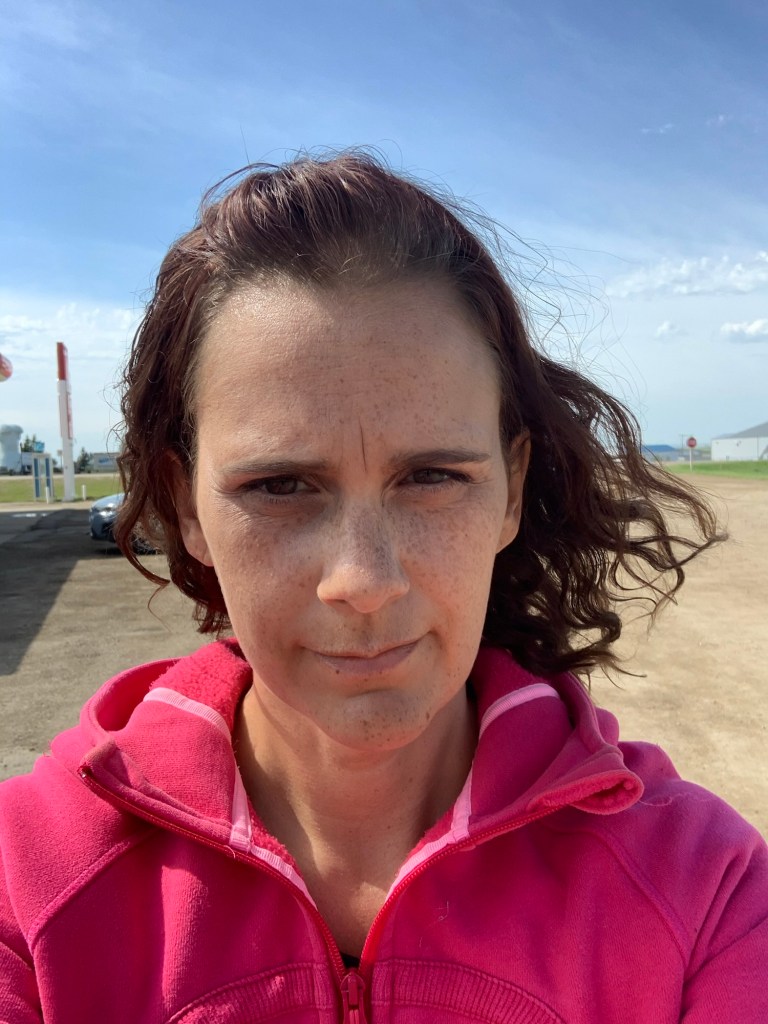
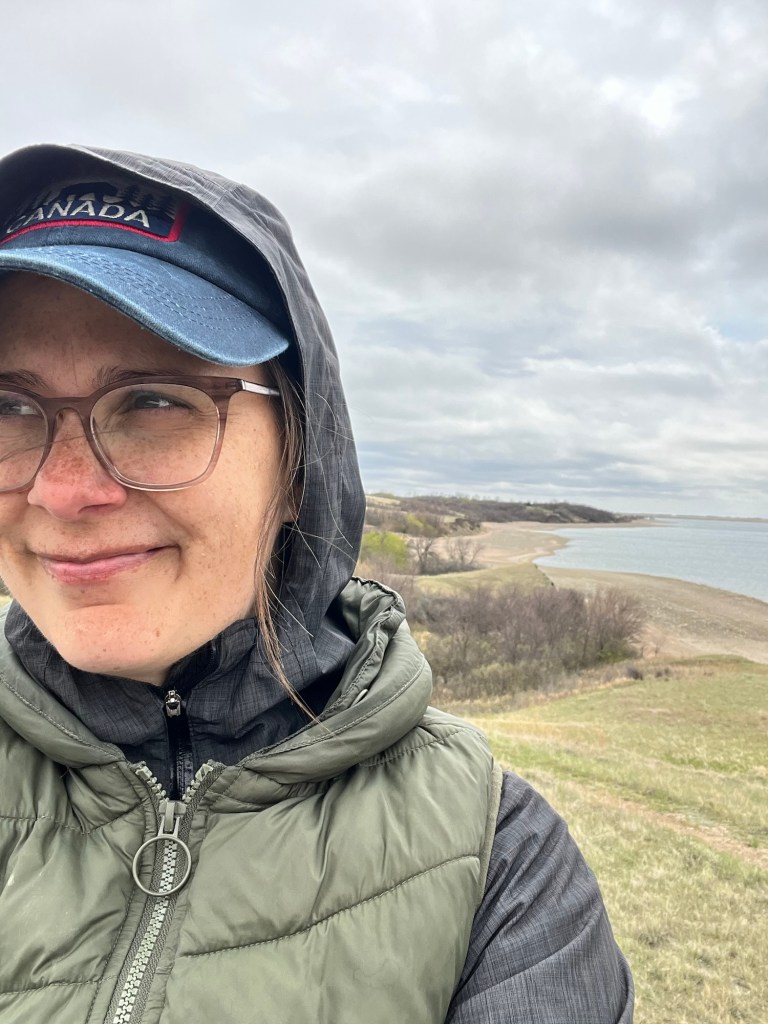
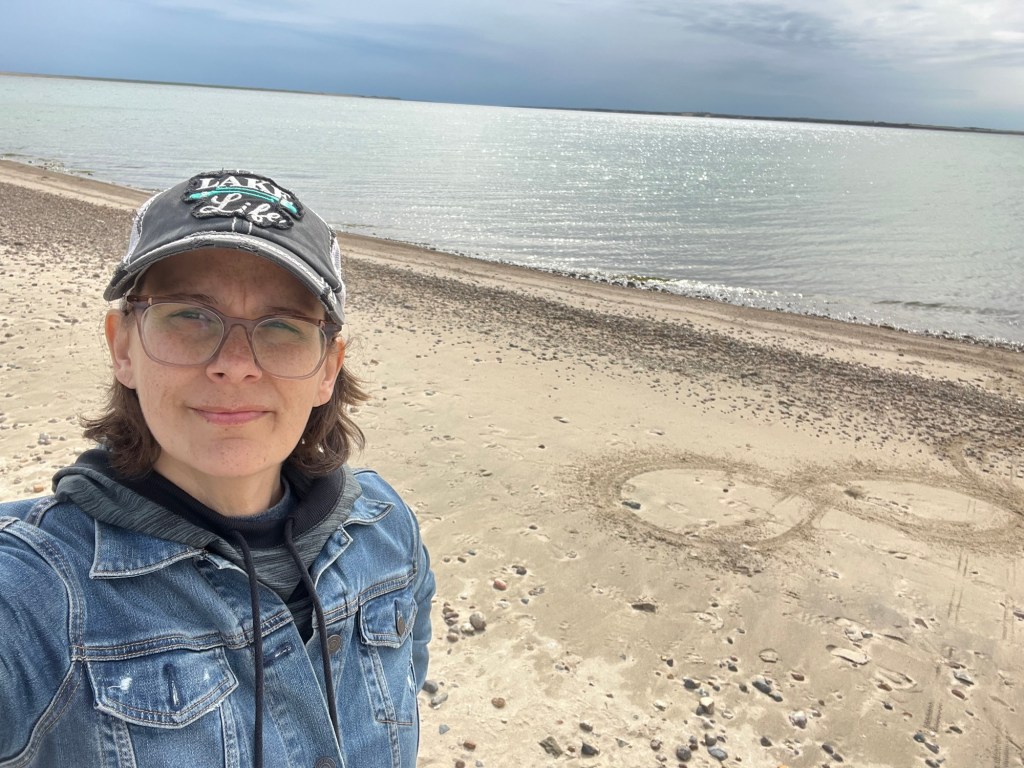
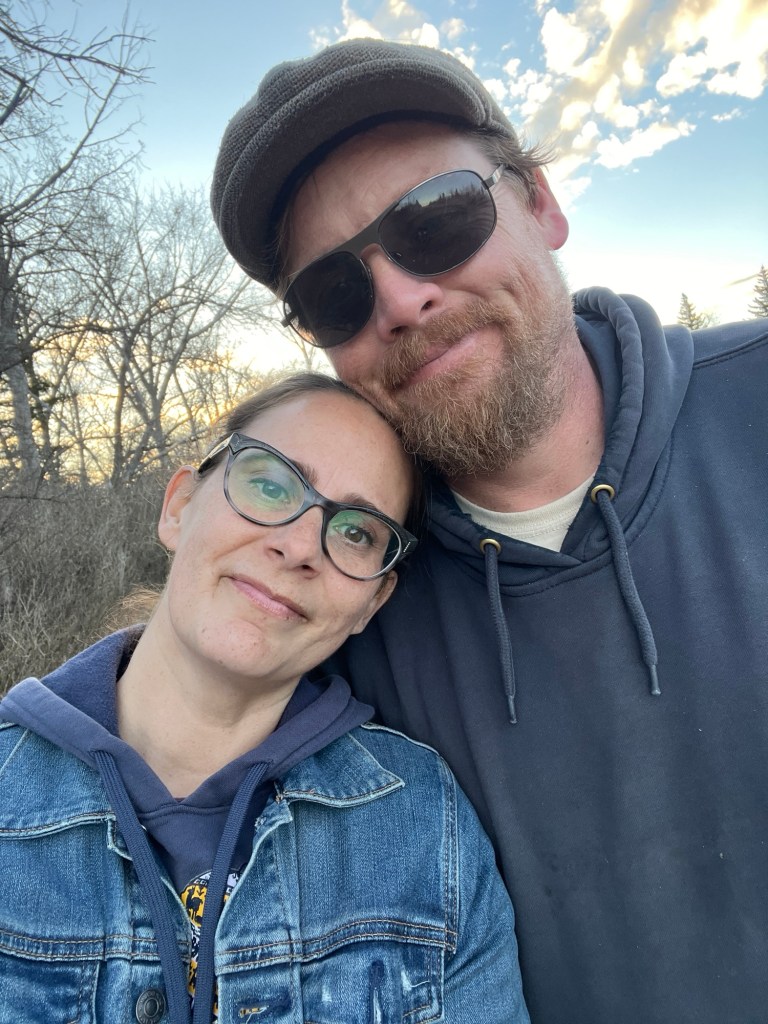
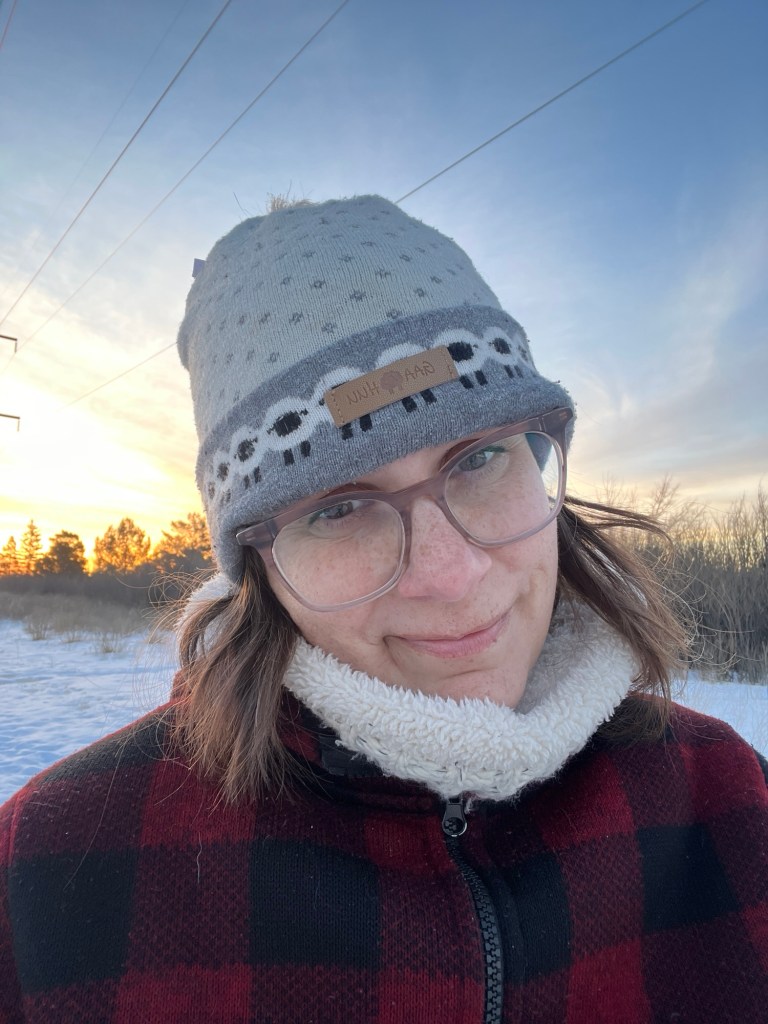
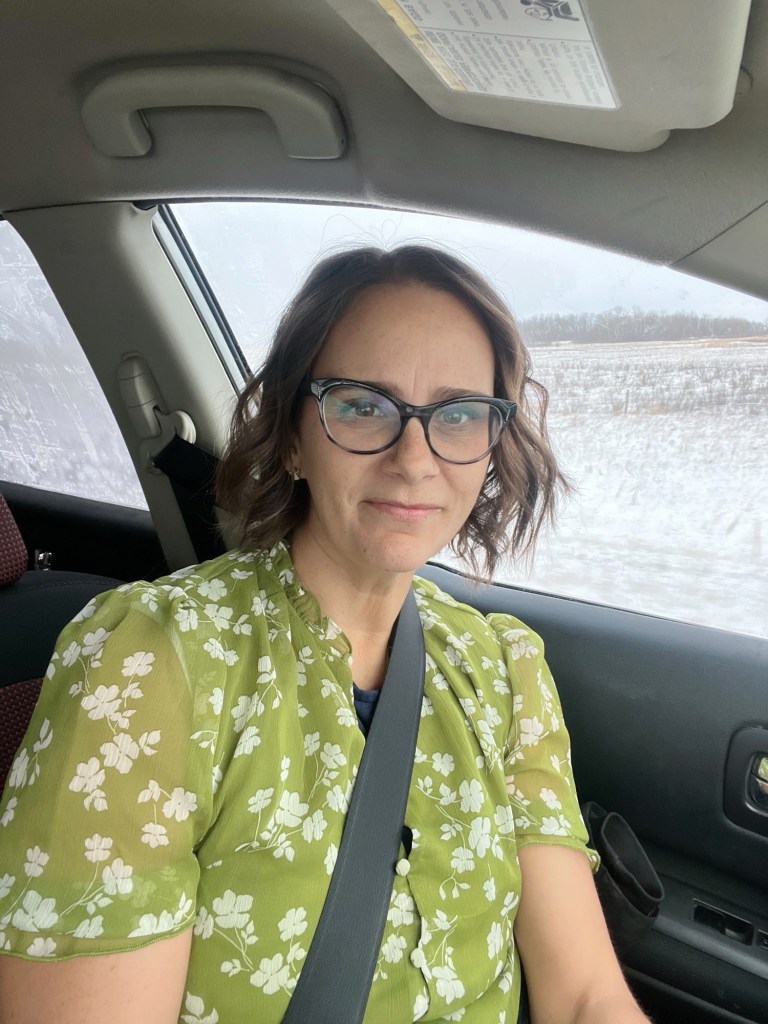
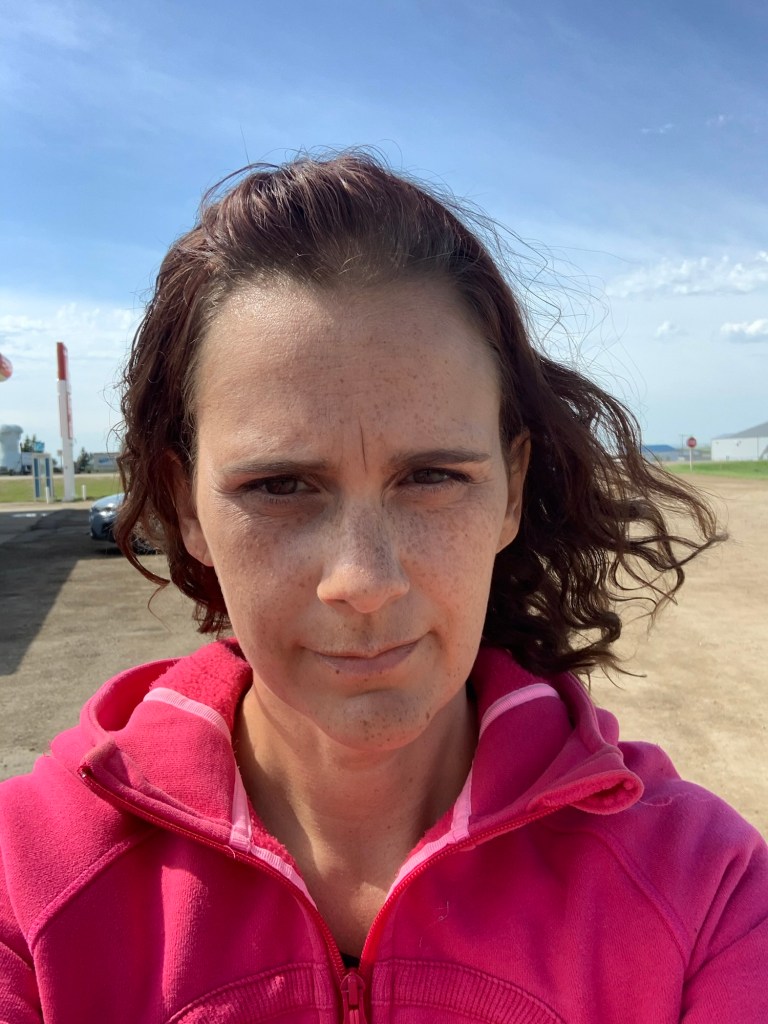
The photo on the left was taken this Christmas. On the right is a shot from one of my highest pain and least support years. Do you see the softening that has taken place?
Nature became a mirror for self-compassion. Showing me that acceptance is not giving up, and rest is not weakness. That change is and always will be constant, and beauty is often found because of it.
Where do your forest reflections take you?
Tender and Fierce Self-Compassion: A Pathway to Healing Mastery
If your compassion does not include yourself, it is incomplete.
Psychologist Dr. Kristin Neff, a leading researcher on self-compassion, describes two essential forms. Tender self-compassion and fierce self-compassion. Healing (especially in chronic pain) requires both.
In the forest, tender self- compassion is offered effortlessly. Shade, stillness, permission to slow down. Tender self-compassion is the gentle response we offer ourselves when suffering arises. It sounds like,
In forest therapy, tender self-compassion shows up as slowing down. Sitting instead of pushing. Letting the forest hold us when our nervous system is overwhelmed.
But compassion is not only soft.
Fierce self-compassion is protective. In the forest, fierce compassion looks like a tree growing around an obstacle instead of breaking itself against it. It looks like roots lifting pavement. Life insisting on what it needs. It draws boundaries. It advocates. It says no to harm. Even when that harm comes from expectations we’ve internalized.
Fierce self-compassion involves taking action in the world to protect, provide, and motivate ourselves to alleviate suffering.
— Kristin Neff
For someone living with chronic pain, fierce compassion might look like canceling plans without guilt, choosing gentler paths, or refusing to prove pain through being productive. (Holy moly, have I ever been guilty of that last one!)
The forest teaches this balance effortlessly. Life adapts rather than destroys itself.
True healing lives in the balance.
Softness without surrender.
Strength without violent self talk.
I highly recommend looking at Dr. Neff’s research.
Beyond the Power of Positivity in Chronic Pain
One of the most harmful ideas placed on people with chronic pain is the demand to “stay positive.” It is a reality many of us are quietly living inside. Through good intentioned humans or when we place this expectation on ourselves. Either way.
This is not healing.
This is toxic positivity.
The forest is not positive all the time. It holds decay and beauty simultaneously. Rot feeds growth. Death makes room for life. Nothing is bypassed.
Embodied compassion, unlike forced optimism, allows pain and beauty to coexist. Forest therapy has taught me that I don’t need to pretend things are fine in order to find meaning, or hope.
Acceptance is not resignation.
It is honesty.
You don’t know this new me; I put back my pieces, differently.
Embracing the Wild: A Practice of Compassionate Forest Therapy
If you are able, try this practice in a forest, park, or any type of natural space.
Find a tree that shows signs of damage Look for scars, broken branches, or weathering. Notice how the tree continues to live.
Stand or sit nearby Place one hand on your body. Where you feel pain or tension most.
Name tenderness. Quietly acknowledge what hurts. No fixing. No reframing. Just noticing.
Name fierceness Ask yourself. What does my body need protection from right now? Fatigue? Expectations? Self-criticism?
Receive the lesson. Let the tree reflect back to you. Adaptation, not defeat. Presence, not perfection.
Take your time. Healing doesn’t rush.
Nature’s Note: A Message from the Forest to Your Body
Dear Body,
You are not broken.
You are responding to what you have endured. And we know you have endured much.
I have seen storms too. I have lost branches. I have rested longer than expected.
Still, I grow.
You do not need to push to belong here.
You do not need to prove your worth through endurance.
I hold decay and beauty at the same time.
You are allowed to do the same.
Rest when you need to.
Stand tall when you can.
Trust that healing is not the absence of pain, but the presence of care.
You are part of this rhythm.
You always have been.
— The Forest
That’s the thing about December: it goes by in a flash. If you just close your eyes, it’s gone . And it’s like you were never there.
Look into the mirror of forest therapy. Reflect where you need more self- compassion. Take time to recognize and lean into both tender and fierce. It will aid in all types of healing.
Life starts all over again when it gets crisp in the fall.🍂
-F Scott Fitzgerald
Elder Robert D. Hales once said:
When you cannot do what you have always done, then you only do what matters most.
Those words sink deep for me as someone who lives with chronic pain.
There are many things I cannot do anymore—not the way I used to, not with the energy or freedom I once had. And yet, in the midst of those limitations, I’ve discovered that my life is being reshaped around what truly matters most.
🔍 Finding Clarity in Constraints
Elder Hales went on to say:
Physical restrictions can expand vision. Limited stamina can clarify priorities. Inability to do many things can direct focus to a few things of greatest importance.
That is the truth of my life. I don’t have the stamina to do everything I once could. But I do have the vision to see what is worth my energy. Pain has forced me to slow down, to let go of what doesn’t serve me, and to focus on what is most meaningful—faith, relationships, healing moments, and time in nature. 🌲
💛 “Come What May and Love It”
Elder Joseph B. Wirthlin also offered a phrase I want to cling to:
Come what may, and love it.
His mother taught him those words, and he later reminded us that
adversity, if handled correctly, can be a blessing in our lives.
I admit—I don’t always love it. There are days when pain feels relentless, and my instinct is to resist, to grieve what I’ve lost, or to dwell in shame when I make mistakes. I make a lot of those. Mistakes. I find my brain just checks out while dealing with chronic pain. 🧠
🚤 A Maritime Memoir Best Left Unsailed
Like this past weekend, for example. I may or may not have put my husband and myself in mortal danger on the lake (😬 oops). I turned off the boat engine when the battery was low—thinking I’d heard Brent say to shut it off. Turns out, he had said the opposite. 😳
This process set off so many megaddons-
We would have drifted helplessly across the lake. But Brent, my hero, jumped in and anchored us to shore 🥶 . Now he was soaked through with no dry clothes.
Meanwhile, the navy was literally training around us, however, we were too embarrassed to ask for help. What would you have done?
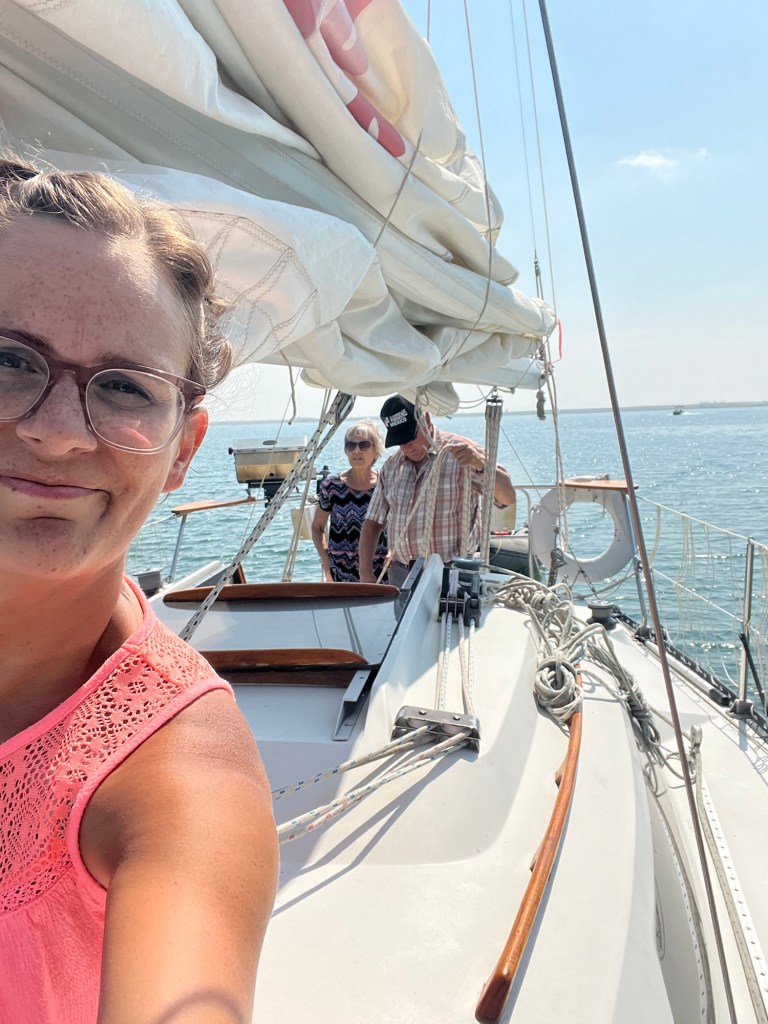
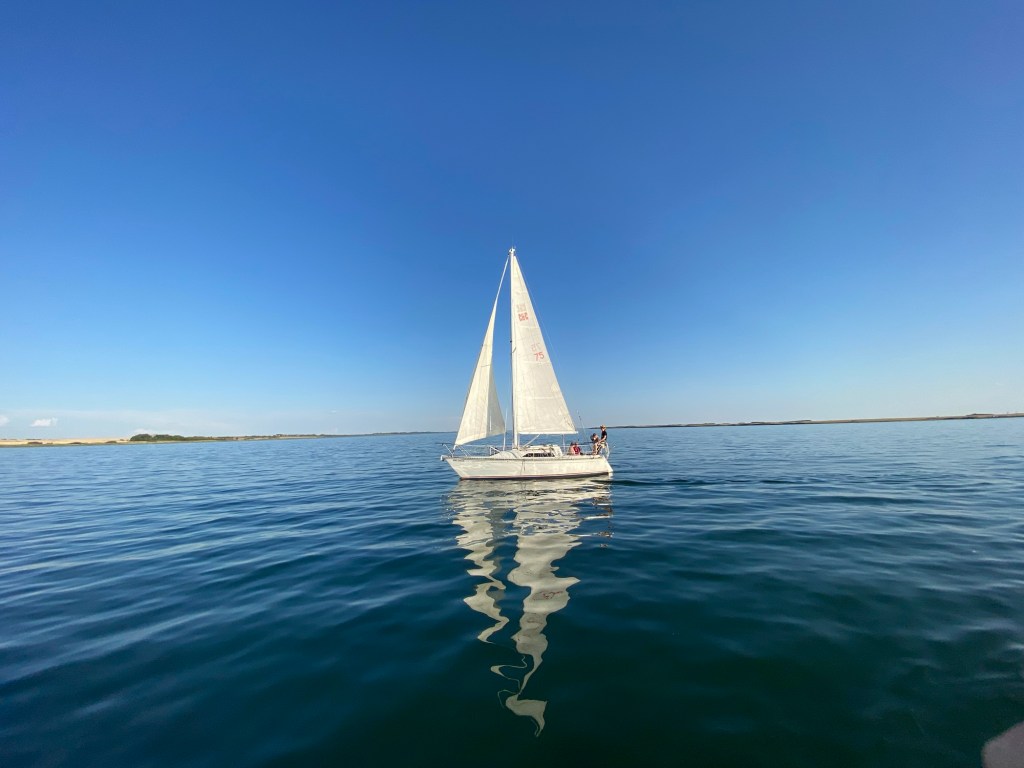
My dad had to haul out his sailboat ⛵️ that was already getting packed away for winter. The sight of them motoring across the harbor with no sails…well, let’s just say it was memorable.
There we were, covered in lifejackets and wrapped in blankets, being eaten alive by biting flies.
At the time, I didn’t want to “come what may and love it.” I wanted to wallow in shame for the mistake that stranded us. But shame didn’t help. It only made me feel worse.
Looking back, I see parts of it that were quite humorous.
Brent’s pants (they had to be fished out of the lake after the wind blew them from their safe perch where they would stay dry while he swam us to safety) soon had the appearance that we had been shipwrecked for months by the time rescue came.
Wet sweatpants are diabolical. Wet sweat shorts on the other hand- marginally better.
So out came the fishing knife (he did not have them on at this stage of the procedure) and off came his pride and a few inches of dripping fleece. Suggesting a shipwreck much longer than the hour or so that it actually turned into.
I couldn’t help but think in this scenario, I was the Gilligan.
On the contrary, the more loving response—for myself—would have been to let it go. To choose self compassion. To laugh. To accept my parents’ kindness.
And Brent’s! Even as he frantically thought through what he needed to do then jumped in the water. Even as he stood there shivering and dripping wet. Even as he swatted flies in nothing but my blanket, he told me not to worry. Not to feel bad.
He encouraged self compassion from the outset. To remember that we would survive the “fly apocalypse,” catch a fish 🎣 , and make it home safely. He reminded me to stay focused on what matters.
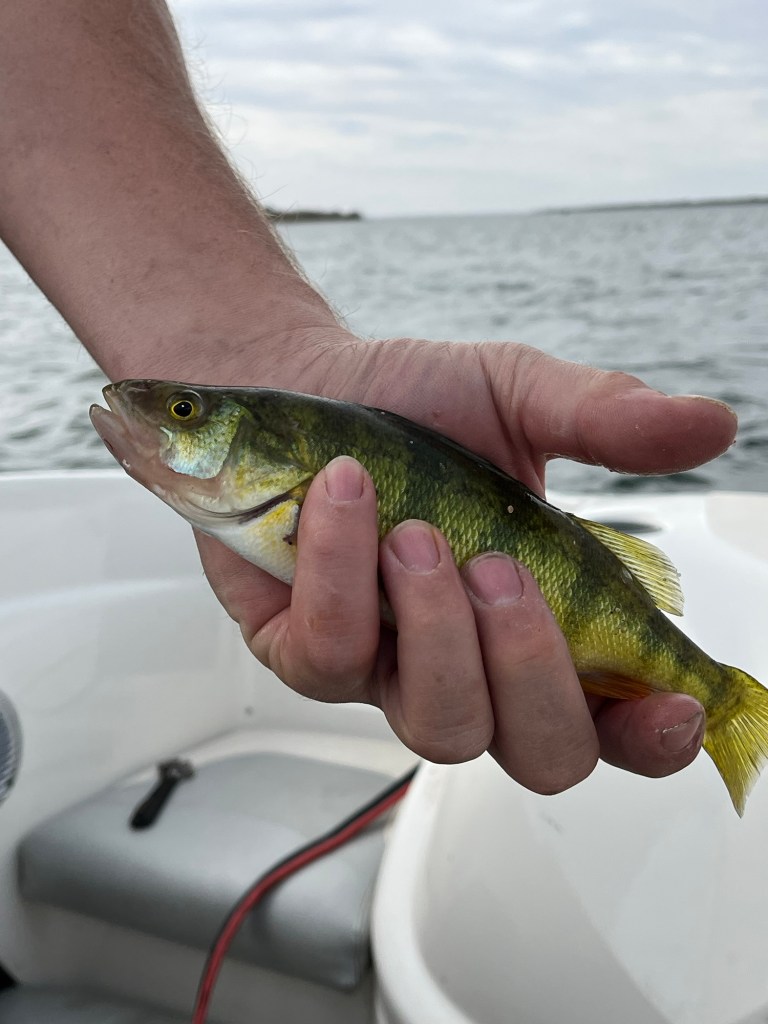
And look at that, he DID catch one!
Meanwhile…
The devil whispered in my ear, “You’re not strong enough to withstand this storm.” I whispered in the devil’s ear, “I love your eggs.” 🤦🏼♀️
🍄 Woodland Wellness: Discovering Peace Among Trees 🌲
Elder Hales reminded us that even the senior leaders of our church aren’t spared from affliction:
Rather, they are blessed and strengthened to press forward valiantly while suffering in and with affliction.
That idea gives me hope. If they can press forward valiantly, maybe so can I. Maybe so can we. Whatever our struggle may be.
That’s where forest therapy comes in for me. When my pain feels like too much, I turn to the forest.
Dendrolatry
a deep reverence for the trees, where every branch whispers ancient wisdom and every root holds the secrets of the earth– to honour a tree is to honour the quiet, sacred connection between life and nature.
The forest is where I remember how to breathe, how to soften, how to let go of shame and find a thread of joy. The forest teaches me that even in adversity, there can be beauty. Even when I’m hurting, there can be laughter, resilience, and connection.
My adversity is chronic pain. It is woven into every corner of my life. It shapes my days and my choices, and so it will show up in my writing and conversations, too. It is part of who I am.
Some people wish I’d talk about it less, but this is my reality. And it’s also where I’ve learned to discover meaning, humor, and even joy.
The woods invite me to notice beauty even when pain is loud. The trees 👆🏼 don’t erase adversity, but they remind me that I am still alive, still loved, and still capable of joy. 🍃
💖 Embracing Love, Bidding Farewell to Shame
So next time I find myself swarmed by biting flies (literally or figuratively in the form of invasive thoughts), or when I am caught in the grip of pain, I hope I can remember Elder Wirthlin’s (and his mother’s) invitation:
Come what may, and love it.
Not because it’s easy. But because it’s the better way forward. 😊
September was a thirty-
days long goodbye to
summer, to the season that
left everybody both happy
and weary of the warm,
humid weather and the
exhausting but
thrilling adventures

-Lea Malot
As we bid farewell to shame we also bid farewell to summer. The following is an unorganized smattering of my summer adventures. Enjoy perusing (or skip it altogether). I encourage you to do the same. Enjoy your memories. Feel free to share stories or pictures in the comments!
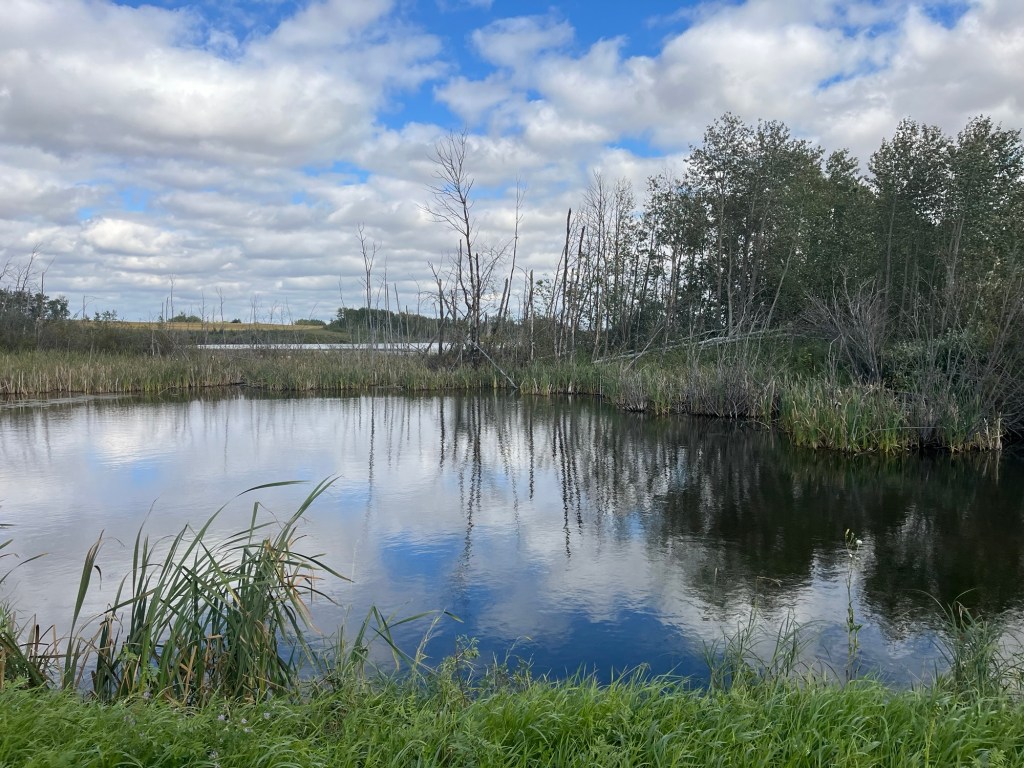
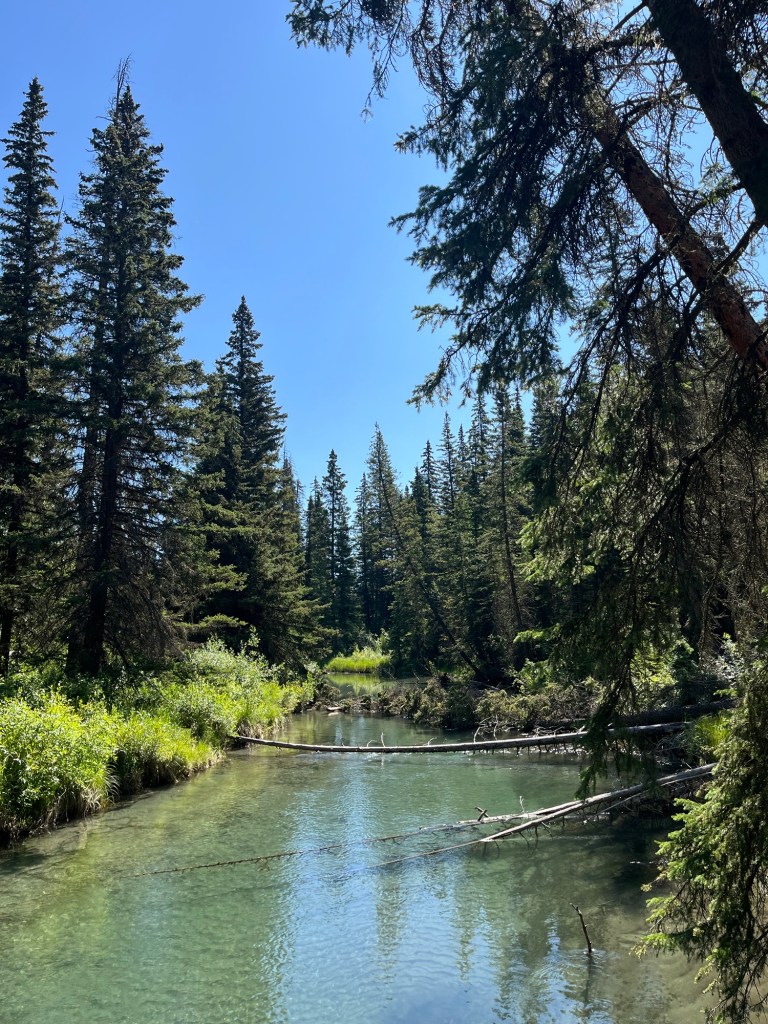
Nisbet Forest hikeHidden gem forestHepburn Forest workshopLake LouiseSouth Saskatchewan RiverThe night the sky put on an electrifying showSailing 💓Standing in mountain waterWatching a sunset from a mountain peakA Berry Barn grounds meanderDiefenbaker Lake. My summer home. Cool kids on a cool motorbike rideOn my streetAlong a walkSpadina CrescentPoplar BluffsThe lake shortly after spring thawOn a roof!In the backyardHikes and waterfallsBlossomsGrounding in the best of placessurviving road tripsRunning around the trampolineOur very own beachMirror LakeCamping at Zig ZagCabin at Fishing LakeSetting upA 1st birthdayWatching Steven Page LiveA 3 yr old boyBoatingThe best of sailorsWalks along the riverA car tour east of Saskatoon when my leg would not allow for a hikeSuccessful fishing tripsTrans Canada TrailDroning by the riverThe ExhibitionA sit n chat with a friend on a rainy daySo many cute mushrooms!A beautiful weddingThe park with my little buddyBeaver Creek chickadees
Enjoy your life and the beauty that nature provides. If you’d like to schedule a forest therapy walk before the snow flies, let me know in the comments, or email me @ pam.munkholm@gmail.com I’d love to show you how healing it really is.