
The Spoon Theory Explained: Managing Energy Wisely

The first fall of snow is not only an event, it is a magical event. You go to bed in one kind of world and wake up in another quite different, and if this is not enchantment, then where is it to be found?

-JB Priestly

We are not all so thrilled to see the snow falling today in our area. But I realized something important. When I looked at my grandson’s eyes, so big and shiny as he looked out the window. Pointing and gasping as though we put it there just for him. There is a way to see this new world as magical and beautiful.

Even for those of us who are suffering as the weather shifts. I mentioned the spoon theory in an earlier post. I want to go back over the basics of it as we commence today’s post.

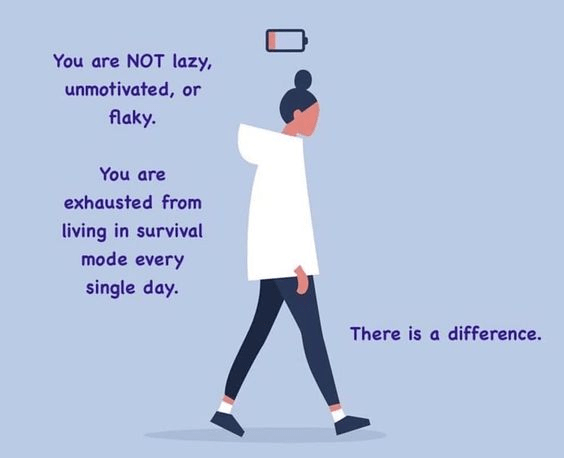
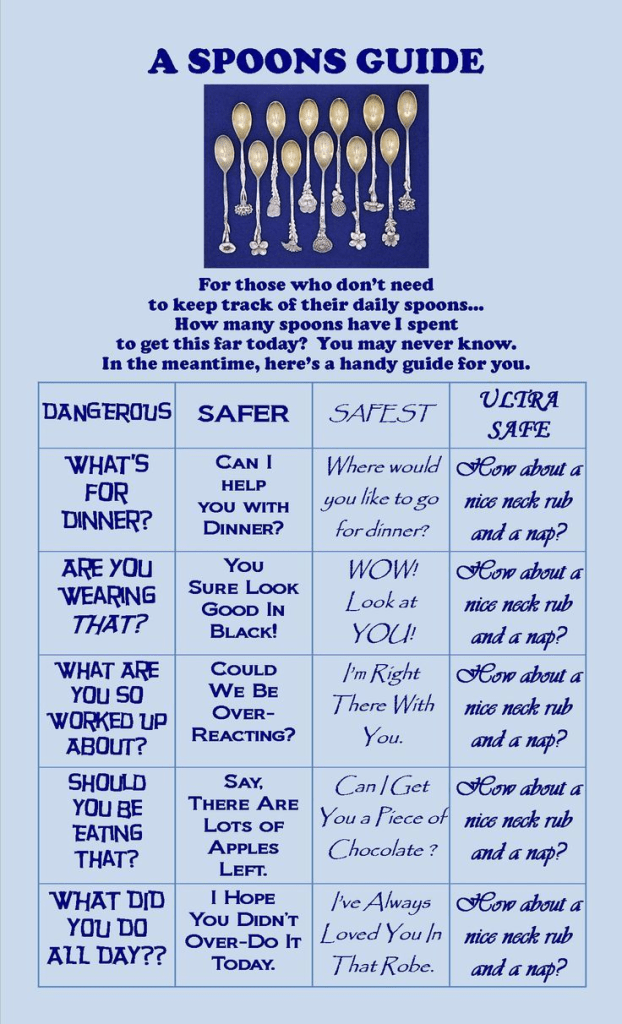
The spoon theory is an analogy. People with chronic illness often use it to explain how their daily energy is limited. Spoons in this analogy represent units of energy. We have a finite number of spoons for each day. We must carefully choose where spoons are ‘spent’. This requires effort. Even the smallest daily tasks can consume a lot of your day’s energy. Tasks like preparing and eating food or attending an event are examples. The need to thoughtfully consider how we manage this is great.

For those who do not suffer in this way, the following infographic will prove most beneficial.
Something that I will acknowledge takes multiple spoons is showering. I share with you my guide:

How to Shower as a Spoonie

  1. gather your supplies and your resolve, we can do this
  2. start shower, warm, but not too warm, but definitely not too cold, that would be disastrous
  3. enter shower, step carefully, we don’t need any new damage
  4. use shampoo (the right one, nobody knows which one that is, but definitely don’t use something that has chemicals, newsflash, they all do)
  5. when rinsing out the shampoo you will likely need to sit down and rest for a time, perhaps have a snooze
  6. get back up, God speed, all of the blood will now be rapidly drained from your brain to your lower extremities leaving you sluggish and dizzy
  7. apply conditioner as you simultaneously embrace the shower wall for support
  8. briefly consider just calling this good
  9. rally 👏👏👏
  10. apply soap to areas easy to reach and just let it slide to the parts you can’t
  11. while leaning ever more excessively on the wall rinse what conditioner you can
  12. exit shower and haphazardly dry off
  13. feel rotten and go to bed with your wet towel
  14. cancel the plans you had because now you have been rendered useless
  15. see? we’ve done it! without a hitch. beautifully executed

Have you ever gotten to the end of your spoons before you got to the end of your day? I often have. What is to be done in such a case? Can you restock your spoon supply? Sometimes the answer is no and the best thing to do is to go to bed and try again tomorrow. And that’s okay!

At times I am getting to the end of my spoons and I can see the day stretching out. I have found a few things that help to restock SOME of my spoons. Or at least it is helping me use what spoons I have left wisely.

Restocking your Spoons
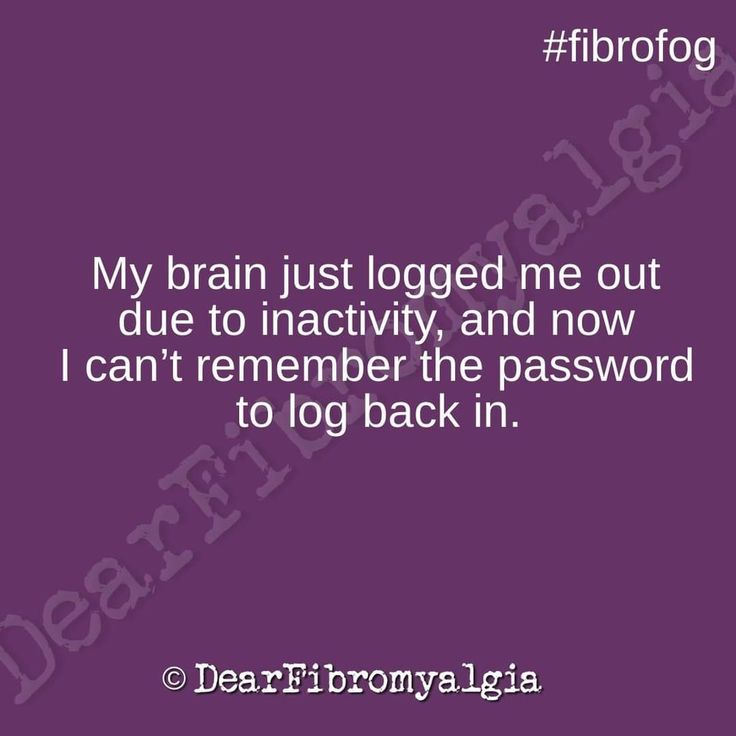
Turning off and tuning out has been a life saver. I put my phone on airplane mode and I will go to a dark and quiet space. I can breathe deep, meditate and just BE without all the distractions.

Comforting food or drink. We have to be careful when choosing foods. I suggest finding one to have on hand for emergencies. Or maybe you are a tea person. A tea break is a great way to slow down.

At times exercise is the right call; though only to the degree that your body will allow. Maybe a stretch is right for some people?

There is nothing wrong with a nap. If that is what your body needs to regenerate then nap away. No shame!

And then there’s my favorite. A bath. I love the soothing warmth and having my body suspended where I don’t have to hold it together.

If you wonder why you are so tired, why we start each day with so few spoons. Consider the fact that our sleep is not the same quality and effectiveness as those without chronic illness. It’s unfortunate but true.
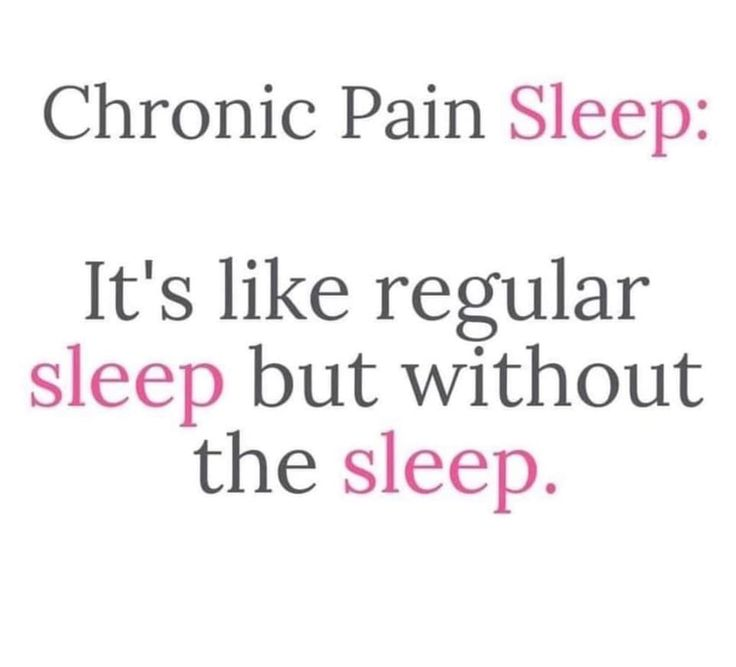
Recognize your limits. Pay attention to them. There is always much to do in a day but make sure you don’t end up like this Little Miss.

Pace yourself. Rest. Take breaks. We have to practice being still. And feeling okay with being still. Often it goes against ever part of our being. But maybe this is how we survive.

And on the days we are not okay?
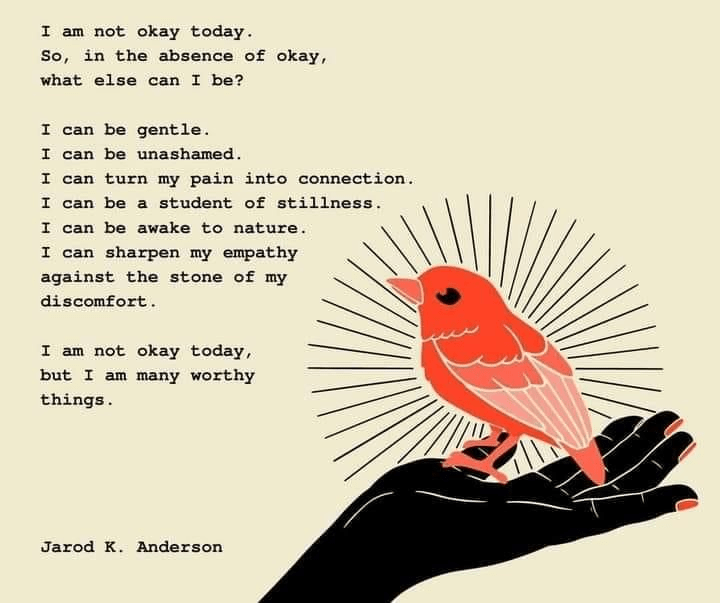
You are worthy of so many things. Your illness and the limitations it causes do not minimize your worth. At all. And yet. A word of warning, the battle raging in your body is helping you become the person you are becoming. For better or for worse. Choose to make it for the better.

My symptoms have been varied and particularly pesky this month, this year. I am inspired by this Latin phrase. alis volat propriis. Translation: ‘she flies with her own wings’. We feel weak but we are truly strong. We often need to figure things out in our own way and timing. We fall. But still we rise.
To close, I’d like to give our non-spoonie readers another guide. This guide will help you support any of your spoonie friends and family.

Spoonie Translator

In response to “how are you?” we say, “fine thanks!”

This is not even remotely true, don’t trust us.

Translation: I am just barely holding things together but I like to try to blend in

When we say I have a doctor’s appointment coming up

Sounds like a bit of factual information, no big deal

In reality we are worried about it and might need support during &/or after

I wish I were able to work

And you think, “sure but isn’t it nice to stay home all day?”

We really would rather work, join the rest of the world, and make our mark, plus income is always nice

I am tired

“Me too” sounds like a reasonable response but that would be comparing apples and chronic fatigue

Translation: I need to quit now. I probably should have quit a while ago.

I wish I didn’t have… fill in the blank

Do you sometimes think, why do you have to talk about it so much?

Translation: I am devastated by the physical, mental, emotional, financial, employment, etc. changes my illness has brought.
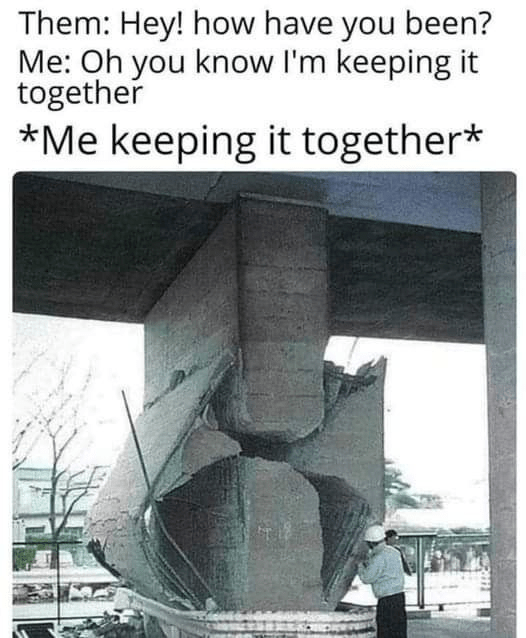
Actual footage of me holding things together

Sometimes we just need to laugh. It’s a good coping mechanism. I hope I have brought a brightness and laugh to your day. Maybe a connection where you think, me too! Let me know in the comments.

How wonderful it is that we laugh because our bodies cannot contain the joy.

-unknown

If you’re enjoying the blog, hit subscribe so you never miss a post. I’d love if you’d share this post with anyone you think it would help. Take care my friends.

Navigating Chronic Illness: The Patient’s Perspective

The forest speaks to my soul in a language I already know; a distant lullaby from the womb of peace and solitude.

-Angie Weiland- Crosby

I am literally addicted to forest bathing. While the ability to forest bathe in the winter does create challenges there is a way around most of them. We will discuss ways to combat the winter blues in a future post. We will also talk about how to maintain the healing momentum we all feel more powerfully in the summer.

But today I want to focus on doctor appointments. What’s the big deal about doctor appointments? Anyone with chronic pain/ illness knows. Let me explain the realities of chronic pain and medicine. This is for those who have not had to fight to get care.

The relationship between doctor and patient is supposed to come to a successful resolution. Diagnosis. Or death. The tricky nature of the chronically ill patient and their doctor is an uncomfortable one. There is no resolution or death. There is no treatment plan or hope for the future. It is hard for many people to wrap their brain around. Surely there is a surgery to be performed. A trial drug to be prescribed. If nothing else there must be the greatest of emotional supports. Not so.

My first thought with a new doctor is to walk in and ask for a refund on this body. It’s defective and terribly expensive. Actually explaining what has happened and what is now going on is exhausting.

Our world is set up to have an answer for everything. Just ask google. Or Siri. But not all doctors know all medical conditions. And some conditions don’t resolve.

I read this the other day: Having a chronic illness is like having severely bad eyesight and needing glasses. Except glasses don’t exist. Most people don’t believe you have bad eyesight. You get judged for not being able to see correctly, people think you are faking for attention. People tell you all the time they wish they had your bad eyesight so they could get out of certain obligations. You cannot go to work because you cannot see. You cannot read a page in front of your face, doctors say you are just depressed. Everyone around you tells you to try harder to see. Lots of people tell you to do yoga.

There are healthy people that are under the impression that chronic illness sufferers have a free ride. We “get to” stay home all day. And we get access to all the equipment and therapies needed for our condition. That is, sadly, just not true.

The pains I’ve had to go to get supports is almost too much. It is painful to think. Painful to fill out a form. Painful to sit in a waiting room to talk to someone about it. Painful to have them dismiss me and suggest I seek counseling.

Our medical system is more overloaded than before 2020. Still, these issues I am experiencing were a problem long before that. There is a lot of waiting in the medical system. At any given time, I am either waiting to see a doctor. I am waiting to hear back from a specialist. I could be waiting for a prescription to start working. Waiting on a cure. Or I’m waiting on a medical test that probably won’t show anything anyway!

Or my go-to move. Waiting in the walk in for hours because I forgot to book with my doctor before my meds ran out. Again!

This graphic from MyBodyIsTryingToKillMe.com could not be more accurate. When you’ve experienced medical gaslighting the time periods before, during and after appointments are even more anxiety triggering.

If you haven’t heard of gaslighting, allow me to catch you up. Gaslighting involves using psychological manipulation. This manipulation aims to undermine a person’s faith in their own judgment, memory, or sanity. In medical gaslighting it can look like being dismissed in your concerns or questions. Disregarding or minimizing your pain or other symptoms. When medical professionals try to pass off your musculoskeletal pain as something that is just in your head. Being stereotyped for gender, race or condition. Being shamed for attempting to self diagnose (have you seen that smirk?). Refusing to order lab work, imaging or a referral.

How many of these have you experienced? Comment below with your story.

Pre appointment jitters start coming up for me the day before. Or a week before, depending on how much I need this doctor to hear me. I have spent hours making notes, writing down questions and praying this doctor would hear me. And take me seriously.

It is demoralizing to be told you need to do more. You are simply waiting to be told what to do that will not make symptoms worse.

During an appointment I have been told nothing is wrong. That I just need to do more physio. That I won’t get better if I don’t get off the couch. This is the tip of the iceberg. It is demoralizing to be told you need to do more when you are simply wanting to be told what to do. In each diagnosis there is an attempt to create pain. Like getting your car engine to do the weird thing it does for the mechanic. But my issue was in “the wiring”. It would hide from doctors. Then it would show up as searing pain the following day. When they didn’t see it, it was hard to convince anyone it existed.

Post appointment always left me feeling let down. Major depression. I would have so much hope that this would be the answer. Only to be told there was nothing they could do. After the worst appointments, I would start looking for a new doctor. This added a fresh layer of stress to the pile. Then there is the drain circling doubt. I would question my thoughts. My symptoms. My pain. Is it all in my head?

I don’t access the medical system for many things anymore. There is so much more pain there. I use it for what it can offer and the rest I get from nature.

I am grateful for what I now know. Because the effects of medical gaslighting in my life were starting to take their toll. It has contributed to my ongoing depression and anxiety. It has given me a mistrust of doctors and specialists. Though my mistrust in myself has been the greatest weight. I have hesitated to seek care for myself and my family in other areas because of my experience. That has not always led to the best outcome.

While this is all very frustrating it is wonderful to know there are others out there. I am not the only one. So here I lend my voice to tell you that you are not the only one. I share these wildly accurate and humorous thoughts from Nia @chronicnotebook to end on.

This is hilariously accurate. I have definitely given myself this pep talk.

You are a forest and no matter how many wildfires burn you down you’ll always find a way to grow back.

C.S. Lewis

Living with ME/CFS: A Journey Through Chronic Fatigue

So, if you are too tired to speak, sit next to me because I, too, am fluent in silence. – R. Arnold

What is your toxic trait? I have many. One of mine is pushing through when my body is exhausted and needs to stop.

{MYALGIC ENCEPHALOMYELITIS}

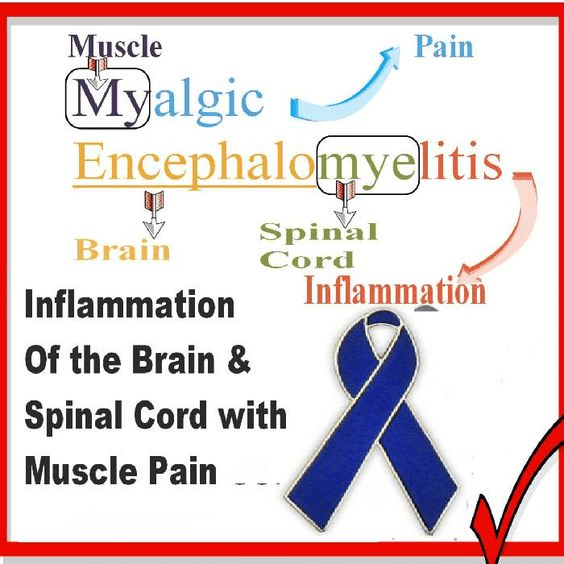
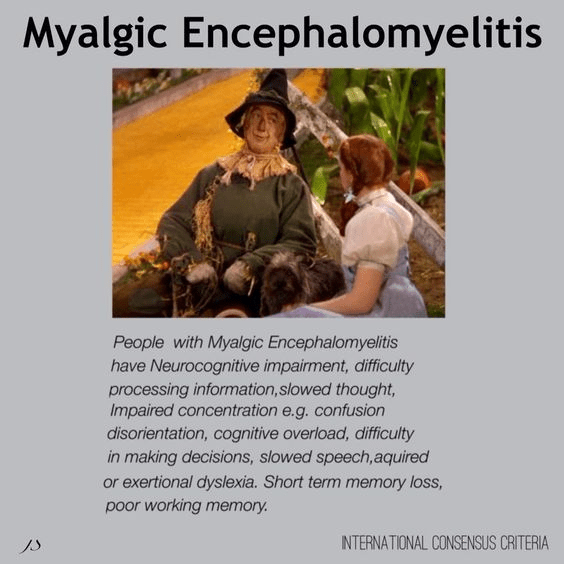
I was diagnosed with Myalgic Encephalomyelitis/ Chronic Fatigue Syndrome (ME/CFS). Mya what?!? I like this infographic for breaking it down. It is so much more than being tired!

At the time of my diagnosis I wasn’t suffering many of the symptoms. It wasn’t my first concern. I was just trying to get my floppy joints to hold still. ME didn’t seem like a big deal. So what if I’d be tired. I just wanted the pain to stop.

But now, years later, I can see what ME has done and is doing to my body. Pushing through is never the right answer with ME/CFS. And having it?… actually is a big deal. I need to be aware of how it affects my body and what I can do to manage the symptoms.

If you’d like to know what it’s like to have ME/CFS follow these 6 simple steps:

  • First you’ll need to fast for 24 hours
  • Also stay awake for those 24 hours
  • Every time you stand up, spin around 5 times really fast
  • Throw yourself down the stairs 5 times in a row
  • Run 10 miles
  • And continue to try to live a normal life
  • this list is brought to you by sunshineandspoons.com

Accurate!

{SYMPTOMS}

The actual list of ME/CFS symptoms includes post exertional malaise. It seems obvious. You get tired after you perform an activity. Everybody gets that. But with ME there is a disproportionate amount of exhaustion for the type and length of activity. For example, showering is so tiring.

What is it? Arms up? Standing in one spot? I don’t know for sure but I need to rest after a shower. Sometimes in the middle of a shower.

Next on my list of symptoms is muscle pain and weakness. I need to exercise to keep my muscles strong enough to hold me together. When we leave the gym I have so much muscle weakness. I have trouble getting to the car without willing my body to keep moving. I’m daily tempted to ask my hubby for a piggyback. I feel the lactic acid running through my veins. Like I just ran a marathon and then sat down for a half hour. Then stood up and tried to walk. Can you feel the Oof?

And my favourite (and most embarrassing) symptom. Cognitive impairment. Brain fog. Oh the brain fog!

This is my life now. Anyone I have had a conversation with in the past couple of years can verify.

The list goes on. Sleep problems. Hypersensitivity to light and stimuli. Flu like symptoms, it has been compared to feeling poisoned. Shortness of breath. Difficulty swallowing and chewing. Sweating. Dizziness. Muscle pain, twitching and uncontrollable spasms. Poor tolerance for hot and cold. Visual disturbances (waves or blurred vision). Inconsistent central nervous system operation. Word finding difficulty. Disjointed speech. Difficulty comprehending text. Difficulty with processing and concentration. Feet burning. Poor digestion. I only list here the symptoms I have experienced. The list goes on for others who suffer ME. As I reread this list, it sounds like the side effects of a drug that’s not worth taking!

Just like so many syndromes in our world the severity of ME each person experiences is on a spectrum. Some people need to spend their lives in bed. Often separated from life to handle the pain that accompanies ME caused by any exertion. My heart goes out to those who suffer in such a way.

I was there.

{{MY STORY}}

In 2020 I hit a breaking point. But not for the same reason many other people did.

My body would no longer work the way it always had. Pushing through wasn’t a viable option. The wall of exhaustion was sudden and extreme. It was physical, mental and emotional. I had to go to bed and I didn’t know when I’d be strong enough to leave it again.

No 20 minute nap was going to fix this.

I had to stop working. I eventually (tearfully) decided to close my business. I couldn’t make my own meals. I didn’t want to eat anything anyway. I didn’t feel like sleeping but I was SO TIRED. My brain was spinning and all my nerves were ready to zap if not treated with the utmost respect.

Most heart wrenching of all. I had to leave my family. I had to go where it was quiet and still. There is nothing quiet and still about three teenage/ young adult sons and a farm to run.

I needed to be warm. And hushed. I needed to focus on me. Just me.

It. Took. Months. Of being still.

More months of learning to slowly start life again. And then starting over again but with boundaries.

More months of realizing this is my life now. I had expected to put my life on pause for a short time. And to pick up where I left off as soon as I was “better”. But you can’t live on pause. And there was no “better” forthcoming.

Not everyone who suffers ME will experience the same results as my story. Even if they do exactly what I did, outcomes differ. You can do everything right and still suffer the symptoms. I managed to break free from chronic fatigue’s strangle hold. By no small miracle.

During those first months my brain just wanted to stop but I had so many daily worries. I couldn’t handle the thought of letting them go. And there was nothing to physically be done in my state to take care of them.

So my mom would come into my room at her house. She would sit at the end of my bed and write all of my worries down.

She’d help me sort out what needed to be taken care of and who should do it.

Over time I started physically building myself back up so I would be strong enough to go home. I’d walk around my parents house for a minute. Then two. Then three. Everything had to be such a slow build. Or I’d start from square one again.

I couldn’t handle any stress. Try avoiding that in this day and age! It was and is an ongoing battle to recognize and alleviate those triggers.

This all seems a lifetime ago. Today I live an almost normal life. Normal for me I should say. I still can’t work. I have to pay attention to how I am feeling at all times. I need to make sure I am not overdoing anything. I listen to my intuition when I take things on or when I choose to politely decline. Sometimes I get it right and sometimes I have to go to bed.

{OVERCOME}

I don’t like being known as the woman who is always exhausted. Pushing through and setting off flares in my body. I don’t want to be remembered for just barely holding it together.

I want to be remembered as joyful and relaxed. When I rest I can let it restore me not frustrate me. I want to be remembered for loving fiercely and for being a woman who knows her worth and her strength including her limitations. Living in the mess and magic of this life. I don’t want to take things too seriously!

What can you do if you suffer some of the same symptoms? What are the treatment options? Doctors will tell you there is nothing they can do. While this might be true, there is plenty that you can do.

{TREATMENT}

Forest bathing is my number one recommendation. Get into nature and find comfort and healing in its embrace. As the days get colder just add more layers. If you need help to get the greatest benefits out of the forest head over to my contacts page. We can go together and I can show you how.

Do not find yourself guilty of my toxic trait. Do not push through. Just keep swimming is not always the right advice especially not for chronic pain sufferers. Just keep swimming till you have a flare. Just keep swimming till you are in so much pain you can hardly move. Just keep swimming will put you in bed. Your best option might be to just stop swimming and respect your limitations. And take care of yourself accordingly.

Here are some other things you can do to treat ME/CFS. Each of the ideas will put a drop in your bucket. The infographic mentions Fibromyalgia too. It is very common to have more than one chronic disease to manage. It is not like Pokemon. You definitely don’t want to catch them all.

Do not let your bucket run dry! Keep a daily schedule to stay on top of these treatments and ways of life.

Other treatments include pharmacological (for sleep, for twitches and spasms, for depression that often accompanies chronic illness, muscle relaxants (not me, my muscles are stretchy enough on their own), or medical marijuana for pain).

More treatments for pain include massage, physiotherapy, chiropractor, meditation and relaxation, heat and cold packs.

Sleep. Set up a soothing bedtime routine and stick to a regular sleep schedule. I am working on practicing what I preach in this area.

Other useful tools: Add salt to your water for extra hydration. Compression socks. Breathwork. Clean diet. Memory aids. Ear plugs and eye masks. Ask what your body needs and follow its answers.

{TO THOSE WHO SUFFER}

I end with this justifying quote for all those who suffer from ME/CFS. Dr. Clare Taylor said,

I maintain the sickest patients I have looked after are ME patients. They suffer. Every single day. For years. And get told to try harder. One day it will be accepted for what it is.

I don’t know this doctor. But here, here! Vindication for all who suffer.

If this sounds familiar to you, and you want to discuss more than what I cover on the blog, reach out to me on my contacts page. Tell me your story. There is healing in just that.

And she stopped… and she heard what the trees said to her, and she sat there for hours not wanting to leave. For the forest said nothing, it just let her breathe. -Becky Hemsley

The Inconvenient Truth About My Connectivity Disorder: and what forest therapy has done to help

And sometimes I have kept my feelings to myself because I could find no language to describe them in. – Jane Austen

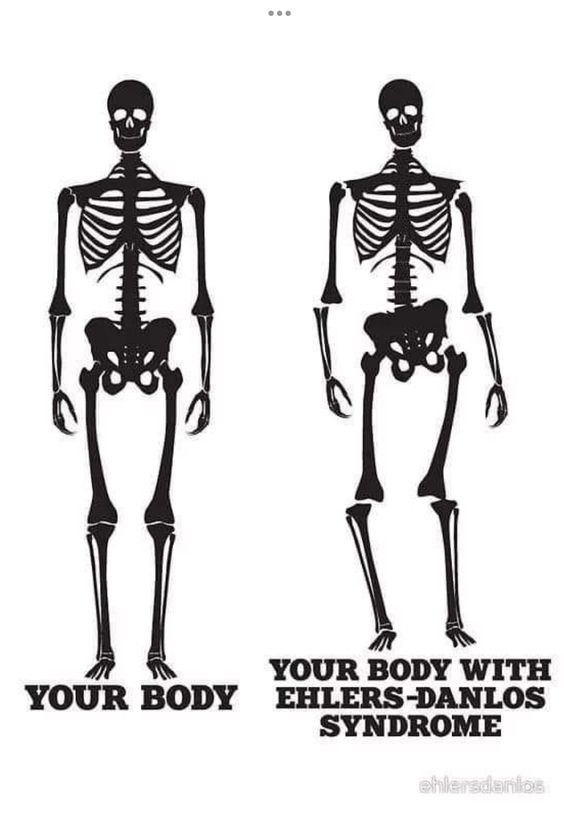
I had a cousin at a family reunion ask me what it is like to have a connective tissue disorder. For anyone that is familiar, I have something close to Ehler’s Danlos Syndrome. Essentially what that means is that I have extremely mobile joints.

My cousin inquired how such a thing affects my day to day life. The question was so kind and thoughtful but I was thrown off guard.

Trying to sum up my medical history and symptoms and how it has affected me in the past and how it affects me now is like trying to perform open heart surgery with a Degree in Finance and the tweezers from the game of Operation.

My mind was starting to poke at a few entry points but it’s so all encompassing. I couldn’t find a place to start.

I was saved by the commencement of a presentation that we both wanted to watch. I didn’t end up answering her question.

But it is a query to which I’d like to be able to respond. I am going to attempt to do so here.

MY main issue with hypermobile joints is that, as the song goes, Every Now and Then I Fall Apart. Except every now and then should actually be all the time. I am lucky enough to have some ligament strength. There are those who suffer much worse than I do.

Collagen is the glue that holds our bodies together and gives our tissues their strength. It affects our skin, bone, muscles, cartilage and organs. So when we are asked what part hurts… it’s just easier to ask what doesn’t hurt.

My connective tissue disorder is nothing compared to what others go through. As with so many disorders there is a spectrum to illustrate the severity. While there are others who suffer more than I do there are also those who suffer less. To clarify, I am not talking here about occasional aches and pains. That pain is also valid. But we can all agree it does not grant understanding of chronic pain/ illness.

Mercifully, I don’t suffer from dislocations. Only from tiny subluxations all over my body. They are sometimes referred to as tiny traumas. That makes them sound so cute.

Your joints are supposed to slide around in their sockets. But with a connective tissue disorder, your ligaments and tendons don’t have the strength they need to hold you from sliding out too far. Once it goes past a certain point, the bone will get stuck. This is called a subluxation and will need manipulation or massage to get it back in place.

I’m not sure how this manifests in the lives of other sufferers. But for myself, due to the length of time this has been happening and the traumas that have weakened joints, there has not been a time in over a decade that all my joints were in at the same time for more than a day.

This means my body is always “upset”. There is no rest. It is always working to stay on top of the pain. My muscles have to take over for the injured or weak joints which is also tiring.

I’ve read that people with EDS have high adrenaline, making it hard to fall asleep. I can relate. Adrenaline is great! Until it’s not. It has helped me get through more than one function or event despite my limitations. Keeping me going until the work is done or the party is over.

The danger in using up those adrenaline reserves is that I do not recognize when I’m in that mode. I still think I am awake and in tolerable pain. When with no warning I am suddenly exhausted and past the point of pain relief. I know others with chronic pain who do more than their fair share of this a well.

If you suffer from chronic pain, be aware of your adrenaline reserves and don’t run them empty.

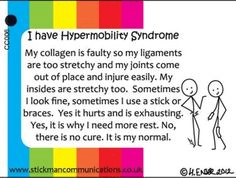
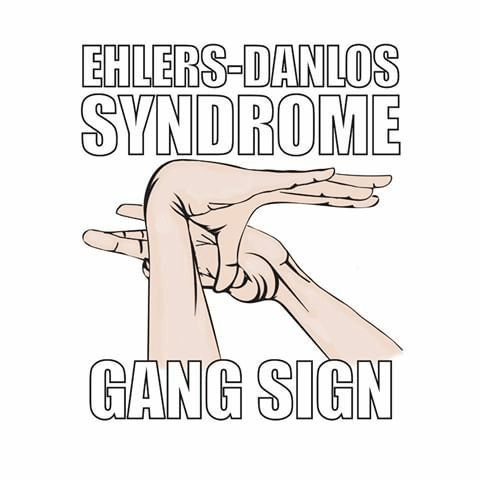
I mentioned I don’t have Ehler’s Danlos Syndrome (EDS) but something similar. I use their images because they apply to me.

I heard a fellow sufferer say once that their joints go out more than they do! I concur. My body does not like the evening, or the cold, or anything too loud or stimulating. It is a picky body. Staying in is the best plans for this lady!

But I can sing along with the song, I’m Flexy and I Know It. That’s the words, right?

Sometimes a picture can say it all.

If you can do this you may have a connective tissue disorder. Who knew? I thought it was just a fun party trick to be able to contort my body for the amusement of friends.

The reason I do some explaining about my disorder is to hopefully connect with those who are suffering from some of the same issues. It can be difficult for generally healthy people to understand. With the best of intentions they will give you all the medical advice you never wanted. In most cases it won’t apply. General health advice will often not help those with chronic illness.

I am still healing. I have a ways to go. But to use the idea of Stephanie Spark, I want to walk through the flames of this hell with buckets of water ready to turn around and pour it on those still consumed by the fire.

To my fellow sufferers, do not doubt yourself. You are a warrior.

Our bodies are not made to deal with the level of toxins in our world. Add to that high levels of stress, lack of sleep, medications, surgeries, etc. So what can we do?

I have an answer for the healthiest to the most toxic ridden among us.

Forest therapy.

Going into any natural space is so beneficial. Ground. Meditate. Pay attention to your surroundings. Wrap up warm and breathe in the fresh, crisp air of fall.

When you are ready to practice forest therapy with a guide to get the greatest benefits, reach out and contact me. I can help you maximize the benefits you experience in the forest.

Live in each season as it passes; breathe the air, drink the drink, taste the fruit and resign yourself to the influence of the earth. – Henry David Thoreau

Respair: Healing Hope for those with Chronic Illness

I rested my body on the forest grass, gave my soul to the wilderness and never looked back. – Angie Weiland Crosby

I heard something this week that made me consider how I use the terms healing and cure. I don’t talk much about cure. It’s not in my vocabulary at this time. But I talk a lot about healing and I want to be clear that when I speak of healing it is not the same way I would use the term cure. Chronic disease means there is no cure. There is no holding on until this gets figured out. This is it.

But in chronic disease I have positively found healing.

Chronic illness teaches us that healing isn’t always about getting better; it often means discovering how to lead a fulfilling life despite persistent symptoms. – @dear_chronic_pain

To me the previous picture illustrates healing. There is no cure for a tree that cracks and topples. But maybe there is life on the branch. Maybe it’s pretty great there. It will not look or feel the same as if you had not lost part of yourself. But what you gain in the process might be phenomenal. Even if it doesn’t feel like it most days.

There is healing in the forest. It may not be a cure. But it is that shimmer of hope just like the sunlight shining through the breaks of a densely wooded area. You have to stay perfectly still and focused to see its constant light. There are times I need the still silence of nature. To remind me that the light is still there even when I can’t see it. It is still lighting my way even if I can’t see the source or the beams or the rays. I find healing in remaining hopeful. I have to stay perfectly still and focused to see the source of that hope. Nature helps me stay still and focused long enough for that hope to penetrate my being. So when I come back to my day I am better able to handle everything that happens.

Photo by Artem Saranin on Pexels.com

Which leads me to a new word that IS in my vocabulary as of right now. Respair: (Old English 16 Century) “Fresh hope. Recovery from despair. A renewed outlook.”

Maybe focusing on what we are gaining in the process can help soften those moments when our being is threatening to fall back into despair. Thomas S Monson said, “Good timber does not grow with ease. The stronger the wind, the stronger the trees.” What are you gaining in your process of healing?

Healing isn’t always pretty. Think of a wound that has to drain before it can heal. A gash that needs to be stitched until the body restores. Or a bone that has to be rebroken before it will set properly. Sometimes there is back and forth in healing. Sometimes there is backtracking. Sometimes it’s really ugly. But healing and respair each have a role especially through the mess.

This poem by ullie-kaye speaks volumes more than I can write on the subject.

bare bones

hope is not always soft and lovely.

she is not always cascading rivers

and sunlit skies, dancing, hope knows

there is work to be done. there are

roads to be traveled. turns to be made.

she is bare bones and deep waters.

she is weary and weak. she is barely

a glimmer. she shakes when she speaks.

this is where hope lives, smothered in

sweat. full of war. and on the verge

of crumbling into the sea.

yet there she is, quietly breathing.

Perhaps this is the way. There is no going around it. J.R.R. Tolkein said, “You can only come to the morning through the shadows.”

This life can be challenging for even the bravest and strongest among us. It can help to recognize and give voice to some of the things that are helpful or unhelpful for your journey.

Beware of the things that take your energy. I share some of mine to stir up your thoughts on the subject. My energy takers include focusing on the past, negativity, clutter, inconsistent sleep, and junk food. When you know what is draining you, there is an opportunity to limit the amount of time you are in that type of space. Clean up the clutter (only what you can do). Clean up the sleep schedule (as much as you can). Limit time with people who drain you.

Find things that feed your energy. My energy givers include (but are not limited to) sunlight, whole foods, nature, music, fresh air, visiting a friend, whatever level of movement that is acceptable to my body that day and dancing.

If you are someone that is noticing your body overreacting to normal stimuli on a regular basis or if are consistently overstimulated the following can be a very beneficial practice. Grounding can be used to describe different activities such as taking off your shoes and connecting with the earth. It can also be used to denote a grounded feeling. When you are stuck in a state of intense emotion your body is under strain. Emotionally, mentally and physically. A grounding exercise that I have used to come out of that state is called 5-4-3-2-1. This is how it works. Name 5 things in your immediate vicinity that you can see. Don’t just look at them. Name them. It does not have to be spoken out loud but you need to come up with the name of the item. Towel. Window. Closet door. It doesn’t have to be anything grand. Then name 4 things you could feel, tactically speaking. I feel the breeze from my fan. I feel my socks on my feet. Etc. 3 things you can hear. Cars. My son singing in the next room. My grandson running around upstairs. 2 things you can smell. The farmer sausage my son made. The soap from washing my hands. 1 thing you can taste. The peach tea I am drinking. This will trick your brain into slowing down and stop being hyper focused on the problem. This method has brought me out of a state of fight or flight in the past.

On the flip side of this overstimulated state is something I learned a bit about this week called Yutori. In Japanese it means to slow down. To be intentional. To breathe. Appreciate life and nature. Getting out of the constant grind to relax and reflect. Forest therapy is a perfect way to practice Yutori. In forest bathing we move slowly and intentionally. We breathe deeply. We appreciate nature and take time to relax and reflect. I suggest Yutori, in the form of forest therapy, is one of those things we need to schedule into our lives. The work is never done. If you are waiting to rest until all else in your life is settled, you will find that day never arrives. But regularly scheduled time will increase the likelihood of it happening exponentially.

I feel like my brain is the junk drawer and someone just dumped it on the trampoline. I have done my best, now it is up to you to make sense of it.

I’d love to have you all join me in a forest walk one day. For now you can try it on your own and then reap the benefits of having a guide when you are ready. Reach out to me anytime. Find all the info you need on my contacts page. Take care my friends.
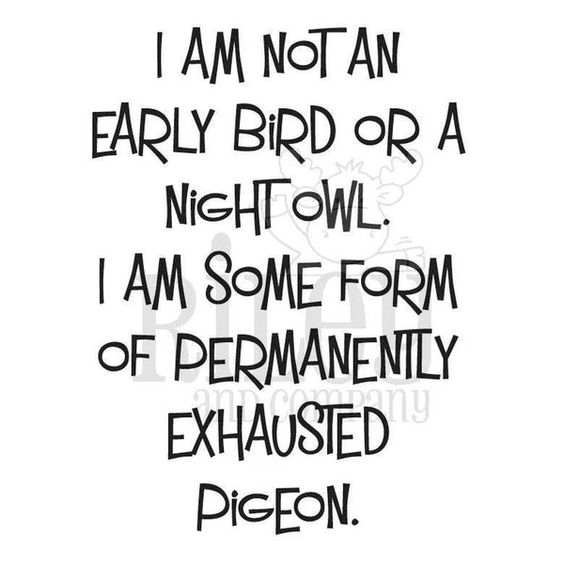
Finding Joy Amid Chronic Illness: The Role of Glimmers

Doctor: You need to learn to listen to your body.

Me: Oh we’re not on speaking terms.

Has anyone else felt this way? As with so many things, my remedy for this circumstance is to get into the forest. Especially these beautiful fall days. Even still, some days all I can do is seek dopamine squirts.

Wait, what is squirting?!? Allow me to clarify.

What is dopamine? It is a chemical messenger made in the brain to communicate between nerves and cells in your brain and between your brain and the rest of your body. Dopamine also acts as a hormone. It is known as the “feel- good” hormone.

When do I need dopamine? It is mainly involved in movement, memory, behaviour and cognition, attention, sleep and arousal, mood and learning. It also plays a small role in the fight or flight response. While it has many functions we will focus on it’s ability to give one a sense of pleasure.

Why are dopamine hits so supportive to a chronic pain sufferer? When pain is the central focus of the day, anything that produces a feel- good effect is significant.

As a side note, if anyone wonders whether you can just focus on something else, this isn’t always an option, let alone prudent. In my case, I need to keep track. Where is the pain, what needs to be loosened, will this activity produce more pain later, is there anything I should do to treat the pain, am I in too much pain and need to cancel plans ,,,again, etc.

These and many more thoughts related to my pain guide my plans for the day and for my life. When these are the constant and distressing thoughts, a squirt of something that makes me feel good is a welcome shift.

How do I feel when I have a dopamine squirt? Happy, motivated, alert, focused.

Living with chronic illness requires an intricate balance between ignoring your symptoms so you can live and listening to your body to survive. – @chelseahealinghappily

May I propose a way of living that I find softens the days. I suggest it for everyone but particularly those living with chronic pain. See if you can follow my train of thought as you view these images.

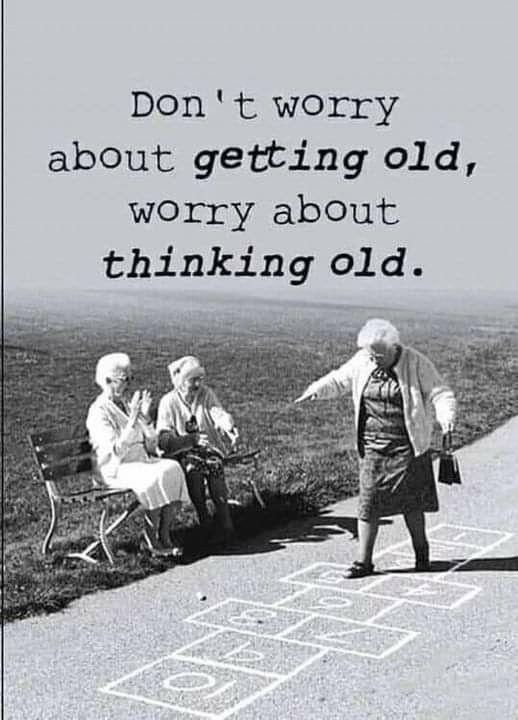
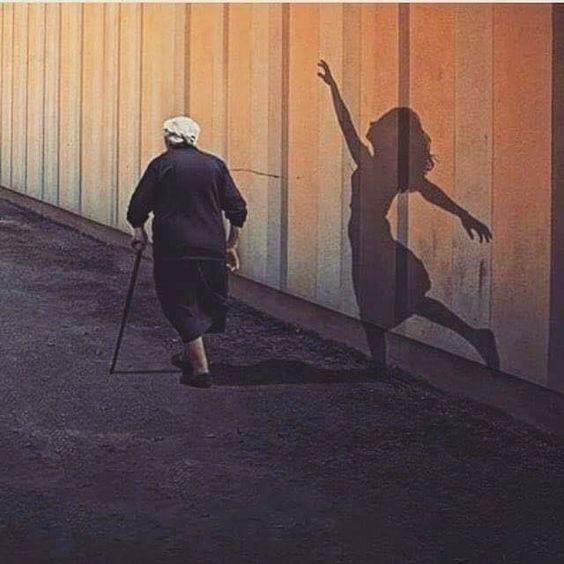
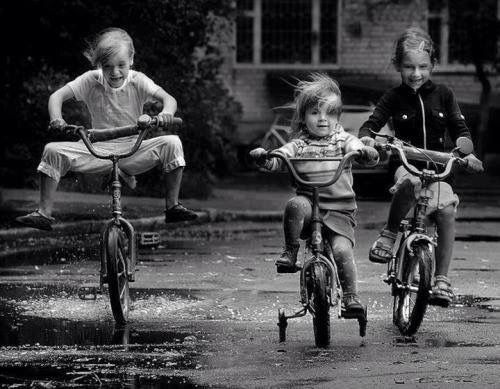
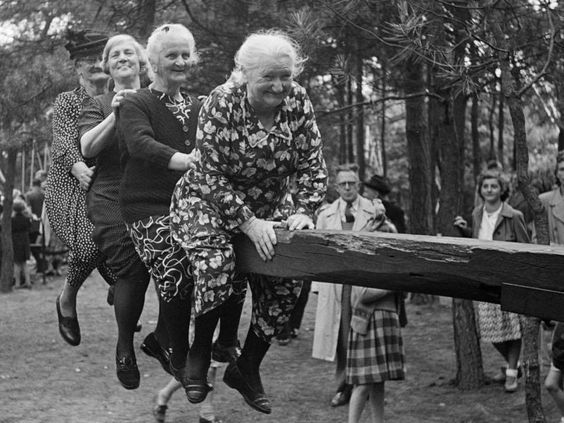
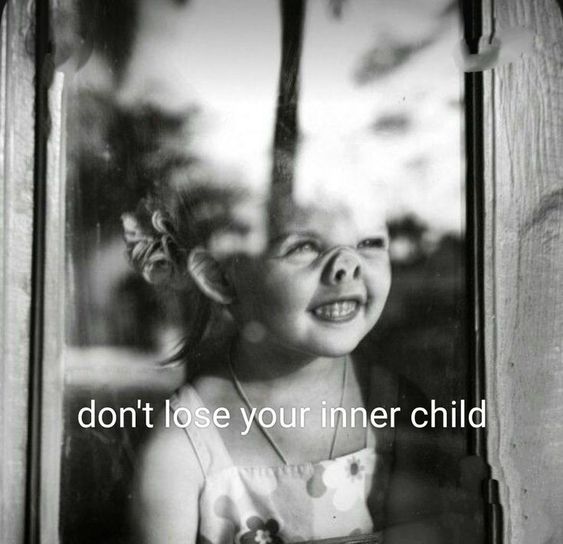
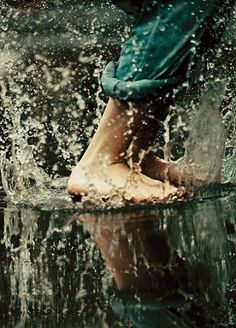
These photos stood out to me this week. They spoke to my need to feel joy by thinking young, acting young. and finding others to be young alongside. Ride the bikes. Make a pig nose on the window. Find a jump rope. Lay in the grass. Be the joy.

And on the days when these and other activities are not an option, rest. There is more than one way to rest. Sleep is important and so is feeling peace. Can you sense what peace would feel like if you let go and decided right now to live in joy and love? To follow the examples of those set in the photos above? It Will Bring You Rest.

We have all heard of triggers. We all know some of our triggers and are surprised when new ones pop up. Triggers are something or someone to avoid. Triggers generally mean there is something big going on internally that we may not have an understanding of where it came from or how to deal with it. We are left unsure of how to meet our needs. Here are some of my triggers:

Body: need to lie down (gr)

Anxiety: but we have so much to do (welp)

Depression: let’s just sleep forever (ugh)

Insomnia: lol, good luck (noooo)

Pain: *kicks in door* SUP GUYS! (we meet again)

Triggers are inconvenient to say the least. But have you heard of Glimmers? They are the opposite of a trigger. These are small moments of beauty and joy that help to regulate our nervous systems. They cue safety. They instill peace and evoke joy. They improve mood and mental health. Over time they build nervous system resilience. Each day brings the opportunity for hundreds of glimmers. Are you noticing them? Noticing these moments will add up over time and can become part of your healing practice. Become a glimmer- seeker.

A fabulous place to find glimmers is in the forest. Join me for a forest walk. Reach out to me on my contacts page. If you are enjoying the blog hit subscribe so you never miss a post and so others that may need it can find it. I appreciate all the love and all the sharing.

In the entire circle of the year there are no days so delightful as those of a fine October.

Get out and enjoy the colours and the changes of fall. Enjoy getting in touch with your younger self this week!

Step-by-Step: Healing Through Forest Walking

I shall take my tea with the birds, the trees and the bumbling bees. – Amelia Dashwood

If you’d like to sign up for a guided forest walk with me, head over to my contacts page and we can connect. Alternatively, if you would like to know everything you need for your own beginner forest walk, just keep reading.

A step- by- step guide in how to take charge of damaging inflammation in your body. How to forest walk…

  • Decide where you will go for your forest walk. You do not need to travel to an ancient forest in Japan. Any green space will do. The closer to a forest/ treed area, the better. If you are going alone, make sure someone knows where you will be and when to expect you back. Check the weather but make sure you still go on your forest walk in the rain or the snow. Just be careful not to walk into the path of oncoming tornadoes, etc. Use your best judgement.
  • Unplug. If you would like to carry a device for emergency purposes you can place your phone on airplane mode for the duration of the walk. Any technical devices will interfere with the feeling you are trying to generate. Some people are sensitive to the energy emitted by such devices and it is nice for the body to have a break. This is the perfect opportunity. Unplugging will help you focus on the task at hand.
  • Before you start your walk take a few deep breaths and picture letting go of all your worries and discomforts.
  • It seems like an odd step to put in any type of instructions but next you should- wander. Just be. See what feels right. Don’t have a definite plan but prepare to be elated as you experience it fully in the moment.
  • Engage your senses. Your five senses are powerful and help you connect and ground yourself to the here and now. Notice what you are seeing. What different textures can you feel? Notice the sounds close by and the ones farther away. You don’t have to put a name to things. Just notice them and let them fade. What scents do you notice? Many forest bathers will prepare a tea made from foraged plants from their walk to incorporate taste and to host a ceremony with the forest as the guest of honor. Be careful to only use safe and edible plants for your tea. If you are unsure, please skip this option.
  • You do not need to wander far into your area. Find a comfortable sit spot. A place where you can more fully engage your five senses and search out more. Our sixth sense, able to sense something outside the scope of the five senses, was made popular with the movie of the same name. Vestibular (balance). Proprioception (sensing your body in space). Bring your mind and body into the here and now with breathing as you sit. Notice clouds, wildlife, patterns, light changes. Enjoy it all!
  • At the end of your walk take time for reflection and gratitude. Reflect on what you took in. Recognize the gift of nature. Show your gratitude and appreciation for what the forest was willing to share with you.

While we are discussing what to do on a forest walk, let’s also take a moment to talk about what a forest bath is not. Here are some myth busters to clear up some of the misconceptions out there.

Myth buster #1: Forest bathing is NOT having a bath in the woods!!! It is immersing yourself and all your senses in the atmosphere of the forest. No immersing in water. And we will all remain fully clothed at all times!

Nope
That’s more like it

Myth buster #2: Forest bathing is NOT going for a hike. It does not have to be far or arduous. Leave your hiking shoes at home.

Myth buster #3: Forest bathing guides are NOT witches. We are not trying to get you to join a cult or do anything nonsensical. We have optimized how to go into the forest for healing. Studies to prove its authenticity exist. My proof is in my own journey. I could not move forward. I was stuck in the same pain- filled cycle for years with no improvement. Now I can see my life changing for the better. While my condition is chronic and will never be healed, the symptoms and side effects are manageable when I use the benefits of forest bathing.

Myth buster #4: Forest bathing is NOT exclusively for the ‘outdoors’ type. All human beings will benefit from any time spent in nature. The more time, the better (an hour once a month is a good start). The more “green”, the better (any space you can get your feet on the earth counts, work towards finding secret forests in your area). Going with a guide will up- level your experience (but there are benefits to any and all attempts).

Myth buster #5: Forest bathing is NOT the same as formal therapy. I do not want to misrepresent what I am trained for in any way. Guides are not trained counsellors or therapists. I am not an expert in mental health diagnoses. We will not be working through past issues. We are staying in the present. My expertise as a guide is in dealing with normal, healthy human brains. Guides should view the forest as the therapists and themselves only as facilitators within the framework. Helping you to have your best possible life.

Here are some photos from my most recent forest walk.

The summer has been splendid, but it has lasted long enough. This morning, I viewed the falling leaves with cheerfulness. -A. A. Milne

Take care my friends. Enjoy stepping into fall on your next forest walks.

Practicing Wise Spending: Strategies for Chronic Pain Sufferers

Are you comfortable with how you spend your money? Are you happy with how you spend your time? Do you spend a healthy amount of energy on others? These are the questions I will be exploring today.

Before I go on I would like to add that often the support person of a chronic pain sufferer will be more able to care for themselves and consequently their loved one if they use these tips and tools as well. To this group, I see you, I appreciate you. Your emotional and mental pain is often sharp and silent since it is not the priority. I am thinking of someone in particular that I saw recently. I hope she knows how highly I think of her.

When you think of spending your time, money and energy I want you to picture each increment as a token. It is easy to visualize with money since this is literally the way we spend our cash. Each dollar is represented by a loonie (in Canada, don’t laugh, we know it’s ridiculous) and we get to choose how we spend each dollar. For the purpose of this blog post I want you to picture each increment of time of 15 minutes represented by one token. And to take this a step further let’s also add each increment of energy we expend as one token. How to measure the value of this token is going to be different for each person. We will discuss this later in the post.

First, money. We don’t need to take a lot of time here as this one is obvious to visualize. But let’s use it for the purpose of this illustration. You make money. You budget what will go where. It is difficult to come up with more in an emergency, hopefully you have savings to back you up. You plan ahead so you don’t get to the end of the pay cheque before you get to the end of a pay period. Finish reading the post for clarification, then come back to answer this question, What other comparisons do you see between spending our money and our time/ energy as though they could be represented by a physical token? Leave a message in the comments.

Now let’s look at how we spend our time. Do you plan your day, your week, your month, etc? Many of us use a rough outline. Often the same outline we have been using for a while. Then we adjust as the day goes. Not a bad way.

Does it help you plan your day at all to know there are so many tokens that you start the day with. Say you are someone that is able to get 8 hours of sleep. That leaves you with 64 tokens of 15 minute increments. Be reasonable with your tokens. If you plan for things to take 1 token and they take 4, that is a stressful 3 tokens! 64 tokens might sound like a lot but once you factor in an 8 hr work day, that takes 32 tokens and you only have 32 left!

Time and energy often go hand in hand but I want to take a look at our energy in terms of tokens. How many energy tokens do you start the day with? Someone with chronic pain often has less tokens. That’s just how it is.

Someone with chronic fatigue definitely has less time tokens at the start of day.

Many months ago I saw a TikTok that spoke to me. I looked for it to verify the details but I couldn’t find it. Based on what I can recall, in the video, a man sat with his bowl of cheerios. In attempting to eat the bowl of cheerios with a spoon the task was easy peasy. But, he asked, what if he had to eat the cheerios with a fork? Yes maybe you could but it would take longer and you wouldn’t get the milk.

If memory serves me right, he was trying to make the point that we do not all have the same utensils when we wake up in the morning to eat our cheerios. You could even end up with only a toothpick to eat your cheerios. You can still accomplish the task at hand but with great difficulty. Someone with chronic pain, especially silent and invisible chronic pain, will eat those cheerios. At great expense. And not a soul will know the cost. And then the question from the video that really stuck with me, Is it even worth the cost?

As a chronic pain sufferer I realize that I wake up with less time tokens because I need extra sleep and I also have less energy tokens despite that extra sleep. Many of my energy tokens are eaten up with pain management.

My energy tokens are worth a greater increment. Not because I’m special, let me give a couple of examples. When I shovel snow or go bowling, my vertebrae will twist out in a subluxation. That has been proven time and again. Any twisting motion will be too much for my loose ligaments and tendons to hold me together. I will undoubtedly twist too far or too many times and the vertebrae will get stuck out of place.

So when I spend an increment of my energy on that task or activity I will need to include in that expense the time it would take to recuperate, plus the time, cost and energy to visit physio to fix the problem, plus the time and energy to make up for the lost muscle strength while I could hardly move. That’s a tall order for a lousy game of bowling.

It’s also true, hopefully for each of us, that we have carved out of our lives the time for self care. In whatever form that may take. For you it may be a trip to the massage therapist while for me it may be grounding in my backyard. For all of us we can find self care in the forest. I saw this idea online that the best rest we can get is in the forest because it is For Rest. Add one R and a space to the word and the place (FOREST) becomes the means (FOR REST).

That cute little wanderer in the pose of a Big Foot sighting is my grandson

Chronic pain sufferers such as myself may feel a stab of guilt on a moment to moment basis that we have this time to rest and stabilize. Lay that guilt aside my friends and decide the type of rest that is right for you this week.

PHYSICAL REST- napping, deep breathing, and also going for a walk or stretching all provide a physical type of rest. Is your physical body crying out for these or others?

EMOTIONAL REST- journal, any self care that is meaningful and restful for you, talking to a friend. manage time with those that are expensive emotionally for you and seek support. Do you have anyone that is emotionally expensive in your life right now?

MENTAL REST- scheduling breaks throughout busy parts of your day, meditation. When and where do you get your mental reset?

SPIRITUAL REST- prayer, reading scripture, devotionals. This looks different for everyone and that is perfect!

SOCIAL REST- assess your relationships and spend your social time wisely, balance alone time and social time according to your needs. Are you being pulled into saying yes when you should say no?

CREATIVE REST- play an instrument, write a story, sing a song. What type of creative play strikes a chord in your heart?

SENSORY REST- digitally unplug, go ground outside in the grass, turn off your phone notifications, turn off the noise and distractions. What needs to be turned off or unplugged for you to get this type of rest?

Be careful how you spend your time and energy the way you are cognizant of spending your money. You have a limited amount of time and energy to spend every morning, the way you have limited finances to spend. Plan ahead. Budget wisely. It is (at least in my mind) impossible to come up with more energy in an emergency. When you hit a wall and then you get a flat tire and there is no cell service, what are your options? My lesson learned is to not run myself to the bottom of the tank, this way in an emergency I can rise to the challenge without trying to change a tire with only a toothpick for tools.

While there may not be an instant way to fill those reserve tanks there is a way to make more energy to fill up our reserve tanks. For even the most ill among us. How, you may ask? Time spent in forest therapy. It is healing and therapeutic in a way that nothing else could do for my pain. If you’d like to join me in the forest and see what it can do for you, head over to my contacts page to book a session.

It can be easy to put yourself in a category of less- than as a chronic pain sufferer. But this poem I read spoke to some of the feelings I have as I keep reaching and trying to get through another day. (Today was a hard one)

The poem is called Stretching, by Nancy Sorenson. No one promised this would be easy. Change is never easy but then, neither is reaching for a star. But, too much change at once makes the stretch marks gaping holes, through which the world can see my tears and even the hurt, sometimes. When I am done with this change, I wonder if I will be taller from all this stretching.

Now read it again and substitute the word ‘change’ with ‘chronic pain’.

Be gentle with yourself my fellow chronic pain sufferers. Be mindful with your time and energy tokens. They are precious. We cannot be expected to treat them the way non sufferers do. The forest is for rest. Especially for us. Use it often. Find the type of rest that speaks to you this week and include it in your schedule. Do not run your tank dry in case of emergency and spend time in the forest to boost those reserves.

Take care my friends.

Overcoming Obstacles: Life Lessons from Watching a 2-Year-Old

My two year old grandson was happily playing in the yard. I was happily watching him. I love to see how his little mind works. And in this particular instance I got to see a bit of myself in him as he struggled.

He has a little cart that he pushes around. He was attempting to go around the patio table. In his way were the bags of bottles that I should have been returning to the depot instead of watching him play. It is so much easier to ignore the chores as ‘the grandma’ than it was as ‘the mom’.

At first he was frustrated but I sat back to see what he would figure out. He wandered away and then started moving the bags of recycling from one spot that was in his way to another spot that would be immediately next in his way. Of course his little 2yo brain couldn’t see this the way I could.

He was so calm and focused on the task at hand. I sat back to see how he would handle the upcoming challenge.

img_2875

It was time. His little plan had been executed flawlessly. Now he was going back to attempt to push his cart through again. He was so happy. He got past where his path had previously been obstructed. Only to immediately be blocked. He saw his error. Panic ensued. His hands flew to his face and he stopped dead in his tracks. He looked at me with dismay in his eyes.

Of course I flew to his aid. We worked to put the bags in a better spot until the time Grandma stops playing and gets to the bottle depot. He grabbed his cart and around he went.

How often do we try something and when it doesn’t work the way we expect we panic and stop trying? I have been guilty of this useless response many a time. My little grandson is still figuring things out. I don’t judge him for his response. But I saw so much of myself in it that I have been thinking about it since.

I have a good idea. It doesn’t go as planned. I panic. I stop. I give up.

Good ideas are the way to start. Planning to watch it fall apart might also be the process going perfectly. It is over this period that you get to see what is working and what isn’t.

I applied this to my perceived progress as a human being. I am always trying to improve but when it doesn’t go as planned I often feel a surge of stress leaving me in a bundle of singed nerves. The improving is timely and correct. The not going as planned is timely and correct. The only thing going wrong that I have control over is that surge of stress. I can control the surge by controlling my thoughts around my circumstances.

Maybe this is how the sequence should go. Attempt one. Utter and abrupt failure. Thoughts. ‘Well that didn’t go well’. ‘Maybe I should adjust.’ Attempt two. Less abrupt but still utter failure. Thoughts. ‘I have learned how to avoid some of the pitfalls. What do I still have to learn?’ And so on. The wording may seem elementary but it gets me pointed in a different direction.

Dr Daniel Gilbert said, “Human beings are works in progress that mistakenly think they’re finished. The person you are right now is as transient, as fleeting and as temporary as all the people you’ve ever been.”

I am trying to remember in my moments of panic. When I realize I have done something wrong/ stupid/ careless, that this is part of the human experience. And it is passing and fleeting. And EVERYBODY gets things wrong at times. We are all disasters trying to look like we have it all together.

If you can see the humor in your error, even better! But all in good time, the subtle art of laughing at one’s self is taking it to the next level.

Some of your efforts are going to tank. And that, my dear friends, is actually things going perfectly. Make adjustments. Try again.

So much of my time growing up was spent worrying that I was doing things “wrong” and that someone might see. Much of my young adult life was spent hoping nobody would notice I had no idea how to be a mom. I have spent so much of my time in chronic pain thinking I must be doing it “wrong” because I’m not getting better. I can’t get to a plateau of healthy like everyone else.

I just kept feeling wrong!

Until I found healing in the forest. This, I know how to do intuitively.

“For beauty give me trees with the fir on” -Henry David Thorough

img_0871-1
Photo by Brent Munkholm

Being in the forest increases feelings of awe, wonder and gratitude. In the forest we can relax the overworked brain and just be. There is no wrong here. The only thing that has to be done is to take your next breath. And unwind. Soften. You can let go here, the forest has your back.

When things in life go awry, take a moment, and when you are ready, make the next plan, schedule the next attempt, put yourself back into the arena regardless of the possible flop.

And remember to have fun with it!

I absolutely agree with Sarah Ivens who says in her book Forest Therapy, “We need to be reminded of just how good puddle jumping and mud cake baking, tree climbing, squirrel chasing, blossom breathing, and forest foraging feel. Because nature really is the best medicine.”

Playing in the forest can prepare you to integrate play into your day. This can open your brain to overcoming the challenges you face. And when you see it as play, the challenge is more of a dare. I double dog dare you to spend time playing in nature this week. See if it helps your daily living.

If you need help finding ways to use the forest as your friend and guide, reach out to me on my contacts page.

The obstacles you face will always have an answer. It just might not be resolved at your first undertaking. Keep trying and take care out there.

Immerse in Forest Therapy: A Slow-Paced Journey for Healing and Rejuvenation

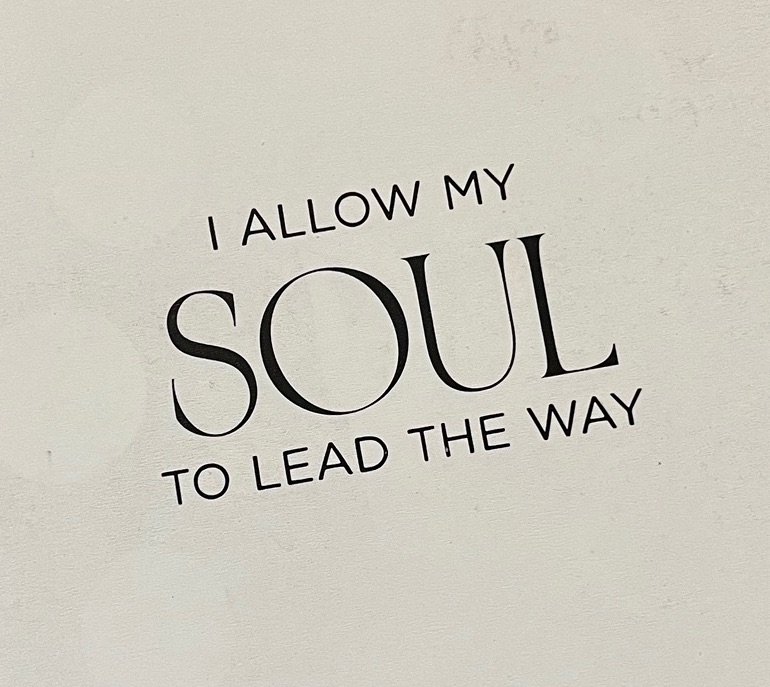
A forest therapy walk should never have a set plan or direction. It is like improv or playtime. The pace should be slow and the distance covered is not the name of the game. Nor is physical fitness. As the picture states, allow your soul to lead the way, Don’t rush. Give yourself space and time. At least a couple of hours to fully immerse in the experience.

img_4060
Photo by Brent Munkholm

Turn off your music. If you are able, put your phone on airplane mode to cut down on distractions. This is your time to be quiet and to begin to notice the world around you. Call attention to the experience of your body. Quiet the talk in your head by turning up the volume on what your soul is saying.

Photo by Brent Munkholm

Awaken your senses. Smell the grasses. See the clouds and their motion. Lightly caress the sides of a leaf. Listen for the wind and the sounds it produces. Taste a berry! And what about your other senses. I just learned about proprioception. If you close your eyes and move your arm, you can still sense where it is in space. What do you sense in the world around you when you close your eyes? .

Photo by Brent Munkholm

Next find a spot to sit and be still. Remove your shoes and socks. Get your feet into the earth. Take this time to consider how you are realigning to the natural world. We are re wilding ourselves from the inside out and the outside in. Listen. Not with your ears, but intuitively. What is your purpose? The earth is calling out to you. What is it saying? Get in touch with wonder. With healing. Our bodies are capable of rejuvenation. But to do so they must be in a balanced state. What will bring you to a balanced state?

Consider this space sacred. The rocks. The trees. The leaves. Even the bugs. The corresponding colour of the heart chakra is green. This is a space where your heart can feel calm enough to open more. Notice and encourage this opening. Find there a portal into true understanding and love for one another. And that truly is sacred.

Photo by Brent Munkholm

Did you know the sounds that put people most at ease can all be found in the forest? Birdsong. Trees moving in the breeze. And water running in natural streams. The pace of our modern world and the associated stressors and triggers require a space for quiet and peace. Many people go through life with flickering or weak health. The daily pain we experience that is not a concern to doctors. So much of this can be resolved with a weekly or even monthly appointment with yourself in the forest. If you struggle to make the plans and go yourself, reach out and we can book a one on one or group forest walk. Go to my contacts page to inquire about booking.

Photo by Brent Munkholm

Reciprocity. How does this apply to the forest? Reciprocity can be defined as a mutual exchange of privileges. What privilege do you gain in time in the forest? What can you offer in return? Some people make tea and drink a bit then pour out the rest as an offering back to the forest. Others might offer a song or a poem. Notice what you are noticing in the woods and recognize that it is an offering from the earth. Everyone has something to offer in return. Just find what is right for you.

Photo by Brent Munkholm

I am noticing… I am feeling… I am thinking… Finish these and other thoughts. Some thoughts come and go like a leaf on the stream. That’s ok. But grab hold of some of your thoughts and give them your attention to completely notice and think and feel. Your heart and mind will come to a deeper knowing.

Photo by Brent Munkholm

Reach for the light on your journey. There is so much awaiting your arrival.

What did you find as you went down into the woods today?