🤍The Hidden Struggles of Connective Tissue Disorders🤍

Back in my day, some kids brought hockey cards and sticker collections to school. I brought an alarming range of ligament-based entertainment.

Sometimes hypermobility first appears as a child who seems unusually bendy or clumsy, often both at once. 🙋‍♀️

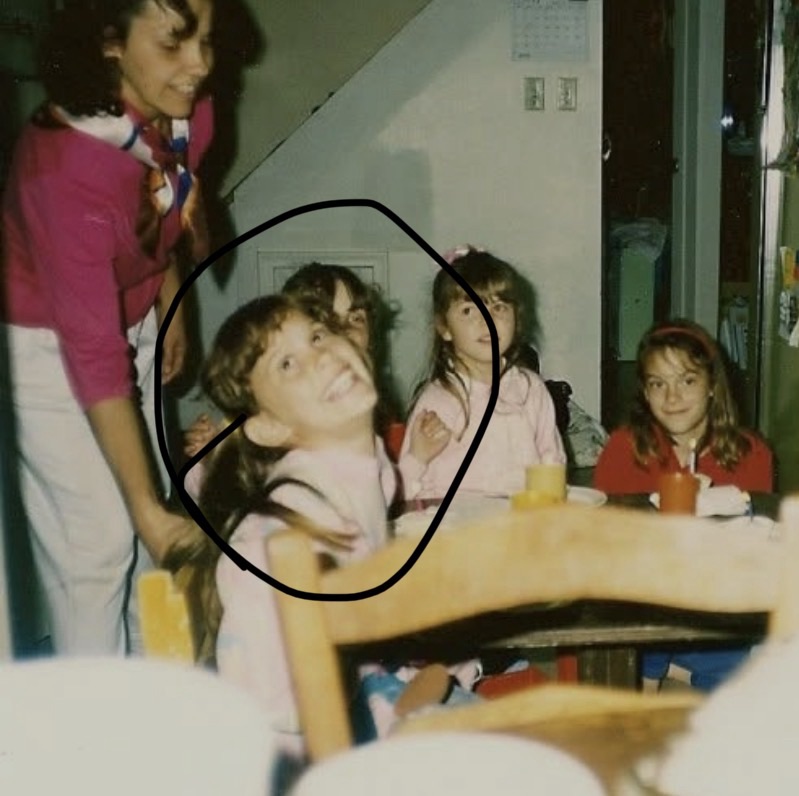
The child who sits in a W position on the floor because it feels natural.
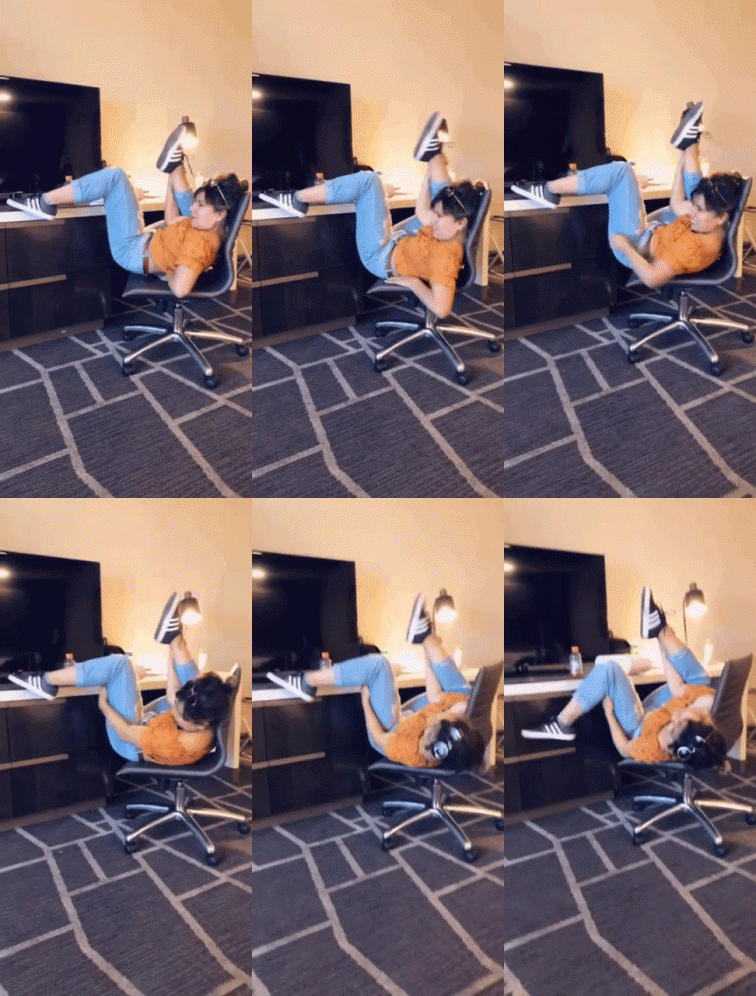
The one who, without pausing to question it, contorts themselves into strange positions during movie night.

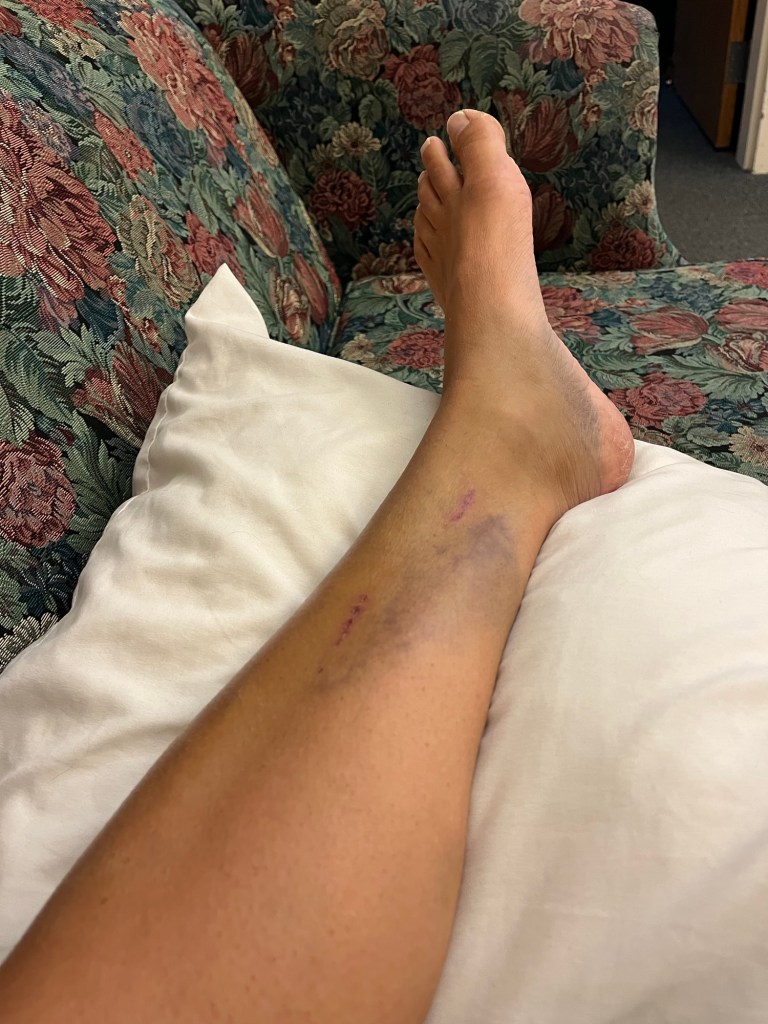
What they may not see is the child constantly running into walls because their body struggles to map itself properly in space. Bruises appearing mysteriously across shins. Ankles rolling on flat ground. Sleeves chewed because pain and overstimulation are difficult to explain at seven years old.

And then there are the “growing pains.”

Except many children with connective tissue disorders experience pain far beyond the occasional ache adults remember from childhood.

Deep bone pain at night.
Legs throbbing so intensely sleep becomes impossible.
Crying after gym class.
Exhaustion after seemingly normal activities.

Many hypermobile children become experts at masking early. They laugh while joints slip. They keep playing while hurting because they assume everyone else feels this too.

Some become the “dramatic” child.
Others become the “tough” one.

Honestly, I was the child trying to survive in a body I did not yet have language for.

What am I even doing bending my neck like that?

The thumb that bends too far backward.
The knees that point in unusual directions.
The shoulder that clicks when slipping in and out.
Being crazy talented in a yoga class my first day.

What people don’t see is that connective tissue is not merely a few loose ligaments behaving badly.

Connective tissue is infrastructure.

It is the architecture holding the body together. The webbing woven through blood vessels, skin, organs, fascia, tendons, heart valves, lungs, digestive systems, pelvic floor, eyes, nerves, and joints. It is scaffolding. Suspension bridge. Packaging tape. Elastic waistband. Shock absorber.

And when connective tissue is faulty, life can begin to feel like living in a house where every screw has loosened itself by half a turn.

Not enough to collapse all at once.
Enough that everything creaks. And left unchecked, more and more areas become unstable, then require constant repairs. Eventually some rooms just become unusable.

A Sad Commentary: AKA My Brush with Organized Sports

My joints approached organized sports with more enthusiasm than stability. More optimism than skill.

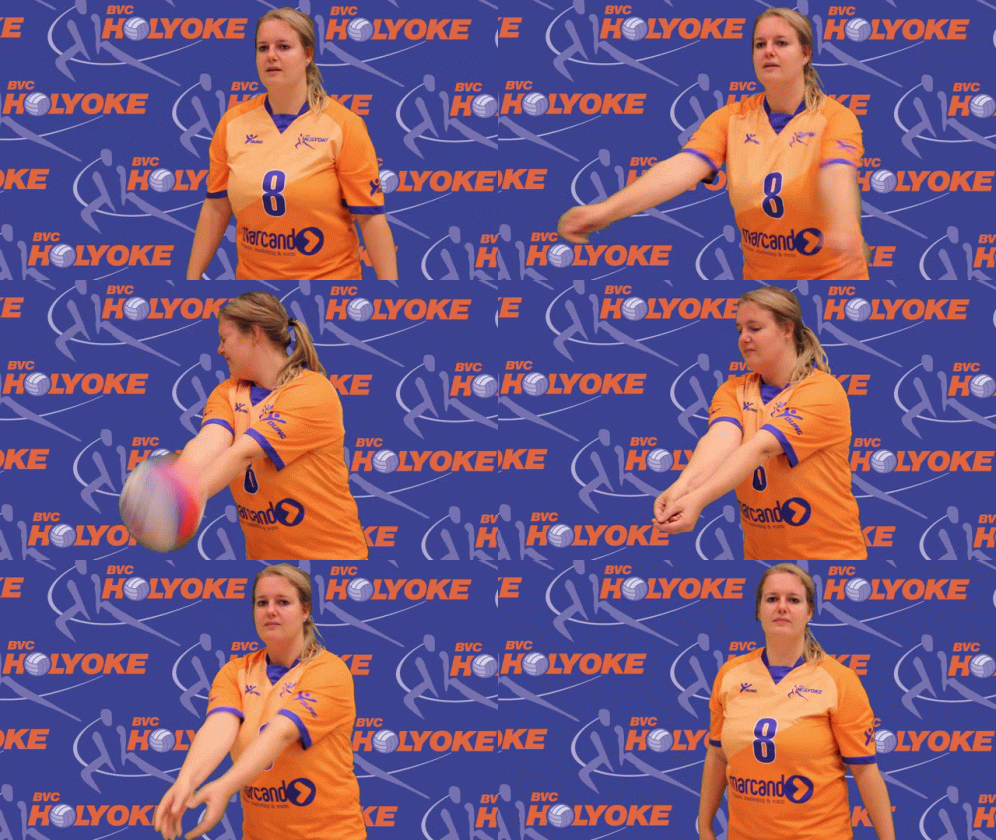
In a small town, everybody played volleyball or there simply wasn’t a volleyball team.

So I played volleyball.

I hated it.

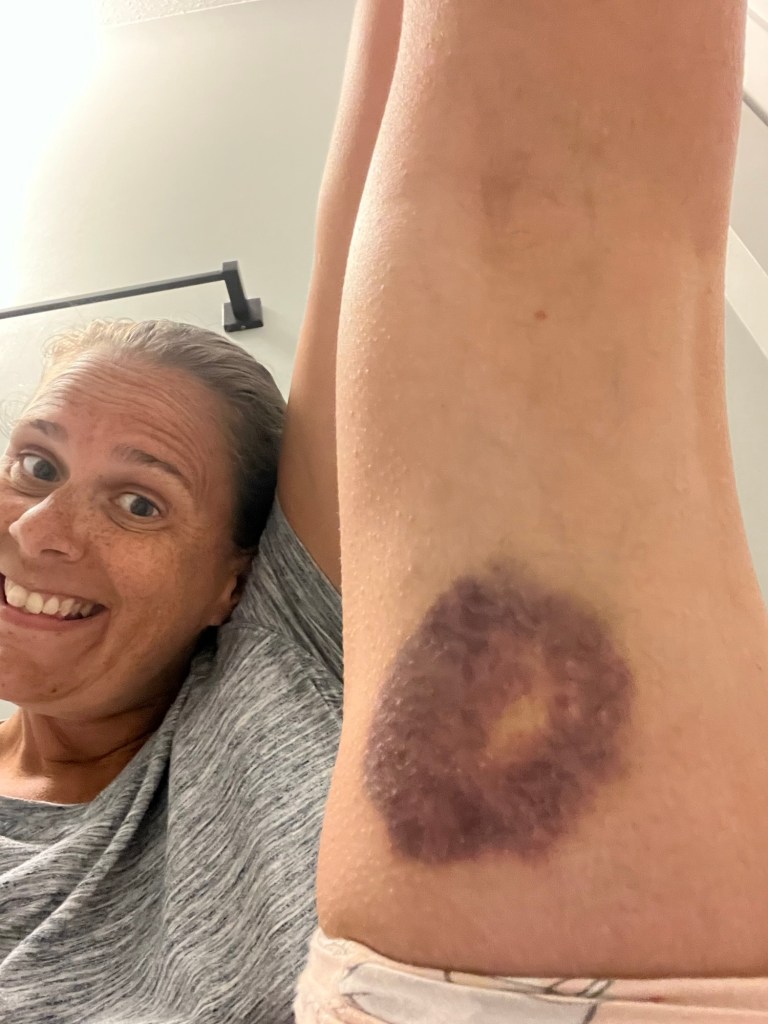
Looking back now, I wonder why I stayed in as long as I did. Every practice left my forearms covered in bruises. Big ones, tiny ones, overlapping ones. I looked part Dalmatian. Nobody else seemed to bruise like that, so naturally the conclusion was that I was doing it wrong.

Turns out my connective tissue was doing it wrong. Not me.

I was terrible at volleyball. Not for lack of trying, either. I could picture exactly what my body was supposed to do, but the execution never matched the image in my head. It always felt like there was a lag between my brain and my limbs, like someone had replaced my coordination with an unreliable Wi-Fi signal.

The only part of volleyball practice I excelled at was stretching.

That should maybe have been a clue.

I could also run forever, but the muscle fatigue before, during, and after was brutal. My legs and ribs constantly felt tight and overworked, like my muscles were trying to compensate for a body that refused to stabilize itself properly.

The solution offered to me was always the same:
“Practice more.”
“You just need to focus, Pam.”
“Try harder.”
“Don’t give up so easily all the time.”

My P.E. teacher, who was also my coach, and I were not exactly compatible personalities. I suspect I ranked fairly high on his “lazy kid” list. My feelings toward him and his teaching style don’t need to be discussed for the purpose of this post. Perhaps he was doing the best he knew how 🤷‍♀️.

What hurt most was that I wasn’t used to being bad at things.

I excelled in music. Dance. Academics. If I tried something, I usually became good at it eventually. But anything involving proprioception. Balance, coordination, spatial awareness, reaction time, exposed a kind of weakness I couldn’t outwork.

No matter how hard I tried, my body never responded the way everyone else’s seemed to. I felt like I was being asked to build a stable life with elastic bands where other people were given rope.

After enough years of that experience, something in me quietly stopped trying.

Not everywhere. Just there.

I realized I could put in enormous effort and still end up with roughly the same P.E. grade as the kid half-heartedly wandering laps around the gym. So eventually, I became that kid instead. The one at the back of the class who didn’t seem invested. The one teachers assumed didn’t care whether they passed.

Stemming from humiliation in trying my hardest while looking like a fool and as though I wasn’t trying at all.

It’s an incredibly discouraging place for a young person to live.

Some kids are exhausted.
Discouraged.
In pain.
Disconnected from bodies that refuse to cooperate. In retrospect, my body had all the stability of a shopping cart with one bad wheel.

The whole point of physical education is supposedly to encourage lifelong movement and confidence in your body.

Ironically, I now walk everywhere, go to the gym regularly, and deeply value movement. I suspect that may not be the case for those classmates that achieved gold stars for gym class back in the day.

Children are often graded on visible performance without anyone asking what invisible barriers may exist underneath it. 🍌 🍌 🍌

And maybe that experience is part of why I later felt drawn toward educational support work. Because I remember exactly what it feels like to be misunderstood in a classroom. To be trying harder than anyone realizes while appearing like you are trying the least.

Some kids are not lazy.

Sometimes what looks like apathy is actually years of silent defeat.

So Much More Than Loose Joints

My body has taught me that fragility and resilience are not opposites. Sometimes they exist in the very same tissue.

People often imagine connective tissue disorders as orthopedic inconveniences.

A sore knee.
An ankle sprain.
Being exceptionally bendy.

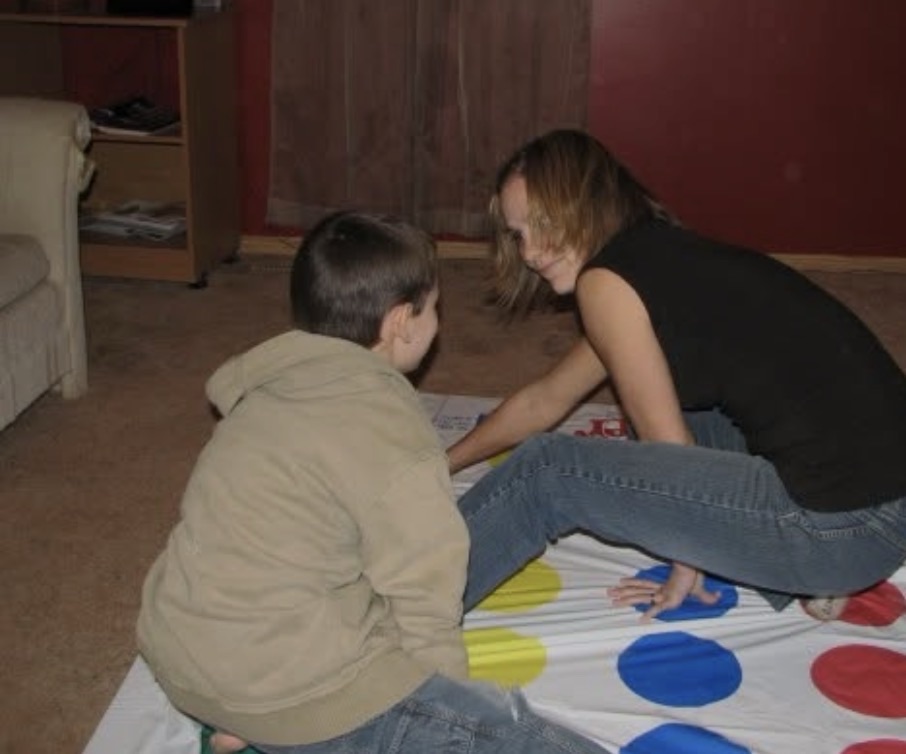
Playing twister with my now-26-year-old. Not to brag, but I was very good.

But connective tissue does not politely stay in one department.

It influences how blood vessels constrict and relax. Why standing up can feel like gravity suddenly doubled. Why heart rates race while brushing teeth. Why exhaustion arrives not after effort, but before and during it.

It influences the skin. Fragile, stretchy, slow to heal, easily bruised.

It influences digestion. Because the digestive tract also depends on connective tissue and smooth coordination. Meals become negotiations instead of nourishment.

It influences breathing. Because the rib cage, diaphragm, and tiny structures supporting the lungs are all part of the same interconnected story.

It influences pain. Not only through injuries, but through a nervous system constantly adapting to instability. Muscles tighten to compensate. Fascia braces. The body learns vigilance.

Even sleep can become difficult when the body spends the entire night trying to hold itself together. Some people wake up refreshed. My body wakes up looking like I’ve been assembled with spare parts in low lighting. Like sleep happened near me but not directly to me.

There is loneliness in illness that hides in plain sight.

You may look healthy while internally calculating:

Can my hips handle this chair?
Will my spine tolerate the drive?
How long before the fatigue crashes in?
Is today the day I sustain an injury that sets me back a year?

People see the smile at the gatherings.
They do not see the cost afterward.

The Forest Never Demands Symmetry

One of the reasons forest therapy can feel so healing for those with any type of disorders is because the forest does not care about perfection.

Trees twist toward light.
Branches split and regrow.
Moss softens fallen things instead of condemning them.

In the forest, support is collaborative.

Roots intertwine underground. Fungi trade nutrients between struggling trees. Fallen logs become nourishment for future life. Nothing survives entirely alone.

For people living in bodies that require adaptation, slowness, pacing, and care, the forest offers a radically compassionate model of existence.

Nature does not measure worth.

Walking Practice: “Borrowing Stability”

This forest therapy practice can be done slowly while walking a trail, sidewalk, park path, or even your backyard.

As you walk, notice what in the landscape appears stable.

Perhaps it is:

  • the rootedness of a tree
  • the reliability of stone
  • the rhythm of wind
  • the resolution of moss growing over rough surfaces

Without forcing positivity, simply observe.

Now begin walking more slowly.

As each foot touches the ground, imagine you are borrowing steadiness from the earth beneath you.

Not fixing yourself.
Not overcoming your body.
Borrowing support.

You may silently repeat:

Supported.
Held.
Connected.

If your body hurts while walking, let the practice include that truth instead of resisting it.

Forest therapy is not about pretending discomfort away. It is about allowing yourself to belong exactly as you are.

Pause occasionally and place a hand on a tree trunk, railing, stone wall, or your own chest.

Notice:

  • What supports you physically?
  • What supports you emotionally?
  • What support have you been refusing because you are used to surviving alone?

Continue walking without rushing toward insight.

Sometimes healing begins the moment we stop arguing with our pace.

The Grief No One Talks About

There is grief in becoming intimate with limitation.

Grief when your mind has cheques your connective tissue cannot cash.

Grief when symptoms multiply like unwanted groupies:
fatigue, dysautonomia, chronic pain, migraines, digestive problems, instability, inflammation, sensory overwhelm.

Many connective tissue disorders do not travel alone. They tend to arrive in flocks.

Even a wounded world is feeding us.

Robin Wall Kimmerer

Hold fast. There is still beauty here.

Not the polished beauty of wellness culture that insists healing should look photogenic and triumphant. Complete. Universal.

But a quieter beauty.

The beauty of learning to listen deeply to others.
The beauty of noticing small joys because large ones became inaccessible.
The beauty of becoming tender toward bodies. Your own and others’.
The beauty of discovering that a meaningful life was never dependent on being free from pain.

The forest teaches this continually.

Decay feeds growth.
Broken branches house birds.
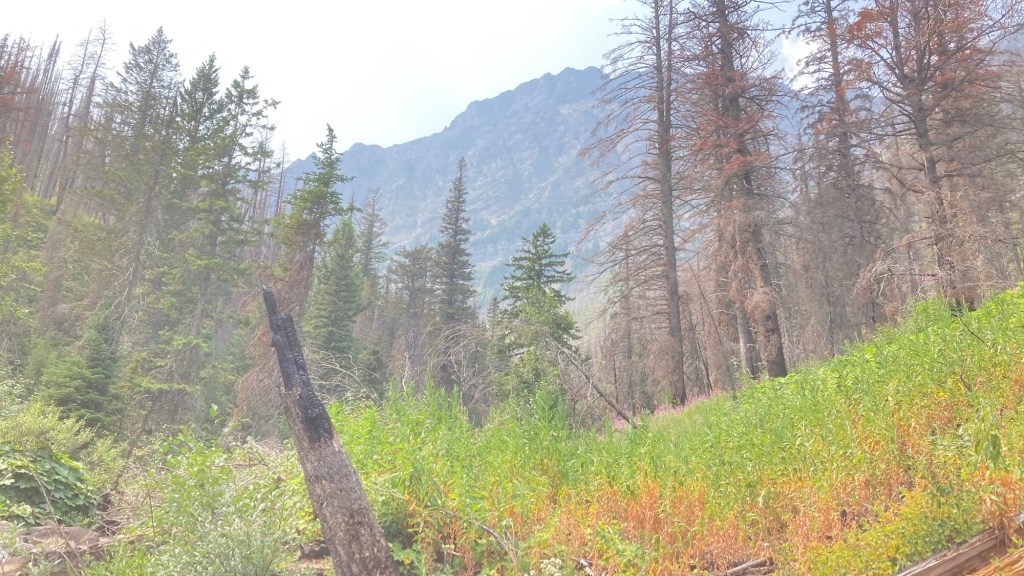
Burned landscapes bloom again.

I spent years believing my body’s limitations were character flaws. Turns out that limiting belief was false. Those limitations have helped me become the person I am.

To be rooted is perhaps the most important and least recognized need of the human soul.

Simone Weil

Why Forest Therapy Helps

Forest therapy is not merely getting outside.

Research continues to show time in forests can help regulate the nervous system, reduce stress hormones, lower heart rate, and support emotional well-being. But for those living with connective tissue disorders, the benefits often go deeper than measurable metrics.

Forest therapy gives permission to:

  • move slowly
  • rest without guilt
  • reconnect with sensory pleasure
  • soften hypervigilance
  • leave productivity behind temporarily
  • remember you are more than symptoms

When the nervous system lives in a constant state of adaptation, gentle sensory experiences matter.

The sound of leaves moving overhead.
The coolness of shade on inflamed skin.
Birdsong interrupting anxious thoughts.
The visual softness of green.

None of these cure a connective tissue disorder.

But they can create moments where the body feels less at war with itself.

And moments matter.

Especially when stitched together over time.

A Beautiful Life Can Still Grow Here

Instructions for living a life: Pay attention. Be astonished. Tell about it.
Mary Oliver

Living with a connective tissue disorder may mean your life unfolds differently than expected.

More pauses.
More recalculating.
More adaptation.

But different is not lesser.

Some of the most compassionate people are those whose bodies taught them interdependence.

Some of the most observant souls are those forced to slow down enough to notice life carefully.

The forest reminds us that resilience is not hardness.

Resilience is flexibility.
Relationship.
Return.

And perhaps that is fitting for people made of connective tissue. Those who understand, more than most, that life is ultimately about connection.

Not perfect strength.
Not endless endurance.

Connection.

To the earth.
To one another.
To moments of beauty that still arrive, even here.

What is to give light must endure burning.

-Viktor Frankl

Chronic Struggles On The Daily: Behind the Scenes

And since all this loveliness cannot be heaven , I know in my heart it is June.

-Abba Gould Woolson

Chronic illness, pain and fatigue are each a full time job. Would you agree? I can sum chronic illness up in three words. It’s. Always. Something.

Today I would like to field such inquiries as the following: What do you do all day? You seem like you are fine, maybe you should start working. Why can’t you work part time? Maybe you should go to school while you are waiting to feel better. Be careful not to take too many medications!

I’m actually only on two at the moment but in the past I have needed more. And with each needed medication comes all the side effects. And by that I don’t just mean the ones on the label. I am of the opinion that those cautions should be followed by, May the odds be ever in your favor.

Diagnosis Denied: The Meds Maze

Chronic illness has no one-size-fits-all medication. It is not like a UTI with basic symptoms. Based on which we can diagnose ourselves. There is not a list of medications to try until we find one that wipes out all the bad stuff.

Alternatively, our goal is to manage symptoms through medication. Not all of the symptoms, mind you. But the ones with which we cannot function while they remain.

Unless you are also dealing with chronic illness you may not realize how frustrating medications can be. Here are some of the medication woes I have come up against:

  1. medications that didn’t work, it would take weeks or months to find this out, starting with a low dose and slowly working up while a multitude of symptoms are ever evolving is relentlessly complex to track
  2. medications that did work but were out of my price range through times that we didn’t have benefits, or often these experimental drugs are not covered anyway, also drug tests that are not covered by the province are out of reach (one in particular that may be useful in determining what I have is $4000)
  3. then there are the fabulous medications that have been the answer to prayer, they finally gave me relief and hope; until they stopped working
  4. when the end result of a medication to manage the pain made me feel worse than the actual pain we were trying to treat
  5. the super fun times when I would react poorly to a medication that looked like it was working (any medication that loosens muscles is now on my DO NOT TAKE list)
  6. there’s the ones that make me gain weight and feel like garbage
  7. and the ones that make other conditions flare
  8. and my least favourite of all, the ones that made me feel like a zombie, they worked but I hated them, the only thing that would touch the pain and I was treated like a drug addict when I would go to refill, but there were also no other options being found, let alone researched 😠

Doctor Who? Solving My Medical Mystery Solo!

Life is hard enough to navigate without chronic illness and its associated roles. Yet sometimes I don’t get to be the patient. I also have to be my own doctor. And patient advocate. And research assistant. Not only are these not paid jobs but they are also crossing the line of a patient-doctor relationship. Which is not appreciated in many doctor’s offices.

On some of my hardest days I have had to play both patient and care provider. I am blessed to have a family doctor at this time who trusts my judgment in my own care. He is happy to fill the supporting role. I wish everyone would be so lucky as to find such a person.

Sleep: My Part-Time Job with Full-Time Exhaustion

Ever since I can remember, I have wanted to go back to bed. While I’m having fun. Whilst visiting with people who energize me. Even after a good night’s sleep.

This is not the same as tired after a long day of living life. This is in response to waking up sick for years and years and years. And it is not tired. It is drained down to my bones. My reserve tank, my extra battery, my other 8 lives. All drained.

In my 20s I would get tired. I would be exhausted. Babies. Working. Home and family care. And then I would push through and accomplish whatever needed to be done. Spring cleaning. Painting a room. Grocery shopping. There was always something left in the tank when I thought I had nothing.

I am learning that a body living on the verge of empty is in survival mode. When I think I have energy to finish a task I am already on the last of the reserve tank. I just don’t know it yet. Chronic illness is about living in survival mode. And that takes constant energy.

Roadblocks and Resilience

My dear chronic comrades, it is okay to do less when you are dealing with more. Chronic illness has put us at a different place in life. And that is okay. I can struggle when I see people around me aiming high and accomplishing so much. But remember, we are not aiming low. We are not accomplishing little. We are aiming in a totally different direction. Which on its own is accomplishing much.

If you see me out and about. Chances are pretty good that I am pushing through. I just want to participate in life. I don’t want to miss it.

Note to self: it’s always a bad pop.

It’s been said that living with EDS is like living the day after a car accident in perpetuity. Some days are just a fender bender. Perhaps I could go to work after a fender bender. But many days I wake up after a head on collision. And even after my fender benders I have to plan ahead for the car accident to come later that day. I never know quite how bad it will be. I live my life on a roller coaster. Not a fun one. I never know when the next down is coming. Still sound fun? Forgot to mention, the roller coaster is on fire.

Joking about it is the only way of opening my mouth without screaming.

-Hawkeye Pierce

Peculiar Symptoms: A Comedy of Errors in Quality of Life

A person’s symptoms can be as varied as a fingerprint. Have you ever felt your hair hurt? Bugs crawling under your skin while simultaneously feeling sunburned? Loathed the need to talk on the phone? These are weird yet documented symptoms of just one of my chronic illnesses. Suffice it to say that pain is pain. And being in pain is about more than just being in pain.

Based on this quality of life scale. For the better part of part of 3 years I was at a 0. I have friends hovering around a 4. I have other friends living at a 8-9 and their body requires a 2. If you think everyone should live at a 10 with enough effort, you are wrong. Be grateful if you are at a 10. Look out for those anywhere else on the scale. This world is not made for us.

The Pain Paradox: Doctors and the Quest for Relief

There is not a good way of measuring pain. A doctor has to cause pain to assess it. Unfortunately for me, my pain would show up the next day after one of these assessment appointments. Long after the time for diagnosis had passed. I didn’t know how to answer the question,

Doctor: What makes your pain worse?

Me: This.

Doctor: You’re just sitting there.

Me: Exactly.

Doctor: Could you elaborate

Me: No, I actually forgot what I just said.

Eleutheromania: an intense and irresistible desire for freedom.

Have you ever wished you could escape your own body? Does it sound like freedom to picture taking off your body like a suit. Living your day. Then you could put the pain suit back on. Perhaps this is why other girls are delicate like flowers. While me and my chronic comrades are delicate like the claw end of a hammer. There is no taking off and putting back on. It is incessant.

A Plot Twist in My Story: Object Lesson

Chronic illness has become a big major focus of my life. I’ve been told if I didn’t focus on it so much, it would be easier to cope.

If you have big rocks and small rocks and sand. If they all have to fit in one container. What goes in first? The big rocks have to go first. If not, the sand and small rocks will take most of the space and the big rocks won’t fit. The sand and small rocks will fit in around the biggest rocks if those big ones are placed first.

The rest of the world has work and family and other big important things like church as their biggest rocks. Then they have other hobbies and interests that fit around those.

Most people cannot fathom having their health as their biggest rock. Their reality does not require it of them. When I put that great big rock in, not much else fits in my container of life. My health has to be my focus. But it can still be a beautiful life. I just have to work extra hard to make it that way.

Some people are under the impression that the longer you are sick, the easier it gets. Don’t you just get used to it? In my experience. No. The longer it has been. The further away the rest of the world can feel. Support people even start to wonder why you aren’t better. Hope is harder to come by. Hope for answers. Hope for the future. The more I try to catch up, the further behind I get.

The Tug-of-War Between Hope and Heartache

I have different needs. I need to rest after small tasks. I need to plan for outings to cost me. My mental health has paid a heavy price over the years and needs extra patience and work. Or dysregulation sneaks up on me. Flares that come out of nowhere need my focus.

Different things drag me down. I am dealing with the grief of losing who I once was. The recovery time it takes for me to do anything extra is hard to take and harder to explain. Believing I should be stronger. Self doubt. Physical, mental, emotional breakdowns. So much guilt. There will be more pain from now until I sleep. All of these and more emotions and feelings I can’t explain.

A disco ball is hundreds of pieces of broken glass put together to make a magical ball of light. You are not broken. You are a disco ball.

Take Two Forest Walks and Call Me in the Morning

I am not a doctor or trained therapist. But I offer you these prescriptions for the following maladies:

For overstimulation- An open sky

For irritability- your hands in the garden

For overthinking- waves on the shore

For disconnection- walk barefoot in the grass

For loneliness- stars in the night sky

For tension- a flowing river

For anxiety- forest air

For mental fatigue- a forest therapy walk

For burnout- listening to a thunderstorm

For lack of focus- the scent of rosemary

For confusion- quiet morning twilight

For inner chaos- sunlight filtering through the trees

For insecurity- the scent of cedar wood

For stress- the scent of lavender

For feeling stuck- hike a mountain trail

For grief- the scent of rose

For isolation- the sound of birdsong

My Daily Circus with My Inner Monkeys

I have often been asked what I do with my time. I know it has been asked with good intentions by my friends and family. They are not accusing me of anything but genuinely want to know what I do. I hesitate to answer because the list seems pitiful in this world of high achievers. But in an effort to link arms with my chronic comrades I share these parts of my day.

I spend time in my spiritual rituals and rhythms. I journal. I work on creative outlets. I spend time outdoors and get my skin in the sun. I do detoxes. I help care for our home as a means of functional movement. I practice EFT tapping and other energy work. I have days that I walk and days that I run. I have to keep moving or I quickly lose muscle. I spend time with friends who bring me up. And my little rays of sunshine (my grandkidlets). So. Many. Appointments. Then there are the high pain days. And the recovering from high pain days. And recovering from every time I go out. It is not the schedule I would choose. But it is one I will keep. I know the alternative.

The smell of moist earth and lilacs hung in the air like wisps of the past and hints of the future.

-Margaret Millar

I hope I have answered some of those questions. I invite you to enjoy your prescriptions. If you know anyone else that needs them, please share this post!