
Two Steps Forward, One Laundry Basket Back

Taking the good with the bad, recognizing progress, and staying on your healing path.

There are some days when life gives you more than you could have asked for. And then there are days when your laundry basket gives you a new injury.

Apparently it’s a package deal.

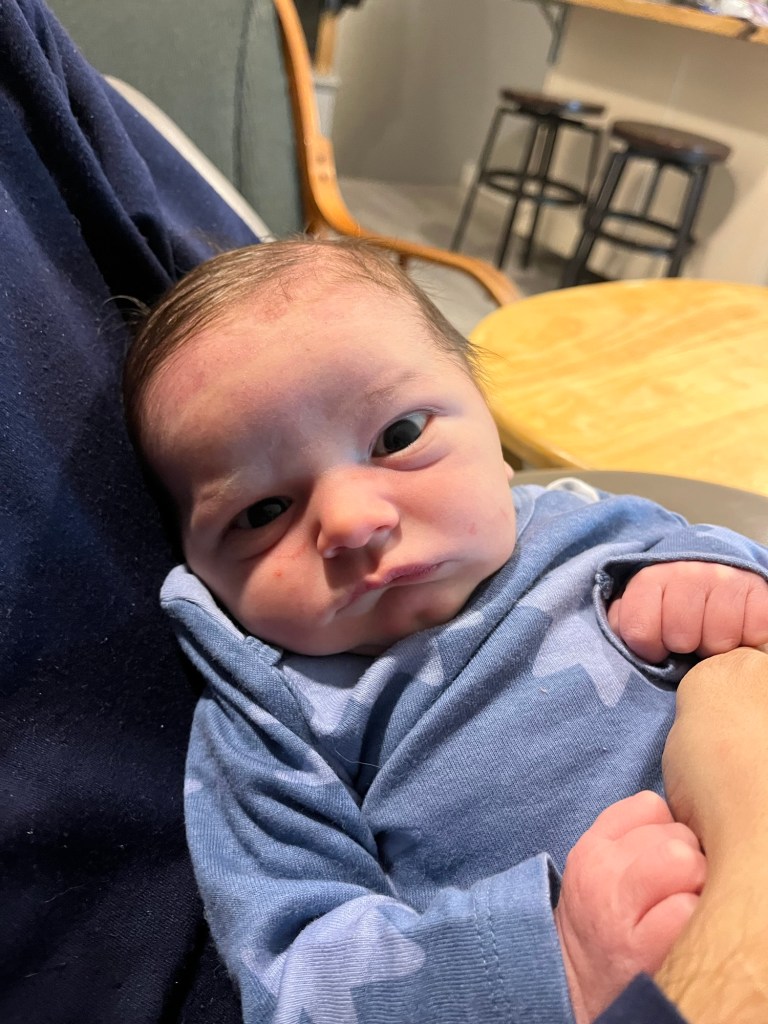
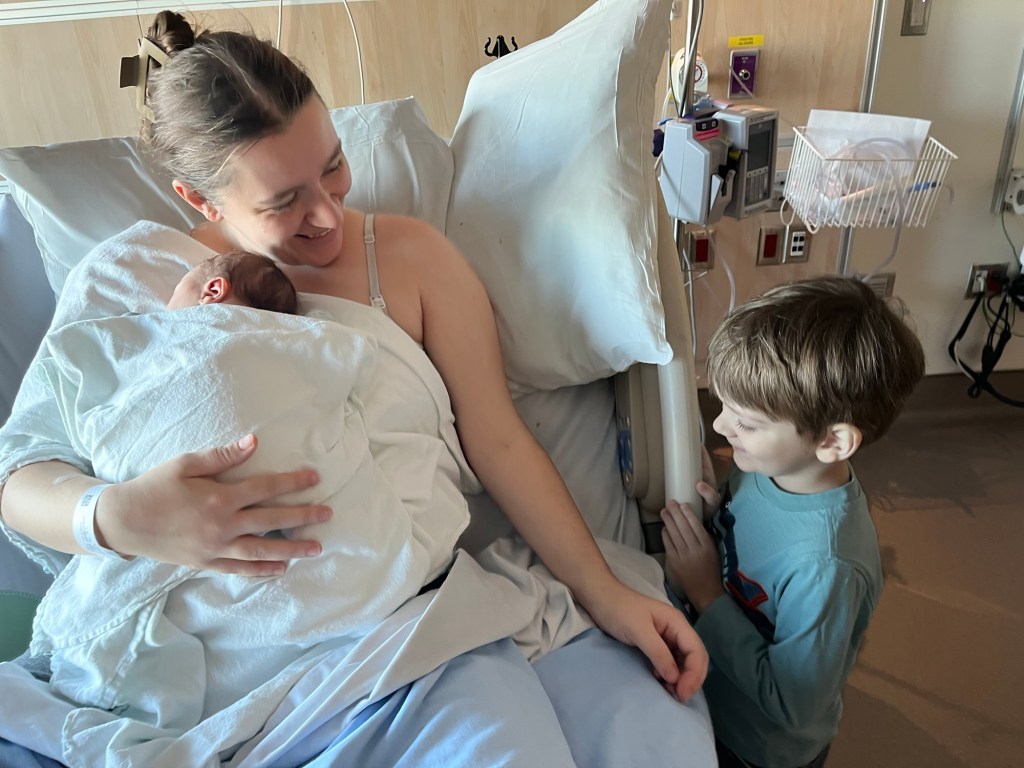
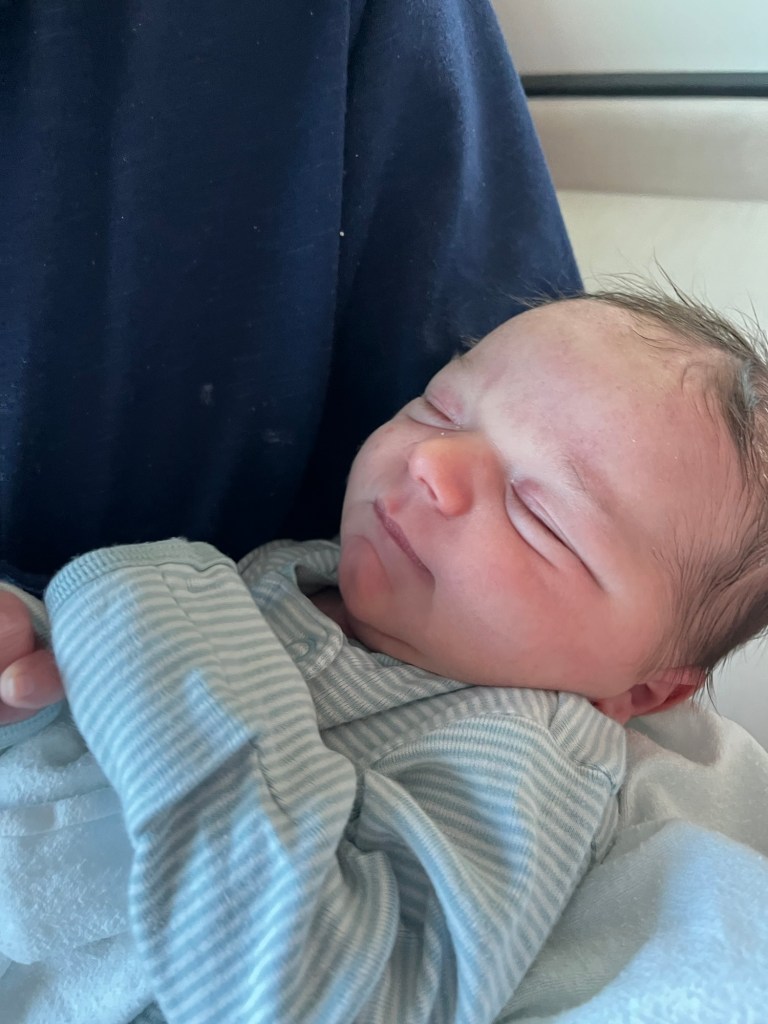
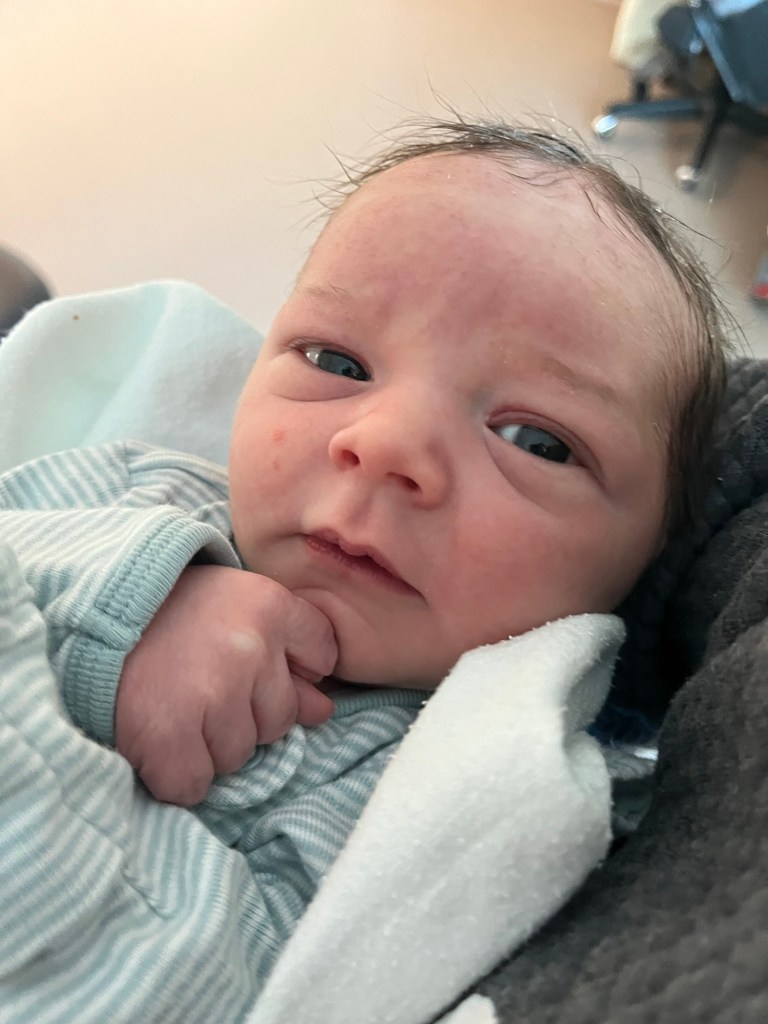
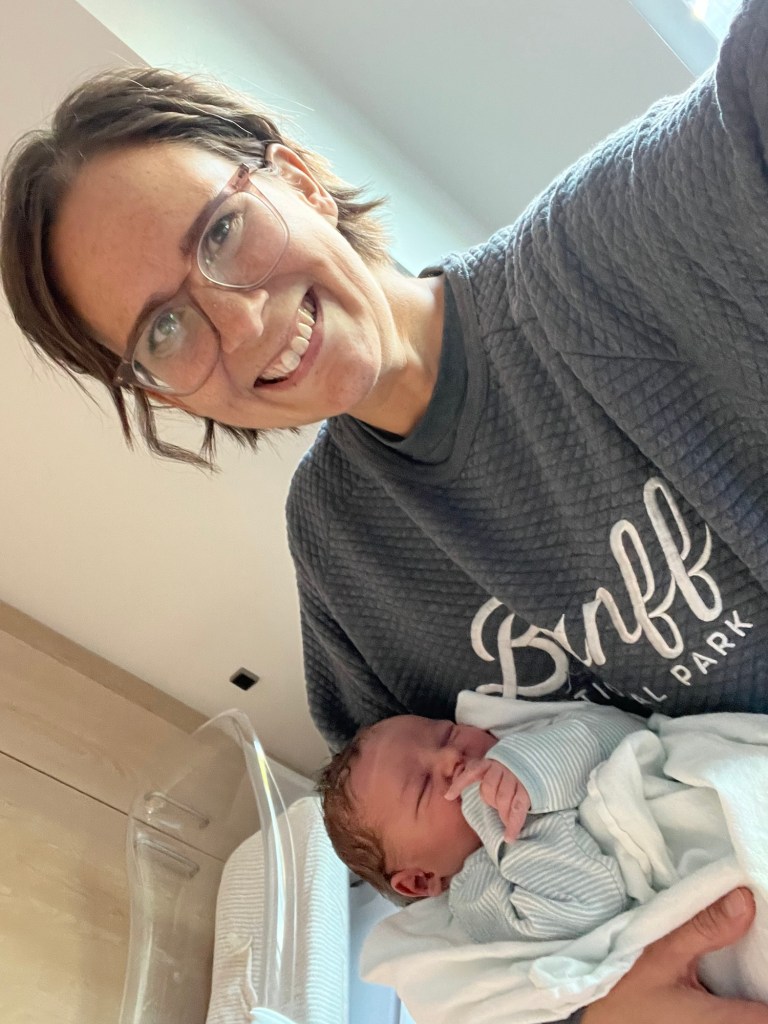
This past Sunday, I became a grandma again 🥰 🥰 🥰. A beautiful new grandson arrived, and he is absolutely perfect.
But the gift of last weekend went beyond meeting our newest little family member.

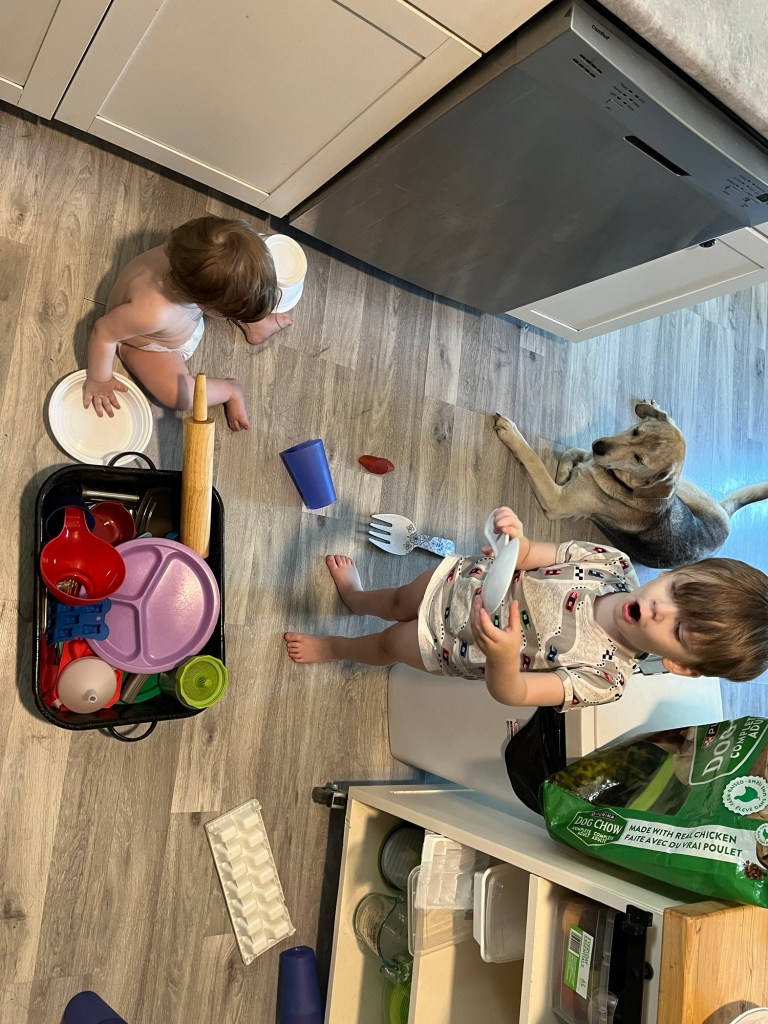
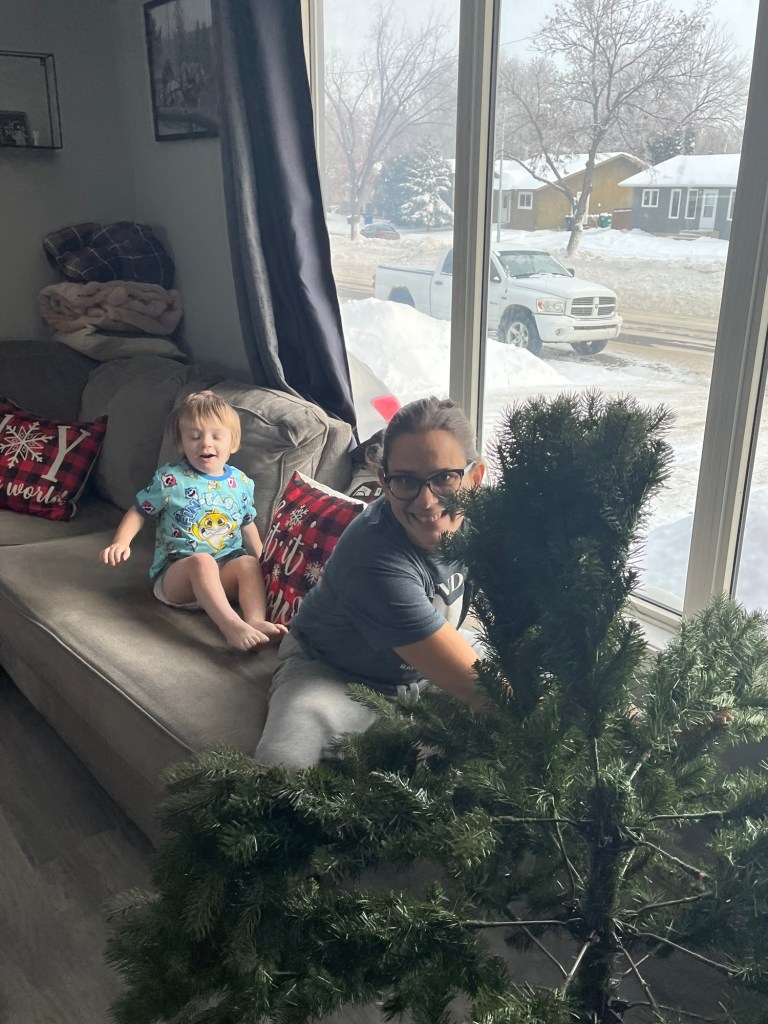
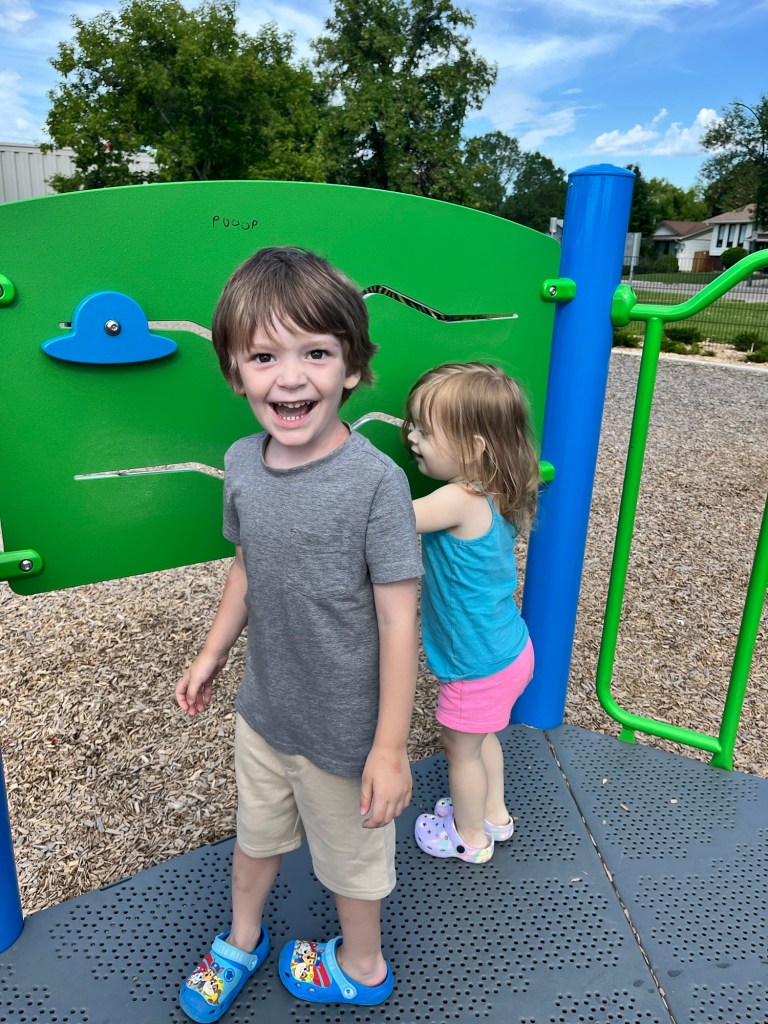
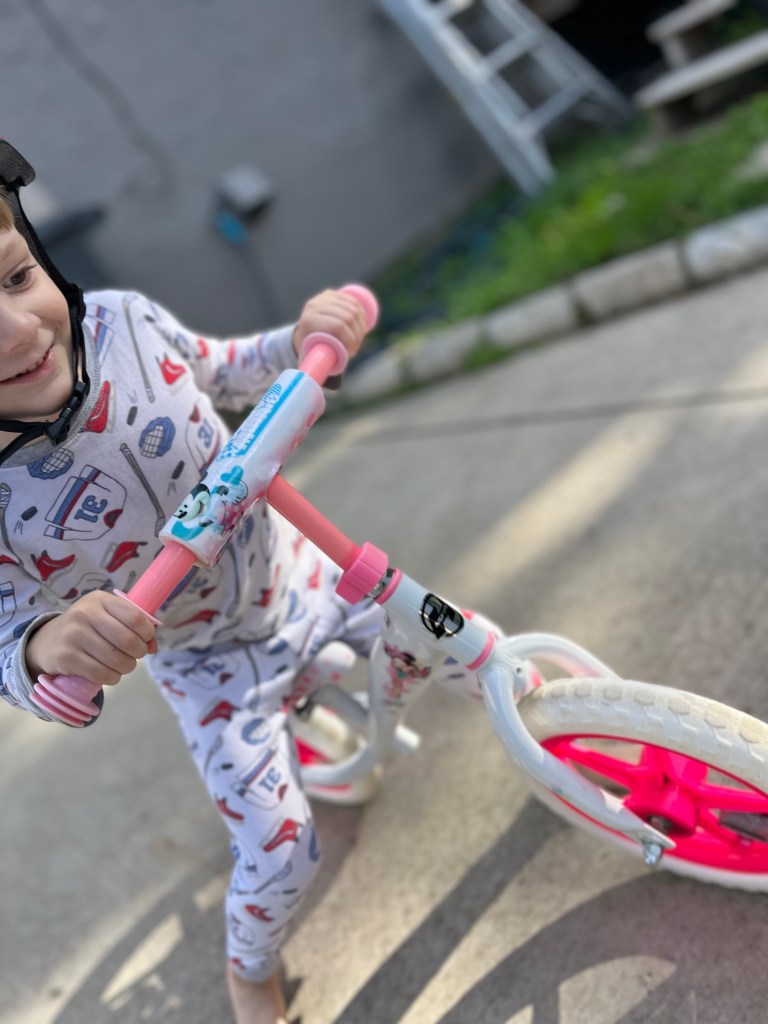
I got to look after his four-year-old and two-year-old siblings for 24 hours while their mom and dad were in the hospital. I got to be there when they met their new baby brother. I got to share in their excitement, their questions, their little personalities, and that very special moment when a family grows.
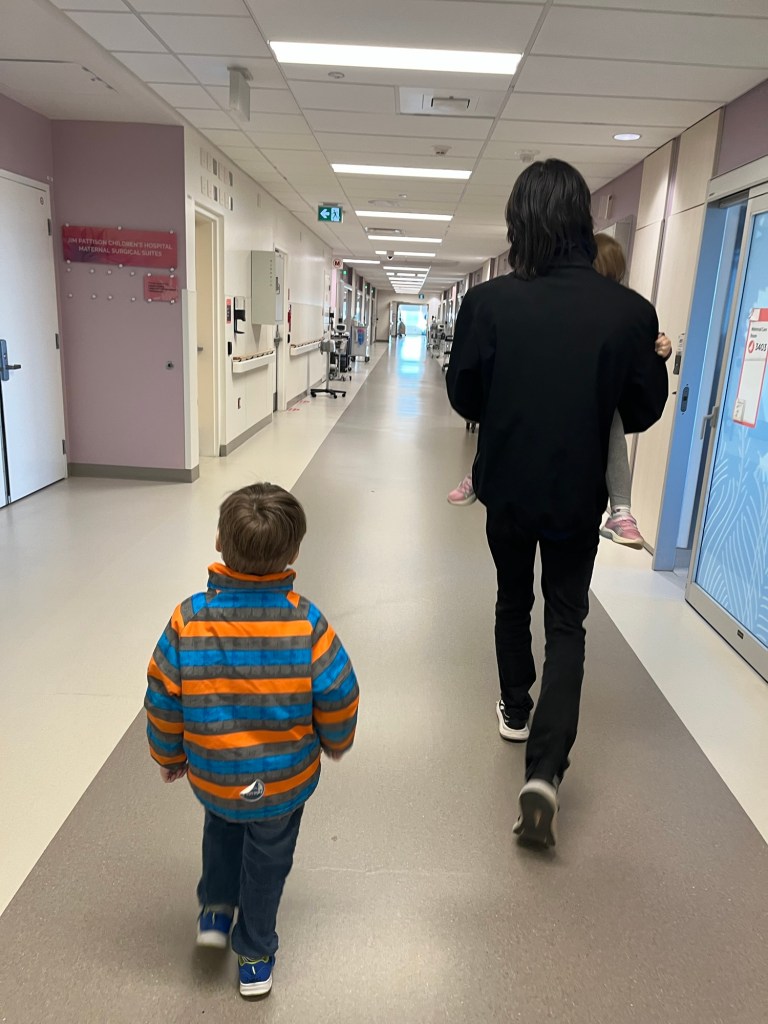
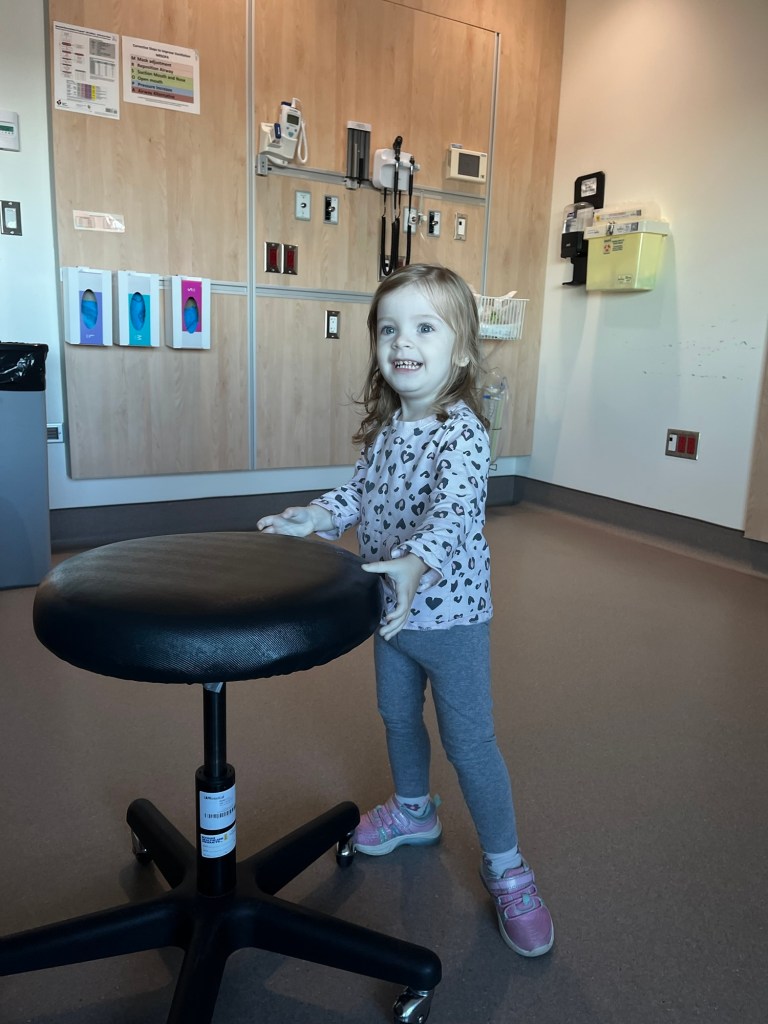
I am privileged to be their grandma. Even more so, I feel blessed to have such a close relationship with them.

I wouldn’t trade those hours for anything.

Although, perhaps I would have negotiated a slightly different physical payment plan.

Because while my heart was having one of those enormous, overflowing, grateful experiences, my body was preparing to send me an invoice.

The good days

Have you ever been given strength beyond your own?

I have.

I believe I was sustained so that I could sustain these little people for those 24 hours. I know who sustains me. It is Jesus Christ. And I felt that strength when I needed it.

It was a little like the adrenaline rush people describe when a mother somehow finds the strength to lift a car off her child. Except considerably less dramatic. Nobody was lifting a car. Nobody was performing a miracle of automotive proportions.

It was more of a time-release adrenaline rush.

I had the energy to do what mattered. I could be present. I could play, feed, comfort, entertain, and help two little people navigate the excitement of becoming big siblings. I could be there for a moment that I will remember for the rest of my life.

These are the good days.
And then there is the other side of the story.

The bad days

I am currently in a lot of pain.

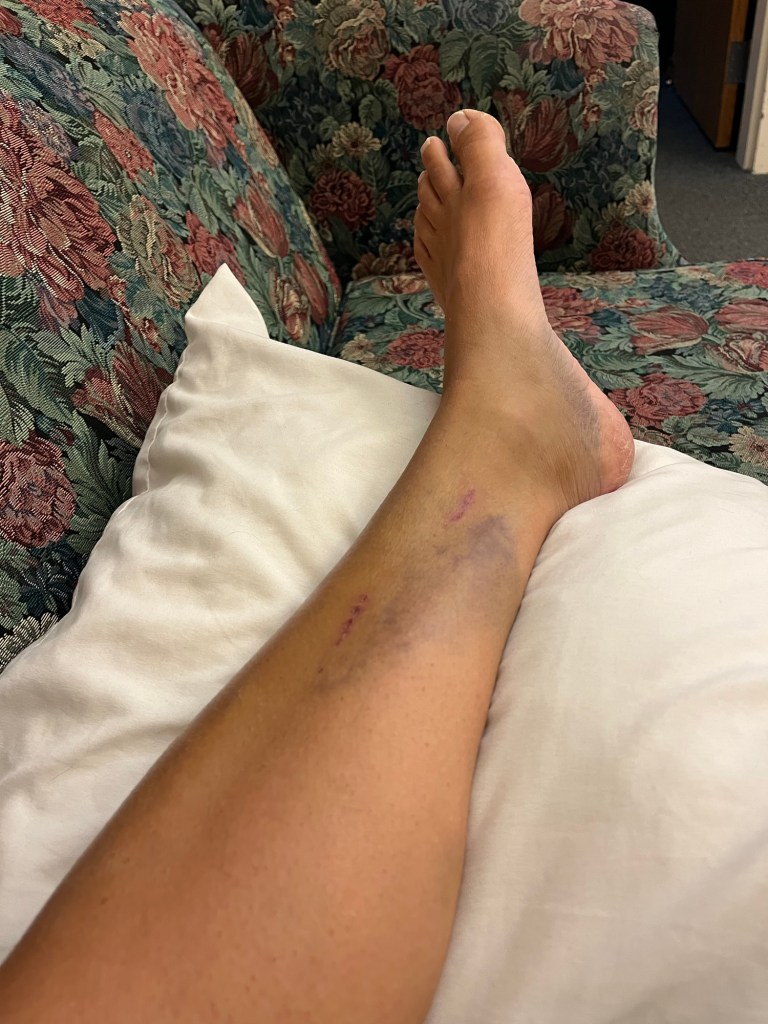
On the same day I had just seen my physiotherapist, who corrected my major subluxations for the month, I sat down beside a laundry basket.

The top of the basket touched my rib.

I felt my rib slip.

I wish I were exaggerating. Imagine having your physiotherapist put everything back where it belongs, only to have a laundry basket undo some of the work. There is a certain indignity in being physically outmanoeuvred by a common household item.

This is a familiar cycle for me.

I go to physio. I get some relief. Things are back where they should be. I come home and try to be careful. I exercise to keep things strong enough to stay in place.

Then something happens.

A dog steps on my foot. I slip on the ice. A toddler elbows me. I move the wrong way. Or, apparently, a laundry basket performs an unsolicited manipulation of my rib.

And I wait for the next physiotherapy appointment.

The hardest part of this cycle is often the few days before that next physio appointment. As my joints slip out of place, the surrounding muscles work harder and harder to compensate. They tighten, protect, and try to hold everything together. Eventually, the pain builds, the nerves become more reactive, and my body is working overtime just to keep me upright.

Sunday was one of those days.

And the price of those 24 hours of beautiful memories?

Temperature fluctuations. Worse tremors. More reactive nerves. Exhaustion that hangs around. And pain.

These are the bad days.

But I have learned. A body living with chronic illness can hold both the good and the bad at the same time.

Most days, there is a mixture of both.

I can be incredibly grateful for the weekend and still be hurting. I can celebrate the new baby and acknowledge that my body is struggling. I can recognize how much progress I have made without pretending that I am suddenly well.

Gratitude does not cancel pain. And pain does not cancel gratitude.

Both things are true.

Measuring progress when the results aren’t always obvious

When I look back at 2020, I can see just how far I have come.

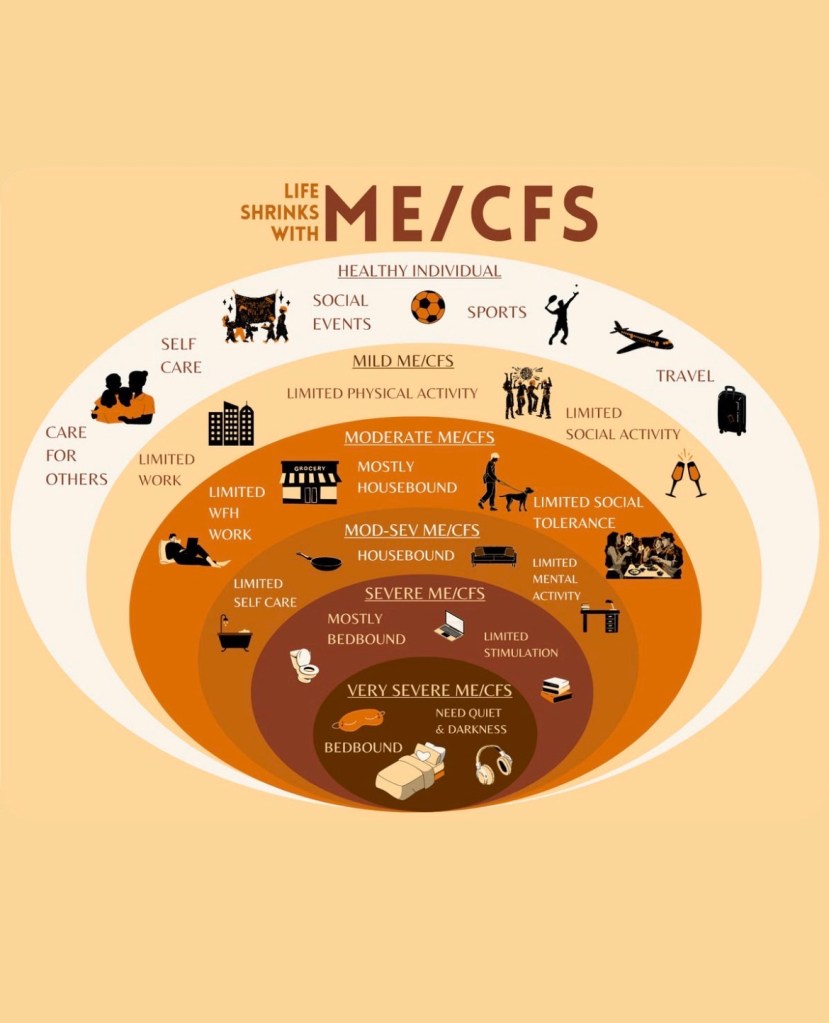
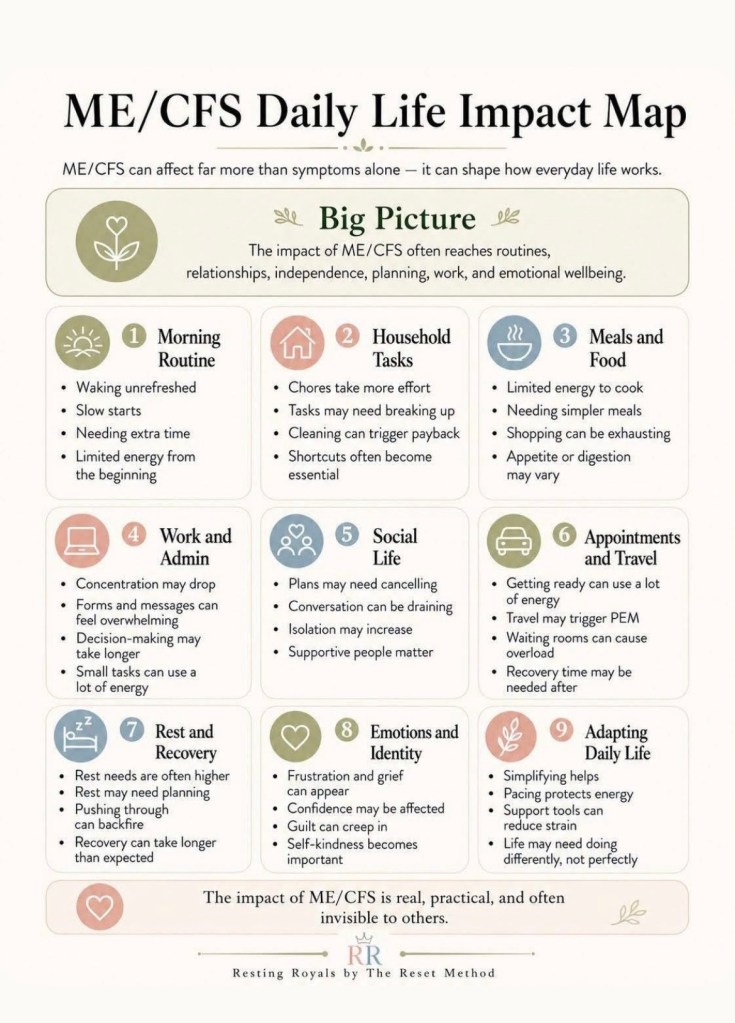
I was living with severe ME/CFS (myalgic encephalomyelitis/chronic fatigue syndrome), which developed in the context of my chronic pain. My world had become very small. My energy was almost nonexistent, and ordinary daily activities could take more out of me than I could reasonably afford.

Over time, I have moved through the stages of recovery to what I would now describe as moderate ME/CFS.

That is significant progress.
But here’s the tricky part about chronic illness: improvement doesn’t always look like a steady upward line.

Sometimes you make progress for months and then have a setback. Sometimes you accomplish something wonderful and spend days recovering. Sometimes you feel stronger, only to discover that your body has a very different opinion about what you should be doing.

If I judged my progress by how I felt on the day my rib slipped, I might conclude that I was right back where I started.

But I am not.

My current bad day is not the same as my bad days in 2020. I have more capacity, more tools, more understanding, and a much better idea of how to work with my body.
There hasn’t been one magical herb, expensive supplement, or single therapy that fixed everything. There hasn’t been a miraculous morning when I woke up and my body announced that it had reconsidered its terms of employment.

It has been much slower and less glamorous than that.

It has come through years of caring for myself in body, mind, and spirit. Learning my limits. Making changes. Resting when I need to. Finding appropriate movement. Getting medical and therapeutic support. Paying attention to my nervous system. Making room for faith, nature, relationships, and the things that make life meaningful.

Healing has been slow and consistent.

I want to be clear that I am not suggesting everyone with ME/CFS can recover through lifestyle changes. These conditions are complex, and there is no one-size-fits-all treatment.

But improvement is possible, and it deserves to be acknowledged.

As Helen Keller wrote:

“Although the world is full of suffering, it is also full of the overcoming of it.”

I don’t think overcoming always means defeating an illness. Sometimes it means learning how to make meaningful progress within the circumstances we have.
Three ways to stay focused on your healing journey

When you live with chronic illness, it is easy to let the latest setback become the whole story. We can become so focused on what hurts today that we lose sight of what has changed over the last year.

Here are three practices that help me keep perspective.

1. Keep track of the progress you might otherwise forget
Our memories are not always reliable records of our health.

We tend to remember the difficult days. Especially when we’re in the middle of one.

That makes it important to keep some kind of record of improvement.

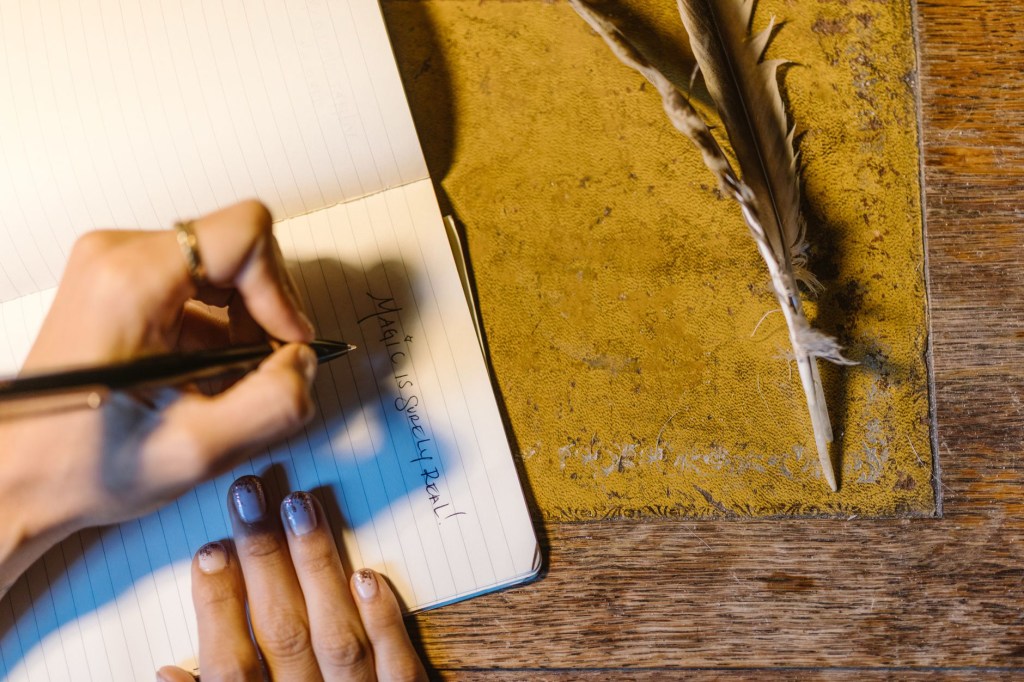
Not an elaborate spreadsheet that becomes another job. Just a simple journal or occasional note about what is changing.

Consider recording:

  • How much activity you can tolerate compared with six months ago.
  • How long it takes to recover after an outing or activity.
  • Changes in sleep, stamina, concentration, and pain management.
  • Things you can do now that were difficult or impossible a year ago.
  • Improvements in how you recognize and respond to early warning signs.
  • How often you are able to participate in the activities that matter to you.

Don’t measure only what you accomplish. Measure how your body responds afterward, too.

For someone living with ME/CFS, pacing and avoiding post-exertional symptom exacerbation are particularly important. Feeling capable in the moment doesn’t necessarily mean your body has the capacity to sustain that activity without consequences.
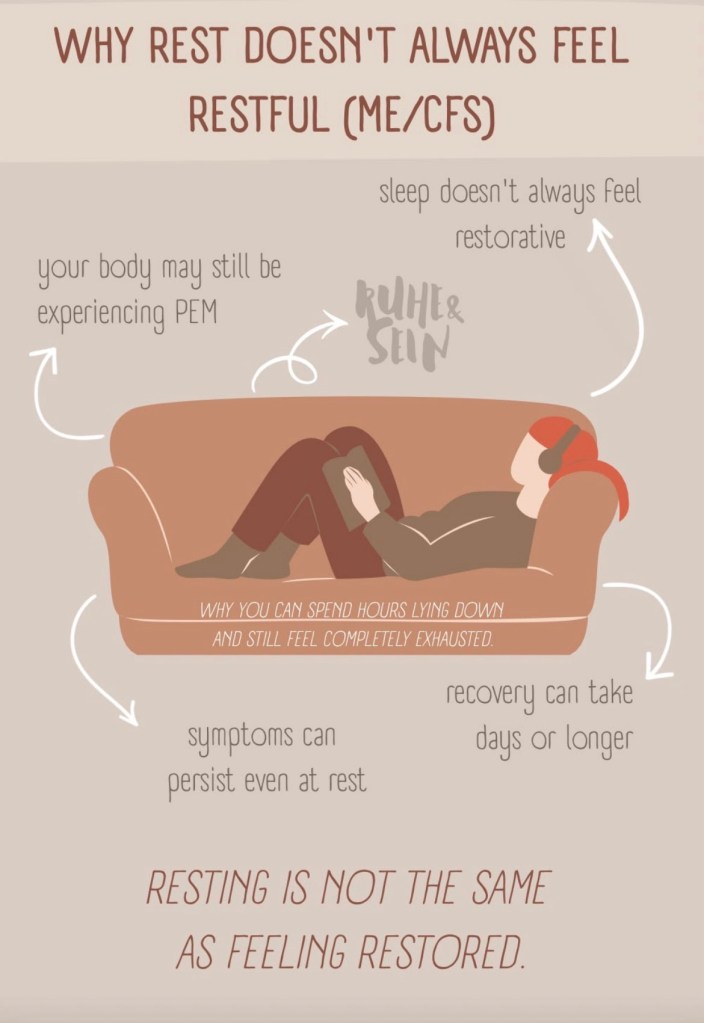
Sometimes the win is doing something and recovering well. Sometimes the win is recognizing that you need to stop.

Both deserve a place in your progress journal.

And don’t forget to record the ordinary things. They may not seem significant today, but looking back can reveal just how much has changed.

2. Have a plan for the good days, not just the bad ones
This is something I have had to learn the hard way.

When a good day arrives, it is tempting to make up for everything you haven’t been able to do.

The laundry! The groceries! The house! The phone calls! The people you’ve been meaning to see!

Suddenly, you have become a highly motivated productivity machine.

Until you aren’t.

One of the challenges of chronic illness is learning that having the energy to do something doesn’t always mean you have the resources to recover from it.

This is especially important with ME/CFS, where pushing beyond your energy limits can lead to post-exertional symptom exacerbation.

I try to think about what I am spending my energy on and what I need to reserve for recovery.

That means making choices.

I might have energy for one big thing or a few smaller things. I need to decide what is worth spending it on.

Sometimes the answer is housework. Sometimes it’s a family gathering. Sometimes it’s a walk outside. And sometimes the best investment is doing absolutely nothing.
I also try to leave room for the unexpected. Life doesn’t always arrive according to my carefully prepared energy budget. Sometimes a new grandson does.

The point isn’t to avoid everything that might make you tired. It’s to make informed decisions about what matters, understand your body’s responses, and avoid repeatedly pushing past your limits.

A good day doesn’t need to become a competition to see how much you can accomplish.

You don’t have to earn your rest.

3. Develop a regular practice that keeps you connected to your direction
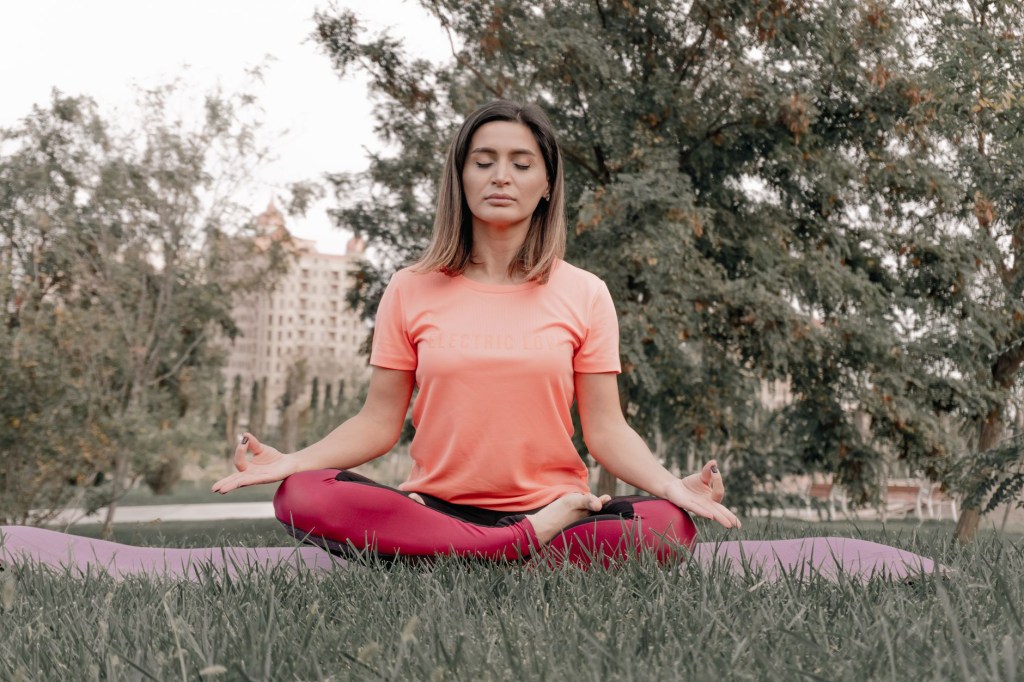
I find it helpful to have a meditation practice that brings me back to what I am working toward.

Not a meditation about fixing myself. Not one where I visualize a perfect, pain-free future and then feel disappointed when I open my eyes.

A practice about staying on my path.

A few minutes to settle, reconnect with my values, acknowledge where I am today, and remember what matters.

This can be especially helpful when a setback makes you question whether all your efforts are accomplishing anything.

You don’t have to solve your entire health situation during meditation. You don’t need to find the answer to every symptom or discover the secret to perfect health.

You simply need to make a little space to remember that your healing journey is bigger than today’s symptoms.

Here’s a simple practice to try.

A meditation for staying on your healing path

Find a comfortable position. You don’t need to sit cross-legged on a cushion or achieve some extraordinary level of spiritual enlightenment. A comfortable chair, a bed, or a quiet spot outdoors will do just fine.

Close your eyes if that feels comfortable.

Take a few gentle breaths. Don’t force deep breathing. Simply notice the breath moving in and out.

Now ask yourself:

  • Where am I today, physically, mentally, and emotionally?
  • What has improved, even a little?
  • What have I learned about caring for myself?
  • What is one thing I can do today that supports my well-being?
  • What matters most to me?

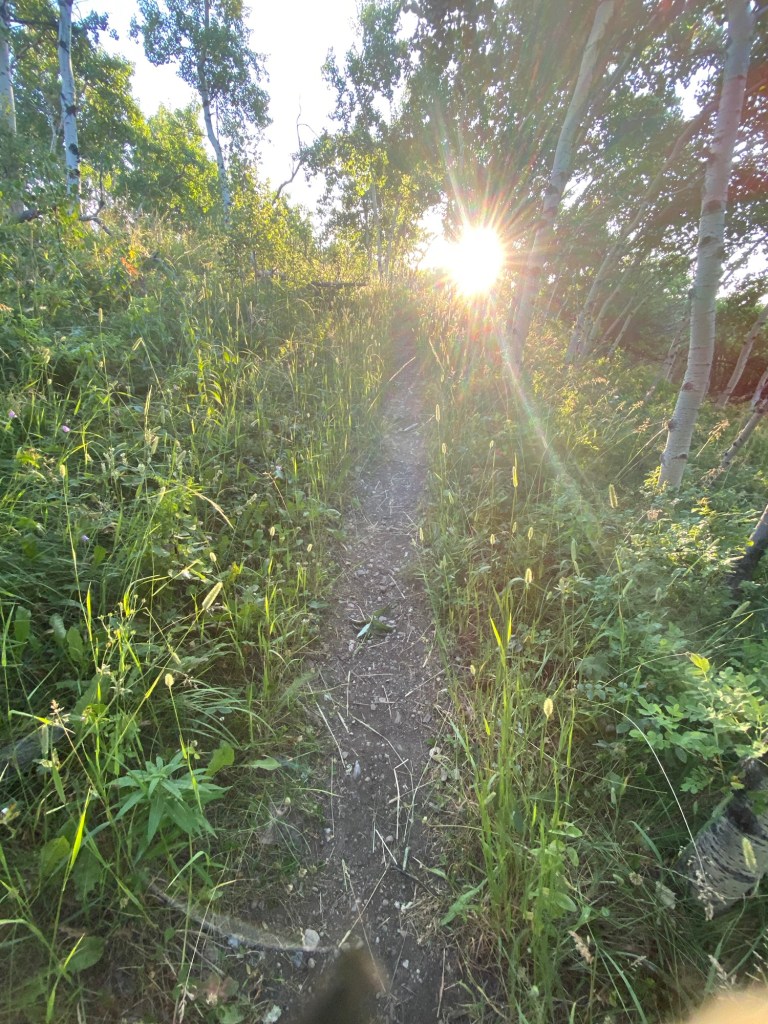
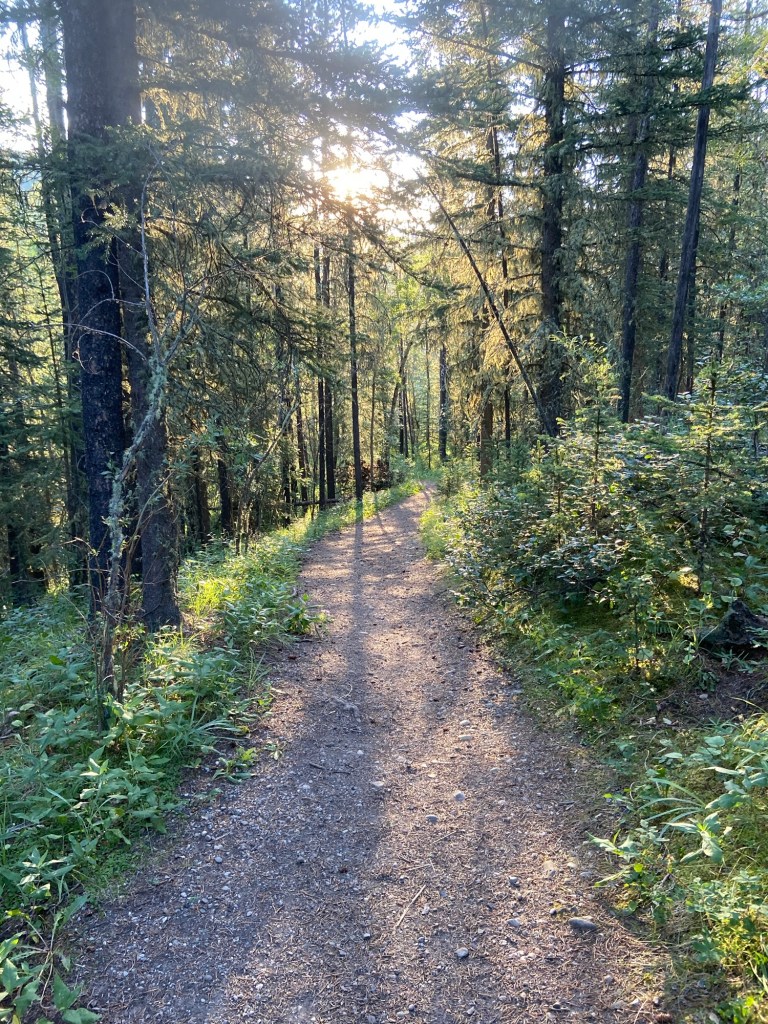
Imagine yourself walking along a path through the forest.

You don’t need to see the entire trail. You don’t need to know how far it goes. You only need to be aware of the next step.

Some days the path is easy. Some days it is steep. Some days you need to sit down and rest.

Resting doesn’t mean you have left the path.

Take a moment to acknowledge that you are doing the best you can with the resources available to you today.

Remind yourself:

I don’t need to rush my healing. I don’t need to compare my journey with anyone else’s. I can acknowledge my progress, respect my limitations, and keep moving toward the life I want to live.

When you are ready, gently bring your attention back to the room.

You can return to this practice whenever you feel discouraged or disconnected from your goals.

A little forest therapy: Taking the next step

One of my favourite ways to support my own well-being is through forest therapy.
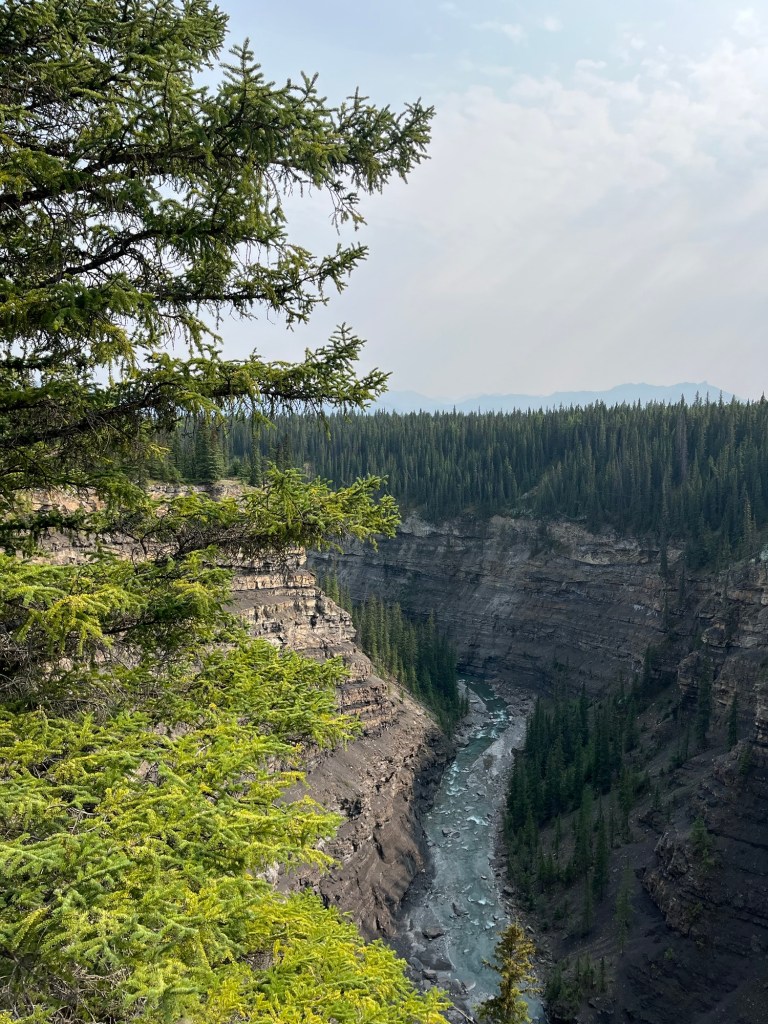
There is something about spending time in nature that gives me an opportunity to slow down and change where I place my attention.

I have written before about the relationship between chronic stress, cortisol, and time in nature in Cortisol Control: The Benefits of Nature.

I have also explored how sensory connection with nature can support nervous system regulation in Mending Your Nervous System With Forest Therapy.

Neither is a cure for chronic illness. But nature can be one useful part of a broader approach to caring for ourselves.

Here is a simple forest therapy invitation that connects with the meditation above.

The next-step forest practice

Find a comfortable place outdoors. If walking is difficult, choose a bench, a chair, or a spot where you can simply sit and observe.

You don’t need to hike anywhere impressive. Your backyard counts.

  1. Notice: Look around and find three things that catch your attention. Perhaps a tree, a patch of moss, or sunlight moving across the ground.
  2. Listen: Notice the sounds around you. Birds, wind, leaves, distant traffic. There is no need to identify every sound. Just listen.
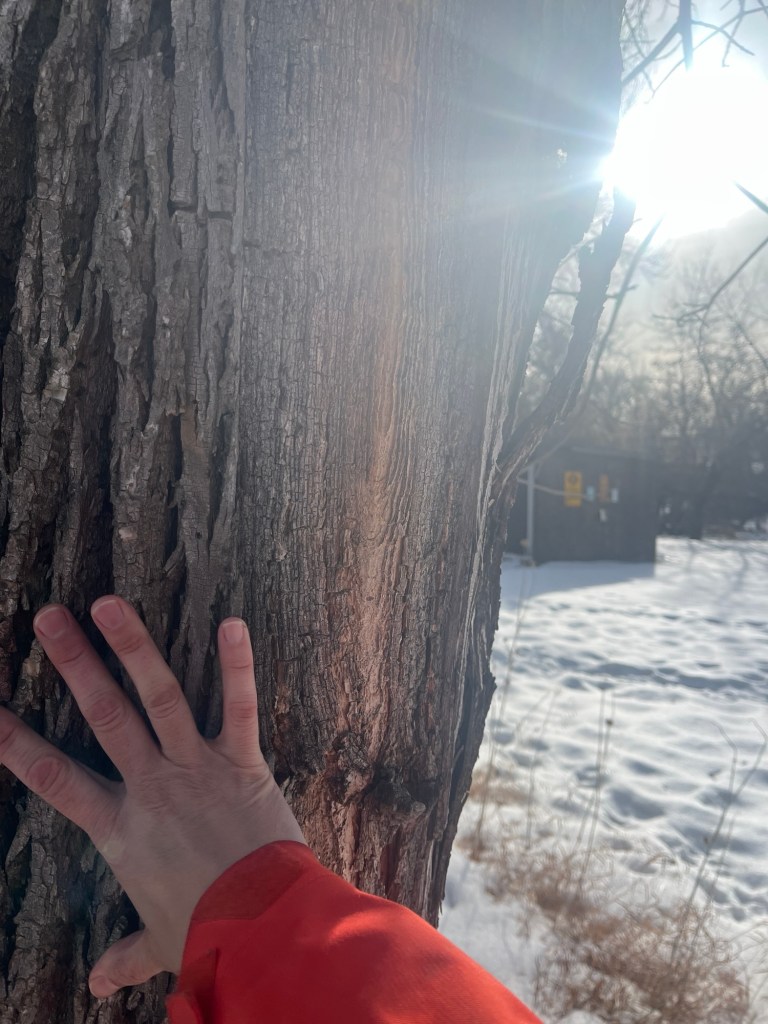
  3. Feel: Notice the temperature of the air on your skin. If comfortable, touch a tree trunk, a leaf, or the surface of a rock.
  4. Breathe: Take a few gentle breaths and allow your attention to settle.
  5. Reflect: Ask yourself, “What is the next small thing I can do to support my well-being?”

Don’t try to solve your entire life while sitting under a tree.

Just be there.

Then spend a few minutes with the guided meditation I’ve recorded for you.

[Listen to the guided forest meditation here]

You can return to this practice whenever you need a reminder that you don’t have to figure everything out today.

The good, the bad, and the life in between

I think one of the most important things we can learn when living with chronic illness is to stop judging our entire recovery by how we feel on any one particular day.
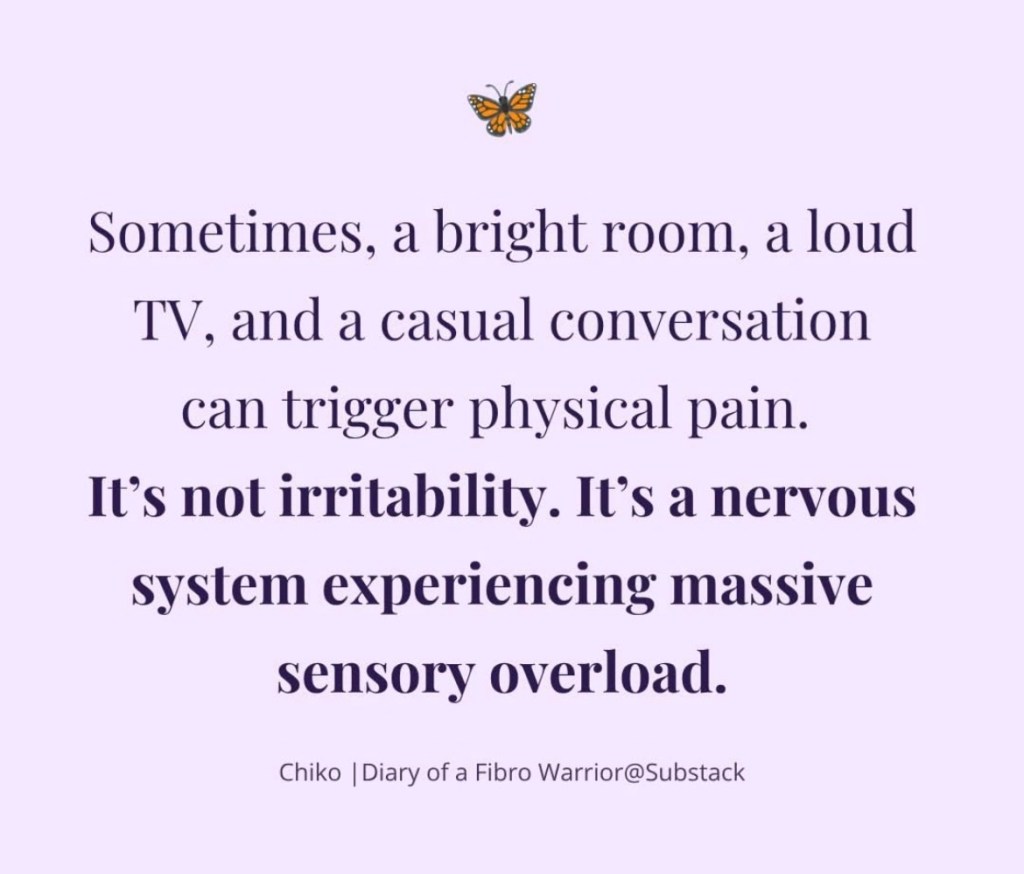
A bad day doesn’t mean you’ve lost all your progress.

A good day doesn’t mean you’re suddenly cured.

And a setback doesn’t mean you’ve failed.

We need to be able to recognize improvement without expecting perfection. We need to celebrate the small wins while taking the difficult days seriously.

I know that Sunday will cost me. I know there will be days of pain, exhaustion, temperature fluctuations, and nerves that seem to have their own agenda.

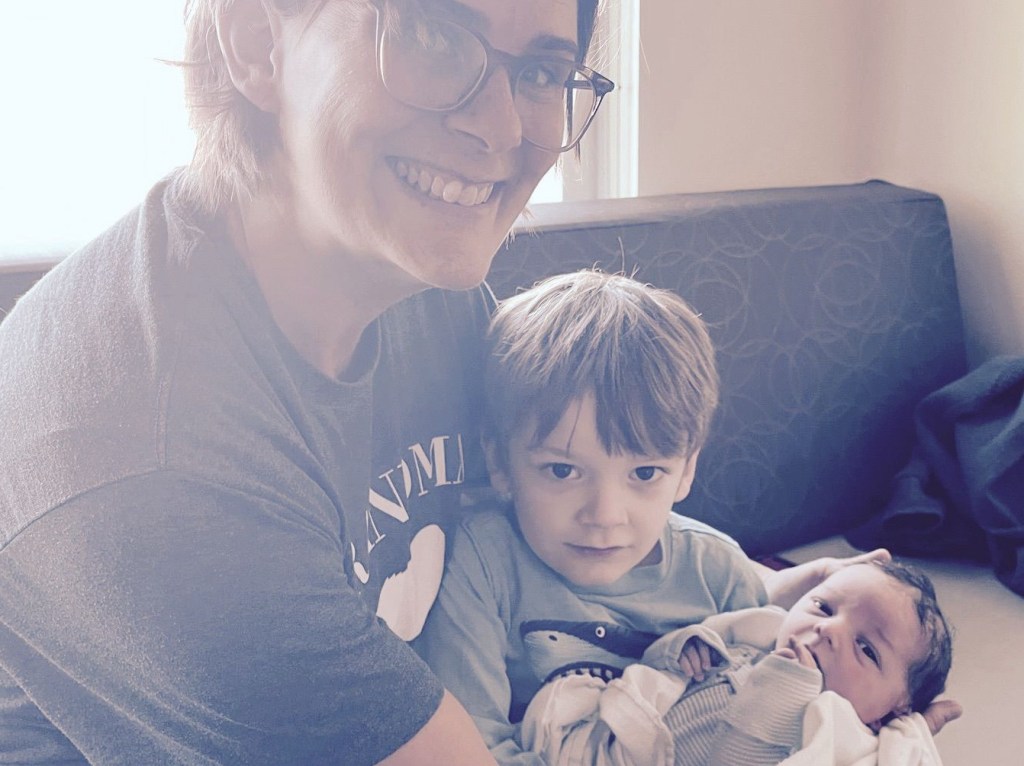
But I also know that I got to hold a beautiful new grandson. I got to love on his big brother and sister. I got to be part of a family moment that I will treasure.

And for those 24 hours, I had what I needed to be there.

That is worth celebrating.

It doesn’t have to be grand.

Sometimes it is raising a family. Sometimes it is building a business. Sometimes it is walking through the forest. Sometimes it is simply getting through a difficult day with a little more kindness toward yourself.

And sometimes it is sitting beside a laundry basket, wondering how an inanimate household object managed to become your latest physiotherapy referral.

I am not going to let the bad days convince me that I haven’t made progress.

My body has limitations. My energy has limits. My healing is ongoing.

But I am not where I was in 2020.

I will keep paying attention to the things that are improving. I will keep learning how to care for myself. I will celebrate the wins, however small they may seem.

And I will keep making room for the things that matter.

Because the goal isn’t just to have more good days.

The goal is to make sure that even on the bad days, there is still a life worth living.

And there is.
Bruadarach

(Scottish) Dreamy; Prone to daydreaming. A spirit alive with imagination, a mind naturally inclined toward wonder, possibility and beauty.
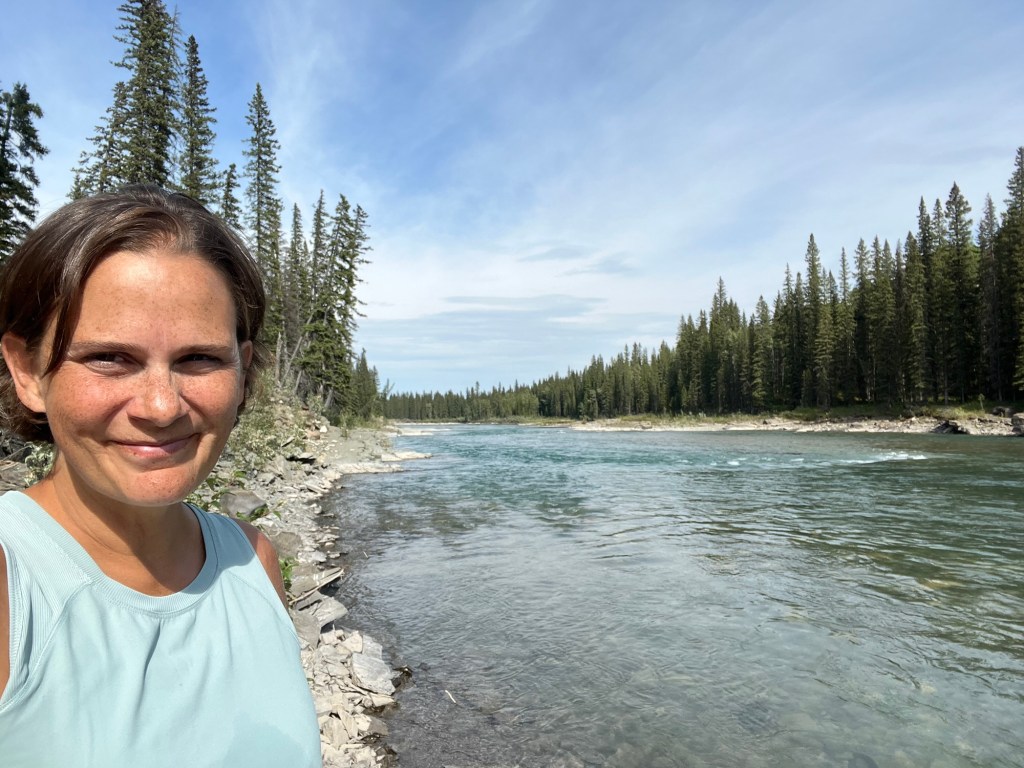
When the Future Feels Too Heavy

Inside me, the Protector, the Wounded Child, the Survivor, and the Healer all dance in a quiet circle. Each one longs to be seen, to be heard, to be held. And when I finally stop to witness them, their chaos becomes a rhythm… and their rhythm becomes my healing. 
-recoverytrauma.ltd

I heard something recently that has been rolling around in my head. It was a conversation about worry versus wisdom.

The idea was that worry keeps us stuck, while wisdom keeps us moving.

One of the concepts was this, sometimes we feel stuck because we want two things that can’t exist at the same time.

  • I want to be healthy, but I don’t want to change anything.
  • I want to feel better, but I don’t want to slow down.
  • I want to have more energy, but I don’t want to give anything up.
  • I want my nervous system to settle, but I keep filling every available minute.

And with chronic pain, there can be a whole extra layer of this.

  • I want to do the things I used to do, but my body can’t always do them.
  • I want to feel better, but I can’t control whether I have a good pain day or a terrible one.
  • I want answers, but sometimes there are no tidy solutions.

So I worry. I think. I analyze. I replay. I predict. (I’m actually a delight. But you wouldn’t know it because I’m so tired and irritated all the time.)

I consider every possible scenario until my brain has apparently opened approximately 47 tabs, and none of them are helpful.

And somewhere in all of that thinking, I can become very, very stuck.

But then I look at my grandkids.

They might know something I have forgotten.

They don’t spend nearly as much time worrying about what happened yesterday or what might happen tomorrow.

They deal with right now.

If they’re hungry, they eat.

If they’re tired, they lie down.

If they see a bug, suddenly that bug is the most fascinating creature on Earth.

If someone says something funny, they laugh.

If they fall down, they may cry. And then, remarkably, five minutes later they’re deeply invested in something completely unrelated.

They don’t seem to spend a lot of time thinking:

I really shouldn’t have fallen down yesterday.

Or:

What if I fall down again tomorrow?

They are busy being where their feet are. Kids have a PhD in being where their feet are. (Wise little beings.)

Not because the past doesn’t matter. Not because the future doesn’t matter.

But because this moment is the only one I can actually do anything with.

And I think that is part of the difference between worry and wisdom.

Worry keeps asking:

What if?

Wisdom asks:

What now?

What if I stopped trying to solve tomorrow?

One of the things I love about forest therapy is that nature gives me a place to practice being present.

Not by sitting perfectly still and trying to empty my mind.

My brain 🧠- Director of Unnecessary Mental Load 🪪

Instead, I can go outside and let my attention wander.

I call this a sensory wander.

Rather than walking with a destination in mind, I slow down and follow whatever catches my attention.

Maybe it’s the shape of a leaf.

The sound of something moving in the grass.

The smell of wet earth.

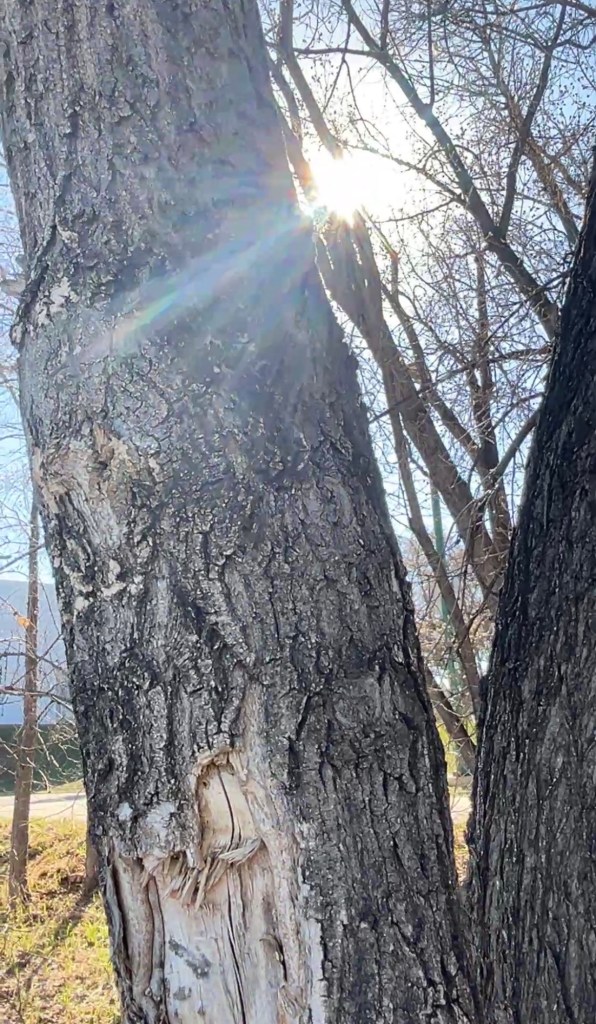
A tree with strange bark.

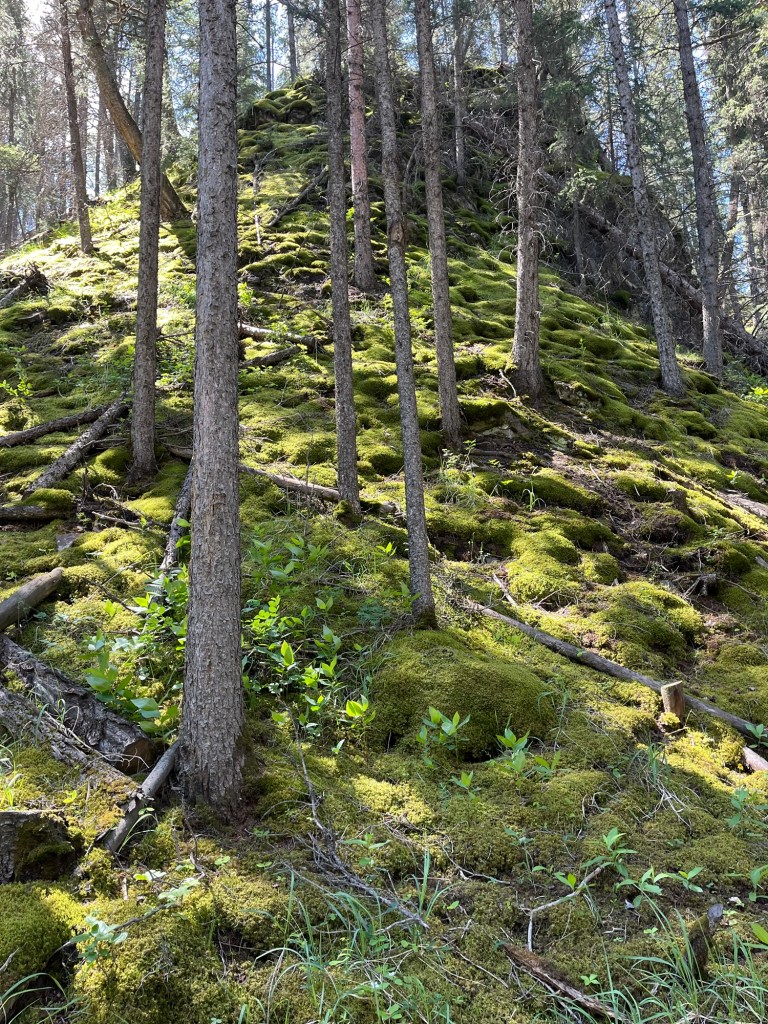
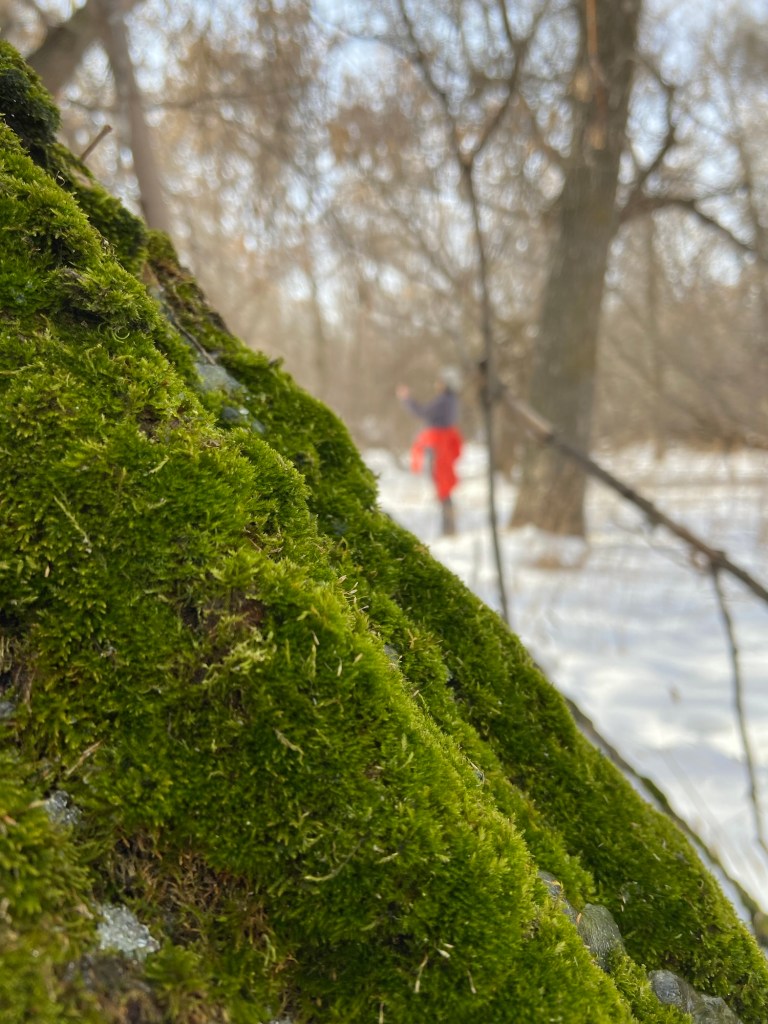
The way sunlight hits one little patch of moss.

A bird I can’t identify.

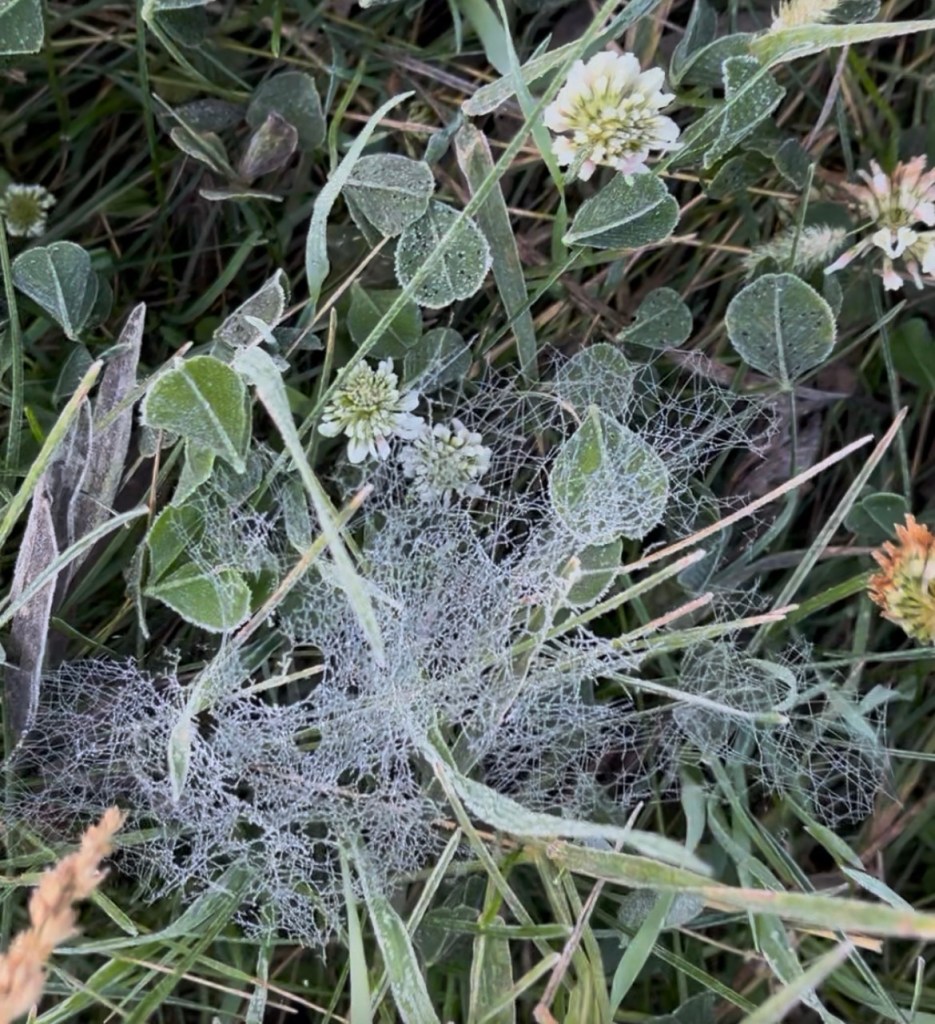
A spider web I would have walked right past.

I don’t have to figure anything out.

I don’t have to make the experience meaningful.

I don’t have to turn it into a lesson.

I just notice.

What has my attention right now?

Then I follow that.

And when something else catches my attention, I follow that instead.

It’s quite simple.

I don’t have to live three days ago. I don’t have to live three weeks from now.

I can live right here.

With the trees.

With whatever happens to be in front of me.

Wisdom doesn’t mean having it all figured out

I don’t think the podcast was suggesting that wisdom means knowing exactly what to do.

Sometimes we don’t know.

Especially with chronic pain.

There is a lot of trial and error.

What helped yesterday might not help today.

Something that works beautifully for one person might make another person’s body stage a small coup.

There isn’t always a clear answer.

But wisdom doesn’t necessarily require a complete plan.

It can be much smaller.

One thing I know I can do is this.

  • I can drink some water 💦
  • I can rest before I completely crash. 😴
  • I can step outside 👣
  • I can notice what my body is telling me 👂
  • I can take a short walk instead of deciding I need to complete a 5km hike or not bother going at all 🚶‍♀️
  • I can spend ten minutes among the trees 🌲 🌲
  • I can stop arguing with the reality of today long enough to actually experience today 🧘‍♀️

That last one is hard.

Because sometimes I want today to be different. But wanting it to be different doesn’t change what it is.

And accepting what is happening right now doesn’t mean I like it. It means I stop spending all my energy fighting a moment I can’t change.

Maybe that’s where wisdom starts. Not with a solution. With noticing.

Maybe the kids have it partly right

My grandkids aren’t worried about whether they’re making enough progress in life.

They aren’t measuring the day by how productive they were.

They aren’t wondering whether they should have made a different choice three years ago. (One of them wasn’t even here three years ago.)

They aren’t lying awake thinking about everything that could possibly go wrong tomorrow.

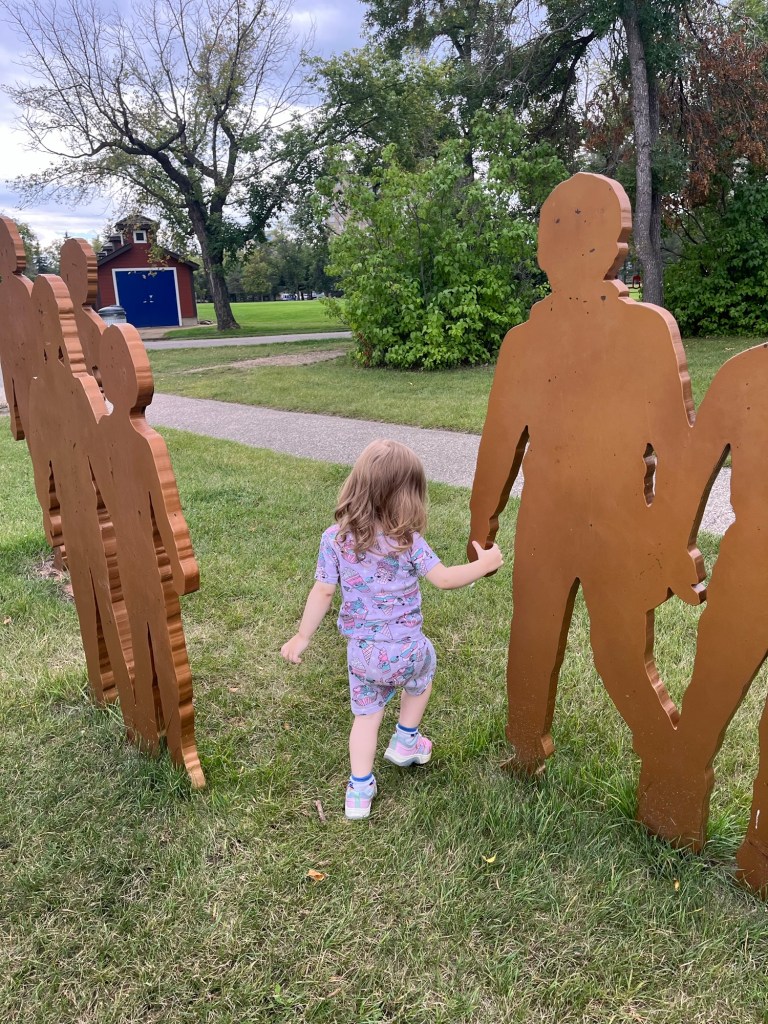
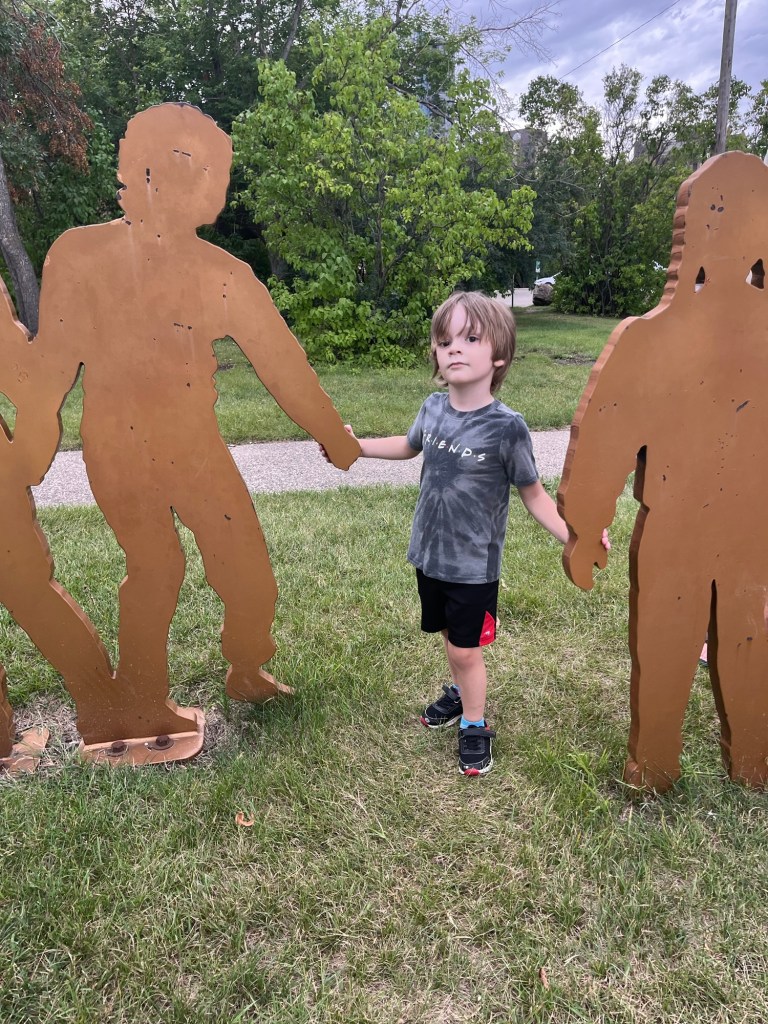
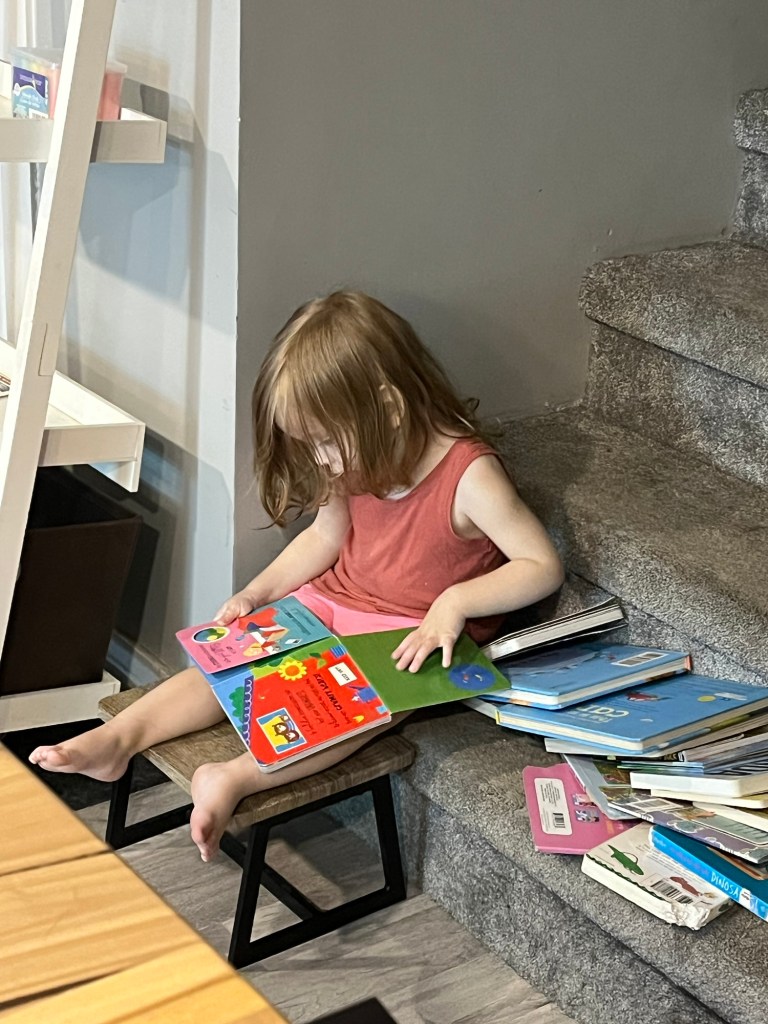
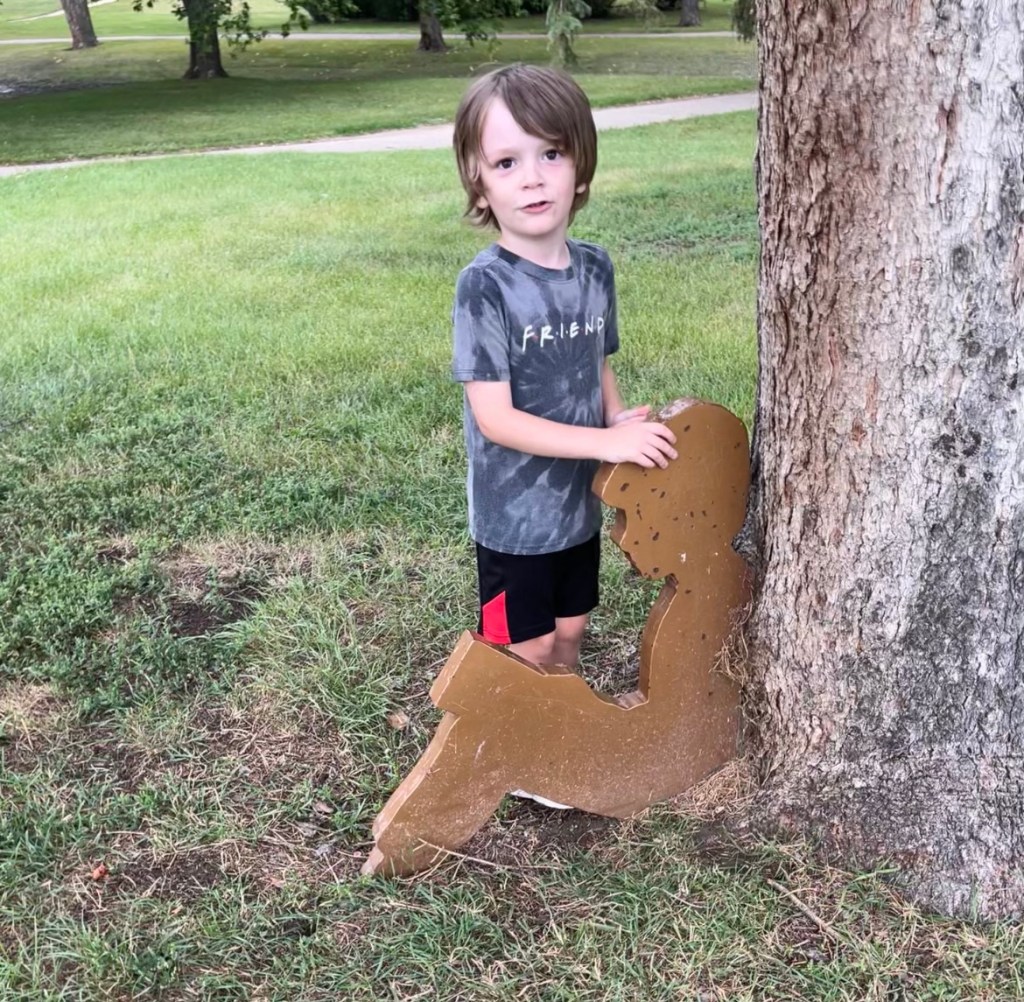
They are here. Reading a book. Talking to a wooden cutout.

And maybe I don’t need to become a child again to learn from them.

I can become child-like without becoming childish. And remember something children seem to know naturally:

Pay attention to what’s happening right now.

“Christopher Robin, what day is it?”
“Today”
“My favourite day”

There will be time for tomorrow when tomorrow gets here.

There will be things to learn from yesterday when yesterday needs to teach me something.

But right now?

There is a tree.

There is wind moving through the leaves.

There is a bird making an extremely confident noise.

There is this breath.

There is this moment.

And for today, maybe wisdom is simply noticing that I’m here.

Then taking the next small step. We are all walking miracles. Let us strut accordingly.

Valemor

(n.) The quiet pride of knowing you survived something without becoming cruel, loud, or bitter. 🙌

The ideas about worry, wisdom and being stuck were inspired by the podcast Better Than Happy: “Don’t Worry” Is Terrible Advice, August 27, 2026

Living in the Pause

“The music is not in the notes, but in the silence between.”
—often attributed to Wolfgang Amadeus Mozart

I’ve been thinking about the pause. The spaces between the things we think make a life important.

We live in a culture obsessed with the notes.

The promotion.
The house.
The vacay.
The degree.
The business.
The six-figure salary.
The awards.
The followers.
The accomplishments we can put on a résumé.

More. More. More.

More recognition.
More experiences.
More things.

These things absolutely have their place and purpose. But somewhere along the way, we started measuring ourselves and others by those notes. What if, hear me out, the music is actually in the silence between? In the pause.

A forest is never truly silent. There is wind moving through the branches, birds calling, insects buzzing, leaves rustling, footsteps on the trail.

But there are pauses between the sounds. If you notice them, those pauses make you notice the sounds that much more.

Maybe life works the same way. Maybe the pause isn’t empty. Maybe it is where we hear what we would otherwise miss.

I don’t have the wealth or notoriety or conventional accomplishments that can make a life look impressive from the outside.

And often, I’ll admit, I struggle with that.

I want to work. I want to contribute. I want to be useful. I want to afford to live. I want nice things. I want to go fun places.

I want to get groceries without having to figure out which ones I can afford to put back (calculus- level grocery shopping.)

I want to say yes to things without factoring in the 2-3 business days of recovery. I don’t want to be a burden on others.

And when I look around and see everyone else accomplishing things, building careers, travelling, buying houses, starting businesses and living their lives, comparison can sneak in.

And comparison has never once left me somewhere good. It usually leaves me grieving the life I thought I was “supposed to have.”

Maybe I’m not missing the music. Maybe I’m living in the pause.

That reoccurring thought has changed some neural pathways in my brain.

Billy Graham once said, “You’ve never seen a hearse with a U-Haul behind it.”

We don’t take our houses. We don’t take our bank accounts. We don’t take our titles. We don’t take the things we’ve accumulated. We don’t even take our accomplishments.

People sometimes leave a legacy through museums, buildings, scholarships, roads and schools named after them. (And there is nothing wrong with that.)

But I’ve started asking myself a different question:

What if the most important legacy isn’t what has my name on it?

What if it’s who I became while I was here? And whose name I have written on my heart at the end of it all?

What if the real question isn’t, “What did you accomplish?”

But:

“Who did you become?”

Did I become kinder? More compassionate? More patient? More generous? More loving?

And, if you believe as I do, “Do you pause to recognize this is who you have become with God’s help?”

That changes the way I look at my days.

I believe the only things I ultimately get to take with me when I leave this life are my relationships with the people I love and what I have become in the process of living it.

So if this is the pause, I don’t want to waste it.

I want to live here intentionally.

Interruptible-y.

I’ve spent a lot of my life focusing on productivity.

What’s next? What needs to get done? What am I accomplishing? How do I fit everything in?

But what happens when I build my life so tightly around my plans that there is no room for interruption?

What if the interruption is the point?

I still have a loose outline for each day. Things I want to accomplish.

But I want to be interruptible. I want to leave room for God.

For people. For a conversation. For a need. For beauty. For a compassionate detour.
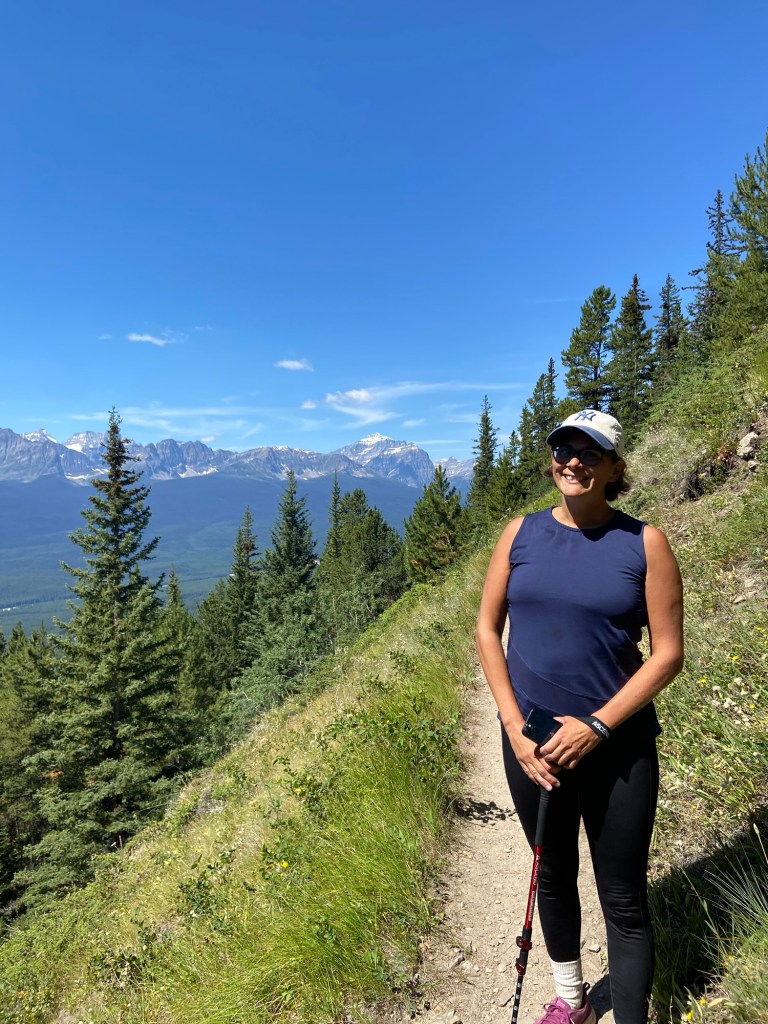
What does living in the pause look like for me?

I’ve started organizing my life around four areas.

Not perfectly.

But intentionally.

1. Spiritual growth

I start with God. I pause to pray to speak to Him. Then I read scripture to listen.

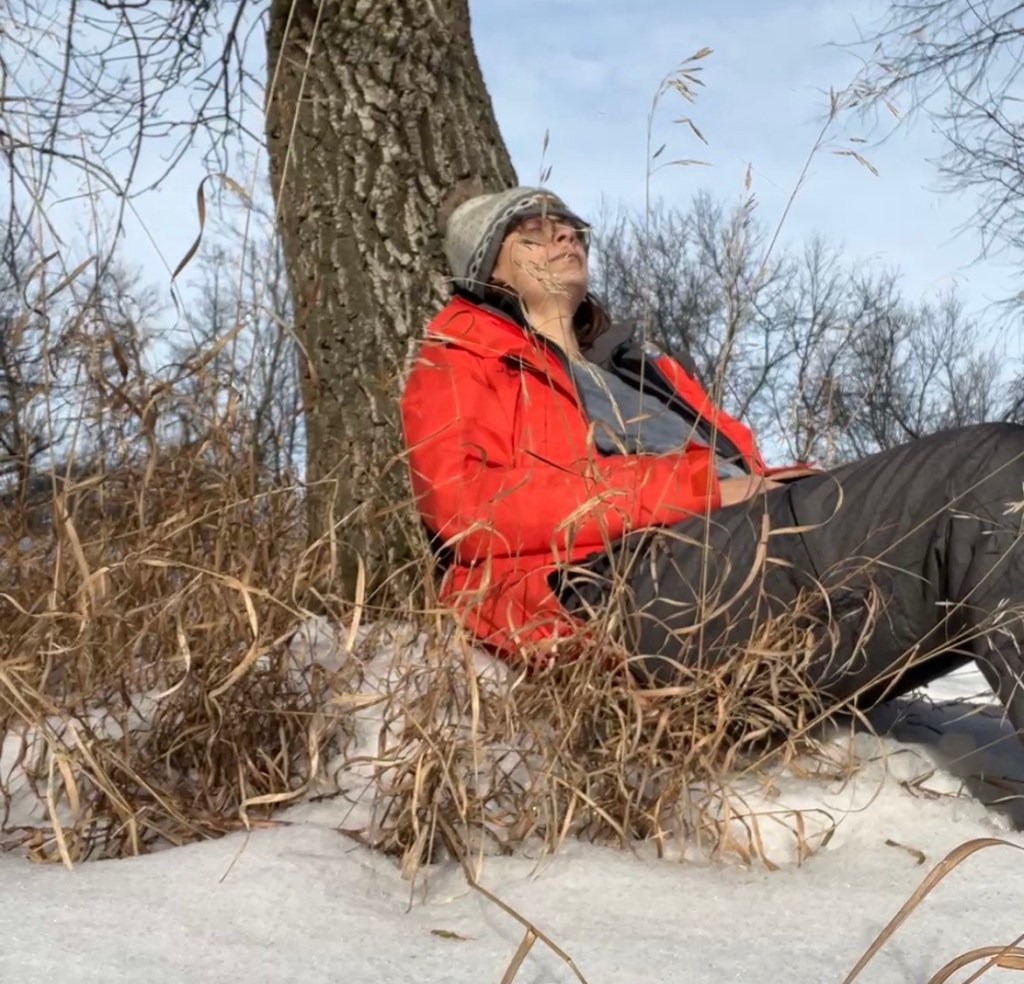
Sometimes I’ll sit in the sunshine while I pray. There’s something about feeling the warmth of the sun on my face, noticing the light, and remembering that I’m part of something much bigger than whatever is happening inside my own head. Or my body.

Soulucence

A coined spiritual and artistic term meaning the radiant, unarmored light of your true soul, shining to the world.

I try to carry that awareness with me through the day. That light. That connection.

The reminder that my life has a purpose beyond what I can accomplish.

Because if I spend all my energy trying to build a life that looks successful but neglect the person I’m becoming, I’ve missed the point.

I don’t have to earn my worth by being useful.

I can simply be His.

And from that place, I can become more interruptible. More available. More attentive.

More willing to notice what He might be putting in front of me.

2. Physical health

My body gets a significant portion of my attention these days.

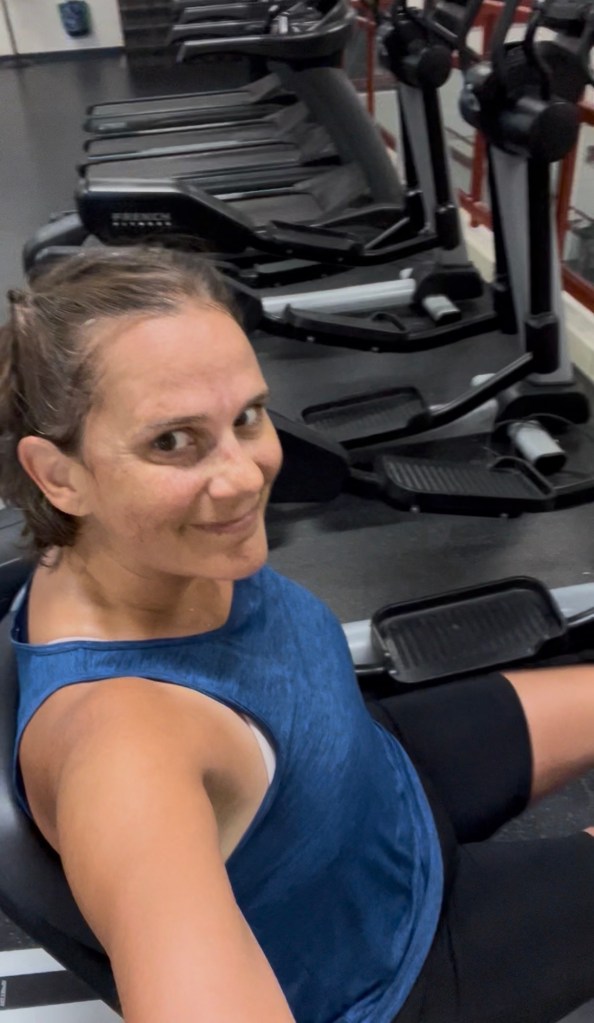
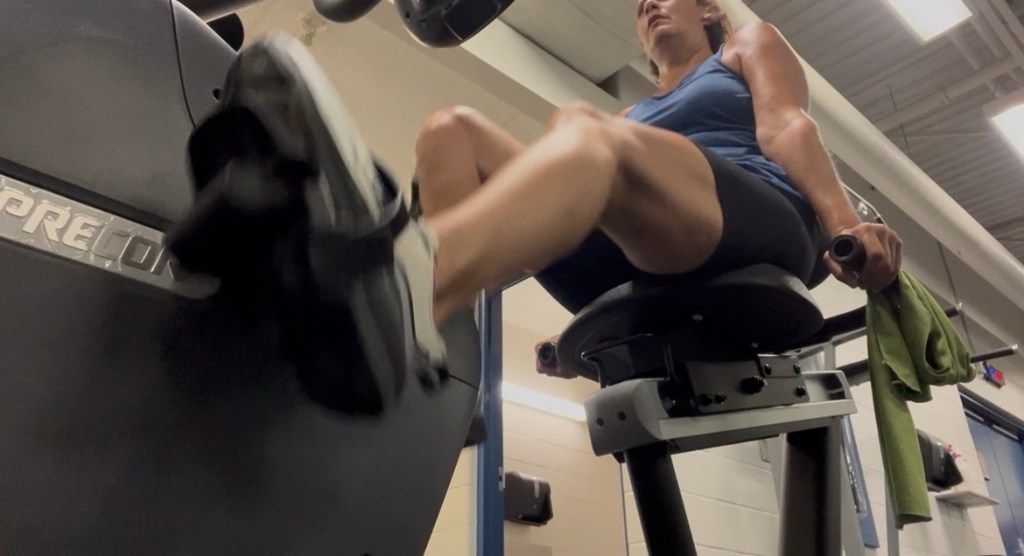
I go to the gym three days a week. I have a routine for each visit.

I generally walk there, which means going to the gym can consume a surprisingly large portion of my day.

Not much keeps me home.

Ribs out? Still going.

Bone structure held together by ligaments there more for decoration than integrity? Still going.

Bad weather? Still going.

The people who were supposed to meet me there cancel? Still going.

Apparently I have become that person.

Until. Ice. Then I stay home.

I also spend time trying to support my body in other ways. Light therapy, castor packs, and other things that have become part of my detox routine.

I’m working toward an anti-inflammatory way of eating. Let’s just say this is a work in progress.

I can make a beautiful, healthy breakfast and then my good intentions meet a snack.

My next goal is finding healthy lunches I actually enjoy and snacks that don’t make my inner snack gremlin revolt.

I’m also working on drinking more water. If you have a solution for this other than “just drink more water 🙄,” I’m listening 👂.

I make homemade body products and cleaning products too. One day a week is usually devoted to refilling whatever is running low.

It’s not glamorous. But it is part of caring for the body I’ve been given. And I’m learning that caring for my physical health isn’t about forcing my body to perform like it used to.

It’s about listening to it. Respecting it. Working with it. And sometimes, that means adjusting the plan.

Which brings me back to:

Being Interruptible.

A healthy life isn’t necessarily a perfectly executed schedule. Sometimes it’s knowing when the schedule needs to change.

3. Intellectual and creative growth

“Live as if you were to die tomorrow. Learn as if you were to live forever.”

— often attributed to Mahatma Gandhi

A mind is a terrible thing to waste.

I don’t want to stop learning just because my life doesn’t look the way I once imagined it would.

So I read. I listen to books and podcasts. Not mindless gibber-jabber. I want to learn things. Understand things. Try things.

I’m interested in how people work, how the brain works, how the body works, how nature affects us, how faith shapes us, how we can live better.

And then I try to do something with what I’m learning. I recognize it’s about more than just taking in. Our output of that knowledge benefits us and others.

I write. I blog. I create. I try new skills. I play. I experiment. I make room for curiosity.

And I’m trying to bring meditation back into my routine this fall. That one has fallen somewhat spectacularly off the summer wagon schedule.

Maybe summer isn’t the season for stillness for me. Maybe it’s the season for gathering enough light to carry me into the winter pause.

Living in the pause doesn’t mean creating another impossible list of things I must accomplish in time.

It means paying attention and following what works for the day. Or pursuing a completely unplanned thought.

Such as taking a compassionate detour.

Which brings me to the fourth part.

4. Relationships

This might be the most important one.

I start my day with a loose outline.

But I try to remain interruptible.

If a friend needs to talk, I want to have room for that.

If someone needs support I can give, I want to be available.

If my husband and I have an opportunity to go for a walk or grab a treat, I don’t want to be so committed to my schedule that I miss it.

I intentionally build visits with friends into my week. Sometimes we go for a walk. Lay on the beach. Or we just sit and talk.

Some people leave me energized. Some people deplete my energy.

I’m learning to recognize the difference, being mindful without judging either one. Because relationships are not an optional extra to a healthy life. They are part of a healthy life.

I believe that the people I love are part of what I take with me into eternity, so investing in those relationships isn’t time away from my purpose.

It is part of my purpose.

Being interruptible means leaving enough room in my life for another human being to matter.

I still have days when I desperately want the notes.

I want the accomplishments. I want the freedom. I want to contribute more. I want to travel more. I want to buy something without having to calculate whether it’s practical.

I want a life that feels bigger sometimes.

But I don’t want wanting them to blind me to the life I’m already living.

The pause isn’t wasted time.

I used to think of the spaces between accomplishments as empty.

Waiting. Stuck. Behind.

I’m starting to see them differently.

Maybe this is where the music is. Where I learn to listen to God. Where I learn what matters. Where I become.

And maybe the pause isn’t the part of my life that happens while I’m waiting to get back to the real thing.

Maybe this is the real thing.

So I’m going to try to live here. In the pause.

To pray. To learn. To care for my body. To create. To laugh. To love my people. To take compassionate detours. To notice the rain. To sit in the sunshine. To walk through the forest.

And to become the kind of person I hope to be when all the notes have finally ended.

Because perhaps the music was never in the accomplishments.

Perhaps it was always in the silence between them.

And maybe that’s one of the reasons I keep coming back to the forest.

Forest therapy teaches that you don’t have to force a forest to perform for you. You simply enter it, slow down, notice what is already there, and become receptive to what you might otherwise miss.

The wind between the trees. The birdsong between the sounds. The light between the branches. The breath between one moment and the next.

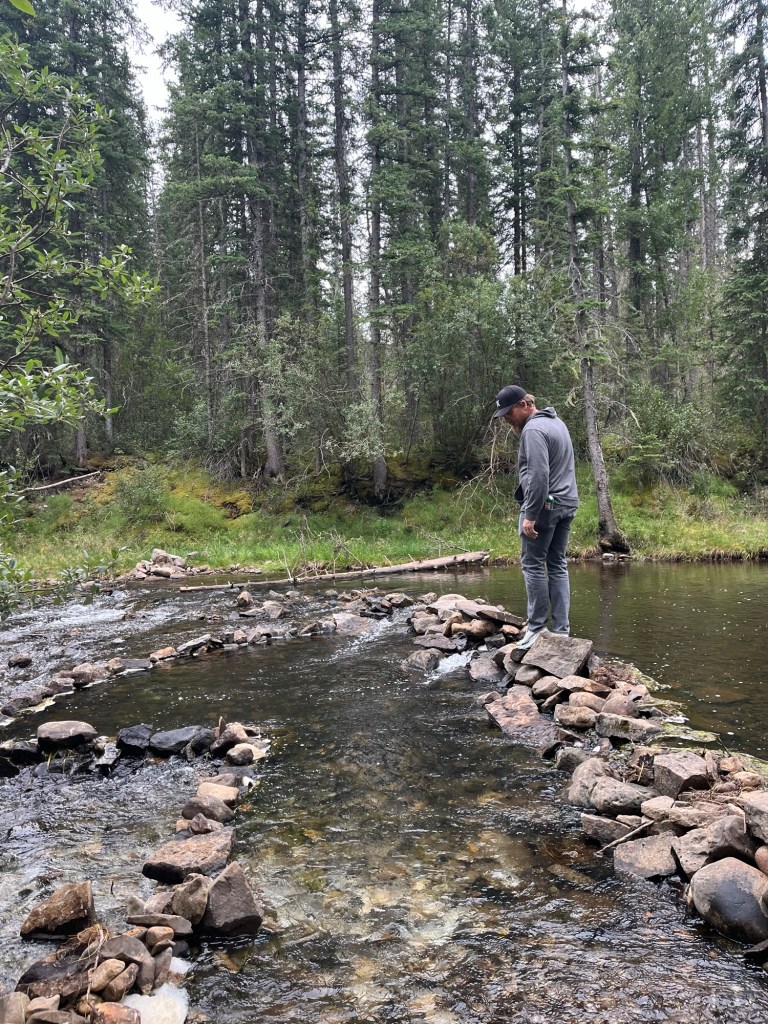
The pause. I’m due for another sit beside the rushing water beneath the tall trees. A lay down under clear, bright, starry skies.

So here’s a question for you:

What would change in your life if you stopped seeing the pause as wasted time and started asking what it might be teaching you?

Be led by joy. It’s the whole point.

-Mike Dooley

🤍The Hidden Struggles of Connective Tissue Disorders🤍

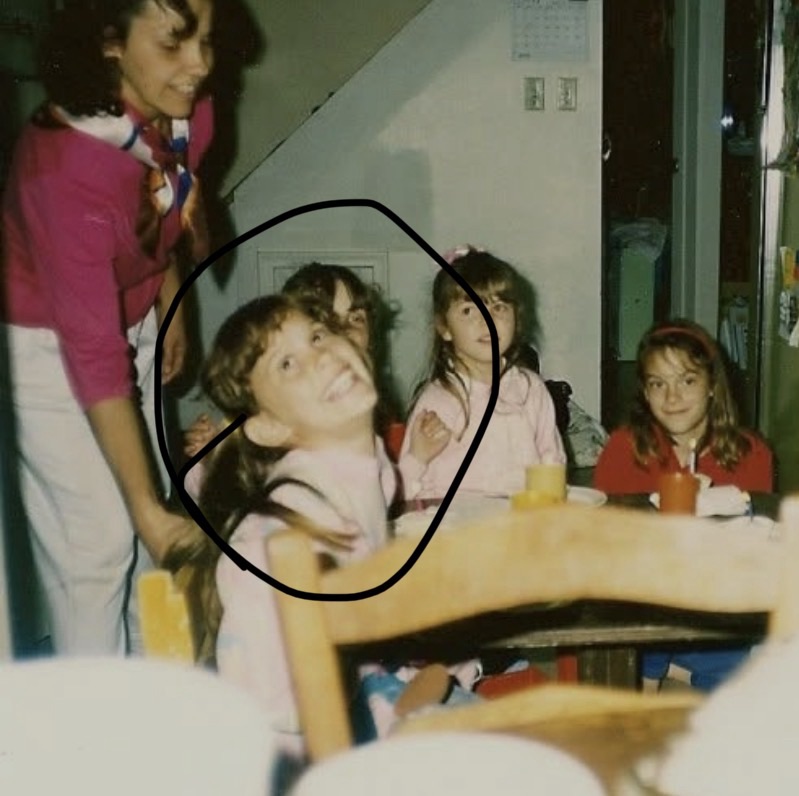
Back in my day, some kids brought hockey cards and sticker collections to school. I brought an alarming range of ligament-based entertainment.

Sometimes hypermobility first appears as a child who seems unusually bendy or clumsy, often both at once. 🙋‍♀️

The child who sits in a W position on the floor because it feels natural.
The one who, without pausing to question it, contorts themselves into strange positions during movie night.

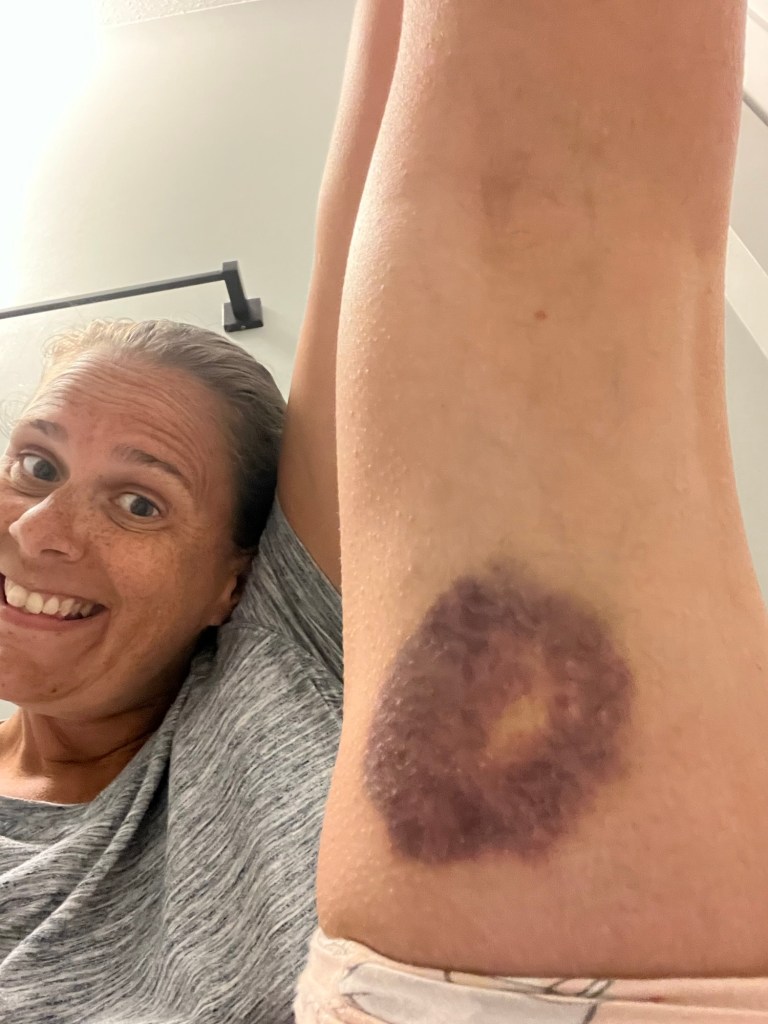
What they may not see is the child constantly running into walls because their body struggles to map itself properly in space. Bruises appearing mysteriously across shins. Ankles rolling on flat ground. Sleeves chewed because pain and overstimulation are difficult to explain at seven years old.

And then there are the “growing pains.”

Except many children with connective tissue disorders experience pain far beyond the occasional ache adults remember from childhood.

Deep bone pain at night.
Legs throbbing so intensely sleep becomes impossible.
Crying after gym class.
Exhaustion after seemingly normal activities.

Many hypermobile children become experts at masking early. They laugh while joints slip. They keep playing while hurting because they assume everyone else feels this too.

Some become the “dramatic” child.
Others become the “tough” one.

Honestly, I was the child trying to survive in a body I did not yet have language for.

What am I even doing bending my neck like that?

The thumb that bends too far backward.
The knees that point in unusual directions.
The shoulder that clicks when slipping in and out.
Being crazy talented in a yoga class my first day.

What people don’t see is that connective tissue is not merely a few loose ligaments behaving badly.

Connective tissue is infrastructure.

It is the architecture holding the body together. The webbing woven through blood vessels, skin, organs, fascia, tendons, heart valves, lungs, digestive systems, pelvic floor, eyes, nerves, and joints. It is scaffolding. Suspension bridge. Packaging tape. Elastic waistband. Shock absorber.

And when connective tissue is faulty, life can begin to feel like living in a house where every screw has loosened itself by half a turn.

Not enough to collapse all at once.
Enough that everything creaks. And left unchecked, more and more areas become unstable, then require constant repairs. Eventually some rooms just become unusable.

A Sad Commentary: AKA My Brush with Organized Sports

My joints approached organized sports with more enthusiasm than stability. More optimism than skill.

In a small town, everybody played volleyball or there simply wasn’t a volleyball team.

So I played volleyball.

I hated it.

Looking back now, I wonder why I stayed in as long as I did. Every practice left my forearms covered in bruises. Big ones, tiny ones, overlapping ones. I looked part Dalmatian. Nobody else seemed to bruise like that, so naturally the conclusion was that I was doing it wrong.

Turns out my connective tissue was doing it wrong. Not me.

I was terrible at volleyball. Not for lack of trying, either. I could picture exactly what my body was supposed to do, but the execution never matched the image in my head. It always felt like there was a lag between my brain and my limbs, like someone had replaced my coordination with an unreliable Wi-Fi signal.

The only part of volleyball practice I excelled at was stretching.

That should maybe have been a clue.

I could also run forever, but the muscle fatigue before, during, and after was brutal. My legs and ribs constantly felt tight and overworked, like my muscles were trying to compensate for a body that refused to stabilize itself properly.

The solution offered to me was always the same:
“Practice more.”
“You just need to focus, Pam.”
“Try harder.”
“Don’t give up so easily all the time.”

My P.E. teacher, who was also my coach, and I were not exactly compatible personalities. I suspect I ranked fairly high on his “lazy kid” list. My feelings toward him and his teaching style don’t need to be discussed for the purpose of this post. Perhaps he was doing the best he knew how 🤷‍♀️.

What hurt most was that I wasn’t used to being bad at things.

I excelled in music. Dance. Academics. If I tried something, I usually became good at it eventually. But anything involving proprioception. Balance, coordination, spatial awareness, reaction time, exposed a kind of weakness I couldn’t outwork.

No matter how hard I tried, my body never responded the way everyone else’s seemed to. I felt like I was being asked to build a stable life with elastic bands where other people were given rope.

After enough years of that experience, something in me quietly stopped trying.

Not everywhere. Just there.

I realized I could put in enormous effort and still end up with roughly the same P.E. grade as the kid half-heartedly wandering laps around the gym. So eventually, I became that kid instead. The one at the back of the class who didn’t seem invested. The one teachers assumed didn’t care whether they passed.

Stemming from humiliation in trying my hardest while looking like a fool and as though I wasn’t trying at all.

It’s an incredibly discouraging place for a young person to live.

Some kids are exhausted.
Discouraged.
In pain.
Disconnected from bodies that refuse to cooperate. In retrospect, my body had all the stability of a shopping cart with one bad wheel.

The whole point of physical education is supposedly to encourage lifelong movement and confidence in your body.

Ironically, I now walk everywhere, go to the gym regularly, and deeply value movement. I suspect that may not be the case for those classmates that achieved gold stars for gym class back in the day.

Children are often graded on visible performance without anyone asking what invisible barriers may exist underneath it. 🍌 🍌 🍌

And maybe that experience is part of why I later felt drawn toward educational support work. Because I remember exactly what it feels like to be misunderstood in a classroom. To be trying harder than anyone realizes while appearing like you are trying the least.

Some kids are not lazy.

Sometimes what looks like apathy is actually years of silent defeat.

So Much More Than Loose Joints

My body has taught me that fragility and resilience are not opposites. Sometimes they exist in the very same tissue.

People often imagine connective tissue disorders as orthopedic inconveniences.

A sore knee.
An ankle sprain.
Being exceptionally bendy.

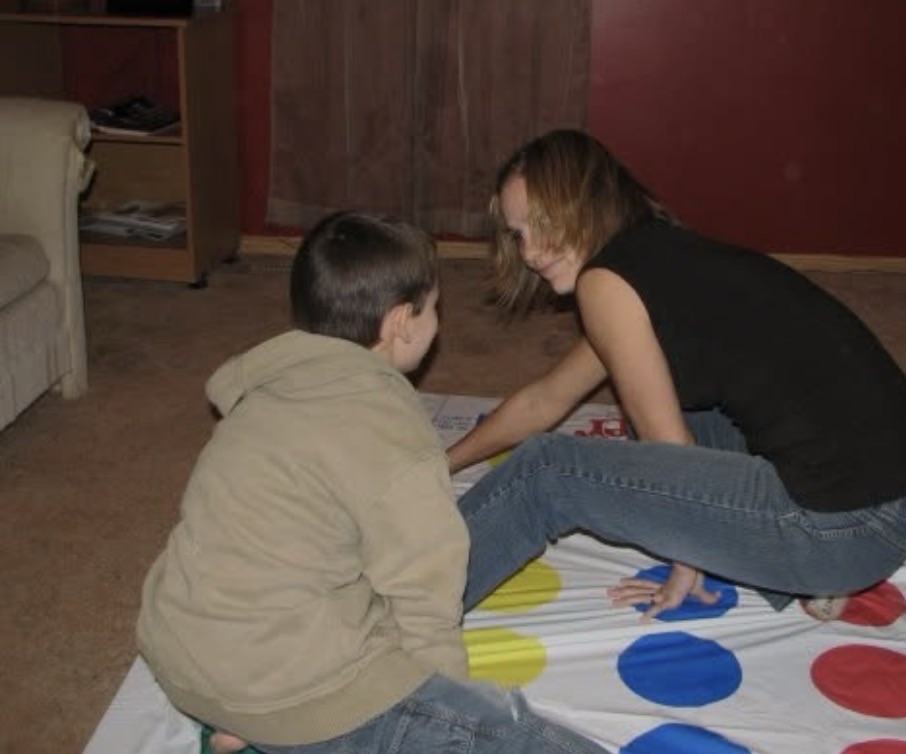
Playing twister with my now-26-year-old. Not to brag, but I was very good.

But connective tissue does not politely stay in one department.

It influences how blood vessels constrict and relax. Why standing up can feel like gravity suddenly doubled. Why heart rates race while brushing teeth. Why exhaustion arrives not after effort, but before and during it.

It influences the skin. Fragile, stretchy, slow to heal, easily bruised.

It influences digestion. Because the digestive tract also depends on connective tissue and smooth coordination. Meals become negotiations instead of nourishment.

It influences breathing. Because the rib cage, diaphragm, and tiny structures supporting the lungs are all part of the same interconnected story.

It influences pain. Not only through injuries, but through a nervous system constantly adapting to instability. Muscles tighten to compensate. Fascia braces. The body learns vigilance.

Even sleep can become difficult when the body spends the entire night trying to hold itself together. Some people wake up refreshed. My body wakes up looking like I’ve been assembled with spare parts in low lighting. Like sleep happened near me but not directly to me.

There is loneliness in illness that hides in plain sight.

You may look healthy while internally calculating:

Can my hips handle this chair?
Will my spine tolerate the drive?
How long before the fatigue crashes in?
Is today the day I sustain an injury that sets me back a year?

People see the smile at the gatherings.
They do not see the cost afterward.

The Forest Never Demands Symmetry

One of the reasons forest therapy can feel so healing for those with any type of disorders is because the forest does not care about perfection.

Trees twist toward light.
Branches split and regrow.
Moss softens fallen things instead of condemning them.

In the forest, support is collaborative.

Roots intertwine underground. Fungi trade nutrients between struggling trees. Fallen logs become nourishment for future life. Nothing survives entirely alone.

For people living in bodies that require adaptation, slowness, pacing, and care, the forest offers a radically compassionate model of existence.

Nature does not measure worth.

Walking Practice: “Borrowing Stability”

This forest therapy practice can be done slowly while walking a trail, sidewalk, park path, or even your backyard.

As you walk, notice what in the landscape appears stable.

Perhaps it is:

  • the rootedness of a tree
  • the reliability of stone
  • the rhythm of wind
  • the resolution of moss growing over rough surfaces

Without forcing positivity, simply observe.

Now begin walking more slowly.

As each foot touches the ground, imagine you are borrowing steadiness from the earth beneath you.

Not fixing yourself.
Not overcoming your body.
Borrowing support.

You may silently repeat:

Supported.
Held.
Connected.

If your body hurts while walking, let the practice include that truth instead of resisting it.

Forest therapy is not about pretending discomfort away. It is about allowing yourself to belong exactly as you are.

Pause occasionally and place a hand on a tree trunk, railing, stone wall, or your own chest.

Notice:

  • What supports you physically?
  • What supports you emotionally?
  • What support have you been refusing because you are used to surviving alone?

Continue walking without rushing toward insight.

Sometimes healing begins the moment we stop arguing with our pace.

The Grief No One Talks About

There is grief in becoming intimate with limitation.

Grief when your mind has cheques your connective tissue cannot cash.

Grief when symptoms multiply like unwanted groupies:
fatigue, dysautonomia, chronic pain, migraines, digestive problems, instability, inflammation, sensory overwhelm.

Many connective tissue disorders do not travel alone. They tend to arrive in flocks.

Even a wounded world is feeding us.

–Robin Wall Kimmerer

Hold fast. There is still beauty here.

Not the polished beauty of wellness culture that insists healing should look photogenic and triumphant. Complete. Universal.

But a quieter beauty.

The beauty of learning to listen deeply to others.
The beauty of noticing small joys because large ones became inaccessible.
The beauty of becoming tender toward bodies. Your own and others’.
The beauty of discovering that a meaningful life was never dependent on being free from pain.

The forest teaches this continually.

Decay feeds growth.
Broken branches house birds.
Burned landscapes bloom again.

I spent years believing my body’s limitations were character flaws. Turns out that limiting belief was false. Those limitations have helped me become the person I am.

To be rooted is perhaps the most important and least recognized need of the human soul.

–Simone Weil

Why Forest Therapy Helps

Forest therapy is not merely getting outside.

Research continues to show time in forests can help regulate the nervous system, reduce stress hormones, lower heart rate, and support emotional well-being. But for those living with connective tissue disorders, the benefits often go deeper than measurable metrics.

Forest therapy gives permission to:

  • move slowly
  • rest without guilt
  • reconnect with sensory pleasure
  • soften hypervigilance
  • leave productivity behind temporarily
  • remember you are more than symptoms

When the nervous system lives in a constant state of adaptation, gentle sensory experiences matter.

The sound of leaves moving overhead.
The coolness of shade on inflamed skin.
Birdsong interrupting anxious thoughts.
The visual softness of green.

None of these cure a connective tissue disorder.

But they can create moments where the body feels less at war with itself.

And moments matter.

Especially when stitched together over time.

A Beautiful Life Can Still Grow Here

Instructions for living a life: Pay attention. Be astonished. Tell about it.
— Mary Oliver

Living with a connective tissue disorder may mean your life unfolds differently than expected.

More pauses.
More recalculating.
More adaptation.

But different is not lesser.

Some of the most compassionate people are those whose bodies taught them interdependence.

Some of the most observant souls are those forced to slow down enough to notice life carefully.

The forest reminds us that resilience is not hardness.

Resilience is flexibility.
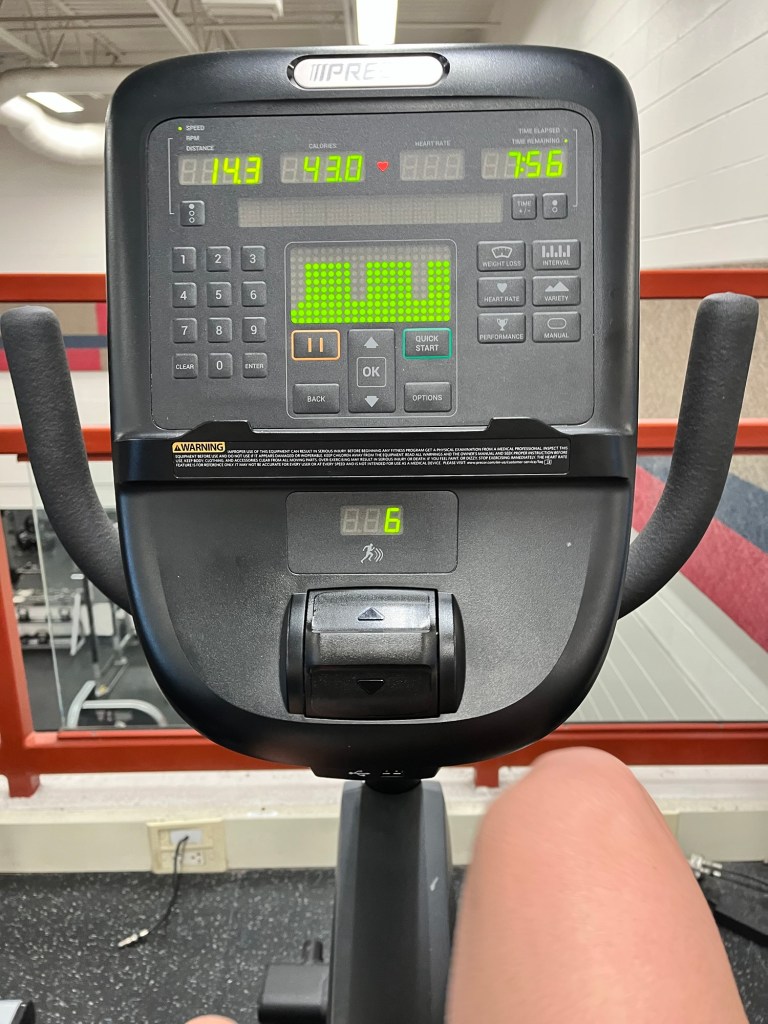
Relationship.
Return.

And perhaps that is fitting for people made of connective tissue. Those who understand, more than most, that life is ultimately about connection.

Not perfect strength.
Not endless endurance.

Connection.

To the earth.
To one another.
To moments of beauty that still arrive, even here.

What is to give light must endure burning.

-Viktor Frankl

The Influence of Non-Judgmental Awareness: Mending the Nervous System

There is always in February some one day, at least, when one smells the distant, but surely coming, summer.

-Gertrude Jekyll

If you’ve ever tried to “think positive” while your body is screaming, you already know who wins.

Pain wins. Exhaustion wins. A nervous system on red alert wins. Any pep talk given to said nervous system is bringing a Post-it note to a tornado.

And then we blame ourselves! Because obviously the problem is a personal moral failure, not a human being a human.

In forest therapy, we take a different approach. We don’t try to out-think the body. We learn to listen to it without judgment. In doing so, the body finally gets what it has been asking for all along. Safety.
Biology’s Rebellion: The Dangers of Overriding Nature

Many people living with chronic pain think they should be able to cope better.

They should be stronger.

They should push through.

They should be more grateful it’s not worse.

But here’s a humdinger of a thought. When your body is sending powerful distress signals, your conscious mind has very little leverage.

The attempt to escape from pain is what creates more pain.

–Gabor Maté

Neill Williams, on the Success Genius Podcast, explains it beautifully. When you are hungry, exhausted, or in pain, your biology overrides your attempts to think or feel differently.
The vagus nerve, your internal communication highway, links brain, heart, lungs, digestion, and the stress response. If that system is dysregulated, focus, creativity, decision-making, and connection all suffer.

Your body is a boundary of your soul. Treat it with care.

–Jean Shinoda Bolen

As I’ve said before. This isn’t a motivation problem. It’s a nervous system problem.

And until the body feels safer, it will keep turning up the heat.

Rushing: The Trap That Keeps Us in Survival Mode

There is more to life than increasing its speed.

–Ghandi

I dare say, we hurry through the day, override our limits, stay stimulated late into the night, fall into bed, wake up feeling four days past our bedtime, and repeat.

Then we wonder why our system is constantly braced for danger. We keep hitting refresh on the same nervous system and expecting a software update.

From a survival perspective, it makes perfect sense. Nothing in that cycle signals “You can stand down now.”

So the body continues to send messages. And they are rarely gentle. Whispers don’t usually create change. Pain often does.

To pay attention, this is our endless and proper work.

–Mary Oliver

“I Would, But I Simply Can’t.”

I often hear how wonderful forest therapy sounds.

I wish I could. Maybe someday. When life calms down.

But healing asks for time. Attention. Slowing down. Repetition.

Until then, forest therapy remains a lovely idea instead of lived remedy.

Word to the wise. Your body will keep requesting the appointment. It has an unlimited follow-up policy and will keep calling until someone answers.

If you don’t schedule a break, your body will take one for you, and it probably won’t be at a convenient time.

-Unknown

The Remarkable Power of Non-Judgmental Awareness

Here is where the shift happens.

When we practice noticing sensations without evaluating them, we step out of the inner fight.

Instead of:

  • This is bad.
  • Why am I like this?
  • I should be better.

(There are no gold stars for hating life correctly)

We try:

  • Warmth
  • Tightness.
  • Pulsing.
  • Cool air on my cheek.

No argument. No story.

Judgment activates defense. Awareness invites regulation.

The nervous system reads neutrality as safety.

The organism knows.

–Eugene Gendlin

Nature: The Ultimate Stage for Inspiration

The forest is a masterclass in non-urgency.

Nothing is asking you to be different.

Everything belongs. You. Belong.

Research into nature exposure consistently shows reductions in cortisol, blood pressure, muscle tension, and rumination.

But experientially, I’ve seen something even more important. People soften. Attention and breathing widens.

The body begins to renegotiate its alarm state.

Nature provides gentle sensory anchors. Light, texture, birdsong, air movement. These allow awareness without overwhelm. For someone with chronic pain, this is crucial. We are not adding more intensity; we are expanding capacity.

Astravore: (n) A soul that keeps feeding on hope even after disappointment- light-hungry, resilient, unbreakable. -ViviJan

You are larger than what is happening to you.

–Michael Singer

Silencing the Alarm: A Lesson in Balance

Imagine a car alarm that has been blaring for years.

You wouldn’t yell affirmations at it and tell it to be quiet.

You would look for the threat it thinks it perceives.

Non-judgmental awareness in nature is how we open the hood.

Each calm moment says, “No one is breaking in right now.”

Over time, the alarm system recalibrates.

My Story

I’ve experienced moments in my forest therapy practice when I wanted to do it all perfectly. To follow all the “right steps.”

When I go in with this focus I notice the pain is still there. The frustration is still there. I start thinking about all the years of pain I have ahead of me. Of financial strain. And the weight it adds to every relationship.

Then I remember to just breathe. Focus on today. Right. Now.

I start to feel the breeze on my face and hear it making its way through the trees around me. I sense the solid earth beneath me.

The pain does not vanish. But it’s not the only voice anymore. It has just been hogging the microphone in my head. 🎤 🤫

There is support available here whenever I need it. In the birds and the trees and the solid ground. This may sound odd. But this shift in thinking moves the pain inside a larger field of safety.

This is regulation. I just keep coming back to it.

The best way out is always through.

– Robert Frost

A Gentle Invitation to Explore

  1. Find something in nature that feels steady. A tree, a rock, the shoreline.
  2. Let your eyes rest there.
  3. Now widen your awareness to include three additional sensations that are neutral or pleasant.
  4. Move back and forth between the discomfort and the wider field

    You are teaching your nervous system that pain can exist without emergency.

    Do this regularly and the vagal pathways that support calm begin to strengthen.

    Don’t just do something, sit there.

    –Sylvia Boorstein

    The Real Result: Persistence in Life

    When regulation improves, people often notice clearer thinking, better sleep, and easier connection. Not because they forced positivity, but because their biology finally cooperated.

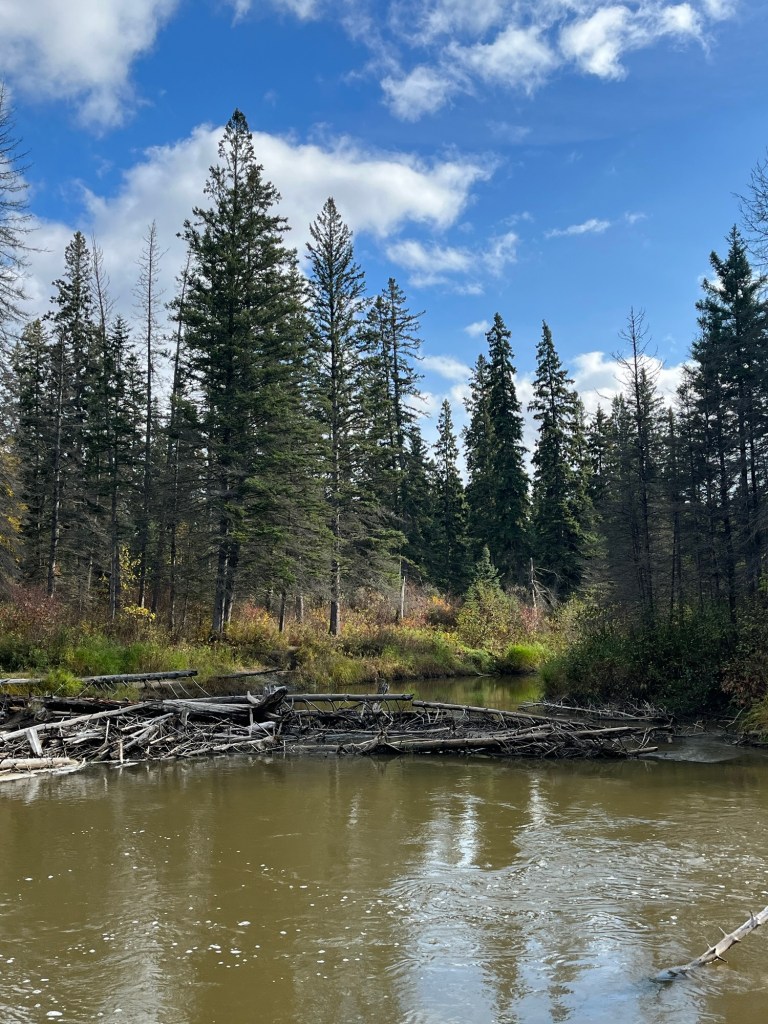
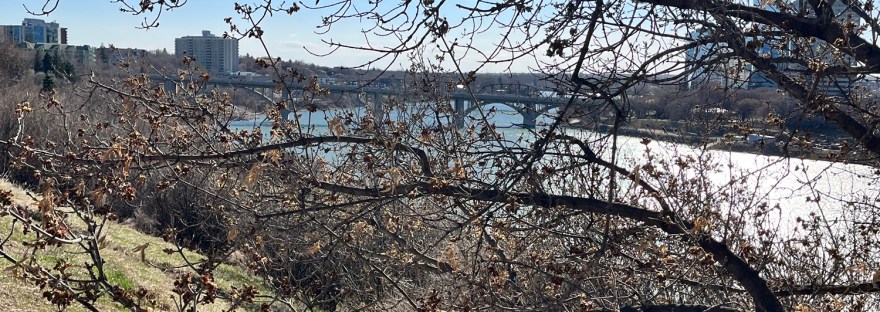
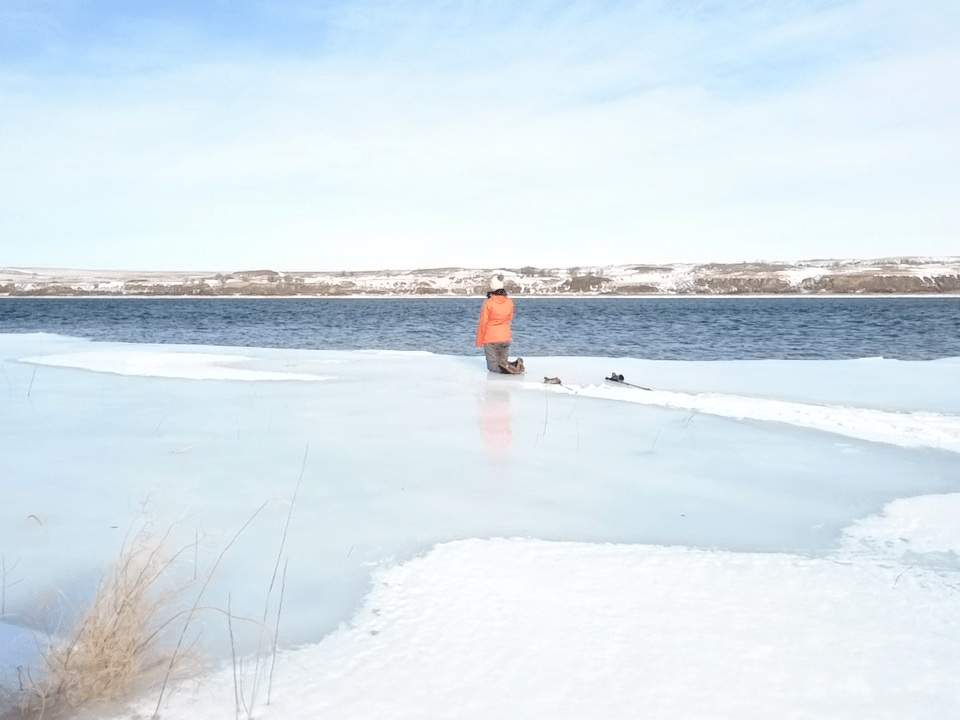
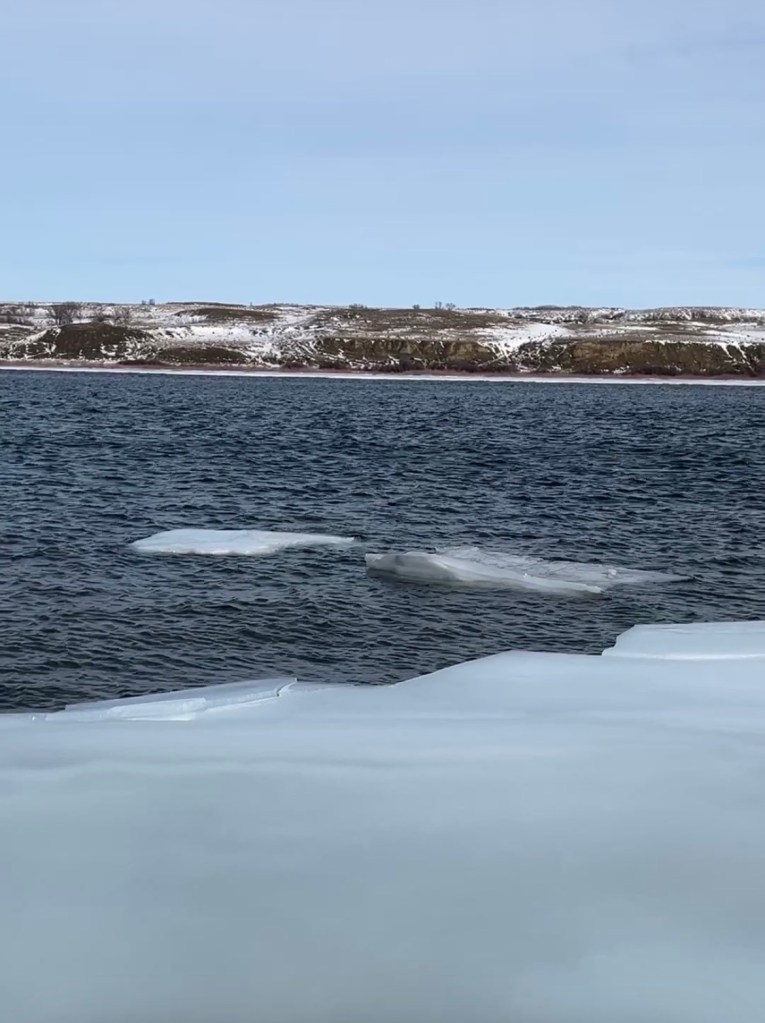
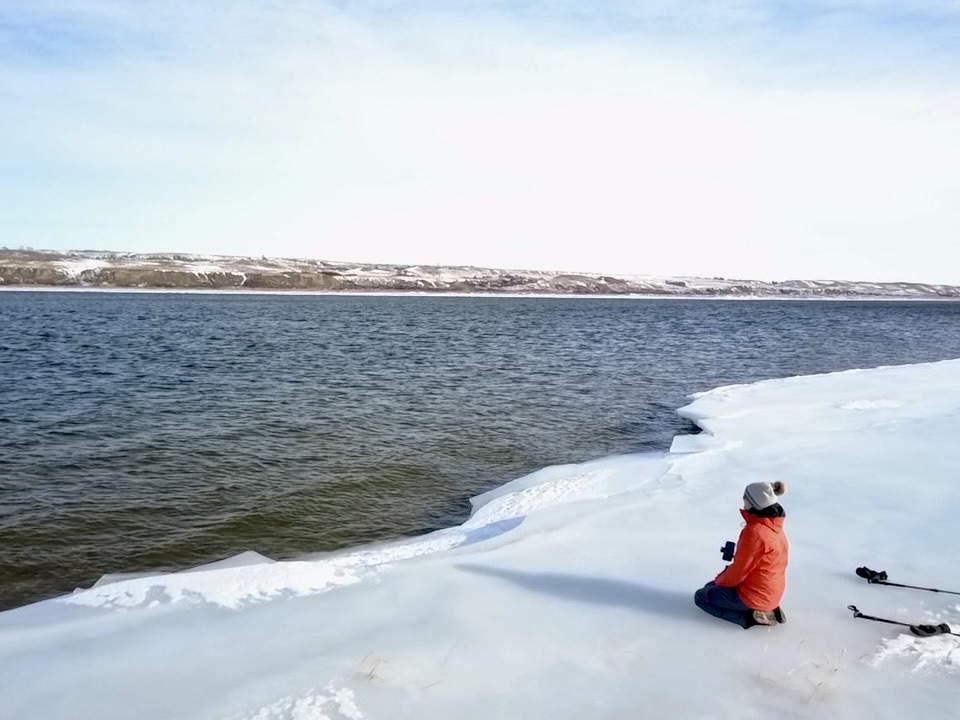
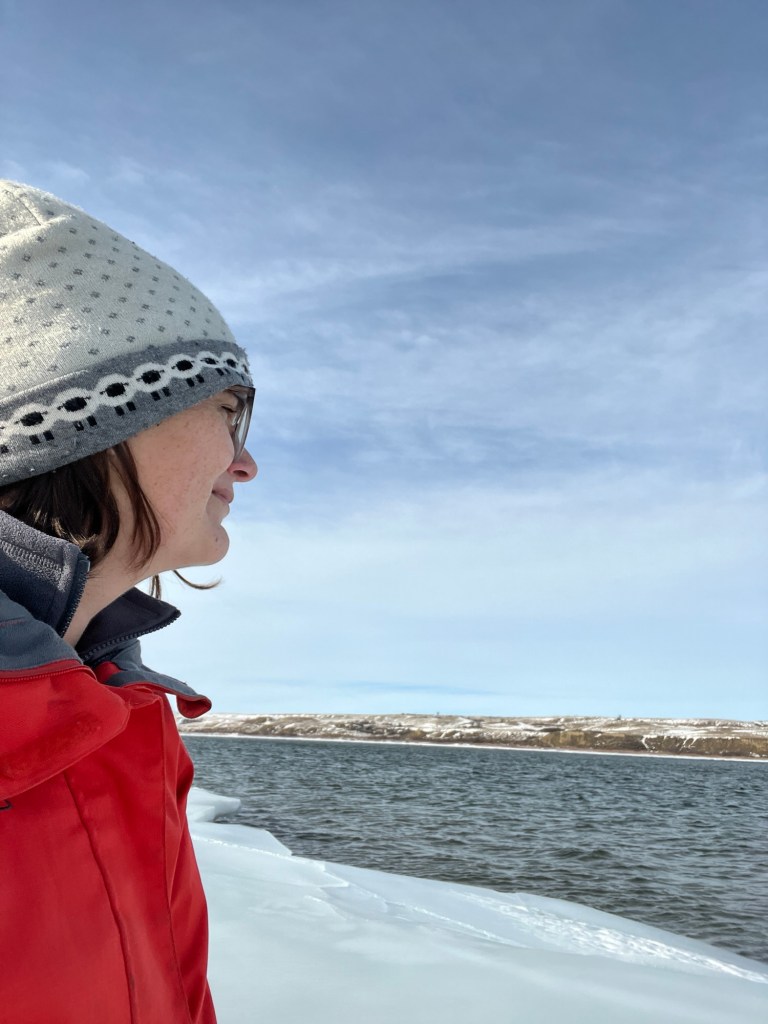
    You are no longer fighting upstream. You are being carried. Like these little bitty icebergs I watch on the river. Floating by. 👇

    The Closing “Peace”

    If we keep living in a way that ensures the alarm stays active, nothing changes.

    But when we make space, even small, consistent space for non-judgmental sensory awareness in the forest, the body hears something new.

    I’m safe. I can soften. I don’t have to shout today.

    And maybe, that is where my healing lingers. I just have to take time away, to meet it there.

    The body always leads us home… if we can simply learn to trust sensation and stay with it long enough for it to reveal appropriate action.

    -Pat Ogden

    Take care, my friends. I leave you with these February thoughts that gave me a little chuckle:

    My February workout plan is mostly just shivering until my muscles get tired.

    Love is in the air this February, but so is the flu, so please stay back.