A wrong note doesn’t ruin the music. A painful day doesn’t ruin a life.
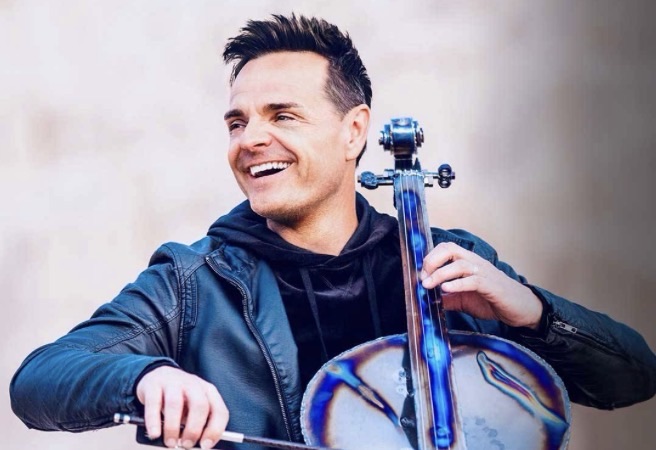
Steven Sharp Nelson from The Piano Guys was a guest on my usual podcast. He talked about a time, when he was young, that he was asked to play at a grand, important event. And he played quite poorly.
When he asked his dad how he had done, his father didn’t criticize him. He said he felt every mistake Steve made. Every bit of despair was written across his face, and his dad was pulled into it with him.
I know that feeling.
On a high-pain day, sometimes the people around me are pulled into it too. They see my face, hear my voice catch, watch me move carefully, and somehow begin carrying a little piece of what I’m carrying. I sense what it’s costing them and feel guilt begin to weigh me down.
Other people don’t know what to do with my pain. So they carry on as though it doesn’t exist. As though it and I along with it, are invisible.
Neither reaction is necessarily wrong. But both can leave their mark.
One makes me feel like my pain is consuming everyone around me. The other can make me feel like I’m invisible.
Steve said that now, when he plays a wrong note, he smiles.
Not because the mistake doesn’t matter. Not because he’s pretending everything is fine. But because he knows what he wants to do with that moment.
I don’t think I need to smile through every painful moment of my life either. I’m not interested in pretending chronic pain isn’t real. Some days hurt.
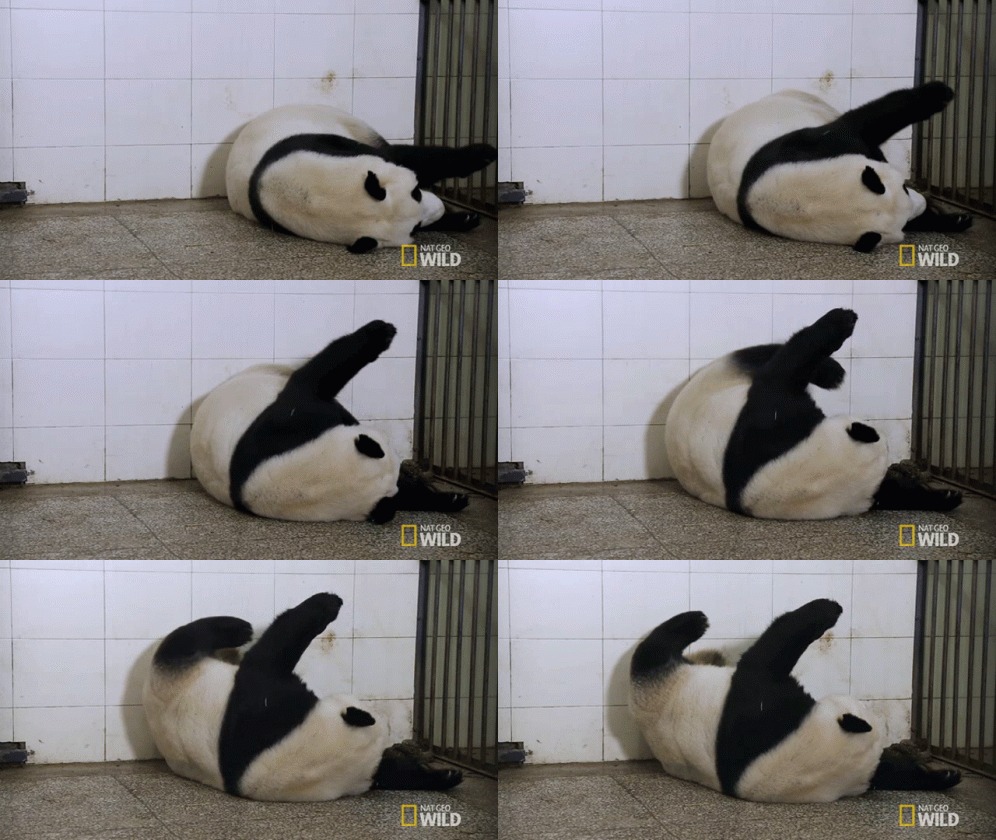
On those days I get an “error 404 💻: human not found 🚫” message every time I try to move.
But maybe there are moments when I can smile anyway.
Not at the pain.
At what I’m accomplishing and creating in spite of it.
Steve said something else about creativity.
He talked about how music and art have helped people through depression and burnout. But creativity isn’t reserved for musicians, painters, writers, or people who happen to be good at something other people can admire.
We are all creative.
And creativity, he said, works differently when we’re doing it simply for the joy of creating. Not to sell it. Not to post it. Not to have someone judge it.
Just to make something. To play. To imagine. To wander somewhere new.
Steve suggests that when we find ourselves making up storylines and placing blame on others, that we need to add more creativity to our life.
Creativity will make its way out of us one way or another. Either by creating what brings joy or creating storylines where we are the victim. Our brains are excellent screenwriters.
Have you ever been in the act of a menial job that requires no thinking? Cleaning the bathroom? Dishes? Driving on a highway? Do you start to picture these stories playing out in your mind?
This is your brain trying to be creative. Give it a joyful outlet to do so or it will create drama in your life.
I think this is one of the reasons forest therapy has become so important to me.
When I’m walking in the forest, I’m creating. I’m noticing. I’m visualizing. I’m meditating. I’m softening.
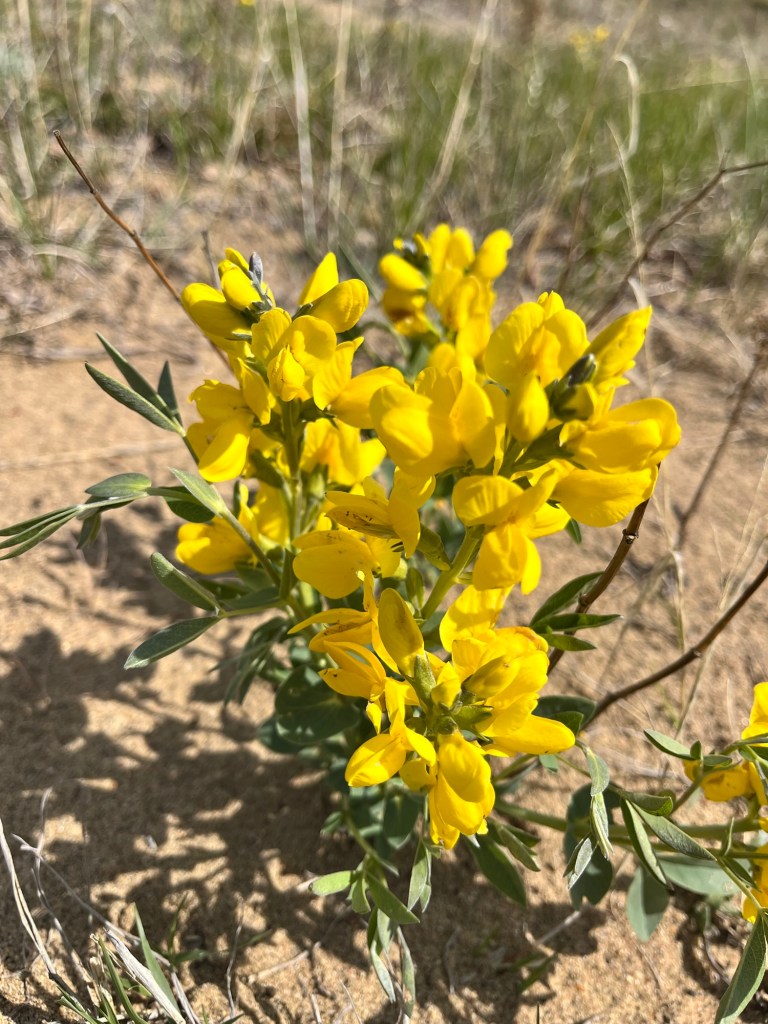
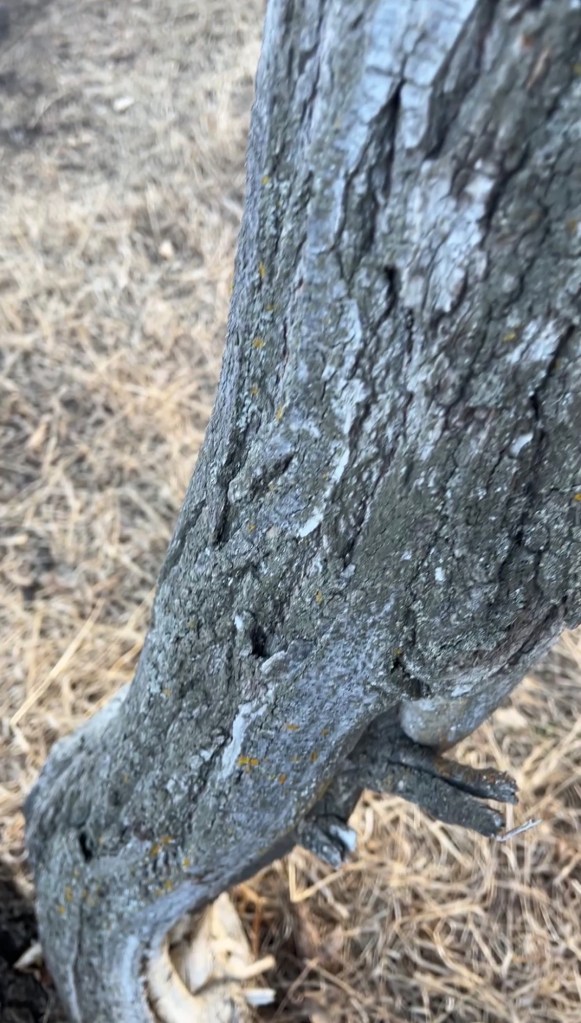
I photograph a flower because the colour catches my eye. I make up a story about a crooked tree. I visualize warmth when the wind cuts through me. I listen to the creek and let my attention follow it instead of following the argument happening inside my head.
I’m making little moments of beauty and wonder out of whatever happens to be in front of me.
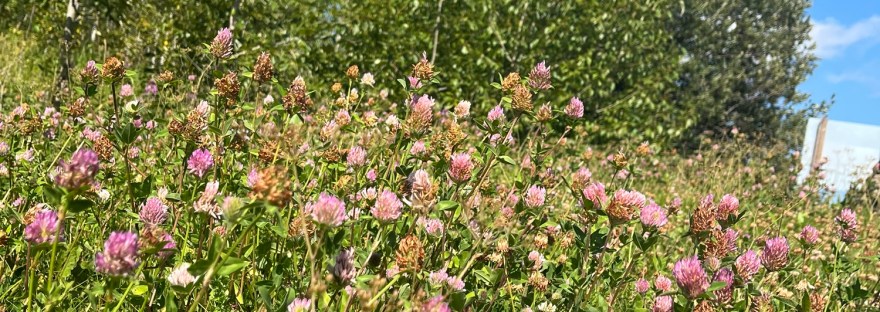
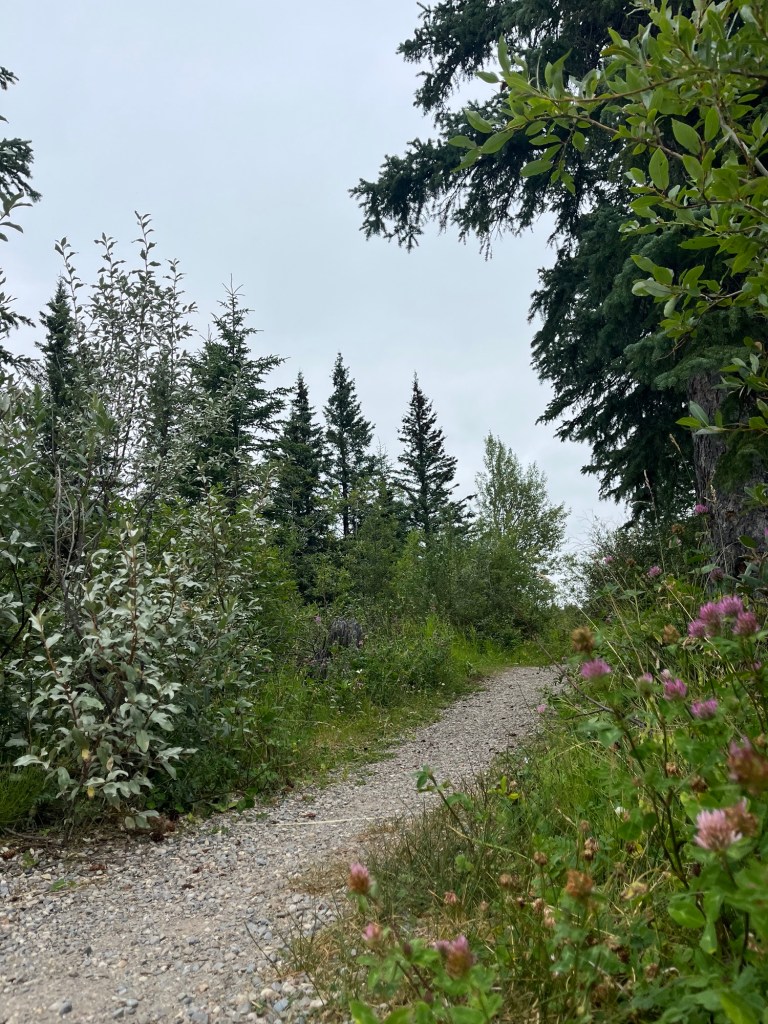
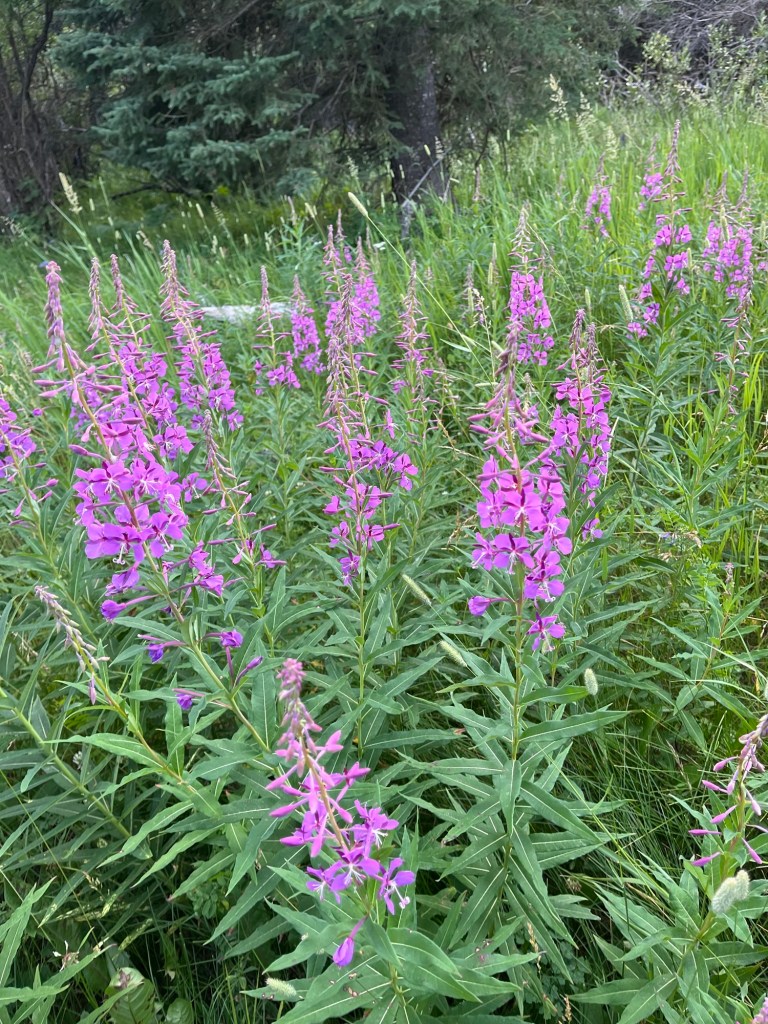
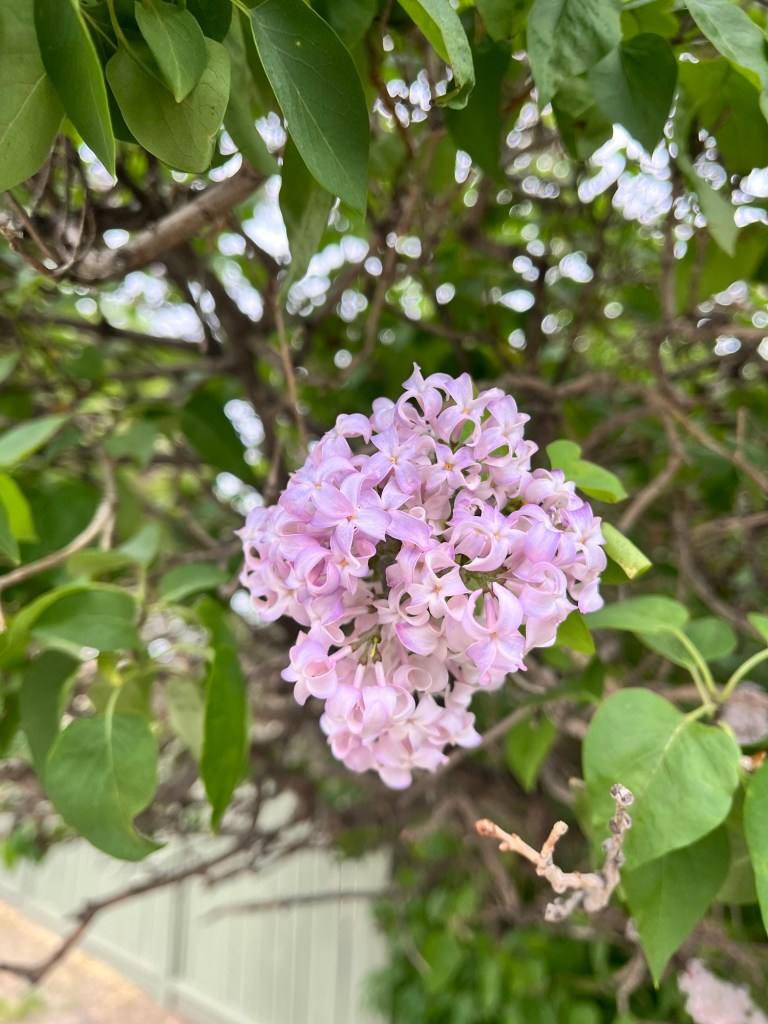
A patch of purple flowers.
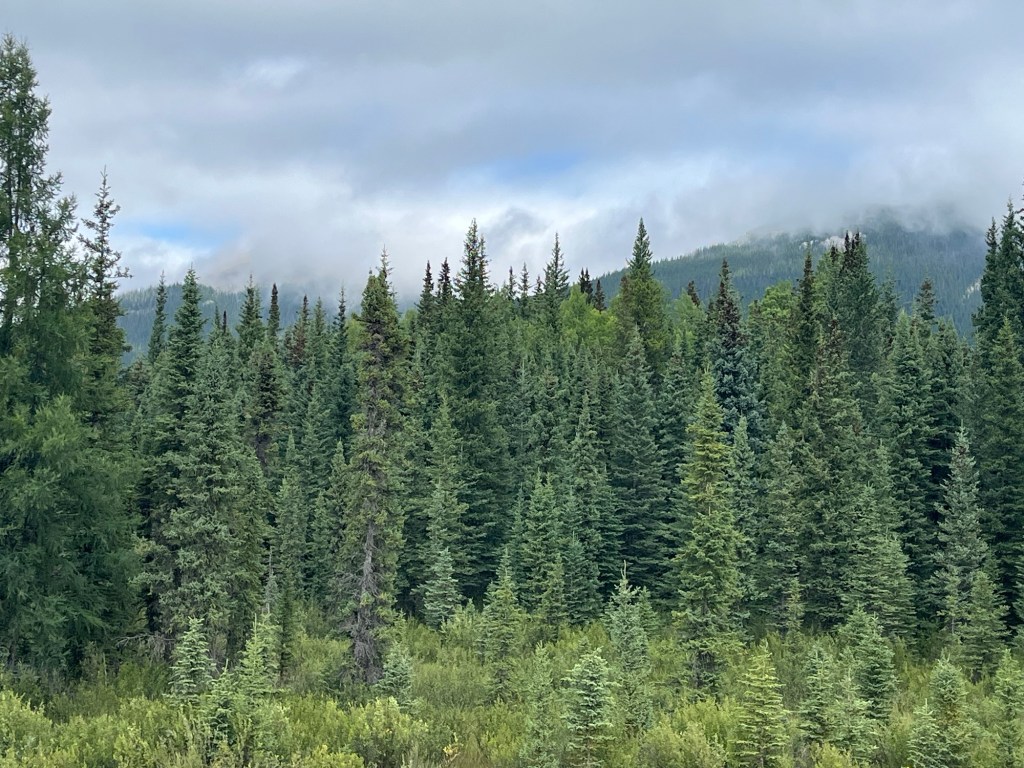
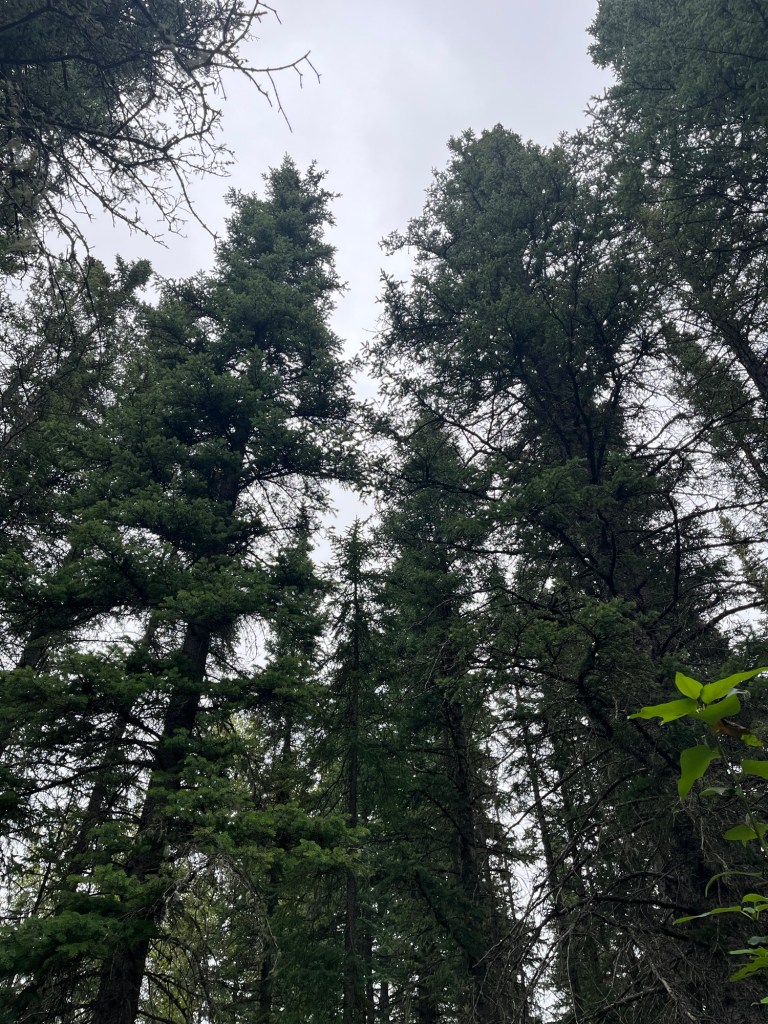
The shape of a tree.
The sound of wind moving through the branches.
A silly thought that makes me laugh.
A place my mind can go when my body is screaming for my attention.
I collect these moments.
I tuck them away like little treasures in my pockets.
A purple flower. A funny moment. A beautiful view. A ridiculous thought. A quiet breath.
Murmuration
The flowing movement of birds flying together across the sky in ever changing patterns. A sight that can feel almost dreamlike, drawing the mind into the present moment as hundreds of wings move with a rhythm that seems guided by something beyond words.
I put them in my pockets. 🐿️ 🌲
Because I know there will be days when I need them. When winter comes (or when pain gets loud 📢) I will have somewhere to go.
Maybe that’s one of the things I’m learning about living with chronic pain. I don’t have to pretend the pain isn’t there. But I also don’t have to give it the entire stage.
I can create something alongside it. I can notice something beautiful. I can wander. I can imagine.
And sometimes, when the wrong note happens, I can even smile.
Not because everything is okay.
But because there is still something inside me creating joy.
And that might be one of the most healing things I can carry home with me in my pockets.
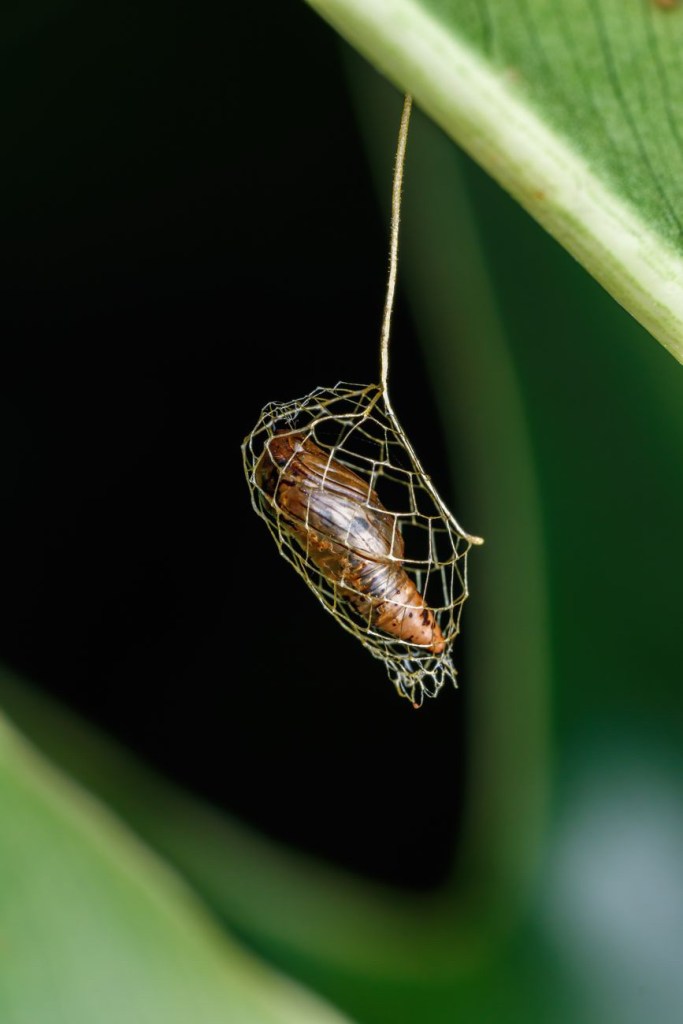
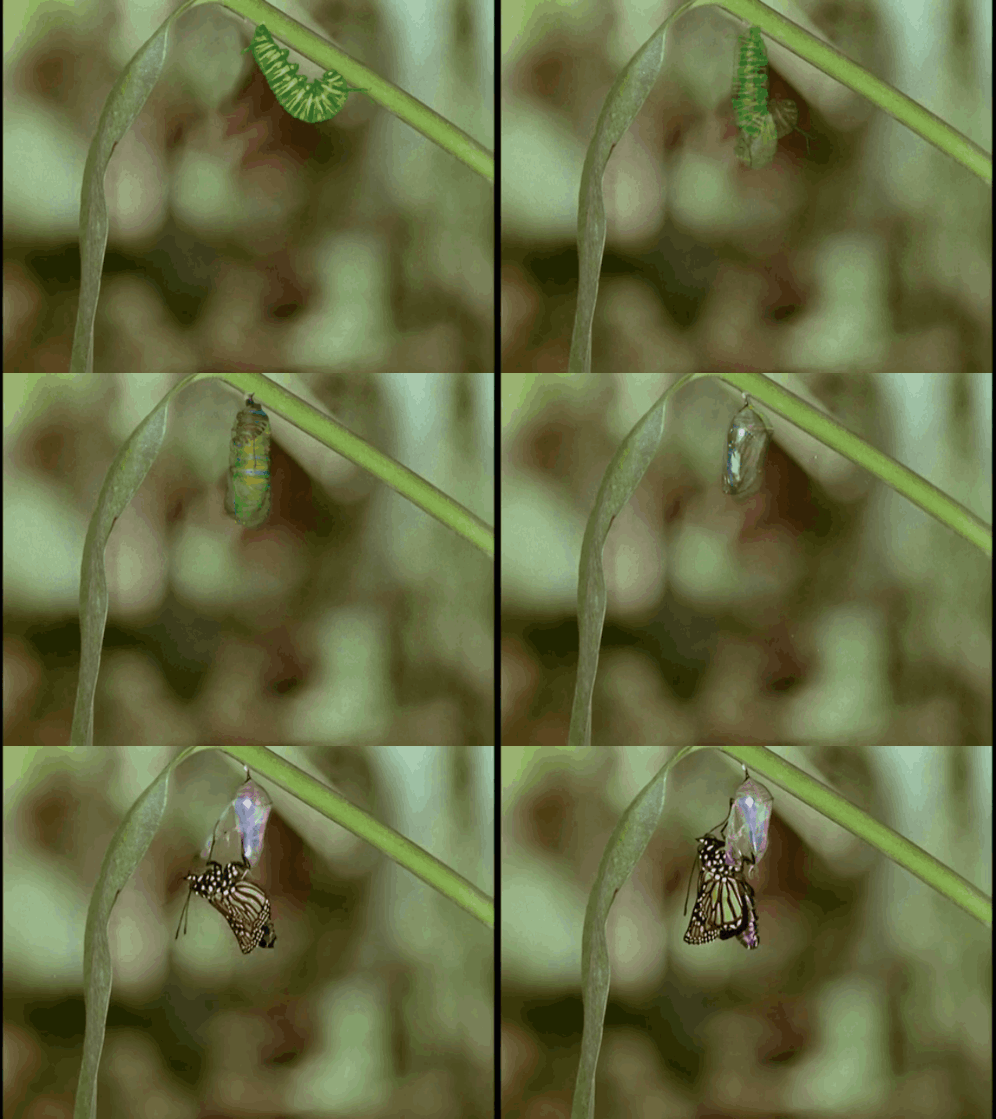
That, perhaps, is the difference between a crisis and a chrysalis. One keeps us frozen in fear. The other slowly reshapes us.
Technically, I’m not even fully in my midlife years yet.
And yet my body arrived early to the party.
A complete hysterectomy fast-tracked me into conversations I thought I still had years to prepare for.
Ironically, some circles don’t allow me in to the conversation because I’m “far too young” to know what menopause is.
It seems my reproductive system retired before society was emotionally prepared to handle it. Medically, I pass the test but I always get ID’d at the door.
I was medically launched into menopause with all the glamorous perks.
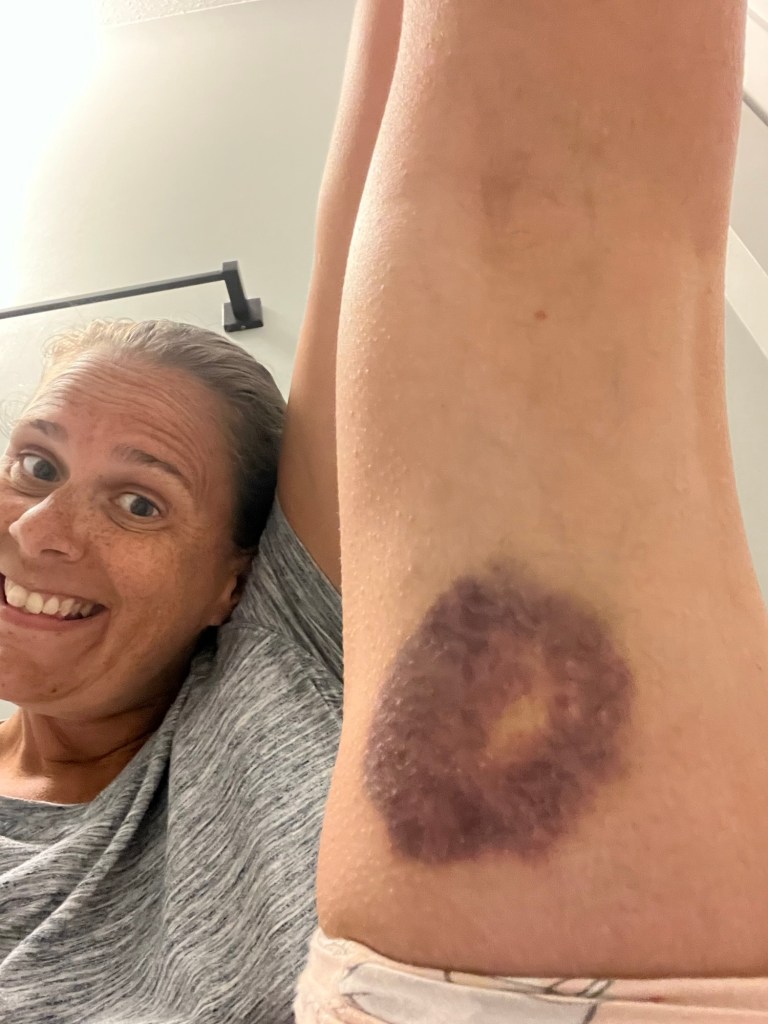
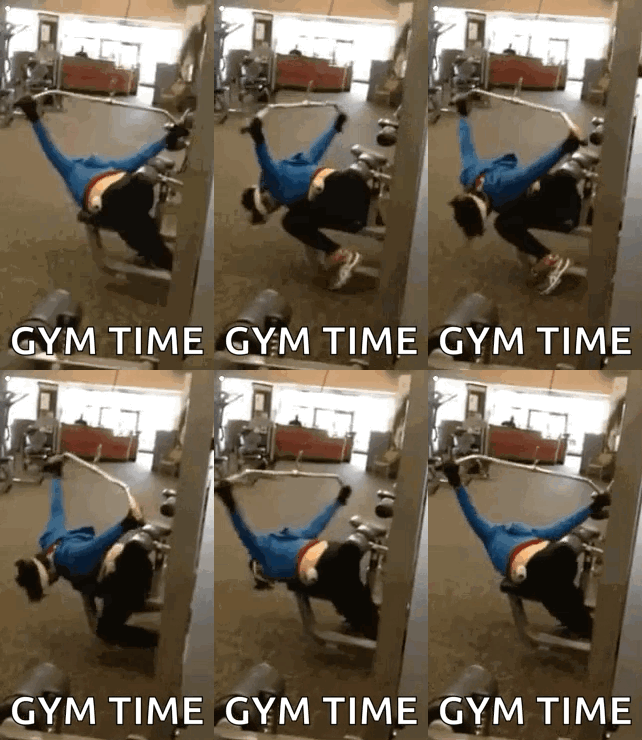
Hot flashes. Joint pain. An increasingly fragile relationship with sleep. And the deeply humbling realization that apparently your underarms and mid range can become flabby despite hours of working out at the gym.
(Nothing prepares you for sneezing incorrectly in your 40s.)
My body has adopted the classic expired warranty strategy, catastrophic synchronized failure. I’ve entered the ‘everything squeaks, leaks, or spasms unexpectedly’ chapter of ownership. My body has moved beyond ‘minor repairs’ and into ‘have you considered replacing the whole unit?’ territory.
Which is why a phrase I recently heard on the podcast Hello Menopause! grabbed my attention.
“Midlife chrysalis.”
Not midlife crisis. Midlife chrysalis.
The episode featured Chip Conley talking about reinvention, and I chose to listen to this episode because crisis sounds like collapse. Losing control. Becoming less.
Like panic bangs and plans to live “off-grid” and taking up emotional support hobbies. Sourdough starter anyone?
But chrysalis?
That sounds like transformation.
Messy. Strange. Hidden. Uncomfortable. Necessary.
A chrysalis says. You are not falling apart. You are simply changing form.
I think many of us who have experienced chronic illness, disability, grief, loss, burnout, etc. arrive at this transformation long before the culture expects us to.
Some of us are forced into reinvention before we even finish becoming who we thought we would be.
The Crisis
Be patient toward all that is unsolved in your heart.
Sometimes crayon. When I need a little more whimsy in my days.
There were years where survival became the main objective. Years where my nervous system felt like a shaken vending machine full of stress hormones. Years where I thought resilience meant pushing harder instead of listening deeper.
And then came the hysterectomy.
One of those dividing-line experiences where life becomes Before and After.
Before, I still secretly believed if I tried hard enough I might someday return to the old version of myself.
After, I slowly began realizing there may not be a way back. Emotional landslides and experiential cave-ins had blocked that passage way.
Forward and through became my only options. Through self-realizations. Humbling concessions. Constant negotiations between mind and body.
And maybe that is where the chrysalis begins.
The Chrysalis
And the day came when the risk to remain tight in a bud was more painful than the risk it took to blossom.
A chrysalis does not look impressive from the outside.
It looks still. Inactive. Even broken down.
But inside? An extraordinary reorganization is happening.
And I think that’s what midlife (or medically-induced midlife-adjacent existentialism) can become.
Not a crisis to survive. But a transformation to participate in. Whole-heartedly.
Chip Conley talked about how the first half of life is often about accumulation.
We gather. Relationships. Responsibilities. Possessions. Roles. Expectations. Obligations. Dreams that once fit.
And eventually we become emotionally overstuffed.
He described midlife as “a great midlife edit.”
As I listened I considered the fact that chronic illness forces the edit whether you volunteer readily or not.
You simply cannot carry everything forever when your body already feels like it’s carrying a weighted backpack full of loose cutlery.
At some point you must ask important questions.
What still fits?
What actually matters?
What has become lukewarm in my life?
Do you know what a lukewarm life looks like? One of the lines from the podcast,
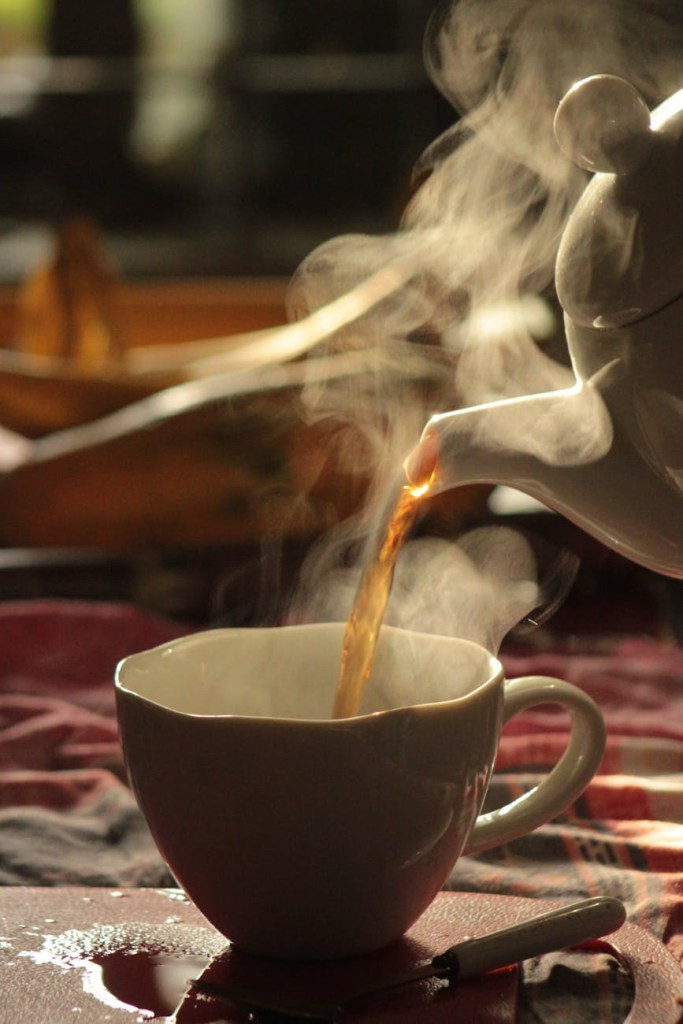
Pouring out part of your tea allows you to pour some hot new tea into the cup.
Because some things are not meant to last forever. Not every friendship. Not every role. Not every expectation you once had for yourself.
And maybe releasing those things is not failure. Maybe it’s pruning.
The forest understands this better than we do.
The Forest
One of the reasons forest therapy has become so meaningful to me is because the forest never panics about transformation.
Forest therapy has taught me that stillness is not the same thing as stagnation. Sometimes what appears dormant is actually becoming. I wrote more about that in this post, Nourish Your Nervous System: Forest Therapy Insights
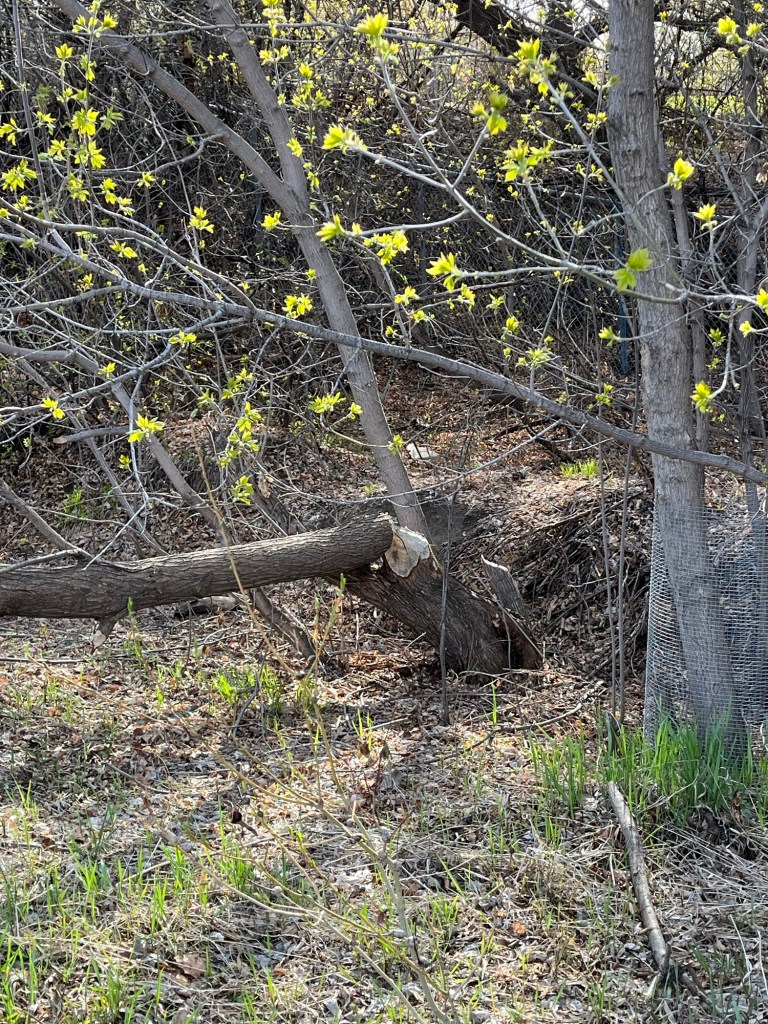
Deadfall becomes nourishment. Burned places grow new life. Trees release entire branches to survive harsh seasons. These changes that seem negative are essential to a healthy forest.
Humans also require those experiences that appear negative and are actually essential for a healthy life.
In the forest, decay and renewal, soft and hard, smooth and sharp are all happening simultaneously.
And honestly, that feels like midlife too.
Especially for those of us living in bodies that have known pain.
We have experienced days where tears of pain rolled down the left cheek while tears of joy rolled down the right.
We know how to hold grief and gratitude at the same time.
That depth changes a person.
We know what it is to laugh in waiting rooms. To find beauty in tiny victories. To feel gratitude and grief sharing the same chair.
I have learned that emotional pain cannot simply be numbed away the same way physical pain can. There is no ibuprofen for identity loss. No heating pad for disappointment. No prescription for becoming someone new.
And while suffering itself is not noble, I do think deep experiences deepen people.
My chronic comrades know this.
Pain can also make people bitter, stuck, isolated, hardened.
That, perhaps, is the difference between a crisis and a chrysalis. One keeps us frozen in fear. The other slowly reshapes us.
If we allow ourselves to learn from it. We can become more compassionate. Tender. Wise. Present. Better able to sit beside someone else’s suffering without looking away.
As they said in the podcast,
Our painful life lessons are the raw material for our future wisdom.
I believe that in my soul.
The Offering
Sometimes our culture subtly teaches that the people worth listening to are the successful ones. The polished ones. The credentialed ones. The endlessly productive ones
What can we do about this imbalance? If you ever deem somebody less than you… ask yourself what they can teach you.
Because some of the wisest people I know have had their lives interrupted.
Some had to abandon dreams they loved. Some never got the education they were capable of and deserved. Some are rebuilding lives with parts and pieces they never would have chosen.
And still. They carry wisdom.
Do not think less of yourself because your life required adaptation. You are not behind because your path bent unexpectedly.
Some of us have earned emotional depth the hard way.
And if you cannot live the exact life you once pictured?
Find something to run toward anyway.
Even if your pace looks different now. Even if you have to limp toward it some days. Even if your dream has changed shape entirely.
A chrysalis does not become what it originally was.
That is the whole point!
A Forest Therapy Invitation: Chrysalis Walk
The next time you’re in a forest, park, or tree-lined path, try this:
Walk slowly and notice signs of transition.
What is decomposing?
What is emerging?
What is shedding?
What is adapting?
What still carries beauty despite visible damage?
Then ask yourself:
What version of myself am I grieving?
What no longer fits?
What wants to emerge now?
What if this season is transformation instead of failure?
You do not need immediate answers.
The forest is always becoming new. Slowly. Over time.
The Question
One question from the podcast we can all ask ourselves,
Ten years from now, what will I regret if I don’t learn or do now?
Conley called anticipated regret a form of wisdom. Chronic illness teaches you that later is not guaranteed. Perfect timing is imaginary. And someday can become never surprisingly fast.
So maybe this chapter is not about trying to reclaim who we once were.
Maybe it is about becoming more fully ourselves.
Hot flashes. Heating pads. Existential growth. And all.
What the caterpillar calls the end of the world, the master calls a butterfly.
Back in my day, some kids brought hockey cards and sticker collections to school. I brought an alarming range of ligament-based entertainment.
Sometimes hypermobility first appears as a child who seems unusually bendy or clumsy, often both at once. 🙋♀️
The child who sits in a W position on the floor because it feels natural. The one who, without pausing to question it, contorts themselves into strange positions during movie night.
What they may not see is the child constantly running into walls because their body struggles to map itself properly in space. Bruises appearing mysteriously across shins. Ankles rolling on flat ground. Sleeves chewed because pain and overstimulation are difficult to explain at seven years old.
And then there are the “growing pains.”
Except many children with connective tissue disorders experience pain far beyond the occasional ache adults remember from childhood.
Deep bone pain at night. Legs throbbing so intensely sleep becomes impossible. Crying after gym class. Exhaustion after seemingly normal activities.
Many hypermobile children become experts at masking early. They laugh while joints slip. They keep playing while hurting because they assume everyone else feels this too.
Some become the “dramatic” child. Others become the “tough” one.
Honestly, I was the child trying to survive in a body I did not yet have language for.
What am I even doing bending my neck like that?
The thumb that bends too far backward. The knees that point in unusual directions. The shoulder that clicks when slipping in and out. Being crazy talented in a yoga class my first day.
What people don’t see is that connective tissue is not merely a few loose ligaments behaving badly.
Connective tissue is infrastructure.
It is the architecture holding the body together. The webbing woven through blood vessels, skin, organs, fascia, tendons, heart valves, lungs, digestive systems, pelvic floor, eyes, nerves, and joints. It is scaffolding. Suspension bridge. Packaging tape. Elastic waistband. Shock absorber.
And when connective tissue is faulty, life can begin to feel like living in a house where every screw has loosened itself by half a turn.
Not enough to collapse all at once. Enough that everything creaks. And left unchecked, more and more areas become unstable, then require constant repairs. Eventually some rooms just become unusable.
A Sad Commentary: AKAMy Brush with Organized Sports
My joints approached organized sports with more enthusiasm than stability. More optimism than skill.
In a small town, everybody played volleyball or there simply wasn’t a volleyball team.
So I played volleyball.
I hated it.
Looking back now, I wonder why I stayed in as long as I did. Every practice left my forearms covered in bruises. Big ones, tiny ones, overlapping ones. I looked part Dalmatian. Nobody else seemed to bruise like that, so naturally the conclusion was that I was doing it wrong.
Turns out my connective tissue was doing it wrong. Not me.
I was terrible at volleyball. Not for lack of trying, either. I could picture exactly what my body was supposed to do, but the execution never matched the image in my head. It always felt like there was a lag between my brain and my limbs, like someone had replaced my coordination with an unreliable Wi-Fi signal.
The only part of volleyball practice I excelled at was stretching.
That should maybe have been a clue.
I could also run forever, but the muscle fatigue before, during, and after was brutal. My legs and ribs constantly felt tight and overworked, like my muscles were trying to compensate for a body that refused to stabilize itself properly.
The solution offered to me was always the same: “Practice more.” “You just need to focus, Pam.” “Try harder.” “Don’t give up so easily all the time.”
My P.E. teacher, who was also my coach, and I were not exactly compatible personalities. I suspect I ranked fairly high on his “lazy kid” list. My feelings toward him and his teaching style don’t need to be discussed for the purpose of this post. Perhaps he was doing the best he knew how 🤷♀️.
What hurt most was that I wasn’t used to being bad at things.
I excelled in music. Dance. Academics. If I tried something, I usually became good at it eventually. But anything involving proprioception. Balance, coordination, spatial awareness, reaction time, exposed a kind of weakness I couldn’t outwork.
No matter how hard I tried, my body never responded the way everyone else’s seemed to. I felt like I was being asked to build a stable life with elastic bands where other people were given rope.
After enough years of that experience, something in me quietly stopped trying.
Not everywhere. Just there.
I realized I could put in enormous effort and still end up with roughly the same P.E. grade as the kid half-heartedly wandering laps around the gym. So eventually, I became that kid instead. The one at the back of the class who didn’t seem invested. The one teachers assumed didn’t care whether they passed.
Stemming from humiliation in trying my hardest while looking like a fool and as though I wasn’t trying at all.
It’s an incredibly discouraging place for a young person to live.
Some kids are exhausted. Discouraged. In pain. Disconnected from bodies that refuse to cooperate. In retrospect, my body had all the stability of a shopping cart with one bad wheel.
The whole point of physical education is supposedly to encourage lifelong movement and confidence in your body.
Ironically, I now walk everywhere, go to the gym regularly, and deeply value movement. I suspect that may not be the case for those classmates that achieved gold stars for gym class back in the day.
Children are often graded on visible performance without anyone asking what invisible barriers may exist underneath it. 🍌 🍌 🍌
And maybe that experience is part of why I later felt drawn toward educational support work. Because I remember exactly what it feels like to be misunderstood in a classroom. To be trying harder than anyone realizes while appearing like you are trying the least.
Some kids are not lazy.
Sometimes what looks like apathy is actually years of silent defeat.
So MuchMore Than Loose Joints
My body has taught me that fragility and resilience are not opposites. Sometimes they exist in the very same tissue.
People often imagine connective tissue disorders as orthopedic inconveniences.
A sore knee. An ankle sprain. Being exceptionally bendy.
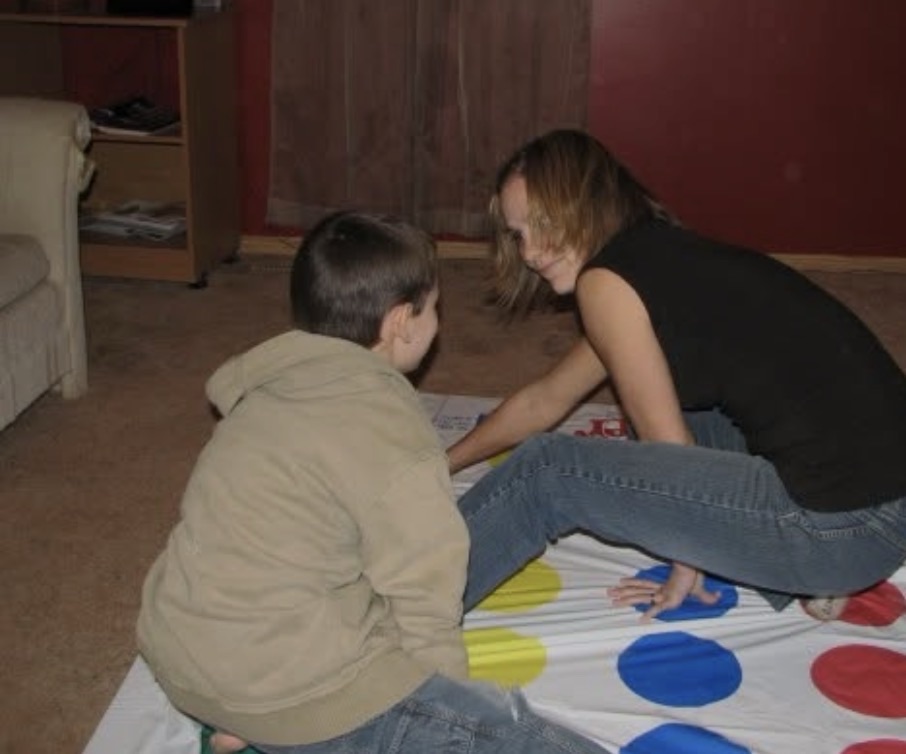
Playing twister with my now-26-year-old. Not to brag, but I was very good.
But connective tissue does not politely stay in one department.
It influences how blood vessels constrict and relax. Why standing up can feel like gravity suddenly doubled. Why heart rates race while brushing teeth. Why exhaustion arrives not after effort, but before and during it.
It influences the skin. Fragile, stretchy, slow to heal, easily bruised.
It influences digestion. Because the digestive tract also depends on connective tissue and smooth coordination. Meals become negotiations instead of nourishment.
It influences breathing. Because the rib cage, diaphragm, and tiny structures supporting the lungs are all part of the same interconnected story.
It influences pain. Not only through injuries, but through a nervous system constantly adapting to instability. Muscles tighten to compensate. Fascia braces. The body learns vigilance.
Even sleep can become difficult when the body spends the entire night trying to hold itself together. Some people wake up refreshed. My body wakes up looking like I’ve been assembled with spare parts in low lighting. Like sleep happened near me but not directly to me.
There is loneliness in illness that hides in plain sight.
You may look healthy while internally calculating:
Can my hips handle this chair? Will my spine tolerate the drive? How long before the fatigue crashes in? Is today the day I sustain an injury that sets me back a year?
People see the smile at the gatherings. They do not see the cost afterward.
The Forest Never Demands Symmetry
One of the reasons forest therapy can feel so healing for those with any type of disorders is because the forest does not care about perfection.
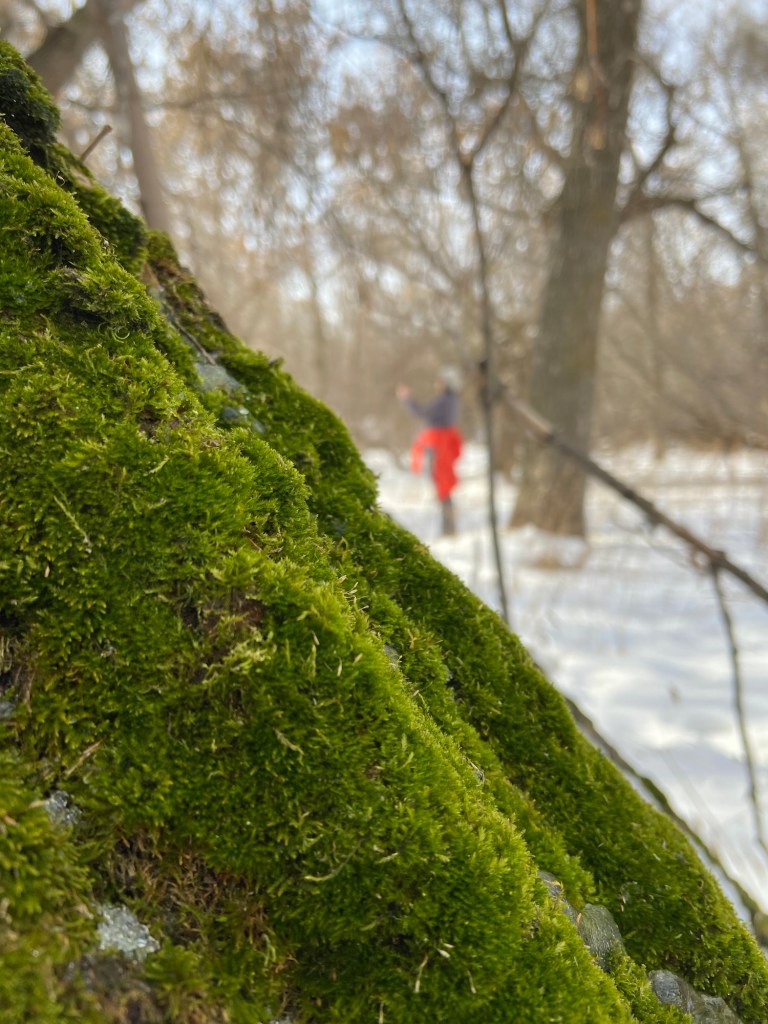
Trees twist toward light. Branches split and regrow. Moss softens fallen things instead of condemning them.
In the forest, support is collaborative.
Roots intertwine underground. Fungi trade nutrients between struggling trees. Fallen logs become nourishment for future life. Nothing survives entirely alone.
For people living in bodies that require adaptation, slowness, pacing, and care, the forest offers a radically compassionate model of existence.
Nature does not measure worth.
Walking Practice: “Borrowing Stability”
This forest therapy practice can be done slowly while walking a trail, sidewalk, park path, or even your backyard.
As you walk, notice what in the landscape appears stable.
Perhaps it is:
the rootedness of a tree
the reliability of stone
the rhythm of wind
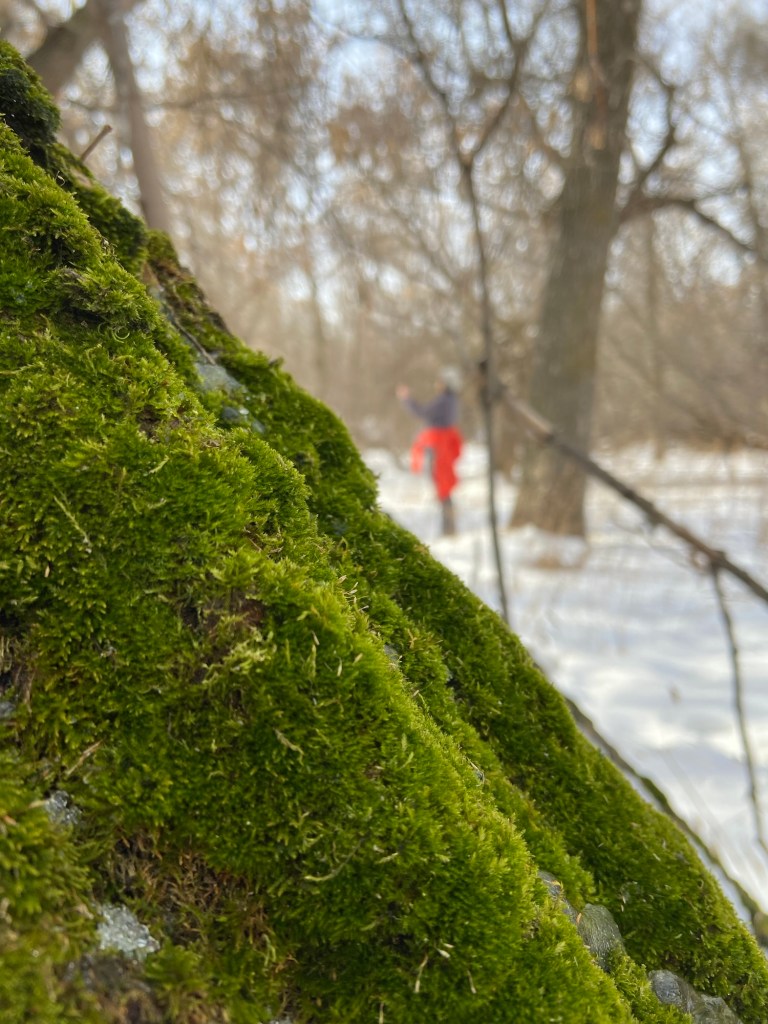
the resolution of moss growing over rough surfaces
Without forcing positivity, simply observe.
Now begin walking more slowly.
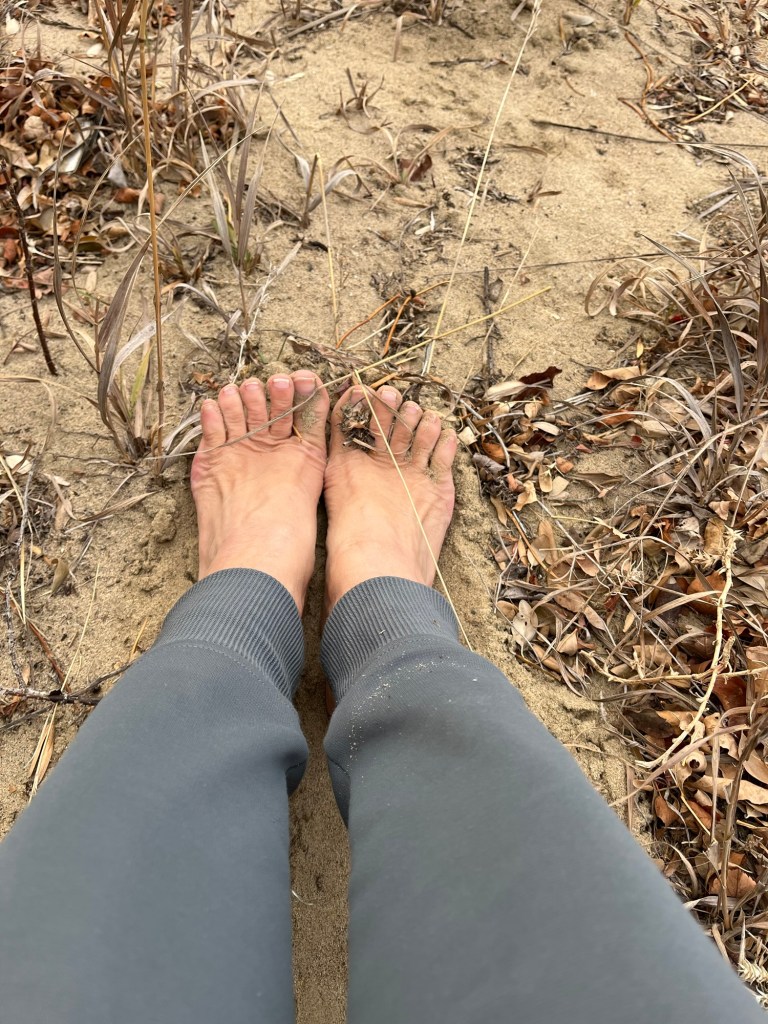
As each foot touches the ground, imagine you are borrowing steadiness from the earth beneath you.
Not fixing yourself. Not overcoming your body. Borrowing support.
You may silently repeat:
Supported. Held. Connected.
If your body hurts while walking, let the practice include that truth instead of resisting it.
Forest therapy is not about pretending discomfort away. It is about allowing yourself to belong exactly as you are.
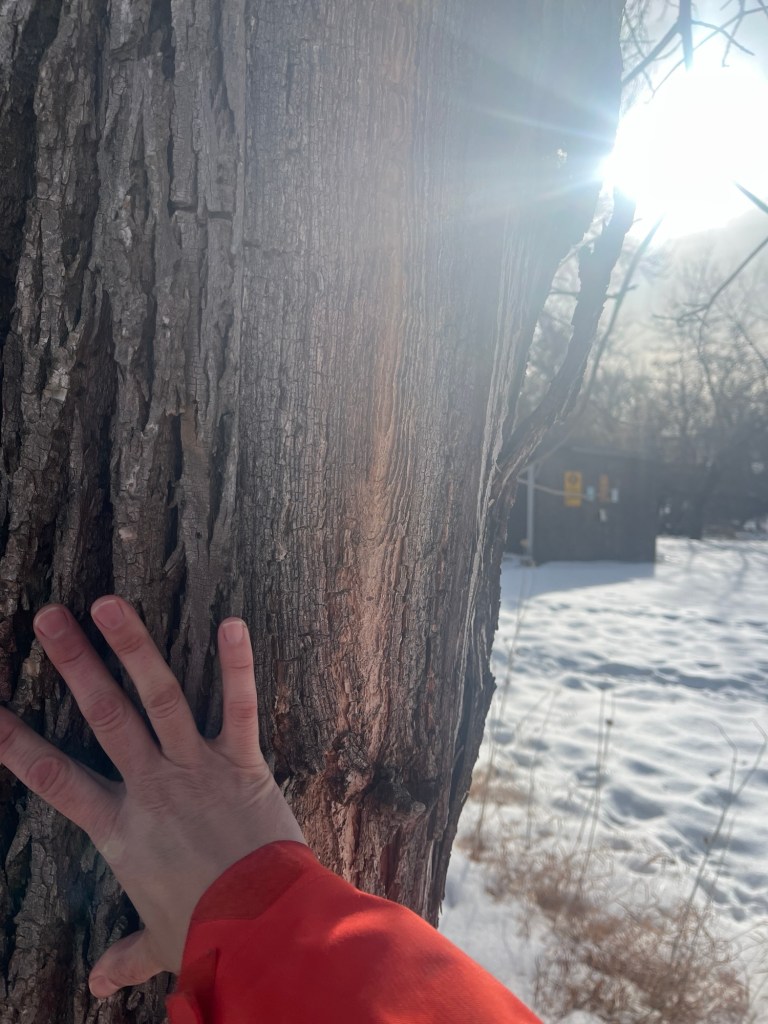
Pause occasionally and place a hand on a tree trunk, railing, stone wall, or your own chest.
Notice:
What supports you physically?
What supports you emotionally?
What support have you been refusing because you are used to surviving alone?
Continue walking without rushing toward insight.
Sometimes healing begins the moment we stop arguing with our pace.
The Grief No One Talks About
There is grief in becoming intimate with limitation.
Grief when your mind has cheques your connective tissue cannot cash.
Grief when symptoms multiply like unwanted groupies: fatigue, dysautonomia, chronic pain, migraines, digestive problems, instability, inflammation, sensory overwhelm.
Many connective tissue disorders do not travel alone. They tend to arrive in flocks.
Not the polished beauty of wellness culture that insists healing should look photogenic and triumphant. Complete. Universal.
But a quieter beauty.
The beauty of learning to listen deeply to others. The beauty of noticing small joys because large ones became inaccessible. The beauty of becoming tender toward bodies. Your own and others’. The beauty of discovering that a meaningful life was never dependent on being free from pain.
I spent years believing my body’s limitations were character flaws. Turns out that limiting belief was false. Those limitations have helped me become the person I am.
To be rooted is perhaps the most important and least recognized need of the human soul.
Research continues to show time in forests can help regulate the nervous system, reduce stress hormones, lower heart rate, and support emotional well-being. But for those living with connective tissue disorders, the benefits often go deeper than measurable metrics.
Forest therapy gives permission to:
move slowly
rest without guilt
reconnect with sensory pleasure
soften hypervigilance
leave productivity behind temporarily
remember you are more than symptoms
When the nervous system lives in a constant state of adaptation, gentle sensory experiences matter.
The sound of leaves moving overhead. The coolness of shade on inflamed skin. Birdsong interrupting anxious thoughts. The visual softness of green.
None of these cure a connective tissue disorder.
But they can create moments where the body feels less at war with itself.
And moments matter.
Especially when stitched together over time.
A Beautiful Life Can Still Grow Here
Instructions for living a life: Pay attention. Be astonished. Tell about it. — Mary Oliver
Living with a connective tissue disorder may mean your life unfolds differently than expected.
More pauses. More recalculating. More adaptation.
But different is not lesser.
Some of the most compassionate people are those whose bodies taught them interdependence.
Some of the most observant souls are those forced to slow down enough to notice life carefully.
The forest reminds us that resilience is not hardness.
Resilience is flexibility. Relationship. Return.
And perhaps that is fitting for people made of connective tissue. Those who understand, more than most, that life is ultimately about connection.
Not perfect strength. Not endless endurance.
Connection.
To the earth. To one another. To moments of beauty that still arrive, even here.
If you’ve ever noticed your body relax the moment you step into a quiet natural space, you’ve already experienced the vagus nerve at work.
That shift, subtle but undeniable, is your nervous system moving out of protection mode and into restoration. It’s not ‘all in your head.’ It’s physiology.
SISNA: one who blooms in chaos; breaker of norms, lover of moonlight and quiet rebellions.
This shift is something we can intentionally support through forest therapy.
What Is the Vagus Nerve?
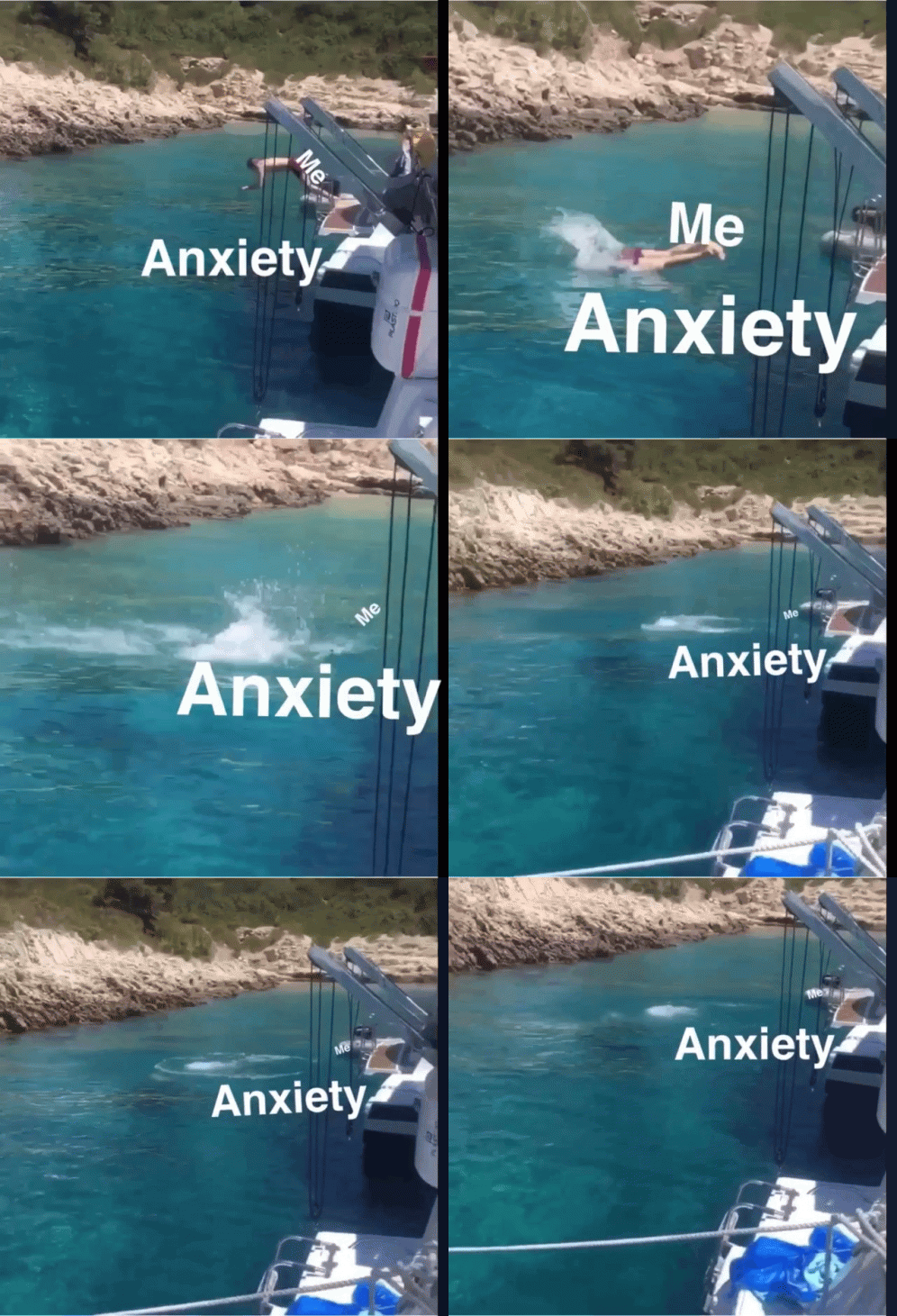
Have you ever noticed your body doing that thing where it’s technically relaxed but also ready to fight a bear or answer emails (same energy.)
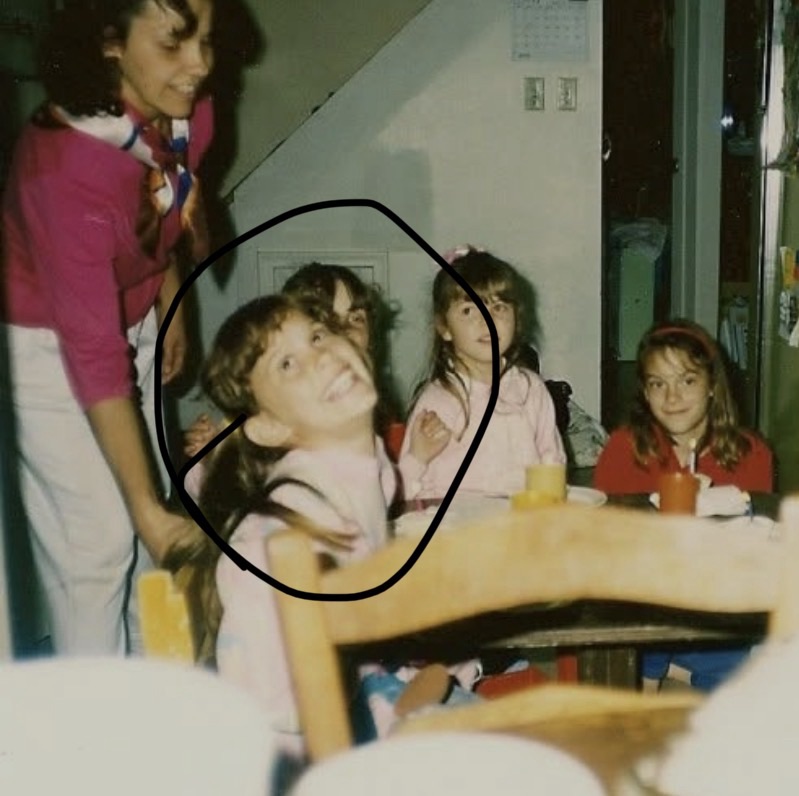
I lived here for years. Me 👇🏼.
I needed to understand the following information to move out of it.
The vagus nerve is the longest cranial nerve in your body, running from your brainstem down through your face, throat, heart, lungs, and into your digestive system. Its name comes from the Latin word vagus, meaning “wandering.” A fitting description for a nerve that touches so many systems.
But its true importance lies in what it does.
The vagus nerve is the main highway of your parasympathetic nervous system. The branch responsible for rest, repair, digestion, and healing.
If your nervous system had a group chat, the vagus nerve would be the one constantly saying, ‘Hey guys… maybe we’re okay?’ 🤷♀️
When your vagus nerve is activated, your body shifts out of survival mode and into a state of safety.
Heart rate slows. Muscles release. Inflammation decreases. Digestion improves. And perhaps most importantly, your brain receives a message. It is safe enough to stand down.
But living with chronic pain and receiving that signal clearly, is comparable to listening to my grandkids’ secrets. 49% air, 50% spit and 1% information. (Toddler secrets are the best 💕)
I only hear about 1% of what they are saying. Similarly, only 1% of that parasympathetic signal was getting through my system.
So the question is, how does one fully activate that vagus nerve to allow the free flow of that signal? The equivalent of interrupting the air and blocking the spit? 😷 So the message can be clearly sent and secured.
Regulation is not forced. It is invited.
⸻
An Overactive Detector
Growing up, we had one smoke detector in our old farm house. It was conveniently located in one of the entrances to the kitchen. Beside the stairway leading to the upper level. Where all the hot air travelled.
You can probably guess what happened every time we burned toast. Or overcooked anything. Or opened the oven after something spilled in there.
That overly sensitive smoke deterctor was great in theory. But in practice it did more harm than good.
Before checking if there was an actual emergency, family members would rush to grab the tea towel and shoo the smoke away.
Focusing on the alarm. More than what the alarm was trying to say.
Chronic pain is not just about injured tissues or structural problems. It is deeply intertwined with the nervous system. Especially when that system has been stuck in a prolonged state of vigilance. Forever running for the tea towel. 🏃♀️
When the vagus nerve is underactive (or when sympathetic “fight or flight” dominates), the body remains on high alert. Over time, this can:
Heighten pain sensitivity
Amplify inflammation
Disrupt sleep and recovery
Keep muscles in a semi-contracted, guarded state
Pain, in this context, becomes less about damage and more about protection.
Your nervous system is trying (often overzealously) to keep you safe.
The goal is not to force the pain away, but to gently teach the body that it is safe enough to soften its defenses.
A regulated body tells a different story than a protected one.
The forest offers consistent, non-threatening input. No pop ups. No deadlines.
No one asking if you’ve ‘just tried stretching.’ 🤦♀️ Saints preserve us! Bless them for trying.
Suggested cheeky replies:
“You have such a unique way of understanding things.”
“I’m surprised you feel comfortable enough to say that out loud.”
And then come back to presence. Presence is the language of the vagus nerve.
⸻
A Forest Therapy Practice:
Sensory Immersion for Vagal Activation
This is a simple, gentle practice you can do in any natural setting. A forest, park, or even your backyard.
The Invitation: “Let the Forest Meet Your Senses”
Arrive Slowly– Stand or sit comfortably. Notice your feet on the ground. No need to change anything, just arrive.
Sight (Soft Eyes)– Let your gaze widen. Instead of focusing on one object, allow your eyes to take in the whole scene. Notice colors, light, and movement without labeling them. Let your eyes receive, rather than search.
Sound (Layered Listening)– Close your eyes if it feels safe. Notice the closest sound… then the farthest… then everything in between. Birds, wind, distant traffic, your own breath. You are not trying to identify, just to hear.
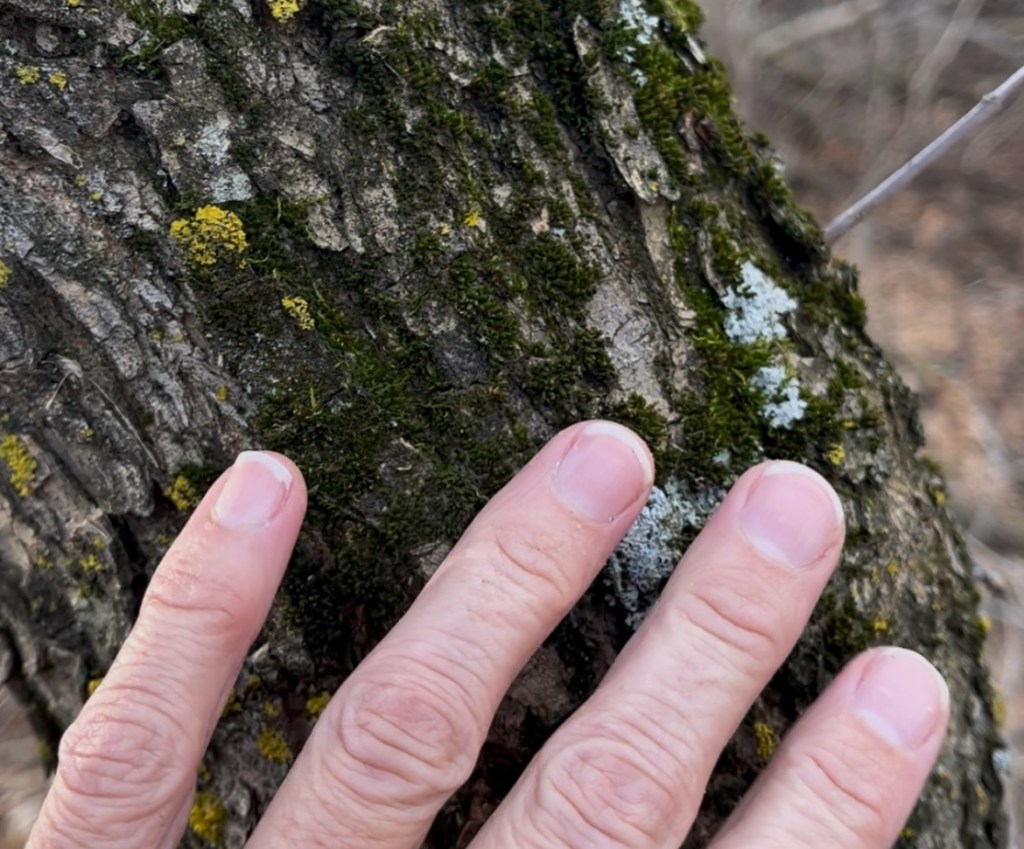
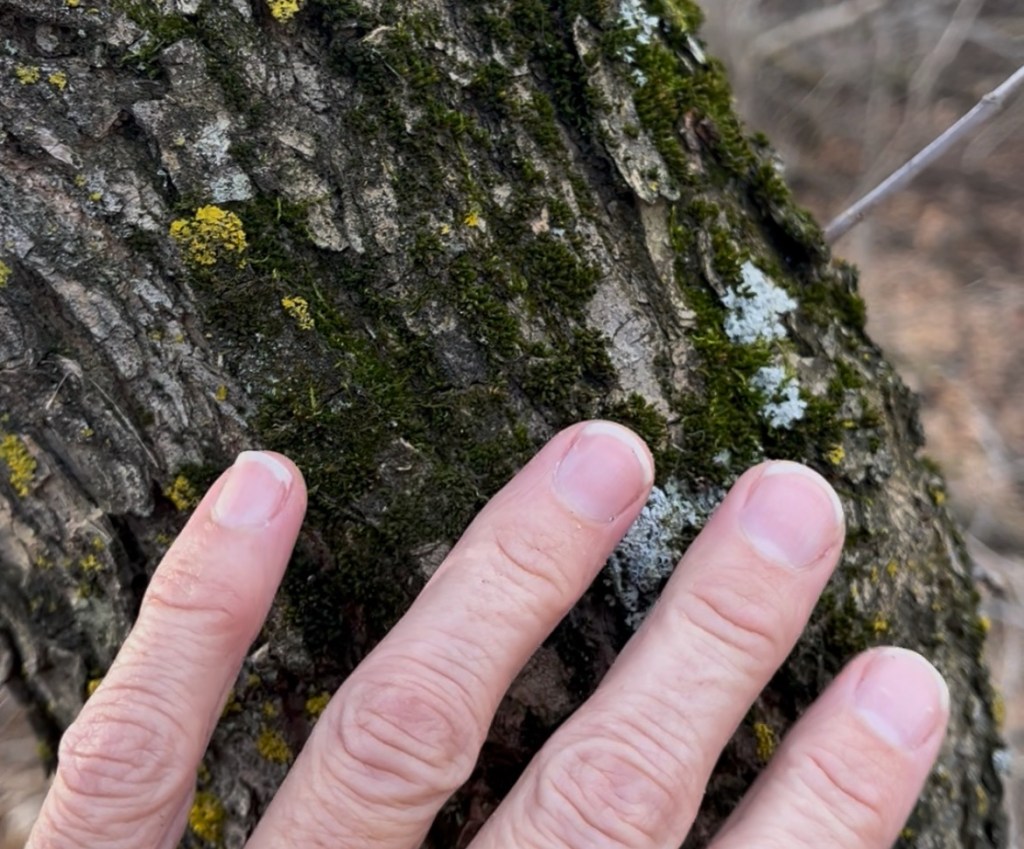
Touch (Contact Points)– Bring awareness to where your body meets the world. Feet on earth. Air on skin. Clothing against your body. If you feel drawn, touch something natural. A leaf, bark, stone. Let the contact be mutual. You are touching, and being touched.
Smell (Subtle Scent)– Inhale gently through your nose. Notice any scent, earthy, fresh, faint, or even absent. There is no need to “find” anything. Simply notice what is.
Breath (Unforced)– Finally, bring awareness to your breath. Let it be exactly as it is. Often, by now, it has already softened.
Stay here for 5–15 minutes. No goal. No outcome to achieve. Just sensory conversation.
Stillness is not empty—it is full of signals your body understands.
This practice engages multiple sensory pathways simultaneously in a non-threatening environment. This combination is particularly powerful for vagal activation because it:
Interrupts repetitive thought loops
Anchors attention in the present moment
Provides steady, predictable sensory input
Encourages a shift from “doing” to “receiving”
Over time, these experiences build what is called vagal tone. Your nervous system’s ability to return to a state of calm after stress.
And with improved vagal tone, the body becomes less reactive… and more resilient.
⸻
The Paradox of Stillness
There are people who don’t experience stillness as calming.
For them, slowing down can actually make things feel worse. The moment the body stops, tension rises. Pain becomes louder. The nervous system, so used to staying a step ahead, interprets stillness as vulnerability rather than safety.
I’ve walked with someone like this before, someone whose body trusted movement far more than pause.
So we didn’t begin with stillness.
We began with gentle movement. Walking slowly, letting the rhythm of steps create a sense of predictability. Just enough awareness to stay connected, but not so much that it tipped into overwhelm.
Over time, the environment began to do what it does best. Quietly influencing the pace. The quality of light, the steadiness of the trees, the soothing sounds of water. Just inviting. Nothing rushed.
Eventually, there was a natural moment to pause.
Not imposed. Not held too long. Just a brief stop in a place that felt neutral enough.
What stood out wasn’t what happened, but what didn’t.
The expected spike in tension didn’t arrive right away.
And in that small gap between what the body anticipated and what it actually experienced, there was space for something new.
Not relief, exactly.
But possibility. Hope.
Later, what they recognized wasn’t just the moment itself, but the pattern behind it. The way their body had learned to brace in advance, not just in response. (The run for the tea towel!)
That awareness didn’t erase the pain.
But it introduced a different relationship to it.
This kind of experience doesn’t feel like much until you realize your body stopped arguing with itself. And when you’re used to those arguments lasting 2-3 business days, the silence is sweetly deafening.
And when the nervous system experiences even a brief interruption to its usual pattern, it begins to update its expectations.
And that’s where change begins. Not in dramatic shifts, but in quiet moments where the body realizes:
this isn’t unfolding the way I thought it would.
It’s better.
⸻
Thoughts to Take with You
The vagus nerve does not respond to force.
It responds to safety.
And safety is not something you can think your way into—it is something you feel your way into.
The forest, in its quiet wisdom, offers exactly that. No effort required. (Which, depending on your personality, may be the hardest part.)
In every walk with nature, one receives far more than he seeks.
There’s a moment. It’s often quiet, sometimes overwhelming. When emotion first arrives in the body.
It might feel like a tightening in the chest. A wave of heat. A heaviness behind the eyes. A sudden drop in the stomach.
Something I’m learning? When this happens, nothing has gone wrong. My body is simply giving me information.
Experiencing big emotions is not a failure of regulation, character, or strength. It is part of being human.
Especially for those living with chronic pain, where the body is already speaking loudly, emotions often arrive amplified and harder to ignore, harder to name, harder to hold.
But after that first signal comes something powerful.
Choice.
Not whether you feel the emotion. But how you respond to it.
As Daniel Chidiac teaches, Not every emotion needs a reaction—but every emotion deserves acknowledgment.
⸻
The Story We Tell After the Feeling
On the Better Than Happy podcast, Jody Moore offers a perspective that can feel both freeing and confronting.
Anger is optional.
Disappointment is optional.
Embarrassment is optional.
Humiliation is optional.
Not because we can simply turn emotions off. But because these emotions are often shaped by the meaning we assign to our experiences. Have you experienced any of the following?
You have been dismissed by a medical professional, again.
You didn’t reach the goal.
Someone saw you struggle.
Something didn’t go as planned.
Those are just events. Although they feel huge in the moment.
Disappointment enters when the mind adds the story.
“This means something is wrong with me.”
Embarrassment grows when the thoughts spiral into shame.
“They must be judging me.”
“I look foolish.”
“I am foolish.”
And here’s the important nuance.
These emotions are optional. But not wrong.
You’re allowed to feel them. You’re also allowed to question them.
Nothing ambitious. Just a smidgen at a time. Slow and steady. The way I’ve learned my body needs things to be. Experience has taught me that enthusiasm and capacity are not the same thing.
But then life showed up.
The everyday mess. The dishes. The door in my room that was in desperate need of a good wipe down. The quiet realization that I couldn’t do both.
I had to choose. My body, which had just clocked in was now requesting a lunch break.
And then the grandkids came to “help.” Which, as you can imagine, added more chaos than progress. At this point the mess was winning. And multiplying.
The vacuum stopped working. My arms started to burn.
And just like that, the thoughts came rushing in.
I’ll never catch up.
My house will always feel like this.
Why can’t I just keep up like everyone else?
Because, obviously, one unfinished chore means a lifetime of failure. 😣
I could see it happening, the spiral. I wasn’t unaware.
But stopping it? That took effort. A surprising amount of effort.
Excuse me while I parent my dramatic inner narrator.
Because even as part of me recognized what was happening, another part was pushing me harder.
Just keep going.
Finish what you started.
If you don’t do it now, it will never get done.
False. What was actually true was much simpler and much harder to accept in the moment.
I was tired. I was in pain. I needed to stop.
My body wasn’t failing me. It was asking me to listen.
And the real choice in that moment wasn’t about dishes or doors.
But this.
Do I keep pushing to meet an expectation I set for myself… or do I take care of myself?
Eventually, I chose to stop.
Not because everything was done. But because I was.
And that shift didn’t magically clean my house. But it did something more important. It brought me back to myself and my priorities.
Because your nervous system is already working overtime. Because your body has taught you that signals matter and often signal threat. ( If you want to learn how forest therapy supports the nervous system, check this out -> Mending Your Nervous System With Forest Therapy)
Pain doesn’t just exist in isolation. It interacts with emotion, memory, and meaning.
A flare-up can quickly become:
“I’ll never get better.”
“My body is failing me.”
“I can’t live the life I want.”
This is where emotional dysregulation can take hold, much like how Brené Brown describes it:
Being overwhelmed by feelings that are hard to name and contain, driving behaviors and thinking that don’t align with who we want to be.
And suddenly, we’re not just in pain.
We’re in a story about what that pain means.
Your body speaks in sensation. Your mind speaks in meaning. Learn to tell the difference.
Brené Brown shares a powerful story about recovering from injury and trying to engage muscles that simply wouldn’t respond. Her therapist kept reminding her to “find your ground.”
But she couldn’t feel it. She couldn’t even find her lats.
She was using her body while being disconnected from it.
That disembodiment, that moving without understanding, existing without connection, is deeply familiar for those with chronic pain.
You expect your body to respond one way. It betrays your expectations. Every time.
And over time, many people stop listening to their bodies with curiosity and start bracing against them with resistance.
Until one simple but profound instruction emerges.
Find your ground.
Not just physically. Energetically. Emotionally. Spiritually.
If you’re trying to find your way back to yourself, back into your body, the answer isn’t usually one big solution.
It’s small, grounding practices.
Journalling. Meditation. Art. Spiritual connection. Time in nature.
Each one opens a door.
Forest therapy is where those doors meet, creating a space that supports not just awareness, but true reconnection.
⸻
The Tree as Teacher
In The Secret Therapy of Trees, Marco Mencagli and Marco Nieri describe the trunk of a tree as something remarkably similar to the human core.
It is a channel of connection. A stabilizing structure. A vital center.
If damaged, the whole system struggles.
Like the human torso, home to breath, circulation, and strength, the tree’s trunk is both anchor and conduit.
And yet, trees do something we often forget to do. They remain rooted while experiencing everything.
Wind. Storm. Drought. Seasonal loss.
They do not avoid conditions. They adapt within them.
⸻
What Actually Matters (Hint: It’s Not the Dishes)
Another truth worth holding onto.
You cannot overestimate the unimportance of practically everything.
So much of what consumes our emotional energy, what people think, whether we looked polished, whether everything went perfectly, is, in the grand arc of a life, remarkably small.
Your ability to hold vision, hope, and belief is not just a mindset. It’s a nervous system state.
When your body is overwhelmed, depleted, or in pain, the part of your brain responsible for vision and forward-thinking struggles to stay online. You can journal, visualize, and set goals all you want but if your body feels unsafe, your mind will keep pulling you back.
And if you live with chronic illness, chronic pain, or burnout, this is not new information.
You’ve probably had moments where:
• You want to feel hopeful, but can’t access it
• You know what mindset would help, but it feels out of reach
• You try to think positively, but your body feels tense, guarded, or braced
That’s not failure. As if our bodies are just waiting for us to say the right affirmation in the right font.
That’s actually physiology.
⸻
The Body Test: A Different Way to Measure Alignment
Here’s something simple but surprisingly powerful to try:
When you imagine the life you want. The healing, the work, the relationships, the version of yourself you’re moving toward,
Does your body soften… or does it brace?
That response is important information. That brace could be your body essentially replying: ‘Respectfully, no.’
Sometimes what we think we should want was actually handed to us by fear, pressure, or comparison. And chasing those things can give us the energy of pursuit but not the peace of arrival.
There’s a quieter, truer kind of vision.
One that comes from a regulated, grounded body.
And your body knows the difference.
⸻
Why Mindset Feels So Hard with Chronic Conditions
Most of us were taught that results come first, and mindset follows.
“When I get healthier, then I’ll feel good.”
“When I have more energy, then I’ll be more positive.”
But if you’ve ever made progress on a health journey, you know the truth.
You had to start treating your body with care before it changed. You had to practice compassion before you believed it.
Mindset doesn’t come after results. It creates the conditions for them.
And when you’re living with chronic symptoms, this becomes even more important. Because your external results often change slowly. And beyond your control.
Big, dramatic efforts such as new routines, strict plans, sudden bursts of energy don’t sustain us. Sadly, healing is rarely impressed by one heroic Tuesday.
Especially not when our bodies are already working hard just to function.
What changes us is the steady trickle. Small, repeatable moments of regulation.
Tiny habits that teach the body. We are safe, we are supported, we can keep going.
Because in the end,
You don’t rise to the level of your goals. You fall to the level of your habits.
But in creating a body that feels safe enough to hope again.
In choosing small, steady practices over dramatic change.
In building habits that nourish instead of deplete.
In letting your body have a vote in the life you’re creating.
Because when your body believes it’s possible your mind doesn’t have to work so hard to convince it.
⸻
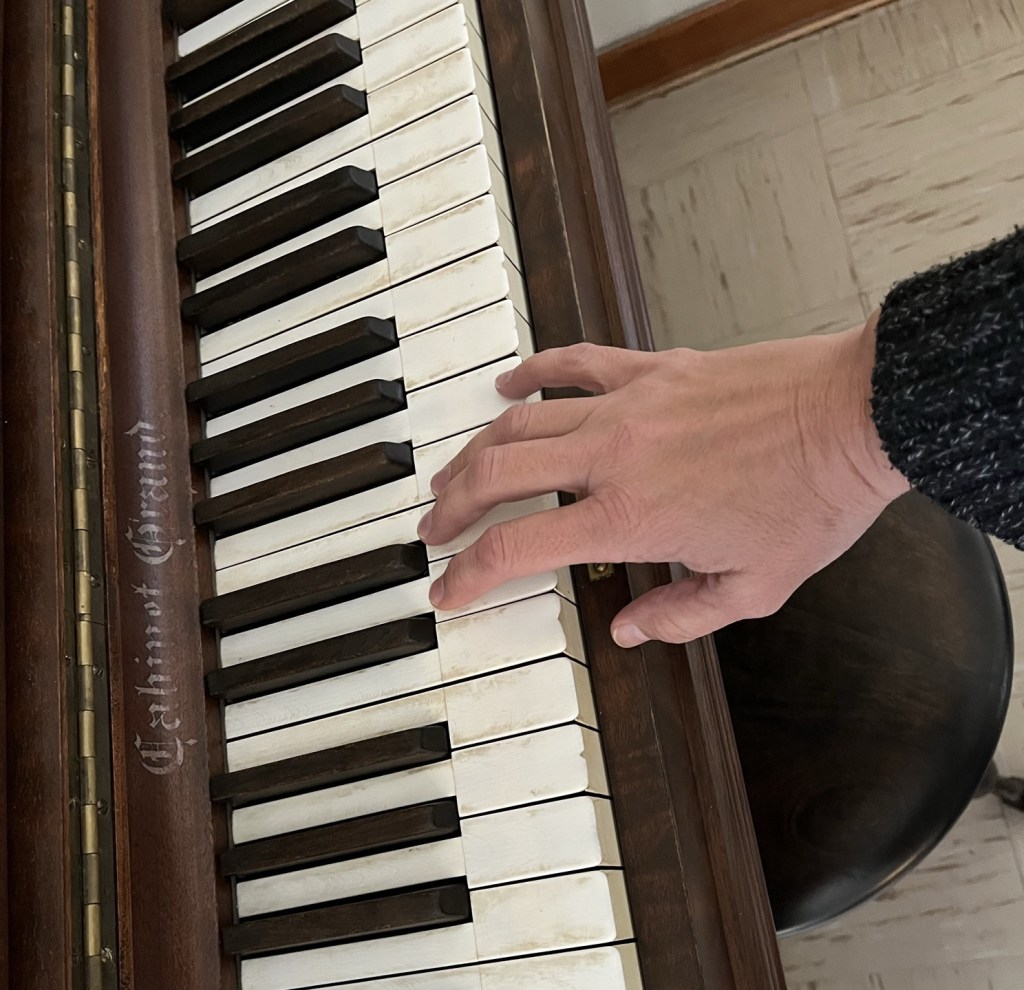
I taught piano lessons for years. I enjoyed working with kids. I enjoyed the lesson prep. I even enjoyed some of the music!
But in 2020 my body said, ‘no more.’ It could no longer do outward smiles and inward screams.
It said no to early mornings. And busy days. And constant focus. And sitting or standing. It said ‘stop!’
Eventually I chose to set aside my business. Then close it. I often consider, after having a couple of good days in a row, about teaching again.
Sometimes I start to think of how much I miss it and think perhaps I could just take a few students. I get excited thinking about it.
When I slow down my thinking enough to see how my body feels about this idea. It braces. It feels drained.
I see myself leaning forward over and over to show the place in the music I am referring to. The repetitive motion getting more and more painful.
I picture my fingers that can’t play more than a few minutes. And only simple songs. No reaching. No pressure. And how frustrating that can be when trying to demonstrate.
I think of the days I didn’t get any sleep and had to go to work anyway. And drag myself through the day. How can one person be so bad at both sleeping AND staying awake?
I have good days. That is true. But only because I’m not forcing my body and mind to work day in and day out in ways that do not support its healing.
I need time for exercise. And rest. And listening to my body. As hard as it is to listen to it at times. It really does know best.
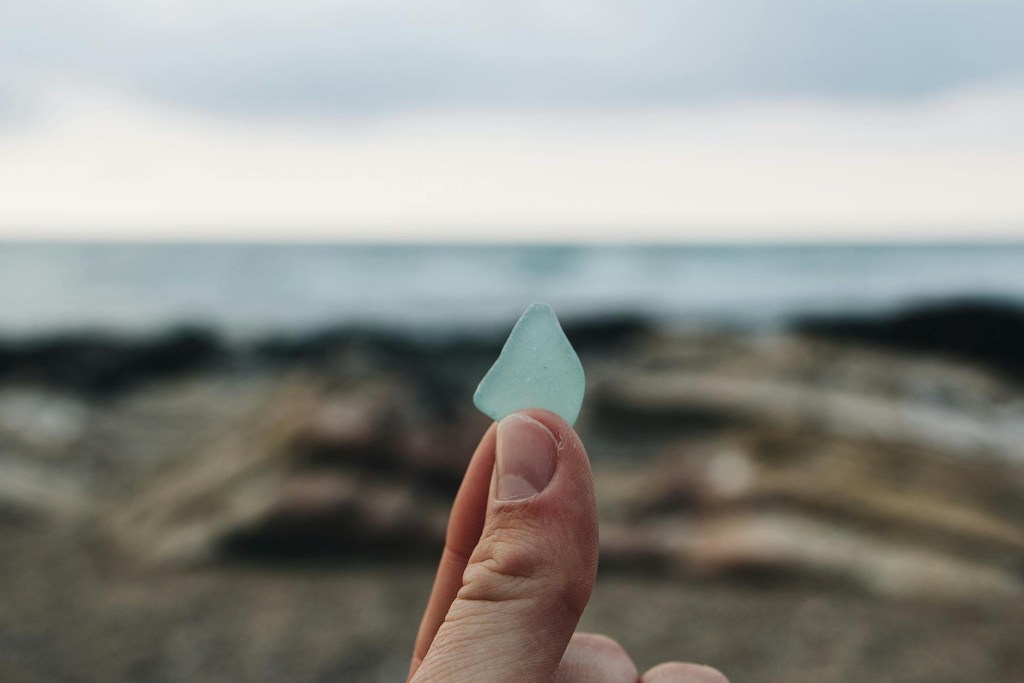
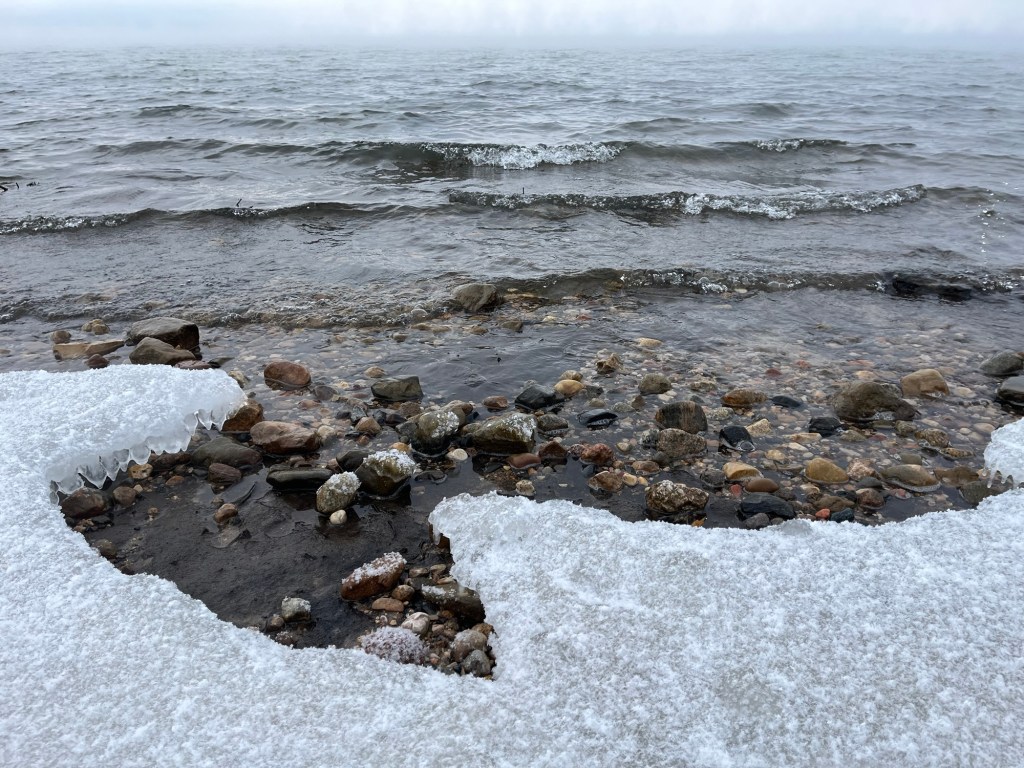
i hope you know you aren't broken glass you are sea glass shaped by the tides softened by the waves that once felt like they'd shatter you what you've been through hasn't made you less it has made you rare and luminous
even the toughest waters can create something beautiful and that's what you are... a reminder that survival can turn into art
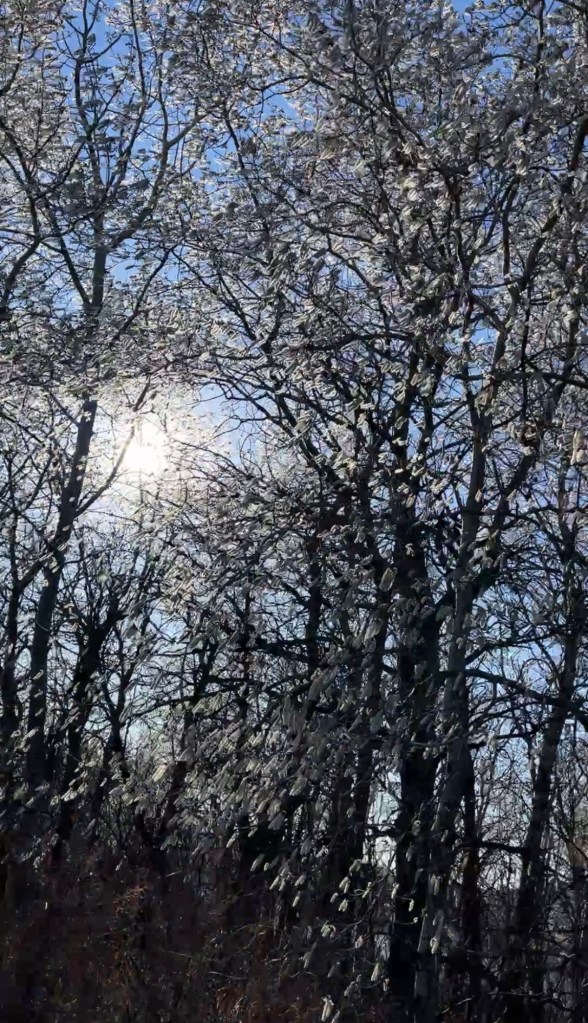
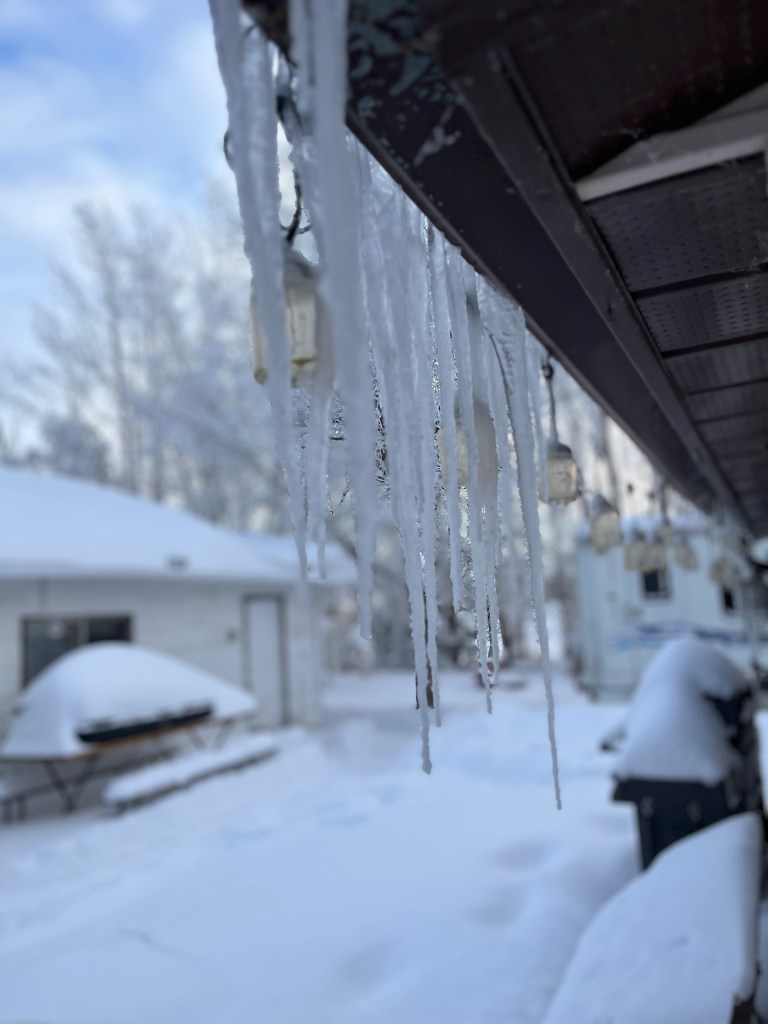
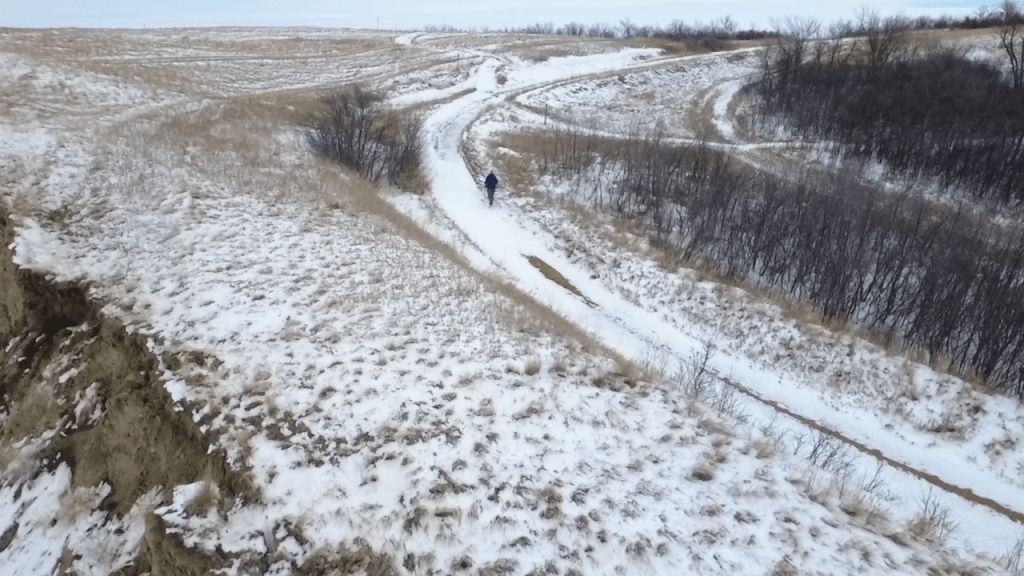
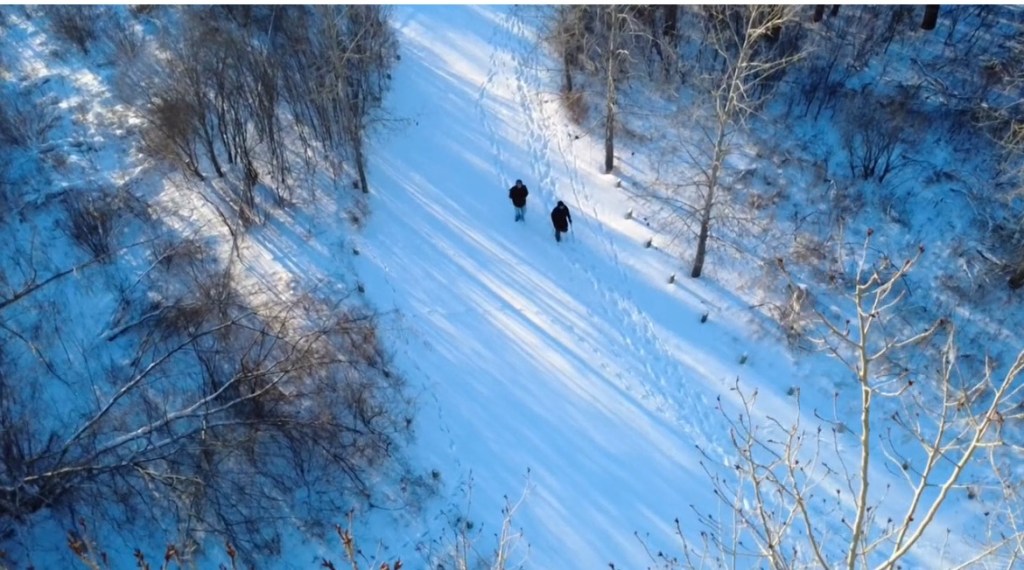
Many trails in Saskatchewan are shimmering. Beautifully. Treacherously.
I’m pretty sure they are trying to kill me.
Sparkling snow is magical. Sparkling frost is beautiful.
But sparkling ice on a forest trail?
That’s a different category entirely. “Be gone foul thing!”
When you live with hypermobility, ice is less of a winter decoration and more of a full-contact sport.
For most people, a slip on an icy trail means a flail of the arms, a laugh, and maybe a comment. “Watch out for the icy patch!”.
For someone with hypermobility, that same moment can mean:
a rib that determines it would rather live somewhere other than its intended slot
a shoulder that doth protest too much (because the shoulder blade is sliding down your back)
muscles that grip like overprotective bodyguards
and a new entry in the ever-growing logbook titled “Well… that escalated quickly.”
A small jolt or an awkward catch. And suddenly a split second wobble becomes three months of physiotherapy, muscle protecting and pain with every movement.
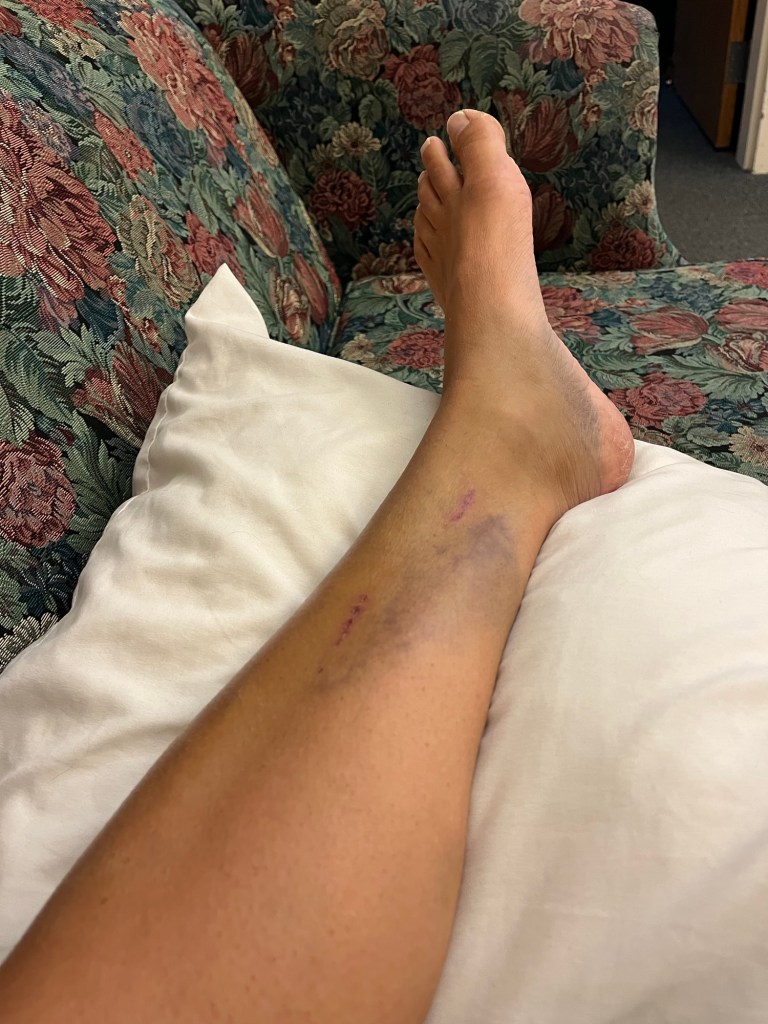
Exhaustion from the constant battleFoot bones out Lower back muscle spasm keeping me mostly bed ridden, this was my short escapeA foot up as I pose with siblings to hold me balanced after a physio adjustment Rib out and going to watch a show, hoping I’ll make it. Right thigh stuck in spasm, nervous system in a flare. Depression, why bother trying? No matter how hard I try, I always have painful subluxations.
Winter walking becomes less like a casual stroll and more like a strategic mission.
Our hypermobile bodies clearly have a different set of rules.
Living with hypermobility also means developing a surprisingly intimate relationship with your physiotherapist.
Years ago I realized I owned an entire library of tiny resistance bands in colours that sounded deceptively cheerful.
Coral. Mint. Lavender. Suggesting relaxation and beach vacations.
In reality they represented fifteen very specific exercises. Each designed to convince my shoulder, hip, or rib that staying in place is actually an excellent idea.
In more recent years, overall strengthening through running has become my greatest hope against hope.
Thankfully those resistance bands are now packed away. They were the bane of my existence for years. Strengthen the shoulder, put out the elbow, wrist, and fingers. Strengthen the hip, put out the knee, ankle and toes.
If you live with chronic pain, you also know the strange pleasure of telling people:
“Yes, I injured myself sneezing.”
And then watching them try to politely hide their confusion. 😕
Enigmatic Equations Await
People with chronic pain develop a special kind of mental math.
Before leaving the house, the brain quietly runs a checklist:
How icy is it?
How far is the trail?
What muscles are already staging a coup today?
What are the odds I’ll slip, twist, or do the world’s slowest accidental yoga pose?
Slipping into something a little more comfortable (psychosis)
These calculations happen constantly.
Because when joints are extra flexible, the body relies heavily on muscles to hold everything together.
If those muscles get surprised by a sudden slip on ice, they react like overcaffeinated security guards.
We don’t even have to experience a crash landing. A slight “whoop”. Everything tightens. Followed shortly by, everything hurts. Sometimes for a very long time.
And yet… Staying inside is not the answer.
Inside Out: The Hidden Dangers of Staying Indoors
My soul was not designed for indefinite indoor storage.
After a few days of being cooped up, something starts to happen.
First a restlessness.
Then a longing.
Then a slightly dramatic moment standing at the window staring outside like a Victorian character under quarantine.
Because the body may be complicated. But the soul is surprisingly clear about what it needs.
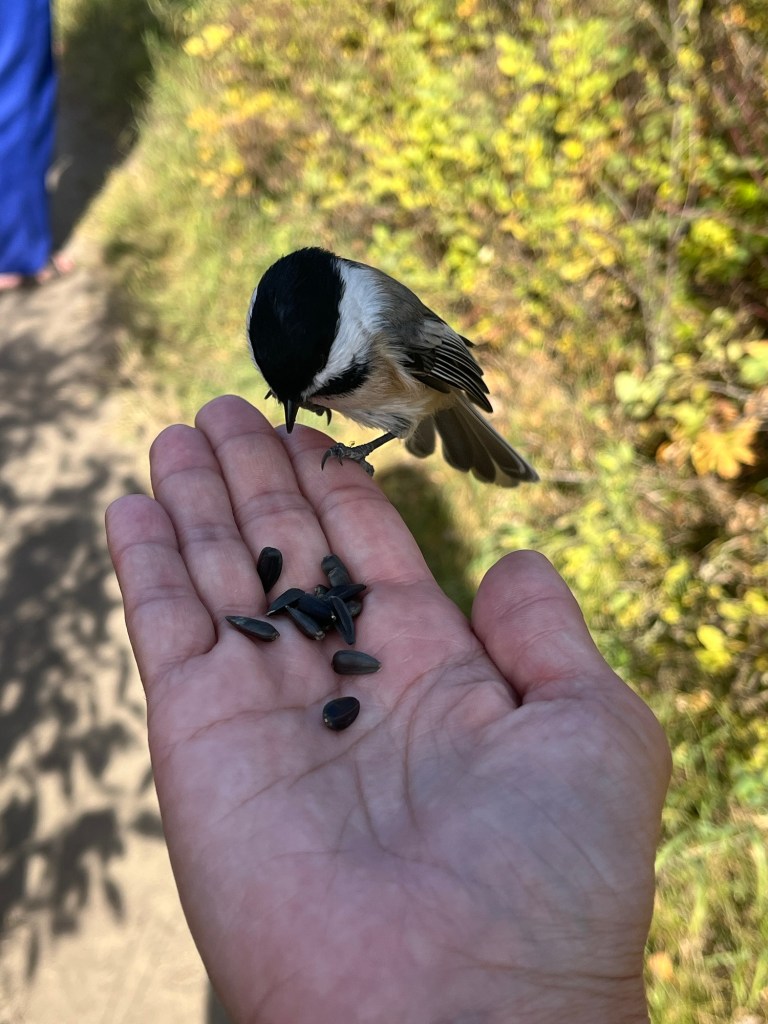
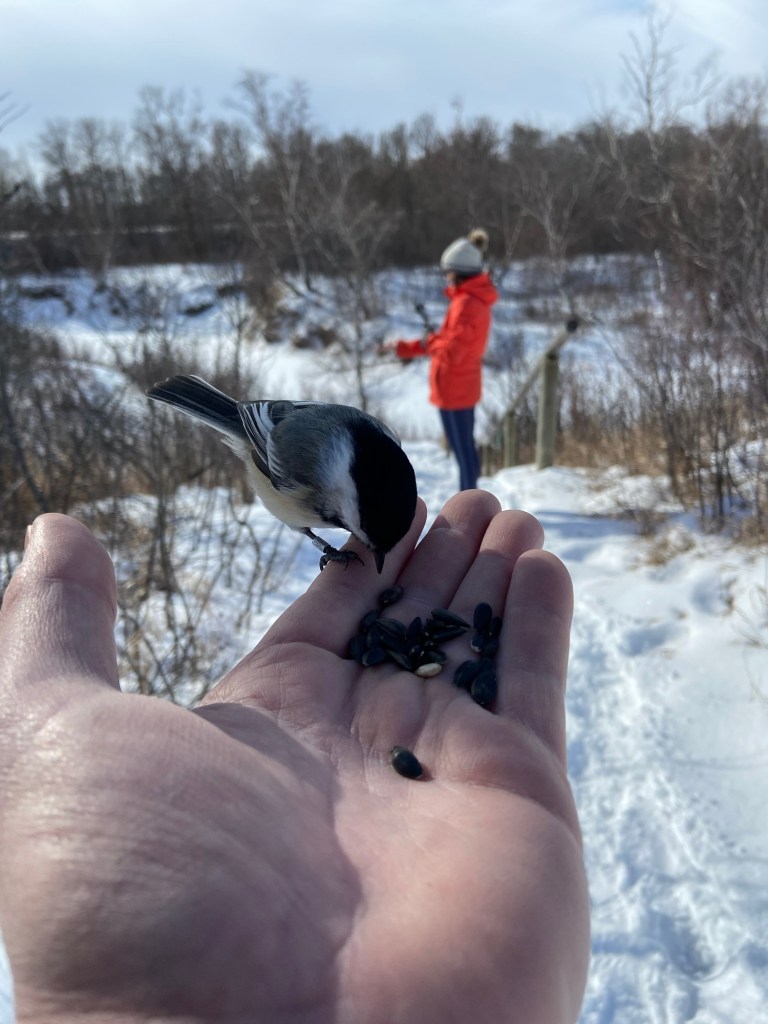
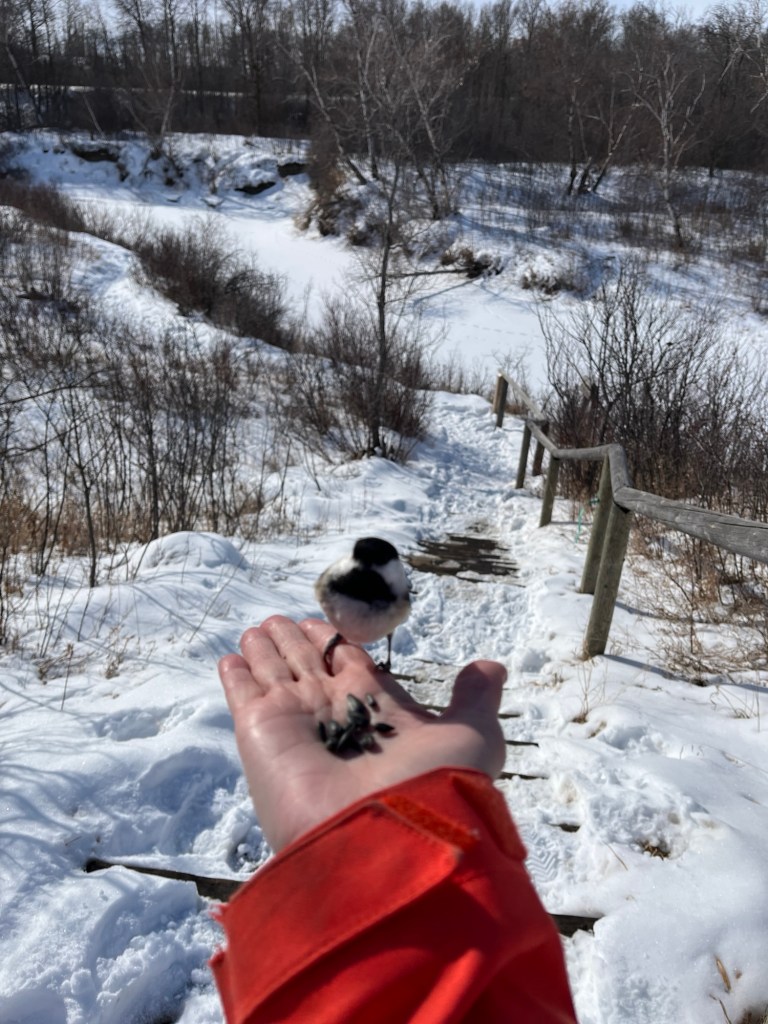
Trees. Sky. Fresh air. The quiet company of chickadees who seem perpetually delighted with life.
I go to nature to be soothed and healed, and to have my senses put in order.
And when chronic pain is part of your life, your nervous system spends a lot of time: out of order.
Pain keeps the brain alert. Guarded. Scanning.
But the forest gently invites something else.
A slower rhythm. A softer focus.
Don’t let perfect get in the way of good enough.
“Break!!”- Dancing Through the Meadow
Hypermobility changes the way you move through the world.
Especially in winter.
Walking on icy trails becomes a very particular style of locomotion that could best be described as:
“Cautious woodland creature.”
Short steps.
Careful weight shifts.
Occasional pauses to test the ground.
One wrong move and suddenly you find yourself soft launching a new form of dance.
Anyone watching from a distance might assume you were practicing some form of extreme slow-motion flamenco 💃 .
But really, you’re simply trying to avoid becoming an accidental case study in sidewalk face implants.
Oddly enough, this cautious way of walking mirrors a core forest therapy practice. Slow walking.
Forest therapy guides often invite people to slow down enough to truly notice the forest.
Hypermobility just… adds extra motivation.
A Little Winter Guiding Advice
I have learned a few things from my winter days on the trail this year.
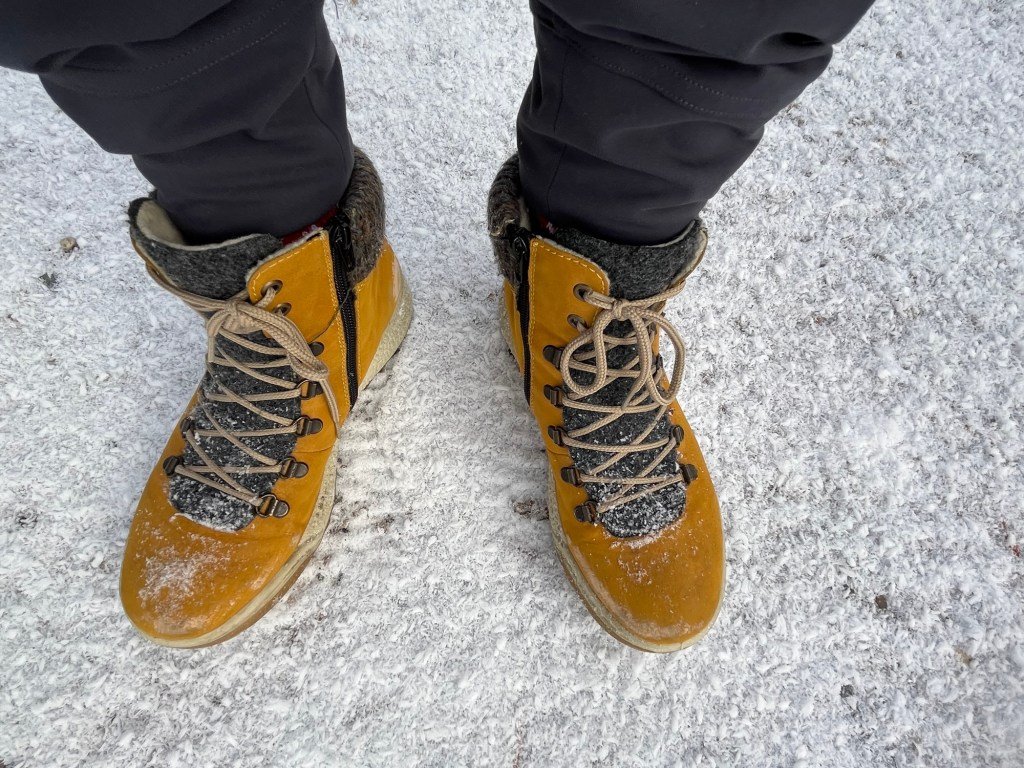
Boots with ICE FX technology soles are the way to go. I started using them this year. I had two slips in the first couple weeks of winter. I got the boots and I haven’t had a slip since. They are like winter tires. I still have to be careful but they have saved me.
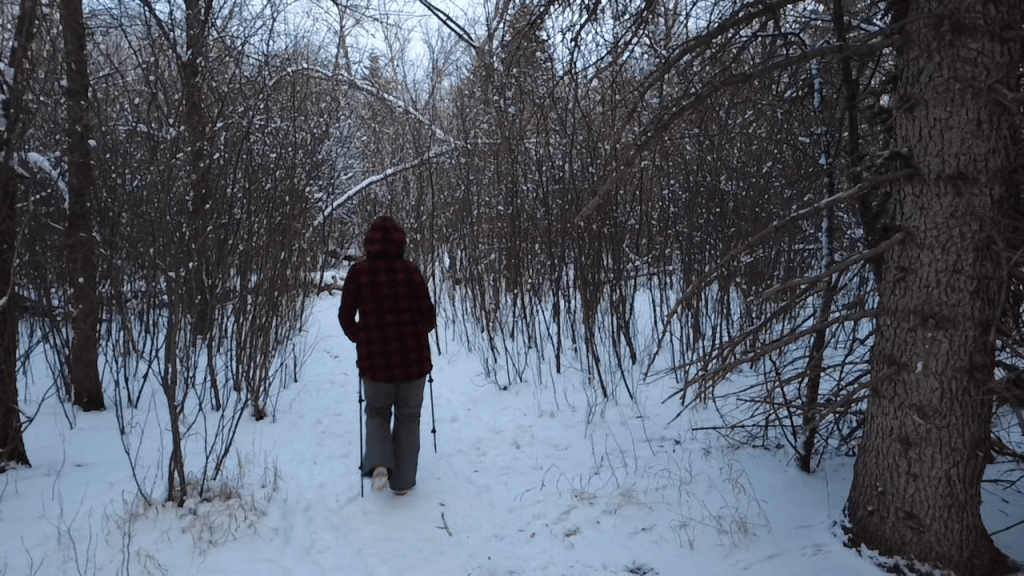
Hiking poles are this girl’s best friend. I am learning when to use them and when to leave them in the car. Days I can’t see the trail under the snow or when the trail is glistening with ice, they are essential. Days the trail is packed with snow and my balance feels good they can stay back.
Some days you just have to stay home. The boots and poles open your world. There are still times when staying home is the safest and best option. It is not worth the risk of a fall. Or a tweak. Walking in a mall or other large indoor space can meet some of your physical movement needs. As the snow melts, you can extend outdoor Earthing sessions in a safe, seated position until the ice is gone.
Nervous Systems: A Unified Network
There is another layer to chronic pain that people don’t see.
The nervous system becomes watchful.
When pain appears often enough, the brain begins to scan constantly for the next signal. Muscles tighten sooner. Reflexes fire faster. The body becomes protective.
It’s not weakness. It’s survival.
But a nervous system that spends too much time in protection mode eventually forgets how to settle.
This is one of the quiet gifts of time in nature. Not just for enjoyment but for nervous system survival.
As Japanese physician Yoshifumi Miyazaki, one of the pioneers of forest bathing research, observed:
The forest environment allows the nervous system to shift from vigilance to restoration.
For someone managing chronic pain, that shift is not small. It is validating.
Research into forest environments has shown that simply being among trees can lower cortisol, calm heart rate, and shift the nervous system out of constant vigilance.
In other words, the forest gently persuades the body:
You are safe enough to soften.
And for someone living with chronic pain, that reminder can be profoundly healing.
Frosty Therapy: Nature’s Icy Embrace for the Soul
If winter trails feel risky but your spirit still needs the forest, try this gentle practice.
Practice: Borrowing Stability
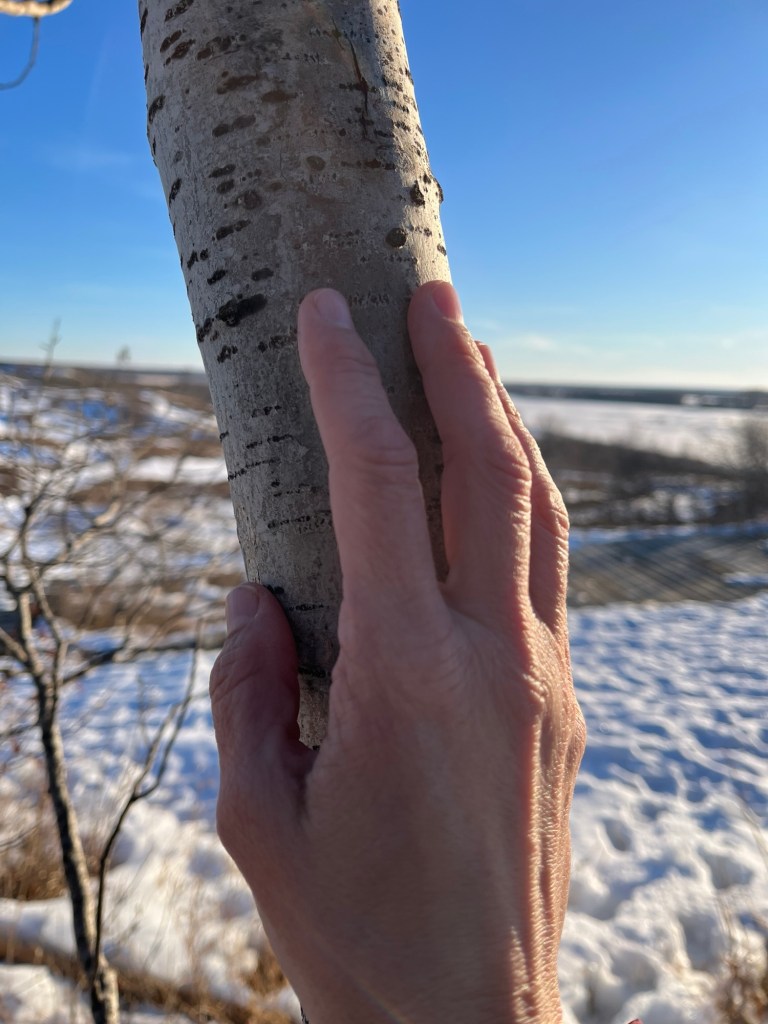
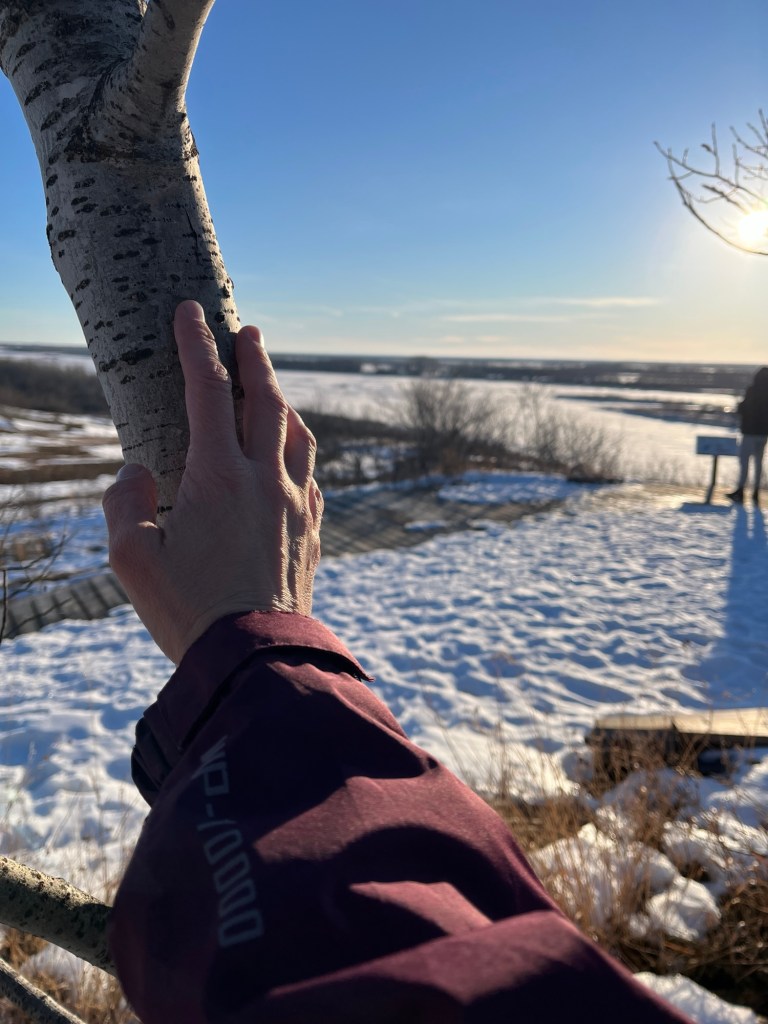
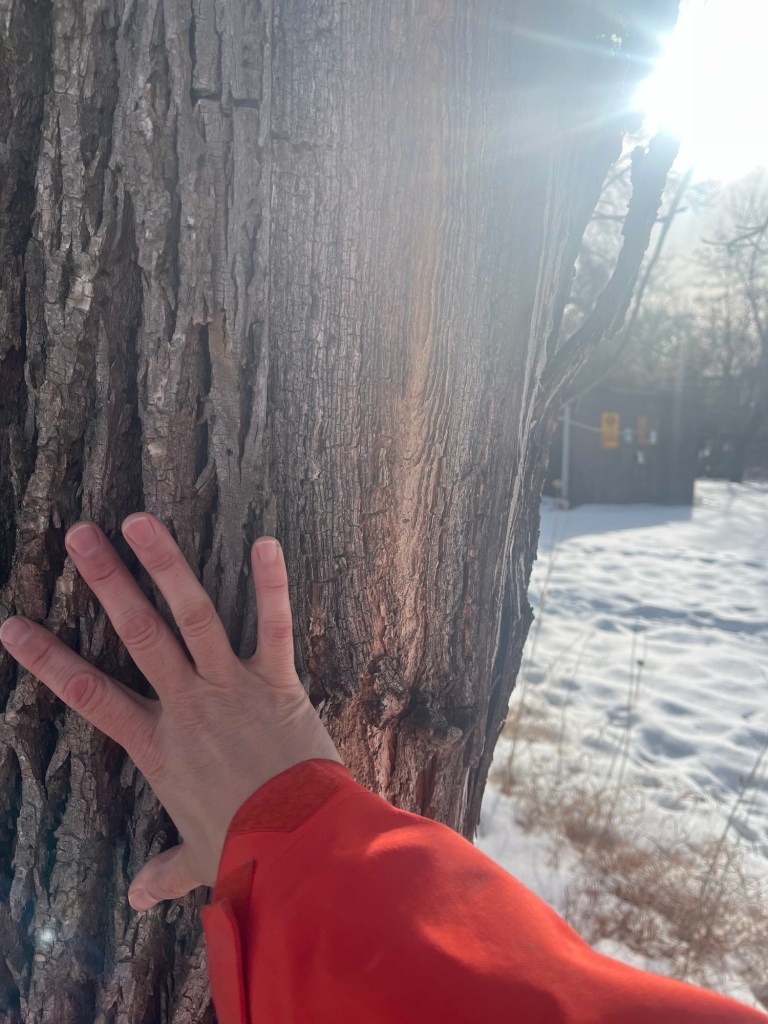
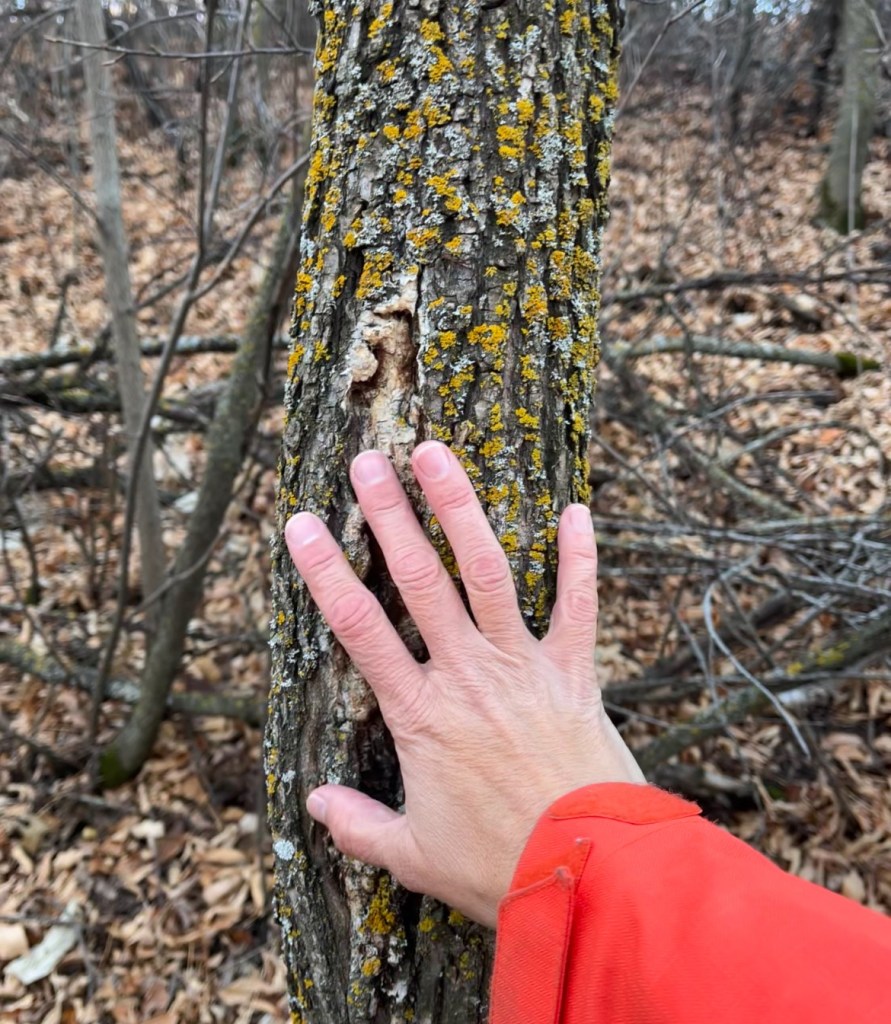
Find a tree nearby and place one hand against the trunk.
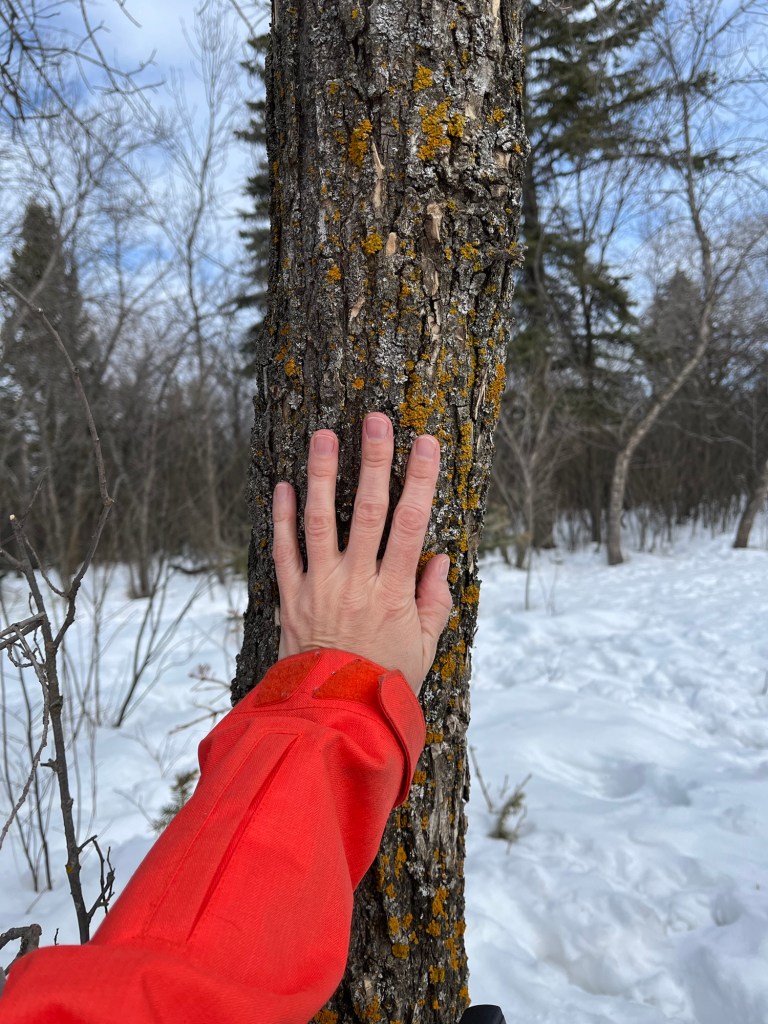
Feel the firmness of the bark under your palm. Trees have been practicing stability for a very long time.
Take three slow breaths.
Notice your feet inside your boots.
Notice the ground supporting you.
Then take three very slow steps. With each step, quietly ask: What does stability feel like right now?
You might be surprised how much calmer the nervous system becomes when movement slows down.
Winter walking with hypermobility includes both beauty and risk. Moments of deep solace among the trees and occasional grievances to file with a body that requires extra grit.
Let everything happen to you: beauty and terror. Just keep going. No feeling is final.
Perhaps winter forest walks teach that same wisdom.
Conscientious step by conscientious step.
The Whispers of Accord
Living with chronic pain sometimes feels like a negotiation between the body and the soul.
The body says: Please be wary.
The soul says: Please go outside.
The forest, thankfully, doesn’t insist on perfect joints or pain-free muscles.
It simply offers a place to breathe.
Scottish nature writer Nan Shepherd wrote about being in the mountains:
The thing to be known grows with the knowing.
Perhaps the same is true of our bodies.
The more we learn their quirks and their quiet wisdom, the more gently we can move through the world. Even when the trail shimmers with ice and every step requires a little forethought.
Because sometimes healing isn’t about conquering the path. Sometimes it’s simply about finding a way to keep walking among the trees.
So yes, SK winter trails sometimes feel like obstacle courses designed specifically for people with hypermobile joints to fail.
And yes, the body occasionally protests the whole arrangement. Of having any movement at all. Yet consider another quote by Nan Shepherd that leads us back to what matters,
It is a grand thing to get leave to live.
Perhaps that is what these mindful winter walks really are.
A quiet permission to keep living fully, even if the steps are slow and deliberate.
Careful steps. Even slightly wobbly steps.
Keep walking when and where you can. Surrender when called for. We are so close Prairies friends! We have almost made it to Spring! We’ve got this.
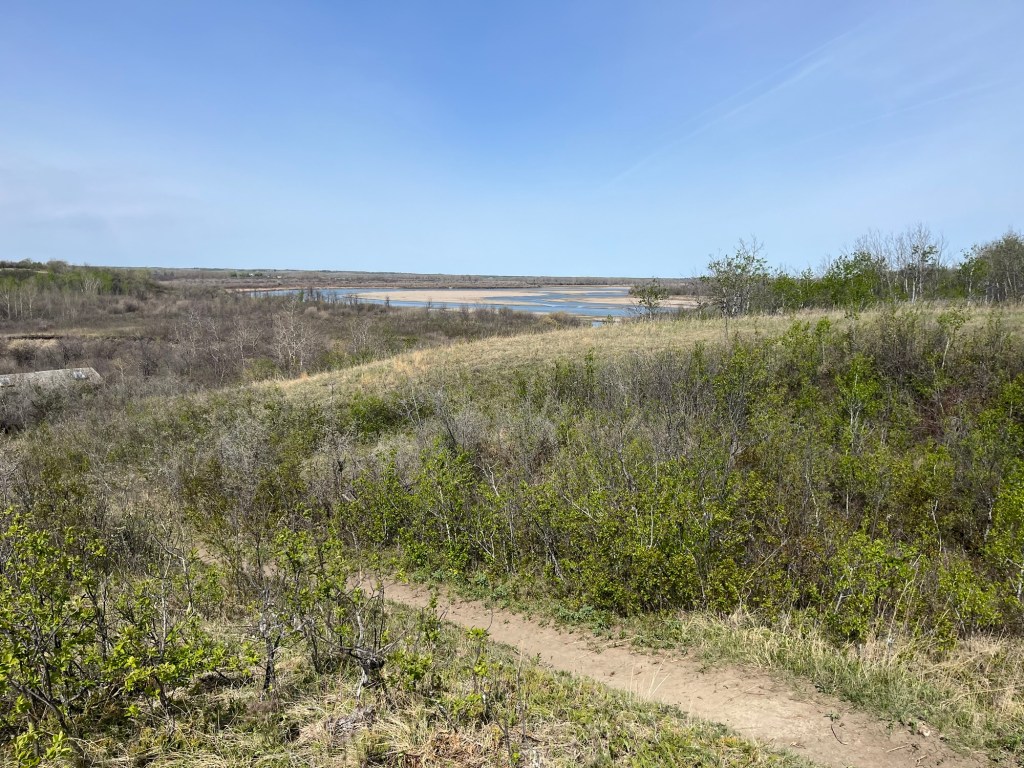
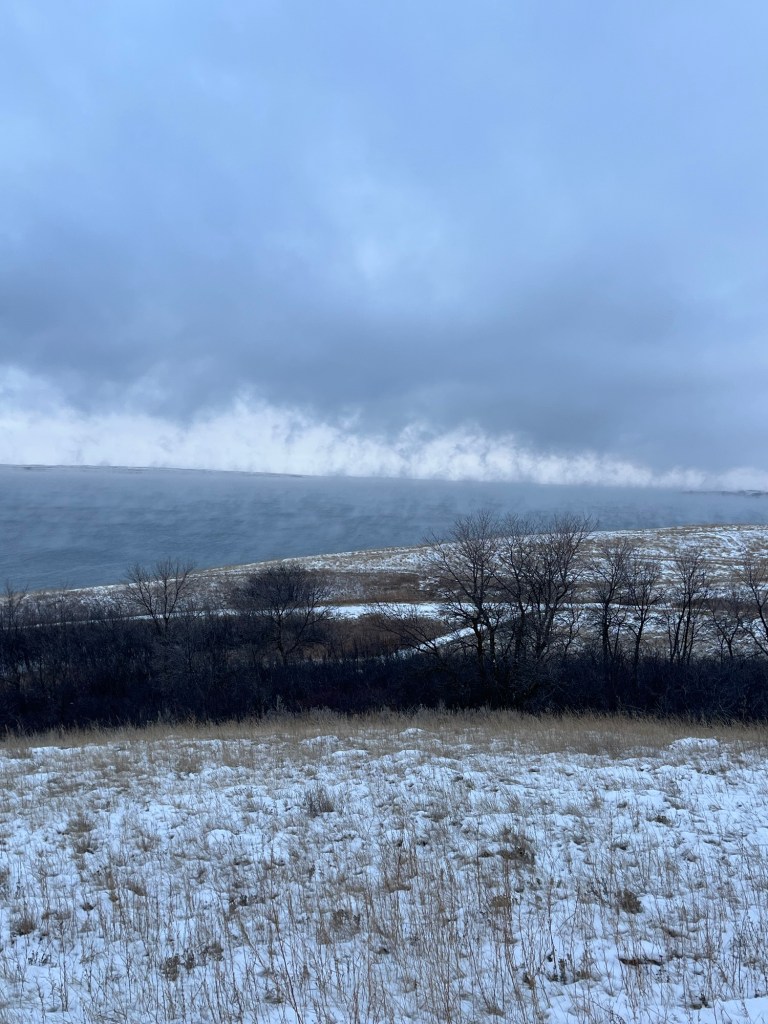
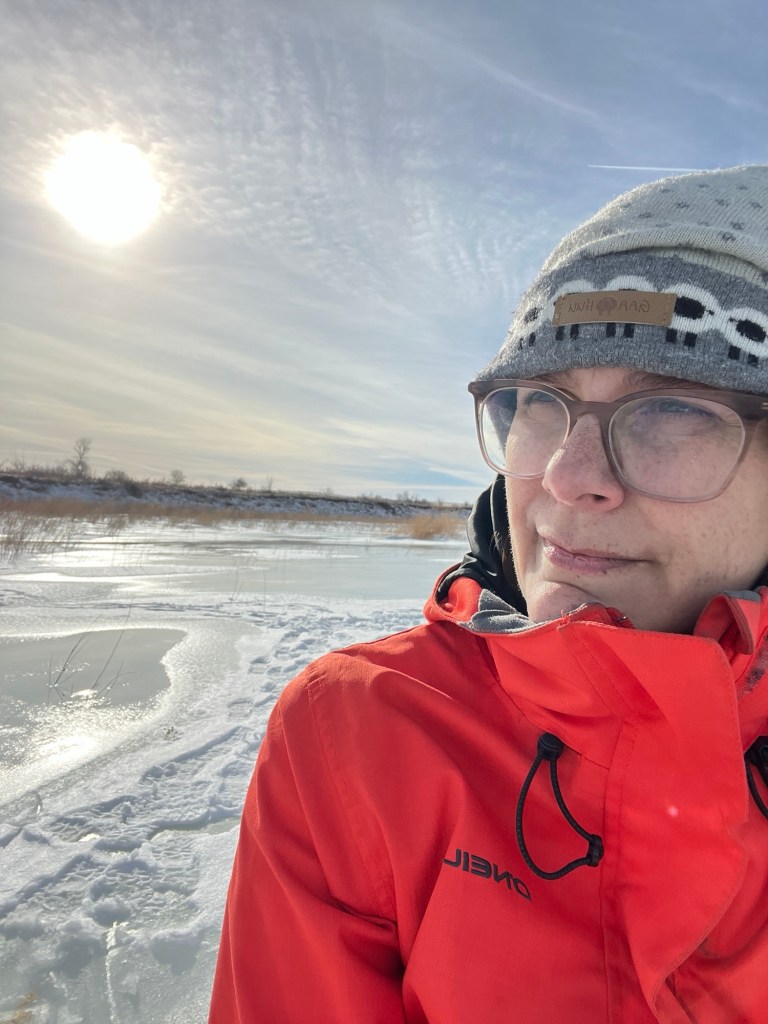
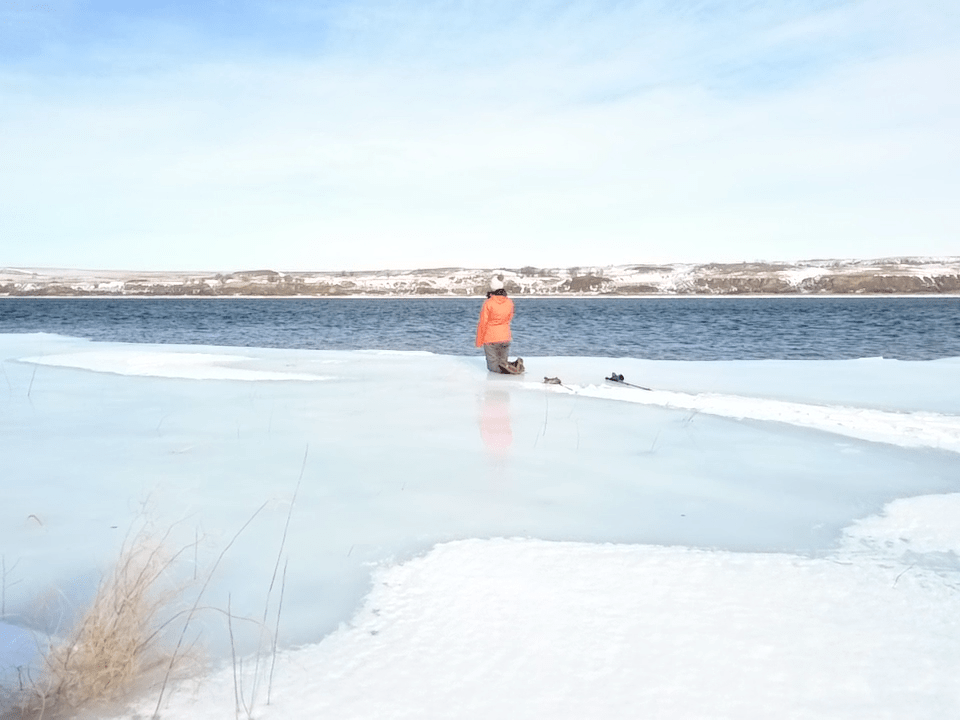
In Saskatchewan right now, the wind still bites and snow still crunches under our boots.
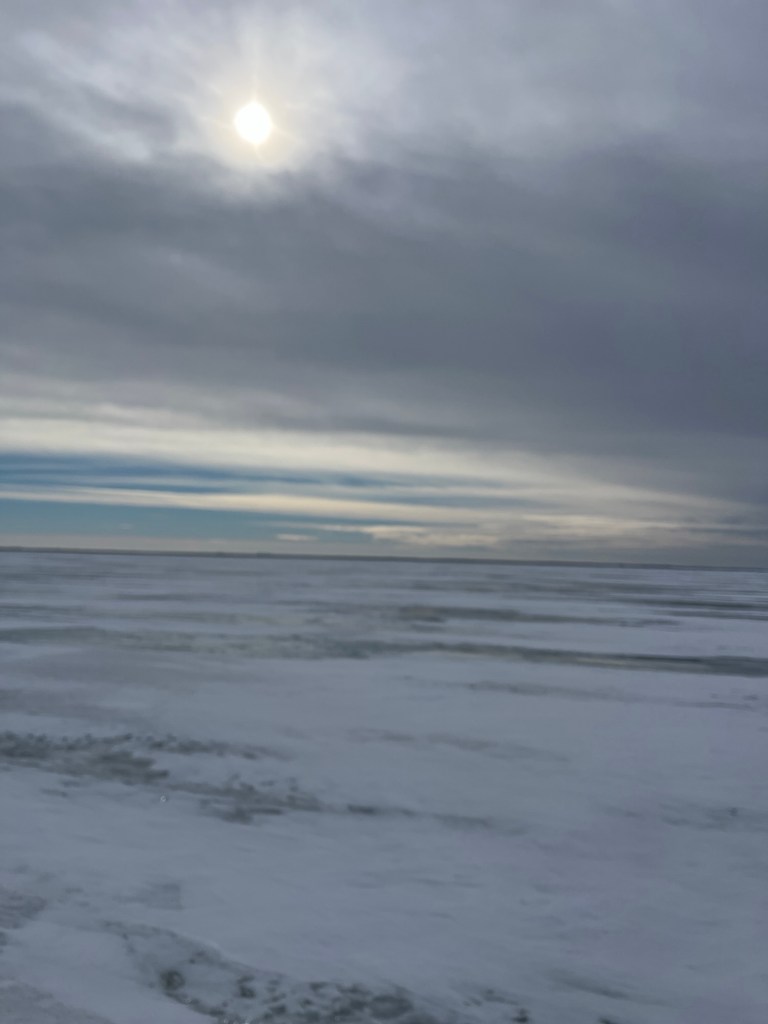
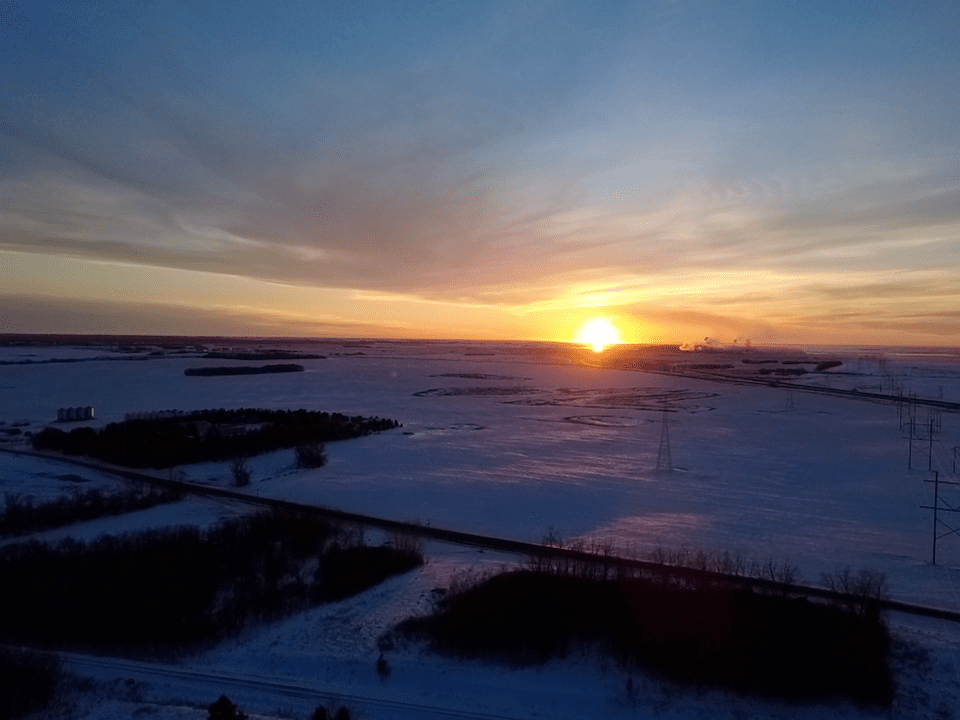
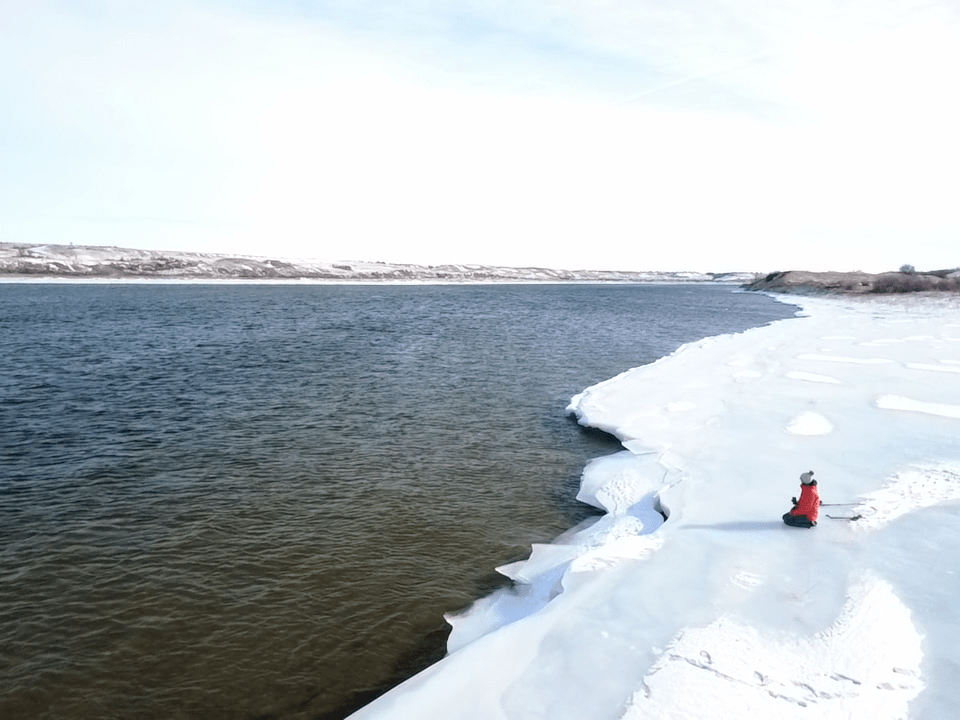
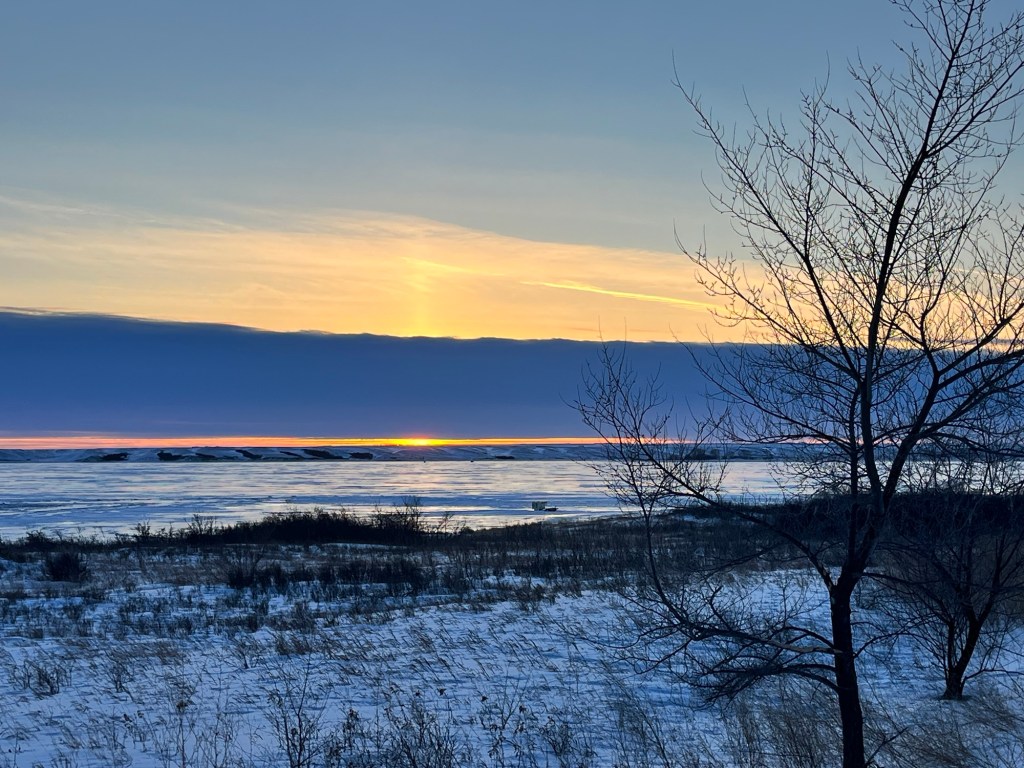
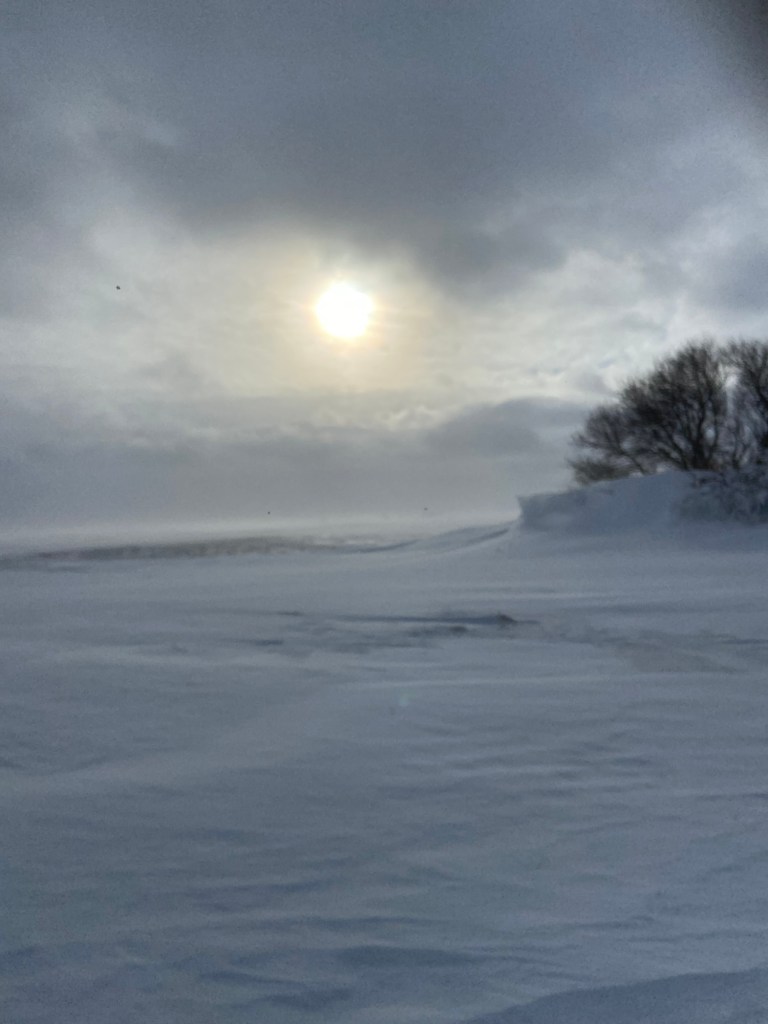
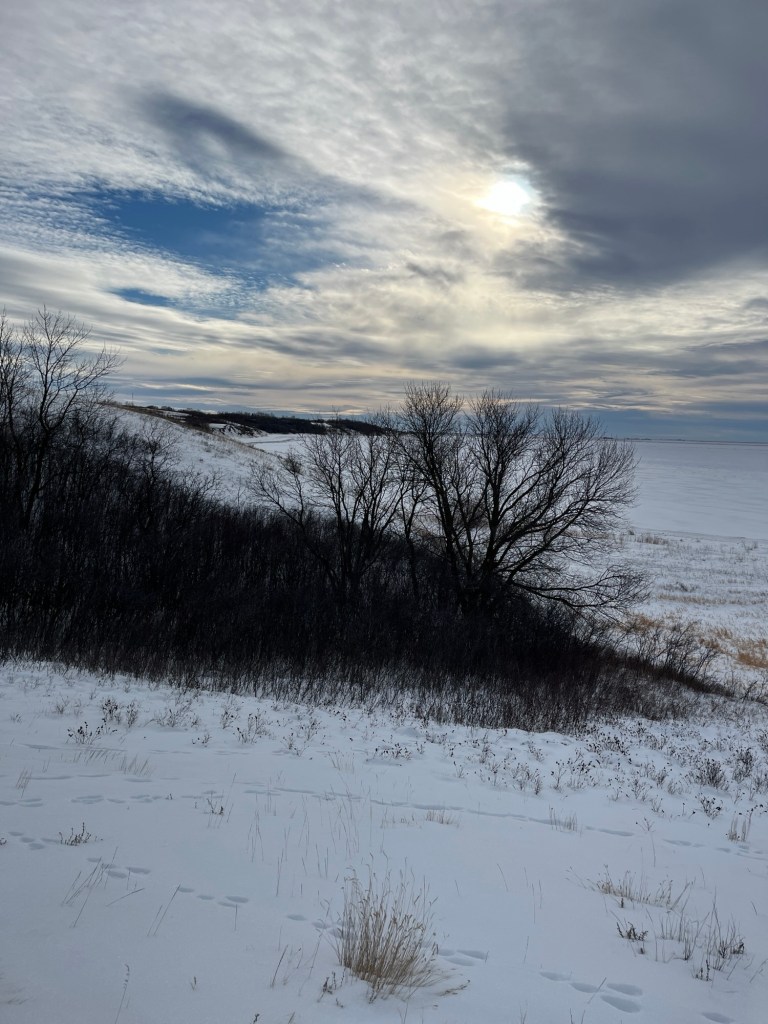
The pale sky stretches wide over frozen lakes and ground.
And yet… we are talking about spring. Not because we see it. But because we remember it.
It has come every year before and we can trust it will come again.
This is one of the most asked questions about forest therapy:
Does this really help when life is hard? When pain is chronic? When nothing feels like it’s changing?
The answer is not dramatic. It is steady.
Forest therapy does not promise cure. It doesn’t offer “complete and totally done with it all 👏🏼👏🏼👏🏼 .”
That’s not our story.
What it offers is regulation. Relationship.
So I keep returning.
Research around nature exposure shows reduced cortisol, improved heart rate variability, and nervous system settling.
But beyond the science is something quieter. The forest does not rush spring and the body does not rush healing. They know the futility and energy waste that rushing introduce to otherwise perfect systems.
Both the forest and the body move in seasons. Why then do we want spring to hurry up? Why do we expect the body to heal in our prescribed way, on our expected timeline?
🌲 “Can forest therapy help chronic pain?”
As someone who lives with chronic pain, I don’t speak in absolutes.
I speak in terms of mountains. There are days the climb feels vertical. Flares. Illness. Falls. Each with its own devastating consequences.
And still. We climb.
There are years that ask questions and years that answer.
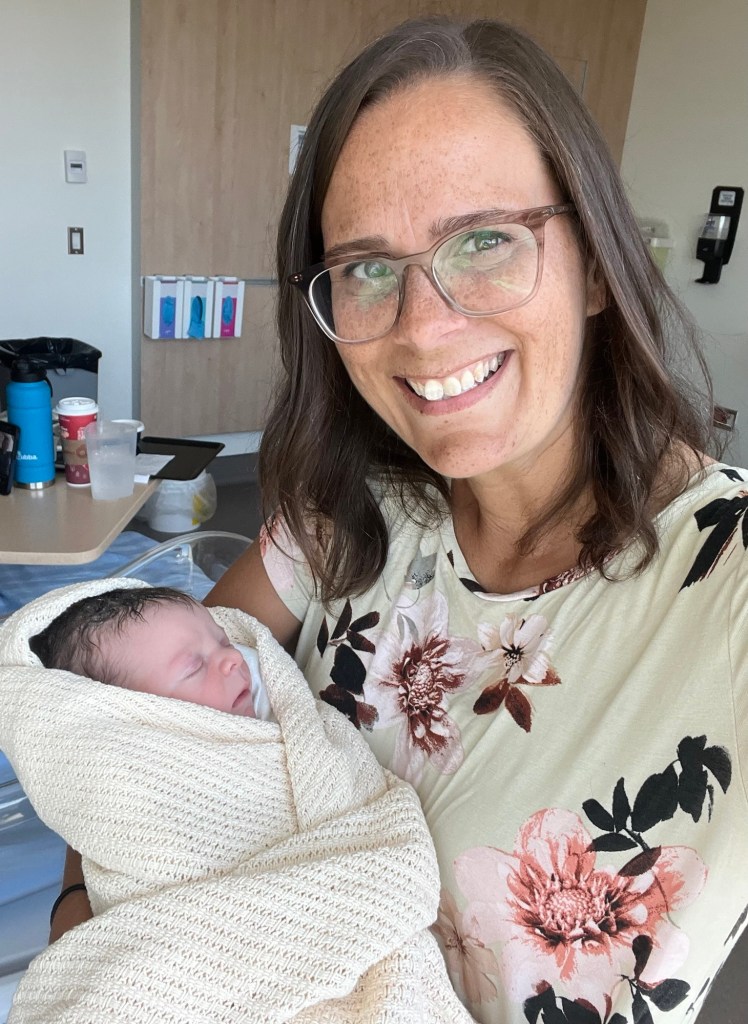
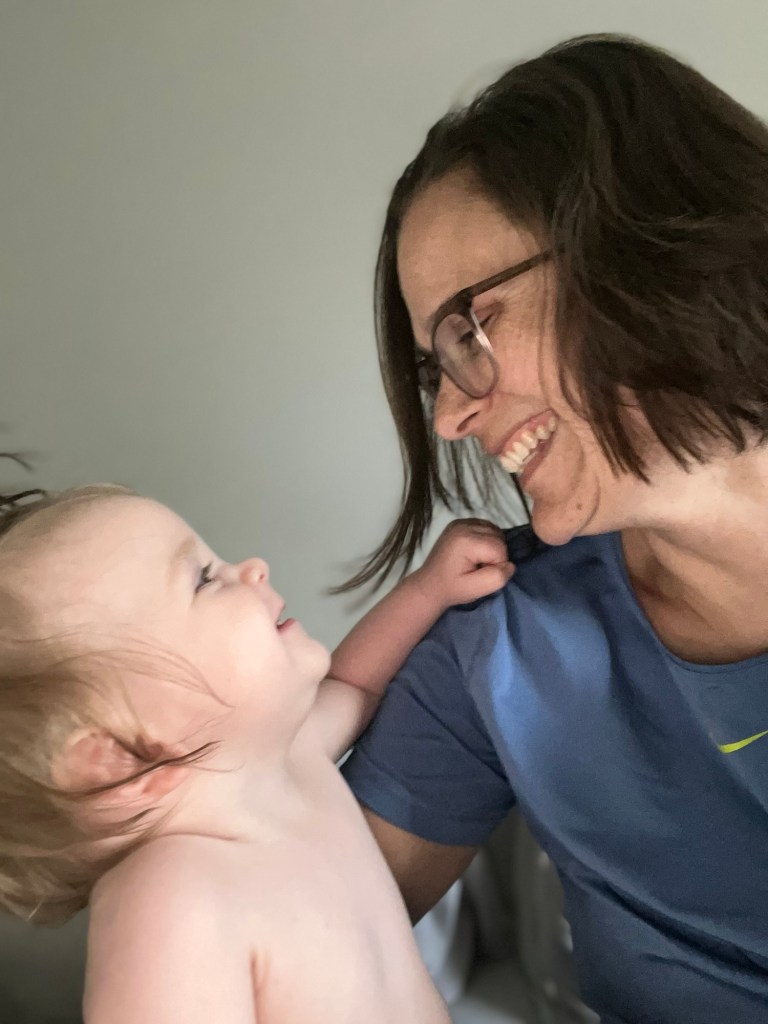
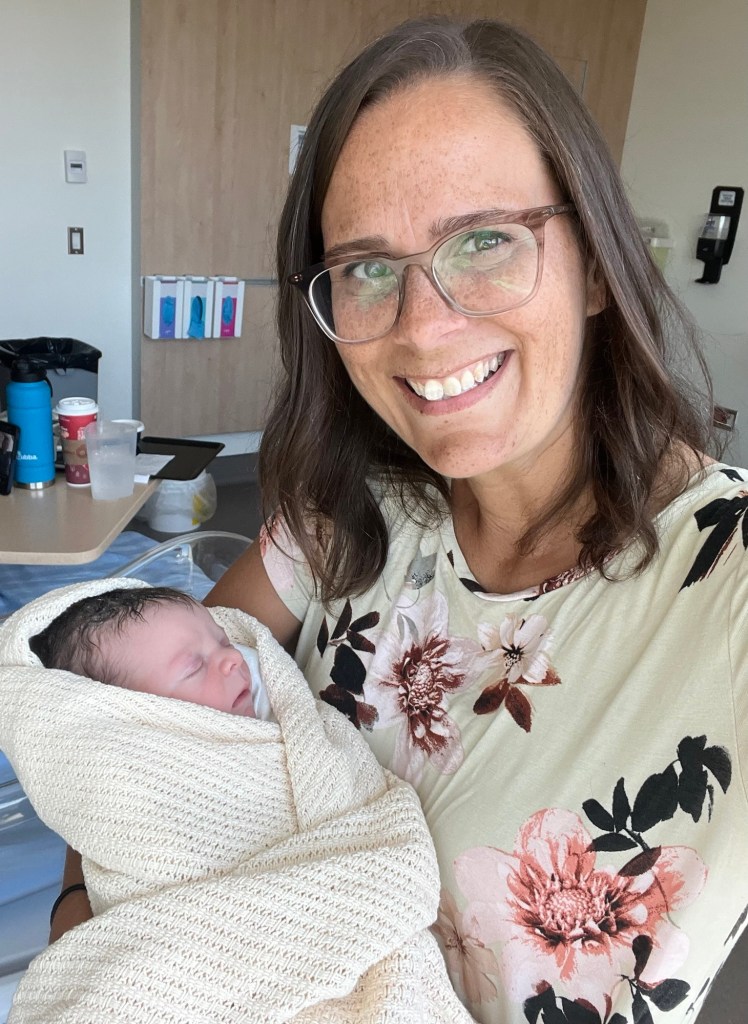
During the super cold winter of 2021, I learned that our first precious grandbaby was on his way. I wanted. Correction: I needed to be able to hold and snuggle that little one.
But I was so weak. I could barely lift a mug of tea without shaking from the effort. I walked from the bed to the bathroom. Sometimes to the car for an appointment.
The little munchkin, who I hadn’t even met yet, was cheering me on. I could sense it. So with a soup can, a baby blanket, and a prayer, I commenced my grandma- training.
A soup can because it weighed approximately a half pound. My ideal starting weight.
A baby blanket because of what this can of soup represented. He was going to grow over the following months into an actual grandbaby that I would wrap in this blanket. And carry him around to snuggle him. And to put him to sleep. To have deep conversations and sing the songs my mom and grandma sang to me.
And a prayer because that’s who I am.
That soup can, baby blanket and I started with 30 second walks 3x a day. Each walk induced waves of nausea followed by hours of cramping and exhaustion.
Each half pound and each 30 second increase was an excruciating miracle.
There were setbacks. Most evenings were agonizing. Some days I wondered if this was the correct place to put this much time and energy. It was all I could do to find time and energy to eat.
After months of focused grandma- training, I could walk outside! And something shifted. During a particularly stressful week and stubborn muscles, I walked down the lane and into the trees on our farm. I couldn’t go as far as I’d planned. I couldn’t “achieve” what I wanted. I leaned against a frozen trunk and felt foolish for even trying.
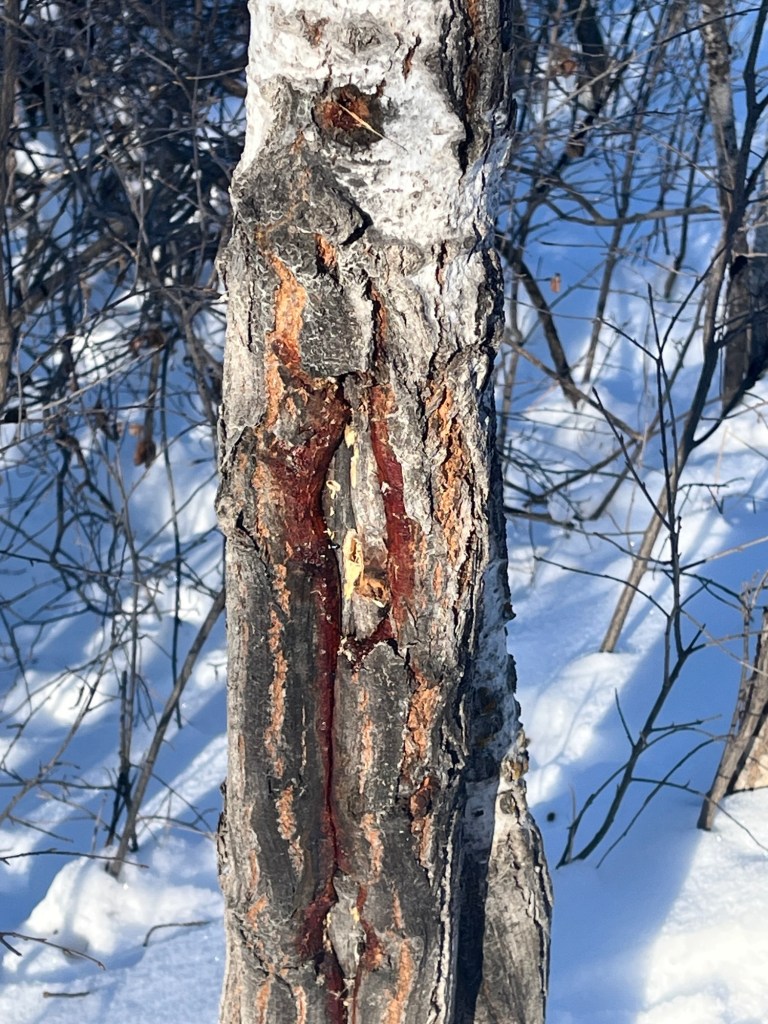
The cold, early spring air sharpened my senses. The snow muffled the world. The trees stood, scarred, weathered, unmoving.
Some trees have survived a hundred Saskatchewan winters. I considered how they are wise and do not apologize for seasons of dormancy.
It was around this time I stopped asking, “When will I be better?” And started asking, “How do I live well from this place?”
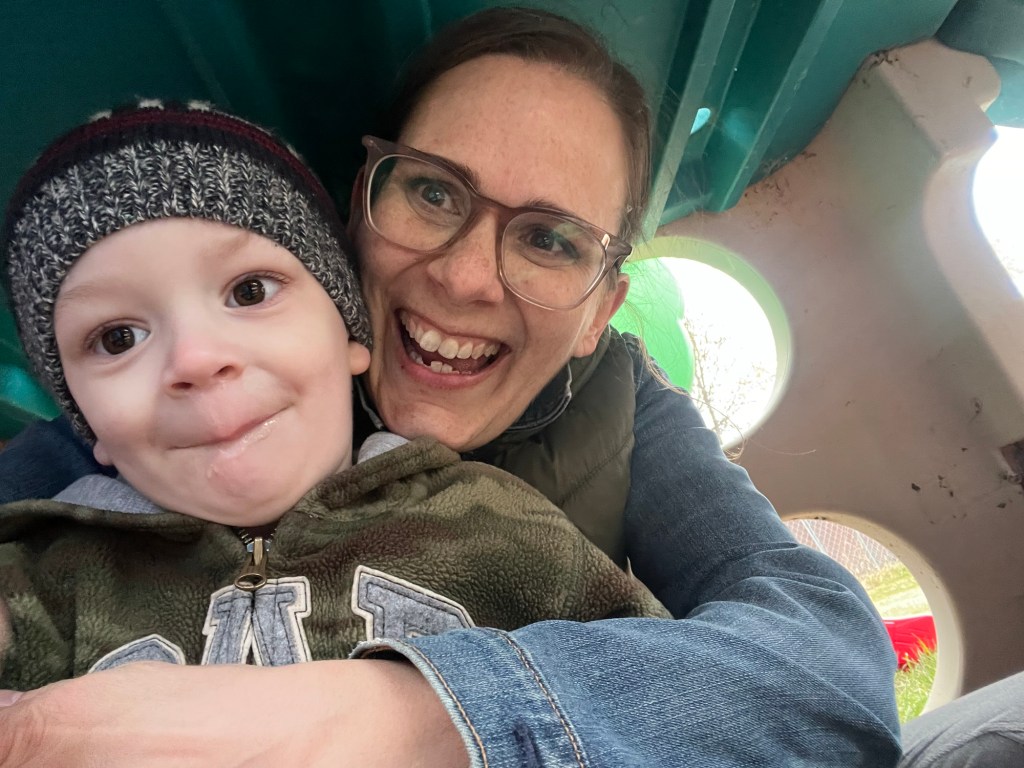
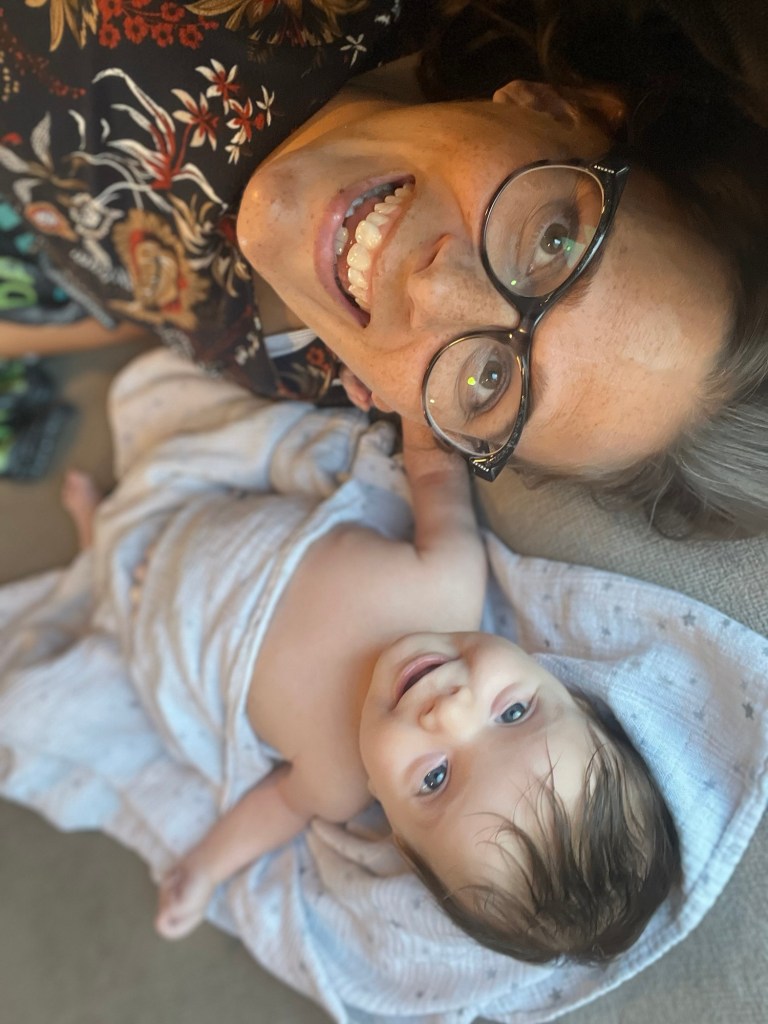
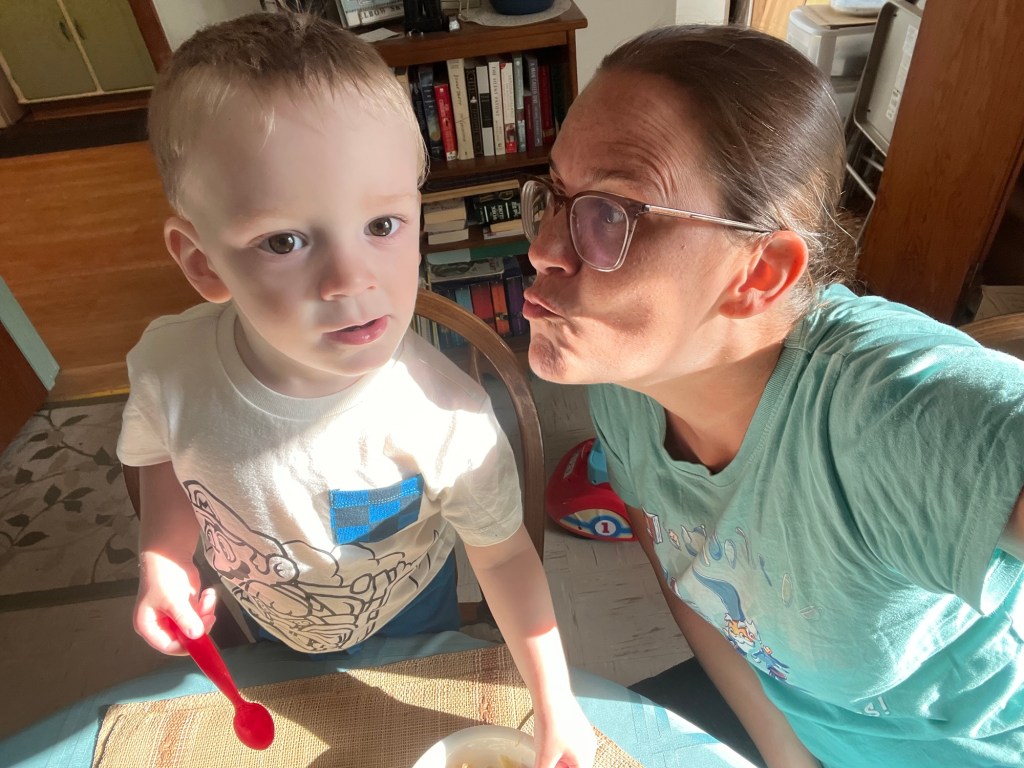
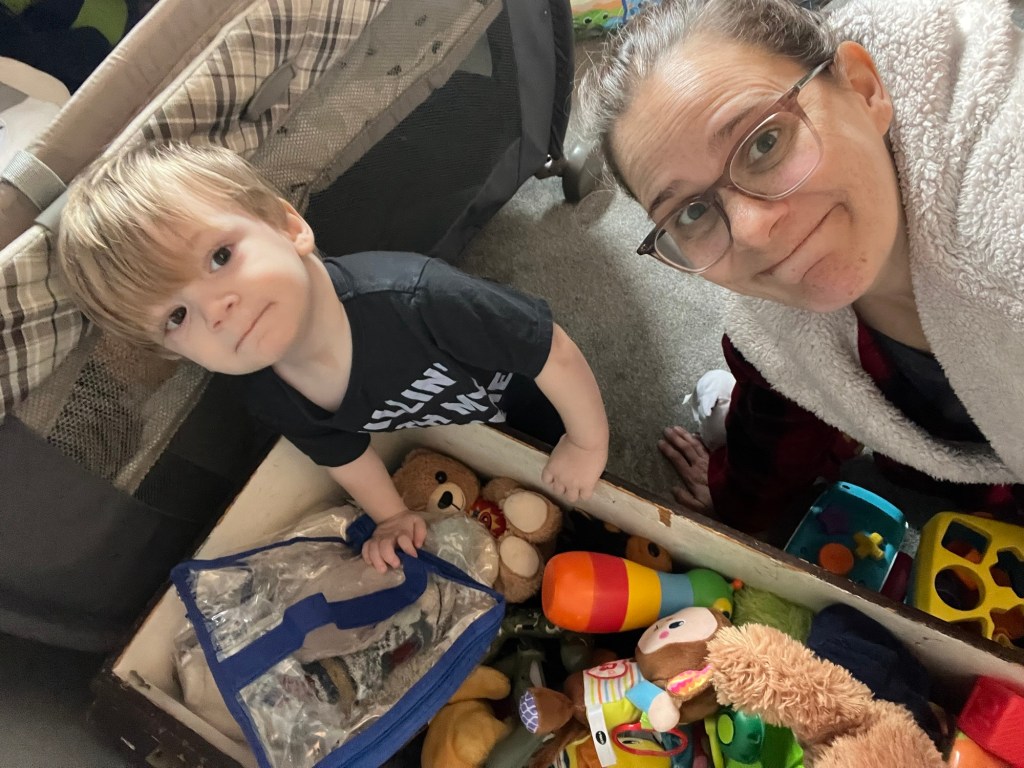
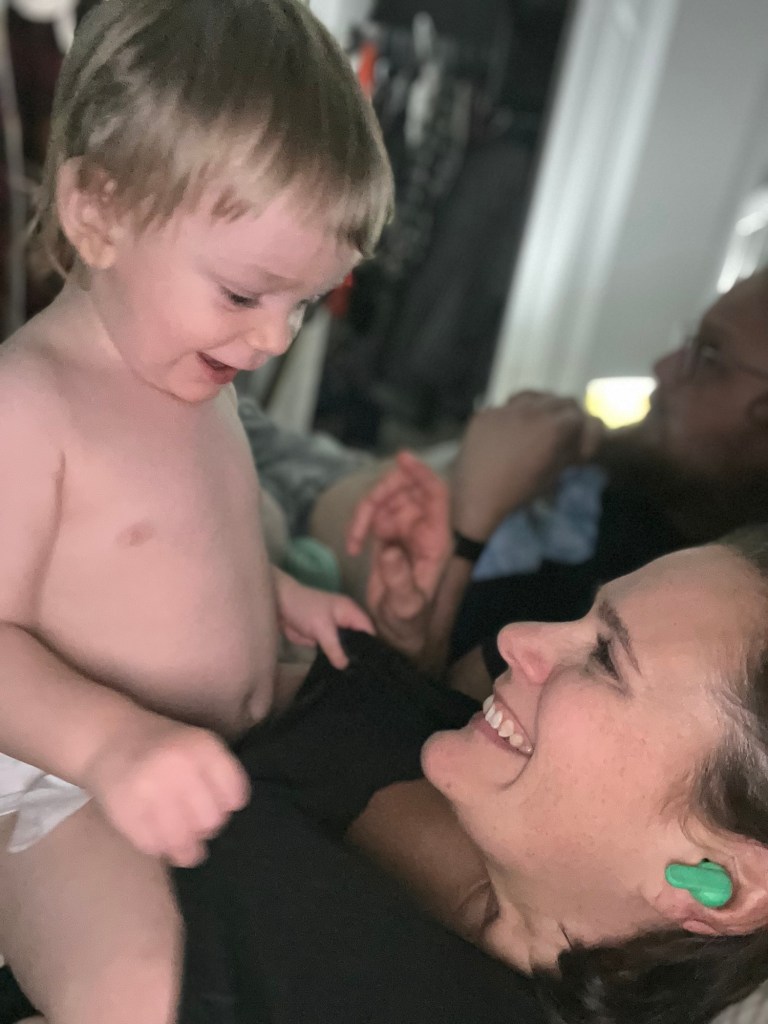
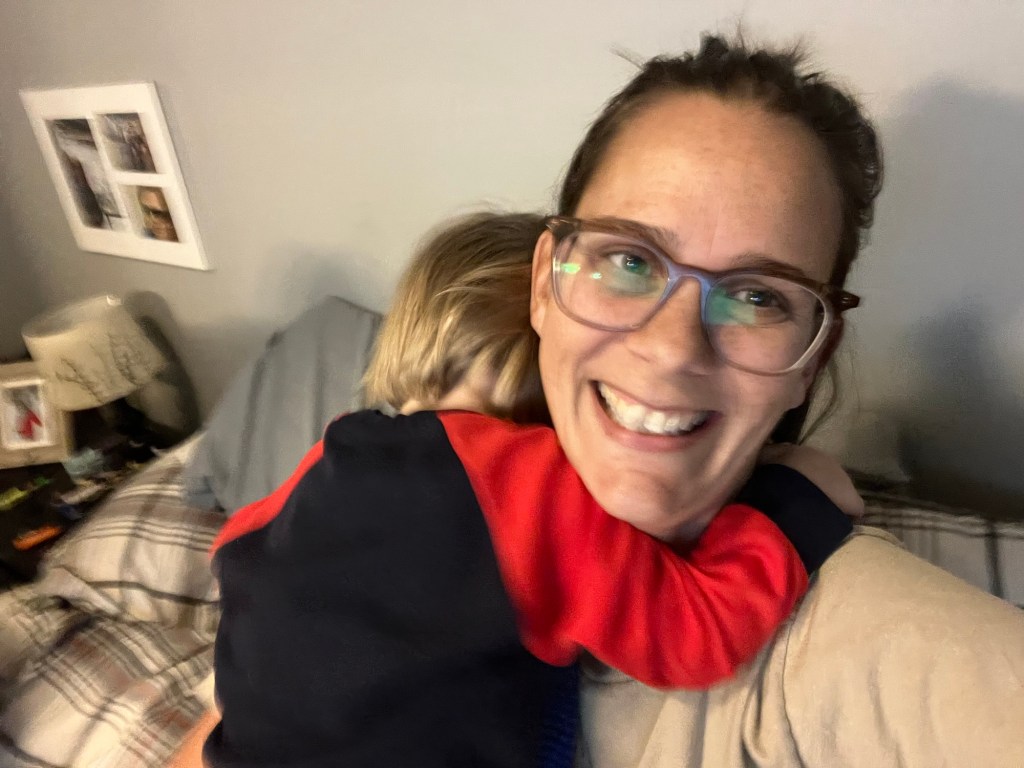
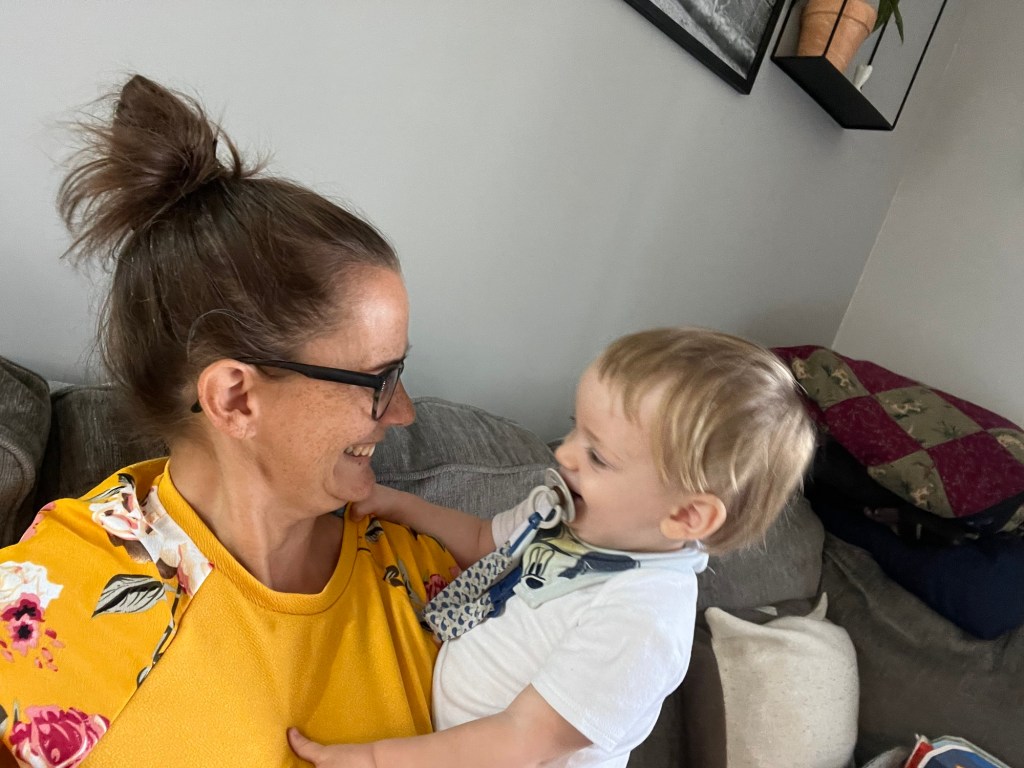
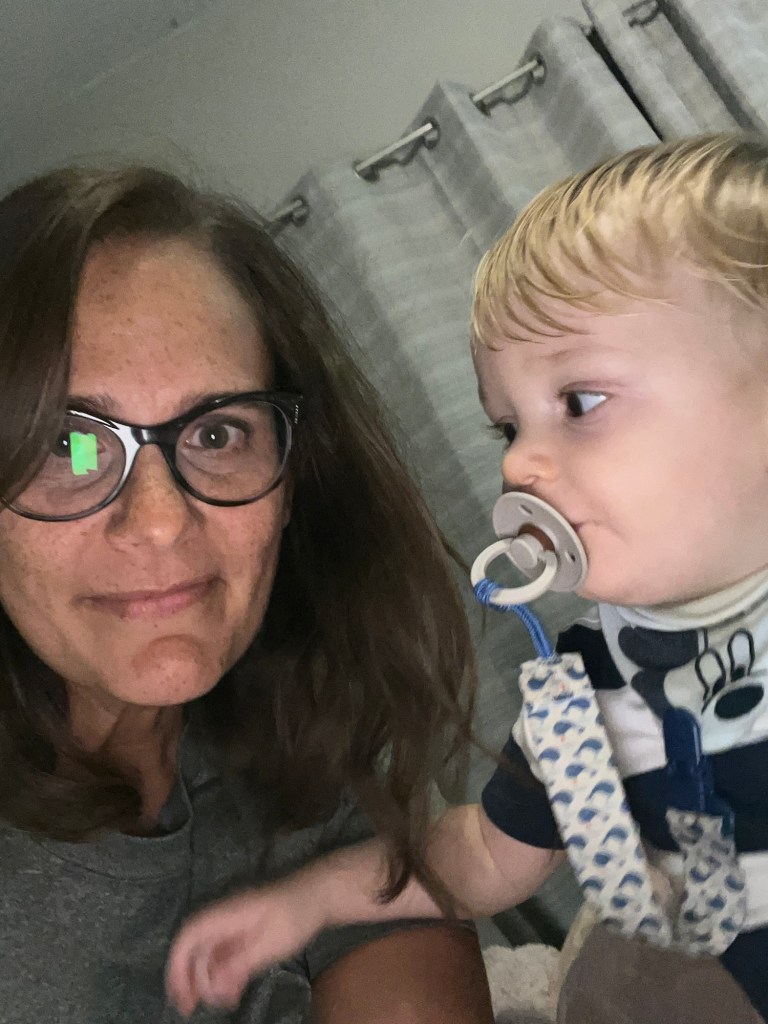
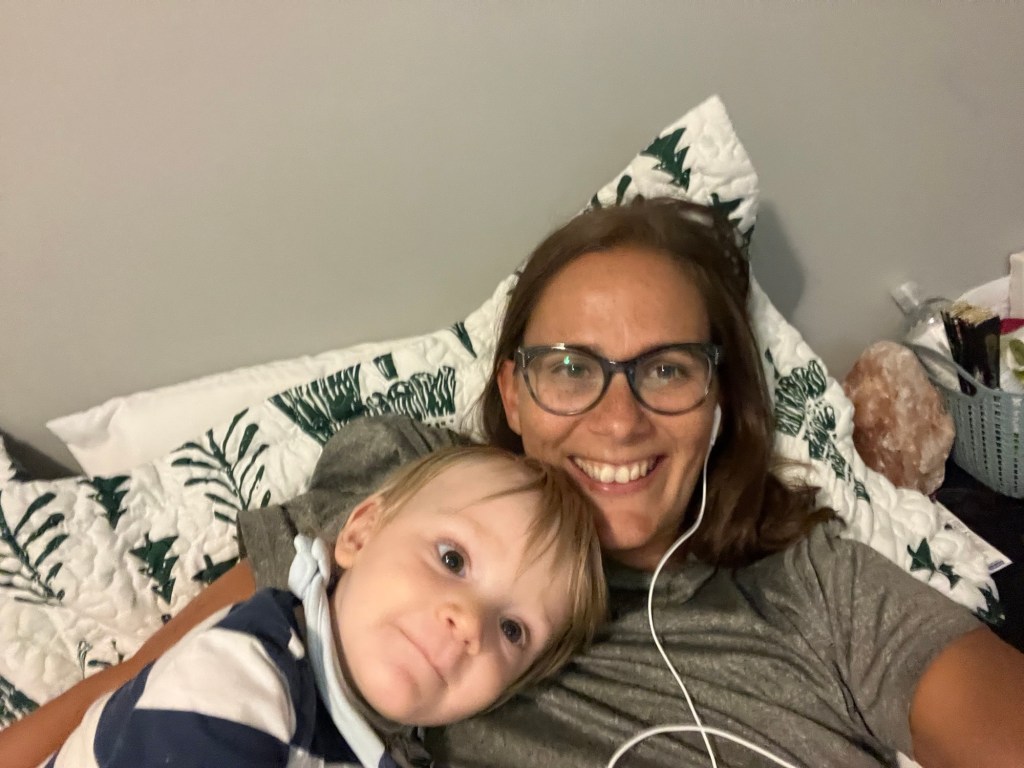
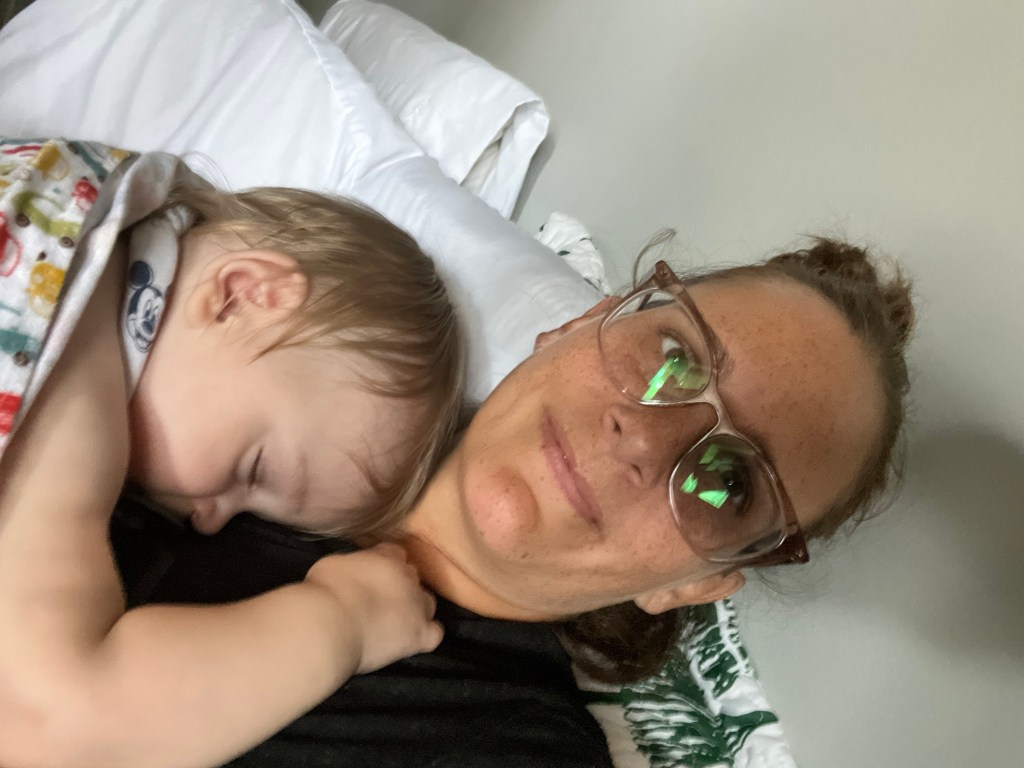
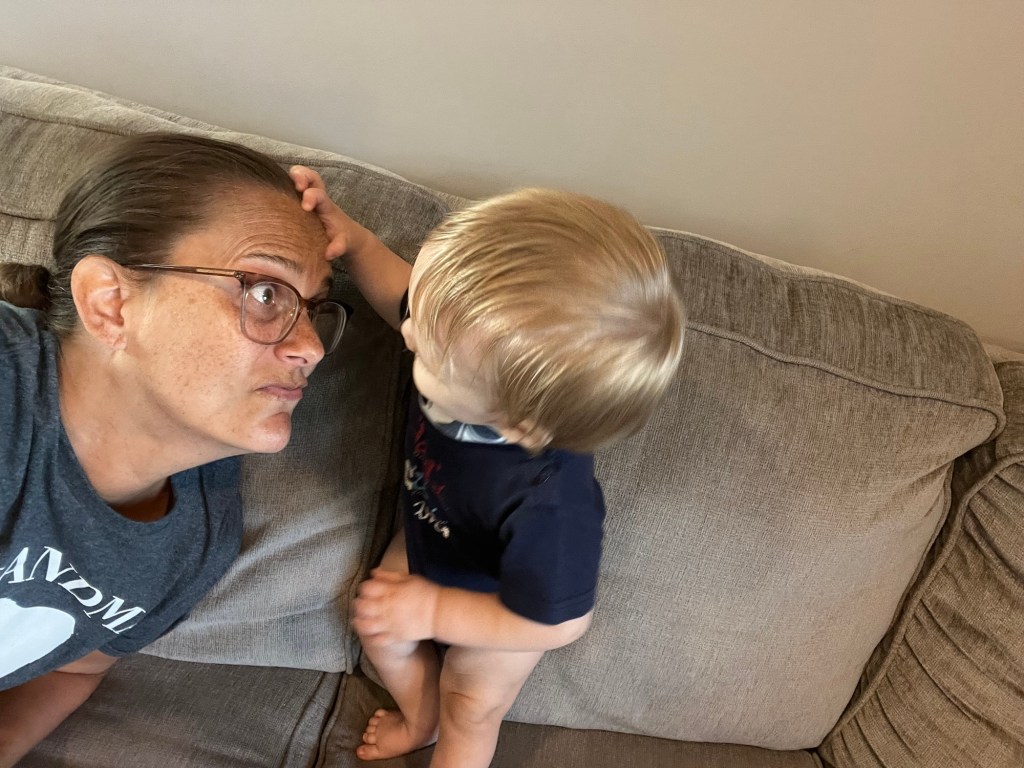
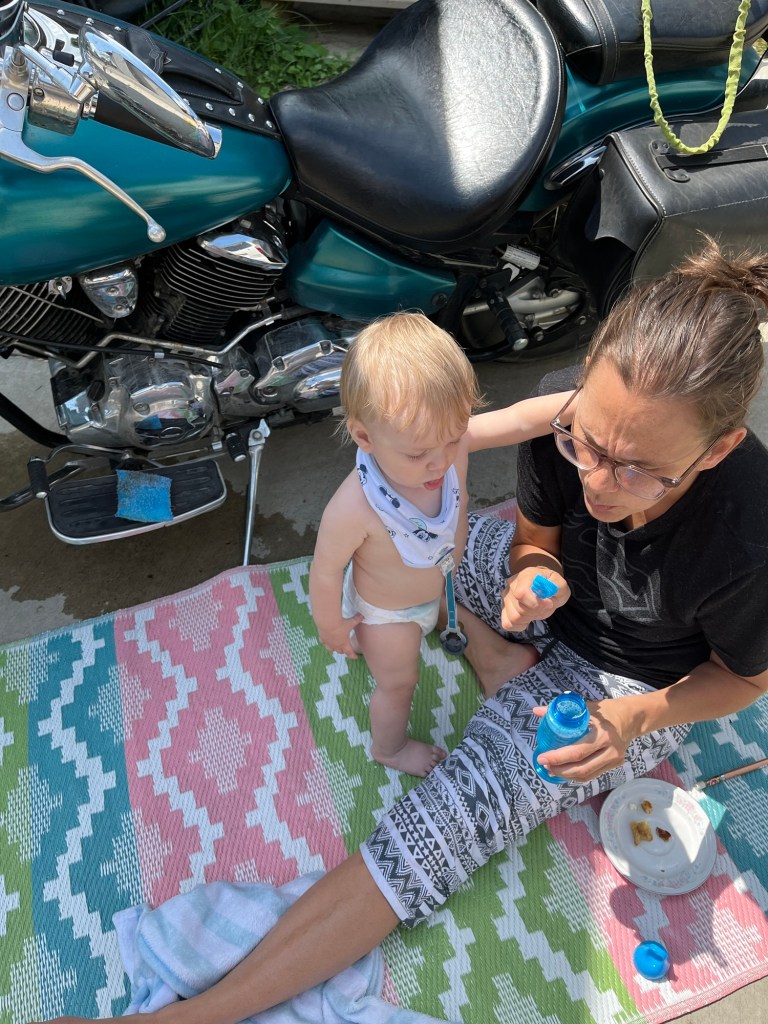
That question changed everything. And part of my answer was to focus on being a grandma. That little man I trained for months to be able to hold is going to be 4 this summer. And his equally enchanting sister will be 2. They have been the means of my greatest confrontations and of my greatest delights.
Almost like trying to enjoy your favourite therapy during a Saskatchewan winter. We take the intense highs with the intense lows.
🌲 “How do you practice forest therapy in winter?”
Winter forest therapy isn’t about long hikes. It’s about being present in the moment.
Notice how snow softens sound. Notice how your breath becomes visible. Notice how even in dormancy, life is stored beneath the bark and soil.
I have come to the realization that the forest in winter mirrors chronic pain. Nothing looks alive. Nothing appears to be blooming. But beneath the surface, systems are conserving and recalibrating.
Strength. Resilience. Wisdom.
Spring doesn’t shout when it arrives. It begins as a spark. An idea.
A drop. A thaw.
A beam of light catching ice and reflecting its warmth.
The same is true in us. Your good days are coming.
Sometimes we have to trust that promise for a long time before we see it.
Even if all you’ve seen is a spark.
That spark will become a light. That light will become a beam.
That beam becomes you, reflecting what you’ve learned onto someone else.
🌿 A Simple Winter Forest Therapy Practice
Trusting the Season (10–15 Minutes)
Step outside, even if just to your yard or a nearby tree line.
Stand still. Feel your feet grounded in frozen earth.
Place one hand over your heart. One over your belly.
Take three slow breaths. Watch the air leave your body.
Ask quietly: What season am I in?
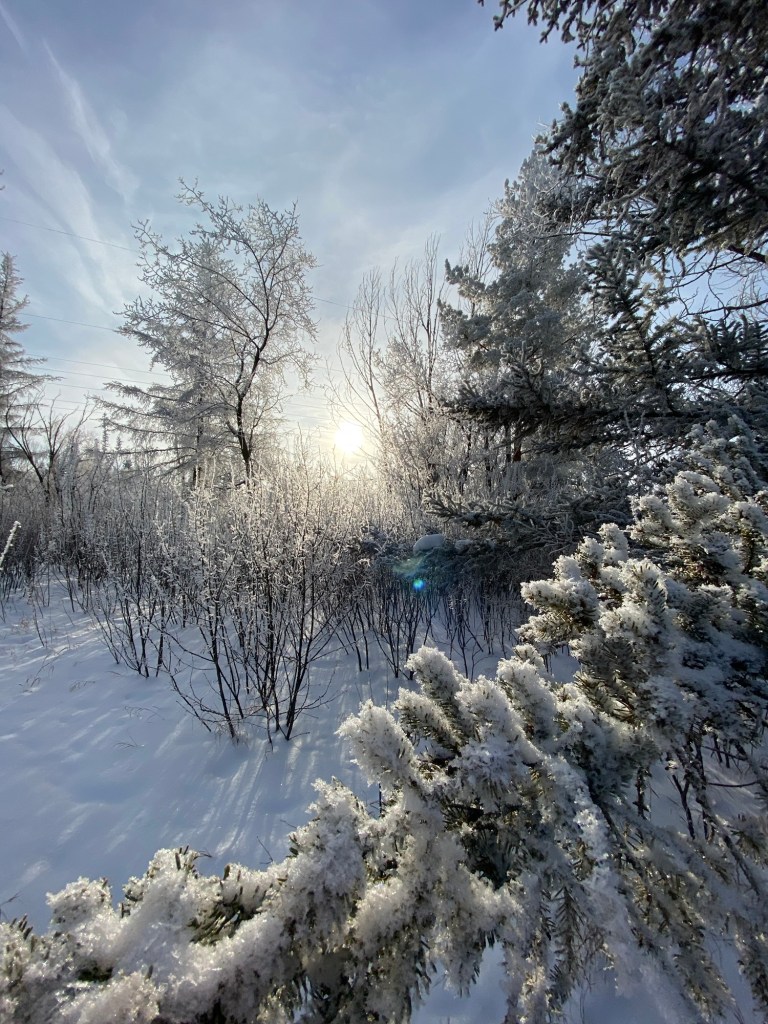
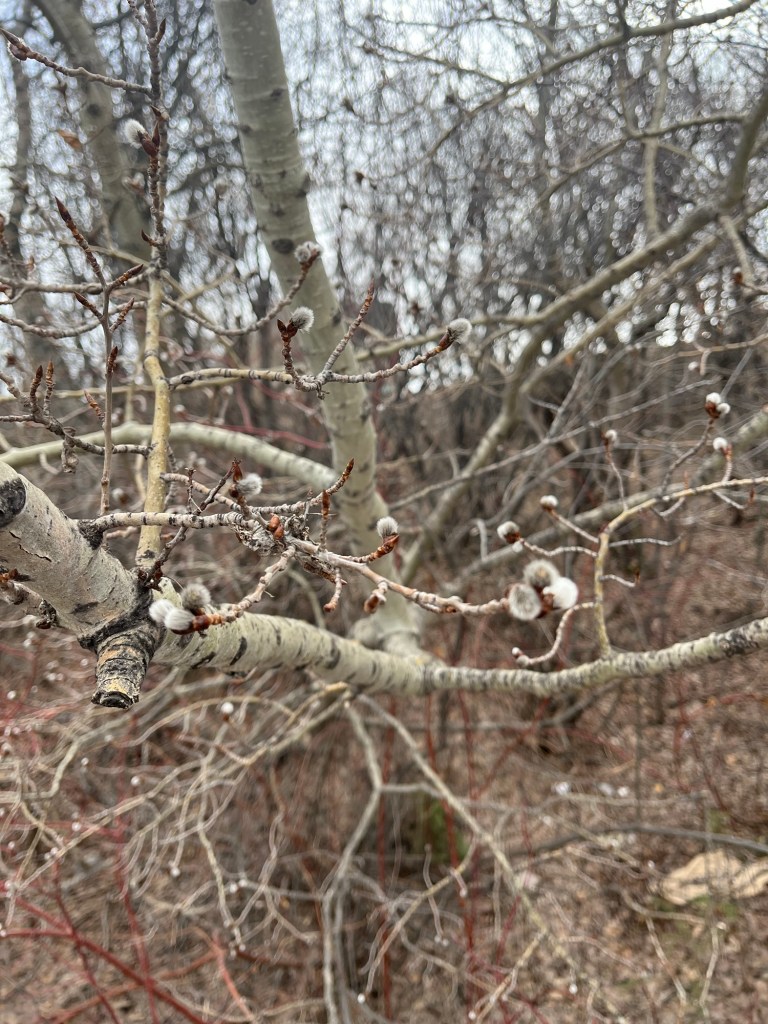
Look for one sign of hidden life. Buds beneath bark, tracks in snow, sunlight on ice.
Whisper: Spring has come before. It will come again.
When ready, take that sentence home with you.
🌲 What Makes Forest Therapy Different From Hiking?
Hiking is about distance. Forest therapy is about experiencing relationships.
You don’t conquer the mountain. You learn from it.
And when you fall (as we all do) you get back up.
Keep climbing. Fall after fall. Flare after flare.
Keep reflecting hope and joy in the middle of the mess. It’s possible.
Anne Lamott defines hope not as naive optimism but as a stubborn choice to believe in goodness and possibilities, especially during dark, uncertain times.
🩶 If you’re reading this from under grey prairie skies, remember:
The trees are not worried about spring. They trust the tilt of the earth. They trust that light and warmth will return.
You can trust too. Your good days are coming. There are bright days ahead.
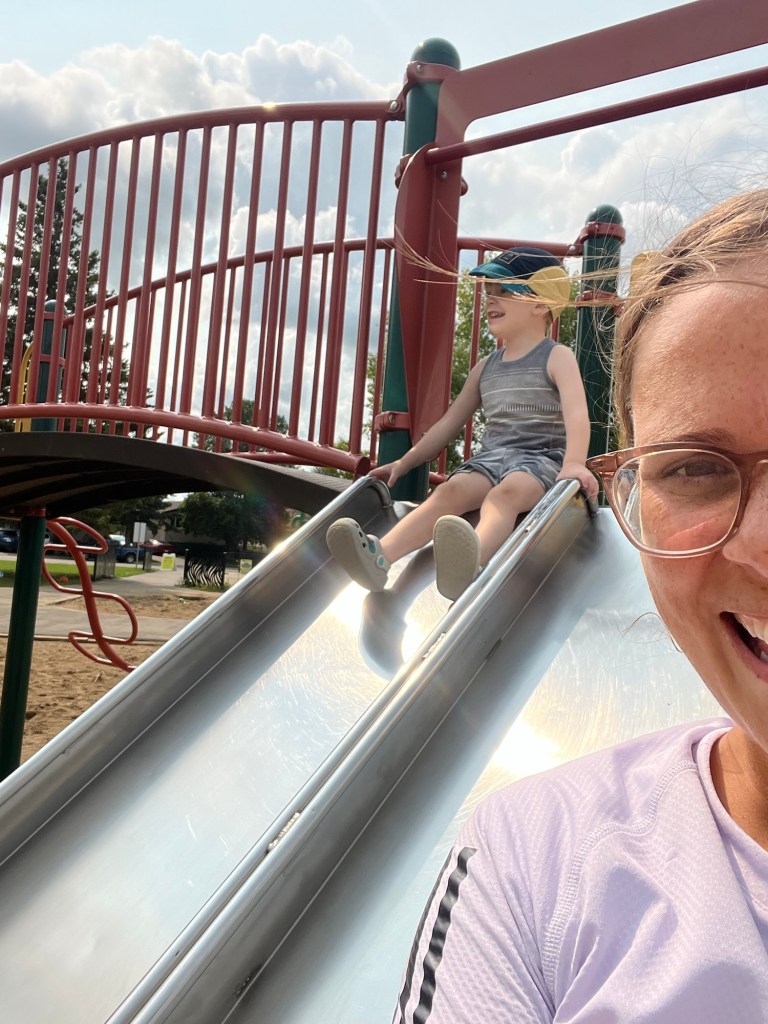
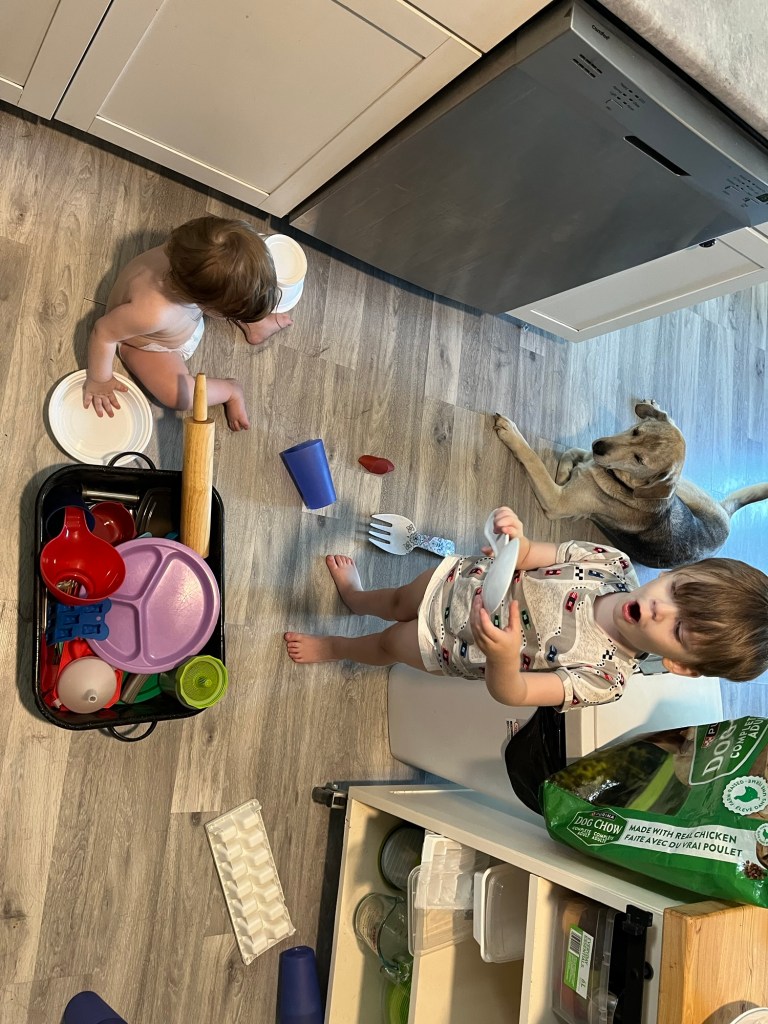
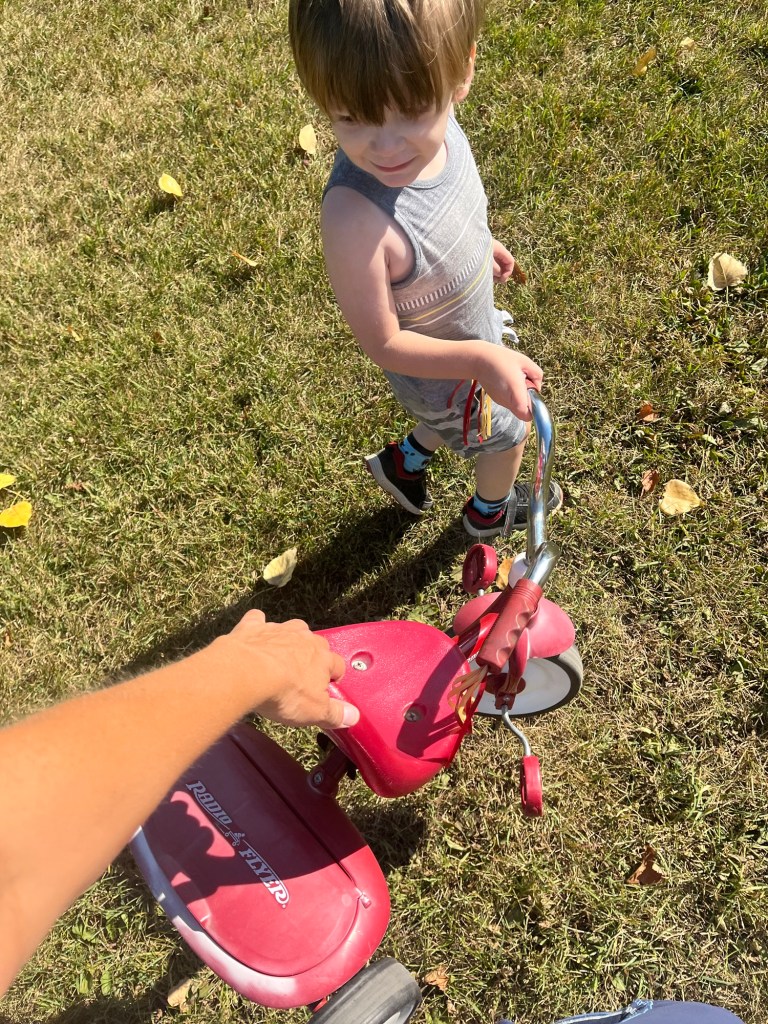
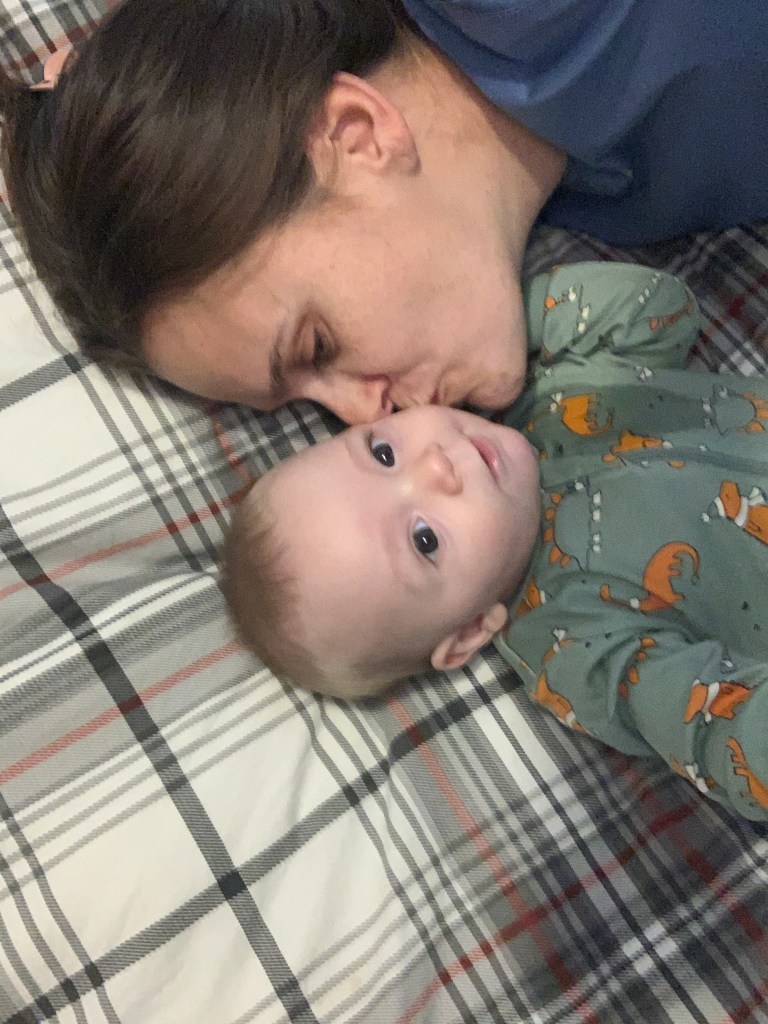
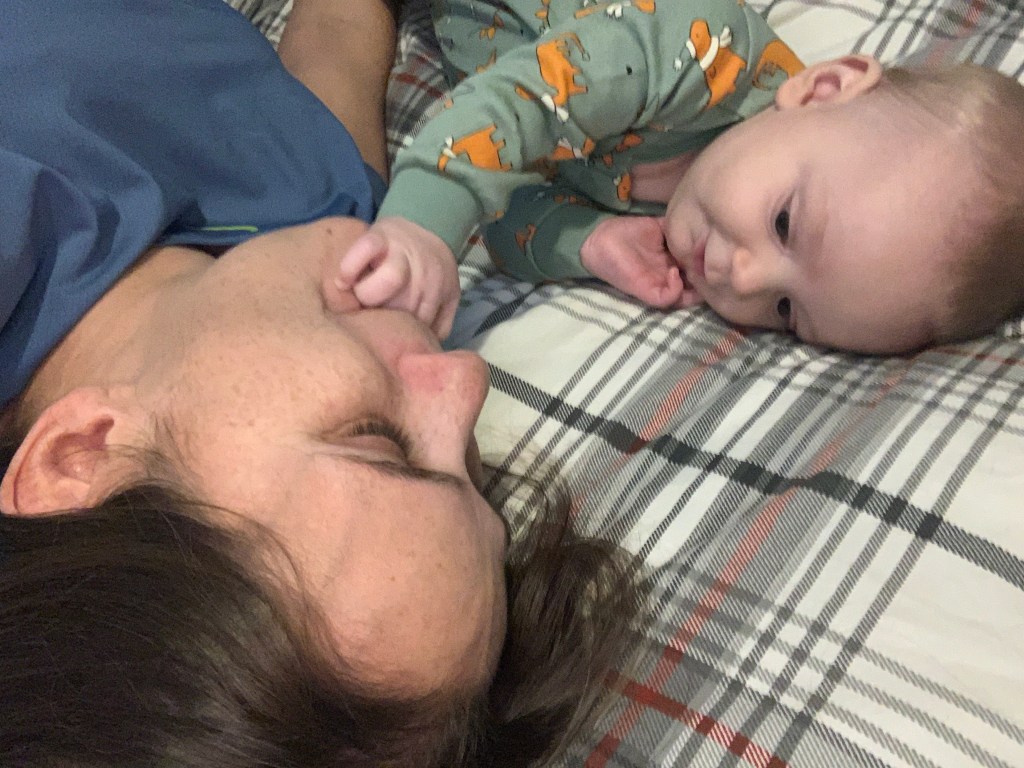
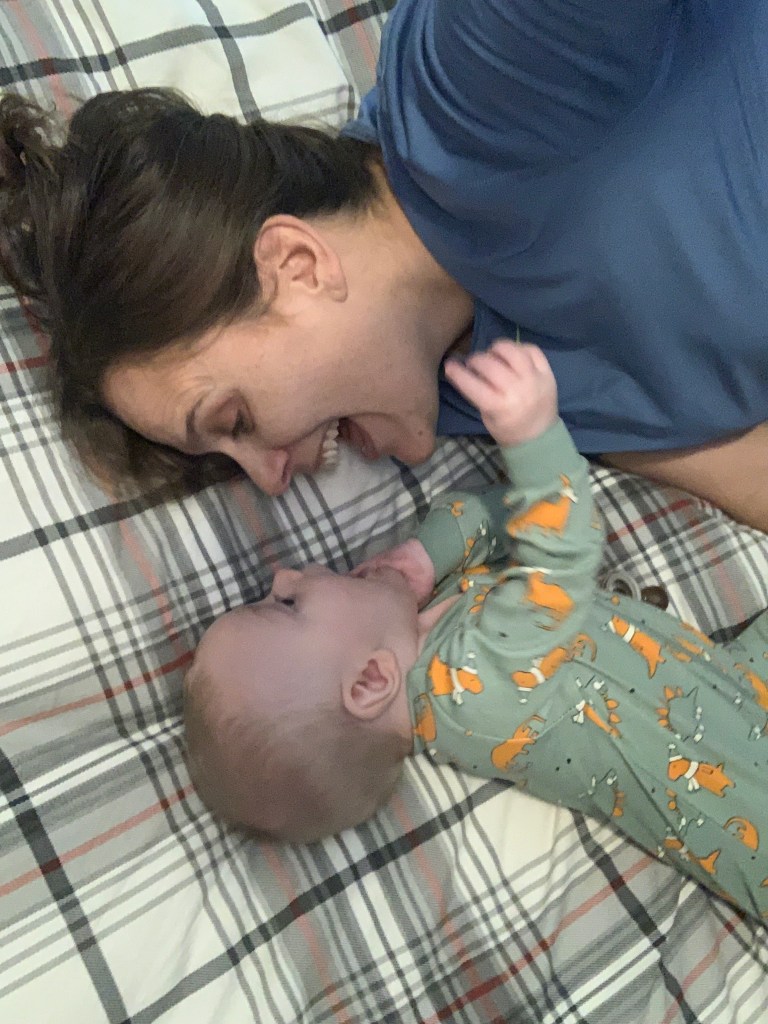
My bright days in this season, are when I get to be a grandma. If you want to see my grandparent life in reverse, view the following. It’s meant to be scrolled through to get the overall feel of the joy that was ahead of me. That I now get to experience.
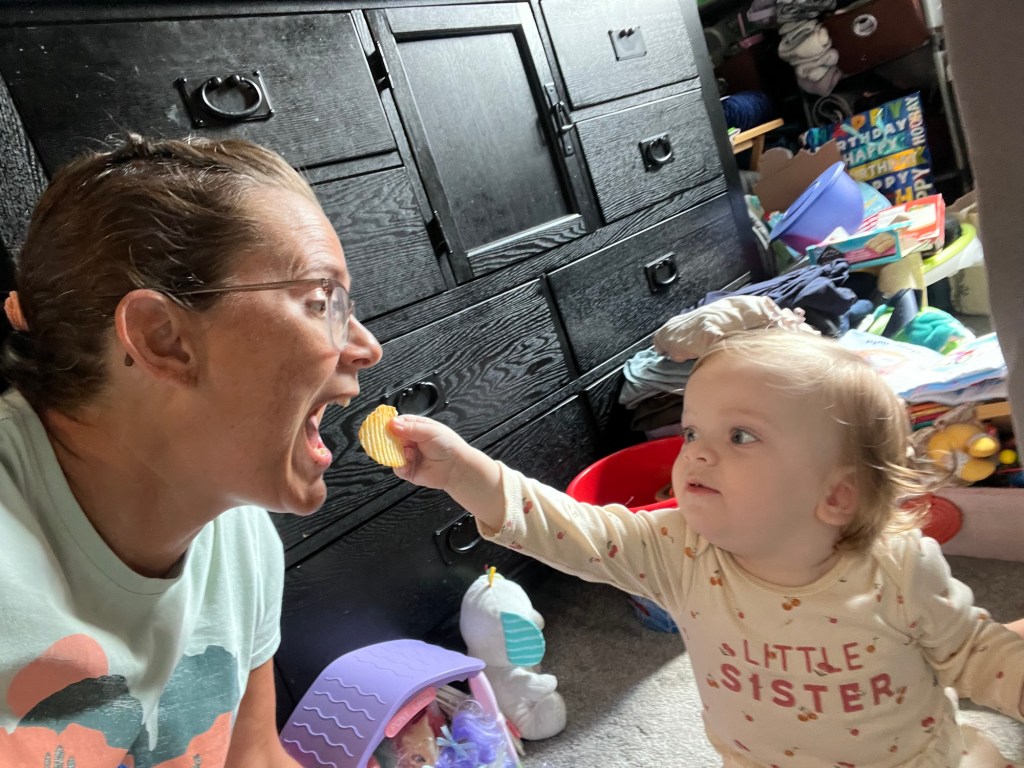
Apologies. That was way too fun to go through old photos.
Even if you have to hold on to that promise longer than you wanted to. Hold it tight. The good days make it all worth it.
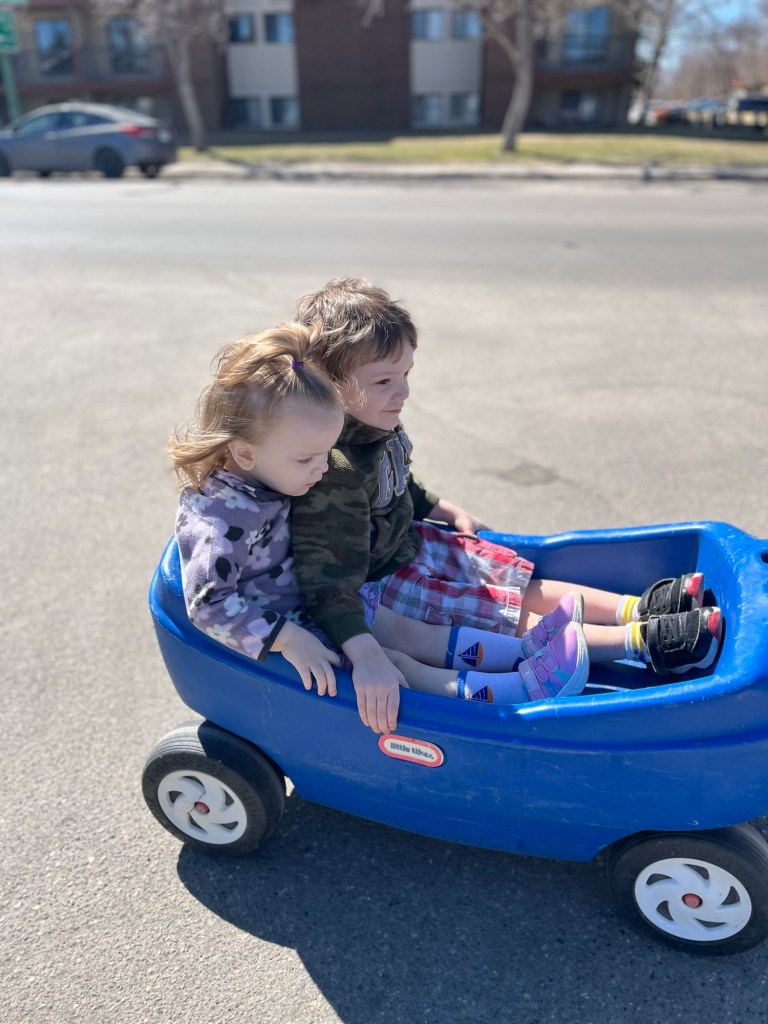
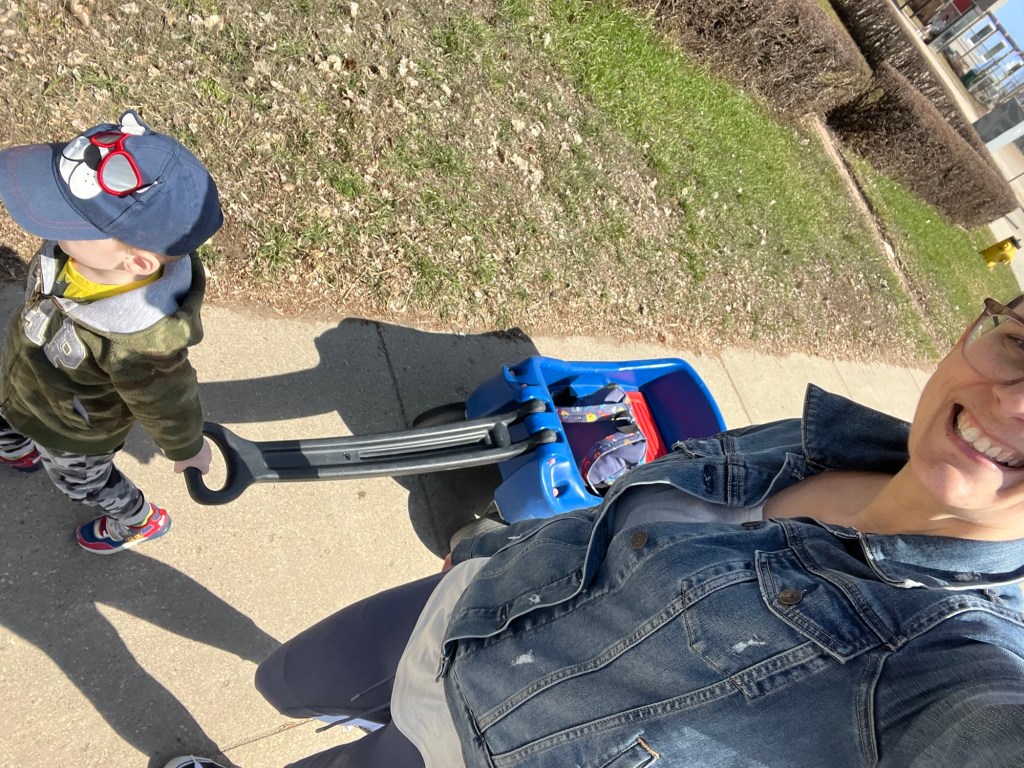
At this point in my story I can cart around that 2 year old and 4 year old at the same time. Grandma’s got guns. Just kidding. Training for my grandson got me to the point that I can run on a treadmill and ride a recumbent bike. He is my hero.
Keep getting back up. Show a willingness to bend and slow when your crucible is heavy. But keep climbing. Keep reflecting the beams of light.🌲✨
The oak fought the wind and was broken, the willow bent when it must and survived.
There is always in February some one day, at least, when one smells the distant, but surely coming, summer.
-Gertrude Jekyll
If you’ve ever tried to “think positive” while your body is screaming, you already know who wins.
Pain wins. Exhaustion wins. A nervous system on red alert wins. Any pep talk given to said nervous system is bringing a Post-it note to a tornado.
And then we blame ourselves! Because obviously the problem is a personal moral failure, not a human being a human.
In forest therapy, we take a different approach. We don’t try to out-think the body. We learn to listen to it without judgment. In doing so, the body finally gets what it has been asking for all along. Safety.
Biology’s Rebellion: The Dangers of Overriding Nature
Many people living with chronic pain think they should be able to cope better.
They should be stronger.
They should push through.
They should be more grateful it’s not worse.
But here’s a humdinger of a thought. When your body is sending powerful distress signals, your conscious mind has very little leverage.
The attempt to escape from pain is what creates more pain.
Neill Williams, on the Success Genius Podcast, explains it beautifully. When you are hungry, exhausted, or in pain, your biology overrides your attempts to think or feel differently.
The vagus nerve, your internal communication highway, links brain, heart, lungs, digestion, and the stress response. If that system is dysregulated, focus, creativity, decision-making, and connection all suffer.
Your body is a boundary of your soul. Treat it with care.
I dare say, we hurry through the day, override our limits, stay stimulated late into the night, fall into bed, wake up feeling four days past our bedtime, and repeat.
Then we wonder why our system is constantly braced for danger. We keep hitting refresh on the same nervous system and expecting a software update.
From a survival perspective, it makes perfect sense. Nothing in that cycle signals “You can stand down now.”
So the body continues to send messages. And they are rarely gentle. Whispers don’t usually create change. Pain often does.
To pay attention, this is our endless and proper work.
Research into nature exposure consistently shows reductions in cortisol, blood pressure, muscle tension, and rumination.
But experientially, I’ve seen something even more important. People soften. Attention and breathing widens.
The body begins to renegotiate its alarm state.
Nature provides gentle sensory anchors. Light, texture, birdsong, air movement. These allow awareness without overwhelm. For someone with chronic pain, this is crucial. We are not adding more intensity; we are expanding capacity.
Astravore: (n) A soul that keeps feeding on hope even after disappointment- light-hungry, resilient, unbreakable. -ViviJan
Imagine a car alarm that has been blaring for years.
You wouldn’t yell affirmations at it and tell it to be quiet.
You would look for the threat it thinks it perceives.
Non-judgmental awareness in nature is how we open the hood.
Each calm moment says, “No one is breaking in right now.”
Over time, the alarm system recalibrates.
My Story
I’ve experienced moments in my forest therapy practice when I wanted to do it all perfectly. To follow all the “right steps.”
When I go in with this focus I notice the pain is still there. The frustration is still there. I start thinking about all the years of pain I have ahead of me. Of financial strain. And the weight it adds to every relationship.
Then I remember to just breathe. Focus on today. Right. Now.
I start to feel the breeze on my face and hear it making its way through the trees around me. I sense the solid earth beneath me.
The pain does not vanish. But it’s not the only voice anymore. It has just been hogging the microphone in my head. 🎤 🤫
There is support available here whenever I need it. In the birds and the trees and the solid ground. This may sound odd. But this shift in thinking moves the pain inside a larger field of safety.
This is regulation. I just keep coming back to it.
The best way out is always through.
– Robert Frost
A Gentle Invitation to Explore
Find something in nature that feels steady. A tree, a rock, the shoreline.
Let your eyes rest there.
Now widen your awareness to include three additional sensations that are neutral or pleasant.
Move back and forth between the discomfort and the wider field
You are teaching your nervous system that pain can exist without emergency.
Do this regularly and the vagal pathways that support calm begin to strengthen.
When regulation improves, people often notice clearer thinking, better sleep, and easier connection. Not because they forced positivity, but because their biology finally cooperated.
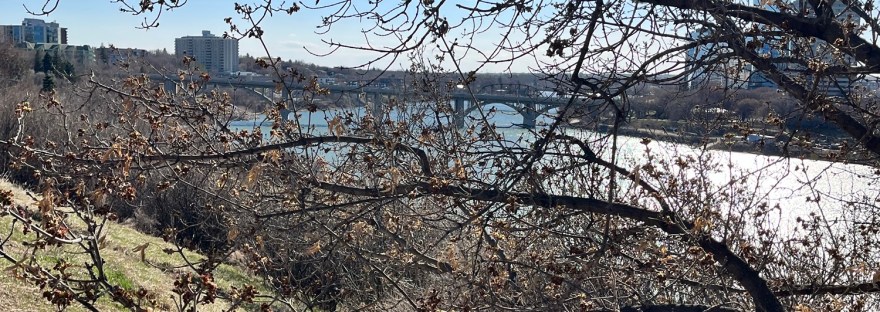
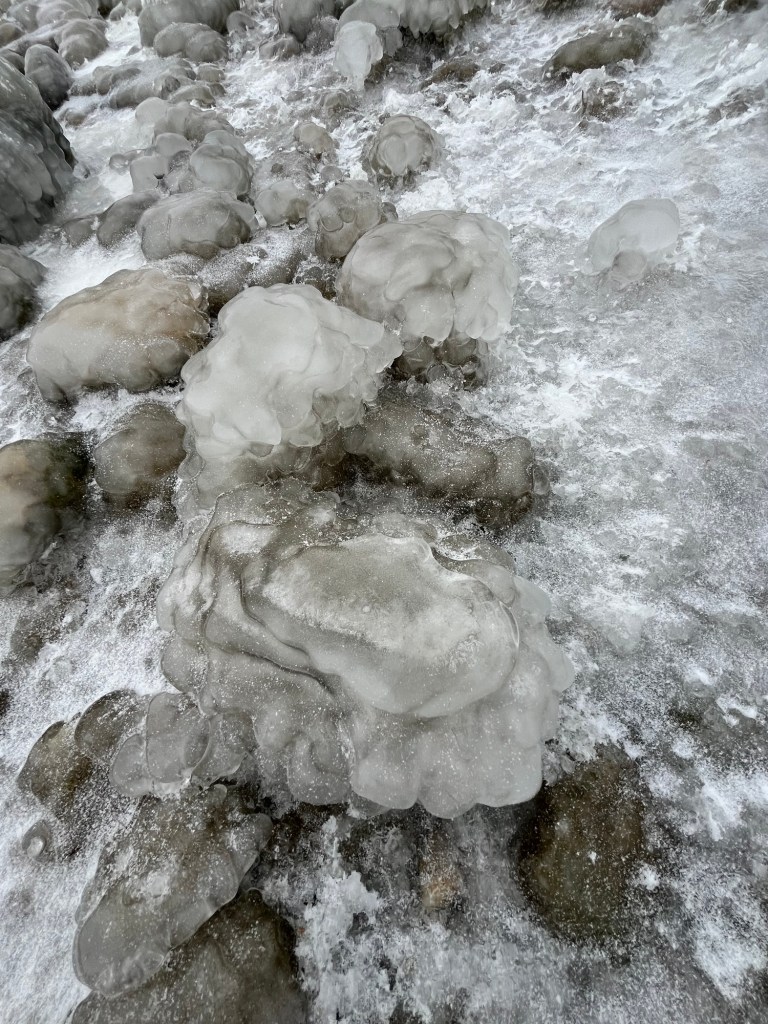
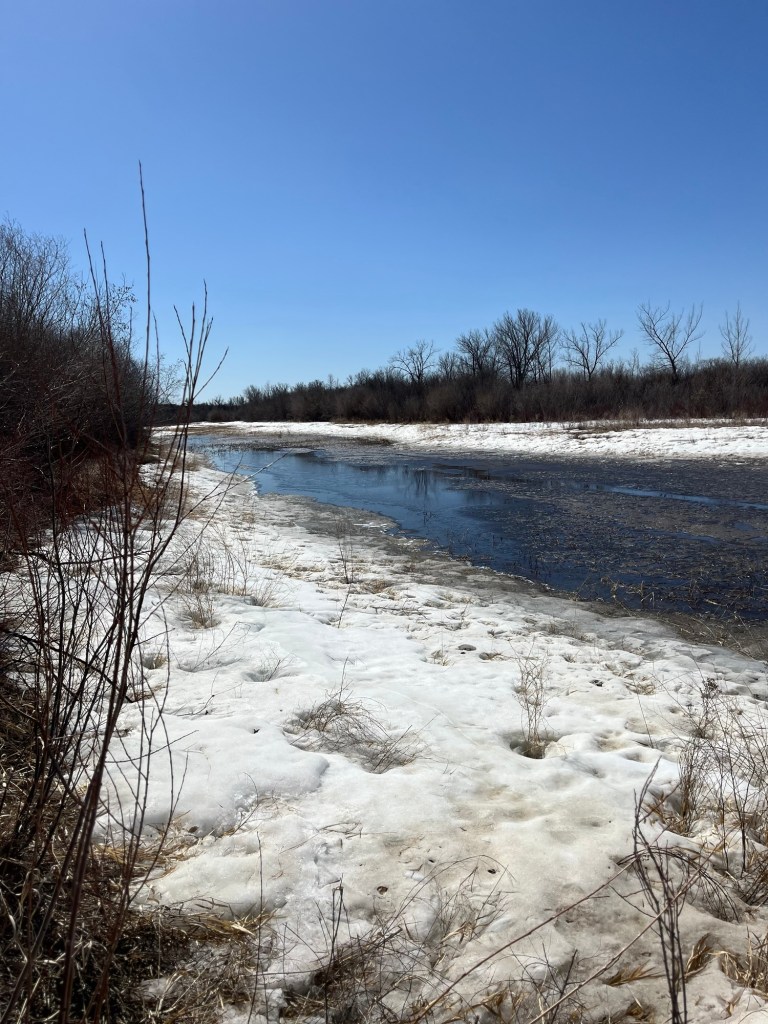
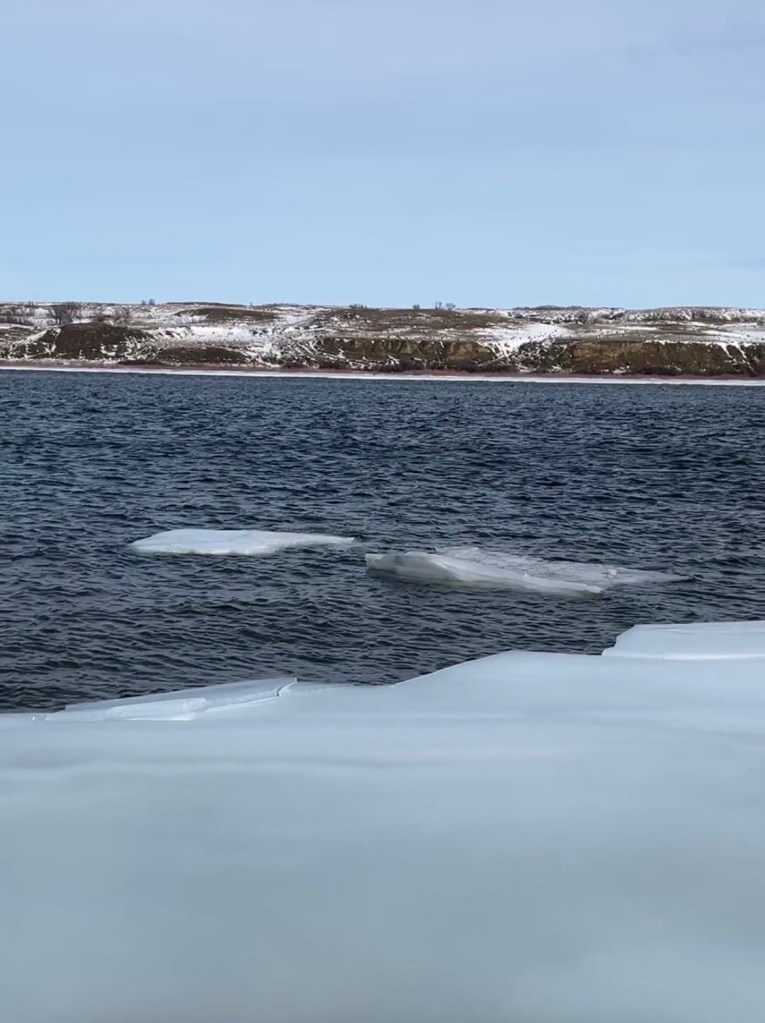
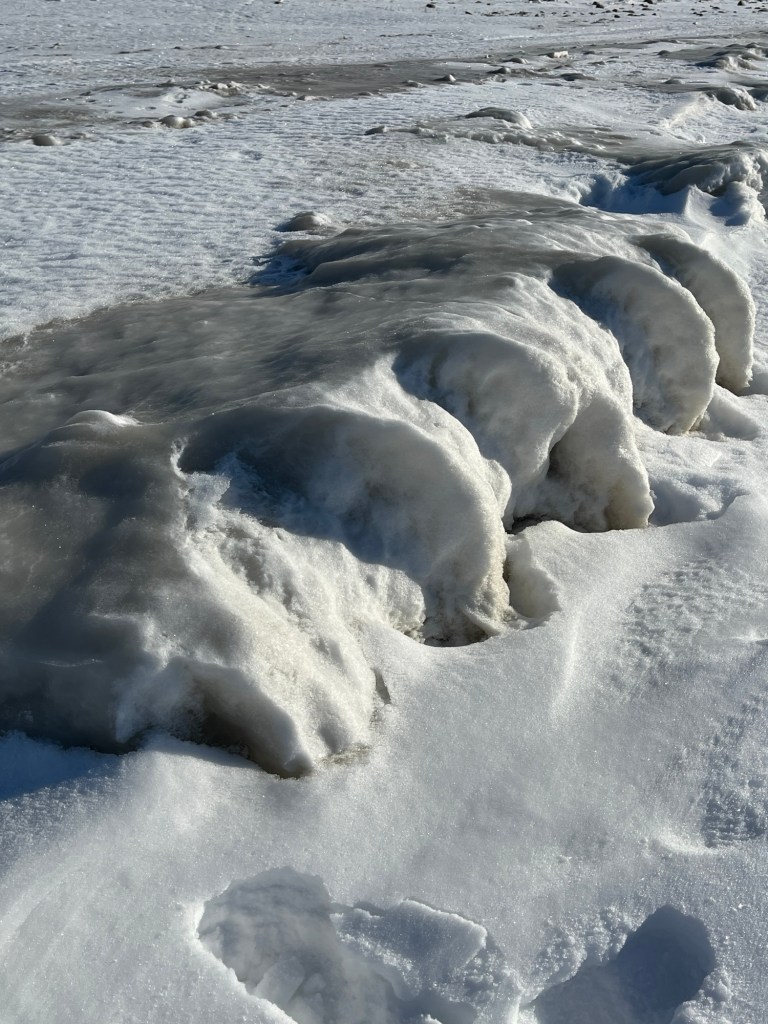
You are no longer fighting upstream. You are being carried. Like these little bitty icebergs I watch on the river. Floating by. 👇
The Closing “Peace”
If we keep living in a way that ensures the alarm stays active, nothing changes.
But when we make space, even small, consistent space for non-judgmental sensory awareness in the forest, the body hears something new.
I’m safe. I can soften. I don’t have to shout today.
And maybe, that is where my healing lingers. I just have to take time away, to meet it there.
The body always leads us home… if we can simply learn to trust sensation and stay with it long enough for it to reveal appropriate action.
Have you ever noticed that your shoulders drop the moment you step under trees?
That your breath deepens without effort?
That your body seems to say, “Ahhh. That’s better.”
When I was starting out, I knew I’d find something wonderful in forest therapy. But I didn’t expect it to be the answer I desperately needed for my chronic condition.
Rimesong- English (n) (rhyme song)- the gentle sound the world makes on frozen mornings. Branches cracking softly, frost shifting, ice whispering under light winds.
Long before supplements, ice baths, or wearable tech, the human immune system evolved in relationship with forests. And modern science is finally catching up to what our bodies have always known, nature doesn’t just soothe the mind. It actively regulates inflammation and supports immune function. Read about that research here.
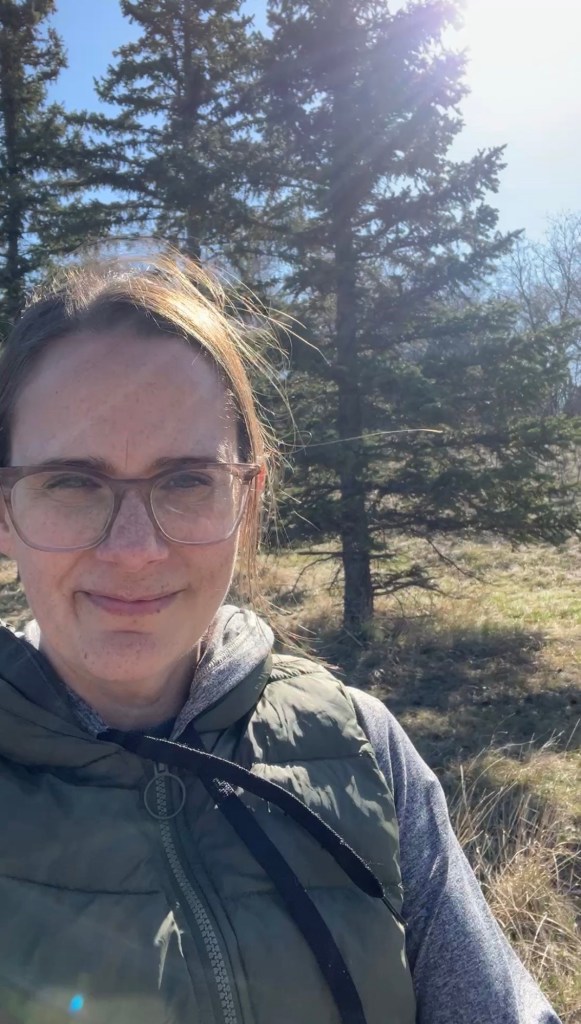
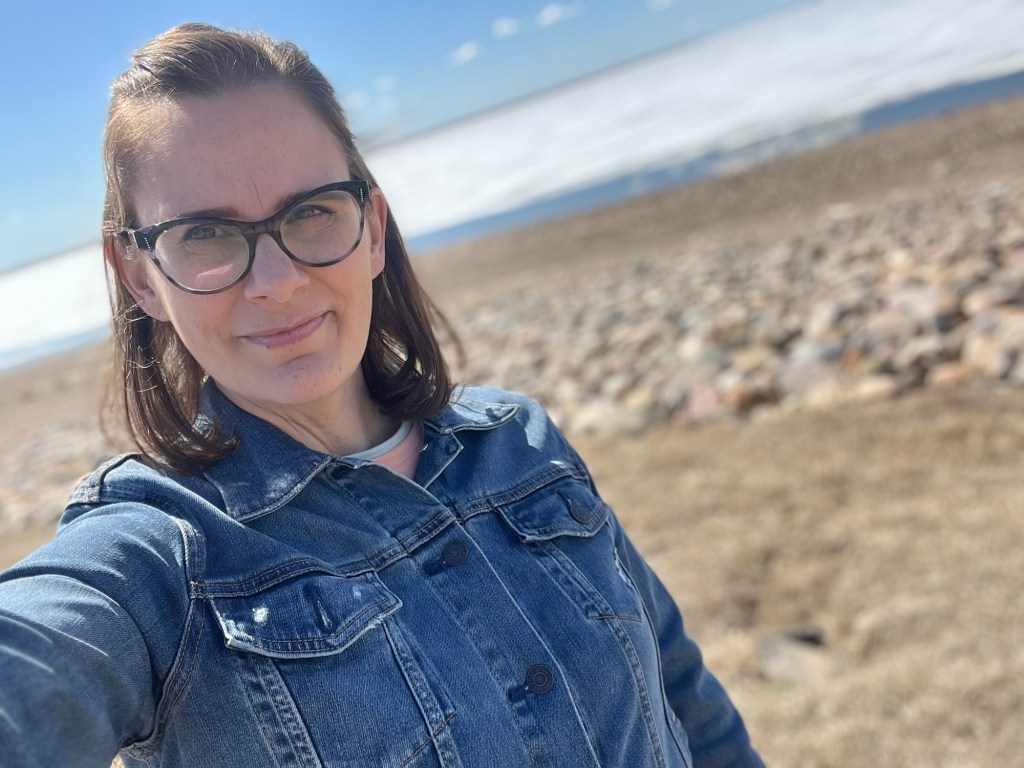
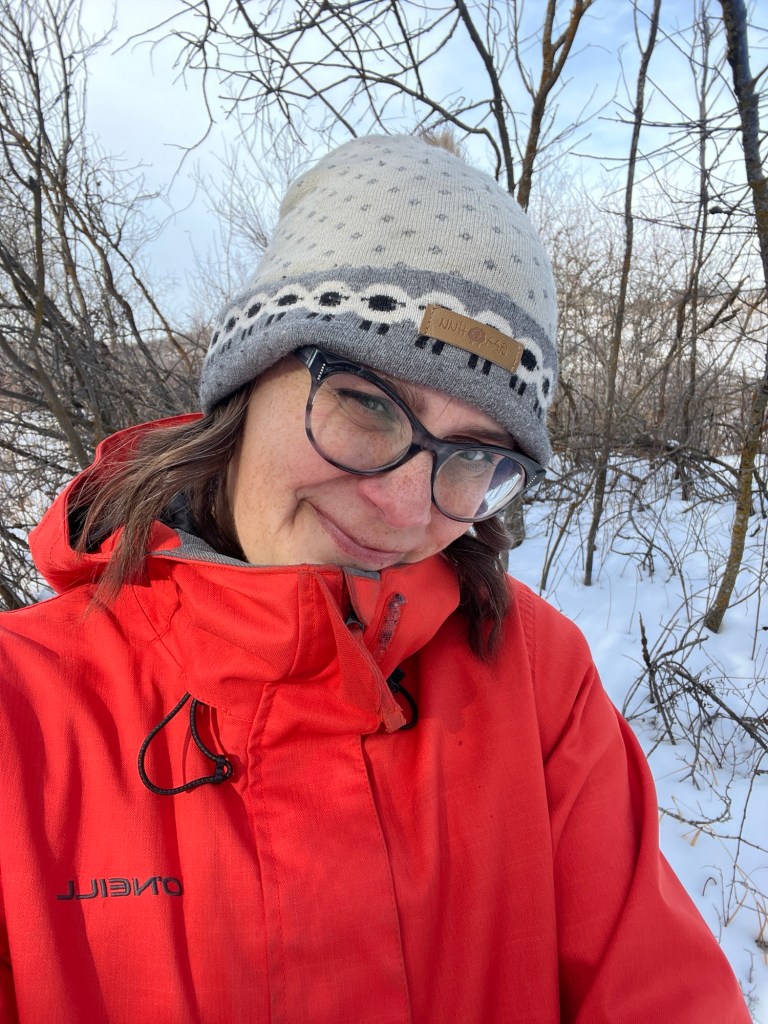
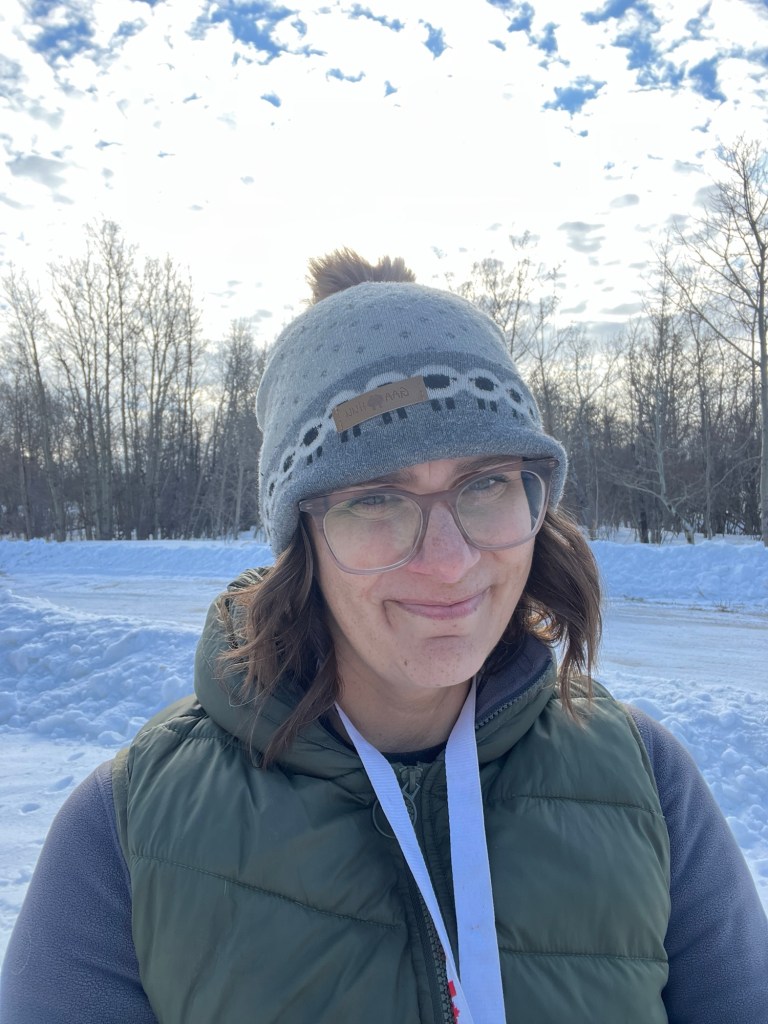
My face before a forest therapy walk.☝🏼
As a forest therapy guide, I experience this recalibration often. We arrive tense, inflamed, fatigued. And leave softer, warmer, steadier. Regulated.
Let’s talk about why.
(I don’t always share the research but it does exist. Follow the links through the post to learn more if you are interested.)
🔥 How Nature Cools the Flames of Inflammation
Inflammation isn’t the enemy. It’s a protective response.
But when stress, illness, or modern life keeps inflammation switched on for too long, the body pays the price. Joint pain, fatigue, brain fog, autoimmune flares, lowered immunity.
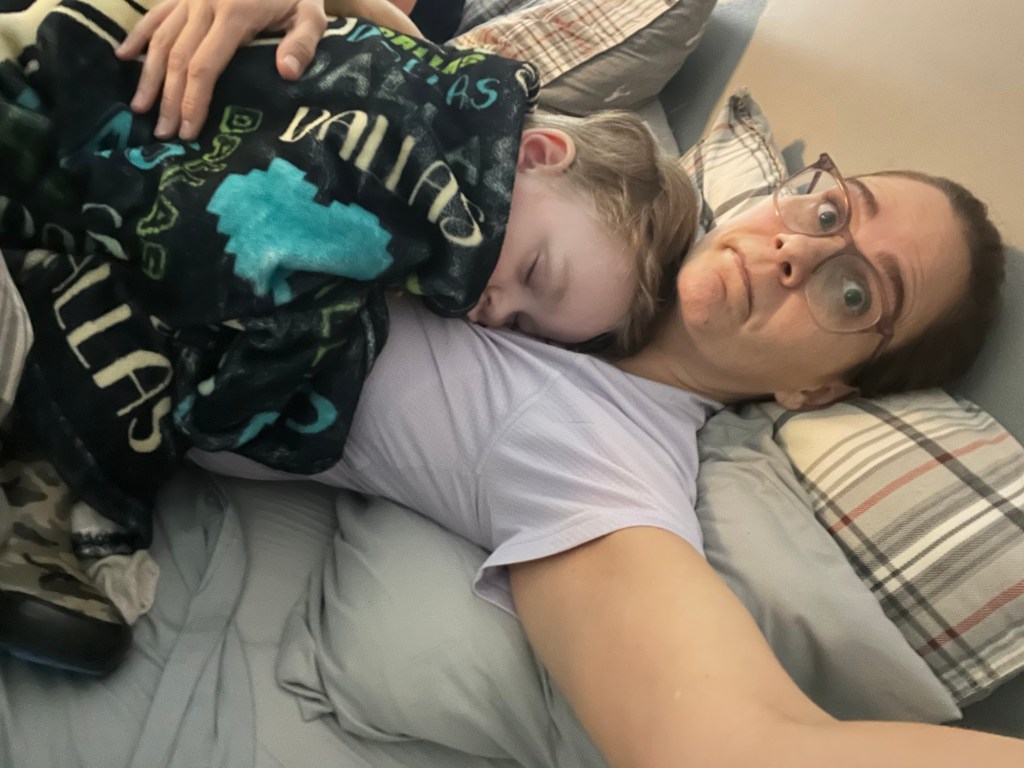
You can’t see it. But this is a picture of brain fog, joint pain, fatigue and flares. Grandbabies such as this little booger are wonderful! But they are also 🦠 germ factories 🦠
Nature helps flip that switch back toward balance.
🍃 Forest Breaths: Nature’s Prescription
Trees release volatile organic compounds called phytoncides. The aromatic oils that protect the trees from disease and insects. When humans breathe them in, something remarkable happens:
Natural Killer (NK) cell activity increases. Read more here.
Stress hormones like cortisol decrease
Pro-inflammatory cytokines are reduced
NK cells are a critical part of your immune system. They identify and destroy virus-infected and abnormal cells. Research by Dr. Qing Li shows these immune benefits can last up to 7 days after a forest visit! Read about that research here.
Nature isn’t passive.
It’s interacting with you.
🌬️ Tune Your Nervous System for Optimal Immunity
Here’s the part most people miss.
Inflammation is deeply tied to the nervous system.
When your body is stuck in fight-or-flight, immune responses become exaggerated and inefficient. Forest environments consistently activate the parasympathetic nervous system. Research on that here. The “rest, digest, and repair” state.
Studies show that time in forests is associated with:
Increased salivary immunoglobulin A (sIgA), a key immune defense
In simple terms:
Your body repairs better when it feels safe.
Forests and other natural environments create that safety signal.
🌲 Embracing the Woods: Nature’s Anti-Inflammatory Escape
This is not exercise.
This is not a hike.
This is an invitation to regulation.
In wildness is the preservation of the world.
-Henry David Thoreau
🌿 The Practice (45–75 minutes)
1. Arrival — Let the Body Catch Up (5 minutes)
Stand still. Place one hand on your chest, one on your belly.
Breathe slowly through your nose.
Say quietly, “I don’t need to fix anything right now.”
2. Slow Sensory Walking (15 minutes)
Walk at half your normal speed.
Let your eyes soften.
Notice textures, temperature, sound.
This sensory input tells your nervous system it’s safe to stand down.
3. Tree Contact (10 minutes)
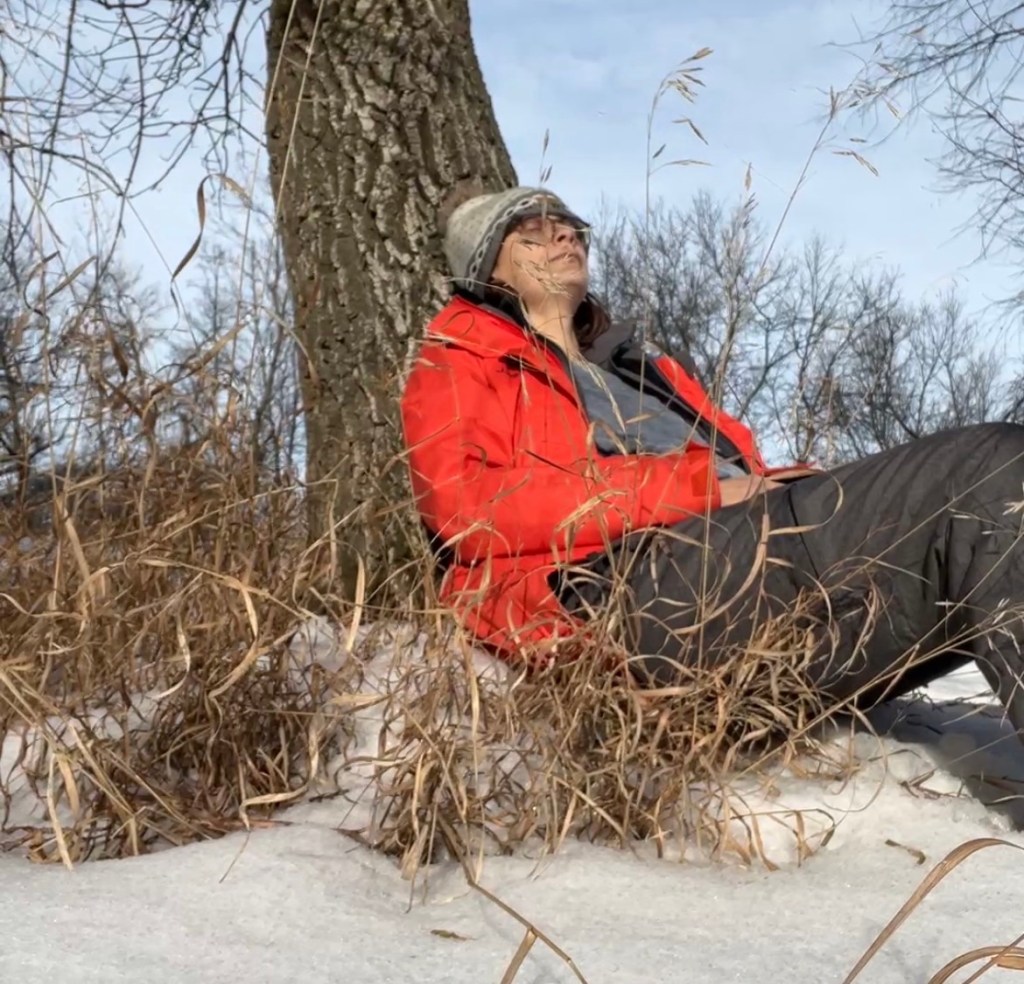
Rest your back or hands against a tree.
Notice its steadiness.
Imagine excess heat or tension draining from your body into the ground.
4. Immune Breath (10 minutes)
Inhale forest air slowly.
Exhale longer than you inhale.
This extended exhale directly reduces inflammatory stress signals.
5. Closing Reflection (5 minutes)
Ask yourself: What feels different in my body right now?
No analysis. Just noticing.
💬 Words That Echo the Science
The immune system is exquisitely sensitive to our environment.
-Dr Candace Pert, neuroscientist
And from scripture:
The leaves of the tree were for the healing of the nations. -Revelation 22:2
How many are your works, LORD! In wisdom you made them all; the earth is full of your creatures. -Psalm 104: 24-25
A reminder that nature’s design supports life, health, and resilience.
Healing in nature has always been part of the human story. Both scientific and sacred.
💗 A Story of Healing
There was a season when my body felt constantly inflamed. Sore joints, heavy fatigue, a nervous system that never seemed to settle.
I was doing all the ‘right’ things. But what helped most wasn’t something I added. It was somewhere I went.
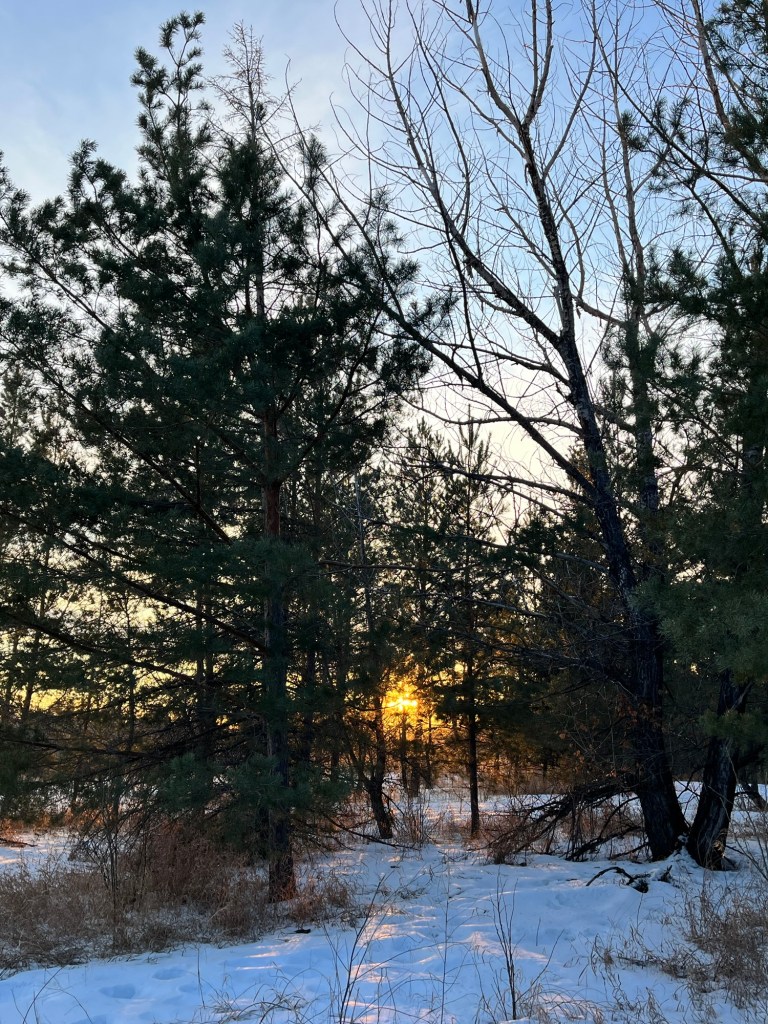
A slow walk among trees to capture pictures of my first forest therapy walk. Standing still in winter air. Letting my body remember how to downshift.
The forest didn’t cure me but it gave my immune system room to breathe.
When I was starting out, I knew I’d find something wonderful in forest therapy. But I didn’t expect it to be the answer I desperately needed for my chronic condition.
❄️ Grounding Your Soul: Embracing Earthing in a Saskatchewan Winter
Frozen ground doesn’t mean disconnection.
🌲 Outdoor Winter Grounding
Hands on trees or snow. Bark and damp earth still conduct energy. Research here.
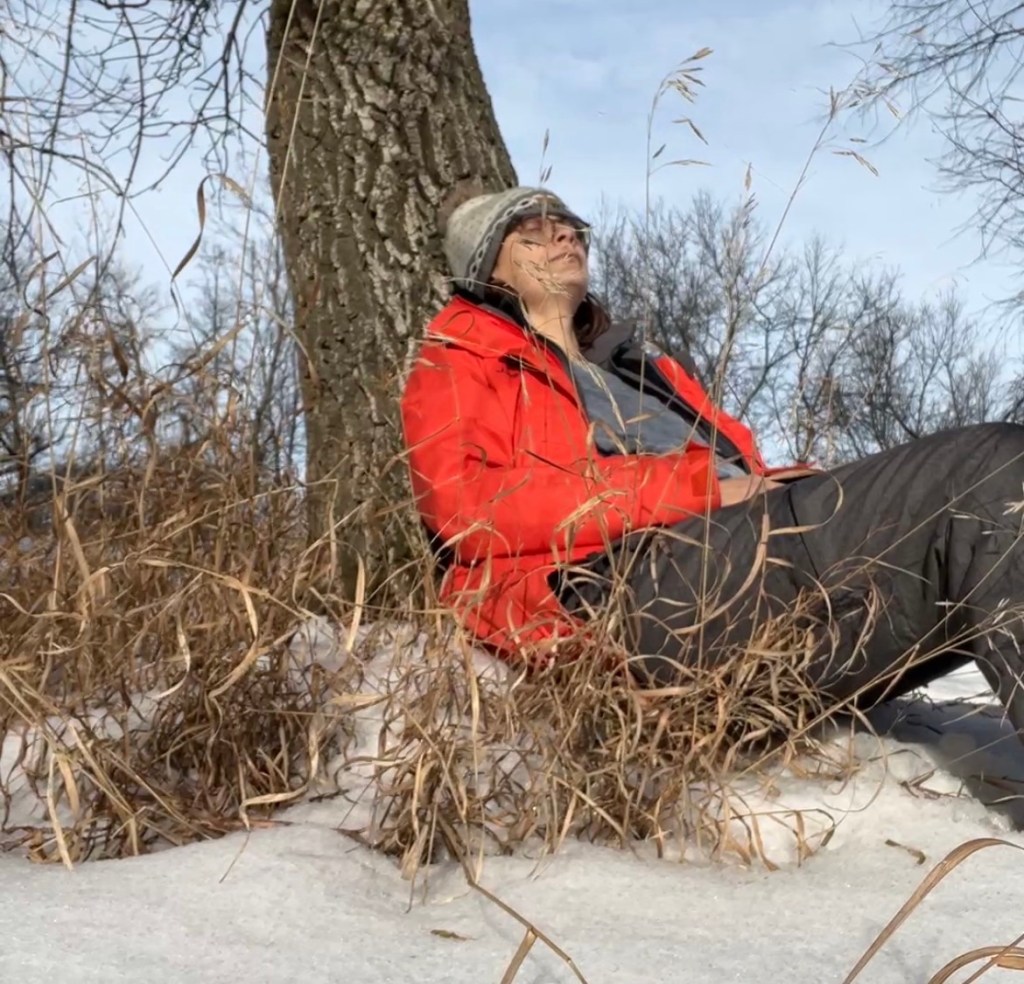
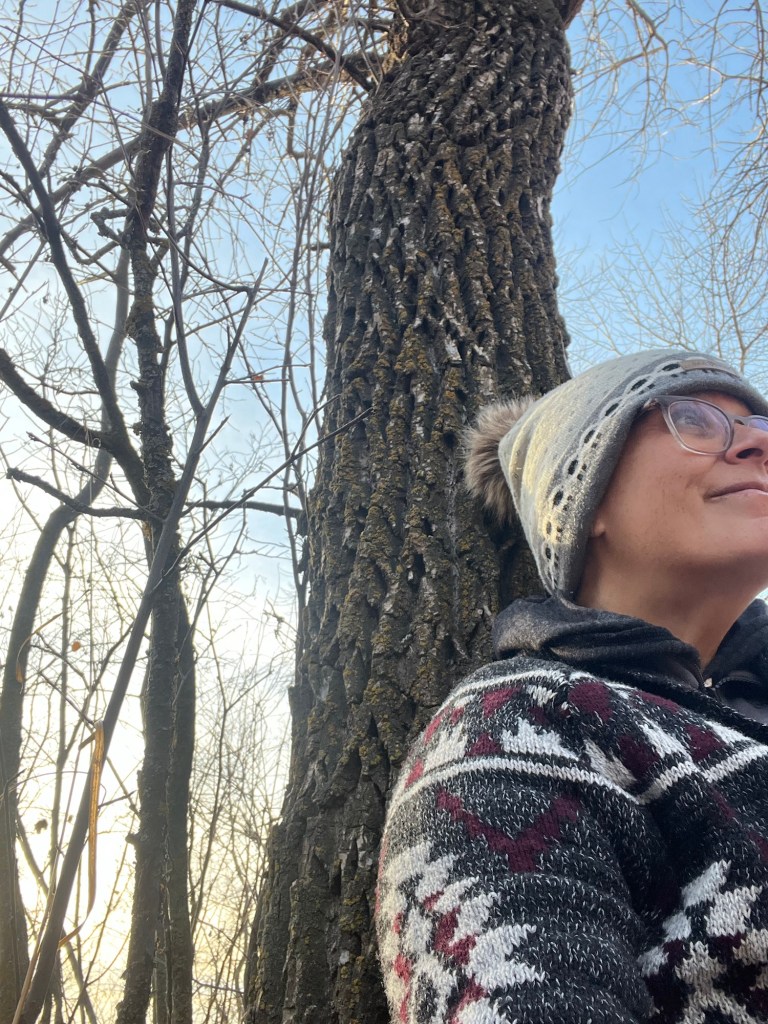
Lean your back against a tree (a favorite forest therapy posture)
Grounding Footwear or Socks. Leather-soled or grounding-compatible footwear can help conduct Earth energy while keeping feet warm. More on that here.
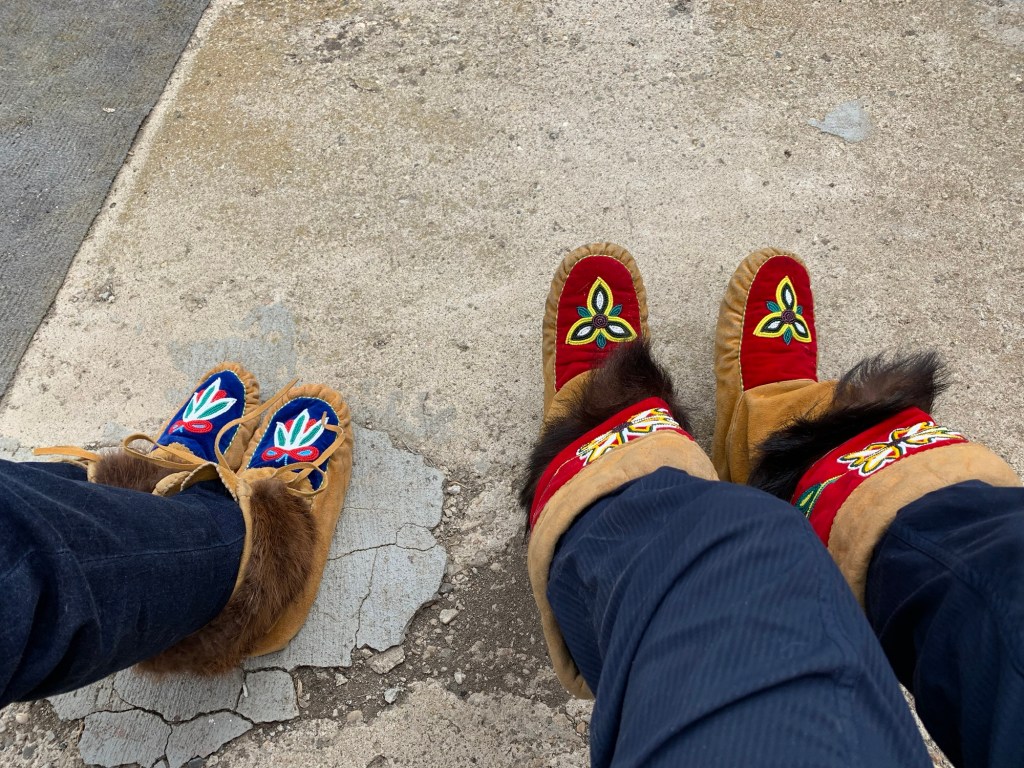
If you are lucky enough to have authentic mukluks with a leather sole they are a perfect alternative. (Word to the wise- 🦉 walk to your outdoor earthing spot in your regular boots with a non-slip sole, sit and then put on your super slidey footwear)
🏡 Indoor & Cold-Weather Options
Grounding mats under feet while reading or stretching. Learn more here.
Warm baths with sea salt and natural stones. More here.
Sitting near open windows to breathe cold, fresh air (powerfully regulating)