
Why Winter Trails are Terrifying For the Hypermobile: Through Pain and Pines

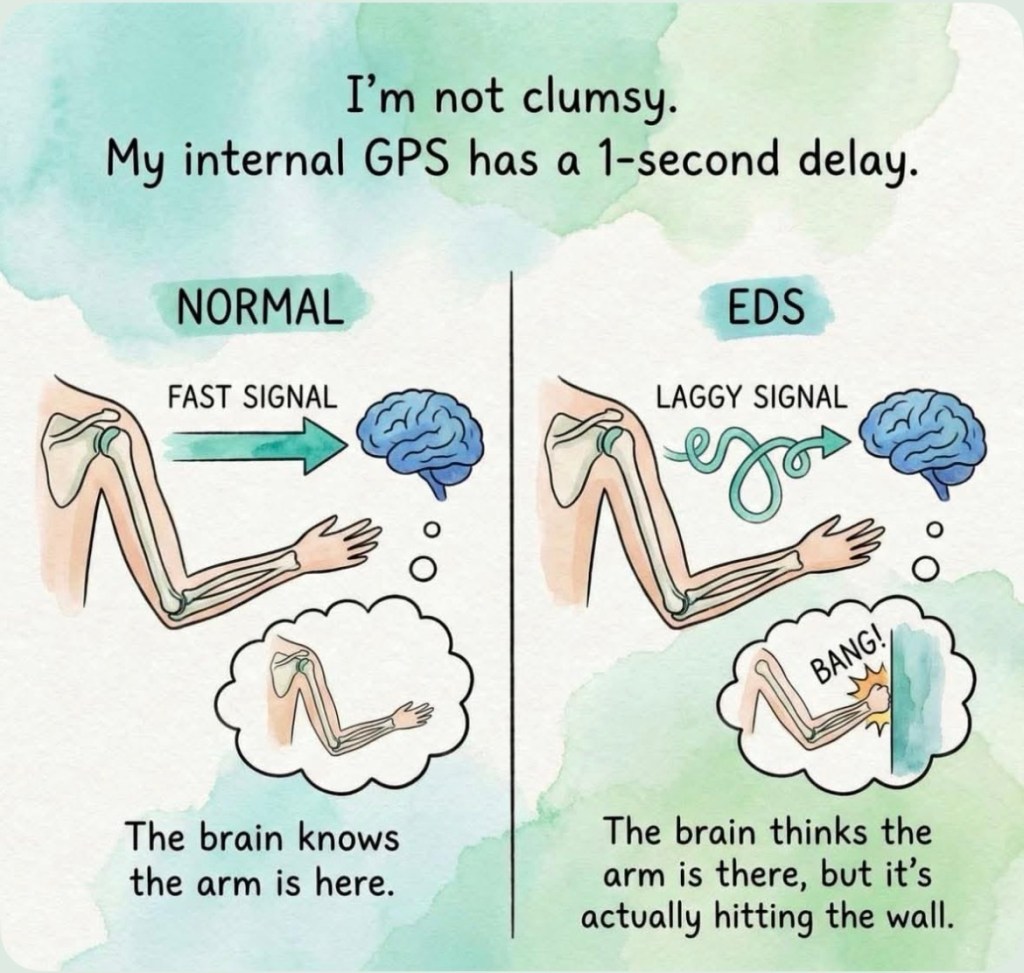
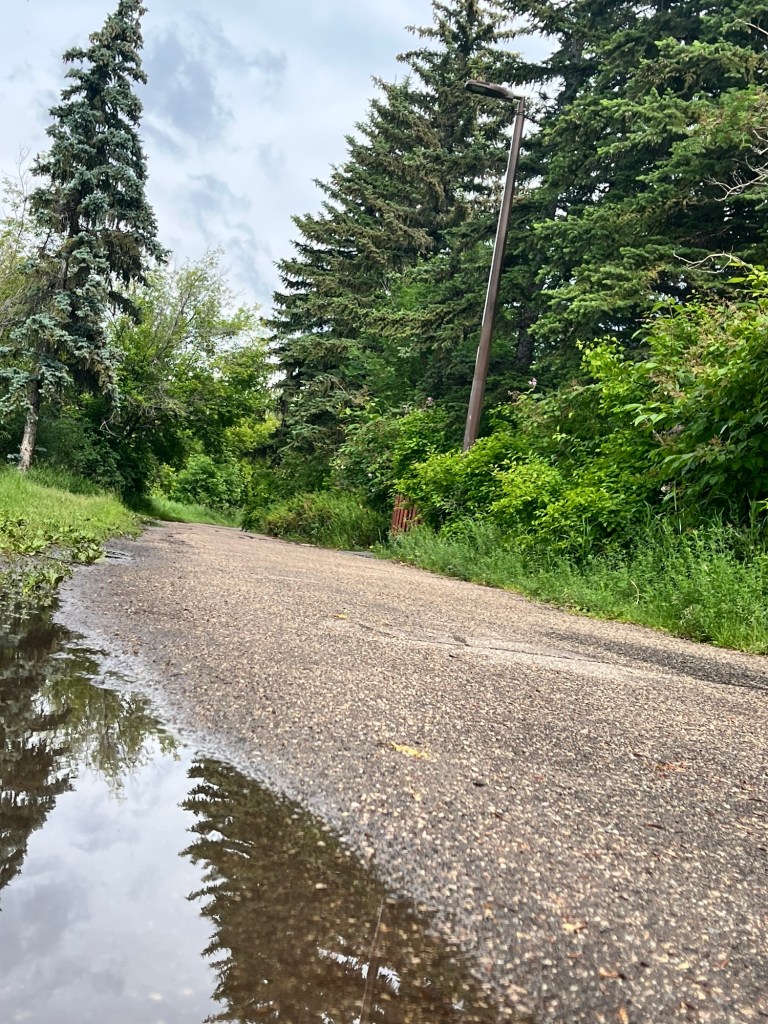
Many trails in Saskatchewan are shimmering. Beautifully. Treacherously.

I’m pretty sure they are trying to kill me.

Sparkling snow is magical. Sparkling frost is beautiful.

But sparkling ice on a forest trail?

That’s a different category entirely. “Be gone foul thing!”

When you live with hypermobility, ice is less of a winter decoration and more of a full-contact sport.

For most people, a slip on an icy trail means a flail of the arms, a laugh, and maybe a comment. “Watch out for the icy patch!”.

For someone with hypermobility, that same moment can mean:

  • a rib that determines it would rather live somewhere other than its intended slot
  • a shoulder that doth protest too much (because the shoulder blade is sliding down your back)
  • muscles that grip like overprotective bodyguards
  • and a new entry in the ever-growing logbook titled “Well… that escalated quickly.”

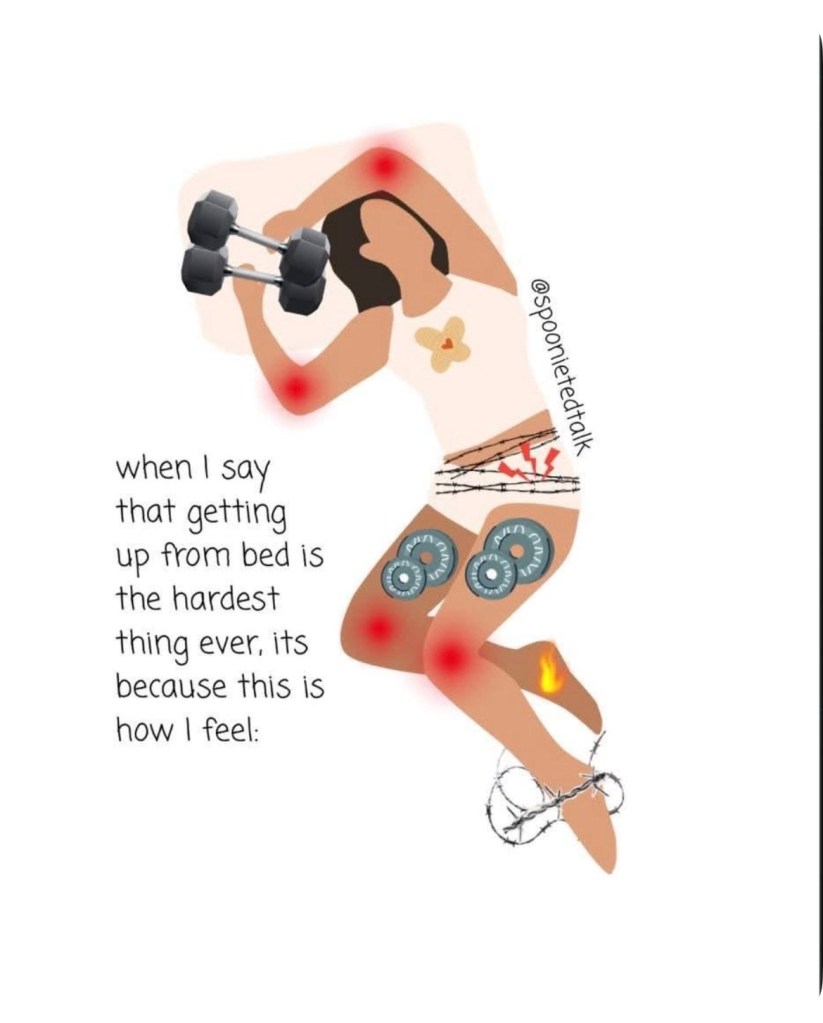
A small jolt or an awkward catch. And suddenly a split second wobble becomes three months of physiotherapy, muscle protecting and pain with every movement.

Winter walking becomes less like a casual stroll and more like a strategic mission.

Our hypermobile bodies clearly have a different set of rules.

Living with hypermobility also means developing a surprisingly intimate relationship with your physiotherapist.

Years ago I realized I owned an entire library of tiny resistance bands in colours that sounded deceptively cheerful.

Coral. Mint. Lavender. Suggesting relaxation and beach vacations.

In reality they represented fifteen very specific exercises. Each designed to convince my shoulder, hip, or rib that staying in place is actually an excellent idea.

In more recent years, overall strengthening through running has become my greatest hope against hope.

Thankfully those resistance bands are now packed away. They were the bane of my existence for years. Strengthen the shoulder, put out the elbow, wrist, and fingers. Strengthen the hip, put out the knee, ankle and toes.

If you live with chronic pain, you also know the strange pleasure of telling people:

“Yes, I injured myself sneezing.”

And then watching them try to politely hide their confusion. 😕

Enigmatic Equations Await

People with chronic pain develop a special kind of mental math.

Before leaving the house, the brain quietly runs a checklist:

  • How icy is it?
  • How far is the trail?
  • What muscles are already staging a coup today?
  • What are the odds I’ll slip, twist, or do the world’s slowest accidental yoga pose?
Slipping into something a little more comfortable (psychosis)

These calculations happen constantly.

Because when joints are extra flexible, the body relies heavily on muscles to hold everything together.

If those muscles get surprised by a sudden slip on ice, they react like overcaffeinated security guards.

We don’t even have to experience a crash landing. A slight “whoop”. Everything tightens. Followed shortly by, everything hurts. Sometimes for a very long time.

And yet… Staying inside is not the answer.

Inside Out: The Hidden Dangers of Staying Indoors

My soul was not designed for indefinite indoor storage.

After a few days of being cooped up, something starts to happen.

First a restlessness.

Then a longing.

Then a slightly dramatic moment standing at the window staring outside like a Victorian character under quarantine.

Because the body may be complicated. But the soul is surprisingly clear about what it needs.

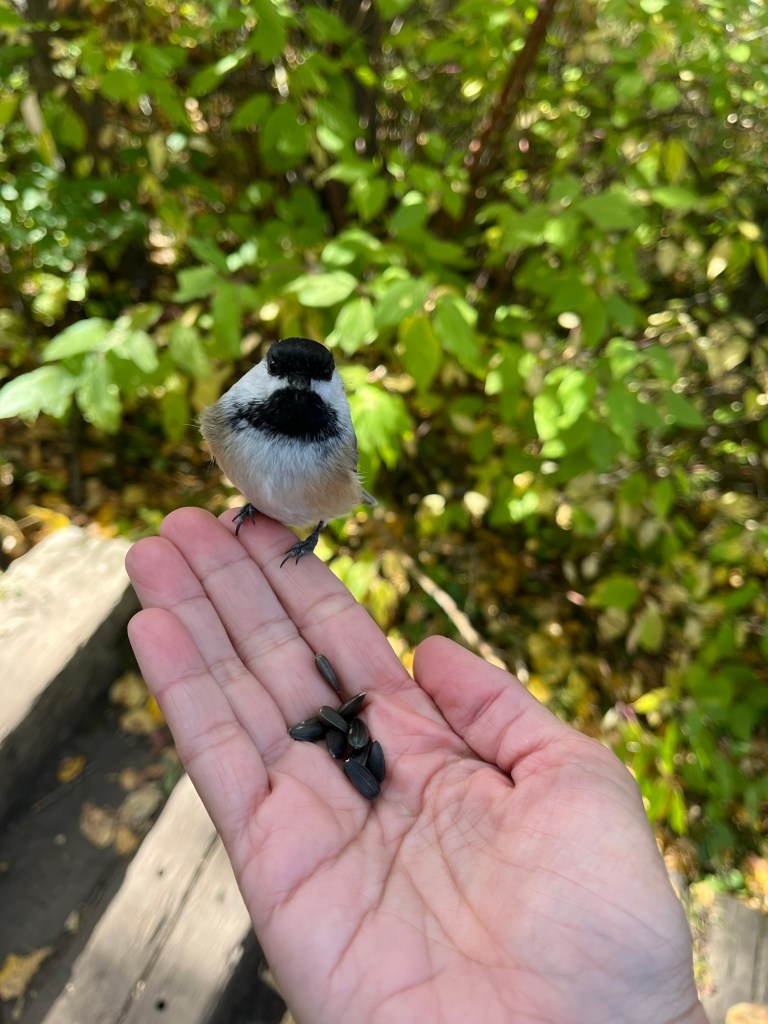
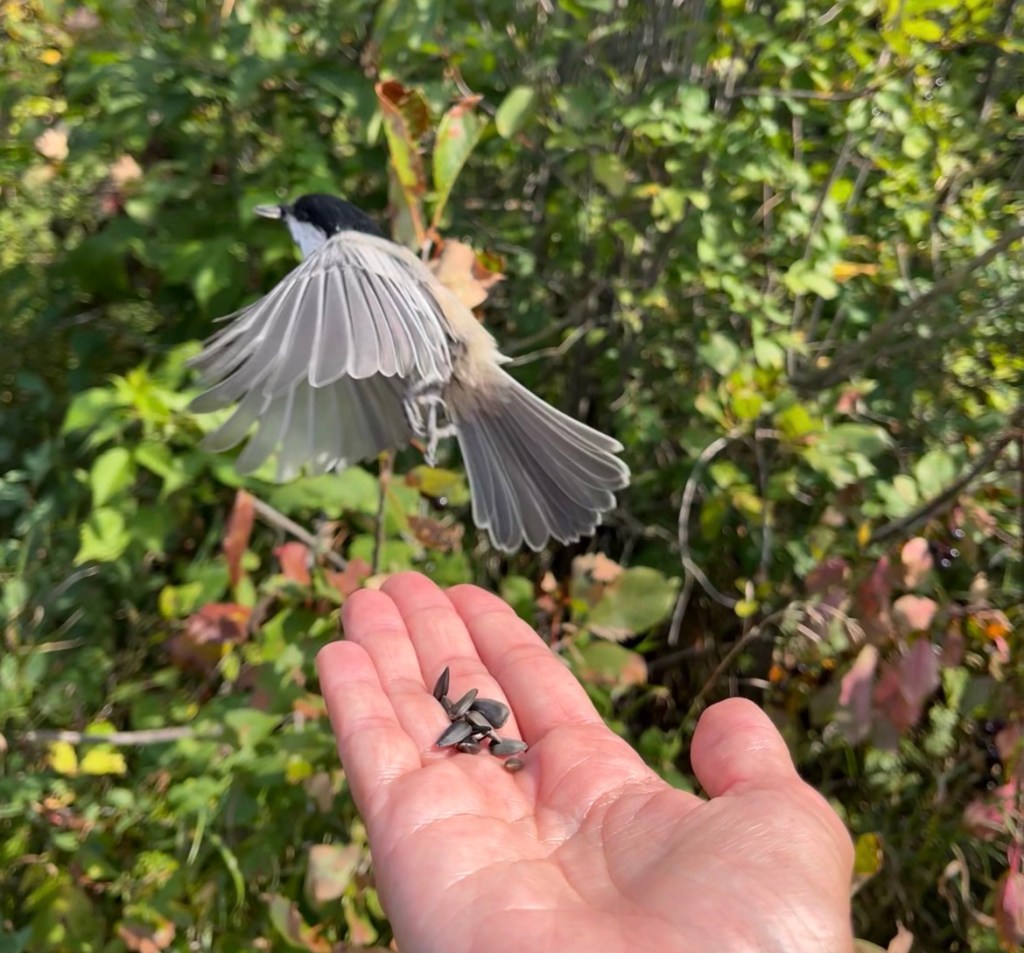
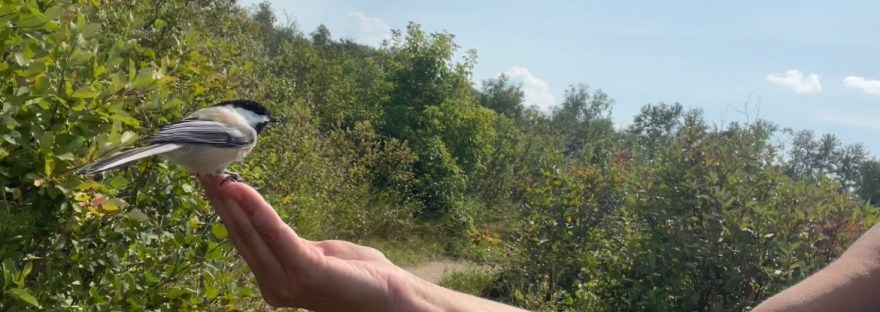
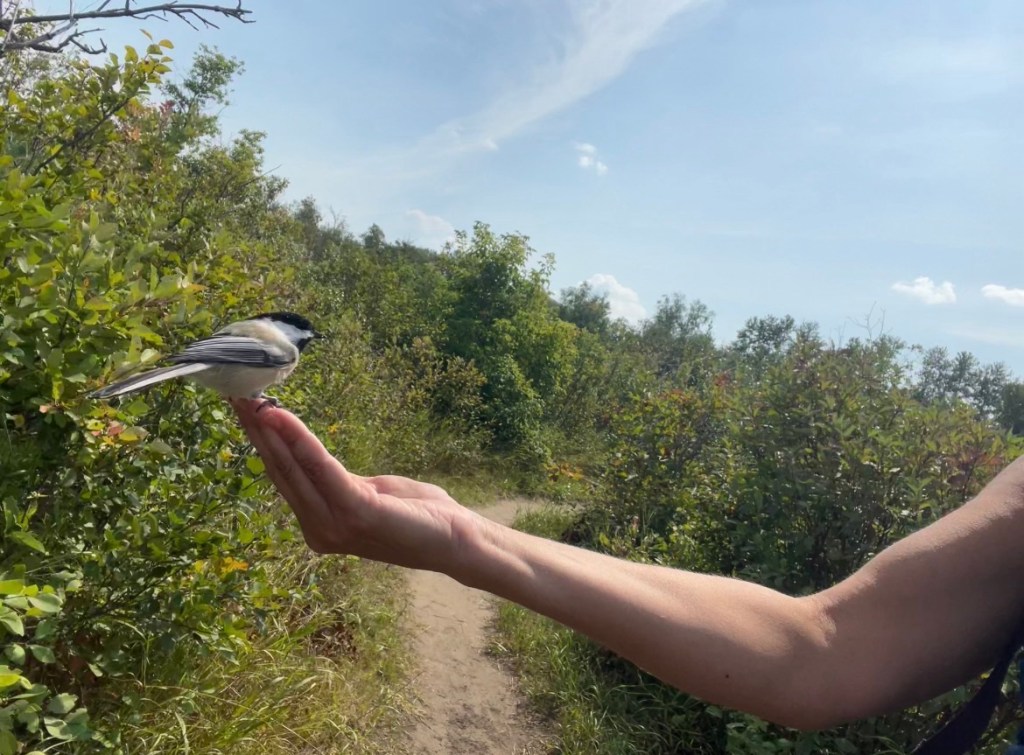
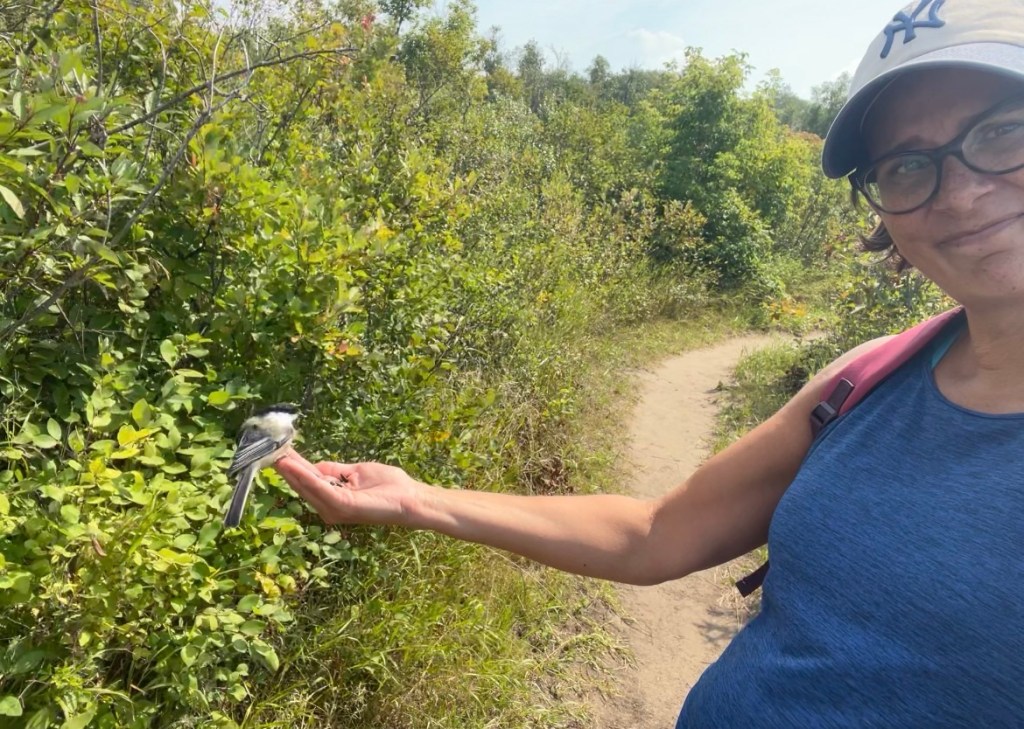
Trees. Sky. Fresh air. The quiet company of chickadees who seem perpetually delighted with life.

Naturalist John Burroughs once wrote:

I go to nature to be soothed and healed, and to have my senses put in order.

And when chronic pain is part of your life, your nervous system spends a lot of time: out of order.

Pain keeps the brain alert. Guarded. Scanning.

But the forest gently invites something else.

A slower rhythm. A softer focus.

Don’t let perfect get in the way of good enough.

“Break!!”- Dancing Through the Meadow

Hypermobility changes the way you move through the world.

Especially in winter.

Walking on icy trails becomes a very particular style of locomotion that could best be described as:

“Cautious woodland creature.”

Short steps.

Careful weight shifts.

Occasional pauses to test the ground.

One wrong move and suddenly you find yourself soft launching a new form of dance.

Anyone watching from a distance might assume you were practicing some form of extreme slow-motion flamenco 💃 .

But really, you’re simply trying to avoid becoming an accidental case study in sidewalk face implants.

Oddly enough, this cautious way of walking mirrors a core forest therapy practice. Slow walking.

Forest therapy guides often invite people to slow down enough to truly notice the forest.

Hypermobility just… adds extra motivation.

A Little Winter Guiding Advice

I have learned a few things from my winter days on the trail this year.

  1. Boots with ICE FX technology soles are the way to go. I started using them this year. I had two slips in the first couple weeks of winter. I got the boots and I haven’t had a slip since. They are like winter tires. I still have to be careful but they have saved me.
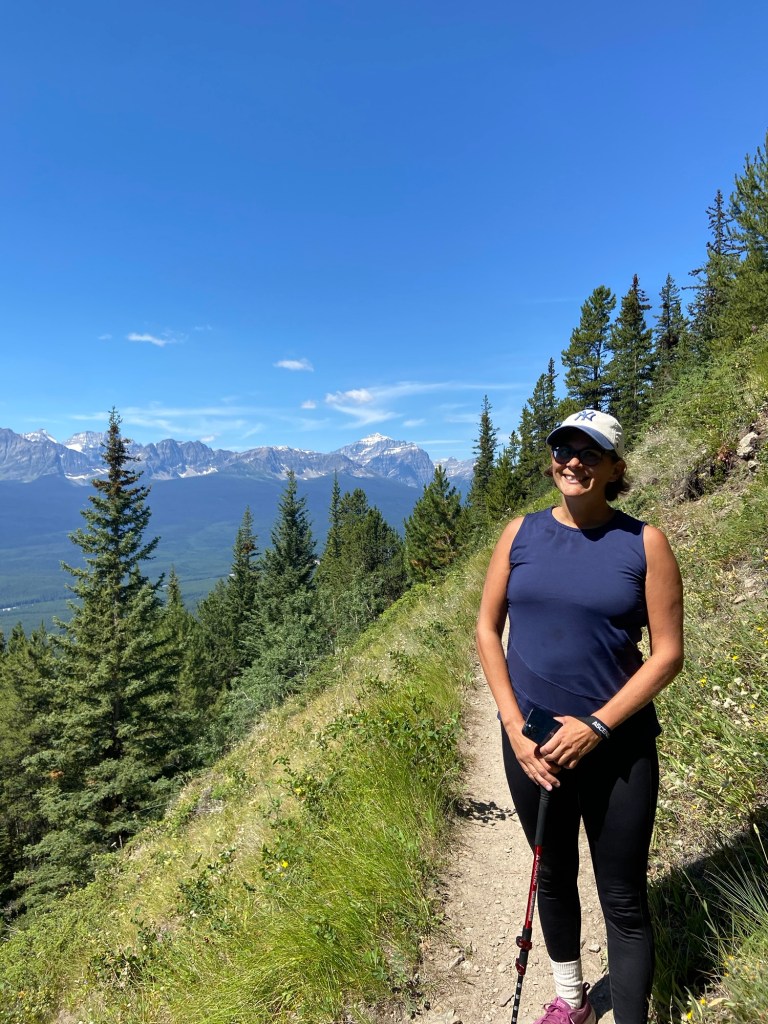
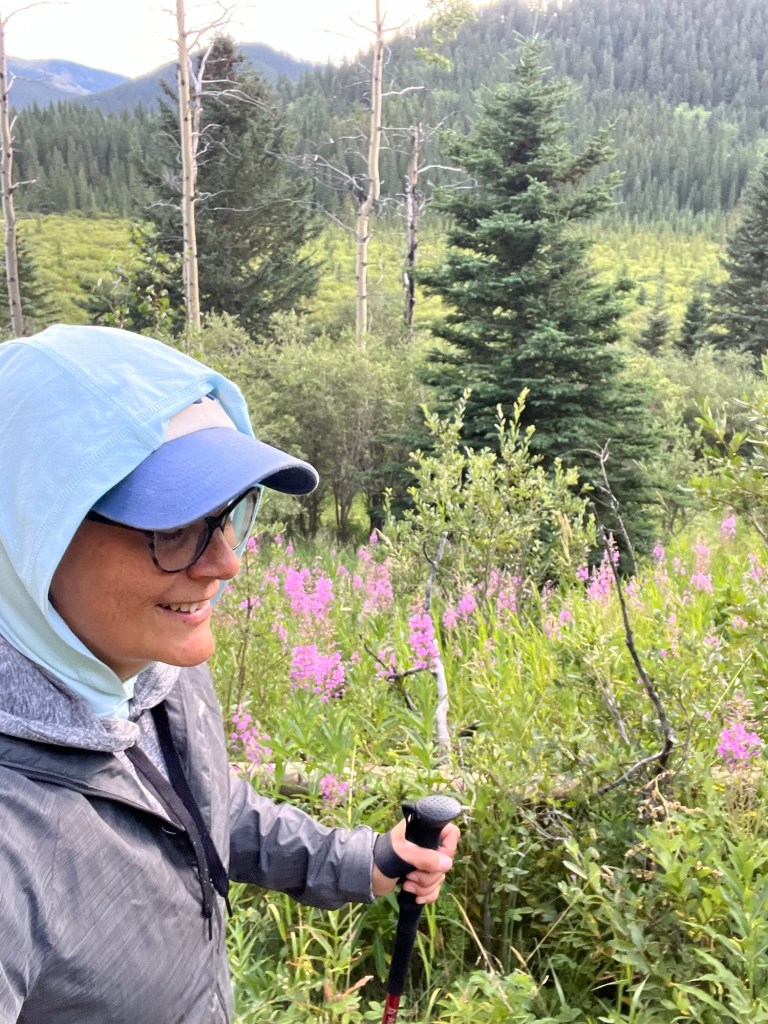
  2. Hiking poles are this girl’s best friend. I am learning when to use them and when to leave them in the car. Days I can’t see the trail under the snow or when the trail is glistening with ice, they are essential. Days the trail is packed with snow and my balance feels good they can stay back.
  3. Some days you just have to stay home. The boots and poles open your world. There are still times when staying home is the safest and best option. It is not worth the risk of a fall. Or a tweak. Walking in a mall or other large indoor space can meet some of your physical movement needs. As the snow melts, you can extend outdoor Earthing sessions in a safe, seated position until the ice is gone.

Nervous Systems: A Unified Network

There is another layer to chronic pain that people don’t see.

The nervous system becomes watchful.

When pain appears often enough, the brain begins to scan constantly for the next signal. Muscles tighten sooner. Reflexes fire faster. The body becomes protective.

It’s not weakness. It’s survival.

But a nervous system that spends too much time in protection mode eventually forgets how to settle.

This is one of the quiet gifts of time in nature. Not just for enjoyment but for nervous system survival.

As Japanese physician Yoshifumi Miyazaki, one of the pioneers of forest bathing research, observed:

The forest environment allows the nervous system to shift from vigilance to restoration.

For someone managing chronic pain, that shift is not small. It is validating.

Research into forest environments has shown that simply being among trees can lower cortisol, calm heart rate, and shift the nervous system out of constant vigilance.

In other words, the forest gently persuades the body:

You are safe enough to soften.

And for someone living with chronic pain, that reminder can be profoundly healing.

Frosty Therapy: Nature’s Icy Embrace for the Soul

If winter trails feel risky but your spirit still needs the forest, try this gentle practice.

Practice: Borrowing Stability

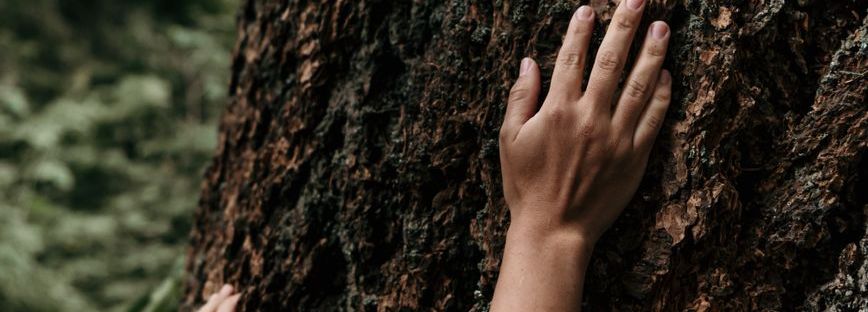
  1. Find a tree nearby and place one hand against the trunk.
  2. Feel the firmness of the bark under your palm. Trees have been practicing stability for a very long time.
  3. Take three slow breaths.
  4. Notice your feet inside your boots.
  5. Notice the ground supporting you.
  6. Then take three very slow steps. With each step, quietly ask: What does stability feel like right now?

You might be surprised how much calmer the nervous system becomes when movement slows down.

Winter walking with hypermobility includes both beauty and risk. Moments of deep solace among the trees and occasional grievances to file with a body that requires extra grit.

The poet Rainer Maria Rilke once wrote,

Let everything happen to you: beauty and terror. Just keep going. No feeling is final.

Perhaps winter forest walks teach that same wisdom.

Conscientious step by conscientious step.

The Whispers of Accord

Living with chronic pain sometimes feels like a negotiation between the body and the soul.

The body says: Please be wary.

The soul says: Please go outside.

The forest, thankfully, doesn’t insist on perfect joints or pain-free muscles.

It simply offers a place to breathe.

Scottish nature writer Nan Shepherd wrote about being in the mountains:

The thing to be known grows with the knowing.

Perhaps the same is true of our bodies.

The more we learn their quirks and their quiet wisdom, the more gently we can move through the world. Even when the trail shimmers with ice and every step requires a little forethought.

Because sometimes healing isn’t about conquering the path. Sometimes it’s simply about finding a way to keep walking among the trees.

So yes, SK winter trails sometimes feel like obstacle courses designed specifically for people with hypermobile joints to fail.

And yes, the body occasionally protests the whole arrangement. Of having any movement at all. Yet consider another quote by Nan Shepherd that leads us back to what matters,

It is a grand thing to get leave to live.

Perhaps that is what these mindful winter walks really are.

A quiet permission to keep living fully, even if the steps are slow and deliberate.

Careful steps. Even slightly wobbly steps.

Keep walking when and where you can. Surrender when called for. We are so close Prairies friends! We have almost made it to Spring! We’ve got this.

Mending Woods: A Journey of Self-Discovery

By a Forest Therapy Guide Practitioner

I am made of words & rivers & winds & wildflowers. I am part grief & part hope & all love.

-Victoria Erickson

From the outside, my life still looks mostly the same.

I still show up. I still smile. I still walk in the woods.

What people don’t see is the calculation behind every choice. The energy budgeting, the quiet bargaining with my body, the grief that comes when the answer is no again. Chronic pain didn’t just change what I can do. It changed how I think, how I hope, and how I understand myself.

I didn’t lose my old self all at once.

She left in pieces. First the bounce in my step, then the spontaneity, then the confidence that tomorrow would feel better. Chronic pain has a way of rearranging your life while pretending nothing has changed. And somehow, you’re expected to adapt quietly and keep smiling like you didn’t just lose someone important.

There is a quiet kind of grief that comes with chronic pain. Those of us who know can see it in the eyes. In the bouncing leg when sitting too long. In the little noises and facial expressions that most people miss.

This is not a grief that comes with casseroles or sympathy cards. Not the kind people know how to name.

It’s the grief of losing someone very important. You.

The body you trusted. The energy you assumed would always return. The way ordinary days felt doable.

Back in the day when your consequences had actions. Now it takes nothing to set that pain- train in motion.

Chronic pain doesn’t just hurt. It rearranges your identity. Like a Mr Potato Head put together by a little one. Totally unfamiliar from what it’s “supposed to be.”

Purpose feels unfamiliar. Hope has to be redefined. Can one even set goals anymore? And from the outside, nothing looks different at all.

You still look like you.

But internally, everything has changed.

That’s why community matters more than advice.

What a fragile, tender gift it is to be invited into another’s wounds.

@thesoftword

Advice tends to arrive loudly and unsolicited. (Often with links. 🤭)

What actually helps is something quieter. 🤫

Not people who argue your reality. (😳 “I’m surprised you feel comfortable saying that out loud” 🤣)

Not people who say, “Have you tried…?” like they’ve just cracked the code. (😨 As though the slightest change in your world will not usher in all of your chronic megadons! 🤯 )

Not people who look sideways at your therapy choices. (👋 “Be gone, foul thing” 🙃)

But people who,

  • Cheer when something finally settles back into place 🙌
  • Take your call when you have nothing left 🤙
  • Help recalibrate the distorted lens pain creates 🔎
  • Invite you in without being offended when you decline 🫴
  • Don’t judge your sleep, your limits, or your pace 🙂‍↔️

They understand one sacred truth:

You are the only person who lives in this body.

And when you reach out, they show up.

Trees of Solace: Earth’s Embrace in Times of Grief

Forest therapy doesn’t try to fix you.

Which is refreshing, to be honest.

It doesn’t rush the process or demand improvement. No gold stars. No timelines.

It simply offers a place where you can grieve. Because this life is tough.

Trees don’t ask who you used to be. They have been pretty quiet during a conversation, in my experience.

They don’t compare you to your past. They are really good at living in the now.

They don’t need you to be productive. Their progress is very slow. They respect your pace as well.

They just let you be you. Whatever version of you that may be.

And when you’re grieving your old self, that is the miracle worker you need.

To be idle is a short road to death; to be contemplative is a short road to life.

— Unknown, attributed to early monastic writings

Stillness is not stagnation. In the forest, stillness becomes listening.

The Garden Path: Shedding the Old Self to Bloom Anew

1. Hold a “Letting Go” Walk

Walk slowly and name (quietly or aloud) what you are releasing. Old expectations, former timelines, borrowed definitions of success.

Leave something symbolic behind. A stone, a leaf, a breath, writing in the snow.

Grief likes ceremony. Even small, slightly awkward ones.

2. Practice Observing Instead of Fixing

Sit and observe without correcting your thoughts.

Notice what hurts.

Notice what doesn’t.

Notice what still feels alive.

This is harder than it sounds. Most of us are very committed to fixing ourselves.

Do not ask what the world needs. Ask what makes you come alive, and go do that.

— Howard Thurman

3. Let the Landscape Mirror Change

Forests are experts in adaptation.

Storm damage. Regrowth. Fallen trees feeding new life.

Your body is not failing. It is reorganizing.

Messy? Yes.

Meaningless? Not even close.

4. Replace Focusing on the Yield with Yielding

Some days the win is sitting.

Some days it’s noticing birdsong instead of pain for ten whole seconds.

That counts.

It all counts.

Celebrate small victories shamelessly. Pain already takes enough. Don’t let it take joy too.

5. Create a New Self Narrative

The old self doesn’t disappear. It composts.

Strength becomes discernment.

Speed becomes awareness.

Achievement becomes alignment.

And occasionally, dark humour becomes a coping skill. (Highly recommended.)

Because if you can laugh when your body sends mixed signals, you’re still very much alive.

You Are Not Becoming Less

You are becoming different.

And different doesn’t mean diminished.

The forest reminds us that worth is not measured by output, endurance, or even consistency.

It’s measured by belonging. By heart beats. By the current of our perceived experience.

You belong here.

In this body.

On this path.

And when you’re ready, the forest will help you meet the version of yourself that knows how to live well. Within the limits. Without shame.

This January, 
if you feel low and heavy
and unready-
please remember that
in nature,
the new year begins in spring.
January is not nature's reset.
March is.

In a few months' time,
temperatures will rise
and the days will be
long enough to actually
do things.
Nature is still unwinding.
It's okay if you are, too.
-srwpoetry
Opacarophile

(n) someone who finds deep comfort, solace and profound peace in sunsets

The Messy Middle: Finding Hope When Life Refuses to Be Tidy

I am in the messy middle of my life.

Not the beginning, when everything still feels like clay. Wet, moldable, brimming with possibility. And not the end, when threads have been tied off and stories are stitched into something you can finally make sense of. I’m here, in the thick of it. In the in between. Healing from chronic pain and somehow learning to live with chronic fatigue, trying to shape what might be next.

Trying to find purpose in pain when the path ahead feels tender and unfinished.

She cleared out all of her old ideas of things, until she could hear her own joy with almost no effort at all.

-Sara Avant Stover, The Way of The Happy Woman

As I have talked about previously on here. I had a hysterectomy after years of fighting hormones that felt like they were clawing their way through my insides. Endometriosis pain stretched across entire seasons of my life.

And then there was my business. It was finally thriving, finally fun. Something my mom built with her hands and heart. But my body whispered then shouted then raged to get me to listen to its unmistakable limits.

Even sitting at the piano. The place that once felt like oxygen became something my body could no longer hold. Notes I used to float through now feel heavy, unsteady, often impossible.

Chronic pain doesn’t just take.

It rearranges.

It remodels.

It forces you into corners you didn’t see coming.

And here I am again, in this messy middle. Sorting out the parts of me that remain. Trying to decide what pieces go where, and to whom, and how much. Because there is only so much of me to go around.

My days are short. My energy is rationed. I can’t just “get up earlier” or “push harder” or “stretch the day.” Those tricks don’t work in this body.

I have learned, painfully, that pushing past limits costs me days, sometimes weeks, of recovery. I don’t slip gently into tired. I crash into a wall of pain with no warning and no buffer. There is no bouncing back.

I don’t have a reserve tank anymore.

I remember when I did.

I remember using an entire day to make snacks and treats for my family, cleaning the house, bathing my littles, tucking them into bed.

I remember being so tired, but feeling full. Like life had weight and meaning and movement. I loved looking at what I had accomplished.

Now?

I can get that same level of bone deep exhaustion from five minutes of washing the dishes.

And that, sadly, is not an exaggeration.

This isn’t “just midlife.”

This is chronic pain. And chronic fatigue. And chronic limitation.

But here’s the truth I’m holding onto-

The messy middle is still a valuable place. A real place. A sacred place of hope. A place worth tending.

And I’ve learned that healing isn’t found in the before or the after.

It’s found right here.

In the slow, intentional steps we take when life has to narrow down.

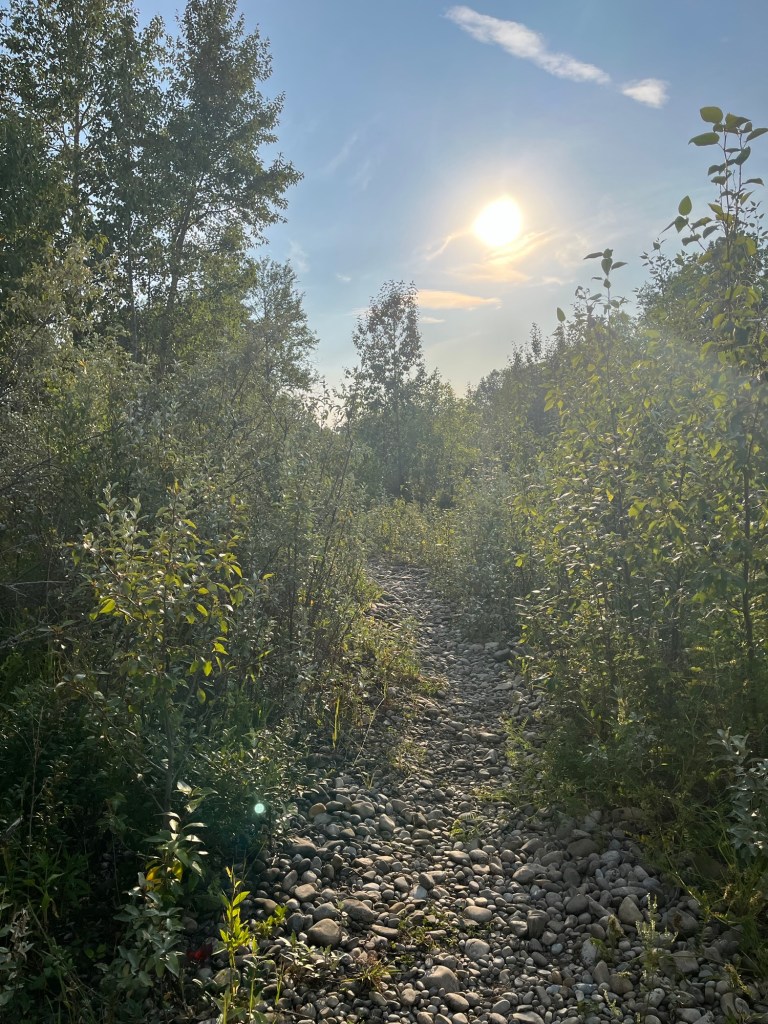
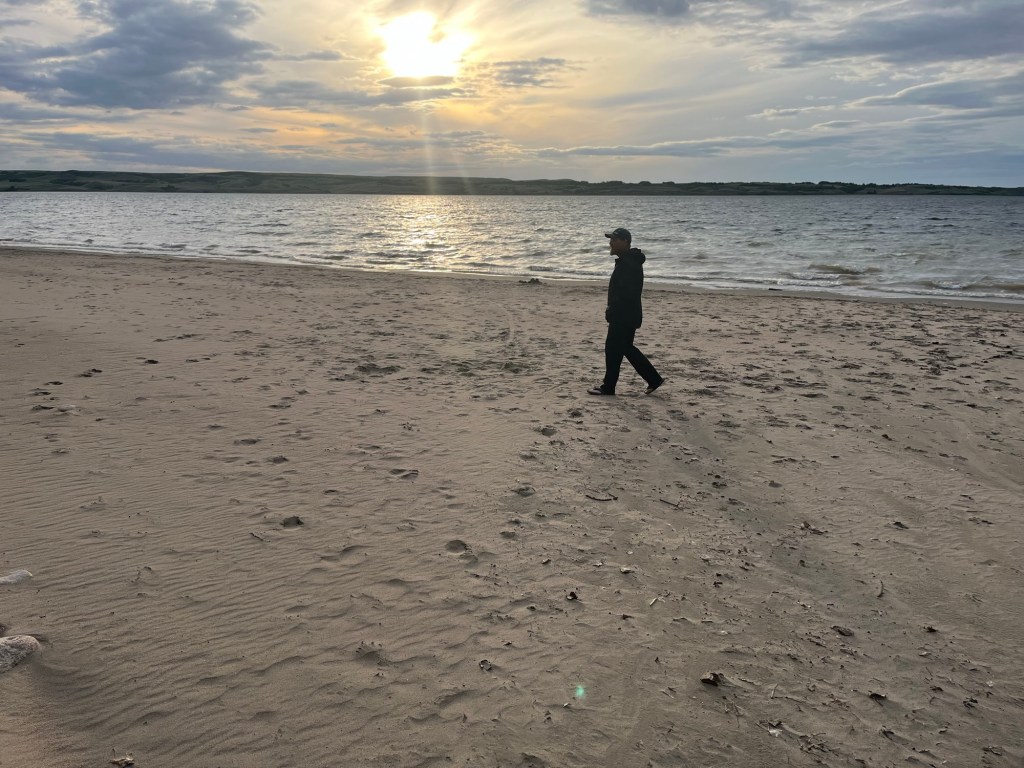
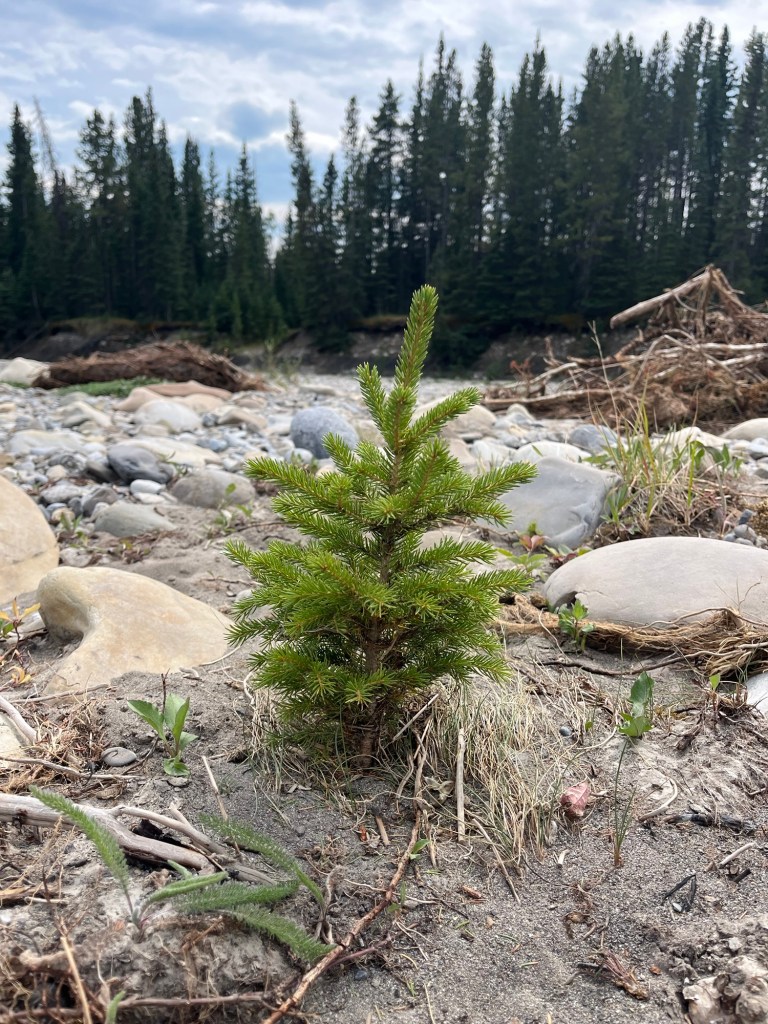
I have never experienced walking on sand in my winter boots before. Weird!

For me, one of those steps is forest therapy.

Where Forest Therapy Meets Healing Journey

In this season, forest therapy has become one of the few places where my body and my motivation find agreement.

It isn’t hiking. It isn’t performance. It isn’t even about movement.

It’s a return to your own breath. It is nature therapy in its gentlest form.

A soft doorway into emotional healing, grounded presence, and quiet hope.

A reclaiming of the parts of yourself that pain has tried to scatter.

A gentle companionship in the places of life that feel undone.

In the forest, I don’t have to be anything for anyone.

The trees don’t ask me to push. The moss doesn’t question my intentions. The forest simply holds space.

And in that space, I remember that even when life feels broken, I’m not.

I think healing is like that.

Quiet. Nonlinear. Messy.

More felt than understood.

And every time I enter the forest, I feel like I step onto a “ladder of hope.”

The Ladder of Hope by me

You climb it not in leaps
But in breaths.
You rise not by strength
But by softness.
The rungs are made of moments—
A bird call,
A sunbeam,
A place to sit.
And every rung you step on
Whispers the same truth:
You’re still rising.

These are small moment that lift me enough to keep going. Not giant steps. Not perfect healing. Not having everything sorted.

The middle is messy. But it’s also alive. It’s also becoming. It’s also sacred ground.

And maybe, purpose isn’t something we chase.

Perhaps it is something that can grow. Slowly, gently, sturdily. If we let it.

“Hope” is the thing with feathers, that perches in the soul. And sings the tune without the words. And never stops— at all.

-Emily Dickinson

Wherever you find yourself today, whether you’re living your own messy middle or standing at the edge of it, may you find one small rung of hope. One quiet moment. One breath of space.

Chronic pain has rerouted my life more times than I can count. It has taken me down roads I never meant to travel.

It’s like my GPS is stuck on the back roads setting as I travel cross country. Not quite the way I’d planned. A lot bumpier. Requiring a slower pace. And focused attention. It is often lonely. And misunderstood.

Sometimes a path calls for you to walk alone. And still, it is beautiful.

-Angie Weiland- Crosby

There are places where the forest tends us and our own breath begins to feel like a home again.

Let the air touch your face. Let the light filter in.

Climb one rung of your ladder of hope.

Just one. This will look different for each one of us. Rightly so.

We are still rising.

And that matters.

Winter, come rest your soul on autumn’s weary head. Twirl, shimmer, soften, before tucking fall into bed.

-Angie Weiland-Crosby

Summer Reflections: Letting Go and Embracing the Present

Does anyone else feel like summer goes way too fast? I am loving walking everywhere with my grandson. We go to parks, and spray pads and pools. I love time with family from far away.

But it always ends. The days get shorter and the nights get cooler. Did I do everything I was supposed to do on summer days? Did I take full advantage? What if I missed something?

I hear a general consensus among my friends that there is a certain expectation with summer. You have to do all the summer bucket list things. And take pictures and post them (or it didn’t actually happen). You have to get a super nice tan. You have to spend time at the beach.

Camps. Boating. Family time. The list is infinite. But the weekends are finite. And they seem to disappear to things like weddings and reunions. Then a couple inevitably host bad weather. And that’s it. It’s over.

This year I am embracing all of it. Last year I made sure I had things to look forward to in the fall. But this year instead of a checklist I want to have more of a relationship with the changes of the seasons.

I want to use this summer to accomplish whatever is right and good for that day. I don’t want to mourn the loss of each Saturday. I don’t want to complain over what didn’t work out. I want to enjoy. To the fullest means possible. Because, why not?

We are connected to our earth and when we are in right relationship with her we can solve mysteries that perplex our fellowmen. The peace we can access. Our centered, balanced state. I see the change of the seasons as an example of how to be in right relationship.

Sunny summer days are magnificent. Cozy fall evenings are restful. Snowy winter days are dazzling. And hopeful spring mornings are reassuring that the brilliant process will continue on. Right relationship leads me to enjoy and appreciate it all.

I have a story about wanting things to be a certain way. Maybe even a way others would agree is ‘right’. But timing and how we approach our day are greater indicators of hopefulness than continually striving to make it work the way we want.

I have three sons. They all played soccer. We spent so many hours cheering at the sidelines of a soccer field. So. Many. Hours.

Photo by u041cu0430u0440u0438u043du0430 u0428u0438u0448u043au0438u043du0430 on Pexels.com
(not my boys)

One evening we sat in our camping chairs, half asleep and less than half paying attention to the game as we chatted with other parents. Our relaxation was suddenly obliterated when with looks of wonder and alarming amazement we saw our son. Our not super athletic son being put in goal.

Mind you this was still small potatoes and it didn’t really matter whether they won or lost but my mama heart wanted to go save him. He looked so small with his great big goalie gloves and that massive net behind.

I prayed for our forwards and our defense. And against their team. Just keep him from being embarrassed. My prayers were working. For minutes now he hadn’t had to do anything. Dang this mama can make miracles happen.

Actually it had been so long since he’d had to do anything that he noticed the goalie shirt he’d had thrown on him in his rush to get on the field, was backwards.

Not a big deal. Except. No. He wouldn’t. Noooo. He would. He did.

He left on his massive goalie gloves and started to turn his shirt around. Luckily play was still at the other end of the field. As the rest of the parents’ eyes were aimed at the other team’s net and they laughingly and happily cheered for their kids, my eyes were fixed with incredulity and twitching with great anticipation as my son, currently in goal, was changing his shirt.

Photo by Ketut Subiyanto on Pexels.com (not me)

As only a good story could go, the play changed direction and was fast approaching my son who now had the shirt the correct direction but regrettably, no better off due to the fact that it was inside out and currently stuck over his head.

At this point my sweet boy noticeably jumped. For although the shirt was over his whole face he must have been able to sense some of what was about to happen.

The rest of the crowd joined me in looking towards the goal that my son was covering. Some quietly snickered. Some tried to shout helpful suggestions, “Just take the shirt off!” “Not that way, it’s twisted!” “Why are you doing that?” someone pleadingly shrieked (that last one was me). All this happened within seconds as the play was coming upon my dear boy.

And then a breakaway. To my awe and amazement, my not-so-sporty son proceeded to make a save. With a shirt completely covering his face. And then another save. And another. Inevitably he was scored upon.

In all my hours of sitting on the sidelines that was my absolute favourite moment of all time.

But not HIS favourite memory, although he can now see the humour in it.

If he had chosen to keep the shirt as it was, it wouldn’t have been perfect but it would have kept him from getting a shirt stuck over his face while he was in goal. With the possibility of the game changing in his direction.

Is there something in your life that currently seems wrong, that you are being tempted to fixate on, when that is not the goal for this season of your life? Are you hanging on to the way it ‘should have been’? Let go.

Allow the goalie shirt to stay backwards for a time.

You can go ahead and pull it off and hope for a quick change that goes smoothly and is accomplished in good time. But what if you are supposed to be watching the play? What if you are the one to save something? Or someone? What if you need to pay attention to what is in front of you and not what you are wearing?

My hope is that these questions will strike each of you in a spectrum of rays depending on your season and your energy level. Your energy level does not define you, but you do need to pay attention to it.

Enjoy summer days. Doing all the things or none of them. Enjoying all the people or sticking to yourself. Let the expectations stay with whomever created them. Just BE in summer and allow the effects of nature to be stored in you like wells of water that you can draw from in the winter months.

Join me in a forest walk to enhance the treasures you can find in nature. Head over to my contact page to reach out and to book. Take care sweet friends.