
Embracing Presence: The Passage Towards Healing Together

But first I share some holiday humor,

Frost upon a windowpane 
and softly falling snow,
Warmth beside a crackling fire
while biting north winds blow
Books and blankets, steaming tea ,
The soft glow of an ember,
Candlelight and cozy nights~
The magic of December

-Laura Jaworski

Especially when you live with chronic pain. Spending time in nature is good. Spending time in nature with people. Held in a shared experience of presence and permission. Now that, is something else entirely.

When you live with chronic pain, connection can feel complicated.

I am happy, hurting and healing at the same time. It is the bravest version of me I have ever been.

healing meme therapy

You long for meaningful connection. But you don’t have the time or strength to find, let alone nurture it.

Bodies are unpredictable. Energy is rationed. Calendars fill with medical appointments instead of casual plans.

Even when we long for community, there’s often a quiet question humming underneath it all.

Will I be able to keep up?

Will I have to explain myself?

This is where group forest therapy offers something different.

Connection on a forest therapy walk doesn’t come from conversation or comparison. It doesn’t require sharing your story or proving how much you hurt.

It emerges slowly, almost indirectly, through shared pacing and shared permission.

It happens when the group naturally slows because one person needs to slow.

When silence is allowed without awkwardness.

When someone names an experience you thought was yours alone.

I’ve watched shoulders drop the moment someone realizes they don’t have to explain why they’re moving slowly.

That moment matters.

There are many things that can only be seen through the eyes that have cried.

-Oscar A Romero

From a physiological perspective, safe connection is not just emotionally comforting. It is biologically regulating. When we feel seen, believed, and accepted without pressure to perform, the nervous system receives a powerful message.

I am safe enough right now.

Stress hormones like cortisol begin to ease. The breath deepens. Muscles soften. Pain doesn’t vanish, but it often becomes less consuming.

Nature does part of this work.

But shared experience completes it.

AD ASTRA PER AMOREM (latin): To the stars through love.

During the holidays, many of us are preparing, with excitement, (hopefully not with dread) for connection.

Family gatherings. Traditions. Empty chairs. Expectations.

For those living with chronic pain, this season can heighten both longing and fatigue. Wanting closeness while knowing how much it costs the body to participate.

Group forest therapy offers another way of being together. A quieter way. One where connection is rooted in presence rather than endurance.

One of my favorite practices for larger groups is something I call Shared Noticing.

Participants are invited to wander slowly and find one small thing that reflects how they are arriving. A stone, a leaf, a texture, a sound.

We must not allow the clock and the calendar to blind us to the fact that each moment of life is a miracle and a mystery.

-H.G. Wells

Later, we gather in a wide circle. Each person is invited (never required) to show what they found and complete the sentence,

I’m arriving like this…”

There is no fixing. No interpreting. Just witnessing.

Again and again, what emerges is relief. A realization that our internal landscapes are not as isolated as they feel.

Faith includes noticing the mess, the emptiness and discomfort, and letting it be there until some light returns.

Anne Lamott

Poet David Whyte writes,

Belonging is not something we negotiate; it is something we remember.

Forest therapy helps us remember. Not by erasing pain, but by holding it gently within a living community. Trees overhead, earth beneath us, and others beside us who understand without needing all the details.

As the season of gathering approaches, I find myself wondering,

Where do you feel most allowed to be exactly as you are? Without explanation, without apology?

Share in the comments 👇🏼

As this season asks many of us to gather, I offer this as an alternative kind of togetherness. One rooted in presence, patience, and permission.

If you’re navigating chronic pain and longing for connection that honors your limits, group forest therapy may be a gentle place to land. I’d love to walk alongside you.

To love at all is to be vulnerable.

C.S, Lewis

Harnessing Nature’s Power Through Forest Therapy

😂👆🏼

For years my body lived in a storm of chronic pain. Caught between relentless tension, inflammation, and exhaustion. Traditional therapies weren’t making a dent. Something profound shifted only when I began practicing forest therapy. Intentionally slowing down in nature to activate the body’s parasympathetic nervous system, the calming rest-and-digest branch that supports healing.

Today, as a forest therapy guide, I’ve watched this shift happen not just in myself, but others around me. In people carrying chronic pain, anxiety, grief, and burnout. Research confirms it and nature continually demonstrates it.

This post explores how parasympathetic activation through forest therapy aids recovery, why it’s especially valuable in chronic pain, and how to practice it even in winter months. When we often need it most.

Having a chronic illness is like looking both ways before you cross the street and then getting hit by an aeroplane.

-my take on quote by Nitya Prakash

FOREWALLOWED: overwhelmed, exhausted, or worn out, often due to excessive effort or difficulty.

🌿 Woods & Wellness: The Science of Forest Therapy

Chronic pain keeps the body stuck in a prolonged sympathetic fight-or-flight state.

Research shows that forest environments:

  • 🌿 Lower cortisol levels
  • 🌿 Reduce muscle tension
  • 🌿 Lower blood pressure and heart rate
  • 🌿 Increase heart rate variability (HRV) (a strong indicator of parasympathetic activation)
  • 🌿 Decrease activity in the prefrontal cortex, easing mental fatigue
  • 🌿 Boost immune function through phytoncides, natural compounds released by trees

Shinrin-yoku (forest bathing) studies from Japan indicate a significant increase in parasympathetic activity after as little as 15–20 minutes in a natural space.

This activation signals the body:

You are safe. You can repair.

Chronic pain often cycles when the body cannot access this safety. Forest therapy helps gently turn that switch.

Break often- not like porcelain, but like waves.

Scherezade Siobhan

🌱 The Power of Pause: Healing with Parasympathetic Rest

There was a stretch of my life when going to sleep hurt. Waking up hurt. Every day just hurt. Fibromyalgia flares, migraines, and exhaustion deep into my bones, left me swollen with frustration.

My healing didn’t happen all at once. It began with moments.

Moments of pausing on a beach.

Moments of feeling my breath match the trees. A slow and ancient pace.

Moments of letting myself not push. Easing into instead of always rushing to take the next step.

Forest therapy didn’t cure my chronic pain. But it gave my nervous system something I didn’t know it was starving for. Permission to soften!

And in that softening my symptoms eased. My hope returned. And my body began recalibrating.

Nature gave me a place where healing didn’t feel forced. It unfolded.

Forest Therapy checks so many of these boxes and aids in checking the others. In FT we practice breathing exercises, sometimes chanting or humming. We meditate. Depending on the season we are exposed to cold &/or sun. Music can be part of the practice. Social connection and exercise are built in. The gag reflex and ability to sleep are supported after the practice.

🍃 The Icy Veil: A River’s Progression Beneath the Freeze

Winter teaches us about quiet healing. The kind that hides but never stops working.

Imagine a river in Saskatoon in January.

On the surface, it looks frozen, still, unmoving. But beneath the ice, water continues flowing. Deliberately, purposefully.

This is what happens when the parasympathetic nervous system activates in chronic pain.

Outwardly you might still feel limited and slow.

But beneath the surface, healing begins to flow again:

  • inflammation decreases
  • muscles release
  • circulation improves
  • your mind stops bracing for the next wave of pain

Forest therapy is the gentle sunlight that softens the ice, allowing your inner river to move again. Not rushed, just returned to its natural rhythm.

For me, being quiet and slow is being myself, and that is my gift.

Fred Rogers

❄️ Embracing the Chill: Winter Forest Therapy for Chronic Pain

Are we 100% sure we are meant to be awake in the winter?

Jordanne Brown @Perry7Platypus7

Winter can be challenging when you live with chronic pain:

  • colder temperatures increase stiffness
  • shorter daylight affects mood
  • energy dips
  • motivation wavers

But winter also offers something summer can’t:

an environment that naturally encourages slowness, stillness, and reflection- key conditions for parasympathetic restoration

When practiced intentionally, winter forest therapy becomes a deeply comforting, grounding practice.

🧣 How to Practice Forest Therapy in Winter (Without Freezing or Flaring)

1. Take Slow Sensory Walks (10–20 minutes is enough)

The cold naturally slows your pace. Let it. Pay attention to textures, sounds, and the muted winter palette.

2. Use “Micro Moments” of Nature

If going far feels impossible, try parasympathetic nature moments:

  • sit by a window and watch wind move branches
  • listen to a crackling fire or light a pine-scented candle
  • stand on your porch and notice a single tree
  • touch cold bark and notice grounding sensations

Even 3–5 minutes helps reset your nervous system.

3. Practice Breathwork with Nature

Try the “tree breath”:

Imagine your exhale traveling into the roots of a nearby tree. Slow, steady, grounding.

4. Bring Nature Indoors

Winter healing doesn’t require wilderness:

  • evergreen branches
  • natural scents (cedar, spruce, pine)
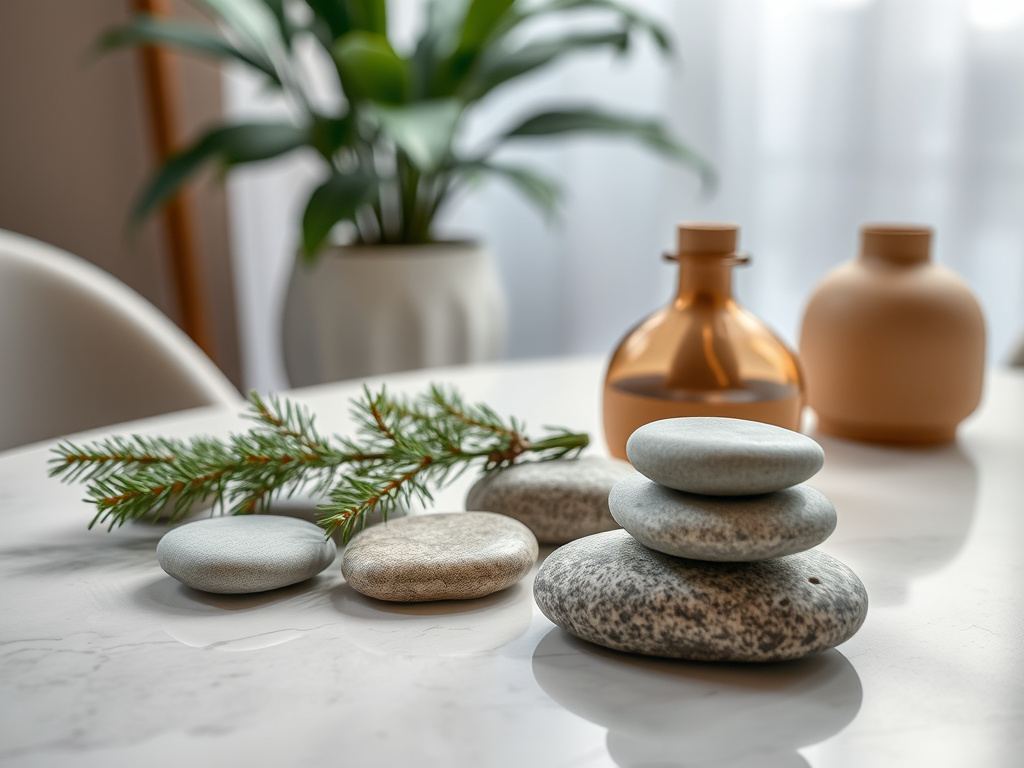
  • smooth stones
  • indoor plants
  • nature soundscapes

Your parasympathetic system responds to cues of safety, not location. Are you ready to commit to this statement?👇🏼

🌲 Cozy Winter Connections: Nature’s Embrace Awaits

Here’s your winter-friendly, chronic pain safe list:

🔥 1. Warm beverages as grounding tools

Tea, broth, hot cider. Wrap your hands around warmth while practicing stillness.

🧤 2. Layer with intention

  • Merino wool layers
  • Heated socks
  • Hand warmers
  • A thermos tucked in your coat

Warmth = reduced pain and more parasympathetic access.

🌲 3. Bring texture

A soft scarf, wool blanket, or mittens can become sensory anchors.

 4. Choose wind sheltered routes

Forest edges, dense evergreens, or local parks with natural windbreaks reduce the cold’s impact on pain.

🌞 5. Use pockets of sun

Even 5 minutes of winter sunlight boosts serotonin and eases the nervous system.

🧘 6. Gentle seated practices. You don’t have to hike.

Sit on an insulated pad, lean on a tree, and let your body settle.

🌿 Healing from Within: Nature’s Cradle for Chronic Pain Relief

Forest therapy doesn’t eliminate chronic pain, but it helps the body access what pain often steals:

a state of rest, repair, and deep nervous system safety.

When nature cues your parasympathetic system:

  • your muscles unclench
  • catastrophizing thoughts settle
  • your breath deepens
  • your pain becomes less sharp
  • your resilience grows.

In this softened place, healing becomes possible again.

When you do things from your soul, you have a river moving in you, a joy.

-Rumi

🌿 Winter Is Not the Enemy, Merely a Difficult Friendship

“The trees may sleep, but they are never dead.” — Edwin Way Teale

Winter offers these quiet, tender invitations:

Slow down. Notice. Receive what nature offers.

Even when life feels frozen, your healing can still flow beneath the surface.

Your body is not failing you. It is waiting for safety.

And the forest, still, patient and ancient, knows how to offer it.

We are the granddaughters of the grandmas your reindeer couldn’t run over.

We are resilient! We are strong! We are SISU!!!

Wrap Your Authentic Self in Nature

Winter reminds us that everyone and everything needs some quiet time.

Katrina Mayer

A boy of six years old, was asked what he wanted to be when he grew up. He looked up, small and certain, and said,

“I think I’ll just have to be myself. I’ve tried to be like someone else, but I’ve mucked it up each time.”

It has taken me a lifetime and years of chronic pain, illness, and discouragement, to finally understand the wisdom in that little answer.

Your spiritual gifts aren’t found by striving, hustling, or contorting yourself into someone else’s shape. They are revealed through presence. Through making space for the soft truth that’s been whispering inside you since childhood.

I have spent seasons feeling like a waste of space, a waste of skin, wondering what good I could possibly offer the world from where I am. But like that child, after repeated failures at being anyone but myself, I am learning to return to who I truly am.

What are your spiritual gifts and how do you use them?

Seek the Soulful Intersection of Nature and Spirit

I go to the forest when I need quiet, peace, and centering. In the hush of pines and the steadiness of ancient stones, I hear truths I’ve forgotten. I feel wings embrace me. A sacred embrace. Wings lifting me into what I can still become.

This is where forest therapy, spiritual reflection, and divine connection come together.

Roman emporer and philosopher, Marcus Aurelius wrote,

Look within. Within is the fountain of good, and it will ever bubble up if thou wilt dig.

Forest therapy teaches us exactly that. The digging and the returning to the well within.

In forest therapy, we practice the art of noticing our inner landscape with the same compassionate curiosity.

We explore:

  • What comes naturally to me?
  • What brings me alive?
  • What do others feel when they’re in my presence?
  • Where do I feel like myself without effort?

These are the compass points of spiritual gifting.

Illuminate Your Life

KOVA

(n) Hungarian- a massive hard dark quartz that produces a spark when struck by steel

Perhaps the steel or trials that come to us also produces a bright spark.

One of my favourite people, Emily Belle Freeman shared this idea in her podcast, Inklings. S5E111. Elder Dieter F. Uchtdorf: Do Your Part with All Your Heart. She suggests we ask ourselves,

What is my gifting?

As Freeman points out, as humans, we are masters at listing everything wrong with us. But what if, for today, you wrote out what you’re really good at? What comes naturally? What others thank you for?

Freeman prompts us, A spiritual gift answers yes to even one of these questions:

  • Has it touched someone?
  • Has it blessed someone?
  • Has it saved someone?

When we recognize our gifts, we increase them. They grow the way all living things grow: slowly, in seasons, with practice, not perfection.

Perfection discourages.

Practice expands.

Practice invites grace. Leaving space to improve each day.

This is where affirmations come in. Write down what is true for you today. Then recite it. Write who you are and who you are meant to be.

Even if that truth begins as tiny as a mustard seed, it can one day become a great sheltering tree.

Reflect on the Wisdom of Your Creator

I have found strength in beginning my day by thanking the Creator. Whether that be God, Spirit, or angels for you. I thank my gracious Father in Heaven. He is the One who planted these gifts in me. Thanking Him helps me see the ways they grow, mature, and take root.

Another idea Freeman has shared in her podcast, with which I firmly agree,

I believe God’s love for us is high.

I believe His expectations for us are high.

I believe His trust in us is high.

His trust in us is His faith.

His expectations for us are His hope.

His love for us despite our weaknesses is His charity.

And when I see His faith in, hope in and charity towards me, I can offer these gifts to others. These divine principles bring a trust in my ability back into my story. Because of what He offers me.

Joseph Campbell said,

Your sacred space is where you find yourself again and again.

For me, that space is always the forest.

The Shift from Work to Success

Freeman shared a story from Leo Tolstoy’s, Anna Karenina. Tolstoy writes of a man named Levin. Levin decides one day to join the peasants in mowing hay. At first, all he can feel are the blisters forming and the ache in his bent back. The rows feel endless. He fears he cannot keep up.

But then something shifts:

Another row, and yet another row, followed… Levin lost all sense of time. A change began to come over his work, which gave him immense satisfaction. In the midst of his toil there were moments during which he forgot what he was doing, and it all came easy to him.

There is a kind of magic in becoming so present in a task that you relish the process itself. Some people call this, flow.

So why do we question ourselves? Why do we doubt the gifts planted in us? Why not enter the flow, like Levin, and accomplish what we were meant for?

A Truer Perspective

Melissa Wei-Tsing Inouye, a long time associate of The Maxwell Institue wrote,

For some reason it is easier to have faith in other people’s faith than in my own.

Can you relate? A goldfish doesn’t even know it’s swimming. It simply lives within the water it doesn’t recognize is there. He is a product of his surroundings without having any idea.

When we step outside ourselves through quiet, through curiosity, we finally see our inherent spiritual gifts.

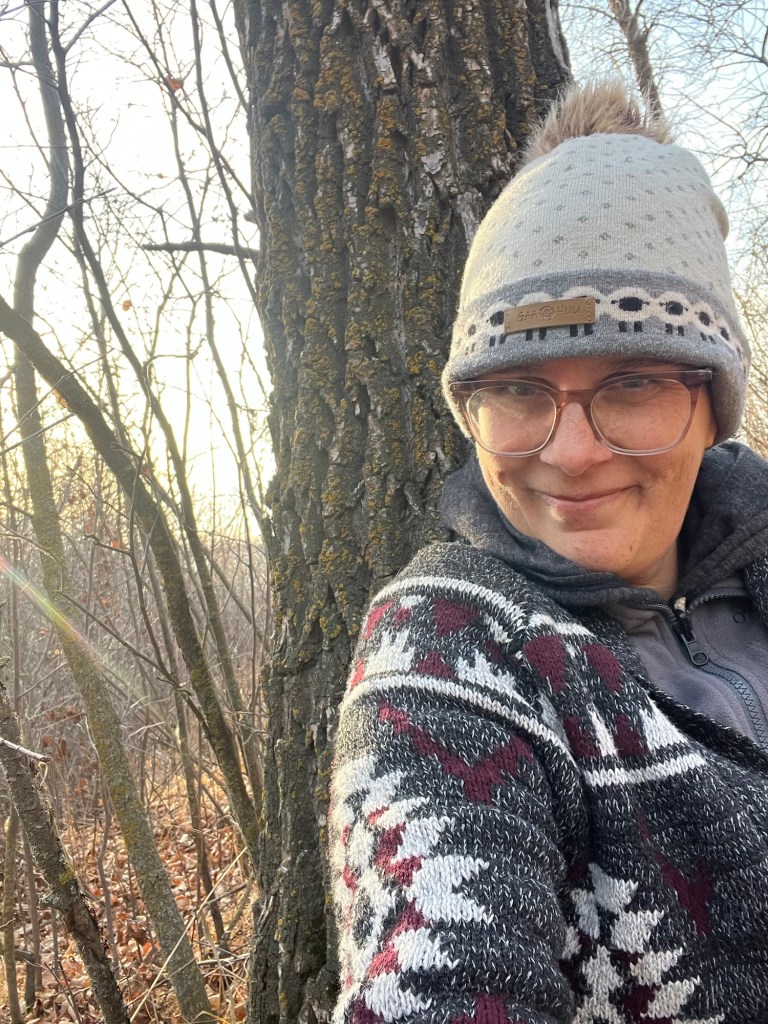
This next block of photos is meant to be scrolled through quickly. It’s not about me or how I look, it is the expressions on my face. I encourage you to look through your photos. Which ones make you look the most alive?

Therein may lie a clue to your giftedness. After inspection, I am persuaded that my giftedness includes noticing and sharing the benefits of nature.

Begin with even a desire to believe.

Then start:

🌱 Practice affirmations

🌱 Practice gratitude

🌱 Practice perspective– stepping outside yourself to see your capacity

🌱 Practice noticing your gifts in real time

Watch them expand, like light through branches, like seeds breaking open. They will bring healing, clarity and spiritual confidence.

I’m the kind of girl who actually wishes on dandelions and shooting stars. With so much madness in the world, we have to be the magic.

-Anonymous

Try this simple practice the next time you’re in nature:

  • Find a quiet place to sit or stand.
  • Let your body settle.
  • Notice one element in the forest that draws your attention. A leaf, a stone, a breeze.
  • Ask, What gift is this offering me right now?
  • Then ask, What gift do I offer the world in the same quiet, natural way?

Don’t force an answer. Let it arrive like sunlight between branches. Slow and sure.

Discover the Revolutionary Benefits of Forest Therapy

The forest is the place where our inner and outer landscapes meet. It’s where these spiritual practices grow deeper roots. Sit among the trees and write your affirmations. Walk slowly and speak gratitude aloud. Let the wind, water, and stillness remind you that you are becoming, gently and steadily.

Your spiritual gifts were planted in you long before you knew their names. They show up in the way you comfort others without thinking… the way you see beauty where others see ordinary… the way your presence shifts a room.

Like that wise six-year-old, you don’t need to become anything other than yourself.

You simply need to return.

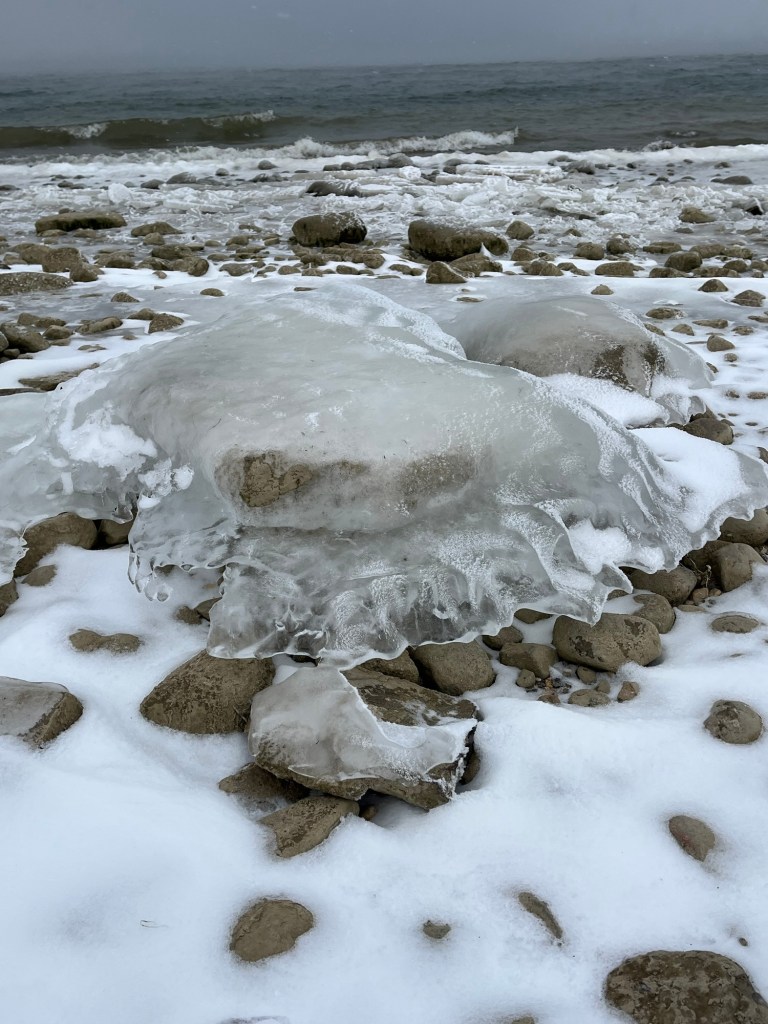
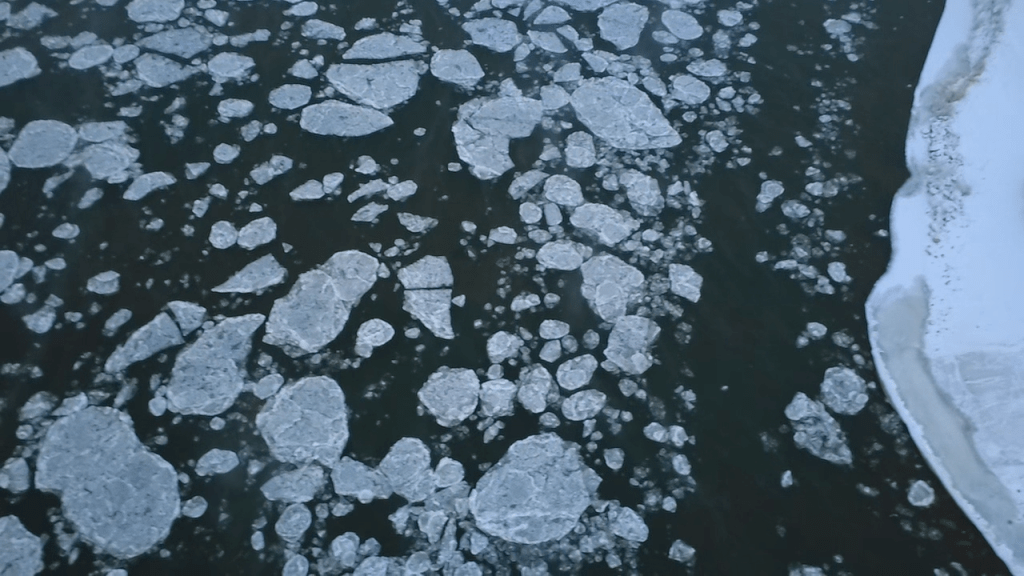
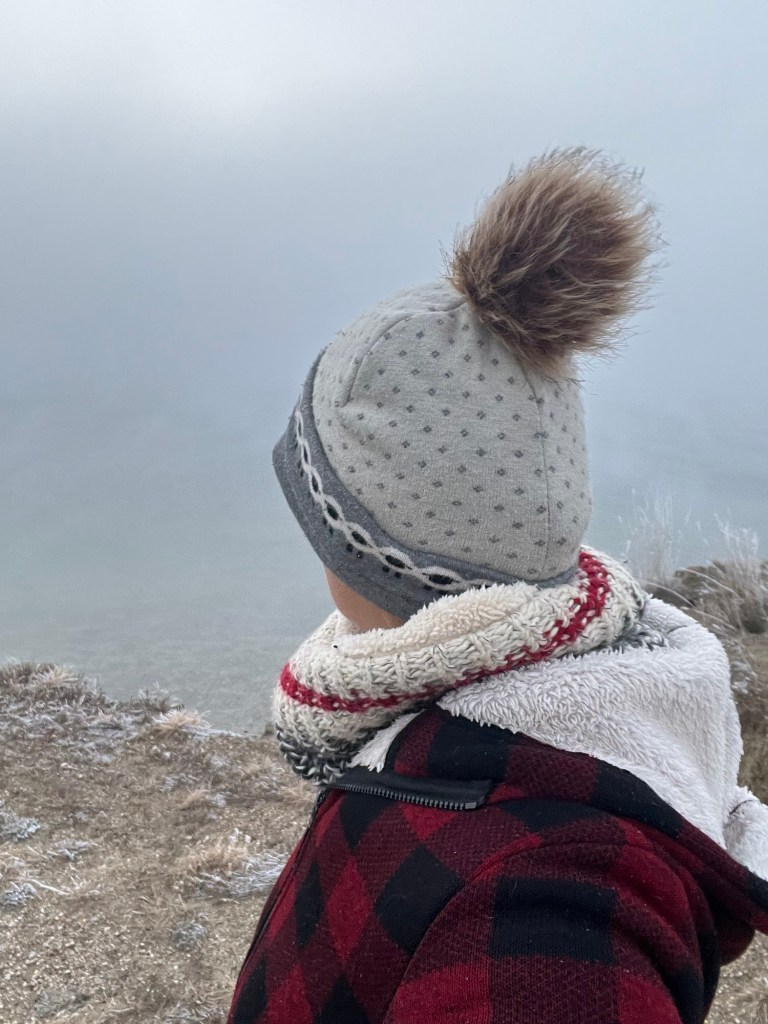
Right now, I am watching the lake “go to sleep,” as my mom says. The water moves slowly, ice forms at the edges. Fog drifts over the surface in thin, damp wisps. And in this quiet, I find myself again. I feel my gifts stirring. Small. Tender. Wanting to grow and expand as I lean into them.

Wisdom comes with winters.

-Oscar Wilde

✨ Subscribe to follow my journey, and comment 🌊 if you too are standing at the edge of your frozen lake, trying to find your purpose again.

The Messy Middle: Finding Hope When Life Refuses to Be Tidy

I am in the messy middle of my life.

Not the beginning, when everything still feels like clay. Wet, moldable, brimming with possibility. And not the end, when threads have been tied off and stories are stitched into something you can finally make sense of. I’m here, in the thick of it. In the in between. Healing from chronic pain and somehow learning to live with chronic fatigue, trying to shape what might be next.

Trying to find purpose in pain when the path ahead feels tender and unfinished.

She cleared out all of her old ideas of things, until she could hear her own joy with almost no effort at all.

-Sara Avant Stover, The Way of The Happy Woman

As I have talked about previously on here. I had a hysterectomy after years of fighting hormones that felt like they were clawing their way through my insides. Endometriosis pain stretched across entire seasons of my life.

And then there was my business. It was finally thriving, finally fun. Something my mom built with her hands and heart. But my body whispered then shouted then raged to get me to listen to its unmistakable limits.

Even sitting at the piano. The place that once felt like oxygen became something my body could no longer hold. Notes I used to float through now feel heavy, unsteady, often impossible.

Chronic pain doesn’t just take.

It rearranges.

It remodels.

It forces you into corners you didn’t see coming.

And here I am again, in this messy middle. Sorting out the parts of me that remain. Trying to decide what pieces go where, and to whom, and how much. Because there is only so much of me to go around.

My days are short. My energy is rationed. I can’t just “get up earlier” or “push harder” or “stretch the day.” Those tricks don’t work in this body.

I have learned, painfully, that pushing past limits costs me days, sometimes weeks, of recovery. I don’t slip gently into tired. I crash into a wall of pain with no warning and no buffer. There is no bouncing back.

I don’t have a reserve tank anymore.

I remember when I did.

I remember using an entire day to make snacks and treats for my family, cleaning the house, bathing my littles, tucking them into bed.

I remember being so tired, but feeling full. Like life had weight and meaning and movement. I loved looking at what I had accomplished.

Now?

I can get that same level of bone deep exhaustion from five minutes of washing the dishes.

And that, sadly, is not an exaggeration.

This isn’t “just midlife.”

This is chronic pain. And chronic fatigue. And chronic limitation.

But here’s the truth I’m holding onto-

The messy middle is still a valuable place. A real place. A sacred place of hope. A place worth tending.

And I’ve learned that healing isn’t found in the before or the after.

It’s found right here.

In the slow, intentional steps we take when life has to narrow down.

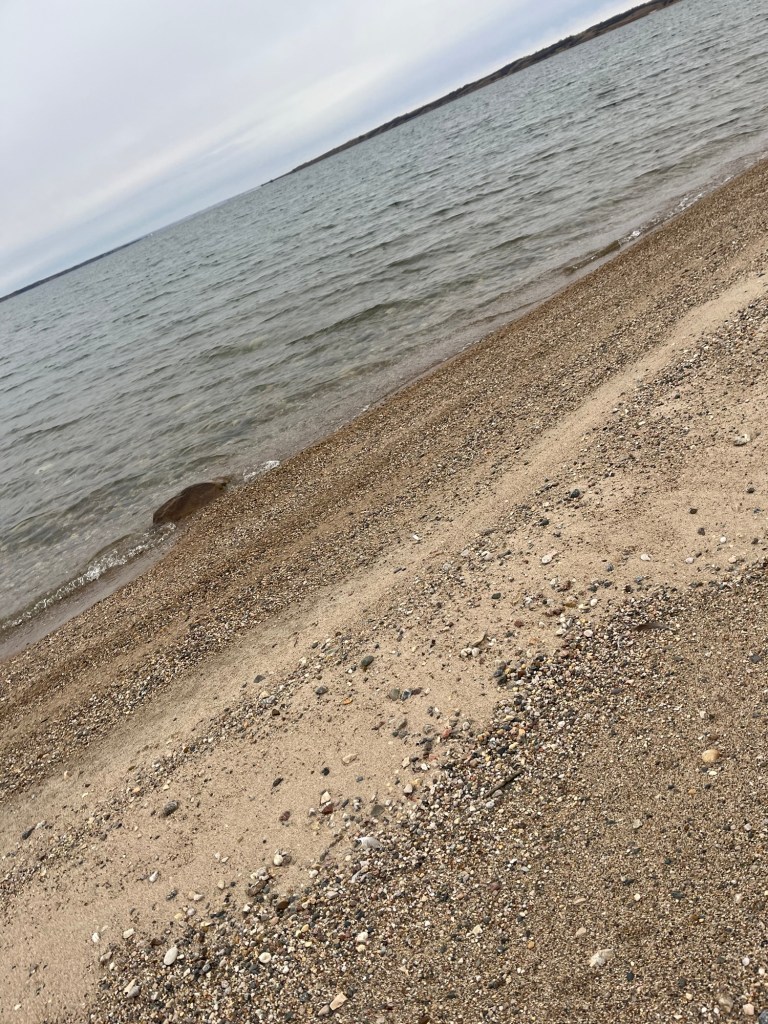
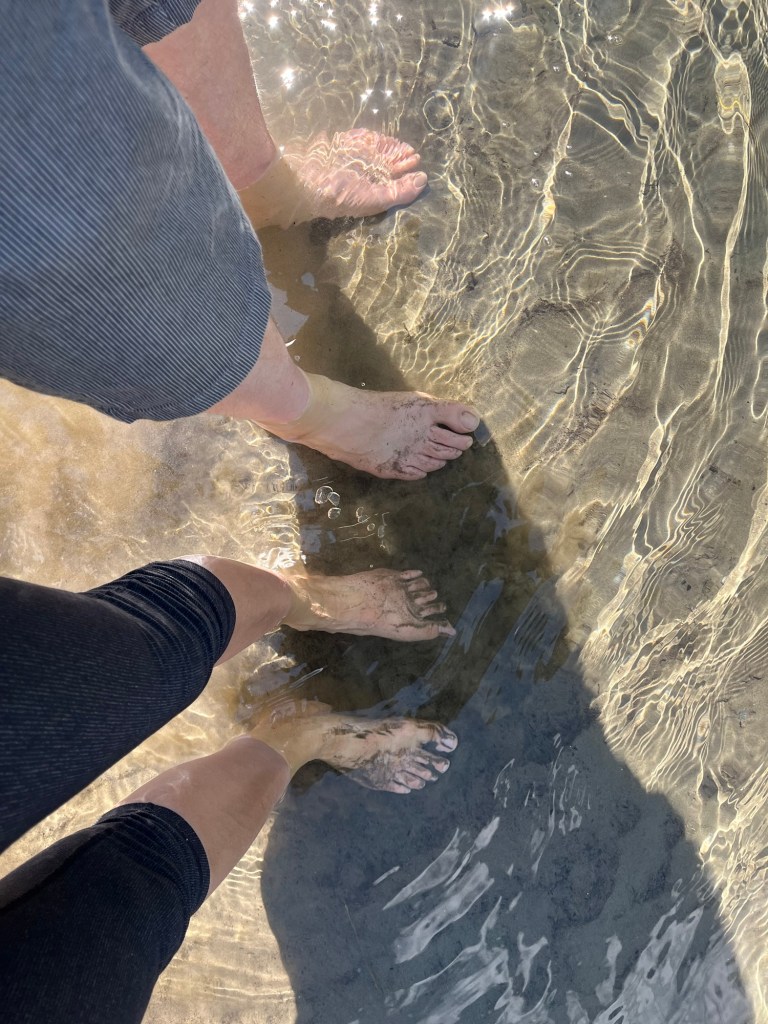
I have never experienced walking on sand in my winter boots before. Weird!

For me, one of those steps is forest therapy.

Where Forest Therapy Meets Healing Journey

In this season, forest therapy has become one of the few places where my body and my motivation find agreement.

It isn’t hiking. It isn’t performance. It isn’t even about movement.

It’s a return to your own breath. It is nature therapy in its gentlest form.

A soft doorway into emotional healing, grounded presence, and quiet hope.

A reclaiming of the parts of yourself that pain has tried to scatter.

A gentle companionship in the places of life that feel undone.

In the forest, I don’t have to be anything for anyone.

The trees don’t ask me to push. The moss doesn’t question my intentions. The forest simply holds space.

And in that space, I remember that even when life feels broken, I’m not.

I think healing is like that.

Quiet. Nonlinear. Messy.

More felt than understood.

And every time I enter the forest, I feel like I step onto a “ladder of hope.”

The Ladder of Hope by me

You climb it not in leaps
But in breaths.
You rise not by strength
But by softness.
The rungs are made of moments—
A bird call,
A sunbeam,
A place to sit.
And every rung you step on
Whispers the same truth:
You’re still rising.

These are small moment that lift me enough to keep going. Not giant steps. Not perfect healing. Not having everything sorted.

The middle is messy. But it’s also alive. It’s also becoming. It’s also sacred ground.

And maybe, purpose isn’t something we chase.

Perhaps it is something that can grow. Slowly, gently, sturdily. If we let it.

“Hope” is the thing with feathers, that perches in the soul. And sings the tune without the words. And never stops— at all.

-Emily Dickinson

Wherever you find yourself today, whether you’re living your own messy middle or standing at the edge of it, may you find one small rung of hope. One quiet moment. One breath of space.

Chronic pain has rerouted my life more times than I can count. It has taken me down roads I never meant to travel.

It’s like my GPS is stuck on the back roads setting as I travel cross country. Not quite the way I’d planned. A lot bumpier. Requiring a slower pace. And focused attention. It is often lonely. And misunderstood.

Sometimes a path calls for you to walk alone. And still, it is beautiful.

-Angie Weiland- Crosby

There are places where the forest tends us and our own breath begins to feel like a home again.

Let the air touch your face. Let the light filter in.

Climb one rung of your ladder of hope.

Just one. This will look different for each one of us. Rightly so.

We are still rising.

And that matters.

Winter, come rest your soul on autumn’s weary head. Twirl, shimmer, soften, before tucking fall into bed.

-Angie Weiland-Crosby

Diefenbaker Lake: A Childhood Sanctuary

Let the waters settle and you will see the moon and stars mirrored in your own being.

-Rumi

There are places that shape us before we’re even old enough to understand what’s happening. Places that imprint themselves on the soles of our feet, in the rhythm of our breath, in the part of our memory that feels more like home than any house ever could.

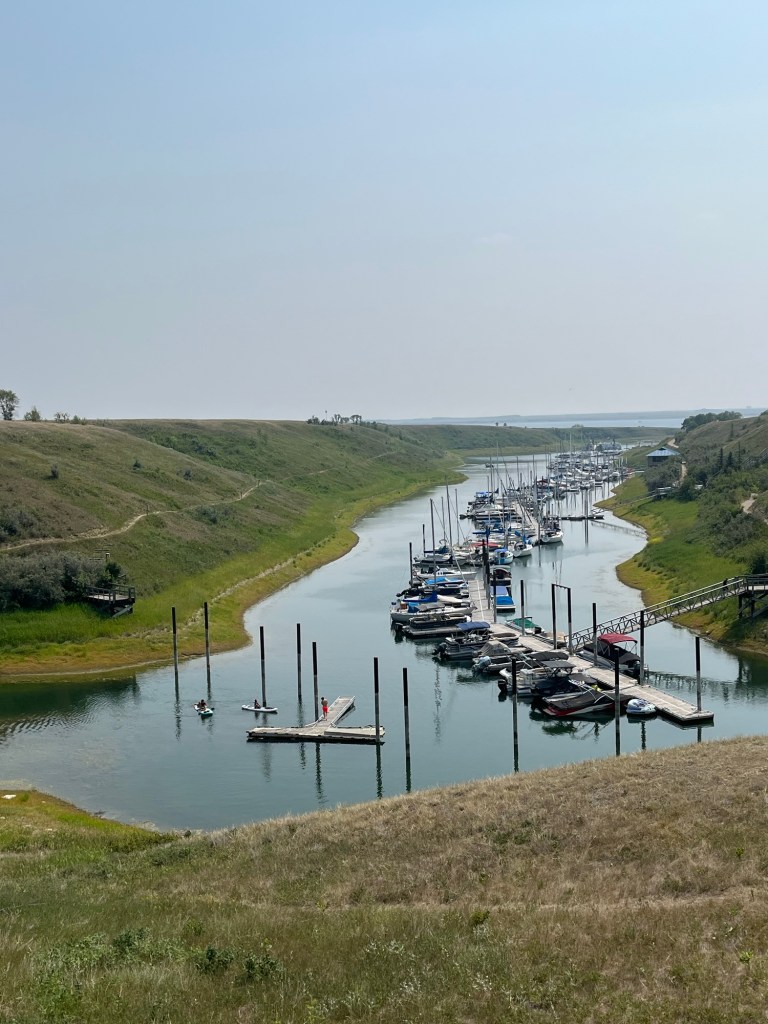
For me, that place has always been Diefenbaker Lake.

Some places are so deep inside us that we carry their shoreline in our bones.

-John O’Donohue

I’ve been coming here since I was tiny. Even before I had words for belonging, but somehow already knew I belonged here. Grandpa always made sure of that.

My grandparents had a cabin and a sailboat tucked along these windswept shores. Some of my earliest memories are stitched together with the smell of woodsmoke from backyard fires, the sweetness of my grandpa’s violin, and the rowdy chorus of siblings and cousins running wild between the cabin and the water. With the constant reminder to “wash the sand off your feet before you come in!”

And then there were the cozy, indoor moments that stitched themselves into my heart just as tightly as the beach days. Evenings around the table playing Phase 10, some of us a little too competitive for their own good. And we watched Bedknobs and Broomsticks over and over and over again. Never questioning why, just letting the magic and music wash over us like it was brand new every time.

Mornings were their own kind of ritual. Waking up to Grandma making bacon and something (it didn’t matter what, it’s the bacon that mattered) and the smell of fresh coffee drifting through the cabin. To this day, I associate the scent of coffee with pure happiness, because it always meant family, warmth, and the safe little world we built at the lake.

Teenage awkwardness made an appearance here too, because of course it did. Blushing, fumbling romances that felt monumental at the time. Even with his hair plastered to his face. Perhaps this was done by those winds that could have knocked over a small cow 🤔.

Speaking of cows. They are a regular feature of this lake that is surrounded by pasture land. Two rules. Don’t use a cow as a landmark when giving directions. They tend to move eventually. And don’t pick a beach with a cow path into the water. You can guarantee there’s a few cow pies in there.

Swimming lessons were basically an extreme sport back in my day. With waves bigger than me, wind that felt like knives, and instructors yelling cheerful encouragement while I questioned all of my mom’s life decisions that brought me to this point.

Still, I kept going back.

I lived for the days Uncle David would haul out the power boat. Kneeboarding, tubing, laughing so hard my face hurt. Those were the moments that made childhood feel endless. We’d tear down the path to the beach, towels flying behind us, younger siblings and cousins trailing like joyful chaos. We swam, we snacked, we visited, we repeated. Every day was an epic saga of sunshine and soggy towels.

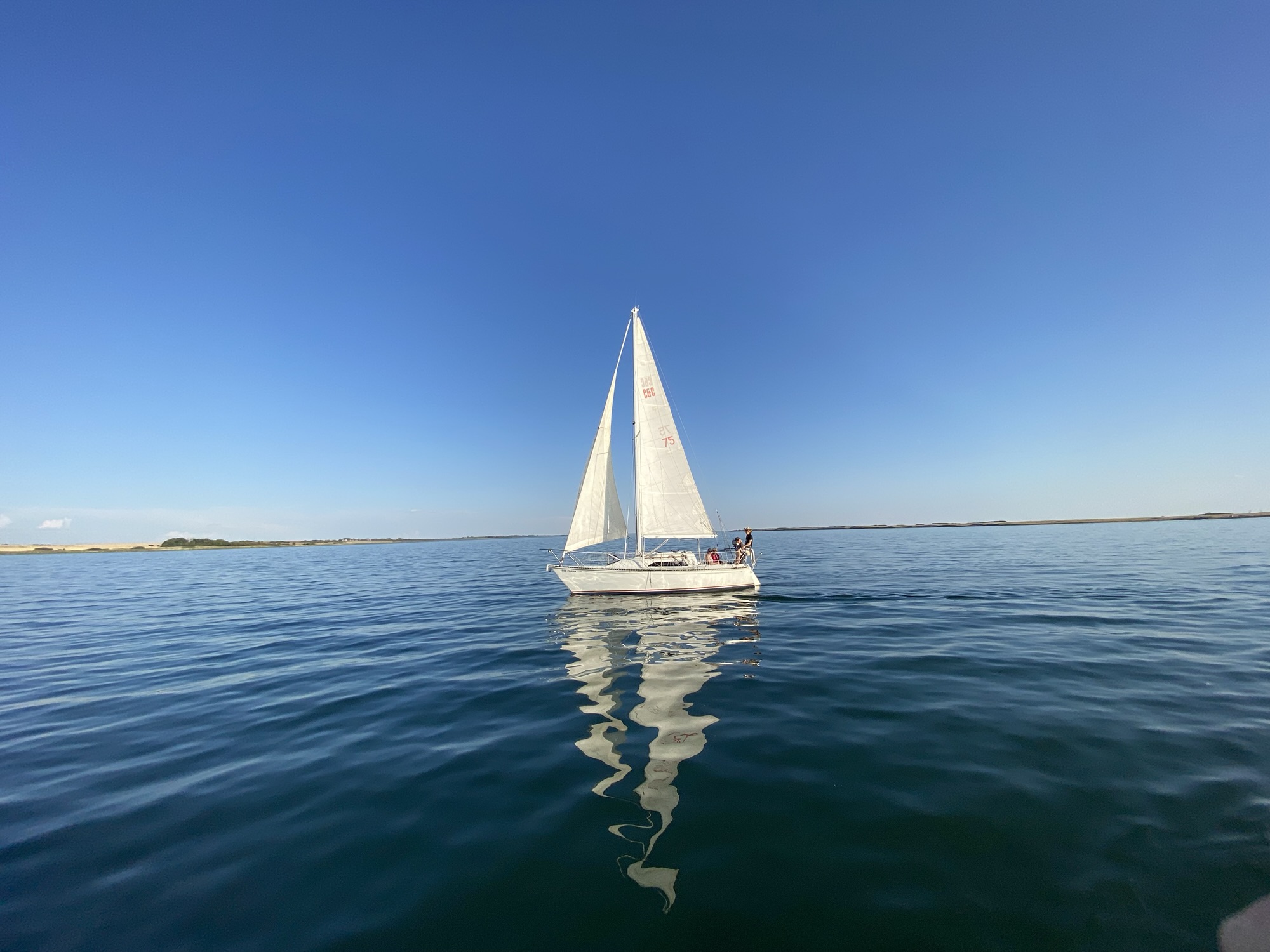
Sailing days were their own kind of magic. My mom loves to retell the story of my sister and me being so little our feet didn’t touch the floor as we sat at the table down below. Meanwhile grandpa and dad were tacking hard and smiling harder. Every time the sailboat leaned, we’d just… slide helplessly under the table like tiny bewildered penguins. Apparently we were adorable. At the time, I remember thinking, Is this normal? Are we sinking? Should I be able to see the lake out that window?

Dad and grandpa were always smiling so I took that to mean we were safe.

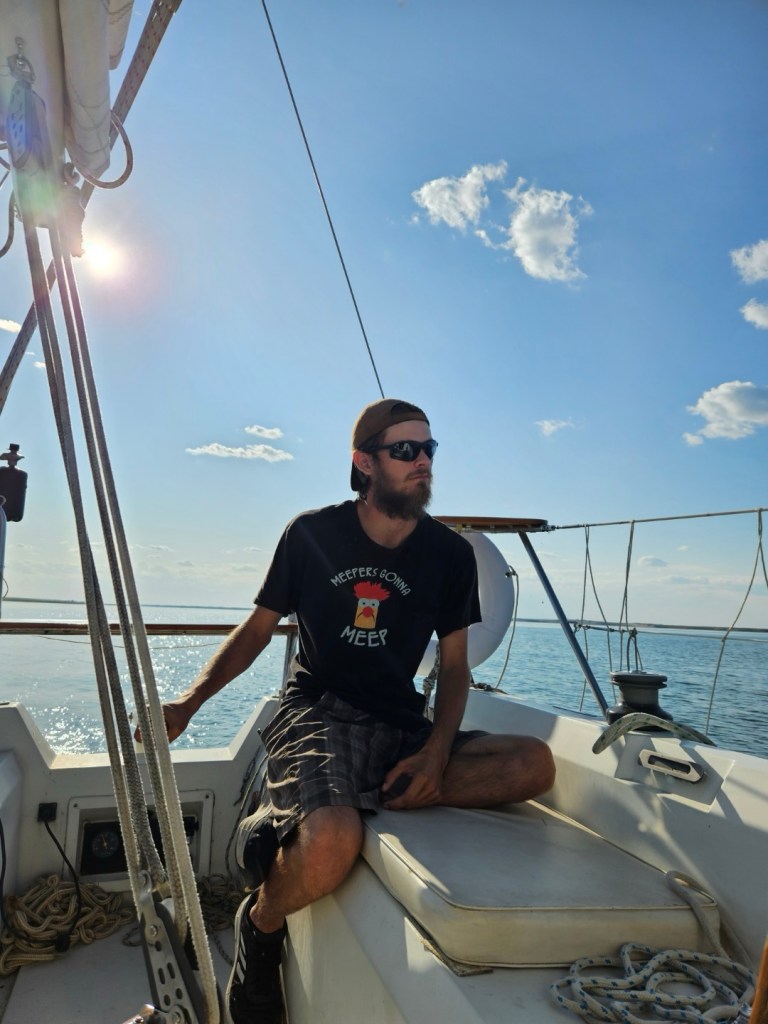
As I grew older I loved sitting at the very front of the sailboat, facing forward, wind whipping around me, I felt like I was flying. When the water was calm, the spinnaker would make an appearance billowing out like a living thing. My grandpa worked the ropes and held the tiller with the easy smile that only comes from loving a place so much. Those are memories I hold like treasures.

And now seems like the appropriate moment to confess something to my parents…

I did, in fact, steal the keys and “borrow” the cabin for one weekend as a teenager 😬. I had “a few friends” over. I threw exactly one party in my entire life. And I was so sick with worry the entire time that I basically grounded myself for the rest of my adolescent years. Lesson learned. Sorry. Mostly. It’s been a good story over the years.

I spent my honeymoon at the lake- 26 ½ years ago. We fished, built sandcastles, and solved the great riddle of rural Saskatchewan: there are no gas stations open on Sundays. (At least, not back then.)

About five years ago, my parents bought their own place by my lake It took a some time but something inside me reconnected. Something long since silent woke back up.

I listen excitedly to hear about the ice breaking in the spring. The booming, cracking, shifting sound like the earth stretching after a long sleep. Then, in an instant it seems, the ice is gone. Summer brings shimmering waves, familiar laughter, and barefoot days that always feel too short. Fall arrives in gold and red and farewell winds. Winter… winter brings a darker, quieter beauty. A solemn stillness that somehow feels honest. Vulnerable.

The older I get, the more I find that the quiet places are the ones that speak the loudest.

-Unknown

We’ve camped along these beaches. We’ve laid in the sun. And now, when I head out on my power boat with our next generation, I think of Uncle David. I feel him in the hum of the engine, in the ripple of the wake, in the bright splash of joy that comes with speed and water and family.

The pinnacle of our lake experiences has to be when we helped save our friend’s boat from sinking. When the bladder around the leg came off and they started taking on water, they quickly headed to the boat launch. Seeing they wouldn’t make it, they beached the boat. Then with two other power boats and a cacophony of helpers, they managed to get two boat tubes under the leg and the front of the boat. One of the support boats towed. Two people bailed. People sat on the tubes to balance. And in this ridiculous state we slowly made our way through the marina and up the launch. To the laughter and cheers of watchers nearby.

I have found beauty in the whimsically ordinary.

-Elissa Gregoire

These days I walk the trail by my lake often. I slow down. I breathe.

And somewhere along the way, I realized,

This place has become part of my healing.

Chronic pain forces you to live differently. More slowly, more intentionally, more gently. Forest therapy taught me to seek connection with the natural world, to let my nervous system rest in the presence of trees, water, sky. And here, wrapped in the sounds and rhythms of my lake, something in me softens. Pain quiets. My body remembers safety.

When the heart is overwhelmed, the earth invites us to rest.

-Unknown

My parents host endlessly now, filling their summers with family, friends, neighbours. Anyone who needs a taste of peace.

They are the sailboat owners. And they love it just as much as my grandpa did.

The legacy continues, like wind passing from one generation to the next.

My lake is healing. This home of my parents is healing.

And after all these years, I am still finding new ways to belong here.

There are days the lake knows my story better than I do.

-Unknown

Fluctuat nec mergitur (latin phrase):

She is tossed by the waves but does not sink.

An Ode to My Lake

O Lake of my childhood, keeper of my summers,

You who taught me courage in cold waves

and laughter in the spray of speeding boats

I return to you again with a heart that remembers.

You cradle my earliest joys.

Grandpa’s violin threading through evening air,

firelight warming our faces,

cousins tumbling down the path like wild things set free.

You were witness to awkward teenage hopes,

to frozen swimming lessons and winds that stole my breath,

to stolen keys and the single party I regretted

before it even began.

You held my honeymoon,

my young love learning its way,

and you held me still years later

as chronic pain reshaped my life.

Now I walk your trails slowly,

letting forest therapy guide my weary body

back into rhythm with the world.

Your waves teach me presence.

Your ice teaches me patience.

Your seasons teach me trust.

Grandparents gone on, Uncle David gone on,

Memories gone on,

yet their echoes remain in your wind.

In every sail that fills,

in every motor that roars to life,

I hear them.

My lake,

always changing, always faithful,

you have become a sanctuary,

a place where the ache eases

and beauty remains.

Thank you for holding my childhood.

Thank you for holding my healing.

Thank you for holding me still.

My lake.

Some memories are not moments at all, but places.

Victoria Erickson

Finding Purpose and Beauty Amid Limitation: Healing Through Forest Therapy

It was November- the month of crimson sunsets and parting birds, deep, sad hymns of the sea, passionate wind- songs in the pines. Anne roamed through the pineland alleys in the park and, as she said, let that great sweeping wind blow the fogs out of her soul.

L.M. Montgomery

When chronic pain changes how you move through the world, finding purpose can feel impossible. Discover how forest therapy helps you reconnect with beauty, peace, and meaning amid limitation.

When the World Doesn’t Understand

This week, I’ve run into that old ache of being misunderstood.

A well-meaning friend said, “If someone is important, you find time to visit them.”

Another person offered me a job, a kind gesture, but one that didn’t see what my body needs right now. Despite having had this conversation with her. Recently.

I wanted to explain that my hours in a day are not the same as theirs. That every decision I make comes with the quiet calculation of energy, pain, and recovery. But I get tired of trying to convince people. That I have a nerve condition, that my life requires peace, that my healing depends on rest.

So instead of explaining, I go where I don’t need to explain.

To the forest.

To the lake.

To the soft company of trees who ask for nothing.

Sophistication in Life’s Constraints

There’s a strange grace in limitation. It strips away the noise. It forces you to listen closely to what truly matters.

Silfira (noun)

“silent fire” an inner quiet confidence that doesn’t need to be loud to be powerful

In chronic pain, the world becomes smaller. But sometimes that’s where beauty hides. The simple act of breathing deeply, the sound of wind in pine branches, the reflection of light on water. These moments remind me that purpose doesn’t disappear when your capacity does. It shifts.

Sometimes you have to let go of the picture of what you thought life would be like & learn to find joy in the story you are actually living.

Rachel Marie Martin

Every visit to the woods rewires something inside me. It doesn’t erase pain, but it helps me hold it differently, with more compassion, less resistance.

Revitalize Your Soul: The Healing Power of Forest Therapy

In November the trees are standing all sticks and bones. Without their leaves, how lovely they are, spreading their arms like dancers.

-Cynthia Rylant, In November

Forest therapy, or shinrin-yoku, the Japanese practice of “forest bathing”, invites us to slow down and let the natural world do what it’s always done: heal.

When I walk among the trees, I don’t have to perform or explain. I can simply be. The forest doesn’t need me to be productive. It asks only that I show up, open, present, and willing to listen.

Science continues to affirm what our bodies already know. Time in nature lowers cortisol, reduces pain perception, and restores emotional balance. For those of us living with chronic illness, that’s not a luxury, it’s medicine.

Unleashing True Intent

Purpose used to look like productivity, working, helping, showing up for everyone else. Now, it looks like protecting my peace.

It looks like saying no when my body whispers, rest.

It looks like walking slowly among through the trees and realizing that healing is still a form of doing.

Living with chronic pain doesn’t mean my life is smaller. It means my purpose has changed shape, quieter, more deliberate, rooted in stillness.

But I am still connected with society. The kindergarten rules that apply to everyone else still apply to me. It just looks a little different. How do these rules apply to you?

  1. Share everything
  2. Play fair
  3. Clean up your own mess
  4. Say you’re sorry when you hurt somebody
  5. Don’t take things that aren’t yours
  6. Put things back where you found them
  7. Flush
  8. When you go out in the world, watch out for traffic
  9. Hold hands and stick together
  10. Be aware of wonder

And it is this final rule that I want focus on now.

Discovering Hidden Beauty in Your Everyday Surroundings

This is my life. And I can either accept it and find joy in every day, or I can let it ruin me.

-Unknown

Not every day feels beautiful. Some days, it takes effort to see beyond the ache. But the forest teaches patience. It reminds me that seasons change. That even the barest branch carries life within it.

I learned to know the love of bare November days.

Robert Frost

Healing isn’t a straight path; it’s a spiral. And every time I return to the forest, I find another piece of myself waiting there grounded, calm, and whole enough to keep going.

Dancing with Discomfort

If you, too, are learning to live inside limitation, may you know this: your life is still rich with purpose.

You are not falling behind.

You are not invisible.

You are simply living at the rhythm your body requires.

Step outside. Breathe the air that has touched leaves and sky. Let the forest hold what words cannot.

Because sometimes the most powerful healing happens not when we push harder, but when we finally allow ourselves to be held by something greater.

Please never forget how brave it is to continue to show up in a story that looks so different than what you thought it’d be.

Liz Newman

Finding Calm in Fibromyalgia: The Power of Forest Therapy

fibromyalgia- noun, the feeling of being run over by a bus, dipped into a bucket of acid, and repeatedly thrown off a cliff without any physical evidence

So fibromyalgia,

This tale began long before the word fibromyalgia ever entered the room.

Before the angry bees. Before the heat waves. Before the exhaustion that made my bones hum.

Back then, my body was already waving a white flag.

Endometriosis had long been the ringleader of chaos, and hypermobility joined the act with its own flair for the dramatic. My hormones seemed to operate on a “scorched-earth” policy, every cycle left me depleted in every possible way: physically, mentally, spiritually, energetically.

So, after years of living in that internal thunderstorm, I made the decision to have a hysterectomy. It felt like clearing the undergrowth and removing what was fueling the fires, hoping sunlight could finally reach the forest floor. The surgery did bring relief. No more monthly hormonal hurricanes, no more monthly pain to the degree it pulled joints out of place. In this body that closely resembles a badly fastened tent in a windstorm.

But when the dust settled, I was left with a forest that had already burned.

Attending to the Aftermath: When Your Body Refuses to Cooperate

Recovery was supposed to be a time of healing, but my body apparently missed that memo. Surgery, anesthesia, medications, they left their residue. And to top it off, I woke up to find I’d been dropped unceremoniously into menopause.

My body and I have had a complicated relationship, but menopause turned it into a full-on standoff. Hormone therapy was off the table after one tiny patch sent my muscles on an extended vacation. No postcard, no warning, just gone 👋🏼.

So I turned to holistic treatments. Some soothed the edges, helped me sleep, softened the emotional rage that had been living rent-free in my chest. But nothing touched the furnace within. Every thirty minutes, like clockwork, my body would light up with that internal combustion that seems to come from the bowels of Hell itself. Heart racing. Skin buzzing. Brain short-circuiting.

Then came the chills. The kind that made you question every life choice that led to this point.

This cycle of heat, sweat, freeze, repeat, went on for a year. Every. Half. Hour.

But also this 👇🏼

It’s hard to heal when your body never stops sounding the alarm.

Tuirse

(Irish/gaelic) a deep sense of tiredness, weariness or fatigue that can refer to both physical and emotional or spiritual exhaustion. Soul- level weariness, melancholy, or the emotional heaviness of enduring life’s struggles. (gaeilgeoir.ai)

Buzzed and Bothered Bees

Fibromyalgia had been sitting quietly on my medical chart for years. Alongside its equally mysterious companion, Myalgic Encephalomyelitis. I used to think they were just polite placeholders for the doctors to say 🤷🏼‍♀️🤷🏼‍♂️ “we don’t actually think you have anything.”

But after the hysterectomy, I learned what they really meant.

It started in my forearms, this sharp tingling that grew into what I now call the angry bees. I picked that up from somewhere. That’s not my analogy.

A swarm of bees that lives under my skin, buzzing, burning, twitching. Eventually, the bees migrated up my arms, into my neck, sometimes triggering migraines that feel like the entire hive moved into my skull.

I’ve come to learn the bees are mood-driven. They thrive on stress and pain but mellow out in sunshine and rest. On a good day, when my toes are buried in natural elements, the bees hum instead of sting.

Fibromyalgia is like that. Unpredictable, wild, and buzzing with sensations that don’t make sense but demand attention.

Contemplating my Clearing

Somewhere in all of that chaos, I found forest therapy.

It didn’t happen with a grand epiphany. It started with a slow walk. A quiet pause. A breath that finally reached the bottom of my lungs.

I began to notice how the forest holds its own balance. Even when trees are damaged as storms tear through, life finds a way to reorganize itself. The underbrush grows back differently. Sometimes softer, sometimes stronger, always intentional.

So I began to clear my own underbrush. The overgrown “shoulds.” The tangles of perfectionism. The toxic patterns that had wrapped themselves around my worth.

As the poet John O’Donohue wrote,

When the mind is festering with trouble or the heart torn, we can find healing among the silence of mountains or fields, or listen to the simple, steadying rhythm or waves.

In the woods, I let myself unravel a little. My body could buzz, twitch, and ache but surrounded by green, the bees didn’t seem so angry. The forest became a mirror, showing me that healing isn’t about erasing pain, it’s about learning to live among it, gently.

The Healing Continues…

“The forest is not merely an expression or representation of sacredness, nor a place to invoke the sacred; the forest is sacredness itself.” – Richard Nelson

The bees still visit. The heat still flares. The fatigue still sneaks up like fog rolling in uninvited.

But now, I have a clearing to return to. A place both within and around me, where my nervous system can remember what calm feels like.

Fibromyalgia taught me that healing isn’t a straight path. It’s more like a winding forest trail that keeps surprising you. Some days you stumble. Some days you sit on a log and cry. And some days—miraculously—you dance with the bees instead of fighting them.

So I keep walking. Slowly. Barefoot when I can. Listening for birdsong between the buzzing.

And when I feel the swarm rising, I head for the trees asap.

Because out there, among the whispering leaves and mossy ground, my body remembers what peace feels like. Even if just for a breath.

I pray this winter be gentle and kind- a season of rest from the wheel of the mind.

-John Geddes

How Forest Therapy Can Transform Your Pain Experience

Through my chronic pain saga, I’ve tried it all.

I’ve ignored the pain, pretending if I just kept busy enough, it would slip quietly away.

I’ve focused on it, making it my full-time job to “fix” it.

Neither worked.

Today, I practice something else. I notice.

I name what I feel and where it lives in my body.

I soften toward it, rather than tighten around it.

I work with my pain instead of trying to conquer it.

It sounds simple, but it’s a lifelong apprenticeship. This learning to befriend the body instead of managing it like a disobedient child.

When we honestly ask ourselves which person in our lives means the most to us, we often find that it is those who, instead of giving advice, solutions, or cures, have chosen rather to share our pain and touch our wounds with a warm and tender hand.

— Henri Nouwen

Can we learn to do that for ourselves?

That’s what forest therapy has become for me: a quiet companion that doesn’t try to fix me. The forest listens. It holds space. It teaches me to listen, too.

A few weeks ago, one of my grands fell on my pinky finger. Such a small thing. My hand was resting on a toy, and when I yanked it back, it twisted and pulled. A teeny tiny trauma, I told myself. But that little pinky has been aching for weeks now. Every time I use my left hand to hold a phone, lift a spoon, or pick up that same grand, there’s an internal ow! 😣 And of course I am left handed. Isn’t that the way it always goes?

When I ignore it, I finish the day with an inflamed, angry pinky.

When I overprotect it, the rest of my hand rebels from overuse.

So today, I notice.

I hold space for that poor sweet pinky.

I breathe.

I ask, What do you need today? Not verbally, not out loud. But an internal question. My body always has an answer when I listen long enough.

Until my physiotherapist can put it back together, I do what I can: soften, listen, and allow.

And if that were all I had to do in a day, it would be enough. But these teeny traumas are always happening. For all of us, physical, emotional, spiritual. So I hold space for how hard my life with chronic pain is. I notice and name the struggles it creates. I practice compassion toward myself, the way I would with a friend.

It takes time. And it takes being in the right energy.

The forest helps me remember how to do that. To remember that some years hold questions. And other years will hold answers.

When I walk among the trees, I’m reminded that healing isn’t a straight line, it’s a spiral. The forest doesn’t rush its growth. It doesn’t apologize for the slow work of roots. It knows that rest and renewal are part of the same rhythm.

Autumn embraces change, even as she is falling to pieces.

— Angie Weilland- Crosby

Perhaps I can too.

If you rush it you will ruin it. Pause, pray and be patient.

— Success Minded

My body, similarly, doesn’t like to be rushed.

It doesn’t like to be cold, so as we edge toward winter, I keep a fuzzy blanket in the car.

It needs rest, so I try. Really try! To make sleep a priority.

And I often have to remind myself: this is not selfish.

Spending time in nature isn’t indulgence, it’s maintenance. It’s what can give you the strength to change another diaper, to wipe another snotty nose. To meet the demands of work, to hold the people who need holding. Or in my case to listen to my body. And find the strength to face another day of pain.

JOGAYOP (is this a thing? if it isn’t, it should be)

Joy of going at your own pace. Staying in your lane and adopting the rhythm and speed of living and working that feels just right for you. Letting go of societal pressure to be where everyone else is at.

When we live in any type of deficit, meaning in lack or shortage, we feel it. No system can continue to function long when it is continually experiencing a deficiency.

When our finances are in deficit, there’s pressure. A business that does not bring in sufficient income for its expenses will have no choice but to close.

When our spiritual life is in deficit, there’s darkness. Someone that is experiencing spiritual darkness and refuses to do the things that invite light to their life cannot expect anything to change. And even their light parts will become dim.

When our physical health is in deficit, there’s pain that grows louder and harder to ignore. We forget that this system will also eventually face breakdown if left unchecked.

After time in nature I can turn down the volume of my pain. I can see it in the broader perspective of life. Just like this jack-o’-lantern. Often things are actually smaller than they appear. Try taking a step back.

So I keep returning to the forest to notice, to soften, to reconnect. To see the bigger picture.

Not to fix.

Not to control.

But to listen.

Because the body, like the forest, is always whispering the way home.

There are four natural sanctuaries in life and nature holds them all. Silence. Solitude. Stillness. Simplicity.

Seek healing in these sanctuaries. It is available. It is real.

Perhaps the truth depends on a walk around the lake.

— Wallace Stevens

Cortisol Control: The Benefits of Nature

You know that moment when your brain starts buffering? Like a spinning wheel of doom, but for your entire nervous system? That’s where I found myself recently—somewhere between “I’ve got this” and “please send snacks and an ambulance.”

Today’s yoga pose? Downward spiral.

The Story So Far

In 2020, body was in full rebellion. Pain, exhaustion, confusion, everything hurt, inside and out.

Since then, I’ve been clawing my way back by working on my physical, mental, social, and spiritual health. Like it’s a full-time job. There have been peaks and valleys (and maybe a few deep, dark sinkholes). Working on myself used to take all my time and energy.

But lately? I’ve felt strong. Strong enough to take on more.

More housework. More meals. More people to serve. More responsibilities. More friendships. More everything. The more I took on, the more I was given.

And I love all of it.

But herein lies the problem:

I will take care of everyone and everything until it dang near kills me.

The Wall: From Fortress to Fragments

I thought I was doing great. Managing the stress. Juggling the busyness. Feeling like a semi-functional adult again.

Then, I hit my wall.

And boy, was it a humdinger!. That wall came crumbling down on top of me like an emotional mega Jenga tower. Now I’m lying under the rubble of all my well-intentioned choices, beaten, broken, and weak.

But nobody saw the wall. Or the impact. Or the consequences. It can’t be seen. It can only be felt.

Acedia

A deep inner fatigue where one feels detached from purpose, overwhelmed by meaninglessness, and resistant to both spiritual and worldly engagement

I want to be dependable and capable. But having an invisible illness complicates things. The better I look, the more people assume I must be better.

Here’s the true list of things I am handling well right now:

So I push harder. Because I want to help. I want to contribute. It’s easier to push through the pain than defend my need to slow down.

{ “you’re looking so strong” “thanks, I can’t wait to cry tonight” }

But the harder I push, the higher my cortisol climbs. Until it’s practically coming out my nose and ears.

The Marvels of Scientific Wonder

Chronic stress and chronic pain are the best of friends 😀! The kind that make each other worse 😟.

When you live with chronic pain, your body is already in fight-or-flight mode. Add stress to that, and your nervous system goes full drama queen.

Cortisol, your main stress hormone, floods your system. Muscles tense. Inflammation rises. Pain intensifies.

And then, because pain is a stressor, your body releases more cortisol 😞.

It’s a vicious, exhausting, cortisol-fueled merry-go-round that no one in their right mind would sign up for.

So when I talk about being under the rubble, it’s not just a metaphor. My body feels it. My pain spikes. My thoughts spiral. My patience with humanity plummets to record lows.

I feel pointless, expendable, futile.

Exploring the Heart of the Forest

When I finally stop long enough to realize I’m drowning in stress hormones. I know exactly where I need to be: the forest.

Not just in it. But IN it.

That’s the difference forest therapy makes for me. It’s not a hike. It’s not exercise. It’s a slow, sensory, presence-filled practice that invites my body to exhale.

When my cortisol drops, which research shows it actually does in the forest (you can find such research here 👉 PubMed and here 👉 Frontiers), everything softens. My mind clears. The lines between “too much” and “just enough” come into focus. I can see my path ahead, appearing gently on my mind like drops of morning dew.

The forest is a hallowed place for me. It is one of the places I find my strength from heaven. I am reminded that I don’t have to hold everything up all the time. There is strength other than mine available for that. I picture the trees taking the weight. They can handle it. They’ve been doing it for centuries.

Beyond the Horizon

The stress of life is intense. The stress of life with chronic pain is compounded. Like someone hit “multiply by 100” on your degree of difficulty button.

There’s the financial tightening. The grief of the life you lost. Watching others live out dreams you’ve had to let go of.

And always, always, the judgment (spoken or not.)

“If you’re broke, go get a job!”

(Maybe it’s just the echo in my head but it’s really loud! 😳)

Then these words from Brene Brown come to mind,

You are imperfect, you are wired for struggle, but you are worthy of love and belonging.

Yet shame and uselessness that come with not being able to work the way I used to… those feelings are heavy. They sit on my chest like an invisible refrigerator tipped over on my ribcage, unexpected, ridiculous, and very hard to explain to anyone passing by.

But here’s the thing I keep learning:

My worth doesn’t live in what I produce. I need to write that again. My worth doesn’t live in what I produce!

It lives in my presence. In the stillness. In the way I can connect with the world around me, even when my body protests.

And when I take myself to the forest, when I let the cortisol fall and the moss do its quiet task,

I remember that I am still healing. And that’s holy work.

I’m so glad I live in a world where there are Octobers. It would be terrible if we just skipped from September to November, wouldn’t it?

-Anne Shirley

Mastering the Art of Getting Back Up

If you’ve hit your wall (again), maybe this is your reminder that you don’t have to climb out of the rubble all at once. It’s okay to have days when your illness and pain win. But chronic illness also means I don’t have the luxury of waiting until I ‘feel better’ to participate in life.

Start by finding one quiet, living thing.

A tree. A bird. The wind.

Let it hold space for you until you can hold space for yourself.

Honored are the ones who hum back at bees, clap for rain, and admire the architecture of spider webs.

Earthy Herbs

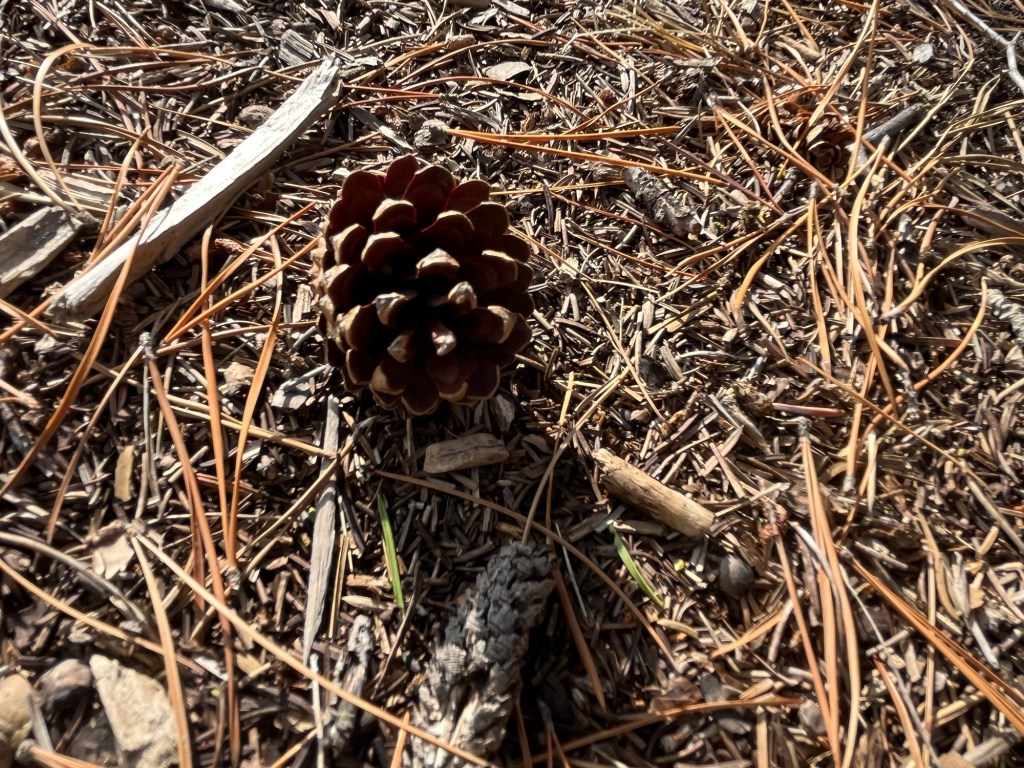
And if you happen to cry on a pinecone…

well, that’s just free aromatherapy. Shine bright darlings. The world needs your light.

October is about trees revealing colors they’ve hidden all year. People have an october as well.

JM Storm

Mind-Body Connection: Nature’s Soothing Benefits

Your body is not a machine, it’s a conversation.

-Jennifer Perrine

I remember a morning in spring. There was still a noticeable chill in the air. I slipped outside, to the sights and sounds of my summer second home.

My muscles were tight, my mind crowded with worry and pain—nothing dramatic, just persistent soreness that has become my constant companion.

I wandered toward the trees, the sound of the wind through the leaves soft but insistently present. I closed my eyes. I felt my breath slow. My shoulders dropped. And, almost imperceptibly at first, the ache that had built over a winter, within me softened.

That moment wasn’t some mystical escape. It was evidence of something real: the mind-body connection responding to something ancient: nature.

This post is a little more technical than some of my others. In this post, I want to walk you through the science behind how nature calms the nervous system, lowers pain perception, and gives the body a chance to remember how to rest.

This is not just a nice idea or a self-help quip. I see it working in my life, and the research backs it. I share some of that research in the links provided. Feel free to check it out or to give those links a hard pass.

Mind Meets Body: A Dialogue of Perspectives

Healing is not forcing the body into a state of ‘perfection.’ It’s listening to what it has been trying to say.

-Dr Joe Dispenza

First: we are not two separate things. The nervous system is constantly sensing, interpreting, and “talking” to our organs, muscles, immune system, and even to our thoughts and memories. That internal sensing is called interoception — our body’s ability to monitor its own internal state (heart rate, gut sensation, breathing, tension) and for the brain to make meaning of it. 

When we live under chronic stress or chronic pain, that conversation becomes distorted. The sympathetic branch of our autonomic nervous system (fight-or-flight) is persistently overactivated. Our brain becomes hypervigilant to threats, amplifying pain signals, even in places that may no longer need it. 

But there is a counterbalance: the parasympathetic state (rest-and-digest) — a state where the body repairs, digests, heals, breathes deeply.

Engaging that side is essential for true resilience. And nature offers a powerful entry point into that parasympathetic realm.

Querencia

{Spanish concept}(n) a place where one feels emotionally safe, a place from which one’s strength of character is drawn.

Nature’s Remedy: Calming the Nervous System

The forest is not merely an escape, it’s a return — a remembering of who we are.

-Unknown

Here is where the “nice idea” begins to feel like a compelling method.

1. Visual contact with nature calms brain & autonomic activity

This overview demonstrates that simply viewing natural elements—flowers, green plants, wood—induces shifts in the brain and the autonomic nervous system, compared with urban or non-natural environments. Link

More recently, neuroscientists have shown through brain imaging that exposure to nature lowers pain perception by reducing neural signals associated with pain processing. Link

In one study, subjects viewed virtual nature scenes while receiving mild pain stimuli, and the brain’s “pain network” lit up less strongly than when viewing urban scenes. Link

2. Nature reduces physiological stress markers

Time outdoors helps shift us from sympathetic arousal toward parasympathetic. Essentially, nature helps us “come out of our heads and into our bodies.” Link

Forest bathing (shinrin-yoku), for example, has been associated with lowered cortisol, reduced blood pressure, decreased heart rate, and improved immune function. Link

3. Attention restoration & easing mental fatigue

One pillar in environmental psychology is the Attention Restoration Theory (ART), which states that when we gaze at nature’s “soft fascinations”—rustling leaves, flowing water, birdsong—we can rest our directed attention (the kind used to suppress distractions) and recover cognitive capacity. Link

When our cognitive resources are less taxed, the brain has more “bandwidth” to regulate our threat systems and lower baseline arousal.

4. Pain modulation is emotional & contextual

Pain is never just a signal from tissues; it is affected by context, anticipation, emotion, and attention. One fMRI study found that anticipation of pain modulates how strongly sympathetic nervous responses occur, and that the brain’s anticipatory circuitry has a top-down influence on peripheral responses. Link

In simple terms, if your brain predicts threat, your body braces for it — heart rate rises, muscles tense, and pain signals grow louder. But when your mind learns to recognize what’s happening without adding fear, it begins to change that loop.

This is exactly what happened to me.

After my hysterectomy, I wasn’t able to take any hormone replacement treatments — they aggravated my other conditions. My body still struggles today to regulate temperature. I hot flash every thirty minutes. Down to a minute. I’ve timed it.

After about a year of this, my body simply couldn’t keep up. The constant swing from sweltering heat to shivering cold became unbearable. There was no rest. No pause between storms.

Then I started to notice the toll — not just physically, but mentally. My nervous system was on edge all the time, anticipating the next wave. I realized that the dread itself — the bracing — was its own kind of suffering.

So I tried an experiment. When I felt that familiar rush rising, I paused. I prepared but didn’t brace. I reached for my water, turned on the fan, maybe sat down if possible. I still remind myself in those moments: this will pass. The less weight I give it — but the more gentle attention I offer — the easier it is to ride out.

These days, my hot flashes still come every thirty minutes. But they are not as draining. They are little blips on the screen — reminders that my body is doing its best to find balance. And in meeting that discomfort with compassion rather than panic, I’ve discovered something powerful: the way we feel our pain changes the way we experience it.

A Walk on the Healing Side

The wound is the place where the Light enters you.

-Rumi

Not long ago, back pain had eaten away my joy. I was down to minimal movement, scared of flare-ups, medicated, trying every therapy that sounded promising. Yet my life was shrinking.

I decided on a small experiment: every morning for two weeks, I would walk down the lane of our farm (or sit quietly under a tree if I couldn’t walk). I would try to notice one thing—perhaps a bird’s call, the play of light on water, a soft breeze. No goal, no agenda.

Day 1: I came back discouraged — I didn’t feel anything.

Day 4: My back still hurt, but I felt… calmer. My breathing was softer.

Day 8: The pain seemed less urgent. The thoughts around it quieter.

By day 14, I don’t know if the pain was less in absolute measure, but I am less ‘in it.’ I have more distance. More space.

Over months, I was able to move farther, sit longer. The pain never vanished, but its domination receded.

My story is not unique. What I was discovering is that the mind-body conversation can shift — the “volume” of pain need not always be maxed out.

The Secret Sauce: How This Works for Me and You

If you have felt that creeping tightness, that locked jaw, that ache that feels like both body and memory. When I walk through forested trails, when I sit by a lakeshore, when I simply stare at mossy bark and inhale the green air, I feel a shift. The chatter quiets. My breath lengthens. My internal tension softens. The pain, though still there, becomes less commanding.

The science shows these are not placebo effects. They are biological responses rooted in ancient neural circuits. We evolved in natural worlds. Our nervous systems know these landscapes. They remember how to open.

If you struggle with chronic pain, anxiety, overthinking, or tension, nature may be a tool you undervalue — not a luxury, but a medicine written into our being.

How to Make the Mind-Body & Nature Practice Relatable, Real, and Sustainable

Here are some practical suggestions (adapt to your pace):

  • Start small. Even 5 minutes of forest view, or stepping outside to touch grass, can activate calming circuits.
  • Engage the senses. Smell, listen, feel textures, watch movement. Let nature draw you back from rumination.
  • Use “indirect nature.” If you’re indoors, look out a window, use nature audio, or view images/videos of nature — these have shown measurable benefit. 
  • Pair movement & stillness. Walking in nature is stronger than walking elsewhere. 
  • Be consistent. The cumulative effect matters. Some studies suggest 120 minutes per week in nature correlates with better well-being.  Link
  • Watch your attitude. Let go of “must heal fast” thinking. Allow nature to be patient, gentle.
  • Journal your experience. Track tension, mood, pain before and after nature time. Over weeks, patterns can emerge.

Epiphanies and Reflections: To Our Journey’s End

Nature does not hurry, yet everything is accomplished.

-Lao Tzu

We live in an era of constant stimuli, complications, and demands. Our nervous systems were not built for perpetual alarms. The ancient pulse of wind through leaves, water over stones, soil underfoot — these are languages the body still knows. Nature asks us lowly: come back. Listen. Breathe.

So next time the ache presses, try this: walk quietly through green, or sit beneath trees, allow your senses to soften, invite rest. You may find that pain loosens its grip, that your nervous system sighs, that mind and body remember their trust.

Peace is this moment without judgment. That is all.

-Dorothy Hunt

Perhaps part of the answer is: to slow down. To open to nature. To let the body learn again.