
There are memories you remember with your mind.
And then there are memories your body remembers.
This is one of those.
Weemoed
“DUTCH. (n) A bittersweet, nostalgic sadness that lingers like a thin mist. It is the ache of remembering something beautiful that time cannot return, equal parts comfort and sorrow.” (everglow words)
One summer, long before life scattered us in different directions to raise families of our own (and before two more joined our family), we made one of many summer trips to the cabin.
It was late by the time we arrived.
My sister and I had curled up inside our sleeping bags in the back of the car and fallen asleep somewhere along the drive.
When we stopped, I remember sliding onto the floor of the car, trying to wake my little legs enough to walk inside.
Then my dad came back.
I assumed he was coming for another load of luggage.
Instead, with those strong farm arms, he gathered the tops of our sleeping bags in his hands. Me in one, my sister in the other, and lifted us.
I could hear my sister giggling.
I could hear my mom quietly ‘tsk, tsk’ him for being silly.
The screen door creaked open.
Then came that familiar smell that only our cabin had.
Warm hardwood and the hint of lake air. The familiar mustiness of a place that had been closed up, waiting for more visitors to make more memories.
I didn’t have to carry myself. Or wonder where we were going. I didn’t have to wake up. I knew exactly where I was. I knew exactly who was carrying me. I trusted him completely.
Even now, all these years later, my muscles soften when I remember that moment.
Because your nervous system isn’t asking whether you’re capable. It’s asking whether you’ll survive.
For years, I thought it was simply one of my favourite childhood memories. I didn’t realize I was remembering what my nervous system feels like when it knows, without question, that I am safe.
There’s actually a name for that feeling.
Felt safety.
You carry the calm inside you. You only have to remember.
The term felt safety has become increasingly recognized through trauma-informed care and nervous system research, particularly the work of neuroscientist Dr. Stephen Porges and Polyvagal Theory.
It’s different from actual safety.
Actual safety is about your circumstances.
Felt safety is about your nervous system’s assessment of whether you have enough resources and capacity to handle what’s in front of you.

You can be perfectly safe and still feel anxious.
You can also be facing something genuinely difficult and feel surprisingly calm because your nervous system believes you’ll be okay.
That distinction changed the way I think about chronic pain.
Living with chronic illness teaches your nervous system lessons you never volunteered to learn.
Pain arrives unexpectedly. Fatigue hits like a brick wall. One movement can become months of physiotherapy.
Your body begins collecting evidence that ordinary life isn’t always predictable. Eventually, your nervous system starts asking a different question.
Not,
“Can I do this?”
But…
“Is this going to cost me?”
To be fair, my nervous system has earned the right to be unconvinced. We’ve been through some stuff.
Looking back, I think my body longs for the feeling I had that night at the cabin.
The feeling of not having to brace for impact. Or calculate every movement.
Not having to carry everything myself. But literally being carried.
When you live with chronic pain, your nervous system often becomes exceptionally good at detecting danger. It’s trying to protect you. As nervous systems do.
The problem is that eventually it begins seeing danger where there may only be uncertainty.
That’s why making a phone call can feel exhausting. Trying something new feels overwhelming. Cleaning the kitchen feels impossible. Committing to lunch with a friend somehow feels bigger than climbing a mountain.
Not because you’re lazy or undisciplined.

Healing begins when the body no longer has to choose survival over connection.
Recently I listened to Neill Williams on the Success Genius podcast, and this idea clicked for me.
She explained that felt safety isn’t about waiting until life becomes easier. It’s something we can build. Incrementally over time.
When our nervous system feels safe, serotonin and oxytocin help create feelings of connection, contentment, and purpose. We can think clearly because the thinking part of our brain is fully online.
When we don’t feel safe, survival takes over. We shut down. Or we push ourselves until we crash.
Not because we’ve failed. But because our nervous system is trying to keep us alive.
Williams suggests asking one simple question:
“What’s the smallest version of this that my nervous system can honestly say yes to?”
One tiny success becomes one piece of evidence.
I can look back and see I survived.
Your nervous system is always collecting evidence.
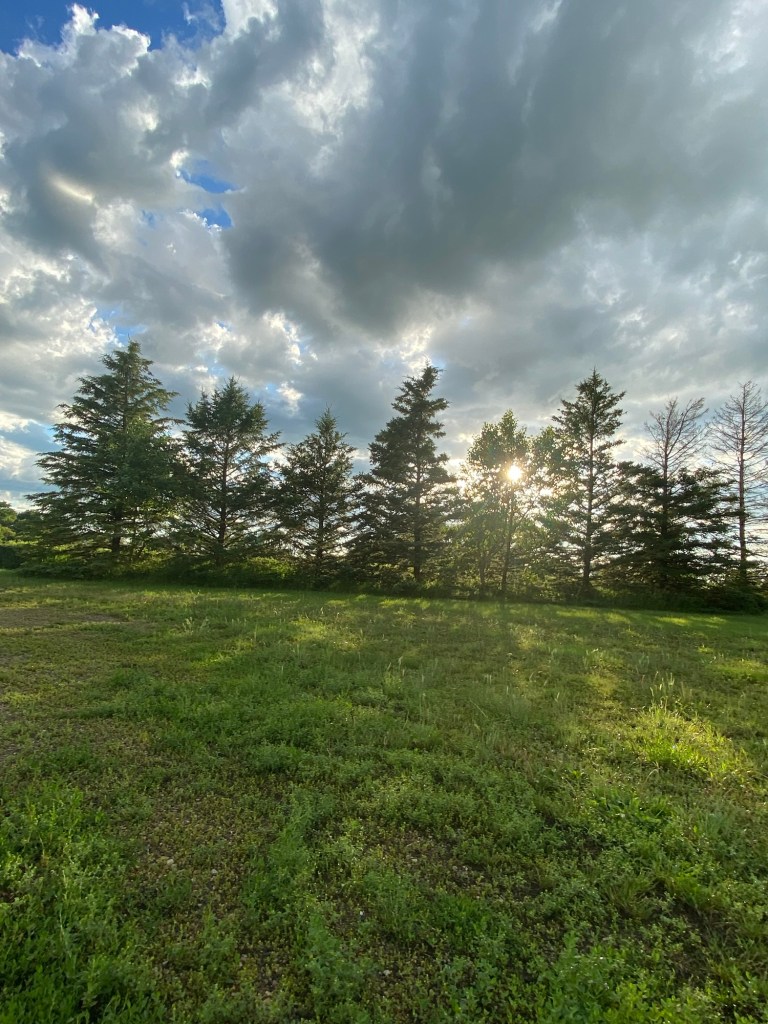
Every gentle walk. Every boundary you honour. Every nourishing meal. Every person who keeps their word. Every deep breath. Every quiet moment beneath a canopy of trees. Each one whispers the same message.
“You are safe enough for this.”
Healing isn’t teaching your nervous system that danger doesn’t exist.
It’s teaching it that safety does.
Maybe that’s why nature has always felt like home to me.
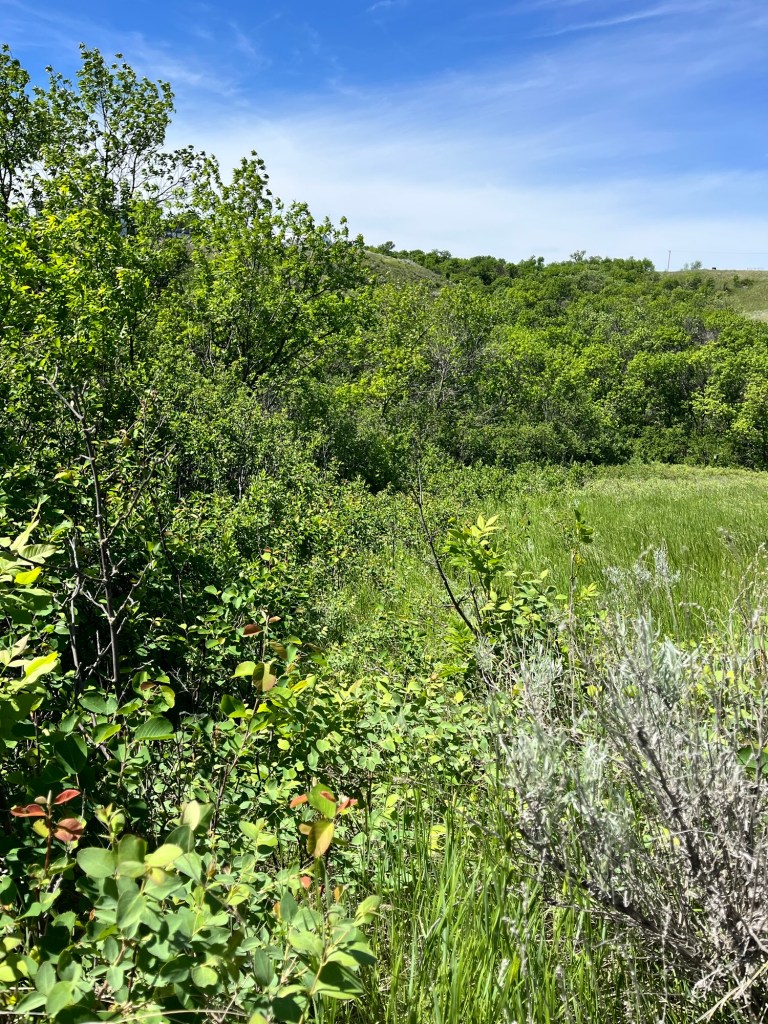
Not because it’s perfect.
But because it reminds my nervous system of something my body has known since childhood.
What it feels like to be held.
Nature is stillness.
It doesn’t measure your ability to accomplish everything on your to-do list.
It doesn’t ask how many steps you walked today.
Or compare your healing to someone else’s.
It doesn’t care whether you’ve answered your emails, folded the laundry and mowed the lawn.
It simply keeps showing up. Morning after morning. Season after season.
Offering the same quiet invitation.
You can soften now.
The scent of pine. 🌲
The rhythm of birdsong. 🐦
Leaves dancing in the breeze. 🍃
The solid earth beneath your feet. 👣
These aren’t just beautiful experiences. 😍
They’re cues of safety. ❤️
Tiny reminders that tell your nervous system it can loosen its grip, even if only for a moment.
Over time, those moments become evidence. That not everything requires bracing. Evidence that your body doesn’t always have to stay on high alert. That peace is still available to you.
A Forest Therapy Invitation
The next time you find yourself in a forest, don’t worry about how far you walk.
Instead, find one place that quietly invites your attention.
Sit with it.
Notice your breathing.
Notice your shoulders.
Notice your jaw.
Ask yourself gently,
“What evidence of safety can I notice right now?”
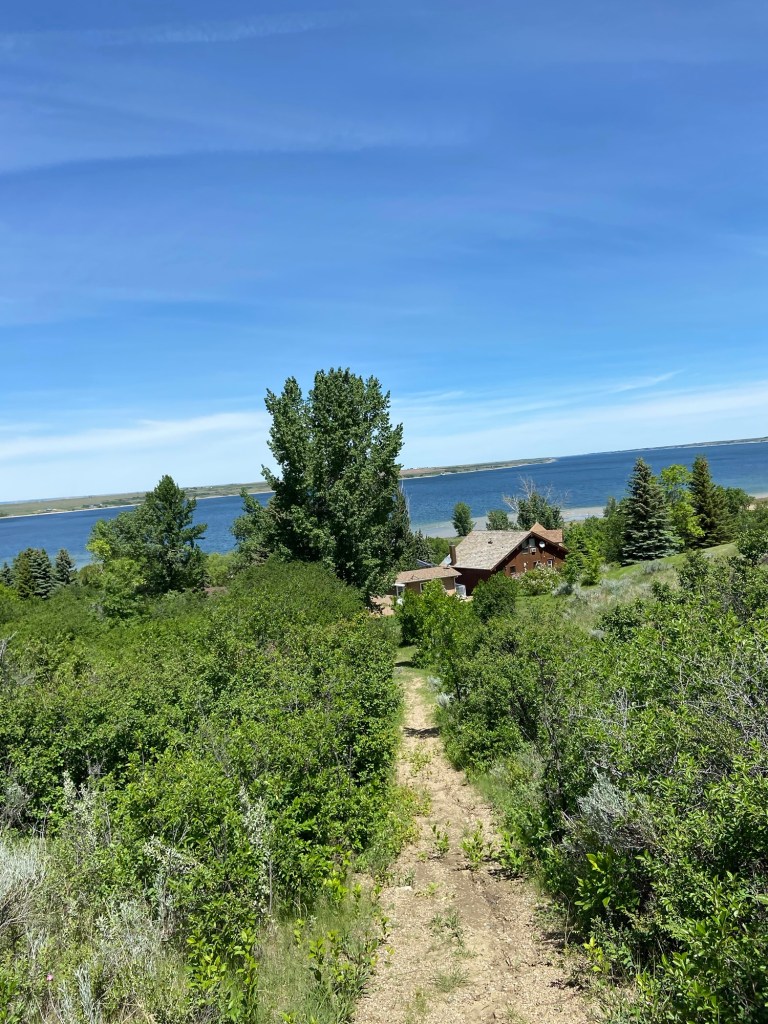
Maybe it’s the breeze.
Maybe it’s birdsong.
Maybe it’s the warmth of the sun.
Maybe it’s simply realizing that, for this one moment, nothing is asking anything from you.
Stay there a little longer than feels necessary.
Let your nervous system collect another piece of evidence.
Every time I walk with someone through a forest, I hope they experience a piece of what I felt all those years ago.
Not because someone is carrying them across a cabin yard in a sleeping bag.
But because, for just a little while, they remember what their nervous system has perhaps forgotten.
That they don’t have to hold themselves so tightly. Or carry everything alone. That they are safe enough to rest.

If you’ve never tried forest therapy, I’d love to invite you to come walk with me.
Or find your own favourite stand of trees and let the forest do what it has always done so well.
Quietly remind us of something we knew before life became complicated.
Sometimes healing doesn’t begin with trying harder.
It begins with remembering what it feels like to be carried.