Menopause, memory, and learning to live in a new season
There is a seasonal transition happening inside my brain. Even if the natural world is slow in its transition to fall.
I know this is happening because things keep falling out of said brain. Like dry leaves off a tree on a windy day.
Thoughts. Words. Names. Entire conversations.
Sometimes I can actually feel the thought leaking out.
It was there. I had it. I was about to say it.
And then whoosh. Gone.
Much like the leaves outside right now, my thoughts have decided they have fulfilled their purpose and are ready to return to the earth.
The problem is that I haven’t said them yet. And suddenly all thoughts are gone. And I still have to appear as though I can converse like a regular adult.
My brain has entered autumn
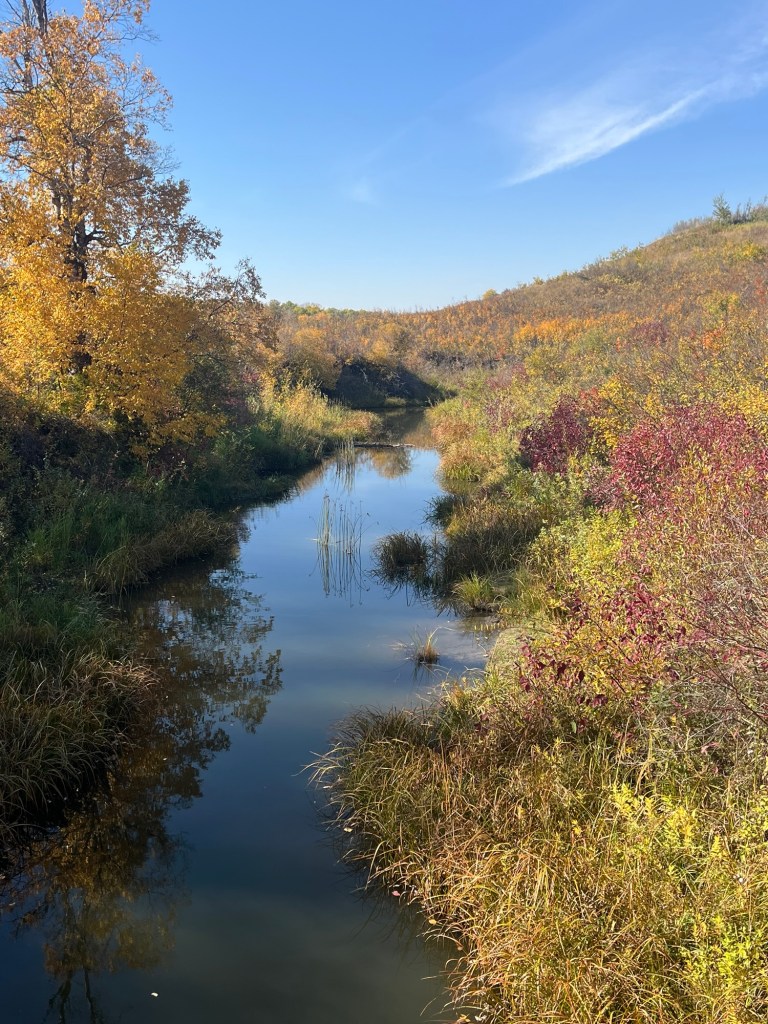
Autumn is a strange season.
Everything is changing, but nothing is necessarily wrong.
The leaves change colour. The days get shorter. The temperature drops.
Trees stop doing what they did all summer and start conserving their resources.
The whole landscape looks different. And yet we don’t stand in the forest pointing at a poplar tree and say,
“The poor dear.”
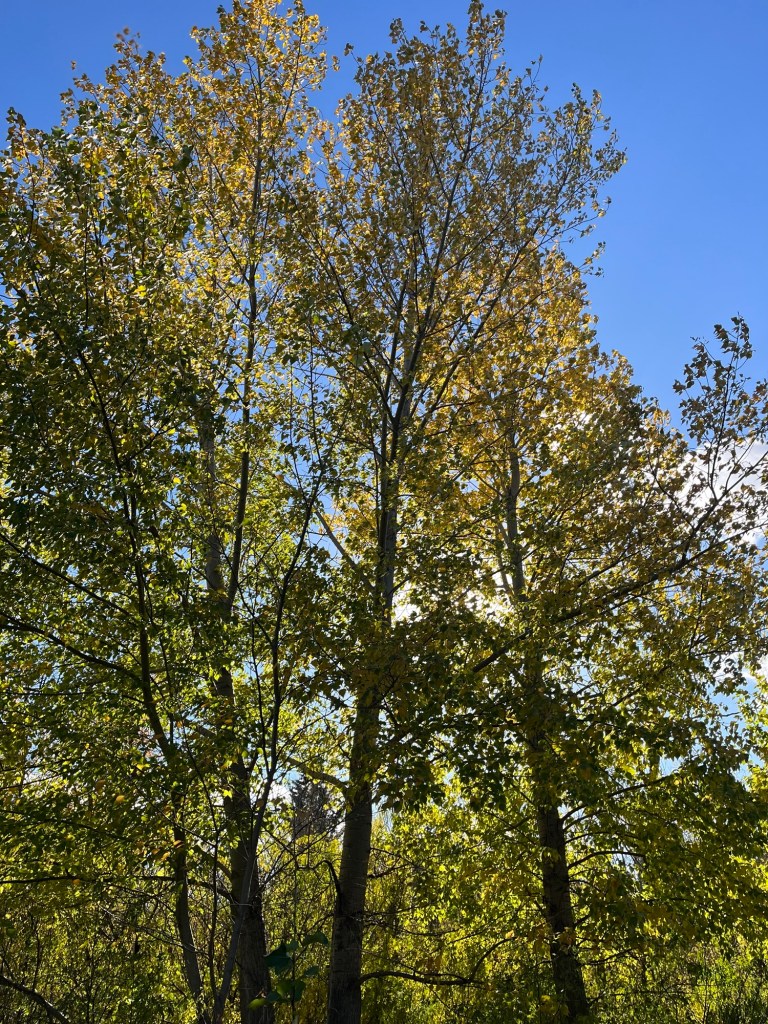
We understand that it’s a transition.
A season. A change in the way the tree functions.
I think menopause can be a little like that.
Except nobody warned me that my brain might start dropping leaves. And suddenly be bare naked.

The disappearing conversation
One of my most ridiculous symptoms is what happens when I’m talking to someone.
It doesn’t matter who. A family member. A friend. A complete stranger.
If something catches my attention, even for a split second, I can lose the entire train of thought I was following.
Not the general idea. Not one little detail. The whole train. It has left the station. Immediately derailed. No survivors.
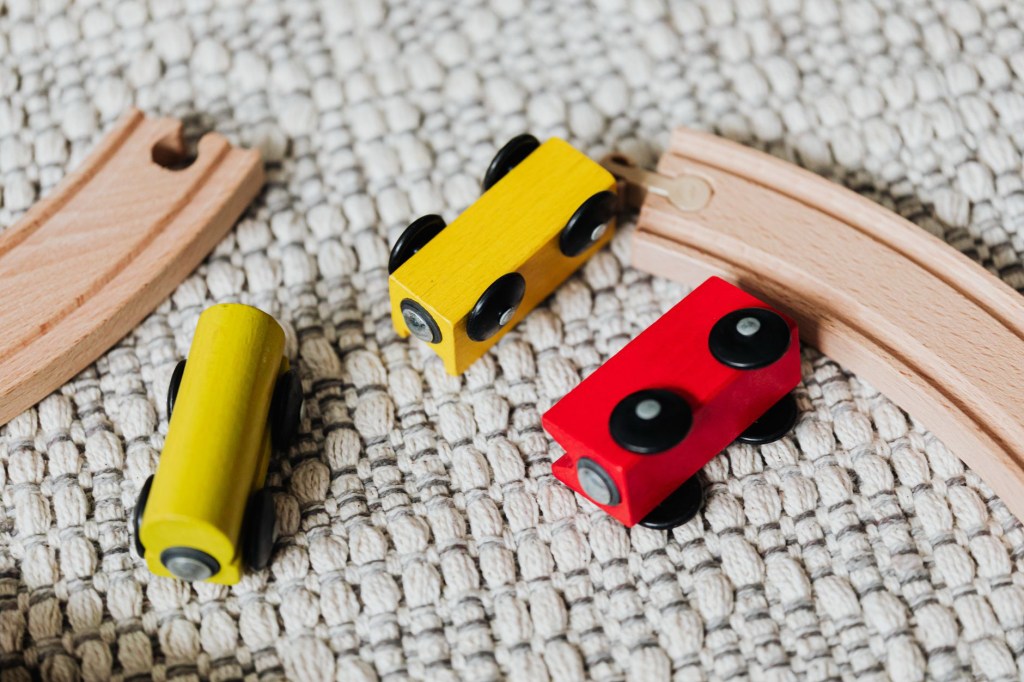
So I’m standing there looking at another human being vacantly and frantically wondering:
What was I talking about? Two seconds ago!
I imagine this does very little for the other person’s confidence in my abilities as a functioning member of society.
That’s fair.
If someone did that to me, I’d probably wonder if I should quietly take their car keys.
Then there was Nemo.
The other day I was telling my mom a story about a friend. In front of this friend.
Except I had ALL of the facts mixed up.
I got basically every piece of information wrong.
This friend, sitting there while I told the story corrected me.
I continued. She corrected me again. I continued. She corrected me again.
Five corrections in three sentences?!?
It gave strong Finding Nemo vibes. Remember when Dory is telling a school of fish passing by about Nemo while Marlin repeatedly corrects her?

It was basically this scene. Except this time I was Dory, my friend was Marlin, and my mom was the poor unsuspecting school of fish.
I was one correction away from jumping in the lake.
There are days when my brain is so foggy from medication, exhaustion, hormones, or some magical combination of all three that I sound less like regular Dory and more like Dory speaking whale.
I think it’s important to laugh.
Because if I don’t laugh, I might start Googling early-onset dementia every time I forget the name of a friend I’ve had for 20 some years.

I’m not broken.
This is the part I wish more women heard. I’m not broken. And neither are you.
We are not pathetic. Ridiculous. Deficient.
Brain fog is a real and common experience during the menopause transition.
The Menopause Society reports that roughly 40–60% of midlife women experience cognitive symptoms, including forgetfulness, difficulty concentrating, distractibility and trouble finding words. These changes can be frightening because they can feel like something really serious is happening.
But the cognitive changes typically associated with the menopause transition should be mild, and dementia at midlife is rare. (The Menopause Society)
That doesn’t mean we’re imagining it. Or that our challenging experience isn’t valid.
And it doesn’t mean we should simply shrug and say, “Oh well. I’m old now.”
No. Our brains are changing.
There can be a loss of confidence that comes with this.
You know you’re capable. You’ve spent decades accumulating knowledge and experience.
You’ve solved problems. Raised children. Built careers. Managed households. Made decisions.
Remembered 47,000 things nobody else even noticed needed remembering. And then suddenly you’re getting an Error 404 message every time you try to access the frontal brain.
Or you’re halfway through a sentence and all suitable words abandon you in an ultimate betrayal of trust.
Or someone is looking at you while you desperately try to retrieve the thought that was just there.
And you start wondering:
Am I losing it?
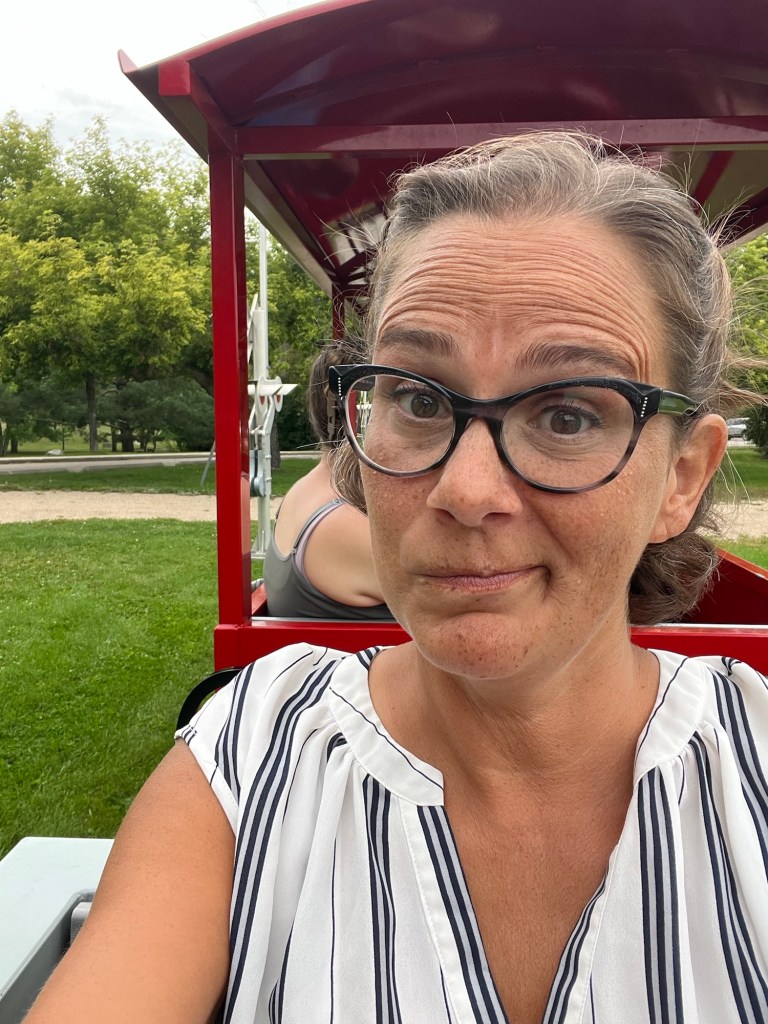
There is an actual biological reason for this.
Estrogen receptors are widely distributed throughout the brain, including areas involved in memory, mood and other cognitive functions. During perimenopause, estrogen levels can fluctuate considerably before eventually settling at a much lower level after menopause. Research has found changes in brain structure, energy metabolism and blood flow during this transition, particularly in areas involved in memory and executive function. (The Menopause Society)
And then there are all the other things menopause can throw into the mix.
Hot flashes. Night sweats. Poor sleep. Anxiety. Mood changes. Stress. Fatigue. 💀
All of those things can make it harder to concentrate and remember.
So sometimes the problem isn’t that your brain has forgotten how to work.
Sometimes your brain is working while simultaneously dealing with approximately seventeen other things.
No wonder it occasionally says,
“You know what? I’m putting this thought down and walking away.”
But it could work on its timing.
Disclaimer: If something is interfering with your ability to work, function, communicate or enjoy your life, it’s worth talking to a healthcare professional. Especially if the changes are sudden, severe, progressively worsening, or feel very different from your usual brain fog.
The invisible part
I think the hardest part isn’t always the forgetting.
It’s what the forgetting can do to your confidence.
Because women are still expected to function.
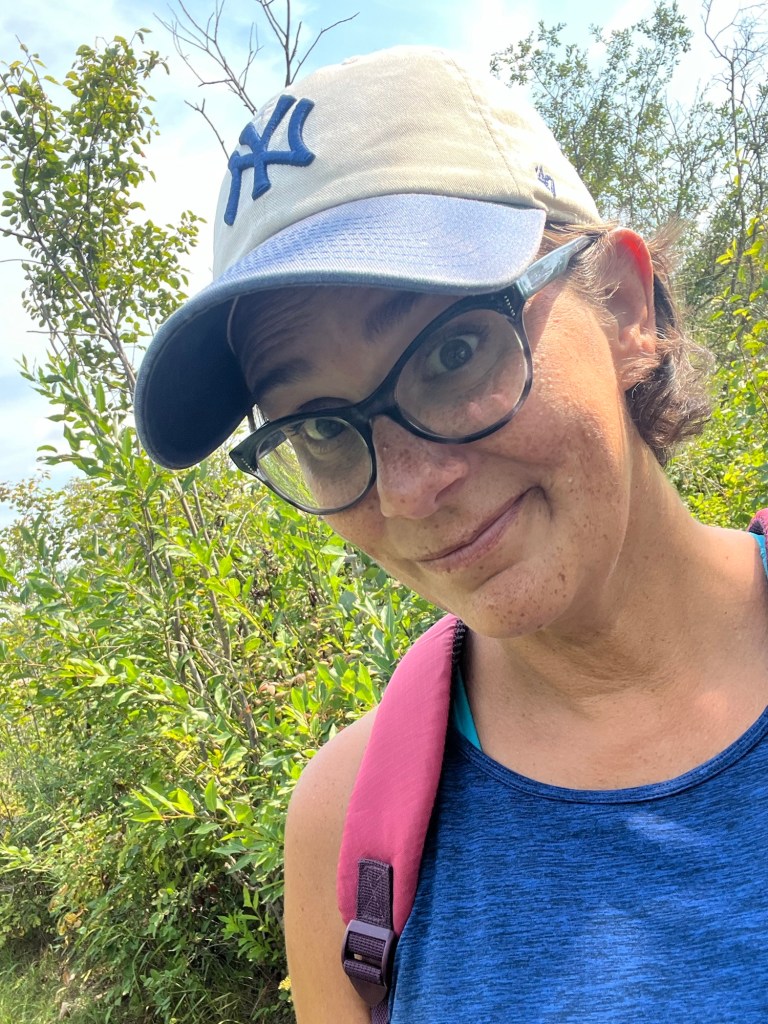
We still have jobs. Families. Parents. Grandchildren. Appointments. Bills. Groceries. Passwords.
We have spent decades proving that we’re capable.
Then suddenly we can’t remember the word we have used approximately 900 times in our lives.
And that can mess with your head.
You begin wondering whether other people notice. Whether they think you’re less capable. Whether they’re quietly questioning you. Whether you’re losing something you aren’t going to get back.
That fear is hard. And so is the embarrassment.
Experiencing brain fog does not mean you’ve become less intelligent.
It doesn’t erase everything you’ve learned. It doesn’t erase your competence. It doesn’t erase the person you have spent your entire life becoming.
You are not broken.
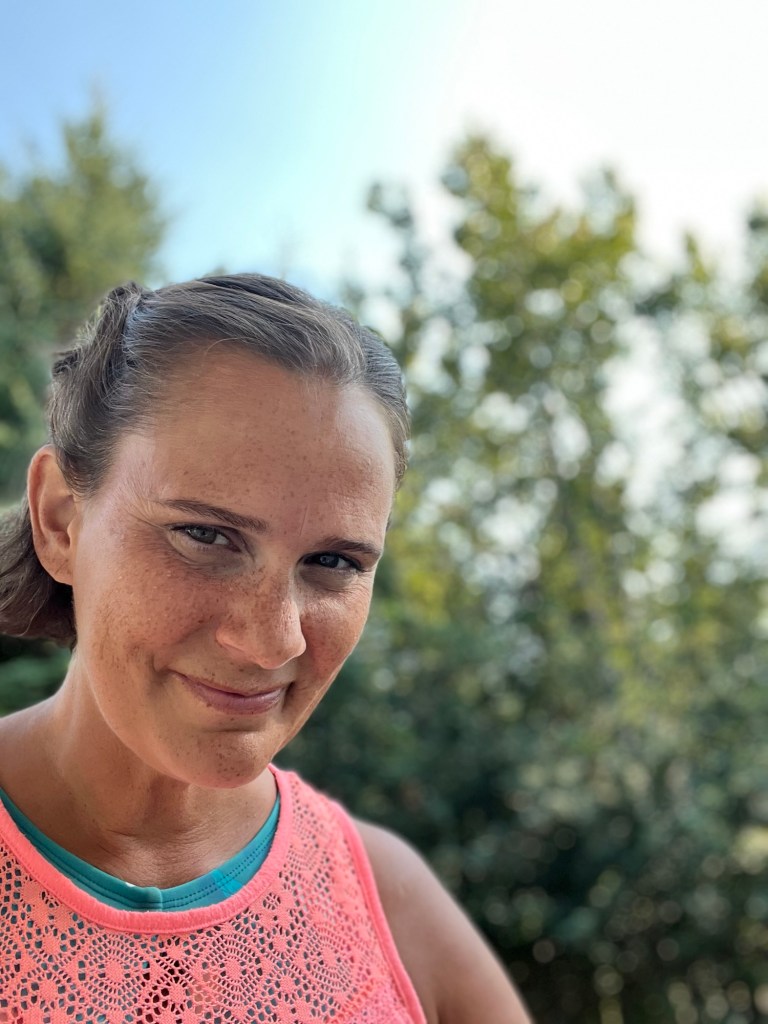
You are living through a biological transition that can affect the way your brain functions.
That’s very different.
My experience is a little more complicated than the average menopause story. Perhaps yours is too.
Mine was surgical menopause, so there wasn’t a gradual transition. My ovaries were removed and my body went from producing its usual supply of hormones to suddenly having to figure out life without them.
I also had a bad reaction when I tried hormone replacement therapy, so that isn’t an option for me. Which means some of the symptoms that can be mildly annoying for one woman can feel like they’ve been turned up to eleven for me.
The brain fog, the temperature swings, the sleep disruption, the whole neurological circus can be a lot 😵 . I’m not saying that for sympathy. It’s simply part of the landscape I’m learning to navigate.
And then there’s the fact that I generally look fine.
That’s the slightly ridiculous thing about invisible conditions.
From the outside, I look like a perfectly ordinary woman going about her day. You can’t see the pain, the nervous system overload, the fatigue, the brain fog, or the amount of energy it can take just to appear like a functioning adult.
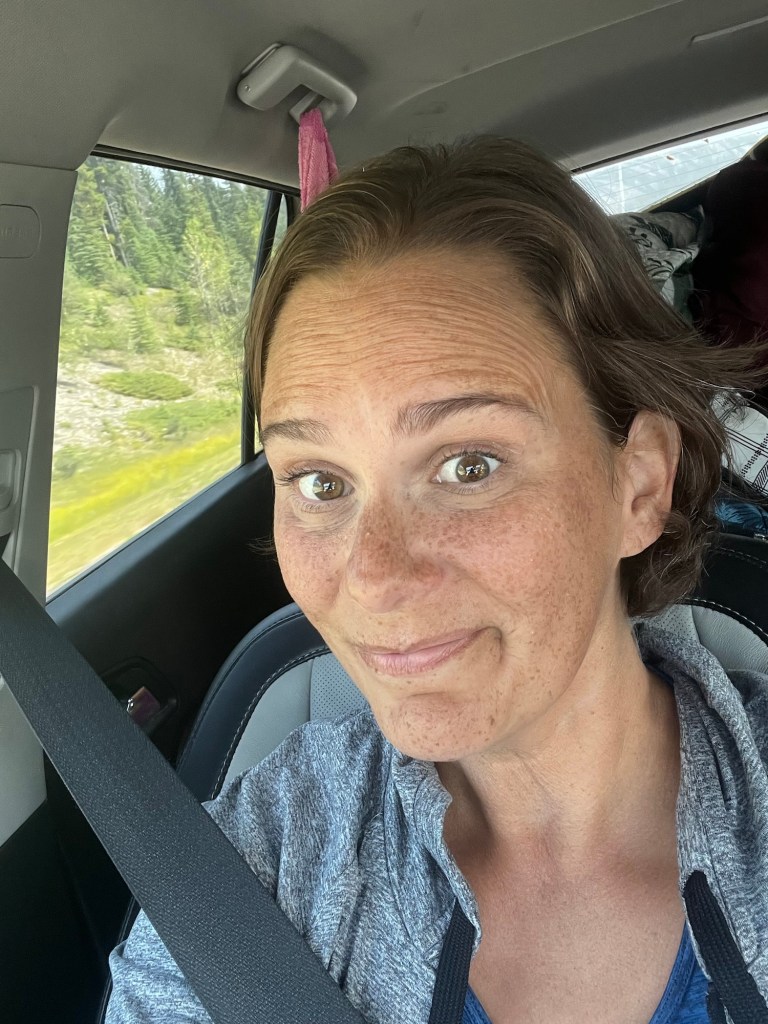
Add menopause to the mix and there’s even more happening behind the scenes that nobody can see.
Until I overheat.
Then suddenly my body’s commitment to being discreet completely falls apart.
I can go from looking perfectly normal to sweating so profusely that I resemble the co-pilot in the movie Airplane. Ridiculously conspicuous, completely unable to pretend everything is fine. As the sweating and heat achieve new heights people wonder what’s happening. While I am left wondering if anyone has a towel.

It’s almost impressive. If it weren’t so disgusting.
And there is something isolating about looking fine when you don’t feel fine. People naturally respond to what they can see.
If you look healthy, capable and put together, it’s easy for everyone, including yourself, to forget how much work is happening underneath the surface.
So yes, I might look fine. My brain might seem fine. My body might look fine.
And yet sometimes the inside is working through some stuff.
The forest doesn’t panic when the leaves fall
This is one of the reasons I keep coming back to the forest.
The forest is remarkably good at transitions. It doesn’t fight autumn. Or apologize for losing its leaves.
It doesn’t stand there trying to tape them back onto the branches. It lets them go.
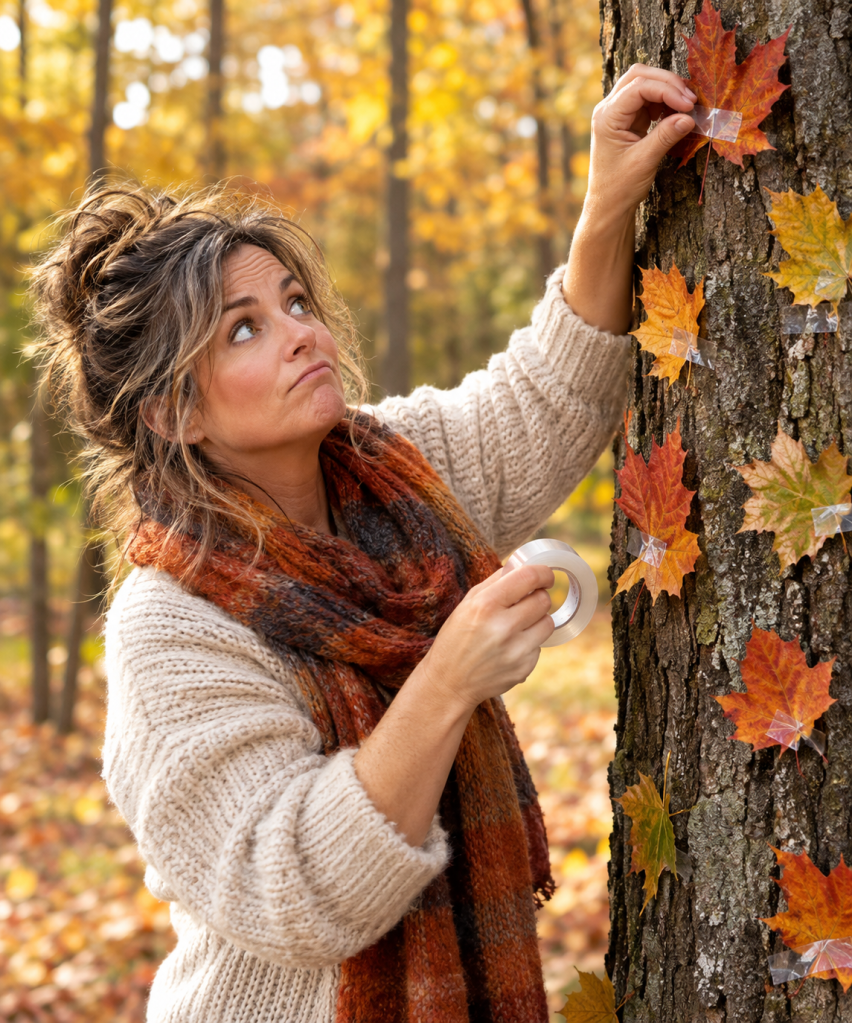
And then it changes how it spends its energy.
There is something I need to learn from that. Because when my brain isn’t behaving the way it used to, my first instinct can be to push harder.
Try harder. Remember harder. Concentrate harder. Be more productive. Fix it. Get back to normal.
But I don’t think this season is asking me to get back to normal. I hear it asking me to learn a new normal.
That doesn’t mean accepting every symptom without question.
It doesn’t mean ignoring significant changes or assuming everything is menopause.
New, severe or progressively worsening cognitive symptoms deserve that conversation with a healthcare professional.
Then there’s forest therapy.
***Forest therapy does not replace medical care.***
But i have found it to be an effective tool for managing some of the symptoms that can accompany menopause.
Numinous
(Adj) the feeling that something sacred and mysterious is present in nature.
So what can the forest actually do?

A forest can’t restore my estrogen. It can’t remember Fabio’s name for me. It can’t make a hot flash disappear on command.
And it definitely can’t stop me from walking into a room and immediately forgetting why I’m there.
But it can give my nervous system a break from the constant demand to perform.
Forest bathing research has found short-term reductions in cortisol and other indicators associated with stress (PubMed)
And that matters because stress, poor sleep, anxiety and other menopause symptoms can all pile onto cognitive difficulties.
Sometimes managing the environment around the symptom is useful, even when you can’t eliminate the symptom itself.
The forest gives us an opportunity to slow down.
To pay attention without having to accomplish anything.
To move gently.
To breathe.
To notice.
To let the nervous system come down a notch.
And sometimes that is enough to make the brain feel a little less like the squirrels are running the office. 🐿️ 🥜
Try a seasonal brain reset
The next time your brain feels particularly autumnal, find somewhere outside where you can sit comfortably.
You don’t need a spectacular trail. A backyard will do. A park. A quiet corner under a tree.
Then try something I call Let the Leaves Fall.
Sit somewhere you can see a tree. Don’t try to clear your mind.
That is entirely too much pressure for a brain that currently can’t remember what it was doing three seconds ago.
Instead, notice the tree. Look at the leaves. Find one that is still attached. Find one that has fallen. Notice the movement. The colour. The texture. The spaces between the branches.Then notice your own body.
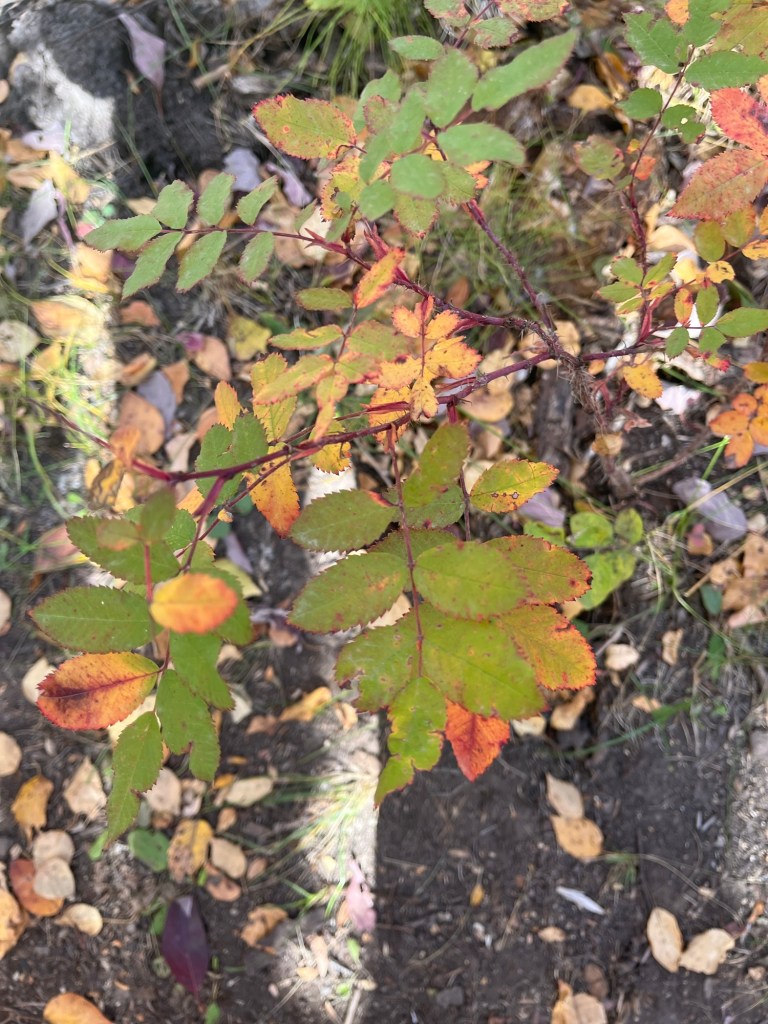
Where are your shoulders? Your jaw? Your hands? Your feet?
Take a slow breath and feel your feet against the ground.
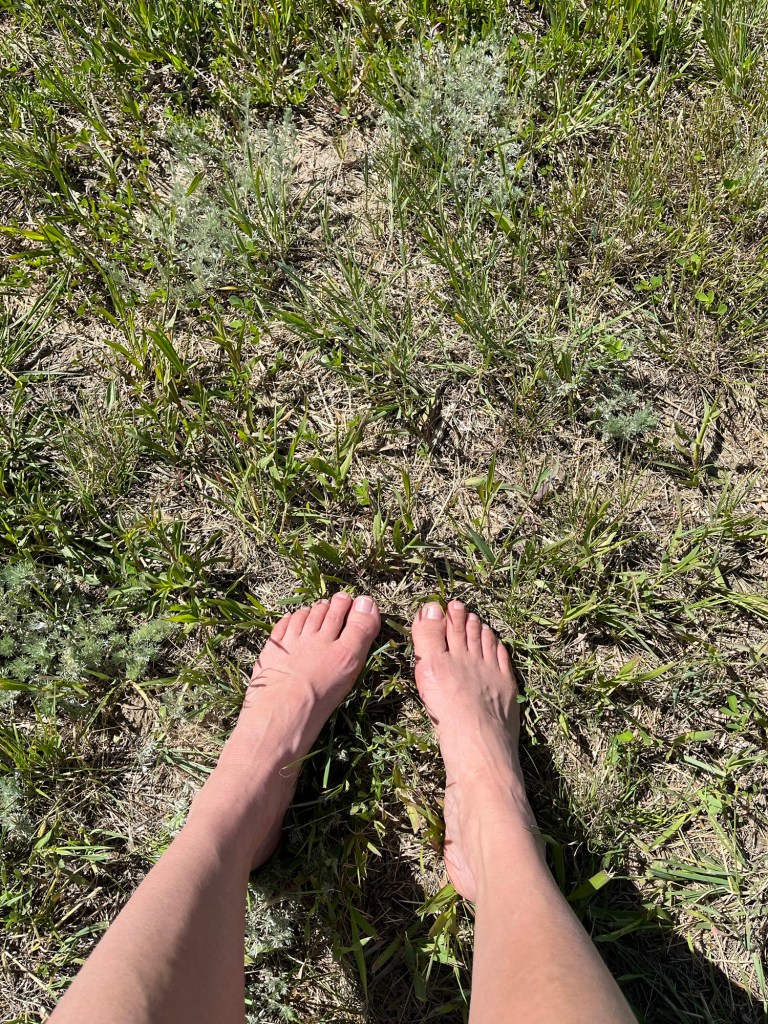
Then ask yourself:
What am I holding onto that I don’t need to solve right now?
You don’t need an answer. That’s the point. Let the question sit there. Let your thoughts come and go without chasing them.
If a thought disappears, let it. If another one arrives, notice it.
You’re not trying to force your brain back into summer. You’re practicing being present in autumn. And that’s what regulation sometimes looks like.
Not fixing. Not forcing. Not fighting.
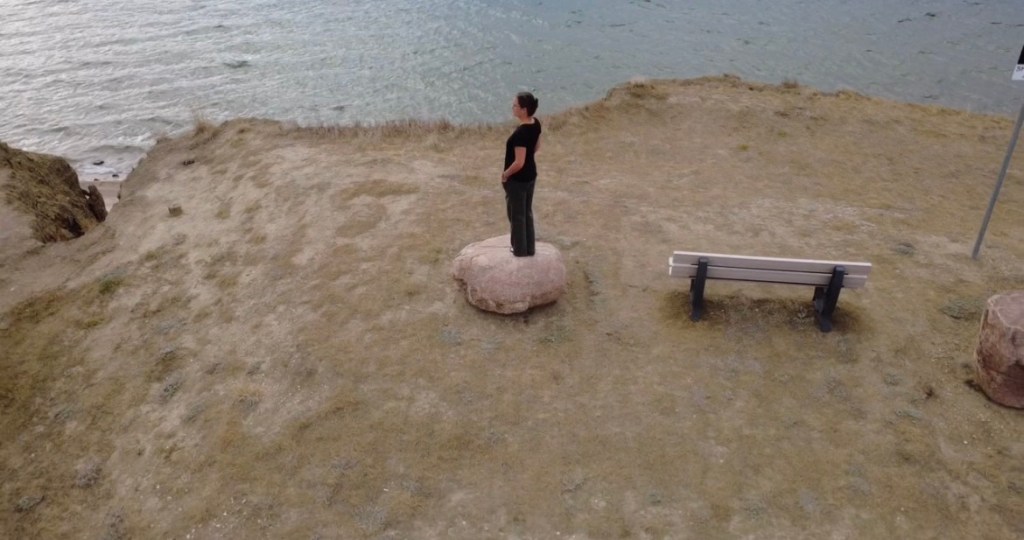
Just creating enough safety and quiet that your brain doesn’t have to work quite so hard.
Every season asks something different of us
The forest reminds me that change doesn’t always mean decline.
A tree losing its leaves isn’t dying.

It’s adapting. Resting. Reallocating. Preparing for what’s next.
Maybe we can offer ourselves the same grace. I don’t need to be embarrassed every time I lose a thought. I can simply say,
“Hang on. My brain just sprung a leak.”
And laugh.
I can ask someone to remind me what I was saying without assuming they’ve lost faith in my ability to function.
I can stop measuring this version of myself against the woman I was before my hormones decided to rearrange the furniture.
And maybe, when my brain won’t brain, I can remember:
I’m not broken.
I’m in a season of change. The leaves are falling. The landscape looks different.
Some things are harder. Some things may need more rest. Some things may need more support.
And some things might surprise me by growing in ways I couldn’t see coming.
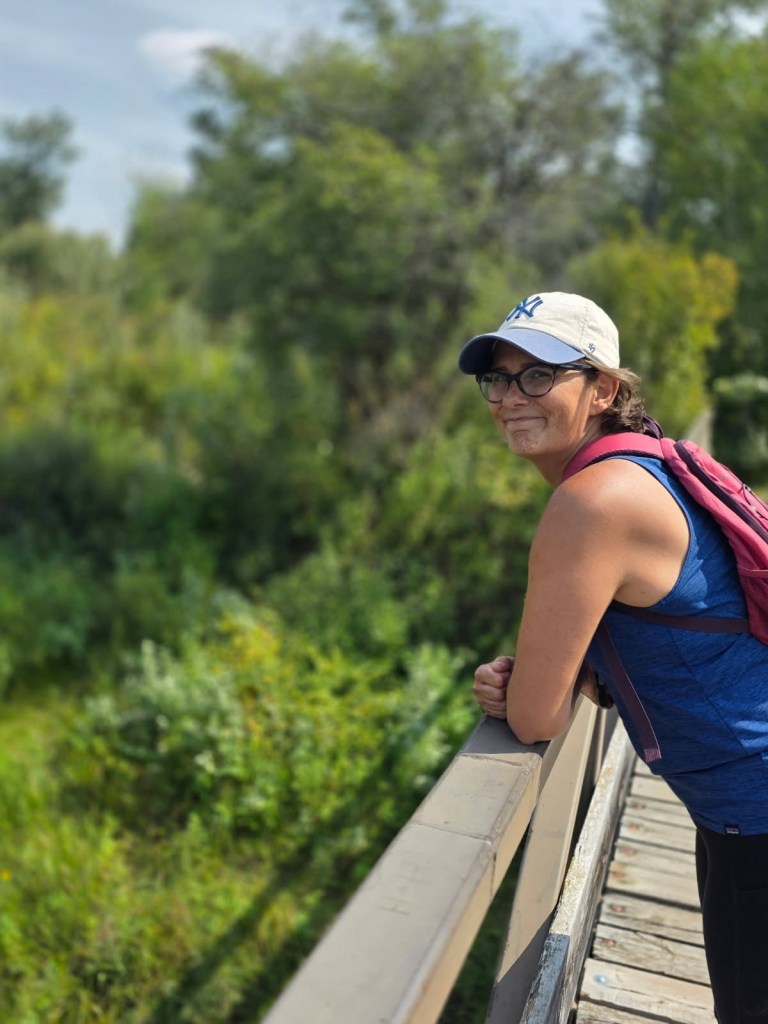
I don’t have to love every part of the season. But I can learn to live in it.
And maybe, every once in a while, I can go sit beneath a tree and let the forest remind me that changing doesn’t mean failing.
It just means the season changed. And so did my memory.
Now…
What was I talking about?