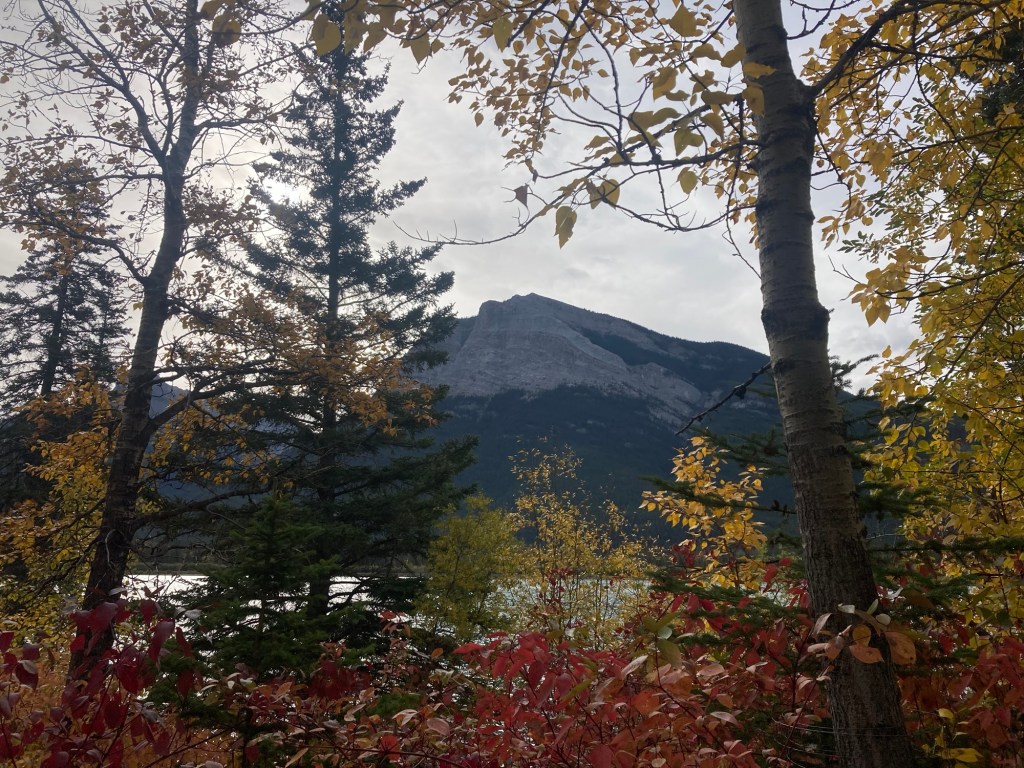
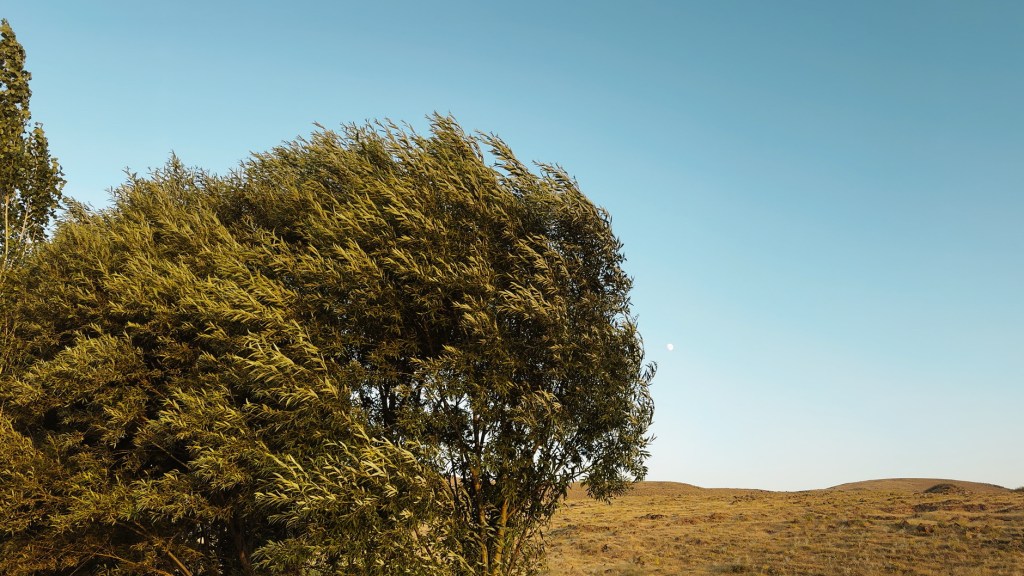
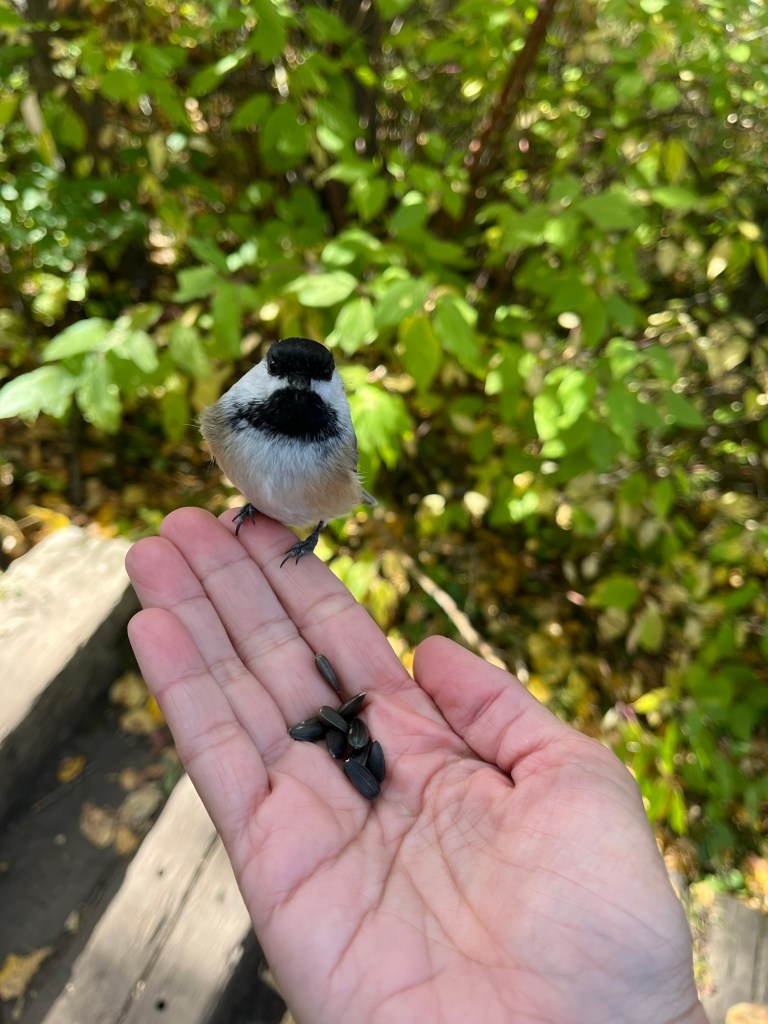
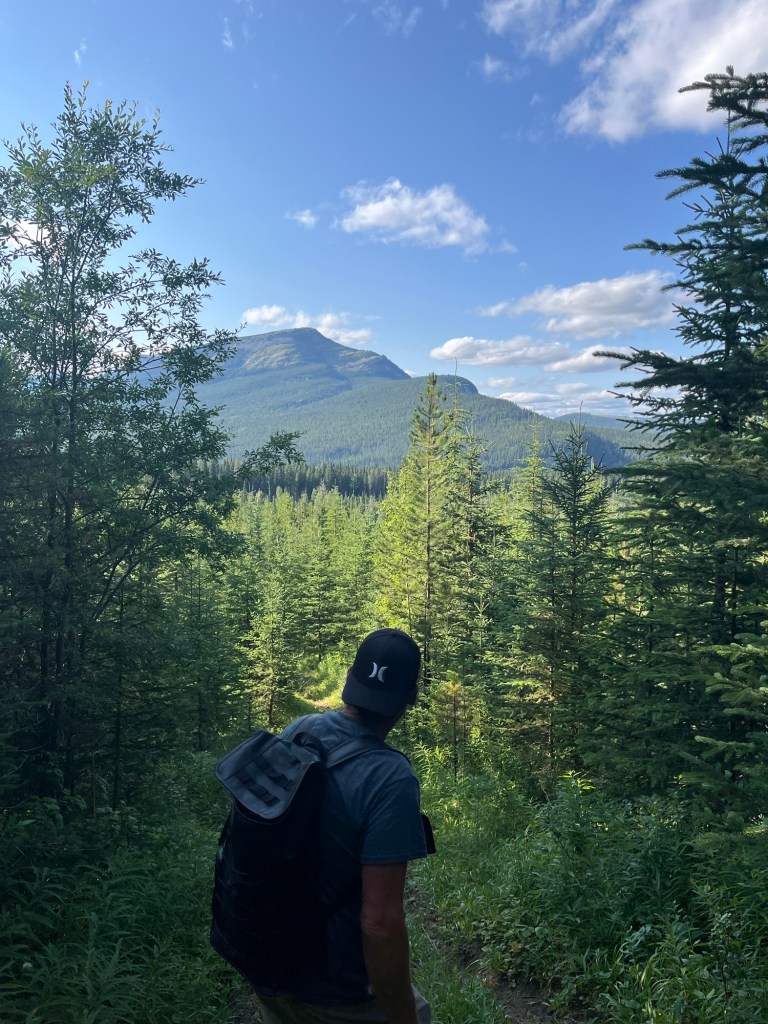
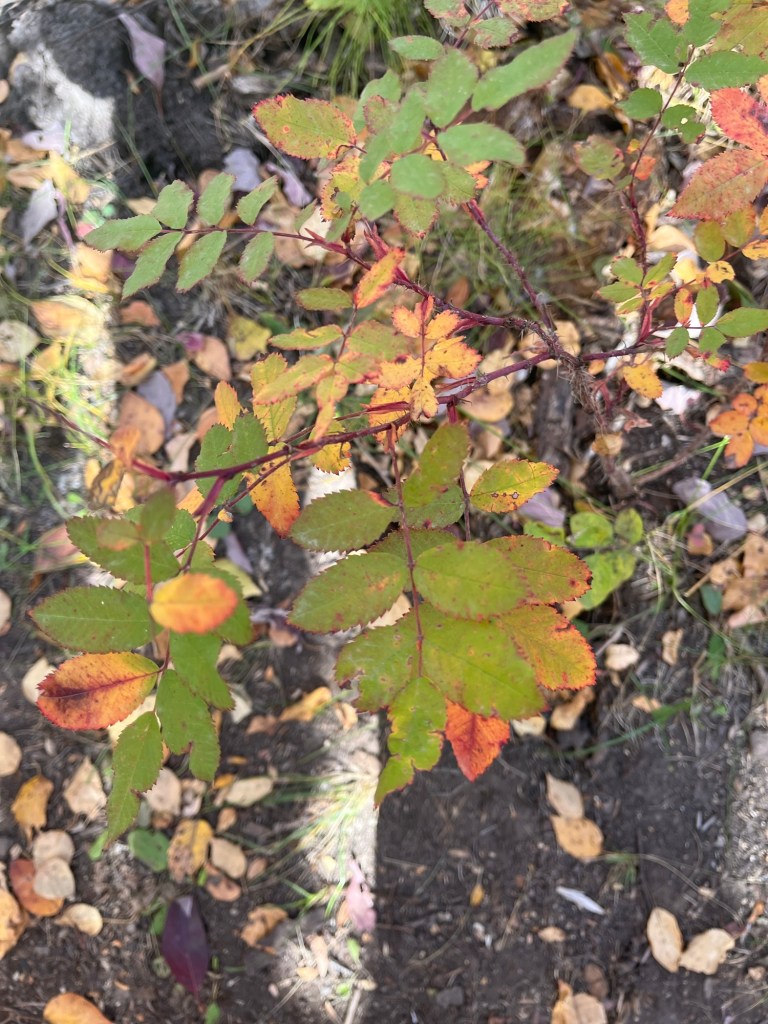
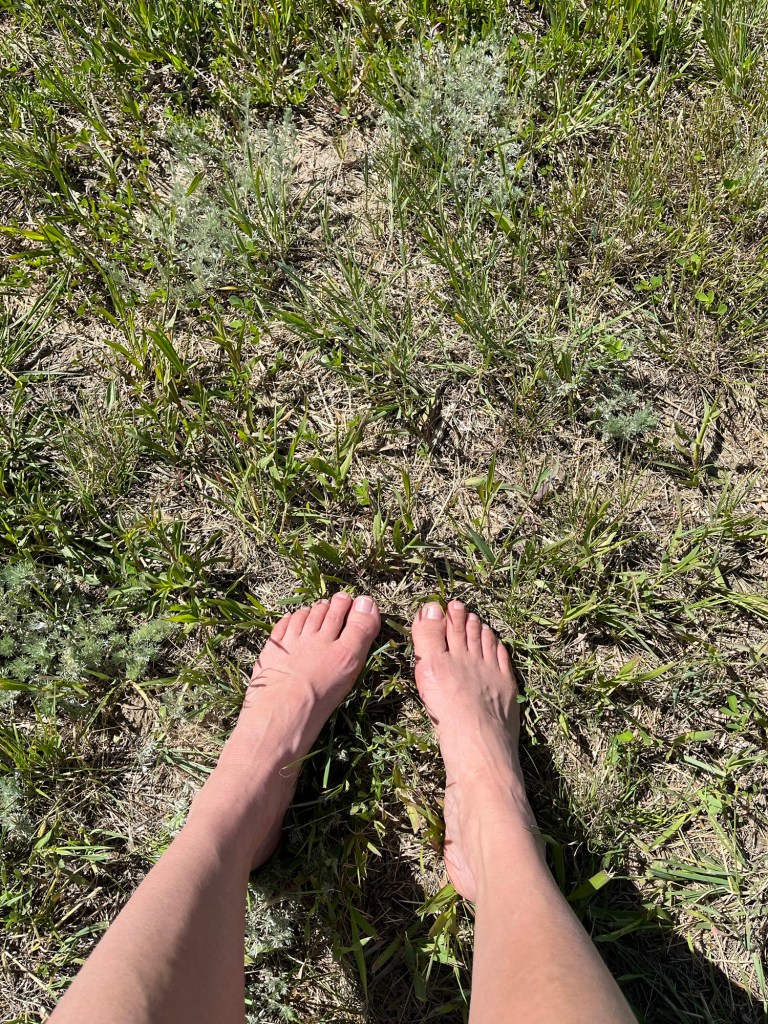
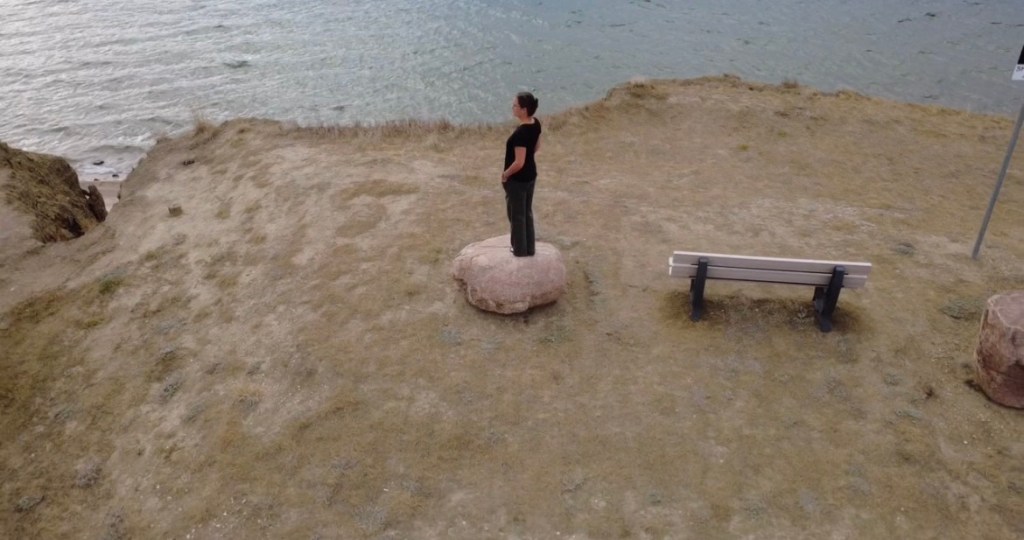
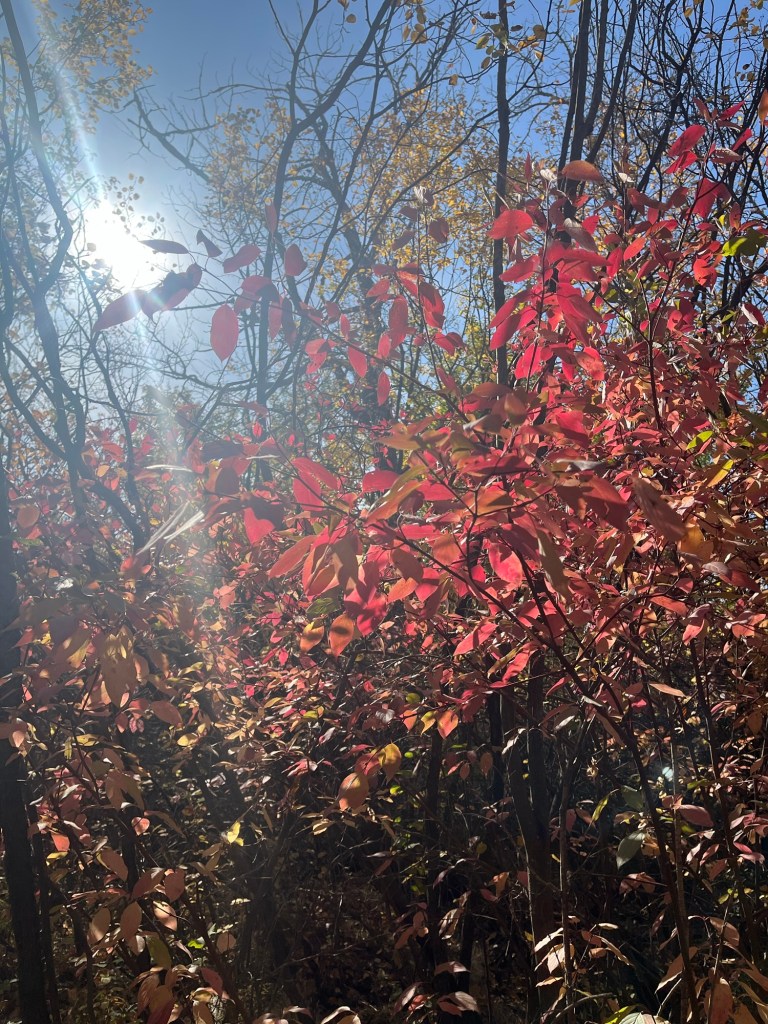
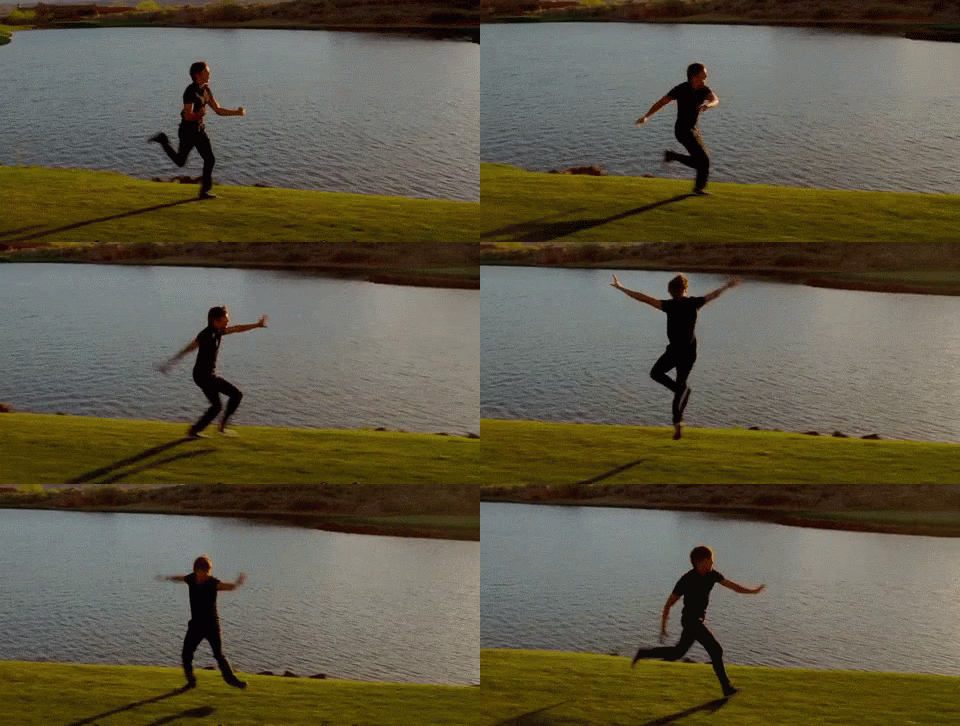
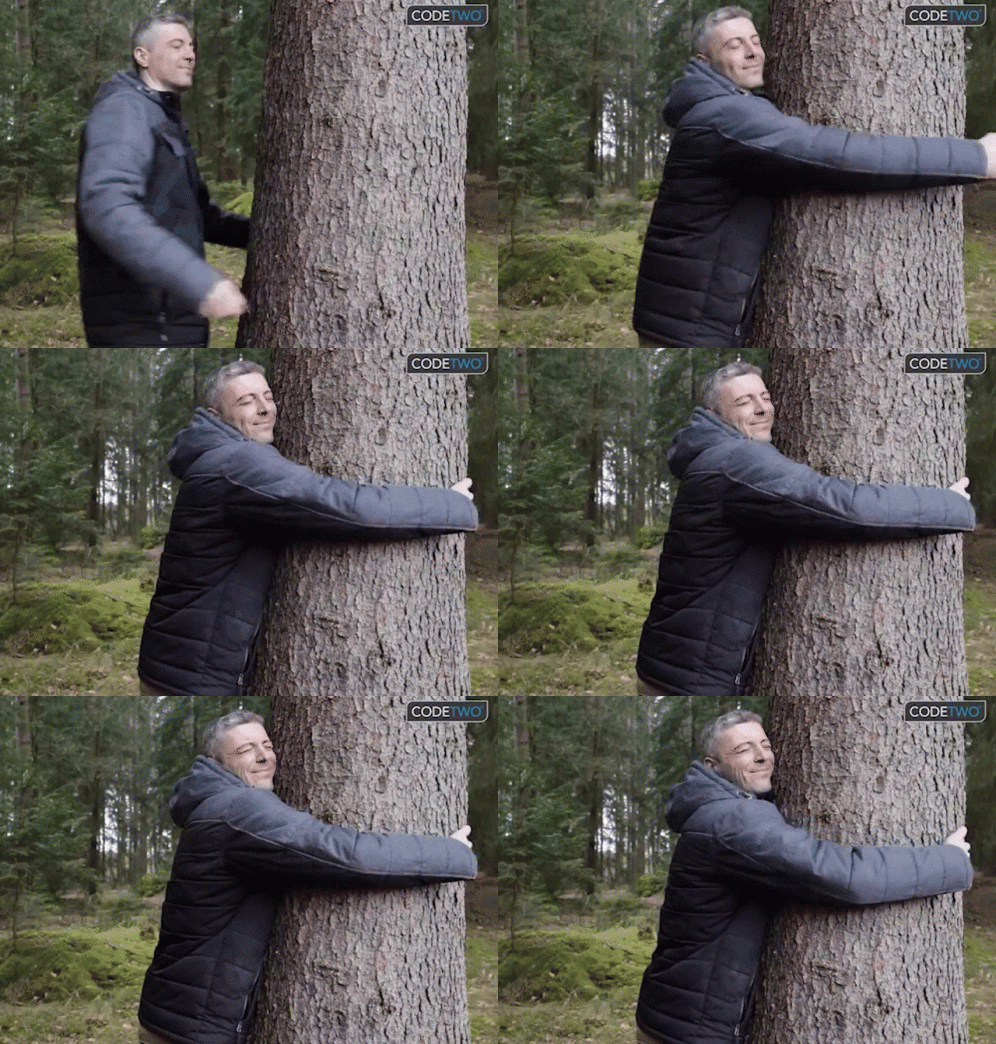
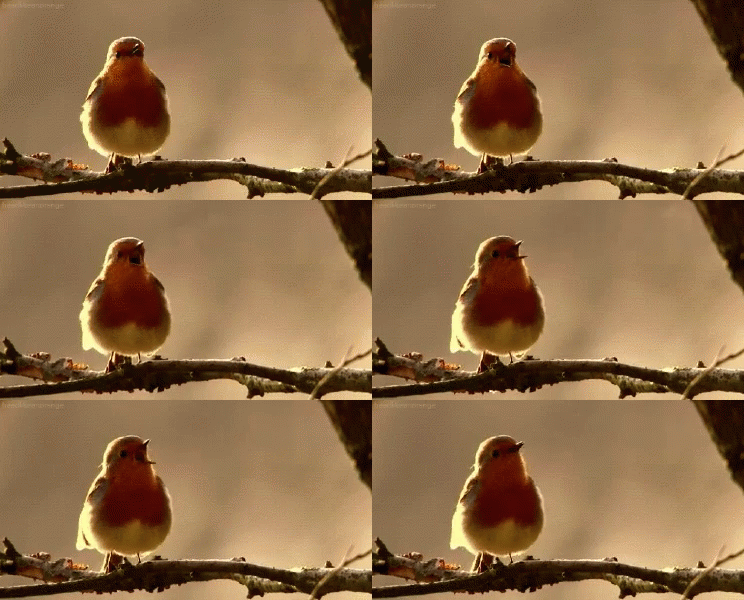
Inside me, the Protector, the Wounded Child, the Survivor, and the Healer all dance in a quiet circle. Each one longs to be seen, to be heard, to be held. And when I finally stop to witness them, their chaos becomes a rhythm… and their rhythm becomes my healing.
-recoverytrauma.ltd
I heard something recently that has been rolling around in my head. It was a conversation about worry versus wisdom.
The idea was that worry keeps us stuck, while wisdom keeps us moving.
One of the concepts was this, sometimes we feel stuck because we want two things that can’t exist at the same time.
I want to be healthy, but I don’t want to change anything.
I want to feel better, but I don’t want to slow down.
I want to have more energy, but I don’t want to give anything up.
I want my nervous system to settle, but I keep filling every available minute.
And with chronic pain, there can be a whole extra layer of this.
I want to do the things I used to do, but my body can’t always do them.
I want to feel better, but I can’t control whether I have a good pain day or a terrible one.
I want answers, but sometimes there are no tidy solutions.
So I worry. I think. I analyze. I replay. I predict. (I’m actually a delight. But you wouldn’t know it because I’m so tired and irritated all the time.)
I consider every possible scenario until my brain has apparently opened approximately 47 tabs, and none of them are helpful.
And somewhere in all of that thinking, I can become very, very stuck.
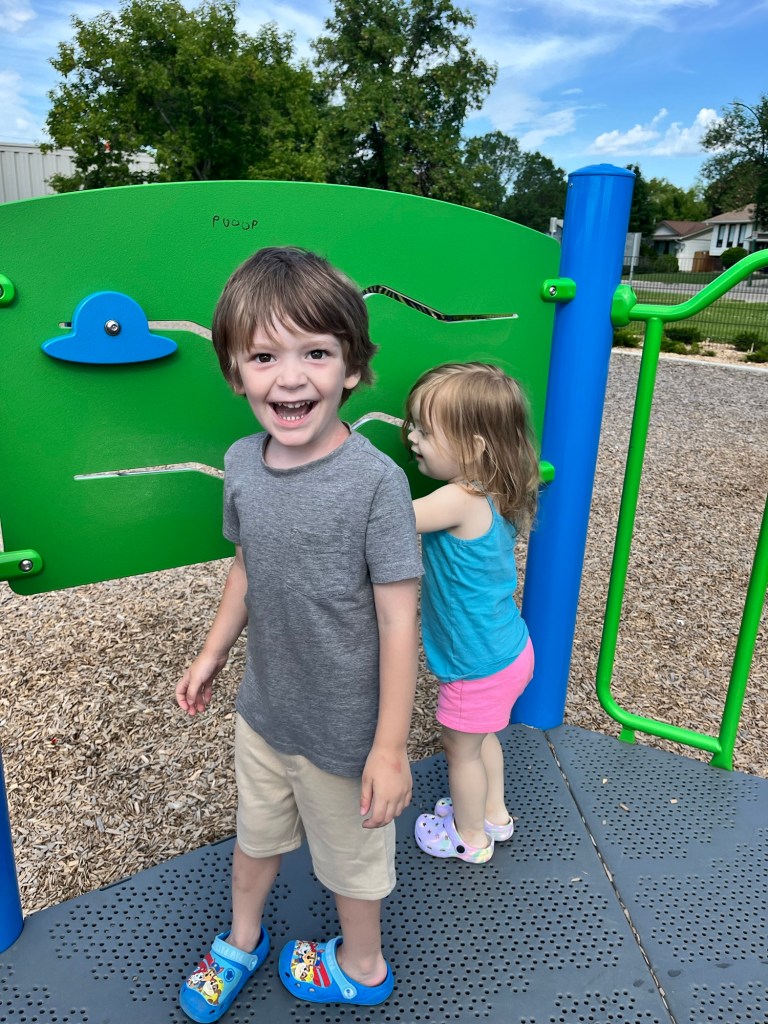
But then I look at my grandkids.
They might know something I have forgotten.
They don’t spend nearly as much time worrying about what happened yesterday or what might happen tomorrow.
They deal with right now.
If they’re hungry, they eat.
If they’re tired, they lie down.
If they see a bug, suddenly that bug is the most fascinating creature on Earth.
If someone says something funny, they laugh.
If they fall down, they may cry. And then, remarkably, five minutes later they’re deeply invested in something completely unrelated.
They don’t seem to spend a lot of time thinking:
I really shouldn’t have fallen down yesterday.
Or:
What if I fall down again tomorrow?
They are busy being where their feet are. Kids have a PhD in being where their feet are. (Wise little beings.)
Not because the past doesn’t matter. Not because the future doesn’t matter.
But because this moment is the only one I can actually do anything with.
And I think that is part of the difference between worry and wisdom.
Worry keeps asking:
What if?
Wisdom asks:
What now?
What if I stopped trying to solve tomorrow?
One of the things I love about forest therapy is that nature gives me a place to practice being present.
Not by sitting perfectly still and trying to empty my mind.
My brain 🧠- Director of Unnecessary Mental Load 🪪
Instead, I can go outside and let my attention wander.
I call this a sensory wander.
Rather than walking with a destination in mind, I slow down and follow whatever catches my attention.
Maybe it’s the shape of a leaf.
The sound of something moving in the grass.
The smell of wet earth.
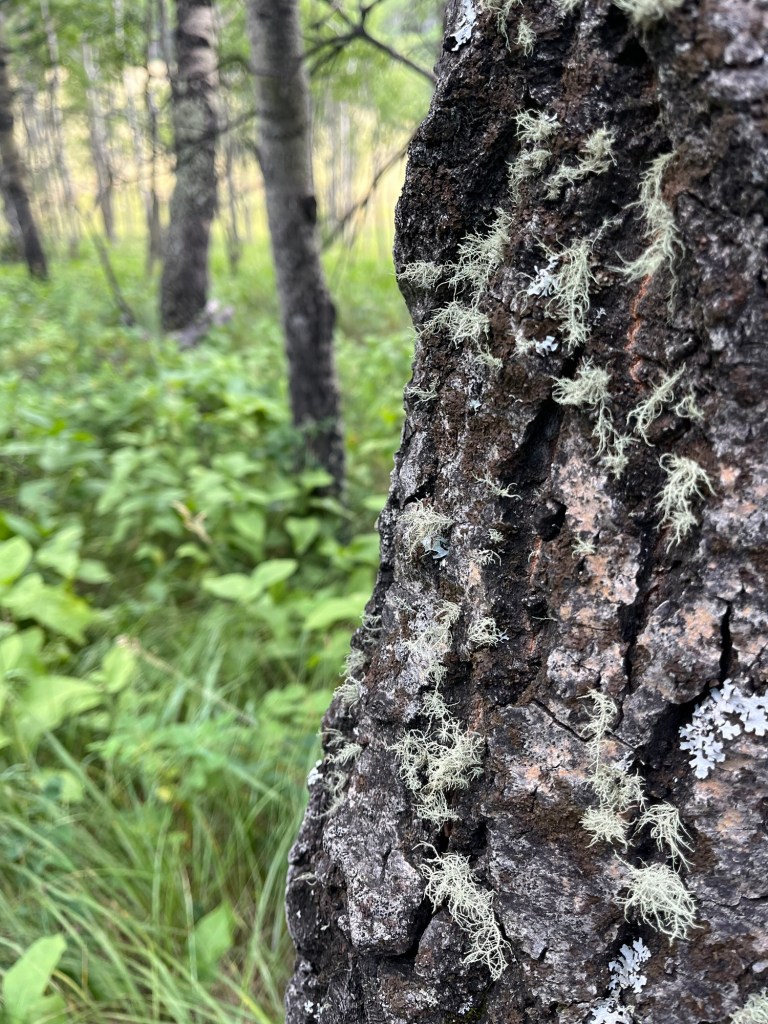
A tree with strange bark.
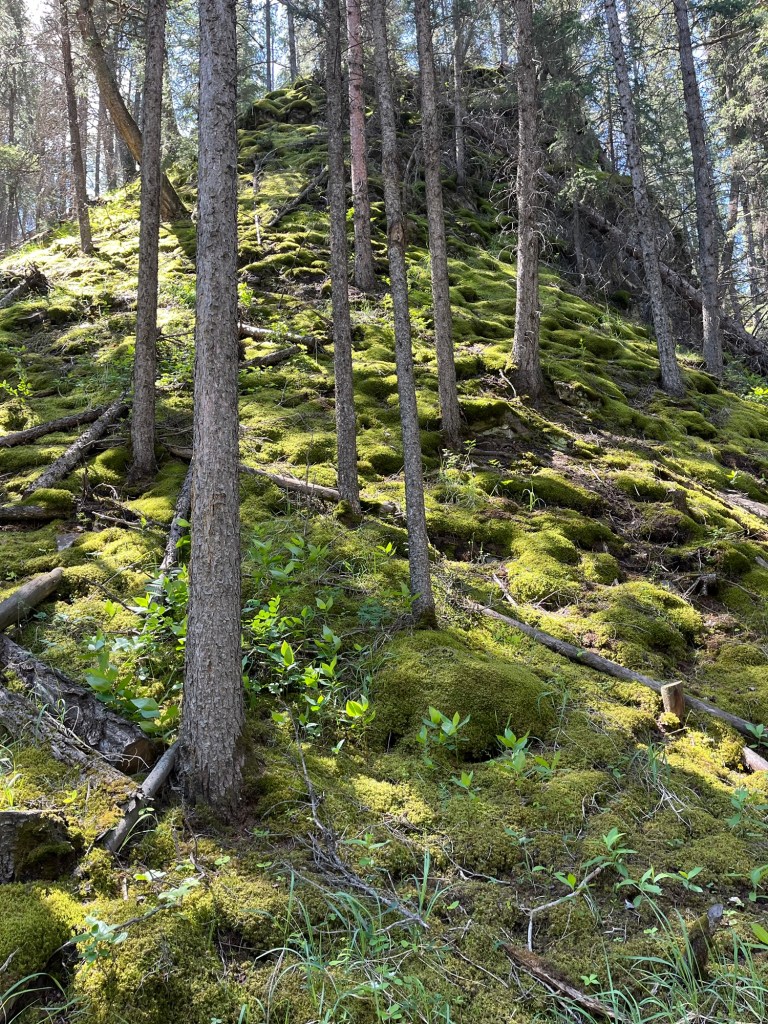
The way sunlight hits one little patch of moss.
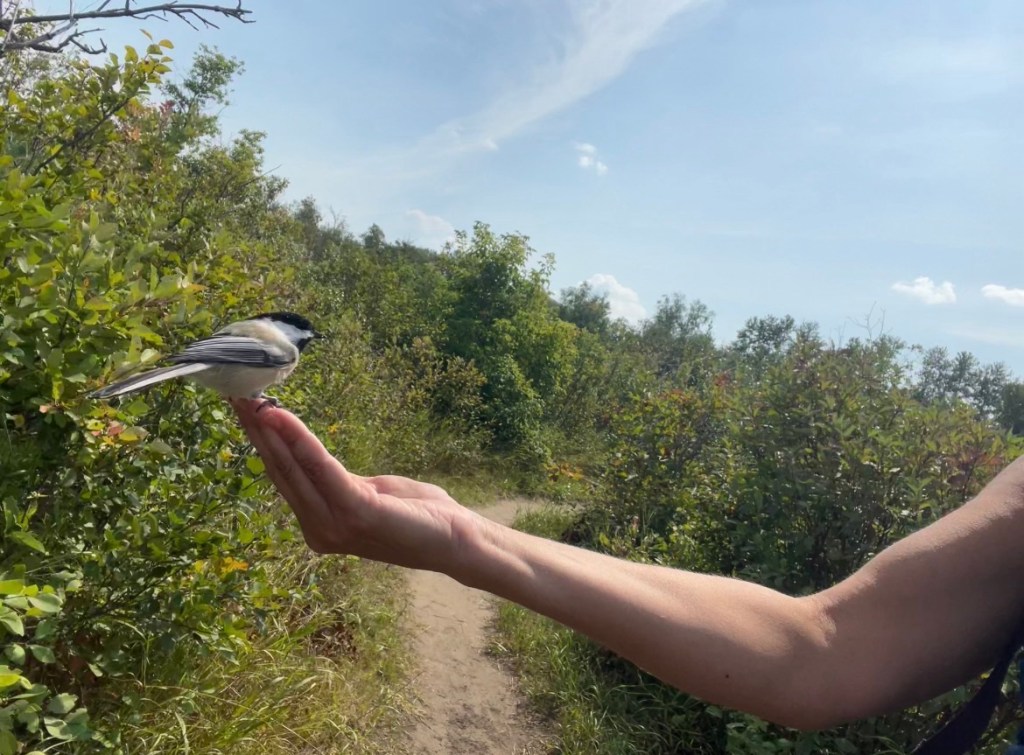
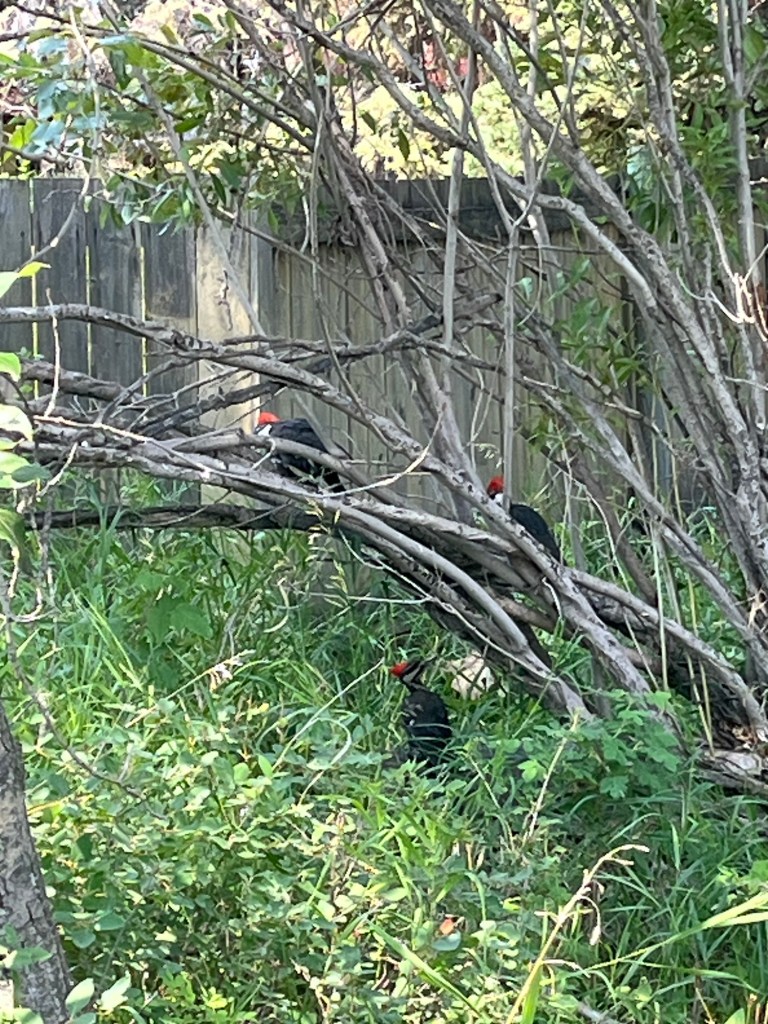
A bird I can’t identify.
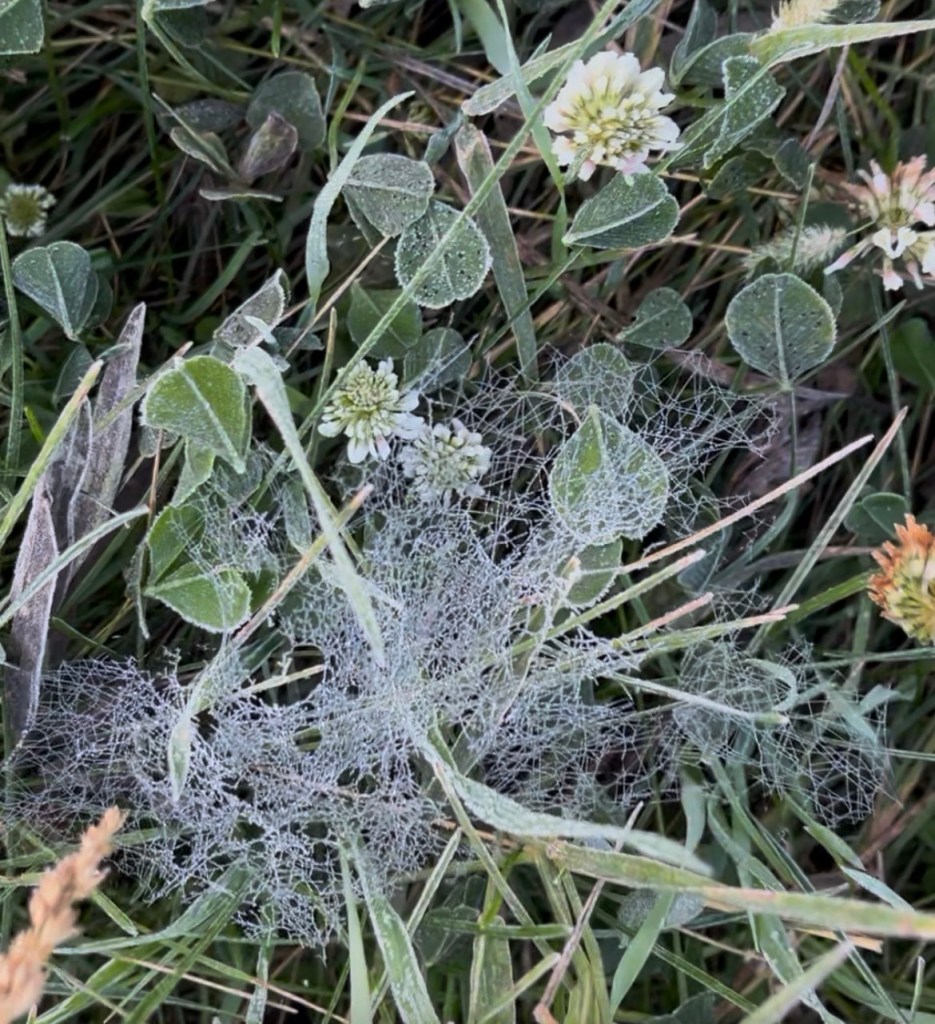
A spider web I would have walked right past.
I don’t have to figure anything out.
I don’t have to make the experience meaningful.
I don’t have to turn it into a lesson.
I just notice.
What has my attention right now?
Then I follow that.
And when something else catches my attention, I follow that instead.
It’s quite simple.
I don’t have to live three days ago. I don’t have to live three weeks from now.
I can live right here.
With the trees.
With whatever happens to be in front of me.
Wisdom doesn’t mean having it all figured out
I don’t think the podcast was suggesting that wisdom means knowing exactly what to do.
Sometimes we don’t know.
Especially with chronic pain.
There is a lot of trial and error.
What helped yesterday might not help today.
Something that works beautifully for one person might make another person’s body stage a small coup.
There isn’t always a clear answer.
But wisdom doesn’t necessarily require a complete plan.
It can be much smaller.
One thing I know I can do is this.
I can drink some water 💦
I can rest before I completely crash. 😴
I can step outside 👣
I can notice what my body is telling me 👂
I can take a short walk instead of deciding I need to complete a 5km hike or not bother going at all 🚶♀️
I can spend ten minutes among the trees 🌲 🌲
I can stop arguing with the reality of today long enough to actually experience today 🧘♀️
That last one is hard.
Because sometimes I want today to be different. But wanting it to be different doesn’t change what it is.
And accepting what is happening right now doesn’t mean I like it. It means I stop spending all my energy fighting a moment I can’t change.
Maybe that’s where wisdom starts. Not with a solution. With noticing.
Maybe the kids have it partly right
My grandkids aren’t worried about whether they’re making enough progress in life.
They aren’t measuring the day by how productive they were.
They aren’t wondering whether they should have made a different choice three years ago. (One of them wasn’t even here three years ago.)
They aren’t lying awake thinking about everything that could possibly go wrong tomorrow.
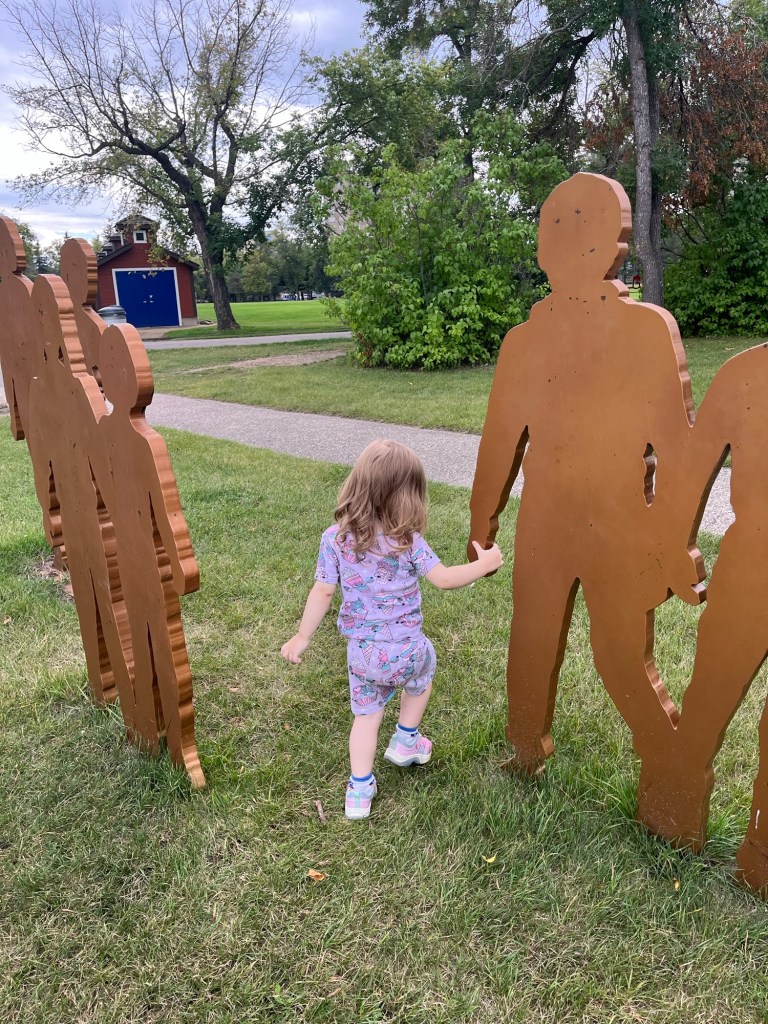
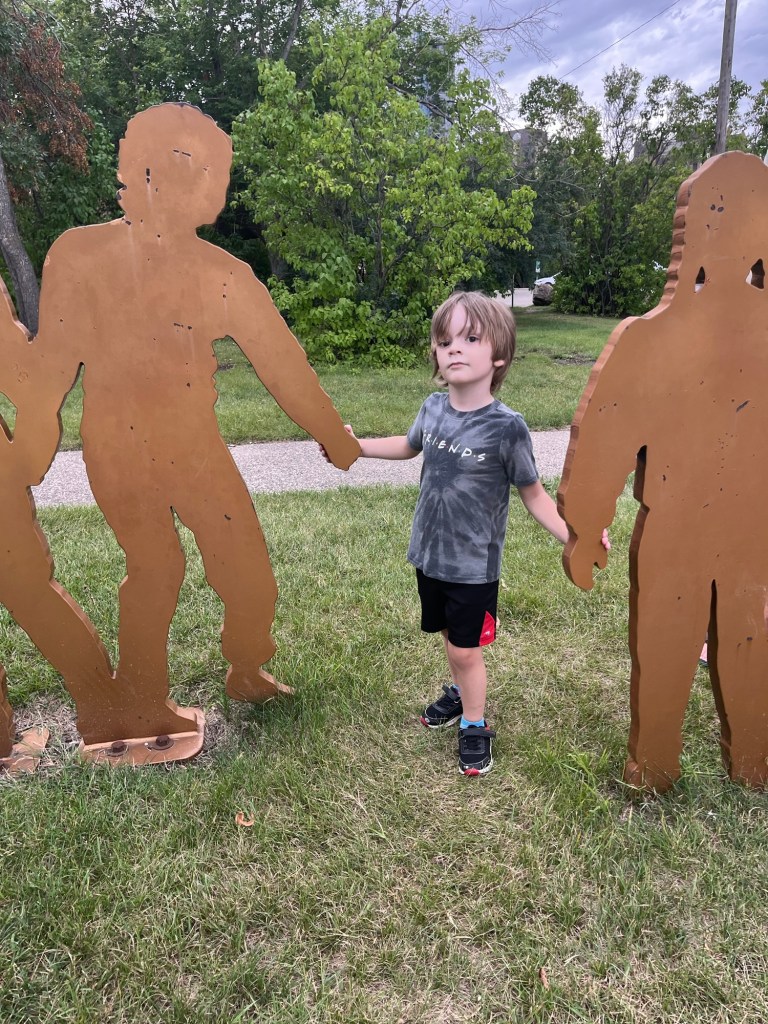
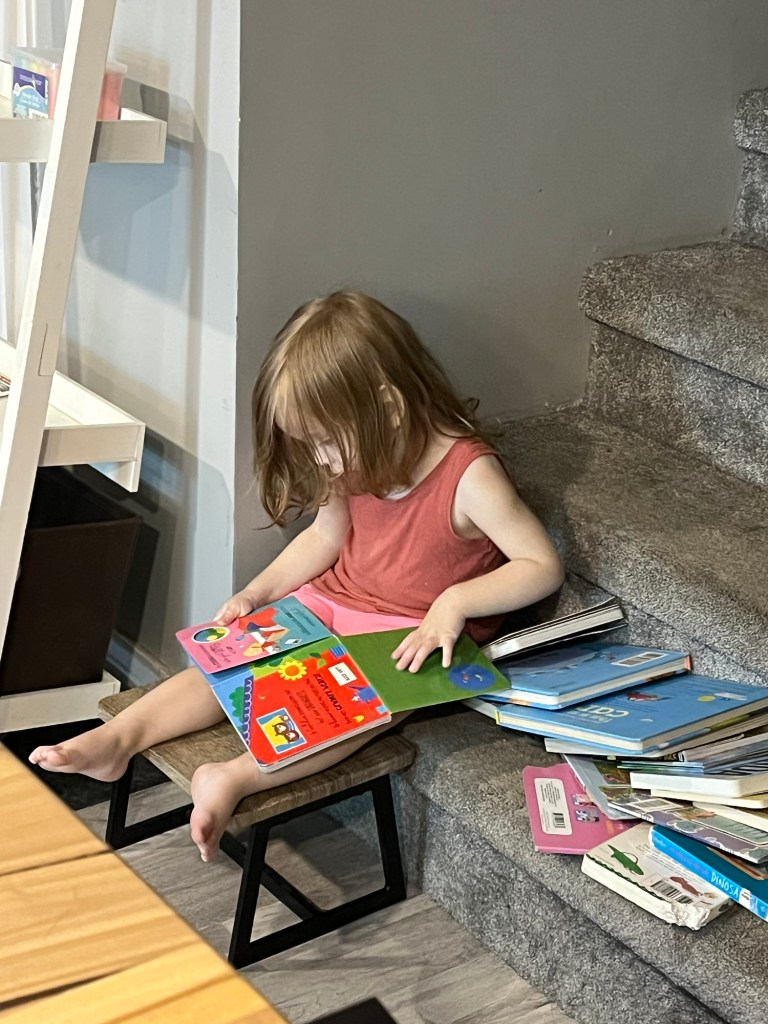
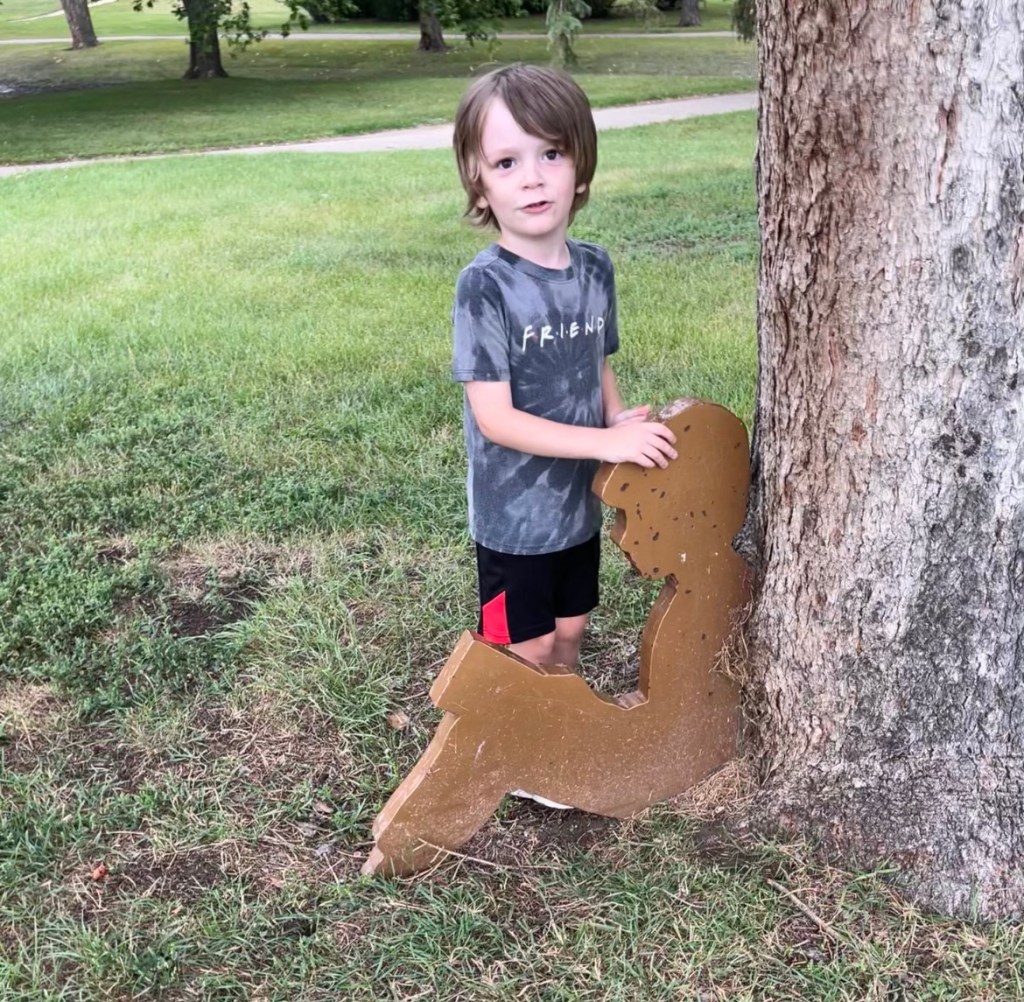
They are here. Reading a book. Talking to a wooden cutout.
And maybe I don’t need to become a child again to learn from them.
I can become child-like without becoming childish. And remember something children seem to know naturally:
Pay attention to what’s happening right now.
“Christopher Robin, what day is it?” “Today” “My favourite day”
There will be time for tomorrow when tomorrow gets here.
There will be things to learn from yesterday when yesterday needs to teach me something.
But right now?
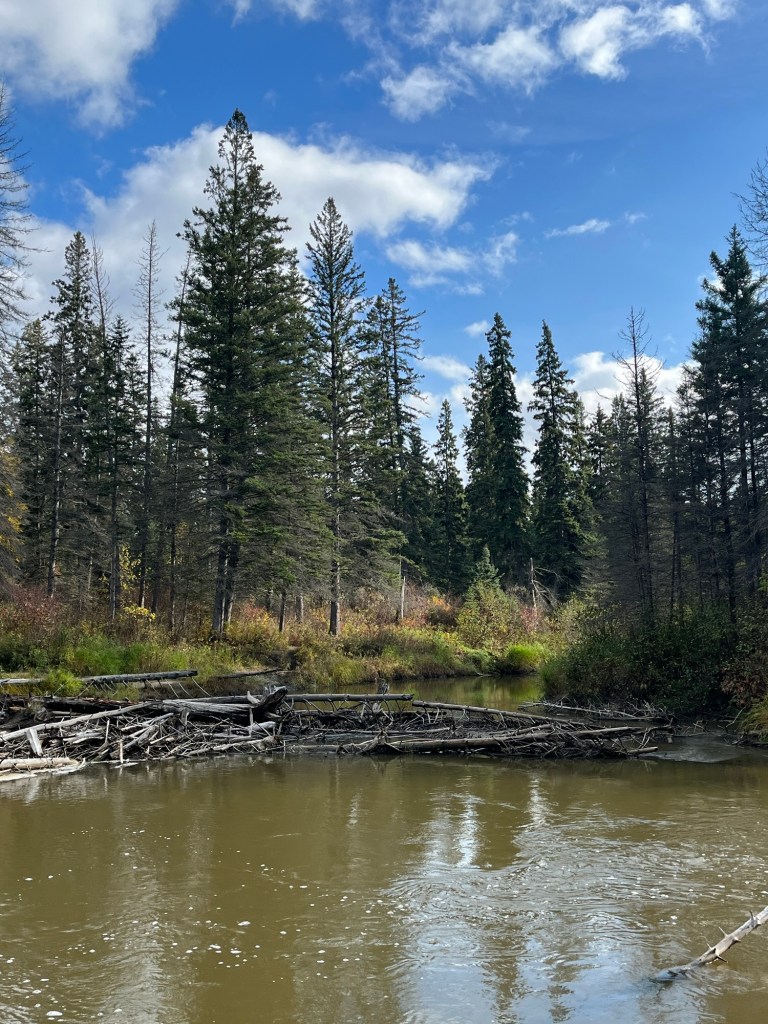
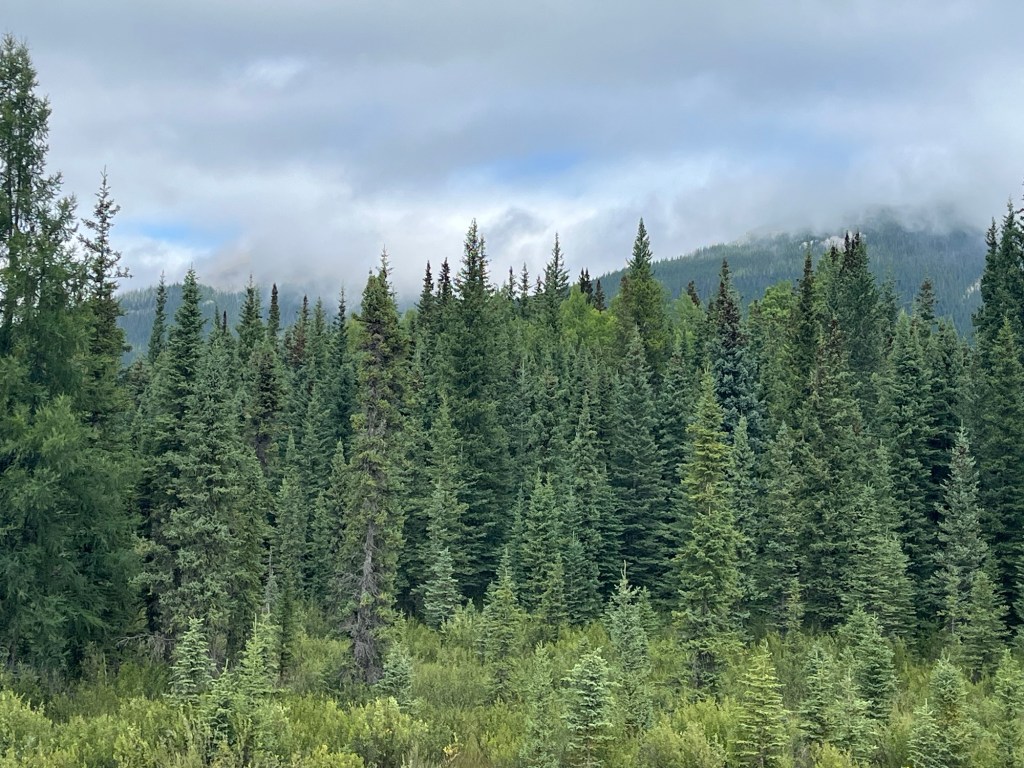
There is a tree.
There is wind moving through the leaves.
There is a bird making an extremely confident noise.
There is this breath.
There is this moment.
And for today, maybe wisdom is simply noticing that I’m here.
Then taking the next small step. We are all walking miracles. Let us strut accordingly.
Valemor
(n.) The quiet pride of knowing you survived something without becoming cruel, loud, or bitter. 🙌
The ideas about worry, wisdom and being stuck were inspired by the podcast Better Than Happy: “Don’t Worry” Is Terrible Advice, August 27, 2026
Menopause, memory, and learning to live in a new season
There is a seasonal transition happening inside my brain. Even if the natural world is slow in its transition to fall.
I know this is happening because things keep falling out of said brain. Like dry leaves off a tree on a windy day.
Thoughts. Words. Names. Entire conversations.
Sometimes I can actually feel the thought leaking out.
It was there. I had it. I was about to say it.
And then whoosh. Gone.
Much like the leaves outside right now, my thoughts have decided they have fulfilled their purpose and are ready to return to the earth.
The problem is that I haven’t said them yet. And suddenly all thoughts are gone. And I still have to appear as though I can converse like a regular adult.
My brain has entered autumn
Autumn is a strange season.
Everything is changing, but nothing is necessarily wrong.
The leaves change colour. The days get shorter. The temperature drops.
Trees stop doing what they did all summer and start conserving their resources.
The whole landscape looks different. And yet we don’t stand in the forest pointing at a poplar tree and say,
“The poor dear.”
We understand that it’s a transition.
A season. A change in the way the tree functions.
I think menopause can be a little like that.
Except nobody warned me that my brain might start dropping leaves. And suddenly be bare naked.
The disappearing conversation
One of my most ridiculous symptoms is what happens when I’m talking to someone.
It doesn’t matter who. A family member. A friend. A complete stranger.
If something catches my attention, even for a split second, I can lose the entire train of thought I was following.
Not the general idea. Not one little detail. The whole train. It has left the station. Immediately derailed. No survivors.
So I’m standing there looking at another human being vacantly and frantically wondering:
What was I talking about?Two seconds ago!
I imagine this does very little for the other person’s confidence in my abilities as a functioning member of society.
That’s fair.
If someone did that to me, I’d probably wonder if I should quietly take their car keys.
Then there was Nemo.
The other day I was telling my mom a story about a friend. In front of this friend.
Except I had ALL of the facts mixed up.
I got basically every piece of information wrong.
This friend, sitting there while I told the story corrected me.
I continued. She corrected me again. I continued. She corrected me again.
Five corrections in three sentences?!?
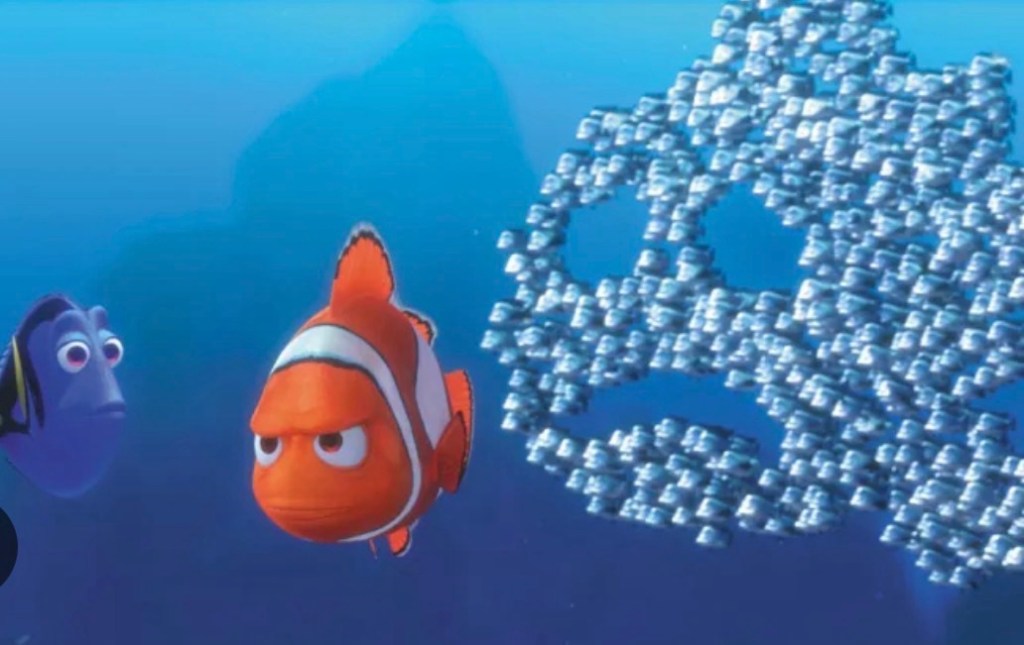
It gave strong Finding Nemo vibes. Remember when Dory is telling a school of fish passing by about Nemo while Marlin repeatedly corrects her?
“His son Fabio” “Nemo” “Nemo. Right.” “His son.” “Nemo.”
It was basically this scene. Except this time I was Dory, my friend was Marlin, and my mom was the poor unsuspecting school of fish.
I was one correction away from jumping in the lake.
There are days when my brain is so foggy from medication, exhaustion, hormones, or some magical combination of all three that I sound less like regular Dory and more like Dory speaking whale.
I think it’s important to laugh.
Because if I don’t laugh, I might start Googling early-onset dementia every time I forget the name of a friend I’ve had for 20 some years.
I’m not broken.
This is the part I wish more women heard. I’m not broken. And neither are you.
We are not pathetic. Ridiculous. Deficient.
Brain fog is a real and common experience during the menopause transition.
The Menopause Society reports that roughly 40–60% of midlife women experience cognitive symptoms, including forgetfulness, difficulty concentrating, distractibility and trouble finding words. These changes can be frightening because they can feel like something really serious is happening.
But the cognitive changes typically associated with the menopause transition should be mild, and dementia at midlife is rare. (The Menopause Society)
That doesn’t mean we’re imagining it. Or that our challenging experience isn’t valid.
And it doesn’t mean we should simply shrug and say, “Oh well. I’m old now.”
No. Our brains are changing.
There can be a loss of confidence that comes with this.
You know you’re capable. You’ve spent decades accumulating knowledge and experience.
You’ve solved problems. Raised children. Built careers. Managed households. Made decisions.
Remembered 47,000 things nobody else even noticed needed remembering. And then suddenly you’re getting an Error 404 message every time you try to access the frontal brain.
Or you’re halfway through a sentence and all suitable words abandon you in an ultimate betrayal of trust.
Or someone is looking at you while you desperately try to retrieve the thought that was just there.
And you start wondering:
Am I losing it?
There is an actual biological reason for this.
Estrogen receptors are widely distributed throughout the brain, including areas involved in memory, mood and other cognitive functions. During perimenopause, estrogen levels can fluctuate considerably before eventually settling at a much lower level after menopause. Research has found changes in brain structure, energy metabolism and blood flow during this transition, particularly in areas involved in memory and executive function. (The Menopause Society)
And then there are all the other things menopause can throw into the mix.
Hot flashes. Night sweats. Poor sleep. Anxiety. Mood changes. Stress. Fatigue. 💀
All of those things can make it harder to concentrate and remember.
So sometimes the problem isn’t that your brain has forgotten how to work.
Sometimes your brain is working while simultaneously dealing with approximately seventeen other things.
No wonder it occasionally says,
“You know what? I’m putting this thought down and walking away.”
But it could work on its timing.
Disclaimer: If something is interfering with your ability to work, function, communicate or enjoy your life, it’s worth talking to a healthcare professional. Especially if the changes are sudden, severe, progressively worsening, or feel very different from your usual brain fog.
The invisible part
I think the hardest part isn’t always the forgetting.
It’s what the forgetting can do to your confidence.
Because women are still expected to function.
We still have jobs. Families. Parents. Grandchildren. Appointments. Bills. Groceries. Passwords.
We have spent decades proving that we’re capable.
Then suddenly we can’t remember the word we have used approximately 900 times in our lives.
And that can mess with your head.
You begin wondering whether other people notice. Whether they think you’re less capable. Whether they’re quietly questioning you. Whether you’re losing something you aren’t going to get back.
That fear is hard. And so is the embarrassment.
Experiencing brain fog does not mean you’ve become less intelligent.
It doesn’t erase everything you’ve learned. It doesn’t erase your competence. It doesn’t erase the person you have spent your entire life becoming.
You are not broken.
You are living through a biological transition that can affect the way your brain functions.
That’s very different.
My experience is a little more complicated than the average menopause story. Perhaps yours is too.
Mine was surgical menopause, so there wasn’t a gradual transition. My ovaries were removed and my body went from producing its usual supply of hormones to suddenly having to figure out life without them.
I also had a bad reaction when I tried hormone replacement therapy, so that isn’t an option for me. Which means some of the symptoms that can be mildly annoying for one woman can feel like they’ve been turned up to eleven for me.
The brain fog, the temperature swings, the sleep disruption, the whole neurological circus can be a lot 😵 . I’m not saying that for sympathy. It’s simply part of the landscape I’m learning to navigate.
And then there’s the fact that I generally look fine.
That’s the slightly ridiculous thing about invisible conditions.
From the outside, I look like a perfectly ordinary woman going about her day. You can’t see the pain, the nervous system overload, the fatigue, the brain fog, or the amount of energy it can take just to appear like a functioning adult.
Add menopause to the mix and there’s even more happening behind the scenes that nobody can see.
Until I overheat.
Then suddenly my body’s commitment to being discreet completely falls apart.
I can go from looking perfectly normal to sweating so profusely that I resemble the co-pilot in the movie Airplane. Ridiculously conspicuous, completely unable to pretend everything is fine. As the sweating and heat achieve new heights people wonder what’s happening. While I am left wondering if anyone has a towel.
It’s almost impressive. If it weren’t so disgusting.
And there is something isolating about looking fine when you don’t feel fine. People naturally respond to what they can see.
If you look healthy, capable and put together, it’s easy for everyone, including yourself, to forget how much work is happening underneath the surface.
So yes, I might look fine. My brain might seem fine. My body might look fine.
And yet sometimes the inside is working through some stuff.
The forest doesn’t panic when the leaves fall
This is one of the reasons I keep coming back to the forest.
The forest is remarkably good at transitions. It doesn’t fight autumn. Or apologize for losing its leaves.
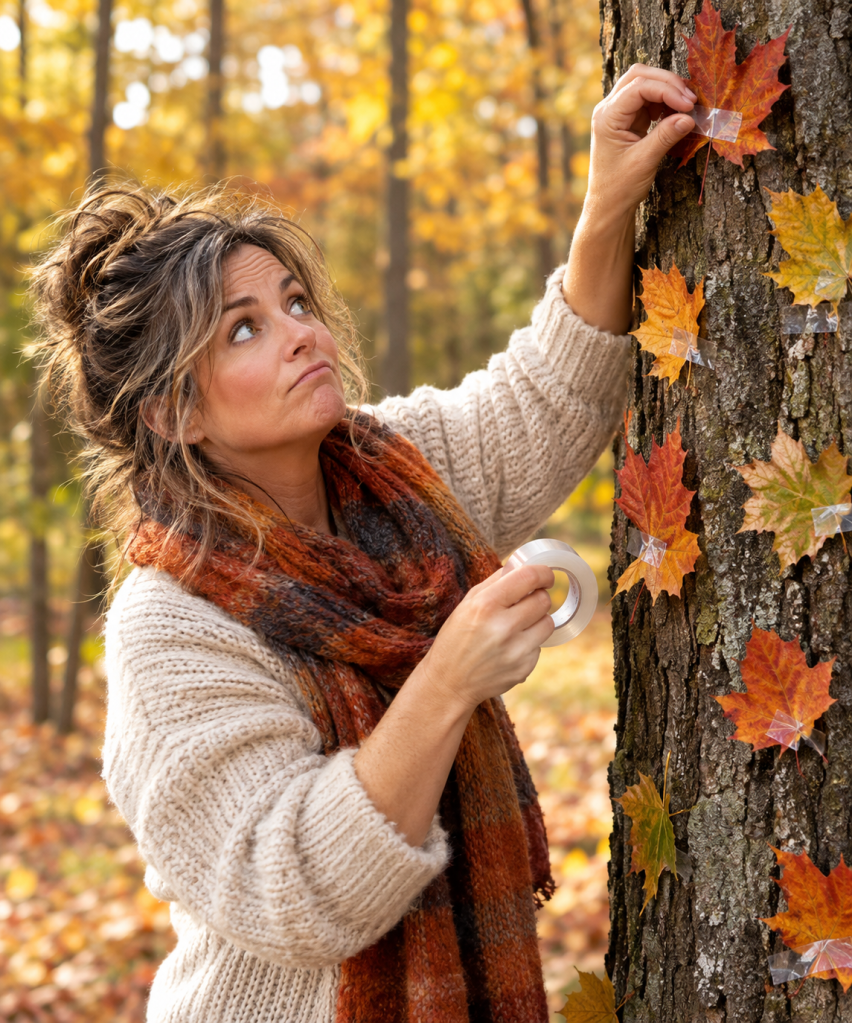
It doesn’t stand there trying to tape them back onto the branches. It lets them go.
And then it changes how it spends its energy.
There is something I need to learn from that. Because when my brain isn’t behaving the way it used to, my first instinct can be to push harder.
Try harder. Remember harder. Concentrate harder. Be more productive. Fix it. Get back to normal.
But I don’t think this season is asking me to get back to normal. I hear it asking me to learn a new normal.
That doesn’t mean accepting every symptom without question.
It doesn’t mean ignoring significant changes or assuming everything is menopause.
New, severe or progressively worsening cognitive symptoms deserve that conversation with a healthcare professional.
Then there’s forest therapy.
***Forest therapy does not replace medical care.***
But i have found it to be an effective tool for managing some of the symptoms that can accompany menopause.
Numinous
(Adj) the feeling that something sacred and mysterious is present in nature.
So what can the forest actually do?
A forest can’t restore my estrogen. It can’t remember Fabio’s name for me. It can’t make a hot flash disappear on command.
And it definitely can’t stop me from walking into a room and immediately forgetting why I’m there.
But it can give my nervous system a break from the constant demand to perform.
Forest bathing research has found short-term reductions in cortisol and other indicators associated with stress (PubMed)
And that matters because stress, poor sleep, anxiety and other menopause symptoms can all pile onto cognitive difficulties.
Sometimes managing the environment around the symptom is useful, even when you can’t eliminate the symptom itself.
The forest gives us an opportunity to slow down.
To pay attention without having to accomplish anything.
To move gently.
To breathe.
To notice.
To let the nervous system come down a notch.
And sometimes that is enough to make the brain feel a little less like the squirrels are running the office. 🐿️ 🥜
Try a seasonal brain reset
The next time your brain feels particularly autumnal, find somewhere outside where you can sit comfortably.
You don’t need a spectacular trail. A backyard will do. A park. A quiet corner under a tree.
Then try something I call Let the Leaves Fall.
Sit somewhere you can see a tree. Don’t try to clear your mind.
That is entirely too much pressure for a brain that currently can’t remember what it was doing three seconds ago.
Instead, notice the tree. Look at the leaves. Find one that is still attached. Find one that has fallen. Notice the movement. The colour. The texture. The spaces between the branches.Then notice your own body.
Where are your shoulders? Your jaw? Your hands? Your feet?
Take a slow breath and feel your feet against the ground.
Then ask yourself:
What am I holding onto that I don’t need to solve right now?
You don’t need an answer. That’s the point. Let the question sit there. Let your thoughts come and go without chasing them.
If a thought disappears, let it. If another one arrives, notice it.
You’re not trying to force your brain back into summer. You’re practicing being present in autumn. And that’s what regulation sometimes looks like.
Not fixing. Not forcing. Not fighting.
Just creating enough safety and quiet that your brain doesn’t have to work quite so hard.
Every season asks something different of us
The forest reminds me that change doesn’t always mean decline.
A tree losing its leaves isn’t dying.
It’s adapting. Resting. Reallocating. Preparing for what’s next.
Maybe we can offer ourselves the same grace. I don’t need to be embarrassed every time I lose a thought. I can simply say,
“Hang on. My brain just sprung a leak.”
And laugh.
I can ask someone to remind me what I was saying without assuming they’ve lost faith in my ability to function.
I can stop measuring this version of myself against the woman I was before my hormones decided to rearrange the furniture.
And maybe, when my brain won’t brain, I can remember:
I’m not broken.
I’m in a season of change. The leaves are falling. The landscape looks different.
Some things are harder. Some things may need more rest. Some things may need more support.
And some things might surprise me by growing in ways I couldn’t see coming.
I don’t have to love every part of the season. But I can learn to live in it.
And maybe, every once in a while, I can go sit beneath a tree and let the forest remind me that changing doesn’t mean failing.
It just means the season changed. And so did my memory.
I hear the word retreat and my brain starts packing a bag.
Preferably for somewhere with trees, a mountain, a few trails and nobody asking me what’s for dinner.
A retreat sounds lovely.
It also sounds like something that requires time, money, planning, a reservation, and quite possibly a whole new wardrobe.
But what if retreat doesn’t have to be a big event?
What if it can be ten minutes? A half hour? Or an afternoon?
What if you don’t have to go anywhere?
I’ve been reading Caroline Sylge’s How to Retreat, and I love the idea that retreat can be much more accessible than we tend to make it. A retreat can be a deliberate step away from the noise of ordinary life, and it can look very different depending on what you need.
Which got me thinking about a question I probably need to ask myself more often:
What does my soul need today?
Not what does my calendar say? Not what am I behind on? Not what would make me feel impressively productive?
What does my soul need today?
And sometimes the answer is surprisingly simple.
Āloka
Sanskrit and Pali. Meaning light, brightness, vision or enlightenment. When something inside you finally becomes clear.
Yesterday, apparently, my soul needed to get rained on.
I woke up thinking I should go to the gym.
That meant walking there, working out, and walking home again.
Then I looked outside. It was cloudy and raining.
My immediate response was something along the lines of, Excellent. Perhaps I shall simply allow these blankets to absorb me.
But eventually I got myself moving. Rain gear on. Out the door.
Only a few minutes from home, I noticed something. I was enjoying the rain. I could feel it on my hands. I could hear it hitting my hood. The air smelled different. The whole world seemed quieter.
By the time I reached the gym, I was more than ready to move.
I hadn’t needed to convince myself. I just needed to get outside long enough for my nervous system to catch up with the plan.
Sometimes we don’t need a retreat just a walk in the rain on the way to the gym. And sometimes we need the gym.
That’s the tricky thing about asking what your soul needs.
The answer isn’t always rest.
Sometimes it is movement. Adventure. Solitude. People. A nap. Fresh air.
The micro-retreat
I think this is where the idea of a micro-retreat joins well with the idea of forest therapy.
We have somehow managed to turn rest into another achievement.
Apparently we need the perfect location, the perfect playlist, the perfect journal, the perfect candle and three uninterrupted hours to properly relax.
I would like to formally announce this is unnecessary protocol.
Your retreat can be tiny. You could put a plant on your desk. Turn on a little water feature. Put your phone somewhere you can’t see it.
Sit there for ten minutes. Listen. Look. Breathe.
That’s it!
You have not travelled anywhere. Your bank balance remains unchanged. No achieved enlightenment. But you stepped outside the usual stream of demands.
That counts.
And tomorrow, your retreat might look completely different.
Maybe you need to sit in a cozy chair and read. Or wander for thirty minutes through a park while the leaves are turning. Perhaps you have enough energy for a three-hour mindful walk through the forest. Or just enough energy to sit on a bench and watch water move.
All valid needs.
Forest therapy makes room for all of this
One of the things I love about forest therapy is that there isn’t a mileage requirement.
Nobody hands you a medal at the end because you managed to walk seven kilometres while being mindful.
You don’t have to conquer the forest. You don’t even have to walk very far.
The forest isn’t a treadmill with better scenery. It’s an invitation to slow down and notice.
And the beautiful thing is that you can scale that invitation to whatever your life (and your body) can manage.
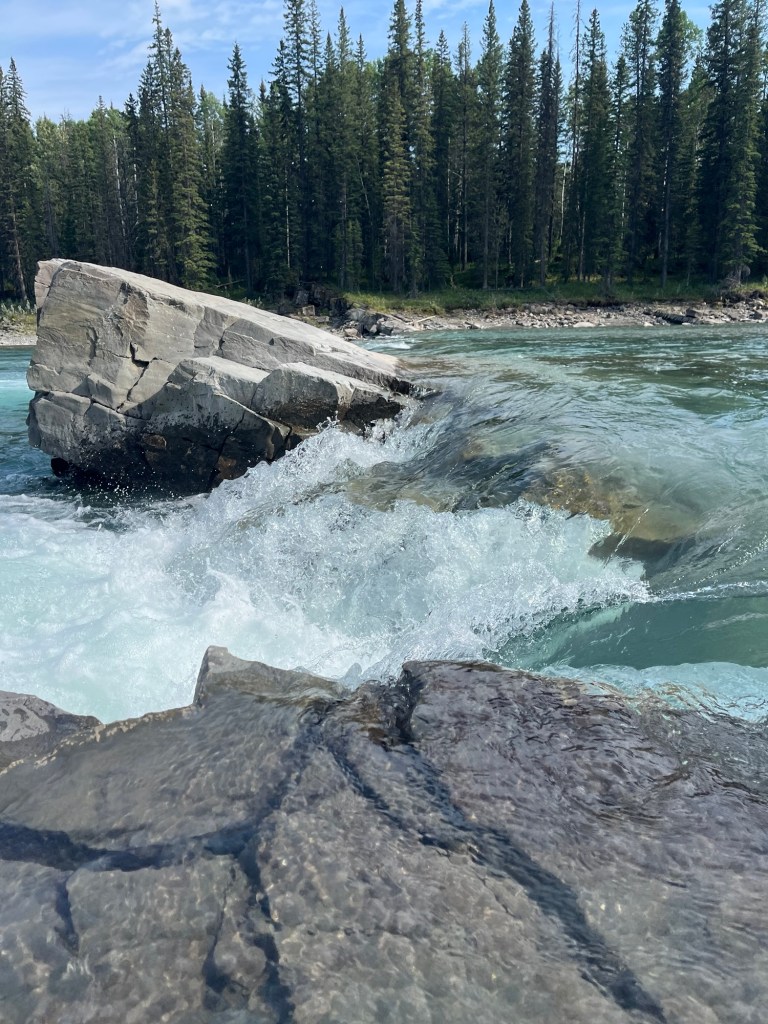
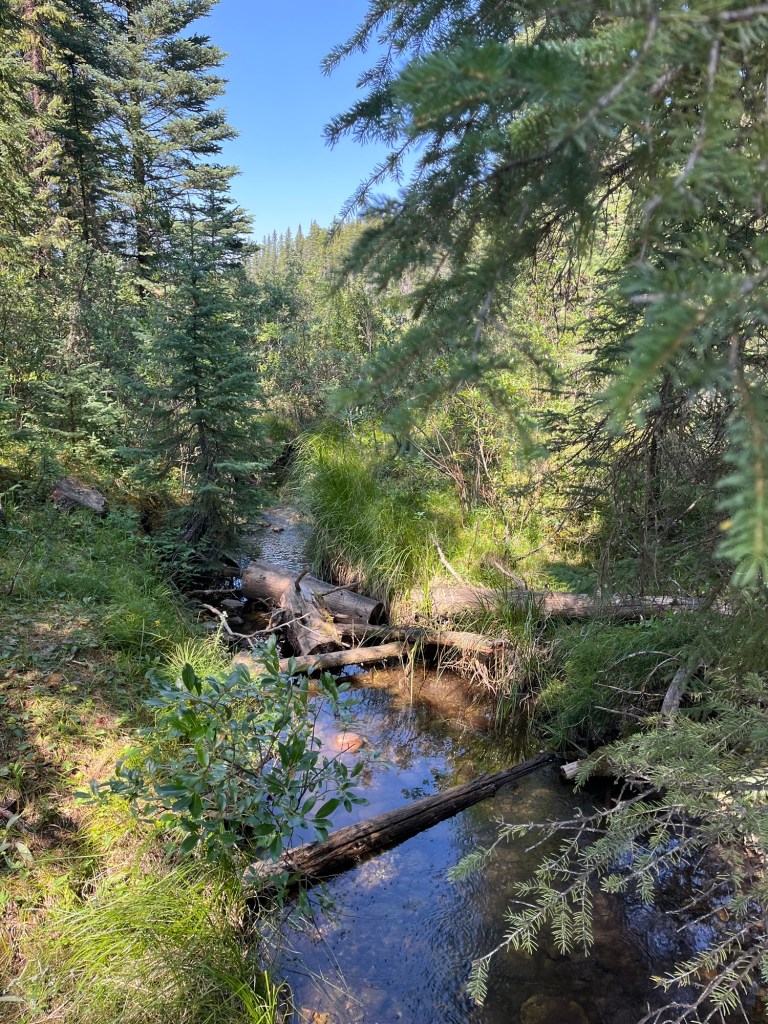
Nature can be a forest. It can also be a tree outside your door. A houseplant. A garden. Rain on your hood. The sound of a creek. Ten minutes watching birds. A patch of grass.
There is some pretty fascinating neuroscience behind this.
We don’t have to make nature complicated. Sometimes we just need to stop long enough to realize it is there.
Your brain might thank you
Our brains spend a tremendous amount of time directing attention, filtering distractions, making decisions and responding to demands.
Nature seems to give that hard-working attention system a bit of a vacation.
Researchers call one part of this soft fascination.
Instead of forcing yourself to concentrate on something, your attention gets gently captured by things like moving leaves, clouds, birds, water or sunlight.
You aren’t doing nothing. Your brain just isn’t working quite so hard at doing everything.
A 2025 systematic review and meta-analysis found that nature exposure was, on average, more cognitively restorative than non-nature exposure, particularly for working memory and attentional control. Interestingly, around 30 minutes appeared to be a particularly useful window in the studies they examined.
And a 2026 review looking across 108 neuroimaging studies found evidence of changes in brain networks involved in stress, attention and self-referential processing following exposure to natural environments.
Now, before we all start dumping our meds out the window, putting a houseplant beside our bed and declaring ourselves neurologically healed, a little caution is appropriate.
This is promising research, though not a magic prescription.
Studies differ in their methods, environments and participants, and researchers are still figuring out exactly what kinds of nature experiences work best, for whom, and for how long.
But the evidence is increasingly pointing in an interesting direction:
Getting away from the constant demands on our attention may actually give our brains some room to recover.
And I will happily take more reasons to go sit in the sun.
What if creativity is the point?
Unused creativity is not benign. It metastasizes. It turns into grief, rage, judgment, sorrow, shame.
-Brene Brown
This is another part of Sylge’s thinking that really caught my attention.
Creativity can be part of the retreat.
But it can also be what comes out of the retreat.
Sometimes you retreat because you need to write.
Other times you finally get quiet enough for the idea you’ve been carrying around in your head to come knocking.
Maybe you take photographs or write or sketch or paint.
Maybe you start noticing colours, shapes, textures and tiny details you normally walk straight past.
You don’t have to be an artist. You don’t have to produce anything profound.
Take a picture of a leaf because you like the way it looks. Write three sentences. Draw a tree that looks like a potato. It’s okay! The potato tree has value.
The point isn’t necessarily to create something impressive.
The creative act may simply be another way of paying attention.
And sometimes, when we stop trying so hard, something unexpectedly creative finds its way through.
My Micro-Retreat Menu
So, if you are wondering what retreat might look like today, here are a few possibilities.
🌱 5 minutes: Find one living thing. Look at it properly. Notice something you’ve never noticed before.
💧 10 minutes: Sit beside water. Real water is excellent. Tiny tabletop water feature? Also acceptable.
📖 20 minutes: Make yourself a cozy space and read. No multitasking. No “I’ll just check one thing.”
🍂 30 minutes: Take a slow seasonal wander. Notice what has changed.
📷 45 minutes: Take your camera and photograph whatever catches your attention. No theme required.
🌲 2–3 hours: Go into the forest. Walk slowly. Sit down. Listen. Notice. Journal. Rest. Let the experience unfold instead of trying to accomplish it.
And then there is:
🛋️ The “my body has voted” retreat: Stay home. Make tea. Read. Listen to rain. Look out the window. Rest without turning it into a failure.
Because sometimes the most mindful thing you can do is listen when your body says no.
Aging is when your brain says, “We ride at dawn.” And your body says, “We absolutely do not.
Retreat so you have something to give
There is another aspect of this that I think gets overlooked.
We don’t retreat only so we can feel better. Sometimes we retreat so we can return. Because when we’re depleted, we don’t have much left to offer anyone.
Our patience gets shorter. Our creativity dries up. Everything feels like one more demand.
And sometimes we need to step away. Not because we don’t love people, but because we do.
I’ve written about this before in A Grid of Love and Light, because I believe our light is meant to reach beyond ourselves.
But we can’t shine indefinitely on an empty tank. Sometimes we need to step back and replenish. Not so we can become more productive. So that we can return with a little more presence.
A little more patience. Creativity. Light.
So ask the question
Before you automatically do what you always do, stop for a moment.
Put down the phone. Look out the window. Take a breath. And ask yourself:
What does my soul need today?
Maybe it needs a forest. Or rain. Perhaps a workout. Or a book. Maybe it needs creativity. Or a friend. Maybe solitude. Or ten quiet minutes beside a plant.
Maybe it needs to crawl back under the covers and put out a Do Not Disturb sign for the world.
The answer doesn’t have to be the same tomorrow.
That’s the beauty of it.
A retreat doesn’t have to be a place. It can be a response.
A response to what your body needs. What your mind needs. What your soul needs.
And perhaps the goal isn’t to retreat far enough away that we become someone else. Perhaps it is simply to step out of the noise long enough to remember who we already are.
You don’t have to escape your entire life. You can simply step out of it for a little while.
When you’re living with chronic pain, migraines, fatigue, hormonal changes, or an autoimmune condition, every ounce of energy matters.
So it can be frustrating to discover that many of the products we use every day may be working against us.
The reality is that we live in a world filled with chemicals, pollutants, and environmental stressors. While our bodies are remarkably resilient, they weren’t exactly designed for a daily cocktail of synthetic fragrances, plastics, pesticides, and mystery ingredients with names that sound like they belong in a chemistry textbook.
I recognize that in speaking on this topic, I now resemble a kooky, woo woo spokeswoman for all things unconventional. But stick with me.
If you’ve ever looked at an ingredient label and thought, “I have no idea what any of these words mean, but I’m about to put them directly on my skin,” you’re not alone.
I’ve reached the age where reading labels is apparently one of my hobbies.
Welcome to the wacky world of hormone disruptors.
What Are Hormone Disruptors?
Hormone disruptors, also called endocrine disruptors, are chemicals that interfere with your body’s endocrine system, the network responsible for producing, transporting, and regulating hormones.
Think of hormones as your body’s communication system. They send messages that help regulate everything from sleep and metabolism to mood, reproduction, energy, and immune function.
Hormone disruptors can interfere with those messages by:
Mimicking natural hormones
Blocking hormone receptors
Altering hormone production
Affecting how hormones are transported or eliminated
In other words, they’re the equivalent of someone repeatedly hitting “reply all” on emails that were never meant for them.
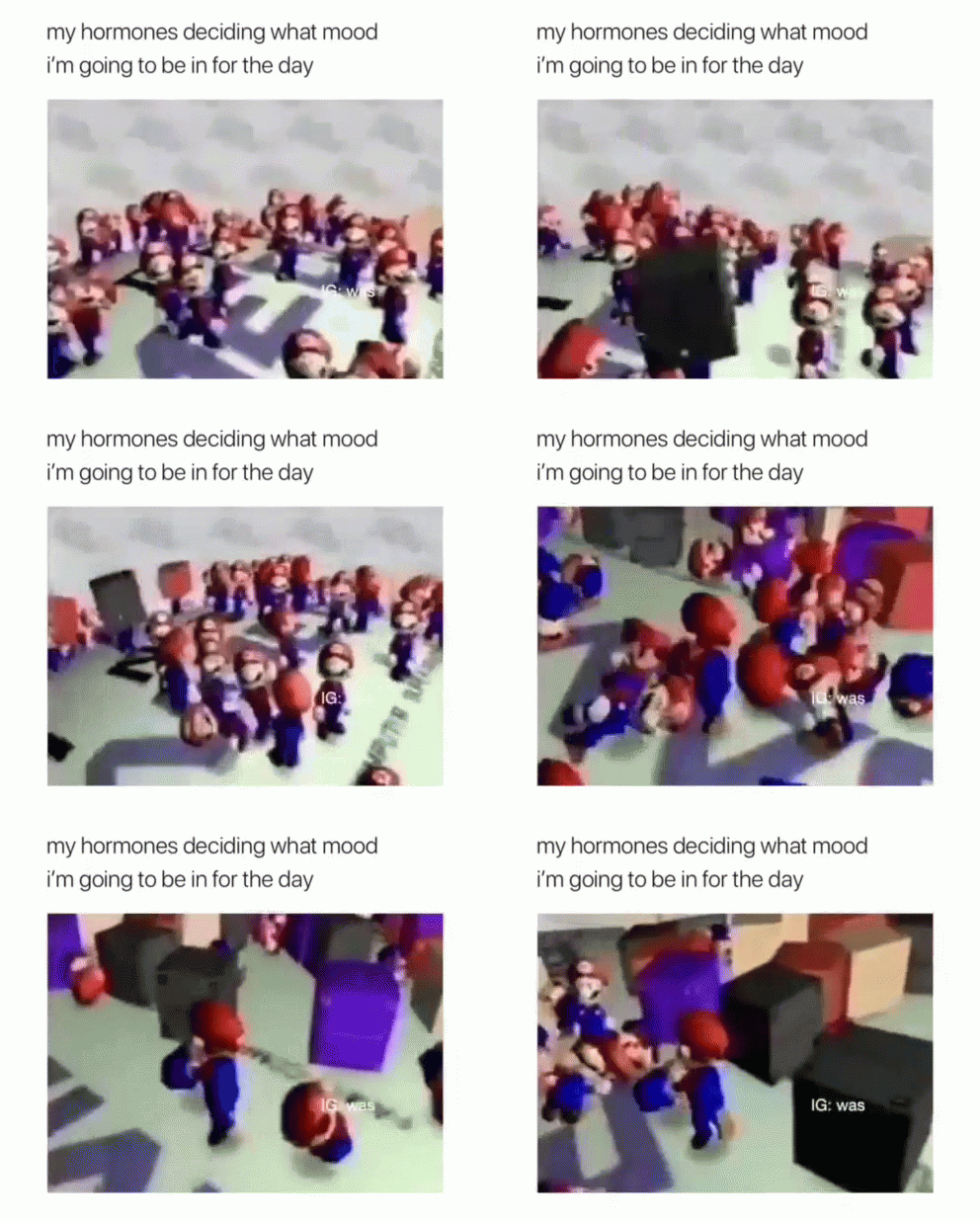
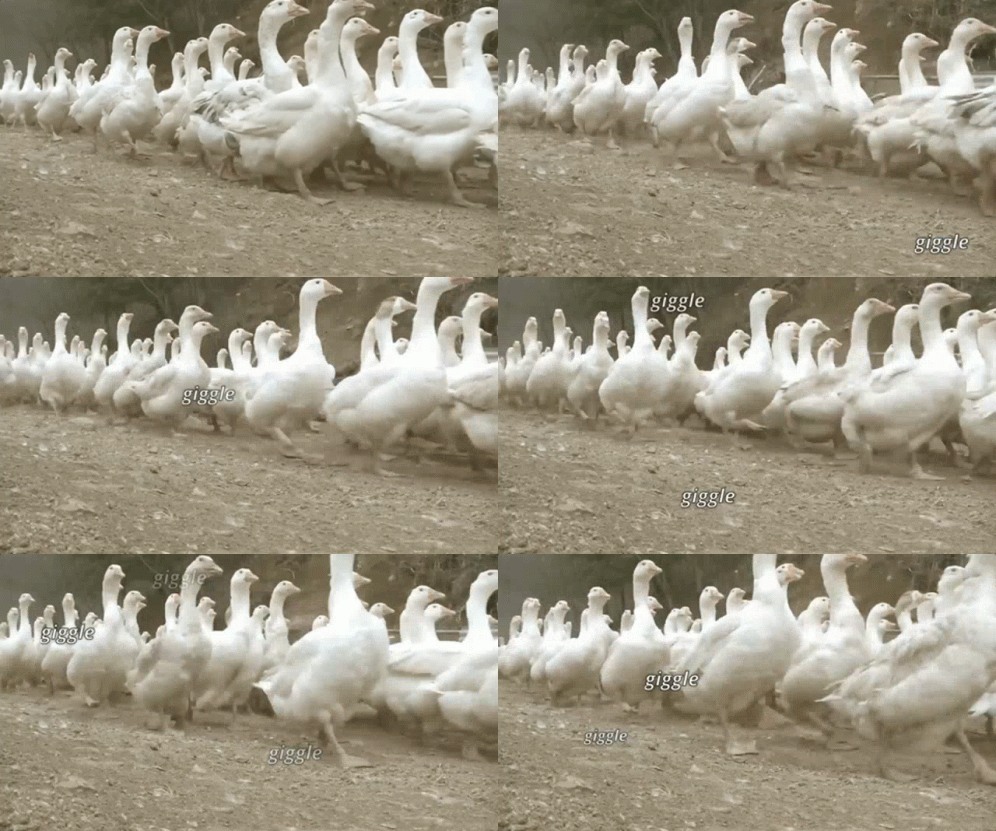
My hormones wake up everyday and choose unpredictability. They have the organizational structure of a flock of startled geese.
Why Does This Matter?
For years, many people with chronic conditions have been told that their bloodwork is normal, their tests look fine, and everything appears to be functioning as expected.
Meanwhile, they’re exhausted.
They’re in pain.
They’re dealing with migraines, inflammation, brain fog, sleep disturbances, mood changes, or symptoms that don’t fit neatly into a box.
Hormone disruptors aren’t necessarily the cause of these conditions.
But if your body is already managing chronic inflammation, pain, migraines, fatigue, hormonal changes, or autoimmune symptoms, reducing unnecessary stressors may give your system one less thing to deal with.
It’s not a cure.
But every little bit of support matters.
Symptoms That May Be Linked to Hormone Disruption
Hormone disruption can show up in many different ways Some common symptoms include:
Fatigue
Brain fog
Sleep disturbances
Mood changes
Anxiety
Weight gain or difficulty losing weight
Headaches and migraines
Skin issues
Fertility challenges
Irregular menstrual cycles
Low libido
Increased inflammation
The challenge is that many of these symptoms overlap with chronic illnesses, making hormone disruption difficult to identify.
Which is somewhat rude, if you ask me.
My Experience
When I first started learning about hormone disruptors, I had two reactions.
First:
“Well, that’s concerning.”
Second:
“There is absolutely no way I can afford to replace everything I own, let alone find the time and energy to make everything!” (mentally checks out of this topic)
Thankfully, I’ve since learned that reducing exposure isn’t about perfection.
It’s about making practical choices that support a body that’s already working hard.
Because if the wellness industry had its way, I’d be replacing every item I own by Tuesday. And while I appreciate the enthusiasm, my budget and my sanity have other things to do.
Where Are Hormone Disruptors Hiding?
Unfortunately, they’re not hiding very hard.
Personal Care Products
Shampoo
Conditioner
Hair products
Lotions
Makeup
Perfumes
Deodorants
Nail polish
Household Products
Air fresheners
Scented candles
Dryer sheets
Fabric softeners
Cleaning products
Food Storage and Packaging
Plastic food containers
Plastic water bottles
Plastic wrap
Certain canned food linings
Some non-stick cookware
Environmental Sources
Pesticides
Herbicides
Some furniture treatments
Certain stain-resistant coatings
One of the most common concerns is simply the ingredient listed as:
Fragrance
That single word can represent dozens. Or sometimes hundreds of undisclosed ingredients.
The goal is reducing your overall toxic burden where you reasonably can.
Some labels contain enough syllables to qualify as a spelling bee challenge. At what point does an ingredient list stop feeling informative and start feeling mildly threatening?
A Gentle Approach to Reducing Exposure
Put your garbage bags down.
You don’t need to throw everything away and start making your own soap from dandelions and determination.
You cannot eliminate every toxin.
You cannot control every environmental exposure.
And honestly, trying to do so would probably create more stress than benefit.
The goal isn’t perfection.
Small, sustainable changes tend to be far more effective than dramatic overhauls.
Start with one product.
Then another.
And keep going at a pace that feels manageable.
Homemade Alternatives
One reason many people choose homemade products is because the ingredients are simple, familiar, and transparent.
When you know exactly what’s in something, there’s less mystery.
You may also reduce your exposure to fragrances, preservatives, and other unnecessary additives.
Here are a few of my favourite homemade recipes:
Homemade Deodorant
Recipe @ healthylifetrainer Note: Unlike antiperspirants, which block sweat glands, this recipe functions as a deodorant. It helps control odour while allowing your body to sweat naturally. The other thing to be aware of is its ability to turn into deodorant soup when stored above room temperature. Store it in the cooler if you go camping!⛺️
A Forest Therapy Practice for Simplifying Your Routine
One of the biggest challenges with reducing hormone disruptors is deciding where to start.
Forest therapy offers a different approach.
Rather than creating a long list of things you have to change immediately, begin with awareness.
Take a slow walk in nature.
Leave your phone in your pocket.
Notice what catches your attention.
Listen to the sounds around you.
Feel the ground beneath your feet.
Allow your nervous system to settle.
When you find a place that feels inviting, sit quietly for a few minutes.
Ask yourself:
What products do I use every day?
Which products spend the most time on my skin?
Which products do I inhale regularly?
Which product would be easiest to replace?
Which change feels supportive rather than stressful?
Then ask:
“If I could change one thing this month, what would make the biggest difference?”
Forest therapy reminds us that healing doesn’t always happen through doing more.
Sometimes it begins by slowing down enough to notice what our bodies have been trying to tell us.
When I started forest therapy the trees and I got along immediately. Unlike my hormones 😖 😡.
Perimenopause
Slowly losing every chemical that was helping me tolerate people.
Health Is More Than Avoiding Toxins
Removing unnecessary exposures can be helpful.
But building health is equally important.
Sometimes we become so focused on what we should eliminate that we forget what we need to add.
The foundations matter.
Prioritize Sleep
Sleep is when your body repairs, regulates hormones, supports immunity, and recovers from daily stress. Clean up your sleep routine.
Eat Nourishing Foods
Focus on foods that support your body rather than aiming for perfection. Slowly move towards the diet your body needs.
Move in Ways That Work for You
The best exercise is the one your body can recover from. That answer looks different for everyone.
Get Outside
Sunlight helps regulate circadian rhythms, mood, and overall wellbeing. Get out in the first minutes of your day.
Nelipot
English; a rare and poetic word that refers to someone who walks barefoot, one who feels than earth beneath their feet, often implying a connection with nature or a simple, grounded lifestyle.
Put Your Feet on the Ground
Whether you call it grounding, earthing, or simply standing barefoot in the grass, many people report feeling calmer and more connected afterward. I concur.
Spend Time in Nature
Nature lowers stress, restores attention, and creates opportunities for rest and reflection. More than getting outside it is connecting with the natural world.
The forest continues to offer something many modern products can’t: simplicity. The more time I spend in nature, the more I understand why my body keeps asking me to return. The message is clear.
Less fragrance. More forests.
My nervous system is a strong advocate for sunshine, birdsong, and not reading every ingredient.
Why Forest Therapy Matters
Forest therapy isn’t about replacing medicine, specialists, or common sense.
It’s about creating conditions that support healing.
I’ve seen it support people who were struggling.
I’ve also seen it elevate people who were already doing well.
Nature doesn’t ask us to be healthy before we show up.
It simply offers an environment that encourages restoration, resilience, and connection.
Whether you’re managing chronic illness or simply trying to feel your best, time in nature can be one of the simplest and most accessible forms of self-care available.
Turns out one of the healthiest things I can do is wander through the forest looking slightly lost.
Final Thoughts
Nature has never pulled me aside to discuss my skincare routine. I don’t have to be a perfect version of myself before I can join.
It simply reminds me to take the next step.
Sometimes that’s all healing requires.
We can’t control every toxin, every chemical exposure, or every challenge life throws our way. But we can support our bodies through simple, consistent practices.
Sleep. Movement. Nutritious food. Sunshine. Fresh air. Time in nature. Small choices made repeatedly over time often have the greatest impact
Not because they’re dramatic. But because they’re sustainable.
And unlike the mystery bottle hiding under your bathroom sink since 2014, those habits never expire.
Maybe living your best life just means slowing down enough to see how good it already is.
Blooms break forth from the startled earth. The sky laughs. The trees, abashed, dress themselves in verdant green.
-Rick Yancey
Embracing Your Inner Warrior and Cuddle Bug
Have you heard of fierce self compassion? I have been reading Dr. Kristin Neff’s books. I have learned enough that I think I can convey some of what she teaches. In her research on self compassion, Dr. Neff has become the expert in her field. She has an innate ability to speak to the individual. In a way that is both calming and empowering. I highly recommend her as an author. Her work can be found at self-compassion.org. Stick around to learn about self compassion. And to answer these questions: Why is self compassion significant in healing chronic pain? And how is forest therapy a good support for this type of practice?
Do you know anyone that would gain from a lesson in self compassion? Share this post with them. Hook them up with my social media. And then plan to attend a forest therapy walk together with them in the next week or two. We are so close 😄! Click below to see what forest therapy walks are available so you are ready to book.
Nurturing Self-Compassion Through Sensory Awareness
Self compassion comes in many forms. Tactile- running your fingers along the back on your arms, getting the right temperature, pressure from a weighted blanket. Something fuzzy or squishy. Visual- lower the lights in the evening and in a bath, candle light. playing with colors. Auditory- listen to the music or nature sounds that lift your soul. Olfactory- what EO scent helps you feel balanced. Gustatory- a multitude of options from water to ice cream to tea, find what fills this sense for you. In filling these needs for myself, I have noticed a growing sense of self compassion. And it has been a support to me in healing all things chronic.
Note: to me, healing and cure are not the same. healing gets me to a place of functioning. i do not expect a cure in this life. but i would take one if offered. healing takes time. and doing the right stuff. that’s what i’m talking about here.
Another sense that I didn’t realize existed until recently. And I really didn’t pay any attention to it at all. Is interoception. That is my ability to understand the signals my body is giving me internally. For example, hunger, thirst, feeling full, relaxing tense muscles and calming a racing heart. I ignored my interoception signals as a mom of young boys. I prided myself on being able to hold a full bladder all day. Getting to the end of a day and realizing I hadn’t eaten anything. Or had anything to drink. I had to train this sense to be felt again. I had tucked it away but it is important to the overall health and function of my body.
Bursting at the Seams: The Threat of Overcapacity
Another internal neighborhood watch, if you will, is paying attention to my capacity. Knowing it is less at this stage of my life. At home. I only need to take care of myself, I still have a capacity to take on more. I add my family and my home. I am getting up there but all is still well. I add service and church responsibilities. Almost at capacity. Once I hit capacity, I experience emotions like overwhelm. Irritability. Exhaustion. Anxiety.
To decrease the overflowing emotions I can stop taking on anything else until things normalize. I can take a close look at what I have taken on and get rid of non-essentials. I can find the people that have a capacity to support me. Hand them some of what is making me overflow. I can look at specific issues that are in the overflow and problem solve how to manage them. What is in my control and what should I do to have a positive influence on those things? Through it all I speak kindly to myself which also keeps the capacity from boiling over.
Achieving Balance: Three Wins for Success
Dr. Neff’s research has proven that to thrive and find a sense of wholeness in our lives. We need to find a balance between tender and fierce self compassion. In our tender compassion. We recognize that in accepting ourselves, we alleviate our own suffering. This type of compassion leads to inner healing. Our fierce self compassion alternatively, provides a springboard for taking action. We draw boundaries by learning when to say no. We recognize our needs and learn where to say yes. We are motivated in our growth to reach out and have an impact on our world and those around us. This type of change leads to outer healing. It all starts with that balance between tender and fierce self compassion.
Self compassion includes finding ways to meet our own individual needs. To provide for our needs we should set up our day to experience at least three wins. A physical, a mental and a spiritual win.
A physical win can look like a forest therapy walk! Drinking enough water. Eating nourishing meals and getting enough sleep. Deep breathing.
Mental wins can look like reading a book that inspires or educates you. Writing in your journal. Organize an uplifting playlist and enjoy. Or catch up on a podcast or TED talk that can get you to your next level. And here again we can list forest therapy as a mental win. Declutter a space or meditate to clear up some head space.
Spiritual wins are my favorite. Praying or setting intentions for the day. Hey, wouldn’t ya know, a forest therapy walk and spending time enjoying and appreciating nature also hits a spiritual win! Reflect at the end of your days.
The Power of Self-Compassion in the Chronic Illness World: A Gentle Uprising
Not Okay

I am not okay today.
So, in the absence of okay,
what can I be?
I can be gentle.
I can be unashamed.
I can turn my pain into connection.
I can be a student of stillness.
I can be awake to nature.
I can sharpen my empathy
against the stone of my discomfort.

I am not okay.
but I am many worthy things.

-Jarod K Anderson (the CryptoNaturalist)
Some nights, the soul weeps louder than the eyes ever could.
-Edgar Allan Poe
There is a weird phenomenon in the world of the chronically ill. It is the place of the in between. A place between too sick to function and not sick enough to get support. You almost puke but you don’t. Your muscles cramp so bad you almost can’t stand. But you can. You always have pain but it’s not always awful. There is no surgery that will fix it. There is no research being done on it. Because there is a lack of belief that this exists. You forget EVERYTHING, but everyone is forgetful. Your BP is low but not low enough to treat it. Your anxiety is high but they say just manage it. You want answers but doctors don’t think there is one. Have you ever wished you were more sick so you at least have the benefit of a desire for understanding?
Self compassion here says I am just the right amount. For today. I am sick and I can rest even if others don’t understand. I won’t puke but my nausea is enough to be gentle with myself. When my muscles cramp I will take care of them. When there is pain, no matter the level, I will not be upset. I can be tender and inquisitive.
☝🏼 A close look at how symptoms can come out of nowhere and knock you off the couch. ☝🏼
I DON'T LOOK SICK

I DON'T LOOK SICK, but my legs will often feel like wet spaghetti and will go numb and give out on me without warning.

I DON'T LOOK SICK, but I live with an intense deep exhaustion that makes every movement feel like I'm trying to move at the bottom of the ocean.

I DON'T LOOK SICK, but I suffer from an extremely sensitive heat intolerance that makes me feel light headed, ill and faint even in what feels like a normal room temperature to you.

I DON'T LOOK SICK, but my nerves often give me "phantom itches" that make me scratch myself raw at an itch that doesn't actually exist.

I DON'T LOOK SICK, but inside, my bones often feel like someone is using a jackhammer on them, especially during a change in weather.

I DON'T LOOK SICK, but if anything, even something little, stresses or worries me, my body rebels and symptoms flare up just for the fun of it.

I DON'T LOOK SICK, but it's extremely difficult for me to concentrate on anything, and as a result my memory suffers drastically.

I DON'T LOOK SICK, but the simplest tasks can take me 5 times longer and takes 5 times as much energy to finish that a "normal" person.

I DON'T LOOK SICK, but you'll never know the struggle beneath the surface.
I have been dealing with chronic pain for a while now. There have been weeks where all I could do was lay down. That leaves a lot of time for thinking. I know my thoughts can create my reality. So I want to be careful with them. Since learning this painful lesson I have seen my life blossom as a result.
Over the last few years I have seen my tears turn to blossoms of understanding. Self compassion and holding a space for myself at all of the stages of healing has been critical. At times I can look back and see tender self compassion. When the tears would flow. And I would be okay with it. I would not hold back. Other times I can see evident in my behavior the fierce self compassion that Dr. Neff talks about. Where I learned to set boundaries and how to recognize my own needs. To act for my own best outcome.
In motu, veritas: blooms after the storm. When have you experienced this type of growth?
When all I can see ahead are endless days of pain, I need to take a step back. I know in those times I am getting lost in the weeds of my thoughts. I find a better look out spot and get a sense of what is important. What is true. What is helpful. And the rest is weeded out. This is most likely to happen when I have not set myself as the priority and I need to recalibrate. Self compassion is the key to start the process.
I hope you find time to be happy. Not just strong.
-Louise Kaufman
Life with chronic pain is demanding. But with a combination of fierce and tender self compassion, balance is restored and hope is renewed.
So many days can feel like a struggle. Remember to find something to laugh about and someone to laugh with.
Maybe you could give me a hug and slowly loosen your hold and then you could tell me what my blood pressure is.
I just had a discussion with a friend the other day. We both excelled in school. Yet we struggle in life. Due to chronic illness. We had such high hopes being that we read significantly higher than our grade level. Surely that’s the number one marker for success in later life. This is regrettably not the case. Well that’s a fine how do you do!
The Wonder of Forest Therapy: A New Edge on Chronic Illness Relief
I love the idea of collecting sunsets. In a jar! What can you collect in your forest therapy this season? Campfire collection. Rainbow collection. Starlight collection. Wildlife collection. You can take a mental picture. Sketch it in a journal. Take an actual photograph or video. It does not need to be posted on social media to make it valid. This is your collection. Find what works for you.
When we go for a forest walk together I can offer invitations such as the following.
Forest bathe at sunrise or sunset. Find a good perch and invite the sun into the day. Or tuck it into bed at night.
Bring your journal and sketch any signs of spring that you see.
Dedicate a part of your walk to gratitude, what do you see on your walk that gives you a sense of gratitude
SUSURROUS (adj)- full of whispering sounds
Can you find a susurrous space that enhances your forest experience?
Personal Benefits of Forest Therapy and Self Compassion
I can not put into words the how or the why of forest therapy for pain relief and chronic illness. I can direct you to the work of Kristin Neff for the how and why of self compassion. And I can speak by experience that I am getting my life back as I practice both. As I learn and practice forest therapy. Is it worth the effort for you to try it? Perhaps you will get your life back too.
As we practice compassion for ourselves remember to be kind to one another. We never know what the other is going through. As women, our bodies and our brains go through a lot. Chronic illness, pain and fatigue are a lot. And we all have that one chin hair that we are locked in a lifelong skirmish with. Give each other grace. Enjoy the tale of this Grace 👇🏼 and her way to self compassion. And remember to laugh! Have a great week my chronic comrades!
I wonder if the snow loves the trees and fields, that it kisses them so gently? And then it covers them up snug, you know, with a white quilt; and perhaps it says, “Go to sleep, darlings, till the summer comes again.”
-Lewis Carroll
Have you heard the term ‘soul investment’? I am determined to make this a year that I invest in my soul. For me that includes times for what matters to me. Here is my short list. Play. Rest. Meeting my own unmet needs. Being authentic. Self care. This is my non- comprehensive list of criteria that I will prioritize to invest in my soul. As you read the post today, think about what your list is. To invest in your soul.
First, I want to take a moment to welcome all those who have recently subscribed. If you know someone who would benefit from my writings, please share this post with them. And invite them to connect with me on Facebook, X &/or Instagram.
Chronic anything is exhausting. My chronic comrades understand this. A thought occurred to me this week. It is also exhausting feeling obliged to constantly make lemonade out of the lemons life has brought to us. While the premise has its merits, when one has to make lemonade indefinitely, the exercise starts to feel futile. As chronic comrades we can set time aside to invest in our soul. This is my solution to keep the sugar supply coming for that constant demand on lemonade.
Are you tired of all the New Year’s resolution talk? It’s February already people! I’m somewhat embarrassed by a few of my goals. People traveled across mountains in wagons and I have ‘drink water’ on my to do list. What if instead of goals or resolutions, we talk about it in terms of investments in our soul. Know what you want and go for it.
👇🏼 This is my new dream! 👇🏼
Soul Investments
Soul investment is a term I heard recently. Souls have need to be invested in. Do you know what your soul needs? What if you thought of it as an investment? We are all either growing or dying. Do you agree? There is no standing still. If you are investing in yourself you are growing.
But we cannot simply sit and stare at our wounds forever.
-Haruki Murakami
Where do you want to experience growth? Physical strength or stamina? Mental strength and stability? Are you going to grow with the flow or be caught up by it and yanked around? Will you stand around looking for someone to lower the difficulty setting on your life? Or will you start making your own adjustments that will take you where you want to go?
When we speak of investing, it is more often in terms of finances. I know nothing about financial investing. But if I understand the basics. We take what we have. We place it in the hands of those that can make it grow. (Or we take time to learn for ourselves.) Hoping this practice will give us greater resources and opportunities for the future.
What if you applied that to your soul? Take what you have. Time, energy, resources. Allocate some of that to a space where it can grow. If you choose your allocations wisely, you will indeed have greater resources and opportunities in the future.
My short list of soul investing includes play, rest, meeting my own unmet needs, choosing authenticity, and taking time for self care. Here’s how that looks in my life as I strive to prioritize soul investments.
Play
I had to work to figure out what types of play I enjoy. I had to remember how to play. I was led in one book to think back to about the time I was between age 6 and 8. Before the influences of others changed my perception. What did I enjoy doing?
It took time but I remembered, I looove the swingset on a playground. If I can get a turn without pushing young children out of my way. It is a happy place for me. I love the motion and freedom. This is what I did as a young child. This is where I developed a friendship that started in elementary school. She continues to be a dear friend to this day 💗. On the swing is where I spent a most heart wrenching evening last spring. And on the swing is where I played and laughed with friends just a couple of summers ago.
What gets you into that reminiscent mood? Where did you spend your childhood days? Jump rope? Biking? Is there an element of play that you can re introduce into your life? Can you bake it into your routine? This way, it becomes something you automatically and joyfully do, rather than just another task. Maybe it’s dancing!
Grandchildren seem to be fabulous play partners. I highly recommend them. I enjoy recalling my own youth and days of raising my boys. As I watch the unfolding comedic dramas of my grand kids.
Rest
Rest is an act of faith. Sometimes I have to talk myself into resting. I remind myself that I know my body and what it needs. It is right and good that I should focus on rest and recovery at times. That is my job at this time.
I’m learning the importance of our circadian rhythms. Here is a brief overview. If it is of interest to you, I suggest you do some further research on the subject. For most of us, brief is best.
Our best chance for a deep, healing sleep is between the hours of 10pm and 2am. I have no problem being in bed by 8 or 9. But I struggle to set a time to turn off screens. I find it difficult to discipline myself and choose a standard time to fall into sleep.
My understanding is that around 5am there is an amount of cortisol released to start the waking process. Towards 7am blood pressure rises. Melatonin secretion stops. By 10am we are at our most alert state. By 2pm our coordination is at its most optimal. 3:30pm is when we display our best reaction time. 5pm is when our cardio and muscular strength peak. 6pm is when our blood pressure is at its highest. 9pm our melatonin secretion starts up again.
Working with this structure will give us the greatest chance for success. These hours and how they look for each of us will be different. I suggest working with the outline will feel like the least uphill battle. Here are some suggestions of what to do during those hours to get the most out of them.
5am watch a sunrise or stretch
7am breakfast, intention setting, walk
10am focused work, output, this is when we have the best clarity and concentration
12-2pm lunch, relax, nap, recover
2pm study, research, learn, then get outside
5-7pm share a meal, socialize
8pm night ritual, reading, idea creation, journaling, meditation
10pm sleep
Meeting My Unmet Needs
This is a big one. As an adult we still have needs. The same way a child has needs. They look different at different ages. We can go back and heal these parts of ourselves.
Disclaimer: The following should only be attempted while you are at a good baseline emotionally. I am not a trained therapist. This is an introduction only.
Inner child healing work. This is how it can look. I sit in a quiet spot where I will not be distracted. I picture a scene from my past that still comes to mind and bothers me. I see myself at whatever age I was when it occurred. I feel that little girl’s feelings. And then I take control of the situation. As my adult self. I talk to my young self. I soothe her emotions. I give her the information and the tools to come out of that upsetting time. I stand close and offer her my hand so she can follow me out. We don’t have to stay there anymore. We head to the light. I give her a hug and promise I am always close if she needs me.
Last week I talked about how trauma can flip our basic human thoughts around. Our wounded inner child works much the same way. We don’t even realize until we start to unpack those thoughts. This is hard work but remember that your bad days are part of your good life.
The poison leaves bit by bit, not all at once. Be patient. You are healing.
-Yasmin Mogahed
This here ☝🏼 is how we re- parent ourselves ☝🏼. And how to parent our children and grandchildren too. Thereby meeting our own unmet needs here and now.
Be Authentic
Be authentic. As a chronic everything manager, I do not have the time or energy to be inauthentic. I understand and foresee the cycle of chronic pain. I’m fine. I’m fine. I’m fine. I’m fine. I’m fine. I CAN’T STAND THIS ANYMORE. WHY DO I HAVE TO BE IN PAIN ALL THE TIME. THIS IS THE WORST AND I CAN’T HANDLE IT FOR ONE MORE MINUTE! I’m fine. I’m fine. I’m fine.
Maybe that’s okay. Any therapists can pipe in here. I find the authentic me in this cycle. The me with chronic pain. She has breakdowns once in a while. As long as I don’t spend too much of my time there. I don’t have to hold it together all the time.
Recognize that when you are going about your daily activities you are doing more than is on the surface. If you are one of my chronic comrades you will be experiencing pain, fatigue, etc. And on top of that, add this to your daily check in. Not just what is my pain level. Also ask yourself, what is my distress level. They co exist and distress can be over any aspect of our chronic lives. It is real and I need to take time to acknowledge it.
Another way I try to be authentic to my self and support my soul investment. Is by only saying ‘yes’ when I can do so authentically. I have found that when I do not give an authentic ‘yes’, it is then a resentful ‘yes’. Nobody knows what I am going through but me. So when others don’t understand and require more than I can give. It is still okay to say ‘no’. It leads to far less problems in the long run.
Self care- cocoon stage
Lastly today, I want to share some ideas on self care. This is not the type of self care with bubble baths and candles. That has its place. But I want to share this idea I learned, of a cocoon stage. When I experience one of those times in the cycle, the aggravating times. The times I feel I can’t go on. It is normal to go into a cocoon stage. It is a time to focus on my emotional health. It is a time to read. To cook. To get out in the sun. Find new ways to be creative. A time to reconnect with myself. Listen to podcasts that inspire me. I set boundaries so I can take this time. If I take the time and use it well, I emerge each time, a different version of me.
Here are some ground rules for the cocoon stage. Don’t judge yourself, the timing, or the process. Do the things you truly enjoy or have always wanted to try. From the outside this is likely to appear as a period of rest. Not so. This is hard work. So rest during the process. Not everyone will understand the need for this cocoon stage. That has to be okay. Give your nervous system the time it needs.
Then emerge. A beautiful butterfly. ☝🏼 This is how I picture someone that has taken time for soul investment 💗 .
These are ways I invest in my soul. How do you invest in yours? Perhaps some forest therapy? 😉
Head over to my contacts page for more information or to book a session for the spring. Take care my friends.