
Living on the Edge of Pain-Free

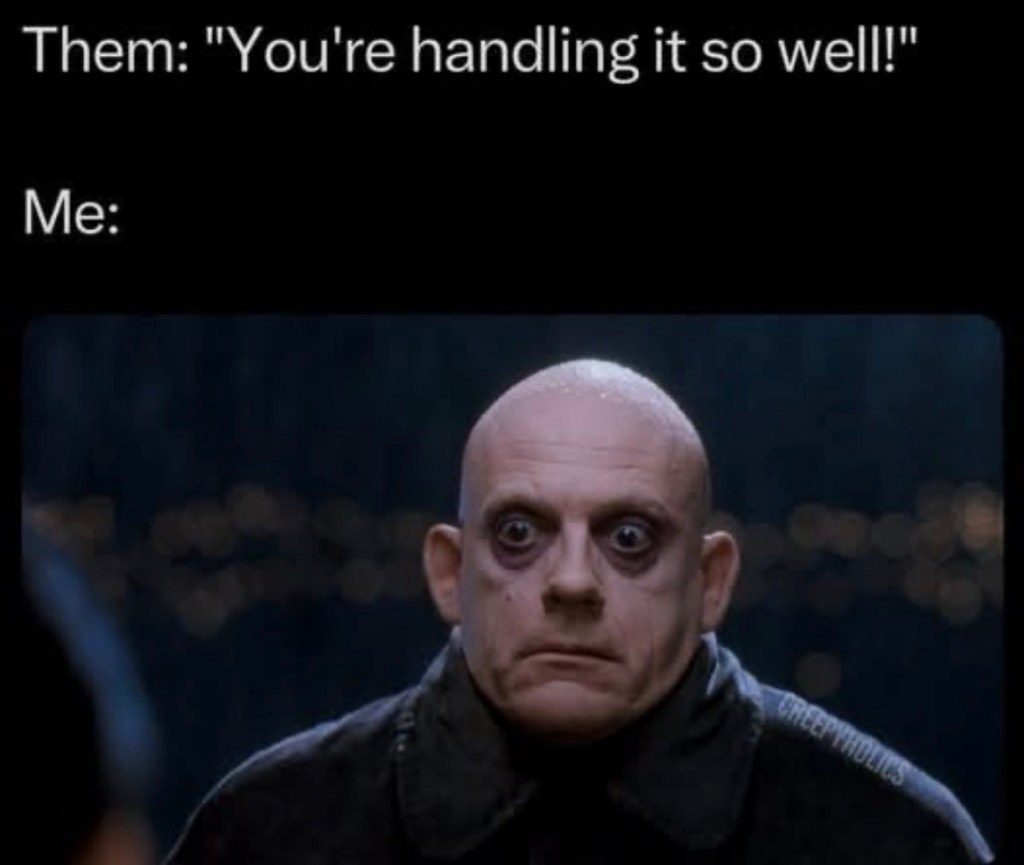
I feel unbalanced living in a body that looks perfectly capable of holding itself together. When the truth is, it can do nothing of the sort.

I mean this in more ways than one. I am physically unbalanced more often than I am balanced. This is due to my very unstable joints.

And then I look around and see the life I formed to manage this body, that it is in opposition to the rest of the world. Making emotional balance feel next to impossible.
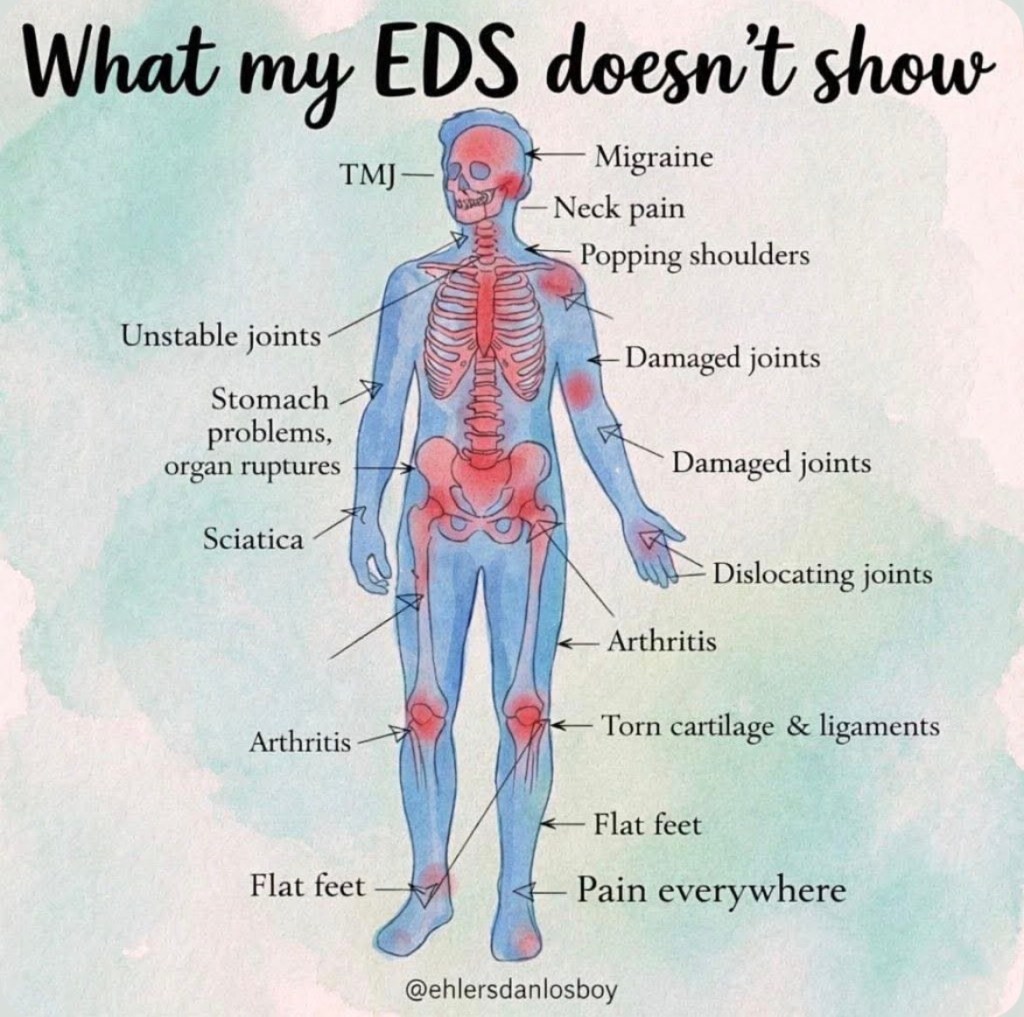
I can walk. I can hike. I can play with my grandchildren.

I can carry things, bend down, climb over things I probably shouldnโ€™t climb over and occasionally convince myself that I am a completely normal person who has this whole body thing figured out.
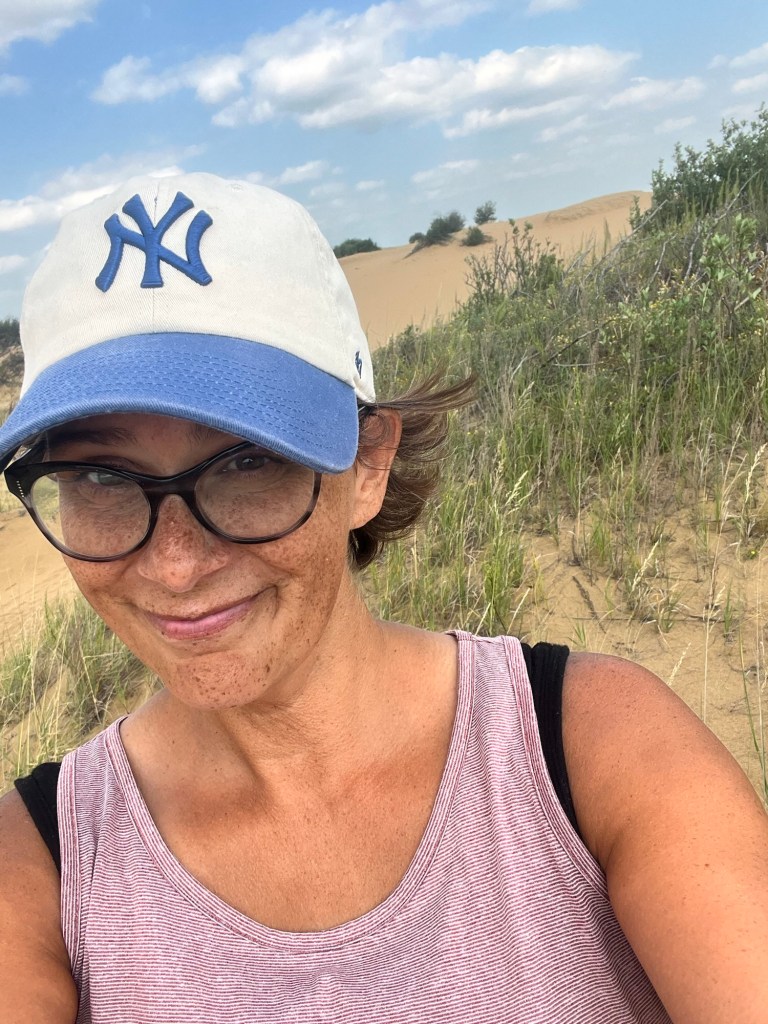
And then someone leans against me. Or my dog steps on my foot. Or I turn slightly to walk around someone. Or I roll an ankle on a trail.

And suddenly I become a sack of bones doing their best, more than that of a functioning skeleton.
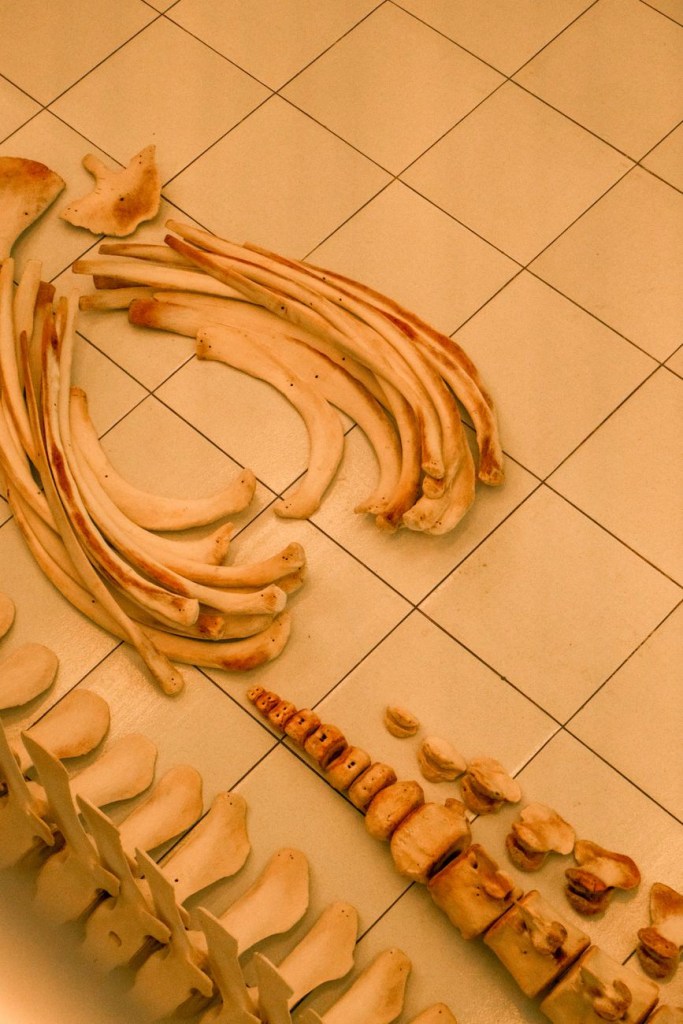
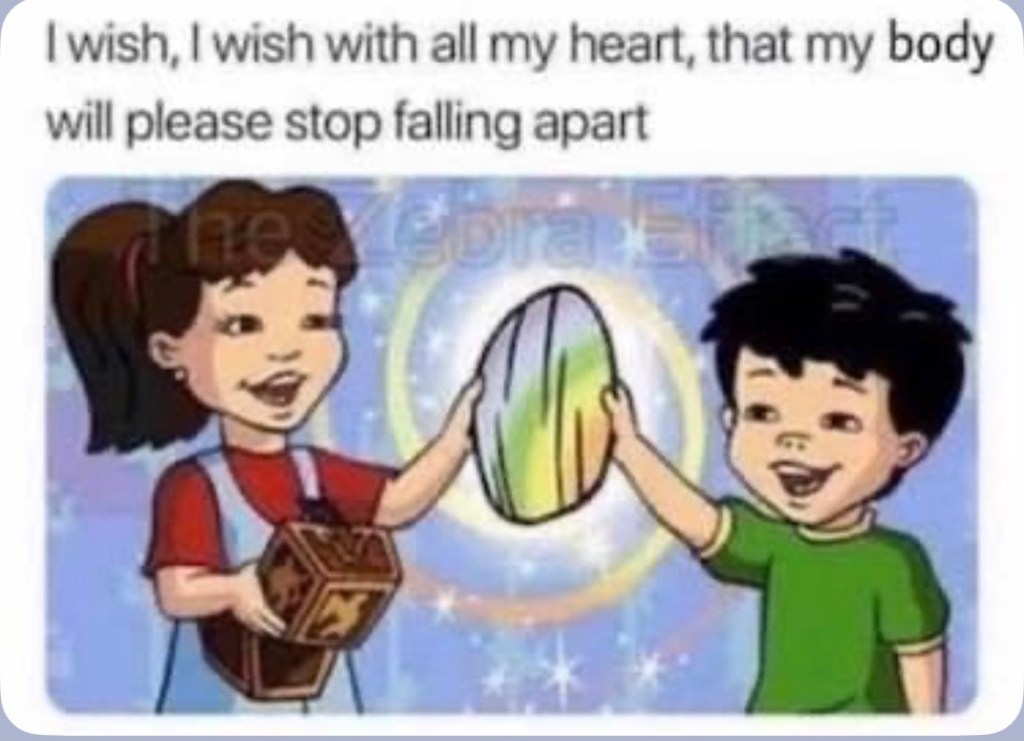
When your body is a little too enthusiastic about movement

I live with hypermobile joints.

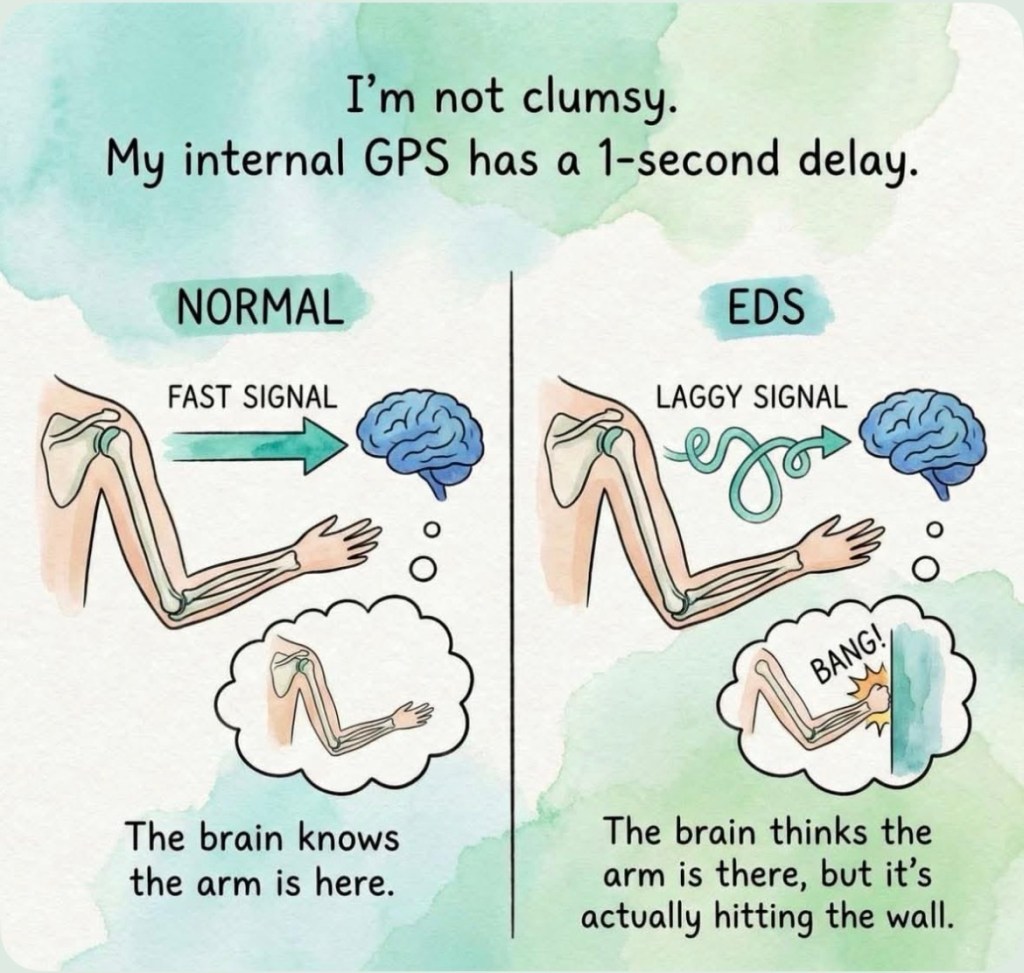
Hypermobile Ehlers-Danlos syndrome (hEDS) is one of the conditions that can fall under the hypermobility spectrum. It is a connective tissue disorder associated with generalized joint hypermobility, joint instability, chronic musculoskeletal pain and a collection of other fun features.

There isnโ€™t currently a laboratory test that simply says, Yep. Youโ€™ve got it. Diagnosis is clinical and involves looking at the whole person rather than one isolated symptom. (The Ehlers Danlos Society)

Hypermobility isnโ€™t simply being unusually flexible. It isnโ€™t about being the kid who could put her feet behind her head. Or fold her eyelids inside out. It isnโ€™t a party trick.

(That doesnโ€™t mean I canโ€™t do the tricks)

For some of us, the problem isnโ€™t that our joints can move farther than everyone elseโ€™s. Itโ€™s that sometimes they keep going when weโ€™d really prefer they didnโ€™t. Past what tendons can protect and ligaments can control.

My joints can be remarkably cooperative about leaving their assigned positions.
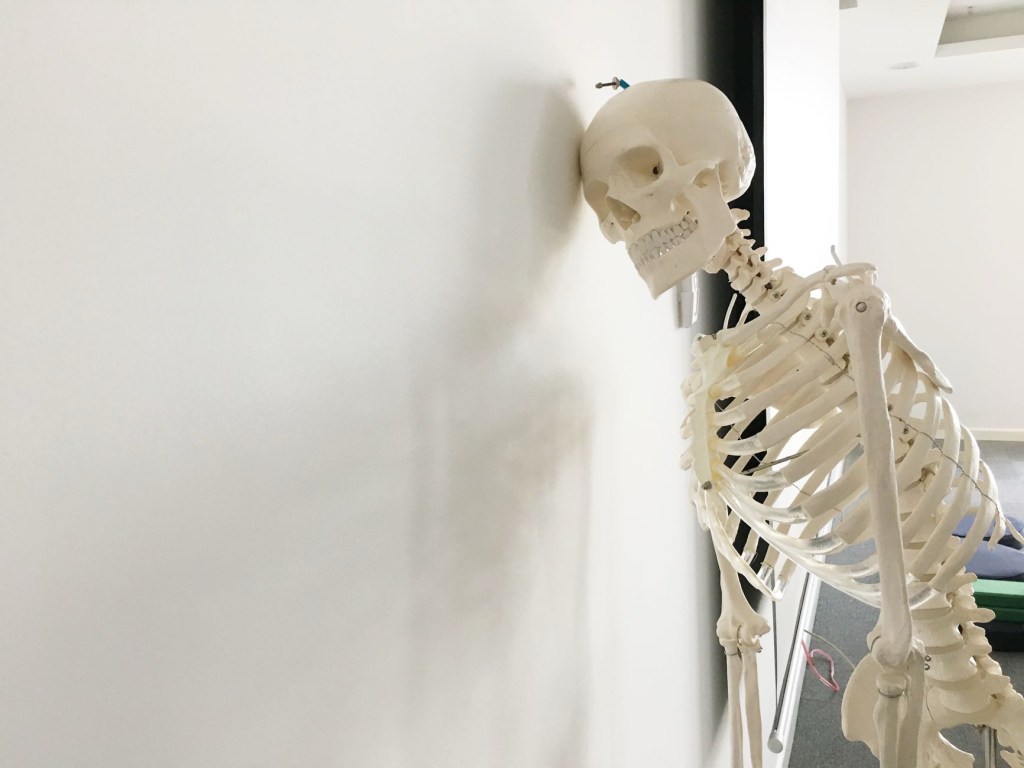
For example:

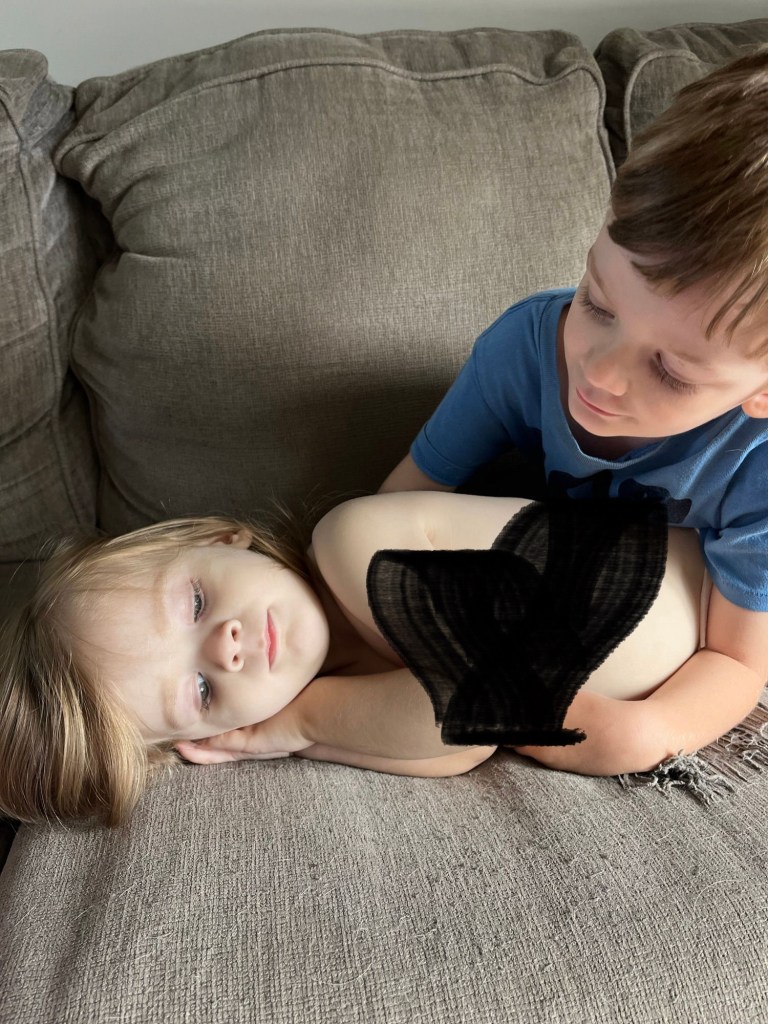
My grandson wanted to show me something the other day. He leaned over me, and his little elbow dug into my ribs.

His little elbow. My adult rib. Click!

Three days after my physiotherapist put me back together.

She and I have a standing monthly appointment.

So now I wait. 27 days.

Because correcting too often in a case like mine can make the problem far worse.

This is not the life I expected. But itโ€™s my life.

There are other examples.

Trying to walk around someone and somehow putting bones out in my foot. ๐Ÿฆถ๐Ÿคจ

Playing with my granddaughter when she decided to give me a little shove and those ribs that love to move, eagerly allowed her to rearrange them. ๐Ÿฉป ๐Ÿ˜‘

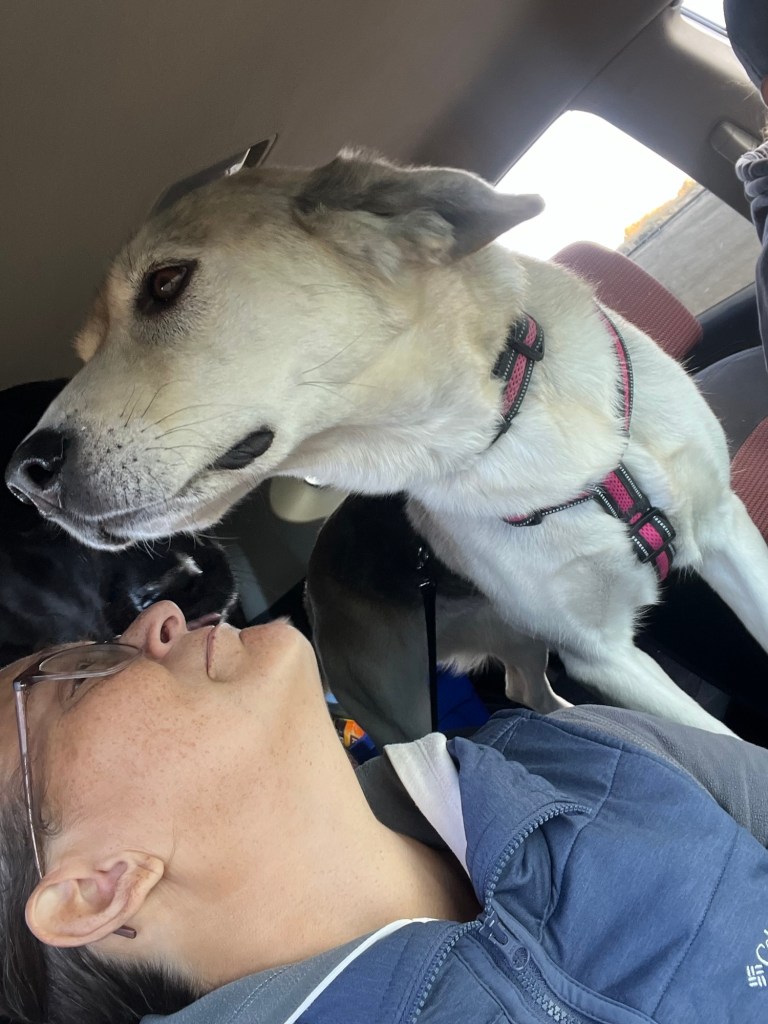
My dog stepping on my foot and somehow moving everything around. ๐Ÿ• ๐Ÿฆถ

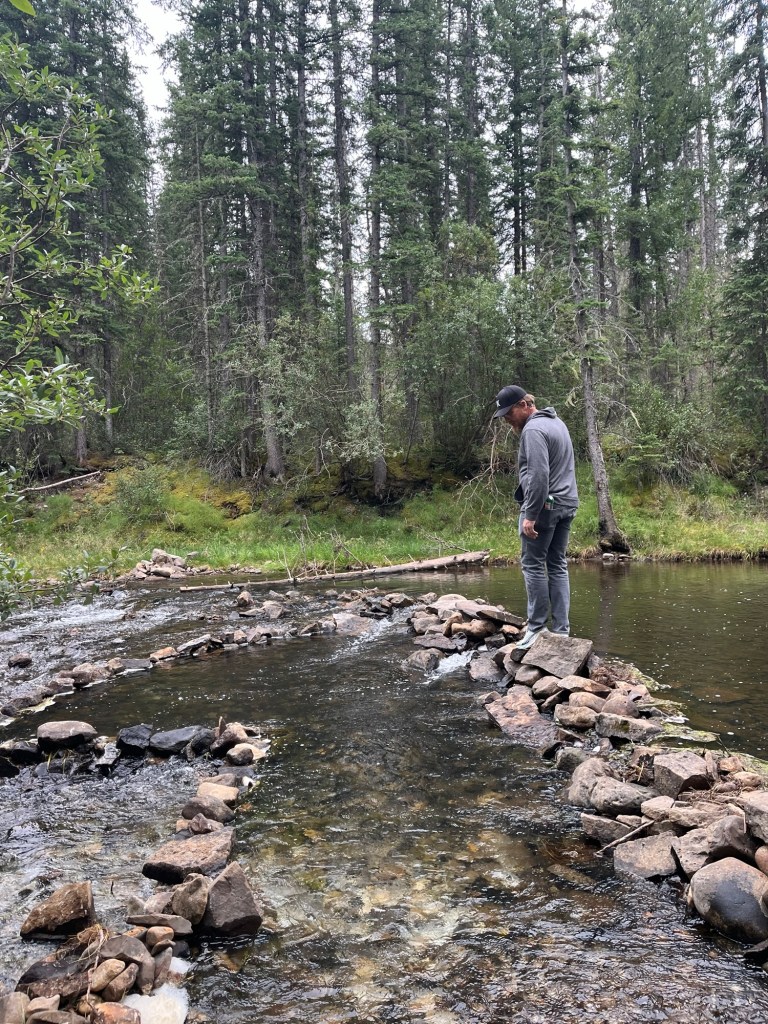
Going hiking and rolling my ankle, spraining various parts and pieces of myself while trying to enjoy the great outdoors. ๐Ÿฅพ ๐Ÿ˜ฃ

These examples are only the tip of the iceberg. They have all happened in the past few months.

I love my family. Most of the time I love my dog. I love hiking.

I do not love constant pain. Therefore, I would like to formally request to be encased in bubble wrap. (Unfortunately my physio says thatโ€™s not a viable option either.)

Antara

(Sanskrit) The space between what you feel and what you show.

The problem with explaining pain nobody can see

One of the hardest things about chronic pain is explaining something that doesnโ€™t have an obvious beginning, middle and end.

There is an injury.

There is pain.

There is a scan.

There is treatment.

There is recovery. Hooray!

But when this isnโ€™t the progression.

There is pain, but the imaging doesnโ€™t explain the pain.

Joints are unstable but this doesnโ€™t show up neatly on a picture.

The answer is essentially, Everything looks normal.

When you get stuck in an endless loop of injury, pain, scan. Nothing. Injury, pain, scan. Nothingโ€ฆ

You begin to wonder if maybe you are the problem.
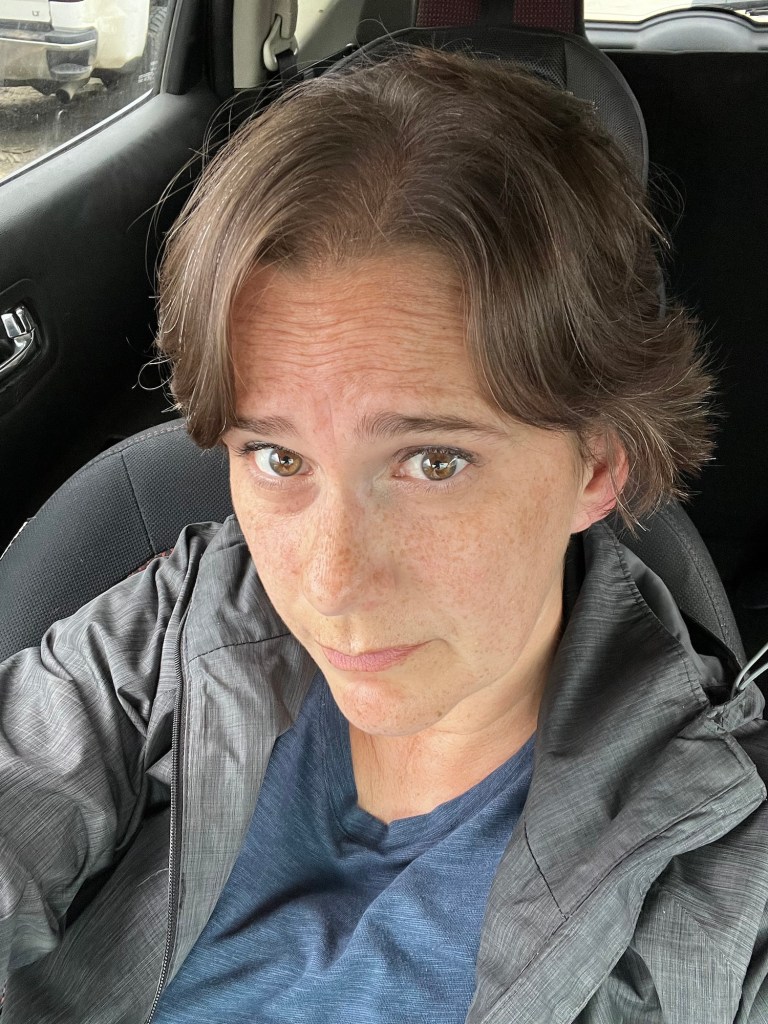
Maybe youโ€™re exaggerating. ๐Ÿค”

Maybe youโ€™re weak. ๐Ÿ˜”

Maybe youโ€™re just sensitive. ๐Ÿ˜ข

Maybe you should exercise more. ๐Ÿƒโ€โ™€๏ธ

Maybe you should exercise less. ๐Ÿ˜ฃ

Maybe you need to think positively. ๐Ÿ˜ƒ

Maybe you need to stop thinking about it. ๐Ÿง˜โ€โ™€๏ธ

Meanwhile, your body is sitting there like:

I would love to participate in this discussion, but unfortunately my rib muscles are currently screaming so loudly I canโ€™t hear anything else.

A diagnosis doesnโ€™t magically make pain disappear.

But a name can change something.

There is power in having a name

There is something different about being able to say:

I have hypermobile Ehlers-Danlos syndrome.

Instead of:

โ€œWell, Iโ€™ve had pain for years, and my joints move too far, and sometimes things come out of place, and my muscles have to work really hard to stabilize everything, and I have all these other weird things going on, and I know it sounds strange, butโ€ฆโ€

A name is shorter. A name means someone believed you.

A name is understoodโ€ฆ sometimes. Which is better than never.

A name gives your experience a place to stand.

It can feel like a credential for suffering. ๐Ÿชช

Not because suffering needs a certificate. It shouldnโ€™t.

But because there is a difference in saying, This is a recognized condition, instead of feeling as though you have to build a courtroom case every time you describe what your body is doing.

And there is another thing a name gives you:

Other people.

You discover that there are other people who understand why walking across a parking lot can sometimes feel like an athletic event.

People who know what it means to have a joint suddenly become unreliable.

People who have learned the pain in I hurt myself again.

People who donโ€™t need the entire history before they understand the sentence.

There is comfort in that shorthand.

There is camaraderie in saying, Wait, thatโ€™s normal?

Skin that flaps under an automated hand dryer. Feeling like your brain is being jostled when you run. Those are normal in some circles?!?

Even the measuring stick is changing

For years, one of the tools used to assess generalized joint hypermobility has been the Beighton score.

It is a nine-point scale based on whether certain joints, such as little fingers, thumbs, elbows, knees and the spine, move beyond particular ranges. Under the current criteria, the score is used as a screening measure for generalized joint hypermobility. (The Ehlers Danlos Society)

But there is a problem with measuring an entire complicated body by asking a handful of joints to perform five tricks.

What about the hips?

The shoulders?

The feet?

The jaw?

What about joints that used to be hypermobile but have become stiffer because youโ€™ve spent years protecting them?

What about the person whose biggest problems arenโ€™t located in the nine places being measured?

Researchers involved in the international Road to 2026 project have been examining these limitations. An expanded assessment that looks at four additional joints is being studied alongside the Beighton score, and the hEDS/HSD diagnostic framework. Even the way generalized hypermobility is assessed is being reconsidered. (The Ehlers Danlos Society)

The new international classification is expected to be published in December 2026, replacing the 2017 criteria. The Ehlers-Danlos Society has said the classification publication is scheduled for December 2, with best-practice care guidance expected in March 2027. (The Ehlers Danlos Society)

So even the measuring stick is being re-examined.

I find that hopeful.

I am currently diagnosed with generalized joint hypermobility. But that doesnโ€™t tell the whole story.

I look forward to the updated measuring stick. Not because I need a better score.

But because science is admitting that perhaps the way weโ€™ve been measuring this isnโ€™t telling the whole story.

Sometimes the person doesnโ€™t fit the measuring tool.

That doesnโ€™t necessarily mean the person is wrong.

Sometimes the measuring tool needs work.

A diagnosis doesnโ€™t make you more real

This is something I have to remind myself of.

With the diagnostic criteria change, I donโ€™t suddenly become more or less in pain.

If my score changes, my ribs donโ€™t politely and apologetically fall back in line.

If the medical community discovers a better way to describe hypermobility, my body doesnโ€™t suddenly become easier to manage.

A diagnosis can give language to an experience.

It can open doors.

It can help doctors understand.

It can connect you with other people.

It can change treatment.

It can stop some of the exhausting explaining.

But it doesnโ€™t create the suffering.

The suffering was already there.

A label doesnโ€™t make the pain real. It gives the pain somewhere to be understood.
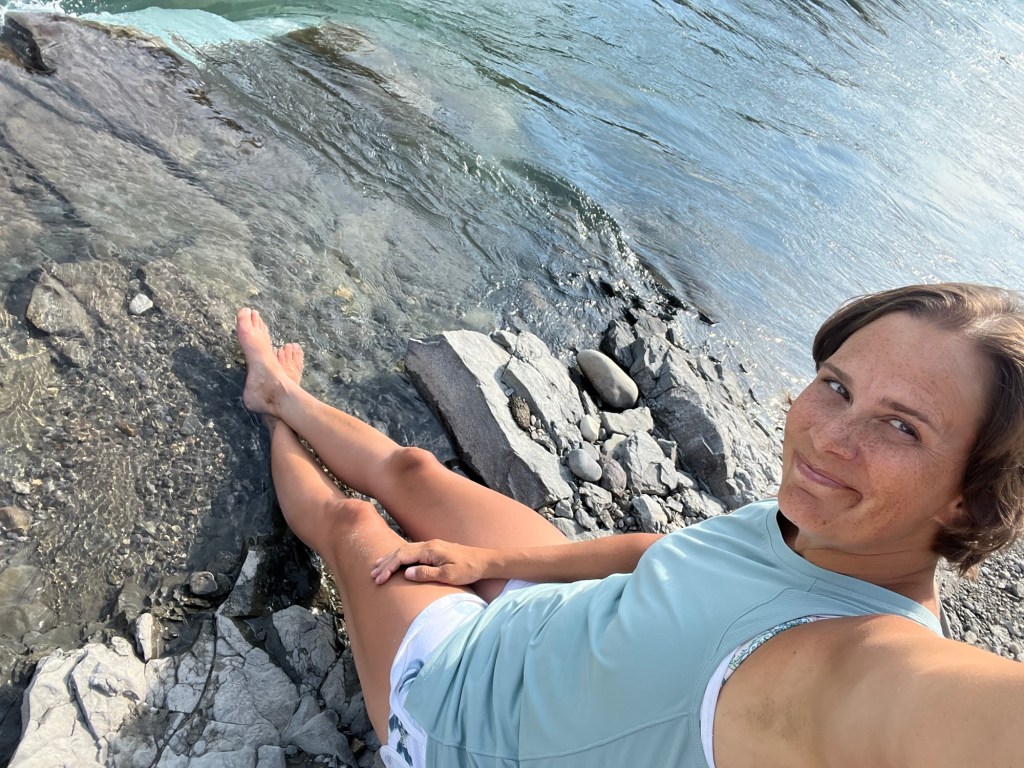
Living on the edge of pain-free

I think this is one of the most striking things about chronic illness.

I donโ€™t necessarily live in constant unbearable pain.

Sometimes I almost feel good. I have gone pain- free for as long as a few days and as short as a few hours after a physiotherapist appointment.

Close enough that I start thinking, Maybe Iโ€™m finally getting somewhere.

Maybe this is the week.

Maybe my body is settling down.

Maybe I can do a little more.

Maybe I can hike a little farther.

Maybe I can play a little longer.

Maybe I can just live normally.

And then something happens.
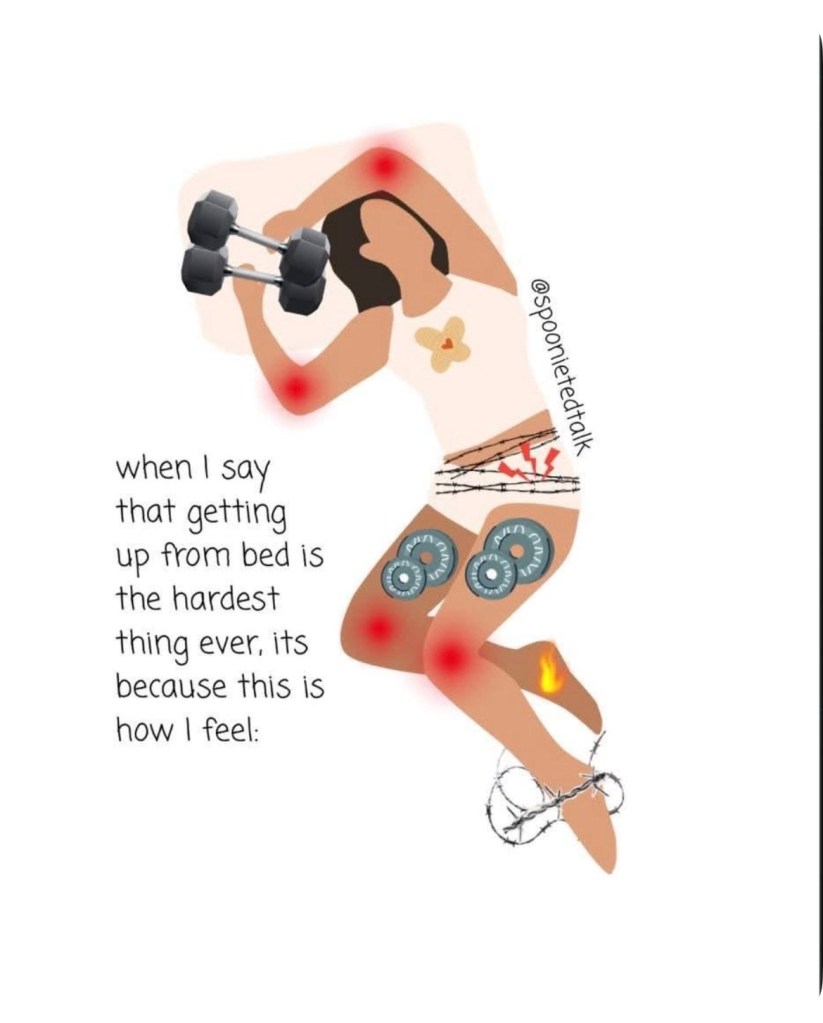
A foot.

A rib.

An ankle.

A muscle.

A joint.

Something reminds me that normal is still a little outside my reach.

I live on the edge of pain-free.

I can see it.

I can sometimes almost touch it.

But I can never quite get there.

Some days this feels draining.

Some days it is really frustrating.

Because I donโ€™t want to spend my life carefully negotiating with my skeleton.

I want to pick up my grandchildren without calculating angles.

I want to walk around someone without wondering whether my foot is going to object.

I want to hike without wondering which part of me will need time to heal after this.

I want to live. Not perfectly. Just freely.
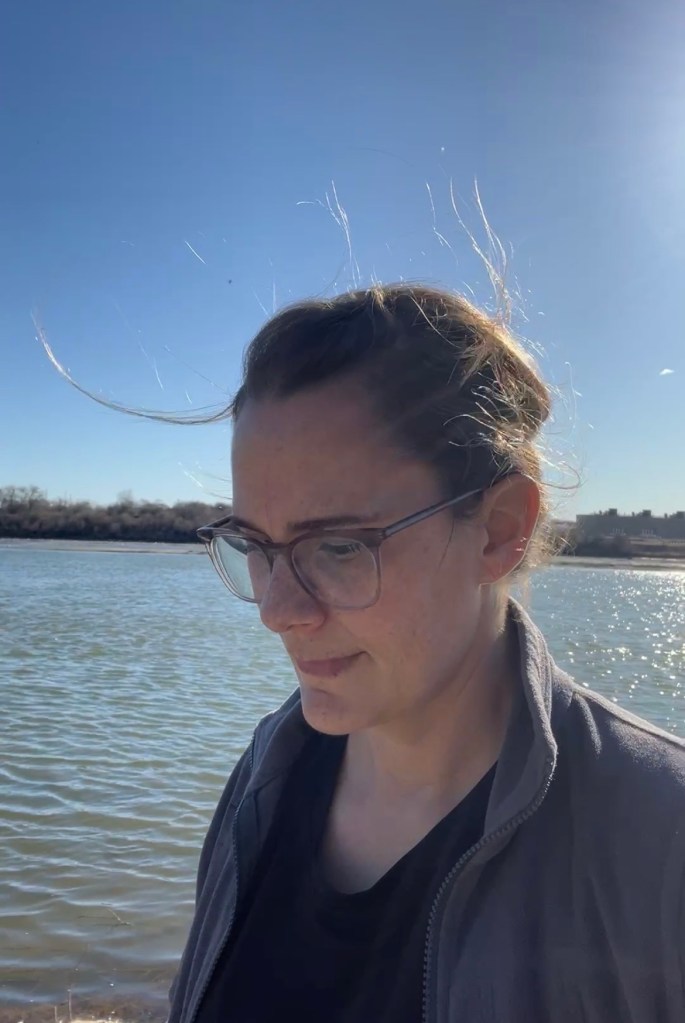
So what does forest therapy have to do with a body like this?

Forest therapy doesnโ€™t ask my body to perform.

There is no gold star for going farther. ๐ŸŒŸ

No prize for walking fastest.

No requirement to conquer the trail.

And perhaps most importantly, there is no expectation that I have to force my body into being something it isnโ€™t.

One of my favourite practices for hypermobility is sensory noticing while walking slowly.

Not hiking.

Walking.

There is a difference.

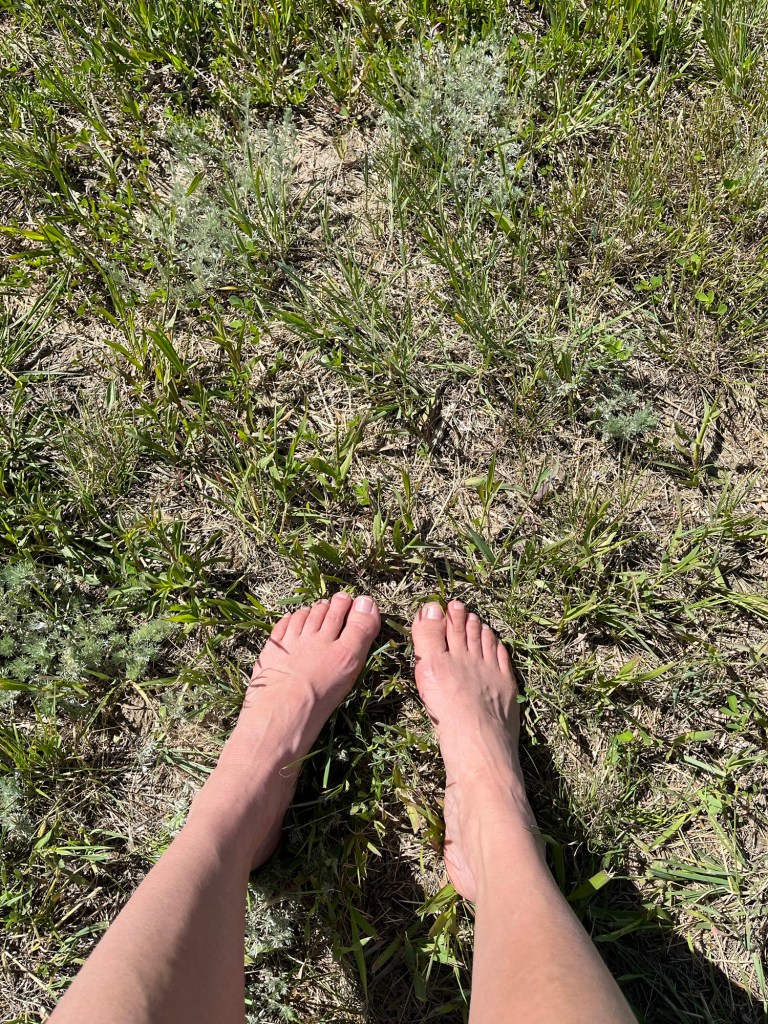
I can take a few steps and notice what my feet are telling me.
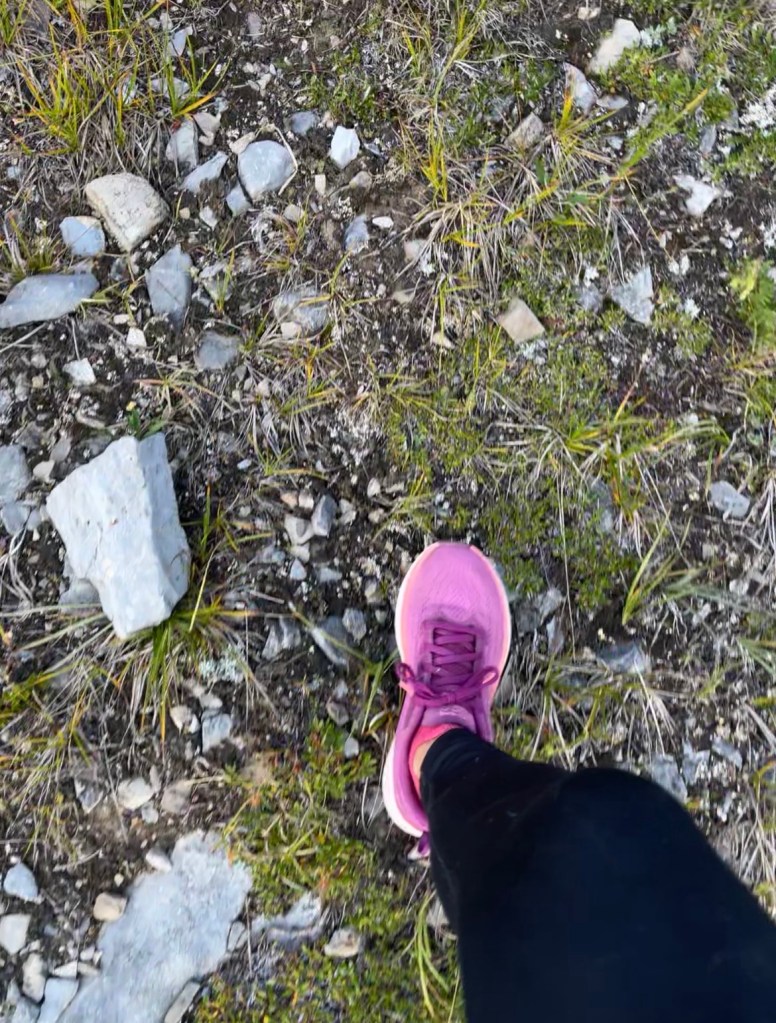
Not to judge them.

Or correct them.

Just notice.

Where is the ground?

What does the trail feel like beneath my shoes?

Am I gripping with my toes?

Am I locking my knees?

Am I holding my shoulders up around my ears?

Is there a place where I can soften?

Can I take one smaller step?

Can I pause?

Can I let the forest set the pace rather than my ambition?
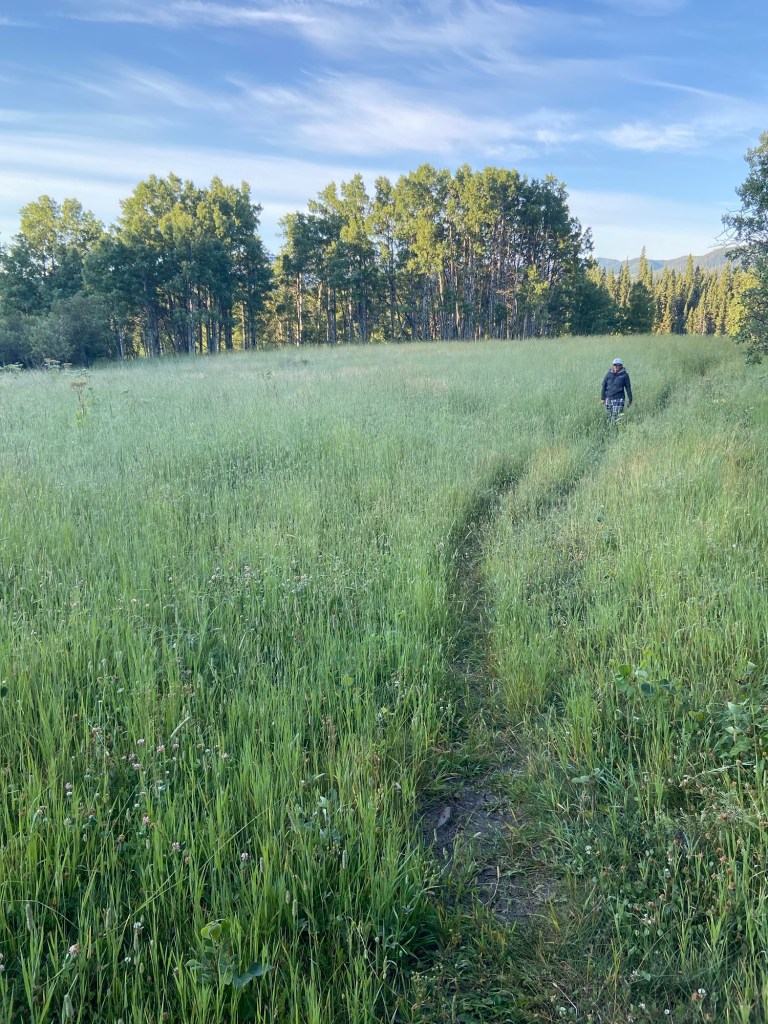
And if my body says, Thatโ€™s enough, then enough is enough.

Sometimes forest therapy means sitting on a bench while everyone else keeps walking.

Sometimes it means five minutes instead of an hour.

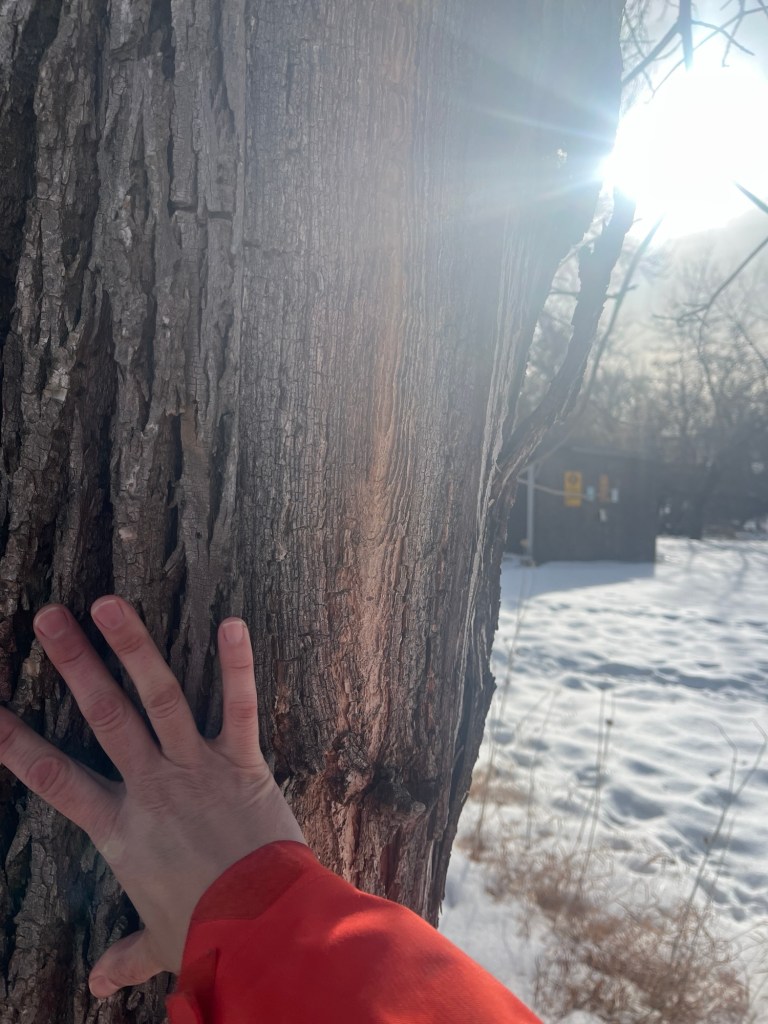
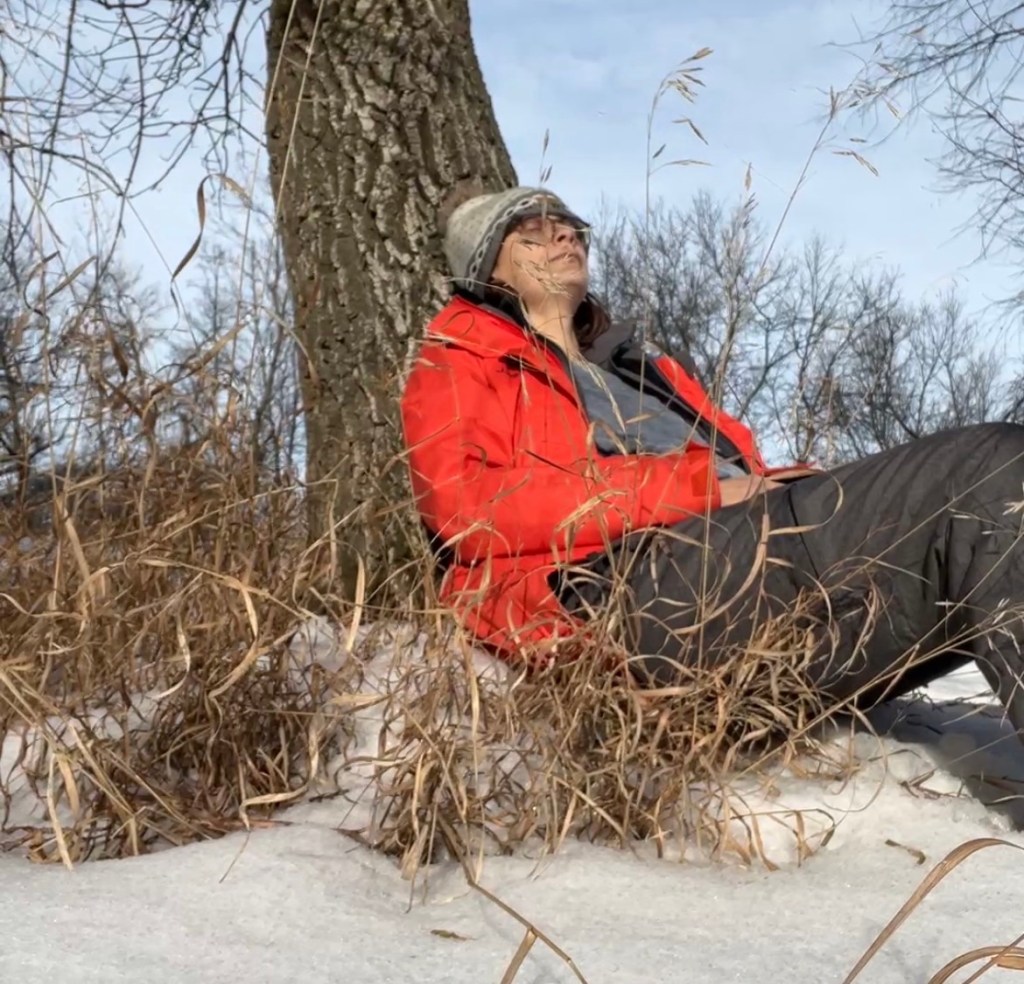
Sometimes it means finding a tree and letting myself simply be near it.

The forest doesnโ€™t seem disappointed in me.

It doesnโ€™t say, You used to walk farther.

It doesnโ€™t say, Try harder. As though I just need a little more motivation.

It doesnโ€™t say, But you look fine. Making me feel like I need to act fine too.

It just keeps being a forest.
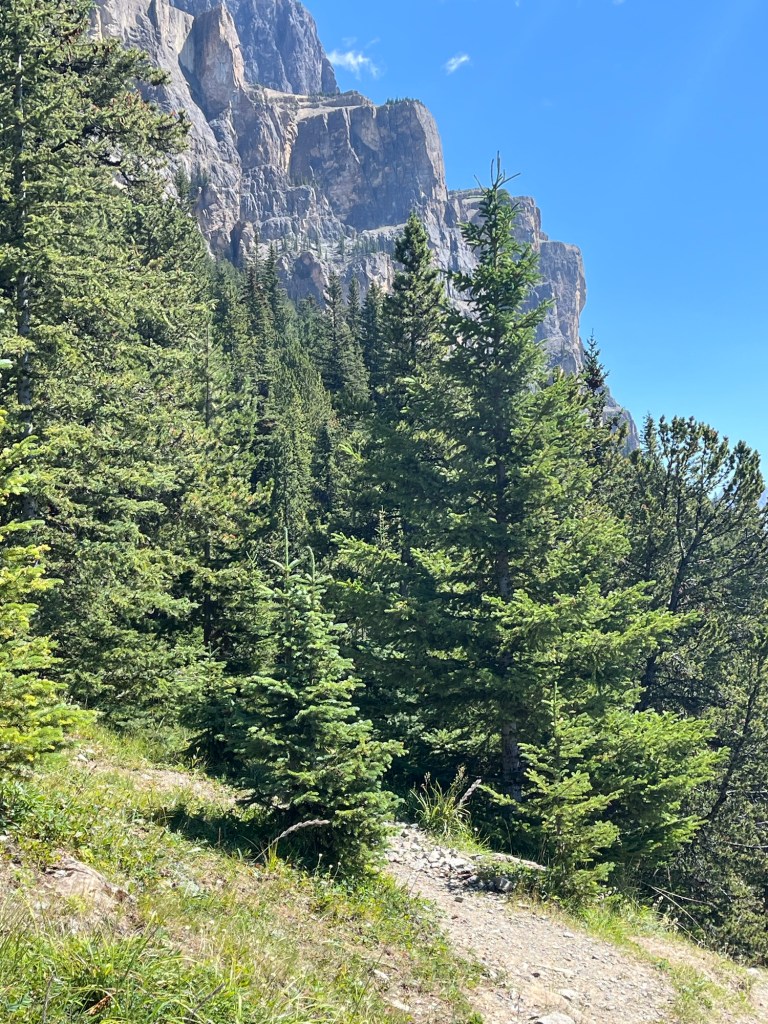
Maybe the goal isnโ€™t to reach pain-free

Maybe the goal is to build a life that still has room for joy while living with a body that requires extra care.

That isnโ€™t giving up. It isnโ€™t settling.

It isnโ€™t saying, Well, I guess this is all my life will ever be.

It is learning a different definition of living.
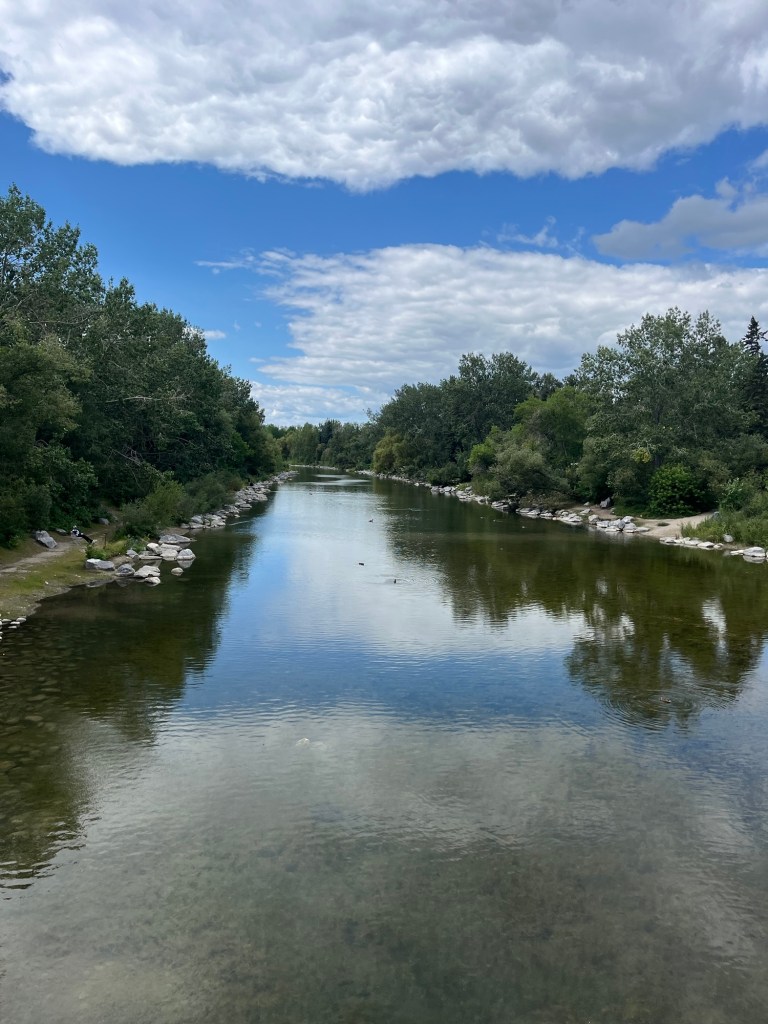
I can be frustrated and grateful at the same time.

I can wish my joints were more reliable and still love the body that carries me through the woods.

I can be tired of pain without being hopeless.

I can want better treatment without believing my life is on hold until I get it.

And I can laugh with my grandson after he accidentally rearranges my ribs.

Eventually. Not immediately. But eventually.

Because sometimes humour is the little bit of space between this is ridiculous and this is my life.

And I want that space. I want the hikes. The grandchildren. The dog. The trees.
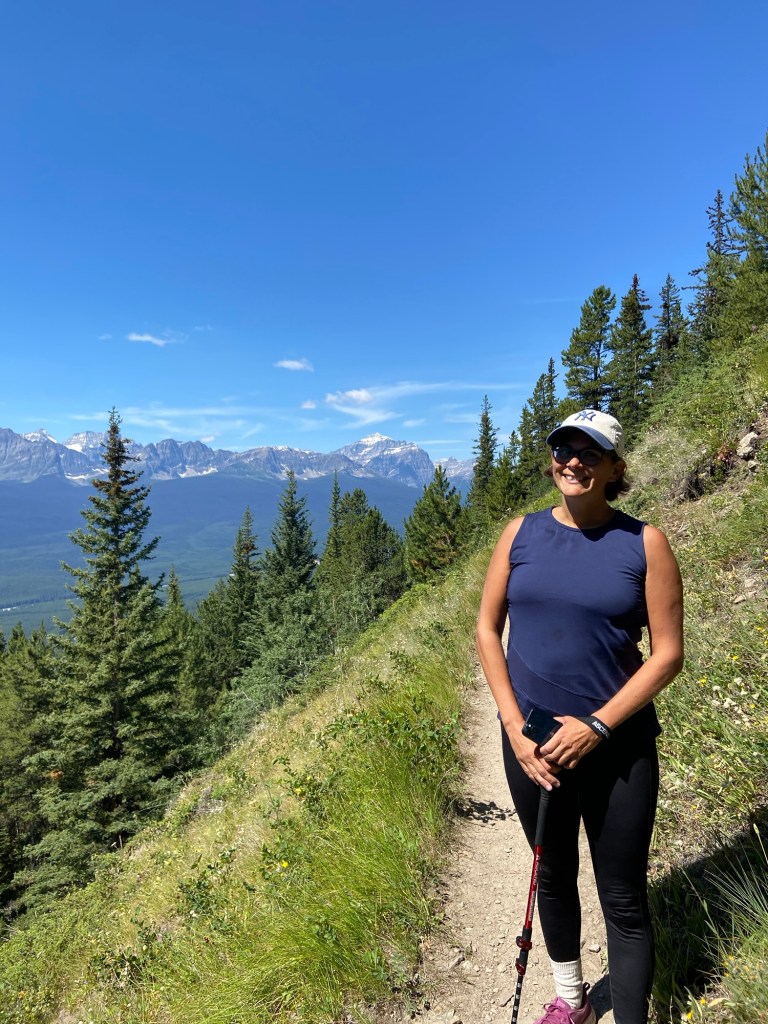
The ordinary moments that donโ€™t require a medical explanation.

I want to keep noticing what my body can do without pretending that what it canโ€™t do doesnโ€™t matter.

Maybe thatโ€™s the hope.

Not that one day my body will become uncomplicated.

Maybe the goal is simply to stop waiting for a pain-free life before recognizing that a meaningful one is also valuable.

My body may keep moving the goalposts. Iโ€™m learning that I can still choose to keep getting up.

And for today, thatโ€™s enough.


Note: This post is about my lived experience and is not medical advice. Hypermobile EDS and other hypermobility conditions are complex, and diagnosis should be made by an appropriately qualified healthcare professional. The international EDS/HSD diagnostic criteria are being updated in 2026, so some of the information and terminology around diagnosis may change when the new classification is published. (The Ehlers Danlos Society)
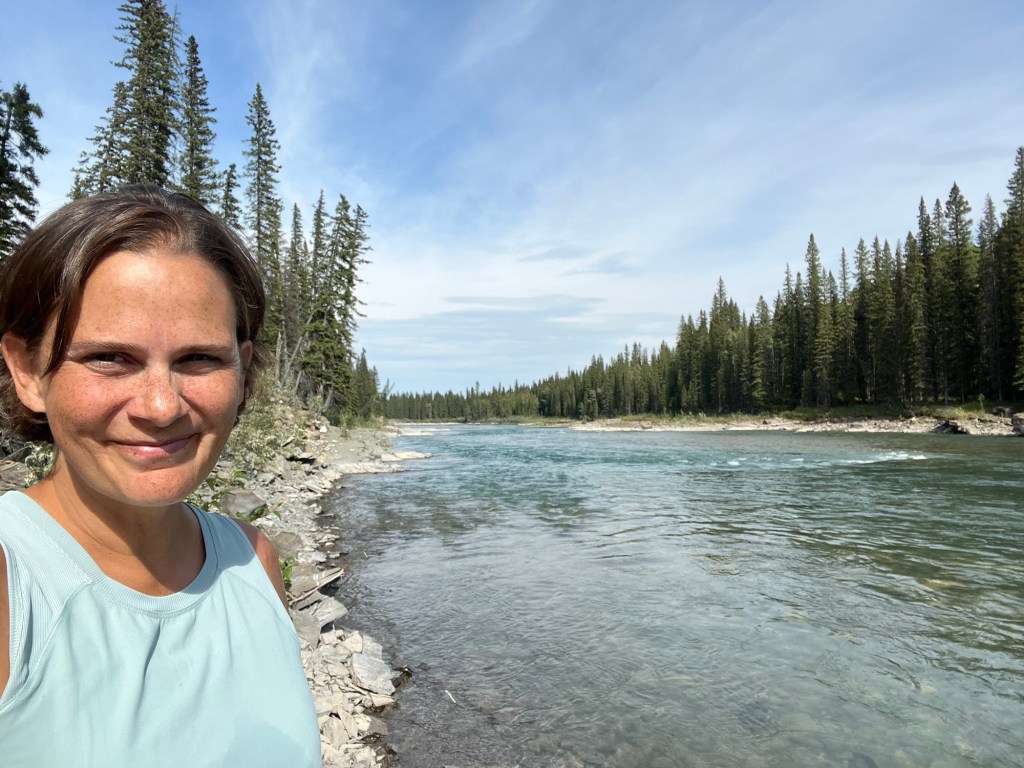
When the Future Feels Too Heavy

Inside me, the Protector, the Wounded Child, the Survivor, and the Healer all dance in a quiet circle. Each one longs to be seen, to be heard, to be held. And when I finally stop to witness them, their chaos becomes a rhythmโ€ฆ and their rhythm becomes my healing. 
-recoverytrauma.ltd

I heard something recently that has been rolling around in my head. It was a conversation about worry versus wisdom.

The idea was that worry keeps us stuck, while wisdom keeps us moving.

One of the concepts was this, sometimes we feel stuck because we want two things that canโ€™t exist at the same time.

  • I want to be healthy, but I donโ€™t want to change anything.
  • I want to feel better, but I donโ€™t want to slow down.
  • I want to have more energy, but I donโ€™t want to give anything up.
  • I want my nervous system to settle, but I keep filling every available minute.

And with chronic pain, there can be a whole extra layer of this.

  • I want to do the things I used to do, but my body canโ€™t always do them.
  • I want to feel better, but I canโ€™t control whether I have a good pain day or a terrible one.
  • I want answers, but sometimes there are no tidy solutions.

So I worry. I think. I analyze. I replay. I predict. (Iโ€™m actually a delight. But you wouldnโ€™t know it because Iโ€™m so tired and irritated all the time.)

I consider every possible scenario until my brain has apparently opened approximately 47 tabs, and none of them are helpful.

And somewhere in all of that thinking, I can become very, very stuck.

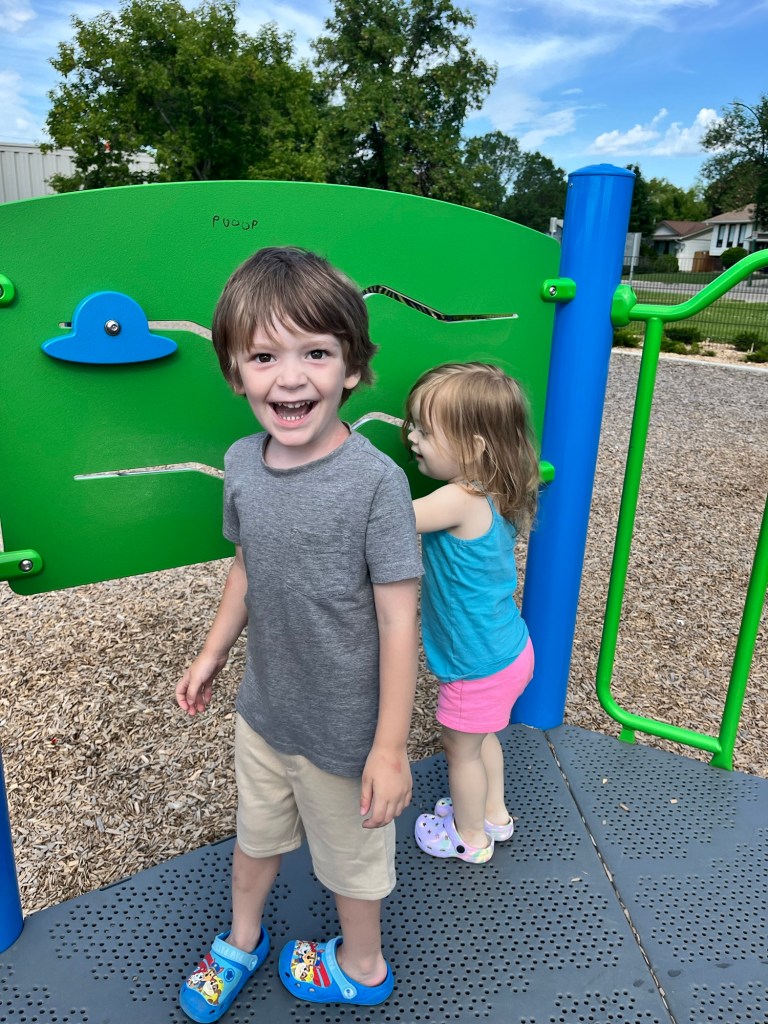
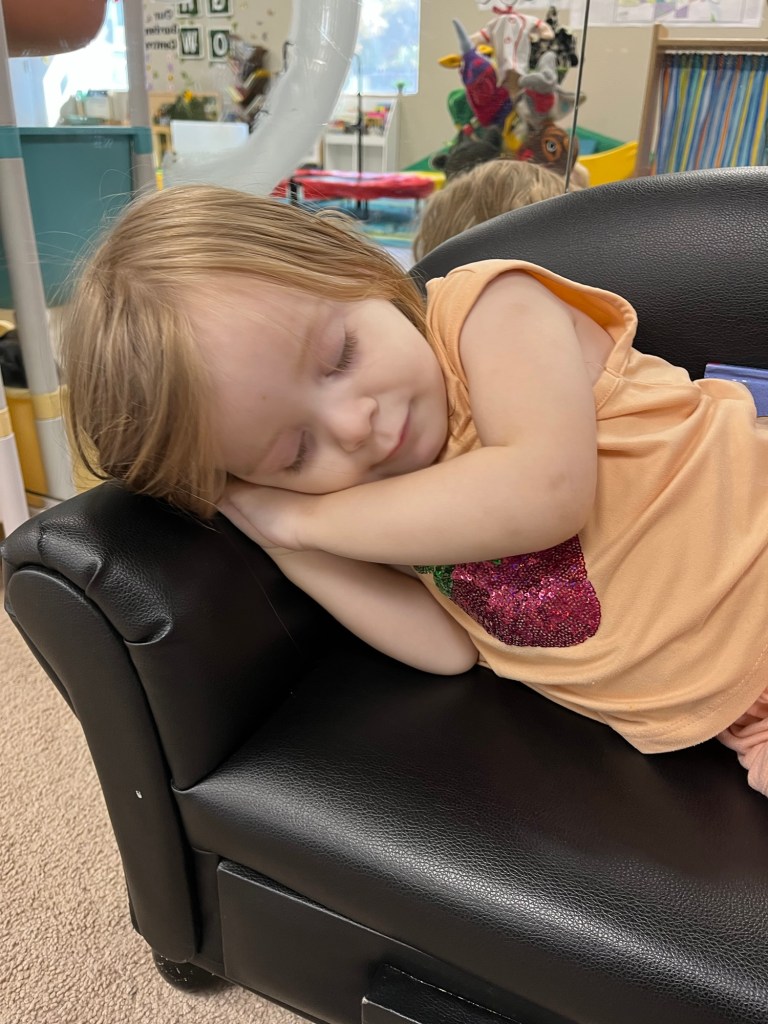
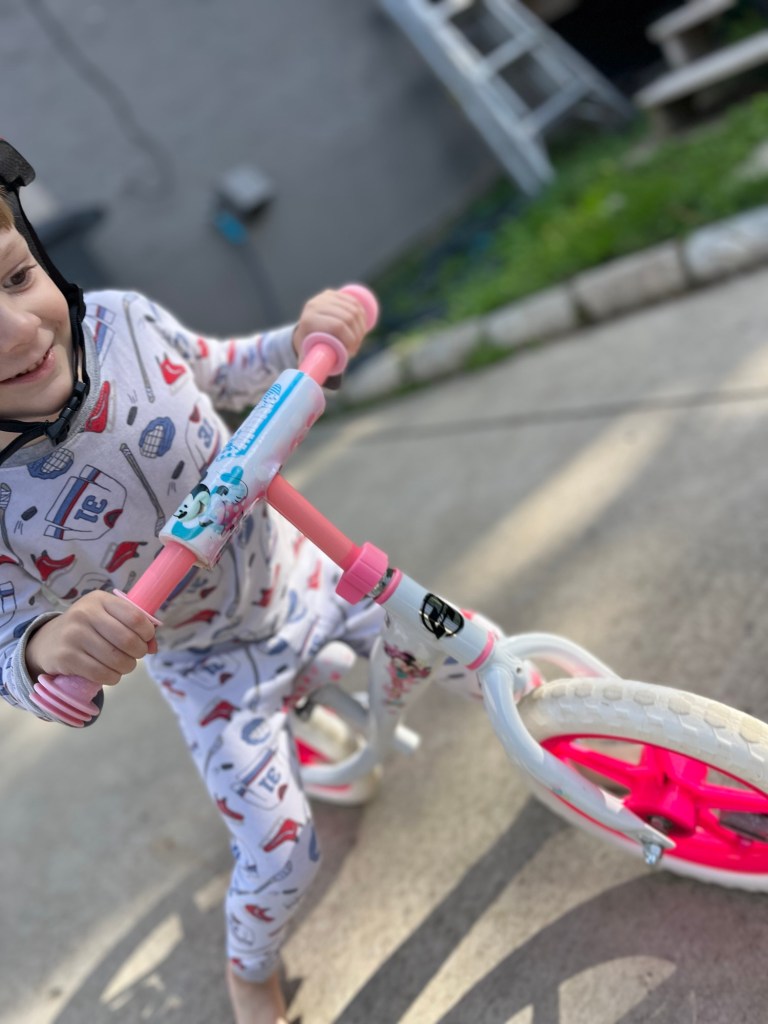
But then I look at my grandkids.

They might know something I have forgotten.

They donโ€™t spend nearly as much time worrying about what happened yesterday or what might happen tomorrow.

They deal with right now.

If theyโ€™re hungry, they eat.

If theyโ€™re tired, they lie down.

If they see a bug, suddenly that bug is the most fascinating creature on Earth.

If someone says something funny, they laugh.

If they fall down, they may cry. And then, remarkably, five minutes later theyโ€™re deeply invested in something completely unrelated.

They donโ€™t seem to spend a lot of time thinking:

I really shouldnโ€™t have fallen down yesterday.

Or:

What if I fall down again tomorrow?

They are busy being where their feet are. Kids have a PhD in being where their feet are. (Wise little beings.)

Not because the past doesnโ€™t matter. Not because the future doesnโ€™t matter.

But because this moment is the only one I can actually do anything with.

And I think that is part of the difference between worry and wisdom.

Worry keeps asking:

What if?

Wisdom asks:

What now?

What if I stopped trying to solve tomorrow?

One of the things I love about forest therapy is that nature gives me a place to practice being present.

Not by sitting perfectly still and trying to empty my mind.

My brain ๐Ÿง - Director of Unnecessary Mental Load ๐Ÿชช

Instead, I can go outside and let my attention wander.

I call this a sensory wander.

Rather than walking with a destination in mind, I slow down and follow whatever catches my attention.

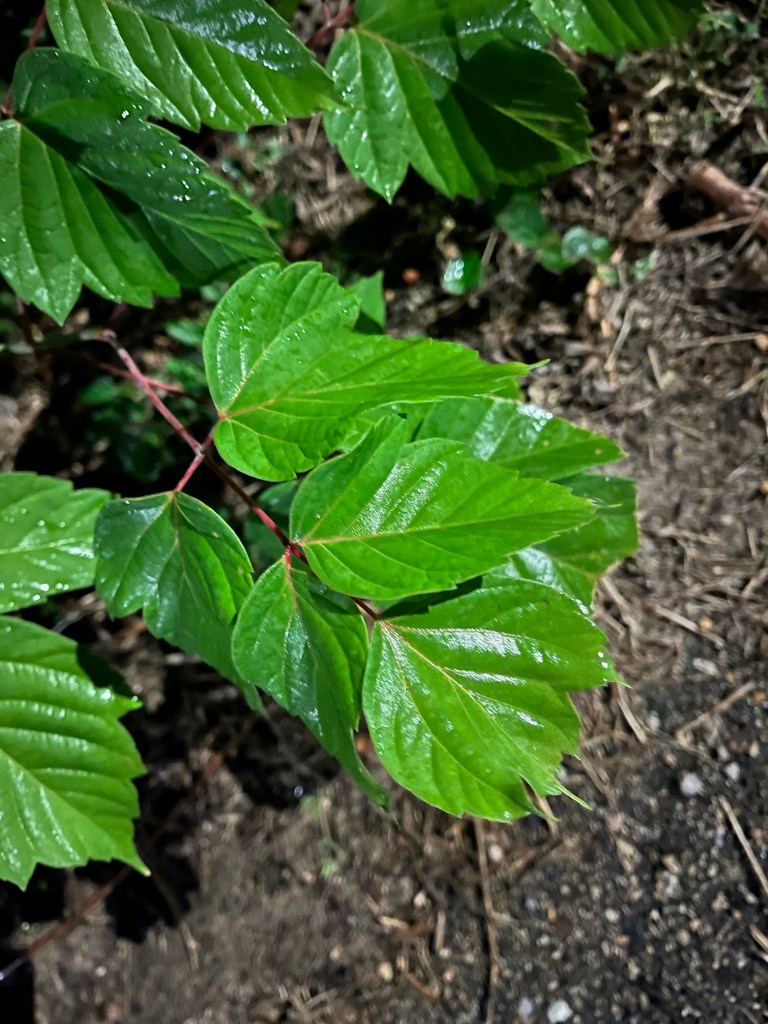
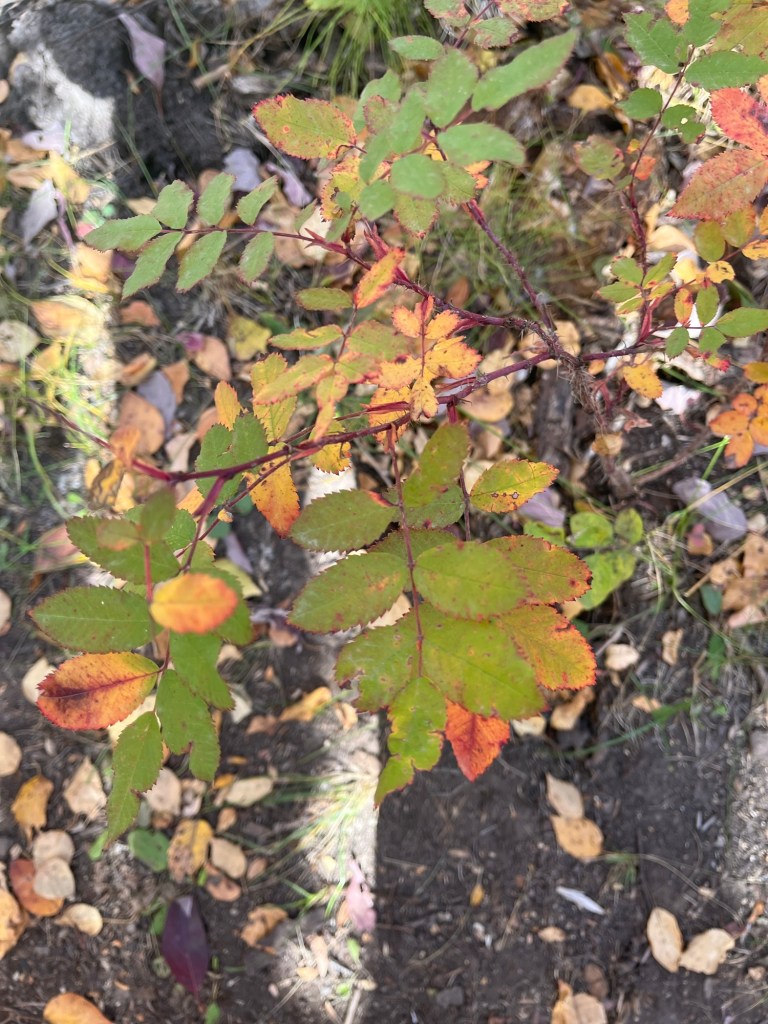
Maybe itโ€™s the shape of a leaf.

The sound of something moving in the grass.

The smell of wet earth.

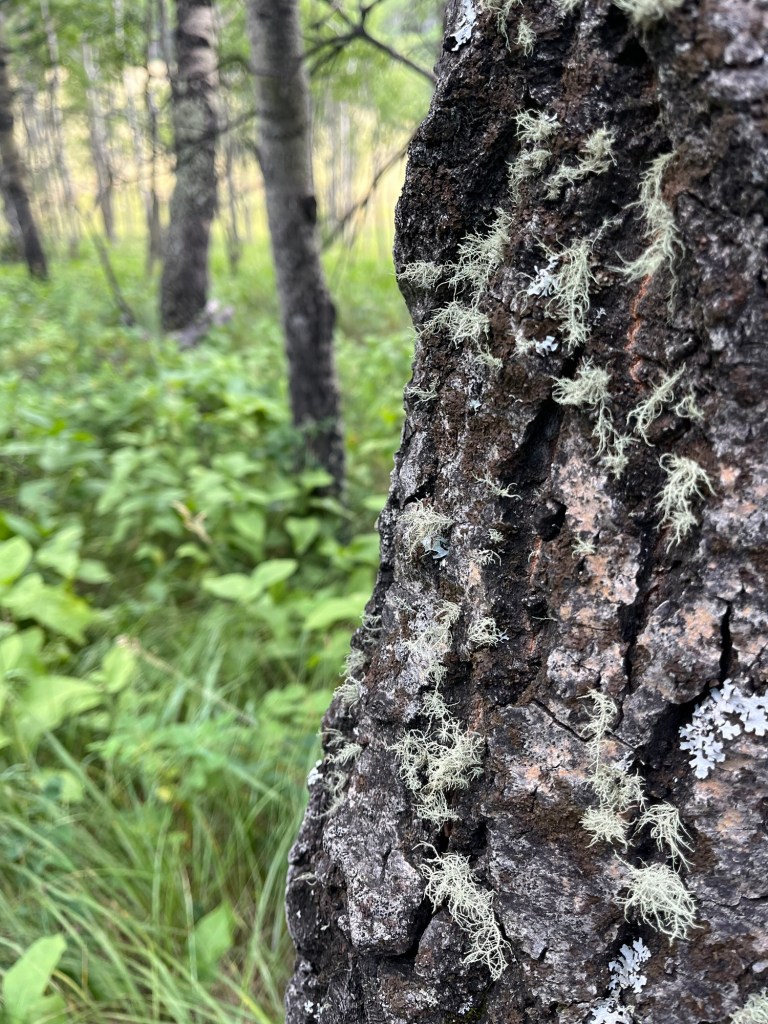
A tree with strange bark.

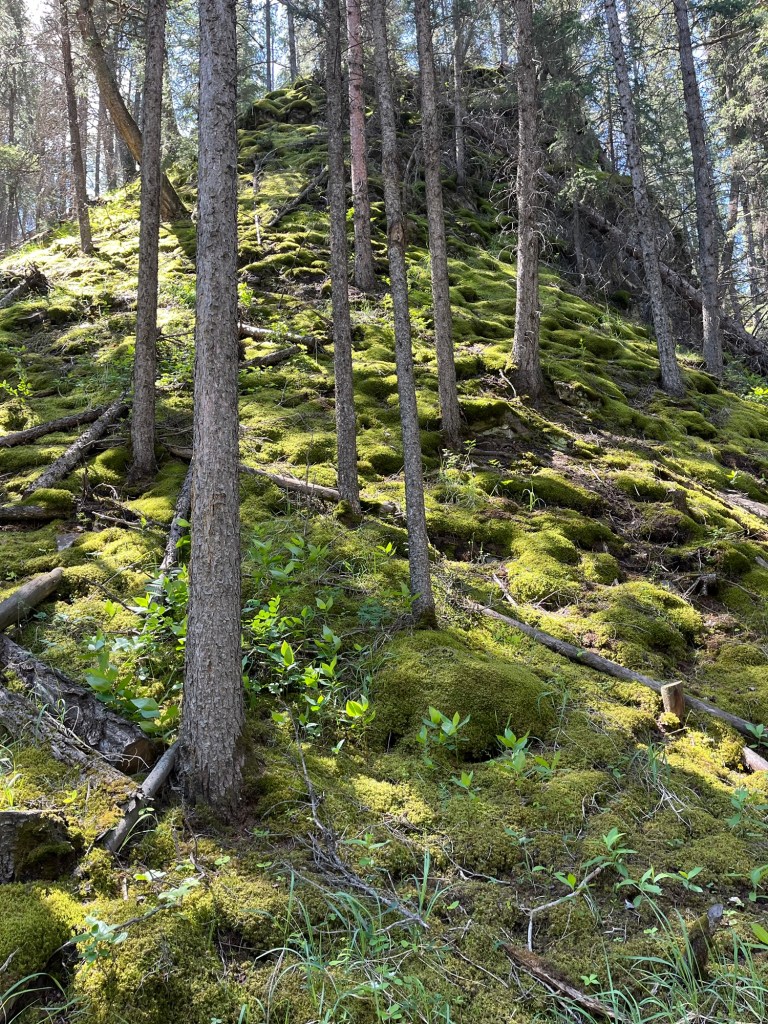
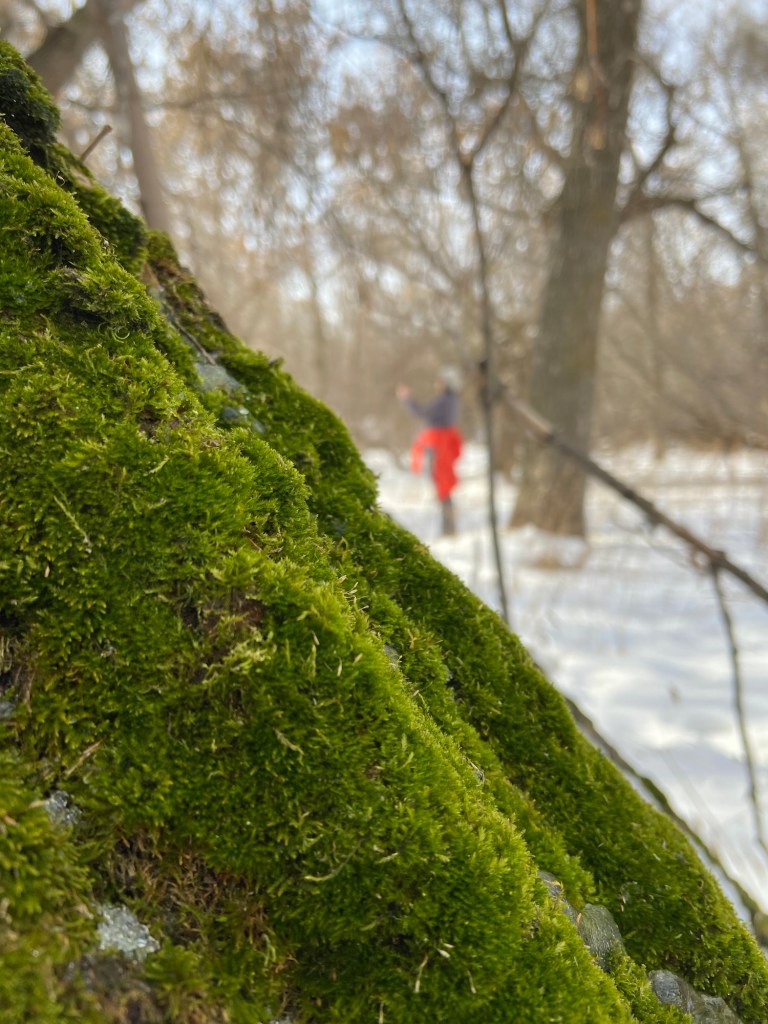
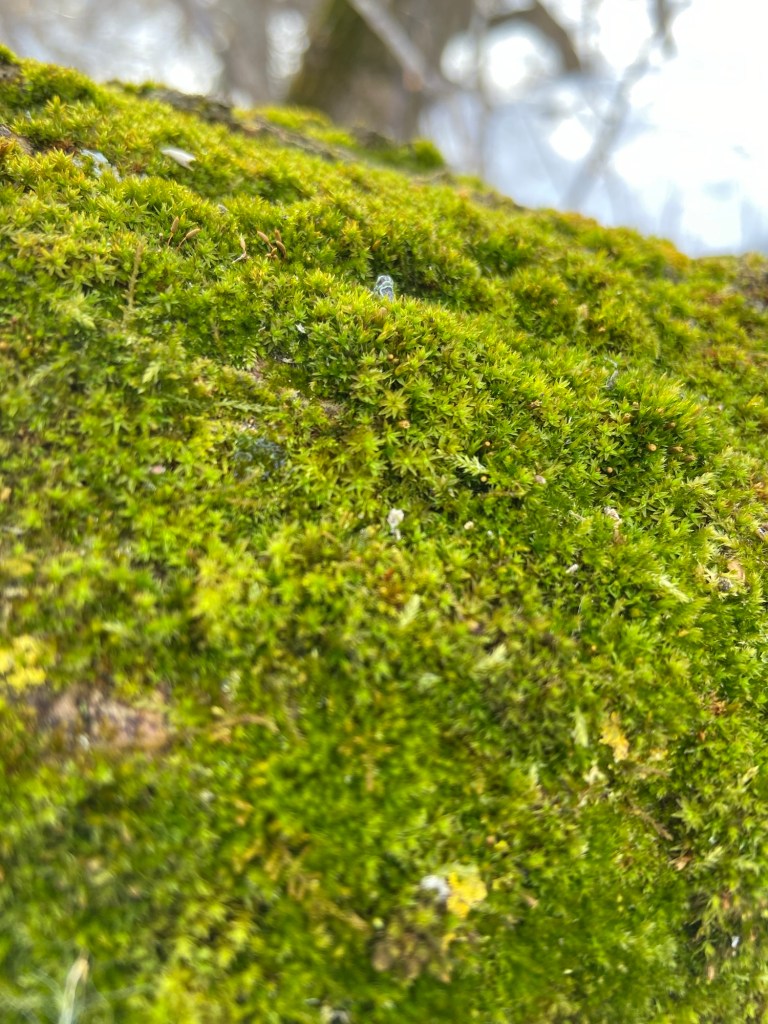
The way sunlight hits one little patch of moss.

A bird I canโ€™t identify.

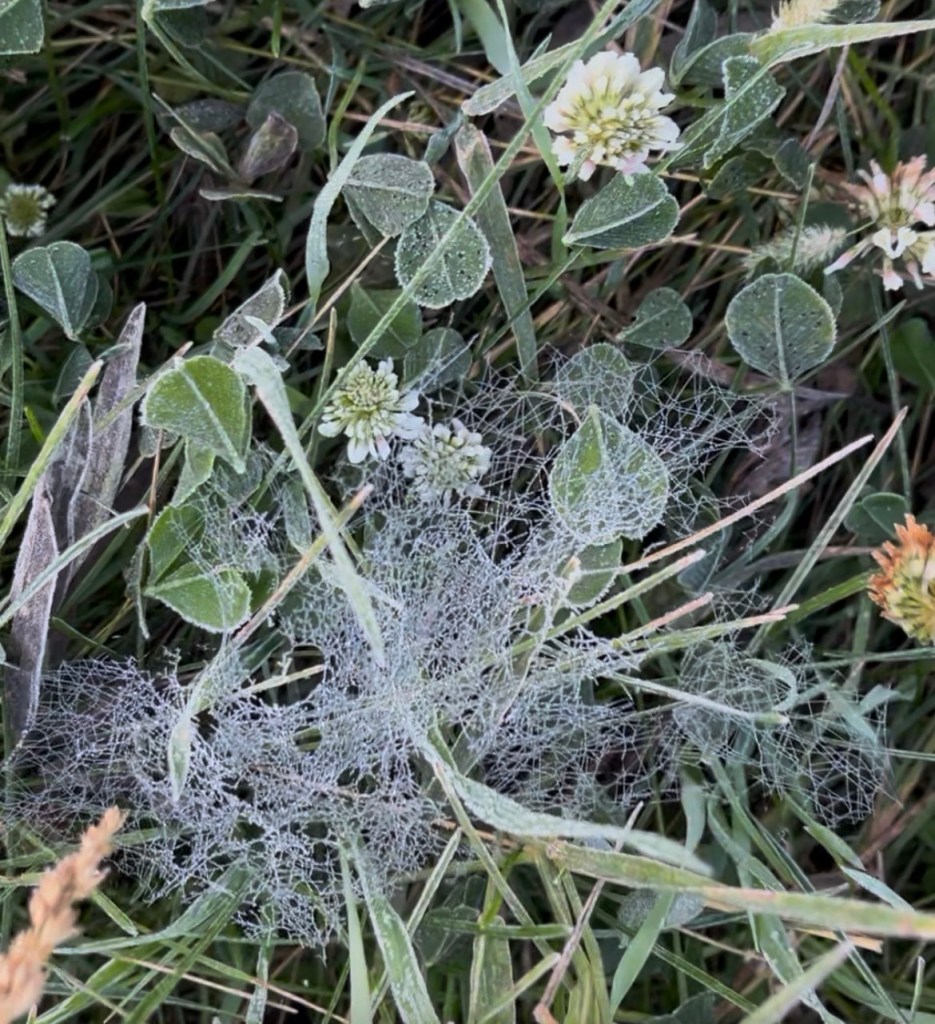
A spider web I would have walked right past.

I donโ€™t have to figure anything out.

I donโ€™t have to make the experience meaningful.

I donโ€™t have to turn it into a lesson.

I just notice.

What has my attention right now?

Then I follow that.

And when something else catches my attention, I follow that instead.

Itโ€™s quite simple.

I donโ€™t have to live three days ago. I donโ€™t have to live three weeks from now.

I can live right here.

With the trees.

With whatever happens to be in front of me.

Wisdom doesnโ€™t mean having it all figured out

I donโ€™t think the podcast was suggesting that wisdom means knowing exactly what to do.

Sometimes we donโ€™t know.

Especially with chronic pain.

There is a lot of trial and error.

What helped yesterday might not help today.

Something that works beautifully for one person might make another personโ€™s body stage a small coup.

There isnโ€™t always a clear answer.

But wisdom doesnโ€™t necessarily require a complete plan.

It can be much smaller.

One thing I know I can do is this.

  • I can drink some water ๐Ÿ’ฆ
  • I can rest before I completely crash. ๐Ÿ˜ด
  • I can step outside ๐Ÿ‘ฃ
  • I can notice what my body is telling me ๐Ÿ‘‚
  • I can take a short walk instead of deciding I need to complete a 5km hike or not bother going at all ๐Ÿšถโ€โ™€๏ธ
  • I can spend ten minutes among the trees ๐ŸŒฒ ๐ŸŒฒ
  • I can stop arguing with the reality of today long enough to actually experience today ๐Ÿง˜โ€โ™€๏ธ

That last one is hard.

Because sometimes I want today to be different. But wanting it to be different doesnโ€™t change what it is.

And accepting what is happening right now doesnโ€™t mean I like it. It means I stop spending all my energy fighting a moment I canโ€™t change.

Maybe thatโ€™s where wisdom starts. Not with a solution. With noticing.

Maybe the kids have it partly right

My grandkids arenโ€™t worried about whether theyโ€™re making enough progress in life.

They arenโ€™t measuring the day by how productive they were.

They arenโ€™t wondering whether they should have made a different choice three years ago. (One of them wasnโ€™t even here three years ago.)

They arenโ€™t lying awake thinking about everything that could possibly go wrong tomorrow.

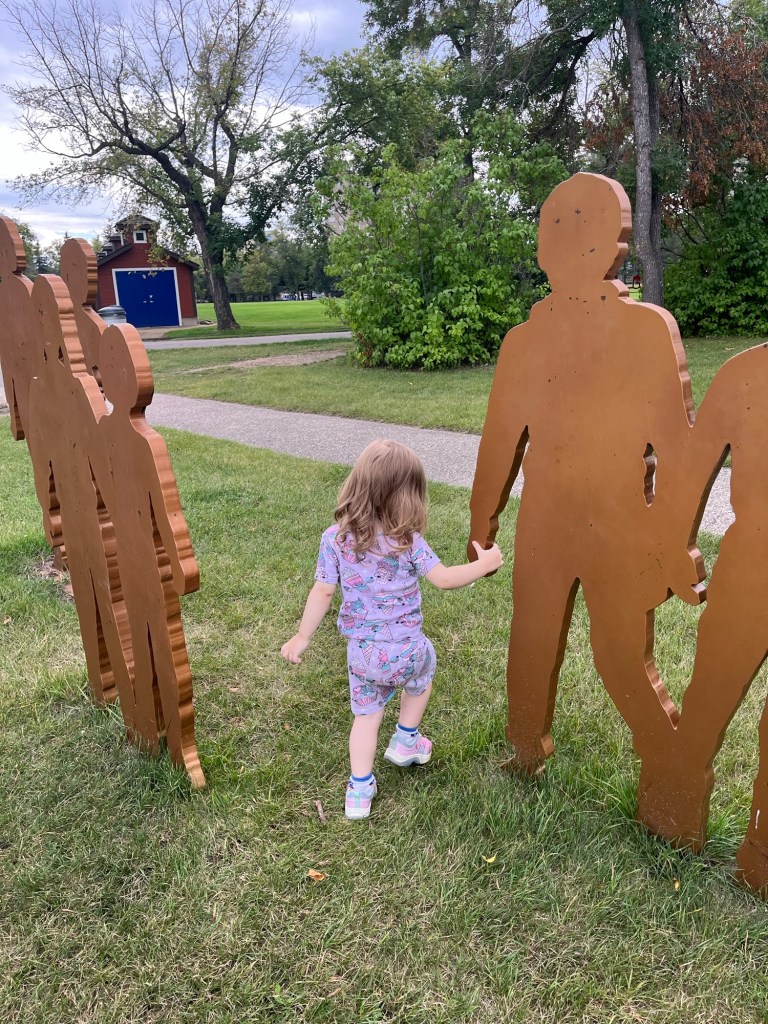
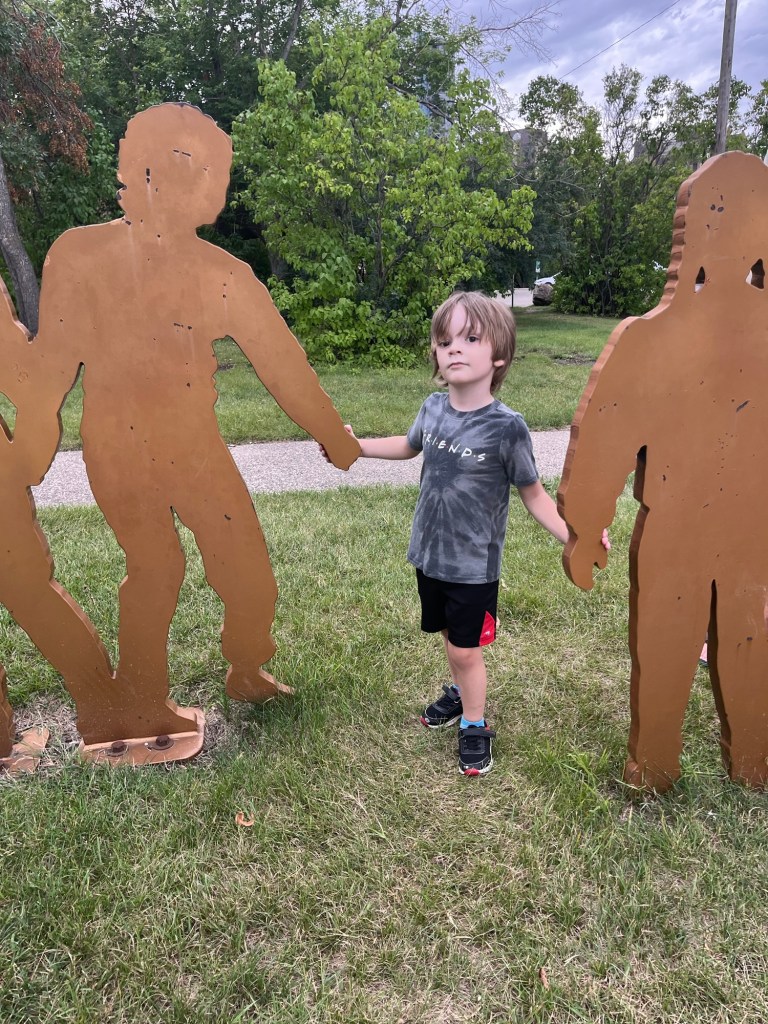
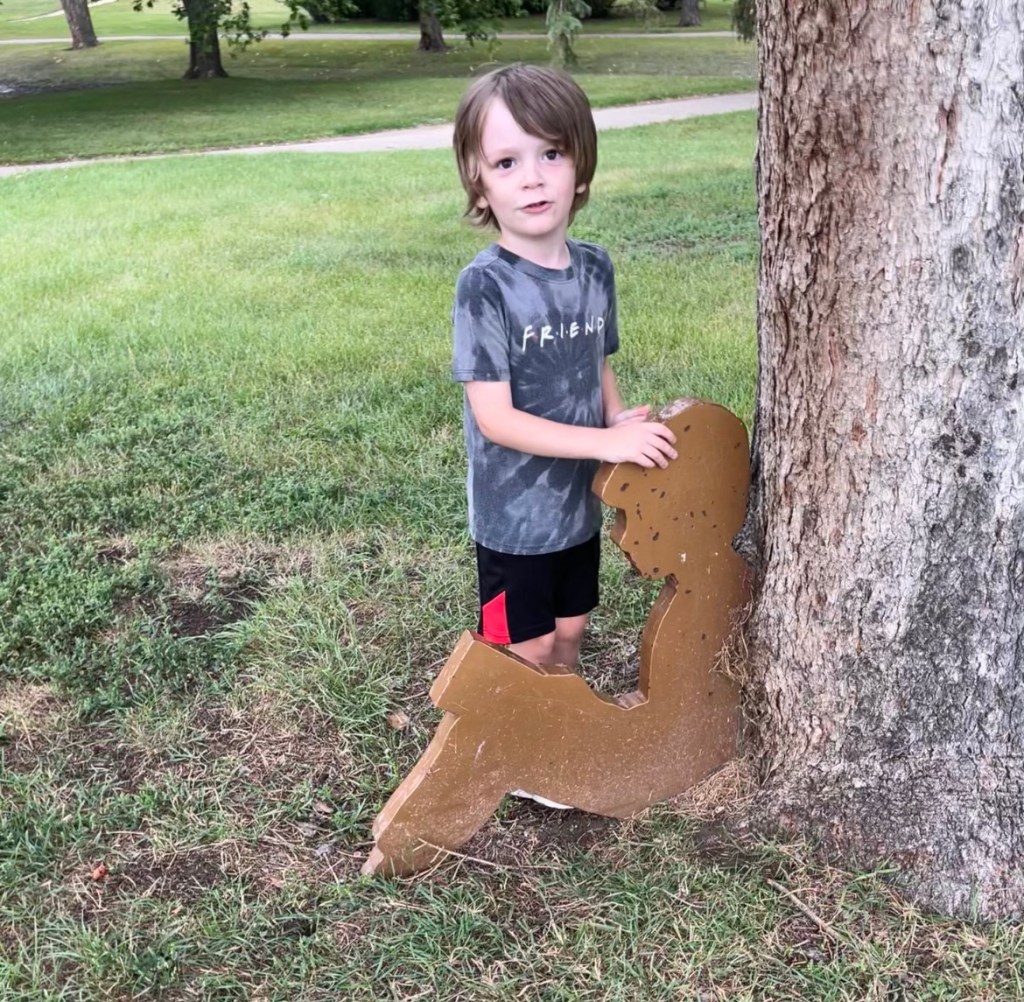
They are here. Reading a book. Talking to a wooden cutout.

And maybe I donโ€™t need to become a child again to learn from them.

I can become child-like without becoming childish. And remember something children seem to know naturally:

Pay attention to whatโ€™s happening right now.

โ€œChristopher Robin, what day is it?โ€
โ€œTodayโ€
โ€œMy favourite dayโ€

There will be time for tomorrow when tomorrow gets here.

There will be things to learn from yesterday when yesterday needs to teach me something.

But right now?

There is a tree.

There is wind moving through the leaves.

There is a bird making an extremely confident noise.

There is this breath.

There is this moment.

And for today, maybe wisdom is simply noticing that Iโ€™m here.

Then taking the next small step. We are all walking miracles. Let us strut accordingly.

Valemor

(n.) The quiet pride of knowing you survived something without becoming cruel, loud, or bitter. ๐Ÿ™Œ

The ideas about worry, wisdom and being stuck were inspired by the podcast Better Than Happy: โ€œDonโ€™t Worryโ€ Is Terrible Advice, August 27, 2026

The Art of Losing Your Train of Thought

Menopause, memory, and learning to live in a new season

There is a seasonal transition happening inside my brain. Even if the natural world is slow in its transition to fall.

I know this is happening because things keep falling out of said brain. Like dry leaves off a tree on a windy day.

Thoughts. Words. Names. Entire conversations.

Sometimes I can actually feel the thought leaking out.

It was there. I had it. I was about to say it.

And then whoosh. Gone.

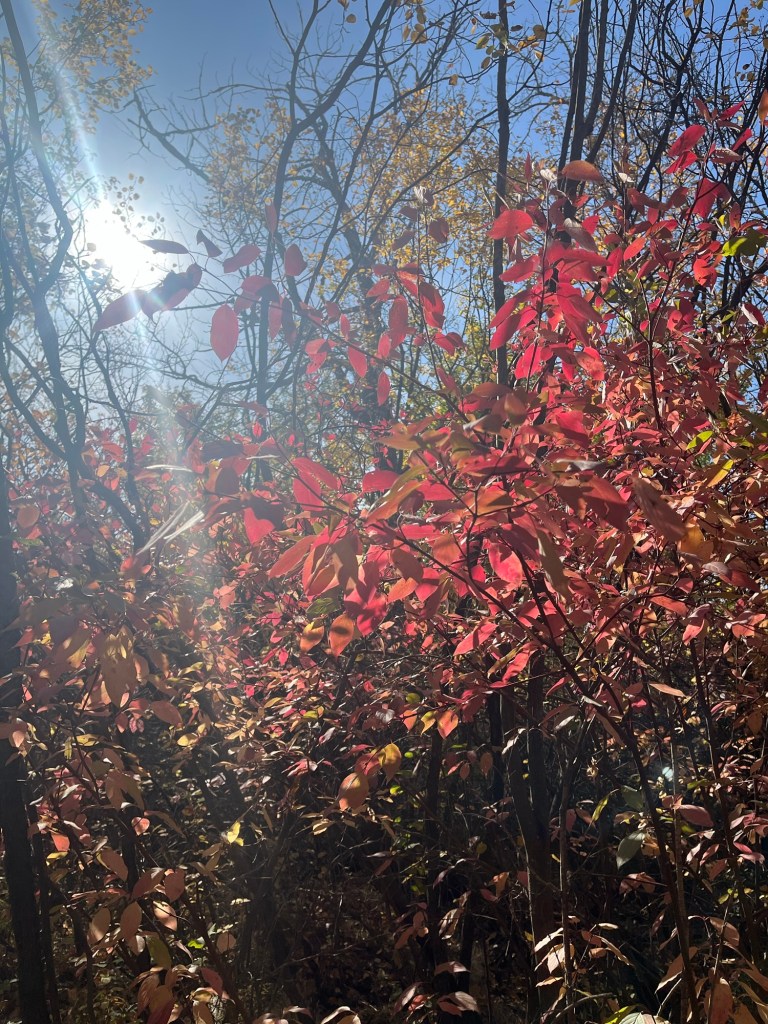
Much like the leaves outside right now, my thoughts have decided they have fulfilled their purpose and are ready to return to the earth.

The problem is that I havenโ€™t said them yet. And suddenly all thoughts are gone. And I still have to appear as though I can converse like a regular adult.

My brain has entered autumn

Autumn is a strange season.

Everything is changing, but nothing is necessarily wrong.

The leaves change colour. The days get shorter. The temperature drops.

Trees stop doing what they did all summer and start conserving their resources.

The whole landscape looks different. And yet we donโ€™t stand in the forest pointing at a poplar tree and say,

โ€œThe poor dear.โ€

We understand that itโ€™s a transition.

A season. A change in the way the tree functions.

I think menopause can be a little like that.

Except nobody warned me that my brain might start dropping leaves. And suddenly be bare naked.

The disappearing conversation

One of my most ridiculous symptoms is what happens when Iโ€™m talking to someone.

It doesnโ€™t matter who. A family member. A friend. A complete stranger.

If something catches my attention, even for a split second, I can lose the entire train of thought I was following.

Not the general idea. Not one little detail. The whole train. It has left the station. Immediately derailed. No survivors.

So Iโ€™m standing there looking at another human being vacantly and frantically wondering:

What was I talking about? Two seconds ago!

I imagine this does very little for the other personโ€™s confidence in my abilities as a functioning member of society.

Thatโ€™s fair.

If someone did that to me, Iโ€™d probably wonder if I should quietly take their car keys.

Then there was Nemo.

The other day I was telling my mom a story about a friend. In front of this friend.

Except I had ALL of the facts mixed up.

I got basically every piece of information wrong.

This friend, sitting there while I told the story corrected me.

I continued. She corrected me again. I continued. She corrected me again.

Five corrections in three sentences?!?

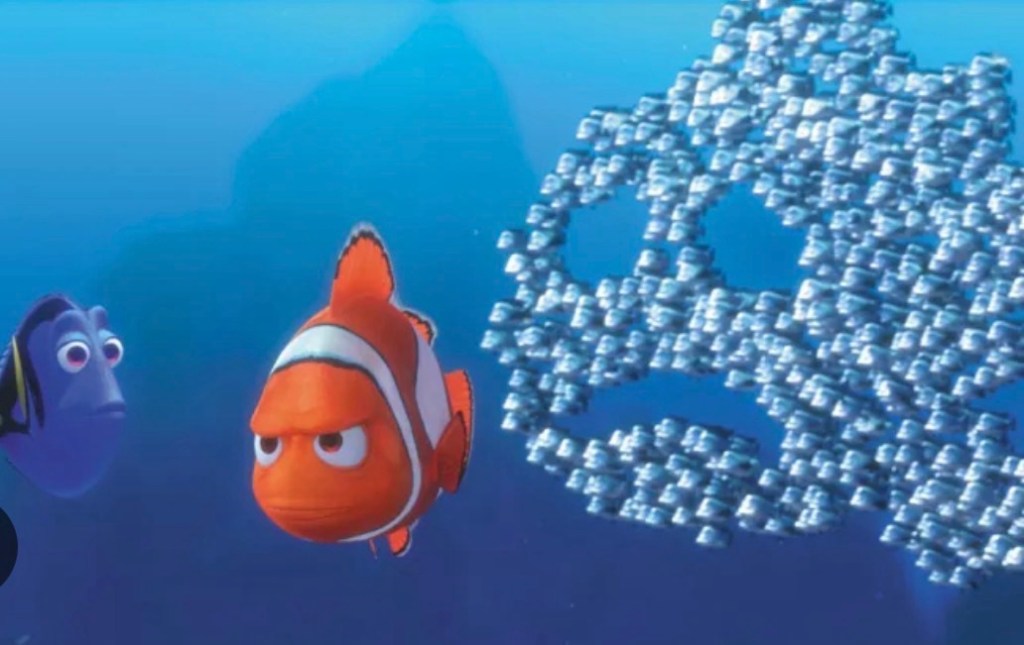
It gave strong Finding Nemo vibes. Remember when Dory is telling a school of fish passing by about Nemo while Marlin repeatedly corrects her?

โ€œHis son Fabioโ€ โ€œNemoโ€ โ€œNemo. Right.โ€ โ€œHis son.โ€ โ€œNemo.โ€

It was basically this scene. Except this time I was Dory, my friend was Marlin, and my mom was the poor unsuspecting school of fish.

I was one correction away from jumping in the lake.

There are days when my brain is so foggy from medication, exhaustion, hormones, or some magical combination of all three that I sound less like regular Dory and more like Dory speaking whale.

I think itโ€™s important to laugh.

Because if I donโ€™t laugh, I might start Googling early-onset dementia every time I forget the name of a friend Iโ€™ve had for 20 some years.

Iโ€™m not broken.

This is the part I wish more women heard. Iโ€™m not broken. And neither are you.

We are not pathetic. Ridiculous. Deficient.

Brain fog is a real and common experience during the menopause transition.

The Menopause Society reports that roughly 40โ€“60% of midlife women experience cognitive symptoms, including forgetfulness, difficulty concentrating, distractibility and trouble finding words. These changes can be frightening because they can feel like something really serious is happening.

But the cognitive changes typically associated with the menopause transition should be mild, and dementia at midlife is rare. (The Menopause Society)
That doesnโ€™t mean weโ€™re imagining it. Or that our challenging experience isnโ€™t valid.

And it doesnโ€™t mean we should simply shrug and say, โ€œOh well. Iโ€™m old now.โ€

No. Our brains are changing.

There can be a loss of confidence that comes with this.

You know youโ€™re capable. Youโ€™ve spent decades accumulating knowledge and experience.

Youโ€™ve solved problems. Raised children. Built careers. Managed households. Made decisions.

Remembered 47,000 things nobody else even noticed needed remembering. And then suddenly youโ€™re getting an Error 404 message every time you try to access the frontal brain.

Or youโ€™re halfway through a sentence and all suitable words abandon you in an ultimate betrayal of trust.

Or someone is looking at you while you desperately try to retrieve the thought that was just there.

And you start wondering:

Am I losing it?

There is an actual biological reason for this.

Estrogen receptors are widely distributed throughout the brain, including areas involved in memory, mood and other cognitive functions. During perimenopause, estrogen levels can fluctuate considerably before eventually settling at a much lower level after menopause. Research has found changes in brain structure, energy metabolism and blood flow during this transition, particularly in areas involved in memory and executive function. (The Menopause Society)

And then there are all the other things menopause can throw into the mix.

Hot flashes. Night sweats. Poor sleep. Anxiety. Mood changes. Stress. Fatigue. ๐Ÿ’€

All of those things can make it harder to concentrate and remember.

So sometimes the problem isnโ€™t that your brain has forgotten how to work.

Sometimes your brain is working while simultaneously dealing with approximately seventeen other things.

No wonder it occasionally says,

โ€œYou know what? Iโ€™m putting this thought down and walking away.โ€

But it could work on its timing.

Disclaimer: If something is interfering with your ability to work, function, communicate or enjoy your life, itโ€™s worth talking to a healthcare professional. Especially if the changes are sudden, severe, progressively worsening, or feel very different from your usual brain fog.

The invisible part

I think the hardest part isnโ€™t always the forgetting.

Itโ€™s what the forgetting can do to your confidence.

Because women are still expected to function.

We still have jobs. Families. Parents. Grandchildren. Appointments. Bills. Groceries. Passwords.

We have spent decades proving that weโ€™re capable.

Then suddenly we canโ€™t remember the word we have used approximately 900 times in our lives.

And that can mess with your head.

You begin wondering whether other people notice. Whether they think youโ€™re less capable. Whether theyโ€™re quietly questioning you. Whether youโ€™re losing something you arenโ€™t going to get back.

That fear is hard. And so is the embarrassment.

Experiencing brain fog does not mean youโ€™ve become less intelligent.

It doesnโ€™t erase everything youโ€™ve learned. It doesnโ€™t erase your competence. It doesnโ€™t erase the person you have spent your entire life becoming.

You are not broken.

You are living through a biological transition that can affect the way your brain functions.

Thatโ€™s very different.

My experience is a little more complicated than the average menopause story. Perhaps yours is too.

Mine was surgical menopause, so there wasnโ€™t a gradual transition. My ovaries were removed and my body went from producing its usual supply of hormones to suddenly having to figure out life without them.

I also had a bad reaction when I tried hormone replacement therapy, so that isnโ€™t an option for me. Which means some of the symptoms that can be mildly annoying for one woman can feel like theyโ€™ve been turned up to eleven for me.

The brain fog, the temperature swings, the sleep disruption, the whole neurological circus can be a lot ๐Ÿ˜ต . Iโ€™m not saying that for sympathy. Itโ€™s simply part of the landscape Iโ€™m learning to navigate.

And then thereโ€™s the fact that I generally look fine.

Thatโ€™s the slightly ridiculous thing about invisible conditions.

From the outside, I look like a perfectly ordinary woman going about her day. You canโ€™t see the pain, the nervous system overload, the fatigue, the brain fog, or the amount of energy it can take just to appear like a functioning adult.

Add menopause to the mix and thereโ€™s even more happening behind the scenes that nobody can see.

Until I overheat.

Then suddenly my bodyโ€™s commitment to being discreet completely falls apart.

I can go from looking perfectly normal to sweating so profusely that I resemble the co-pilot in the movie Airplane. Ridiculously conspicuous, completely unable to pretend everything is fine. As the sweating and heat achieve new heights people wonder whatโ€™s happening. While I am left wondering if anyone has a towel.

Itโ€™s almost impressive. If it werenโ€™t so disgusting.

And there is something isolating about looking fine when you donโ€™t feel fine. People naturally respond to what they can see.

If you look healthy, capable and put together, itโ€™s easy for everyone, including yourself, to forget how much work is happening underneath the surface.

So yes, I might look fine. My brain might seem fine. My body might look fine.

And yet sometimes the inside is working through some stuff.

The forest doesnโ€™t panic when the leaves fall

This is one of the reasons I keep coming back to the forest.

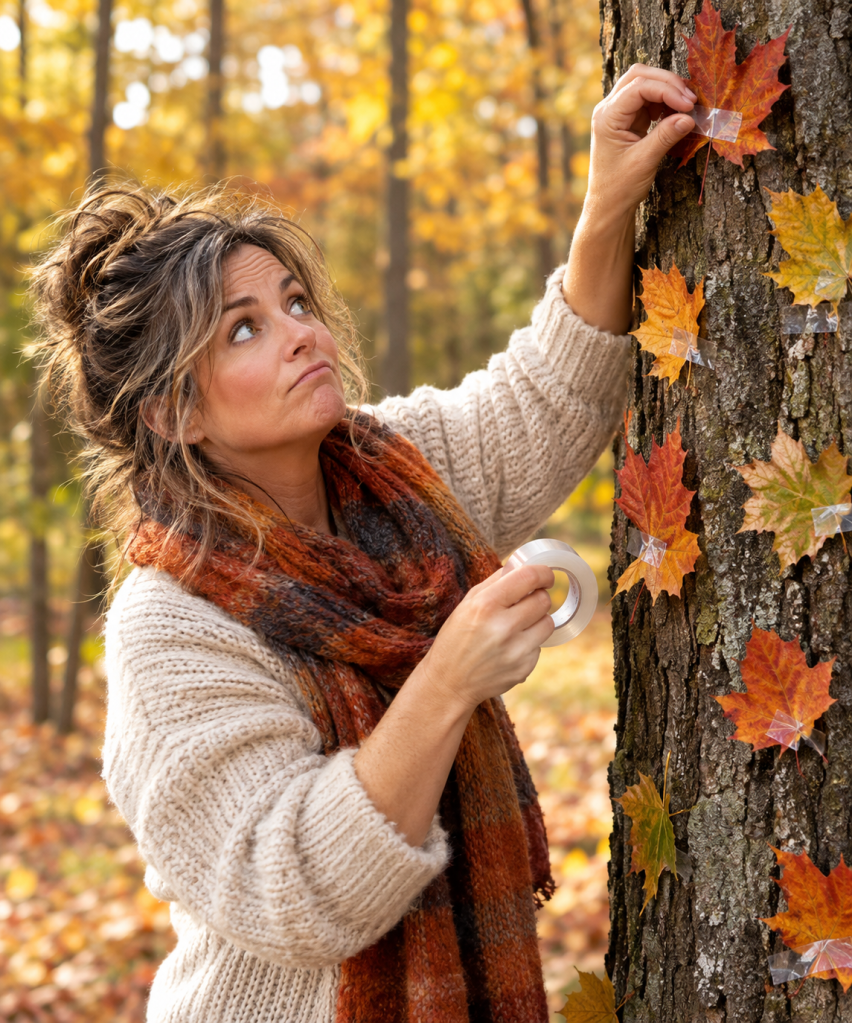
The forest is remarkably good at transitions. It doesnโ€™t fight autumn. Or apologize for losing its leaves.

It doesnโ€™t stand there trying to tape them back onto the branches. It lets them go.

And then it changes how it spends its energy.

There is something I need to learn from that. Because when my brain isnโ€™t behaving the way it used to, my first instinct can be to push harder.

Try harder. Remember harder. Concentrate harder. Be more productive. Fix it. Get back to normal.

But I donโ€™t think this season is asking me to get back to normal. I hear it asking me to learn a new normal.

That doesnโ€™t mean accepting every symptom without question.

It doesnโ€™t mean ignoring significant changes or assuming everything is menopause.

New, severe or progressively worsening cognitive symptoms deserve that conversation with a healthcare professional.

Then thereโ€™s forest therapy.

***Forest therapy does not replace medical care.***

But i have found it to be an effective tool for managing some of the symptoms that can accompany menopause.

Numinous

(Adj) the feeling that something sacred and mysterious is present in nature.

So what can the forest actually do?

A forest canโ€™t restore my estrogen. It canโ€™t remember Fabioโ€™s name for me. It canโ€™t make a hot flash disappear on command.

And it definitely canโ€™t stop me from walking into a room and immediately forgetting why Iโ€™m there.

But it can give my nervous system a break from the constant demand to perform.

Forest bathing research has found short-term reductions in cortisol and other indicators associated with stress (PubMed)

And that matters because stress, poor sleep, anxiety and other menopause symptoms can all pile onto cognitive difficulties.

Sometimes managing the environment around the symptom is useful, even when you canโ€™t eliminate the symptom itself.

The forest gives us an opportunity to slow down.

To pay attention without having to accomplish anything.

To move gently.

To breathe.

To notice.

To let the nervous system come down a notch.

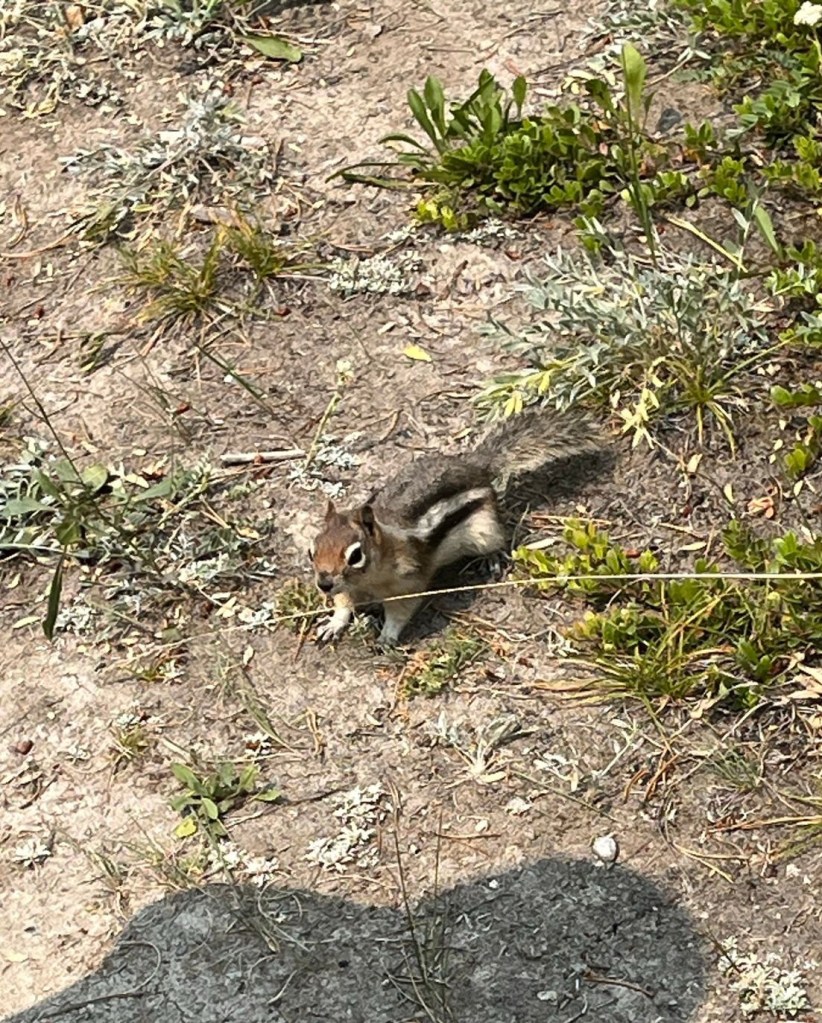
And sometimes that is enough to make the brain feel a little less like the squirrels are running the office. ๐Ÿฟ๏ธ ๐Ÿฅœ

Try a seasonal brain reset

The next time your brain feels particularly autumnal, find somewhere outside where you can sit comfortably.

You donโ€™t need a spectacular trail. A backyard will do. A park. A quiet corner under a tree.

Then try something I call Let the Leaves Fall.

Sit somewhere you can see a tree. Donโ€™t try to clear your mind.

That is entirely too much pressure for a brain that currently canโ€™t remember what it was doing three seconds ago.

Instead, notice the tree. Look at the leaves. Find one that is still attached. Find one that has fallen. Notice the movement. The colour. The texture. The spaces between the branches.Then notice your own body.

Where are your shoulders? Your jaw? Your hands? Your feet?

Take a slow breath and feel your feet against the ground.

Then ask yourself:

What am I holding onto that I donโ€™t need to solve right now?

You donโ€™t need an answer. Thatโ€™s the point. Let the question sit there. Let your thoughts come and go without chasing them.

If a thought disappears, let it. If another one arrives, notice it.

Youโ€™re not trying to force your brain back into summer. Youโ€™re practicing being present in autumn. And thatโ€™s what regulation sometimes looks like.

Not fixing. Not forcing. Not fighting.

Just creating enough safety and quiet that your brain doesnโ€™t have to work quite so hard.

Every season asks something different of us

The forest reminds me that change doesnโ€™t always mean decline.

A tree losing its leaves isnโ€™t dying.

Itโ€™s adapting. Resting. Reallocating. Preparing for whatโ€™s next.

Maybe we can offer ourselves the same grace. I donโ€™t need to be embarrassed every time I lose a thought. I can simply say,

โ€œHang on. My brain just sprung a leak.โ€

And laugh.

I can ask someone to remind me what I was saying without assuming theyโ€™ve lost faith in my ability to function.

I can stop measuring this version of myself against the woman I was before my hormones decided to rearrange the furniture.

And maybe, when my brain wonโ€™t brain, I can remember:

Iโ€™m not broken.

Iโ€™m in a season of change. The leaves are falling. The landscape looks different.

Some things are harder. Some things may need more rest. Some things may need more support.

And some things might surprise me by growing in ways I couldnโ€™t see coming.

I donโ€™t have to love every part of the season. But I can learn to live in it.

And maybe, every once in a while, I can go sit beneath a tree and let the forest remind me that changing doesnโ€™t mean failing.

It just means the season changed. And so did my memory.

Nowโ€ฆ

What was I talking about?

The Influence of Non-Judgmental Awareness: Mending the Nervous System

There is always in February some one day, at least, when one smells the distant, but surely coming, summer.

-Gertrude Jekyll

If youโ€™ve ever tried to โ€œthink positiveโ€ while your body is screaming, you already know who wins.

Pain wins. Exhaustion wins. A nervous system on red alert wins. Any pep talk given to said nervous system is bringing a Post-it note to a tornado.

And then we blame ourselves! Because obviously the problem is a personal moral failure, not a human being a human.

In forest therapy, we take a different approach. We donโ€™t try to out-think the body. We learn to listen to it without judgment. In doing so, the body finally gets what it has been asking for all along. Safety.

Biology’s Rebellion: The Dangers of Overriding Nature

Many people living with chronic pain think they should be able to cope better.

They should be stronger.

They should push through.

They should be more grateful itโ€™s not worse.

But hereโ€™s a humdinger of a thought. When your body is sending powerful distress signals, your conscious mind has very little leverage.

The attempt to escape from pain is what creates more pain.

–Gabor Matรฉ

Neill Williams, on the Success Genius Podcast, explains it beautifully. When you are hungry, exhausted, or in pain, your biology overrides your attempts to think or feel differently.

The vagus nerve, your internal communication highway, links brain, heart, lungs, digestion, and the stress response. If that system is dysregulated, focus, creativity, decision-making, and connection all suffer.

Your body is a boundary of your soul. Treat it with care.

–Jean Shinoda Bolen

As Iโ€™ve said before. This isnโ€™t a motivation problem. Itโ€™s a nervous system problem.

And until the body feels safer, it will keep turning up the heat.

Rushing: The Trap That Keeps Us in Survival Mode

There is more to life than increasing its speed.

–Ghandi

I dare say, we hurry through the day, override our limits, stay stimulated late into the night, fall into bed, wake up feeling four days past our bedtime, and repeat.

Then we wonder why our system is constantly braced for danger. We keep hitting refresh on the same nervous system and expecting a software update.

From a survival perspective, it makes perfect sense. Nothing in that cycle signals โ€œYou can stand down now.โ€

So the body continues to send messages. And they are rarely gentle. Whispers donโ€™t usually create change. Pain often does.

To pay attention, this is our endless and proper work.

–Mary Oliver

“I Would, But I Simply Can’t.”

I often hear how wonderful forest therapy sounds.

I wish I could. Maybe someday. When life calms down.

But healing asks for time. Attention. Slowing down. Repetition.

Until then, forest therapy remains a lovely idea instead of lived remedy.

Word to the wise. Your body will keep requesting the appointment. It has an unlimited follow-up policy and will keep calling until someone answers.

If you don’t schedule a break, your body will take one for you, and it probably won’t be at a convenient time.

-Unknown

The Remarkable Power of Non-Judgmental Awareness

Here is where the shift happens.

When we practice noticing sensations without evaluating them, we step out of the inner fight.

Instead of:

  • This is bad.
  • Why am I like this?
  • I should be better.

(There are no gold stars for hating life correctly)
We try:

  • Warmth
  • Tightness.
  • Pulsing.
  • Cool air on my cheek.

No argument. No story.

Judgment activates defense. Awareness invites regulation.

The nervous system reads neutrality as safety.

The organism knows.

–Eugene Gendlin

Nature: The Ultimate Stage for Inspiration

The forest is a masterclass in non-urgency.

Nothing is asking you to be different.

Everything belongs. You. Belong.

Research into nature exposure consistently shows reductions in cortisol, blood pressure, muscle tension, and rumination.

But experientially, Iโ€™ve seen something even more important. People soften. Attention and breathing widens.

The body begins to renegotiate its alarm state.

Nature provides gentle sensory anchors. Light, texture, birdsong, air movement. These allow awareness without overwhelm. For someone with chronic pain, this is crucial. We are not adding more intensity; we are expanding capacity.

Astravore: (n) A soul that keeps feeding on hope even after disappointment- light-hungry, resilient, unbreakable. -ViviJan
You are larger than what is happening to you.

–Michael Singer

Silencing the Alarm: A Lesson in Balance

Imagine a car alarm that has been blaring for years.

You wouldnโ€™t yell affirmations at it and tell it to be quiet.

You would look for the threat it thinks it perceives.

Non-judgmental awareness in nature is how we open the hood.

Each calm moment says, โ€œNo one is breaking in right now.โ€

Over time, the alarm system recalibrates.

My Story

Iโ€™ve experienced moments in my forest therapy practice when I wanted to do it all perfectly. To follow all the โ€œright steps.โ€

When I go in with this focus I notice the pain is still there. The frustration is still there. I start thinking about all the years of pain I have ahead of me. Of financial strain. And the weight it adds to every relationship.

Then I remember to just breathe. Focus on today. Right. Now.

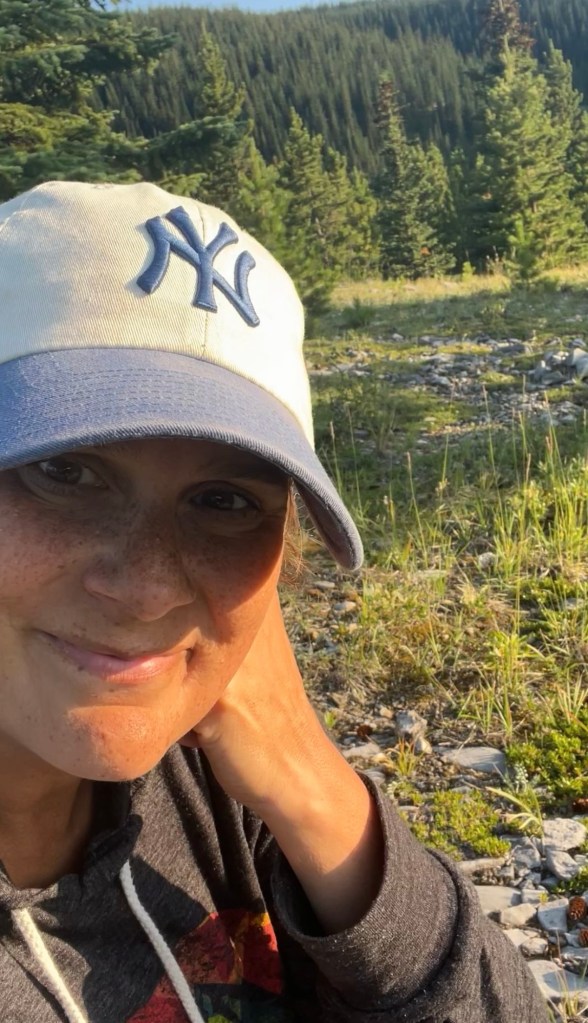
I start to feel the breeze on my face and hear it making its way through the trees around me. I sense the solid earth beneath me.

The pain does not vanish. But itโ€™s not the only voice anymore. It has just been hogging the microphone in my head. ๐ŸŽค ๐Ÿคซ

There is support available here whenever I need it. In the birds and the trees and the solid ground. This may sound odd. But this shift in thinking moves the pain inside a larger field of safety.

This is regulation. I just keep coming back to it.

The best way out is always through.

– Robert Frost

A Gentle Invitation to Explore

  1. Find something in nature that feels steady. A tree, a rock, the shoreline.
  2. Let your eyes rest there.
  3. Now widen your awareness to include three additional sensations that are neutral or pleasant.
  4. Move back and forth between the discomfort and the wider field

    You are teaching your nervous system that pain can exist without emergency.

    Do this regularly and the vagal pathways that support calm begin to strengthen.

    Donโ€™t just do something, sit there.

    –Sylvia Boorstein

    The Real Result: Persistence in Life

    When regulation improves, people often notice clearer thinking, better sleep, and easier connection. Not because they forced positivity, but because their biology finally cooperated.

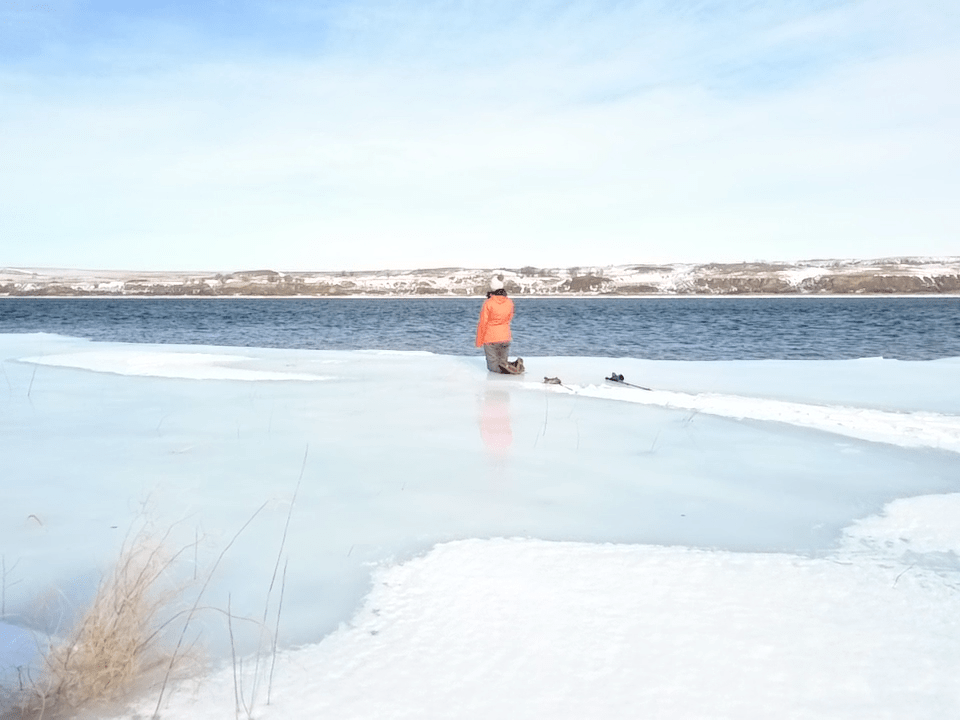
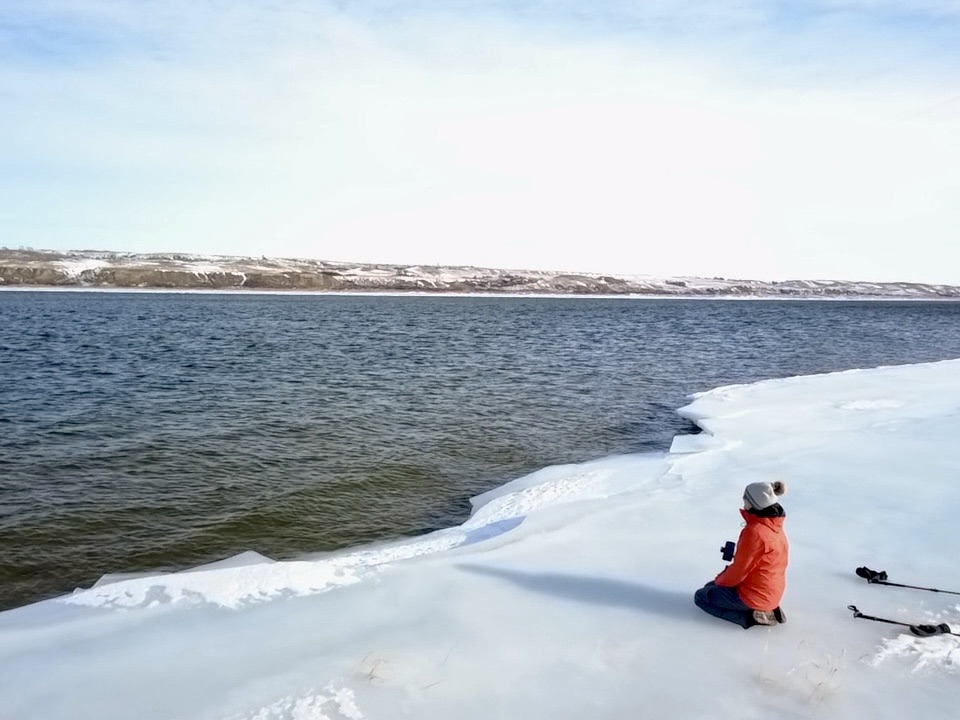
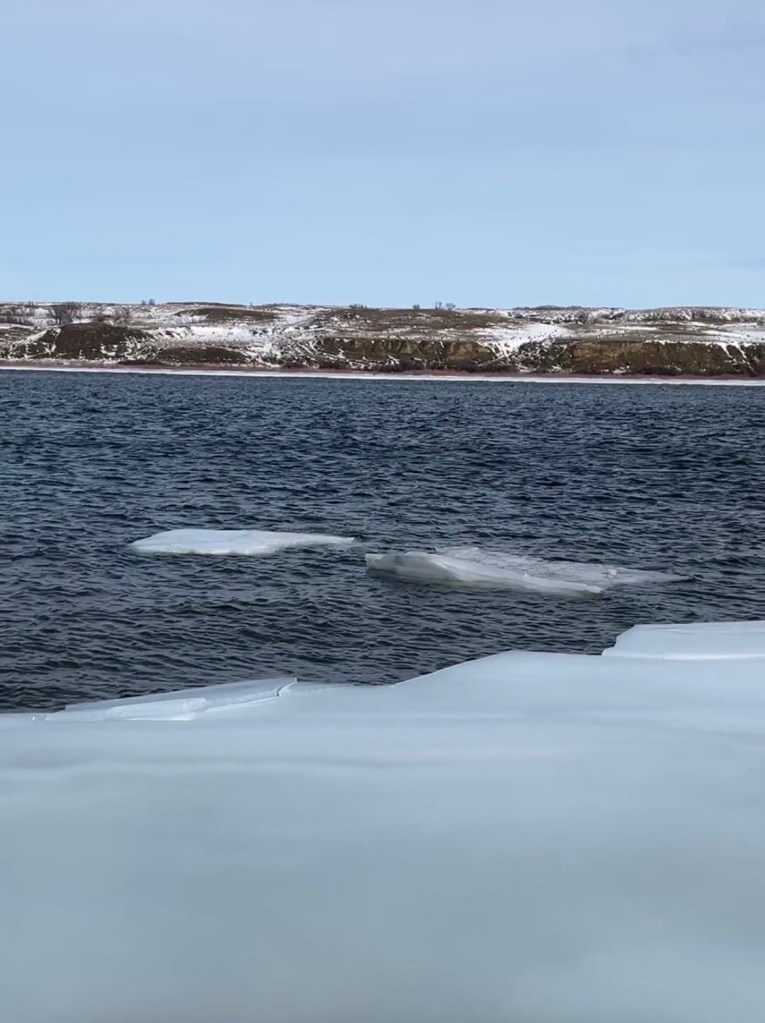
    You are no longer fighting upstream. You are being carried. Like these little bitty icebergs I watch on the river. Floating by. ๐Ÿ‘‡

    The Closing “Peace”

    If we keep living in a way that ensures the alarm stays active, nothing changes.

    But when we make space, even small, consistent space for non-judgmental sensory awareness in the forest, the body hears something new.

    Iโ€™m safe. I can soften. I donโ€™t have to shout today.

    And maybe, that is where my healing lingers. I just have to take time away, to meet it there.

    The body always leads us homeโ€ฆ if we can simply learn to trust sensation and stay with it long enough for it to reveal appropriate action.

    -Pat Ogden

    Take care, my friends. I leave you with these February thoughts that gave me a little chuckle:

    My February workout plan is mostly just shivering until my muscles get tired.

    Love is in the air this February, but so is the flu, so please stay back.