Mending Woods: A Journey of Self-Discovery

By a Forest Therapy Guide Practitioner

I am made of words & rivers & winds & wildflowers. I am part grief & part hope & all love.

-Victoria Erickson

From the outside, my life still looks mostly the same.

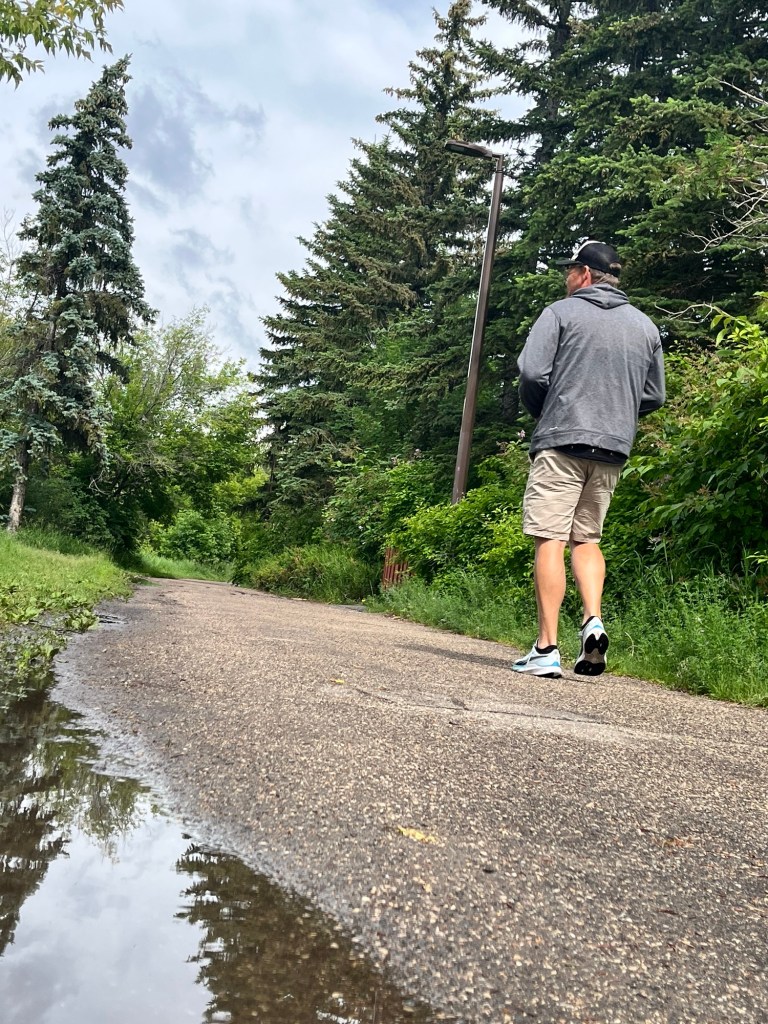
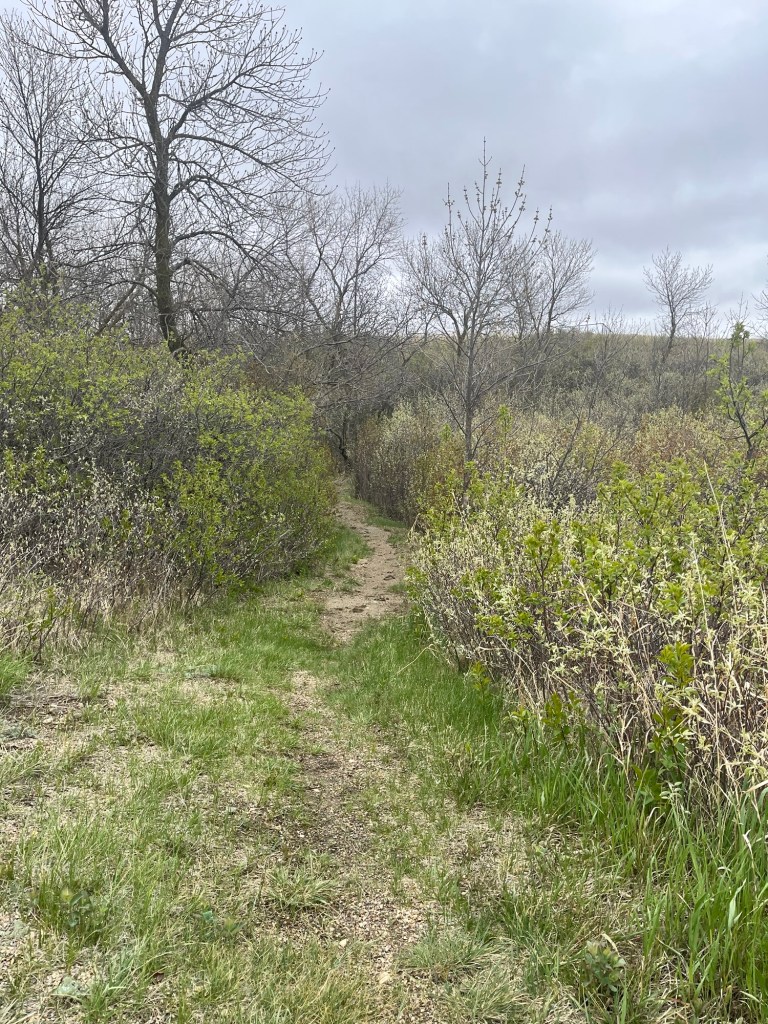
I still show up. I still smile. I still walk in the woods.

What people don’t see is the calculation behind every choice. The energy budgeting, the quiet bargaining with my body, the grief that comes when the answer is no again. Chronic pain didn’t just change what I can do. It changed how I think, how I hope, and how I understand myself.

I didn’t lose my old self all at once.

She left in pieces. First the bounce in my step, then the spontaneity, then the confidence that tomorrow would feel better. Chronic pain has a way of rearranging your life while pretending nothing has changed. And somehow, you’re expected to adapt quietly and keep smiling like you didn’t just lose someone important.

There is a quiet kind of grief that comes with chronic pain. Those of us who know can see it in the eyes. In the bouncing leg when sitting too long. In the little noises and facial expressions that most people miss.

This is not a grief that comes with casseroles or sympathy cards. Not the kind people know how to name.

It’s the grief of losing someone very important. You.

The body you trusted. The energy you assumed would always return. The way ordinary days felt doable.

Back in the day when your consequences had actions. Now it takes nothing to set that pain- train in motion.

Chronic pain doesn’t just hurt. It rearranges your identity. Like a Mr Potato Head put together by a little one. Totally unfamiliar from what it’s “supposed to be.”

Purpose feels unfamiliar. Hope has to be redefined. Can one even set goals anymore? And from the outside, nothing looks different at all.

You still look like you.

But internally, everything has changed.

That’s why community matters more than advice.

What a fragile, tender gift it is to be invited into another’s wounds.

@thesoftword

Advice tends to arrive loudly and unsolicited. (Often with links. 🤭)

What actually helps is something quieter. 🤫

Not people who argue your reality. (😳 “I’m surprised you feel comfortable saying that out loud” 🤣)

Not people who say, “Have you tried…?” like they’ve just cracked the code. (😨 As though the slightest change in your world will not usher in all of your chronic megadons! 🤯 )

Not people who look sideways at your therapy choices. (👋 “Be gone, foul thing” 🙃)

But people who,

  • Cheer when something finally settles back into place 🙌
  • Take your call when you have nothing left 🤙
  • Help recalibrate the distorted lens pain creates 🔎
  • Invite you in without being offended when you decline 🫴
  • Don’t judge your sleep, your limits, or your pace 🙂‍↔️

They understand one sacred truth:

You are the only person who lives in this body.

And when you reach out, they show up.

Trees of Solace: Earth’s Embrace in Times of Grief

Forest therapy doesn’t try to fix you.

Which is refreshing, to be honest.

It doesn’t rush the process or demand improvement. No gold stars. No timelines.

It simply offers a place where you can grieve. Because this life is tough.

Trees don’t ask who you used to be. They have been pretty quiet during a conversation, in my experience.

They don’t compare you to your past. They are really good at living in the now.

They don’t need you to be productive. Their progress is very slow. They respect your pace as well.

They just let you be you. Whatever version of you that may be.

And when you’re grieving your old self, that is the miracle worker you need.

To be idle is a short road to death; to be contemplative is a short road to life.

— Unknown, attributed to early monastic writings

Stillness is not stagnation. In the forest, stillness becomes listening.

The Garden Path: Shedding the Old Self to Bloom Anew

1. Hold a “Letting Go” Walk

Walk slowly and name (quietly or aloud) what you are releasing. Old expectations, former timelines, borrowed definitions of success.

Leave something symbolic behind. A stone, a leaf, a breath, writing in the snow.

Grief likes ceremony. Even small, slightly awkward ones.

2. Practice Observing Instead of Fixing

Sit and observe without correcting your thoughts.

Notice what hurts.

Notice what doesn’t.

Notice what still feels alive.

This is harder than it sounds. Most of us are very committed to fixing ourselves.

Do not ask what the world needs. Ask what makes you come alive, and go do that.

— Howard Thurman

3. Let the Landscape Mirror Change

Forests are experts in adaptation.

Storm damage. Regrowth. Fallen trees feeding new life.

Your body is not failing. It is reorganizing.

Messy? Yes.

Meaningless? Not even close.

4. Replace Focusing on the Yield with Yielding

Some days the win is sitting.

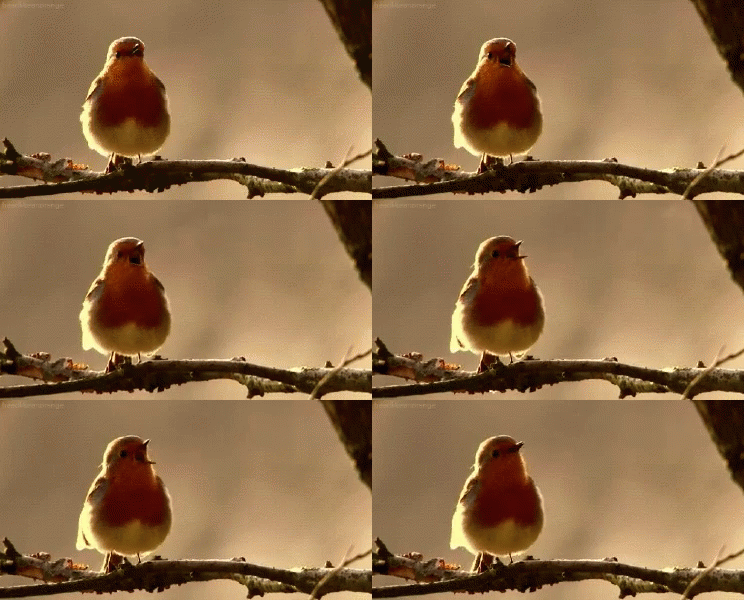
Some days it’s noticing birdsong instead of pain for ten whole seconds.

That counts.

It all counts.

Celebrate small victories shamelessly. Pain already takes enough. Don’t let it take joy too.

5. Create a New Self Narrative

The old self doesn’t disappear. It composts.

Strength becomes discernment.

Speed becomes awareness.

Achievement becomes alignment.

And occasionally, dark humour becomes a coping skill. (Highly recommended.)

Because if you can laugh when your body sends mixed signals, you’re still very much alive.

You Are Not Becoming Less

You are becoming different.

And different doesn’t mean diminished.

The forest reminds us that worth is not measured by output, endurance, or even consistency.

It’s measured by belonging. By heart beats. By the current of our perceived experience.

You belong here.

In this body.

On this path.

And when you’re ready, the forest will help you meet the version of yourself that knows how to live well. Within the limits. Without shame.

This January, 
if you feel low and heavy
and unready-
please remember that
in nature,
the new year begins in spring.
January is not nature's reset.
March is.

In a few months' time,
temperatures will rise
and the days will be
long enough to actually
do things.
Nature is still unwinding.
It's okay if you are, too.
-srwpoetry
Opacarophile

(n) someone who finds deep comfort, solace and profound peace in sunsets

The Biggest Rocks, Near Enemies, and the Stillness That Tells the Truth

As a forest therapy guide, I spend a lot of time listening. Not just to birds and wind, but to the quiet wisdom that surfaces when life slows down. Recently, while listening to the Follow Him podcast with guest Dr. John Hilton III, I was struck by how clearly their insights mirrored what I see every day in nature-based healing.

The Silent Saboteur of Greatness: Settling for “Good Enough”

Dr. Hilton shared a story Warren Buffett once told about his pilot, Mike Flint. Buffett asked Flint to list his 25 most important goals, then circle the top five. Flint assumed the remaining 20 would simply be addressed later, as time allowed.

But Buffett surprised him.

Those other 20 goals, he said, were not “later” goals. They were avoid-at-all-costs goals. Why? Because what most often pulls us away from our very best work isn’t something bad. It’s something good. Interesting. Worthy. Pretty good.

And that’s the danger. Pretty good competes quietly. It distracts us without alarming us. It drains time and energy while convincing us we’re still doing something valuable.

Choosing Wisely: Balancing Big and Small in a Limited Jar

You’ve probably heard the “big rocks” analogy: if you put the big rocks in the jar first, then the small rocks, then the sand, everything fits. It’s a powerful visual reminder to prioritize what matters most. In a day. In a year. In a life.

But Dr. Hilton pointed out something that often gets overlooked. In real life, no one measures out the rocks and dirt ahead of time so it all fits. Neat and tidy. Many of us simply have too many big rocks.

The daily work.

The self care.

The appointments.

The responsibilities we can’t opt out of.

At some point, the work becomes less about fitting everything in and more about asking a braver question:

Which rock is the biggest?

And then: Which one comes next?

For those of us living with chronic pain or limited energy, this question isn’t philosophical. It’s survival.

The real work is not to prioritize what’s on your schedule, but to schedule your priorities.

— Stephen Covey

Near Enemies: The Perils of Almost Right

Psychologist Kristin Neff teaches about near enemies. Qualities or choices that look helpful on the surface but quietly undermine what we actually need.

In compassion practice, for example, self‑compassion’s near enemy is self‑pity. In mindfulness, it might be zoning out instead of being present. Near enemies are dangerous not because they are wrong, but because they are convincing.

They imitate wisdom.

They borrow the language of care.

They feel responsible.

And yet, they subtly pull us away from what truly nourishes us.

Familiar Foes: Chronic Pain’s Close Encounters

When you live with chronic pain or chronic illness, near enemies show up everywhere:

  • Filling your day with “useful” tasks instead of the few essential ones that protect your health.
  • Trying every therapy instead of committing energy to the one or two that truly help.
  • Positive thinking that bypasses your body’s real signals.
  • Staying busy so you don’t have to feel how tired you actually are

Even healing practices can become near enemies when they cost more energy than they restore.

In these seasons, discernment matters more than discipline.

Unearthing Clarity: The Truth of Forest Therapy

Nature has a way of clarifying what belongs and what doesn’t.

In the stillness of the forest, the nervous system softens. The noise quiets. And without effort, priorities begin to rearrange themselves.

Here, the biggest rocks often reveal themselves as simple, foundational truths:

  • Enough sleep
  • Nourishing food
  • Gentle, appropriate movement
  • Nervous system regulation
  • Emotional safety

These are not optional extras. They are the largest rocks.

From there, we can begin to see the next biggest rocks. Helpful therapies, meaningful connection, creative expression, without confusing them for the foundation itself.

And finally, with compassion, we can begin to sift out what simply does not fit in this season of life. Not forever. Just for now.

Arabic proverb: Sunshine all the time creates a desert.

Perhaps, in the storms, roots deepen and rain helps us grow.

The Significance of Near Enemies

Near enemies are dangerous because they:

  • Masquerade as wisdom
  • Drain limited energy
  • Keep us busy instead of well
  • Pull focus from what truly supports healing

For those living with chronic pain, the cost of mistaking a near enemy for a true ally is high. Energy is precious. Attention is finite. Choosing the wrong “good thing” can mean losing access to the best thing.

You can do anything, but not everything.

David Allen

Letting Go

There was a season when I was frantically searching for a diagnosis. Searching not just for answers, but for validation. I was living with constant, invisible pain that no one could see and few seemed to understand. And so I chased understanding wherever I thought it might live.

I pursued every avenue. Every referral. Every therapy that sounded even remotely promising. I read, researched, pushed, argued, advocated. Believing that if I just searched hard enough, fought clearly enough, or proved my case convincingly enough, I would arrive at the answer. A conclusion. A resolution. A moment where someone would finally say, “Yes. This is real.”

What I didn’t recognize at the time was my near enemy.

On the surface, what I was doing looked responsible. Even admirable. I was being proactive. Informed. Determined. But underneath it all, my hope had quietly become tangled up in outcomes, test results, and external validation. The search itself, though it looked like healing, was slowly exhausting me.

I needed to let go of the illusion that my life might have been different.

It’s in my eyes. I tried to hide it. But I see now I was not overly successful in that attempt. Through that time, I could best be explained. By these words someone wrote, “she’s got the hospitality of a Southern belle and the emotional stability of a raccoon in a Dollar General.” Or these accurate words, “I’m currently looking for a moisturizer that hides the fact I’ve been exhausted since 2019.”

Each clear test result landed not as relief, but as another erosion of trust. My pain was getting worse, not better. And I suspect my medical charts were, too. Notes growing heavier, more complicated, perhaps less in my favor as frustration mounted on both sides.

Still, I kept searching. Because stopping felt like giving up.

Eventually, I had to face the truth. This relentless pursuit wasn’t leading me toward healing. It was pulling me away from it.

I still don’t have clean answers or a tidy diagnosis. But something essential has shifted. I no longer outsource my validation. It doesn’t come from a test, a label, or a professional conclusion. It comes from listening to my own lived experience.

These aren’t the only people. But it’s a good chunk of them.

I’m deeply grateful for the people in my life who try to understand my pain, even when they can’t see it. They may not witness the pain itself, but they see me. And that has mattered more than I once believed possible.

Some answers have arrived gently, settling on me soft as a sunbeam. Others have been harder, more confronting. But I no longer search frantically.

That frantic searching. The good‑looking, well‑intentioned chase for certainty was my near enemy. And laying it down made space for something quieter, truer, and far more healing.

What you tend grows. What you ignore fades.

Forest Reflections

Near enemies are not mistakes. They are invitations to deepen our discernment.

When we learn to tell the difference between the important and the essential. Between the helpful and the healing. We begin to live with greater integrity toward our bodies and our limits.

And often, it is the forest. Quiet, patient, and uncompromising that helps us remember which rock truly belongs in our hands today.

Rest is not idleness. Sometimes lying on the grass under trees on a summer’s day… is hardly a waste of time.

— John Lubbock

Forest Bathing: Breaking the Pain Cycle

What if the goal isn’t to eliminate pain? But to change your relationship with it.

Not by forcing positivity. Not by chasing the next miracle cure. But by learning how to stand in a forest, breathe, and gently step outside the storm long enough to see it clearly.

That’s where mindfulness in the forest becomes powerful. Not as an escape from pain, but as a way to interrupt the pain cycle itself.

Benefits don’t emerge from merely experiencing mindfulness as a state. Instead they happen when we cultivate mindfulness as a personal trait.

@brilliantlegalmind

Breaking the Chains of the Pain Cycle

Chronic pain is never only physical. It is neurological, emotional, and deeply shaped by our stress response.

This is not to say that you don’t experience actual, real, physical, deep pain. Only that our pain experience can be altered according to how we choose to interpret it. Which is especially important in chronic pain when so often there are no answers or treatments.

Pain feeds on:

  • Fear of what’s coming next
  • Hyper-vigilance in the body
  • Frustration over what we’ve lost
  • The endless search for a fix

This creates a familiar loop.

Pain → tension → fear → more pain.

Mindfulness, especially when practiced in nature, doesn’t deny this cycle.

It teaches us how to step out of it.

Don’t stress the ‘could haves’, if it should have, it would have.

MINDFULNESS (n):

“The practice of being aware of your body, mind and feelings in your present moment, thought to create a feeling of calm.”

Finding Harmony: In Nature’s Whispering Wisdom

Mindfulness anywhere can help.

Mindfulness in a forest does something more.

Natural environments gently regulate the nervous system without any concentrated effort on our part:

  • Heart rate slows
  • Breathing deepens
  • Muscles soften
  • The brain shifts from threat mode to restoration mode

Research on shinrin-yoku (forest bathing) shows that time in forests lowers cortisol, reduces blood pressure, and increases parasympathetic nervous system activity (the part of us responsible for rest, repair, and emotional balance.)

In other words, the forest doesn’t erase pain.

It loosens pain’s grip.

Captaining the Currents of Our Existence

Mindfulness helps us understand the waters in which we are swimming.

If you live with chronic pain, the pain is not you.

It is the water around you.

Some days you can float on your back.

Some days you need the survival position.

Some days you just enjoy swimming. (But those days are few and far between.)

Some days you simply tread water and keep breathing.

Mindfulness helps us step just far enough back to see,

This is the water. This is not my identity.

That small shift changes everything.

Untangling Hope: Innovative Lessons for a Brighter Tomorrow

In the podcast Untangle: What Does it Mean to Live a Good, Meaningful Life? Despite the (really) Hard Stuff, philosopher Kieran Setiya reflects on living with chronic pain and the trap many of us fall into. Hoping only for a cure. His story resonates with me. Because it is also my story. Is it yours too?

For years, he moved from doctor to doctor thinking, maybe this one will fix it. When he stopped, something unexpected happened. He felt freedom. Less frustrated. More grounded in how he would actually live his life.

At first, he thought he had rejected hope.

Later, he realized he had simply changed what he hoped for.

Not hope for a magic solution.

Hope for a life that would still feel meaningful. Even if pain remained in the background.

He describes the exhausting seesaw many of us live on:

hope → despair → hope → despair.

And suggests something radical. Getting off the seesaw altogether! That doesn’t mean stop seeing doctors or looking for answers. What it does mean is this.

The real question isn’t:

Should I hope or despair?

It’s,

What is realistic to hope for right now?

Mindfulness in the forest supports exactly this shift. Grounding hope in lived possibility instead of fantasy cures.

Choosing Joy in a Body That Hurts

It’s been said that one person’s joy ride is another person’s panic.

I love riding on the back of my husband’s motorcycle. Joy.

I love sitting at the front of a sailboat as it bounces across the water. Joy.

Someone else might question my sanity.

I don’t like roller coasters that go upside down. Panic.

I have no desire to drive an F1 car. Panic.

I question the sanity of people who enjoy those things. Which made me wonder.

What influences our desires? Our thoughts? Our emotions?

Are we just born joyful or grouchy? And that is how we have to live out our days?

Or do we choose? Can we choose our thoughts, our desires and thereby influence our emotions?

What if, even in a tangled mess of pain, emotions, relationships, and loss, we are allowed to choose joy?

Not reckless joy.

Not denial.

But brave joy.

The kind that says:

I will still step into wonder.

I will still feel exhilaration.

I will still live.

That is what mindfulness in the forest has given me.

I get to decide.

And honestly?

There’s no need for recreational anxiety around here. There’s enough regular anxiety to go around.

Inward Insights: The Wisdom Within

Look within. Within is the fountain of good, and it will ever bubble up, if thou wilt ever dig.

-Marcus Aurelius

The forest helps us dig. Quietly, gently, without force.

Mindfulness reduces activity in brain networks that amplify pain through rumination and emotional reactivity, lowering perceived suffering even when pain remains.

Attention is the rarest and purest form of generosity.

-Simone Weil

When we give attention to our own experience. Without judgment. We change how pain lives in us.

Nature’s Cradle: A Forest Therapy Practice

Interrupting the Pain Cycle (7 minutes)

You can do this in a forest, park, or anywhere you can sense the natural world.

1. Arrive (1 minute)

Stand or sit comfortably. Let your eyes soften. Notice three natural textures. Bark, stone, leaf, snow, or water.

2. External Anchor Practice (2 minutes)

Choose one steady element in the landscape. A tree trunk, rock, horizon line, or patch of ground.

Let your attention rest there. Softly.

When your mind drifts toward pain or worry, gently return your awareness to that anchor.

This shifts the nervous system from internal threat scanning to external safety awareness. Especially helpful if breath-focused practices feel uncomfortable.

3. Name the Water (2 minutes)

Silently say:

This is pain. This is not me.

Notice sensation as experience, not identity.

4. Choose Your Stroke (2 minutes)

Ask yourself:

Do I need to float, swim, or rest today?

Let your body answer.

Mindfully Brave

For a long time, I thought mindfulness meant becoming calmer.

What I didn’t expect was that it would make me braver. Braver about feeling, braver about choosing joy, braver about living fully even when my body hurts.

The forest didn’t take away my pain.

It gave me back my choice.

Key Takeaways

Mindfulness in the forest teaches us:

Pain is real. Suffering is optional. Hope doesn’t have to live on a seesaw.

We can step out of the waters long enough to see them clearly. And then choose how to move within them.

Or as one forest therapy guide once said quietly on a trail,

We don’t come to the woods to escape life. We come to remember how to live it.

Trek Into the Frosty Adventure

If this spoke to you, you may also enjoy my post on finding connection through group forest therapy walks, where I explore how shared presence in nature reduces isolation and builds resilience for people living with pain and fatigue.

Faeloria (n):

The beauty that comes from the wounds you thought would destroy you.

Research at a Glance: Why This Works

Bottom line.

Mindfulness in the forest doesn’t cure pain. But it interrupts the feedback loop that keeps pain amplified by fear, stress, and resistance.

For those interested in the research, check out the following links. Let me know what you think in the comments.

1️⃣ Forest environments reduce stress hormones and activate relaxation responses

The 2010 Shinrin-yoku studies show forests lower cortisol, pulse rate, blood pressure, and increase parasympathetic nervous system activity (relaxation response).

👉 “The Physiological Effects of Shinrin-yoku…” — Environmental Health and Preventive Medicine (Park et al.)

Also see:

👉 Forest bathing reduces cortisol and stress — systematic review on cortisol as a stress biomarker

2️⃣ Forest bathing supports psychological well-being, mood, and anxiety reduction

Systematic reviews and meta-analyses show forest exposure reduces anxiety, depression, and improves emotional well-being.

👉 The effects of forest bathing on psychological well-being 

Additional evidence on emotional and stress benefits of forest settings:

👉 Forest bathing: effects on mood and stress recovery

3️⃣ Forest immersion reduces negative affect and enhances mindfulness & introspection

A recent systematic review shows forest bathing decreases negative effects and enhances mindfulness and introspection. Key components of emotional regulation and pain resilience.

👉 Effects on self-criticism, self-compassion & mindfulness 

4️⃣ Mindfulness and Pain Research : Neuroscience & Catastrophizing

✔ Mindfulness meditation alters how the brain processes pain

Studies show mindfulness meditation changes pain-related brain activity. Indicating real nervous system engagement, not just placebo.

👉 Mindfulness meditation helps reduce pain through distinct neural mechanisms 

✔ Mindfulness is associated with lower pain catastrophizing

Research suggests higher mindfulness traits correlate with lower pain catastrophizing and greater ability to cope with pain.

👉 Trait mindfulness linked to higher pain thresholds & reduced catastrophizing

5️⃣ Mindfulness meditation itself has measurable effects on pain perception

Comprehensive reviews of mindfulness meditation include clinical and experimental insights into how it reduces pain intensity and unpleasantness across conditions:

👉 Mindfulness meditation–based pain relief review

January for the 5 senses:

Sight: late morning and early evening light on bright, blue clear days
Sound: shushing of steps in the snow
Taste: hot teas with honey
Smell: evergreen trees
Feel: the touch of cold noses and toes

“Just Tired” Isn’t Even Close: Living with ME–CFS and Finding Healing

The body is not an obstacle to the soul, but its instrument and means of expression.

— Pope Saint John Paul II

When I tell someone I have chronic fatigue, they often laugh softly, like I’ve made a dramatic overstatement.

Don’t we all have chronic fatigue these days? I imagine them thinking.

And I get it. Life is exhausting. The world is loud. Everyone is stretched thin.

But when you add the ME part. That’s the myalgic encephalomyelitis. Suddenly the picture changes. Here is a quick breakdown of ME and some of its symptoms.

ME–CFS isn’t about being worn out from a long day of being human. It didn’t start from lack of conditioning. I did not cause this.

It’s about being tired all the time.

Pushing through all the time.

And paying dearly for it afterward.

I like to share this graphic 👇🏼 that shows a breakdown of the name of the condition. More than a bad night’s sleep or a long, hard day. This isn’t a mindset problem. It’s not laziness. It’s not weakness. It’s a body that can no longer produce or distribute energy the way it once did.

And that comes with grief.

Grief for the skills and abilities I no longer have.

Grief for the version of me that could say yes without calculating the cost.

Grief for the way I worry I’ll be perceived (unreliable, flaky, distant) when really I’m just surviving in a body that demands a different rhythm.

Unmasking the True Price of “Energy Takes Everything”

I’ve had to pattern my life after my condition instead of pushing through like the rest of the world celebrates doing.

And some days, that still feels like failure. Even though I know it isn’t.

I’ve found a rhythm that works for me.

And I want to be confident in it.

It does not matter how slowly you go as long as you do not stop.

— Confucius

But here’s the part people don’t see:

Everything takes energy.

Take the feelings you have at the very end of a long day:

Hard to find something to eat because every step feels heavy. Hard to have patience for the people in your space. Hard to think creatively or problem-solve.

Normally, you’d say: I just need a good night’s sleep. Then I will be myself again.

But when that good night’s sleep never comes. Neither does the motivation, the emotional regulation, or the clarity to solve even the smallest dilemmas.

And those complications build… and build… and build.

Then there’s the big life stuff I feel like I will never be able to address when I am always dealing with constant minor emergencies. A migraine. A vertebrae stuck out. Spasms.

What’s my purpose? How do I set priorities? How do I live well in this body? How do I figure it all out when my brain just wants to sleep?

Sometimes I end up spinning in a washing machine of choices that made sense in the moment:

Made sense in the moment: “I have to eat well.” I go get groceries. Get home. Collapse. Can’t get back up. Order pizza (the dirty laundry I get stuck in a spin cycle with).

Made sense in the moment: “I have to practice self-care.” I gather everything. Run the bath. Lay down… and don’t have the energy to actually do the care. Back to bed (the dirty sheets I get tangled up in).

Made sense in the moment: “I have to take care of myself.” Someone needs help. I don’t respond. Then guilt rushes in and it steals what little peace I had left. (those laundry items that always pass on a grease stain, no matter how many times its been washed)

So I’ve learned to live differently.

My rhythm now is:

  • rest
  • spiritual study
  • learning
  • creating
  • easy self-care
  • easy and somewhat healthy meals
  • visiting like-minded souls
  • serving where I can
  • protecting my peace

Nothing is set in stone.

Nothing is required.

It’s simply what works for me

My story of ME

It seems easy. I’m tired. I should sleep. But sleep doesn’t help. I just go between varying types of tired.

Nerves are easily triggered with this condition. So bringing the vibrating down and the peace level up is critical.

I enjoy baths. They initiate a truce with my body. Where the pain subsides. I can lay suspended and liberated.

When I am in need of one of these sessions I lay in bed and think about how wonderful it would feel.

Often I don’t have the strength to begin. To gather myself and my stuff. To stand while the tub starts to fill. To change temperatures by changing rooms. To rise and remember all the places in my body that are not aligned.

It all becomes too much. And the fabulous results are lost in the desire to conserve what little energy I have.

Your pace is not a moral issue.

— Devon Price

What the Science Says and Why the Forest Helps

As a forest therapy guide, I’ve seen again and again how nature meets people where their bodies are not where culture thinks they should be.

ME–CFS involves:

  • dysregulation of the nervous system
  • chronic inflammation
  • impaired cellular energy production (mitochondrial dysfunction)
  • heightened sensitivity to sensory input
  • post-exertional malaise, where even small effort leads to disproportionate crashes

This means the body is stuck in a protective mode, constantly conserving resources.

And here’s where the forest becomes more than beautiful scenery. It becomes medicine.

Nature’s Recharge: Forest Therapy’s Cure for ME–CFS and Exhaustion

1. Calms the nervous system

Time in natural environments lowers cortisol and shifts the body from “fight-or-flight” into “rest-and-digest.” For someone whose system is always on high alert, this is profound relief.

2. Reduces inflammation

Phytoncides, which are natural compounds released by trees, have been shown to support immune balance and reduce markers of inflammation. The body doesn’t have to work as hard to regulate itself.

3. Restores attention without effort

Nature offers soft fascination. A gentle sensory input that allows the brain to rest while still being engaged. This is vital when cognitive fatigue makes any thinking feel heavy.

4. Reframes worth and productivity

In the forest, you don’t have to prove anything. Trees don’t rush. Streams don’t apologize for slowing down. The environment itself models a different definition of enough.

For those of us living with ME–CFS, the forest reminds us:

We are not broken machines. We are living beings adapting to different conditions.

Embracing Serenity: Forest Therapy for ME–CFS & Deep Fatigue

This practice is designed for very low energy days. No hiking. No goals. No fixing.

The “Enough as I Am” Practice

Time: 10–20 minutes (or less)

Place: A bench, porch, backyard, park, or even near an open window

  • Arrive without performing
  • Sit or lie in a comfortable position
  • Let your body choose
  • Let one sense lead. Instead of scanning everything, pick just one: listening to birds or wind feeling air on your skin noticing light through leaves
  • Breathe like the trees. Inhale slowly. Exhale even slower.
  • Imagine your breath moving at the pace of a growing branch (not a ticking clock)
  • Offer yourself one true sentence. Silently say: “In this moment, I am doing enough.”
  • Leave before you’re tired. Ending early is not failure. It is wisdom.

There is a difference between resting and quitting. One restores you. The other abandons you.

Bansky

Strength in Unexpected Places

Living with ME–CFS has taught me that strength doesn’t always look like endurance.

Sometimes strength looks like:

  • stopping early
  • saying no gently
  • choosing peace over productivity
  • letting the forest hold what I can’t

I am not lazy.

I am not weak.

I am not failing.

I am adapting.

Your best is what you can do without harming your physical or mental health. Not what you can accomplish when you disregard it.

-Unknown

And in the quiet wisdom of trees, I’ve learned something the world forgot to teach.

A life lived slowly is not a life lived small. Sometimes, it is the bravest life of all.

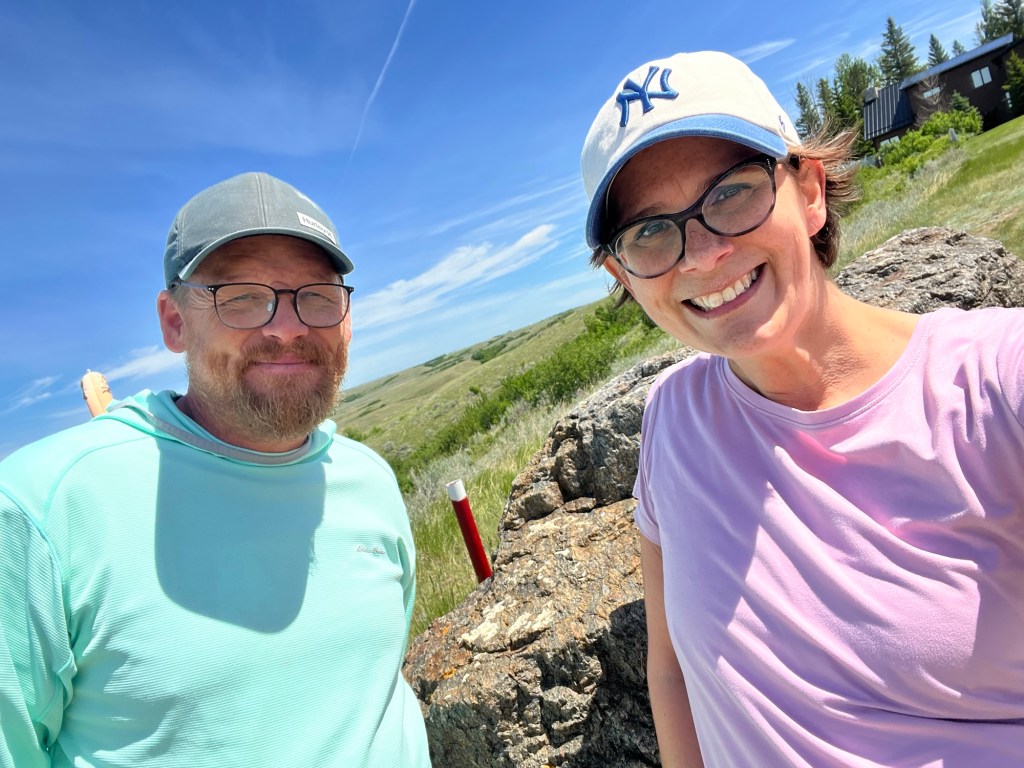
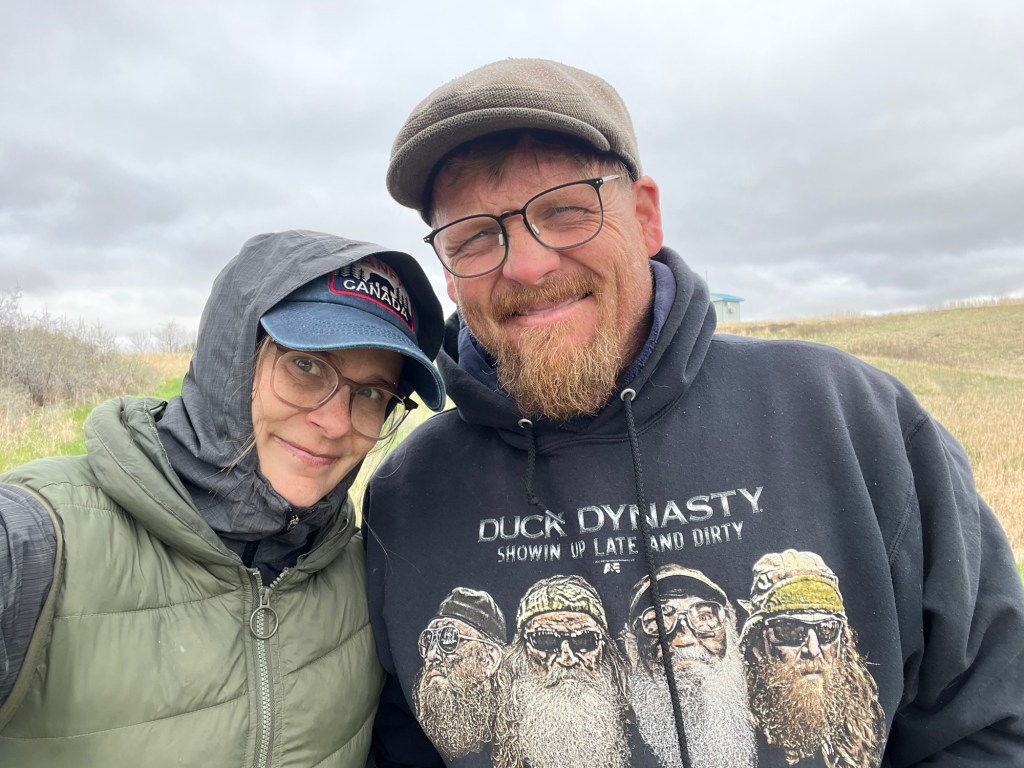
Us on New Year’s Eve before getting too tired and heading home around 10:00. Usually we are the people that when asked if we want to get together at 8:00 we wonder am?!? or pm?!? Actually never mind, both are a hard pass.

Happy New Year! To all those suffering, you are not alone, your worth is not diminished by your ability, you are seen and welcomed here.

Finding Self Compassion Through the Mirror of the Forest

Resilience is based on compassion for ourselves.

Sharon Salzberg

In the beginning of my chronic pain, before I had language for it, I fought it.

I tried to outrun the agony.

I tried to out- power the fatigue.

I believed if I just pushed harder, rested less, proved myself more. I would get ahead of it.

Instead, the harder I tried, the further behind I seemed to fall.

What I didn’t yet understand was that I wasn’t battling weakness or lack of willpower. I was battling a body riddled with inflammation. A body asking to be soothed, not ignored. Not overridden. But met with compassion.

There likely will never be a cure for my condition.

But there can be healing. For myself and so many others.

For me, that healing began when I stopped fighting my body and started listening to it.

Healing in the Woods: A Transformative Quest

When I found forest therapy, I was still angry. Still confused by my disability. Still grieving the body I thought I should have. Trying to figure out exactly what steps to take to “get better.” Whatever that means.

Forest therapy didn’t fix me. But it slowed me down enough to meet myself honestly.

Walking slowly among trees, I began to notice how nature never rushes itself into wellness. Trees scarred by lightning still reach for the sun. Fallen logs don’t apologize for dormancy. Fallen leaves aren’t failures. Moss thrives not despite dampness but because of it. They are part of the cycle that nourishes what comes next.

In the forest, I learned to take time and space:

For my body.

For my care.

For myself.

I learned to soften.

Nature became a mirror for self-compassion. Showing me that acceptance is not giving up, and rest is not weakness. That change is and always will be constant, and beauty is often found because of it.

Where do your forest reflections take you?

Tender and Fierce Self-Compassion: A Pathway to Healing Mastery

If your compassion does not include yourself, it is incomplete.

Jack Cornfield

Psychologist Dr. Kristin Neff, a leading researcher on self-compassion, describes two essential forms. Tender self-compassion and fierce self-compassion. Healing (especially in chronic pain) requires both.

In the forest, tender self- compassion is offered effortlessly. Shade, stillness, permission to slow down. Tender self-compassion is the gentle response we offer ourselves when suffering arises. It sounds like,

“This hurts.”

“I’m allowed to rest.”

“I don’t need to earn care.”

Photo by Brent

Self-compassion is simply giving the same kindness to ourselves that we would give to others.

Christopher Germer

Self compassion also says,

In forest therapy, tender self-compassion shows up as slowing down. Sitting instead of pushing. Letting the forest hold us when our nervous system is overwhelmed.

But compassion is not only soft.

Fierce self-compassion is protective. In the forest, fierce compassion looks like a tree growing around an obstacle instead of breaking itself against it. It looks like roots lifting pavement. Life insisting on what it needs. It draws boundaries. It advocates. It says no to harm. Even when that harm comes from expectations we’ve internalized.

Fierce self-compassion involves taking action in the world to protect, provide, and motivate ourselves to alleviate suffering.

— Kristin Neff

For someone living with chronic pain, fierce compassion might look like canceling plans without guilt, choosing gentler paths, or refusing to prove pain through being productive. (Holy moly, have I ever been guilty of that last one!)

The forest teaches this balance effortlessly. Life adapts rather than destroys itself.

True healing lives in the balance.

Softness without surrender.

Strength without violent self talk.

I highly recommend looking at Dr. Neff’s research.

Beyond the Power of Positivity in Chronic Pain

One of the most harmful ideas placed on people with chronic pain is the demand to “stay positive.” It is a reality many of us are quietly living inside. Through good intentioned humans or when we place this expectation on ourselves. Either way.

This is not healing.

This is toxic positivity.

The forest is not positive all the time. It holds decay and beauty simultaneously. Rot feeds growth. Death makes room for life. Nothing is bypassed.

Embodied compassion, unlike forced optimism, allows pain and beauty to coexist. Forest therapy has taught me that I don’t need to pretend things are fine in order to find meaning, or hope.

Acceptance is not resignation.

It is honesty.

You don’t know this new me; I put back my pieces, differently.

Embracing the Wild: A Practice of Compassionate Forest Therapy

If you are able, try this practice in a forest, park, or any type of natural space.

  • Find a tree that shows signs of damage Look for scars, broken branches, or weathering. Notice how the tree continues to live.
  • Stand or sit nearby Place one hand on your body. Where you feel pain or tension most.
  • Name tenderness. Quietly acknowledge what hurts. No fixing. No reframing. Just noticing.
  • Name fierceness Ask yourself. What does my body need protection from right now? Fatigue? Expectations? Self-criticism?
  • Receive the lesson. Let the tree reflect back to you. Adaptation, not defeat. Presence, not perfection.

Take your time. Healing doesn’t rush.

Nature’s Note: A Message from the Forest to Your Body

Dear Body,

You are not broken.

You are responding to what you have endured. And we know you have endured much.

I have seen storms too. I have lost branches. I have rested longer than expected.

Still, I grow.

You do not need to push to belong here.

You do not need to prove your worth through endurance.

I hold decay and beauty at the same time.

You are allowed to do the same.

Rest when you need to.

Stand tall when you can.

Trust that healing is not the absence of pain, but the presence of care.

You are part of this rhythm.

You always have been.

— The Forest

That’s the thing about December: it goes by in a flash. If you just close your eyes, it’s gone . And it’s like you were never there.

Donal Ryan, The Thing About December

Look into the mirror of forest therapy. Reflect where you need more self- compassion. Take time to recognize and lean into both tender and fierce. It will aid in all types of healing.

Embracing Presence: The Passage Towards Healing Together

But first I share some holiday humor,

Frost upon a windowpane 
and softly falling snow,
Warmth beside a crackling fire
while biting north winds blow
Books and blankets, steaming tea ,
The soft glow of an ember,
Candlelight and cozy nights~
The magic of December

-Laura Jaworski

Especially when you live with chronic pain. Spending time in nature is good. Spending time in nature with people. Held in a shared experience of presence and permission. Now that, is something else entirely.

When you live with chronic pain, connection can feel complicated.

I am happy, hurting and healing at the same time. It is the bravest version of me I have ever been.

healing meme therapy

You long for meaningful connection. But you don’t have the time or strength to find, let alone nurture it.

Bodies are unpredictable. Energy is rationed. Calendars fill with medical appointments instead of casual plans.

Even when we long for community, there’s often a quiet question humming underneath it all.

Will I be able to keep up?

Will I have to explain myself?

This is where group forest therapy offers something different.

Connection on a forest therapy walk doesn’t come from conversation or comparison. It doesn’t require sharing your story or proving how much you hurt.

It emerges slowly, almost indirectly, through shared pacing and shared permission.

It happens when the group naturally slows because one person needs to slow.

When silence is allowed without awkwardness.

When someone names an experience you thought was yours alone.

I’ve watched shoulders drop the moment someone realizes they don’t have to explain why they’re moving slowly.

That moment matters.

There are many things that can only be seen through the eyes that have cried.
-Oscar A Romero

From a physiological perspective, safe connection is not just emotionally comforting. It is biologically regulating. When we feel seen, believed, and accepted without pressure to perform, the nervous system receives a powerful message.

I am safe enough right now.

Stress hormones like cortisol begin to ease. The breath deepens. Muscles soften. Pain doesn’t vanish, but it often becomes less consuming.

Nature does part of this work.

But shared experience completes it.

AD ASTRA PER AMOREM (latin): To the stars through love.

During the holidays, many of us are preparing, with excitement, (hopefully not with dread) for connection.

Family gatherings. Traditions. Empty chairs. Expectations.

For those living with chronic pain, this season can heighten both longing and fatigue. Wanting closeness while knowing how much it costs the body to participate.

Group forest therapy offers another way of being together. A quieter way. One where connection is rooted in presence rather than endurance.

One of my favorite practices for larger groups is something I call Shared Noticing.

Participants are invited to wander slowly and find one small thing that reflects how they are arriving. A stone, a leaf, a texture, a sound.

We must not allow the clock and the calendar to blind us to the fact that each moment of life is a miracle and a mystery.

-H.G. Wells

Later, we gather in a wide circle. Each person is invited (never required) to show what they found and complete the sentence,

I’m arriving like this…”

There is no fixing. No interpreting. Just witnessing.

Again and again, what emerges is relief. A realization that our internal landscapes are not as isolated as they feel.

Faith includes noticing the mess, the emptiness and discomfort, and letting it be there until some light returns.

Anne Lamott

Poet David Whyte writes,

Belonging is not something we negotiate; it is something we remember.

Forest therapy helps us remember. Not by erasing pain, but by holding it gently within a living community. Trees overhead, earth beneath us, and others beside us who understand without needing all the details.

As the season of gathering approaches, I find myself wondering,

Where do you feel most allowed to be exactly as you are? Without explanation, without apology?

Share in the comments 👇🏼

As this season asks many of us to gather, I offer this as an alternative kind of togetherness. One rooted in presence, patience, and permission.

If you’re navigating chronic pain and longing for connection that honors your limits, group forest therapy may be a gentle place to land. I’d love to walk alongside you.

To love at all is to be vulnerable.

C.S, Lewis

Harnessing Nature’s Power Through Forest Therapy

😂👆🏼

For years my body lived in a storm of chronic pain. Caught between relentless tension, inflammation, and exhaustion. Traditional therapies weren’t making a dent. Something profound shifted only when I began practicing forest therapy. Intentionally slowing down in nature to activate the body’s parasympathetic nervous system, the calming rest-and-digest branch that supports healing.

Today, as a forest therapy guide, I’ve watched this shift happen not just in myself, but others around me. In people carrying chronic pain, anxiety, grief, and burnout. Research confirms it and nature continually demonstrates it.

This post explores how parasympathetic activation through forest therapy aids recovery, why it’s especially valuable in chronic pain, and how to practice it even in winter months. When we often need it most.

Having a chronic illness is like looking both ways before you cross the street and then getting hit by an aeroplane.

-my take on quote by Nitya Prakash

FOREWALLOWED: overwhelmed, exhausted, or worn out, often due to excessive effort or difficulty.

🌿 Woods & Wellness: The Science of Forest Therapy

Chronic pain keeps the body stuck in a prolonged sympathetic fight-or-flight state.

Research shows that forest environments:

  • 🌿 Lower cortisol levels
  • 🌿 Reduce muscle tension
  • 🌿 Lower blood pressure and heart rate
  • 🌿 Increase heart rate variability (HRV) (a strong indicator of parasympathetic activation)
  • 🌿 Decrease activity in the prefrontal cortex, easing mental fatigue
  • 🌿 Boost immune function through phytoncides, natural compounds released by trees

Shinrin-yoku (forest bathing) studies from Japan indicate a significant increase in parasympathetic activity after as little as 15–20 minutes in a natural space.

This activation signals the body:

You are safe. You can repair.

Chronic pain often cycles when the body cannot access this safety. Forest therapy helps gently turn that switch.

Break often- not like porcelain, but like waves.

Scherezade Siobhan

🌱 The Power of Pause: Healing with Parasympathetic Rest

There was a stretch of my life when going to sleep hurt. Waking up hurt. Every day just hurt. Fibromyalgia flares, migraines, and exhaustion deep into my bones, left me swollen with frustration.

My healing didn’t happen all at once. It began with moments.

Moments of pausing on a beach.

Moments of feeling my breath match the trees. A slow and ancient pace.

Moments of letting myself not push. Easing into instead of always rushing to take the next step.

Forest therapy didn’t cure my chronic pain. But it gave my nervous system something I didn’t know it was starving for. Permission to soften!

And in that softening my symptoms eased. My hope returned. And my body began recalibrating.



Nature gave me a place where healing didn’t feel forced. It unfolded.


Forest Therapy checks so many of these boxes and aids in checking the others. In FT we practice breathing exercises, sometimes chanting or humming. We meditate. Depending on the season we are exposed to cold &/or sun. Music can be part of the practice. Social connection and exercise are built in. The gag reflex and ability to sleep are supported after the practice.
🍃 The Icy Veil: A River’s Progression Beneath the Freeze

Winter teaches us about quiet healing. The kind that hides but never stops working.

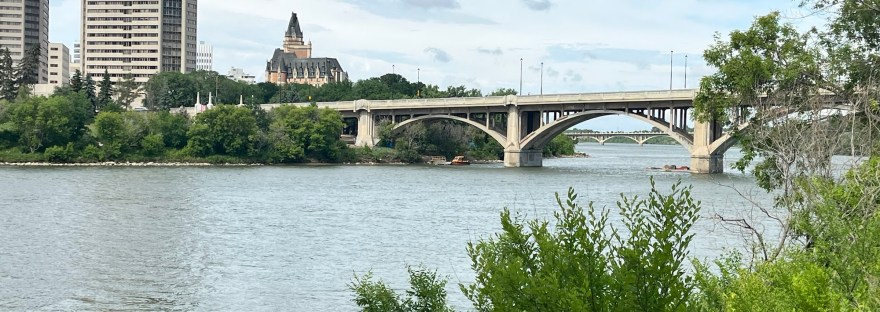
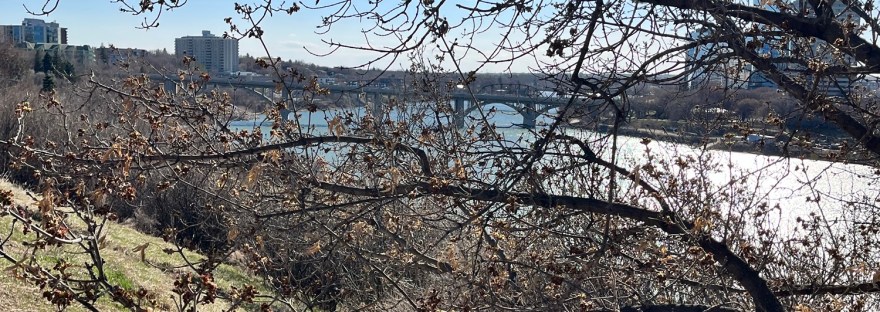
Imagine a river in Saskatoon in January.

On the surface, it looks frozen, still, unmoving. But beneath the ice, water continues flowing. Deliberately, purposefully.

This is what happens when the parasympathetic nervous system activates in chronic pain.

Outwardly you might still feel limited and slow.

But beneath the surface, healing begins to flow again:

  • inflammation decreases
  • muscles release
  • circulation improves
  • your mind stops bracing for the next wave of pain

Forest therapy is the gentle sunlight that softens the ice, allowing your inner river to move again. Not rushed, just returned to its natural rhythm.

For me, being quiet and slow is being myself, and that is my gift.

Fred Rogers

❄️ Embracing the Chill: Winter Forest Therapy for Chronic Pain

Are we 100% sure we are meant to be awake in the winter?

Jordanne Brown @Perry7Platypus7

Winter can be challenging when you live with chronic pain:

  • colder temperatures increase stiffness
  • shorter daylight affects mood
  • energy dips
  • motivation wavers

But winter also offers something summer can’t:

an environment that naturally encourages slowness, stillness, and reflection- key conditions for parasympathetic restoration

When practiced intentionally, winter forest therapy becomes a deeply comforting, grounding practice.

🧣 How to Practice Forest Therapy in Winter (Without Freezing or Flaring)

1. Take Slow Sensory Walks (10–20 minutes is enough)

The cold naturally slows your pace. Let it. Pay attention to textures, sounds, and the muted winter palette.

2. Use “Micro Moments” of Nature

If going far feels impossible, try parasympathetic nature moments:

  • sit by a window and watch wind move branches
  • listen to a crackling fire or light a pine-scented candle
  • stand on your porch and notice a single tree
  • touch cold bark and notice grounding sensations

Even 3–5 minutes helps reset your nervous system.

3. Practice Breathwork with Nature

Try the “tree breath”:

Imagine your exhale traveling into the roots of a nearby tree. Slow, steady, grounding.

4. Bring Nature Indoors

Winter healing doesn’t require wilderness:

  • evergreen branches
  • natural scents (cedar, spruce, pine)
  • smooth stones
  • indoor plants
  • nature soundscapes

Your parasympathetic system responds to cues of safety, not location. Are you ready to commit to this statement?👇🏼

🌲 Cozy Winter Connections: Nature’s Embrace Awaits

Here’s your winter-friendly, chronic pain safe list:

🔥 1. Warm beverages as grounding tools

Tea, broth, hot cider. Wrap your hands around warmth while practicing stillness.

🧤 2. Layer with intention

  • Merino wool layers
  • Heated socks
  • Hand warmers
  • A thermos tucked in your coat

Warmth = reduced pain and more parasympathetic access.

🌲 3. Bring texture

A soft scarf, wool blanket, or mittens can become sensory anchors.

 4. Choose wind sheltered routes

Forest edges, dense evergreens, or local parks with natural windbreaks reduce the cold’s impact on pain.

🌞 5. Use pockets of sun

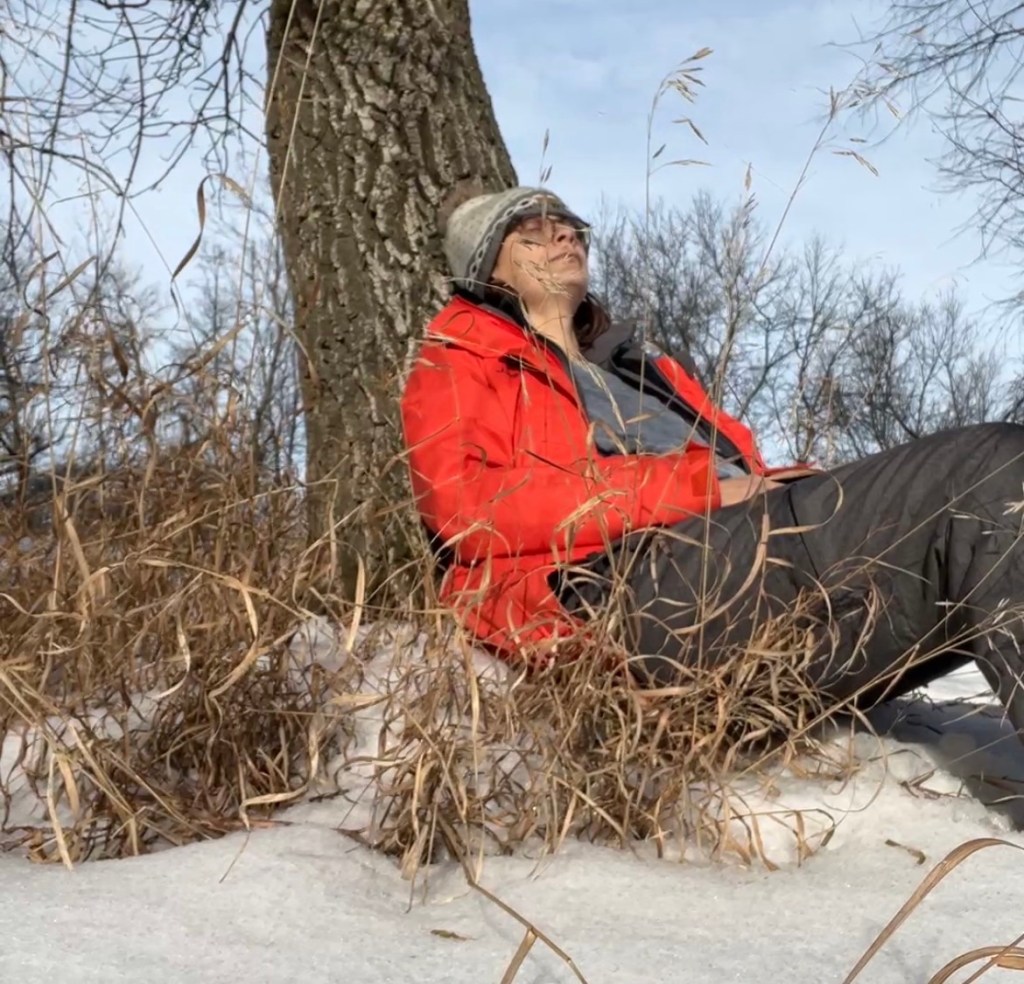
Even 5 minutes of winter sunlight boosts serotonin and eases the nervous system.

🧘 6. Gentle seated practices. You don’t have to hike.

Sit on an insulated pad, lean on a tree, and let your body settle.

🌿 Healing from Within: Nature’s Cradle for Chronic Pain Relief

Forest therapy doesn’t eliminate chronic pain, but it helps the body access what pain often steals:

a state of rest, repair, and deep nervous system safety.

When nature cues your parasympathetic system:

  • your muscles unclench
  • catastrophizing thoughts settle
  • your breath deepens
  • your pain becomes less sharp
  • your resilience grows.

In this softened place, healing becomes possible again.

When you do things from your soul, you have a river moving in you, a joy.

-Rumi

🌿 Winter Is Not the Enemy, Merely a Difficult Friendship

“The trees may sleep, but they are never dead.” — Edwin Way Teale

Winter offers these quiet, tender invitations:

Slow down. Notice. Receive what nature offers.

Even when life feels frozen, your healing can still flow beneath the surface.

Your body is not failing you. It is waiting for safety.

And the forest, still, patient and ancient, knows how to offer it.

We are the granddaughters of the grandmas your reindeer couldn’t run over.

We are resilient! We are strong! We are SISU!!!

Wrap Your Authentic Self in Nature

Winter reminds us that everyone and everything needs some quiet time.

Katrina Mayer

A boy of six years old, was asked what he wanted to be when he grew up. He looked up, small and certain, and said,

“I think I’ll just have to be myself. I’ve tried to be like someone else, but I’ve mucked it up each time.”

It has taken me a lifetime and years of chronic pain, illness, and discouragement, to finally understand the wisdom in that little answer.

Your spiritual gifts aren’t found by striving, hustling, or contorting yourself into someone else’s shape. They are revealed through presence. Through making space for the soft truth that’s been whispering inside you since childhood.

I have spent seasons feeling like a waste of space, a waste of skin, wondering what good I could possibly offer the world from where I am. But like that child, after repeated failures at being anyone but myself, I am learning to return to who I truly am.

What are your spiritual gifts and how do you use them?

Seek the Soulful Intersection of Nature and Spirit

I go to the forest when I need quiet, peace, and centering. In the hush of pines and the steadiness of ancient stones, I hear truths I’ve forgotten. I feel wings embrace me. A sacred embrace. Wings lifting me into what I can still become.

This is where forest therapy, spiritual reflection, and divine connection come together.

Roman emporer and philosopher, Marcus Aurelius wrote,

Look within. Within is the fountain of good, and it will ever bubble up if thou wilt dig.

Forest therapy teaches us exactly that. The digging and the returning to the well within.

In forest therapy, we practice the art of noticing our inner landscape with the same compassionate curiosity.

We explore:

  • What comes naturally to me?
  • What brings me alive?
  • What do others feel when they’re in my presence?
  • Where do I feel like myself without effort?

These are the compass points of spiritual gifting.

Illuminate Your Life

KOVA

(n) Hungarian- a massive hard dark quartz that produces a spark when struck by steel

Perhaps the steel or trials that come to us also produces a bright spark.

One of my favourite people, Emily Belle Freeman shared this idea in her podcast, Inklings. S5E111. Elder Dieter F. Uchtdorf: Do Your Part with All Your Heart. She suggests we ask ourselves,

What is my gifting?

As Freeman points out, as humans, we are masters at listing everything wrong with us. But what if, for today, you wrote out what you’re really good at? What comes naturally? What others thank you for?

Freeman prompts us, A spiritual gift answers yes to even one of these questions:

  • Has it touched someone?
  • Has it blessed someone?
  • Has it saved someone?

When we recognize our gifts, we increase them. They grow the way all living things grow: slowly, in seasons, with practice, not perfection.

Perfection discourages.

Practice expands.

Practice invites grace. Leaving space to improve each day.

This is where affirmations come in. Write down what is true for you today. Then recite it. Write who you are and who you are meant to be.

Even if that truth begins as tiny as a mustard seed, it can one day become a great sheltering tree.

Reflect on the Wisdom of Your Creator

I have found strength in beginning my day by thanking the Creator. Whether that be God, Spirit, or angels for you. I thank my gracious Father in Heaven. He is the One who planted these gifts in me. Thanking Him helps me see the ways they grow, mature, and take root.

Another idea Freeman has shared in her podcast, with which I firmly agree,

I believe God’s love for us is high.

I believe His expectations for us are high.

I believe His trust in us is high.

His trust in us is His faith.

His expectations for us are His hope.

His love for us despite our weaknesses is His charity.

And when I see His faith in, hope in and charity towards me, I can offer these gifts to others. These divine principles bring a trust in my ability back into my story. Because of what He offers me.

Joseph Campbell said,

Your sacred space is where you find yourself again and again.

For me, that space is always the forest.

The Shift from Work to Success

Freeman shared a story from Leo Tolstoy’s, Anna Karenina. Tolstoy writes of a man named Levin. Levin decides one day to join the peasants in mowing hay. At first, all he can feel are the blisters forming and the ache in his bent back. The rows feel endless. He fears he cannot keep up.

But then something shifts:

Another row, and yet another row, followed… Levin lost all sense of time. A change began to come over his work, which gave him immense satisfaction. In the midst of his toil there were moments during which he forgot what he was doing, and it all came easy to him.

There is a kind of magic in becoming so present in a task that you relish the process itself. Some people call this, flow.

So why do we question ourselves? Why do we doubt the gifts planted in us? Why not enter the flow, like Levin, and accomplish what we were meant for?

A Truer Perspective

Melissa Wei-Tsing Inouye, a long time associate of The Maxwell Institue wrote,

For some reason it is easier to have faith in other people’s faith than in my own.

Can you relate? A goldfish doesn’t even know it’s swimming. It simply lives within the water it doesn’t recognize is there. He is a product of his surroundings without having any idea.

When we step outside ourselves through quiet, through curiosity, we finally see our inherent spiritual gifts.

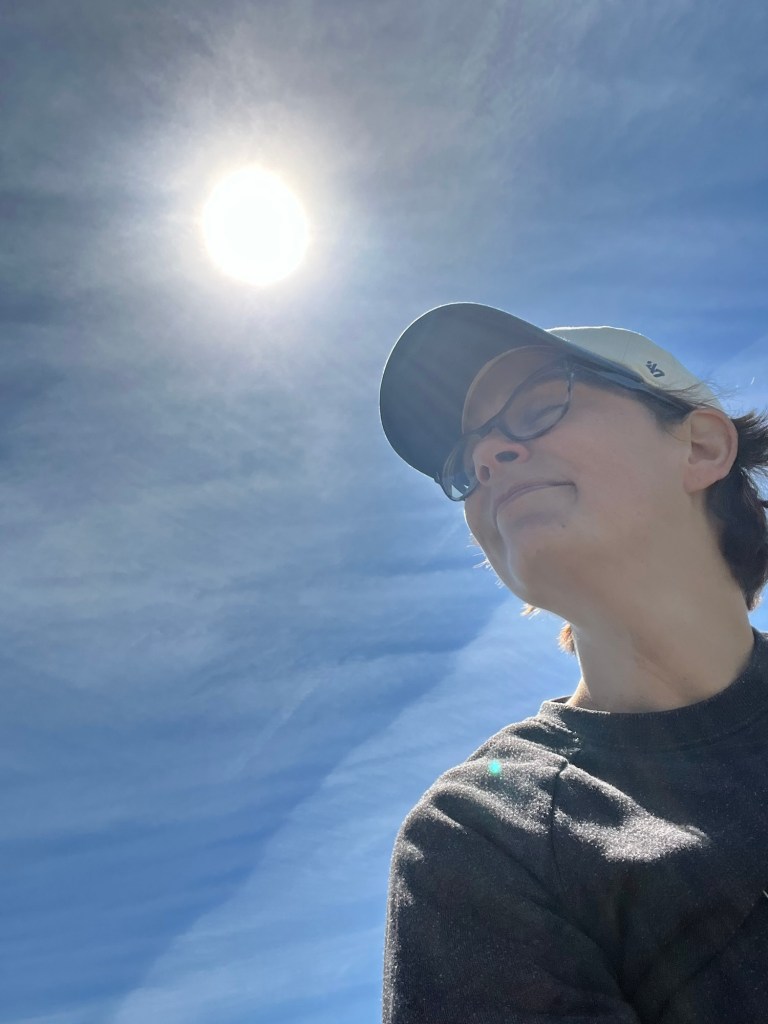
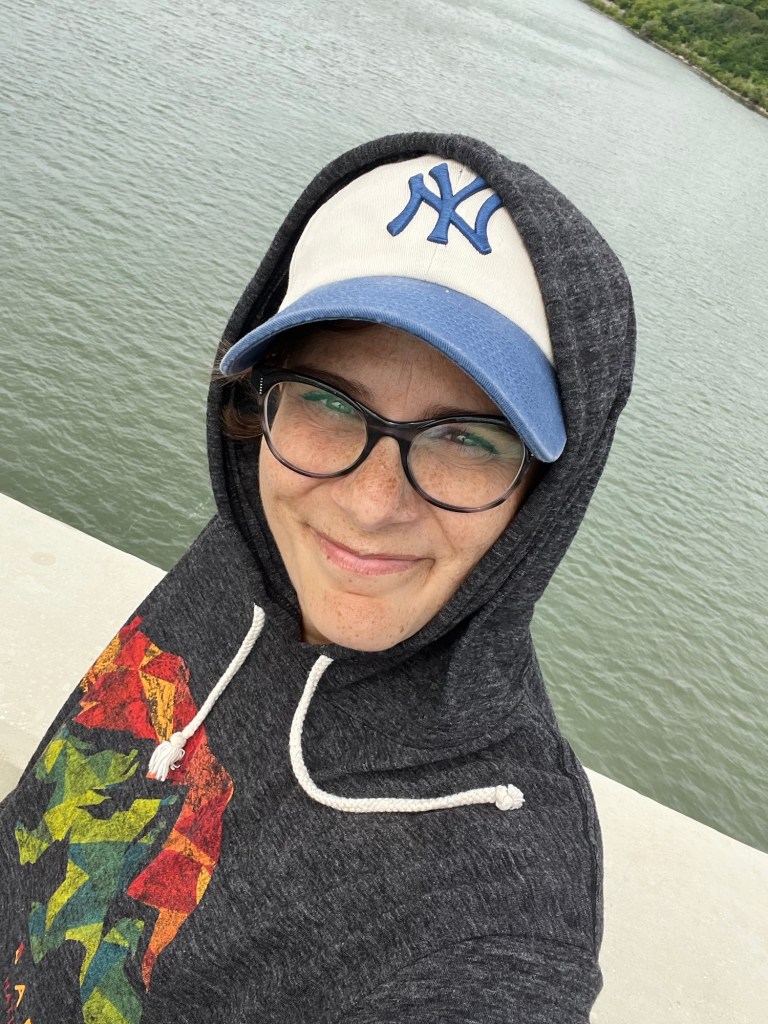
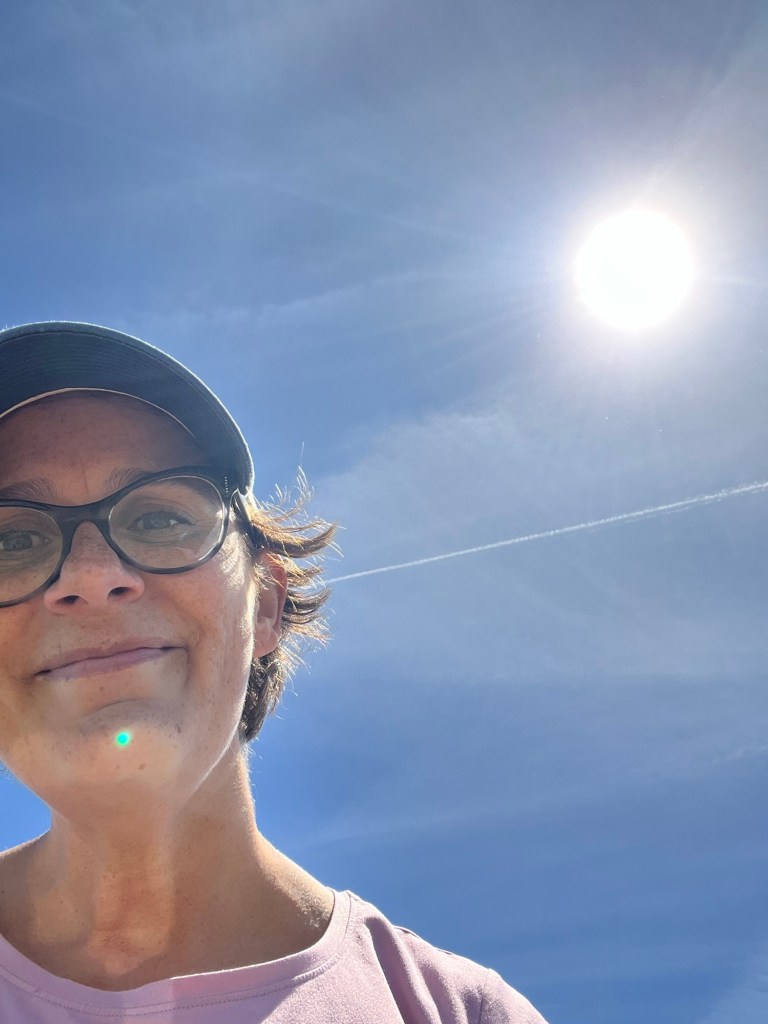
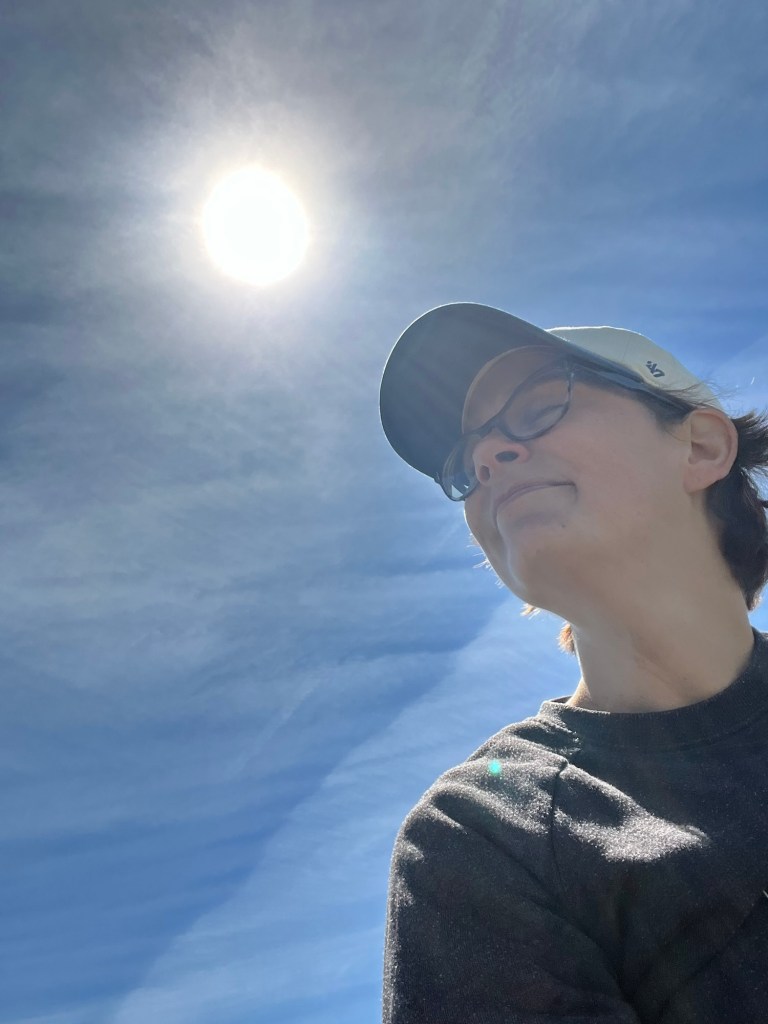
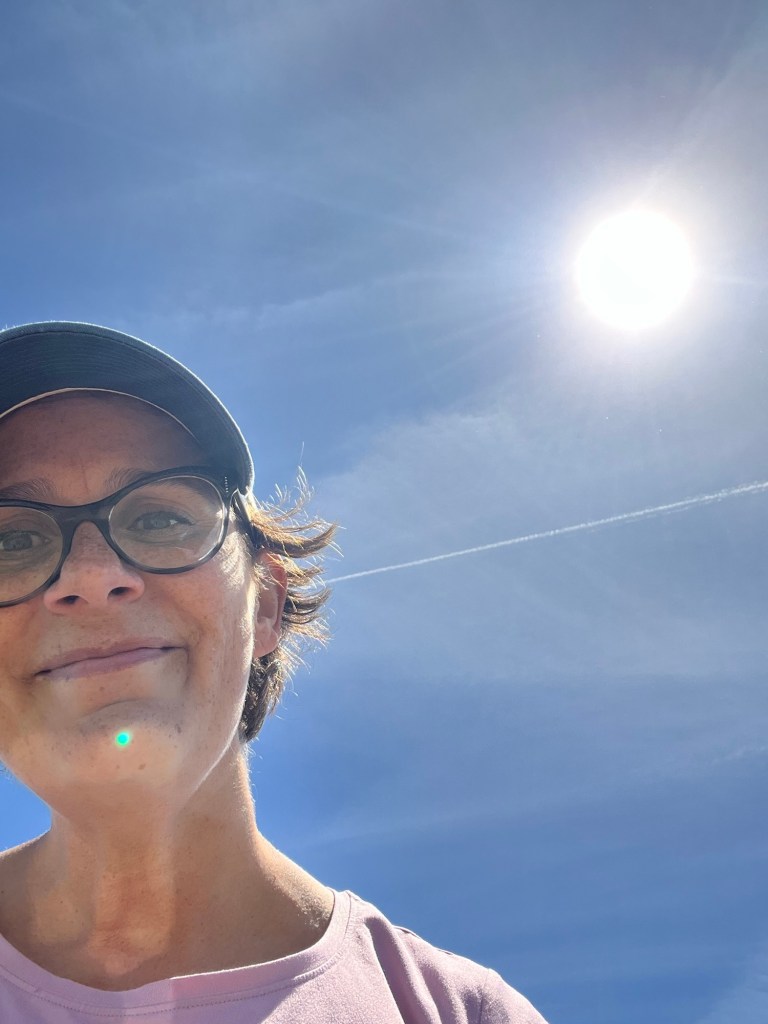
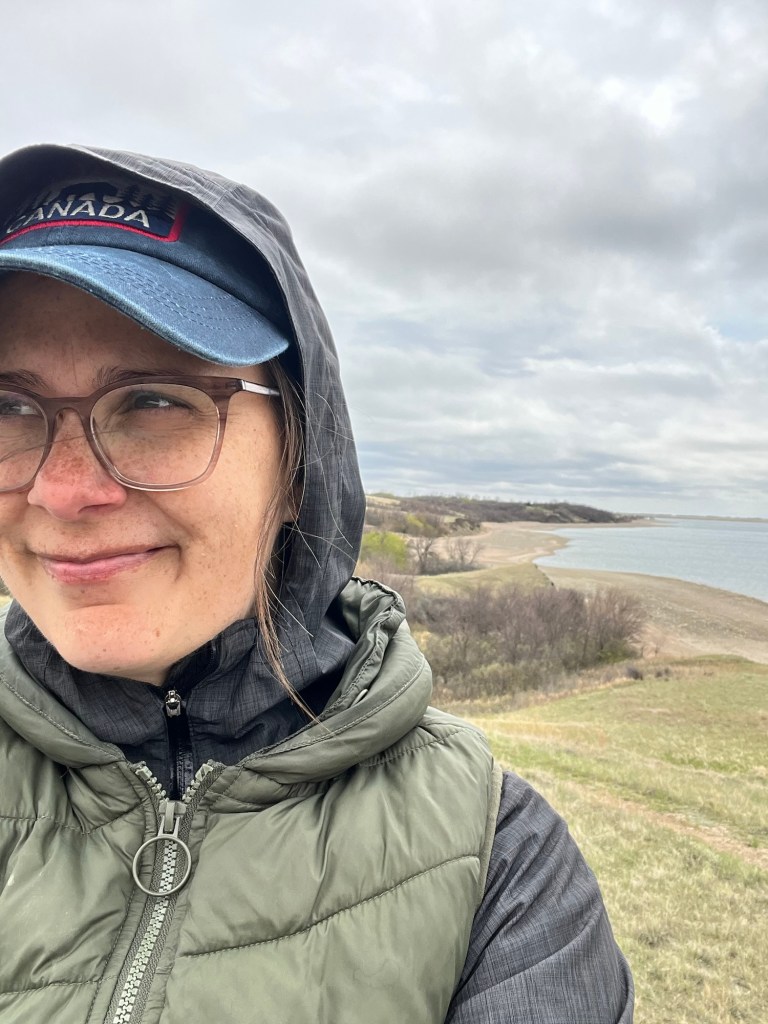
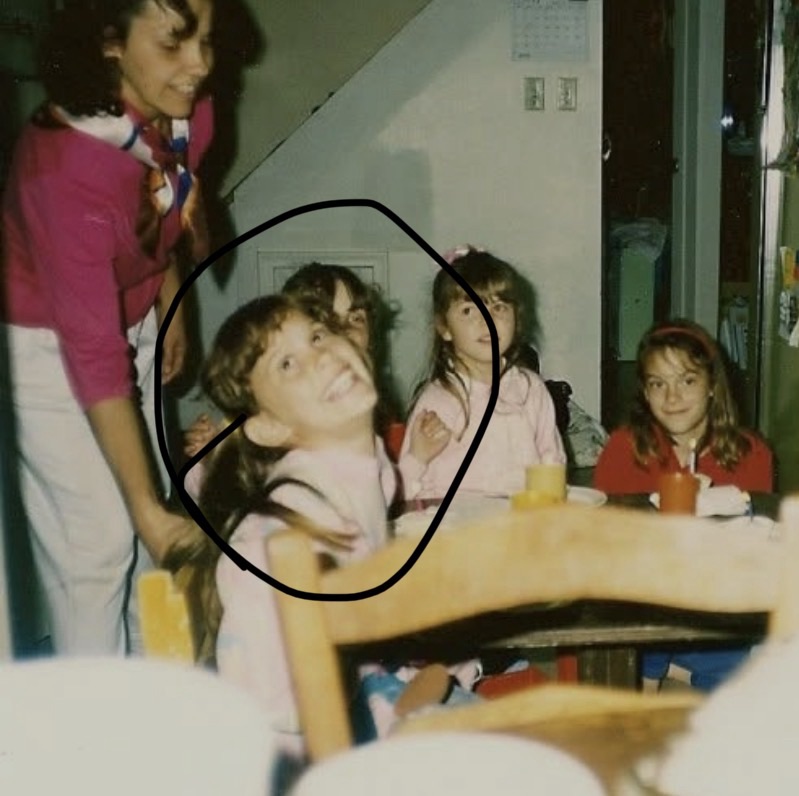
This next block of photos is meant to be scrolled through quickly. It’s not about me or how I look, it is the expressions on my face. I encourage you to look through your photos. Which ones make you look the most alive?

Therein may lie a clue to your giftedness. After inspection, I am persuaded that my giftedness includes noticing and sharing the benefits of nature.

Begin with even a desire to believe.

Then start:

🌱 Practice affirmations

🌱 Practice gratitude

🌱 Practice perspective– stepping outside yourself to see your capacity

🌱 Practice noticing your gifts in real time

Watch them expand, like light through branches, like seeds breaking open. They will bring healing, clarity and spiritual confidence.

I’m the kind of girl who actually wishes on dandelions and shooting stars. With so much madness in the world, we have to be the magic.

-Anonymous

Try this simple practice the next time you’re in nature:

  • Find a quiet place to sit or stand.
  • Let your body settle.
  • Notice one element in the forest that draws your attention. A leaf, a stone, a breeze.
  • Ask, What gift is this offering me right now?
  • Then ask, What gift do I offer the world in the same quiet, natural way?

Don’t force an answer. Let it arrive like sunlight between branches. Slow and sure.

Discover the Revolutionary Benefits of Forest Therapy

The forest is the place where our inner and outer landscapes meet. It’s where these spiritual practices grow deeper roots. Sit among the trees and write your affirmations. Walk slowly and speak gratitude aloud. Let the wind, water, and stillness remind you that you are becoming, gently and steadily.

Your spiritual gifts were planted in you long before you knew their names. They show up in the way you comfort others without thinking… the way you see beauty where others see ordinary… the way your presence shifts a room.

Like that wise six-year-old, you don’t need to become anything other than yourself.

You simply need to return.

Right now, I am watching the lake “go to sleep,” as my mom says. The water moves slowly, ice forms at the edges. Fog drifts over the surface in thin, damp wisps. And in this quiet, I find myself again. I feel my gifts stirring. Small. Tender. Wanting to grow and expand as I lean into them.

Wisdom comes with winters.

-Oscar Wilde

✨ Subscribe to follow my journey, and comment 🌊 if you too are standing at the edge of your frozen lake, trying to find your purpose again.

The Messy Middle: Finding Hope When Life Refuses to Be Tidy

I am in the messy middle of my life.

Not the beginning, when everything still feels like clay. Wet, moldable, brimming with possibility. And not the end, when threads have been tied off and stories are stitched into something you can finally make sense of. I’m here, in the thick of it. In the in between. Healing from chronic pain and somehow learning to live with chronic fatigue, trying to shape what might be next.

Trying to find purpose in pain when the path ahead feels tender and unfinished.

She cleared out all of her old ideas of things, until she could hear her own joy with almost no effort at all.

-Sara Avant Stover, The Way of The Happy Woman

As I have talked about previously on here. I had a hysterectomy after years of fighting hormones that felt like they were clawing their way through my insides. Endometriosis pain stretched across entire seasons of my life.

And then there was my business. It was finally thriving, finally fun. Something my mom built with her hands and heart. But my body whispered then shouted then raged to get me to listen to its unmistakable limits.

Even sitting at the piano. The place that once felt like oxygen became something my body could no longer hold. Notes I used to float through now feel heavy, unsteady, often impossible.

Chronic pain doesn’t just take.

It rearranges.

It remodels.

It forces you into corners you didn’t see coming.

And here I am again, in this messy middle. Sorting out the parts of me that remain. Trying to decide what pieces go where, and to whom, and how much. Because there is only so much of me to go around.

My days are short. My energy is rationed. I can’t just “get up earlier” or “push harder” or “stretch the day.” Those tricks don’t work in this body.

I have learned, painfully, that pushing past limits costs me days, sometimes weeks, of recovery. I don’t slip gently into tired. I crash into a wall of pain with no warning and no buffer. There is no bouncing back.

I don’t have a reserve tank anymore.

I remember when I did.

I remember using an entire day to make snacks and treats for my family, cleaning the house, bathing my littles, tucking them into bed.

I remember being so tired, but feeling full. Like life had weight and meaning and movement. I loved looking at what I had accomplished.

Now?

I can get that same level of bone deep exhaustion from five minutes of washing the dishes.

And that, sadly, is not an exaggeration.

This isn’t “just midlife.”

This is chronic pain. And chronic fatigue. And chronic limitation.

But here’s the truth I’m holding onto-

The messy middle is still a valuable place. A real place. A sacred place of hope. A place worth tending.

And I’ve learned that healing isn’t found in the before or the after.

It’s found right here.

In the slow, intentional steps we take when life has to narrow down.

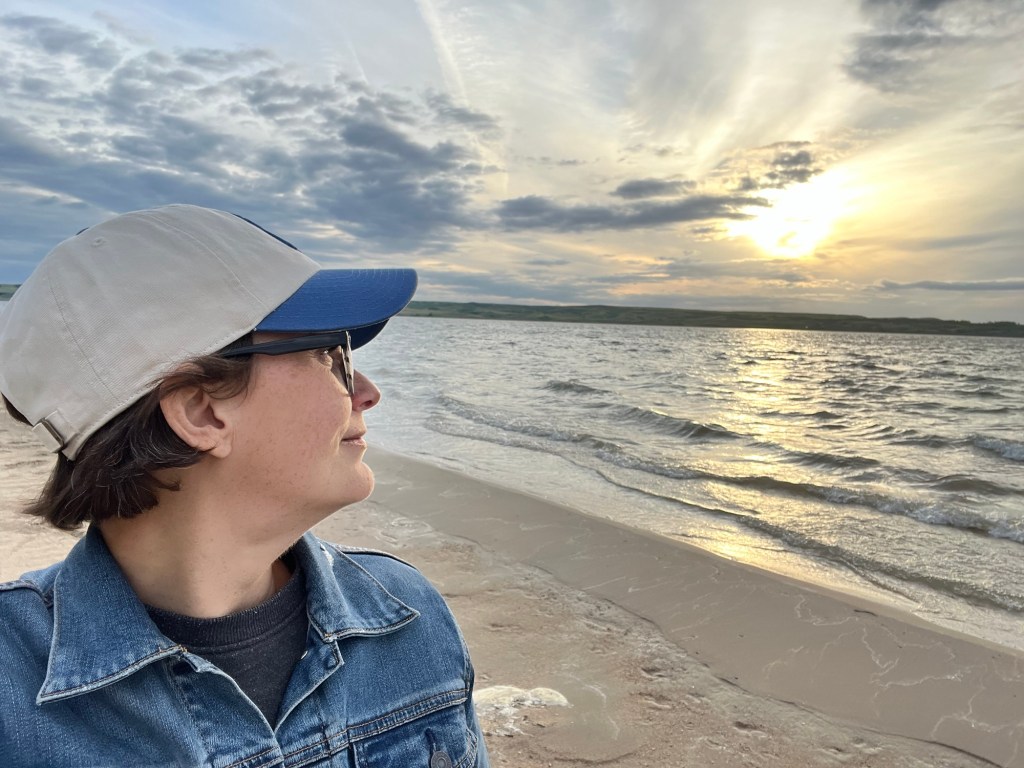
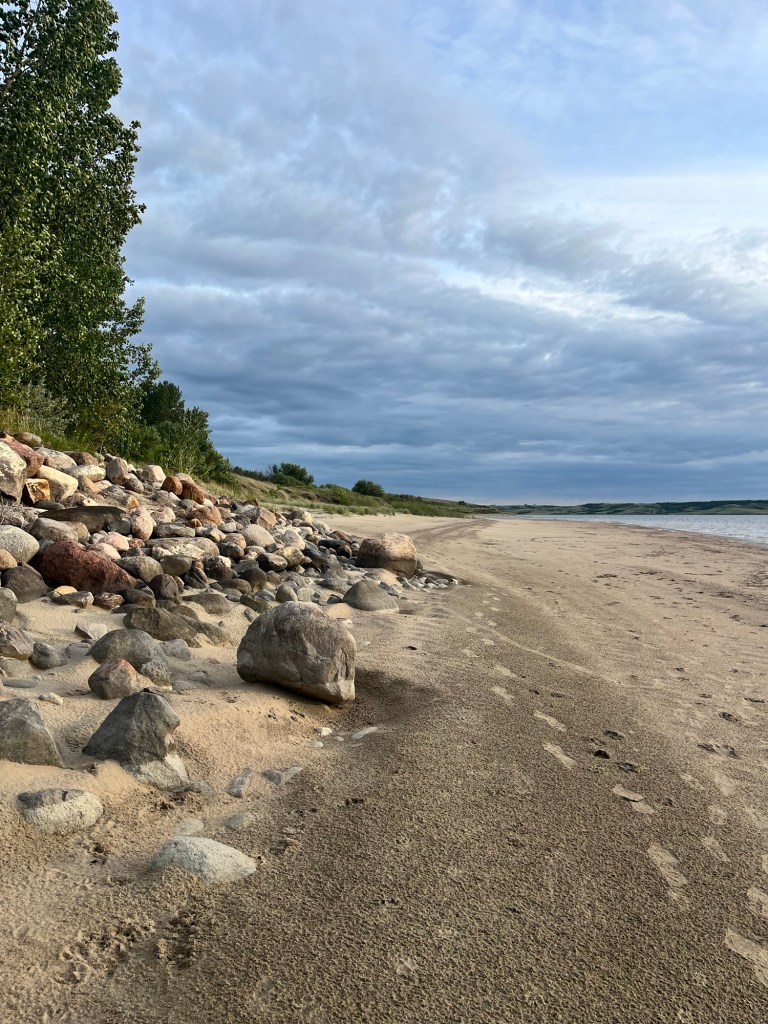
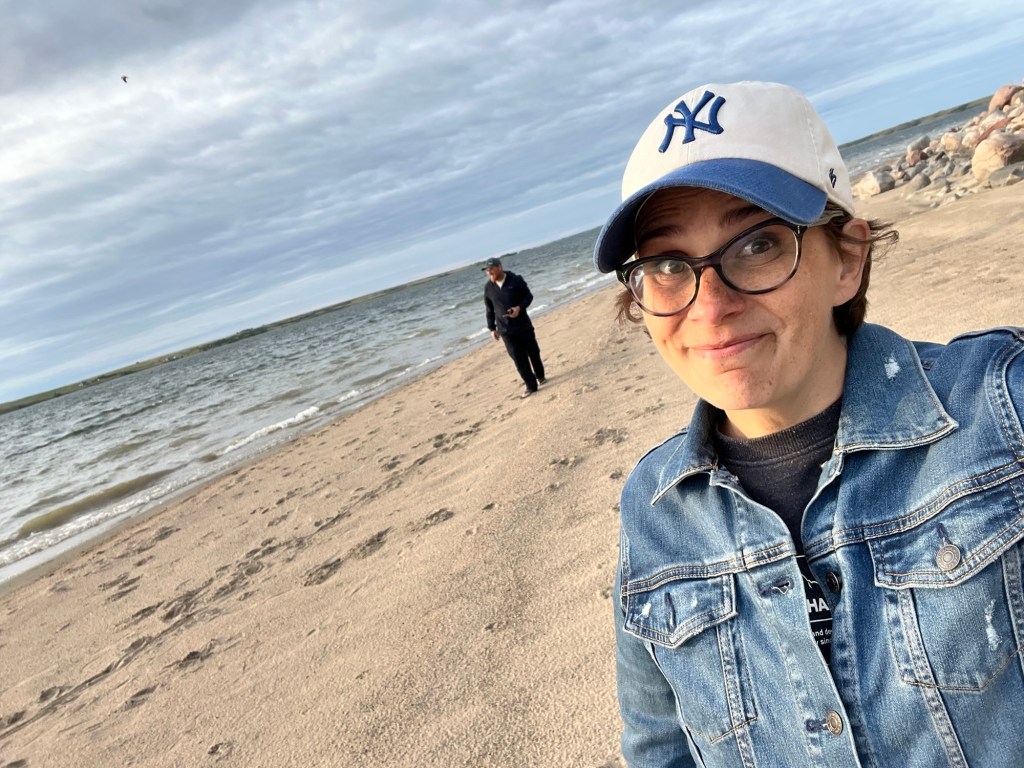
I have never experienced walking on sand in my winter boots before. Weird!

For me, one of those steps is forest therapy.

Where Forest Therapy Meets Healing Journey

In this season, forest therapy has become one of the few places where my body and my motivation find agreement.

It isn’t hiking. It isn’t performance. It isn’t even about movement.

It’s a return to your own breath. It is nature therapy in its gentlest form.

A soft doorway into emotional healing, grounded presence, and quiet hope.

A reclaiming of the parts of yourself that pain has tried to scatter.

A gentle companionship in the places of life that feel undone.

In the forest, I don’t have to be anything for anyone.

The trees don’t ask me to push. The moss doesn’t question my intentions. The forest simply holds space.

And in that space, I remember that even when life feels broken, I’m not.

I think healing is like that.

Quiet. Nonlinear. Messy.

More felt than understood.

And every time I enter the forest, I feel like I step onto a “ladder of hope.”

The Ladder of Hope by me

You climb it not in leaps
But in breaths.
You rise not by strength
But by softness.
The rungs are made of moments—
A bird call,
A sunbeam,
A place to sit.
And every rung you step on
Whispers the same truth:
You’re still rising.

These are small moment that lift me enough to keep going. Not giant steps. Not perfect healing. Not having everything sorted.

The middle is messy. But it’s also alive. It’s also becoming. It’s also sacred ground.

And maybe, purpose isn’t something we chase.

Perhaps it is something that can grow. Slowly, gently, sturdily. If we let it.

“Hope” is the thing with feathers, that perches in the soul. And sings the tune without the words. And never stops— at all.

-Emily Dickinson

Wherever you find yourself today, whether you’re living your own messy middle or standing at the edge of it, may you find one small rung of hope. One quiet moment. One breath of space.

Chronic pain has rerouted my life more times than I can count. It has taken me down roads I never meant to travel.

It’s like my GPS is stuck on the back roads setting as I travel cross country. Not quite the way I’d planned. A lot bumpier. Requiring a slower pace. And focused attention. It is often lonely. And misunderstood.

Sometimes a path calls for you to walk alone. And still, it is beautiful.

-Angie Weiland- Crosby

There are places where the forest tends us and our own breath begins to feel like a home again.

Let the air touch your face. Let the light filter in.

Climb one rung of your ladder of hope.

Just one. This will look different for each one of us. Rightly so.

We are still rising.

And that matters.

Winter, come rest your soul on autumn’s weary head. Twirl, shimmer, soften, before tucking fall into bed.

-Angie Weiland-Crosby

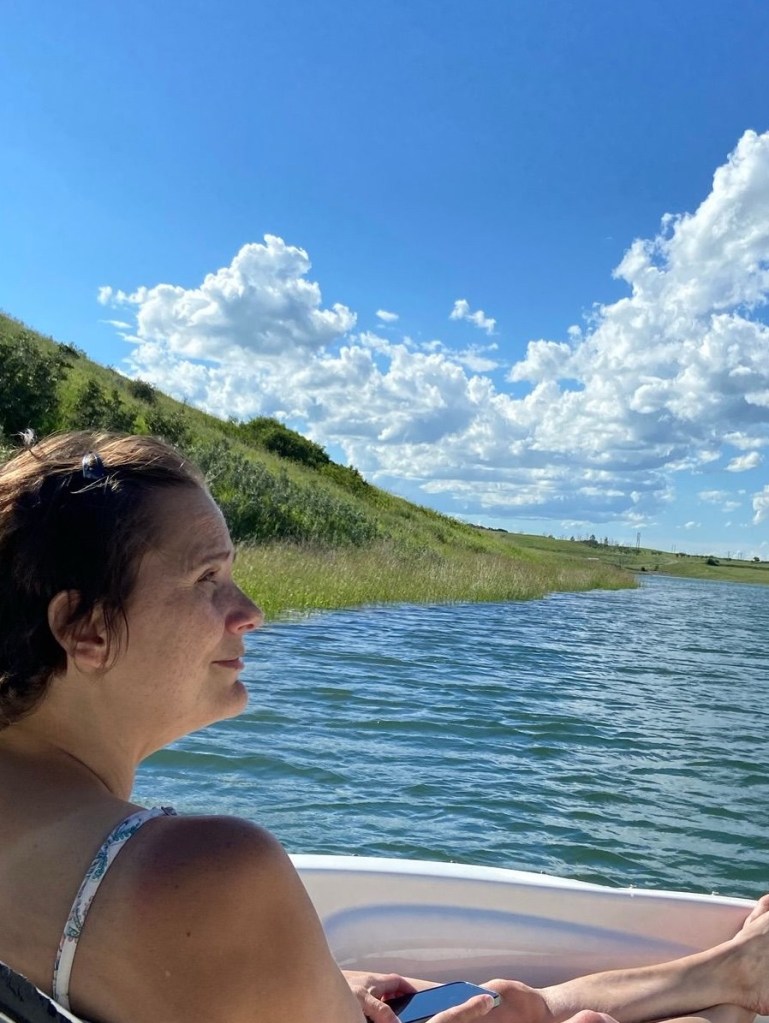
Diefenbaker Lake: A Childhood Sanctuary

Let the waters settle and you will see the moon and stars mirrored in your own being.

-Rumi

There are places that shape us before we’re even old enough to understand what’s happening. Places that imprint themselves on the soles of our feet, in the rhythm of our breath, in the part of our memory that feels more like home than any house ever could.

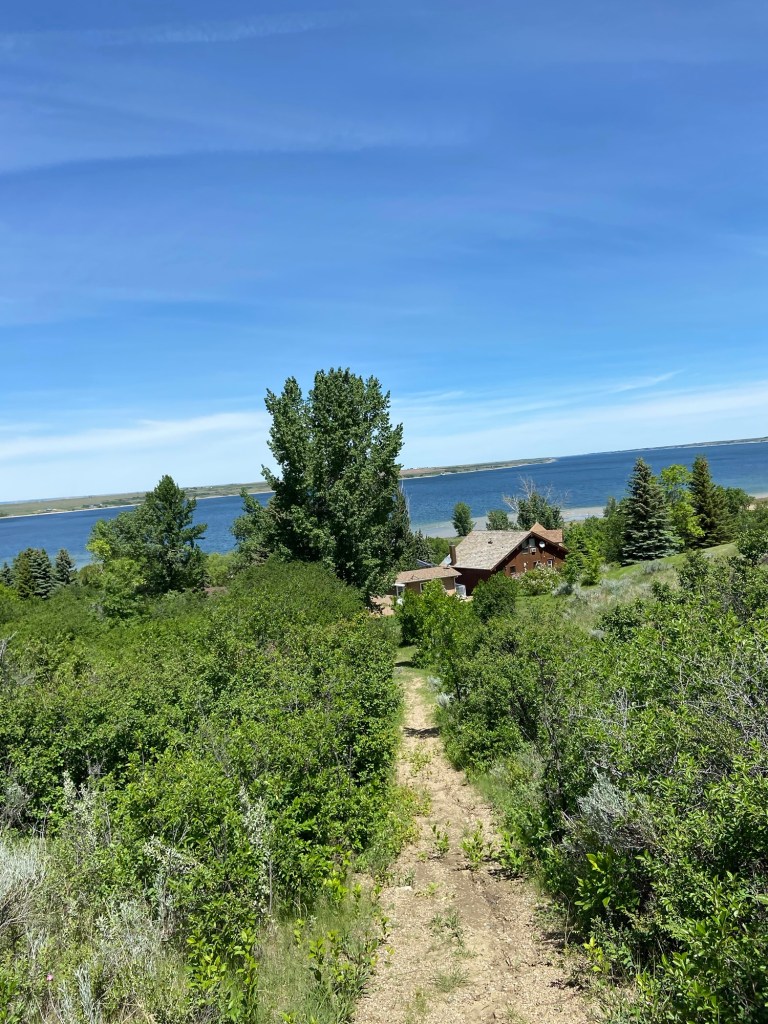
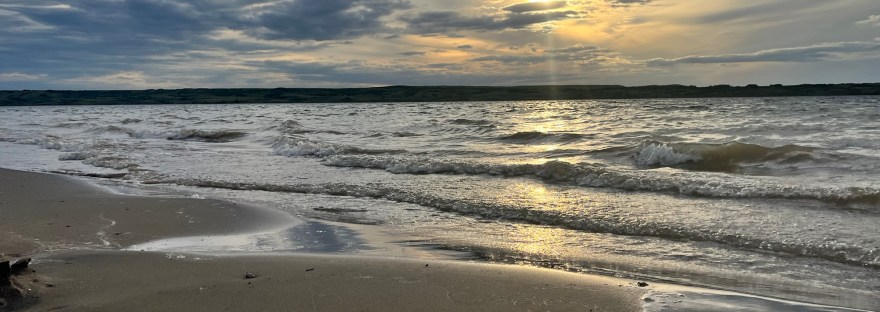
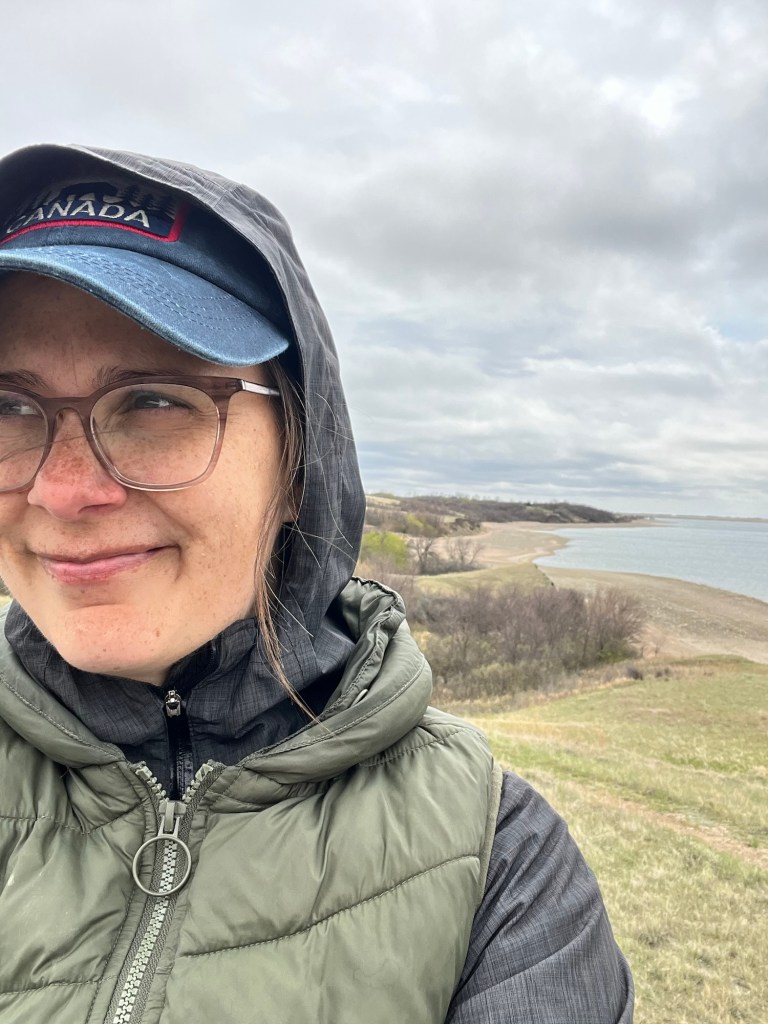
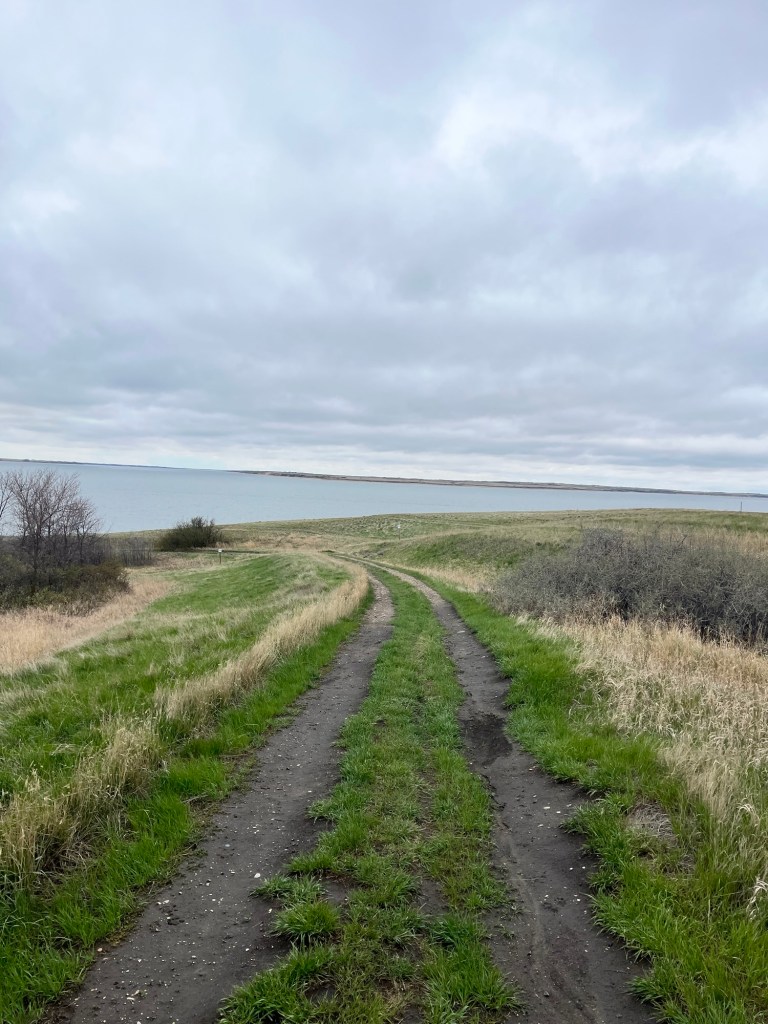
For me, that place has always been Diefenbaker Lake.

Some places are so deep inside us that we carry their shoreline in our bones.

-John O’Donohue

I’ve been coming here since I was tiny. Even before I had words for belonging, but somehow already knew I belonged here. Grandpa always made sure of that.

My grandparents had a cabin and a sailboat tucked along these windswept shores. Some of my earliest memories are stitched together with the smell of woodsmoke from backyard fires, the sweetness of my grandpa’s violin, and the rowdy chorus of siblings and cousins running wild between the cabin and the water. With the constant reminder to “wash the sand off your feet before you come in!”

And then there were the cozy, indoor moments that stitched themselves into my heart just as tightly as the beach days. Evenings around the table playing Phase 10, some of us a little too competitive for their own good. And we watched Bedknobs and Broomsticks over and over and over again. Never questioning why, just letting the magic and music wash over us like it was brand new every time.

Mornings were their own kind of ritual. Waking up to Grandma making bacon and something (it didn’t matter what, it’s the bacon that mattered) and the smell of fresh coffee drifting through the cabin. To this day, I associate the scent of coffee with pure happiness, because it always meant family, warmth, and the safe little world we built at the lake.

Teenage awkwardness made an appearance here too, because of course it did. Blushing, fumbling romances that felt monumental at the time. Even with his hair plastered to his face. Perhaps this was done by those winds that could have knocked over a small cow 🤔.

Speaking of cows. They are a regular feature of this lake that is surrounded by pasture land. Two rules. Don’t use a cow as a landmark when giving directions. They tend to move eventually. And don’t pick a beach with a cow path into the water. You can guarantee there’s a few cow pies in there.

Swimming lessons were basically an extreme sport back in my day. With waves bigger than me, wind that felt like knives, and instructors yelling cheerful encouragement while I questioned all of my mom’s life decisions that brought me to this point.

Still, I kept going back.

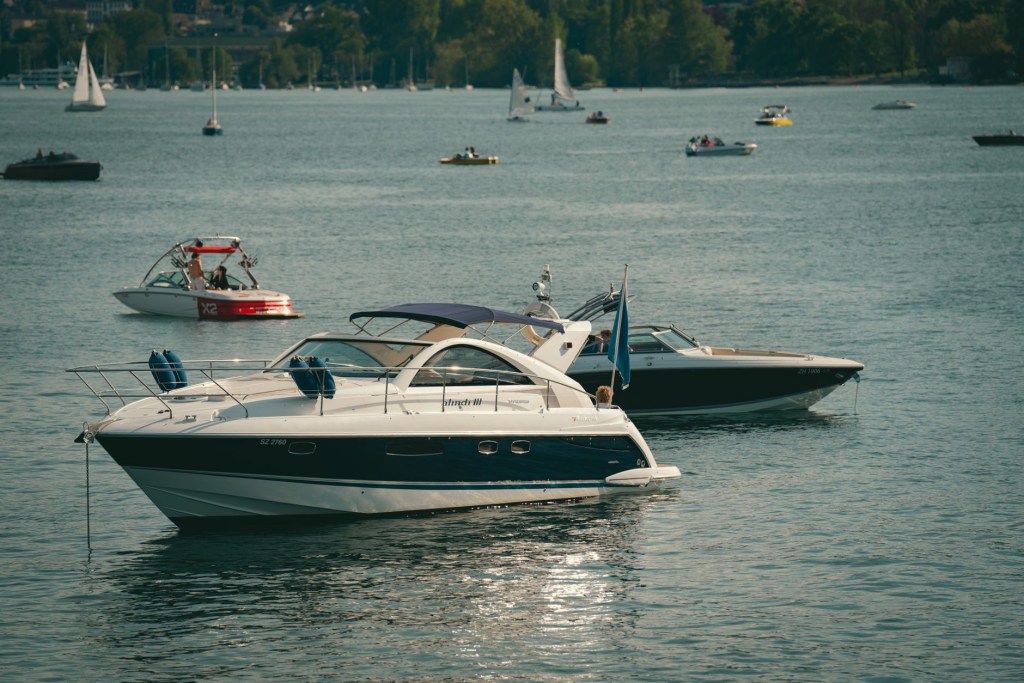
I lived for the days Uncle David would haul out the power boat. Kneeboarding, tubing, laughing so hard my face hurt. Those were the moments that made childhood feel endless. We’d tear down the path to the beach, towels flying behind us, younger siblings and cousins trailing like joyful chaos. We swam, we snacked, we visited, we repeated. Every day was an epic saga of sunshine and soggy towels.

Sailing days were their own kind of magic. My mom loves to retell the story of my sister and me being so little our feet didn’t touch the floor as we sat at the table down below. Meanwhile grandpa and dad were tacking hard and smiling harder. Every time the sailboat leaned, we’d just… slide helplessly under the table like tiny bewildered penguins. Apparently we were adorable. At the time, I remember thinking, Is this normal? Are we sinking? Should I be able to see the lake out that window?

Dad and grandpa were always smiling so I took that to mean we were safe.

As I grew older I loved sitting at the very front of the sailboat, facing forward, wind whipping around me, I felt like I was flying. When the water was calm, the spinnaker would make an appearance billowing out like a living thing. My grandpa worked the ropes and held the tiller with the easy smile that only comes from loving a place so much. Those are memories I hold like treasures.

And now seems like the appropriate moment to confess something to my parents…

I did, in fact, steal the keys and “borrow” the cabin for one weekend as a teenager 😬. I had “a few friends” over. I threw exactly one party in my entire life. And I was so sick with worry the entire time that I basically grounded myself for the rest of my adolescent years. Lesson learned. Sorry. Mostly. It’s been a good story over the years.

I spent my honeymoon at the lake- 26 ½ years ago. We fished, built sandcastles, and solved the great riddle of rural Saskatchewan: there are no gas stations open on Sundays. (At least, not back then.)

About five years ago, my parents bought their own place by my lake It took a some time but something inside me reconnected. Something long since silent woke back up.

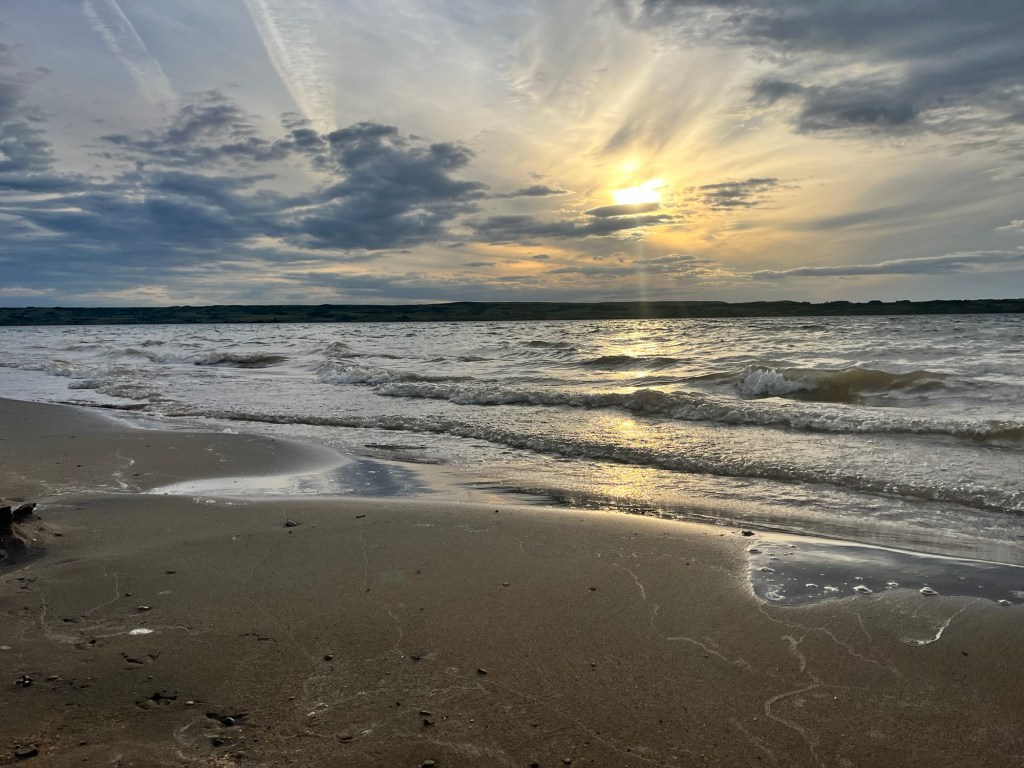
I listen excitedly to hear about the ice breaking in the spring. The booming, cracking, shifting sound like the earth stretching after a long sleep. Then, in an instant it seems, the ice is gone. Summer brings shimmering waves, familiar laughter, and barefoot days that always feel too short. Fall arrives in gold and red and farewell winds. Winter… winter brings a darker, quieter beauty. A solemn stillness that somehow feels honest. Vulnerable.

The older I get, the more I find that the quiet places are the ones that speak the loudest.

-Unknown

We’ve camped along these beaches. We’ve laid in the sun. And now, when I head out on my power boat with our next generation, I think of Uncle David. I feel him in the hum of the engine, in the ripple of the wake, in the bright splash of joy that comes with speed and water and family.

The pinnacle of our lake experiences has to be when we helped save our friend’s boat from sinking. When the bladder around the leg came off and they started taking on water, they quickly headed to the boat launch. Seeing they wouldn’t make it, they beached the boat. Then with two other power boats and a cacophony of helpers, they managed to get two boat tubes under the leg and the front of the boat. One of the support boats towed. Two people bailed. People sat on the tubes to balance. And in this ridiculous state we slowly made our way through the marina and up the launch. To the laughter and cheers of watchers nearby.

I have found beauty in the whimsically ordinary.

-Elissa Gregoire

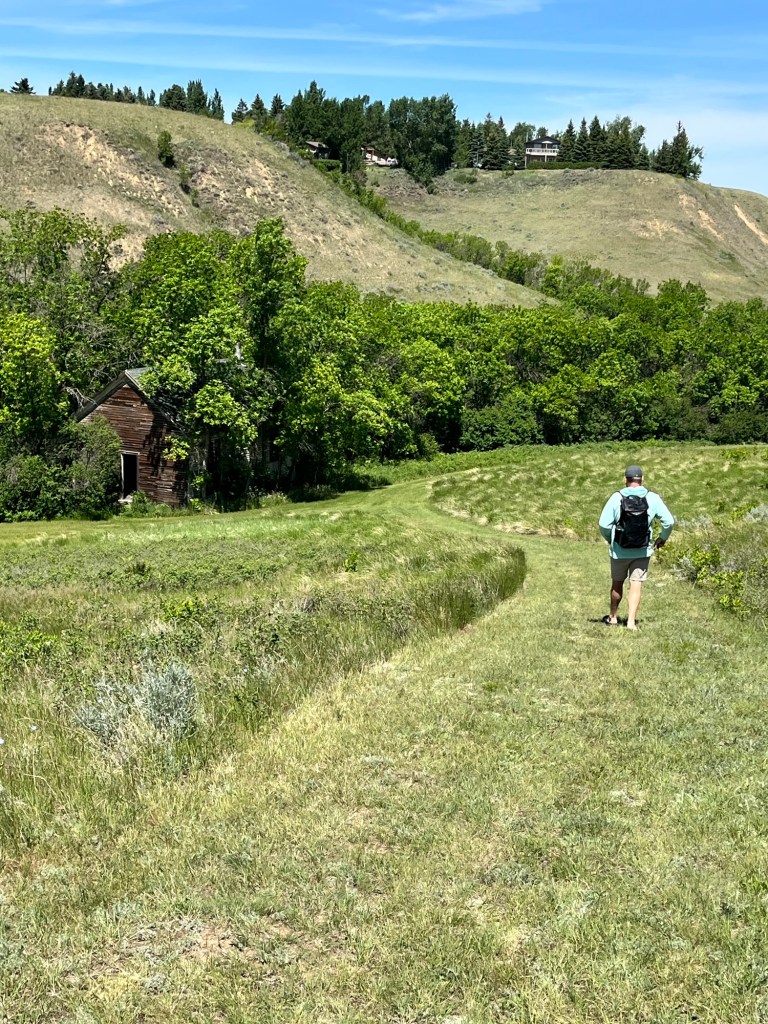
These days I walk the trail by my lake often. I slow down. I breathe.

And somewhere along the way, I realized,

This place has become part of my healing.

Chronic pain forces you to live differently. More slowly, more intentionally, more gently. Forest therapy taught me to seek connection with the natural world, to let my nervous system rest in the presence of trees, water, sky. And here, wrapped in the sounds and rhythms of my lake, something in me softens. Pain quiets. My body remembers safety.

When the heart is overwhelmed, the earth invites us to rest.

-Unknown

My parents host endlessly now, filling their summers with family, friends, neighbours. Anyone who needs a taste of peace.

They are the sailboat owners. And they love it just as much as my grandpa did.

The legacy continues, like wind passing from one generation to the next.

My lake is healing. This home of my parents is healing.

And after all these years, I am still finding new ways to belong here.

There are days the lake knows my story better than I do.

-Unknown

Fluctuat nec mergitur (latin phrase):

She is tossed by the waves but does not sink.

An Ode to My Lake

O Lake of my childhood, keeper of my summers,

You who taught me courage in cold waves

and laughter in the spray of speeding boats

I return to you again with a heart that remembers.

You cradle my earliest joys.

Grandpa’s violin threading through evening air,

firelight warming our faces,

cousins tumbling down the path like wild things set free.

You were witness to awkward teenage hopes,

to frozen swimming lessons and winds that stole my breath,

to stolen keys and the single party I regretted

before it even began.

You held my honeymoon,

my young love learning its way,

and you held me still years later

as chronic pain reshaped my life.

Now I walk your trails slowly,

letting forest therapy guide my weary body

back into rhythm with the world.

Your waves teach me presence.

Your ice teaches me patience.

Your seasons teach me trust.

Grandparents gone on, Uncle David gone on,

Memories gone on,

yet their echoes remain in your wind.

In every sail that fills,

in every motor that roars to life,

I hear them.

My lake,

always changing, always faithful,

you have become a sanctuary,

a place where the ache eases

and beauty remains.

Thank you for holding my childhood.

Thank you for holding my healing.

Thank you for holding me still.

My lake.

Some memories are not moments at all, but places.

Victoria Erickson