Everything Hurts, Now What?

There is a specific genre of complaining that I have become suspicious of. ๐Ÿ•ต๏ธโ€โ™€๏ธ

Not the legitimate kind.

Not the โ€œI have been awake since 3:17 a.m. because my nervous system is holding a fire drillโ€ kind.

Not the โ€œWhy does getting showered and dressed feel like an Olympic event?โ€ kind.

And definitely not the โ€œWho designed this world without considering people who have pain?โ€ kind.

Some things are a genuine bummer.

Chronic pain is hard. Fatigue is hard. Having a body that doesnโ€™t always cooperate is hard. Watching other people casually do things that require me to carefully plan and then recover, can be hard.

My body doesnโ€™t always recognize my authority. Thereโ€™s a department. A committee. Tons of red tape. Itโ€™s a whole thing.

I am not talking about pretending those things arenโ€™t hard.

Iโ€™m talking about what happens when complaining slowly becomes the neighbourhood we live in. And we didnโ€™t even know we moved!

Because sometimes I wonder if complaining is one of the ways we get duped by the lies of this world.

Sneaky lies.

The kind that slip in wearing sensible shoes.

E.g.

  • Busy means productive
  • More is always better
  • Everyone else has it better than me
  • Your worth is measured by what you accomplish or have
  • You should be able to do it all
  • Other people should behave the way I think they should

Some lies show up more in certain arenas. In the arena of chronic pain I have narrowed down to two societal lies that are at the top of my list.

The first lie of chronic pain sufferers: Life is supposed to be easier than this.

Somewhere along the way, I absorbed the idea that if I worked hard enough, made good choices, took care of myself, tried to be positive and generally behaved like a reasonably responsible adult, life would eventually cooperate.

๐Ÿคญ Cute.

I have since learned that life comes with considerably more fine print.

And chronic pain has a particularly efficient way of magnifying those terms and conditions ๐Ÿ”Ž .

You can eat well. You can exercise within your abilities. You can rest. You can take your medication. You can go to appointments.

You can stretch and strengthen and meditate and breathe and try every reasonable suggestion known to humanity.

And then Tuesday morning shows up, completely ignoring the fact that I had a lovely little breakthrough on Monday. My body still hurts. The dust is still judging me from across the room. The laundry has continued breeding. Nothing has been resolved, healed, folded, or otherwise put right.

That doesnโ€™t mean you failed.

It means youโ€™re human.

The second lie of chronic pain sufferers: If I canโ€™t have the life I wanted, I canโ€™t have a good life.

This one is considerably more dangerous.

Because chronic pain can shrink our world.

First we stop doing something because it hurts.

Then we stop doing something because weโ€™re afraid it will make things hurt worse.

Then we stop making plans because we donโ€™t know how weโ€™ll feel and we are tired of cancelling.

Then we start thinking about everything weโ€™ve lost.

And eventually our attention becomes almost completely occupied by what isnโ€™t possible.

The thing is, nothing has to be invented. The losses are real.

But the brain can take a real loss and turn it into a much larger story.

I canโ€™t live like I used to becomes:

I canโ€™t do anything.

Iโ€™m having a terrible pain day becomes:

Iโ€™m always in unmanageable pain.

I canโ€™t make plans reliably becomes:

My life is completely out of my control.
Thatโ€™s where I think complaining can become a trap.

Weโ€™re no longer simply describing our circumstances.

Weโ€™re rehearsing them.

Over and over.

And our brains are remarkably good at getting better at whatever we repeatedly practice.

But hereโ€™s where I need to be careful.

Because there is another lie that can sneak into this conversation.

โ€œIf people are tired of hearing about my pain, I should just tuck that thought back in the vault where it belongs.โ€

No.

Absolutely not.

I have chronic pain.

This is not a part-time hobby.

If something hurts every single day, pretending it doesnโ€™t hurt so that everyone around me can have a more comfortable afternoon isnโ€™t healthy either.

Sometimes I need to say:

โ€œToday really hurts.โ€

Sometimes I need somebody to know that Iโ€™m struggling.

Sometimes I need to be able to say, โ€œThis is really hard, especially today,โ€ without having to immediately follow it with something inspirational so nobody gets uncomfortable.

I donโ€™t need a motivational quote.

I need a witness.

And sometimes the person we need to hear us is the person who is tired of hearing it.

This is one of the hardest parts of chronic pain.

Because pain doesnโ€™t take weekends or holidays off.

It doesnโ€™t understand that those closest to you have already heard about it yesterday. And the day before that. And the day before that. For what seems infinity.

It doesnโ€™t care that your family has had a long day.

It doesnโ€™t politely wait until everyone is emotionally available.

And the person who loves you may eventually reach a point where they think:

I know youโ€™re hurting. I know. But I donโ€™t know what else to say.

And sometimes that comes out as:

โ€œThat sucks.โ€

Then they go back to whatever they were doing.

Ouch ๐Ÿ˜ฃ

Because when youโ€™re hurting badly enough to finally say something, โ€œThat sucksโ€ can land less like validation and more like:

Please stop talking about this ๐Ÿ™„ .

But there is another possibility.

Maybe theyโ€™re not saying:

Your pain doesnโ€™t matter.

Maybe theyโ€™re saying:

I donโ€™t know how to fix something I canโ€™t fix ๐Ÿ”ง.

Maybe theyโ€™re exhausted too.

Maybe they have heard about your pain so often that they have become emotionally numb. Not because they donโ€™t love you, but because human beings arenโ€™t particularly good at repeatedly witnessing something they canโ€™t make better.

And hereโ€™s an inconvenient truth:

Both people can be hurting.

The person with chronic pain can need to be heard.

And the person who loves them can need a break from pain being the centre of the room.

Those two things can be true at the same time.

So how do we complain in a healthy way?
Maybe the answer isnโ€™t donโ€™t complain.

Maybe itโ€™s learn how to communicate the need underneath the complaint.

Because sometimes what Iโ€™m really asking isnโ€™t:

โ€œWould you like to hear the latest installment of Everything That Hurts?โ€

Sometimes Iโ€™m asking:

โ€œCan you please just acknowledge that this is hard?โ€

Thatโ€™s a different request.

Instead of:

โ€œEverything hurts today. My back is killing me, my hips are aching, I barely slept, my hands hurt, and I donโ€™t know how Iโ€™m supposed to get anything doneโ€ฆโ€

I might try:

โ€œIโ€™m having a really bad pain day. I donโ€™t need you to fix it. I just need you to hear me for a minute.โ€

Or:

โ€œCan I have two minutes to complain without you trying to solve it?โ€

Or even:

โ€œI need a little reassurance right now. Can you tell me you understand that this is hard?โ€

That gives the other person a job they can actually do.

They donโ€™t have to cure chronic pain.

They donโ€™t even have to have the perfect response.

They just have to be present.

And I think we can give them permission to tell us when their tank is empty.

This one is tricky.

Because if someone says, โ€œI canโ€™t listen to this right now,โ€ it can feel devastating.

Especially when you already feel like your pain is an inconvenience.

But perhaps we can build a different language around it.

โ€œI love you. I believe you. I just donโ€™t have the capacity to talk about pain right now. Can we come back to this later?โ€

(Hold them to talking about it later, or they are just avoiding the issue)

That is very different from:

โ€œIโ€™m sick of hearing you complain.โ€

One establishes a boundary.

The other makes the person feel like the problem.
And research on chronic pain couples backs up the importance of this distinction. Validation communicates that the personโ€™s experience is real and understood, while invalidation can interfere with emotional and pain regulation. At the same time, studies also suggest that very frequent pain-related disclosure can wear down supportive responses. (PubMed)

So perhaps healthy communication lives somewhere in the middle.

Tell the truth.

Donโ€™t catastrophize the truth.

Ask for what you actually need.

Give the other person permission to have limits.

And donโ€™t make one person your entire emotional support system.

Because thatโ€™s a lot to ask of one human being.

Even if that human being is married to you.

Your brain is listening to you.
Our brains donโ€™t simply receive information from our bodies like a receptionist taking messages.

Theyโ€™re constantly interpreting what is happening.

Attention, emotion, memory, expectation and perceived threat can all influence the experience of pain.

Chronic pain isnโ€™t simply a matter of damaged tissue sending an identical pain signal over and over again. The nervous system can become sensitized and change the way sensations are processed.

And repetitive negative thinking (ruminating about pain, what it means, what might happen, how unfair it is) can add another layer of distress.

In very simple terms:

What we repeatedly pay attention to gets easier for the brain to notice.

That does NOT mean chronic pain is imaginary.

It does NOT mean positive thinking cures illness.

And it absolutely does NOT mean that if youโ€™re still hurting, you just arenโ€™t trying hard enough.

Puh-lease. โœ‹

I have enough on my plate without wondering whether Iโ€™m handling my suffering correctly.

But it does mean there may be a difference between:

โ€œThis hurts.โ€

and

โ€œThis hurts, this always happens, this is never going to change, I canโ€™t do anything, my life is terrible, nobody understands, and why does everyone else get to have a normal body?โ€

The first is information.

The second is a story.

And stories can either help us carry reality or make reality heavier.

Validation isnโ€™t the same thing as agreement.

This is an important distinction.

If I say:

โ€œIโ€™m scared this pain will never get better.โ€

You donโ€™t have to get in the pit with me and say:

โ€œYes. The dumpster fires persist but so do we.โ€

You can say:

โ€œI can understand why youโ€™re scared. Youโ€™ve been dealing with this for a long time.โ€

Thatโ€™s validation.

Youโ€™re not agreeing with the prediction. You are not forecasting something different.

Youโ€™re acknowledging the experience.

Researchers studying chronic pain couples have found that empathic and validating responses are generally associated with better emotional and relationship outcomes, while invalidating responses tend to be associated with worse outcomes. A 2025 systematic review of chronic pain couples reached a similar overall conclusion. ((PMC)PubMed Central)

And interestingly, even brief training in validation has been shown to improve validating responses from spouses and reduce negative affect in partners living with chronic pain. (PubMed)

Which means perhaps we donโ€™t need our loved ones to become pain experts.

Maybe we just need to teach each other a few life-saving sentences.

๐Ÿ›Ÿ โ€œI believe you.โ€

๐Ÿ›Ÿ โ€œThat sounds really hard.โ€

๐Ÿ›Ÿ โ€œIโ€™m sorry youโ€™re hurting.โ€

๐Ÿ›Ÿ โ€œDo you want me to listen, help, or give you some space?โ€

Sometimes I need help.

Sometimes I need someone to sit beside me while I have spectacular pity party.

And sometimes I need everyone to leave me alone.

Which brings me to the forest.
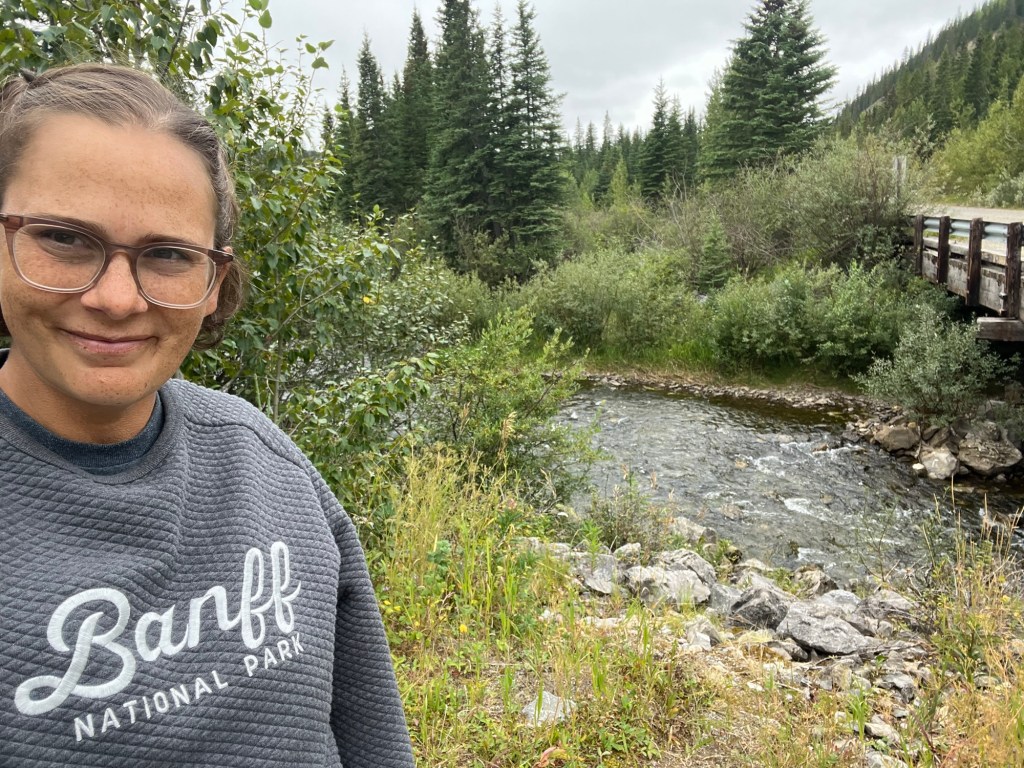
The forest is a third party in the conversation.

One of the reasons I love forest therapy is that it gives me somewhere else to take my pain.

Not to hide it. Not to deny it. Just to put it down for a little while.

The forest doesnโ€™t say:

โ€œAgain with the pain?โ€

It doesnโ€™t say:

โ€œYouโ€™ve already told me this.โ€

It doesnโ€™t say:

โ€œThat sucks.โ€

It simply gives me something else to notice.

The sound of wind moving through branches.
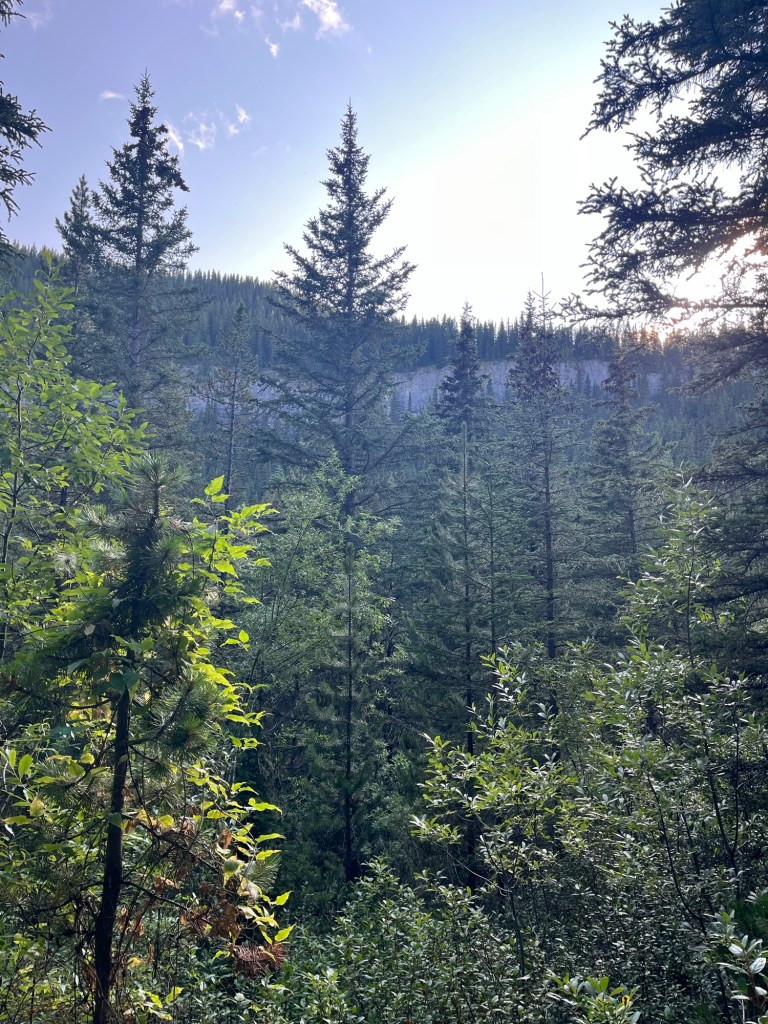
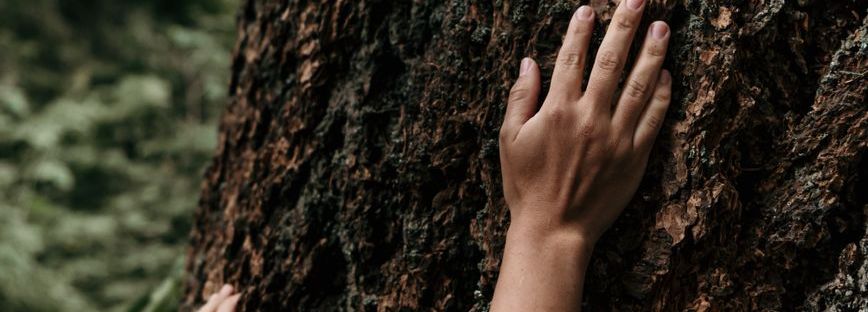
The texture of bark.
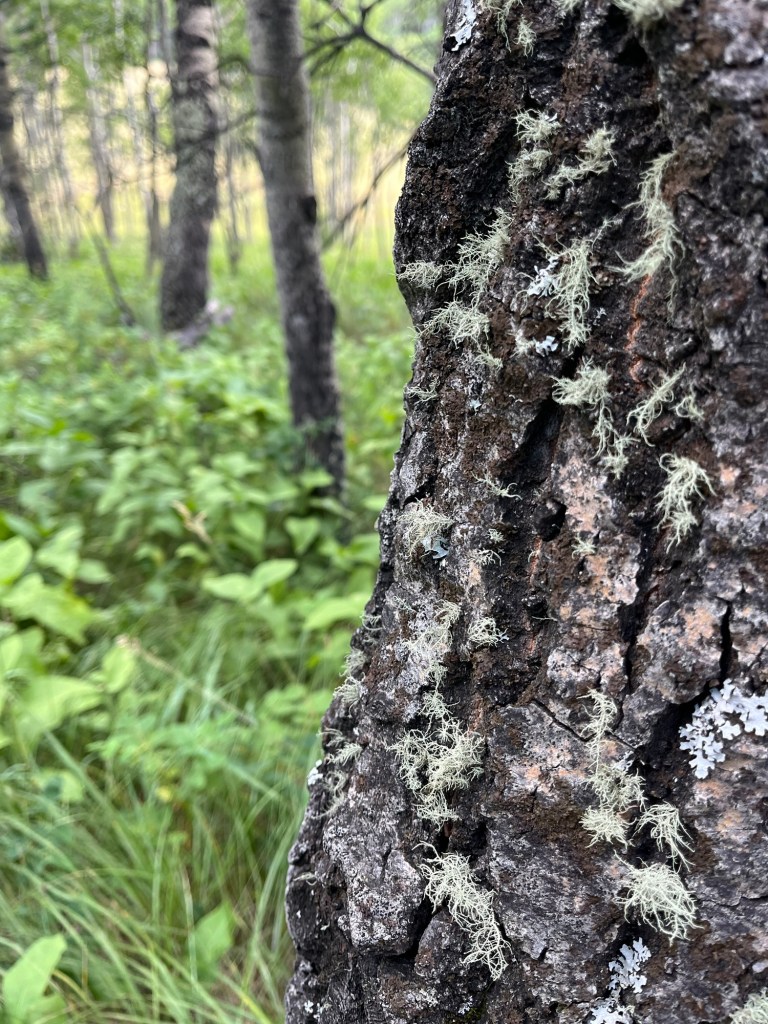
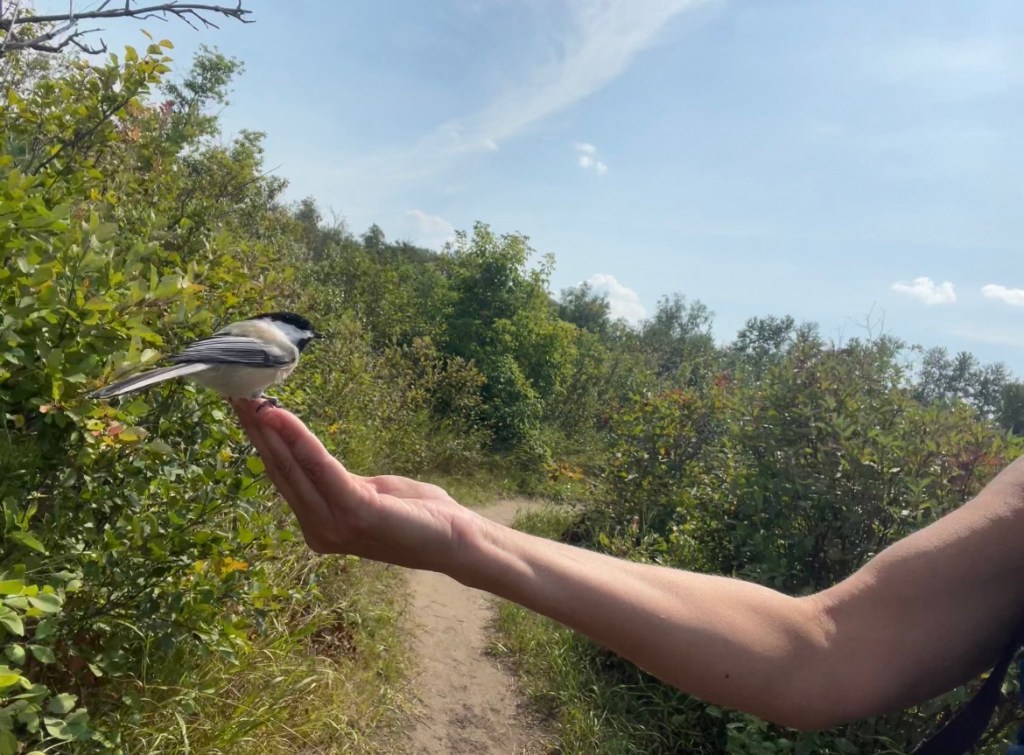
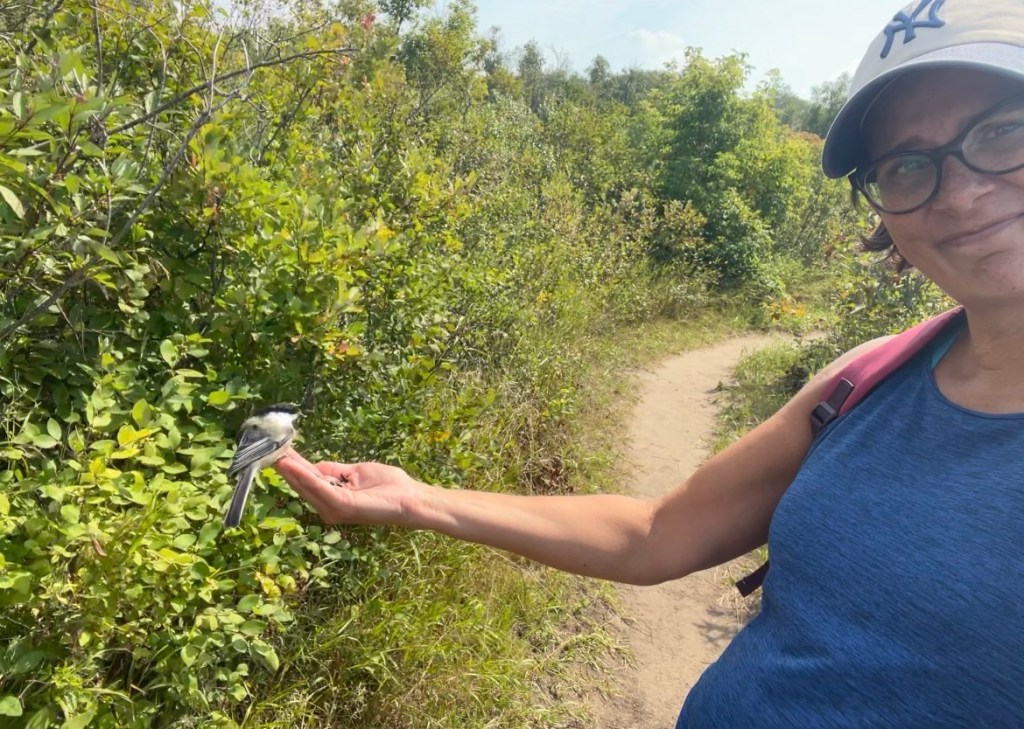
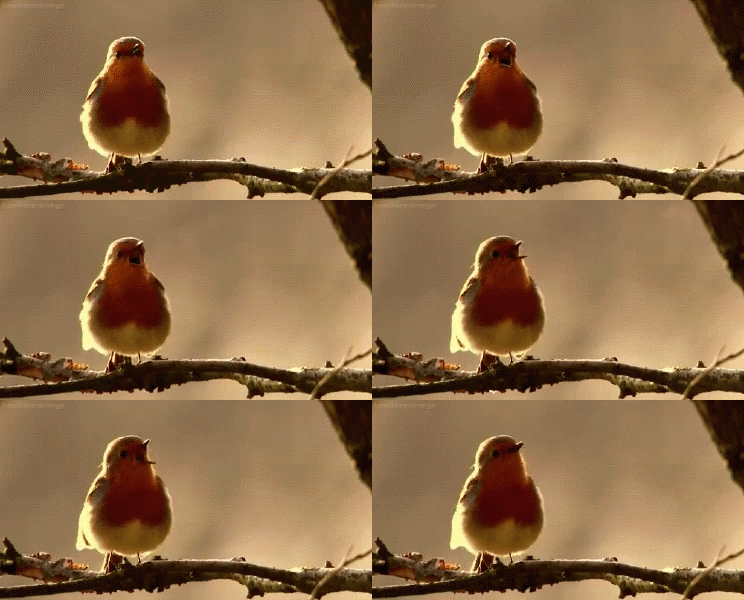
Birdsong.
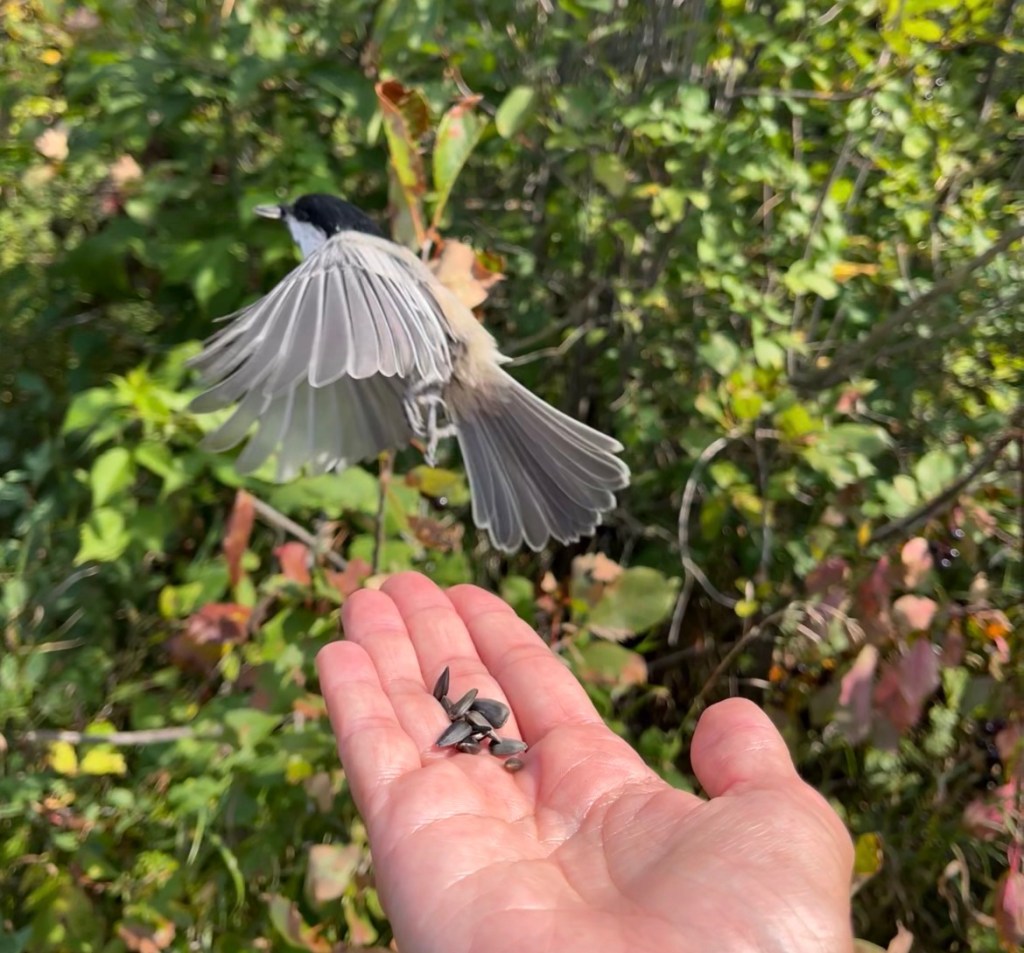
The smell of damp earth.

Bosky

Covered with bushes, shrubs, and small trees, or having a woody and shady appearance. (Dictionary.com)
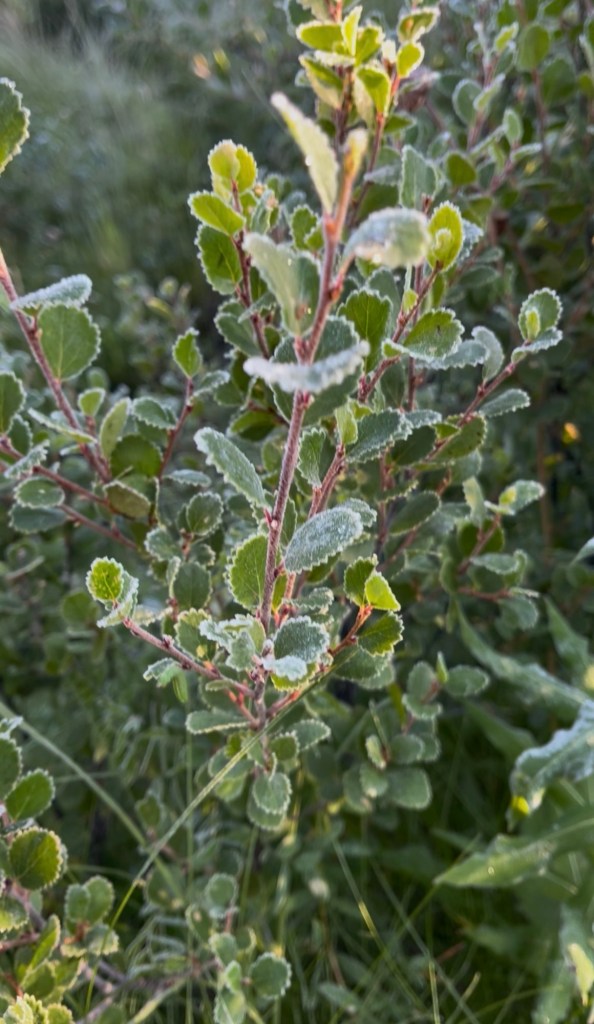
Light moving through leaves.
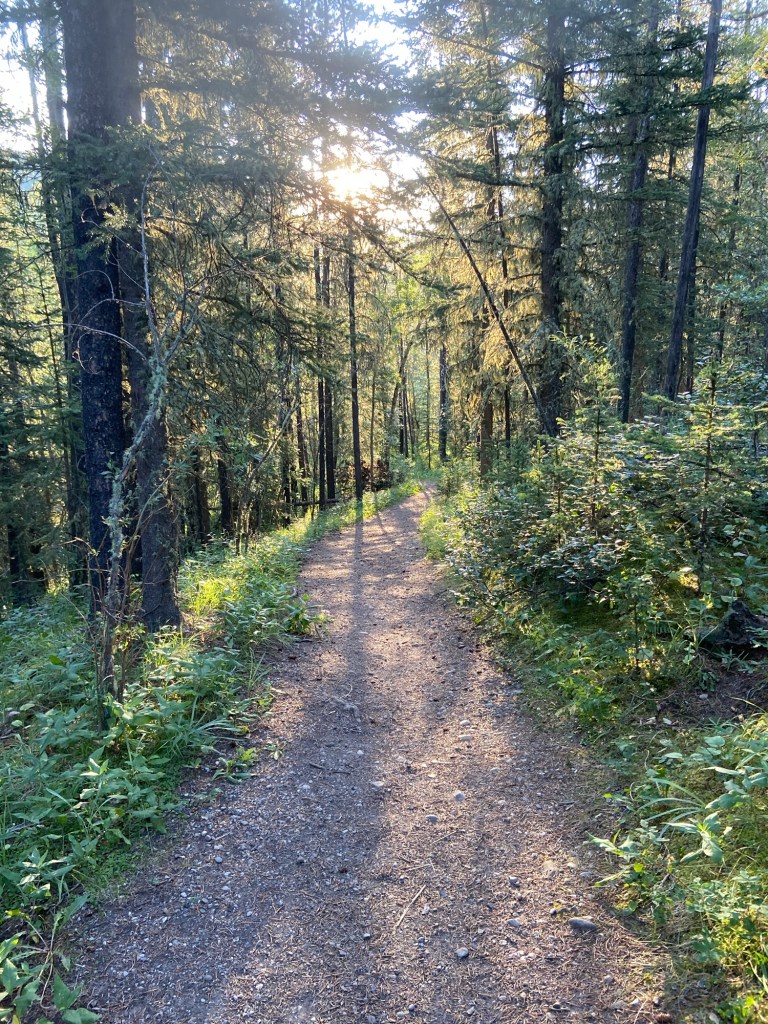
My feet touching the ground.
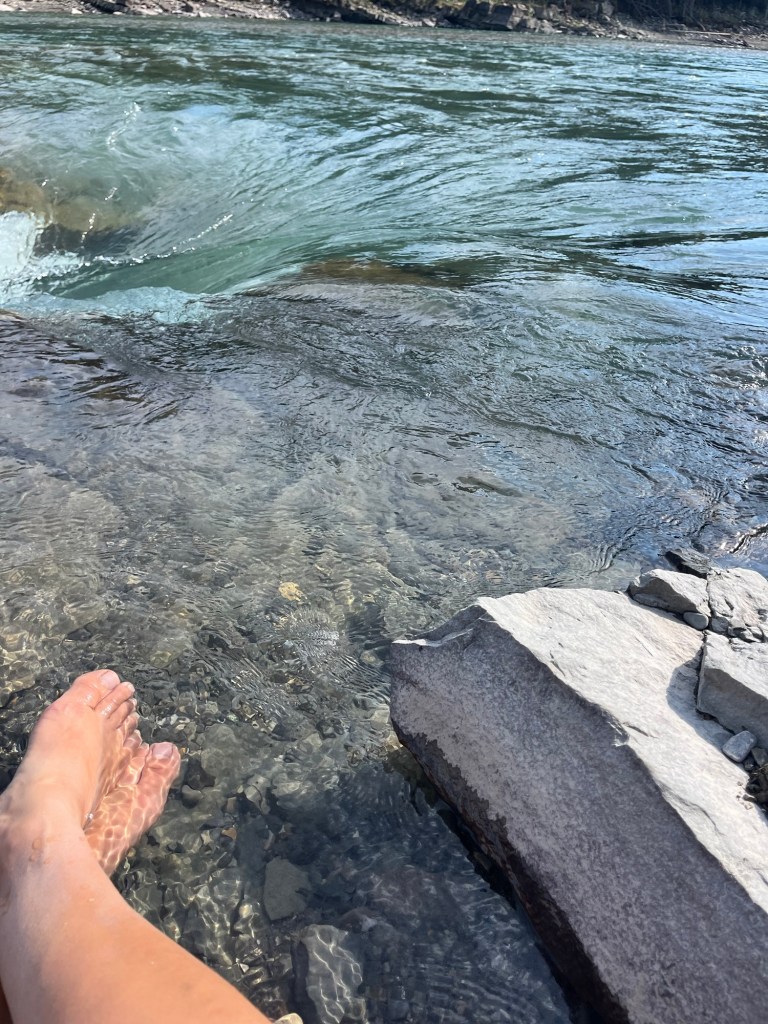
My breath silent as I watch the deer across the ravine and she watches me.
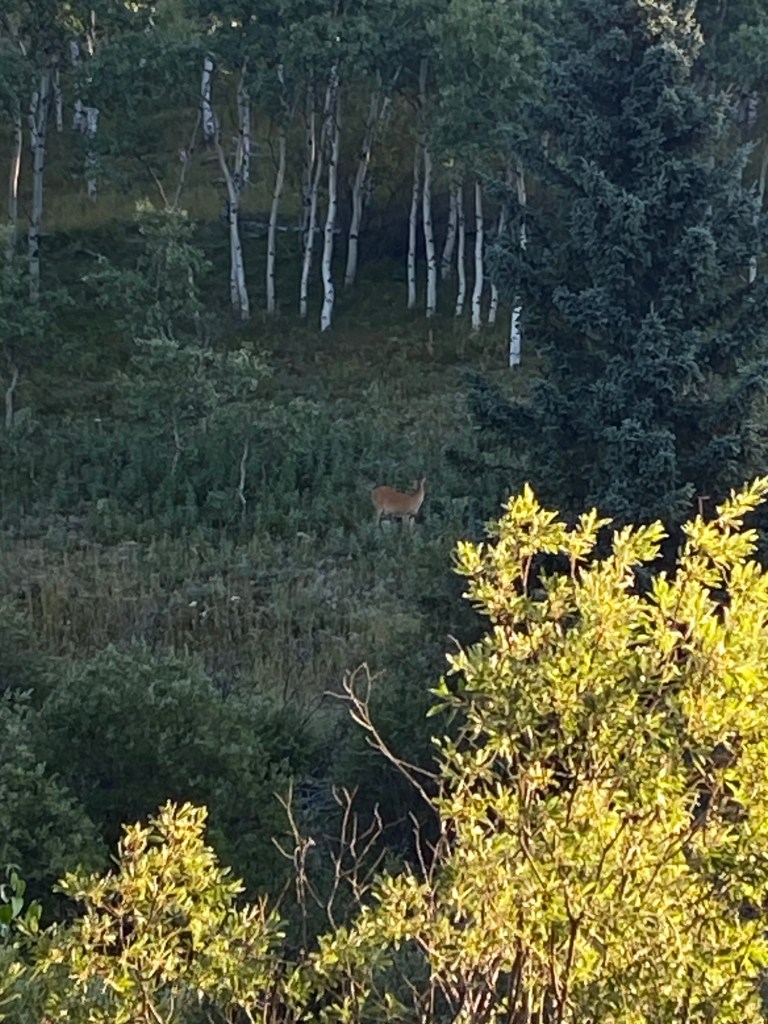
And suddenly my attention isnโ€™t completely occupied with the running commentary in my head.
Nature exposure has been associated with reduced stress, and research on forest therapy has found changes in measures such as cortisol, heart rate and parasympathetic activity.

The evidence isnโ€™t perfect, and the forest isnโ€™t a cure for chronic pain. But it can offer the nervous system a different kind of input. Slower, safer, less demanding.

Sometimes that is enough to interrupt the loop.

Try this the next time you catch yourself complaining.

Donโ€™t shame yourself.

Thatโ€™s just complaining about your complaining. Youโ€™ve now created a sequel nobody asked for ๐Ÿคฆโ€โ™€๏ธ.

Instead, pause.

Ask:

What am I actually needing right now?

Am I needing to be heard? practical help? reassurance? rest? Am I feeling lonely? frightened? angry?

Am I simply needing someone to say:

โ€œThat really sucks.โ€

Because sometimes that is enough.

Then ask yourself:

Who is the right person to give me that support right now?

Maybe itโ€™s your spouse.

Maybe itโ€™s a friend who understands.

Maybe itโ€™s a support group.

Maybe itโ€™s a therapist.

Maybe itโ€™s a journal.

Maybe itโ€™s the forest.

And maybe sometimes itโ€™s you.

Iโ€™m not trying to become a person who never complains.

Frankly, that sounds exhausting.

I still complain.

But Iโ€™m trying to notice when complaining stops being a way of expressing something and starts becoming a way of seeing everything.

And Iโ€™m also trying to remember that needing to talk about my pain doesnโ€™t make me a burden.

I can tell the truth about what hurts. I can ask to be seen. I can let someone say, โ€œI love you, but I donโ€™t have the capacity for this conversation right now.โ€

I can find more than one place to put my pain.

And I can learn the difference between telling the truth and allowing the pain to tell me the story of my entire life.
Because maybe thatโ€™s one of the great tricks of this life:

The lie isnโ€™t always that our circumstances arenโ€™t difficult.

Sometimes the lie is that our circumstances are all there is.

Pain is part of my life. It isnโ€™t the whole of it.

Fatigue is part of my life. It isnโ€™t the whole of it.

The things I canโ€™t do are part of my life. They arenโ€™t the whole of it.

And when I walk into the forest, I get reminded of something my occasional complaining brain conveniently forgets:

There is still a world happening outside my symptoms.

There is still beauty. There is still laughter. There are still surprises.
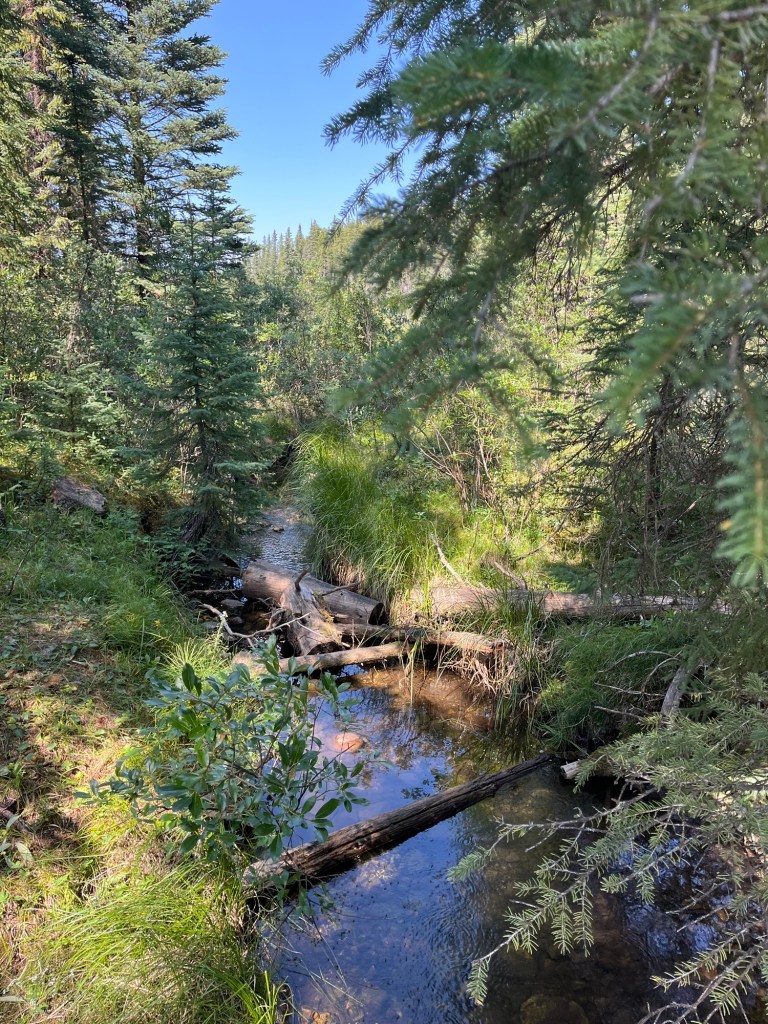
Maybe I donโ€™t have to fight my life into becoming the one I thought I was promised.

Maybe I can stop complaining about the moment long enough to find a life well-lived.

Even if it hurts. Especially then.
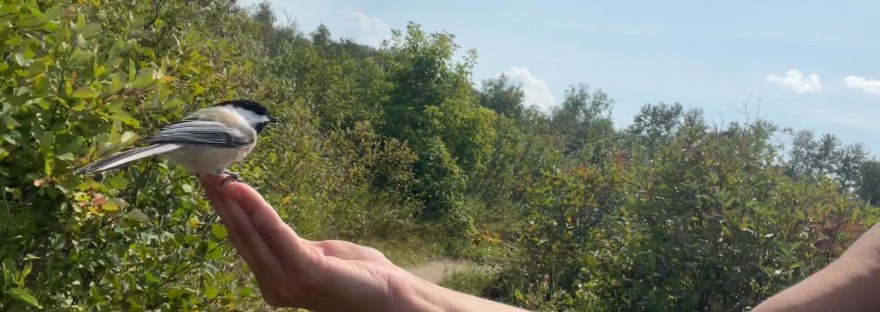
What Does My Soul Need Today?

I have a confession.

I hear the word retreat and my brain starts packing a bag.

Preferably for somewhere with trees, a mountain, a few trails and nobody asking me whatโ€™s for dinner.

A retreat sounds lovely.

It also sounds like something that requires time, money, planning, a reservation, and quite possibly a whole new wardrobe.

But what if retreat doesnโ€™t have to be a big event?

What if it can be ten minutes? A half hour? Or an afternoon?

What if you donโ€™t have to go anywhere?

Iโ€™ve been reading Caroline Sylgeโ€™s How to Retreat, and I love the idea that retreat can be much more accessible than we tend to make it. A retreat can be a deliberate step away from the noise of ordinary life, and it can look very different depending on what you need.

Which got me thinking about a question I probably need to ask myself more often:

What does my soul need today?

Not what does my calendar say? Not what am I behind on? Not what would make me feel impressively productive?

What does my soul need today?

And sometimes the answer is surprisingly simple.

ฤ€loka

Sanskrit and Pali. Meaning light, brightness, vision or enlightenment. When something inside you finally becomes clear.

Yesterday, apparently, my soul needed to get rained on.

I woke up thinking I should go to the gym.

That meant walking there, working out, and walking home again.

Then I looked outside. It was cloudy and raining.

My immediate response was something along the lines of, Excellent. Perhaps I shall simply allow these blankets to absorb me.

But eventually I got myself moving. Rain gear on. Out the door.

Only a few minutes from home, I noticed something. I was enjoying the rain. I could feel it on my hands. I could hear it hitting my hood. The air smelled different. The whole world seemed quieter.

By the time I reached the gym, I was more than ready to move.

I hadnโ€™t needed to convince myself. I just needed to get outside long enough for my nervous system to catch up with the plan.

Sometimes we donโ€™t need a retreat just a walk in the rain on the way to the gym. And sometimes we need the gym.

Thatโ€™s the tricky thing about asking what your soul needs.

The answer isnโ€™t always rest.

Sometimes it is movement. Adventure. Solitude. People. A nap. Fresh air.

The micro-retreat

I think this is where the idea of a micro-retreat joins well with the idea of forest therapy.

We have somehow managed to turn rest into another achievement.

Apparently we need the perfect location, the perfect playlist, the perfect journal, the perfect candle and three uninterrupted hours to properly relax.

I would like to formally announce this is unnecessary protocol.

Your retreat can be tiny. You could put a plant on your desk. Turn on a little water feature. Put your phone somewhere you canโ€™t see it.

Sit there for ten minutes. Listen. Look. Breathe.
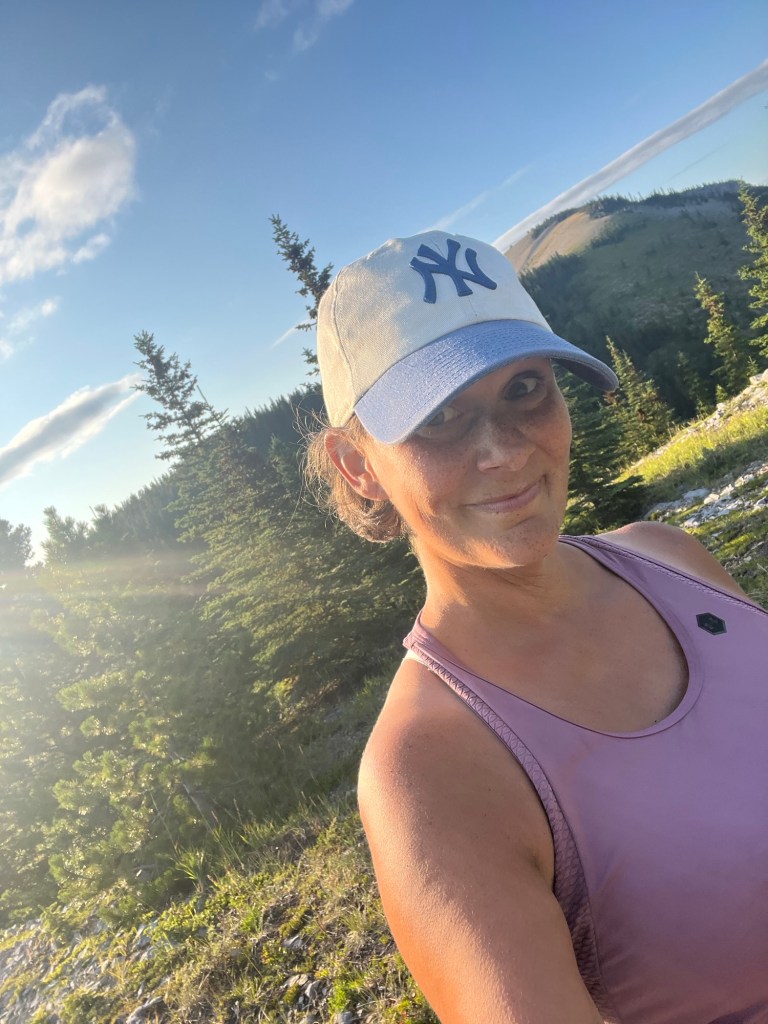
Thatโ€™s it!

You have not travelled anywhere. Your bank balance remains unchanged. No achieved enlightenment. But you stepped outside the usual stream of demands.

That counts.

And tomorrow, your retreat might look completely different.

Maybe you need to sit in a cozy chair and read. Or wander for thirty minutes through a park while the leaves are turning. Perhaps you have enough energy for a three-hour mindful walk through the forest. Or just enough energy to sit on a bench and watch water move.

All valid needs.

Forest therapy makes room for all of this

One of the things I love about forest therapy is that there isnโ€™t a mileage requirement.

Nobody hands you a medal at the end because you managed to walk seven kilometres while being mindful.

You donโ€™t have to conquer the forest. You donโ€™t even have to walk very far.

The forest isnโ€™t a treadmill with better scenery. Itโ€™s an invitation to slow down and notice.

And the beautiful thing is that you can scale that invitation to whatever your life (and your body) can manage.

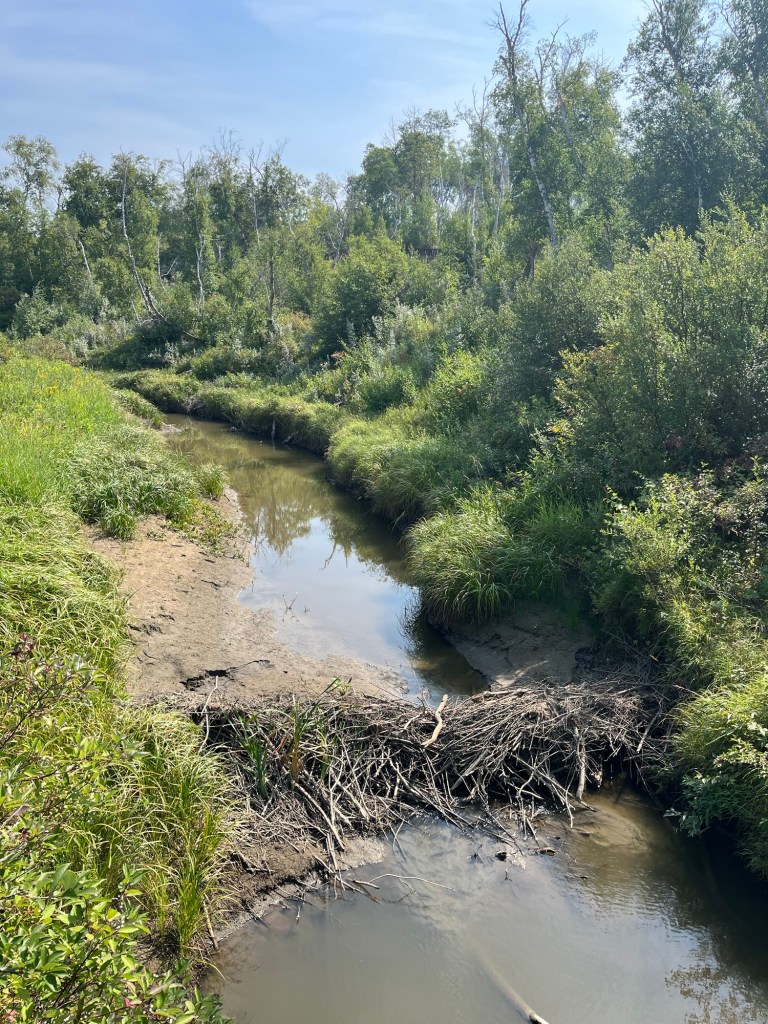
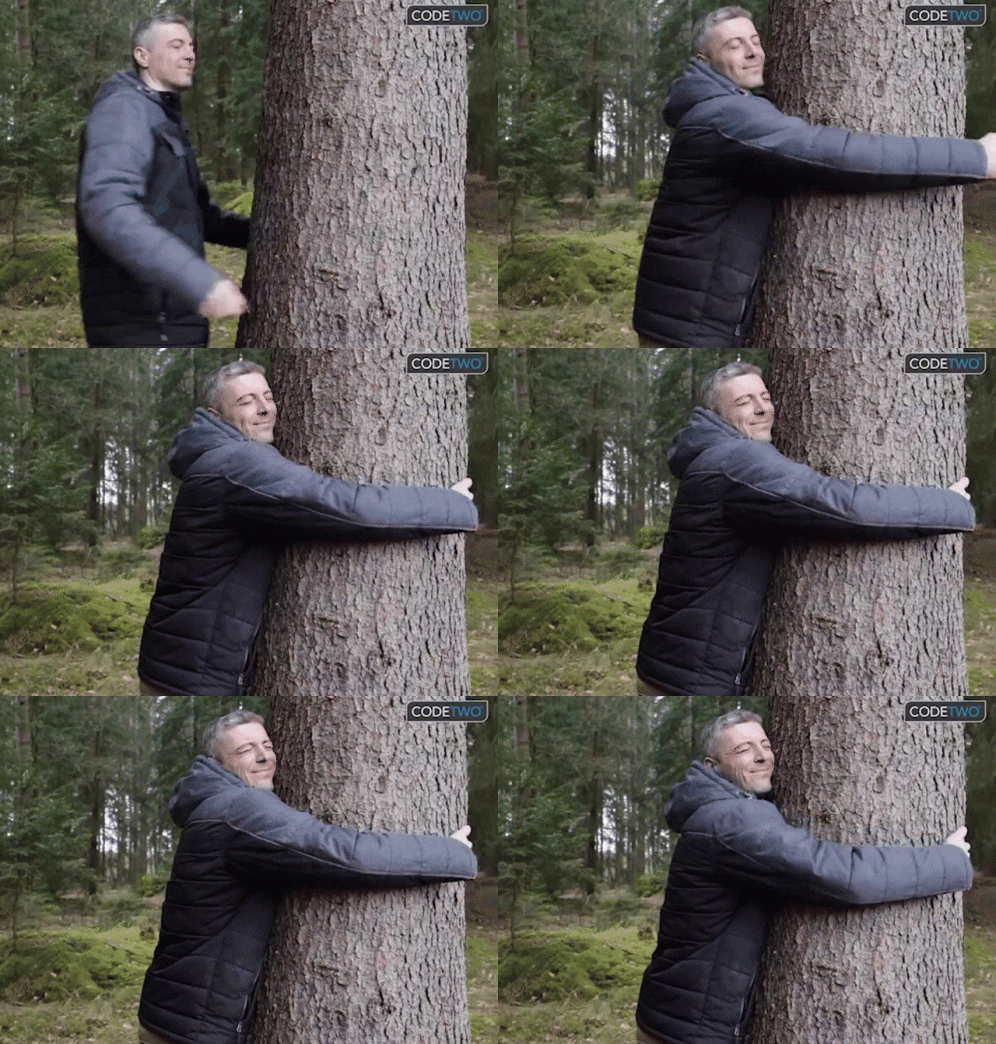
Nature can be a forest. It can also be a tree outside your door. A houseplant. A garden. Rain on your hood. The sound of a creek. Ten minutes watching birds. A patch of grass.
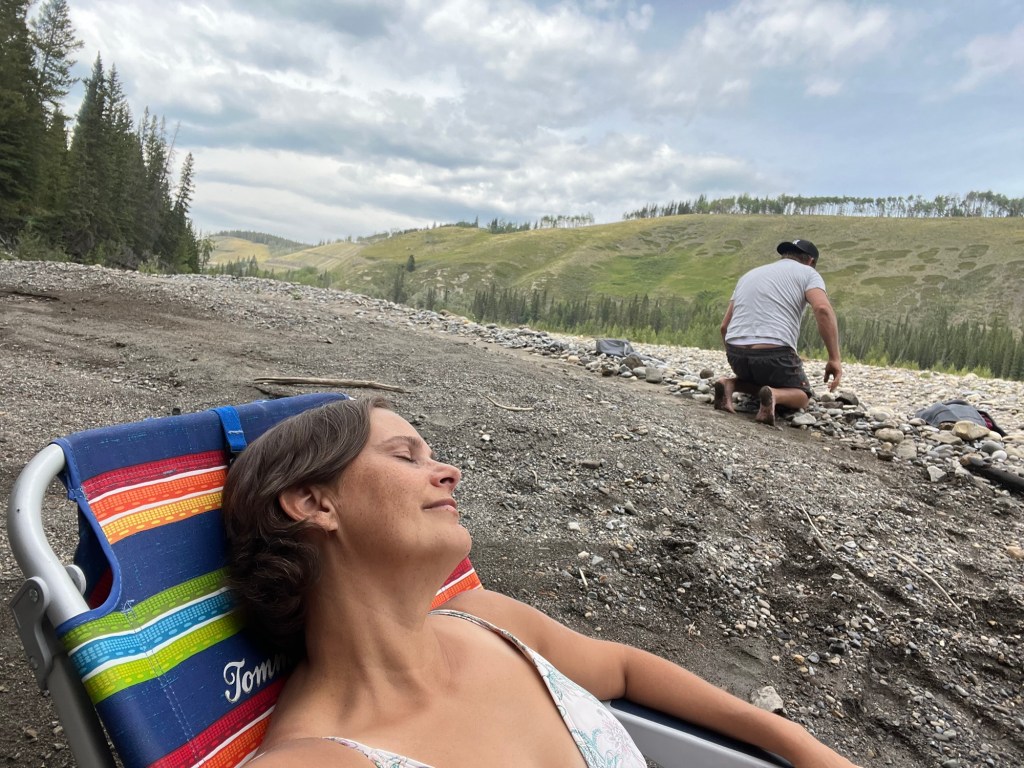
There is some pretty fascinating neuroscience behind this.

We donโ€™t have to make nature complicated. Sometimes we just need to stop long enough to realize it is there.

Your brain might thank you

Our brains spend a tremendous amount of time directing attention, filtering distractions, making decisions and responding to demands.

Nature seems to give that hard-working attention system a bit of a vacation.

Researchers call one part of this soft fascination.

Instead of forcing yourself to concentrate on something, your attention gets gently captured by things like moving leaves, clouds, birds, water or sunlight.

You arenโ€™t doing nothing. Your brain just isnโ€™t working quite so hard at doing everything.

A 2025 systematic review and meta-analysis found that nature exposure was, on average, more cognitively restorative than non-nature exposure, particularly for working memory and attentional control. Interestingly, around 30 minutes appeared to be a particularly useful window in the studies they examined.

And a 2026 review looking across 108 neuroimaging studies found evidence of changes in brain networks involved in stress, attention and self-referential processing following exposure to natural environments.

Now, before we all start dumping our meds out the window, putting a houseplant beside our bed and declaring ourselves neurologically healed, a little caution is appropriate.

This is promising research, though not a magic prescription.

Studies differ in their methods, environments and participants, and researchers are still figuring out exactly what kinds of nature experiences work best, for whom, and for how long.

But the evidence is increasingly pointing in an interesting direction:

Getting away from the constant demands on our attention may actually give our brains some room to recover.

And I will happily take more reasons to go sit in the sun.

What if creativity is the point?

Unused creativity is not benign. It metastasizes. It turns into grief, rage, judgment, sorrow, shame.

-Brene Brown

This is another part of Sylgeโ€™s thinking that really caught my attention.

Creativity can be part of the retreat.

But it can also be what comes out of the retreat.

Sometimes you retreat because you need to write.

Other times you finally get quiet enough for the idea youโ€™ve been carrying around in your head to come knocking.

Maybe you take photographs or write or sketch or paint.

Maybe you start noticing colours, shapes, textures and tiny details you normally walk straight past.

You donโ€™t have to be an artist. You donโ€™t have to produce anything profound.

Take a picture of a leaf because you like the way it looks. Write three sentences. Draw a tree that looks like a potato. Itโ€™s okay! The potato tree has value.

The point isnโ€™t necessarily to create something impressive.

The creative act may simply be another way of paying attention.

And sometimes, when we stop trying so hard, something unexpectedly creative finds its way through.

My Micro-Retreat Menu

So, if you are wondering what retreat might look like today, here are a few possibilities.

๐ŸŒฑ 5 minutes: Find one living thing. Look at it properly. Notice something youโ€™ve never noticed before.

๐Ÿ’ง 10 minutes: Sit beside water. Real water is excellent. Tiny tabletop water feature? Also acceptable.

๐Ÿ“– 20 minutes: Make yourself a cozy space and read. No multitasking. No โ€œIโ€™ll just check one thing.โ€

๐Ÿ‚ 30 minutes: Take a slow seasonal wander. Notice what has changed.

๐Ÿ“ท 45 minutes: Take your camera and photograph whatever catches your attention. No theme required.

๐ŸŽจ 60 minutes: Write, draw, photograph, paint, collage, doodle. Follow your curiosity.

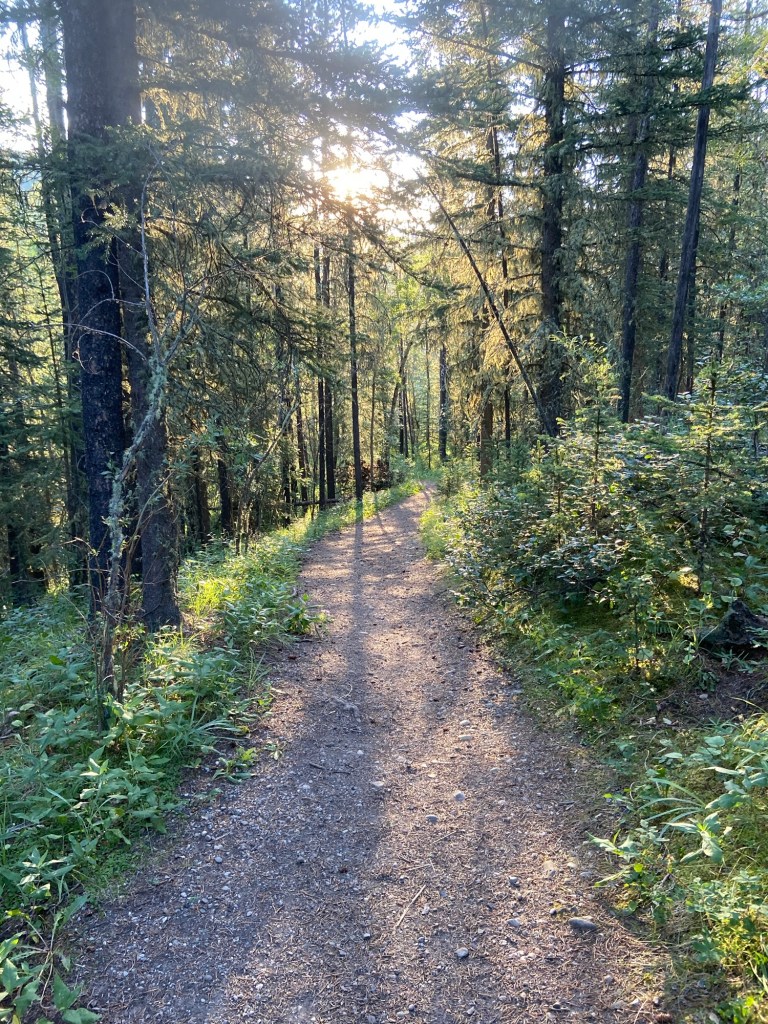
๐ŸŒฒ 2โ€“3 hours: Go into the forest. Walk slowly. Sit down. Listen. Notice. Journal. Rest. Let the experience unfold instead of trying to accomplish it.
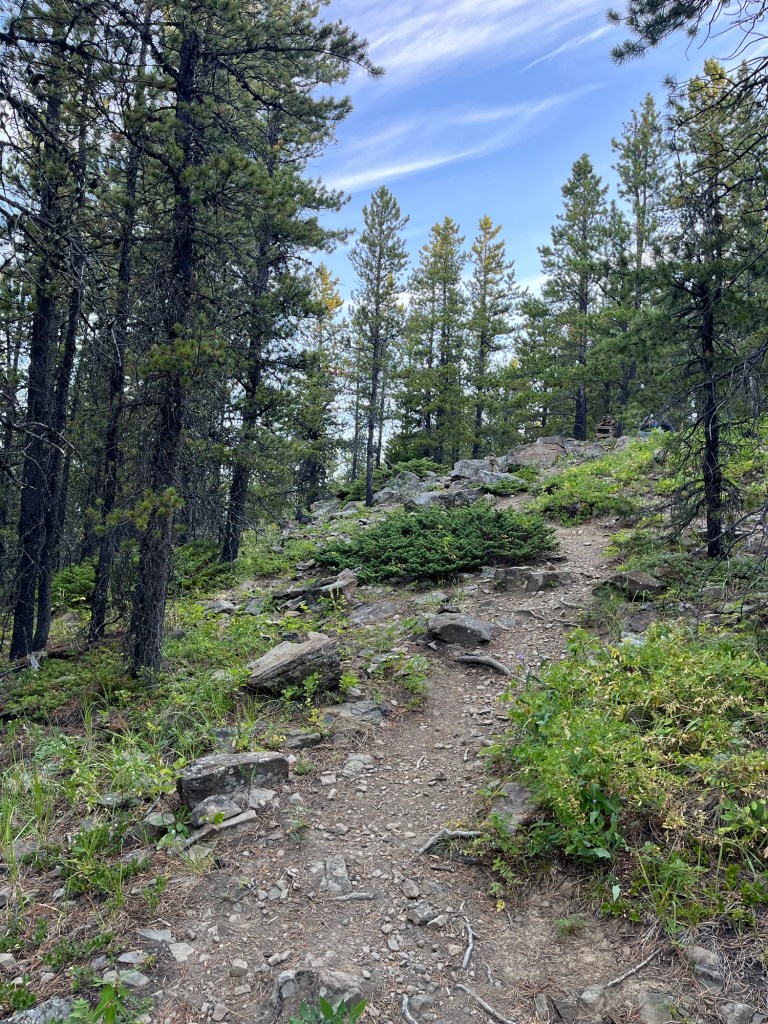
And then there is:

๐Ÿ›‹๏ธ The โ€œmy body has votedโ€ retreat: Stay home. Make tea. Read. Listen to rain. Look out the window. Rest without turning it into a failure.
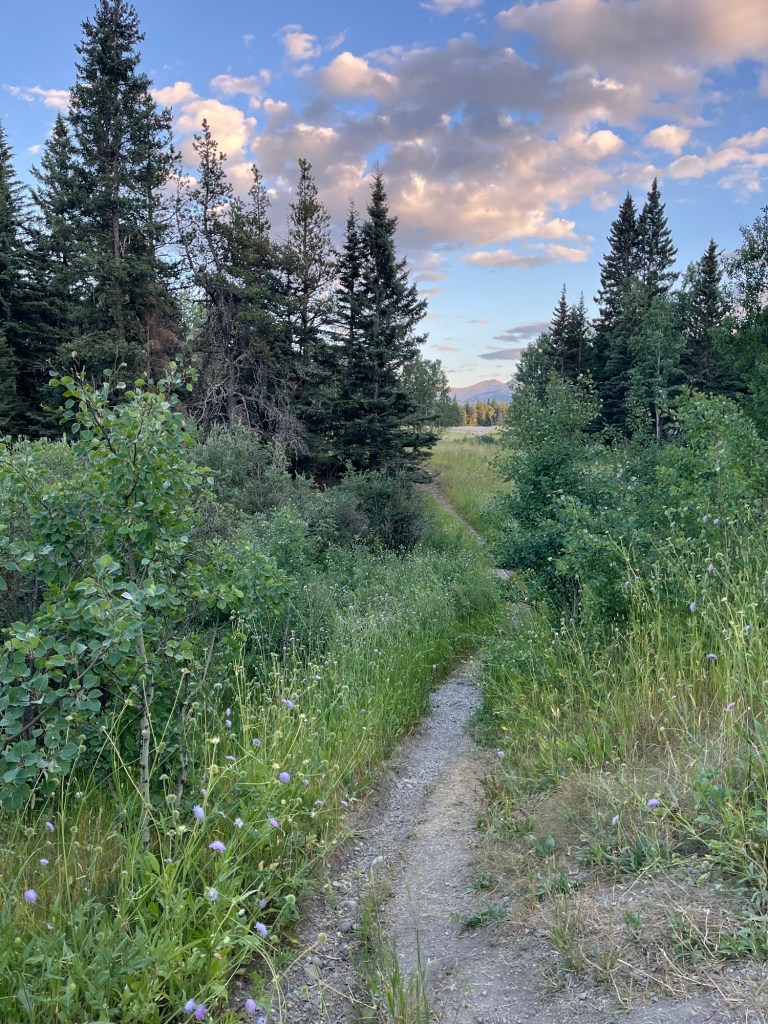
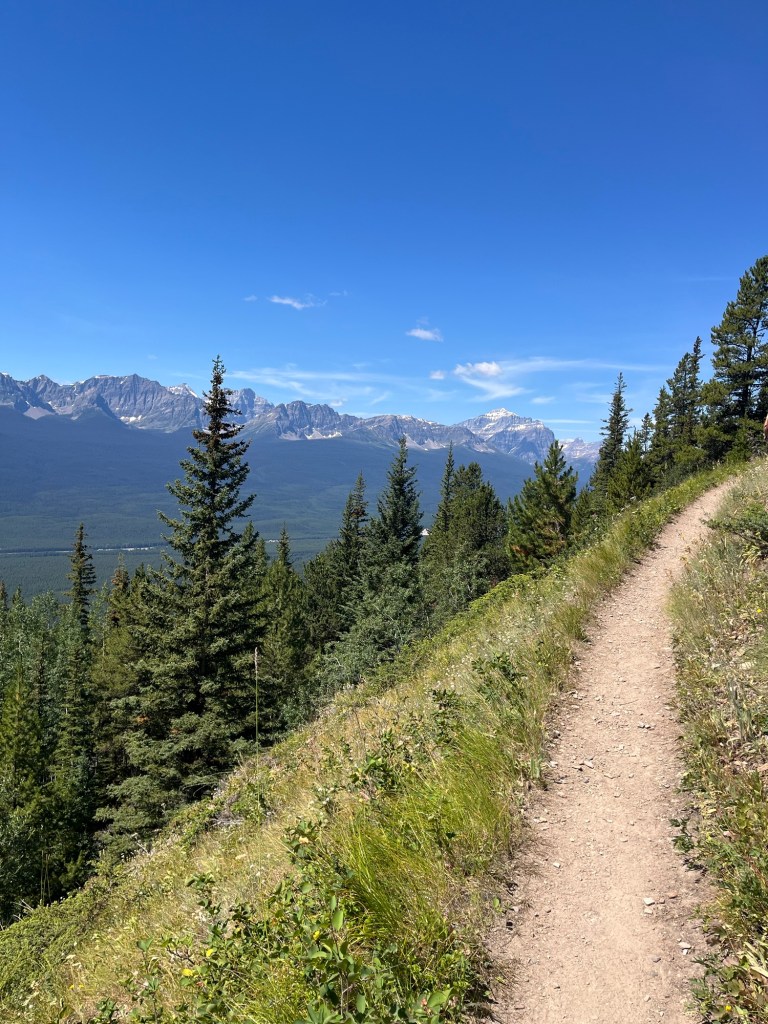
Because sometimes the most mindful thing you can do is listen when your body says no.

Aging is when your brain says, โ€œWe ride at dawn.โ€ And your body says, โ€œWe absolutely do not.

Retreat so you have something to give

There is another aspect of this that I think gets overlooked.

We donโ€™t retreat only so we can feel better. Sometimes we retreat so we can return. Because when weโ€™re depleted, we donโ€™t have much left to offer anyone.

Our patience gets shorter. Our creativity dries up. Everything feels like one more demand.

And sometimes we need to step away. Not because we donโ€™t love people, but because we do.

Iโ€™ve written about this before in A Grid of Love and Light, because I believe our light is meant to reach beyond ourselves.

But we canโ€™t shine indefinitely on an empty tank. Sometimes we need to step back and replenish. Not so we can become more productive. So that we can return with a little more presence.

A little more patience. Creativity. Light.

So ask the question

Before you automatically do what you always do, stop for a moment.

Put down the phone. Look out the window. Take a breath. And ask yourself:

What does my soul need today?

Maybe it needs a forest. Or rain. Perhaps a workout. Or a book. Maybe it needs creativity. Or a friend. Maybe solitude. Or ten quiet minutes beside a plant.

Maybe it needs to crawl back under the covers and put out a Do Not Disturb sign for the world.

The answer doesnโ€™t have to be the same tomorrow.

Thatโ€™s the beauty of it.

A retreat doesnโ€™t have to be a place. It can be a response.

A response to what your body needs. What your mind needs. What your soul needs.

And perhaps the goal isnโ€™t to retreat far enough away that we become someone else. Perhaps it is simply to step out of the noise long enough to remember who we already are.

You donโ€™t have to escape your entire life. You can simply step out of it for a little while.

Living in the Pause

โ€œThe music is not in the notes, but in the silence between.โ€
โ€”often attributed to Wolfgang Amadeus Mozart

Iโ€™ve been thinking about the pause. The spaces between the things we think make a life important.

We live in a culture obsessed with the notes.

The promotion.
The house.
The vacay.
The degree.
The business.
The six-figure salary.
The awards.
The followers.
The accomplishments we can put on a rรฉsumรฉ.

More. More. More.

More recognition.
More experiences.
More things.

These things absolutely have their place and purpose. But somewhere along the way, we started measuring ourselves and others by those notes. What if, hear me out, the music is actually in the silence between? In the pause.

A forest is never truly silent. There is wind moving through the branches, birds calling, insects buzzing, leaves rustling, footsteps on the trail.

But there are pauses between the sounds. If you notice them, those pauses make you notice the sounds that much more.

Maybe life works the same way. Maybe the pause isnโ€™t empty. Maybe it is where we hear what we would otherwise miss.

I donโ€™t have the wealth or notoriety or conventional accomplishments that can make a life look impressive from the outside.

And often, Iโ€™ll admit, I struggle with that.

I want to work. I want to contribute. I want to be useful. I want to afford to live. I want nice things. I want to go fun places.

I want to get groceries without having to figure out which ones I can afford to put back (calculus- level grocery shopping.)

I want to say yes to things without factoring in the 2-3 business days of recovery. I donโ€™t want to be a burden on others.

And when I look around and see everyone else accomplishing things, building careers, travelling, buying houses, starting businesses and living their lives, comparison can sneak in.

And comparison has never once left me somewhere good. It usually leaves me grieving the life I thought I was โ€œsupposed to have.โ€

Maybe Iโ€™m not missing the music. Maybe Iโ€™m living in the pause.

That reoccurring thought has changed some neural pathways in my brain.

Billy Graham once said, โ€œYouโ€™ve never seen a hearse with a U-Haul behind it.โ€

We donโ€™t take our houses. We donโ€™t take our bank accounts. We donโ€™t take our titles. We donโ€™t take the things weโ€™ve accumulated. We donโ€™t even take our accomplishments.

People sometimes leave a legacy through museums, buildings, scholarships, roads and schools named after them. (And there is nothing wrong with that.)

But Iโ€™ve started asking myself a different question:

What if the most important legacy isnโ€™t what has my name on it?

What if itโ€™s who I became while I was here? And whose name I have written on my heart at the end of it all?

What if the real question isnโ€™t, โ€œWhat did you accomplish?โ€

But:

โ€œWho did you become?โ€

Did I become kinder? More compassionate? More patient? More generous? More loving?

And, if you believe as I do, โ€œDo you pause to recognize this is who you have become with Godโ€™s help?โ€

That changes the way I look at my days.

I believe the only things I ultimately get to take with me when I leave this life are my relationships with the people I love and what I have become in the process of living it.

So if this is the pause, I donโ€™t want to waste it.

I want to live here intentionally.

Interruptible-y.

Iโ€™ve spent a lot of my life focusing on productivity.

Whatโ€™s next? What needs to get done? What am I accomplishing? How do I fit everything in?

But what happens when I build my life so tightly around my plans that there is no room for interruption?

What if the interruption is the point?

I still have a loose outline for each day. Things I want to accomplish.

But I want to be interruptible. I want to leave room for God.

For people. For a conversation. For a need. For beauty. For a compassionate detour.

What does living in the pause look like for me?

Iโ€™ve started organizing my life around four areas.

Not perfectly.

But intentionally.

1. Spiritual growth

I start with God. I pause to pray to speak to Him. Then I read scripture to listen.

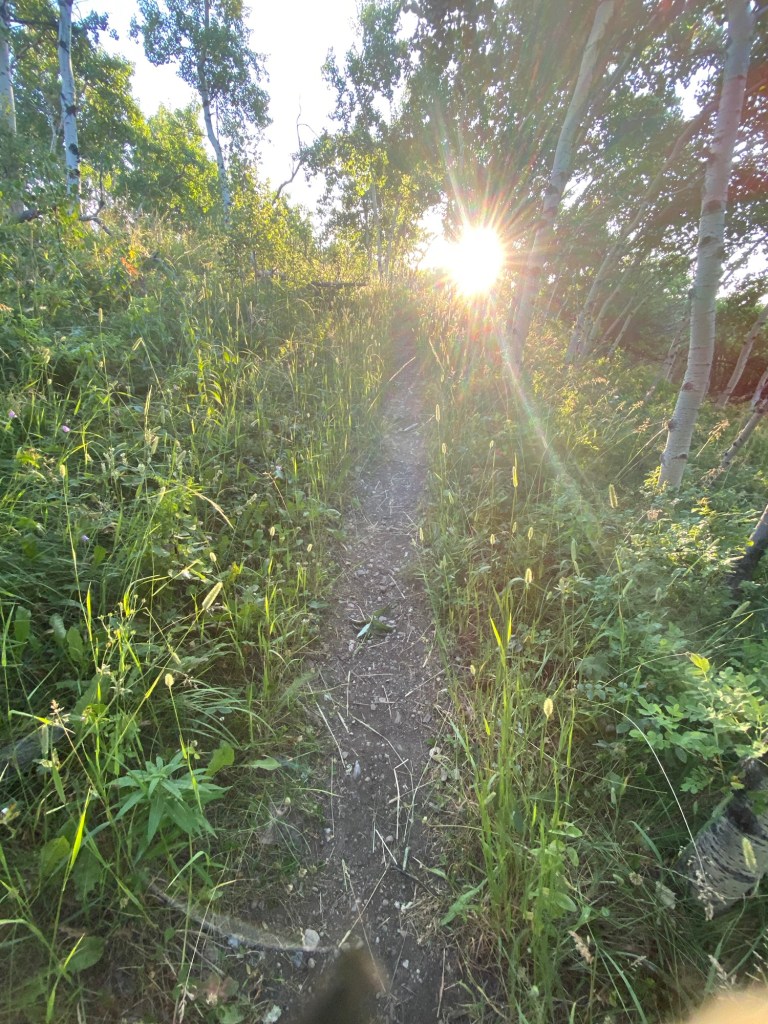
Sometimes Iโ€™ll sit in the sunshine while I pray. Thereโ€™s something about feeling the warmth of the sun on my face, noticing the light, and remembering that Iโ€™m part of something much bigger than whatever is happening inside my own head. Or my body.

Soulucence

A coined spiritual and artistic term meaning the radiant, unarmored light of your true soul, shining to the world.

I try to carry that awareness with me through the day. That light. That connection.

The reminder that my life has a purpose beyond what I can accomplish.

Because if I spend all my energy trying to build a life that looks successful but neglect the person Iโ€™m becoming, Iโ€™ve missed the point.

I donโ€™t have to earn my worth by being useful.

I can simply be His.

And from that place, I can become more interruptible. More available. More attentive.

More willing to notice what He might be putting in front of me.

2. Physical health

My body gets a significant portion of my attention these days.

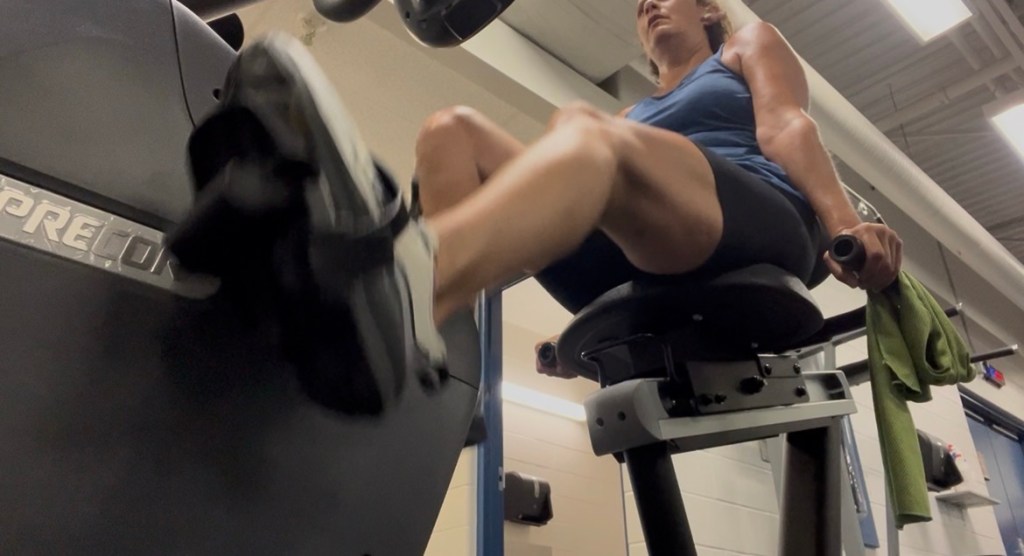
I go to the gym three days a week. I have a routine for each visit.

I generally walk there, which means going to the gym can consume a surprisingly large portion of my day.

Not much keeps me home.

Ribs out? Still going.

Bone structure held together by ligaments there more for decoration than integrity? Still going.

Bad weather? Still going.

The people who were supposed to meet me there cancel? Still going.

Apparently I have become that person.

Until. Ice. Then I stay home.

I also spend time trying to support my body in other ways. Light therapy, castor packs, and other things that have become part of my detox routine.

Iโ€™m working toward an anti-inflammatory way of eating. Letโ€™s just say this is a work in progress.

I can make a beautiful, healthy breakfast and then my good intentions meet a snack.

My next goal is finding healthy lunches I actually enjoy and snacks that donโ€™t make my inner snack gremlin revolt.

Iโ€™m also working on drinking more water. If you have a solution for this other than โ€œjust drink more water ๐Ÿ™„,โ€ Iโ€™m listening ๐Ÿ‘‚.

I make homemade body products and cleaning products too. One day a week is usually devoted to refilling whatever is running low.

Itโ€™s not glamorous. But it is part of caring for the body Iโ€™ve been given. And Iโ€™m learning that caring for my physical health isnโ€™t about forcing my body to perform like it used to.

Itโ€™s about listening to it. Respecting it. Working with it. And sometimes, that means adjusting the plan.

Which brings me back to:

Being Interruptible.

A healthy life isnโ€™t necessarily a perfectly executed schedule. Sometimes itโ€™s knowing when the schedule needs to change.

3. Intellectual and creative growth

โ€œLive as if you were to die tomorrow. Learn as if you were to live forever.โ€

โ€” often attributed to Mahatma Gandhi

A mind is a terrible thing to waste.

I donโ€™t want to stop learning just because my life doesnโ€™t look the way I once imagined it would.

So I read. I listen to books and podcasts. Not mindless gibber-jabber. I want to learn things. Understand things. Try things.

Iโ€™m interested in how people work, how the brain works, how the body works, how nature affects us, how faith shapes us, how we can live better.

And then I try to do something with what Iโ€™m learning. I recognize itโ€™s about more than just taking in. Our output of that knowledge benefits us and others.

I write. I blog. I create. I try new skills. I play. I experiment. I make room for curiosity.

And Iโ€™m trying to bring meditation back into my routine this fall. That one has fallen somewhat spectacularly off the summer wagon schedule.

Maybe summer isnโ€™t the season for stillness for me. Maybe itโ€™s the season for gathering enough light to carry me into the winter pause.

Living in the pause doesnโ€™t mean creating another impossible list of things I must accomplish in time.

It means paying attention and following what works for the day. Or pursuing a completely unplanned thought.

Such as taking a compassionate detour.

Which brings me to the fourth part.

4. Relationships

This might be the most important one.

I start my day with a loose outline.

But I try to remain interruptible.

If a friend needs to talk, I want to have room for that.

If someone needs support I can give, I want to be available.

If my husband and I have an opportunity to go for a walk or grab a treat, I donโ€™t want to be so committed to my schedule that I miss it.

I intentionally build visits with friends into my week. Sometimes we go for a walk. Lay on the beach. Or we just sit and talk.

Some people leave me energized. Some people deplete my energy.

Iโ€™m learning to recognize the difference, being mindful without judging either one. Because relationships are not an optional extra to a healthy life. They are part of a healthy life.

I believe that the people I love are part of what I take with me into eternity, so investing in those relationships isnโ€™t time away from my purpose.

It is part of my purpose.

Being interruptible means leaving enough room in my life for another human being to matter.

I still have days when I desperately want the notes.

I want the accomplishments. I want the freedom. I want to contribute more. I want to travel more. I want to buy something without having to calculate whether itโ€™s practical.

I want a life that feels bigger sometimes.

But I donโ€™t want wanting them to blind me to the life Iโ€™m already living.

The pause isnโ€™t wasted time.

I used to think of the spaces between accomplishments as empty.

Waiting. Stuck. Behind.

Iโ€™m starting to see them differently.

Maybe this is where the music is. Where I learn to listen to God. Where I learn what matters. Where I become.

And maybe the pause isnโ€™t the part of my life that happens while Iโ€™m waiting to get back to the real thing.

Maybe this is the real thing.

So Iโ€™m going to try to live here. In the pause.

To pray. To learn. To care for my body. To create. To laugh. To love my people. To take compassionate detours. To notice the rain. To sit in the sunshine. To walk through the forest.

And to become the kind of person I hope to be when all the notes have finally ended.

Because perhaps the music was never in the accomplishments.

Perhaps it was always in the silence between them.

And maybe thatโ€™s one of the reasons I keep coming back to the forest.

Forest therapy teaches that you donโ€™t have to force a forest to perform for you. You simply enter it, slow down, notice what is already there, and become receptive to what you might otherwise miss.

The wind between the trees. The birdsong between the sounds. The light between the branches. The breath between one moment and the next.

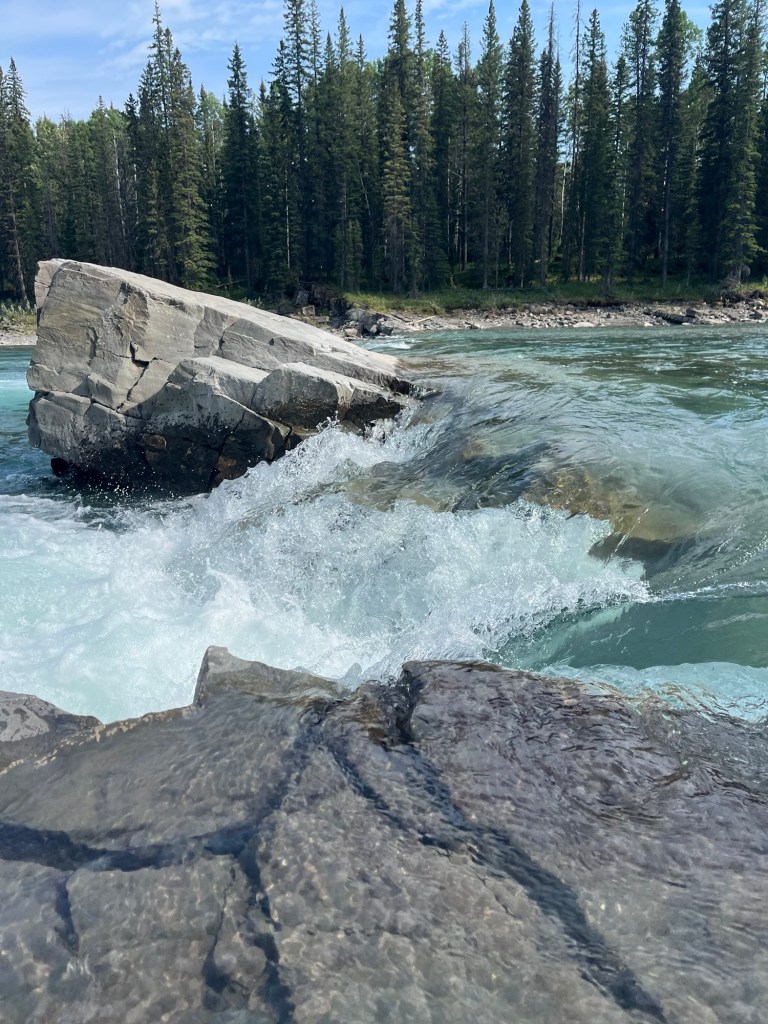
The pause. Iโ€™m due for another sit beside the rushing water beneath the tall trees. A lay down under clear, bright, starry skies.

So hereโ€™s a question for you:

What would change in your life if you stopped seeing the pause as wasted time and started asking what it might be teaching you?

Be led by joy. Itโ€™s the whole point.

-Mike Dooley

The Things I Keep in My Pockets: What Music, Mistakes and the Forest are Teaching Me

A wrong note doesnโ€™t ruin the music. A painful day doesnโ€™t ruin a life.

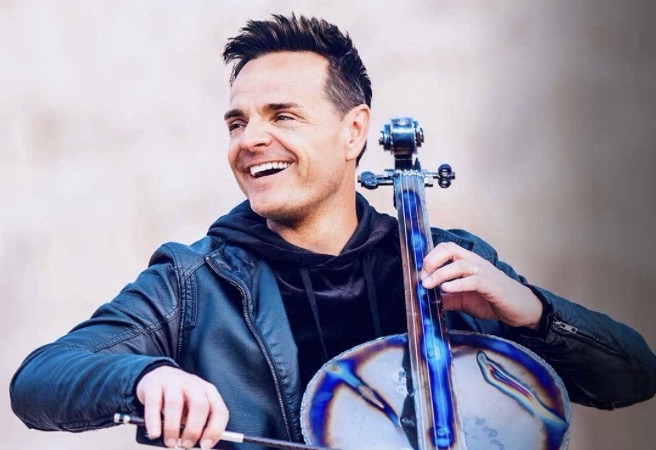
Steven Sharp Nelson from The Piano Guys was a guest on my usual podcast. He talked about a time, when he was young, that he was asked to play at a grand, important event. And he played quite poorly.

When he asked his dad how he had done, his father didnโ€™t criticize him. He said he felt every mistake Steve made. Every bit of despair was written across his face, and his dad was pulled into it with him.

I know that feeling.

On a high-pain day, sometimes the people around me are pulled into it too. They see my face, hear my voice catch, watch me move carefully, and somehow begin carrying a little piece of what Iโ€™m carrying. I sense what itโ€™s costing them and feel guilt begin to weigh me down.

Other people donโ€™t know what to do with my pain. So they carry on as though it doesnโ€™t exist. As though it and I along with it, are invisible.

Neither reaction is necessarily wrong. But both can leave their mark.

One makes me feel like my pain is consuming everyone around me. The other can make me feel like Iโ€™m invisible.

Steve said that now, when he plays a wrong note, he smiles.

Not because the mistake doesnโ€™t matter. Not because heโ€™s pretending everything is fine. But because he knows what he wants to do with that moment.

I donโ€™t think I need to smile through every painful moment of my life either. Iโ€™m not interested in pretending chronic pain isnโ€™t real. Some days hurt.

On those days I get an โ€œerror 404 ๐Ÿ’ป: human not found ๐Ÿšซโ€ message every time I try to move.

But maybe there are moments when I can smile anyway.

Not at the pain.

At what Iโ€™m accomplishing and creating in spite of it.

Steve said something else about creativity.

He talked about how music and art have helped people through depression and burnout. But creativity isnโ€™t reserved for musicians, painters, writers, or people who happen to be good at something other people can admire.

We are all creative.

And creativity, he said, works differently when weโ€™re doing it simply for the joy of creating. Not to sell it. Not to post it. Not to have someone judge it.

Just to make something. To play. To imagine. To wander somewhere new.

Steve suggests that when we find ourselves making up storylines and placing blame on others, that we need to add more creativity to our life.

Creativity will make its way out of us one way or another. Either by creating what brings joy or creating storylines where we are the victim. Our brains are excellent screenwriters.

Have you ever been in the act of a menial job that requires no thinking? Cleaning the bathroom? Dishes? Driving on a highway? Do you start to picture these stories playing out in your mind?

This is your brain trying to be creative. Give it a joyful outlet to do so or it will create drama in your life.

I think this is one of the reasons forest therapy has become so important to me.

When Iโ€™m walking in the forest, Iโ€™m creating. Iโ€™m noticing. Iโ€™m visualizing. Iโ€™m meditating. Iโ€™m softening.

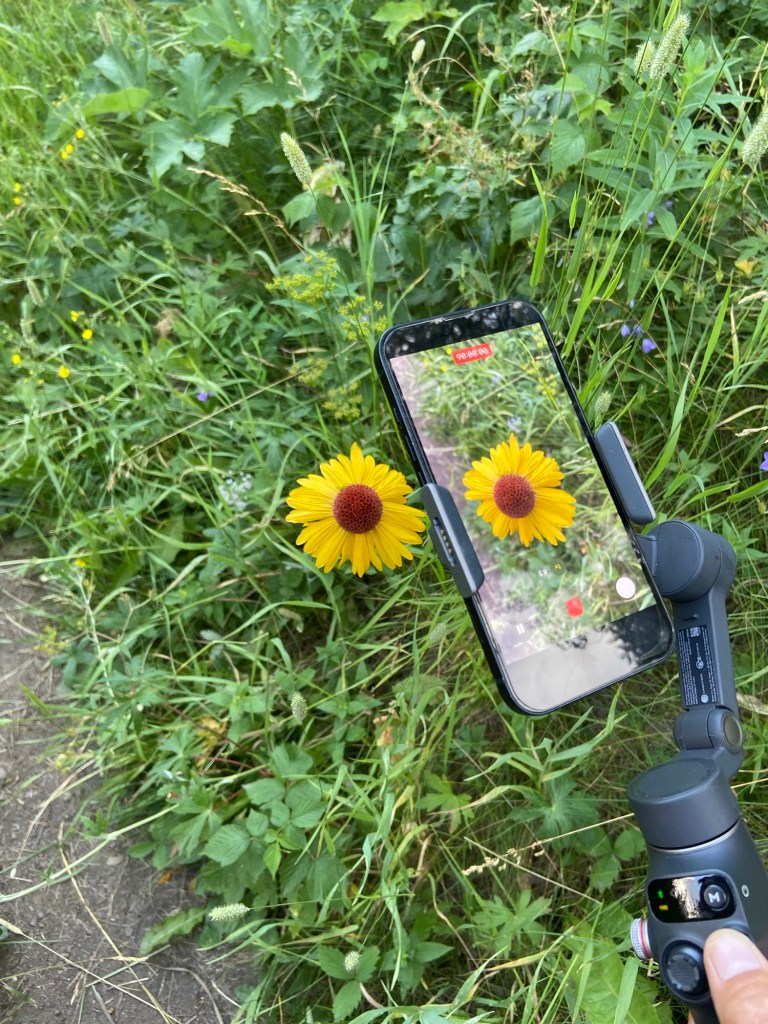
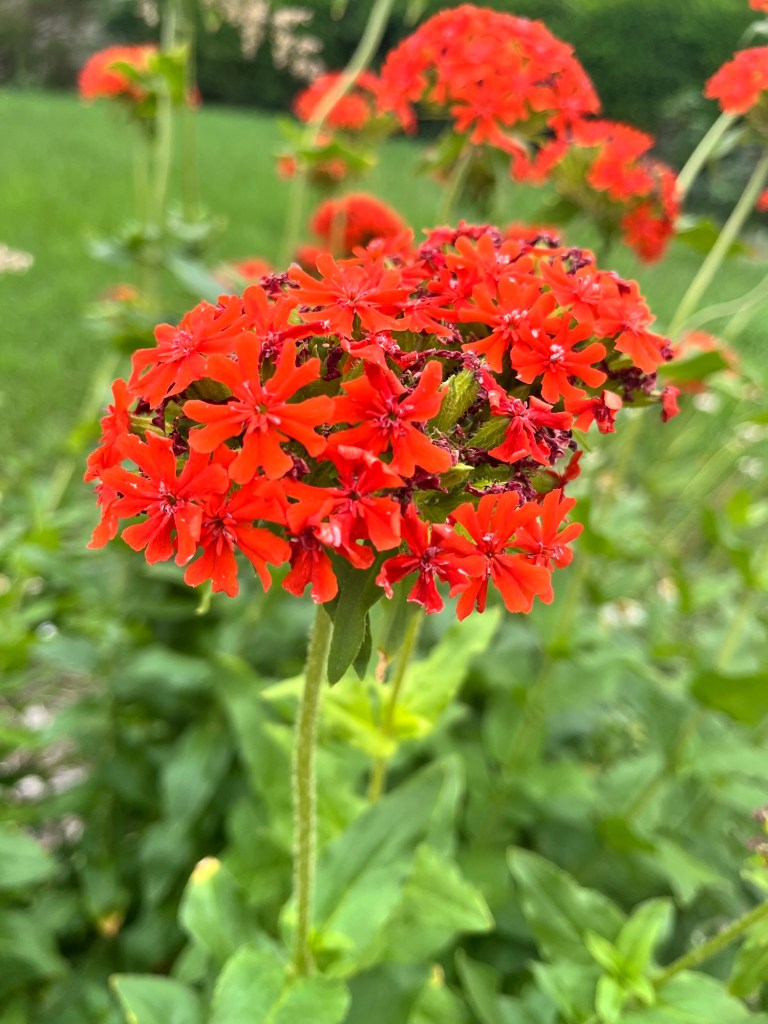
I photograph a flower because the colour catches my eye.
I make up a story about a crooked tree.
I visualize warmth when the wind cuts through me.
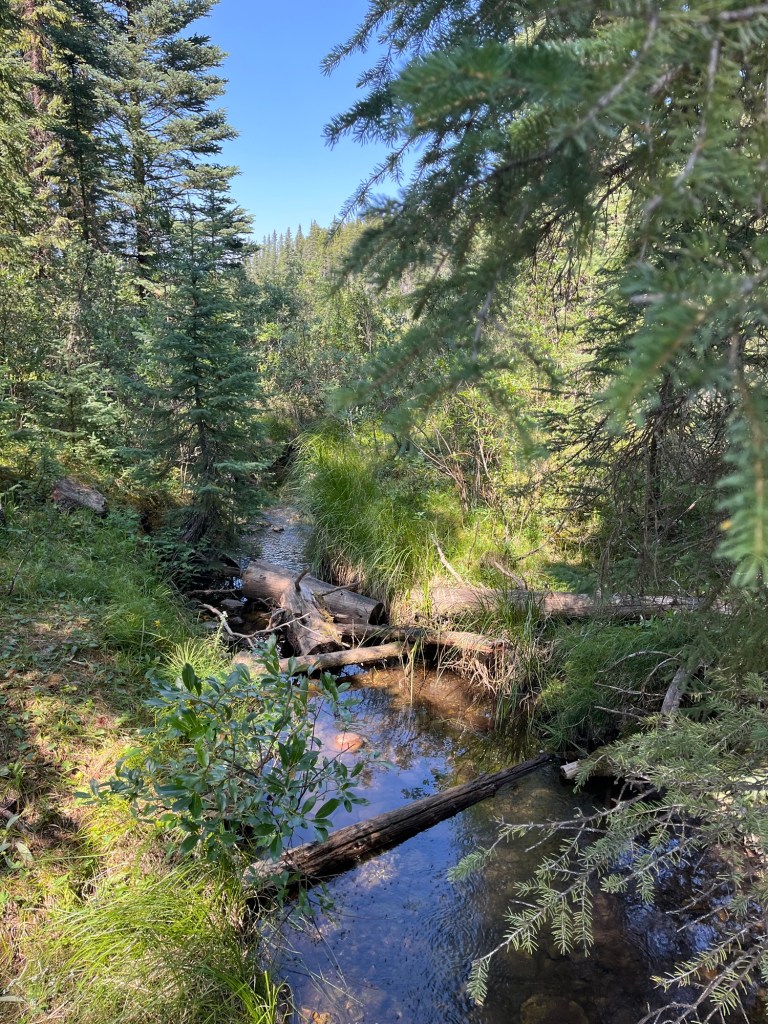
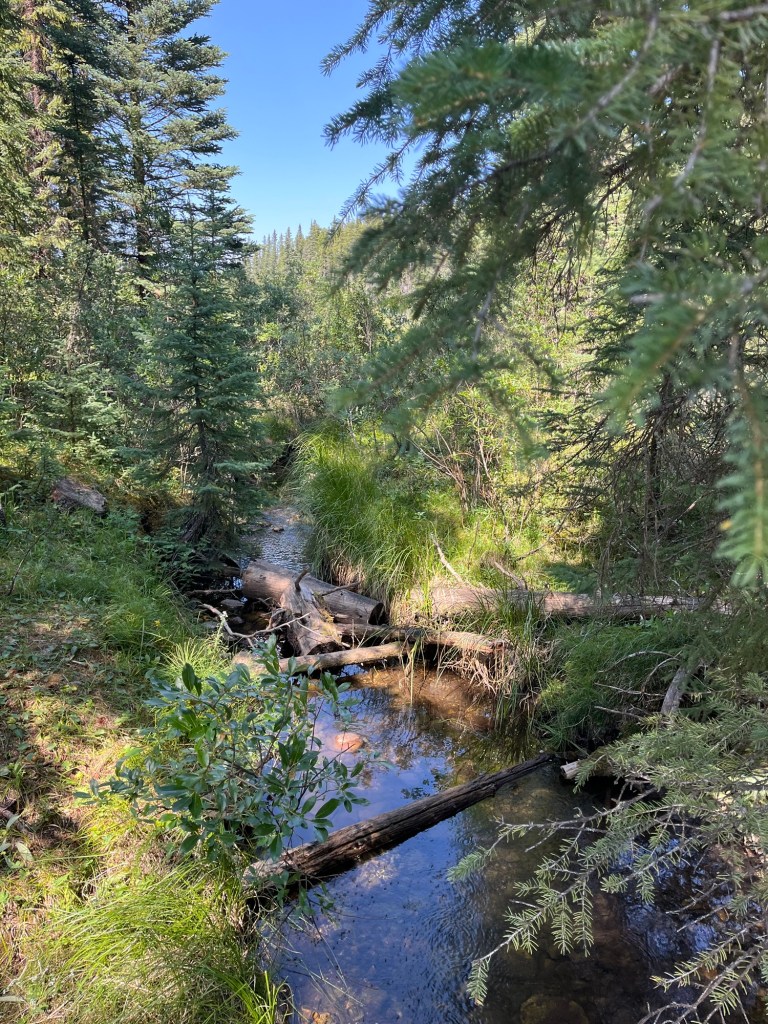
I listen to the creek and let my attention follow it instead of following the argument happening inside my head.

Iโ€™m making little moments of beauty and wonder out of whatever happens to be in front of me.

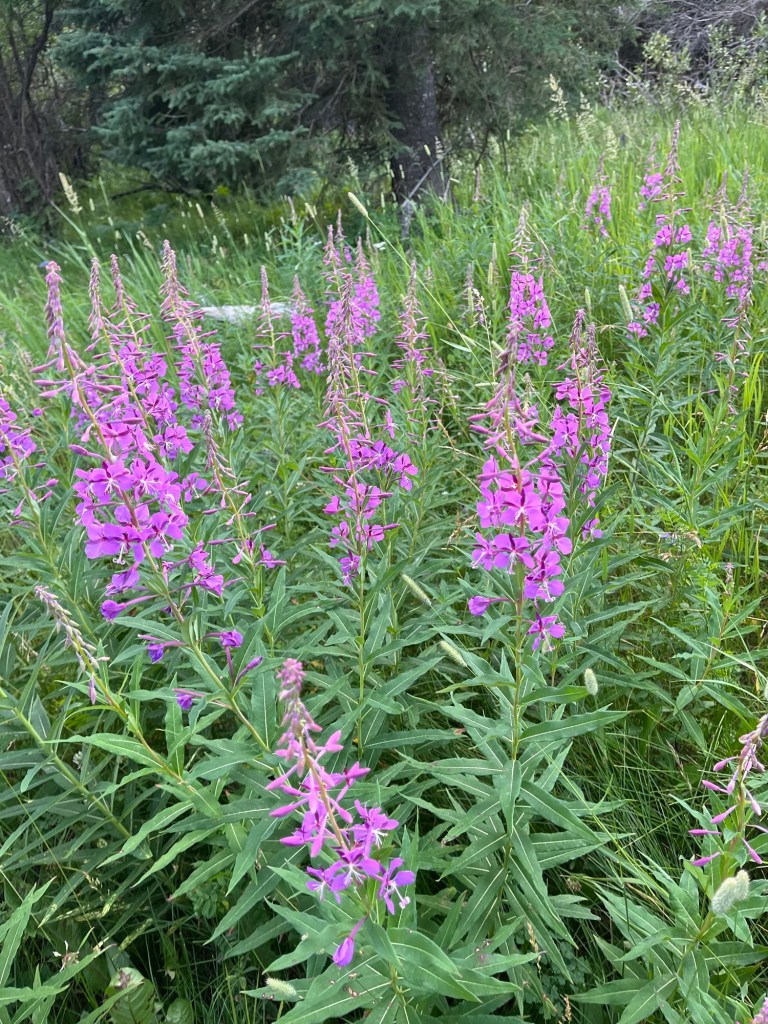
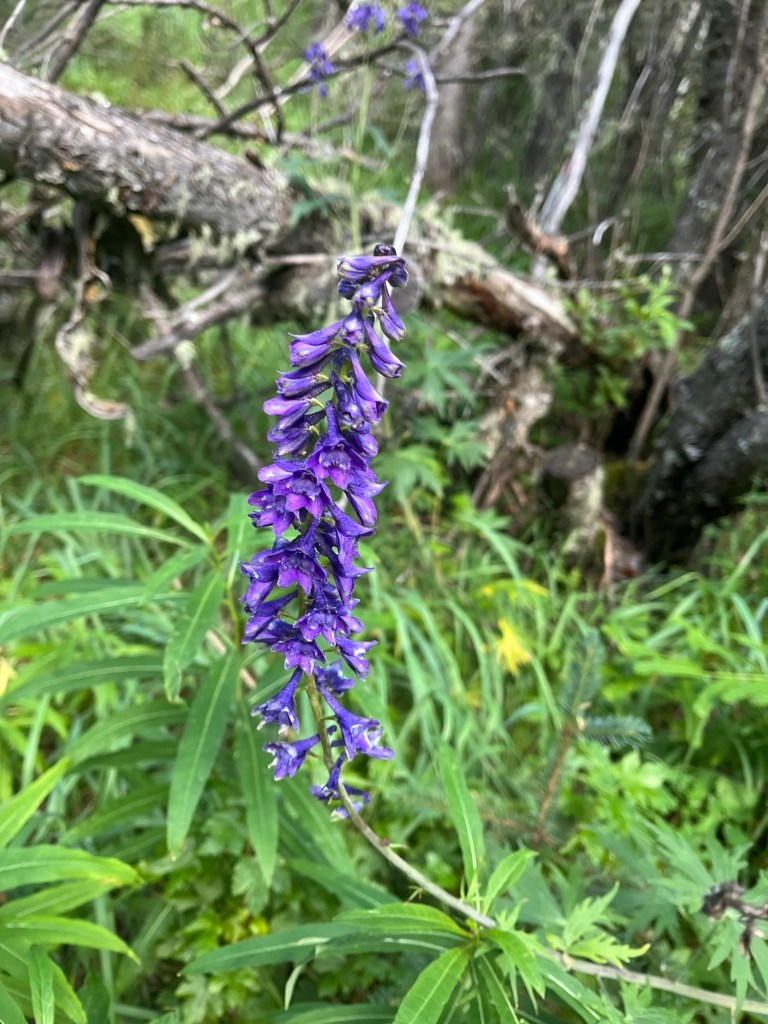
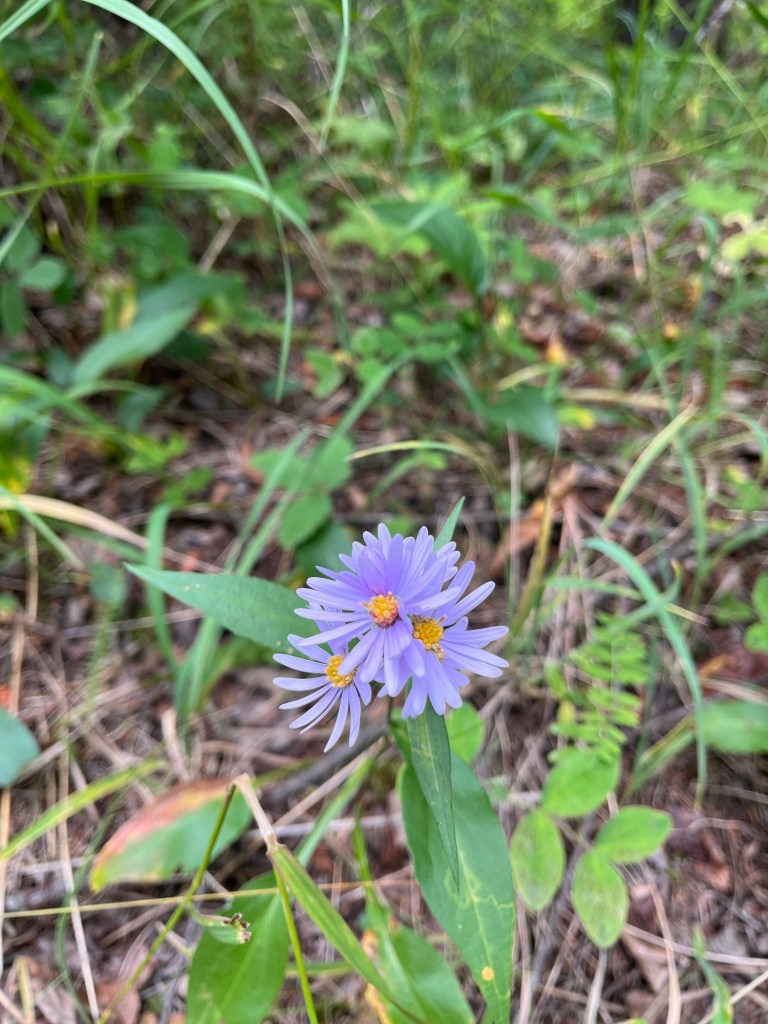
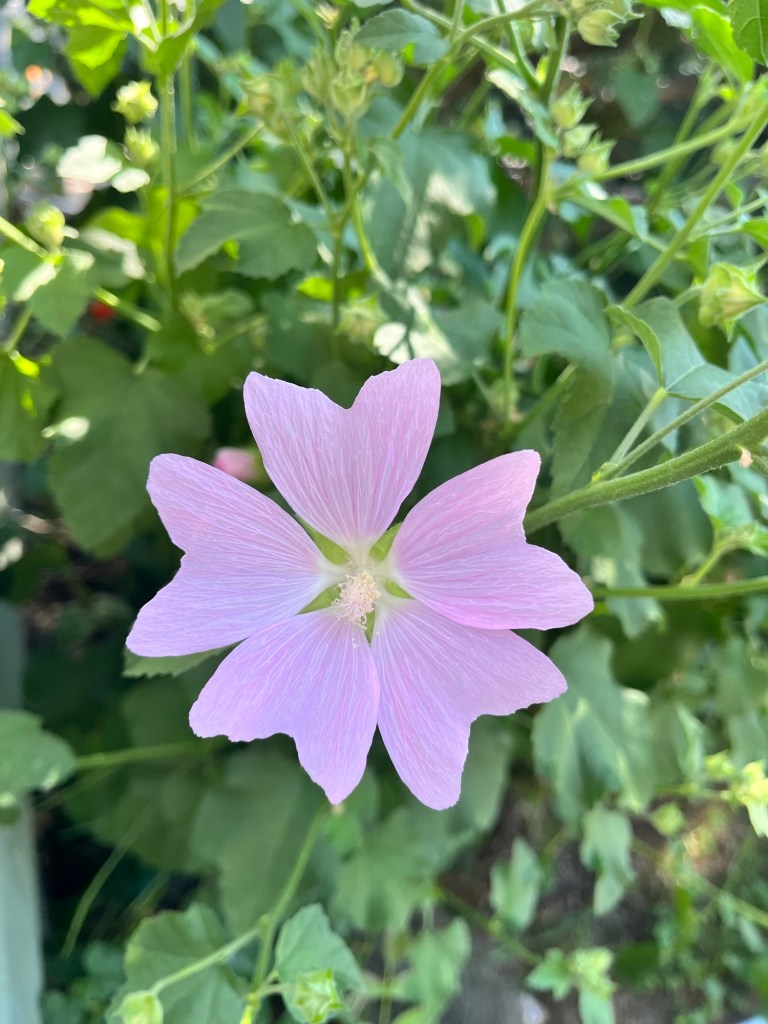
A patch of purple flowers.

The shape of a tree.

The sound of wind moving through the branches.

A silly thought that makes me laugh.

A place my mind can go when my body is screaming for my attention.

I collect these moments.

I tuck them away like little treasures in my pockets.

A purple flower.
A funny moment.
A beautiful view.
A ridiculous thought.
A quiet breath.

Murmuration

The flowing movement of birds flying together across the sky in ever changing patterns. A sight that can feel almost dreamlike, drawing the mind into the present moment as hundreds of wings move with a rhythm that seems guided by something beyond words.

I put them in my pockets. ๐Ÿฟ๏ธ ๐ŸŒฒ

Because I know there will be days when I need them. When winter comes (or when pain gets loud ๐Ÿ“ข) I will have somewhere to go.

Maybe thatโ€™s one of the things Iโ€™m learning about living with chronic pain. I donโ€™t have to pretend the pain isnโ€™t there. But I also donโ€™t have to give it the entire stage.

I can create something alongside it. I can notice something beautiful. I can wander. I can imagine.

And sometimes, when the wrong note happens, I can even smile.

Not because everything is okay.

But because there is still something inside me creating joy.

And that might be one of the most healing things I can carry home with me in my pockets.

The pain is real. So is the beauty.

Lessons From the Trail

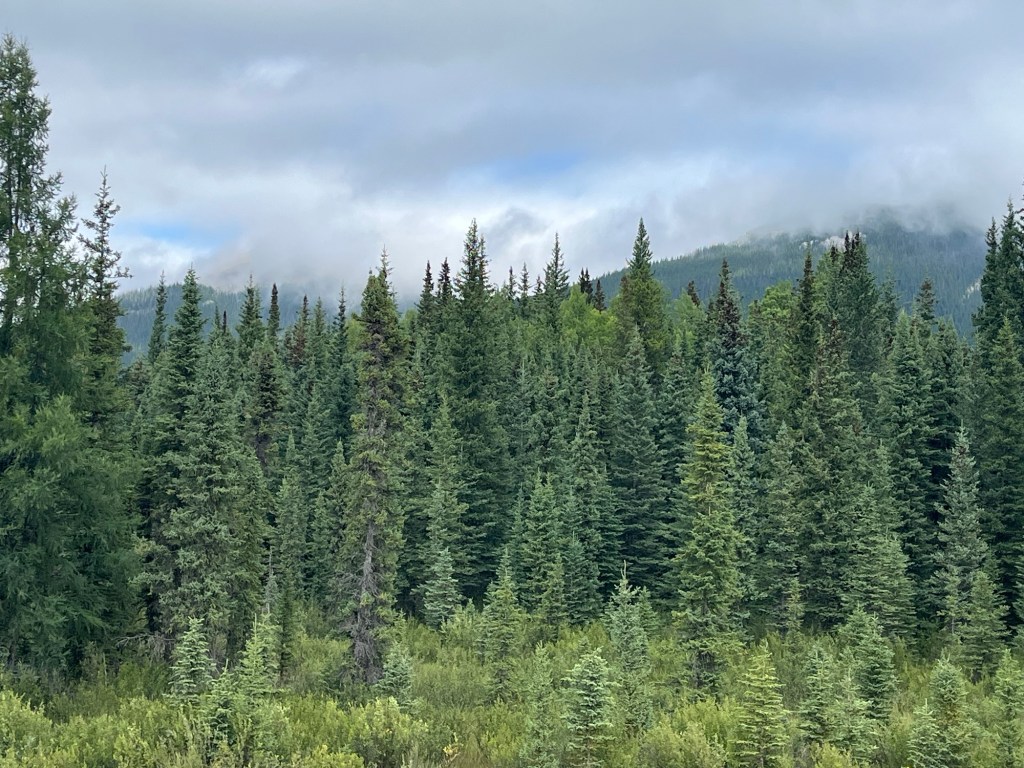
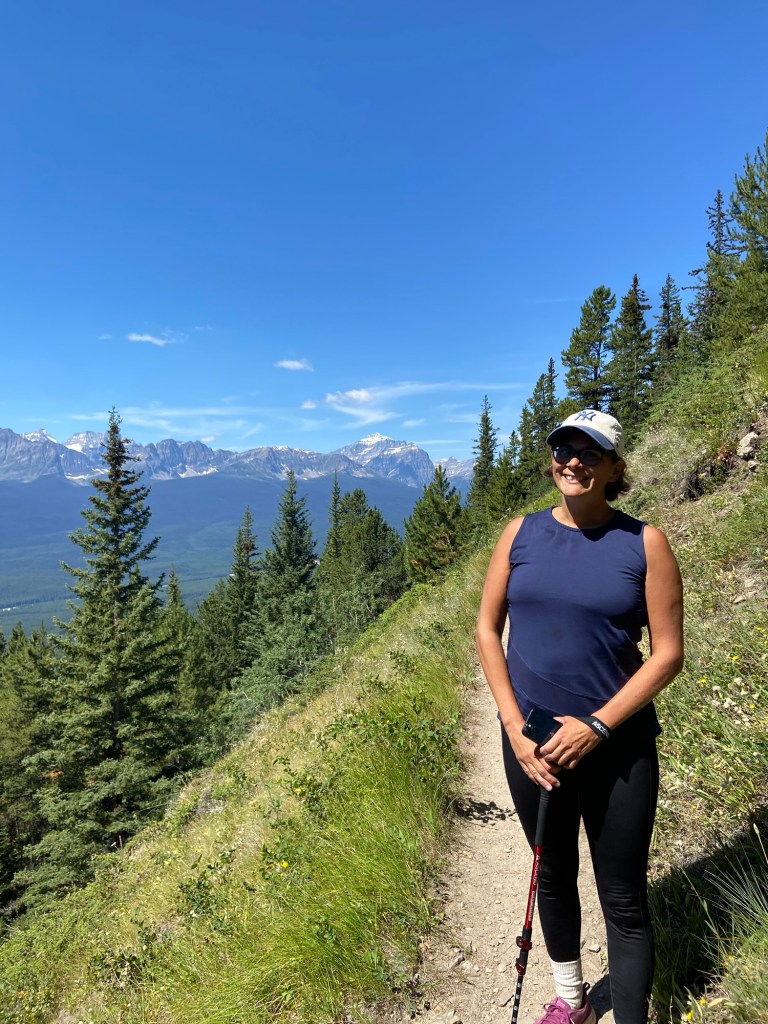
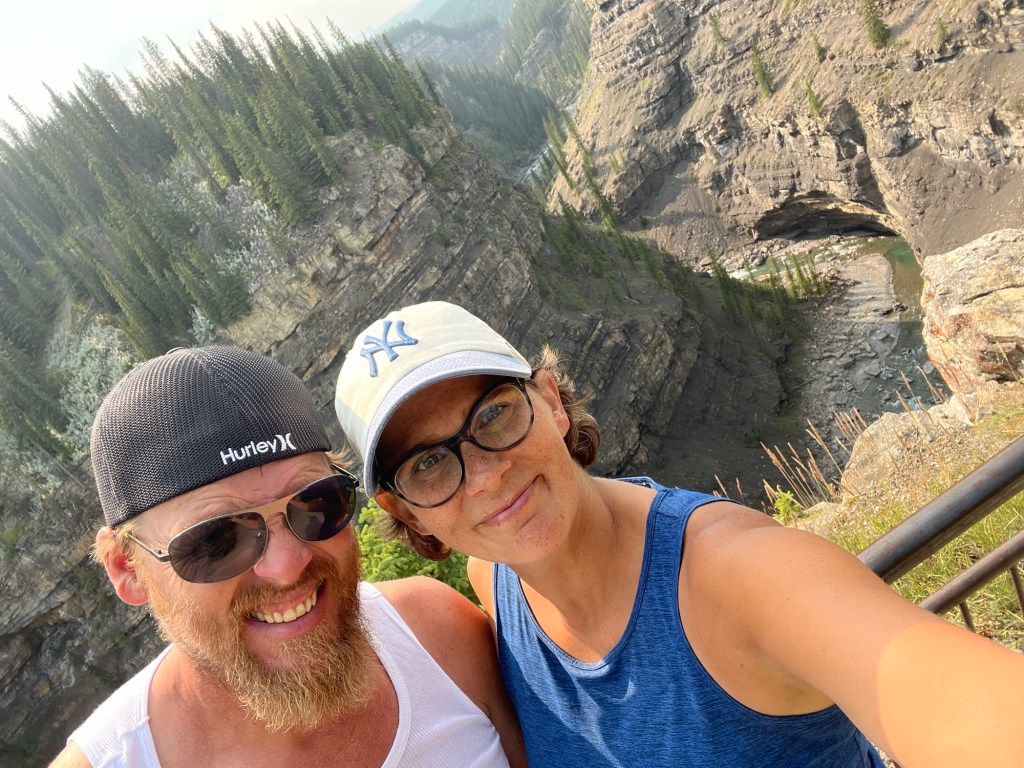
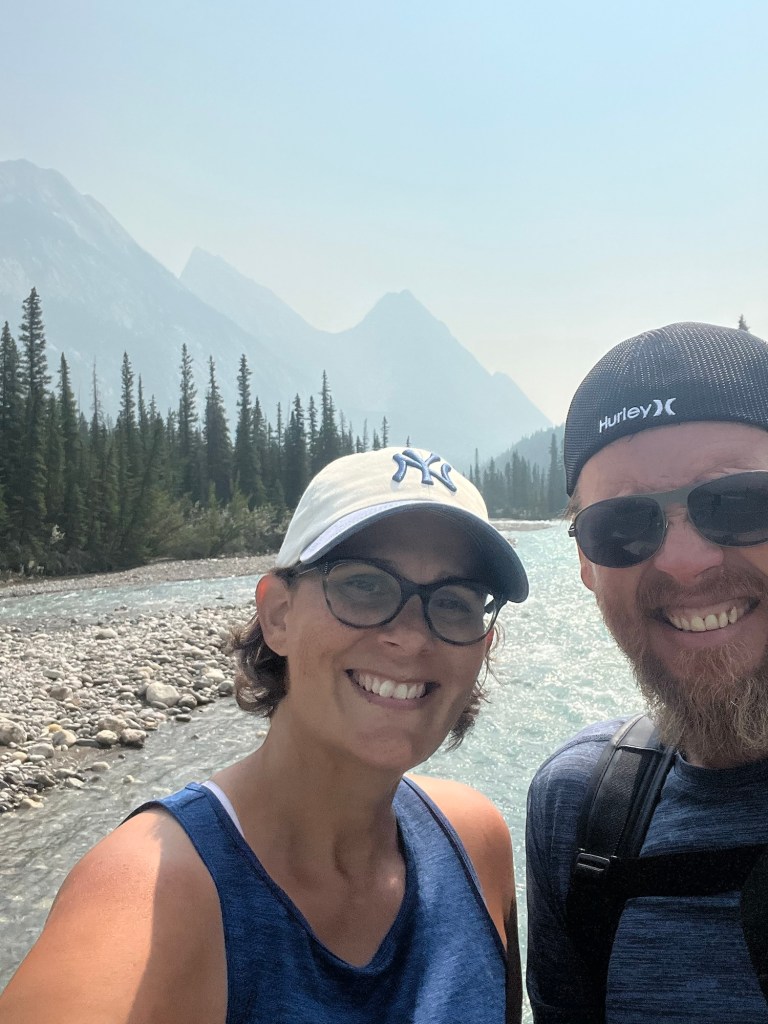
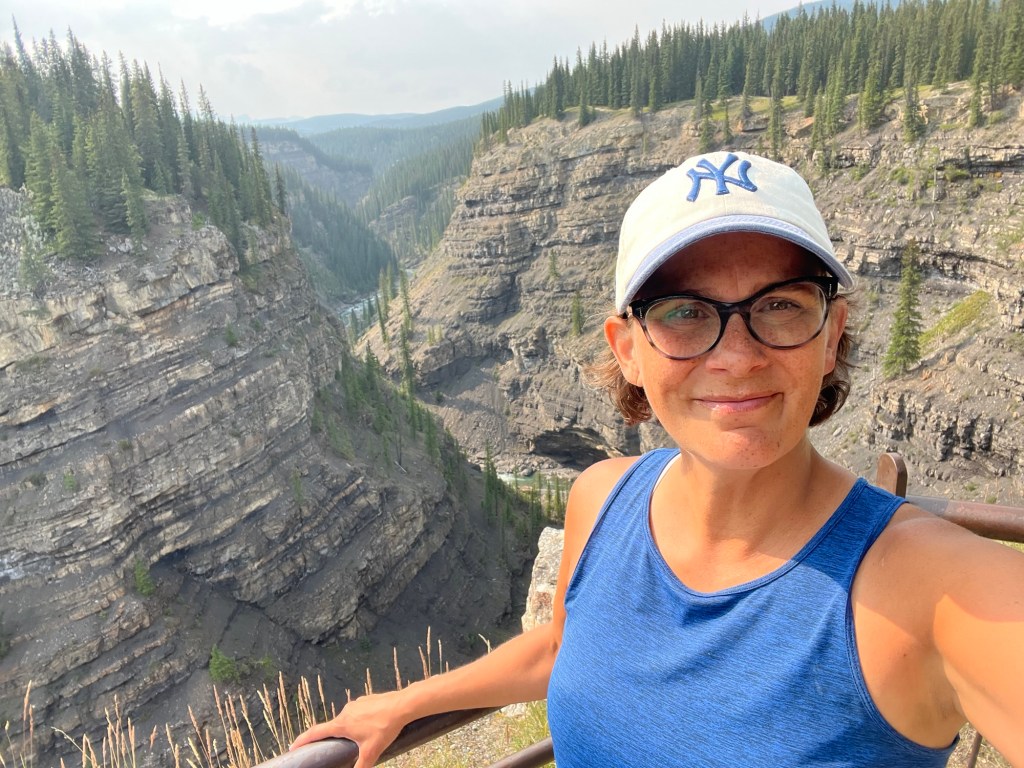
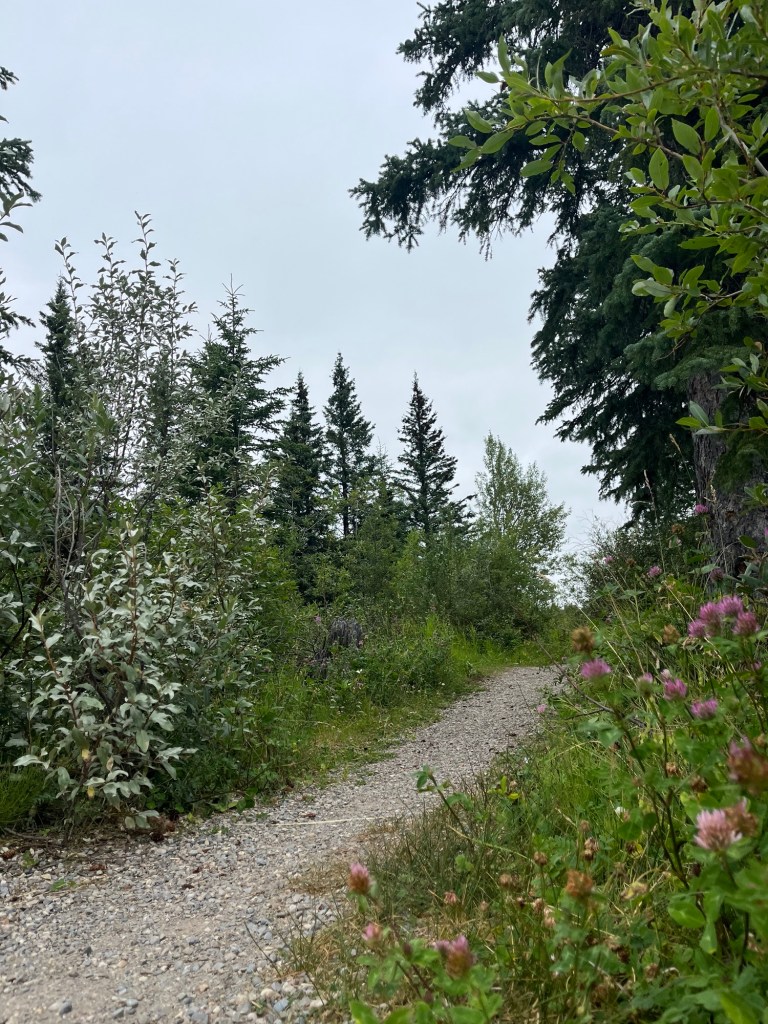
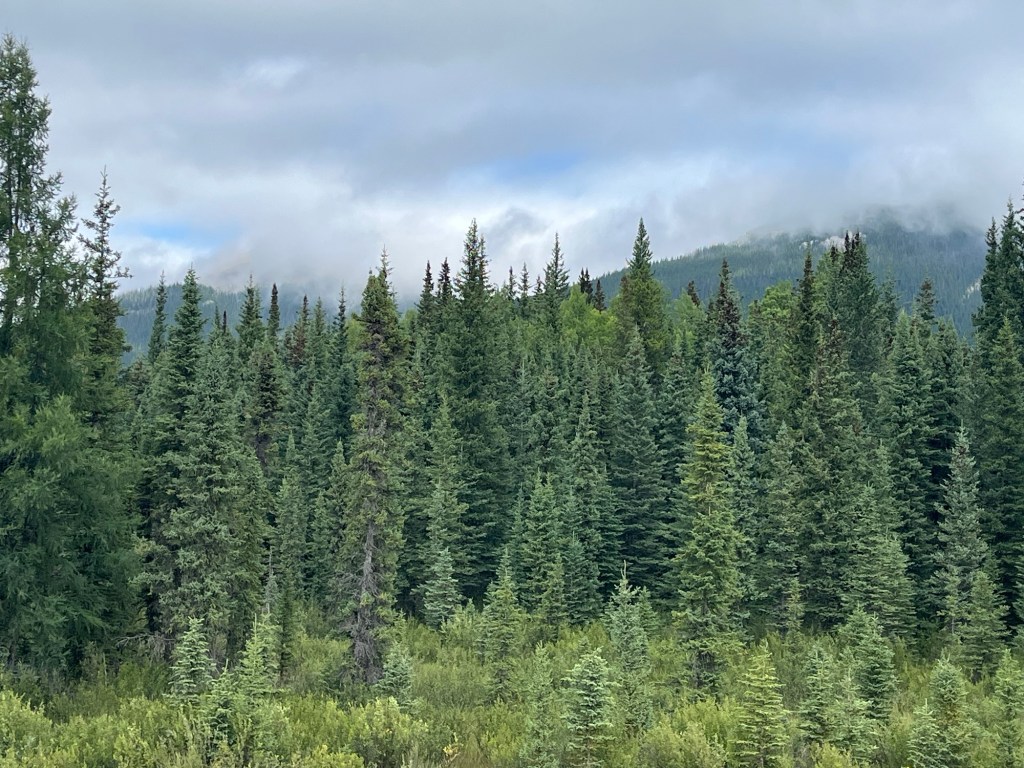
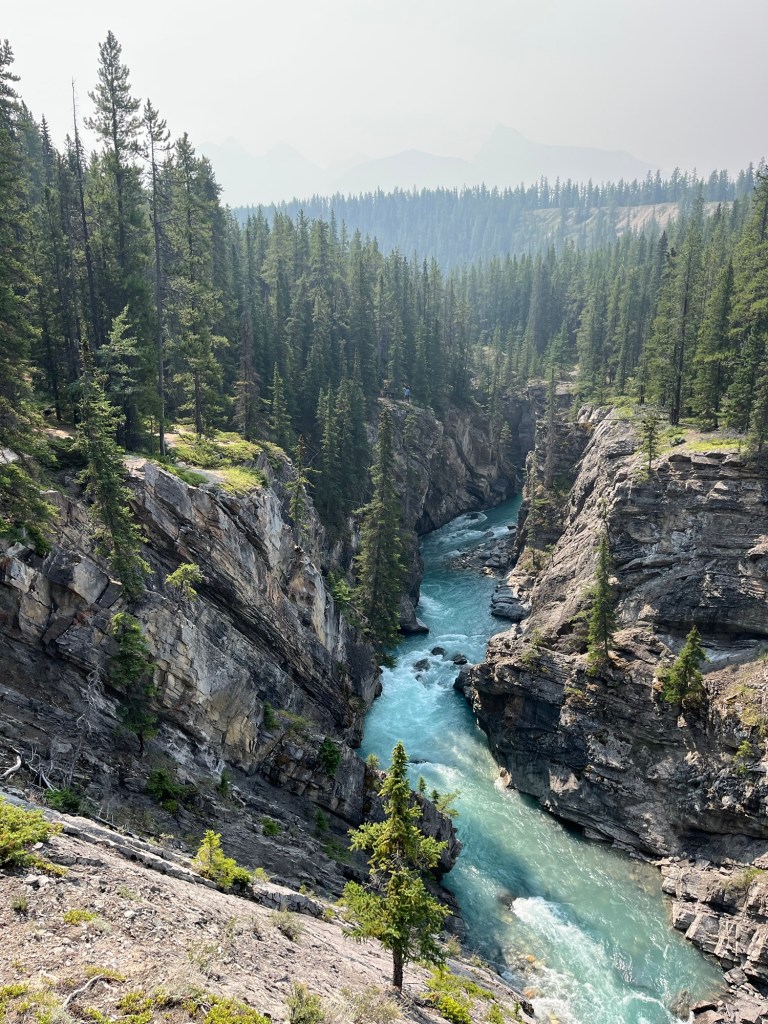
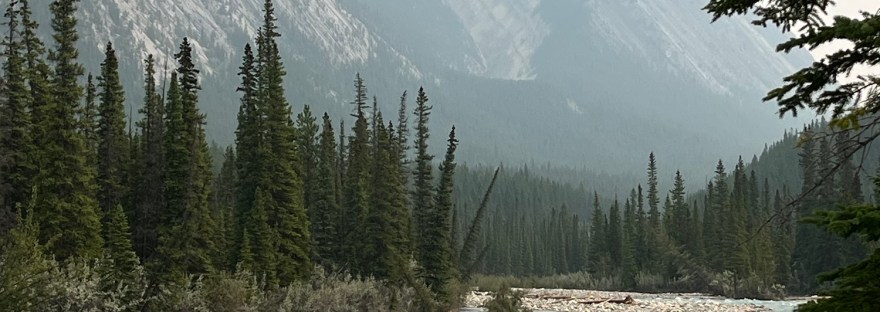
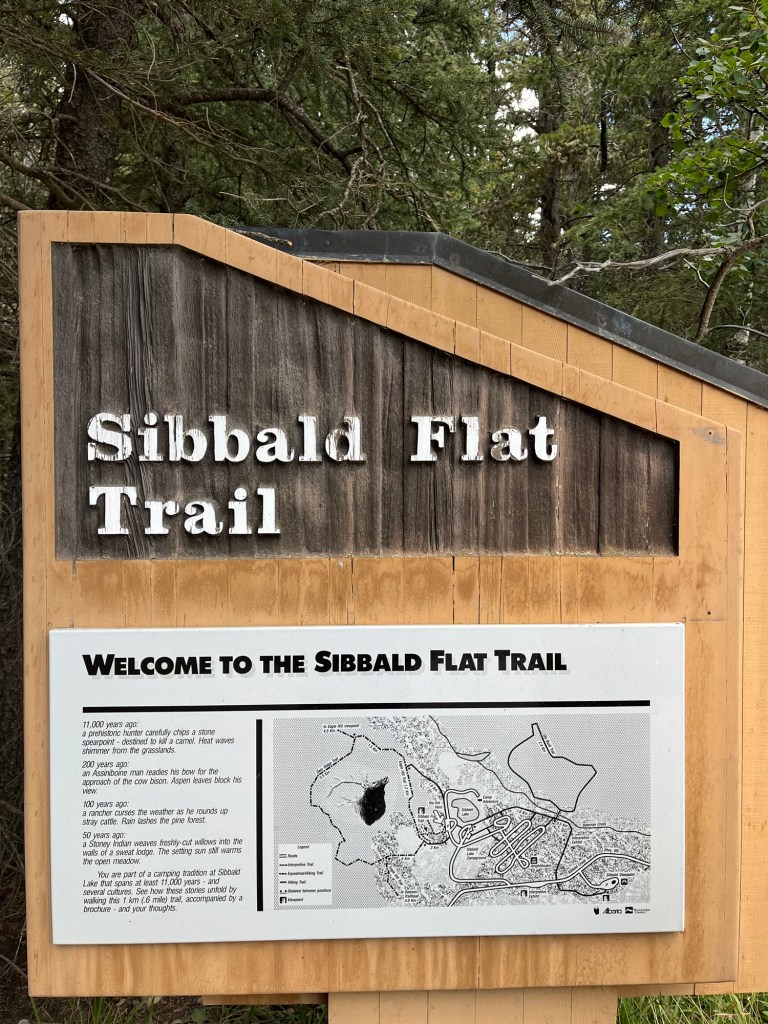
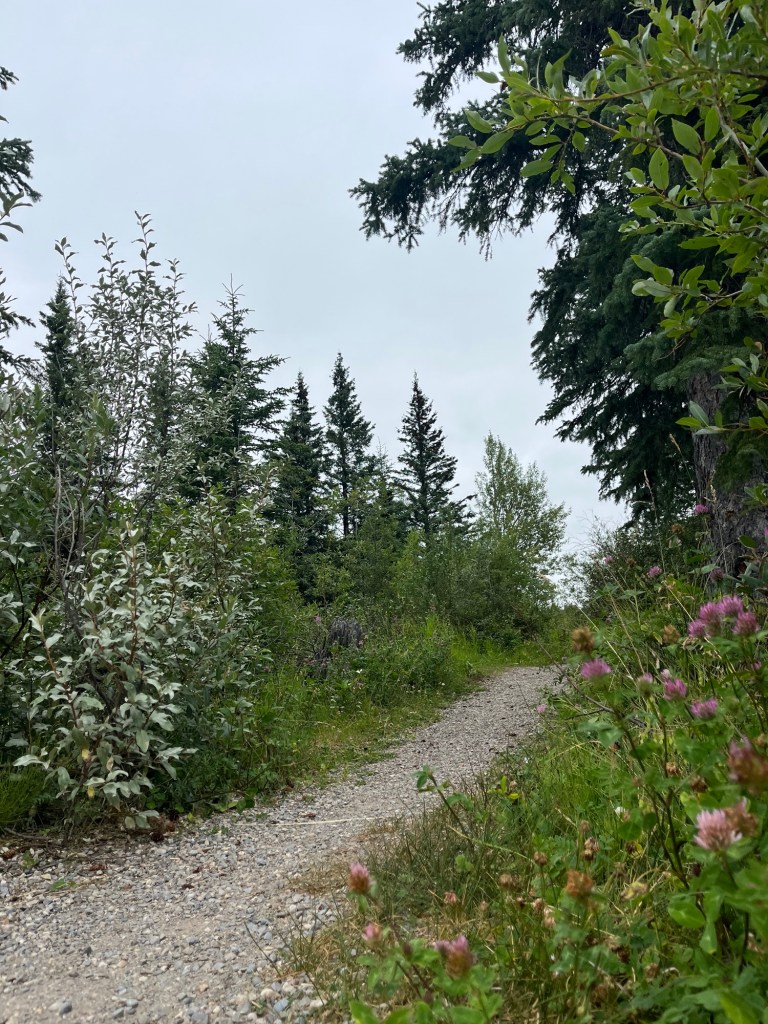
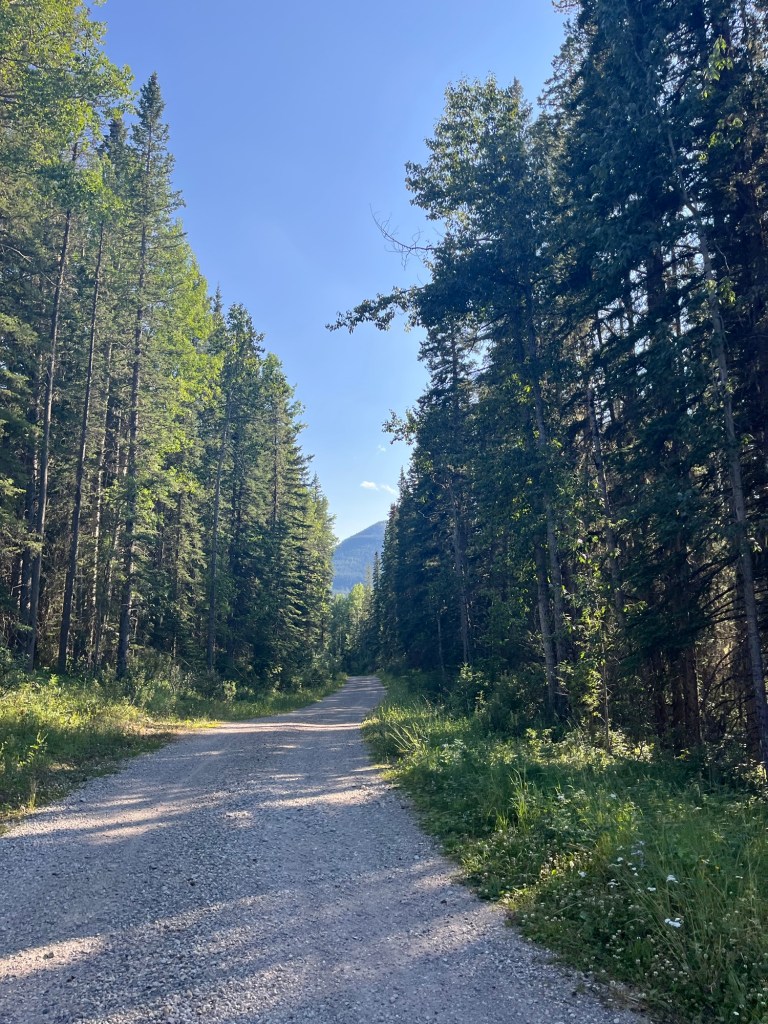
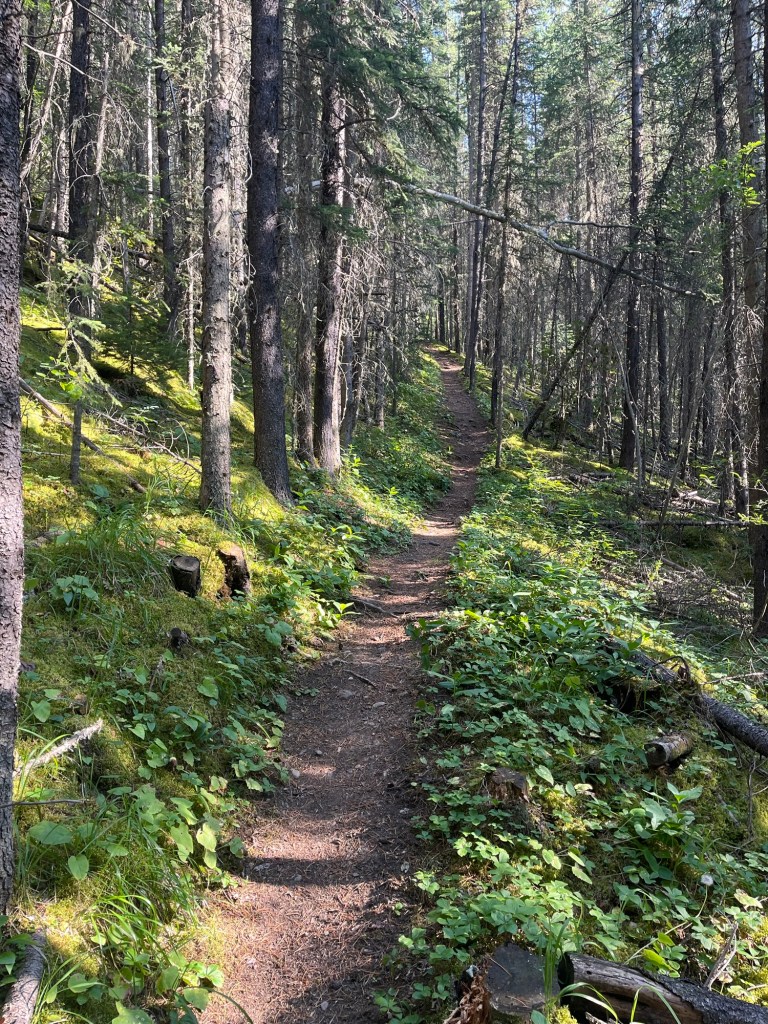
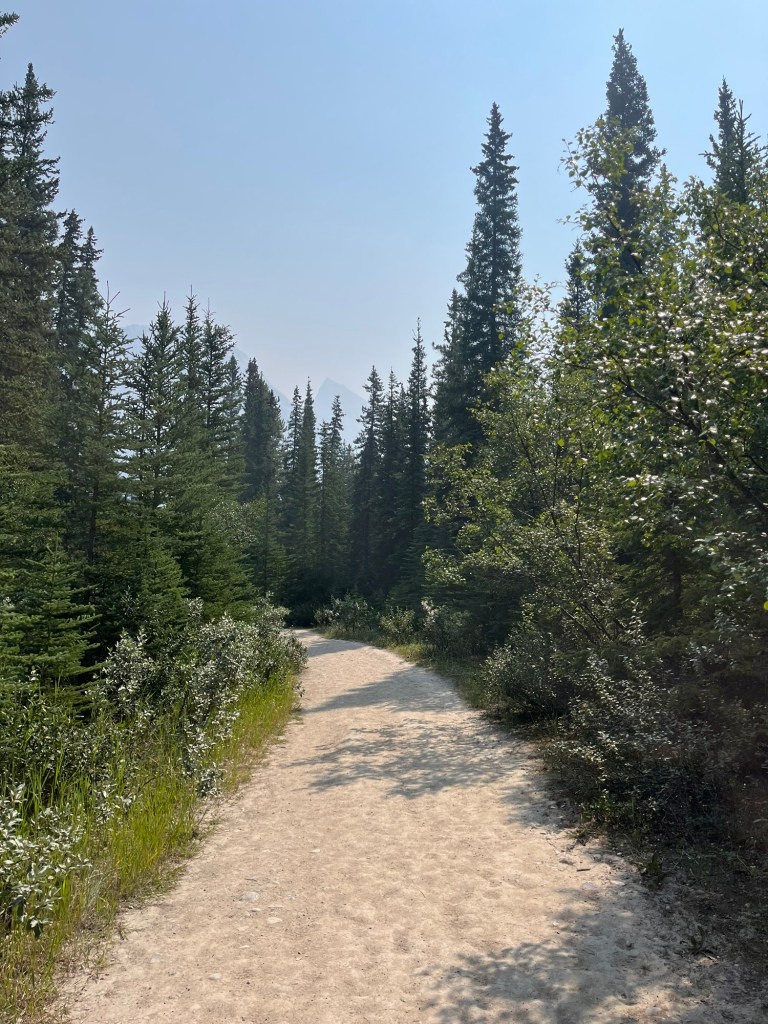
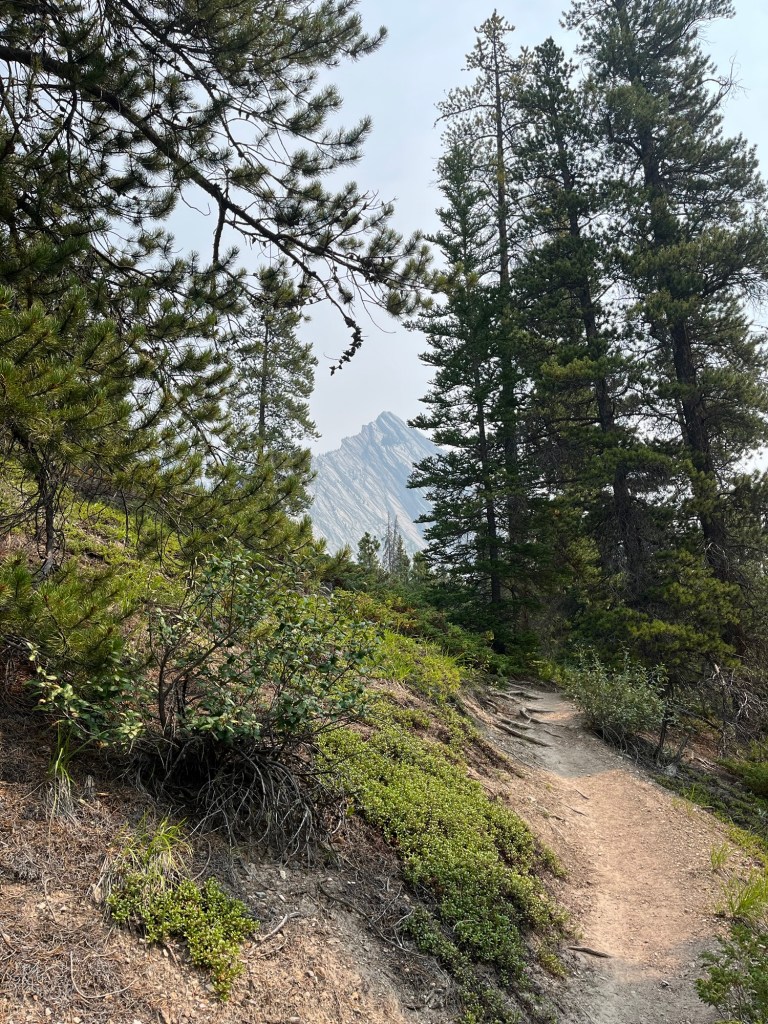
Iโ€™ve been to the mountains. I found towering trees, rushing water and the best campsite ever!

And I learned a few lessons along the way.

1)We donโ€™t always know what the path will look like when we start. But trails can be both beautiful and hard.

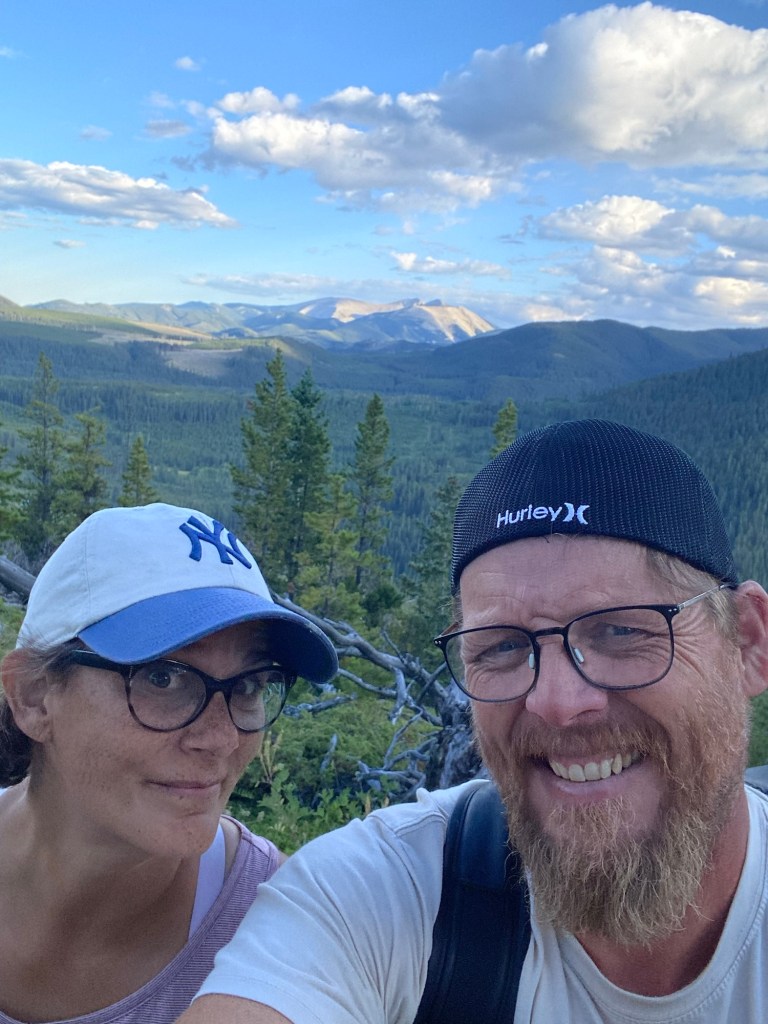
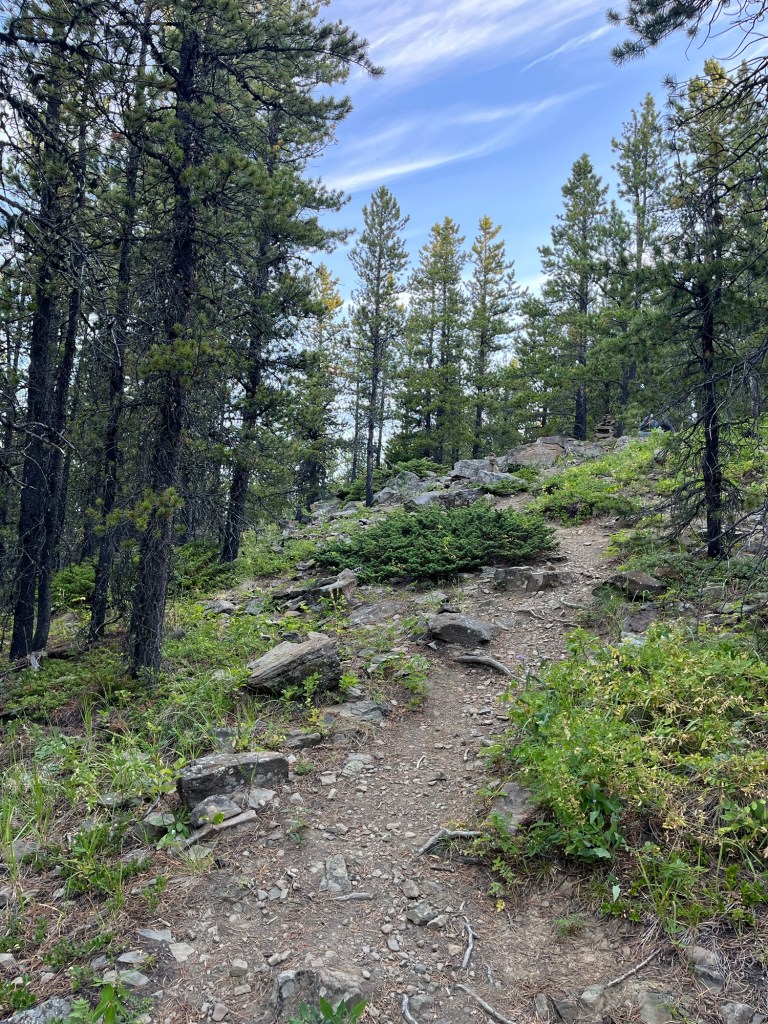
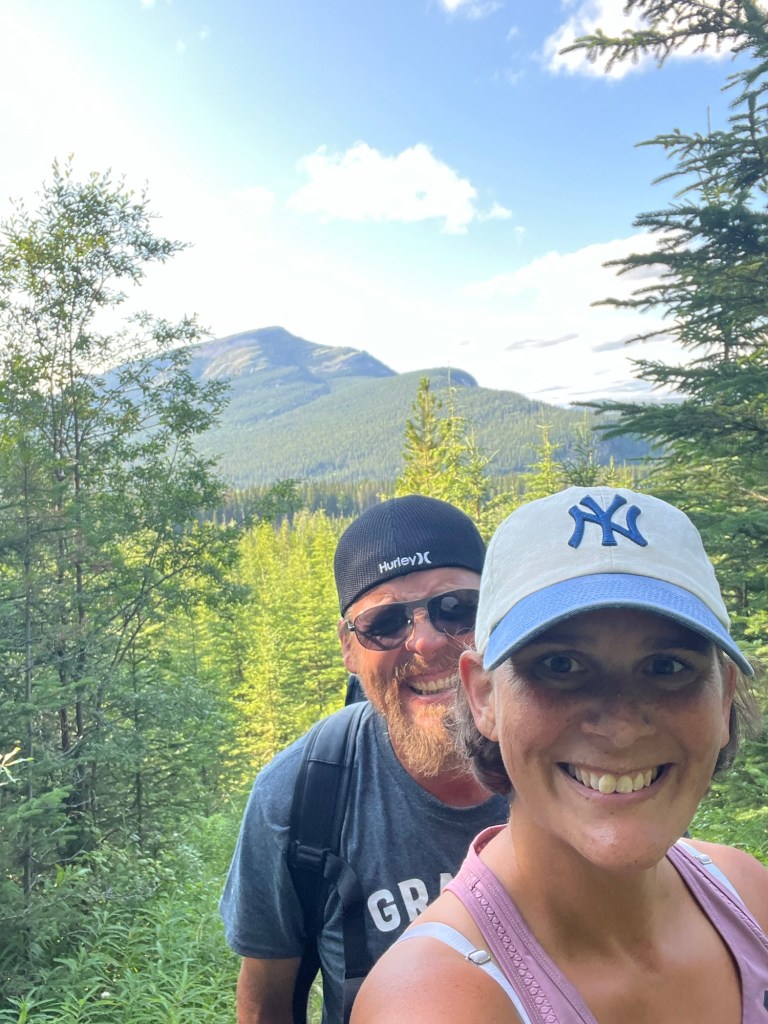
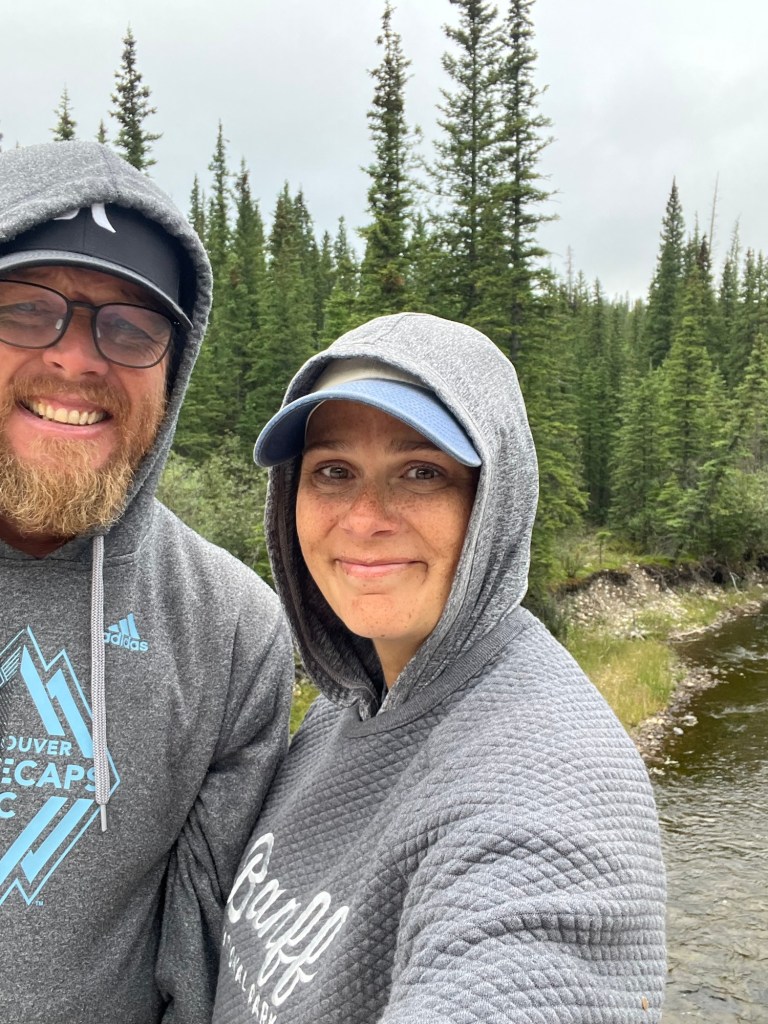
Brent and I hiked a lot over the last week. Most of the trails started with barely an incline and on clearly marked, wide paths. Zero of them stayed that way. All of them led to exceptional views well worth the effort.

2)Nature can catch our attention with beautiful things when we donโ€™t have energy for anything else.

On a hike I often get to the point when Iโ€™m not sure how much more I can do. Iโ€™m tired. My legs hurt. Iโ€™m sweating profusely and feeling gross. Then nature catches my eye and my focus shifts.

3)Who you choose to share the trail with is a serious decision. Choose those who lift you up and make you smile.

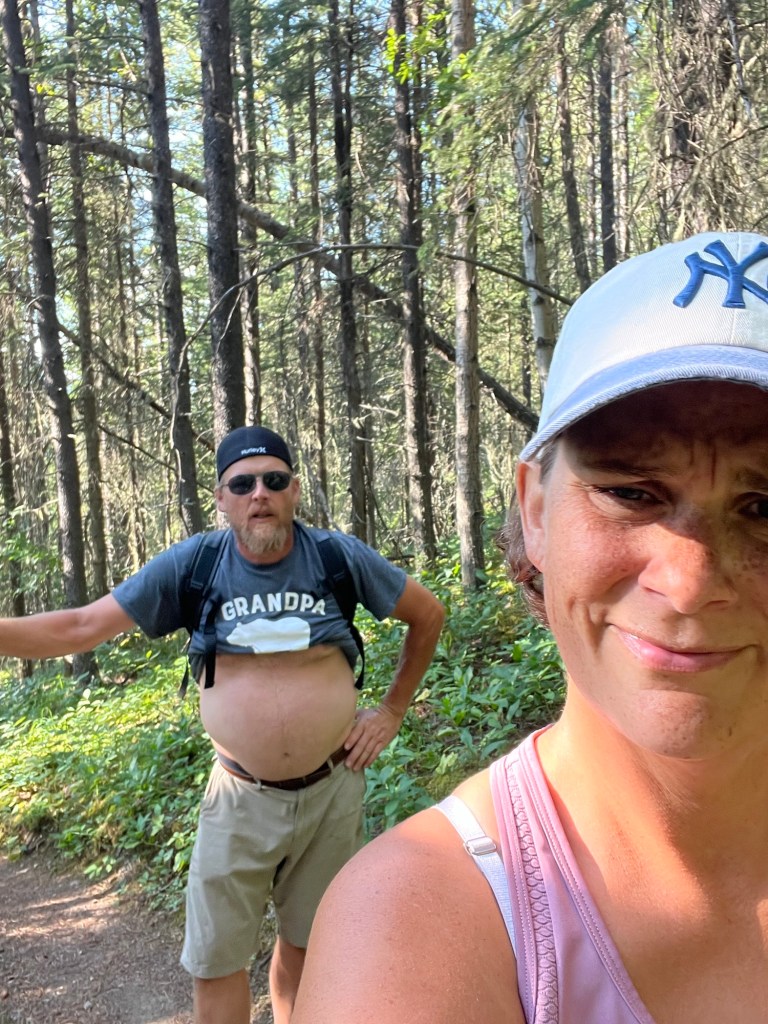
My trail partner for the last 27 years.

4)My nervous system requires times of being immersed in nature.

I feel stronger and healthier when I am on mountain tops and in quiet forests.

5)Some days are for exploring. Some days are for surviving. (Both can and should include trees)

Iโ€™ve been thinking a lot about how I want to share forest therapy and life with chronic illness going forward. Less sitting at a computer trying to explain everything perfectly. More getting outside, walking trails, noticing things, experimenting, learning and bringing you along.

Iโ€™m not quite ready for whatโ€™s coming next.

But Iโ€™m getting there. Details to come.

Understanding Fibromyalgia: 10 Surprising Symptoms

Out of difficulties grow miracles.

–Jean de La Bruyรจre

If youโ€™ve ever searched fibromyalgia symptoms, youโ€™ve probably found the usual suspects.

Pain.

Fatigue.

Brain fog.

Poor sleep.

Accurate? ๐Ÿซก Absolutely.

Complete? ๐Ÿคฃ Laughable.

Fibromyalgia has a way of inventing symptoms that make you wonder if your body has subscribed to the premium panic package. One day your skin burns. The next day your leg launches itself off the couch while youโ€™re calmly watching Michael Scott turn an ordinary workday into an HR nightmare. Your hands are so cold someone checks to see whether youโ€™re still among the living.

(For the record, I am.)

Before we begin, one important disclaimer.

I also live with hypermobility, ME/CFS, and surgical menopause. These conditions overlap so much that itโ€™s impossible to say with certainty which symptom belongs to which diagnosis. They tend to flare together after poor sleep, stress, overexertion, heat, illness, or simply asking my body to do more than it has available that day.

But every symptom on this list is also commonly reported by people living with fibromyalgia.

Why Fibromyalgia Feels So Strange

Researchers now believe many fibromyalgia symptoms are driven by central sensitization. Think of it as your nervous systemโ€™s alarm system becoming far too sensitive. Instead of responding only to danger, it begins reacting to things that shouldnโ€™t require an alarm at all.

A warm shower.
Bright lights.
A busy grocery store.
A long conversation.
Even clothing touching your skin.

This is closely tied to nervous system dysregulation, where the body spends too much time in โ€œfight, flight, freeze or fawnโ€ and not enough time in the restorative parasympathetic state. When your nervous system never truly feels safe, it can amplify pain, fatigue, sensory overload, temperature changes, digestive issues, and many of the symptoms below.

Maybe youโ€™ll recognize yourself in a few of them.

Maybe all ten.

1. Burning or Tingling Skin

Sometimes my skin feels sunburned without the sunshine.

Other times it tingles like Iโ€™ve rubbed myself head-to-toe with fiberglass insulation.

For me, itโ€™s one of the earliest warning signs.

High pain day.

Busy day.

Poor sleep.

Missed medication.

Too many commitments.

My nervous system begins clearing its throat. And waving tiny red flags. ๐Ÿšฉ ๐Ÿšฉ

Iโ€™ve learned not to argue with it anymore.

2. Random Itchiness

This one is maddening.

Iโ€™ll suddenly become fiercely itchy.

No mosquito.

No rash.

No dry skin.

Itโ€™s like the itch exists underneath my skin where no amount of scratching can reach it.

If youโ€™ve experienced this, you know exactly what I mean.

If you havenโ€™t, I sincerely hope you never do.

3. Light, Noise and Touch Become Too Much

When my nervous system is already overloaded, everything gets louder.

Bright lights feel brighter.

Background conversations become impossible to filter out.

The tag inside my shirt transforms into a tiny medieval torture device and demands 100% of my attention.

Even a loving hug can sometimes feel overwhelming.

Fibromyalgia isnโ€™t simply pain.

Itโ€™s often a nervous system that has forgotten how to turn the volume back down.

4. Balance Problems

I used to do cartwheels.

Now I turn around too quickly in the kitchen and have to wait for the earth to stop rotating.

Heat and fatigue make it worse.

Overdoing things makes it worse.

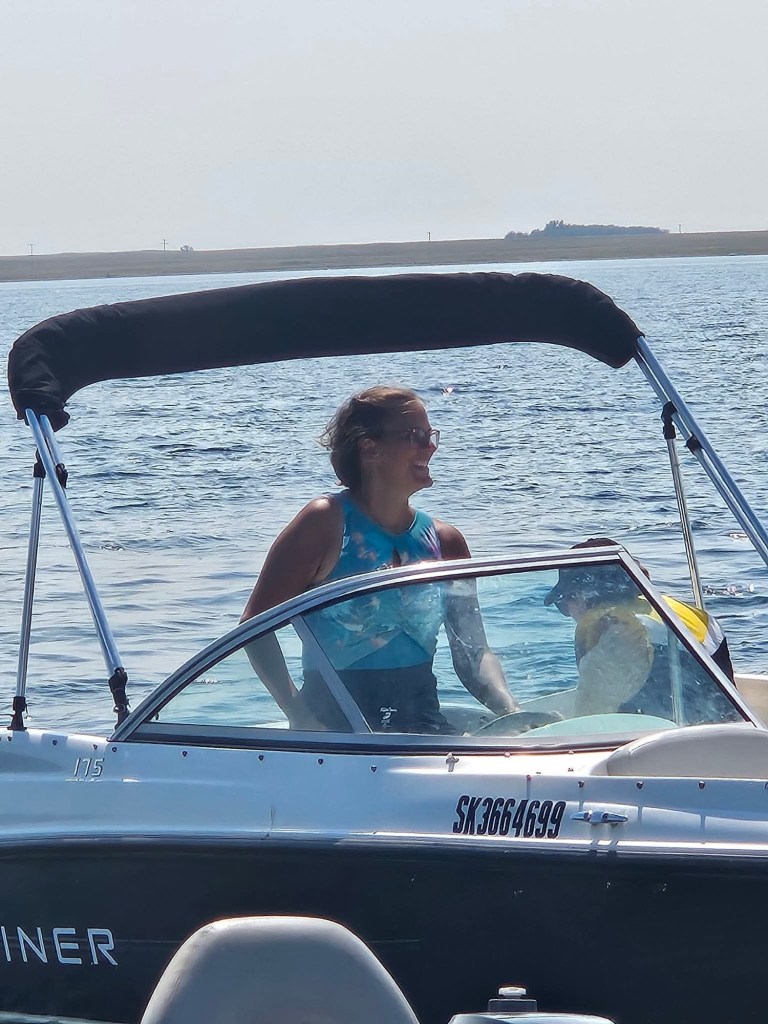
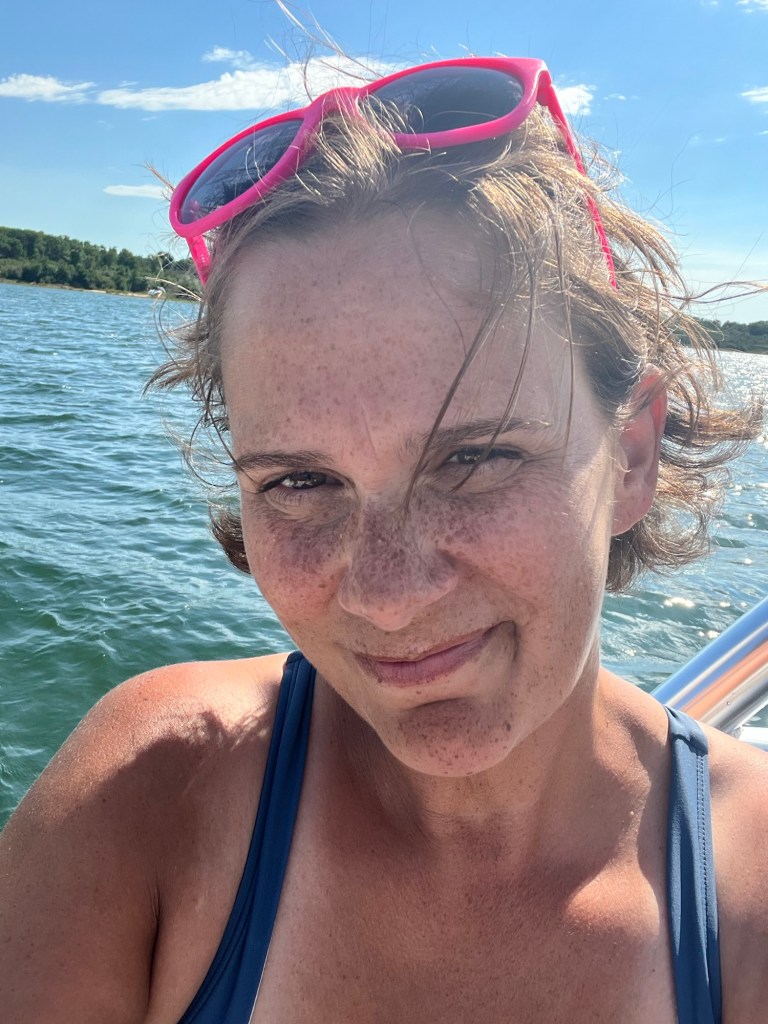
After spending a day on a boat, getting back onto solid ground requires far more concentration than it should.

My feet and my brain occasionally disagree about where โ€œupโ€ is.

5. Pins and Needles

Hot showers.

Long walks.

Overexertion.

Sometimes they all trigger pins and needles that creep across my body for no obvious reason.

Once they arrive, they rarely leave quickly.

6. Muscle Twitches and Spasms

My leg has launched itself off the bed while watching television.

My neck twitches throughout the day.

Occasionally a finger joins the party.

Apparently my muscles enjoy interpretive dance.

I did not approve the choreography.

7. Surprise Food Sensitivities

Foods I tolerated for years suddenly decide theyโ€™re no longer interested in cooperating.

They arrive uninvited.

They unpack.

They stay far longer than anyone asked them to.

Itโ€™s one more reminder that chronic illness loves unpredictability.

8. Hands and Feet That Never Warm Up

My hands are frequently freezing.

Years ago, someone grabbed my hand and asked,

โ€œAre you okay?โ€

Apparently, based on my hand temperature, I should have been dead for several hours.

Comforting.

9. The Fake Flu

Out of nowhereโ€ฆ

Nausea.

Aching muscles.

Complete exhaustion.

Like Iโ€™m about to come down with something terrible.

Exceptโ€ฆ

Nothing ever happens.

It simply ruins an hour.

Or the rest of the day.

10. Heavy, Lead-Like Limbs

Some days lifting my arm feels like lifting concrete. My body has a way of treating everyday events like Iโ€™m qualifying for an Olympic Games.

Opening a jar feels ridiculous.

My muscles are technically attached.

Operation has become optional.

Having fibro is like having a phone stuck on 12% battery. And everyone keeps asking me to download another app.

The Ten Things That Actually Help Me Soothe Fibromyalgia

Talk to yourself like you would to someone you love.

–Brenรฉ Brown

Living well with fibromyalgia isnโ€™t about eliminating every symptom.

For me, itโ€™s about calming an overprotective nervous system often enough that it remembers Iโ€™m safe.

  1. Respect my limits instead of arguing with them.
  2. Budget my energy so the moments that matter most are worth the flare.
  3. Keep gently moving. A walk instead of a run. The bike instead of the elliptical. Motion is medicine. Punishment isnโ€™t.
  4. Choose warmthโ€”or coolingโ€”depending on what my body is asking for.
  5. Stay hydrated. Water is my most reliable teammate.
  6. Focus on what matters most.

I used to do everything.

The house stayed clean.

I worked.

The kids were fed.

The yard was mowed.

Meals were planned.

Nowโ€ฆ

The house is messy.

The yard grows faster than I can keep up.

The microwave has become surprisingly talented at storing forgotten meals.

If one truly important thing needs to happen todayโ€ฆ

Thatโ€™s the thing.

Everything else can wait.

  1. Take breaks before I need them.

Fibromyalgia has taught me that resting isnโ€™t the reward for finishing.

Sometimes resting is the reason Iโ€™ll be able to finish tomorrow.

  1. Accept support.

This remains one of my weakest skills.

I am surrounded by extraordinary people.

Help is offered constantly.

Sometimes strength looks like saying,

โ€œYesโ€ฆ thank you.โ€

  1. Believe my own body.

Fibromyalgia is invisible.

Sometimes even to me.

I minimize.

I explain it away.

I push through.

But my body keeps telling the truth.

Listening with compassion changes everything. Instead of wondering why my body is betraying me I try to speak the language it is trying to communicate.

  1. Calm my mind.

Sometimes thatโ€™s meditation.

Sometimes itโ€™s prayer.

Sometimes itโ€™s journaling every scattered thought onto paper until my brain stops trying to juggle twelve tabs at once.

A calmer mind often becomes a calmer body.

Calarwyth

(n) the moment you stop explaining yourself because silence feels more dignified than being misunderstood again.

A Forest Therapy Practice for Fibromyalgia

One of the greatest gifts the forest has given me is permission to stop performing.

Find a quiet place beneath a tree.

If itโ€™s safe, remove your shoes and allow your feet to rest directly on the earth.

Notice the temperature beneath you.

Feel the texture of the soil, grass, moss, or sand.

Imagine that, for a few minutes, you arenโ€™t simply visiting the forest.

Youโ€™re becoming part of it.

The forest simply exists. Allow yourself to do the same.

Allow your breathing to slow.

Notice the sounds above you.

The breeze on your skin.

The scent of pine or damp earth.

If it feels natural, rest one hand on a tree trunk and imagine your busy nervous system borrowing a little of its steadiness.

This practice also includes earthing, sometimes called grounding.

Early research suggests that direct contact with the earth may allow electrons from the Earthโ€™s surface to neutralize some reactive oxygen species involved in inflammation and oxidative stress. Other studies have found improvements in sleep, cortisol rhythms, pain, and wellbeing.

Whether those effects come from electron transfer, nervous system regulation, time outdoors, or all of the above, we do know something with much stronger evidence: spending time in nature lowers stress hormones, supports parasympathetic activity, improves mood, reduces blood pressure, and helps regulate an overstimulated nervous system.

For a body living with central sensitization, those moments of safety matter.

Fibromyalgia Flare Warning Signs

Iโ€™ve learned these are usually my first clues that I need to slow down.

โ˜ Burning or tingling skin

โ˜ Random deep itchiness

โ˜ Light, sound or touch suddenly feel overwhelming

โ˜ Increased dizziness or balance problems

โ˜ Pins and needles appearing more often

โ˜ Muscle twitches becoming frequent

โ˜ New food suddenly doesnโ€™t agree with me

โ˜ Hands and feet feel like ice

โ˜ Fake flu symptoms appear

โ˜ Heavy, lead-like limbs

When two or three of these show up together, I know itโ€™s time to change course before my body makes the decision for me.

Printable Energy Budget Checklist

Before I commit to something, I ask myself:

โ˜ Have I slept well enough?

โ˜ Am I already in more pain than usual?

โ˜ Have I eaten nourishing food today?

โ˜ Have I been drinking enough water?

โ˜ Is this worth spending todayโ€™s energy on?

โ˜ Have I scheduled recovery time afterward?

โ˜ Can someone help me with part of this?

โ˜ What can I postpone?

โ˜ Have I taken a break yet today?

โ˜ What does my body actually need right now?

Sometimes the healthiest decision isnโ€™t doing more.

Itโ€™s protecting tomorrow.

Final Thoughts

I used to spend all my energy trying to convince my body to behave like it used to.

Now I spend that energy listening instead.

Oddly enoughโ€ฆ

It fights me less.

For those of us living with fibromyalgia, healing often begins in the space between what our body is asking for and what our mind thinks we should be able to do.

Iโ€™d love to hear from you.

What is the strangest fibromyalgia symptom youโ€™ve experienced?

Was it something you never expected? Something your doctor never mentioned? Share it in the comments. Chances are someone else has been wondering if theyโ€™re the only one.

If youโ€™d like to experience what nervous system regulation feels like instead of simply reading about it, Iโ€™d love to have you join me for a guided forest therapy walk. Together weโ€™ll slow down, reconnect with our senses, explore practices that support an overstimulated nervous system, and discover how the forest can become one more tool in living well with chronic illness.

You donโ€™t have to keep pushing through alone.

Rest is not idle, not wasteful. Sometimes rest is the most productive thing you can do for your body and soul.

–Erica Layne

Understanding ‘Felt Safety’: Memories and Healing

There are memories you remember with your mind.

And then there are memories your body remembers.

This is one of those.

Weemoed

“DUTCH. (n) A bittersweet, nostalgic sadness that lingers like a thin mist. It is the ache of remembering something beautiful that time cannot return, equal parts comfort and sorrow.” (everglow words)

One summer, long before life scattered us in different directions to raise families of our own (and before two more joined our family), we made one of many summer trips to the cabin.

It was late by the time we arrived.

My sister and I had curled up inside our sleeping bags in the back of the car and fallen asleep somewhere along the drive.

When we stopped, I remember sliding onto the floor of the car, trying to wake my little legs enough to walk inside.

Then my dad came back.

I assumed he was coming for another load of luggage.

Instead, with those strong farm arms, he gathered the tops of our sleeping bags in his hands. Me in one, my sister in the other, and lifted us.

I could hear my sister giggling.

I could hear my mom quietly โ€˜tsk, tskโ€™ him for being silly.

The screen door creaked open.

Then came that familiar smell that only our cabin had.

Warm hardwood and the hint of lake air. The familiar mustiness of a place that had been closed up, waiting for more visitors to make more memories.

I didnโ€™t have to carry myself. Or wonder where we were going. I didnโ€™t have to wake up. I knew exactly where I was. I knew exactly who was carrying me. I trusted him completely.

Even now, all these years later, my muscles soften when I remember that moment.

Because your nervous system isnโ€™t asking whether youโ€™re capable. Itโ€™s asking whether youโ€™ll survive.

For years, I thought it was simply one of my favourite childhood memories. I didnโ€™t realize I was remembering what my nervous system feels like when it knows, without question, that I am safe.

Thereโ€™s actually a name for that feeling.

Felt safety.

You carry the calm inside you. You only have to remember.


The term felt safety has become increasingly recognized through trauma-informed care and nervous system research, particularly the work of neuroscientist Dr. Stephen Porges and Polyvagal Theory.

Itโ€™s different from actual safety.

Actual safety is about your circumstances.

Felt safety is about your nervous systemโ€™s assessment of whether you have enough resources and capacity to handle whatโ€™s in front of you.

You can be perfectly safe and still feel anxious.

You can also be facing something genuinely difficult and feel surprisingly calm because your nervous system believes youโ€™ll be okay.

That distinction changed the way I think about chronic pain.

Living with chronic illness teaches your nervous system lessons you never volunteered to learn.

Pain arrives unexpectedly. Fatigue hits like a brick wall. One movement can become months of physiotherapy.

Your body begins collecting evidence that ordinary life isnโ€™t always predictable. Eventually, your nervous system starts asking a different question.

Not,

โ€œCan I do this?โ€

Butโ€ฆ

โ€œIs this going to cost me?โ€

To be fair, my nervous system has earned the right to be unconvinced. Weโ€™ve been through some stuff.

Looking back, I think my body longs for the feeling I had that night at the cabin.

The feeling of not having to brace for impact. Or calculate every movement.

Not having to carry everything myself. But literally being carried.

When you live with chronic pain, your nervous system often becomes exceptionally good at detecting danger. Itโ€™s trying to protect you. As nervous systems do.

The problem is that eventually it begins seeing danger where there may only be uncertainty.

Thatโ€™s why making a phone call can feel exhausting. Trying something new feels overwhelming. Cleaning the kitchen feels impossible. Committing to lunch with a friend somehow feels bigger than climbing a mountain.

Not because youโ€™re lazy or undisciplined.

Healing begins when the body no longer has to choose survival over connection.


Recently I listened to Neill Williams on the Success Genius podcast, and this idea clicked for me.

She explained that felt safety isnโ€™t about waiting until life becomes easier. Itโ€™s something we can build. Incrementally over time.

When our nervous system feels safe, serotonin and oxytocin help create feelings of connection, contentment, and purpose. We can think clearly because the thinking part of our brain is fully online.

When we donโ€™t feel safe, survival takes over. We shut down. Or we push ourselves until we crash.

Not because weโ€™ve failed. But because our nervous system is trying to keep us alive.

Williams suggests asking one simple question:

โ€œWhatโ€™s the smallest version of this that my nervous system can honestly say yes to?โ€

One tiny success becomes one piece of evidence.

I can look back and see I survived.

Your nervous system is always collecting evidence.

Every gentle walk. Every boundary you honour. Every nourishing meal. Every person who keeps their word. Every deep breath. Every quiet moment beneath a canopy of trees. Each one whispers the same message.

โ€œYou are safe enough for this.โ€

Healing isnโ€™t teaching your nervous system that danger doesnโ€™t exist.

Itโ€™s teaching it that safety does.


Maybe thatโ€™s why nature has always felt like home to me.

Not because itโ€™s perfect.

But because it reminds my nervous system of something my body has known since childhood.

What it feels like to be held.

Nature is stillness.

It doesnโ€™t measure your ability to accomplish everything on your to-do list.

It doesnโ€™t ask how many steps you walked today.

Or compare your healing to someone elseโ€™s.

It doesnโ€™t care whether youโ€™ve answered your emails, folded the laundry and mowed the lawn.

It simply keeps showing up. Morning after morning. Season after season.

Offering the same quiet invitation.

You can soften now.

The scent of pine. ๐ŸŒฒ

The rhythm of birdsong. ๐Ÿฆ

Leaves dancing in the breeze. ๐Ÿƒ

The solid earth beneath your feet. ๐Ÿ‘ฃ

These arenโ€™t just beautiful experiences. ๐Ÿ˜

Theyโ€™re cues of safety. โค๏ธ

Tiny reminders that tell your nervous system it can loosen its grip, even if only for a moment.

Over time, those moments become evidence. That not everything requires bracing. Evidence that your body doesnโ€™t always have to stay on high alert. That peace is still available to you.


A Forest Therapy Invitation

The next time you find yourself in a forest, donโ€™t worry about how far you walk.

Instead, find one place that quietly invites your attention.

Sit with it.

Notice your breathing.

Notice your shoulders.

Notice your jaw.

Ask yourself gently,

โ€œWhat evidence of safety can I notice right now?โ€

Maybe itโ€™s the breeze.

Maybe itโ€™s birdsong.

Maybe itโ€™s the warmth of the sun.

Maybe itโ€™s simply realizing that, for this one moment, nothing is asking anything from you.

Stay there a little longer than feels necessary.

Let your nervous system collect another piece of evidence.


Every time I walk with someone through a forest, I hope they experience a piece of what I felt all those years ago.

Not because someone is carrying them across a cabin yard in a sleeping bag.

But because, for just a little while, they remember what their nervous system has perhaps forgotten.

That they donโ€™t have to hold themselves so tightly. Or carry everything alone. That they are safe enough to rest.

If youโ€™ve never tried forest therapy, Iโ€™d love to invite you to come walk with me.

Or find your own favourite stand of trees and let the forest do what it has always done so well.

Quietly remind us of something we knew before life became complicated.

Sometimes healing doesnโ€™t begin with trying harder.

It begins with remembering what it feels like to be carried.

Navigating Emotional Struggles Gracefully: Staying Grounded in the Woods

This line ๐Ÿ‘‡๐Ÿผ from a song deserves to stand alone.

The world is hard on beautiful things.

-โ€œBeautiful Thingsโ€ by Megan Moroney

When I hear this line, I think about the people I know who have been hurt by the world. It takes not only our emotions for a nosedive.

But also our peace.

Our patience.

Our nervous systems.

Our hope.

Our ability to assume the best instead of the worst.

You canโ€™t stop the waves, but you can learn to surf.

–Jon Kabat-Zinn

It feels like weโ€™re all moving through life with our shoulders somewhere around our ears. Chronic illness, fear of aging, financial stress, uncertainty, bad news on an endless loop. Some people are simply trying to get through Tuesday with enough energy to make supper ๐Ÿ™‹โ€โ™€๏ธ .

It doesnโ€™t take much to tip us over.๐Ÿ„

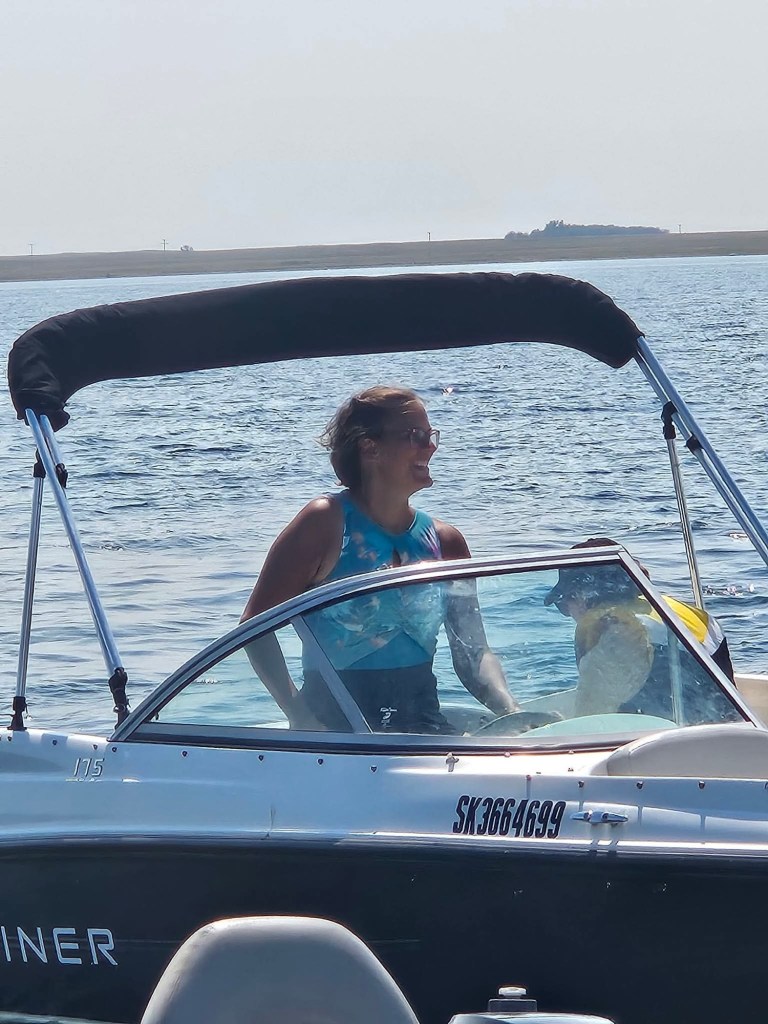
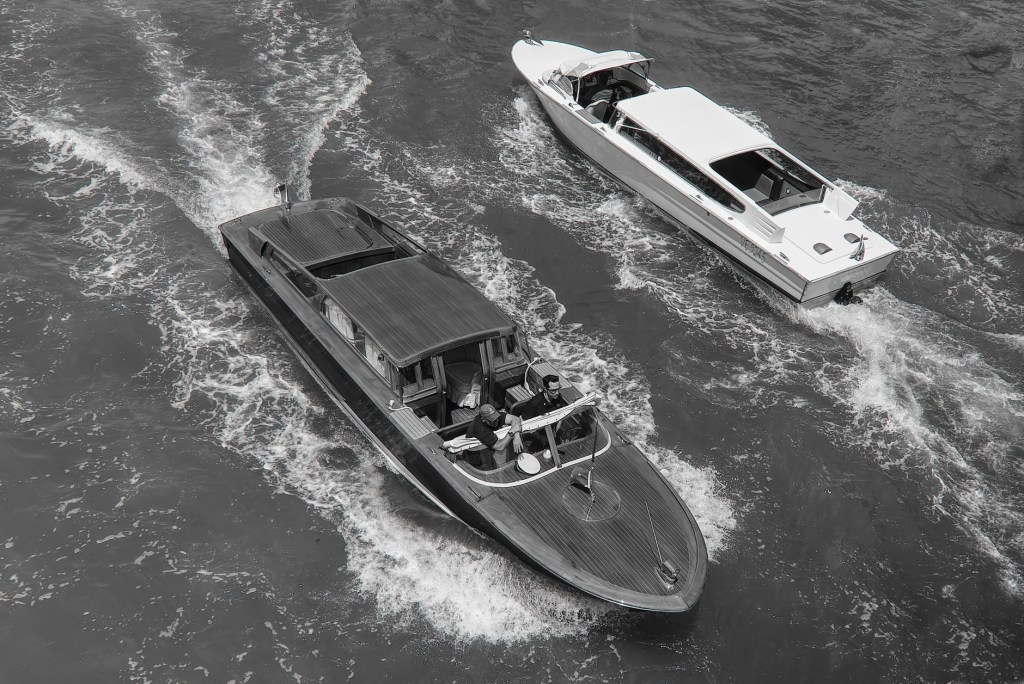
A few days ago, mine came in the form of a boat launch.

Anyone whoโ€™s spent time around a busy boat launch knows itโ€™s a fascinating social experiment.

An overabundance of strong opinions and egos exists.

There are no rules. Written or unwritten.

Just enough ambiguity transpires, that everyone believes theyโ€™re right.

Iโ€™ve been launching boats for about fifteen years. I know the rhythm. I stay out of peopleโ€™s way, wait until my truck is actually in the water before moving, and do my best to keep things safe and efficient.

Apparently one gentleman decided Iโ€™d โ€œcut the line.โ€

Boat launches really do produce fascinating specimens of humanity.

Iโ€™ve learned that confidence can be surprisingly unsettling to some people. Especially when it arrives in the form of a woman who knows how to load the boat on the trailer without making a production of it.

Itโ€™s funny how a little perceived competition can bring out our inner third-grader.

The equipment may have six-figure price tags, but occasionally the conflict resolution skills still come from recess days gone by.

When I calmly explained why I was waiting where I was. And how the process normally works. He didnโ€™t want an explanation.

He began clapping sarcastically.

The world doesnโ€™t just wear us down through tragedy. Sometimes it does it one sarcastic clap at a time.

–Claire played by Molly Gordon in “The Bear“

As he mocked me it became clear he just wanted an audience.

He got one when a couple of other boaters joined in the jeering.

I wish I could tell you I laughed it off.

Instead, my nervous system hit the panic button.

My cortisol rose faster than I can launch my boat. (Iโ€™m a pro at both.)

My heart raced. My hands shook.

My cortisol packed a lunch and settled in for two to three business days.

Several days later, I could still feel my body replaying the scene.

I think what bothers me most, at this point, is somewhere out there is a misguided soul telling the story of the woman who โ€œcut the lineโ€ at the dock.

How people treat you is their karma, how you react is yours.

–Wayne Dyer

Maybe youโ€™ve had moments like that.

Perhaps someone says something. Misunderstands you. Treats you unfairly.

And your body reacts long after the event is over.

For those of us living with chronic illness or chronic stress, these moments donโ€™t simply sting.

They cost us.

Thatโ€™s why a line from a recent episode of the Untangle podcast kept coming back to me.

In โ€œQuiet Strength and Equanimity: Finding Calm in a Chaotic World,โ€ Margaret Cullen explores how we stay peaceful in a world that often seems determined to take our peace away.

One story she shares has stayed with me.

A man is rowing through thick fog when he notices another boat heading directly toward him.

The other boat is bigger. He should have the right of way.

He shouts. No response.

He waves. Nothing.

The other boat keeps coming.

His frustration turns to anger.

โ€œMove!โ€

Just before the collision, he swerves.

As the fog clears, he realizesโ€ฆ

The boat is empty. No one was steering.

Instantly, his anger disappears.

Who was he angry with?

No one.

Since first hearing that story, Iโ€™ve asked myself this question.

Is the boat empty?

Not literally.

But is this personal?

Or am I assigning intention where there may be none?

Maybe theyโ€™re exhausted. Grieving. Terrified.

Maybe they simply donโ€™t know any better.

Or maybe theyโ€™re carrying hurts I canโ€™t see.

None of those possibilities excuse poor behaviour.

But they completely change where I direct my emotional energy.

Sometimes, seeing clearly dissolves the anger.

Pronoia

The opposite of paranoia. it is the belief that people or the world are secretly working in your favour. That events, people and circumstaces are somehow conspiring to help you.

Thatโ€™s different from stuffing feelings down or pretending they donโ€™t exist.

You canโ€™t bypass emotions.

You canโ€™t slap a positive quote over a nervous system thatโ€™s sounding the alarm.

But sometimes the alarm quiets on its own because you suddenly realizeโ€ฆ

There isnโ€™t actually an enemy here.

Just another imperfect human.

When the boat is empty, compassion often becomes easier than combat.

Margaret Cullen also offers another perspective I love.

Ask yourself:

How will this feel next week? Next month? Next year?

Itโ€™s amazing how many mountains quietly shrink into molehills when viewed from a little distance.

Then she takes it even further.

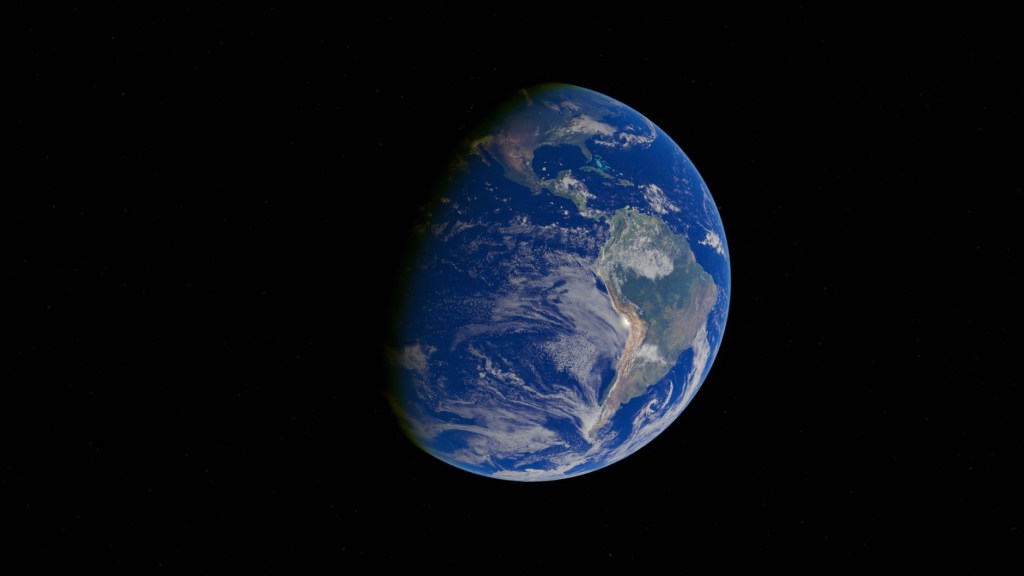
She talks about astronauts experiencing the Overview Effect. Seeing Earth from space and returning with an entirely different understanding of what matters.

Imagine grandmotherโ€™s wisdom. Now multiply it by the view from orbit.

Our arguments. Our bruised egos. Our need to be right.

They suddenly become very small compared with this astonishing little blue planet weโ€™re all sharing.

That doesnโ€™t make our feelings unimportant.

It simply gives them context.

Another surprisingly effective tool?

Humour. Humour interrupts the story weโ€™re telling ourselves.

Weโ€™ve all done it.

We become convinced weโ€™ve been wronged in the most spectacular fashion imaginable.

Our spouse is over there admiring a duck while we have mentally drafted the closing argument for a trial that nobody else even knows is happening.

Sometimes all it takes is one ridiculous observation from them to break the spell.

I wish I could say I found โ€œthe funnyโ€ at the boat launch.

I wasnโ€™t there yet.

Maybe next time.

One tool that has helped me far more consistently is asking:

Am I living this moment according to my values?

Not theirs. Mine.

I canโ€™t control sarcasm.

I canโ€™t control mockery.

I canโ€™t control who decides to clap sarcastically at a stranger.

But I can decide whether I respond with kindness.

Integrity. Respect. Compassion.

Those are mine to keep.

The more our daily lives align with our values, the steadier we become.

Peace stops being something we chase and starts becoming somewhere we live.

The idea of felt safety is something weโ€™ll explore more in the next post.

Felt safety isnโ€™t the absence of fear.

It isnโ€™t the absence of challenge.

Itโ€™s your nervous system recognizing that you have enough capacity to face whatโ€™s in front of you.

That you are enough.

That you can survive this moment.

Forest therapy has become one of the places where I practice exactly that.

The forest rarely requires me to react in the moment.

It stretches time. It expands perspective.

It reminds me that not everything deserves my nervous systemโ€™s full emergency response.

When someone steals my peaceโ€ฆ

I take it to the woods.

There, I remember that Iโ€™m part of something much older than a rude exchange at a boat launch.

Much bigger than todayโ€™s frustration.

And much more beautiful than the story my anxious brain was writing five minutes earlier.

Eventually I remember that peace is a terrible thing to hand over to someone youโ€™ve never met.

A Forest Therapy Invitation

If youโ€™re new here and want to learn more about forest therapy and how it works, check out this page. The Gist

The next time something rattles you, resist the urge to replay it over and over.

Instead, head outside.

Find one tree that catches your attention.

Stand with it for five slow breaths.

Now ask yourself:

  • Is the boat empty?
  • Will this matter next year?
  • What would this look like from space?
  • What response best reflects my values?
  • How can I become the tenderness this moment needs?

Donโ€™t force an answer.

Just notice what changes.

Sometimes the forest doesnโ€™t solve the problem.

It simply reminds us that we are far bigger than it.

Forest therapy doesnโ€™t help me escape the world. It helps me return to it without becoming like it.

Margaret Cullen ends her book Quiet Strength with words I borrow:

May each of us find a way to bring balance and tenderness to this floating world, moment by moment, drop by drop.

I canโ€™t think of a better response to a world that is hard on beautiful things.

Letโ€™s become one of the beautiful things that refuses to grow hard.

The world may be hard on beautiful things. That doesnโ€™t mean beautiful things have to become hard.

Insteadโ€ฆ

Letโ€™s become the tenderness.

In a gentle way you can shake the world.

–Mahatma Gandhi

Chronic Willpower: The Cost of Being the Woman Who Always Pushes Through

The curious paradox is that when I accept myself as I am, then I can change.

–Carl Rogers

For most of my life, I thought willpower was the answer.

Tired? Push through.

In pain? Push through.

Overwhelmed? Push through.

Running on fumes? Push through harder (and question what my problem is. Everyone else can do it all!)

Our culture practically hands out gold stars for overriding our bodies. We admire grit, determination, hustle, and resilience. We celebrate the people who keep going no matter what.

But what if chronic willpower isnโ€™t a strength?

What if itโ€™s a survival strategy?

And what if the very thing youโ€™ve relied on for decades is now contributing to your exhaustion, burnout, brain fog, chronic symptoms, and sense that your body has become the river overflowing its banks after years of holding everything in?

I am learning that hormones play a major role in mid life. Learn more about hormones and their effects in this past post. Female Hormones: Our Fickle Fairweather Friend

The Problem With โ€œJust Try Harderโ€

I recently listened to an episode of the  Success Genius podcastโ  hosted by Neill Williams, a master certified coach. Her podcast focuses on helping ambitious women work with their brains and bodies rather than constantly pushing against them. A message that feels particularly relevant to my own journey with chronic willpower.

Williams suggests willpower is often a withdrawal, not a strategy. It is what we use when we donโ€™t have access to regulation. Instead of listening to the body, we override it. Instead of responding to its signals, we silence them. Instead of resting, we push harder.

At first, this works remarkably well.

You become productive.

Dependable.

Capable.

The person everyone can count on.

The person who somehow manages to keep all the plates spinning.

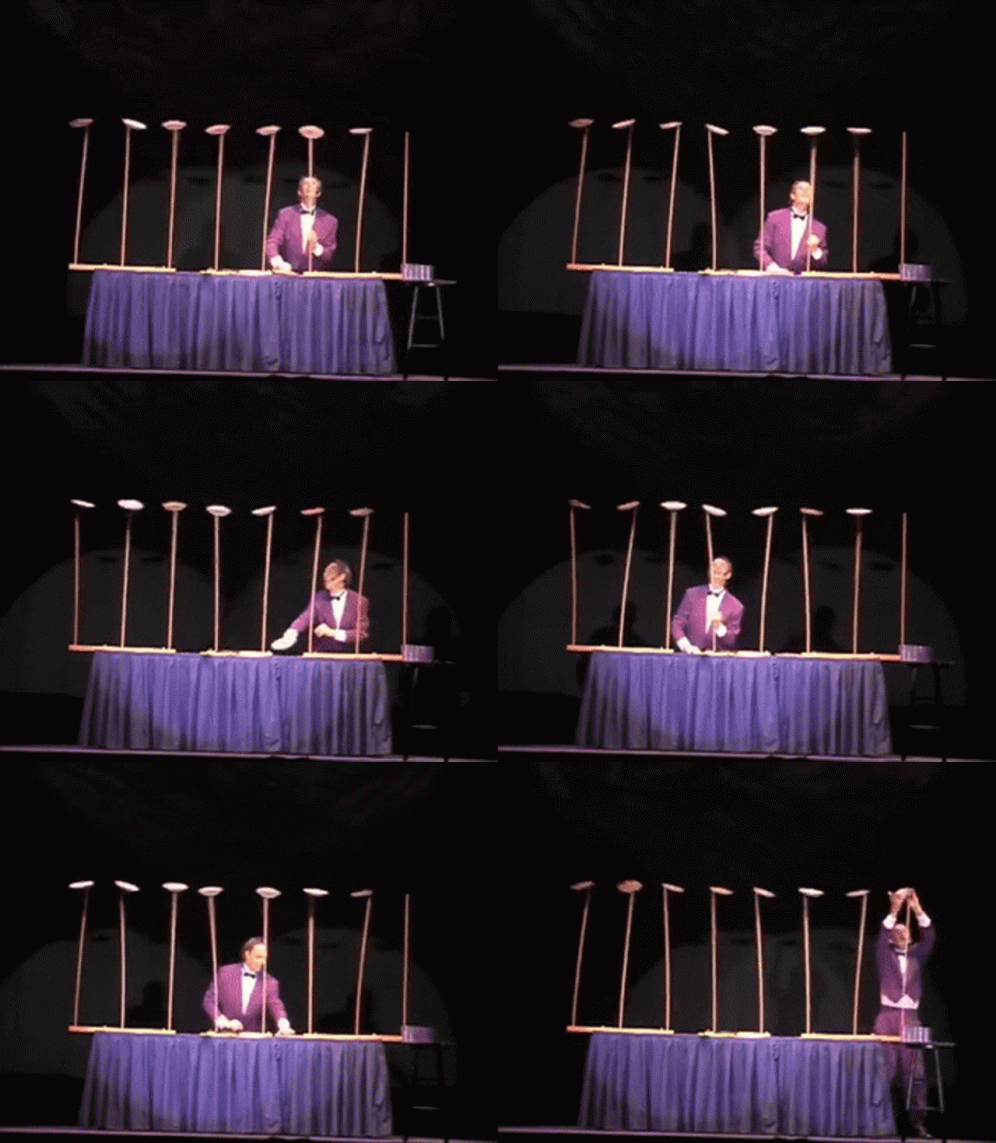
Until one day the plates start spinning you.

It’s amazing how long you can juggle flaming torches before realizing you are the one on fire.

When Willpower Becomes a Withdrawal

One of the most eye-opening ideas Williams proposes is this:

Willpower is not a strategy. It is a withdrawal.

Using willpower occasionally isnโ€™t a problem.

Life happens. Deadlines happen. Emergencies happen.

Sometimes we need to dig deep and do hard things.

The trouble begins when overriding ourselves becomes our default operating system.

When every day looks like:

โ€œIโ€™m exhausted, but Iโ€™ll push through.โ€

โ€œIโ€™m overwhelmed, but Iโ€™ll push through.โ€

โ€œMy body is asking for rest, but Iโ€™ll push through.โ€

A withdrawal isnโ€™t necessarily noticeable at first.

Just like spending a little extra on a credit card doesnโ€™t feel like a crisis.

But eventually the bill arrives.

And like every credit card company, our nervous systems charge interest.

I once heard a doctor describe it this way:

โ€œIt starts as a whisper. Then it becomes a shout. Then it becomes a scream. If you keep ignoring it, eventually it shuts you down.โ€

I suspect many women reading this know exactly what that feels like.

Listen to your body when it whispers so you don’t have to hear it scream.

What Happens Physiologically?

Your nervous system is constantly gathering information about whether youโ€™re safe.

When you repeatedly ignore fatigue, stress, grief, overwhelm, pain, or emotional needs, those signals donโ€™t simply disappear.

They get louder.

The body begins turning up the volume in an attempt to get your attention. What started as mild fatigue becomes crushing exhaustion. A little tension becomes chronic pain. Occasional anxiety becomes a constant background hum.

Symptoms are often the falling leaves, not the falling trees. Theyโ€™re early signs that something needs attention.

The Physiological Cost of Chronic Willpower

It is not stress that kills us, it is our reaction to it.

–Hans Selye

We are designed for stress.

Contrary to what social media might have us believe, stress itself is not the enemy.

The stress of giving a presentation.

The stress of learning something new.

The stress of tackling a challenge.

Those are normal.

Healthy even.

The problem is chronic stress without sufficient recovery.

When we continually override our bodyโ€™s signals and never allow the system to recover, we remain stuck in a state of ongoing activation.

Over time that can contribute to:

  • Elevated cortisol
  • Disrupted sleep
  • Increased emotional reactivity
  • Brain fog and reduced cognitive function
  • Immune system suppression
  • Hormone disruption
  • Burnout
  • Chronic fatigue
  • Increased vulnerability to illness

Many women eventually find themselves working harder than ever and accomplishing less.

Not because theyโ€™re lazy.

Not because theyโ€™re undisciplined.

Not because they suddenly lost their motivation.

Because their nervous system has been carrying a debt load for years.

I, myself, believed rest was something you earned after finishing everything. Unfortunately, everything is never finished.

Determination Is the Fuel. Regulation Is the Engine.

You cannot solve a problem from the same consciousness that created it.

–Albert Einstein

One of the most helpful concepts Williams shared,

Determination is the fuel. Regulation is the engine.

Fuel matters.

But pouring premium gasoline onto a broken engine wonโ€™t get you very far.

Many of us have spent years trying to compensate for a dysregulated nervous system by adding more determination.

More discipline. More motivation. More supplements. More planners. More productivity hacks. More caffeine.

At some point the engine needs attention.

Regulation is what allows the nervous system to move between effort and recovery. It is the bodyโ€™s ability to activate when needed and settle when the challenge has passed. Without regulation, determination eventually becomes expensive fuel burned inefficiently.

Why We Keep Doing It Anyway

Because overriding ourselves works.

At least temporarily.

When we push through exhaustion and finish the project, check off the list, save the day, or meet the deadline, we get a reward.

That reward is often dopamine.

Dopamine isnโ€™t simply the โ€œpleasure chemical.โ€ Itโ€™s deeply involved in motivation, anticipation, reward, and learning what behaviors matter. Our brains remember what helped us survive and succeed.

So the pattern becomes:

๐ŸIgnore body. โžก๏ธ Push harder. โžก๏ธ Get result. โžก๏ธ Receive dopamine hit. โžก๏ธ Repeat. ๐Ÿ”„ ๐Ÿ˜ตโ€๐Ÿ’ซ ๐Ÿ˜ต

Soon, productivity itself can become a form of self-medication.

The nervous system learns that overriding discomfort equals reward.

No wonder itโ€™s hard to stop.

The Chemical We May Actually Need More Of

While dopamine drives pursuit, serotonin is associated with feelings of contentment, safety, stability, and well-being.

Dopamine is the Labrador chasing the tennis ball.

Serotonin is the golden retriever napping in a sunbeam.

Many chronic willpower users have spent decades chasing the first while starving the second.

We become experts at striving but beginners at simply being.

And thatโ€™s where nature has something remarkable to teach us.

The Forest Doesnโ€™t Care About Your To-Do List

One of the reasons forest therapy feels so restorative is that it gently shifts us toward a state of regulation.

No notifications. No deadlines. No performance reviews.

No one asking whether youโ€™ve earned your rest. Whether youโ€™re keeping up. If youโ€™re winning at life or whether your worth is keeping pace with your to-do list. No one asking whether youโ€™ve justified your existence through accomplishment.

The forest would NE-ver. Trees are refreshingly difficult to impress.

And somehow thatโ€™s exactly what makes them healing.

In the forest, many people experience what feels like a serotonin bath. ๐Ÿ›

A quiet sense that everything is okay.

Not perfect. Just okay. Perfectly imperfect.

The more often we experience that state, the more familiar it becomes. Eventually regulation starts feeling less like a vacation and more like home.

A Forest Therapy Practice for Chronic Willpower

If you recognize yourself in this article, try this simple practice.

Step 1: Walk Slowly

Spend 10 to 15 minutes walking without a destination.

Not hiking. Not exercising. Not trying to get your steps.

Simply walk.

Notice colours. Textures. Movement. Bird sounds. Wind. Light.

Whenever your mind starts solving problems, gently return attention to your surroundings.

Step 2: Sit

Find a place to sit for 10 to 20 minutes.

Allow yourself to do absolutely nothing.

No journaling. No podcasts. No meditation app.

Simply sit.

Notice what emerges. At first you may feel restless.

Thatโ€™s normal.

Many chronic willpower users experience sitting still the same way a Labrador experiences being told not to chase a tennis ball.

Step 3: Listen

Ask yourself:

โ€œWhat is my body trying to tell me?โ€

Then resist the urge to answer immediately.

Wait.

The nervous system often speaks in sensations before it speaks in words.

Step 4: Walk Again

Take a slow walk again.

Notice whether anything feels different.

You are not trying to force an answer.

You are creating conditions where answers can arise.

The body always leads us home if we can simply learn to trust sensation and stay with it long enough for it to reveal its wisdom.

–Pat Ogden

Going Upstream

There is a somewhat unsettling, but well-known parable about a group of adults standing beside a river.

Suddenly they see a child floating downstream and jump in to save them.

Then another child appears.

And another.

And another.

Everyone becomes frantically occupied rescuing children.

Finally someone leaves.

โ€œWhere are you going? How could you possibly leave at a time like this?โ€ the others shout.

โ€œUpstream,โ€ they reply. โ€œTo find out why theyโ€™re falling into the river.โ€

Chronic willpower is often what happens downstream.

Parts of your self are drowning in the river upstream.

Those adults frantically jumping in are your chronic willpower, your nervous system desperately trying to manage the consequences.

But you can go upstream.

You can find the calm your body has been asking for.

You can stop overriding the system long enough to hear what it has been trying to say.

And the day came when the risk to remain tight in a bud was more painful than the risk it took to blossom.

–Anaรฏs Nin

My body budget got so far in the red it was basically applying for bankruptcy protection.

Looking back, I wonder how many so-called midlife crises are actually the moment the bill for decades of nervous system debt comes due. The strategies that helped us survive and succeed for years suddenly stop working.

What feels like falling apart may actually be the beginning of a profound transformation. I explored that idea more deeply in Midlife Crisis to Chrysalis.

When you can access a place of peace, something surprising often happens. The answers youโ€™ve been chasing become easier to see. The next step becomes clearer.

Not because you forced it.

Because you finally became quiet enough to hear it.

Sometimes healing isnโ€™t found in pushing harder.

Sometimes itโ€™s found wandering through a lush, green forest, realizing your body wasnโ€™t fighting you all along.

It was actually trying to draw your attention upstream, where the real answers were waiting. Guiding you away from the noise. To a place of stillness. Back to who you were before the push. Your natural self.

Hormone Disruptors: Hidden Toxins That May Be Affecting Your Health

Adopt the pace of nature: her secret is patience.

-Ralph Waldo Emerson

When youโ€™re living with chronic pain, migraines, fatigue, hormonal changes, or an autoimmune condition, every ounce of energy matters.

So it can be frustrating to discover that many of the products we use every day may be working against us.

The reality is that we live in a world filled with chemicals, pollutants, and environmental stressors. While our bodies are remarkably resilient, they werenโ€™t exactly designed for a daily cocktail of synthetic fragrances, plastics, pesticides, and mystery ingredients with names that sound like they belong in a chemistry textbook.

I recognize that in speaking on this topic, I now resemble a kooky, woo woo spokeswoman for all things unconventional. But stick with me.

If youโ€™ve ever looked at an ingredient label and thought, โ€œI have no idea what any of these words mean, but Iโ€™m about to put them directly on my skin,โ€ youโ€™re not alone.

Iโ€™ve reached the age where reading labels is apparently one of my hobbies.

Welcome to the wacky world of hormone disruptors.

What Are Hormone Disruptors?

Hormone disruptors, also called endocrine disruptors, are chemicals that interfere with your bodyโ€™s endocrine system, the network responsible for producing, transporting, and regulating hormones.

Think of hormones as your bodyโ€™s communication system. They send messages that help regulate everything from sleep and metabolism to mood, reproduction, energy, and immune function.

Hormone disruptors can interfere with those messages by:

  • Mimicking natural hormones
  • Blocking hormone receptors
  • Altering hormone production
  • Affecting how hormones are transported or eliminated

In other words, theyโ€™re the equivalent of someone repeatedly hitting โ€œreply allโ€ on emails that were never meant for them.

My hormones wake up everyday and choose unpredictability. They have the organizational structure of a flock of startled geese.

Why Does This Matter?

For years, many people with chronic conditions have been told that their bloodwork is normal, their tests look fine, and everything appears to be functioning as expected.

Meanwhile, theyโ€™re exhausted.

Theyโ€™re in pain.

Theyโ€™re dealing with migraines, inflammation, brain fog, sleep disturbances, mood changes, or symptoms that donโ€™t fit neatly into a box.

Hormone disruptors arenโ€™t necessarily the cause of these conditions.

But if your body is already managing chronic inflammation, pain, migraines, fatigue, hormonal changes, or autoimmune symptoms, reducing unnecessary stressors may give your system one less thing to deal with.

Itโ€™s not a cure.

But every little bit of support matters.

Symptoms That May Be Linked to Hormone Disruption

Hormone disruption can show up in many different ways
Some common symptoms include:

  • Fatigue
  • Brain fog
  • Sleep disturbances
  • Mood changes
  • Anxiety
  • Weight gain or difficulty losing weight
  • Headaches and migraines
  • Skin issues
  • Fertility challenges
  • Irregular menstrual cycles
  • Low libido
  • Increased inflammation

The challenge is that many of these symptoms overlap with chronic illnesses, making hormone disruption difficult to identify.

Which is somewhat rude, if you ask me.

My Experience

When I first started learning about hormone disruptors, I had two reactions.

First:

โ€œWell, thatโ€™s concerning.โ€

Second:

โ€œThere is absolutely no way I can afford to replace everything I own, let alone find the time and energy to make everything!โ€ (mentally checks out of this topic)

Thankfully, Iโ€™ve since learned that reducing exposure isnโ€™t about perfection.

Itโ€™s about making practical choices that support a body thatโ€™s already working hard.

Because if the wellness industry had its way, Iโ€™d be replacing every item I own by Tuesday. And while I appreciate the enthusiasm, my budget and my sanity have other things to do.

Where Are Hormone Disruptors Hiding?

Unfortunately, theyโ€™re not hiding very hard.

Personal Care Products

  • Shampoo
  • Conditioner
  • Hair products
  • Lotions
  • Makeup
  • Perfumes
  • Deodorants
  • Nail polish

Household Products

  • Air fresheners
  • Scented candles
  • Dryer sheets
  • Fabric softeners
  • Cleaning products

Food Storage and Packaging

  • Plastic food containers
  • Plastic water bottles
  • Plastic wrap
  • Certain canned food linings
  • Some non-stick cookware

Environmental Sources

  • Pesticides
  • Herbicides
  • Some furniture treatments
  • Certain stain-resistant coatings

One of the most common concerns is simply the ingredient listed as:

Fragrance

That single word can represent dozens. Or sometimes hundreds of undisclosed ingredients.

The goal is reducing your overall toxic burden where you reasonably can.

Some labels contain enough syllables to qualify as a spelling bee challenge. At what point does an ingredient list stop feeling informative and start feeling mildly threatening?

A Gentle Approach to Reducing Exposure

Put your garbage bags down.

You donโ€™t need to throw everything away and start making your own soap from dandelions and determination.

You cannot eliminate every toxin.

You cannot control every environmental exposure.

And honestly, trying to do so would probably create more stress than benefit.

The goal isnโ€™t perfection.

Small, sustainable changes tend to be far more effective than dramatic overhauls.

Start with one product.

Then another.

And keep going at a pace that feels manageable.

Homemade Alternatives

One reason many people choose homemade products is because the ingredients are simple, familiar, and transparent.

When you know exactly whatโ€™s in something, thereโ€™s less mystery.

You may also reduce your exposure to fragrances, preservatives, and other unnecessary additives.

Here are a few of my favourite homemade recipes:

Homemade Deodorant

Recipe @ healthylifetrainer Note: Unlike antiperspirants, which block sweat glands, this recipe functions as a deodorant. It helps control odour while allowing your body to sweat naturally. The other thing to be aware of is its ability to turn into deodorant soup when stored above room temperature. Store it in the cooler if you go camping!โ›บ๏ธ

Homemade All-Purpose Cleaner

Recipe @ lifelovelarson

Homemade Eye Makeup Cleaner

Recipe @ wholenewmom

Homemade Face Wash

Recipe @ Pinterest

A Forest Therapy Practice for Simplifying Your Routine

One of the biggest challenges with reducing hormone disruptors is deciding where to start.

Forest therapy offers a different approach.

Rather than creating a long list of things you have to change immediately, begin with awareness.

Take a slow walk in nature.

Leave your phone in your pocket.

Notice what catches your attention.

Listen to the sounds around you.

Feel the ground beneath your feet.

Allow your nervous system to settle.

When you find a place that feels inviting, sit quietly for a few minutes.

Ask yourself:

  • What products do I use every day?
  • Which products spend the most time on my skin?
  • Which products do I inhale regularly?
  • Which product would be easiest to replace?
  • Which change feels supportive rather than stressful?

Then ask:

โ€œIf I could change one thing this month, what would make the biggest difference?โ€

Forest therapy reminds us that healing doesnโ€™t always happen through doing more.

Sometimes it begins by slowing down enough to notice what our bodies have been trying to tell us.

When I started forest therapy the trees and I got along immediately. Unlike my hormones ๐Ÿ˜– ๐Ÿ˜ก.

Perimenopause

Slowly losing every chemical that was helping me tolerate people.

Health Is More Than Avoiding Toxins

Removing unnecessary exposures can be helpful.

But building health is equally important.

Sometimes we become so focused on what we should eliminate that we forget what we need to add.

The foundations matter.

Prioritize Sleep

Sleep is when your body repairs, regulates hormones, supports immunity, and recovers from daily stress. Clean up your sleep routine.

Eat Nourishing Foods

Focus on foods that support your body rather than aiming for perfection. Slowly move towards the diet your body needs.

Move in Ways That Work for You

The best exercise is the one your body can recover from. That answer looks different for everyone.

Get Outside

Sunlight helps regulate circadian rhythms, mood, and overall wellbeing. Get out in the first minutes of your day.

Nelipot

English; a rare and poetic word that refers to someone who walks barefoot, one who feels than earth beneath their feet, often implying a connection with nature or a simple, grounded lifestyle.

Put Your Feet on the Ground

Whether you call it grounding, earthing, or simply standing barefoot in the grass, many people report feeling calmer and more connected afterward. I concur.

Spend Time in Nature

Nature lowers stress, restores attention, and creates opportunities for rest and reflection. More than getting outside it is connecting with the natural world.

The forest continues to offer something many modern products canโ€™t: simplicity. The more time I spend in nature, the more I understand why my body keeps asking me to return. The message is clear.

Less fragrance. More forests.

My nervous system is a strong advocate for sunshine, birdsong, and not reading every ingredient.

Why Forest Therapy Matters

Forest therapy isnโ€™t about replacing medicine, specialists, or common sense.

Itโ€™s about creating conditions that support healing.

Iโ€™ve seen it support people who were struggling.

Iโ€™ve also seen it elevate people who were already doing well.

Nature doesnโ€™t ask us to be healthy before we show up.

It simply offers an environment that encourages restoration, resilience, and connection.

Whether youโ€™re managing chronic illness or simply trying to feel your best, time in nature can be one of the simplest and most accessible forms of self-care available.

Turns out one of the healthiest things I can do is wander through the forest looking slightly lost.

Final Thoughts

Nature has never pulled me aside to discuss my skincare routine. I donโ€™t have to be a perfect version of myself before I can join.

It simply reminds me to take the next step.

Sometimes thatโ€™s all healing requires.

We canโ€™t control every toxin, every chemical exposure, or every challenge life throws our way. But we can support our bodies through simple, consistent practices.

Sleep. Movement. Nutritious food. Sunshine. Fresh air. Time in nature. Small choices made repeatedly over time often have the greatest impact

Not because theyโ€™re dramatic. But because theyโ€™re sustainable.

And unlike the mystery bottle hiding under your bathroom sink since 2014, those habits never expire.

Maybe living your best life just means slowing down enough to see how good it already is.